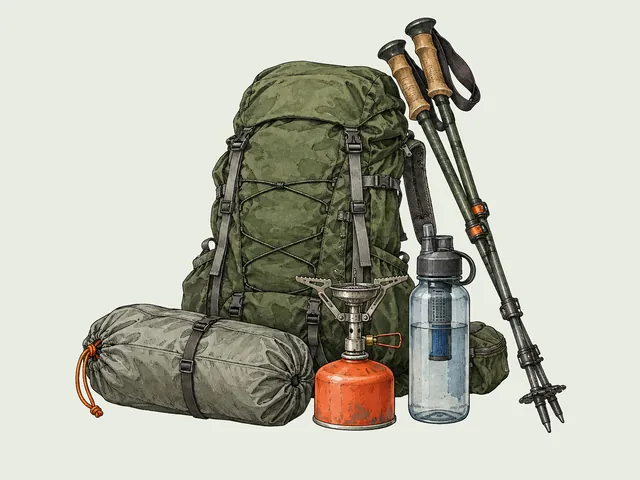
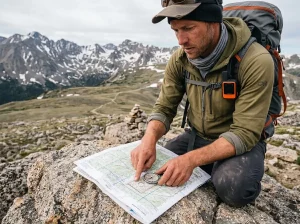
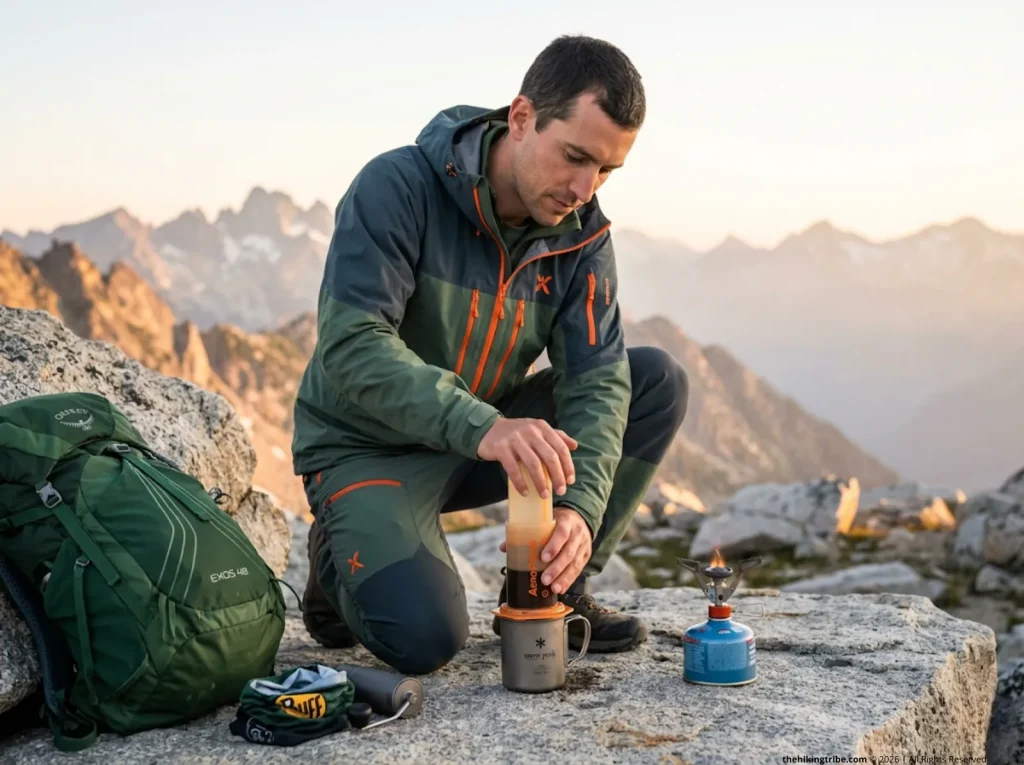
The wind was tearing across the saddle at 11,200 feet, my fingers so numb I could barely unscrew the lid of my titanium mug. I’d hauled a pour-over dripper, a manual grinder, and a bag of single-origin beans up 4,000 feet of elevation gain — and the coffee tasted like hot lemon water. Thin, sour, and completely wrong.
That was the morning I realized that making great backcountry coffee isn’t about carrying the fanciest gear. It’s about understanding the physics working against you and choosing a system that fights back. Most hikers compare dry gear specs on a spreadsheet and miss the number that actually wrecks their pack by day three.
This guide breaks down every trail coffee method through the only lens that matters for weight-obsessed hikers: total system weight (including the wet grounds you carry out), flavor extraction at altitude, and Leave No Trace compliance.
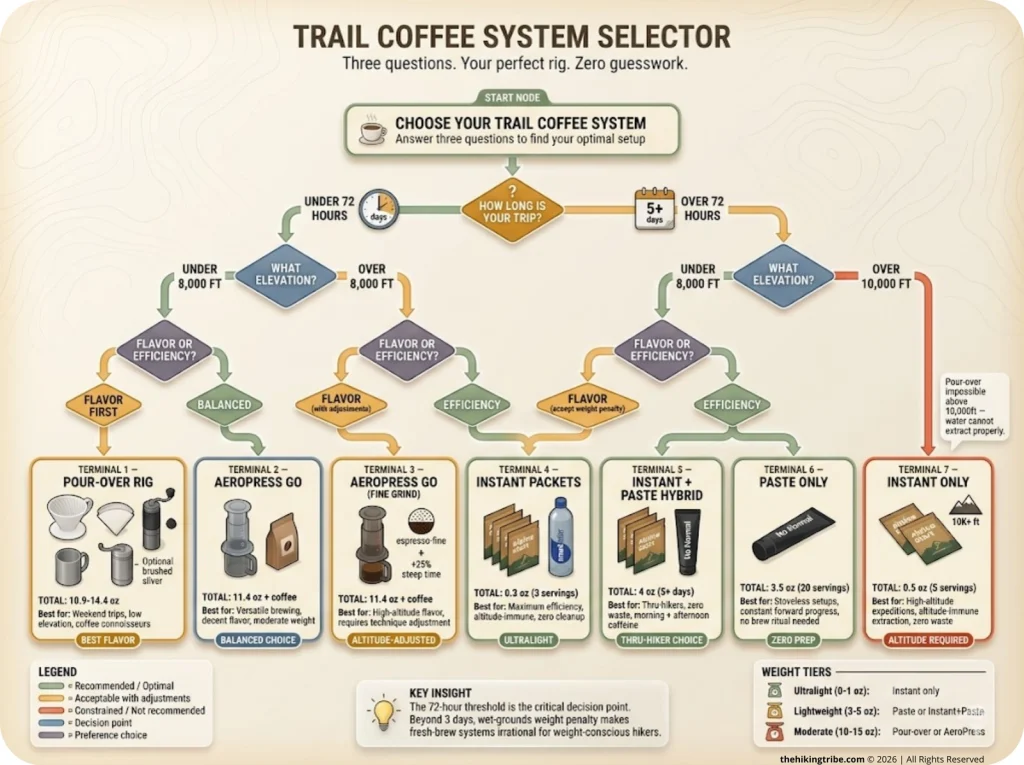
⚡ Quick Answer: For trips over 72 hours, specialty instant coffee is the best trail coffee — it delivers the highest caffeine-per-ounce ratio, generates zero pack-out waste, and weighs roughly 0.1 oz per serving. For shorter trips where flavor matters most, a collapsible pour-over earns its weight. Above 10,000 feet, the AeroPress Go is the only tool that can extract properly thanks to its manual pressure.
The Hidden Weight of Trail Coffee: Why “Dry Weight” Lies to You
Every gear review compares dry brewer weight. The Zebrang V60 Flat at 2.4 oz. The Snow Peak Titanium Cafe at 0.5 oz. Clean numbers. Completely misleading.
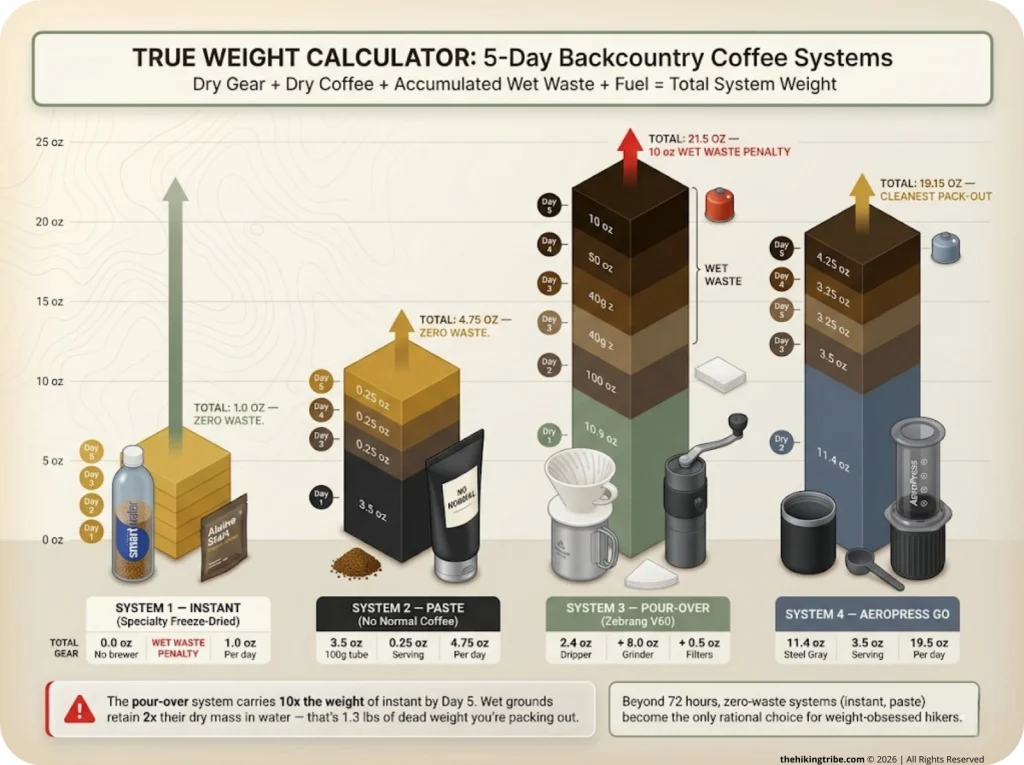
The honest calculation: Dry Gear + Dry Coffee + Accumulated Wet Waste + Fuel Mass = Total System Weight. Most hikers never run that math.
The Water Retention Factor: 10 Grams In, 30 Grams Out
Coffee grounds retain approximately two times their dry mass in water after brewing. That’s a Water Retention Factor of 2.0. Put 10 grams of dry coffee in your dripper, and you’re packing out 30 grams of soggy waste.
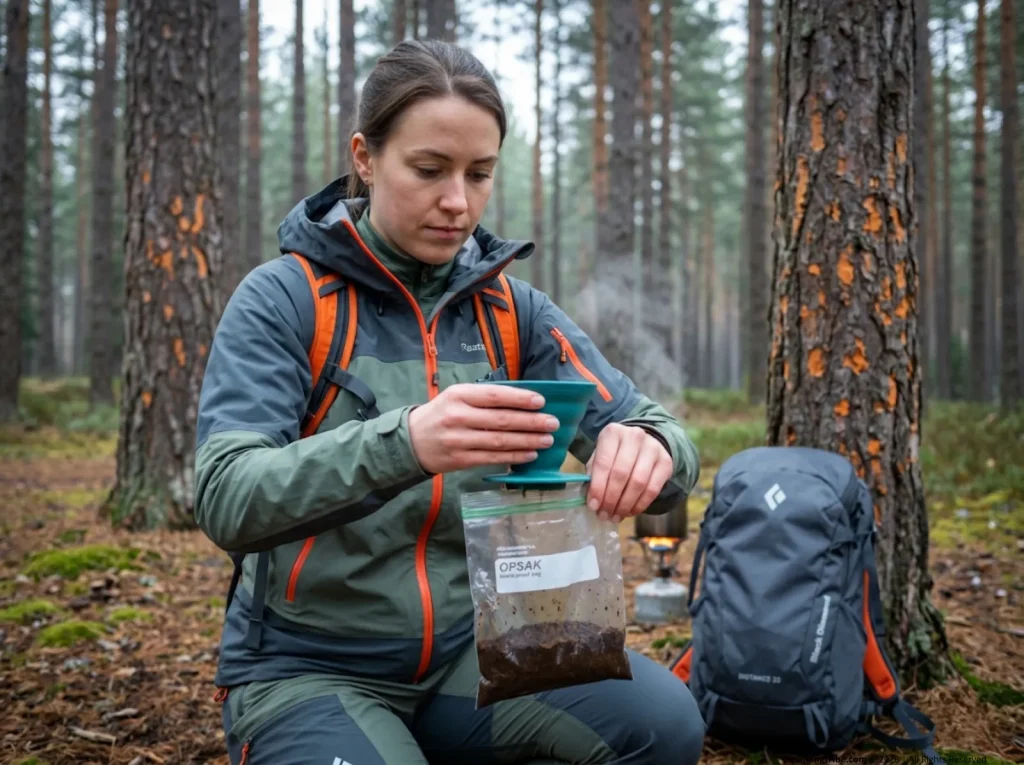
Multiply that across a 5-day solo trip. Two cups per day at 20 grams each — 200 grams total. The accumulated wet waste hits 600 grams, over 21 ounces of dead weight by day five.
Instant coffee and coffee paste systems? Near-zero post-brew waste. Less than 3 grams of foil packaging for the entire trip. The gap between “fresh ground” and “instant” isn’t about taste snobbery anymore. It’s about whether you want to carry a bag of wet sludge through the backcountry.
Understanding this penalty is central to calculating your actual base weight versus pack weight, where consumables and waste are often the line items hikers forget.
Pro-Tip: Use the “Dry-and-Bag” technique on short trips — hang your wet filter and spent grounds on the outside of your pack to air-dry before stowing. It won’t eliminate the weight penalty, but it can cut water retention by 30-40% on dry, sunny days.
The 72-Hour Rule: When Fresh Brew Becomes a Liability
For trips under 72 hours, the cumulative weight penalty of fresh grounds stays manageable — roughly 8.5 oz of wet waste by day two. That’s a price most flavor-conscious hikers are willing to pay.
Beyond 72 hours, the math tips hard toward zero-waste systems. By day five, a pour-over user carries over 1.3 lbs of dead waste compared to zero for someone drinking instant. Thru-hikers on the PCT, AT, or CDT who resupply every four to seven days face this penalty on every single segment.
Fuel Mass: The Weight You Forgot to Count
Pour-over methods require sustained near-boiling water, which burns more fuel per brew than immersion or instant methods. Heat exchanger pots like the Firemaple Petrel G2 improve fuel efficiency by up to 30% by capturing thermal energy from the burner, but they add hardware weight to your cook system.
Cold-soaking specialty instant or using coffee paste eliminates the need for a stove, fuel canister, and pot entirely — shedding 15 to 25 oz from your base weight. For the ultralight purist who has already trimmed their shelter and sleep system to the bone, the no-cook coffee ritual is the last big cut left.
Trail Coffee Methods Ranked: Instant, Paste, Pour-Over, and Pressure
Here’s what each system actually delivers when you’re standing in a cold camp at 6 AM.
Lyophilized Specialty Instant: The Modern Ultralight Standard
Third-wave instant coffee in 2026 uses lyophilization — freeze-drying at −40°F — preserving aromatic oils and volatile compounds that older spray-dried powders destroyed. Starbucks VIA packs 135mg of caffeine into a 3.3-gram packet. Alpine Start delivers 120mg in just 2.5 grams. Both dissolve in hot or cold water.
Weight per serving: around 0.1 oz. Pack-out waste: near zero. The taste ceiling is real — you won’t match a well-executed pour-over. But for the weight-to-caffeine ratio, specialty instant is unbeatable.
Concentrated Coffee Paste: The No-Cook Revolution
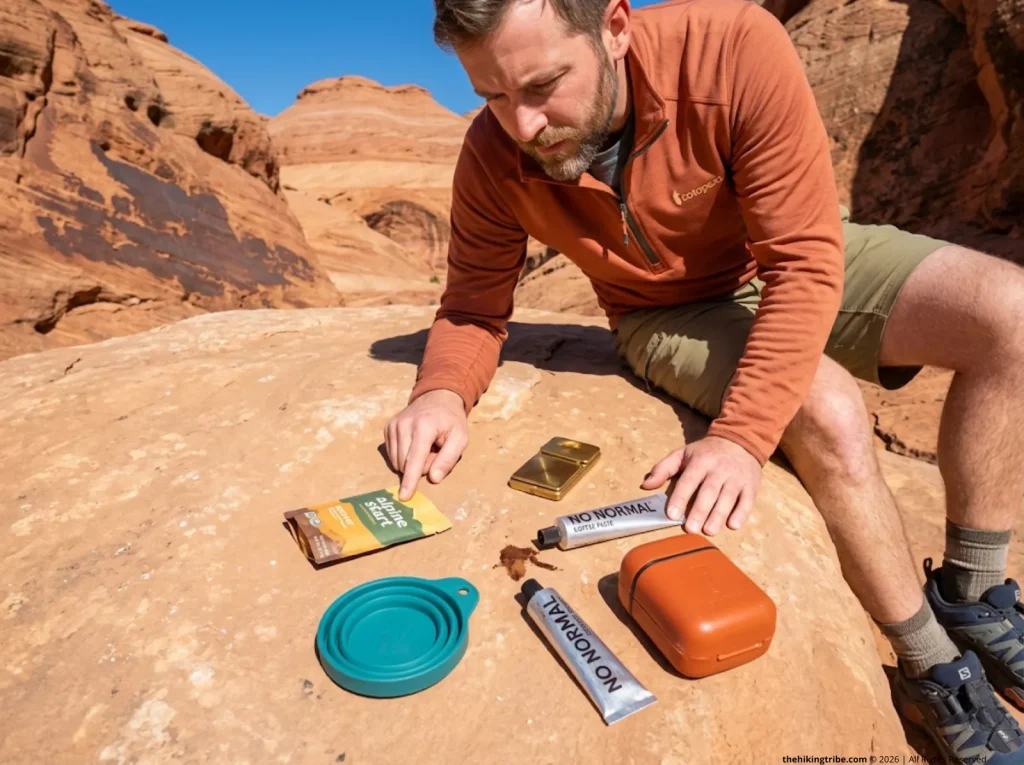
No Normal Coffee Paste comes in a 100-gram resealable tube (20 servings). Squeeze it straight as a caffeinated snack (43mg) or dissolve in water. No stove, cup, or cleanup. Downsides: fixed sweetness and lower caffeine density. But on high-mileage days, it fills the gap.
Precision Pour-Over Drippers: The Connoisseur’s Compromise
The Zebrang V60 Flat (2.4 oz) collapses flat like a Hario V60. The Snow Peak Titanium Cafe (0.5 oz) eliminates paper waste but lets fines bleed through, muddying the cup.
The full rig requires a manual burr grinder (Timemore C2 or Porlex Mini), paper filters, and sustained hot water for a proper steady-pour extraction. Flavor clarity and single-origin profile expression are unmatched on trail.
The trade-off: that 2.0x WRF penalty makes pour-over a liability past 72 hours. Consider the 10-meal threshold for stove fuel efficiency when weighing whether the extra fuel is worth it.
AeroPress Go: Pressure Brewing for the High Alpine
At 11.4 oz, the AeroPress Go is the heaviest brewer here — and the only one that works above 10,000 feet. Manual pressure forces water through the coffee bed, assisting extraction even below the SCA brewing standards for water temperature. The inverted method maximizes contact time, and spent coffee compresses into a dry puck — the cleanest pack-out of any fresh-brew method.
Per LNT Principle 3: Dispose of Waste Properly, anything you brew with fresh grounds on trail must come out with you. No exceptions.
Brewing at Altitude: Why Your Coffee Tastes Wrong Above 10,000 Feet
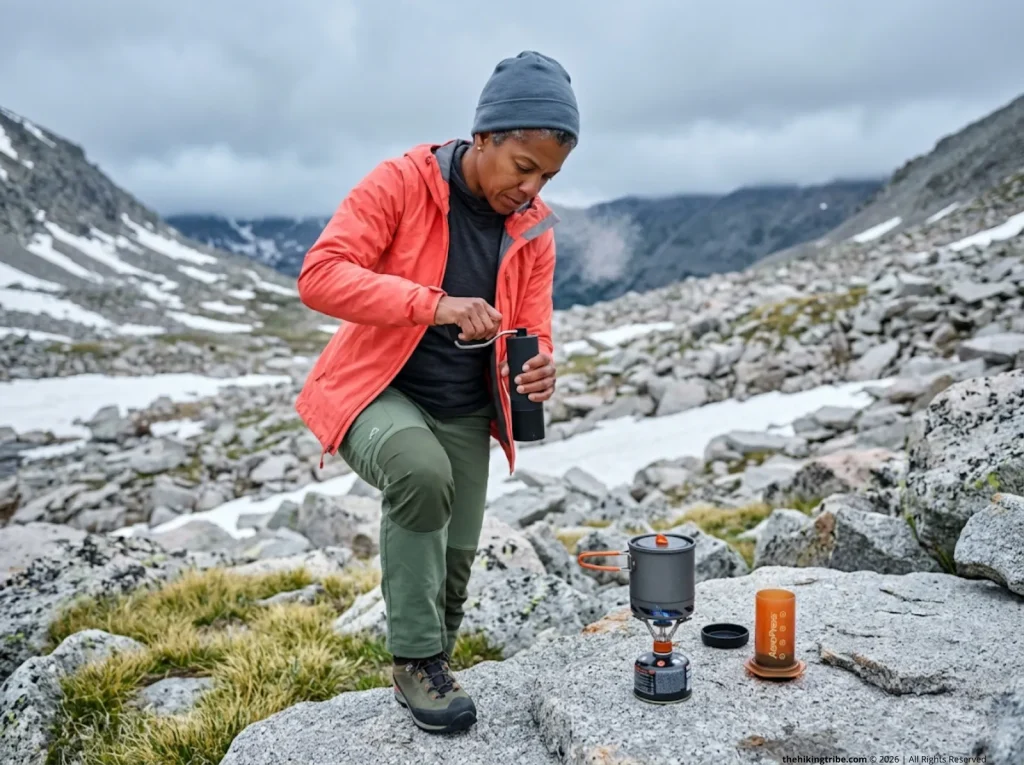
The Boiling Point Problem: When Water Can’t Do Its Job
Water’s boiling point drops approximately 2°F per 1,000 feet of elevation gain. At 10,000 feet, it boils at roughly 193.5°F — below the SCA’s recommended extraction window of 195°F to 205°F. Below that threshold, water can’t dissolve the heavier sugars and oils that give coffee its body. The result is thin, sour, under-extracted brew.
At 14,411 feet on Mt. Whitney, water boils at just 185°F — a thermal dead zone for drip methods. Understanding the physics of boiling points at elevation matters as much for your coffee as for cooking camp meals.
Pro-Tip: At 7,000 feet, the boiling point sits at 198°F — right in the sweet spot of the SCA “Golden Cup” range. If you’re a pour-over devotee, plan your coffee ritual at this elevation band. The water is hot enough for full extraction without needing to cool first.
The Altitude Adjustment Matrix: Grind Finer, Steep Longer
Compensate for lower water temperature by increasing surface area: grind finer. For every 3,000 feet of gain, adjust your manual burr grinder (Timemore C2, Porlex Mini) one notch finer than sea-level baseline. Above 8,000 feet, increase contact time by 25%. Insulate your vessel — a Snow Peak Ti-Double H450 (3.5 oz) or neoprene cozy prevents rapid heat loss during the 4-minute draw-down.
The AeroPress Go’s manual pressure forces extraction, making it the superior tool above 10,000 feet where pour-over fails.
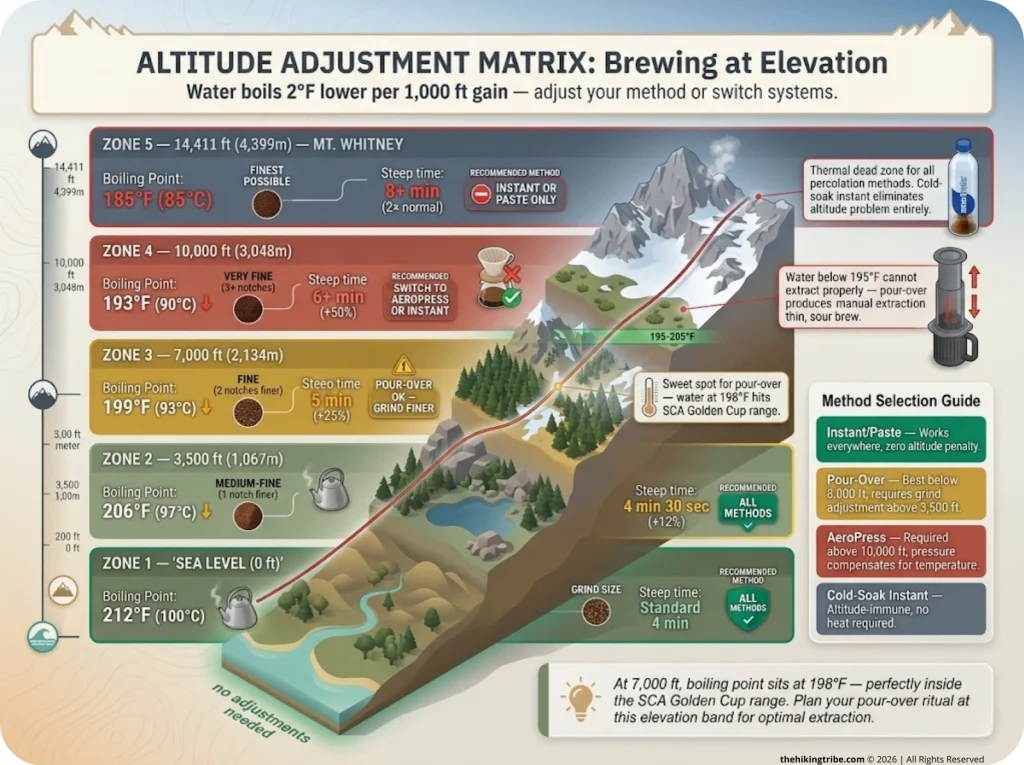
When to Abandon Fresh Brew Entirely
Above 12,000 feet, the physics of extraction work so aggressively against percolation methods that instant coffee or paste becomes the pragmatic choice — even for flavor-conscious hikers. Cold-soaking specialty instant in a bottle eliminates the altitude problem entirely: no heat required, no extraction variables, just caffeine and flavor.
The AeroPress Go remains the exception. Its pressure-driven extraction can still produce acceptable results at extreme altitude, but it demands a fine grind and extended steep time that tests your patience when your fingers are numb.
Caffeine Strategy: Getting the Most Stimulation Per Gram
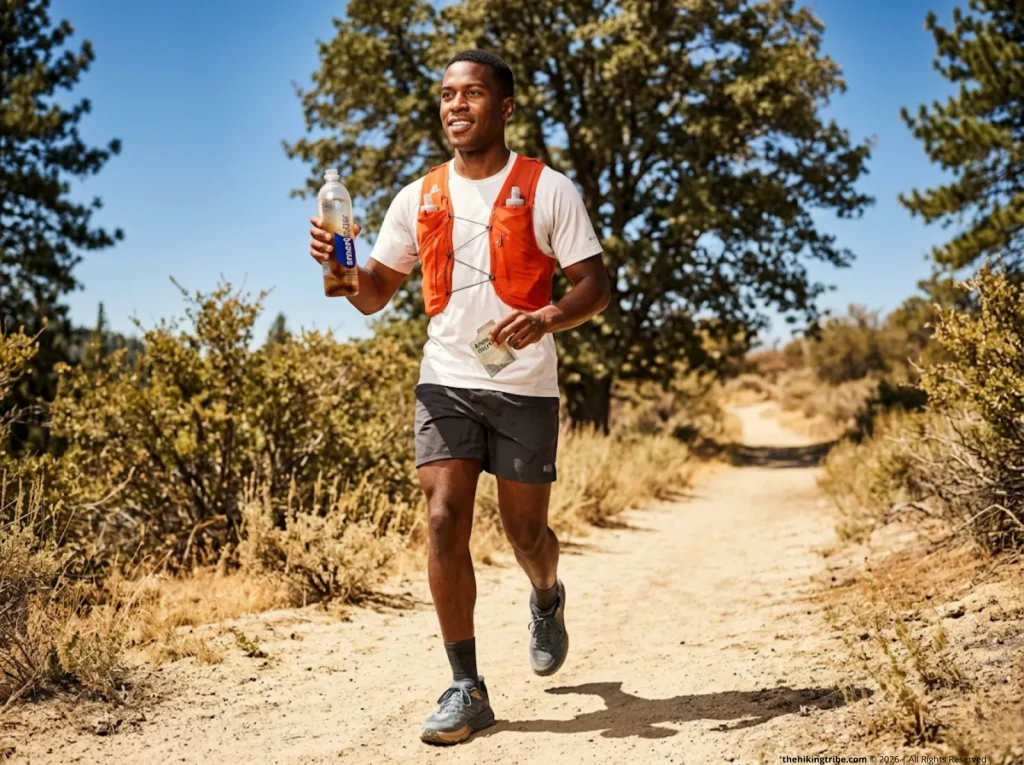
For the gram counter who tracks every ounce in LighterPack, caffeine is a consumable with a measurable weight-to-caffeine ratio. Starbucks VIA delivers roughly 40mg per gram. Alpine Start edges higher at 48mg/g. No Normal Paste falls behind at 8.6mg/g. Fresh-brewed AeroPress or pour-over lands around 4.5-6.0mg per gram of combined gear and coffee weight — the least efficient by a wide margin.
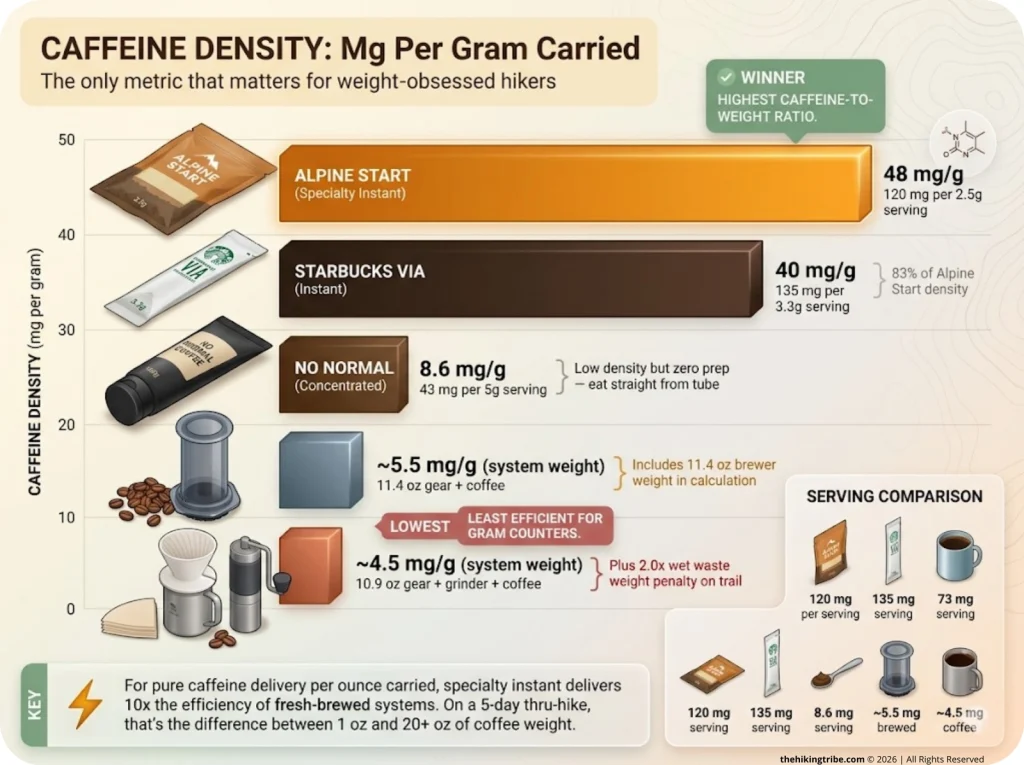
Caffeine also does real physiological work at altitude. Studies in simulated hypoxia at 2,000m to 4,300m showed it improved time-to-exhaustion by up to 54%. There’s a thermogenic effect too — increased core temperature can be protective in cold alpine conditions, though it bumps sweat rate by about 21%, so strict hydration discipline matters on hot days. And no, coffee doesn’t dehydrate you on trail. Clinical studies at 3,000m+ found no meaningful difference in hydration between caffeine and placebo groups.
The real danger? Skipping your dose. Caffeine-dependent hikers who go without develop headaches that mimic early-stage Acute Mountain Sickness, leading to unnecessary evacuations. Always carry your dose. The tactical play for thru-hikers: one 135mg instant at wake-up, one 43mg paste in the afternoon. If you’re heading above 10,000 feet, pair your caffeine strategy with getting your acclimatization schedule right.
The No-Cook Coffee Revolution: Cold Soak, Paste, and Stoveless Rituals
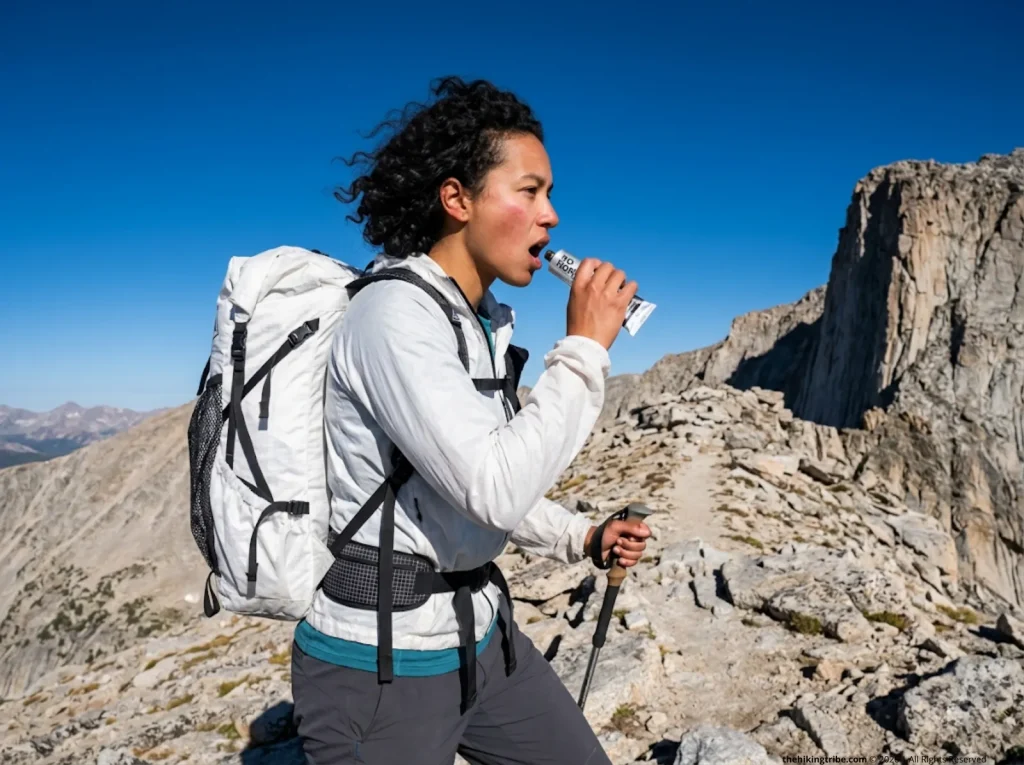
The fastest-growing trend in trail coffee has nothing to do with better brewers. It’s about eliminating the stove entirely.
Cold-Shaking and Coffee Paste: Zero-Setup Caffeine
Specialty freeze-dried instant dissolves fully in cold water. Pour a packet into a recycled SmartWater bottle, shake for 15 seconds, drink while walking. Thru-hikers call this “constant forward progress” — and once you’ve tried it on a 25-mile day, you understand why. If you’re building a stoveless kit, cold-soak coffee fits directly into stoveless meal planning for the trail without adding a single piece of gear.
No Normal Coffee Paste takes it further: squeeze it directly into your mouth as a caffeinated snack. At 43mg per 5-gram serving, it’s comparable to commercial energy gels but with real coffee flavor. No stove, no cup, no water, no waste.
When Stoveless Fails: The Flavor Floor
Be honest: cold-soak and paste methods trade flavor complexity for convenience. On a 3-night trip, carrying a pour-over is justifiable. On a 7-day segment, the weight math demands going stoveless.
Pro-Tip: The “hybrid approach” gives flavor-conscious hikers the best of both worlds — AeroPress for base camp mornings when you have time, instant packets for on-trail afternoons when you don’t.
Leave No Trace Coffee: Why Your Grounds Aren’t “Natural Fertilizer”
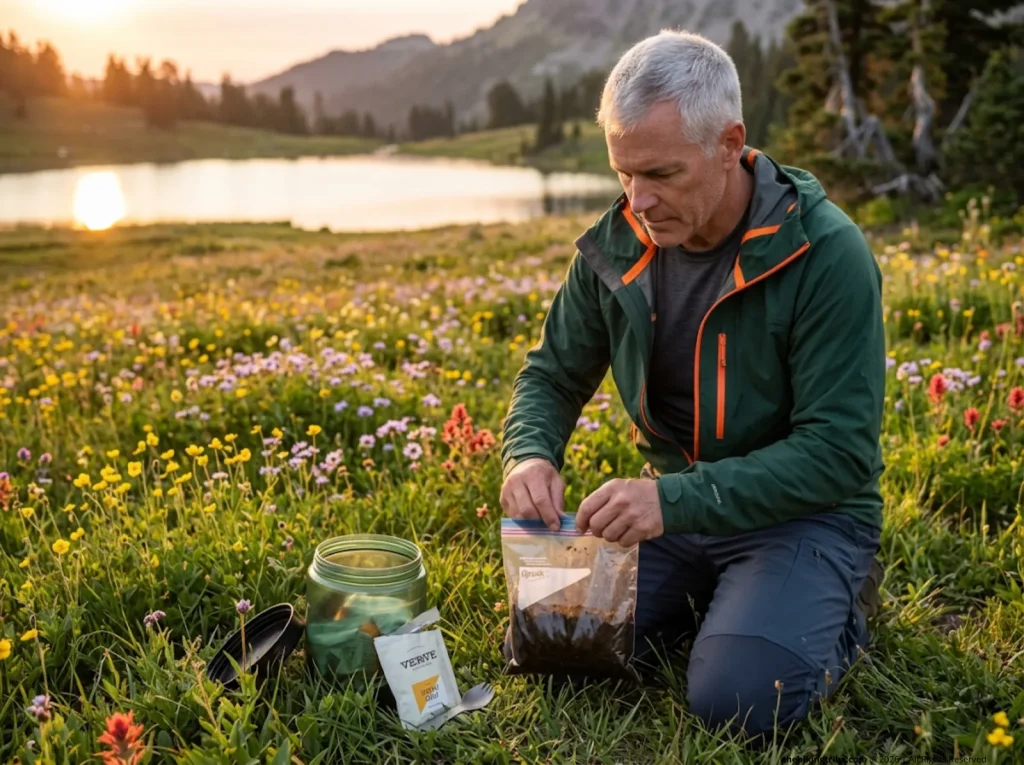
“Coffee grounds are organic, so they’re fine to scatter.” I hear this on trail constantly. It’s wrong.
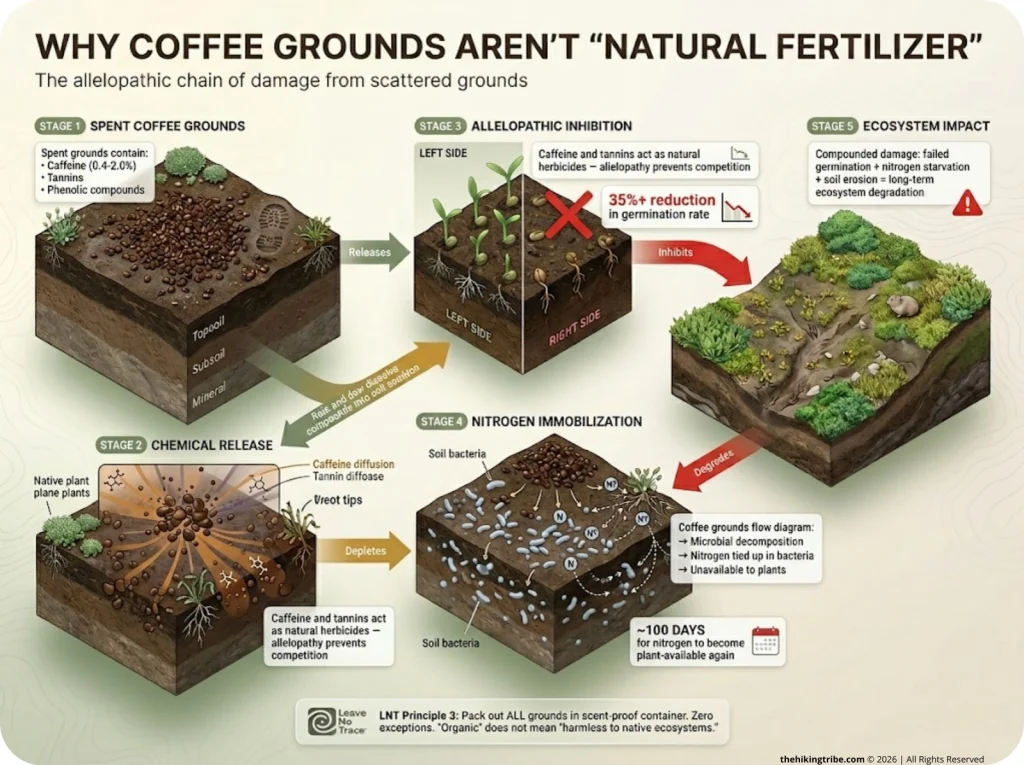
Allelopathy and Phytotoxicity: Coffee Grounds Kill Plants
Spent grounds contain residual caffeine, tannins, and phenolic compounds that act as natural herbicides — an evolutionary defense called allelopathy. Research from Oregon State University and Washington State University found raw grounds reduce germination and plant growth by over 35% in native soils. “Nitrogen tie-up” compounds the problem — soil microbes decompose carbon-rich coffee, making nitrogen unavailable to alpine flora for approximately 100 days. In cold environments, decomposition takes far longer.
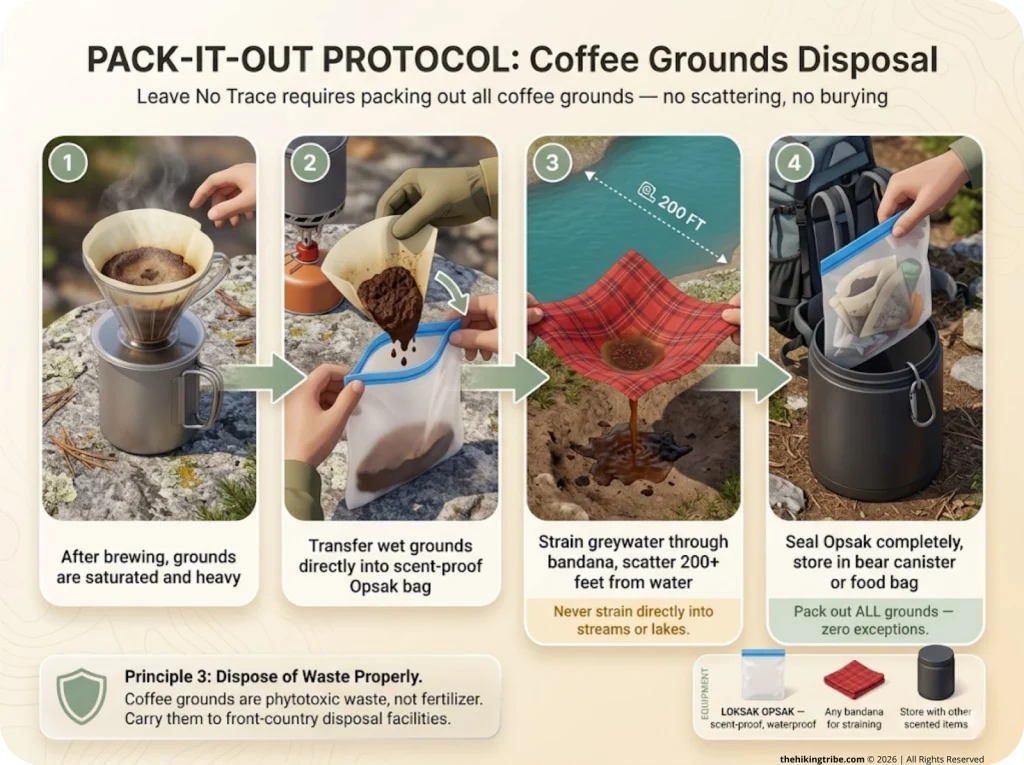
The Pack-It-Out Protocol
LNT Principle 3 mandates: fresh grounds go in a scent-proof, waterproof bag (Opsak) and leave the wilderness with you. Greywater from press or mesh filters must be strained and scattered at least 200 feet from water sources. For the full framework, read the complete guide to Leave No Trace ethics.
Instant coffee is the ethical default for high-traffic corridors. Zero-waste profile: packets dissolve completely, leaving only a foil wrapper under 1 gram. For the JMT, Wonderland Trail, and the Enchantments, choosing instant is stewardship.
Choosing Your System: Three Hiker Profiles, Three Rigs
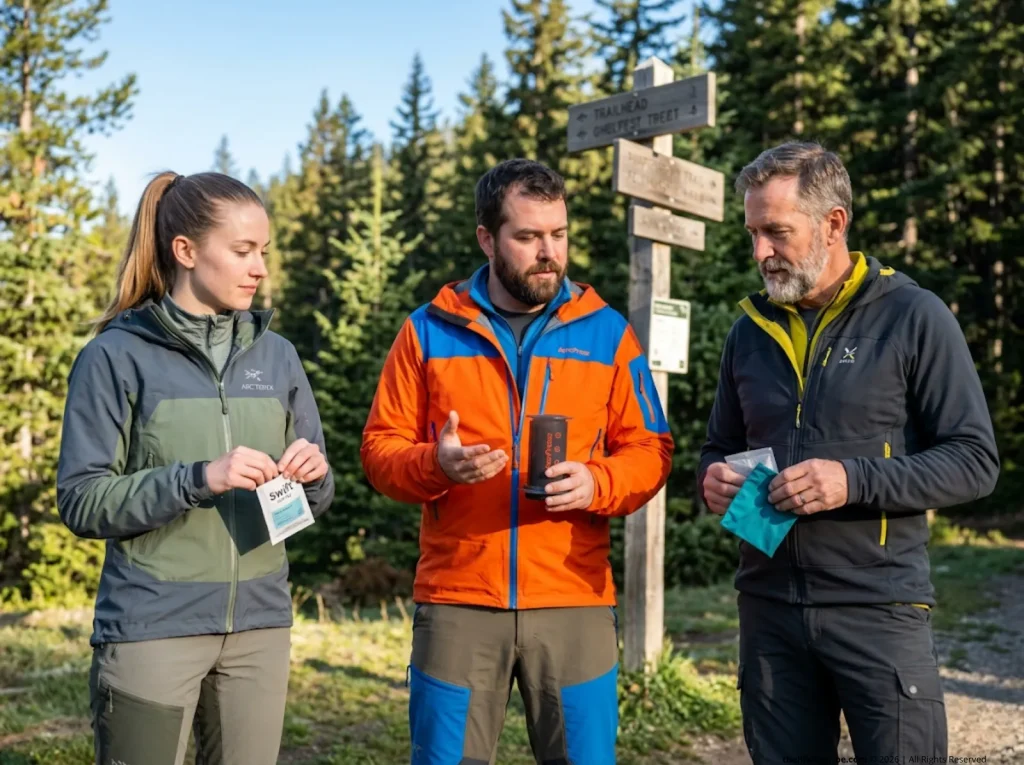
Every coffee argument eventually lands on “it depends.” Here’s what it depends on.
The Thru-Hiker (Constant Forward Progress)
Primary system: specialty instant (Swift Coffee, Alpine Start). Cold-shake into a SmartWater bottle while walking. Zero setup time.
Caffeine strategy: one 135mg dose at wake-up, one 43mg paste boost in the late afternoon. Total added weight: under 1 oz per day. Pack-out mess: zero. If miles are your metric, this is the only system that makes sense.
The Peak Bagger (High-Alpine Technical)
Primary system: AeroPress Go with inverted method and fine grind. Must-carry backup: Excedrin or caffeinated gels to prevent withdrawal headaches confused with AMS.
Altitude compensation: grind one notch finer per 3,000 feet of gain. Extend steep time by 25%. Total system weight: roughly 11.4 oz gear + coffee. Pack-out: dry puck, minimal mess. If you’re relying on a stove for your AeroPress setup, our windscreen fuel efficiency field test data will help you squeeze more brews from every canister.
The Weekend Warrior (Flavor-First, Short Trips)
Primary system: Zebrang V60 Flat with Hario V60 #2 paper filters. Use the “Dry-and-Bag” technique to reduce water-retention mass. Brew into a Snow Peak Ti-Double H450 insulated mug (3.5 oz) to maintain thermal stability during the 4-minute draw-down.
Best for trips under 72 hours where the wet-grounds penalty stays manageable and you’d rather carry the extra weight than drink anything less than your best cup.
Conclusion
Three things to take away from all of this.
“Dry weight” is a lie. The only honest metric for a trail coffee system is Total System Weight — hardware + dry coffee + accumulated wet waste + fuel. Over a 5-day trip, that wet-grounds penalty alone adds over 1.3 lbs to your pack.
Altitude rewrites the rules. Above 10,000 feet, water can’t extract coffee properly. Grind finer, steep longer, or switch to pressure (AeroPress Go) or instant. Fighting the physics of boiling-point depression is a losing proposition.
Instant coffee is the ethical default. Zero waste, zero phytotoxicity, zero LNT violations. For fragile ecosystems and high-traffic corridors, choosing instant isn’t settling — it’s stewardship.
On your next multi-day trip, weigh your wet coffee grounds at the end of day three. Then compare that number to the weight of a 5-pack of specialty instant. Let the scale make the argument that marketing never will.
FAQ
Is instant coffee the best for backpacking?
For trips longer than 72 hours, yes. Specialty freeze-dried instant delivers the highest caffeine-to-weight ratio and zero pack-out waste. For shorter trips, a pour-over or AeroPress earns its weight.
How do you dispose of coffee grounds on the trail?
You pack them out. Coffee grounds are phytotoxic — caffeine and tannins inhibit native plant growth. Store spent grounds in a scent-proof Opsak bag and carry them to a front-country facility.
What is the lightest way to make coffee while hiking?
Cold-shaking a specialty instant packet in a water bottle while walking. About 0.1 oz per serving. No stove, no pot, no cleanup.
AeroPress vs. pour-over for backpacking?
The AeroPress Go wins above 8,000 feet because manual pressure compensates for the lower boiling point. Below 8,000 feet, a collapsible dripper (Zebrang V60, 2.4 oz) delivers better flavor clarity at lower weight — but you pay the wet-grounds pack-out weight penalty on longer trips.
Does coffee dehydrate you on the trail?
No. Clinical studies at 3,000m+ found no significant difference in hydration between caffeine or placebo groups. However, caffeine bumps sweat rate by about 21%, so maintain hydration protocols on hot days.
I've spent more than a decade researching hiking gear and trail technique. I read the specs, the forum threads and the long-term reviews, and every pick here comes with what it gets wrong.
End of the trail
You read every mile of this one. Here's where the trail goes next.