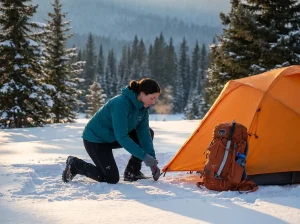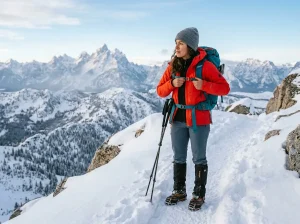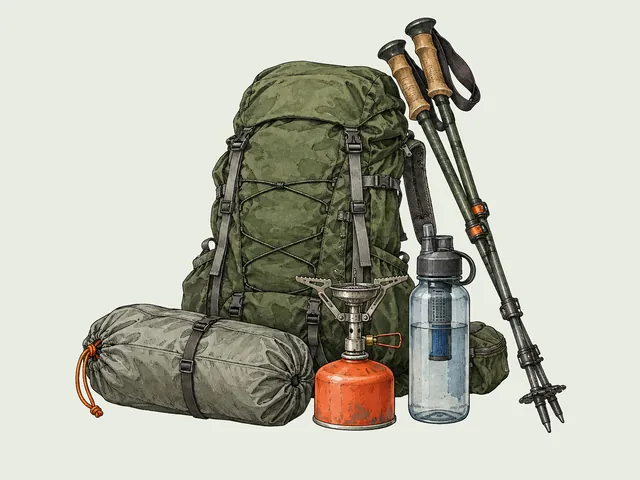










Standing at a winter trailhead, the world muffled and transformed by a vast expanse of untracked snow. The familiar summer path is gone, replaced by a medium of variable depth and density. In this moment, you recognize that your summer knowledge is insufficient; winter demands a different kind of expertise. This isn’t just about surviving the cold; it’s about learning to move through it with grace and efficiency, whether on flat terrain or steep slopes.
This guide moves beyond generic advice to provide a comprehensive, data-backed framework that deconstructs the science of snow travel into an actionable algorithm. Our goal is to empower you to translate theoretical knowledge into the confident instinct of a seasoned winter hiker. We will explore the physics of flotation, deconstruct the anatomy of modern snowshoes, and walk through a precise sizing algorithm. By the end, you won’t just be buying gear; you’ll be choosing the right snowshoes for your winter adventures, ensuring every step you take in the winter backcountry is stable, efficient, and aligned with the principles of a dedicated hiker.
What is the Foundational Science of Staying Afloat?
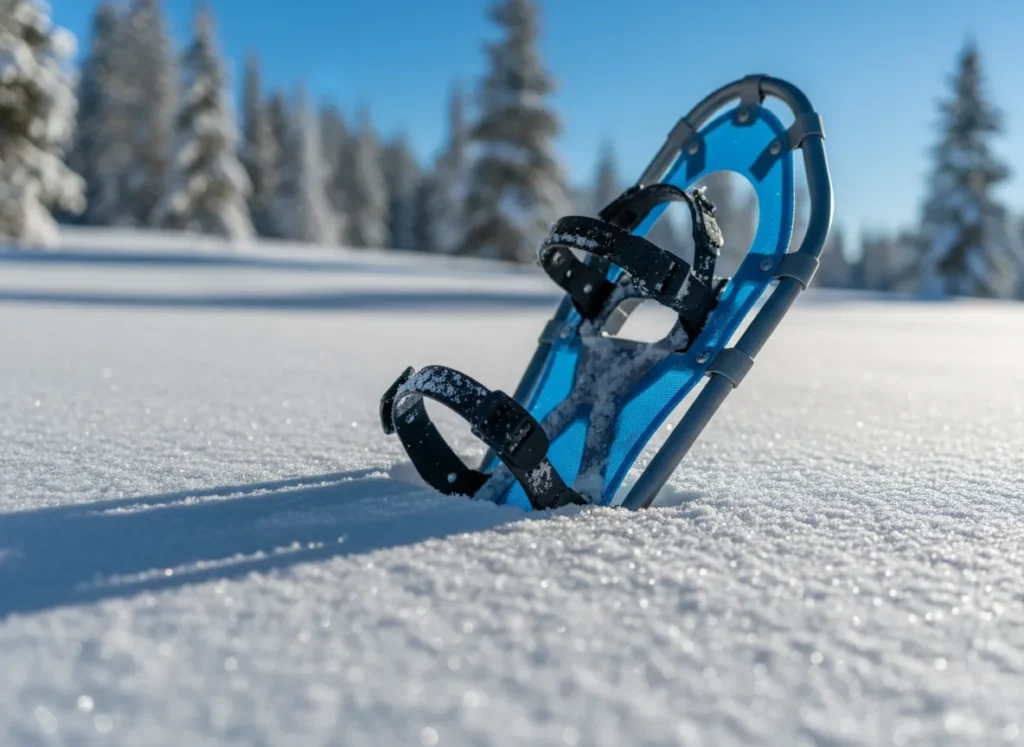
Before we can talk about comparisons of models or features, we have to understand the fundamental principles that make snowshoeing possible. This isn’t just academic; a solid grasp of the core science is what allows you to look at a snow-covered terrain, analyze the snow conditions, and know precisely what your gear can—and cannot—do. This is the foundation for choosing snowshoes wisely.
How Do Snowshoes Use Flotation to Defeat Deep Snow?
The magic of a snowshoe lies in a single, elegant principle: flotation. By distributing your body weight over a large surface area, you drastically reduce the pressure, measured in pounds per square inch (PSI), that you exert on the snow. Every snowpack has a structural failure point; as long as you keep your PSI below that threshold, you stay on top.
This is a practical application of one of the fundamental principles of buoyancy. You can think of a deep snowpack as a very dense fluid. Just as a boat displaces water to create an upward buoyant force, a snowshoe displaces snow. According to Archimedes’ Principle, the buoyant force pushing you up is equal to the weight of the snow you displace. The larger the snowshoe, the more snow it displaces, and the greater the buoyant force.
However, it’s crucial to understand that flotation is a dynamic equilibrium, not an absolute state. The goal isn’t to stay perfectly on top of the snow like a water strider. In soft, deep powder snow, you will still sink a few inches, even with correctly sized snowshoes. The objective is to sink only a manageable amount. This reframes our goal from simply “not sinking” to “sinking efficiently.” It’s a calculated balance, weighing the energy cost of lifting a larger, heavier snowshoe with every stride against the exhausting, leg-burning cost of post-holing with one that’s too small.
Why Does Snow Density Dictate Your Gear Choice?
Flotation is only half the equation; the medium you’re trying to float on is constantly changing. Snow is not a uniform substance. Its density, moisture content, and consolidation under different dry snow conditions are the critical variables that dictate your gear selection. Understanding the snowpack is as important as understanding your snowshoe design.
You’ll encounter a wide spectrum of snow conditions, but they generally fall into two categories. Light, dry, powdery snow, often found in cold, inland continental climates, has a very low density and offers minimal structural support. To stay afloat in these bottomless conditions of deep snow, you need to maximize surface area, which means a larger (longer) snowshoe. On the other end is the wet snow or hard-packed snow—the “Sierra Cement” characteristic of maritime climates or landscapes that have undergone thaw-freeze cycles. This dense snow is far more supportive. Here, a smaller snowshoe can provide more than enough flotation while offering the significant advantages of being lighter, less cumbersome, and far more maneuverable.
This relationship creates the fundamental design tension in every snowshoe ever made: the need for high flotation conflicts directly with the need for agility and walkability. A massive snowshoe that keeps you high and dry in deep powder feels like a pair of clown shoes on a packed trail. A small, nimble snowshoe that’s a joy on firm snow will have you sinking to your waist in unconsolidated fluff. Every feature on a snowshoe is an engineering compromise attempting to solve this tension. Modular Flotation Tails, a key snowshoe add-on offered by MSR, are a direct and brilliant solution, allowing a hiker to use a smaller base snowshoe for most conditions and simply add surface area when needed for a deep snow day or a heavy pack. For anyone traveling in variable snow, understanding snow and its properties is a key component of a safe and a complete winter hiking system. For a deeper dive into snowpack analysis, the national avalanche awareness resources are an invaluable tool.
How is a Modern Snowshoe Engineered for Winter Travel?
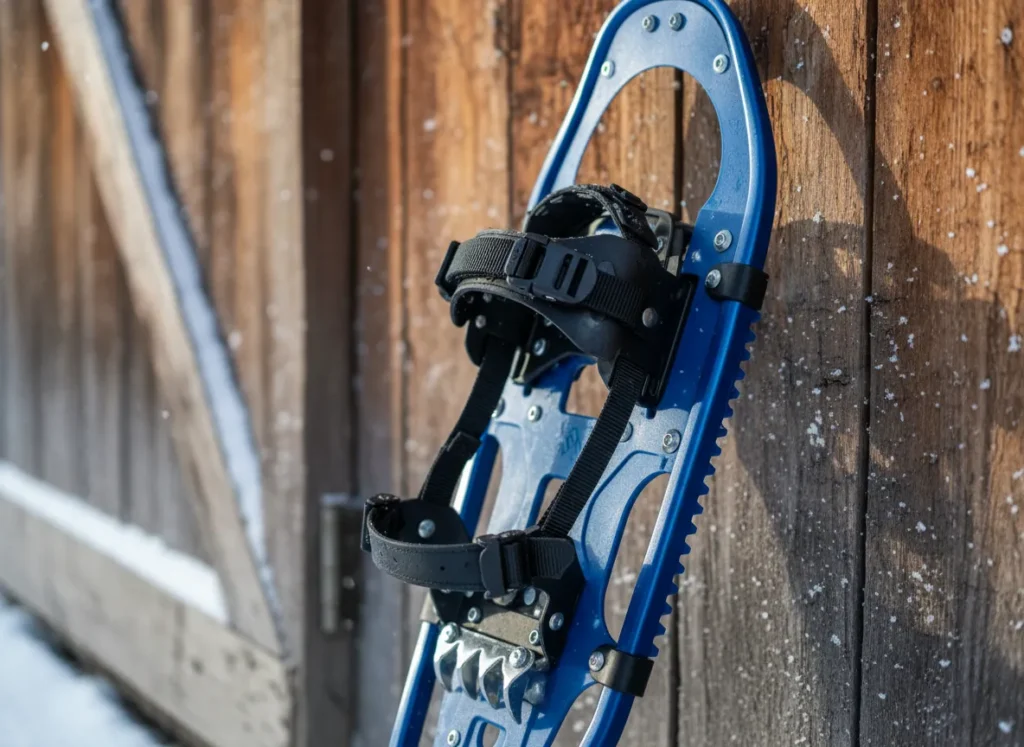
Understanding the tension between flotation and agility is the key to decoding the physical parts of a snowshoe. Every component is designed to solve a specific problem you will face in the winter backcountry. By learning to analyze these parts, you can look at a snowshoe’s specs and accurately predict its performance on the trail.
What are the Key Differences in Frames and Decking?
The frame and snowshoe deck work together as the chassis of the snowshoe. The frame provides structural integrity and shape, while the decking creates the surface area for flotation. Your choice of materials directly impacts durability, weight, and even noise level.
- Aluminum-frame snowshoes: This is the classic modern snowshoe construction. Lightweight hollow aluminum tubing forms the perimeter, with a durable, flexible decking material (like TPU or coated nylon) stretched across it. This design, seen in models like the MSR Lightning, offers a natural, springy flex that absorbs impact and promotes stride efficiency. It excels in powdery snow where a high flotation-to-weight ratio is paramount.
- Composite snowshoes: In this design, the frame and deck are integrated into a single, solid piece of hard plastic, like the workhorse MSR Evo. These composite-deck snowshoes are exceptionally durable and often feature aggressive traction elements molded directly into the deck. They are superior for mountainous and icy terrain where durability and an uncompromising grip are non-negotiable, though they can have a higher noise level on hard-packed snow.
- EVA foam snowshoes: A recent innovation, these foam snowshoes are made from a single piece of lightweight, flexible foam. They are exceptionally quiet and often have a “rocker” shape that promotes a very natural stride, making them ideal for packed trails where comfort is the main priority. They also offer a degree of warmth/insulation for your feet, but their integrated traction is generally less aggressive.
The material composition is a direct map to the snowshoe’s intended use and terrain suitability. While the deck provides flotation, it’s the specialized traction/crampons systems that allow you to move safely and confidently across varied and challenging terrain.
Which Traction Systems Provide Grip on Varied Terrain?
Winter terrain is rarely flat and soft. Traction systems are what provide the crucial grip needed to ascend, descend, and traverse slopes safely. The aggressiveness of these systems should directly correlate with the steepness and potential iciness of your intended environment.
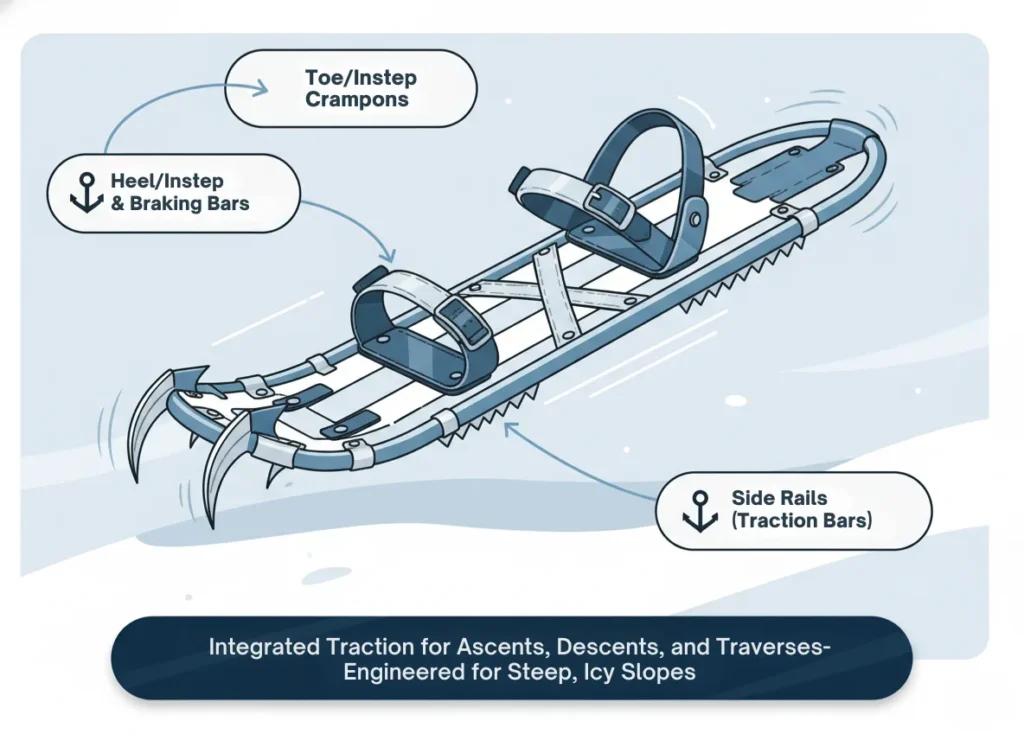
The primary components work in concert:
- Toe/Instep Crampons: Located under the ball of your feet, these are the primary source of traction for going uphill. As you weight your foot and your heel drops, these metal teeth bite into the snow, providing purchase for every kick-step on an ascent.
- Heel Crampons & Braking Bars: Positioned under your boot heel, these provide critical grip on descents. They prevent the rear of the snowshoe from slipping out from under you, acting like an anchor. Braking bars are often integrated under the deck of composite snowshoes.
- Side Rails (Traction Bars): These are serrated teeth, also called traction rails, running along the outside edges of the frame or deck. They are absolutely essential for lateral stability on side-hill sections, preventing you from side-slipping when traversing a slippery slope. Models designed for serious mountain terrain, like MSR’s Ascent Series snowshoes with their 360° Traction™ frames, have side rails that run the full length of the snowshoe for superior edge control on ice and hardpack.
These elements, typically made of steel for durability, provide secure footing in all directions. It’s important to understand this integrated system when differentiating between microspikes and crampons and other standalone traction devices. A snowshoe’s traction is a built-in, comprehensive solution.
How Do Binding Systems Link Your Boot to the ‘Shoe?
Traction gives you grip, but it’s the binding system that transfers power from your body to the snowshoe. The binding is arguably the most critical component for user experience, affecting comfort, security, and efficiency. It’s also the most common point of mechanical failure.
There are two primary articulation types:
- Rotating/floating bindings: Sometimes called hinged bindings, the binding platform pivots freely from a point near the ball of the foot. This is the standard for rolling and mountain terrain. As you step, the tail of the snowshoe drops, shedding powder snow and allowing the toe crampon to engage deeply for efficient climbing. The downside is that it can make walking backward a bit tricky.
- Fixed bindings: The binding attaches the boot more rigidly to the deck, often with flexible webbing, causing the entire snowshoe to lift with each step. This promotes a more natural walking motion on flat, hard-packed trails but is less efficient for climbing. These are typically found on running snowshoes or entry-level recreational models.
Closure systems range from traditional nylon straps to secure ratcheting cable systems. High-end snowshoe bindings, like MSR’s Paragon Bindings, are engineered for maximum security and ease of use with gloves. The key attributes to look for are binding adjustability and binding compatibility with your specific footwear, from standard hiking boots to bulkier mountaineering boots.
Pro-Tip: Always carry a few ski straps or a small roll of duct tape in your winter repair kit. A simple strap binding that you can fix five miles from the trailhead with cold fingers is infinitely better than a complex, high-tech system that fails catastrophically.
Remember, the performance of any binding is directly related to the footwear it’s securing, making ensuring a perfect boot fit the other half of the comfort and performance equation. With a clear understanding of the snowshoe’s engineering, you now have the knowledge to apply a systematic algorithm for sizing.
How Do You Calculate the Correct Snowshoe Size?
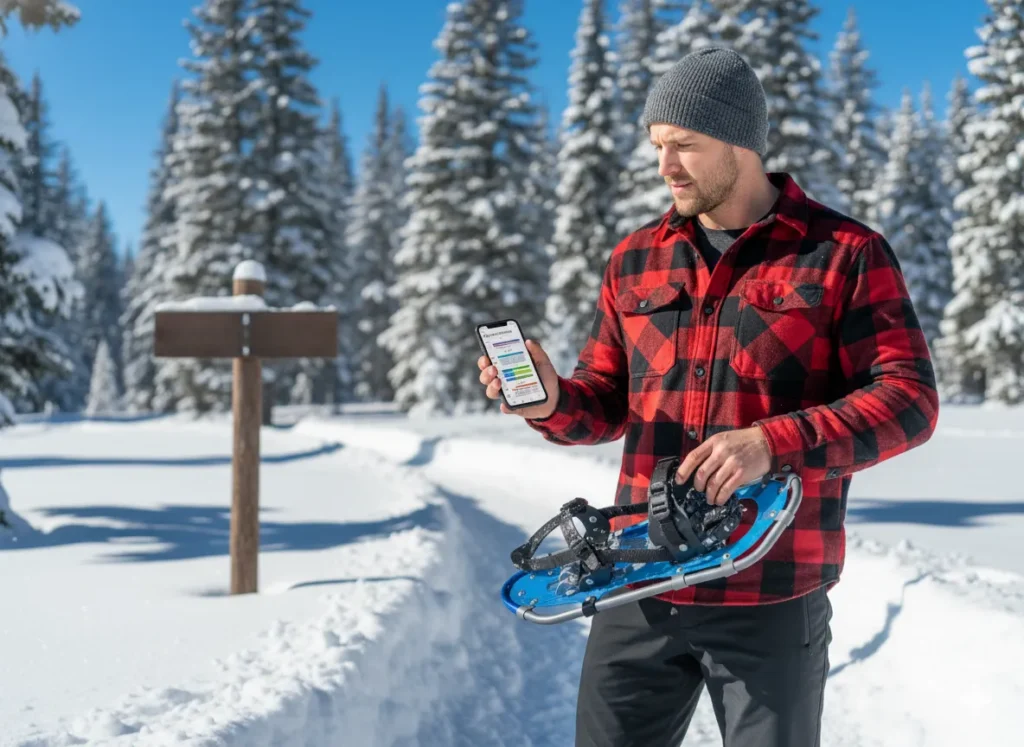
This is where we translate the science of flotation into a personalized calculation. Following this practical, step-by-step algorithm for how to choose snowshoes removes the guesswork and ensures you select the right snowshoe size/length for your body, your gear, and your adventures.
Step 1: How Do You Determine Your “Total Load”?
This is the single most common sizing error. Manufacturer sizing charts are based on Total Load, not just your user weight. Total Load is your body weight plus the weight of all the gear you are wearing and carrying: your pack, water, food, extra winter clothes, and safety equipment.
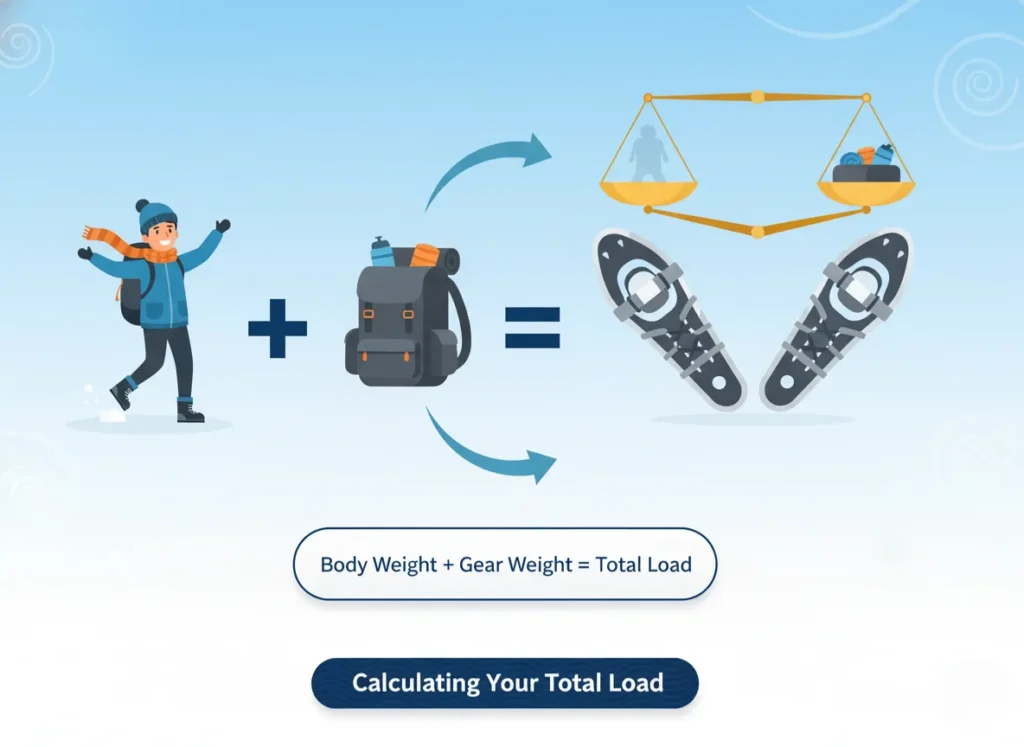
Failing to account for gear weight leads to undersizing and inadequate flotation, which forces you to expend significantly more energy with every step. The first filter is your intended activity, as this determines your baseline gear weight.
- Formula for Day Hikes: Total Load = Body Weight + ~15 lbs. A typical winter light pack with essentials, water, and extra clothing will fall in the 10-15 pound range.
- Formula for Multi-day/Backpacking Treks: Total Load = Body Weight + (Body Weight * 0.20). A loaded backpacking pack should not exceed approximately 20% of your body weight.
For a 150-pound person, this difference is significant. Their day-hike Total Load is ~165 lbs. For a backpacking trip, it jumps to ~180 lbs (150 + 30). This 15-pound difference is often enough to push a user into the next snowshoe size category, making activity type a primary determinant. It’s also why understanding how to properly pack your backpack efficiently is a critical winter skill.
Step 2: How Do You Interpret Manufacturer Sizing Charts?
Once you have this critical Total Load number, you can consult manufacturer charts with confidence. With your calculated Total Load, the next step is to look at manufacturer-specific sizing charts. It is critical to note that there is no universal industry standard; recommendations vary between brands like MSR and Tubbs Snowshoes, and even between different snowshoe models from the same brand.
These charts correlate a snowshoe’s length (e.g., 22″, 25″, 30″) with a recommended Total Load range in pounds. For example, a chart might recommend a 25″ snowshoe for a Total Load of 120-200 lbs. Always default to the specific chart for the exact model you are considering. Some charts, like those from MSR, are notable for including separate load recommendations for when their snowshoe tails are attached, showcasing their system-based approach. Other brands, like Tubbs, may have different charts for their traditional tubular frames versus their more modern Flex series. These charts give you a data-backed starting point, but the final decision requires applying some real-world trail wisdom.
Step 3: How Do You Refine Your Choice Using the “Majority Rule”?
The final step is to refine your selection based on the principle of the “Majority Rule.” This dictates that you should choose a size optimized for the conditions you will face 80% of the time, not for a rare, extreme event.
If your Total Load places you on the cusp between two sizes, the traditional advice was to always size up. This is now often obsolete. The modern, expert-level strategy is to select the smaller size that will support your load in most conditions and invest in a pair of Modular Flotation Tails. This approach maximizes maneuverability and efficiency for the majority of your trips while providing the versatility to add flotation on demand for those few deep powder days or heavy-pack trips. It is a far more efficient system than being burdened by oversized “clown shoes” on every single outing.
Pro-Tip: Before committing to a purchase, try to rent or demo a couple of different models or sizes on your local snowshoe zone. An hour of real-world experience on the type of snow you’ll actually be hiking on is worth ten hours of online research.
Finally, adjust your decision based on your region’s predominant snow type. For the packed trails or dense, maritime snow of the Pacific Northwest or New England, prioritize maneuverability by choosing the smallest size that supports your load. For the deep, light, unconsolidated powder of the Rockies or Utah, starting with a slightly larger base size may be justified. With your ideal size determined, the final piece of the puzzle is matching the ‘shoe’s specific features to your personal hiking style.
Which Snowshoe Model is Right for Your Specific Needs?
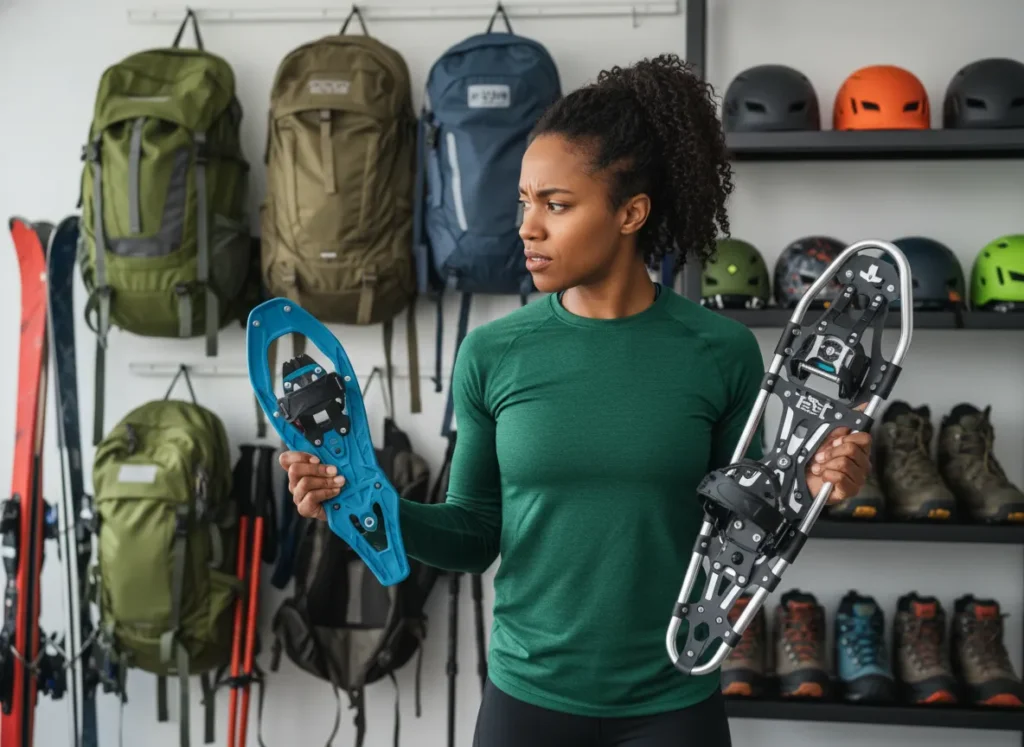
This is the final filter. Having determined the correct size, you now match the snowshoe’s design features to your intended use case. This is about aligning the tool with the terrain and your own biomechanics.
What Features Define Snowshoes for Flat and Rolling Terrain?
This category is for the Day Hiker and Recreationalist who will primarily be on established trails, groomed paths, and gentle terrain. These flat terrain snowshoes or rolling terrain snowshoes, often called general purpose snowshoes, prioritize comfort, ease of use, and a lower price range. A smaller overall size is preferred for better maneuverability. The traction system can be basic, with simple toe crampons providing sufficient grip for trail walking. A heel lift is not necessary for this type of terrain. The focus is on features that promote a comfortable, natural stride, such as the rocker shape of EVA foam models. For those who move fast, specialized running snowshoes are even lighter and smaller, designed for aerobic workouts on packed trails. For most casual snowshoers, a model from a brand’s Trail Series is a perfect starting point. This user has a clear list of essentials for a day hike, and their snowshoe choice reflects that focused scope.
What Features are Non-Negotiable for Mountain and Backcountry Terrain?
This category is for the Serious Trekker and Mountaineer venturing onto steep, ungroomed, and potentially icy slopes. For these mountain snowshoes, features shift from convenience to non-negotiable safety tools. The priorities are aggressive traction, absolute durability, and a secure binding system. A robust frame, either a durable composite model like the MSR Evo or a high-grade aluminum frame like the MSR Lightning, is essential. The traction system must be aggressive, featuring strong toe crampons, heel crampons, and full-length serrated side rails. Bindings must be highly secure and easily adjustable with gloves, such as MSR’s Paragon Bindings on their Ascent Series snowshoes.
For this category, a heel lift (also called a Televator or climbing bar) is a mandatory feature. This simple wire bail flips up under your heel, dramatically reducing calf strain on steep slopes by creating a more level platform for your boot. It mimics the feeling of walking up a staircase rather than a steep ramp, conserving critical energy for climbing. This user is often transitioning from day hiker to backpacker, and their gear must reflect the increased demands of backcountry pursuits.
Why Do Women’s and Kids’ Models Have Specific Designs?
Gender- and age-specific models are not a marketing gimmick; they are based on significant biomechanical and anatomical considerations.
- Women’s snowshoes: This gender-specific design has a primary difference in the frame shape. They are narrower and have a more pronounced tapered tail to accommodate a typically narrower walking gait. This tapered design is crucial for providing necessary clearance, preventing the inner frames from colliding and creating a tripping hazard. It allows for a more natural, safe, and efficient stride for any user with a narrow gait, regardless of gender.
- Kids’ snowshoes: For kids, age-specific sizing is based on weight, not age, and the focus is on safety and ease of use. Models like the MSR Shift or Tyker from a brand’s Youth Series have traction systems made of molded plastic rather than sharp steel, which is tough enough for sloped terrain but won’t easily puncture snowsuits. The binding is the most critical feature. Simple bindings like the DuoFit Bindings are designed so a child can operate them while wearing mittens. A technically advanced snowshoe that a parent must constantly readjust for a frustrated child is a functional failure. For parents, choosing the right hiking shoes for toddlers is a similar process of prioritizing a proper fit and function for casual snow play.
Choosing the right snowshoe is the first step; integrating it into a complete, functional system is the mark of a true winter hiker.
How Does a Snowshoe Integrate into a Complete Winter System?
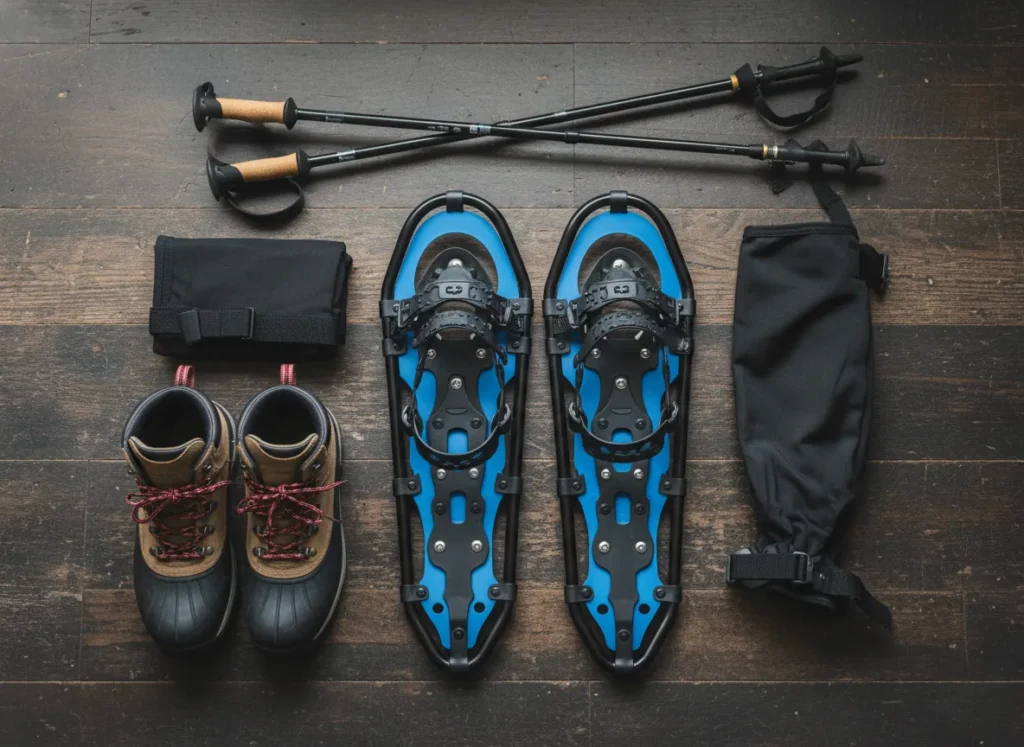
Snowshoes are not standalone gear. They are one part of a holistic system of equipment, skills, and ethics required for safe and enjoyable winter hiking. Neglecting the other components, like snowshoe accessories, can undermine even the most perfect snowshoe choice.
What is the Proper Footwear Synergy for Snowshoeing?
The connection between your foot, boot, and snowshoe is paramount.
- Boots: The ideal winter boot is warm, waterproof, and provides adequate ankle support. For most conditions, a standard pair of waterproof hiking boots is sufficient. Avoid overly insulated boots for high-exertion activities, as excessive sweat can lead to wet, cold feet and blisters. Critically, ensure your chosen boot’s size and bulk can be accommodated by the snowshoe binding.
- Gaiters: These are essential add-ons/accessories for travel in deep or powdery snow. Knee-high, waterproof, and breathable gaiters are required. They create a seal over the top of your boot, preventing snow from entering from above. The lower portion should be made from a durable, abrasion-resistant fabric like Cordura to withstand inevitable contact with the snowshoe frame and crampons. For a full breakdown, consult The Hiker’s Guide to Gaiters.
Why are Trekking Poles Essential and How Are They Used?
For any serious snowshoeing on varied terrain, trekking poles are a critical component, not an optional accessory. They provide two additional points of contact, significantly improving balance and reducing impact on your joints. They also engage your upper body, creating a more efficient, full-body propulsion system.
The one essential feature is that standard trekking poles must be fitted with large snow baskets. These wide discs prevent the pole tips from sinking deep into the snow, which would render them ineffective. Adjustable-length poles are superior as they can be modified for the terrain:
- Uphill: Shorten poles by 5-10 cm for a more effective push-off.
- Downhill: Lengthen poles by 5-10 cm to maintain an upright posture and increase stability.
- Traversing: Shorten the uphill pole and lengthen the downhill pole to keep your shoulders level.
Mastering hiking pole length and adjustment is a core skill for efficient winter travel.
What is the Responsible Hiker’s Code for Winter?
Armed with the right system of gear, you can now move through challenging winter landscapes responsibly. Adhering to Leave No Trace principles is a core tenet of hiking, with unique considerations for winter.
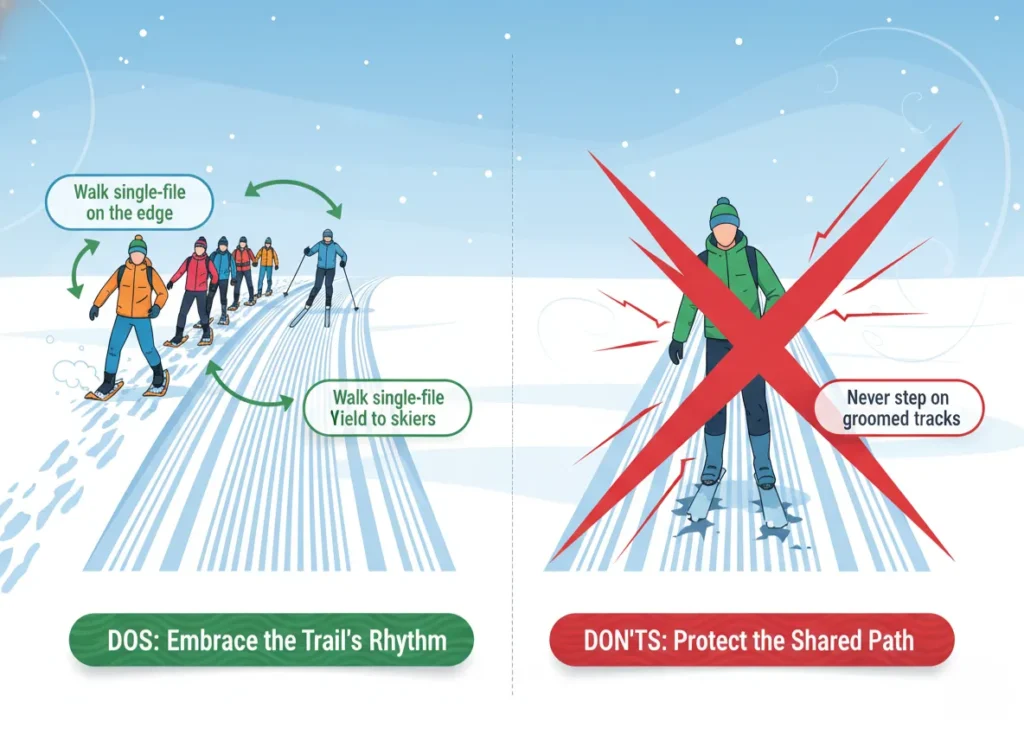
- Travel on Durable Surfaces: In winter, deep snow cover is the durable surface, protecting the fragile vegetation underneath. Choosing a snowshoe with adequate flotation to avoid post-holing is part of this principle.
- Trail Etiquette: The cardinal rule is to never walk or snowshoe on groomed cross-country ski tracks. The grooves set by a grooming machine are essential for classic skiing and are easily destroyed by foot traffic. On shared-use trails, snowshoers should walk single-file on the edge of the trail to preserve the main track for other users.
- Respect Wildlife: Winter is a time of high stress for animals. Observe from a great distance and never follow them, as this forces them to expend precious energy reserves.
This comprehensive approach—blending science, gear knowledge, and ethics—is foundational to the Leave No Trace principles. For an authoritative overview, the Leave No Trace Center for Outdoor Ethics is the primary resource, and you can explore our complete guide to Leave No Trace for a deeper dive.
Conclusion
Selecting the ideal snowshoe is a data-driven algorithm, not a simple guess. It begins by calculating your Total Load—your body weight plus all your gear. You then use that number to consult manufacturer-specific sizing charts, refining your choice with the “Majority Rule” by selecting the smaller, more agile size for most conditions and adding modular tails for deep powder. From there, you match the snowshoe’s features to your primary terrain: simpler general snowshoes for rolling trails, and mountain snowshoes with aggressive traction and mandatory heel lifts for mountain travel. Finally, you must recognize that a snowshoe is part of a complete winter system that requires appropriate boots, gaiters, and trekking poles with snow baskets for safety and efficiency.
You now have the complete blueprint for choosing the right snowshoes. Put this knowledge into practice and share your winter adventures and gear insights in the comments below.
Frequently Asked Questions about Choosing Snowshoes
What size snowshoes do I need for my weight?
You need to calculate your Total Load, which is your body weight plus the weight of your gear (typically 15 lbs for a day hike), and then match that number to the manufacturer’s sizing chart for the specific model you’re considering. As a general rule, loads up to 150 lbs use 20-25 inch snowshoes, 150-200 lbs use 25-30 inch, and over 200 lbs use 30-36 inch, but always check the specific brand’s recommendation for the right snowshoe size.
Is it better to get bigger or smaller snowshoes?
It is better to get the smallest snowshoe that will support your Total Load in the conditions you hike in most often. A smaller snowshoe is far more maneuverable and energy-efficient. For rare deep powder days, you can add Modular Flotation Tails instead of being burdened by oversized snowshoes on every hike.
Are snowshoes one size fits all?
No, snowshoes are not one size fits all; they are sized by length based on the user’s Total Load to provide adequate flotation. Additionally, bindings must be adjusted to fit your specific boot size, and there are gender- and age-specific models to accommodate different gaits and weights.
What is the difference between men’s and women’s snowshoes?
The primary difference is that women’s snowshoes are narrower and have a more tapered tail to accommodate a typically narrower gait and prevent the frames from hitting each other. They may also come in smaller sizes and have bindings designed for smaller, lower-volume boots.

I've spent more than a decade researching hiking gear and trail technique. I read the specs, the forum threads and the long-term reviews, and every pick here comes with what it gets wrong.
End of the trail
You read every mile of this one. Here's where the trail goes next.