



Three years of Whitney denials. Three non-refundable application fees vaporized at $6 a pop. I watched those lottery results emails land in my inbox like clockwork — “We’re sorry, your application was not selected” — and every time I told myself next year would be different. It wasn’t. Not until I stopped applying the way every other hiker applies and started treating Recreation.gov like the system it actually is.
After a decade of chasing wilderness permits across NPS, USFS, and BLM lands, I’ve learned that most hikers don’t lose lotteries because they’re unlucky. They lose because they’re rigid. This article breaks down the exact mechanics behind U.S. trail permit lotteries, the specific flexibility tactics that shift your odds from single-digit rejection rates to realistic wins, and what you actually need to do after the confirmation email arrives.
⚡ Quick Answer: Over 90% of federal hiking permit lotteries run through Recreation.gov. Application fees are non-refundable ($6–$10). Ranking 8–10 alternate dates — especially weekdays and shoulder-season months — can triple your first-choice success rate. About one-third of quota systems offer walk-up or daily lottery backups. Unclaimed permits release first-come-first-served on published dates throughout the season.
How U.S. Trail Permit Lotteries Actually Work
The Recreation.gov Machine Behind Every Application
Every permit lottery for quota-limited trails in the U.S. funnels through one platform: Recreation.gov. Whether you’re trying to score the permit for Half Dome, The Wave, or the John Muir Trail, you’re using the same system — one account, tied to your legal name, with a non-refundable application fee of $6–$10 charged the moment you hit submit.
Here’s what catches people off guard: it’s a randomized drawing. Submitting on Day 1 of the window carries identical odds to submitting on Day 14. I’ve watched hikers panic-submit within the first hour of a window opening, thinking speed gives them an edge. It doesn’t. The system is a lottery, not a race.
That fee funds wilderness management programs — trail maintenance, ranger patrols, ecological monitoring. It’s not a cash grab. But it does mean every wasted application costs you real money, which is exactly why your strategy matters.
Three Lottery Types You Need to Know
Not all lotteries work the same way, and most hikers only know about one of them.
The preseason lottery is the big one — a multi-week application window months before the hiking season. Whitney runs February 1 through March 1. The Enchantments advanced lottery opens February 15. Half Dome’s preseason lottery handles the bulk of its daily quota. This is where most permits get awarded, and where most hikers stop looking.
The daily lottery is the backup most people miss. One to two days before your target date, the system runs a randomized selection for remaining slots. Some — like the Enchantments — require a geofence lottery that verifies your physical presence near Leavenworth. Angels Landing offers next-day permits through its daily lottery year-round during the pilot program.
Then there’s the rolling lottery, which the JMT southbound permit system uses. Weekly windows open 24 weeks in advance, so you’re not locked into one application per year. Each type demands a different strategy, and applying to all three where available multiplies your odds without any of them conflicting.
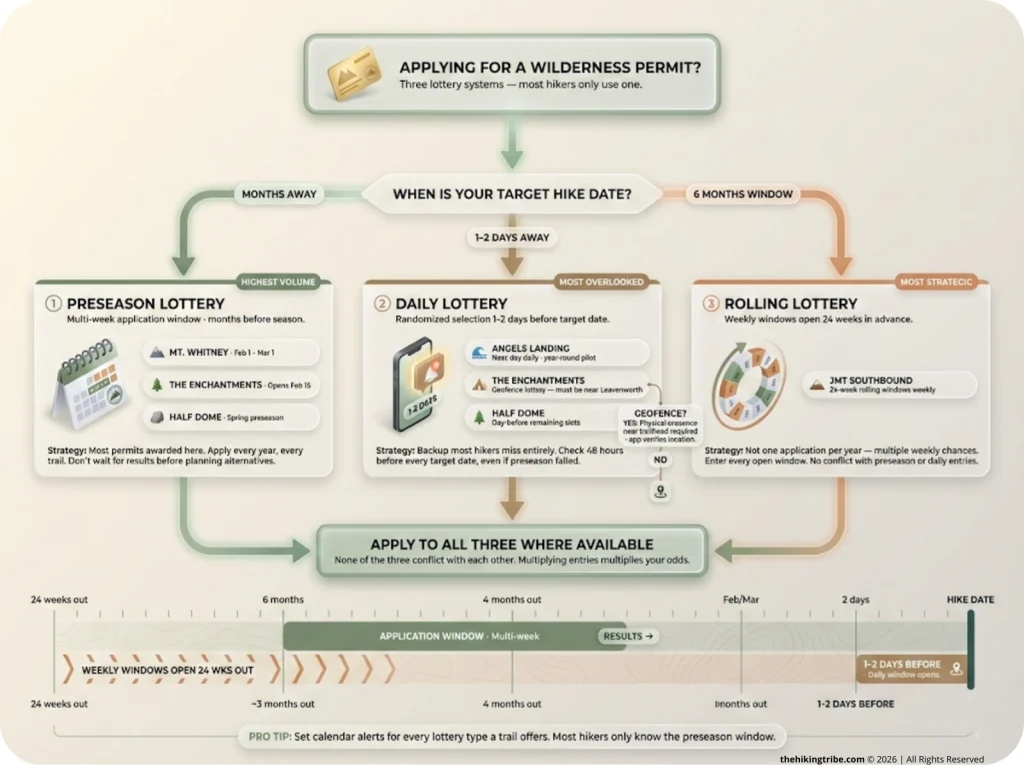
Pro tip: Set calendar alerts for every lottery type a trail offers. Most hikers only know about the preseason window and miss daily options entirely.
Why Lotteries Exist (And Why That Matters for Your Application)
Quotas protect the places we’re trying to reach. The Wave’s Navajo sandstone erodes with every footstep at rates measurable per season. Enchantments Core Zone alpine vegetation takes decades to recover from trail braiding caused by overcrowding. Half Dome’s cable section was seeing 1,000+ people per day before the national park system introduced the permit program — congestion that turned a bucket-list hike into a dangerous bottleneck.
Group size limits — typically 6 to 15 depending on the trail — prevent further damage. Children count toward those totals in every federal system. Understanding this conservation rationale actually helps you fill out applications correctly. Agencies aren’t just counting heads; they’re screening for compliance awareness.
Pro tip: Rangers at trailheads check IDs against permit names. Permits are non-transferable, and selling them can result in citation. Always carry your printed or saved permit with matching government ID.
If you want the full trail-by-trail breakdown of which permits require what, our full permit-required trails planning matrix covers every system referenced in BLM’s permit system for Coyote Buttes North and beyond.
The Five Flexibility Levers That Actually Shift Your Odds
Rank 8–10 Alternate Dates (Including Weekdays)
This is the single highest-impact tactic, and most hikers ignore it. Systems let you rank alternate dates — typically 3 to 10 preferences per application — and maxing this out changes everything.
Mt. Whitney data tells the story clearly: Tuesday and Wednesday first-choice success runs around 30%. Saturday? About 12%. The “first-choice or bust” mentality is the number one mistake hikers share in forums, and it tanks your probability every time.
I always rank my aspirational date first, then fill every remaining slot with shoulder-season weekdays. My last three wins were all second or third choices. Not one of them was the date I originally wanted. All three were outstanding hikes.
Target Shoulder Months and Off-Peak Windows
May, early June, September, and October have dramatically lower competition across nearly all systems. Angels Landing success rates swing from roughly 8% on a peak July Saturday to near 100% on an off-season Tuesday. That’s not a typo — the same trail, the same chains section, with odds that vary by a factor of twelve.
Half Dome preseason 2024 data shows 35,289 applications for a 22% overall success rate. But shoulder dates pull that number significantly higher. The weather trade-off is real but manageable with proper layering and gear. Shoulder months are not “bad” hiking — they’re quieter hiking. There’s a reason why experienced hikers deliberately target shoulder season.
Shrink Your Group Size
Every additional person reduces your available matching slots. Most quota systems cap groups at 6 to 15, but smaller groups of two or three statistically match far more open configurations.
One community thread put it perfectly: “Applied as a group of 8 and got auto-disqualified from Enchantments. Reapplied as two groups of 4 — both won.” Children count toward group totals. If you’re hiking with family, consider splitting into smaller application groups that can hike together but enter the lottery separately.
Trail-by-Trail Lottery Breakdown (The Comparison Nobody Built)

The Master Comparison Table
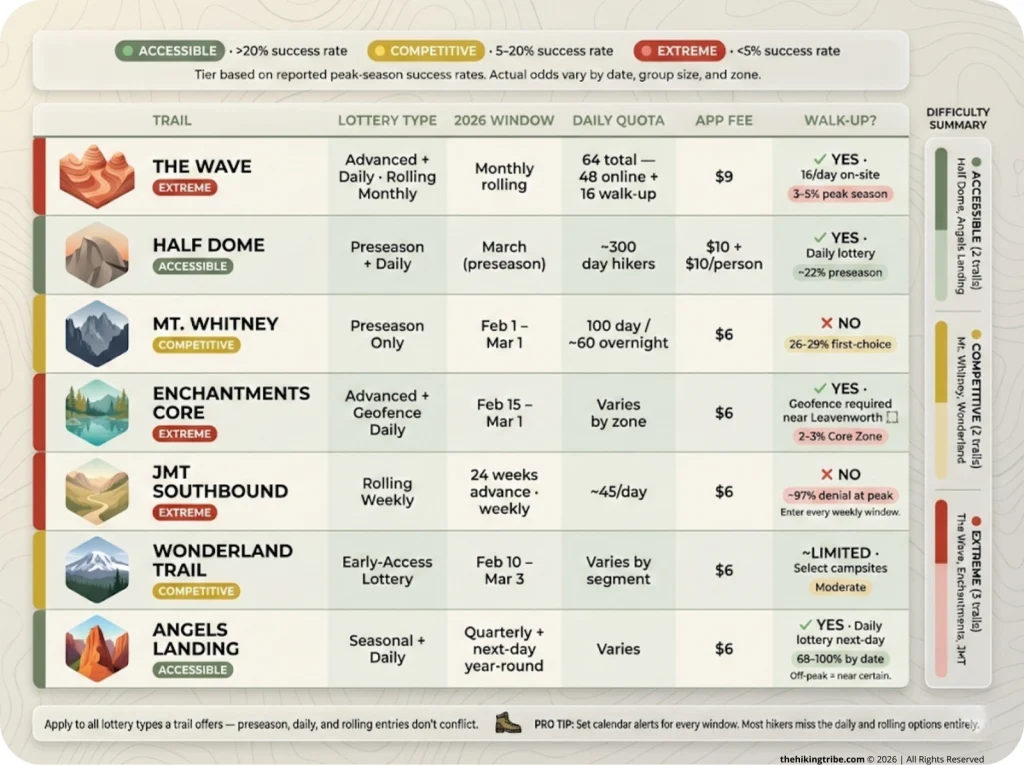
Reading the Table Like a Strategist
Cross-reference those application windows. Whitney and Enchantments overlap in February — plan both simultaneously and submit to both on the same day. Trails with daily lottery backups — The Wave, Angels Landing, Enchantments — give you a second bite at the apple.
The aggregate success rates above mask the real opportunity. Within a single trail, odds vary wildly by specific date. A Tuesday in September on Half Dome is a fundamentally different lottery than a Saturday in July. That granularity is where wins happen.
Pro tip: I keep a spreadsheet with every lottery application window, result date, and unclaimed permit release date. One page, updated annually. It’s the single most useful document I’ve ever built for hiking.
Unclaimed Permits and Cancellation Monitoring
After lottery results are announced, the real second chance begins. Unclaimed permits and cancelled slots release first-come-first-served on published dates. Whitney drops unclaimed permits on April 22, 2026 at 7 a.m. PT. That’s not a rumor — it’s right there on the official Mt. Whitney lottery details on Recreation.gov.
The Recreation.gov app sends cancellation alerts when you’re near the trail area. In the community, people call this “snagged a drop” — grabbing a cancelled permit zone slot before anyone else notices. Most hikers stop checking after their initial denial. The persistent monitors are the ones who secure premium dates that lottery winners forfeit because of schedule changes or cold feet.
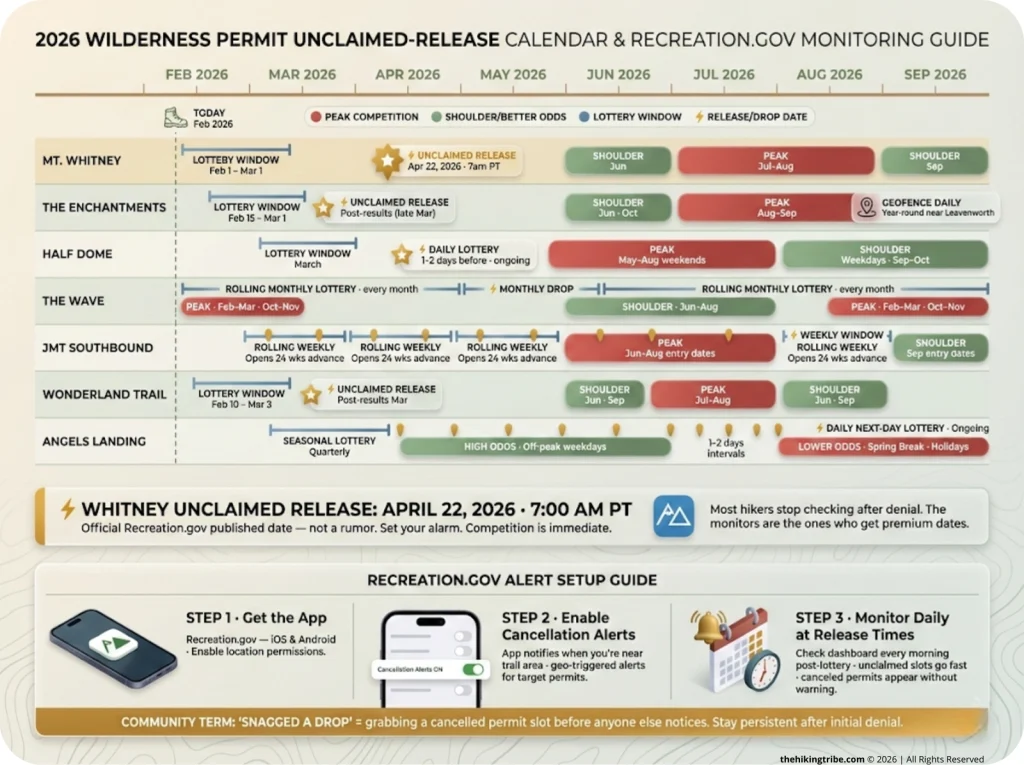
What to Do After You Lose (And You Probably Will)
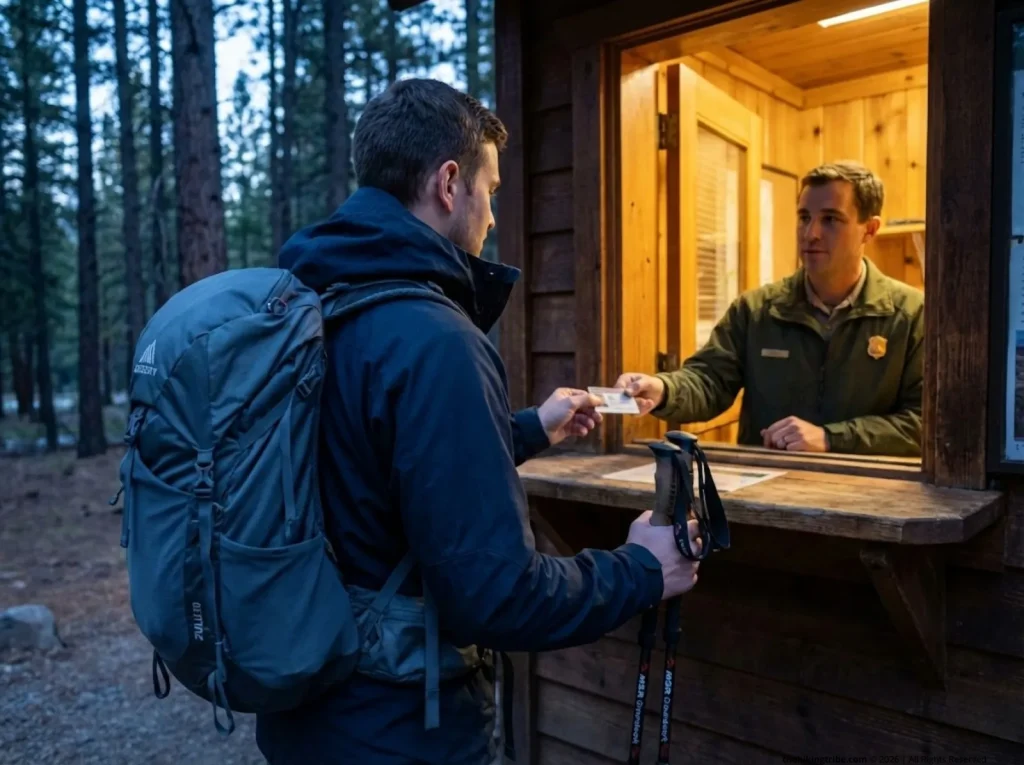
Walk-Up and Daily Lottery Backups
About one-third of quota systems reserve slots for day-before or same-day access. The Wave allocates 16 of its 64 daily permits to an in-person lottery at the Kanab Visitor Center. Angels Landing’s daily lottery awards next-day permits. The Enchantments geofence lottery requires your phone to prove you’re physically near Leavenworth.
The logistics are simple but trail-specific: arrive the night before, camp nearby, present at the designated time. Research each system individually — there’s no universal walk-up protocol.
Alternative Trailheads and Adjacent Experiences
Many “lottery-only” trails have access points with different — and easier — backcountry permit systems. Grand Canyon’s South Kaibab and Bright Angel corridor permits operate separately from backcountry zone permits. Pacific Crest Trail thru-hikers are exempt from the Half Dome cable lottery when passing through.
One forum thread I keep coming back to: “Got skunked on Half Dome preseason for 3 years — finally won the daily lottery on a Tuesday in September. The trail was nearly empty.” If you lose entirely, adjacent hikes in the same area often deliver 80% of the experience with zero lottery.
The Multi-Year Campaign Mindset
Here’s the perspective missing from every competitor article: treat permit lotteries as a multi-year pursuit, not a one-shot gamble. Apply to 3–5 trail lotteries per season to diversify your probability across systems. Track your lottery applications — patterns emerge over two to three years that inform smarter date selections.
I stopped viewing denials as failures and started treating them as data. By year three, I knew exactly which dates and group sizes my target trails rewarded. While you wait, use the waiting period to build trail-specific fitness for the trail you’re targeting. The permit will come. You want to be ready when it does.
After You Win: Gear and Training Nobody Talks About
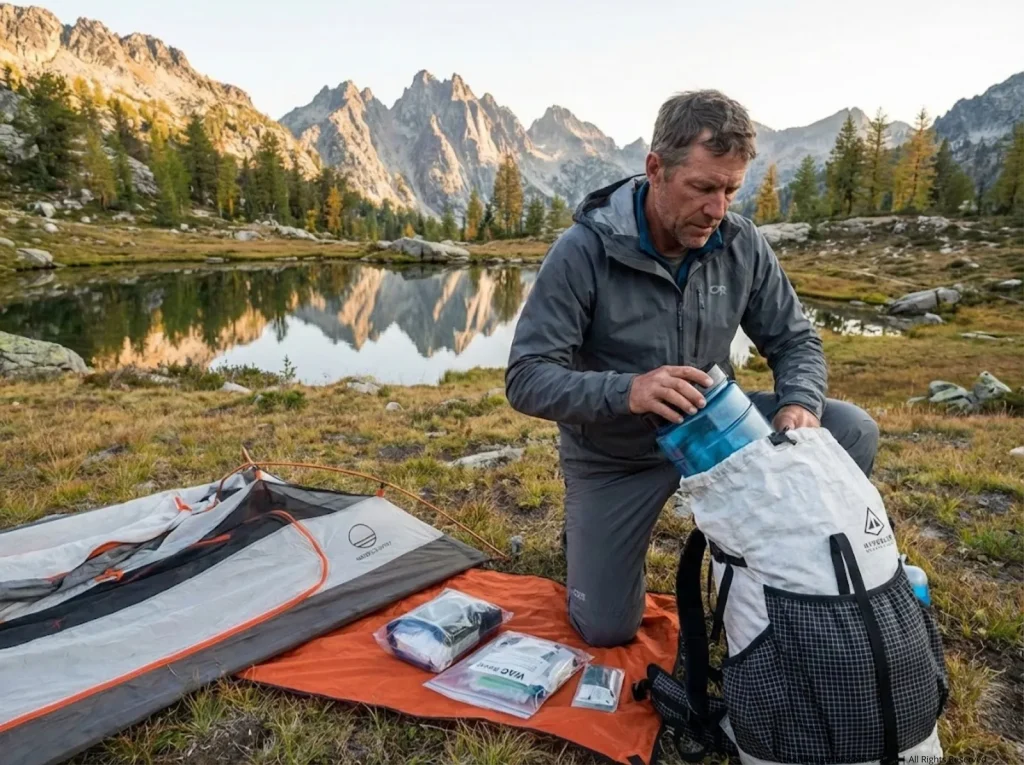
Trail-Specific Gear Requirements
Winning a coveted permit is step one. Showing up prepared is the part nobody writes about.
Enchantments Core Zone requires bear canisters — not bags, canisters specifically — and mandatory waste carry-out for all human waste using WAG bags. No campfires allowed. If you need help choosing the right food storage, our field-tested comparison of bear canisters vs. bags breaks down the tradeoffs.
Mt. Whitney demands altitude acclimation. I won my Whitney permit in March and had 60 days to prepare. Started hiking local peaks at 6,000 feet, added 2,000 feet per week. Topped Whitney at 14,505 feet without any AMS symptoms. The JMT 211-mile southbound route requires bear canisters for the entire journey, and your resupply logistics define pack weight from day one. The Wave? No water sources, no shade. Carry minimum one gallon per person and UV protection is mandatory.
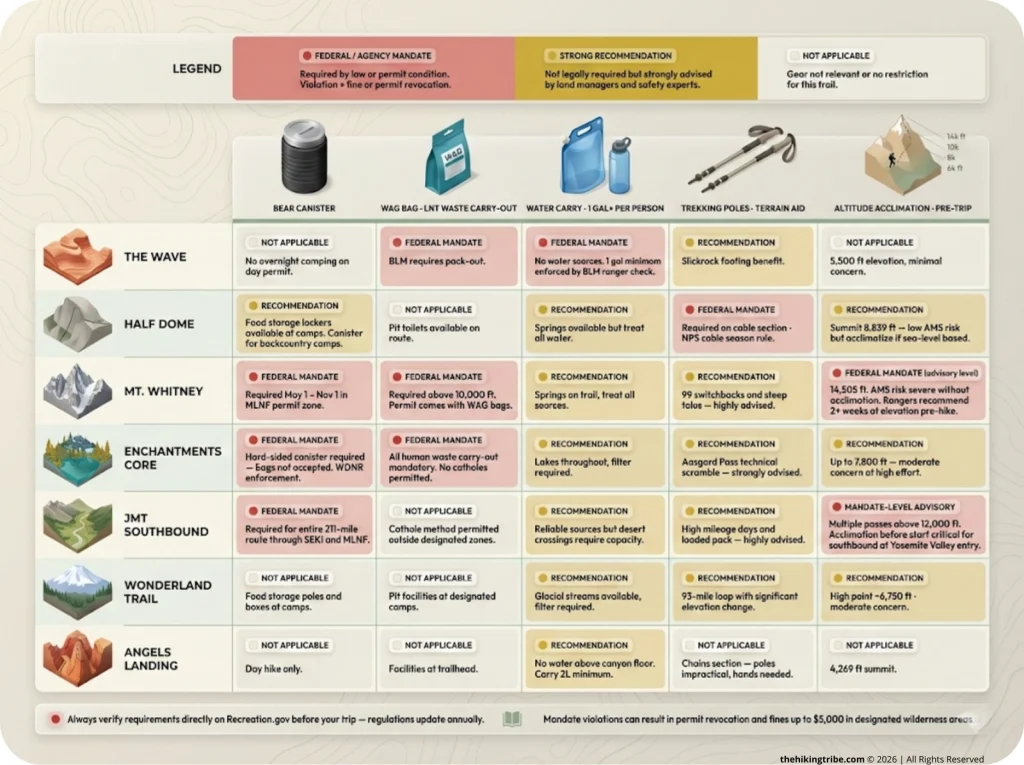
Pro tip: Use the Recreation.gov app to set cancellation alerts for your target trailhead the moment you know which permit you’re chasing. Drops happen at random — the app pings you before scalper bots can react.
LNT Obligations Tied Directly to Your Permit
Permit compliance goes beyond the trailhead check-in. Specific Leave No Trace rules are enforceable conditions of your permit — not suggestions, conditions. Enchantments mandates human waste carry-out via WAG bags. Whitney does the same with bags provided at the trailhead. Group size limits aren’t just quotas; they’re active vegetation and trail surface protection measures.
Violating permit-specific LNT conditions can result in permit revocation, fines, and future lottery application bans. The system that gave you access is the same system that protects the place. Respect it, or lose it. Full context on these obligations lives in Yosemite’s Half Dome permit statistics and requirements.
Why Lotteries Are the Best Thing That Happened to These Trails
The Conservation Math Behind Quotas
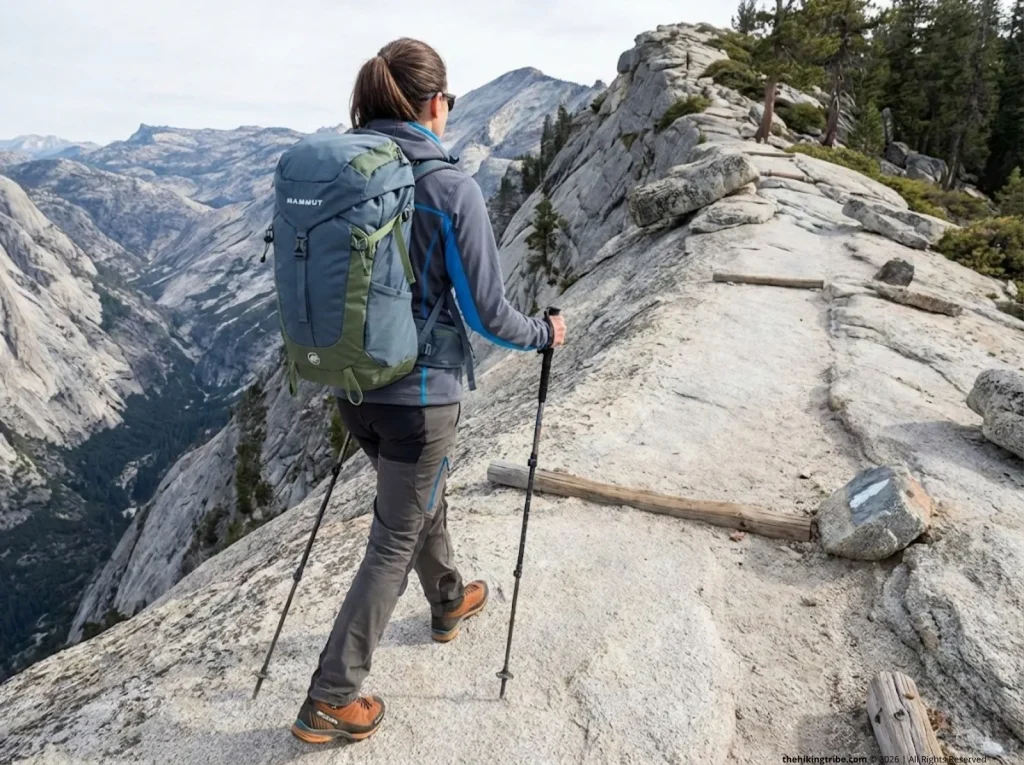
The Wave’s sandstone formations are geologically irreplaceable. Foot traffic causes erosion measurable per season — no recovery timeline exists for carved rock. Enchantments alpine meadows take decades to bounce back from trail braiding caused by overcrowding. Before Angels Landing introduced its permit system, the chains section saw over 1,000 hikers per day. Safety incidents dropped measurably after the lottery went live.
As the Zion NP Superintendent stated in 2024: “The Angels Landing Pilot Permit Program helps us maximize the number of people who make the hike and minimize crowding and congestion on the route.” That’s the Zion’s Angels Landing permit program working exactly as designed.
Fair Access vs. First-Come-First-Served
Permit lotteries replaced first-come-first-served systems that overwhelmingly favored people with geographic proximity, flexible schedules, and time-zone advantages. Randomized access gives a hiker in Florida the same chance as someone living 30 minutes from the popular trailhead.
“I used to drive 6 hours to line up at 4 a.m. for walk-in permits,” one hiker wrote. “The lottery is actually more democratic, even if it doesn’t feel like it.” The emotional frustration of losing is real. But the alternative — overcrowded, degraded trails — is worse for everyone. For the full picture on trail stewardship philosophy, read about the deeper ethics behind Leave No Trace.
Conclusion
Three things matter if you want to stop wasting permit lottery applications on popular trails.
Flexibility wins lotteries. Rank 8–10 alternate dates, target weekdays, shrink your group. The data is clear: rigid applicants get skunked.
Losing isn’t the end. Walk-up lotteries, cancellation monitoring, and multi-year persistence convert denials into future wins. The hikers who score the permit are the ones who keep showing up.
Winning comes with obligations. Trail-specific gear requirements and LNT rules are enforceable conditions of your permit. Prepare for them before you celebrate.
Pick one trail from the comparison table above. Set a calendar reminder for its next lottery application window. Then rank alternate dates — every slot the system offers, including the ones you’re not excited about. That’s how permits get won.
FAQ
What are the odds of getting a Half Dome permit?
The preseason lottery runs about 22% overall success based on 2024 data across 35,289 applications. Weekday and shoulder-season dates pull significantly higher than peak-summer Saturdays. A daily lottery is also available as a backup during cable season.
How do I apply for The Wave lottery?
Through Recreation.gov’s advance lottery for Coyote Buttes North. The daily quota is 64 — 48 through the advance lottery and 16 through a same-day in-person lottery at the Kanab Visitor Center. Online advance success hovers around 3–5%.
When does the Mt. Whitney permit lottery open?
The 2026 window runs February 1 through March 1 for the May 1–November 1 quota season. Unclaimed permits release FCFS on April 22 at 7 a.m. PT. Set a reminder for both dates.
Are there alternatives if I don’t get a permit for Angels Landing?
Yes. The daily lottery offers next-day permits with variable success rates. Observation Point via the East Mesa trailhead delivers comparable views without requiring a permit. Scout Lookout — the last point before the chains — is also permit-free and worth the hike alone.
What is the JMT permit process?
JMT southbound permits use a rolling lottery through Recreation.gov, opening 24 weeks in advance. Popular start dates see roughly 97% denial rates. Ranking flexible start dates and targeting weekday departures significantly improve odds. Northbound JMT permits start from Whitney Portal under a separate lottery.
I've spent more than a decade researching hiking gear and trail technique. I read the specs, the forum threads and the long-term reviews, and every pick here comes with what it gets wrong.
End of the trail
You read every mile of this one. Here's where the trail goes next.