
In this article
The ground on a stratovolcano is rarely static. I still remember the first time I felt the earth hum beneath my boots on the flanks of Pacaya. The ash shifted underfoot like granulated sugar, sulfuric gas burned the back of my throat before my brain even registered the smell, and the temperature plummeted thirty degrees the moment we stepped into the shadow of a vent.
Hiking an active volcano is not just an elevation challenge; it is an entry into a volatile geological laboratory where standard alpine protocols often fail. In my years leading volcanology-based tourism expeditions from the Cascades to the Andes, I’ve seen strong climbers crumble because they treated a cinder cone like a granite peak.
Success in these environments—whether you are summiting Acatenango in Guatemala, navigating the Mt. Tongariro crossing in New Zealand, or traversing Mt. Etna in Italy—requires shifting from a tourist mindset to that of a technician. This guide covers the specific movement patterns, safety risk assessment, and gear mitigation strategies you need to navigate Earth’s most primordial forces safely.
What Makes Volcanic Environments Uniquely Hazardous?
This section deconstructs the invisible and geological threats that distinguish volcano hiking from traditional mountaineering. We are moving beyond simple difficulty ratings to address chemical and kinetic dangers found in adventure travel.
Why is Atmospheric Awareness Critical on Active Vents?
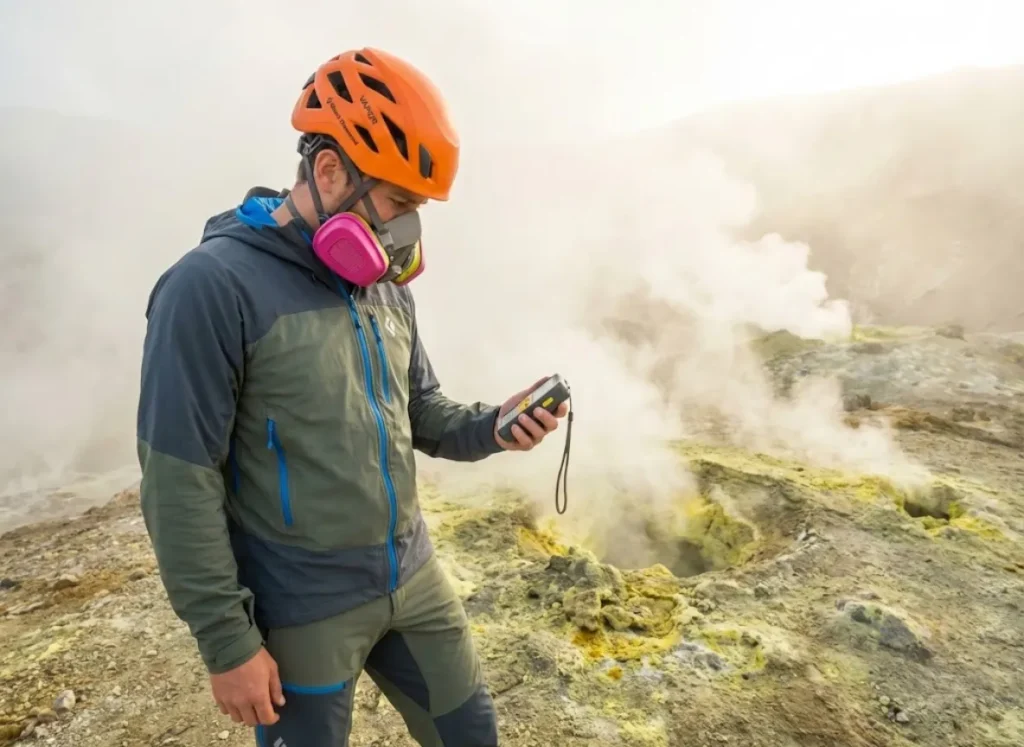
Volcanic gases are the most insidious threat to hikers because, unlike rockfall, they often provide few visual cues before toxicity levels are reached. Sulfur Dioxide is the most common offender. It reacts with moisture in your mucus membranes and lungs to form sulfurous acid.
This triggers immediate bronchoconstriction, which can be terrifying if you have a history of asthma. According to clinical guidelines from the International Volcanic Health Hazard Network (IVHHN), even low-level exposure can significantly impair respiratory function during exertion. This is a constant reality on peaks like Villarrica (Chile) or the lava lakes of Erta Ale (Ethiopia).
A more subtle killer is Hydrogen Sulfide. It presents a distinct “trap” mechanism. At low concentrations, it smells like rotten eggs. However, at higher concentrations (~100 ppm), it paralyzes the olfactory nerve.
This is called olfactory fatigue. Hikers often believe the air has cleared just before they succumb to lethal exposure. Situational awareness here is about wind physics. You must understand wind direction relative to the vent, a critical skill whether you are at Steaming Bluffs in Hawaii or on the summit of Mt. Kazbek (Georgia).
If the wind shifts, moving perpendicular to the airflow is the only effective escape strategy. On high-flux volcanoes, we carry gas masks and monitor real-time alerts. If you suspect exposure or see a teammate struggling to breathe, you must rely on a field-tested patient assessment system to differentiate between altitude sickness and chemical airway constriction.
How Do Ballistics and Lahars Alter Risk Assessments?
Ballistic projectiles, often called volcanic bombs, are ejected during Strombolian or Vulcanian eruptions. They follow unpredictable trajectories due to mid-air collision and fragmentation. The “safe distance” is dynamic.
Phreatic (steam-driven) explosions can occur without seismic warning, turning a viewing platform into a hazard zone instantly. The survival protocol is counter-intuitive: identify the trajectory of the falling rock and step aside. Running blindly increases your chance of being struck.
Lahars (volcanic mudflows) are equally destructive but behave differently. The U.S. Geological Survey (USGS) describes them as flowing wet concrete. They can be triggered by rainfall mobilizing old ash deposits years after an eruption, a phenomenon well-documented after the Mt. St. Helens eruption in the USA.
These flows move at high velocities down river valleys. This necessitates a change in how you plan your route. You must prioritize high-ground escape routes rather than valley floor crossings. Situational awareness requires reading the terrain to identify drainage channels and avoid them during precipitation events, particularly on glaciated peaks like Mt. Rainier where meltwater can accelerate these flows.
What Technical Movement Skills Are Required for Volcanic Terrain?
Efficiency is everything. This section teaches specific biomechanical techniques to efficiently ascend and descend loose volcanic ash and scree without burning out your legs.
How Does the “Rest Step” Mitigate Fatigue on Ascent?
Ascending loose ash, known as tephra, creates a “treadmill effect.” Every upward step results in a partial slide-back. This doubles your energy expenditure if you fight it. The primary countermeasure is the “Rest Step,” a staple of high-altitude trekking from Mt. Kilimanjaro (Tanzania) to Mt. Pico (Portugal).
As you step forward, you fully lock your rear knee. This transfers your body weight to your skeleton rather than your quadriceps. A deliberate pause of 0.5 to 2 seconds occurs while the leg is locked. This split-second break allows your cardiovascular system to clear lactic acid before the next exertion.
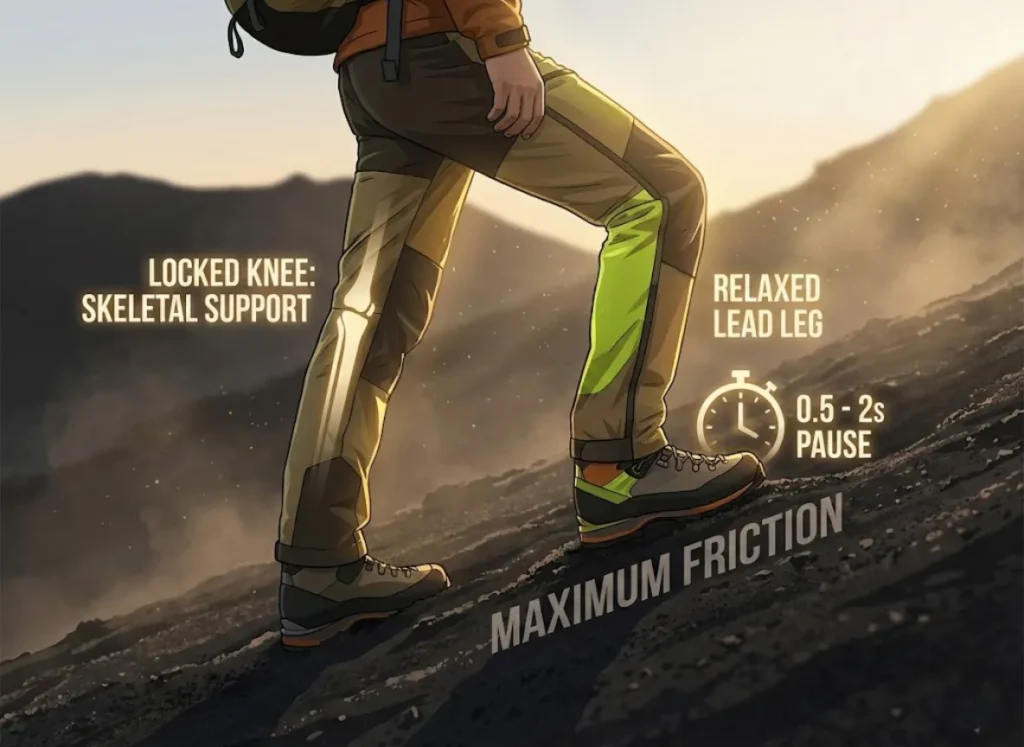
It prevents the “dash and crash” anaerobic failure common among fit hikers who try to power through the slip. This rhythmic movement is a staple of energy-conserving travel techniques used on major peaks like Denali.
Foot placement matters, too. Your sole should land flat to maximize surface area and friction. Edging—digging the side of your boot in—cuts through the ash and causes slipping. On steep grades like those on Mt. Fuji (Japan) or Mt. Rinjani (Indonesia), zigzagging reduces the gradient and creates a more stable compaction zone underfoot. This requires significant leg strength, so utilizing a specialized hiking training system before your trip is vital for endurance.
How Can You Safely Navigate Descent via Scree Skiing?
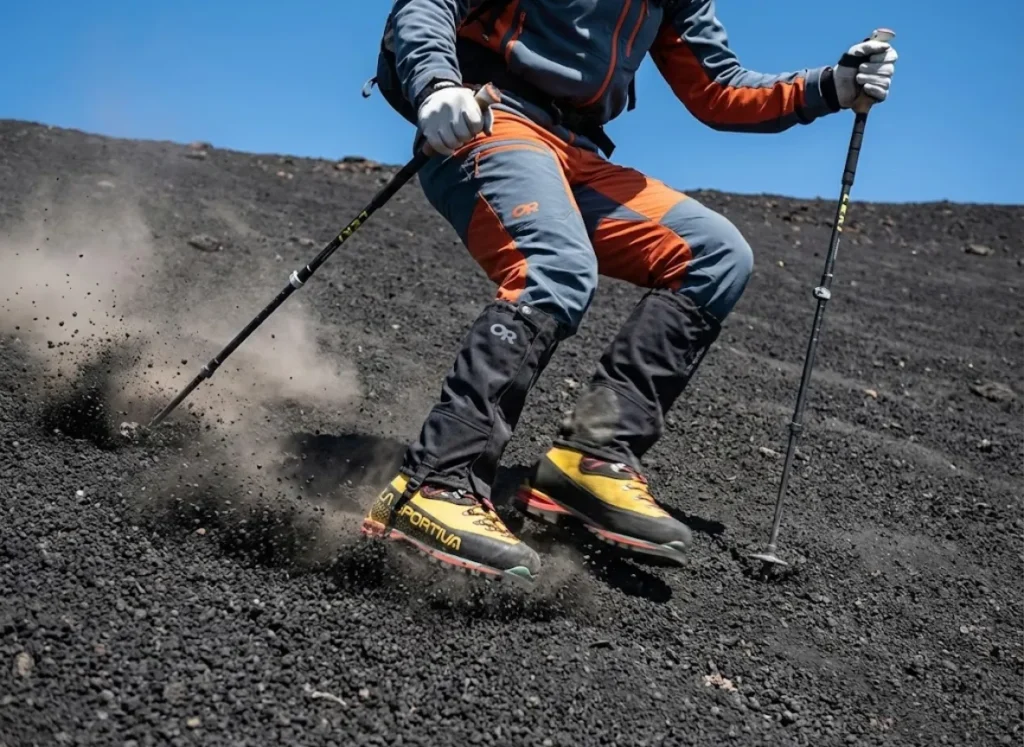
Descending deep ash offers a unique opportunity to turn the terrain into an asset. This technique is known as “scree skiing” or the “Plunge Step.” You drive your heel aggressively into the slope with your toe pointed slightly up. The leg remains straight but not locked, allowing the sliding material to absorb the impact.
Your center of gravity must remain forward. Think “nose over toes.” Fear makes hikers lean back, which pushes the feet out from under the body and leads to uncontrolled falls. Safety protocols for scree travel emphasize that this movement should be rhythmic and fluid, resembling a slow jog.
Pro-Tip: Empty your boots immediately after a scree run. Even with gaiters, fine volcanic grit acts like sandpaper. Leaving it in your boots for the hike out will guarantee blisters.
Terrain assessment is vital. Only use this technique on clear run-outs free of large boulders, cliffs, or vegetation. High-cut boots are mandatory to protect ankles. Utilizing trekking poles for downhill stability provides essential braking control and balance as you slide.
How Should You Adapt Your Gear for Corrosive Environments?
The volcanic environment wages a chemical war on your equipment. This section addresses the incompatibility between modern hiking gear and volcanic elements.
Why Do Standard Hiking Boots Fail on Volcanoes?
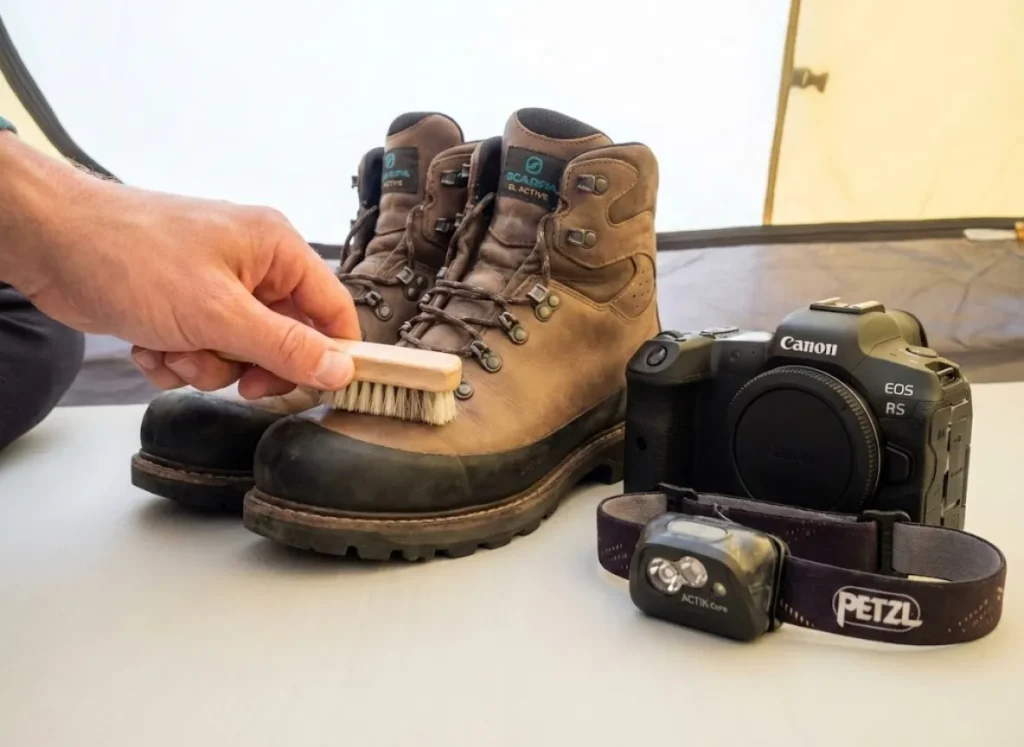
Volcanic ash is highly abrasive and acts as a surfactant. It strips waterproofing and works its way into the lining of boots. More dangerously, Polyurethane (PU) midsoles are susceptible to hydrolysis. This is a chemical breakdown accelerated by acidic mud and moisture, causing soles to delaminate or crumble mid-hike.
Leather boots with stitched-down (Goodyear welt) construction offer superior durability compared to glued synthetic models in these high-acid environments. Regardless of the boot, gaiters are non-negotiable. Tight-fitting lycra works for fine ash, but heavy-duty Cordura is required for sharp scoria found on active stratovolcano flanks.
If you are unsure what you need, review our guide on choosing hiking gaiters to match the material to the terrain. Post-hike maintenance is critical. You must neutralize acid residues.
A baking soda paste can be applied to leather boots, while soaking nylon gear in a baking soda solution prevents long-term rot. EPA research on nylon degradation confirms that sulfur exposure significantly weakens synthetic fibers, leading to blown zippers and weakened harnesses if ignored.
How Can You Protect Lungs and Optics from Fine Ash?
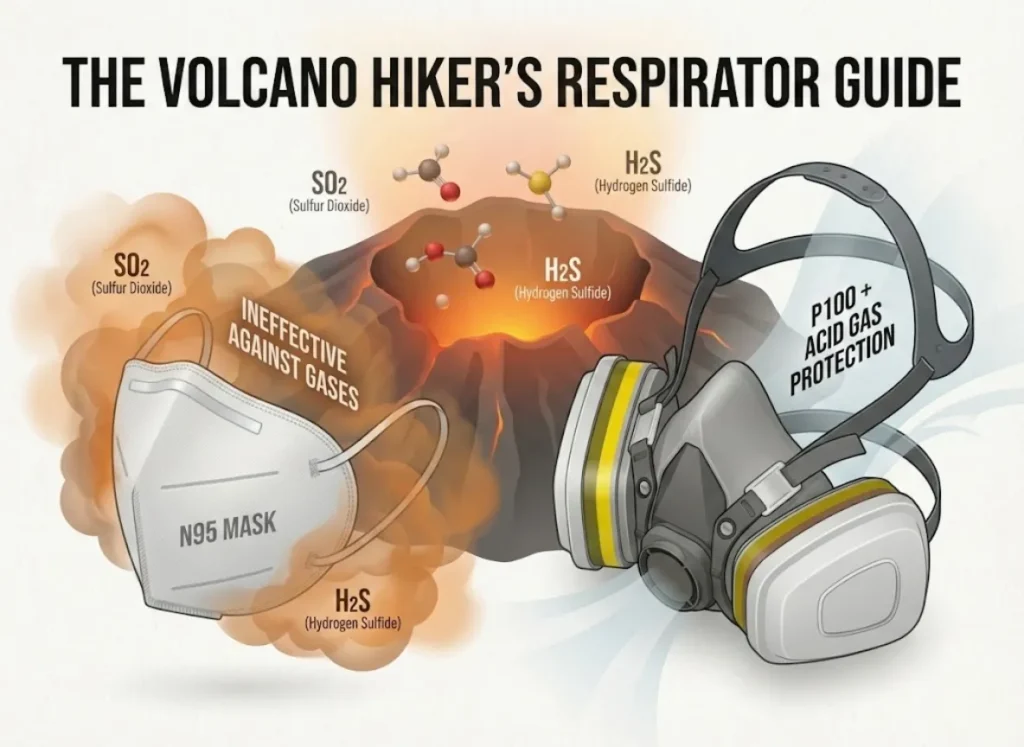
Standard N95 masks filter particulates but fail against acidic gases. For active vents, a P100 filter with an Acid Gas (yellow/olive) or Multi-Gas cartridge is the gold standard. Half-face respirators must be paired with unvented goggles.
Contact lenses should never be worn in ash plumes; they trap abrasive volcanic glass against the cornea, causing permanent damage. Volcanic ash is essentially silica—tiny shards of glass. It is electrically conductive when wet and can short-circuit electronics.
Photographers aiming for high-resolution photography must be paranoid. Backpacking with camera gear in these zones requires a different protocol. Never wipe a lens if ash is present; you will scratch the glass instantly. Use a UV filter as a sacrificial shield. Clean sensors using air blowers rather than wet swabs to avoid dragging grit across the sensor. Tape over ports on electronic devices to prevent corrosion of copper contacts by sulfur gases.
Which Global Volcano Hikes Require Specialized Preparation?
We apply the technical concepts above to real-world examples. Here is how famous hikes categorize by their specific hazard profiles and logistical complexity.
What Are the Operational Requirements for High-Altitude Giants?
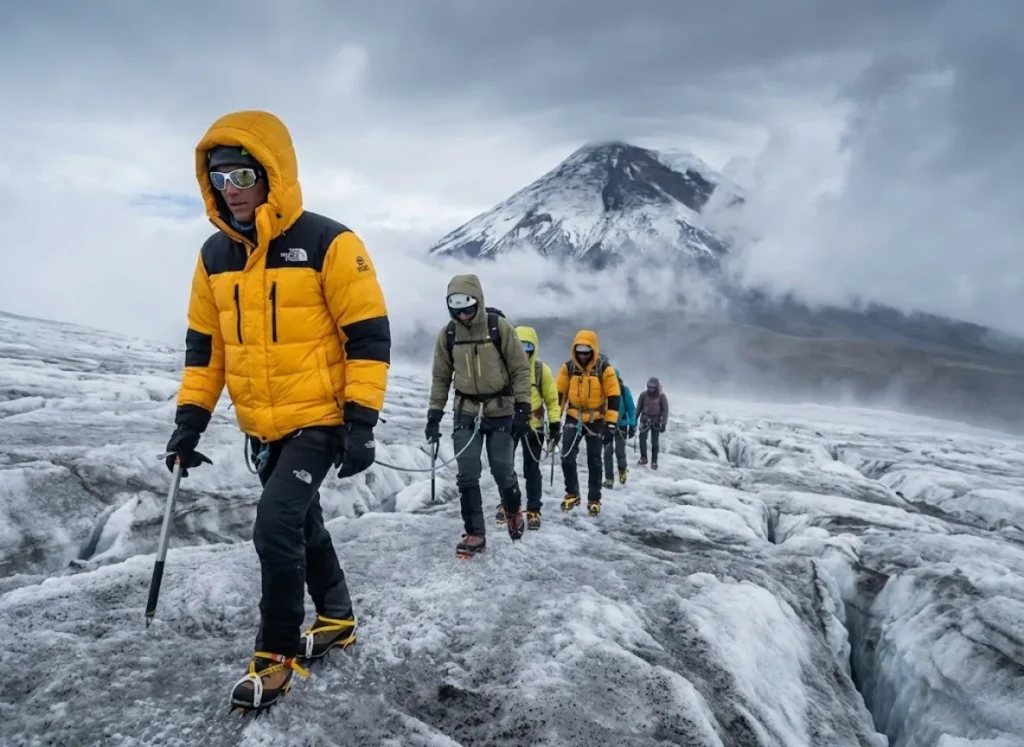
Cotopaxi (Ecuador) requires a synthesis of mountaineering skills and volcanic awareness. At 5,897m, altitude acclimatization is mandatory. The risk here is the interaction between eruption heat and the glacier, which can trigger massive lahars. Crampons and ice axes are standard technical gear needed here.
Acatenango (Guatemala) presents a different challenge. The primary issue is the steep, sliding scree and exposure to hypothermic conditions despite the tropical latitude. Observation of the neighboring active Fuego vent requires distinct safety zones to avoid ballistics. Most hikers opt for an overnight guided trekking tour to witness the lava glow.
Mt. Rinjani (Indonesia) is a multi-day endurance test within a massive caldera. The final summit push involves 1,000m of gain on deep “sand.” This requires immense cardiovascular stamina and the trekking pole techniques discussed earlier. You can see similar logistics on the Mt. Batur trek, a popular sunrise day trip, though Rinjani is significantly more physically demanding.
Global Volcano Trekking Comparison
A detailed breakdown of elevation, difficulty, and safety requirements for world-famous volcanic peaks.
Ascent Stats
Gain: ~1,200m | RT: ~5-7km
Logistics
Guides: Mandatory. Hazards: Altitude, Crevasses, Icefall, Lahars.
Ascent Stats
Gain: ~1,600m | RT: ~14-18km
Logistics
Guides: Recommended. Hazards: Cold, Ash, Ballistics from Fuego.
Ascent Stats
Gain: ~1,470m | RT: ~14km
Logistics
Guides: None. Hazards: Altitude (AMS), Crowds, Rockfall.
Ascent Stats
Gain: ~2,500m+ | RT: ~32km+
Logistics
Guides: Mandatory. Hazards: Heat, Steep Scree, Dust, extreme length.
Ascent Stats
Gain: ~1,400m | RT: ~10km
Logistics
Guides: Mandatory. Hazards: Toxic Gas, Crevasses, Active Lava Lake.
Ascent Stats
Gain: ~465m | RT: ~7km
Logistics
Guides: Mandatory. Hazards: Lightning, Slippery clay, Crowds.
The Pacific Rim offers distinct profiles. Hawai’i Volcanoes National Park on the Big Island is the epicenter of accessible active volcanism. Unlike the stratovolcanoes of the Andes, shield volcanoes like Mauna Loa and Kīlauea offer expansive lava fields and accessible lava tubes like those found near Kaumana Caves.
A typical volcano trip here might mix a hike across the solidified lava lake of Kīlauea Iki with a visit to the historic Volcano House or even the Volcano Winery, focusing on geological history rather than vertical gain. However, active eruption status changes rapidly, closing access to eruption sights like Steaming Bluffs.
In contrast, European and Central American options like Mt. Etna (Italy), Arenal (Costa Rica), or Santorini (Greece) blend cultural sites with geological thrill. Whether navigating the Boiling Lake of Dominica or the icy slopes of Mt. Kazbek, the risk increases with elevation.
Mandatory guide requirements are common, such as on the summit craters of Etna. Guides act as mobile sensor platforms connected to observatories. While aggregators like Viator, GetYourGuide, or TripAdvisor list countless volcano tours, discriminating hikers should prioritize certified mountain guides or specialized operators like VolcanoAdventures or Much Better Adventures.
Access is strictly regulated by alert levels found in the Smithsonian Institution Global Volcanism Program database. Hikers must interpret these alerts independently to make informed go/no-go decisions, rather than relying solely on commercial investigation.
Final Thoughts
Hiking an active volcano is the closest many of us will get to seeing the earth being built. However, safety in these zones relies on Atmospheric Awareness, Pre-trip preparedness, and Terrain Proficiency, not just general fitness.
You must adopt the technician’s approach: monitor the gas, lock the knee on the ascent, and protect your gear from the acid. Before booking your expedition, test your gear and techniques on local loose terrain, whether that’s Central Oregon pumice or local scree slopes. The mountain decides who climbs, but your skills decide who comes down safely.
FAQ – Frequently Asked Questions
Can you hike active volcanoes without a guide?
It depends on the volcano or current alert level. Many high-risk peaks like Cotopaxi (Ecuador) and the summit craters of Mt. Etna (Italy) mandate certified local guides for safety. Even where not required, guides provide critical knowledge of shifting gas plumes and safe traverse routes on unstable tephra.
What is the Rest Step and why is it used on volcanoes?
The Rest Step is a technique where you lock your rear knee with each step, transferring weight to the skeleton to save muscle energy during steep ascents. It is essential on volcanic ash to maintain a slow, rhythmic pace and prevent exhaustion from the two steps up, one step back treadmill effect often found on Mt. Fuji (Japan).
How do I protect my camera from volcanic ash?
Never wipe a lens with a cloth if ash is present, as the silica shards will scratch the glass; use an air blower to remove particles first. Use a UV filter as a sacrificial shield and cover the camera body and ports with plastic or tape to prevent acidic dust from causing corrosion.
Do I need a gas mask for volcano hiking?
For dormant volcanoes like Mt. St. Helens, no. However, for active vents with high gas flux (like Villarrica or crater rim tours), a respirator with acid-gas cartridges is highly recommended. Standard N95 dust masks filter ash but do not stop toxic gases like sulfur dioxide; ensure your mask is rated for chemical vapors.
Risk Disclaimer: Hiking, trekking, backpacking, and all related outdoor activities involve inherent
risks which may result in serious injury, illness, or death. The information provided on The Hiking Tribe is for
educational and informational purposes only. While we strive for accuracy, information on trails, gear, techniques,
and safety is not a substitute for your own best judgment and thorough preparation. Trail conditions, weather, and
other environmental factors change rapidly and may differ from what is described on this site. Always check with
official sources like park services for the most current alerts and conditions. Never undertake a hike beyond your
abilities and always be prepared for the unexpected. By using this website, you agree that you are solely
responsible for your own safety. Any reliance you place on our content is strictly at your own risk, and you assume
all liability for your actions and decisions in the outdoors. The Hiking Tribe and its authors will not be held
liable for any injury, damage, or loss sustained in connection with the use of the information herein.
Affiliate Disclosure: We are a participant in the Amazon Services LLC Associates Program, an
affiliate advertising program designed to provide a means for us to earn advertising fees by advertising and linking
to Amazon.com. As an Amazon Associate, we earn from qualifying purchases. We are also an official affiliate partner
of Black Diamond Equipment via the AvantLink network. If you click on a Black Diamond affiliate link and make a
purchase, we may earn a commission at no additional cost to you. We also participate in other affiliate programs and
may receive a commission on products purchased through our links. Additional terms are found in the terms of
service.