
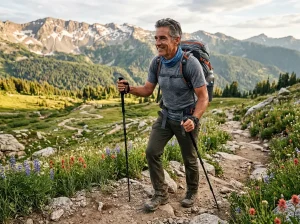
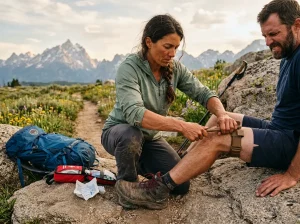

The first time I hiked in the Dolomites, I showed up with a list from the internet and zero understanding of how this place actually works. I picked the wrong base town, missed the cable car cutoff by ten minutes, and watched a thunderstorm roll in at 2 PM while I stood on a ridgeline with nowhere to go. By the third trip, I had the system figured out — which trails are worth the hype, which ones eat your whole day for a mediocre payoff, and how to dodge the crowds that flood every trailhead by 9 AM.
This guide covers the best hikes in the Dolomites based on three separate trips, honest difficulty assessments, and the logistics nobody else bothers to explain. Whether you’re planning your first visit or coming back for more, you’ll leave with a real plan — not just a pretty list.
Quick Answer: The best hikes in the Dolomites for most visitors include:
- Tre Cime di Lavaredo — iconic loop, moderate, 9.5 km
- Seceda ridgeline — short cable car hike, jaw-dropping views
- Adolf Munkel Trail — underrated, best views-to-effort ratio
- Cinque Torri circuit — easy loop with WWI history
- Lago di Sorapis — challenging approach, surreal blue lake
- Lago di Braies — easiest hike, family-friendly lake loop
Tre Cime di Lavaredo — The Hike Everyone Does First
What to Expect on the Loop
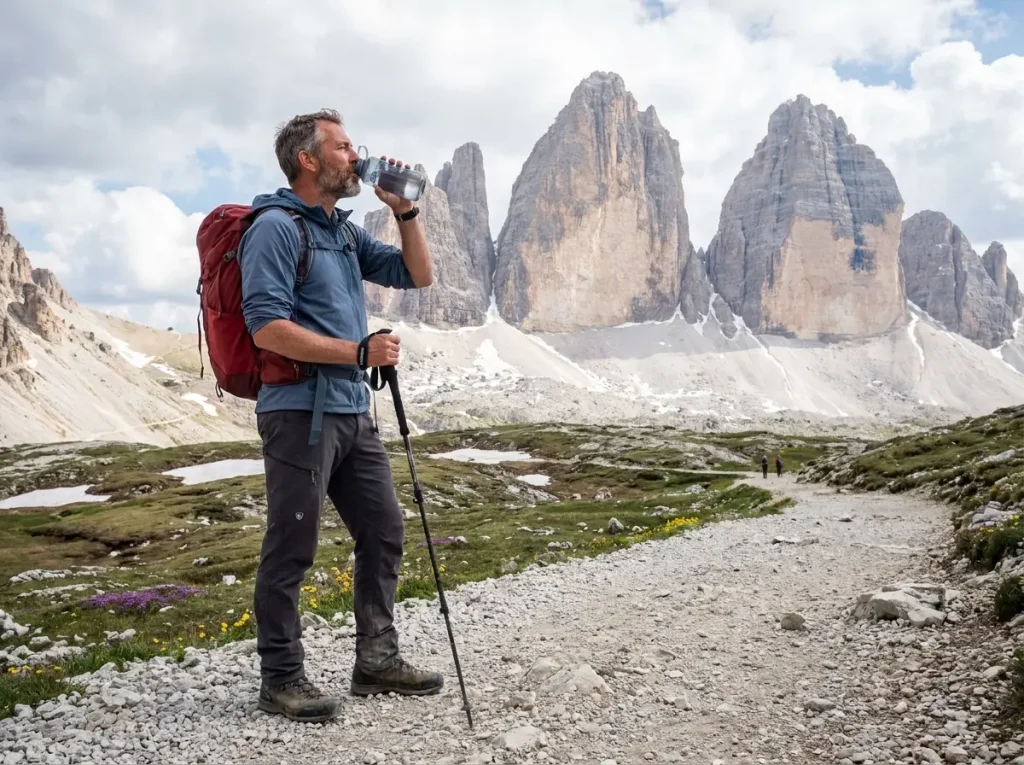
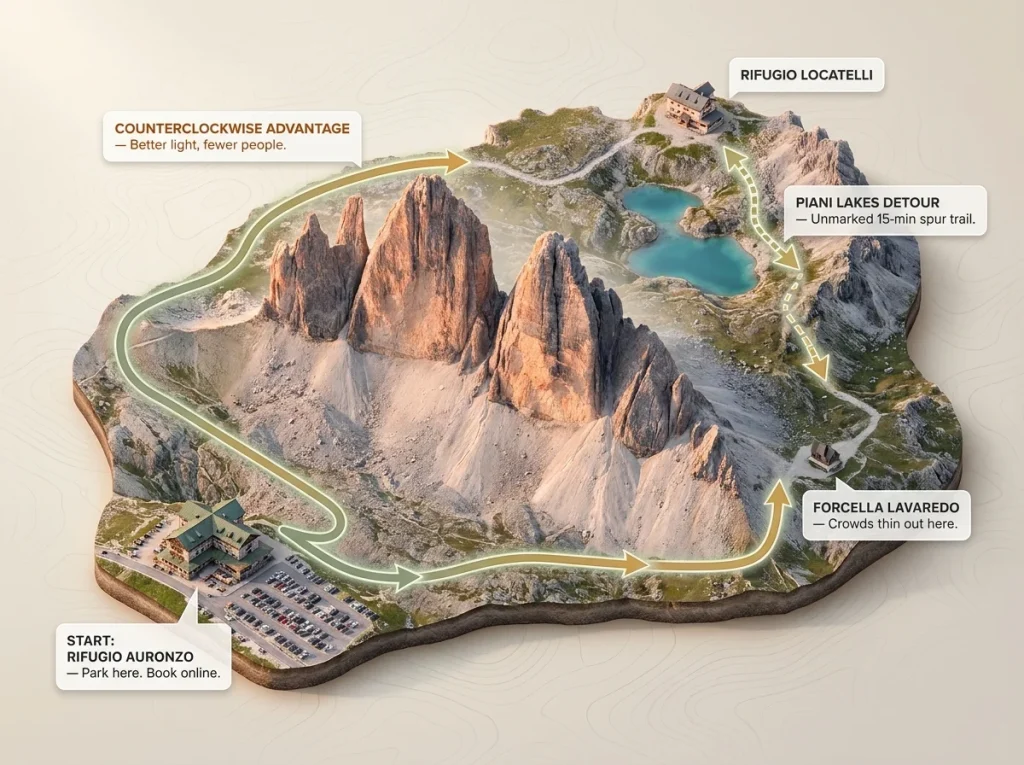
The Tre Cime di Lavaredo loop is a 9.5 km circuit around three massive limestone pillars that have become the symbol of the Dolomites UNESCO World Heritage Site. The trail starts at Rifugio Auronzo at 2,320 meters and gains about 425 meters of elevation over the full loop. Most people finish in 3-4 hours, though you should budget 5 if you want to take detours and actually enjoy it.
The first section from Auronzo to Rifugio Lavaredo is flat gravel — wide enough for strollers, packed with tour groups. From Lavaredo, the trail climbs to Forcella Lavaredo, the pass where you finally see the iconic north faces. This is where most tour groups turn around, and the trail gets dramatically quieter.
The Detours Nobody Mentions
Past Forcella Lavaredo, the trail descends toward Rifugio Locatelli (Dreizinnenhütte). Between these two points, a short unmarked spur trail leads to a viewpoint over the Piani Lakes — two small turquoise pools tucked in a rocky basin below the trail. Most people walk right past this turnoff. It adds maybe 15 minutes and gives you one of the best photo ops on the entire loop.
The return leg from Locatelli to Auronzo via Malga Langalm is the quietest section. The terrain is more alpine meadow, the crowds thin out, and the late afternoon light on the south faces of the towers makes the limestone glow orange.
Logistics That Matter
The toll road to Rifugio Auronzo now requires an online parking reservation at €40 per vehicle for a 12-hour window — starting your hike at the right time matters more here than anywhere else in the Dolomites. Book early — summer dates sell out weeks ahead. Alternatively, a shuttle bus runs from Misurina during peak season, which skips the reservation hassle entirely. Base yourself in Cortina d’Ampezzo (22 km away) rather than driving from Val Gardena — that drive eats 2+ hours each way through mountain passes.
Pro tip: Start the loop counterclockwise. Most people go clockwise because it follows the trail numbering. Going the other direction means you hit Forcella Lavaredo with the afternoon light behind you — better photos, fewer people walking toward you in the narrow sections.
Lago di Braies — Worth the Crowds
The Easiest Hike on This List
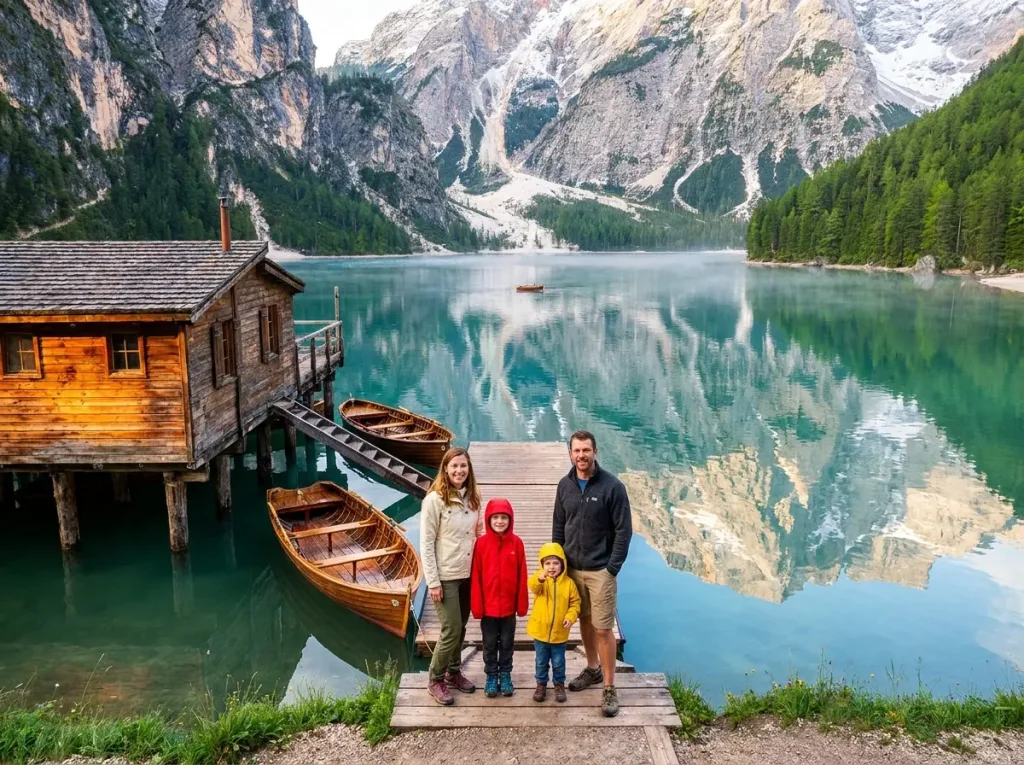
Lago di Braies (Pragser Wildsee) is a 3.5 km loop around one of the most photographed alpine lakes in Europe. The trail is flat on the right side, slightly rocky and steeper on the left. You can do the full loop in 90 minutes without rushing. The water is a deep turquoise that shifts color throughout the day — palest at midday, richest in early morning when the surrounding cliffs cast shadow across half the surface.
The wooden boathouse at the lake’s entrance is the shot everyone comes for. Row a traditional wooden boat for about €20 per half hour. The back end of the lake has several small gravel beaches where you can sit, and if you’re feeling brave, wade in. The water temperature hovers around 12°C even in August.
Beating the Crowd System
From July 10 through September 10, vehicle access is restricted between 9:30 AM and 4 PM. You either need an advance parking reservation or ride the public bus. The simplest move: arrive before 8 AM, park in the large lot (€5-12 depending on duration), and walk the lake while the tour buses are still on the highway. By 10 AM, the boathouse dock has a 30-person queue.
Pro tip: Walk the loop starting on the LEFT (steeper) side first. Most people default to the easy right shore. Going left means you pass the crowd going the opposite direction, and you reach the quiet back beaches before anyone else.
Seceda and Val Gardena — The View That Breaks the Internet
Getting to the Ridgeline
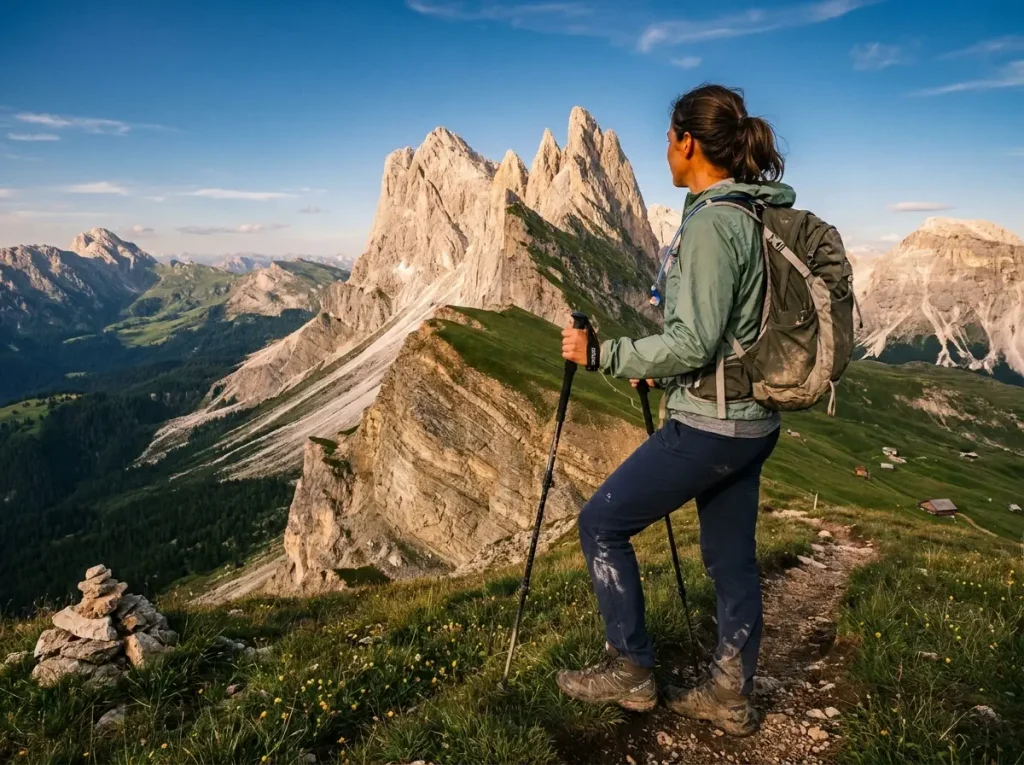
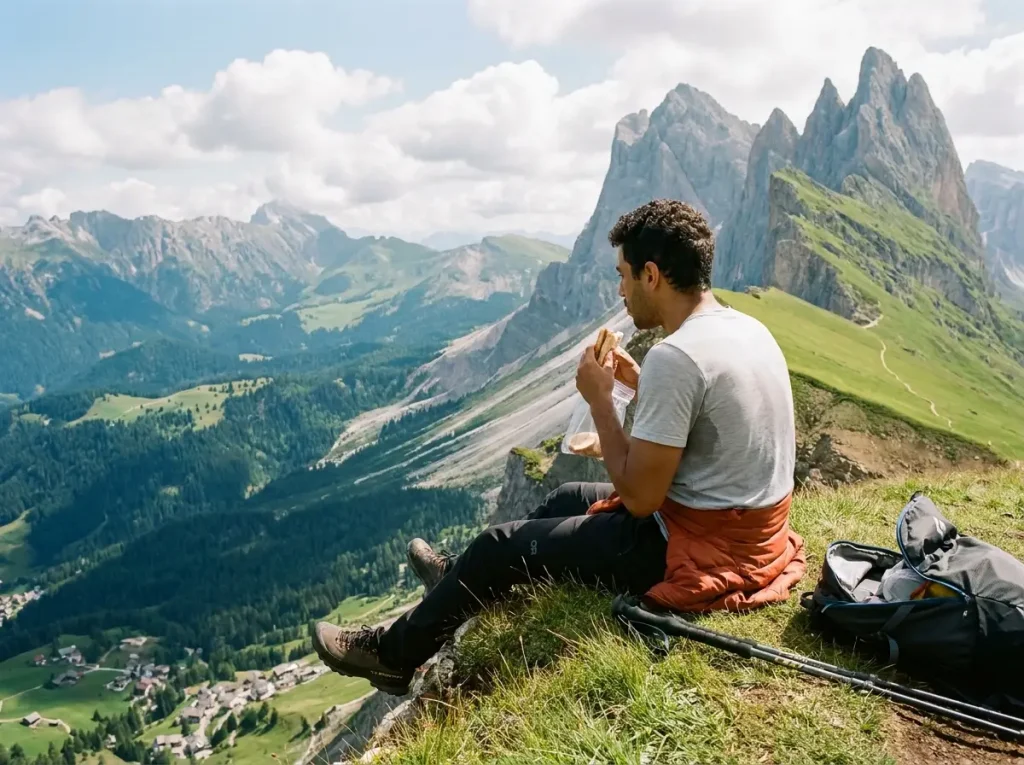
The Seceda cable car departs from Ortisei in Val Gardena and costs around €35-40 for a round trip (check for discounts with the Val Gardena guest card your hotel provides). The ride takes about 15 minutes and deposits you at 2,500 meters, where the famous ridgeline of razor-sharp limestone teeth stretches ahead of you like a geological hallucination.
The hike itself is short — 1.3 km for the basic viewpoint loop, gaining about 110 meters — though if you’re planning to explore the exposed sections, make sure you have the gear you actually need for exposed alpine terrain. Walk uphill from the cable car station toward the highest point, then follow the trail along the ridge toward Pieralongia. The whole loop takes 30-45 minutes. The views across the Puez-Odle Nature Park are unreal in every direction.
Making It Worth More Than a Photo Stop
Most visitors ride up, snap the famous photo, and ride back down. You can extend the hike to Pieralongia (about 45 minutes one way), where a small rifugio serves food on a terrace surrounded by the jagged rock formations. From Pieralongia, continue to Col Raiser and take a different cable car down to St. Christina — this point-to-point option shows you far more diverse terrain and keeps you above the crowds.
The free bus system connecting all Val Gardena towns (included with your guest card) makes the logistics painless. Leave your car at the hotel, bus to Ortisei, ride up to Seceda, hike to Col Raiser, descend to St. Christina, bus back.
Pro tip: Seceda introduced a €5 per-person turnstile fee for the main ridgeline trail in 2026. Budget for it. The view is still worth ten times that.
Adolf Munkel Trail — The Underrated Favorite
Why This Trail Wins on Views-to-Effort
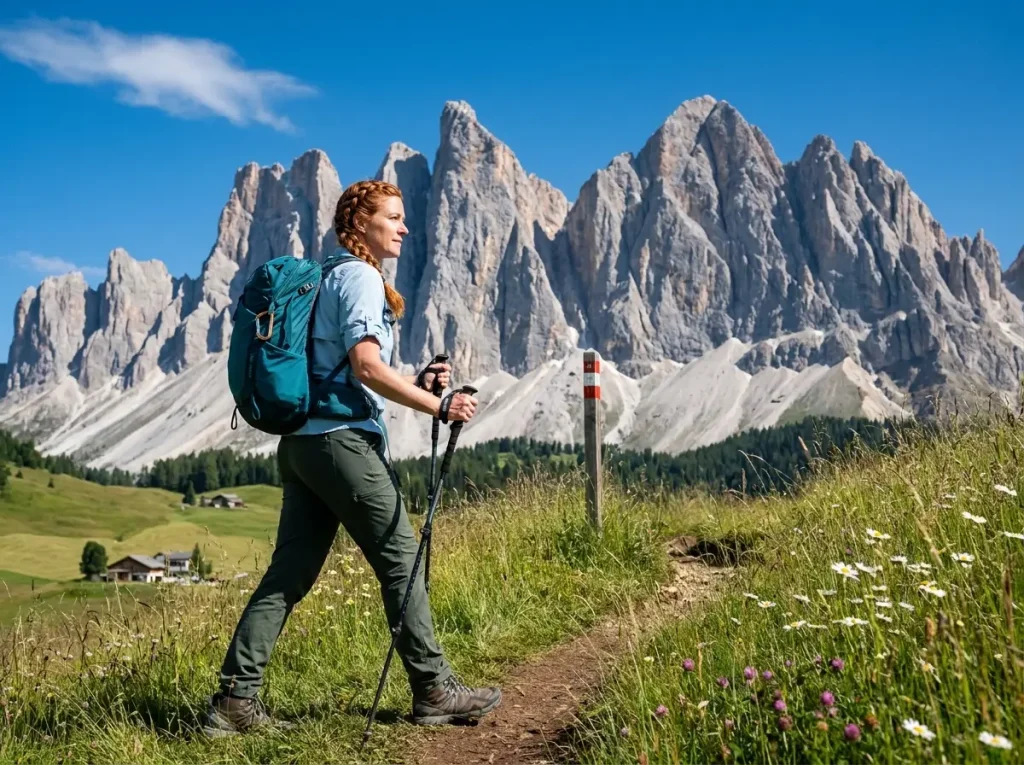
The Adolf Munkel Trail in Val di Funes delivers the single best ratio of spectacular scenery to physical effort in the Dolomites. The 9 km loop gains about 440 meters and takes 4-6 hours including rifugio stops. The trail contours through alpine meadows directly beneath the sheer vertical walls of the Odle-Geisler group — you spend the entire hike walking at the base of walls that rise 800+ meters straight above your head.
Start at Zanser Alm parking (€8 for the day — arrive before 8 AM or forget finding a spot). Follow trail 6 south, which transitions to trail 35, the actual Adolf Munkel Weg. The first section climbs through open meadow with increasing views — good approach shoes for mixed terrain work well here since the path alternates between dirt, grass, and loose rock. After crossing a bridge, the trail levels out and begins its horizontal traverse beneath the rock walls. This is where the hike becomes extraordinary.
The Rifugio Stop That Makes the Day
Geisler Alm (Rifugio delle Odle) sits in an alpine meadow directly below the tallest spires. The outdoor terrace has heavy wooden lounging chairs pointed at the mountains. Order the Tyrolean apple strudel with vanilla sauce — it’s the best I had in the Dolomites across three trips. A Kaiserschmarrn (shredded pancake) will fuel the return leg. The rifugio also has clean bathrooms and fresh mountain water for refilling bottles.
There’s a playground here too, which makes this trail one of the best family options. Kids can run around the meadow while parents sit with coffee and a wall of 3,000-meter peaks in their face.
The Better Return Route
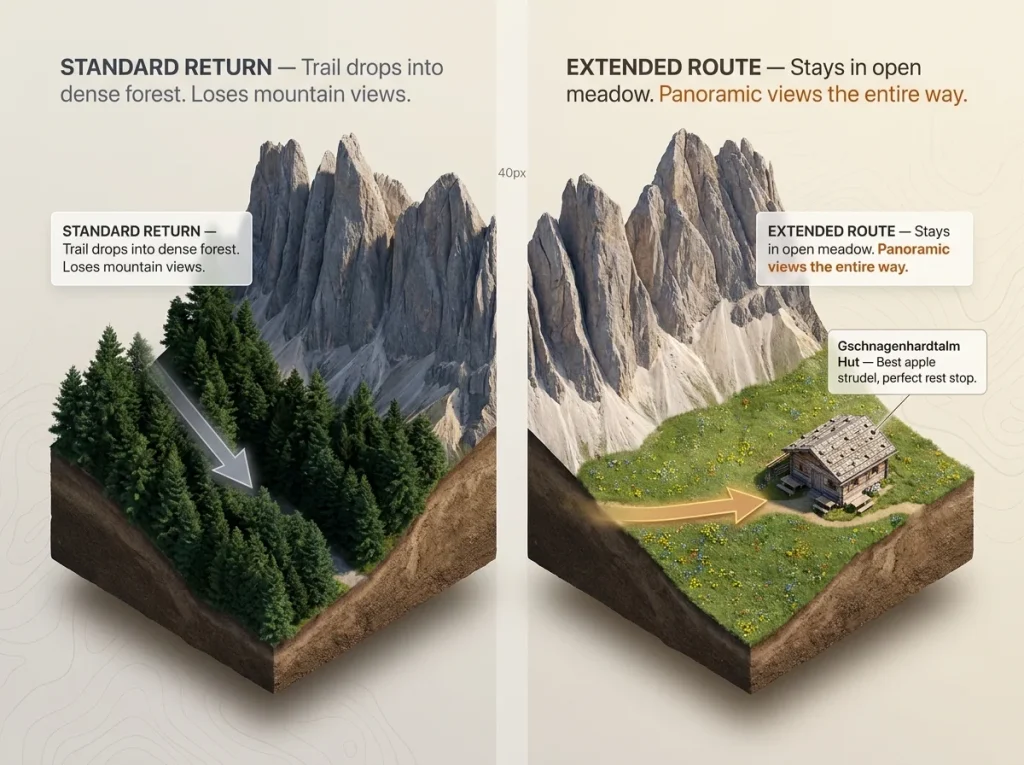
Most guides describe the standard Adolf Munkel loop returning via trail 36 through forest. That route works, but the forest section is unremarkable compared to what you just hiked. If you have energy, extend slightly to Gschnagenhardtalm — another small hut with equally stunning views — before looping back. The extra 30 minutes of trail keeps you in the open meadow beneath the rock walls instead of dropping into trees.
Pro tip: After the hike, drive five minutes to the Church of St. Magdalena viewpoint in Villnöss. This is the most iconic photography spot in the Dolomites — a tiny Baroque chapel sitting in a green meadow with the full Odle-Geisler range behind it. The road is narrow. Walk from the village if you can.
Cinque Torri and the Rifugio Circuit
Two Hikes in One Epic Day
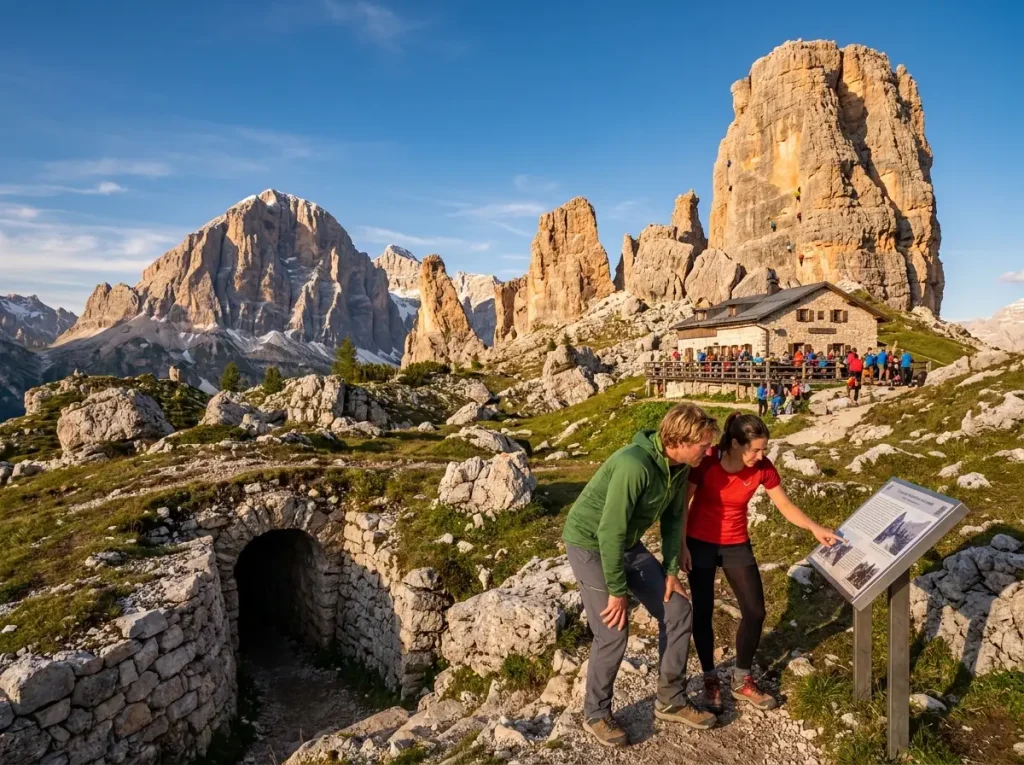
Cinque Torri is a cluster of five distinctive rock towers near Passo Falzarego, about 20 minutes from Cortina d’Ampezzo. The basic loop around the towers is just 2 km and takes about an hour. Take the chairlift up (saves 300 meters of climbing) and you’re immediately at the base of the rock formations.
What makes this trail special beyond the views is the open-air WWI museum built into the rock — stone trenches, tunnels, and bunkers from the Italian-Austrian front line that you can walk through and explore. Interpretive signs explain the positions. You can see where soldiers lived at 2,300 meters for months. It’s sobering and adds a completely different layer to a hike that most guides describe as just “easy and scenic.”
Adding Rifugio Averau and Nuvolau
The real move is combining Cinque Torri with the hike to Rifugio Averau and Rifugio Nuvolau. From the Cinque Torri loop, follow the trail toward Rifugio Averau (about 30 minutes of moderate climbing). The pasta here is legitimately excellent — not just “good for a mountain hut” but genuinely good food.
From Averau, continue 15 more minutes up to Rifugio Nuvolau at 2,575 meters. This rifugio sits on the summit of Mount Nuvolau with 360-degree views of the Dolomites. On a clear day, you can see Marmolada, Tofana, Civetta, and the Cinque Torri below you — though reading weather changes on the trail is worth learning before you commit to the extra climb. Having a beer on that terrace while watching the light shift across the peaks is one of the best experiences in the Dolomites — hiking or otherwise.
The combined route is about 6 km with 465 meters of gain. Budget 3-4 hours plus rifugio time.
Pro tip: The chairlift to Cinque Torri sometimes closes before the last hikers come down from Nuvolau. Check the posted schedule at the base station. Getting stranded at the top means a long, steep walk down a road in the dark.
Lago di Sorapis — The Blue That Earns Every Step
What Makes This Lake Different
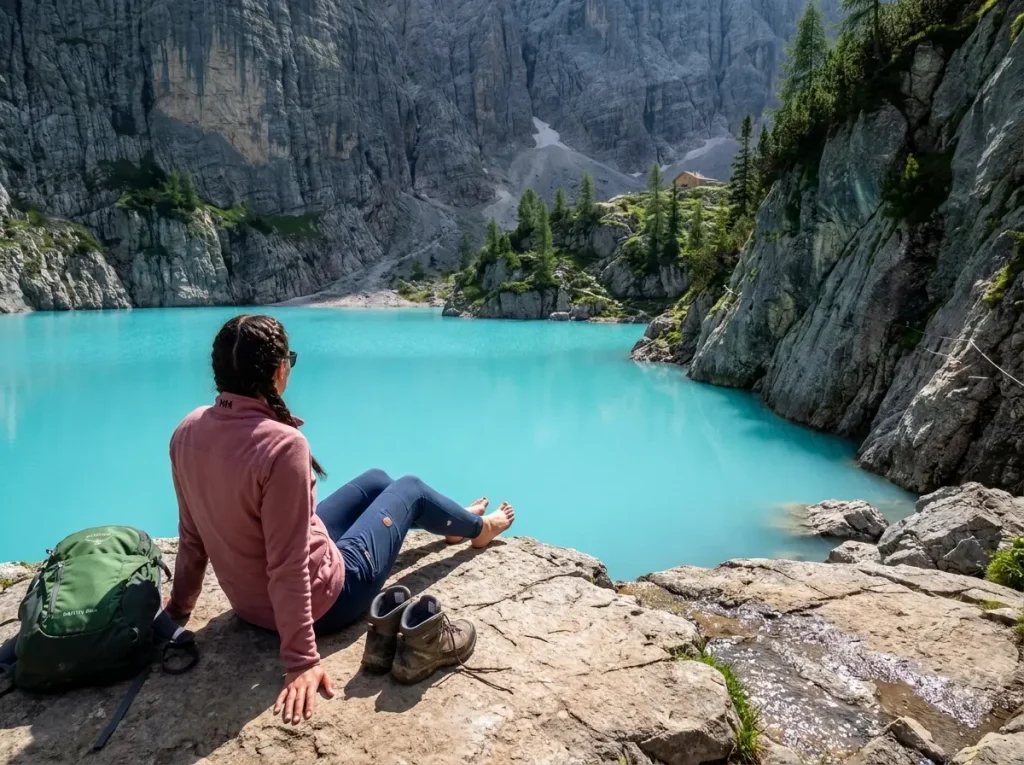
Lago di Sorapis is a small alpine lake at 1,925 meters with water so intensely turquoise-blue that first-time visitors assume the photos are edited. The color comes from glacial rock flour — fine sediment suspended in the water that refracts light. It looks most vivid on sunny mornings between 10 AM and noon when direct light hits the surface.
The hike is about 11-12 km round trip from Passo Tre Croci (a 15-minute drive from Cortina) and takes 4-5 hours total. The trail isn’t technical for most of its length, but the last section before the lake includes metal staircases, ladders, and fixed cables bolted into the rock face. These aren’t via ferrata level, but they require confidence with exposure and solid handling of exposed trail sections with fixed cables. Sneakers will not cut it here.
The Crowd Problem and How to Handle It
Sorapis has become one of the most overcrowded trails in the Dolomites. On peak summer weekends, 400+ people per day funnel onto the same out-and-back trail. The last section with the fixed cables becomes a traffic jam — you’ll wait in line to climb metal staircases while people coming down squeeze past you.
The fix: start before 7 AM. Parking at Passo Tre Croci fills by 8 AM in July and August. At 6:30 you’ll have the first hour of trail nearly to yourself, and you’ll reach the lake before the bulk of hikers arrive. Coming back down, you’ll pass the crowds going up — and feel very smart about your timing.
An alternative that almost nobody does: turn the out-and-back into a loop via Forcella Marcuoira. This adds significant elevation gain (about 315 extra meters) but keeps you above the lake with unique aerial views and dramatically fewer people. The loop route is roughly the same total distance but far more rewarding for confident hikers.
Pro tip: The Rifugio Vandelli near the lake serves food and has bathrooms. Fill your water bottles here — there’s no other reliable water source on the return trail, and dehydration on the exposed sections coming back is real. Carry at least 2 liters per person.
The Thunderstorm Protocol Nobody Tells You
Why This Section Exists
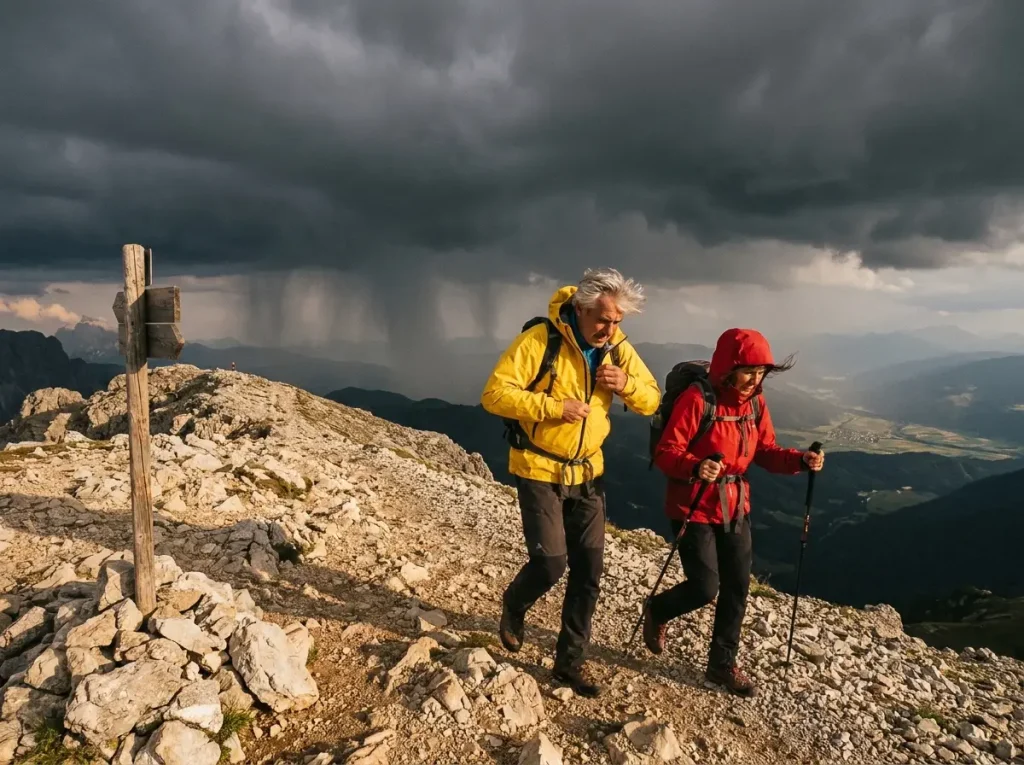
Every Dolomites hiking guide mentions “afternoon thunderstorms are common” and moves on. Nobody explains what that actually means at 2,500 meters with no trees, no shelter, and lightning hitting the limestone spires around you. This section exists because I’ve been caught above treeline twice, and both times I wished someone had written this down.
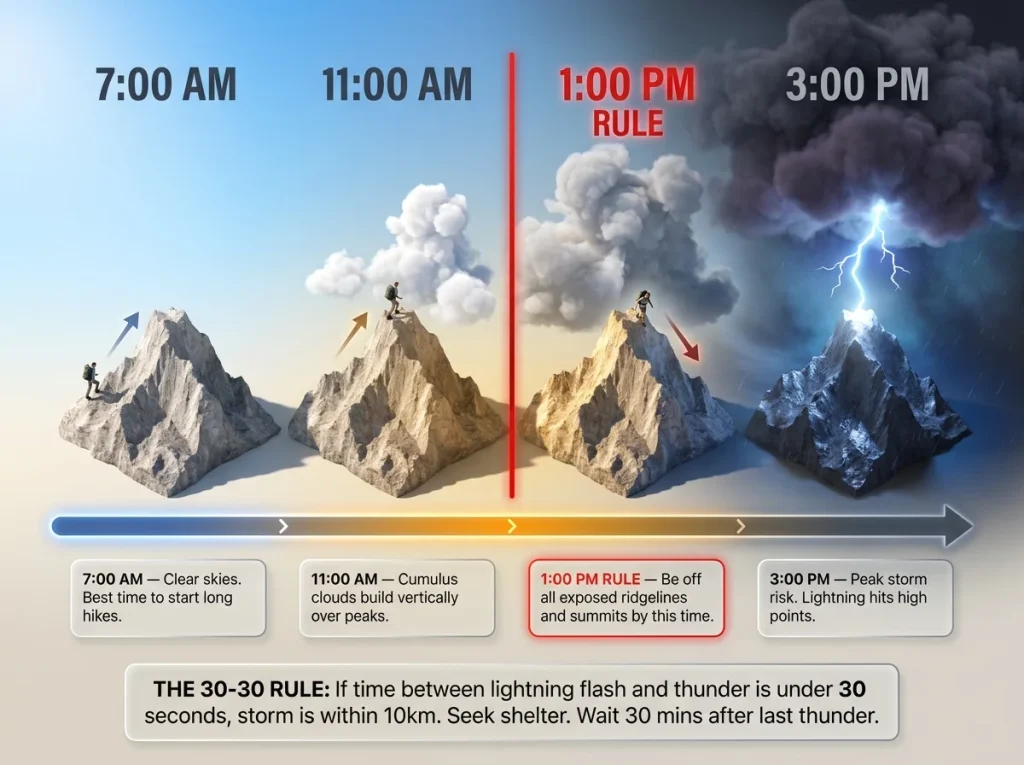
The Dolomites average 6-10 thunderstorm days per month from June through September. Storms typically build between 1 PM and 4 PM, though they can fire earlier on hot, humid days. The warning signs are visible if you know what to look for: large cumulus clouds with vertical “cauliflower” protuberances developing over peaks by late morning, increasing humidity, and a sudden drop in wind followed by gusty shifts in direction.
The 1 PM Rule and What to Do
Plan every exposed hike to have you below the ridgeline or near shelter by 1 PM. This single rule will keep you out of most trouble. It means starting early — 6:30 or 7 AM for longer routes like Tre Cime, Puez-Odle, or the Sorapis loop.
The Dolomites mountain guide lightning safety protocols are worth reading before your trip. If you’re caught above treeline when a storm arrives:
Avoid summits, ridges, and isolated high points. Get at least 15 meters away from any cliff edge or metal cable. Drop your trekking poles and move away from them — metal conducts. Crouch low with your feet together and minimize your contact with the ground. Do not shelter in shallow rock alcoves or under overhangs, where ground current concentrates. If you’re near a rifugio, get inside — the buildings are grounded.
The local weather app that actually works for micro-forecasts is Météo Südtirol. National weather apps give regional forecasts that miss valley-by-valley variation. Check the forecast the night before and again at breakfast. If the afternoon shows storm probability above 60%, plan a short morning hike and be off the mountain by noon.
Pro tip: The 30-30 rule: if the time between seeing lightning and hearing thunder is 30 seconds or less, the storm is within 10 km and you should already be descending. Wait 30 minutes after the last thunder before resuming your hike.
Rifugio Culture — Where the Real Dolomites Experience Lives
How Rifugios Actually Work
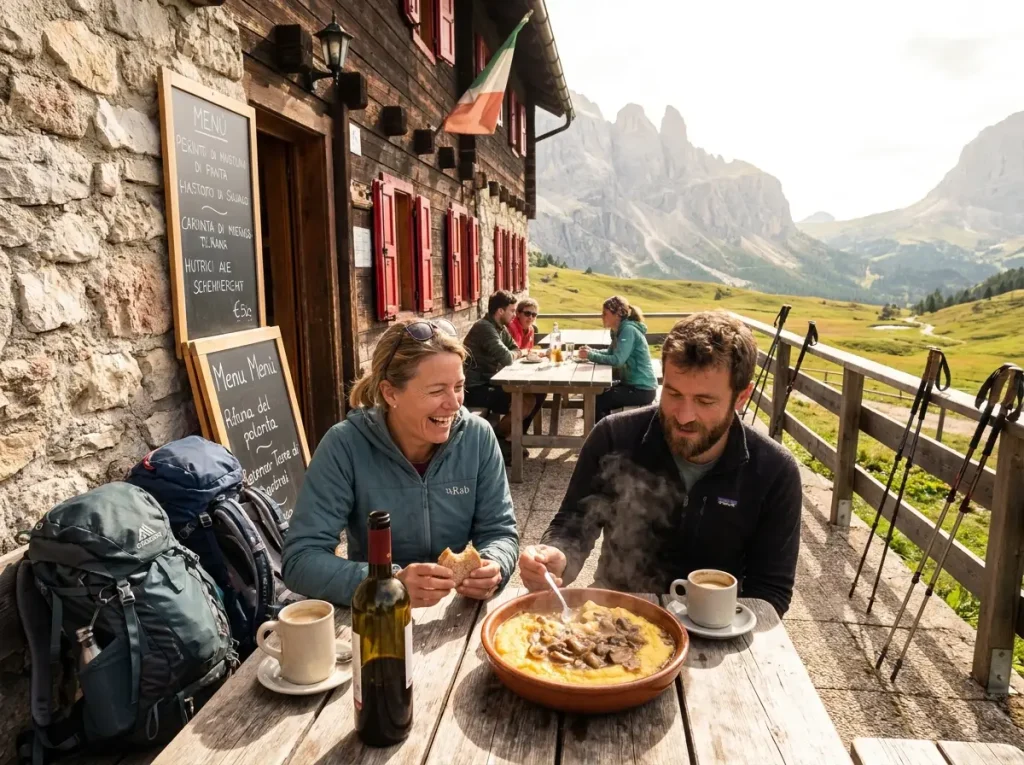
The rifugio system is what makes hiking in the Dolomites fundamentally different from hiking in most other mountain ranges. Over 150 mountain huts are scattered across the range, most positioned 4-6 hours of hiking apart. They range from basic stone shelters with bunk beds to full-service lodges with wine lists and four-course dinners.
For day hikers, rifugios serve as strategic rest stops. You can buy a meal, refill water, use bathrooms, and shelter from weather. No reservation needed for day visits — just walk in and order. Most rifugios serve a limited menu of local dishes: polenta with ragù, Kaiserschmarrn (shredded pancake with powdered sugar), Knödel (bread dumplings in broth), and apple strudel. Coffee runs €2-4, or you can save by bringing your own coffee setup on trail. A full lunch is €12-20. The food is often surprisingly good because the ingredients come from the valleys below and the recipes haven’t changed in decades.
The Unwritten Rules
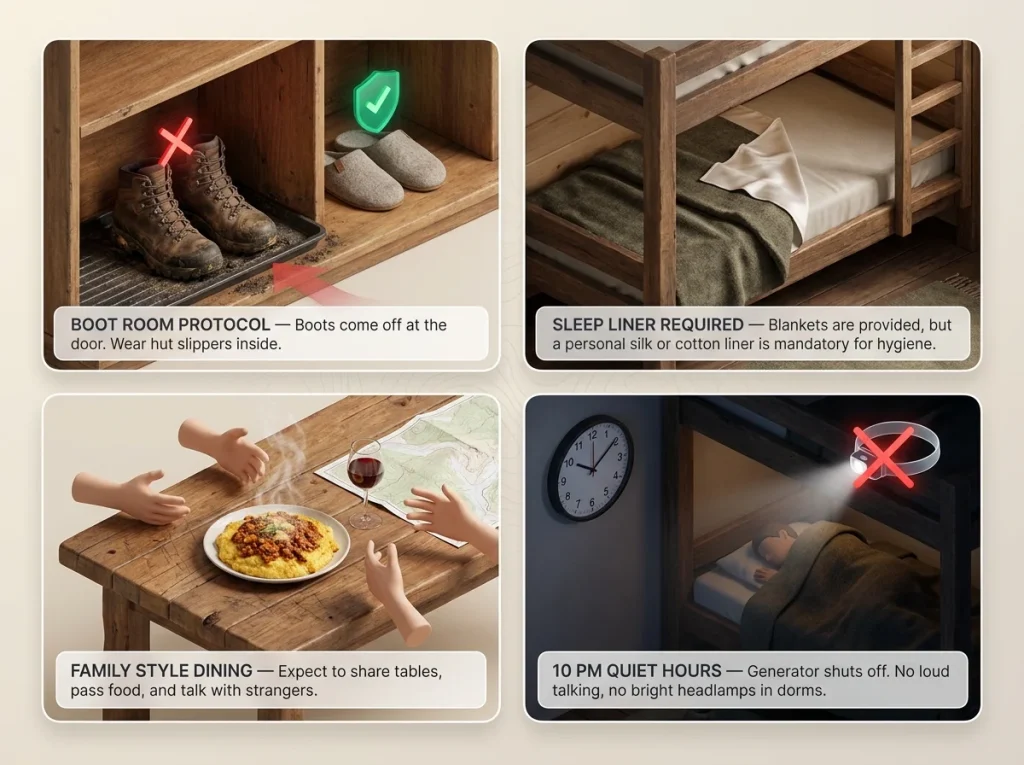
Every rifugio has a boot room. Take your hiking boots off at the door and switch to the provided hut slippers or your own camp shoes. Walking into a rifugio dining room in muddy boots marks you as someone who doesn’t know the culture.
If you’re staying overnight (€45-65 per person for half-board including dormitory bed, dinner, and breakfast), arrive by 5 PM. The manager needs a headcount for dinner. Bring a sleep sheet or liner — blankets and pillows are provided but you sleep inside your own liner. This is a hygiene rule, not a suggestion. Quiet hours start at 10 PM and the generator shuts off. Headlamp use in the dormitory after lights-out earns sharp looks from the staff and every other hiker in the room.
The social atmosphere is the part nobody tells you about and the part you’ll remember longest. Dinner is family-style at communal tables. You sit with strangers and talk about the day’s hiking, share route advice, and pass wine. Three trips in, some of my best Dolomites memories are conversations at rifugio tables, not summit views.
Pro tip: Half-board at a rifugio (€45-65) is often cheaper than a valley hotel room (€80-120 for room only). If your route allows it, spending a night at a high rifugio saves money AND puts you on the trail at dawn before anyone else arrives from the valley.
Planning Your Dolomites Hiking Trip
Where to Base Yourself
The two best base towns for hiking are Val Gardena (Selva, St. Christina, or Ortisei) and Cortina d’Ampezzo. They’re connected by mountain passes that take 1.5-2 hours to drive, so don’t try to do both areas from one base.
Val Gardena gives you access to Seceda, Adolf Munkel Trail, Alpe di Siusi, Puez-Odle, and Piz Boè. It’s a more traditional Tyrolean valley with excellent bus connections and guest cards that include free public transport and cable car discounts.
Cortina puts you near Tre Cime, Lago di Sorapis, Cinque Torri, Lagazuoi, Lago Federa, and Cadini di Misurina. It’s a larger town with more dining and shopping options, and it hosted events during the 2026 Winter Olympics, which brought infrastructure upgrades but also increased visitor numbers.
The ideal plan: spend 3-4 nights in Val Gardena, then move to Cortina for 3-4 nights. Drive between them over the mountain passes (Sella Pass, Gardena Pass) on the transfer day — the drive itself is one of the best experiences in the Dolomites.
What It Actually Costs
Nobody publishes a real daily budget for Dolomites hiking. Here’s what three trips taught me:
Cable cars run €22-40 per single ride depending on the lift. Area day passes (€45-55) make sense if you’re taking two or more lifts. Multi-day passes (€85-95 for two days) bring the per-day cost down further. Your hotel guest card often includes discounts — ask at check-in.
Parking varies wildly. Town center lots run €5-12/day. Trailhead parking is €2-8/day, but some popular lots are coin-only machines with no change. The Tre Cime toll road is the outlier at €40 per vehicle with mandatory online reservation.
Rifugio meals cost €12-20 for lunch, €2-4 for coffee, €3-5 for strudel or Kaiserschmarrn. Budget €15-25 per person per hiking day for on-trail food and drinks.
Accommodation in valley towns runs €80-150/night for a double room depending on season and town. Half-board rifugio stays are €45-65/person and include dinner and breakfast.
A realistic daily budget for two hikers sharing a valley hotel room, taking one cable car, eating one rifugio lunch, and parking at a trailhead: €150-200 per couple per hiking day, not including accommodation.
Gear You Need and Gear You Don’t
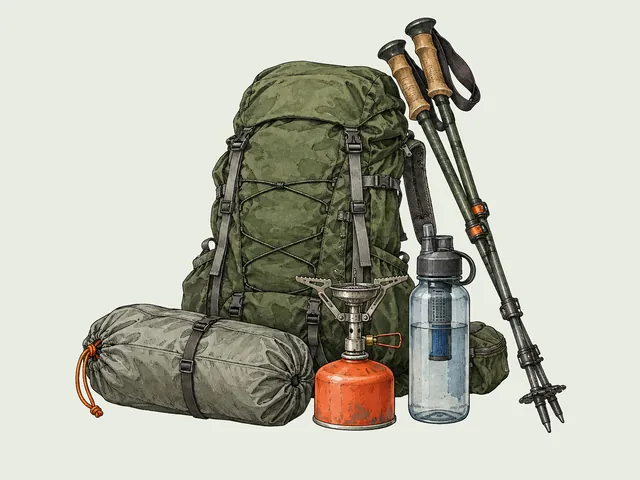
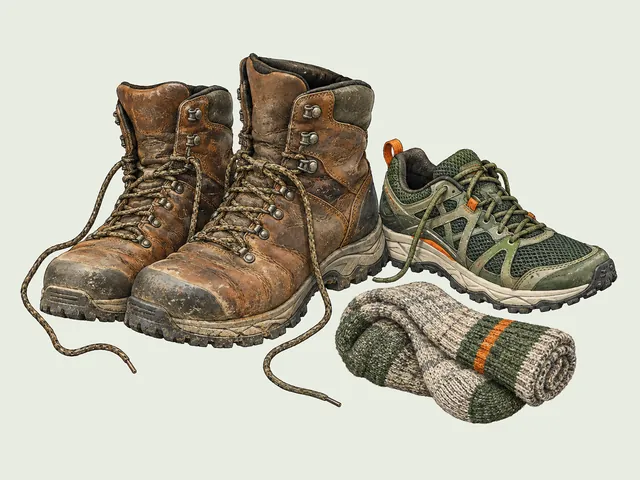
Hiking boots are non-negotiable. Every single trail in the Dolomites has loose gravel, rocky sections, or both. Trail runners work on the easiest trails (Braies, Alpe di Siusi) but you’ll want ankle support and a stiff sole for everything else.
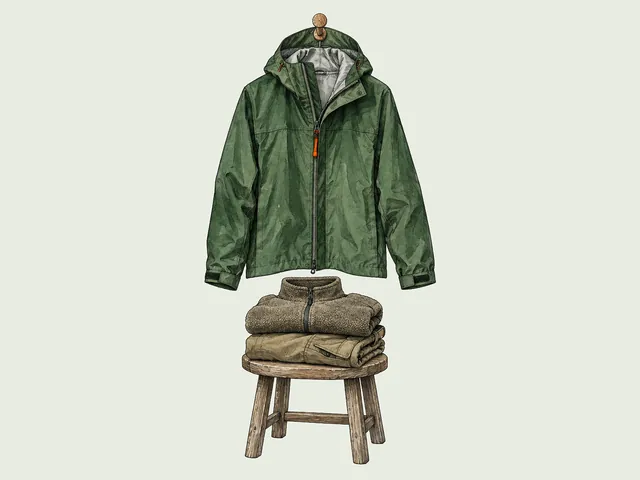
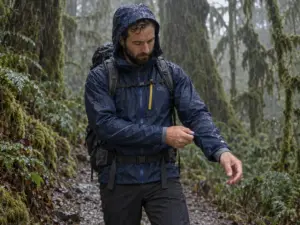
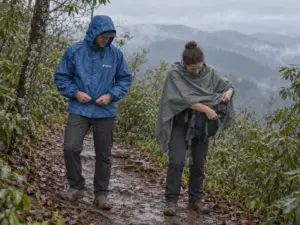
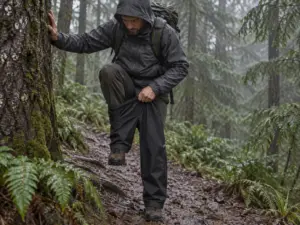
Trekking poles save your knees on the descents, which are steeper and longer than you expect — choosing the right trekking poles for your height matters more than most people realize. Rain gear — a waterproof jacket, not a poncho — goes in your pack every single day regardless of the forecast. A warm midlayer (fleece or light down) handles the temperature swing between sunny valley trailheads and windy 2,500-meter ridgelines — layering for unpredictable mountain weather is a skill worth learning before this trip.
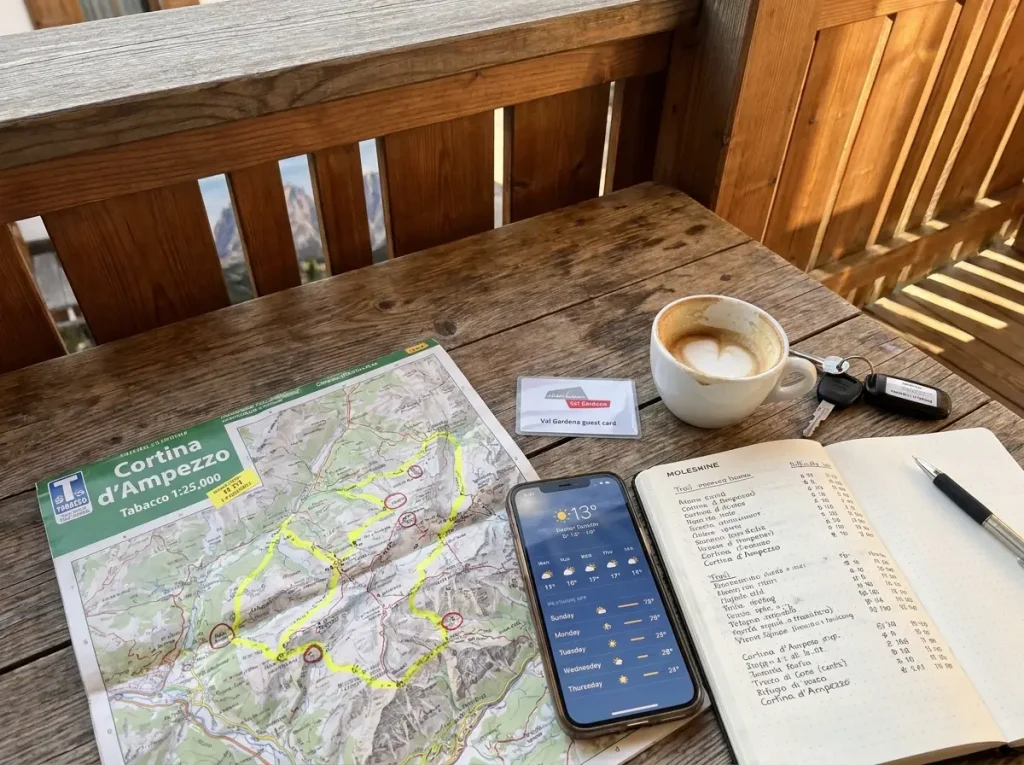
Skip the heavy guidebook. Download the Tabacco 1:25,000 hiking maps for your area — they’re the standard used by locals and trail markers reference Tabacco trail numbers. The Komoot or AllTrails apps work for GPS tracking, but cell service is spotty above treeline. Download maps offline before you leave the hotel.
Pro tip: The Val Gardena guest card and Cortina Card save serious money if you’re staying 3+ nights. They typically include free bus travel, cable car discounts (sometimes 50% off), and free entry to local museums. Ask your hotel about them at check-in — some visitors never find out these exist.
Conclusion
Three things separate a good Dolomites trip from a great one. First, pick the right base town for the trails you want — Val Gardena for the western hikes, Cortina for the eastern ones, and move between them mid-trip. Second, respect the weather window: start early, be off exposed ridgelines by 1 PM, and check the local micro-forecast every morning. Third, plan at least one rifugio lunch on every hiking day — the food, the views, and the conversations at those communal tables are the experiences that stick with you long after the summit photos fade.
The Dolomites don’t reward speed. They reward the hikers who show up prepared, stay flexible, and treat every trail like it deserves their full attention. After three trips, the thing I keep coming back for isn’t any single view — it’s the feeling of sitting on a wooden bench at 2,400 meters with a plate of polenta, looking at peaks that have been there for 250 million years, knowing I walked to get there.
Start with Tre Cime and Seceda if it’s your first time. Come back for the Adolf Munkel Trail and a night at a rifugio. And bring an extra water bottle. You’ll thank me on the descent.
Q1 How many days do you need to hike in the Dolomites?
Five days minimum to cover the top trails comfortably — three in Val Gardena and two near Cortina. A week lets you hike at a relaxed pace with rest days built in. You could spend two weeks and still have trails left to explore.
Q2 Can beginners hike in the Dolomites?
Yes. Cable cars eliminate the hardest climbs on many trails, making routes like Seceda, Cinque Torri, and Lago di Braies accessible to anyone in reasonable fitness. Start with those and work up to Tre Cime or Sorapis after gauging your comfort with loose terrain and exposure.
Q3 What is the best month to hike in the Dolomites?
September. Most trails are clear, rifugios are still open, wildflowers linger at lower elevations, and the summer crowds thin out noticeably. July and August work well but expect packed trailheads and full parking lots on popular routes.
Q4 Do you need a car to get around the Dolomites?
A rental car gives you the most flexibility, but the free bus systems in Val Gardena and Cortina cover major trailheads. Pick up a car in Venice, Verona, or Bolzano. Factor in narrow mountain roads, limited parking, and the cost of toll roads and parking fees.
Q5 Are the Dolomites worth visiting in summer after the Winter Olympics?
The 2026 Olympics brought more attention to the region, and summer 2026 will likely see higher visitor numbers on popular trails. The hikes are still worth it. Start early, choose lesser-known trails like Adolf Munkel or Croda da Lago, and visit in September to avoid the biggest crowds.

I've spent more than a decade researching hiking gear and trail technique. I read the specs, the forum threads and the long-term reviews, and every pick here comes with what it gets wrong.
End of the trail
You read every mile of this one. Here's where the trail goes next.