

Everybody tells you to go outside. Your VA counselor, your family, the motivational posts that keep showing up in your feed. “Get some fresh air.” Great advice — except nobody explains which trail to pick, whether you should go alone or with a group, or what to do when you’re two miles in and your chest tightens for no reason.
I’ve spent enough time on trails with veterans — and enough time processing my own hard seasons outdoors — to know that hiking can be one of the most effective tools for managing PTSD. But only when you approach it the right way. This guide covers the science, the programs, the trail selection nobody else talks about, and a practical plan for getting your boots on dirt for the first time.
Quick Answer: Here’s what actually helps veterans with PTSD who want to start hiking:
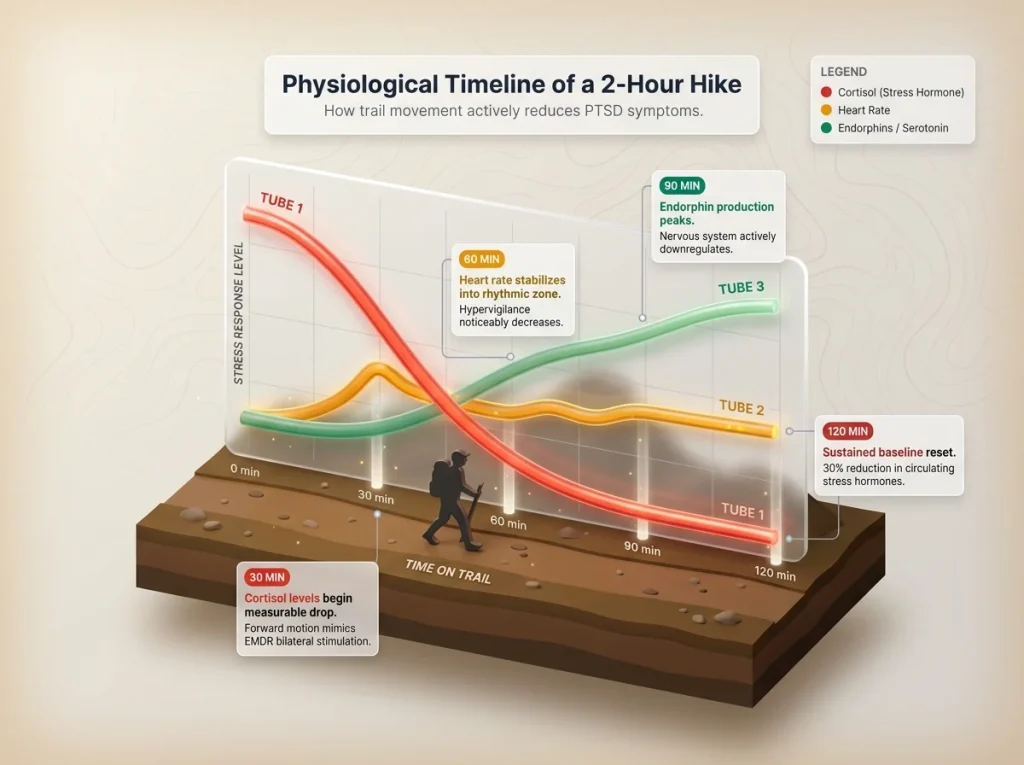
- Nature hiking reduces PTSD symptoms up to 30% — measurable, not just anecdotal
- Forest trails with canopy cover calm your nervous system faster than open terrain
- Start with 2-3 mile loop trails close to the car before attempting anything longer
- Group programs like Warrior Expeditions and Outward Bound provide gear, support, and structure at zero cost
- Hiking complements clinical treatment — it works best alongside therapy, not instead of it
- Every veteran qualifies for a free lifetime pass to 2,000+ federal recreation areas
Why Hiking Works for PTSD (And What the Science Says)
What Happens to Your Stress Response on Trail
When you walk a trail for 30 minutes, your cortisol — the hormone that keeps your system running in overdrive — starts dropping. That’s not motivational poster talk. It’s measurable in bloodwork, and it happens faster in natural environments than in urban settings.
Cortisol reduction is the mechanism that makes hiking work differently than, say, walking on a treadmill at the gym. The combination of rhythmic movement, varying terrain that demands just enough attention to keep your mind occupied, and natural sensory input creates a state that’s remarkably similar to what happens in an EMDR session. Your brain processes while your legs move.
If you struggle with field-tested tips for hiking with anxiety, the biological explanation matters — knowing why your chest loosens on a forest trail helps you trust the process.
The Research That Changed How We Think About Nature and PTSD
A UC Berkeley study put 180 military veterans and at-risk youth on 1-2 day whitewater rafting trips. One week later, participants reported a 30% reduction in PTSD symptoms and a 10% increase in overall well-being. Professor Dacher Keltner said the experience changes people’s nervous systems — and it’s as effective as any PTSD intervention available.
That’s one weekend on the water.
A pilot randomized trial published in BMJ Open compared nature hiking versus urban hiking for veterans with PTSD over 12 weeks. The nature group had a 91% completion rate versus 68% for the urban group. PTSD scores improved more at both 12 and 24 weeks in the nature group. The environment isn’t a nice-to-have — it’s part of the treatment.
According to VA’s National Center for PTSD, roughly 11-20% of veterans who served in Iraq and Afghanistan experience PTSD in a given year. That’s 1 in 5 from recent conflicts alone.
Why Nature Trails Work Better Than City Walks
Another study found that on days when individual participants spent more time outdoors, they experienced greater reduction in PTSD symptoms the following day. The effect was dose-dependent — more time outside meant faster improvement. But the type of “outside” mattered.
Nature trails outperformed urban walks consistently across studies. The leading theory involves something researchers call attention restoration — natural environments provide enough sensory variety to hold your attention gently without demanding the hypervigilant scanning that crowded streets or busy parks require. Your threat detection system gets to stand down for a while.
Pro tip: The repetitive motion of walking on trail creates a natural bilateral stimulation pattern — left foot, right foot — that mirrors the mechanism behind EMDR therapy. You’re processing while you move.
Picking the Right Trail When Your Brain Won’t Shut Off
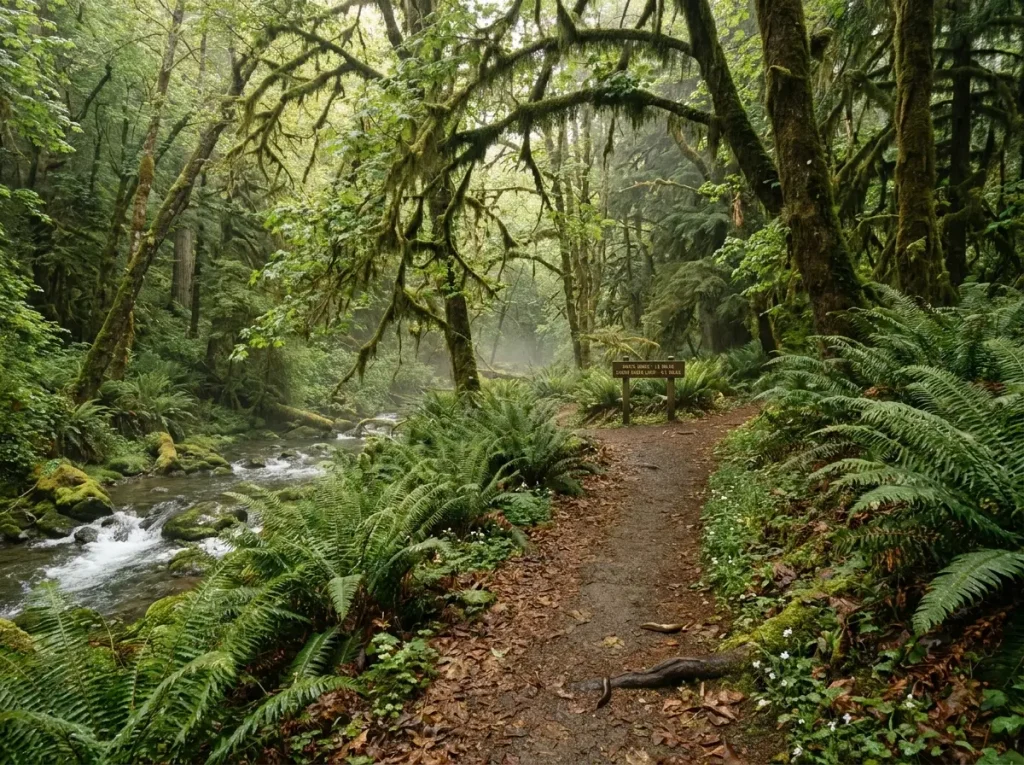
Not every trail is therapeutic. Some will make things worse. This is the part nobody writes about — and it matters more than which program you sign up for.
Canopy vs Exposed Terrain
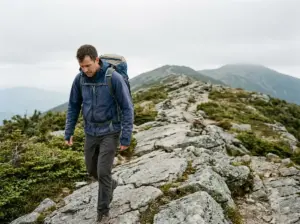
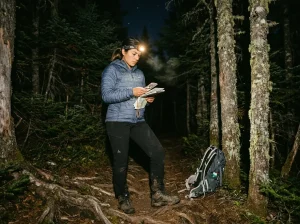
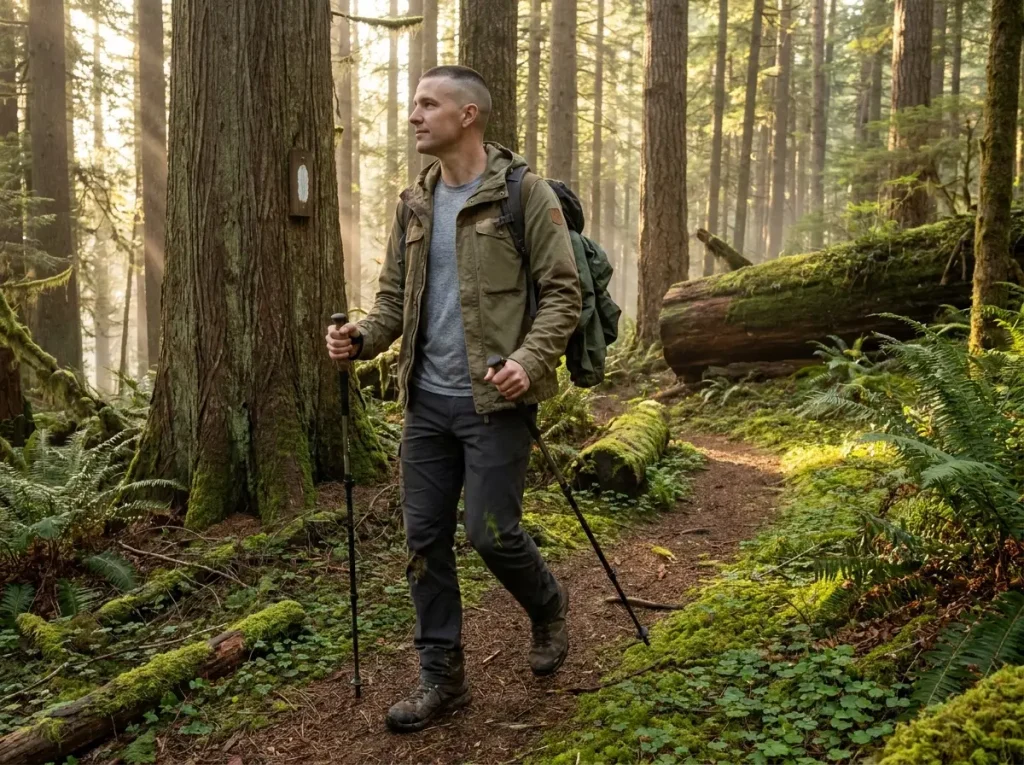
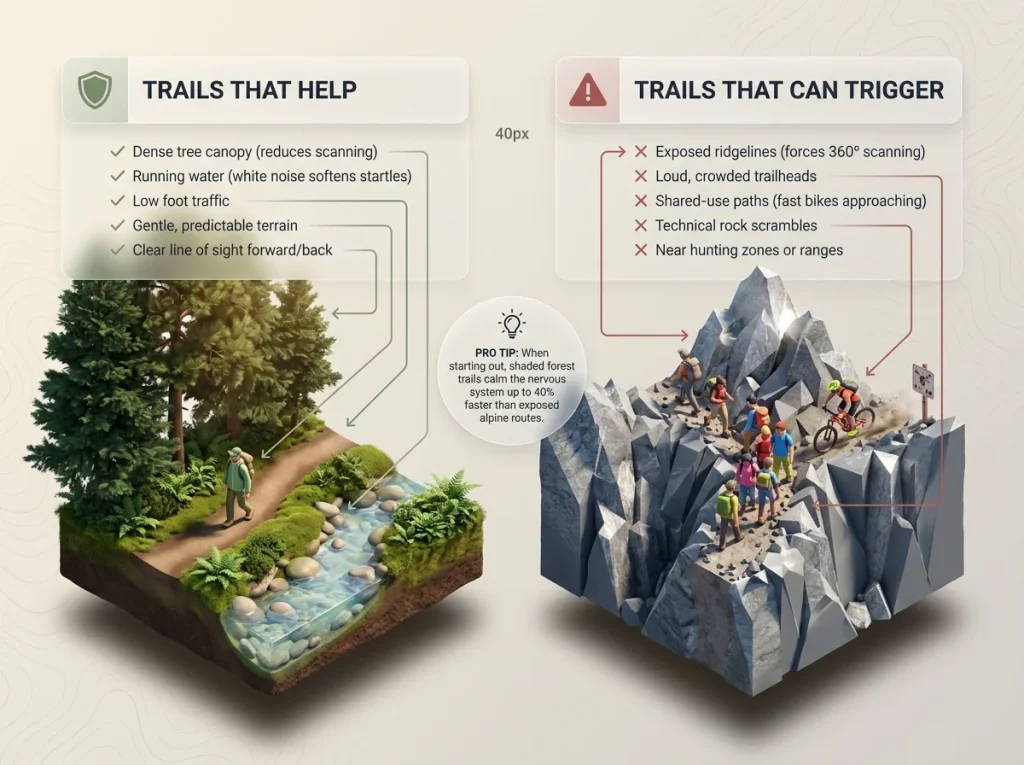
Forest trails with full overhead canopy reduce cortisol faster than exposed ridgeline trails. The science behind this tracks with what veterans report anecdotally: shaded environments feel safer. There’s cover. Your field of vision is managed by the trees, so your eyes aren’t constantly scanning a 360-degree horizon.
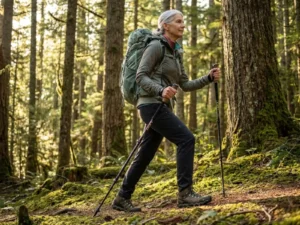
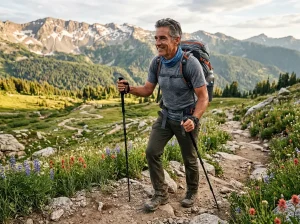
Start with trails that run through mature forest — Douglas fir, mixed hardwood, even dense pine. Save the alpine ridgelines and open meadow traverses for later, when your baseline is more settled. If you’ve already done some hiking and ridgelines feel fine, trust that. This isn’t a rule — it’s a starting framework that works for most veterans I’ve talked to.
Pro tip: Look for trails with a water feature — a stream, a waterfall, even a lake. Running water creates natural white noise that softens the startle response. Your auditory system relaxes when it has consistent background sound instead of unpredictable silence broken by sudden noises.
Sound, Crowds, and Sensory Load
Busy trailheads trigger hypervigilance for the same reason crowded malls do — too many variables your brain is trying to track. For your first few hikes, pick trails that aren’t the most popular option in your area. Weekday mornings work well. Lesser-known county or state parks often have better solitude than the headline national park trails.
Avoid trails adjacent to hunting areas during season. The sound profile matters more than most people realize. If you take time to research a trail before you go, checking for nearby shooting ranges or hunting zones should be part of the homework.
One thing that catches veterans off guard: trail runners coming up fast from behind. That sudden close presence can spike your system. Trails that are wide enough to see people approaching from a distance, or trails where foot traffic tends to move in one direction, reduce that variable.
Solo Hiking vs Group Programs for Veterans
When Group Hiking Recreates the Right Kind of Unit
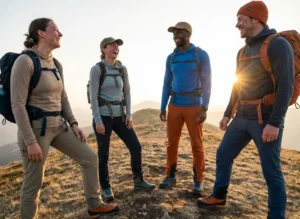
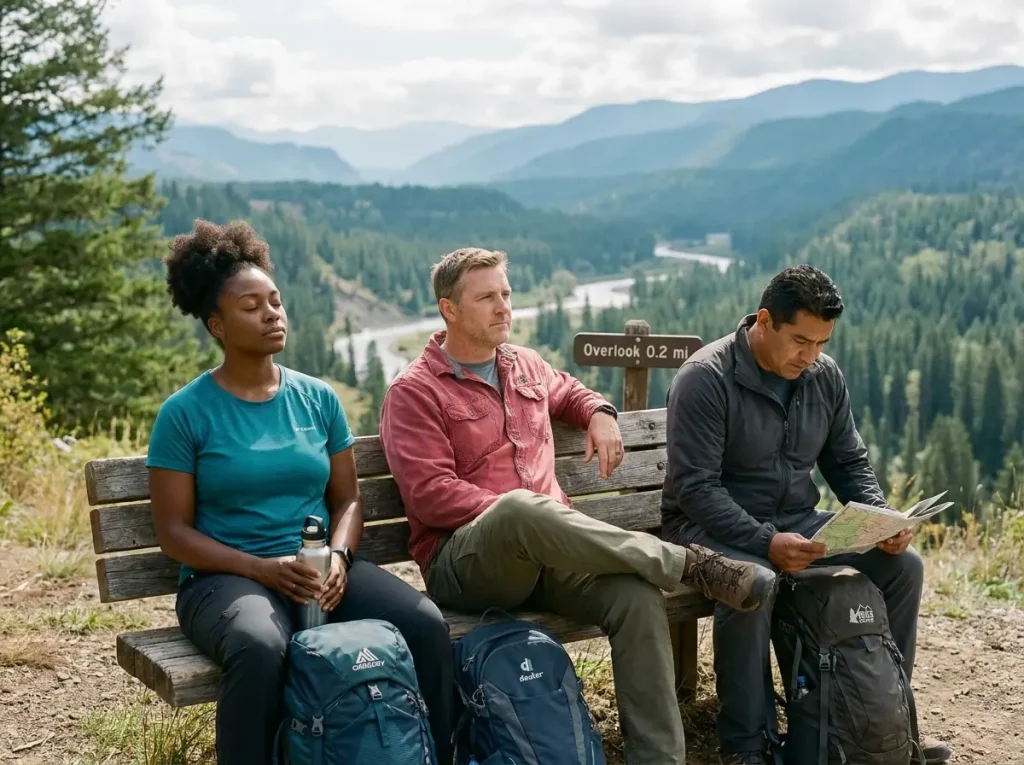
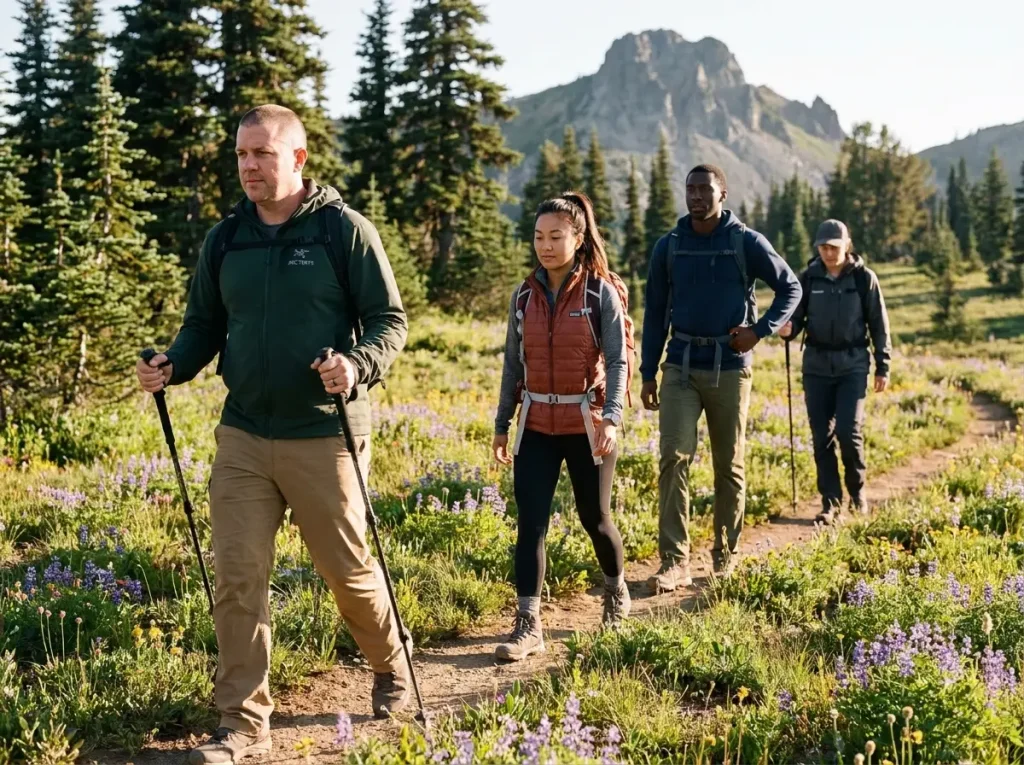
The Sierra Club’s Military Outdoors program found that peer-led group activities improved psychological well-being immediately after participation. That tracks with what veterans consistently report: group hiking recreates the best parts of military structure — a small team working toward a shared objective, mutual accountability, shared discomfort — without the part that caused the trauma.
Group hiking works because it rebuilds camaraderie in a context that feels familiar but safe. The spacing on trail is natural — you walk single file, each person at their own pace, close enough to talk if needed, far enough apart for private thoughts. It’s a low-pressure social structure that doesn’t demand performance.
Joshua Brandon, an Iraq War veteran, described his mountaineering expeditions between deployments as being drawn to “the best parts of combat — a small, tight group testing ourselves and depending on each other.” He eventually partnered with REI and the University of Washington to study the positive impact of group hiking for veterans with PTSD.
If you’re interested in leading a group hike effectively, that skill translates directly to organizing veteran trail outings in your own community.
When You Need the Trail to Yourself
Some veterans need solo time on trail before they can handle a group. If sustained social interaction is draining rather than recharging, solo hiking gives you control over the pace, the stops, the conversation (none), and the exit.
The progression that works for most people: guided group program → familiar small group of 3-4 → solo hikes with a check-in buddy → fully independent solo hiking. Brendon Keeling, a veteran who participated in a VA outdoor program, said it directly: “I definitely would not have come out on my own to start off.”
Don’t skip steps. The group phase isn’t weakness — it’s building the neural pathway that says “trail = safe.” Once that’s wired in, solo hiking becomes the space where you do the deeper processing.
Pro tip: If you’re hiking solo, text someone your trailhead location and expected return time. The simple act of having a check-in protocol reduces background anxiety — your system knows someone is aware of where you are.
Programs That Actually Put Veterans on Trail
Long-Distance Expedition Programs
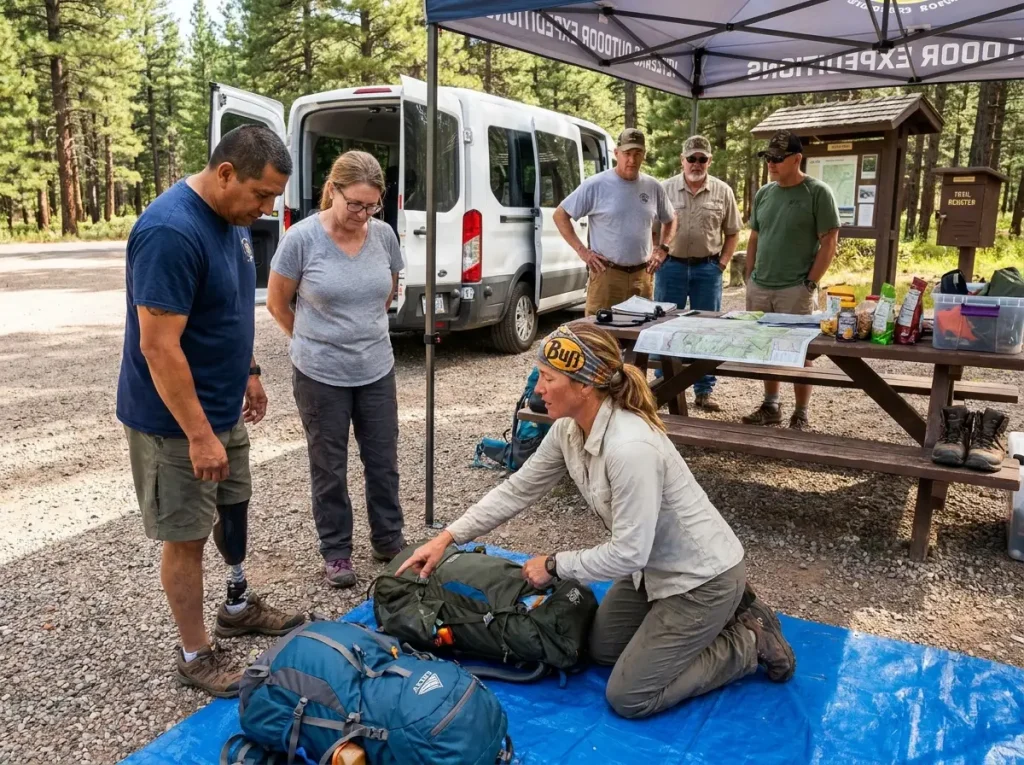
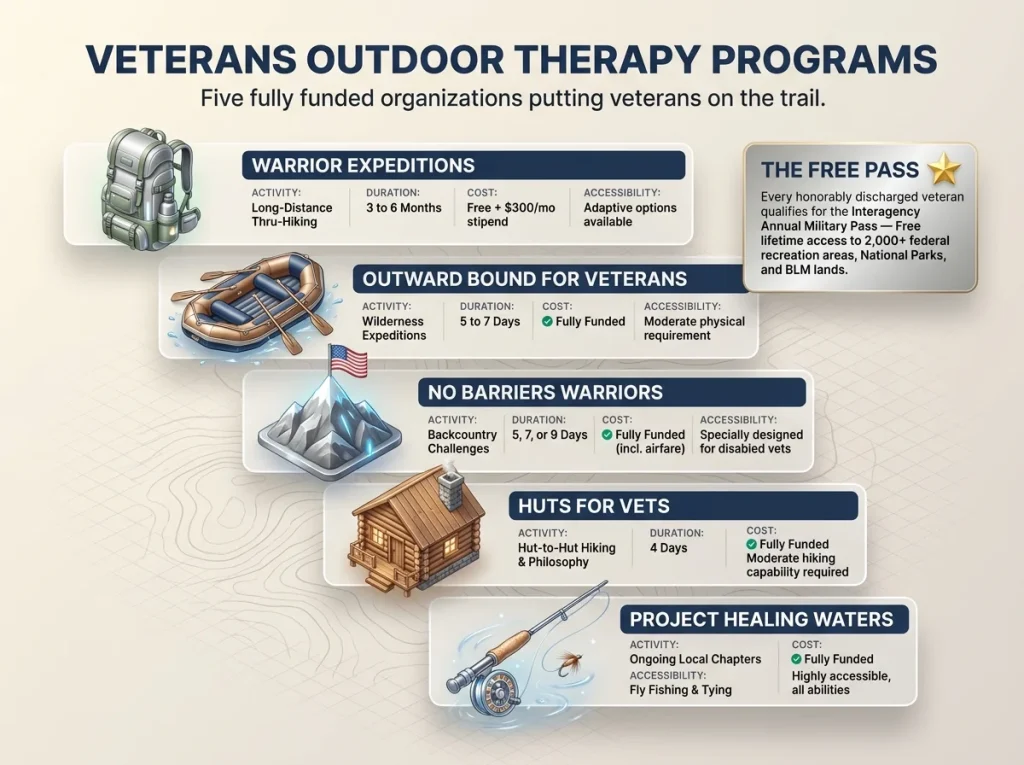
Warrior Expeditions is the gold standard for long-distance healing. Veterans embark on 3-6 month outdoor expeditions — thru-hikes, long-distance bike rides, or paddling routes — with all gear, clothing, lodging, and meals provided. They also receive a $300 monthly stipend for resupply. The concept is simple: a sustained period of outdoor immersion gives veterans space to decompress after deployment. If you want to understand what an Appalachian Trail thru-hike actually involves, Warrior Expeditions covers the AT, the PCT, and other long-distance routes.
Outward Bound for Veterans offers multi-day wilderness expeditions that combine backcountry travel with group therapy and personal reflection. Trips include backpacking, rock climbing, and whitewater rafting. Participants consistently report reduced stress, improved mental health, and stronger social connections.
No Barriers Warriors specifically serves veterans with disabilities, offering 5, 7, or 9-day backcountry expeditions. Airfare, gear, ground transportation, and meals are included.
Weekend and Day Programs
Huts for Vets operates out of Aspen, Colorado, running 4-day guided hiking programs that combine physical challenge with philosophical group discussion. Programs are gender-specific, and over 180 veterans have completed the experience. Transportation, food, and lodging are covered.
Project Healing Waters Fly Fishing takes a different approach — using fly fishing as the therapeutic medium. With 206+ active programs across 50 states, PHWFF is the most accessible veteran outdoor program in the country. Fly fishing’s repetitive casting motion and required focus create a meditative state that veterans respond to strongly.
The Sierra Club Military Outdoors program runs peer-led outdoor activities including day hikes, camping trips, and paddling outings. The peer-led model matters — veterans respond differently to guidance from other veterans than from civilian therapists.
How to Find Programs Near You
US Vet Connect is the clearinghouse — a directory of 270+ free and subsidized outdoor programs for veterans across all 50 states. Fishing, hiking, equine therapy, retreats, service connections, and more. Start there.
Your VA recreation therapist can also connect you with local programs. Ask specifically about outdoor recreation therapy — not all VA facilities advertise it, but many run weekly outdoor groups similar to the VA Marion program where veterans go kayaking, hiking, and archery every Tuesday morning.
The National Environmental Education Foundation research compiles five peer-reviewed studies validating nature-based veteran programs if you want to share evidence with a provider or family member.
Your First Hike Back (A Practical Guide)
Distance, Terrain, and Timing
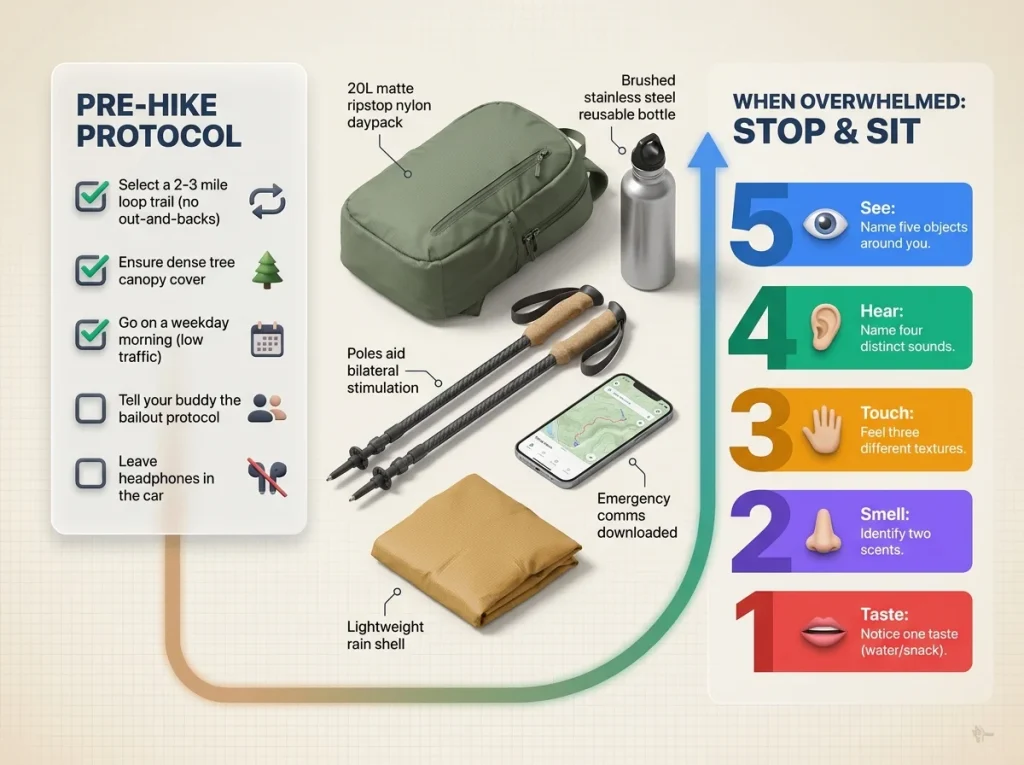
Start with a 2-3 mile loop trail. Loop, not out-and-back — knowing you’re always moving toward the car rather than getting farther from it reduces background anxiety. Choose a trail rated easy to moderate with no technical sections, no scrambling, and no exposed drop-offs.
Morning hikes work better than afternoon for most veterans. Cortisol is naturally higher in the morning, and physical activity channels it into forward movement rather than circular thinking. By mid-morning, you’ve burned off the edge and the rest of your day is calmer.
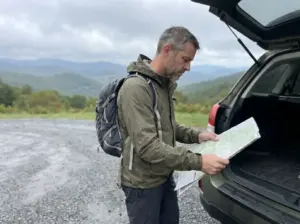
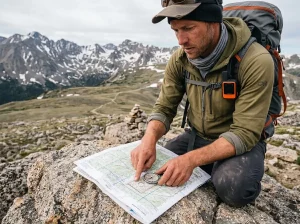
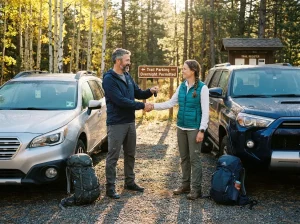
Pick a trail you’ve researched in advance. Know where the parking is, how many cars are usually there, what the trail surface looks like, and where the bailout points are. If you need a framework for that research, planning a day hike from scratch covers the logistics step by step.
What to Bring (And What to Leave Behind)
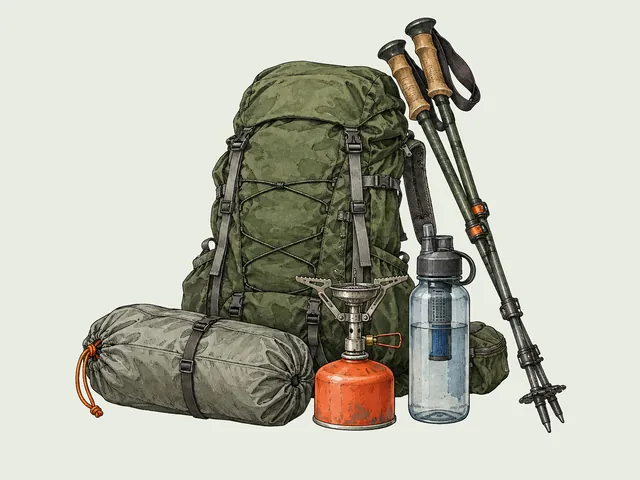
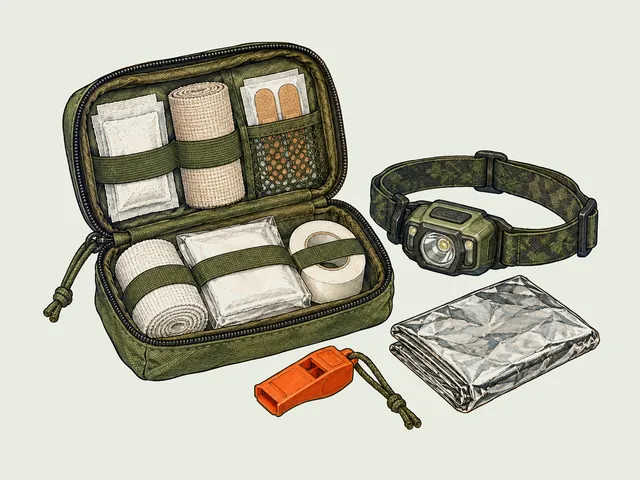
Pack light. A small daypack with water, a snack, your phone, and a rain layer is enough. Trekking poles are worth bringing even on flat terrain — they give your hands something to do and add a rhythm to your walking that enhances the bilateral stimulation effect.
Leave the headphones at home for the first few hikes. The point is to let the natural soundscape replace the noise in your head. Music or podcasts keep your brain in processing mode when the goal is to let it idle.
Bring a phone with cell service or a satellite messenger. Having a communication lifeline isn’t paranoia — it’s smart preparation that lowers your system’s background threat assessment.
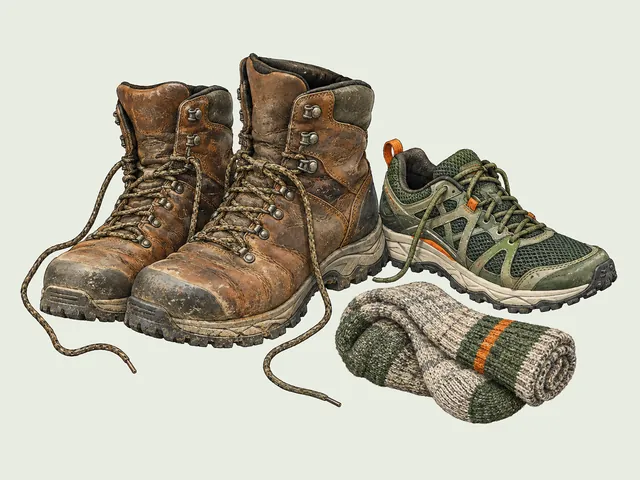
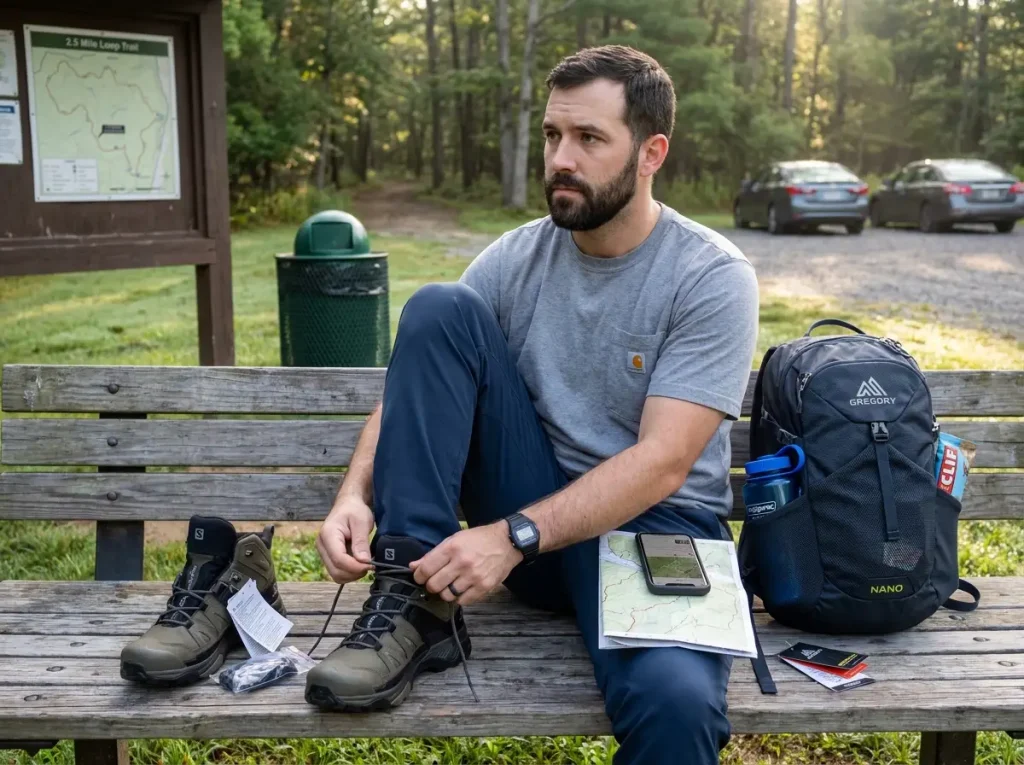
Pro tip: Wear the boots and pack around your neighborhood for a few days before your first trail hike. Blisters and gear discomfort on your first therapeutic hike add a frustration layer that works against the whole point.
When the Trail Gets Overwhelming
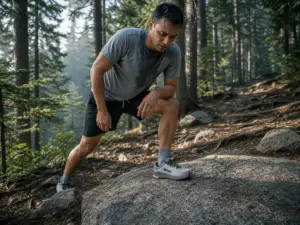
It might happen. You round a corner and a loud group startles you. Your chest tightens. Your hands go numb. You want to leave.
Here’s the protocol: stop walking, step off trail, and sit down. Use the 5-4-3-2-1 grounding technique — name 5 things you can see, 4 you can hear, 3 you can touch, 2 you can smell, 1 you can taste. This pulls your nervous system from the past into the present sensory environment.
Give yourself 10 minutes. If you feel settled, keep hiking. If not, walk back to the car. There’s no failure in cutting a hike short. The trail will be there next week. Sydney Fleming, an Army veteran in a VA outdoor program, put it simply: “The clinical setting can feel a bit cold for therapy. Being able to get moving in this warm weather helps open up.”
Pro tip: Tell your hiking buddy about the grounding technique before the hike starts. That way, if you sit down mid-trail, they know what’s happening and don’t panic or try to fix it. They just sit nearby and wait.
The Free Pass Every Veteran Should Know About
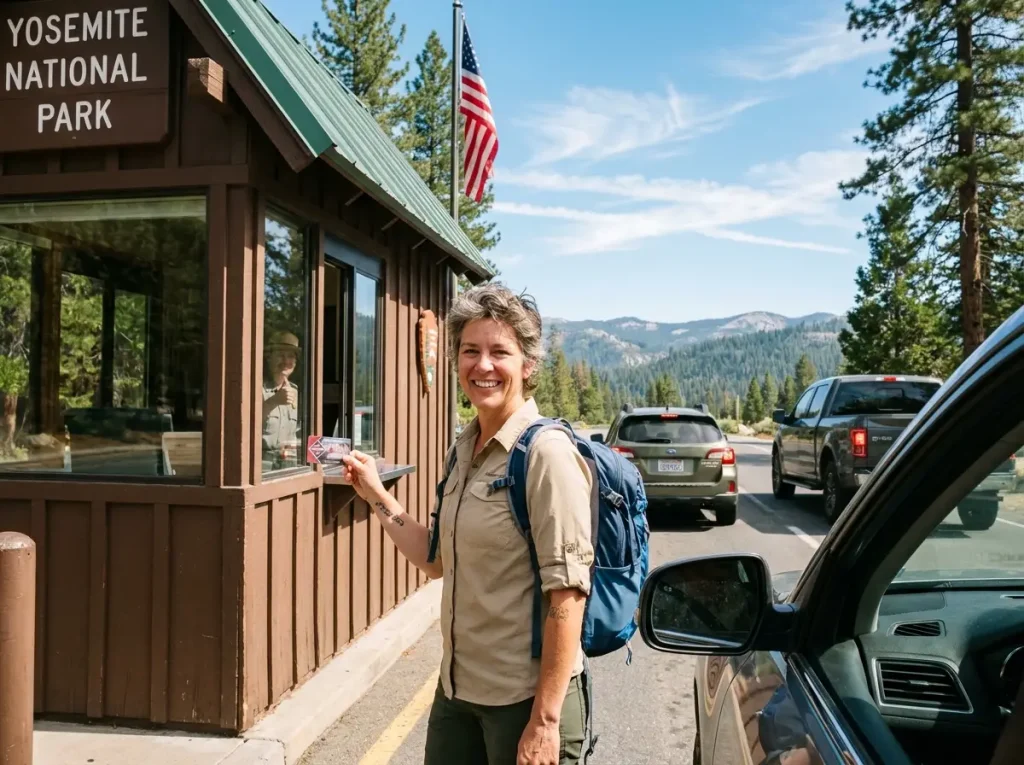
The Interagency Military Pass
Every honorably discharged veteran and Gold Star Family member qualifies for the Interagency Annual Military Pass — free lifetime access to more than 2,000 federal recreation areas. National parks, national forests, wildlife refuges, BLM lands, Army Corps of Engineers sites. All of it.
You can get the pass at any federal recreation area entrance, or order it online through the USGS store. Bring your DD-214 or VA health ID card. The pass covers entrance fees and standard amenity fees at sites managed by five federal agencies.
This means your therapeutic hiking doesn’t have a price tag attached. The National Park Service alone manages 63 national parks with thousands of miles of maintained trails. Add in National Forest and BLM land, and you have access to more trail than you could hike in a lifetime — free.
Programs That Cover Everything
Cost should never be the barrier. The programs listed in this article cover gear, food, transportation, and sometimes even provide a monthly stipend. Warrior Expeditions hands you the pack, the boots, the food, and $300 a month. Huts for Vets covers lodging, meals, and transport to Aspen. No Barriers Warriors includes airfare.
Earl Shaffer didn’t have these programs when he thru-hiked the AT in 1948 to “hike the Army out of my system.” He walked alone with borrowed gear. Today, there are hundreds of organizations doing this work. You can explore the thru-hikers who changed everything to see how Shaffer’s solo walk sparked a movement.
Pro tip: If you’re currently receiving VA benefits, participating in an approved outdoor therapy program can sometimes be coordinated through your VA recreation therapist or Whole Health coordinator. Ask — the worst they can say is no.
Hiking Isn’t a Replacement (But It’s One of the Best Complements)
What the Trail Does That the Office Can’t
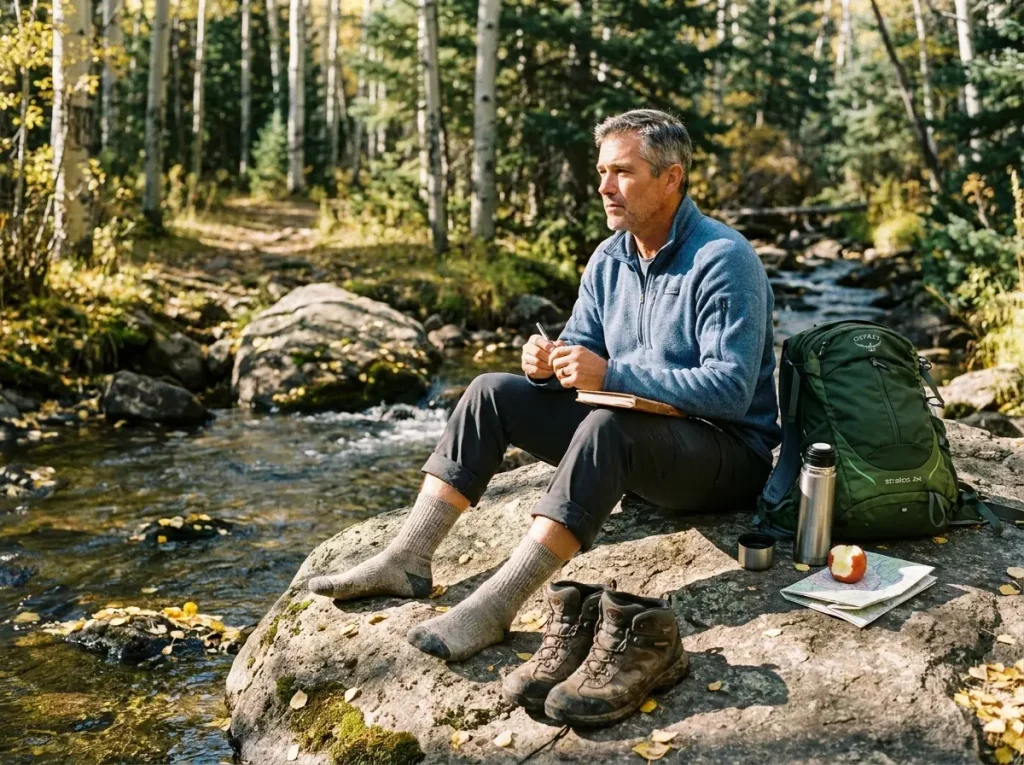
I’m not going to tell you hiking cures PTSD. No credible source says that, and anyone who does is selling something. What the research does show — consistently, across multiple studies and populations — is that hiking is one of the most effective complements to evidence-based treatment.
Clinical therapy gives you the tools: Cognitive Processing Therapy (CPT), Prolonged Exposure (PE), EMDR. These are the interventions with the strongest evidence base for PTSD. What they don’t give you is a space to practice using those tools in a real-world environment where your senses are engaged, your muscles are tired, and your brain is processing at a different speed.
That’s what the trail provides. The combination of clinical processing plus outdoor embodiment is stronger than either one alone. A UK study with a 4-month follow-up confirmed that the effects of outdoor therapy were sustained over time — this isn’t a temporary endorphin high.
If you want to explore the psychological side further, reframing frustration on the trail covers the cognitive techniques that apply directly to processing emotions while hiking.
When to Talk to Your VA Provider First
Start with your provider if you’re currently in active treatment, experiencing worsening symptoms, or if you haven’t been evaluated for PTSD yet. Your therapist can help you choose the right type of outdoor program and can coordinate with programs that integrate clinical supervision.
If you notice that hiking is becoming avoidance — you’re using trails to escape processing rather than to support it — that’s the signal to check in with your provider. The trail is a tool, not a hiding place.
If you or someone you know is in crisis, the Veterans Crisis Line is available 24/7 at 988 (press 1), text 838255, or chat at VeteransCrisisLine.net. This article is about hiking as a complement to professional care, not a substitute for it.
Conclusion
Three things to take from this. First, the science is clear — nature hiking reduces PTSD symptoms measurably, and the effect is dose-dependent and sustained. Second, the programs exist, they’re free, and they’re in all 50 states. Third, trail selection and preparation matter more than most articles acknowledge, and getting those right is the difference between a hike that helps and one that doesn’t.
Find a 2-3 mile forested loop trail near you. Research it. Pack light. Bring someone you trust. Go on a weekday morning. And give yourself permission to turn around if you need to. The trail will be there when you come back.
Q1 Does hiking help with PTSD?
Yes — multiple peer-reviewed studies show hiking reduces PTSD symptoms by up to 30% after just one or two days outdoors. The combination of bilateral walking motion, natural sensory input, and cortisol reduction creates measurable neurological changes. Hiking works best as a complement to clinical therapy, not a standalone treatment.
Q2 What outdoor programs are available for veterans with PTSD?
Major programs include Warrior Expeditions (long-distance thru-hikes), Outward Bound for Veterans (multi-day wilderness trips), Huts for Vets (4-day guided hiking), Project Healing Waters Fly Fishing (206+ programs nationwide), and No Barriers Warriors (expeditions for disabled veterans). US Vet Connect lists 270+ free programs across all 50 states.
Q3 Are wilderness therapy programs free for veterans?
Most established programs cover all costs including gear, food, transportation, and lodging. Warrior Expeditions provides a $300 monthly stipend during expeditions. No Barriers Warriors includes airfare. The Interagency Military Pass gives free lifetime access to 2,000+ federal recreation areas for all veterans.
Q4 Can outdoor activities replace traditional PTSD treatment?
No — and any program claiming otherwise should be a red flag. Hiking and outdoor therapy work best alongside evidence-based treatments like CPT, Prolonged Exposure, and EMDR. The trail provides embodied processing space that clinical settings cannot, but it doesn’t replace the structured therapeutic work.
Q5 How do I start hiking if I have PTSD and no experience?
Start with a 2-3 mile loop trail through forest with good canopy cover. Go on a weekday morning with one trusted person. Pack water, a snack, your phone, and a rain layer. Research the trail in advance so you know what to expect. Use the 5-4-3-2-1 grounding technique if you feel overwhelmed, and give yourself full permission to turn around early.

I've spent more than a decade researching hiking gear and trail technique. I read the specs, the forum threads and the long-term reviews, and every pick here comes with what it gets wrong.
End of the trail
You read every mile of this one. Here's where the trail goes next.