In this article
You’ve finally reached the summit viewpoint after grinding uphill for two hours, only to find the overlook blocked by a guy running a loud gimbal like he’s filming a private documentary. I’ve logged hundreds of miles with heavy DSLRs and simple smartphones, and I’ve learned that getting the shot shouldn’t mean ruining the hike for everyone behind you. If you want to capture the trail without being the person everyone else complains about, here is exactly how to manage your gear and respect the miles.
⚡ Quick Answer: You can take ethical trail photos by yielding right-of-way to uphill hikers, keeping tripods off narrow paths, staying on solid stone, and maintaining 100 yards from wildlife. Most folks screw this up by stepping off the trail for a better angle, crushing soil that takes centuries to heal.
Managing Your Footprint: Trail Space and Right-of-Way
The Physics of Going Uphill
Every hiker knows that burning sensation in their calves halfway up a steep switchback. You finally find your climbing rhythm, and the last thing you want is to break stride. This is why yielding to uphill traffic is a non-negotiable rule. Their momentum is incredibly hard to get back once they stop. When you freeze in place to get a wide shot of the valley floor, you instantly become a static obstacle. If a group is huffing their way up toward you, step off the path onto a piece of durable rock. Let them pass safely so they don’t have to wobble on loose dirt just because you wanted a cool framing opportunity. The physics behind trail right-of-way are simple: the person doing the most work gets the clear path. If you’re checking exposure settings, step aside.
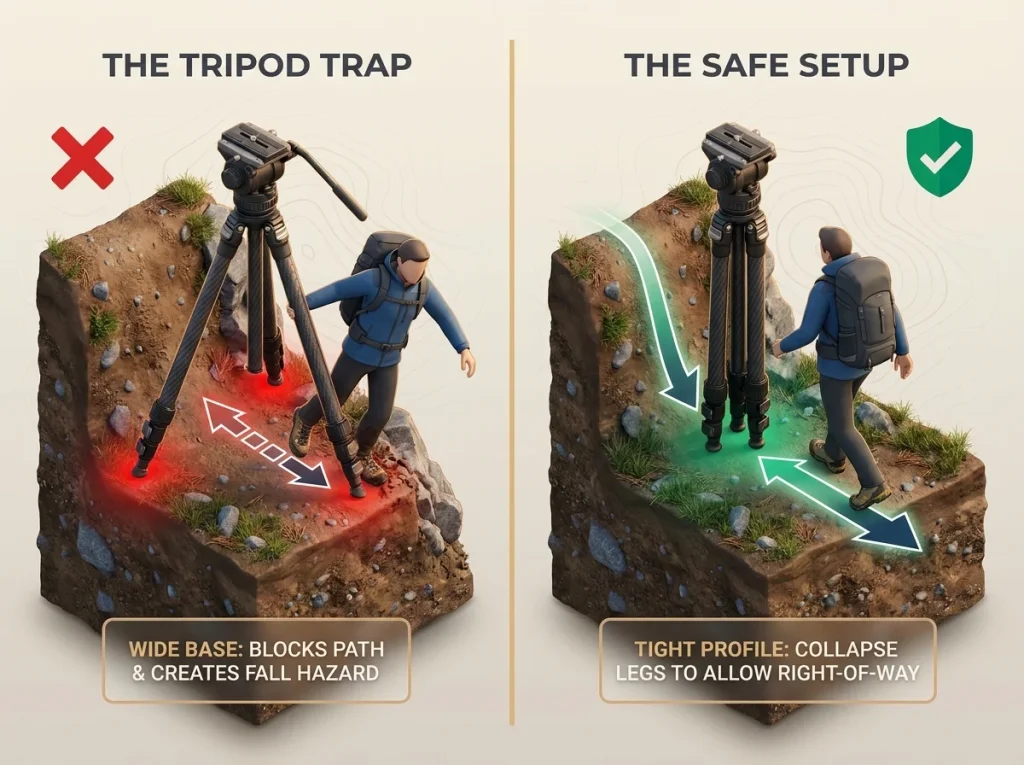
Managing “The Tripod Trap” on Narrow Trails
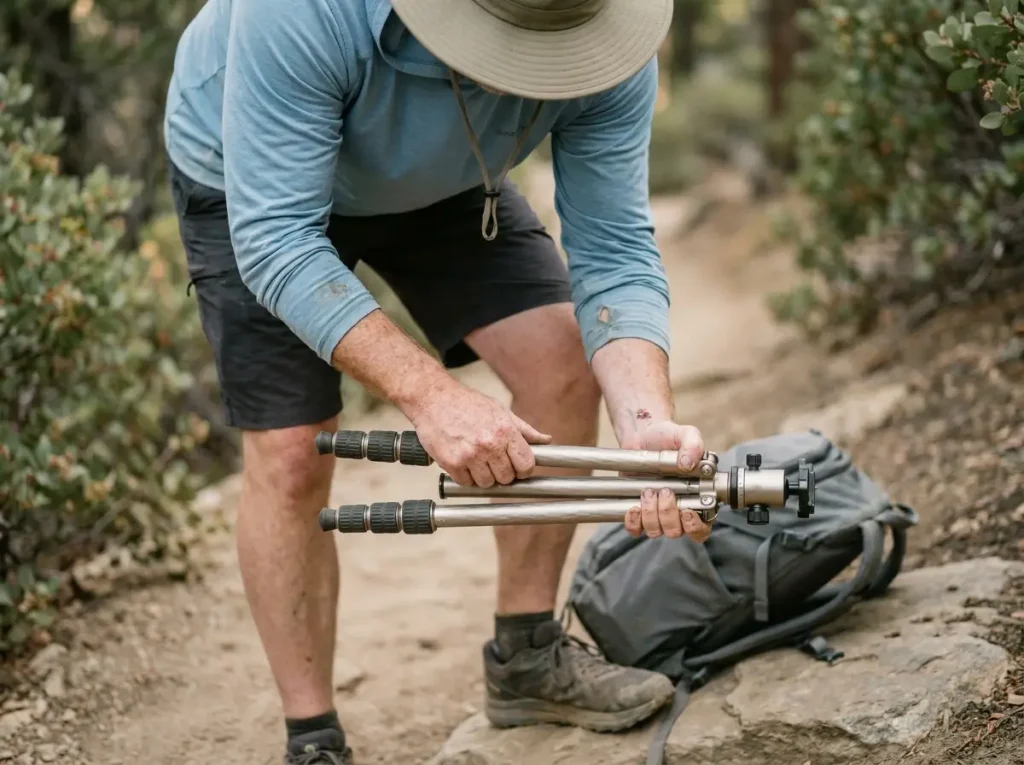
We’ve all turned a blind corner and faced a sprawling carbon-fiber obstacle course right in the middle of a two-foot-wide path. Wide tripod placement turns a simple dirt walk into a hazard, especially on exposed ledges. If you absolutely need stabilization on narrow passages, keep your tripod base tight, even if it means sacrificing some height.
When you walk from spot to spot, watch out for “the yard sale” effect, where you leave lenses and half-open backpacks scattered across the dirt. Keep your gear condensed. Honestly, learning gear optimization and choosing to pack light makes life easier for everyone. You avoid dirty looks, and you stop forcing folks to squeeze past your expensive glass while balancing near a sheer drop-off.
The Five-Minute Viewpoint Rule
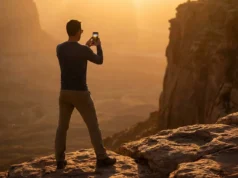
Overlooks are the payoff for the long hike, which means everybody wants their time at the edge. Viewpoint hogging happens when you set up your camera at the absolute best vantage point and refuse to leave. It usually involves taking three dozen slight variations of the same shot, then standing right there while you squint at the back of your screen to review them. The five-minute rule solves this completely. Step up, frame your shot, take a few variations, and then physically step backward ten paces with your gear. You can review your photos underneath a pine tree behind the main crowd. Being considerate of other visitors means remembering you aren’t the only person who hiked five muddy miles to see that waterfall.
Pro-Tip: The “Two-Shoulder” carry for your tripod keeps the legs closed tight and rests them evenly on your pack straps. It lets you cover ground quickly without clotheslining a passing hiker on a tight switchback.
Moving your gear out of the way keeps the trail flowing, but where you actually put your boots down when you step aside has consequences that last much longer.
The “Off-Trail” Dilemma: Why One Step Actually Matters
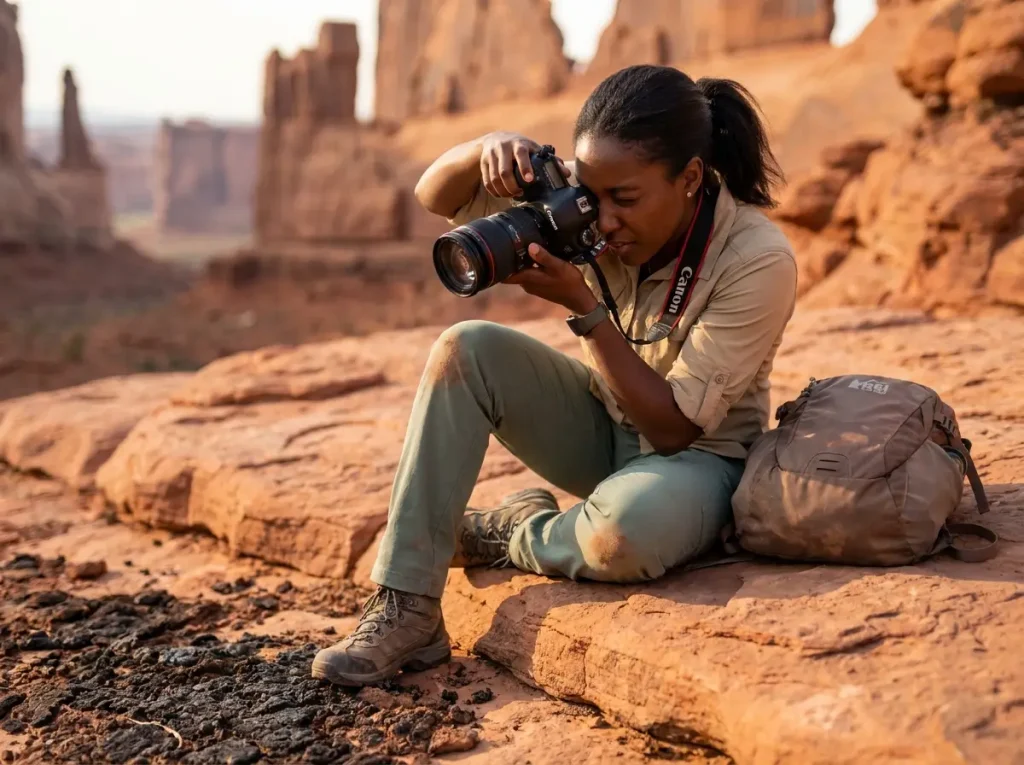
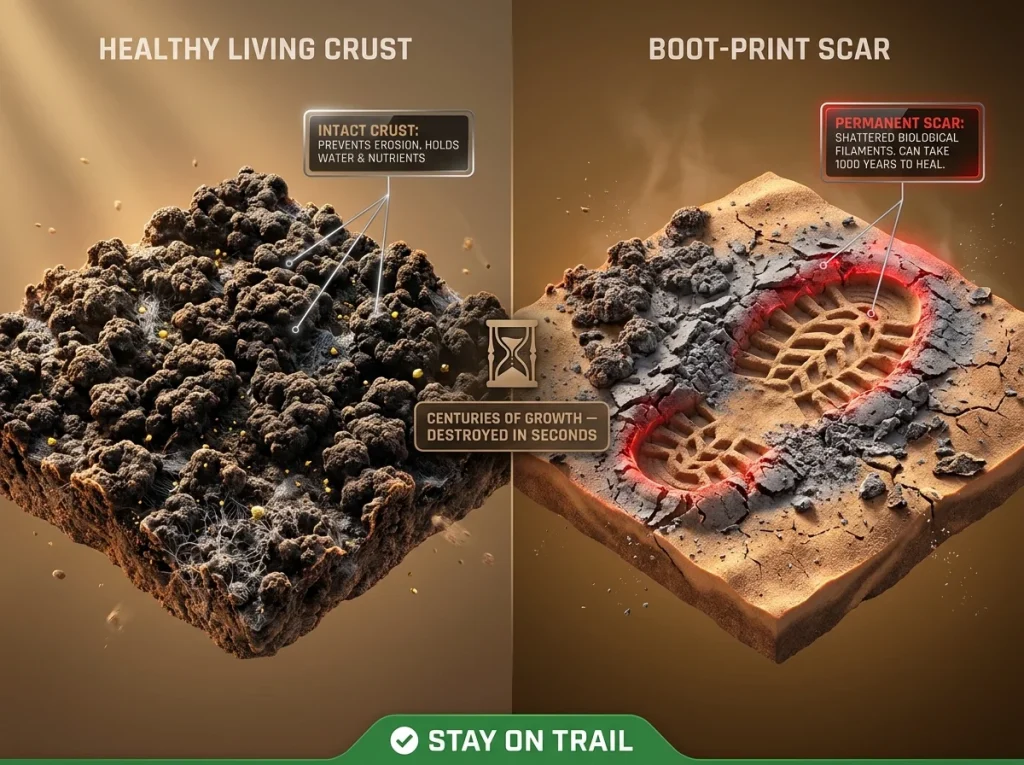
The 1,000-Year Scar: Understanding Cryptobiotic Soil
Every time you venture out into the desert regions of the Southwest, you see folks trying to maneuver around sagebrush to get a clean shot of a cactus bloom. They step off the dirt path onto what looks like dead, black crust. That dark, crunchy dirt is actually cryptobiotic soil, a living layer of cyanobacteria that acts as the desert’s skin. It holds the sand together, keeping the wind from blowing the area away.
When your hiking boot crunches down on those living soil crusts, you snap the microscopic filaments binding it together. That single footprint creates a dead zone that won’t hold water or seeds. The worst part? It takes between two hundred and a thousand years for that exact spot to fully recover. By learning about identifying cryptobiotic soil, you realize that grabbing a unique angle is never worth leaving a scar your great-grandchildren might one day walk past. The leave no trace center for outdoor ethics pushes this hard for anyone carrying a camera.
The “Social Trail” Snowball Effect
If you step off the path into an alpine meadow to shoot a nice cluster of columbines, you crush a few stalks of grass. You might think the environment will just bounce right back tomorrow. The real issue is the psychological effect on the next twenty people walking behind you. When they see bent grass and a faint trail of footprints leading toward a scenic boulder, they assume it’s an established side-route.
They blindly follow your boot prints. Within three weeks, your one shortcut becomes a fully cleared, unauthorized path that eventually widens into a muddy ditch during the next rainstorm. This snowball effect destroys native vegetation at a terrifying speed. Whenever you feel compelled to break off into the brush to catch the light, remember you are drawing a map for every lazy hiker walking behind you that day.
Safe Ways to Get a New Angle
So how do you actually get an interesting shot without sticking exclusively to the crowded, beaten path? You learn to spot the difference between durable and fragile surfaces, which is the cornerstone of ethical trekking. Professional outdoor guides teach the “Three S’s” rule: Stone, Sand, or Snow. You can step onto a solid granite slab or a deep snowfield without leaving lasting damage.
If you are stuck on a narrow dirt spine surrounded by sensitive alpine tundra, you simply keep your boots on the trail. Sometimes, swapping out to a longer focal length lets you compress the background and cut out distractions without forcing you to physically wade through a meadow. Letting the glass do the heavy lifting means you always maintain a policy of staying on trail, managing your impact while still nailing the shot you hiked all day to get.
Knowing where you can step safely protects the vegetation under your boots, but maintaining your distance is even more critical when the local wildlife starts watching you.
Capturing Wildlife: The 100-Yard Standard
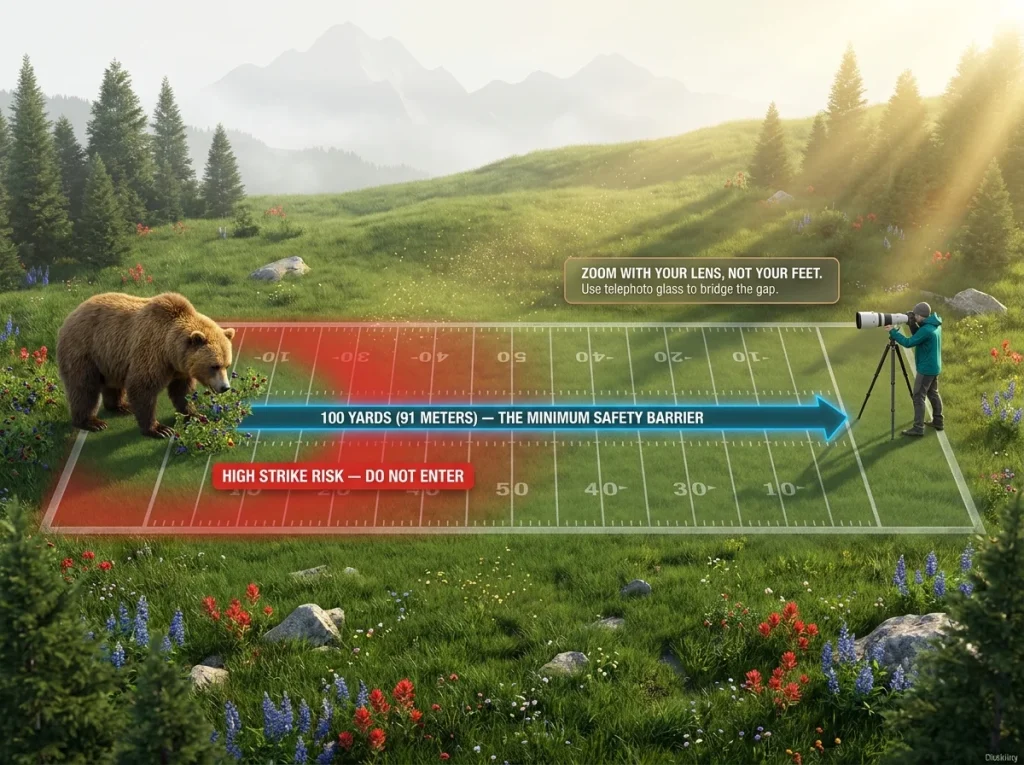
Zoom With Your Lens, Not Your Feet
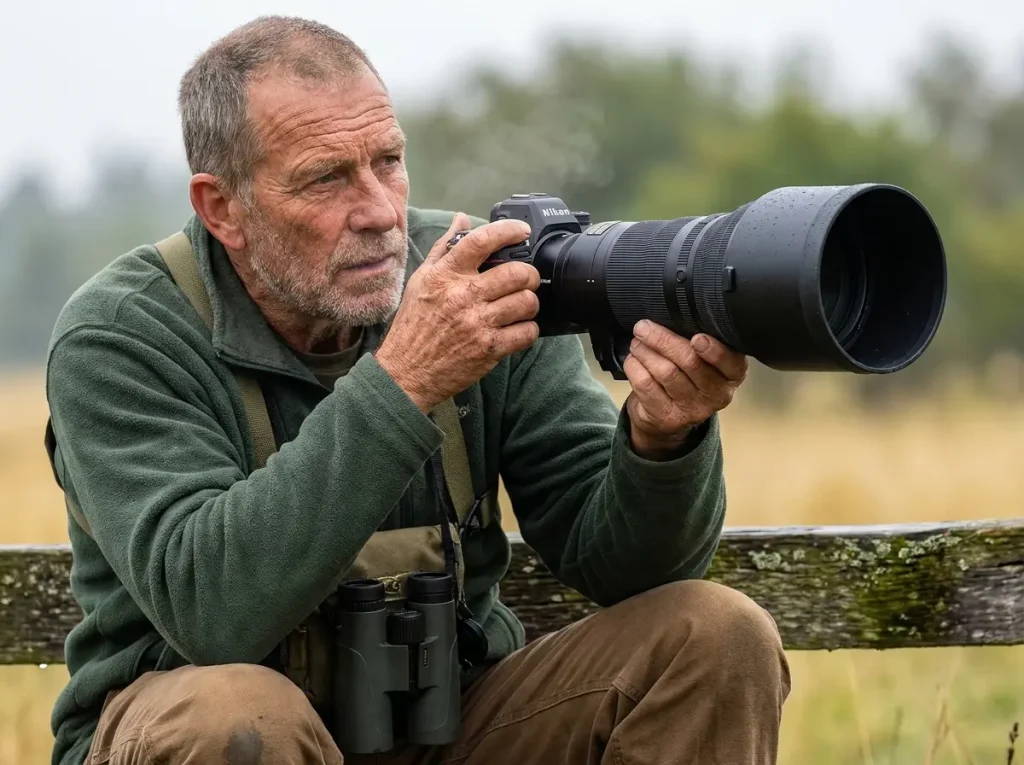
The biggest shift in trail behavior over the last five years comes directly from the fact that almost everyone now shoots with a smartphone. The basic smartphone vs dslr debate on the trail boils down to one critical limitation: phones lack true, physical telephoto reach. When someone spots a bear or a moose across a clearing, their phone screen shows a tiny brown dot.
To compensate, folks try to physically close the distance to make the animal look bigger in the frame. This creates highly hazardous situations for both you and the animal. The absolute rule across public lands is keeping a wildlife distance of at least a hundred yards (the length of a full football field) for predators like bears and wolves. If you pack telephoto lenses, you carry a physical safety barrier. Zoom in by twisting the glass barrel on your 400mm lens, never by walking closer to a thousand-pound animal eating its lunch.
Reading the Warning Signs Before They Run
Animals give very clear communication before they decide to either bolt or charge. Unfortunately, most people are too busy looking down at their screens to notice the shift in posture. A wild animal’s flight-initiation protocol generally starts with a hard freeze. If you are watching an elk graze and its head snaps up to stare directly at you, you have officially breached its comfort zone. You are now the threat.
Other obvious red flags include pinned-back ears, sudden tail flagging, or aggressive huffing sounds. It doesn’t matter how great the lighting is; if the animal stops its natural behavior because you are standing there, you need to slowly retreat. Following basic wildlife watching distance rules protects the animal from burning critical survival calories running away from you. The goal is documentation, not harassment.
The Smartphone Selfie Danger Zone
Attempting to frame a wild animal in the background of your selfie is probably the fastest way to end up on the local evening news. The wide-angle lenses on modern phones force you to get absurdly close to make the animal recognizable in the same frame as your face. If a bison or a moose looks large enough to clearly identify over your shoulder in a smartphone selfie, you are standing well within their charging strike zone.
You simply cannot outrun these animals. Groups like the national park service regularly issue guidelines for wildlife safety distances because folks continually underestimate how fast a grazing herbivore can cover fifty yards. Keep your phone in your pocket when you encounter large wildlife on the trail and enjoy the moment with your own eyes instead of risking an air-evacuation.
Pro-Tip: Next time an animal looks up at you while grazing, immediately freeze your movement. Lower your camera slowly and take three slow steps backward. Nine times out of ten, they will go back to eating once they realize you are backing off.
Giving animals their physical space prevents terrible encounters, but even from a distance, the noise your gear makes can ruin the day for everybody else out there.
Canceling the Noise: Drones and Silent Shutters
The Annoyance of “The Gimbal Guy”
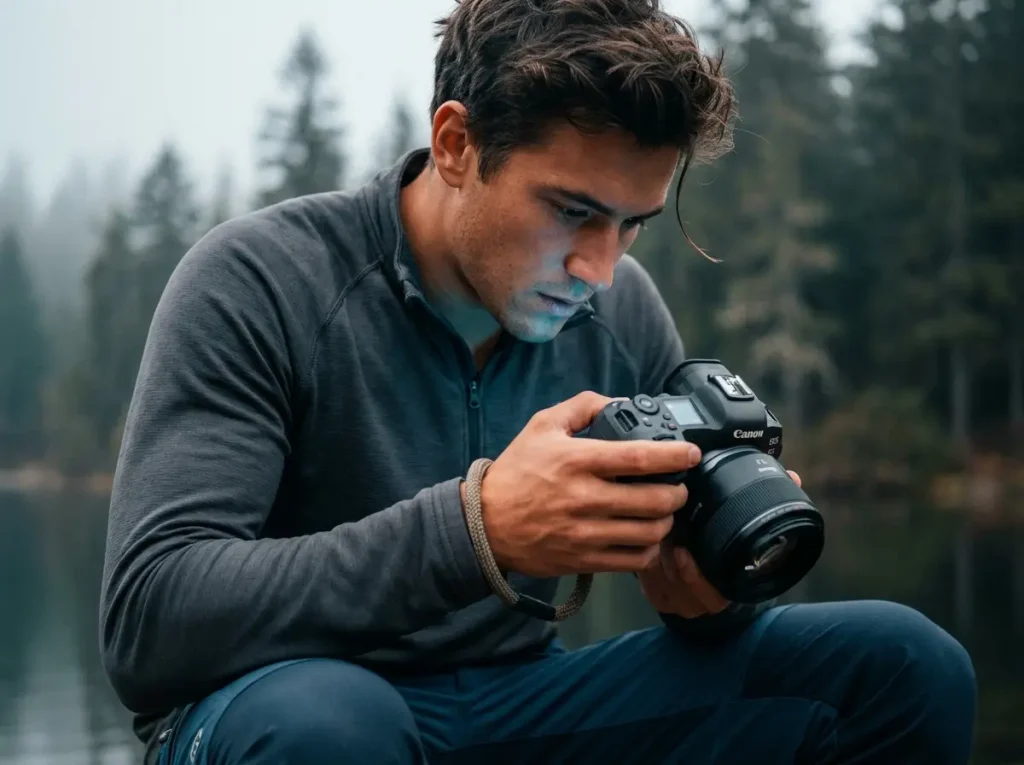
People head out to the mountains strictly because they want to escape the constant hum of city traffic. They want acoustic solitude. There is nothing quite as jarring as reaching a crystal-clear alpine lake, sitting down to enjoy the breeze, and suddenly hearing the aggressive, high-pitched whining of heavy stabilizer motors.
Motorized gimbals are fantastic tools for smooth video, but they create serious noise pollution on quiet trails. If you want to shoot moving video without annoying everyone trying to eat their trail mix, either learn to walk smoothly with an unpowered manual rig, or rely on the built-in sensor stabilization inside your camera to maintain hiking etiquette.
Turning on the Silent Shutter Mode
Beyond the video rigs, the classic rapid-fire sequence of a mechanical shutter echoing through a quiet forest basically functions like an auditory assault. When you hold down the trigger to fire ten frames a second at a distant bird, that aggressive clicking tells every nearby hiker and animal exactly where you are.
Almost all modern mirrorless systems, and definitely all smartphones, have a setting to turn off the artificial shutter sound. Dig into your menus and turn on the electronic shutter option. You instantly become a ghost on the trail. Quiet travel is an underrated skill among the core leave no trace principles. Keeping the woods sounding like the woods shows deep respect for the folks who hiked out there to simply clear their heads.

Where Drones Belong (And Where They Don’t)
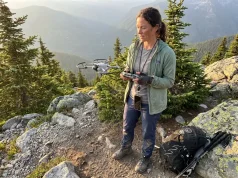
There is a hard, non-negotiable regulation regarding drone etiquette in the backcountry. Recreational drones are explicitly banned across all National Parks and designated Wilderness Areas. Bringing one into these zones and launching it from a secluded ridge is prohibited, carries incredibly heavy fines, and guarantees you will infuriate every hiker within a two-mile radius.
If you genuinely want to fly for aerial shots, you need to research the boundaries. Basic Bureau of Land Management areas or certain National Forests might allow flight under standard FAA rules. You have to check the specific regulations on recreational drone use on public lands before leaving the house. If you are ever in doubt, leave the heavy battery packs in your car trunk.
Muting your gear preserves the immediate surroundings, but how you choose to share your photos online determines whether those quiet places get completely overrun by next season.
The Social Media Squeeze: Rethinking Geotags
The 22% Visitation Spike: When Parks Go Viral
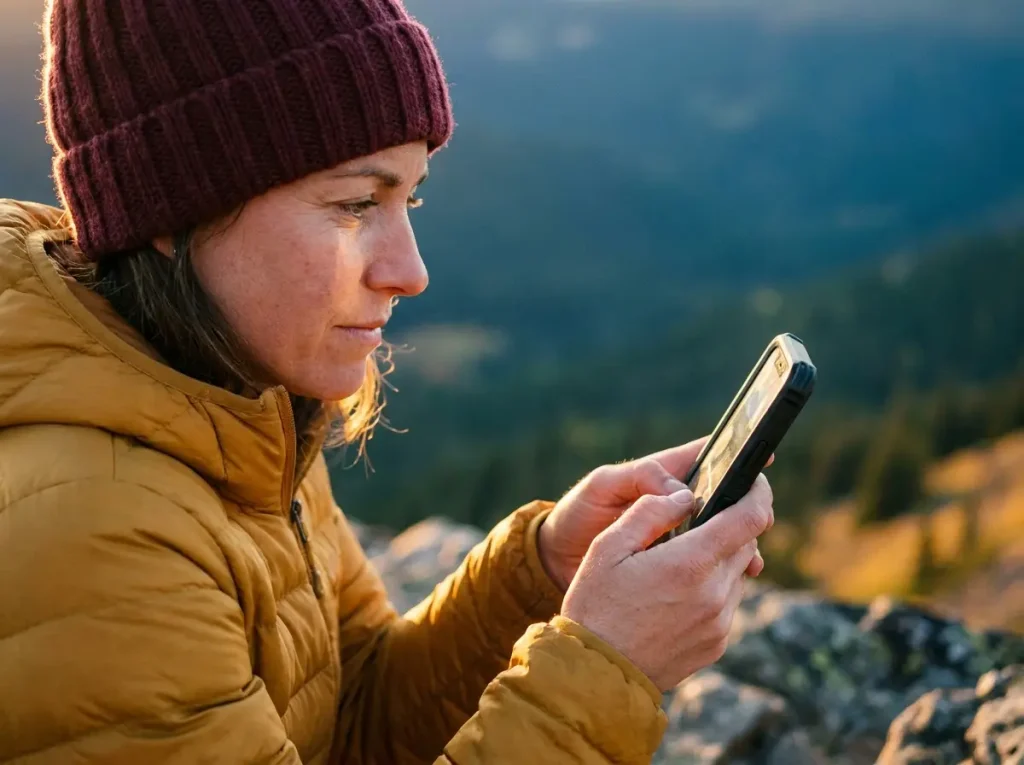
We have all watched a pristine, secluded swimming hole get completely trashed roughly three weeks after a big instagram account posts a heavily edited video of it online. Reckless geotagging of exact coordinates isn’t just about gatekeeping; it fundamentally breaks local infrastructure. Most quiet spots lack the paved parking lots, reinforced trails, and pit toilets required to handle a massive, sudden influx of human traffic.
A recent study proved that social media influences visitation in a massive way. Parks experiencing viral exposure frequently see jumps between sixteen and twenty-two percent almost overnight. This creates a severe squeeze. The resulting social media burnout hits the area hard, leaving rangers scrambling to clean up toilet paper piles and eroded stream banks that were perfectly pristine just a month prior.
How to Tag Regions Instead of GPS Coordinates
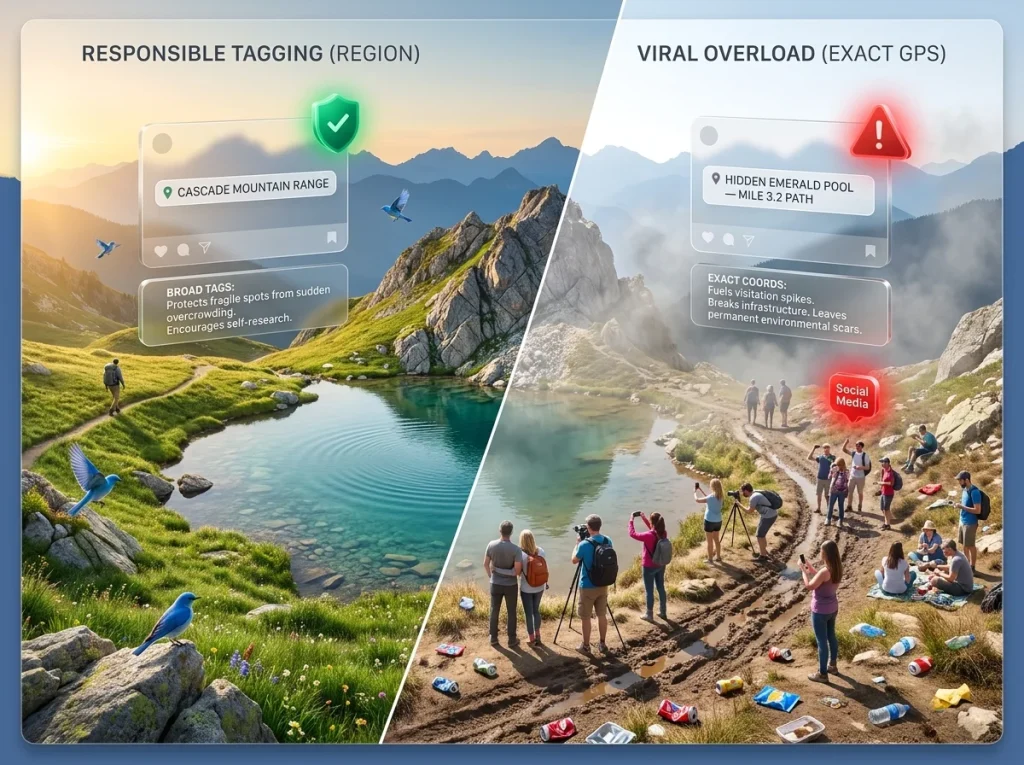
You don’t have to lock down your accounts completely. The easiest way to protect sensitive locations while practicing responsible social media hiking is to broaden your tags. Instead of dropping an exact GPS pin onto a fragile alpine lake, simply tag the overarching National Forest or the entire mountain range. Be wary of mapping apps like alltrails highlighting user-created unauthorized shortcuts that bypass main routes.
Broader tags force people to actually do some research and look at a topographical map if they really want to find the spot. It filters out the crowds who only want a quick drive-up photo op. This kind of hotspotting prevention keeps foot traffic manageable. By using a wider tag, you share the beauty of the region without handing over a hyper-specific digital treasure map that leads to its destruction.
Balancing the Pressure to Get “The Shot”
Sometimes the hardest part of photography is managing the internal pressure you put on yourself. Driving three hours in the dark to catch the golden hour lighting creates an intense feeling that you must come home with an incredible, high-engagement image, much like pros running chasing light tours. That pressure is exactly what causes smart hikers to make dumb, selfish decisions.
It makes people step onto fragile creek beds, block the trail path, or completely brush off social media ethics for a few cheap likes. Part of mastering your trail skills is learning when to simply put the lens cap on and leave the camera in your pack. Packing out trash and leaving the trail better than you found it matters far more than your follower count. Accepting that some days the lighting is flat or the crowds are too heavy takes maturity.
Once you stop stressing over the perfect sunrise shot, you can actually connect with the people around you—which brings up the tricky rules about photographing folks you don’t know.
Privacy on the Trail: The “Candid Consent” Protocol
The Ethics of Photographing Strangers
Picture yourself pausing halfway up a tough climb, sitting on a log to drink some water, and looking down the ridge to realize a stranger is tracking you with a massive zoom lens. It feels invasive. While it is fully lawful to photograph strangers in public spaces, the unwritten social rules of the trail demand a higher standard of empathy.
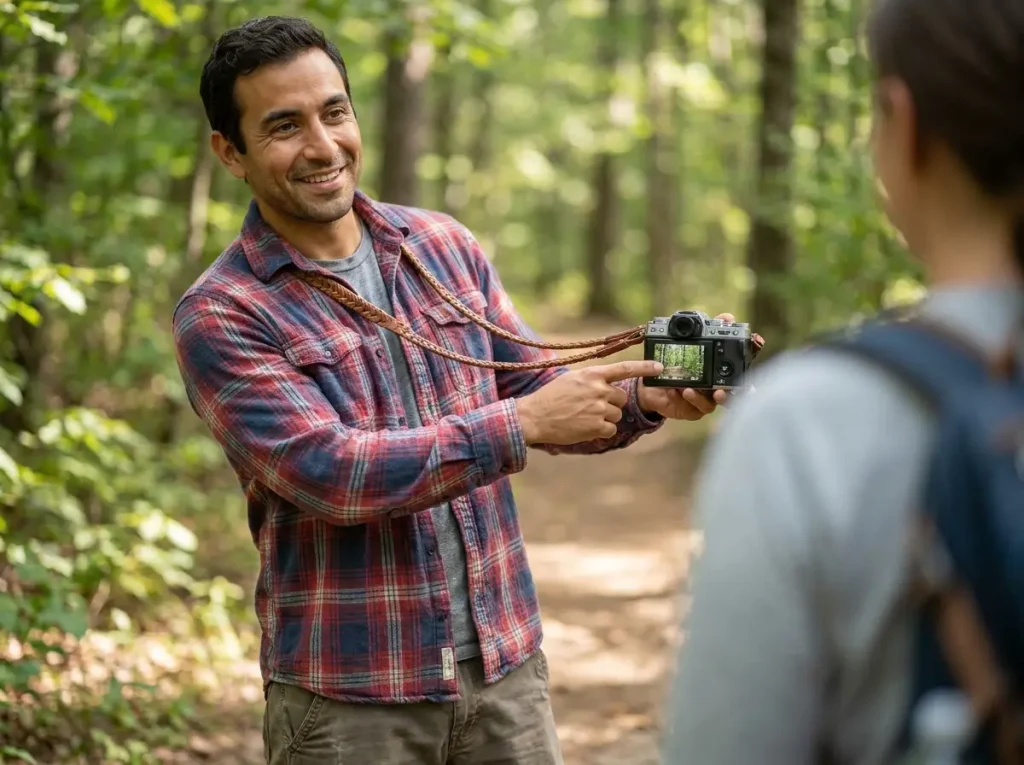
People purposely head out to the mountains to escape the constant surveillance of modern life. Treat a hiker’s personal space with respect. If you want to include someone in a wide scenic shot to show the massive scale of the canyon walls, transparent communication removes all the weird tension. A simple wave and a quick “Hey, do you mind if I include you for scale?” keeps the vibe relaxed.
How to Play the “Candid Card”
Let’s say you inadvertently snap an absolutely incredible candid shot of a hiker scrambling up a steep boulder section, and the light hits them perfectly. It feels weird to just keep the photo and walk away, but it also feels strange to yell at them about it mid-climb. The best move here is what veteran shooters call candid consent.
When the hiker finishes the section and rests, walk up, say hello, and show them the image on your back screen. Offer to email or text it to them for free. This transforms a potentially creepy paparazzi moment into an awesome piece of trail magic.
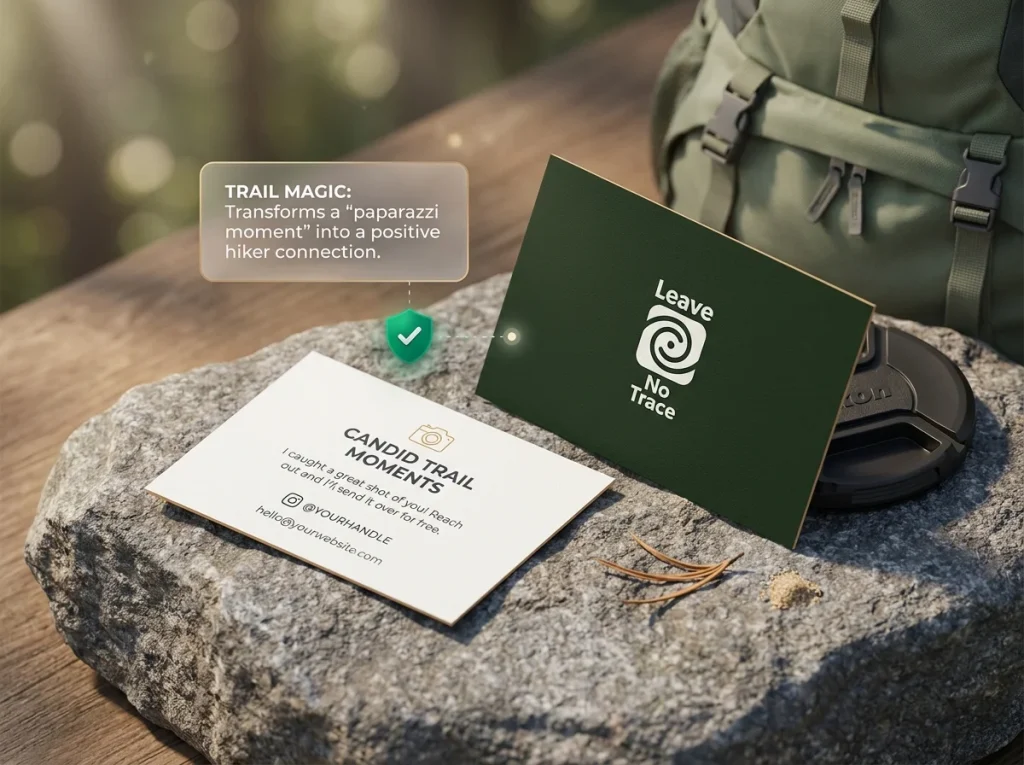
Pro-Tip: To make this seamless, carry a few small, cheap contact cards with just your email and handle printed on them. Hand the card over, tell them to reach out if they want the full resolution file, and wish them a great hike.
Building Trail Community Instead of Antagonizing It
At the end of the day, how you interact with people on the trail defines your character far more than the sharpness of your glass. Being willing to answer questions from a beginner, offering to take a group photo for an exhausted family struggling with a selfie stick, or stepping aside early to let someone pass all build solid rapport. Sites like the trek emphasize this exact community ethos everywhere.
The goal is to show that a photographer can safely co-exist with regular trekkers. If you notice someone pull up their hood or turn away when you point a camera in their general direction, lower the gear immediately. When we prioritize the hiking community over our individual shot lists, we ensure the backcountry remains a welcoming sanctuary for everyone lacing up their boots.
Conclusion
Practicing solid ethics on the trail really just comes down to simple, proactive habits. Give your momentum to the uphill hikers who are working hard to climb the grade. Zoom with your heavy glass instead of walking off the established path and risking permanent environmental damage. Finally, use your online platforms to protect wild places by tagging broad regions rather than giving away the exact coordinates to delicate ecosystems.
Give the silent shutter mode a test run on your next weekend out. Step back for five minutes at the crowded viewpoints, and try handing out a candid card to a stranger. You’ll walk away from the trailhead having earned real respect from the community, which is worth a whole lot more than your follower count. Next time you pack your camera gear, you’ll know exactly how to shoot the trail without shutting out everyone else.
FAQ
Can I fly my drone in a National Park?
No, flying a recreational drone in a National Park or Wilderness Area is strictly prohibited and carries heavy fines. If you want to fly, research Bureau of Land Management tracts or National Forests, but always check local flight designations first.
What are the primary Leave No Trace principles for photographers?
The most critical LNT rules involve exclusively traveling on durable surfaces and remaining considerate of other visitors. Put plainly: never crush native desert crust to get a new angle, and never block the main walking path with your tripod.
Is it considered rude to take pictures of strangers while hiking?
Yes, it is poor etiquette to photograph strangers up close without permission, as folks head outside specifically to escape cameras. If you capture a fantastic candid action shot, approach them when they stop, say hello, and offer them a copy.
Should I geotag my exact hiking locations on social media?
Protect sensitive environments by tagging the general region, like the National Forest, rather than dropping a precise GPS pin. Broadcasting an exact pin on a fragile hidden trail routinely leads right to extreme overcrowding and permanent trail damage.
How do I handle a busy viewpoint if I want a clean shot?
Get your shots efficiently and employ the five-minute rule: set up your frame, take your variations, and then physically step backward with your gear. Avoid hogging the absolute best spot while you scroll through and edit your photos.
Risk Disclaimer: Hiking, trekking, backpacking, and all related outdoor activities involve inherent
risks which may result in serious injury, illness, or death. The information provided on The Hiking Tribe is for
educational and informational purposes only. While we strive for accuracy, information on trails, gear, techniques,
and safety is not a substitute for your own best judgment and thorough preparation. Trail conditions, weather, and
other environmental factors change rapidly and may differ from what is described on this site. Always check with
official sources like park services for the most current alerts and conditions. Never undertake a hike beyond your
abilities and always be prepared for the unexpected. By using this website, you agree that you are solely
responsible for your own safety. Any reliance you place on our content is strictly at your own risk, and you assume
all liability for your actions and decisions in the outdoors. The Hiking Tribe and its authors will not be held
liable for any injury, damage, or loss sustained in connection with the use of the information herein.
Affiliate Disclosure: We are a participant in the Amazon Services LLC Associates Program, an
affiliate advertising program designed to provide a means for us to earn advertising fees by advertising and linking
to Amazon.com. As an Amazon Associate, we earn from qualifying purchases. We are also an official affiliate partner
of Black Diamond Equipment via the AvantLink network. If you click on a Black Diamond affiliate link and make a
purchase, we may earn a commission at no additional cost to you. We also participate in other affiliate programs and
may receive a commission on products purchased through our links. Additional terms are found in the terms of
service.