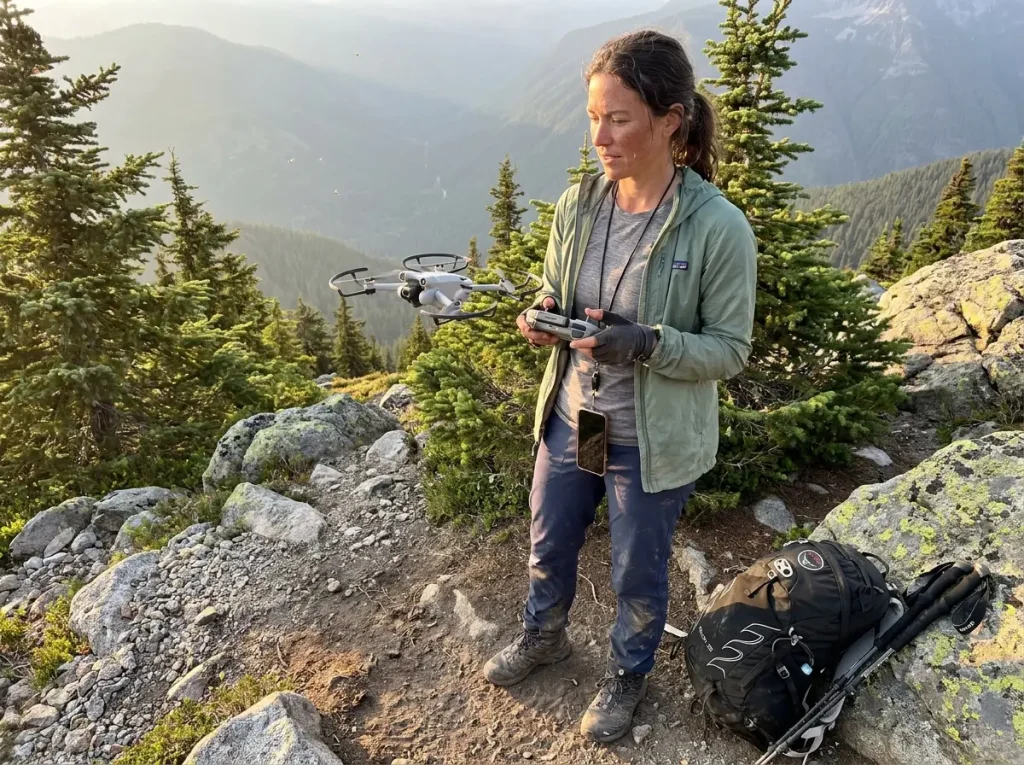
You’ve spent 30 minutes checking the weather, charging batteries, and packing your drone bag. But here’s the question that trips up even experienced flyers: did you actually check whether you can fly where you’re going? I’ve hiked trails with a drone in my pack for years, and I’ve also been the hiker on a quiet ridge who heard that familiar buzz overhead and thought “seriously?” Both sides of that equation taught me something most drone articles skip.
This guide covers where drones are allowed, where they’ll get you fined, the gray areas nobody warns you about, and how to fly without making every other hiker on the trail wish you’d stayed home.
Quick Answer: Here are the drone rules most trail flyers miss:
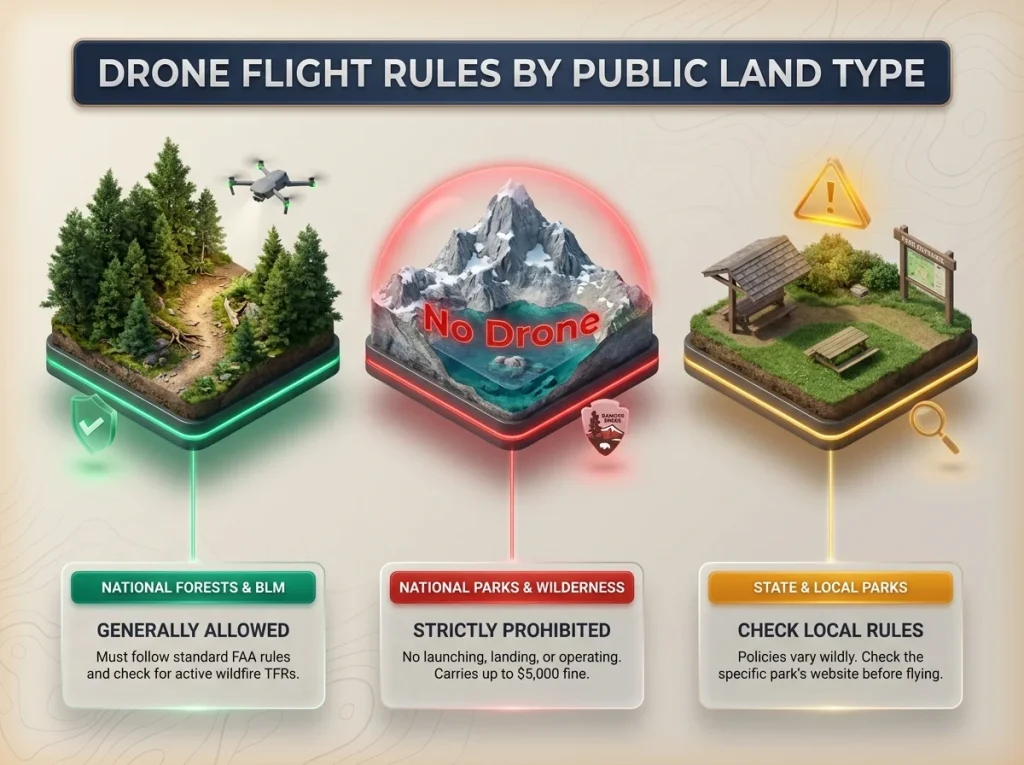
- National Parks ban all drone launching, landing, and operating — up to $5,000 fine
- Wilderness Areas prohibit drones under the 1964 Wilderness Act
- National Forests and BLM land generally allow drones with FAA compliance
- State park rules vary wildly — Colorado bans drones entirely, Utah allows them in some parks
- FAA requires registration ($5), the free TRUST safety test, and Remote ID on all drones over 250g
- Being legal doesn’t mean being welcome — fly with etiquette or stay grounded
The FAA Baseline Every Drone Hiker Needs to Know
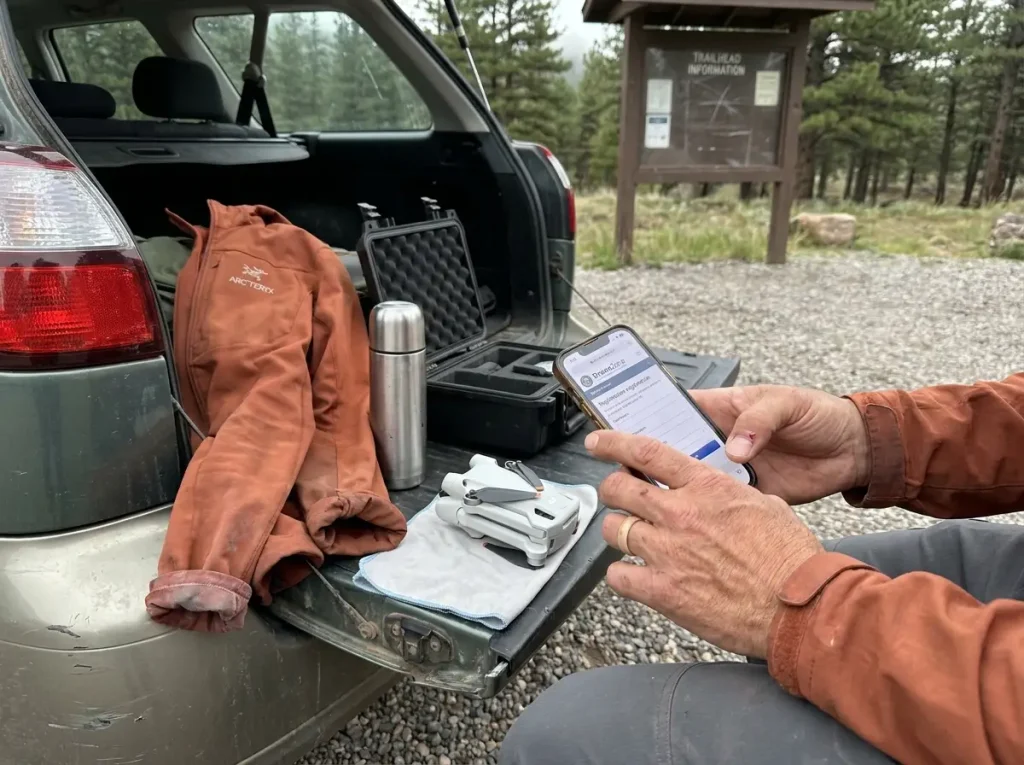
Before worrying about which trailhead allows drones, get the federal stuff squared away. These rules follow you everywhere in the United States, regardless of the land you’re standing on.
Registration, TRUST Test, and Remote ID
Any drone weighing 250 grams or more needs FAA registration before its first outdoor flight. That’s $5 for three years — cheaper than the gas to drive to most trailheads. You’ll get a registration number that goes on every drone you own under that account.
You also need to pass the Recreational UAS Safety Test, called TRUST. It’s free, takes about 20 minutes, and covers the basics you probably already know if you’ve been flying for a while. Keep proof on your phone because a ranger can ask for it.
Every registered drone must also broadcast Remote ID — think of it as a digital license plate that transmits your drone’s location and yours. Most newer drones have it built in. Older ones need a broadcast module, and those run about $100.
Pro tip: Screenshot your TRUST completion certificate and save it to your phone’s favorites. Cell service at trailheads is unreliable, and you don’t want to be scrolling through email with a ranger standing next to you.
The 400-Foot Ceiling and Visual Line of Sight
Recreational flyers must stay at or below 400 feet in uncontrolled airspace. That’s roughly the height of a 40-story building — plenty for trail footage. You also need to maintain visual line of sight the entire time, meaning you or a designated spotter can see the drone without binoculars or a screen.
This is the rule that gets broken most often on hiking trails. You launch from a ridge, fly the drone down into a valley, and suddenly it’s a speck you can barely track. If you can’t see it clearly with your eyes, you’re already in violation.
What Changes for Commercial vs Recreational Flyers
If you’re selling footage, posting sponsored content, or flying for any business purpose, recreational rules don’t apply. You need a Part 107 certification from the FAA, which involves a proctored knowledge test and costs around $175. Part 107 pilots have more flexibility in some areas but stricter accountability in others.
Most hikers fly recreationally, and the FAA doesn’t care how many Instagram followers you have — it’s about whether money changes hands. If you’re just sharing footage for free on personal social media, recreational rules cover you. But if a brand sends you that drone to review on trail, you’ve crossed into commercial territory. Worth knowing before someone asks about the permits you don’t have, especially if you’re heading to trails that already require permits just for hiking.
Where You Can and Can’t Fly on Public Land
This is where most hikers get confused, and honestly, the system is confusing. The rules change based on which agency manages the land under your boots, and that can shift mid-trail.
National Parks and National Monuments — Total Ban
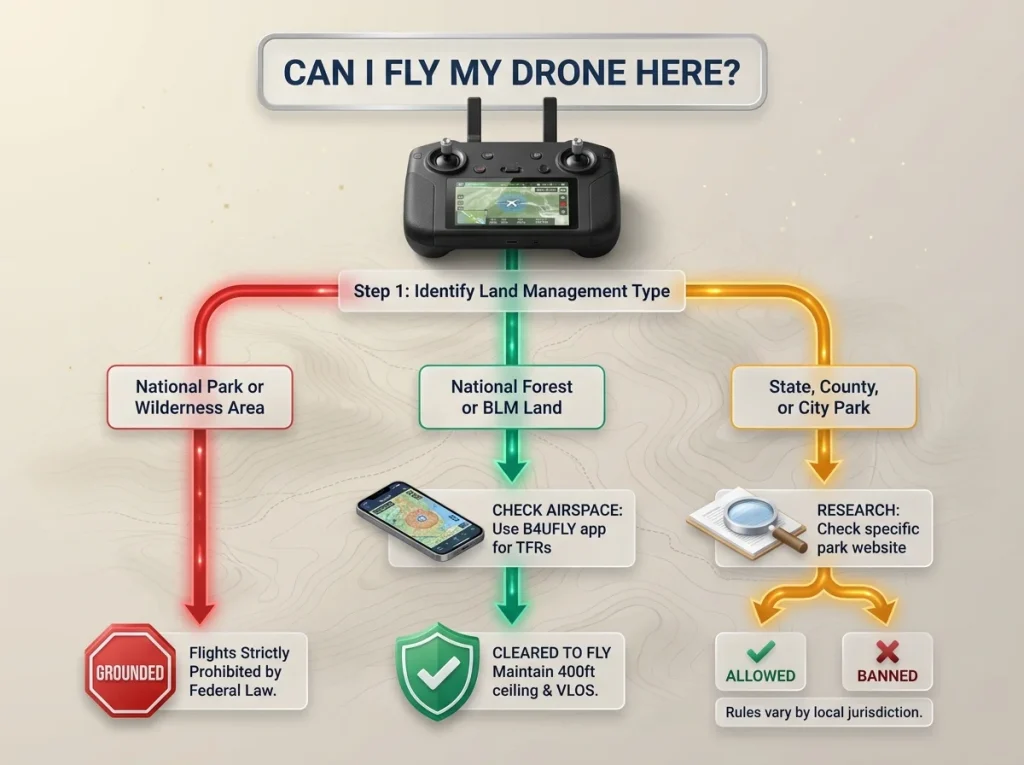
The National Park Service drone policy is the simplest rule on this list: no. You cannot launch, land, or operate a drone in any unit of the National Park System. That covers 417 national parks, 23 national trails, and 60 wild and scenic rivers.
The penalty is a misdemeanor charge carrying up to $5,000 in fines and six months in jail. Rangers will confiscate your drone and your SD card. One tourist who crashed a drone in a national park was ordered to pay $3,200 — $1,000 in fines plus $2,200 in restitution. Not worth the shot.
A few parks have issued special permits for commercial filming, but the process takes months and requires a detailed flight plan. For recreational hikers, the answer is always no. Leave the drone in the car when you’re heading into less-crowded national park hikes — the scenery is worth it without the aerial footage.
Wilderness Areas — Banned Under the Wilderness Act
Wilderness Areas are not the same thing as National Forests, and confusing the two is the single most common mistake drone hikers make. The Wilderness Act of 1964 prohibits motorized vehicles in designated Wilderness, and the federal government classifies drones as motorized vehicles.
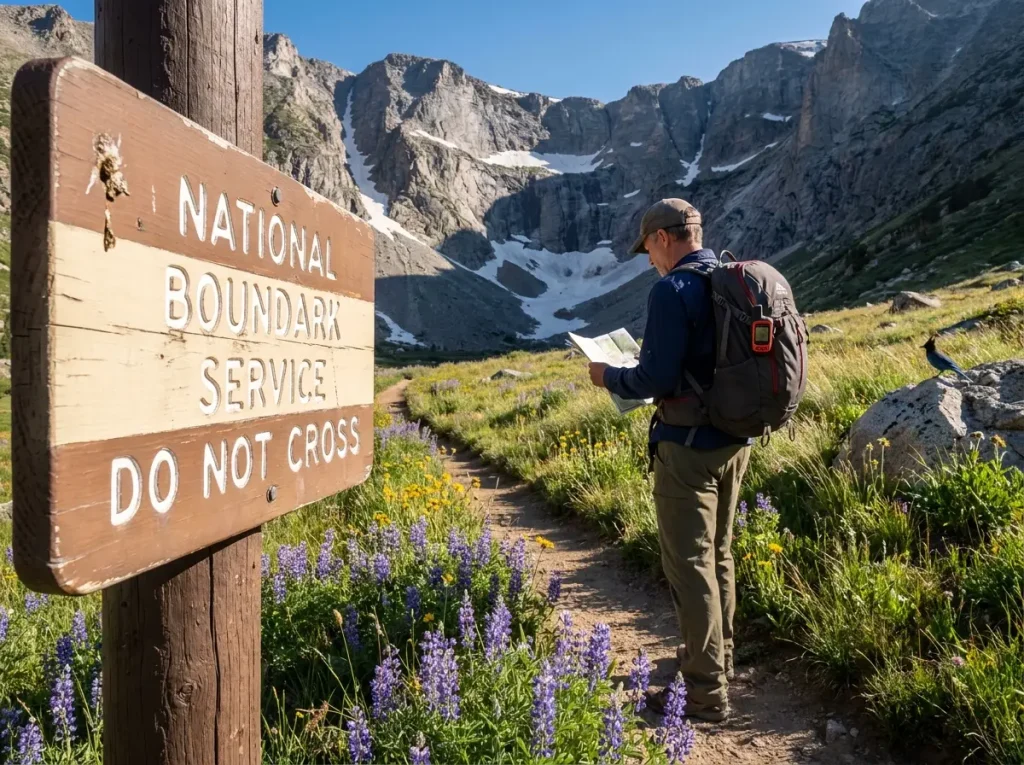
The tricky part: Wilderness Areas often exist inside National Forests. You might be flying legally in a National Forest, hike two miles further, cross an unmarked boundary, and suddenly be in a Wilderness Area where your drone is contraband. The signs aren’t always obvious. Some boundaries are marked with small brown posts that blend into the trees.
National Forests and BLM Land — Mostly Open
National Forests managed by the US Forest Service generally allow recreational drone use as long as you follow FAA rules. Same goes for Bureau of Land Management land. These are the most drone-friendly public lands in the country.
The catch: localized restrictions can pop up without warning. Temporary flight restrictions during wildfires are common in western forests during summer. Active fire areas are absolute no-fly zones — a drone sighting can ground aerial firefighting operations and put lives at risk. Check for TFRs on the B4UFLY app before every flight during fire season.
State Parks — The State-by-State Headache
State parks are where the research really matters because there’s no federal standard. Colorado bans drones in all state parks, no exceptions. Utah is mixed — most state parks prohibit drones but some allow them. California doesn’t have a blanket rule yet, but individual parks have started posting their own restrictions, and a statewide classification as “unsafe recreational activity” is reportedly in progress.
The only reliable approach: check the specific park’s website before you go, and ask a ranger when you arrive. Online information can be outdated, and trailhead signage fills the gap — when it exists.
The Gray Areas Nobody Talks About
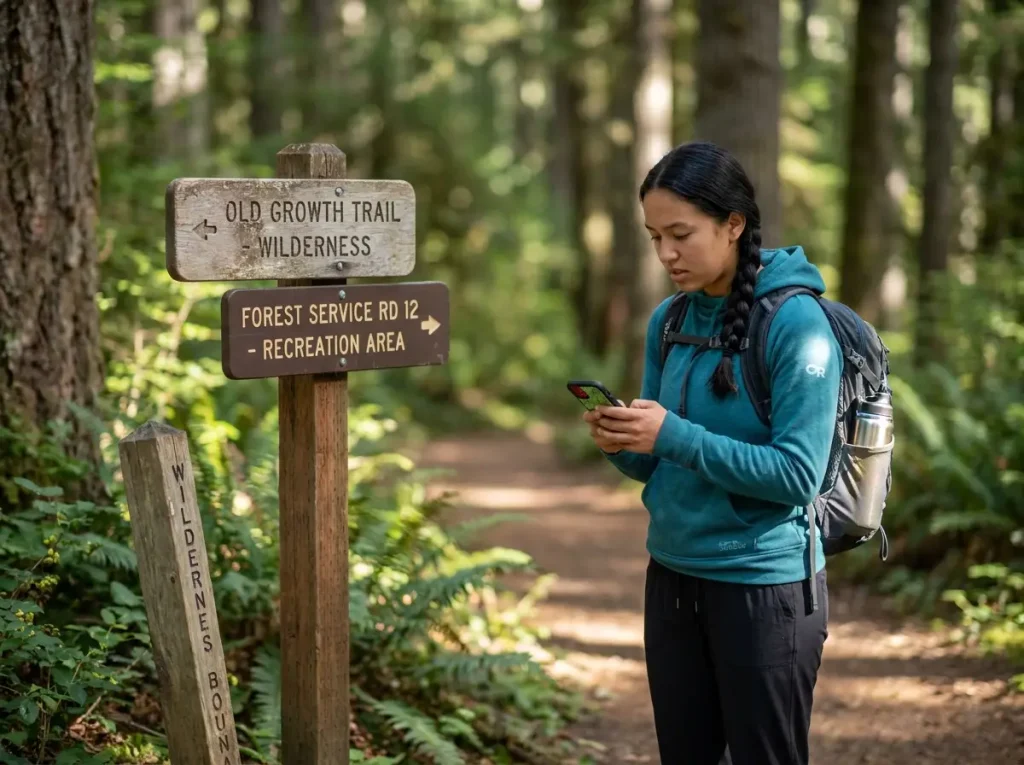
Every drone article gives you the clean categories: National Parks bad, National Forests good. But the real confusion lives in the spaces between those categories, and nobody covers them because the answers aren’t neat.
Wilderness Study Areas and National Monuments Under BLM
Wilderness Study Areas are lands Congress is considering for Wilderness designation. They’re managed to preserve their wilderness character, but their drone policies are inconsistent.
Some follow full Wilderness restrictions. Others don’t mention drones at all. The BLM manages many of these, and their guidance varies by field office.
National Monuments add another layer. A National Monument managed by the National Park Service follows the NPS drone ban. But a National Monument managed by BLM — like Bears Ears or Grand Staircase-Escalante — may follow different rules. The managing agency matters more than the “National Monument” label.
Pro tip: Before flying near any monument or study area, call the local BLM or Forest Service field office directly. A two-minute phone call beats guessing. If you can’t reach anyone, default to the most restrictive interpretation — it’s not worth the gamble.
County and City Parks With No Posted Rules
Many county and city parks have no drone policy at all. No signs, no website mention, nothing. This doesn’t mean drones are allowed — it means nobody has written a rule yet. In these situations, the FAA’s federal rules still apply (registration, 400 feet, VLOS), but local enforcement is unpredictable.
Some municipalities have passed ordinances you won’t find unless you dig through city council meeting minutes. Others are genuinely ruleless. When you hit these situations on the way to a trail, a quick call to the parks department usually gives you a clear answer.
If nobody picks up, fly conservatively: early morning, away from people, low altitude, short duration. Understand that being the reason a park bans drones is worse than not flying at all. The same principle applies when trails have unexpected restrictions — sometimes the most responsible choice is to adapt on the spot.
Your Pre-Hike Drone Research Checklist
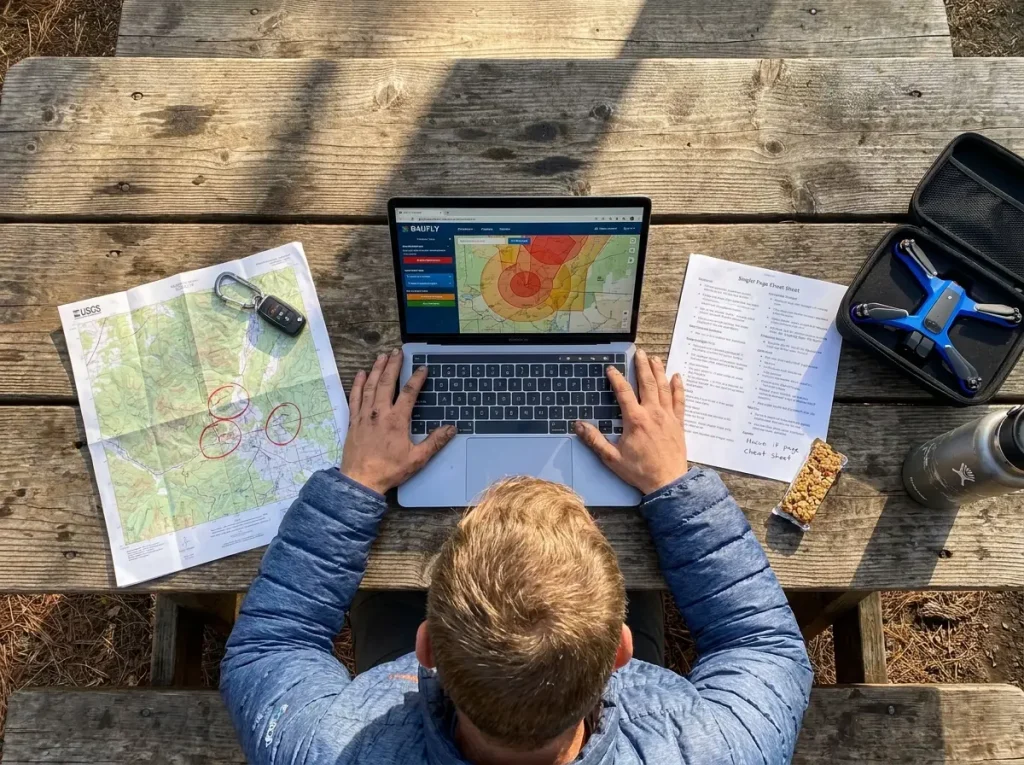
This is the step every competitor skips, and it’s the one that matters most. A five-minute workflow before you leave the house saves you from driving three hours to discover you can’t fly.
B4UFLY, Aloft, and Airmap — What Each App Actually Shows
B4UFLY is the FAA’s free app (available on iOS, Android, and web). Pin your trailhead on the map and you’ll see whether the airspace is clear, requires authorization, or is a hard no-fly zone. It shows controlled airspace, TFRs, stadium restrictions, and military operations areas.
What it doesn’t show: land management rules. B4UFLY might give you a green light over a Wilderness Area because the airspace is uncontrolled — but you still can’t fly there because the land manager prohibits it. This gap catches people constantly.
Aloft and Airmap provide similar airspace data with slightly different interfaces. Aloft integrates LAANC authorization for controlled airspace. None of these apps replace checking the land manager’s rules.
Cross-Checking Wilderness Boundaries and Land Managers
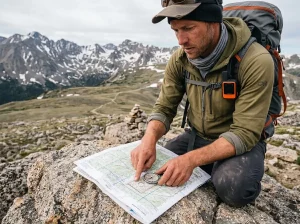
After checking airspace, verify what type of land you’re hiking on. Wilderness.net has an interactive map of every designated Wilderness Area in the country. Cross-reference your trailhead against this map. If your hike enters or even borders a Wilderness Area, leave the drone behind.
For National Forests, check the specific forest’s website for any localized drone restrictions. For state parks, check the state parks department website. For BLM land, check the local field office page.
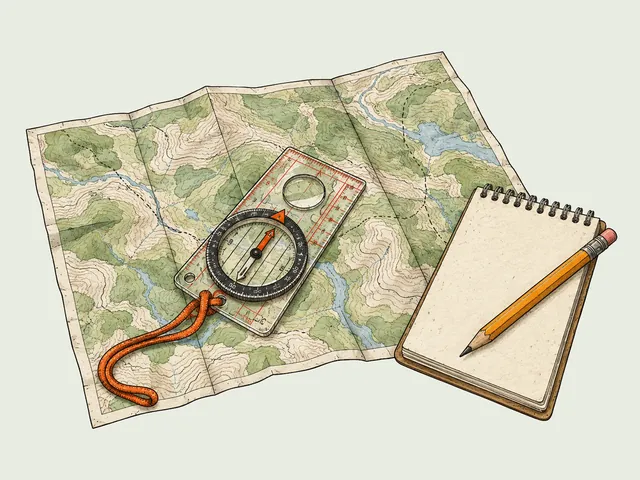
This sounds like a lot of tabs, but once you’ve done it twice, the whole process takes five minutes. It becomes part of pre-trip park research alongside checking weather and trail conditions.
The Trailhead Signage Gap
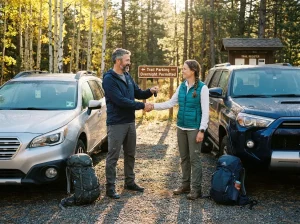
Here’s what nobody tells you: trailhead signs sometimes contradict what’s posted online. I’ve pulled up to trailheads where a handwritten sign says “No Drones” but the managing agency’s website mentions nothing about it. I’ve also been to trailheads inside National Forests with zero signage about drones even though a Wilderness boundary sits half a mile up the trail.
When the sign and the website disagree, follow the more restrictive rule. Always. A trailhead sign posted by a ranger reflects current local conditions that may not have made it to the website yet. And if there’s no sign at all, that doesn’t mean anything goes — it means you need to have done your research before arriving.
Drone Ethics That Keep You Welcome on the Trail
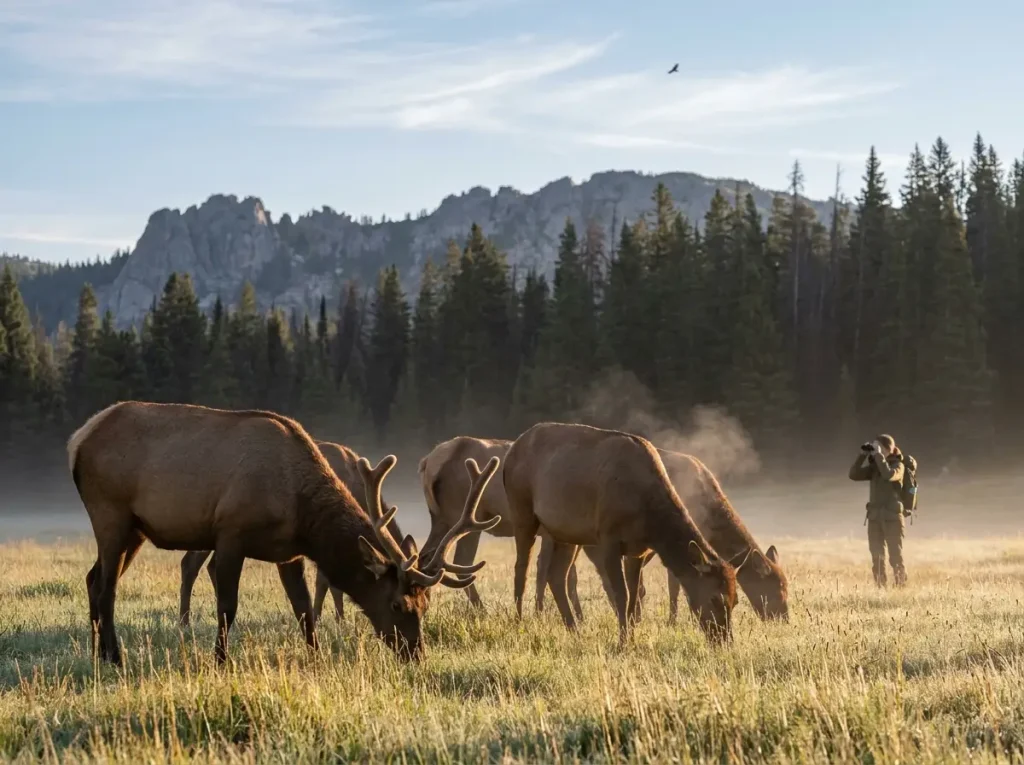
Being legal is the floor, not the ceiling. You can fly with full FAA compliance in a National Forest and still ruin another hiker’s experience. Ethics are what separate a responsible drone hiker from the person everyone complains about on Reddit.
Noise, Solitude, and the Hiker You Don’t See
Even the quietest consumer drones produce a distinct buzzing whine that carries far in backcountry silence. A DJI Mini 4 Pro generates around 64 decibels at three feet — not deafening, but in a setting where the loudest sound is wind through pine needles, it’s jarring.
Launch away from trailheads, picnic areas, and anywhere people congregate. Hike at least ten minutes in, find a clearing with good line of sight, and fly from there. The best drone footage happens at dawn when trails are empty and the light is at its warmest. If you’re flying at a popular summit during golden hour on a Saturday, you’re going to hear about it from other hikers.
Pro tip: Before launching, do a quick 360-degree scan. Look for other hikers within earshot — they might be just around a switchback you can’t see. A two-minute wait for them to pass costs you nothing and avoids the confrontation.
Wildlife Distance Rules That Actually Matter
A 2023 meta-analysis published in the Journal of Field Ornithology found that drone flights above 50 meters showed no measurable disturbance to nesting birds. Flights below 50 meters — roughly 165 feet — showed significant behavioral changes, especially in ground-nesting and solitary-nesting species. Shorebirds perceive drones as avian predators and respond as if a falcon is hunting them.
The practical rule: maintain at least 200 yards from any wildlife you can see, and never fly below 150 feet when animals are anywhere nearby. That’s consistent with the wildlife watching distance rules that apply to hikers on foot — drones should keep even more distance because the noise and movement provoke stronger stress responses. If an animal changes its behavior when your drone approaches — stops feeding, raises its head, moves away — land immediately.
Privacy and the Alpine Lake Problem
The Mountaineers blog tells the story perfectly: imagine hiking all day to a remote alpine lake, stripping down for a swim in the backcountry solitude you earned with sweat and elevation gain, and hearing a drone buzzing overhead. Someone you’ve never met now has aerial footage of your private moment.
Even in areas where drones are technically legal, hovering over other people is unacceptable. Never fly directly above other hikers, campers, or anyone who hasn’t consented to being filmed. If you spot people below your flight path, redirect immediately. The footage you’re chasing isn’t worth someone else’s discomfort or sense of violation.
This extends to posting footage. If other hikers appear recognizably in your aerial shots, either blur them or don’t post it. The same responsible approach to social media that applies to geotagging fragile locations applies to filming people without their knowledge.
What to Do When a Drone Buzzes Your Hike
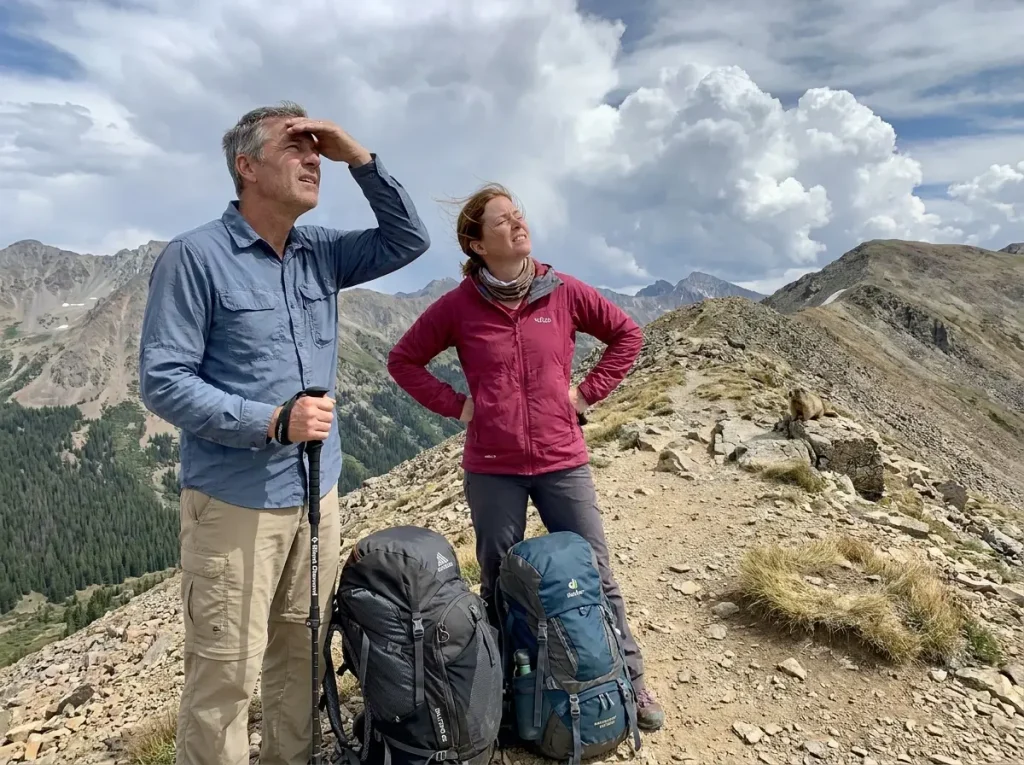
Most drone articles are written for operators. This section is for the other 95% of hikers — the ones who just want their quiet trail back.
How to Approach a Drone Operator Without Starting a Fight
Most drone hikers aren’t intentionally obnoxious. They’re focused on their controller screen and genuinely don’t realize how far the noise carries or how uncomfortable it makes other people. A calm, direct conversation works better than a confrontation.
Walk over, wait for them to land or bring the drone close, and say something like: “Hey, any idea how long you’ll be flying? I was hoping to enjoy the quiet up here.” That frames it as a personal preference rather than an accusation. Nine times out of ten, the operator apologizes, wraps up quickly, or offers to wait until you’ve moved on. Trail culture is built on mutual respect, and the same trail etiquette basics that govern right-of-way apply here.
When and How to Report a Violation
If someone is flying a drone inside a National Park, a Wilderness Area, or any posted no-fly zone, that’s a reportable violation. Note the time, location, and description of the operator and drone. Report it to the nearest ranger station or use the NPS online complaint system.
Don’t try to interfere with the drone physically. Shooting, grabbing, or jamming a drone is itself a federal offense — destruction of aircraft, even small ones, falls under FAA jurisdiction. Let the rangers handle it.
If you’re in an area without clear drone rules and the operator is simply being reckless — flying low over groups, chasing wildlife, hovering over your campsite — a direct conversation is still your best move. The Leave No Trace principles include respecting other visitors, and most people respond to a reasonable request.
Flying Internationally With Your Drone
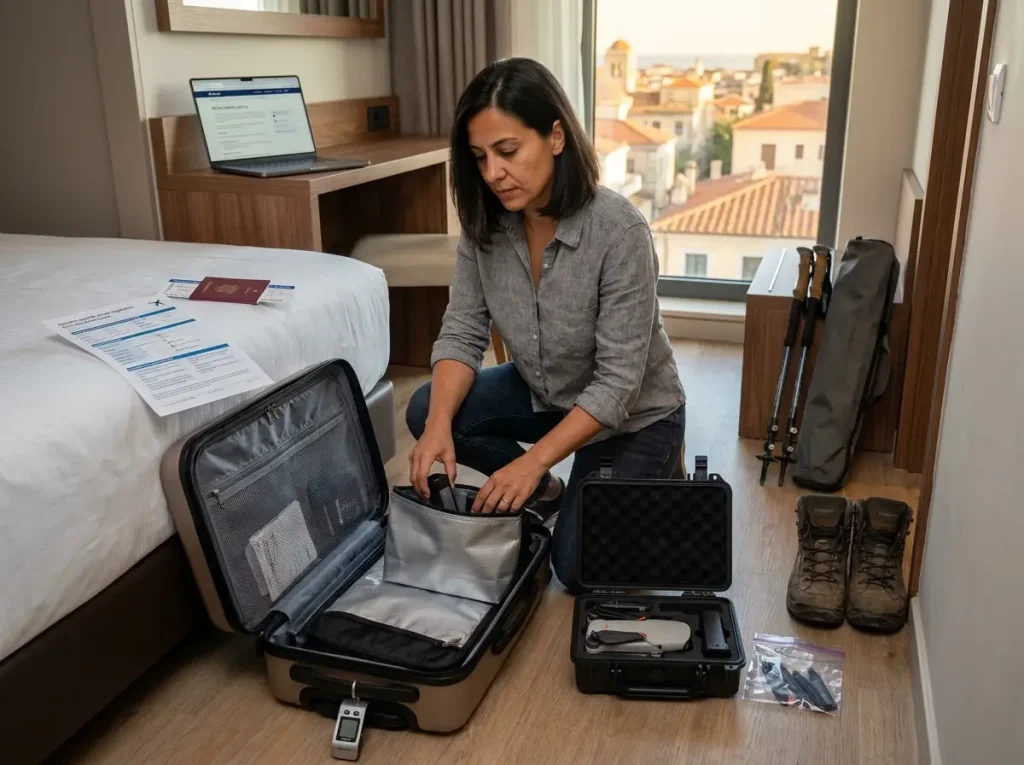
Taking your drone abroad opens a separate regulatory world that most hikers discover at check-in.
Weight Restrictions and Country Registration
The European Union requires drone registration in the country where you’re flying, and weight classes determine what you can fly without additional certification. Sub-250g drones like the DJI Mini series fall under the lightest category, which is why DJI specifically designs them at 249 grams.
Some countries ban recreational drones outright. Morocco, India (without permits), and several national parks across the world have blanket prohibitions. Others require you to register with their civil aviation authority before flying — a process that ranges from a quick online form to a multi-week bureaucratic ordeal.
Research the specific country’s drone laws before you book the trip, not before you board the plane. The rules can be buried in aviation authority websites that aren’t always available in English.
Airline Battery Rules and Packing Tips
Lithium polymer batteries must travel in carry-on luggage, never checked bags. Most airlines cap battery capacity at 100 watt-hours per battery for carry-on, with a limit of two spare batteries per passenger. Standard consumer drone batteries — like those in the DJI Mini or Autel Nano series — fall well under 100Wh, so they’re fine.
Store spare batteries in a LiPo-safe bag and tape over the terminals. Some airlines require batteries to be individually protected, and a $10 fireproof pouch satisfies every carrier I’ve flown with. Check your specific airline’s policy the day before departure — rules can change seasonally, especially on budget carriers.
Pro tip: Print your airline’s battery policy and keep it in your drone bag. Gate agents occasionally question lithium batteries, and having the policy on paper ends the conversation before it starts.
Conclusion
Three things to remember before your next trail flight. First, know your land type — the difference between a National Forest and a Wilderness Area is the difference between a great flight and a $5,000 lesson. Second, legal and welcome are two different things — fly with the kind of etiquette that makes other hikers not mind that you brought a drone. Third, five minutes of pre-hike research using B4UFLY and a land manager’s website will save you from every preventable problem on this list.
Run the checklist on your next trip. It becomes muscle memory after two or three hikes, just like checking the weather or filling your water bottles.
Q1 Are drones allowed on hiking trails?
It depends entirely on who manages the land. National Parks and Wilderness Areas ban drones completely. National Forests and BLM land generally allow them with FAA compliance. State parks vary by state — check the specific park’s website before you go.
Q2 Can you fly a drone in a National Forest?
Yes, in most cases. National Forests allow recreational drone use as long as you follow FAA rules — registration, 400-foot ceiling, visual line of sight. Check for localized restrictions and temporary flight restrictions during wildfire season before flying.
Q3 What are the FAA rules for recreational drone use?
Register any drone over 250 grams ($5, three years), pass the free TRUST safety test, fly below 400 feet, maintain visual line of sight, broadcast Remote ID, and stay away from airports, stadiums, and temporary flight restriction areas.
Q4 Can you fly a drone in a Wilderness Area?
No. The Wilderness Act of 1964 classifies drones as motorized vehicles, which are prohibited in all congressionally designated Wilderness Areas. This applies even if the Wilderness Area sits inside a National Forest where drones are otherwise allowed.
Q5 How do drones affect wildlife on hiking trails?
Research shows drone flights below 50 meters cause measurable stress in nesting birds, with shorebirds treating drones as airborne predators. Flights above 50 meters showed no significant disturbance. Maintain at least 200 yards from wildlife and land immediately if any animal changes its behavior.

I've spent more than a decade researching hiking gear and trail technique. I read the specs, the forum threads and the long-term reviews, and every pick here comes with what it gets wrong.
End of the trail
You read every mile of this one. Here's where the trail goes next.