In this article
I once lost a friend on a trail because we didn’t designate anyone to watch the back of the line. After leading dozens of hikes since then, I’ve realized that being a good leader isn’t about barking orders. If you picked the trail and organized the group chat, you’re the leader—and your real job is setting a sustainable pace, communicating clearly, and making sure everyone gets back safely without ruining friendships.
⚡ Quick Answer: You master group hiking leadership by setting a slow conversational pace, designating a reliable person to sweep the rear, and establishing clear turnaround rules at the trailhead. Many accidental leaders fail because they hike their own speed and let the party string out. But most people skip step one and create resentment before they even leave the parking lot.
The Pre-Hike Huddle: Setting the Rules Before You Step Off
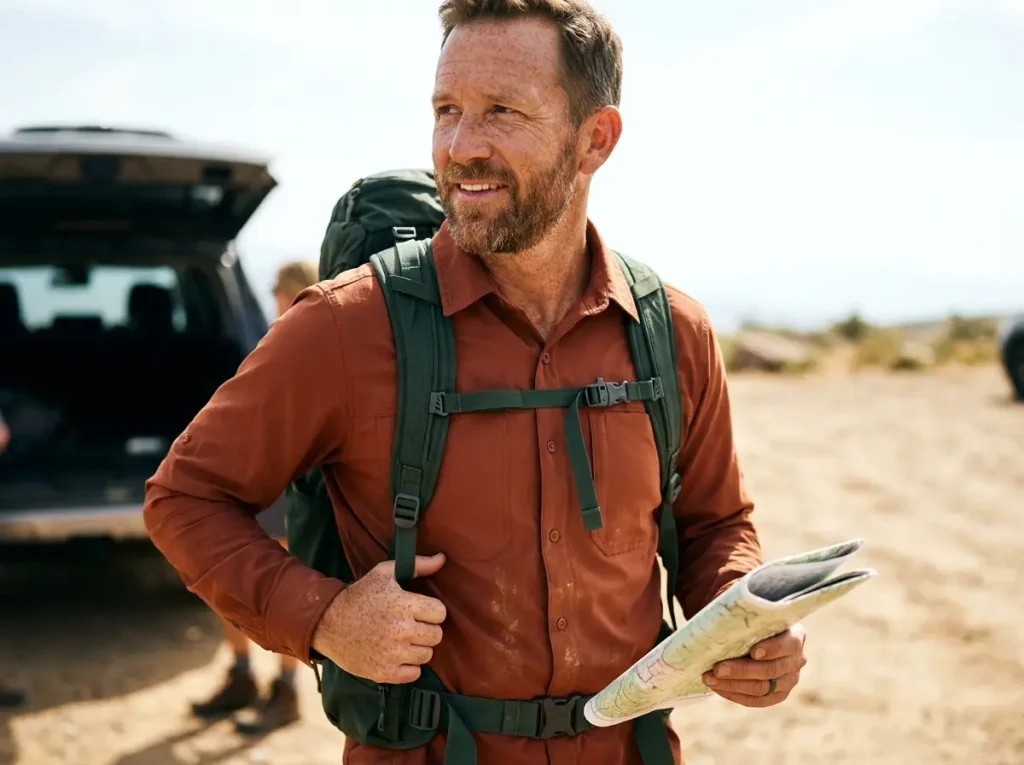
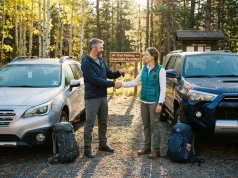
The transition from the pavement of the parking lot to the dirt of the trail is where you set the ground rules. Think about how you greet friends before a hike. It is a chaotic scene. People are tying boots and absolutely no one is listening. But if you skip planning the logistics before you leave home, you set the stage for a miserable afternoon. A pre-hike huddle avoids a dozen potential disasters.
Part of this huddle involves basic legalities. In wilderness areas, exceeding group size limitations (which the NPS caps at 15 people) earns fines. Establish the “toilet rule.” If someone steps off to pee, they leave their backpack directly on the main trail. If they vanish into the trees with their gear, the person at the back walks right past them, creating a lost hiker scenario before lunch.
Organizing the Group Chat and Expectations
Your job as the trail boss starts sitting on your couch staring at your phone. When you throw together trip rosters and send that first group text, you set the tone. If you sugarcoat the difficulty just to get a higher turnout, you are lying to people who trust you. Define the steepness, mileage, and expected terrain honestly.
This early digital communication is the best time to mention the 10 Essentials without sounding like a safety inspector. “Forecasting apps say the wind is gnarly, so make sure everyone throws an extra warm layer in their pack.” Every single piece of essential group gear you confirm over text is one less headache to manage at elevation.
The Anatomy of a Non-Lecturing “Trailhead Talk”
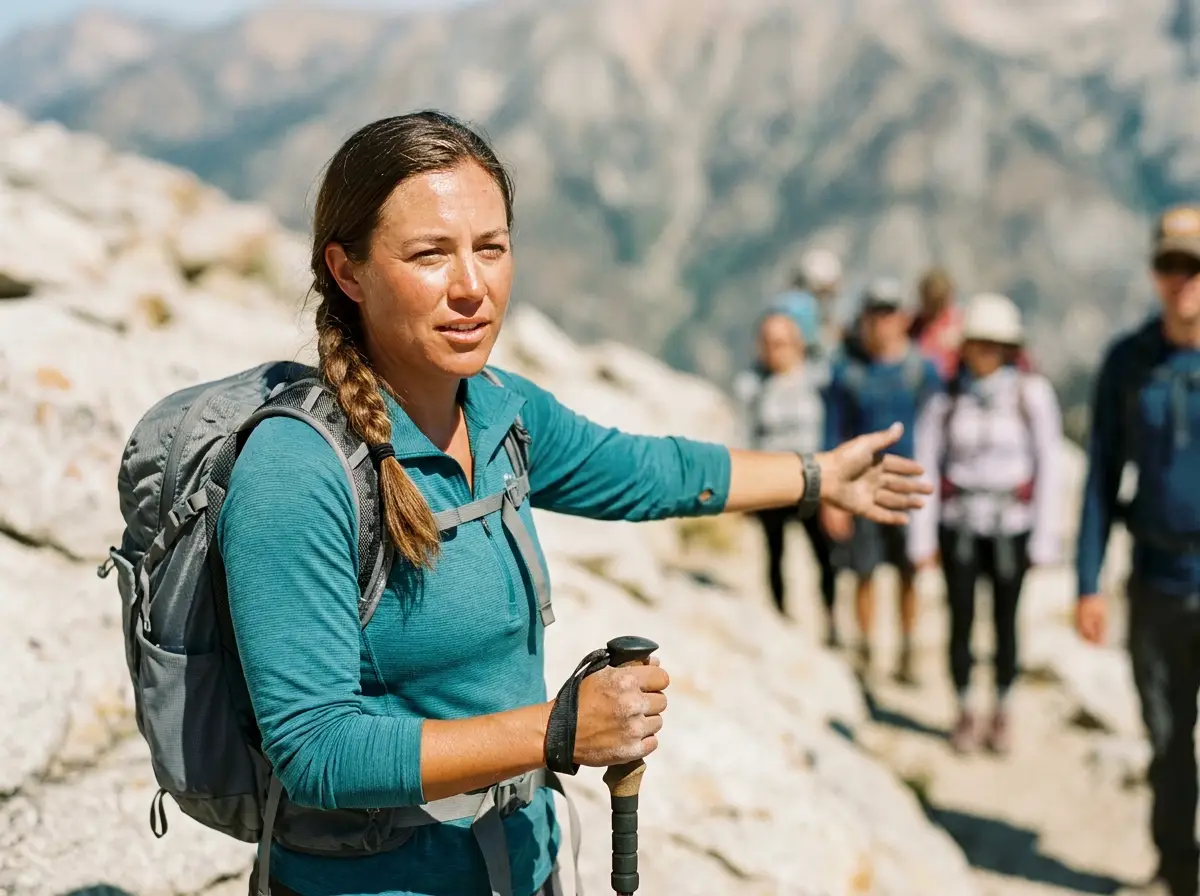
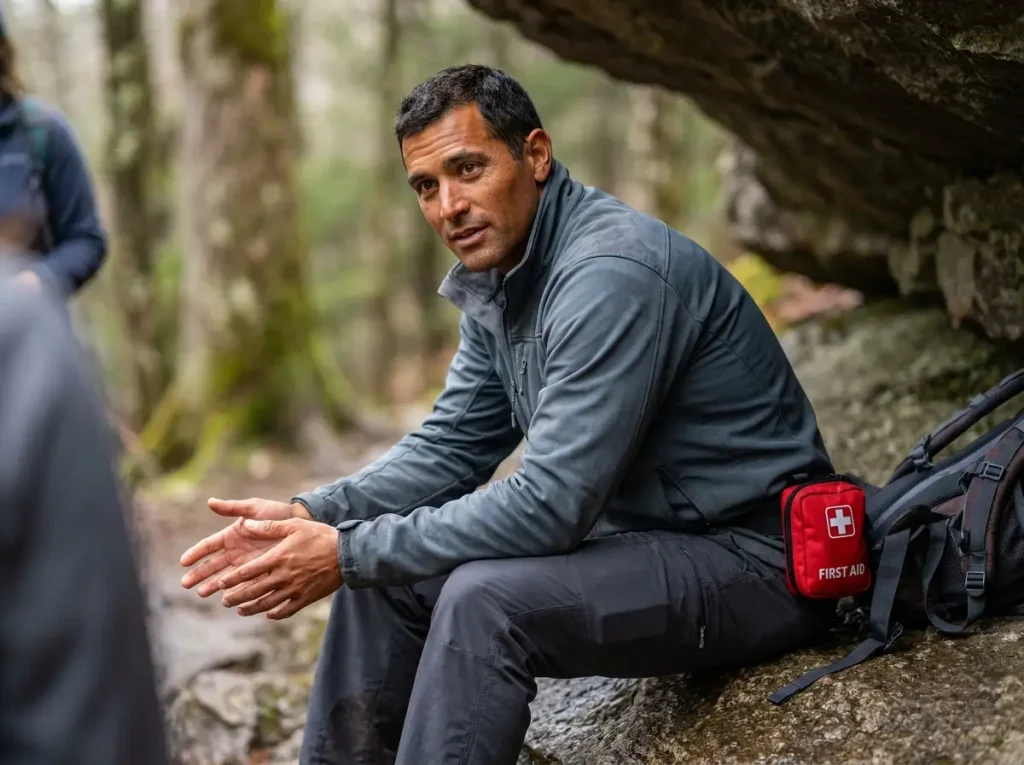
Nobody wants a formal corporate lecture on a Saturday morning. Run the trailhead safety talk playfully while people stretch their calves. But deliver the hard facts. Confidently announce the route plan, your hard turnaround time, the peeing protocol, and who is carrying the first aid kit.
Keep a good tailgate safety series of instructions under two minutes. Look them in the eyes and ask for a physical head-nod or a thumbs up. Gaining that verbal agreement establishes you as the leadership anchor for the day. They agreed to your terms, making it incredibly easier to enforce those terms later.
Once you have their attention and everyone understands the route, you have a brief window to actually look at what they brought. People will nod and agree to your rules, but their gear often tells an entirely different story. You need to verify they’re ready before anyone takes a single step.
The Safety Check: Checking Boots and Gear Naturally
A solid leader performs a sneaky gear check while chatting with the crew. Do a sweeping visual scan of what people are wearing. If you spot cotton jeans or canvas sneakers, you have a problem. Cotton destroys on the trail. It gets soaked with sweat, loses insulating properties, and fast-tracks hypothermia. Canvas sneakers slide on granite and twist ankles.
Pro-Tip: Keep a cheap stash of backup gear in your car trunk permanently. Three old rain ponchos, an extra pair of trekking poles, and a spare fleece are lifesavers.
When you spot your underprepared buddy, never call them out in front of the group. Casually say, “Hey man, it gets muddy up the saddle today, I’ve got an extra pair of poles in my trunk if you want to grab them.” You offer the fix as a favor, sidestepping the shame entirely.
Sidestepping that shame keeps the crew’s mood high as you leave the cars, but maintaining that good energy requires setting the right speed.
Pacing and Group Dynamics: Moving as a Unit
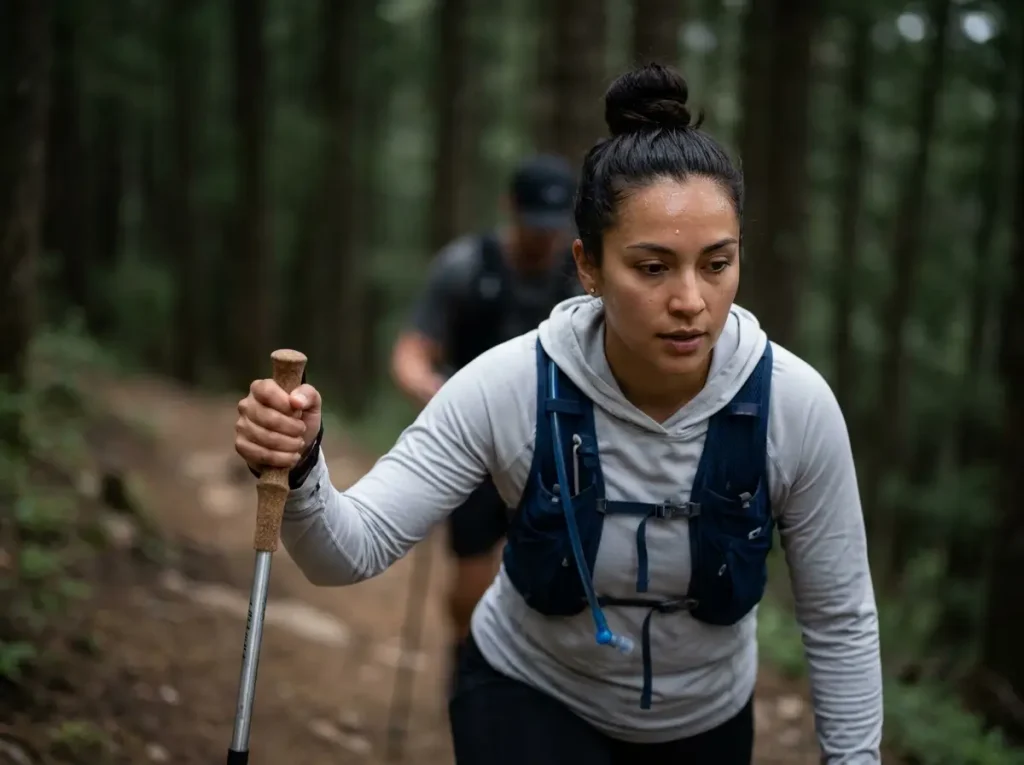
We have all experienced the frustration of trying to keep up with that fast friend who sprints up a steep grade, waits at the top until you catch your breath, and starts hiking again immediately. That selfish dynamic strings the group out over half a mile, creating defensive factions. Getting separated is the absolute leading cause of search and rescue incidents.
The “Alpine Pace”: Hiking at the Speed of Conversation
Fix the speed problem through intentional pace setting. As the leader, drop your speed into a steady, sustainable crawl called the “Alpine Pace.” This represents hiking at the exact speed of conversation. If the person walking directly behind you is gasping for air between words, you are pushing too hard. When you manage your energy over the long haul, you prevent the exhausting cycle of sprinting and stopping.
The Alpine Pace feels agonizingly slow for the first mile. A slow, unbroken rhythm chews up miles much more efficiently than a series of exhausting sprints. Practice in-motion communication. Listen closely to the chatter behind you. If the conversation dies out completely, that noise vacuum is your real-time metric proving the group is hitting a physical wall.
Identifying the Silent Struggler
Some people suffer in silence rather than admit they are holding the group up. Their fragile pride overrides their physical pain. Your job is to identify silent struggling before it turns into severe dehydration. Look for non-verbal cues. If they are stumbling over obvious roots, keeping their heavy head down, or stopping every forty yards to “adjust a boot lace,” they are secretly dying.
When you spot this happening, never ask, “Are you okay?” This singles them out. Instead, use the slow hiker protocol: stop the whole line, drop your pack, and announce, “I am roasting right now, I need five minutes in the shade to chug water.” Fake your own fatigue so they rest without feeling guilty.
Taking these tactical breaks solves the problem for the exhausted folks, but it creates a totally different issue for the athletes in your group. The people with endless stamina get restless standing around, and before you know it, they’re riding your heels.
Managing the “Tailgate Fast Hiker” Problem
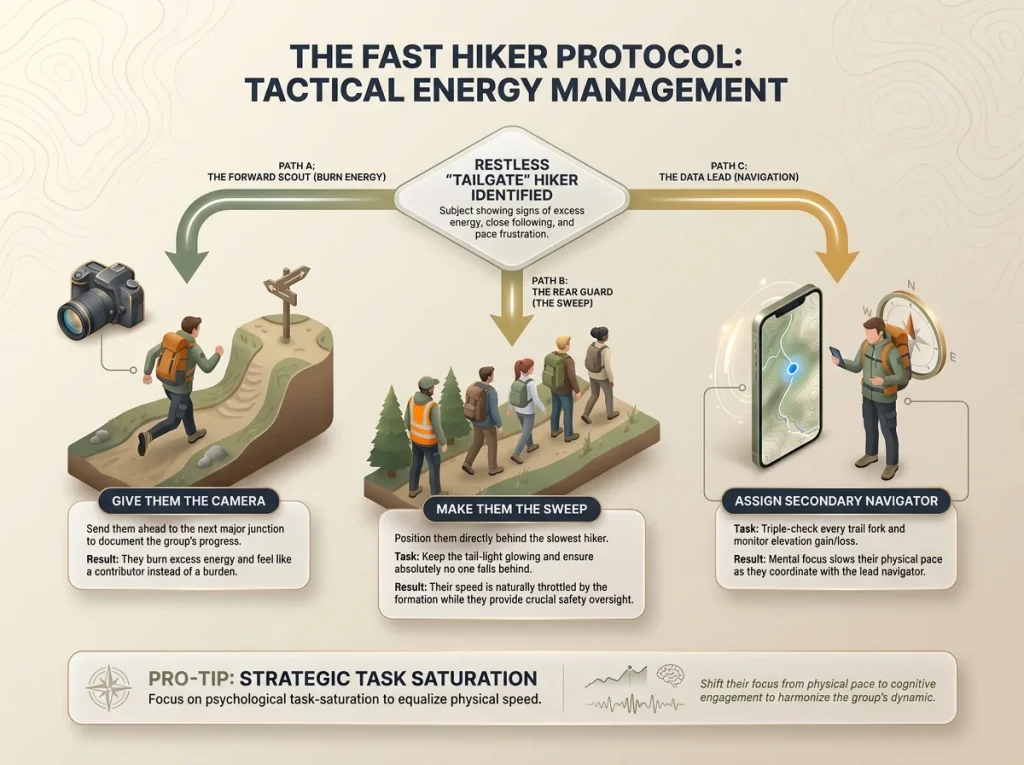
The opposite of the silent struggler is the alpha hiker who constantly rides your heels. They hike a few inches from your backpack, stepping on your heel, subconsciously pushing you to hike faster.
Here is how you handle them: give them a highly visible job. Hand them your phone and declare them the official group photographer, asking them to jog ahead to the next switchback to get a great shot of the crew coming up the trail. You burn their excess energy by making them run ahead and wait. This keeps them fully engaged without fracturing the group dynamic.
Distributing tasks like this does more than just distract restless friends—it’s the fundamental secret to sharing the heavy burden of leadership on the trail.
Essential Roles: You Don’t Have to Do It All
Leading a hike is similar to hosting a dinner party. If you try to cook the food, pour the drinks, entertain the guests, and clean the dishes at the same time, you burn out halfway through the night. The concept of “Expedition Behavior” championed by the Mountaineers heavily relies on the idea that everyone pitches in for the safety and well-being of the group.
When the leader desperately tries to carry all the heavy emergency gear, navigate the winding route, and play therapist for complaining friends, they succumb to severe decision fatigue. A tired leader makes bad choices regarding approaching weather systems. Distribute the physical weight and the mental responsibility. Give the bulky first aid kit to a trusted veteran. You are building a solid team, not carrying helpless people on your back.
Understanding the “Sweep” / Tail-Light
The sweep role is the absolute most critical job on the mountain. The sweep acts as your reliable tail-light. This perfectly capable, experienced hiker stays at the extreme rear of the formation. Their literal mandate is brutally simple: absolutely no one ends up behind them.
If you are choosing between a sweep vs lead position for your strongest friend, always put them at the sweep. Understanding the difference between whistle vs voice communication is vital; a sharp, piercing whistle blast cuts through strong wind entirely better than screaming. Establish one cardinal rule before starting the hike: if the sweep stops to tie a shoe or grab a snack, the entire group halts. If the tail-light stops glowing, the car stops moving.
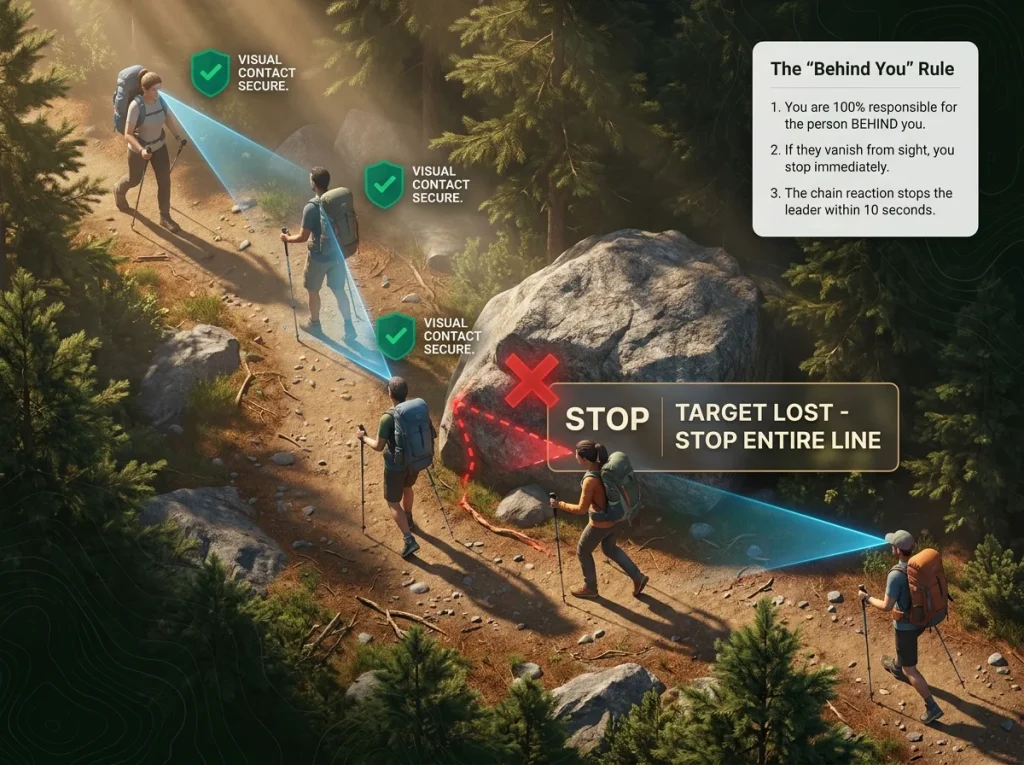
The “Behind You” Responsibility Chain
You do not want to walk up a steep mountain constantly twisting your neck around like a paranoid owl, trying to count bobbing heads through thick timber. That pulls your eyes off the treacherous trail. Deploy the buddy system on a macro scale using the “Behind You” rule.
The mechanical logic here is brilliant. Instruct every single hiker that they are personally responsible for keeping the person directly behind them in clear visual sight. If I am hiking and look back, and the guy behind me has suddenly vanished, I stop walking immediately. The woman in front of me notices I stopped, so she stops. The group halts mechanically and naturally within seconds. It takes immense emotional stress off the leader’s shoulders while forcing everyone to actively pay attention to their friends.
With your sweep watching the rear and the chain of accountability keeping the line tight, the physical movement of the group handles itself. Now you can focus on the softer side of group dynamics, utilizing the people who just can’t sit still.
Delegating Tasks to High-Energy Friends
Once you have building a structured team dynamic handled, safely hand out secondary roles. You almost always have one high-energy, constantly talking friend who needs something constructive to do. Give them a job. Assign them to focus squarely on hydration and nutrition monitoring. Tell them it is their exclusive job to aggressively remind everyone to drink water every thirty minutes and pass around the trail mix.
This trick works incredibly well because it shifts the nagging dynamic entirely away from you. Having an official “morale booster” or designated snack manager stops the hike from feeling like a rigid guided tour and makes it feel like an adventure. It cleverly forces that hyperactive friend to pay attention to the physical condition of the exhausted people struggling around them.
While the rest of the crew worries about snacks and water, you need to establish a foolproof way to stay on the correct route.
Navigating When Things Get Confusing (Digital Tethers)
We have all experienced that awful spike of raw adrenaline when you reach a confusing trail fork, pull out the wrinkled map, and genuinely do not know which way the dirt path goes. Managing the map isn’t just knowing where North points; it is managing the core psychology of the trail. If the group realizes you are genuinely lost, morale completely tanks, trust evaporates, and panicked decisions follow rapidly.
Why Paper Maps Need Digital Backups for Groups
A physical, waterproof topographic map and a magnetic compass represent the infallible gold standard of wilderness navigation because they never run out of batteries. However, you cannot practically tear a single paper map into five pieces and hand them out to everyone at the trailhead. If the group somehow gets split up for twenty minutes, the terrified half of the group without the paper map is in immediate hazard.
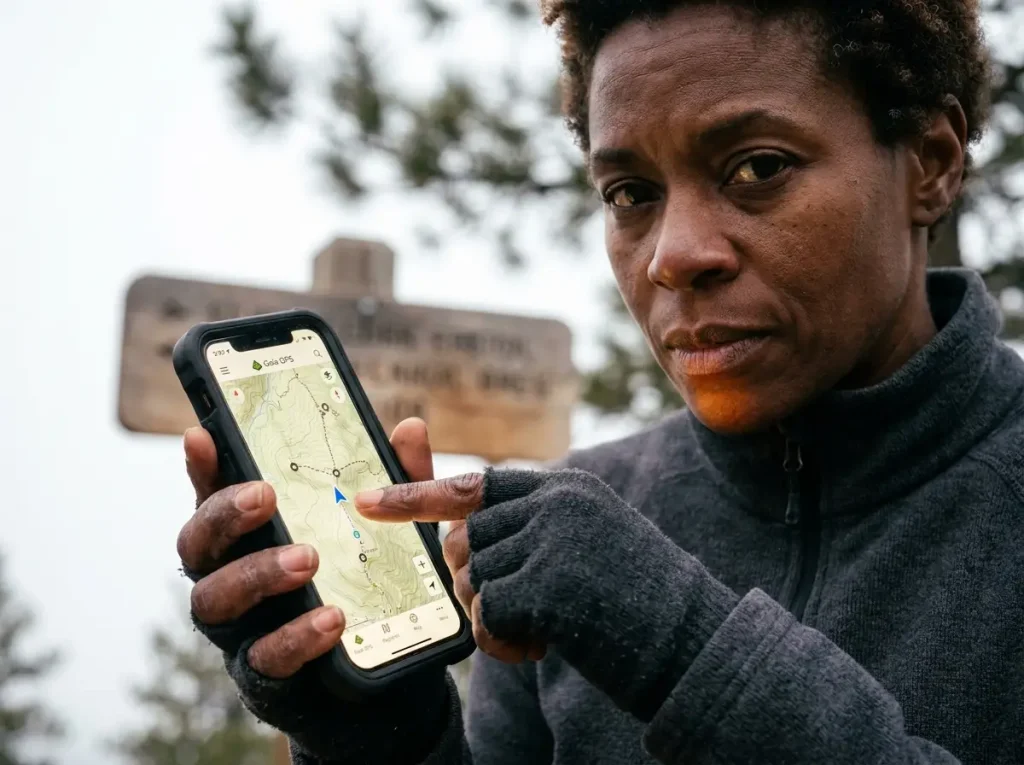
This is exactly why you heavily rely on shared gaia and alltrails maps to completely democratize the navigation burden. If everyone has the detailed map running on their phone, everybody feels secure. Always pick a reliable “secondary navigator” whose only job is to quietly double-check your turn decisions. If I think the trail heads left up the rocky ridge, my secondary navigator glances at their phone screen to confirm it before committing the whole crew to a crushing climb.
Sharing GPS Folders Before the Hike
The absolute most foolproof safety tether you can create is making sure everyone has sharing offline GPS tracks downloaded directly to their devices while they are sitting in their living rooms drinking coffee. Do not wait until you hit the dusty trailhead to send the file, because you will inevitably drop cell service.
Pro-Tip: Add custom digital waypoints for your reliable water sources, your shaded lunch spots, and your mandatory turnaround point before sending the digital folder to your friends. Highlighting the notoriously difficult terrain sections visually prepares the group for the brutal grind.
If you have a couple of friends who stubbornly show up without downloading the app, pair them physically next to someone who has the digital map running strongly. You effectively turn your experienced people into localized anchor points within the line, ensuring nobody wanders off blindly.
Getting everyone on the same page with the map effectively eliminates wrong turns, but navigation isn’t just about direction. It’s also deeply tied to the ticking clock and knowing when to let go of the summit.
Managing Turnaround Times and Regrouping Points
You must aggressively make peace with the fact that touching the summit is entirely optional, but returning to the cars is strictly mandatory. The ultimate final authority on any serious hike rests entirely on the ticking clock. The vast majority of terrifying search and rescue panic calls roll into dispatch around 4:43 PM. This dreaded “Golden Hour” usually hits the exact moment a delayed group realizes the sun is rapidly dropping behind the peaks and they are still three miles from the trailhead in deep shadows.
Setting a hard, non-negotiable turnaround time aggressively prevents this trap entirely. If you confidently announce right at the truck that the group will physically turn around at 2PM regardless of how close the summit is, you cut off the debate before it even starts. The second you hit that deadline, you stop, eat a snack, and completely turn around. You will endure loud grumbling from summit-hungry friends, but you must remain completely stoic. You endure the temporary unpopularity today to ensure that everyone actually gets to hike tomorrow.
Despite your best planning and clear cutoff times, someone is eventually going to argue with you on the mountain.
Dealing with Conflict and Emergencies on the Trail
Any time you mix deep physical exhaustion, steep terrain, and rapidly changing cold weather, you inject serious friction into a friend group. Tempers famously flare precisely when injury sugar drops and calf muscles cramp hard. Eventually, you will have to tell a deeply stubborn friend that their knees are clearly shaking and they are not strong enough to summit today. If you handle that delicate conversation poorly, it rapidly devolves into a nasty screaming match echoing through the quiet trees.
The CFOR Model for Fixing Group Drama
The folks over at the REI Co-op strongly advocate using the smart, proven CFOR model to gracefully de-escalate tension without attacking a person’s fragile ego. CFOR translates to: Concern, Feeling, Ownership, Request. It serves as a psychological verbal formula that attacks the shared problem in the woods, absolutely not the person.
Here is exactly how you use it when your buddy insists on taking a hazardous, steep washout shortcut instead of the established switchbacks. Smoothly pull them aside and state the formula: “I have a concern that the scree slope is too loose for the whole group. I feel worried that someone is going to blow out an ankle. I take ownership because I didn’t enforce the specific route plan down at the creek. My request is that we just stick to the main dirt trail for the next mile.” Because you intentionally owned a piece of the blame, their defensive shields drop entirely. It works perfectly in tense situations.
When to Call the Hike Early
There is no heavier burden for a dedicated leader than deciding to aggressively abort a hike when you are standing a mere 500 feet below the summit. You stare at the black thunderstorm clouds rolling violently over the ridge, and you know deep in your gut you have to make the hard call. The dreaded “Summit Fever” infects people deeply; they have hiked for four exhausting hours and absolutely refuse to quit when the goal is directly in sight.
This requires real guts. You lean directly on the framework you built during your emergency plan discussion hours ago. “Guys, we all agreed at the trucks we would turn if the clouds stacked up. We are turning around right now.” If someone outright refuses to politely follow safety instructions and starts marching upward alone, use your toughest tone to explain they are severely jeopardizing the entire group. If they stubbornly persist, forcefully refuse to ever invite them on another trip. Your primary obligation is the crew’s survival, not their summit selfie.
Once you navigate the interpersonal hurdles and make the tough decisions, you still have an obligation to the environment around you. Managing a big group inherently creates a massive footprint, and you need to keep that impact under control.
Handling Trail Etiquette and LNT in a Big Group
Ten people walking aggressively through the woods act exactly like a loud, destructive bulldozer. Big groups inherently ruin the prized quiet of wilderness. Aggressively manage your trail manners to minimize friction with other people crossing paths. Constantly enforce the standard right-of-way rules—large groups should actively step completely off the trail to politely yield to solo uphill hikers working hard on a steep climb.
Practicing strict leave no trace isn’t just carrying out plastic wrappers. It heavily involves managing the noise pollution by firmly asking the crew to quiet down when passing tents or grazing wildlife. Large groups naturally create ugly “social trails” by wandering slightly off the path, trampling delicate vegetation into mud. As the official leader, always stay behind when leaving a lunch spot. Do the final visual sweep of the crushed pine needles, picking up the dropped pistachio shells and stray napkin corners your friends inevitably missed.
That final look over your shoulder at a clean lunch spot perfectly summarizes your whole job—taking care of the details so everyone else can just enjoy the walk.
Conclusion
Leading your friends safely into the backcountry does not mean you have to hold all the answers or navigate perfectly every time. It means you are willing to set the firm ground rules, communicate the harsh realities of the rocky terrain, and keep everyone’s bruised egos firmly in check when fatigue sets in. We do this for fun; the process should still feel like a great day outside, not an aggressively managed military march.
Remember the sturdy pillars keeping your crew intact: use a protective sweep, set a sustainable three-zone communication strategy where the pace accommodates the slowest walker, and prize the safe return home over the summit victory. Try organizing a quick post-hike debrief over hot pizza and actively use the “Behind You” responsibility chain on your next trip. You will instantly notice how much stress it pulls off your shoulders. Let’s hit the trail.
FAQ
How do you deal with a slow hiker in a group?
Adjust the group’s pace to clearly match the slowest hiker, rather than proudly marching ahead and waiting. Implement the Alpine Pace and ensure that when the slow hiker finally catches up, the entire team takes a fresh five-minute break so they actually get to rest.
Do I need a permit to hike with a large group?
Yes, in many protected areas, groups over 10 to 15 people strictly require a special use permit. Always call ahead to the forestry or park ranger station, as large parties can face hefty fines if caught violating wilderness solitude limits.
What is the best way to keep a hiking group together?
Implement the Behind You rule and put a designated sweep at the rear. When every hiker is strictly responsible for keeping the person directly behind them in visual contact, the group naturally stays intact without the leader constantly doing headcounts.
How do you handle someone who won’t follow safety instructions?
Have a private, direct conversation using the CFOR statement framework to explain their reckless actions jeopardize the entire group’s safety. If they stubbornly continue to put the group at risk, the leader must make the tough call to abort the hike or firmly refuse to invite them on future trips.
Risk Disclaimer: Hiking, trekking, backpacking, and all related outdoor activities involve inherent
risks which may result in serious injury, illness, or death. The information provided on The Hiking Tribe is for
educational and informational purposes only. While we strive for accuracy, information on trails, gear, techniques,
and safety is not a substitute for your own best judgment and thorough preparation. Trail conditions, weather, and
other environmental factors change rapidly and may differ from what is described on this site. Always check with
official sources like park services for the most current alerts and conditions. Never undertake a hike beyond your
abilities and always be prepared for the unexpected. By using this website, you agree that you are solely
responsible for your own safety. Any reliance you place on our content is strictly at your own risk, and you assume
all liability for your actions and decisions in the outdoors. The Hiking Tribe and its authors will not be held
liable for any injury, damage, or loss sustained in connection with the use of the information herein.
Affiliate Disclosure: We are a participant in the Amazon Services LLC Associates Program, an
affiliate advertising program designed to provide a means for us to earn advertising fees by advertising and linking
to Amazon.com. As an Amazon Associate, we earn from qualifying purchases. We are also an official affiliate partner
of Black Diamond Equipment via the AvantLink network. If you click on a Black Diamond affiliate link and make a
purchase, we may earn a commission at no additional cost to you. We also participate in other affiliate programs and
may receive a commission on products purchased through our links. Additional terms are found in the terms of
service.