In this article
The box arrives, you pull them on in the kitchen, and nothing hurts. They feel light and honest and your toes have room for the first time in years, so you wear them all day, then to the store, then on a quick two-mile loop because why not. Two days later you’re limping down the stairs sideways and wondering what you did wrong. The answer is nothing aggressive at all, which is exactly the problem: the intrinsic foot muscles that minimalist hiking shoes wake up need 12 to 24 weeks to actually grow, and a board-certified podiatrist’s transition protocol runs about 90 days before hiking is even on the table. This guide covers the phased timeline, how to tell the soreness that means it’s working from the pain that means stop, the strengthening track that runs alongside it, and the parts almost nobody writes for hikers: mileage and pack-weight progression, technical terrain, and who should get a professional opinion before buying anything at all.
Why Your Feet Aren’t Ready for Zero Drop Yet
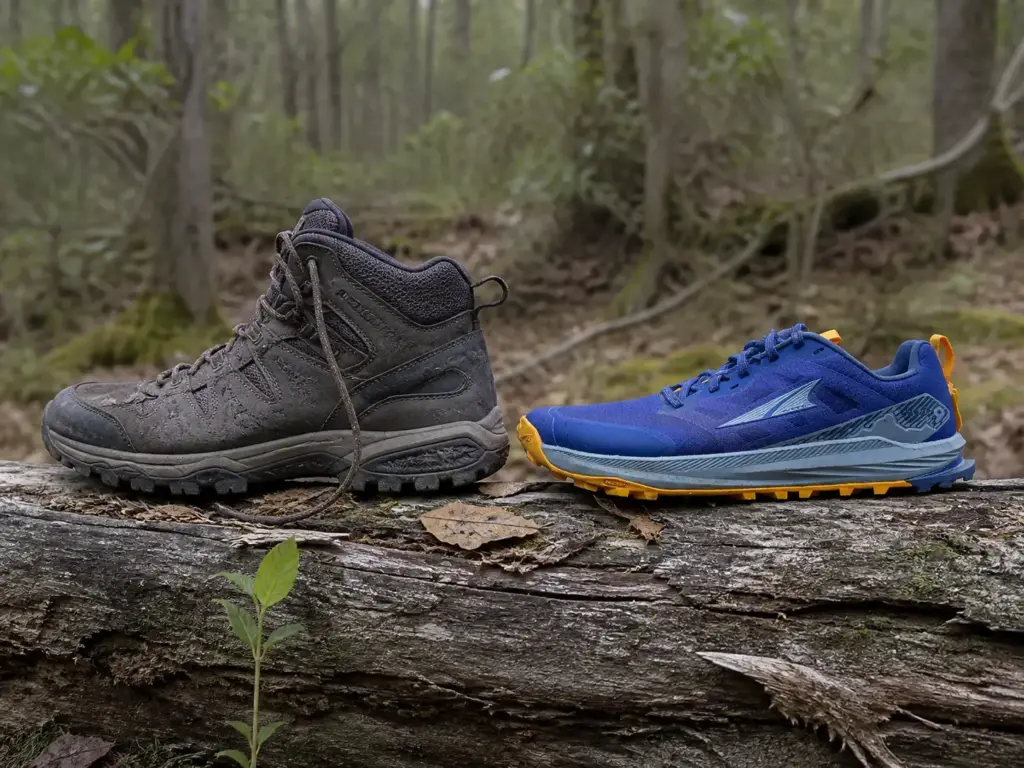
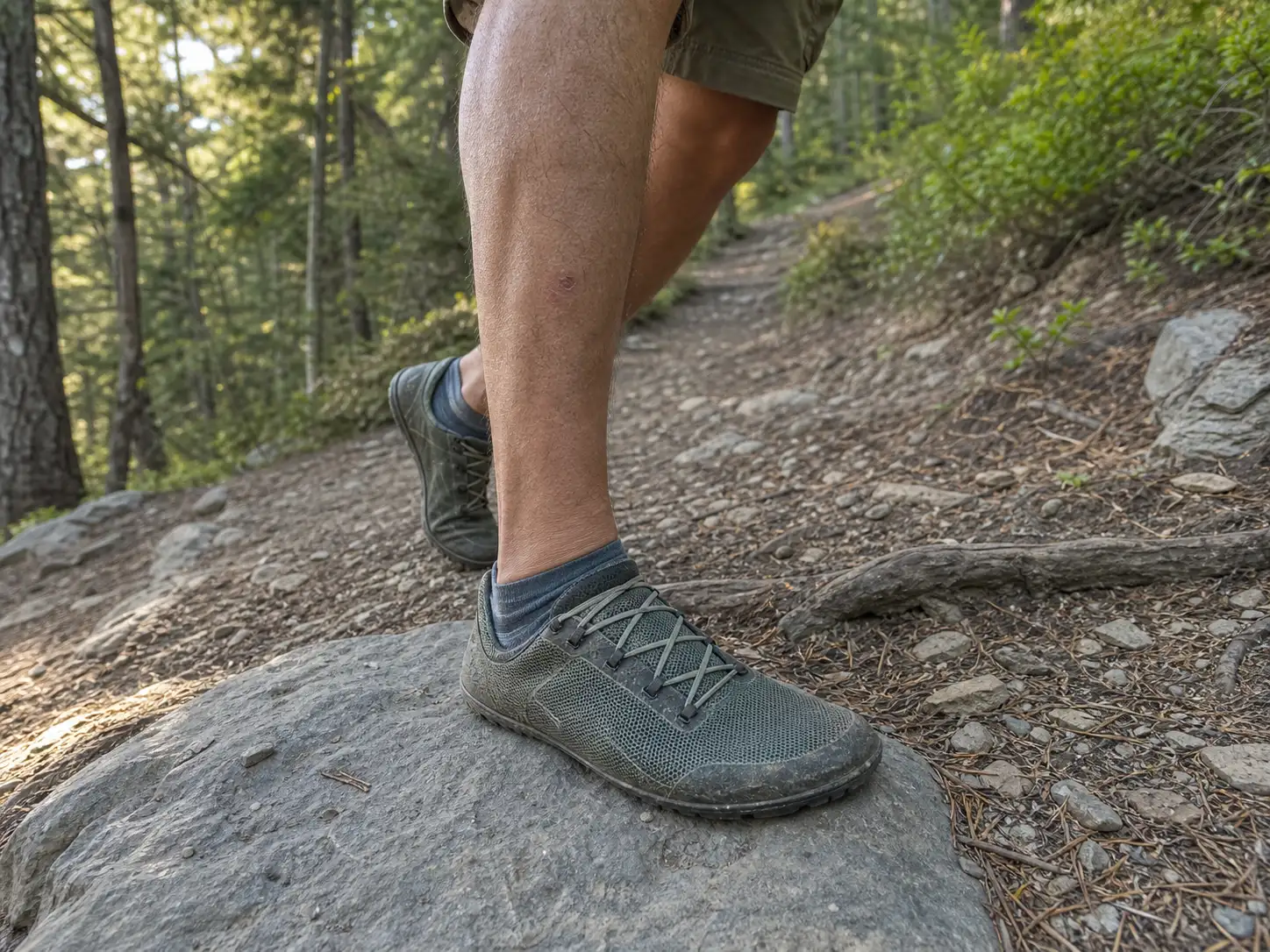
Here’s the part most people get backward. They assume their feet are the constant and the shoe is the variable, so if the shoe hurts, the shoe is wrong. Flip it. Your boots have spent years doing a job your feet used to do, and your feet got comfortable letting them. A minimalist shoe isn’t adding a challenge. It’s removing a cast.
That cast was doing real work. A structured, cushioned boot supports the arch passively, which means the 20-plus intrinsic muscles inside each foot have very little reason to fire. Put on a thin, flexible shoe and those same muscles engage on every single step. They didn’t disappear during the boot years. They idled. Now they’re back on shift and they will tell you about it.
The second change is the drop. Most hiking boots sit somewhere in the 8 to 12mm range, meaning the heel rides that much higher than the forefoot. Zero drop removes the lift entirely, which changes how much dorsiflexion your ankle needs and loads the Achilles differently from the very first step. If you want the full picture of how stack height and drop actually work, that background is worth having before you spend money, because those two numbers decide almost everything about how fast you can progress.
Now the reframe that matters most. Podiatrist Paul Langer makes the point that calf and Achilles pain during a transition is new demand on those tissues, not proof they were weakened by cushioned shoes. That distinction changes the whole fix. If the tissue were weak, the answer would be to toughen it up. Since the tissue is simply doing more work than it’s used to, the answer is dose control. You manage the amount, not the attitude.
And the amount takes time. Dr. Irene Davis, the biomechanics researcher who ran Harvard’s Spaulding National Running Center, has studied exactly this transition, and the muscle research she’s associated with points at 12 to 24 weeks before you see measurable increases in the cross-sectional area of the intrinsic foot muscles. That’s a physiological build, not a break-in period. Leather softens in a week. Muscle takes a season.
You’ll hear a handful of terms from here on, so let’s set them down once. Foot core is that set of small intrinsic muscles. Ground feel is the sensory information a thin sole lets through so you can read what you’re standing on. Toe splay is the natural spreading of the toes under load that a wide toe box permits and a tapered boot prevents. Barefoot time is the unit that actually matters, which we’ll get to.
Here’s how the first zero-drop walk usually goes. During the walk, your calves feel completely fine. Great, even. It’s the next morning, on the way down the stairs, that they introduce themselves. That delay is why day one feels like permission and day three feels like a mistake.
The 90-Day Transition Timeline That Actually Works
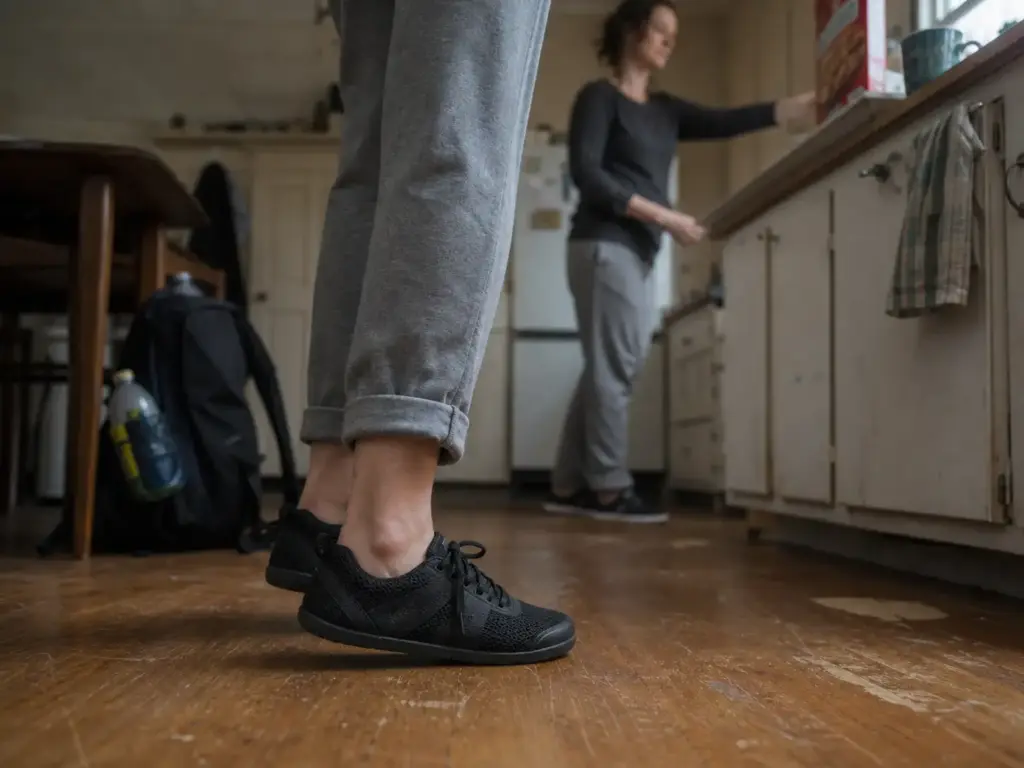
Everybody wants the number, so here it is: 90 days. Now the caveat that makes the number useful. Ninety days is a floor, not a promise, and it assumes you actually run the phases instead of skimming them.
A podiatrist’s 90-day transition protocol breaks the switch into three phases, and each one has a job.
Days 1 to 30, casual wear only. Build toward 4 to 6 hours a day of just having them on. No hiking. No workouts. No “quick loop to see how they feel.” This is the phase people skip, and skipping it is the single most reliable way to end up with an angry Achilles in week three. Your feet are logging hours of low-grade, low-speed load, which is exactly what a muscle needs to remodel.
Days 31 to 60, add dedicated walks. Start at 10 to 15 minutes, on pavement or smooth ground, and build toward 30-minute walks by around week seven. You’re still wearing them casually the rest of the day. The walks are the new stimulus; the casual hours are the base underneath.
Days 61 to 90, they become your default shoes. At this point the minimalist pair is what you reach for without thinking, and short, easy day hikes enter the picture. Smooth trail. No pack beyond water and snacks. If a hike leaves you sore in a way that doesn’t clear by the next morning, you drop back to the previous week’s volume rather than pushing on.
Then there’s the extension nobody wants to hear. The protocol explicitly adds 30 days for people returning to high-impact activity. Hiking with a pack qualifies. If your goal is loaded trail miles rather than errands and neighborhood walks, you are looking at four months, not three, and planning for four means the fourth month doesn’t feel like a failure.
Track your progress by hours worn per day, not miles hiked. Hours of standing and walking build tissue tolerance faster and far more safely than trying to log distance early, and hours are the number the protocol is actually written in. Put it in your phone’s notes app if you have to. Guessing is how month one turns into week two.
Which brings up the honest part. Phase one is the kitchen, the office, the grocery store and the driveway. It is the least glamorous month of gear ownership there is, and you will feel faintly ridiculous owning trail shoes you aren’t allowed to take on a trail. Own it. That month is the reason month four works.
Soreness That’s Normal vs. Pain That Means Stop
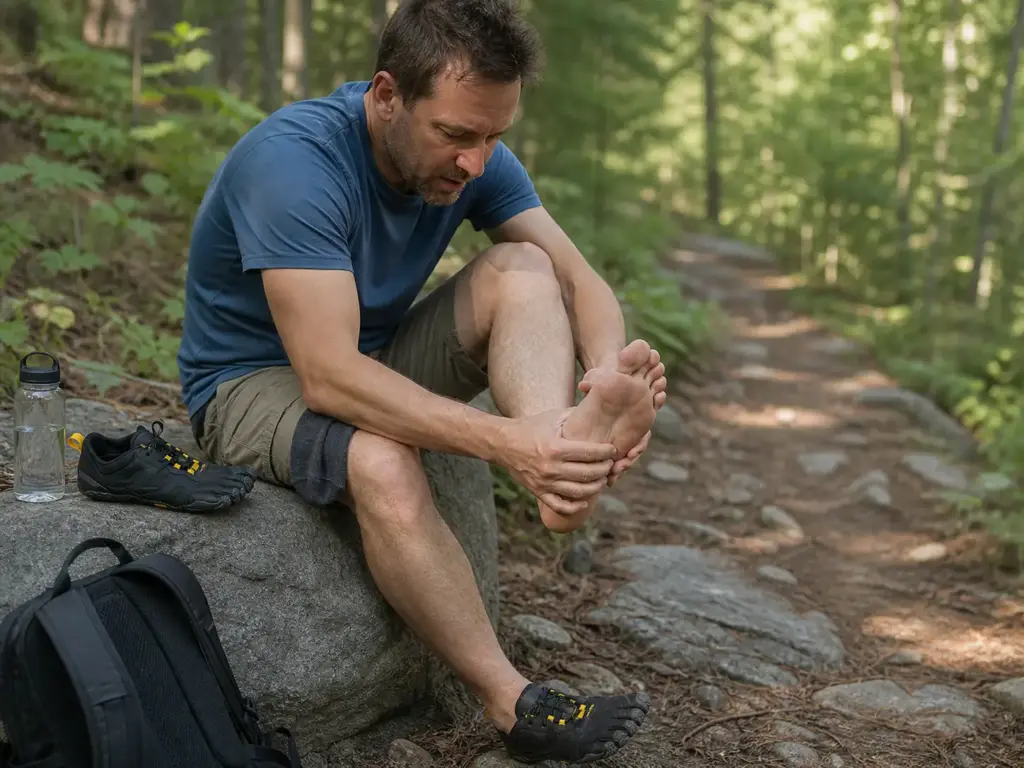
At 6am, standing on a cold floor, everyone transitioning asks the same question: is this supposed to hurt? Here’s the direct answer instead of a hedge.
Normal looks like mild arch fatigue after a long day on your feet, mild calf soreness in the early weeks, and general achiness that eases once you start moving. Muscle soreness has a signature: it’s diffuse, it’s symmetrical more often than not, and movement improves it. That’s tissue adapting, and it’s the sound of the plan working.
Stop signals are different in kind, not just degree. The clinical red flags that mean stop rather than push through are acute sharp pain, overnight swelling that’s still there in the morning, numbness or tingling or burning in the toes, pain on your first steps out of bed, and localized bone tenderness along the metatarsals. Any one of those means you stop, not that you back off slightly.
Morning pain deserves its own beat, because it’s the one people talk themselves out of. That first-step-of-the-day stab under the heel or along the arch is a classic plantar fascia signal, and it tends to get rationalized as “just stiff.” It isn’t stiffness. Stiffness loosens over a minute of walking and doesn’t come back sharper tomorrow. If your first steps hurt more this week than last week, the transition is outrunning your tissue.
Localized bone tenderness on the metatarsals is the other one to take seriously. Press along the long bones on the top of your foot. If one specific spot is tender in a way its neighbors aren’t, that’s a stress reaction signal, and it’s a full stop with a professional opinion attached. Muscle soreness spreads. Bone pain points at itself.
The most common failure, though, isn’t ignoring a red flag. It’s quitting at week two. People decide the shoes “aren’t working” a fortnight into a 12 to 24 week adaptation window and go back to boots feeling like they gave it a fair shake. They didn’t. Backing off volume beats abandoning the project almost every time.
Use the ten-minute rule as your field test. Soreness that fades within the first ten minutes of walking is muscle doing its job. Pain that sharpens the longer you keep going is something else, and no amount of warming up will talk it out of that. Turn around on the second one.
Build Foot Strength While You Wait
Most hikers will not do a daily foot routine. Two weeks of diligent toe curls, then the resistance band lives in a drawer forever. So let’s start with the finding that lets you off the hook.
Davis’s research points at something genuinely useful here: simply walking in minimalist shoes is roughly as effective as a dedicated foot-strengthening program. The barefoot time is the program. If you do nothing but run phase one properly, you are already doing the work, which is why the protocol is written in hours rather than reps.
For hikers who want more than the minimum, three things carry most of the value. Toe splay work, meaning deliberately spreading the toes wide and holding, retrains a range of motion that tapered boots quietly deleted. The short-foot exercise, where you draw the ball of the foot toward the heel without curling the toes, targets the arch muscles directly. And single-leg balance, barefoot, for a minute per side while you brush your teeth. Brief and daily beats long and occasional, every time. Two minutes you actually do outrank twenty you plan to.
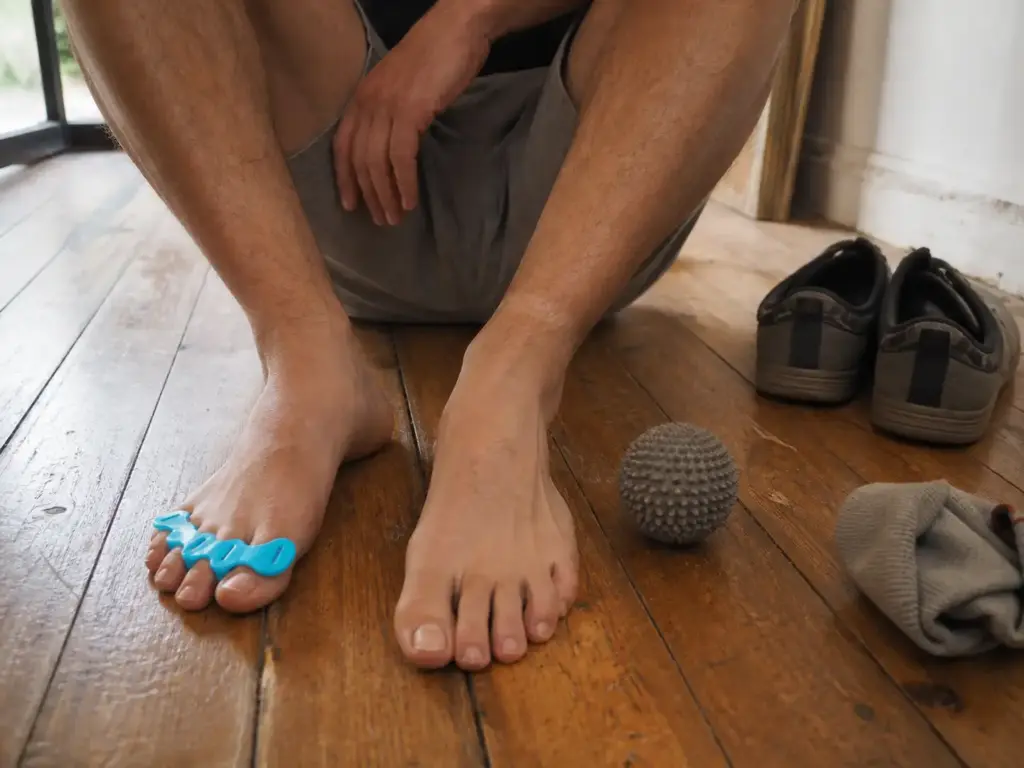
Toe spacers run as a passive parallel track. You wear them around the house, in socks or barefoot, while your feet aren’t loaded, and they hold the toes in the spread position that a lifetime of tapered shoes trained out. The Correct Toes Toe Spacers (check them here) are the podiatrist-designed ones, medical-grade silicone in sizes S through XL, and the reason they get named specifically is that cheap generic separators tend to be too thin to hold shape under a sock. Wear them at home, not on trail. Worth knowing: the first time they go in, ten minutes feels like plenty. That’s normal, and it isn’t a sign you’re behind.
The last piece is proprioception, which is the sense that will eventually read the ground for you on technical terrain. Plantar mechanoreceptor work means giving the sole of the foot texture to interpret, and rolling a textured ball underfoot for a couple of minutes a day is the low-effort version. The NABOSO Neuro Ball (check it here) is built for exactly that, with a textured surface aimed at the nerve endings rather than just the fascia. It doubles as a myofascial release tool on evenings when your arches are complaining.
One more thing worth sorting early, because it’s cheaper than fixing it later: getting the toe box sizing right in the first place determines whether any of this splay work actually has room to happen. A minimalist shoe that’s too short is just a tapered boot with a thinner sole.
Which Minimalist Hiking Shoe to Buy for Your Phase
Here’s the anti-sell. The premium true-barefoot shoe that every guide leads with is the wrong first purchase for most people, and buying it on day one is one of the more common ways this project ends early. Zero stack under a foot that has never carried itself is not a bold start. It’s a short one.
Buy for the phase you’re in. Phase 1 wants a shoe with some stack underneath and a genuinely wide toe box, because you need the mechanics change without the full ground-feel tax at the same time. Phase 2 wants zero-drop with real cushioning, the “graduate” tier. Phase 3, once the base is built, is where true zero stack finally belongs.
And one spec matters more than the rest at every phase. The toe box decides whether you keep wearing them at all; stack height decides how fast you’re allowed to progress. Narrow toe box, and the shoes live by the door untouched no matter how good the sole is.
Phase 1: The Budget Way to Test the Category
Before you spend real money finding out whether you even like this, spend a little. Testing the category cheaply is a rational move, not a compromise, and it’s the framing almost no competitor bothers with because there’s less commission in it.
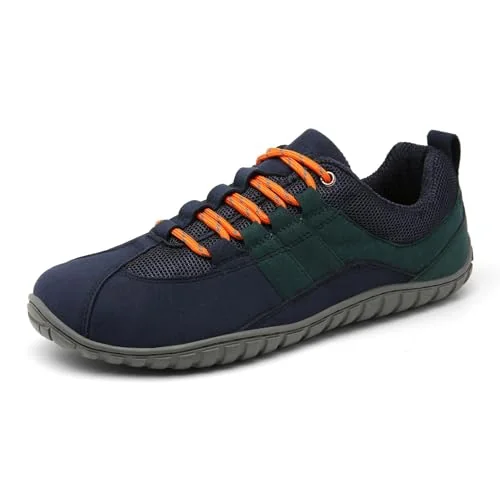
Use these for the thing phase one actually is: hours on flat indoor and neighborhood ground while your feet remember how to work. If you find yourself reaching for them without thinking by week four, you have your answer and you can invest properly. If your toes never settle into the shape, you found that out cheaply, which is also a useful result.
Phase 1 to 2: The Versatile Transition Shoe
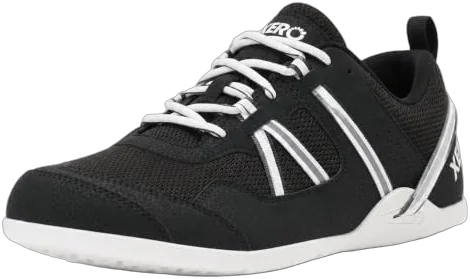
The Prio is the neutral default here, and it’s the pick to point at if you want one shoe and no decisions. If you’re shopping the women’s side specifically and want something with more trail-focused tread than the Prio offers, the women’s Xero Shoes Scrambler Low EV (check it here) is Xero’s lightest trail runner, running a Michelin Fiberlite outsole over the same zero-drop, wide-toe-box platform. It grips loose ground better than a Prio does. It’s a women’s model, so anyone shopping outside that fit should stay with the Prio for the same phase.
Phase 2: The Graduate Shoe
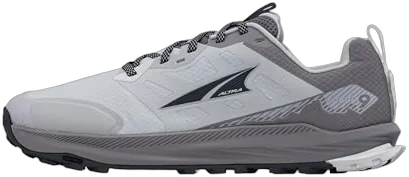
One thing to know before you click: the two variants aren’t the same shoe in different sizes. The men’s link goes to the standard Lone Peak 9, while the currently available women’s model is the Lone Peak 9 GTX, the GORE-TEX waterproof version. Same platform and same toe box, but the GTX runs warmer and dries slower once water gets in over the collar, which is the usual waterproof-membrane trade. Worth factoring in if you hike hot or ford creeks often.
Phase 3: True Zero Stack, Once You’ve Earned It
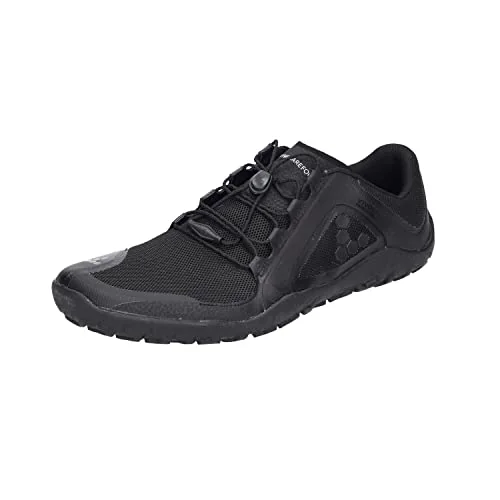
If individual toe splay appeals more than a standard wide toe box, the Vibram FiveFingers V-Trail 2.0 (men’s · women’s) sits in the same phase-3 tier with individual toe pockets and a trail-specific lugged sole. Maximum proprioception, and a genuinely different feel underfoot. Also a shoe you should not meet before month four. There are true barefoot models worth looking at beyond these two if you want the full field, and the full zero-drop shoe comparison covers the wider category including the transition-tier models with more stack.
Last note, and it’s the one that saves people: keeping two pairs in rotation is a strategy, not a failure of commitment. Nobody hands out a purity award. Old cushioned shoes for the bulk of a hike and the minimalist pair for the last stretch banks adaptation time without gambling an entire day on feet that aren’t ready.
Mileage, Elevation and Pack Weight — the Hiker’s Progression
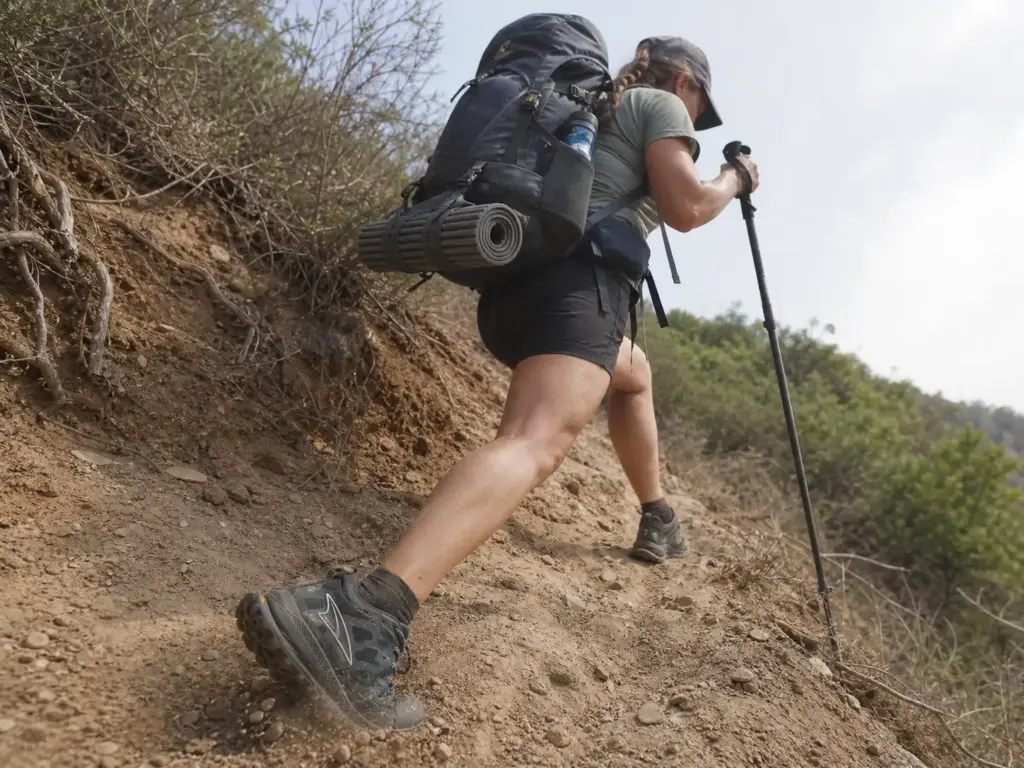
Here’s where every generic transition guide stops being useful to you. A running transition has one variable: miles. A hiking transition has three, and stacking them is precisely how people get hurt in month four after doing months one through three perfectly.
The rule is simple enough to remember on trail. Add ONE variable at a time. Distance, OR elevation gain, OR pack weight. Never two in the same outing. If last weekend was six flat miles with a daypack, this weekend is either eight flat miles with a daypack or six miles with 1,200 feet of gain, and it is not both. Write it down before you leave the house, because at the trailhead on a beautiful morning your judgment is compromised by good weather.
Now the variable that gets ignored. Everyone plans around elevation gain because that’s the number on the trail description, but the load that actually hurts you in minimalist shoes is the descent. Going down is eccentric loading, meaning your calves are lengthening under tension with every step, and that’s the contraction type that produces the most tissue damage. In a boot with a raised heel and a thick midsole, a lot of that gets absorbed before it reaches you. In a zero-drop shoe with a thin sole, your calves and your soles are the shock absorber. A 2,000-foot descent in minimalist shoes is a completely different event from a 2,000-foot climb, and the trip report never says so.
There’s a specific moment most hikers meet on the way down. About two miles from the car, on a section that isn’t even steep, your calves stop being background noise and become the only thing you can think about. That’s the descent bill coming due, and it arrives late enough that you can’t do anything about it except walk slower.
Trekking poles are worth more during this transition than they are afterward. Poles bleed off a real share of the descent load before it reaches your calves and soles, which buys you the one thing the timeline can’t: a way to hike a descent you aren’t quite ready for without paying full price for it. If you already own a pair and leave them in the closet on day hikes, this is the season to change that.
Pack weight is the third variable and it’s genuinely a second adaptation stacked on the first. Field guidance written specifically for backpacking in minimalist shoes flags the combination of “new to minimalist” plus “first loaded overnight” as the reliable recipe for overuse injury and bruised soles. Every pound on your back is a pound your intrinsic foot muscles are now supporting through a thin sole, and unlike distance, pack weight doesn’t taper as you get tired. It’s constant load for the entire trip, including the descent.
Stage it like this. Get comfortable on unloaded day hikes first. Then daypack weight, maybe 12 to 15 pounds, on distances you’ve already done unloaded. Then overnight weight on short, easy mileage that you would consider trivially short with your boots on. If you’re heading toward genuinely heavy loads, trail runners built to carry a heavier pack are a different category from true minimalist shoes and there’s no shame in landing there instead.
Distance recovers slower than confidence. Hikers consistently report feeling capable in minimalist shoes well before their actual hikeable mileage catches back up to what they used to do in boots. Early comfort is not a green light on distance, it’s just comfort. Let the calendar decide your mileage, not how good your feet felt at mile three.
Set the expectation now so it doesn’t read as failure later: your first season in minimalist shoes will probably cover less ground than your old boots did. Field reports from hikers who made the switch describe multiple months before their mileage returned to pre-transition levels, and one thru-hiker’s account only reached comfortable 10-plus mile days after a long, gradual build. That gap is the plan working. You are trading a season of distance for a decade of foot strength, which is a reasonable trade as long as nobody told you it would be free.
Rocky Trail Changes Everything
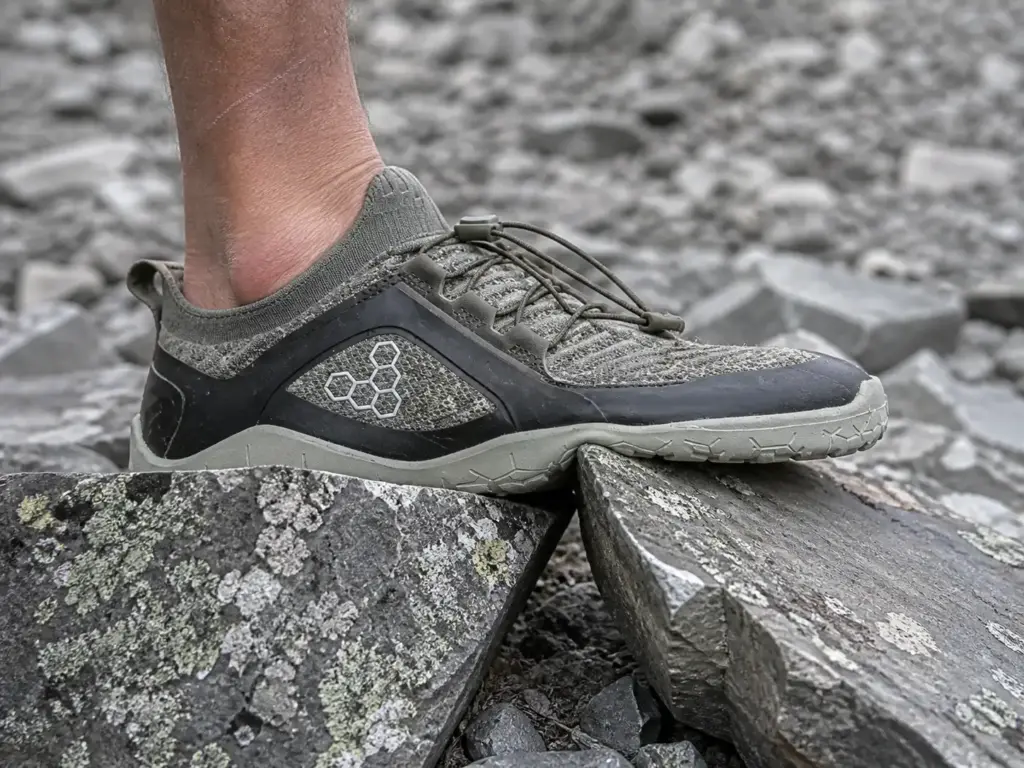
Most gear writing tells you half of this trade. The half where thin soles let you feel the ground and that’s wonderful. The other half is that you feel the ground, and sometimes the ground is a fist-sized chunk of talus with a corner on it.
Start with the upside, because it’s real and it’s a safety benefit rather than a comfort one. A thin, flexible sole in the 18 to 22mm zero-drop range lets the nerve endings in your sole register texture directly. You feel a rock rolling under the ball of your foot before your weight has fully transferred onto it, which gives you a fraction of a second to redistribute. On loose scree or wet, polished rock, that fraction is the difference between a correction and a fall. Full-stack boots genuinely cannot give you that. There’s a specific, unmistakable feel to a rock shifting under a thin sole while your weight is still on the other foot, and once you’ve felt it a few times you start moving across loose ground differently, testing rather than committing.
Now the cost. The same shoe that transmits that information also gives up rock-plate protection against sharp, concentrated impacts. Sharp talus concentrates a lot of force into a very small contact area, and the thing that bruises a sole is not overall pressure but that concentration. Ten miles of smooth dirt in minimalist shoes is pleasant. Two miles of jagged talus is a different sport, and the soreness that follows sits deep in the sole rather than in the muscles.
That’s why a rock plate, on the models that offer one, earns its keep on scree, talus and root-heavy singletrack. You give up a little proprioception and you get back the ability to walk the last three miles without picking your way around every sharp edge. If you want the mechanics of what a rock plate actually does underfoot, the short version is that it spreads a point load across a wider area of the foot instead of letting it concentrate.
There’s a third factor that catches people off guard: proprioceptive fatigue. On uneven ground, your foot is processing dramatically more information per step than it does on pavement, and that processing has a cost. Ankles and feet that felt sharp for the first hour on technical trail start making sloppier decisions in hour three, not because the muscles are tired but because the system doing the reading is. It shows up as clumsiness rather than pain, which is why it rarely gets diagnosed correctly.
So the staging rule writes itself. Smooth trail first. Technical trail last. Rocky descent is the final graduation exercise, not an early test of whether the shoes are any good. A hiker who runs the full protocol on groomed trail and then walks straight onto a talus field on week 13 has skipped a phase just as surely as the one who hiked on day two.
Who Should Talk to a Podiatrist First
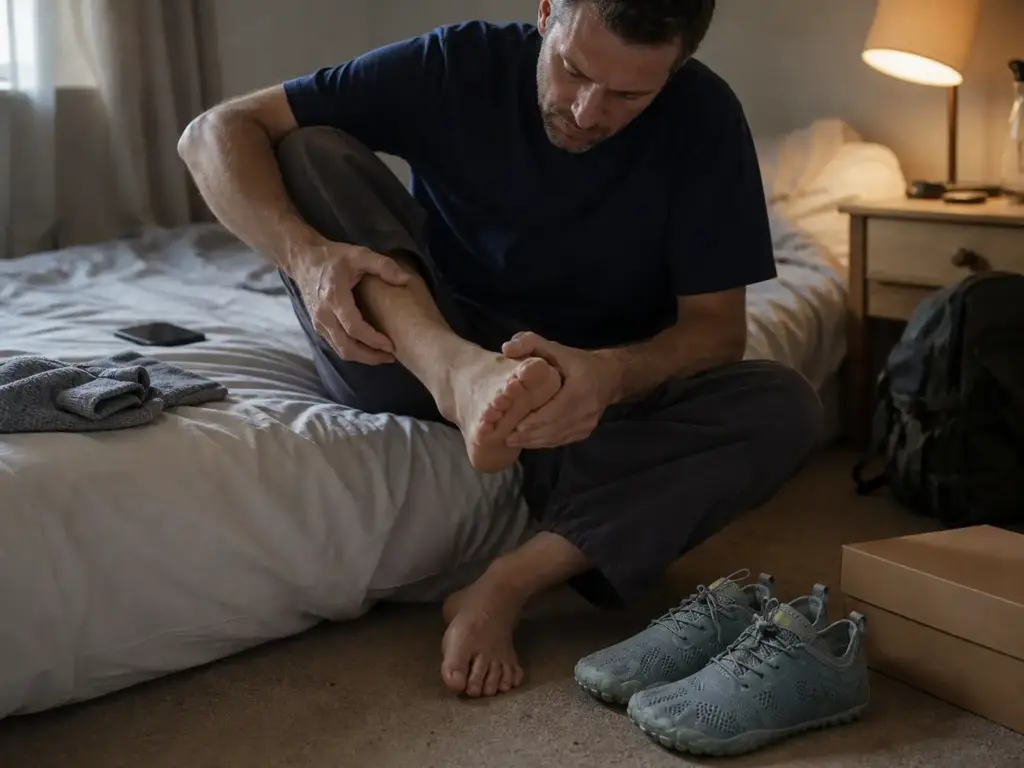
Every competitor writes “consult a professional” and moves on, which helps exactly nobody. Here are the actual conditions, and the honest truth that for some of them “just go slower” is not a safe substitute for a real opinion.
Peripheral neuropathy is the absolute caution. The entire premise of a minimalist shoe is sensory feedback from the sole of the foot. Neuropathy is the loss of that feedback. You’d be removing protective cushioning from a foot that can’t tell you it’s being injured, which inverts the benefit into a hazard. This one isn’t a timeline adjustment.
Diabetic Charcot foot is an absolute contraindication. Not a slower protocol, not a modified plan. This is a get-cleared-first situation, and any guide that lumps it into a general “check with your doctor” line is doing you a disservice.
Then the group where the answer is “extended timeline,” not “no.” High-arched, or cavus, feet distribute pressure differently and tend to need more adaptation runway than the standard 90 days. Moderate-to-severe flat foot with posterior tibial tendon dysfunction belongs here too, and it’s the condition most likely to be self-cleared by someone who shouldn’t. Plenty of hikers have flat feet and do fine, and plenty have been told they have overpronation without anyone checking whether it matters. The variable isn’t the arch height or the label, it’s whether the posterior tibial tendon is actually doing its job supporting that arch, and that’s not something you can assess by looking at your footprint on a wet deck. It takes an exam. A podiatrist or a pedorthist can settle it in one appointment, which is a cheap answer compared to a season lost to a tendon that was never going to keep up.
And the group where the answer is “wait.” Active plantar fasciitis and active Achilles tendinopathy both mean you have tissue currently under stress, and a transition adds stress to exactly those structures. Let it resolve first. The plantar fascia question is genuinely unsettled rather than closed, incidentally: an ongoing NIH-registered clinical trial is studying how minimalist footwear and foot rehabilitation affect adults with plantar fasciopathy, which tells you the research community itself is still working out where minimalist shoes help versus hurt in that population. Severe hallux rigidus, meaning a stiff, arthritic big toe joint, also needs an opinion before you buy, because a flexible sole demands toe extension that a fused-feeling joint may not have.
The framing that matters: for everything on this list, get the sign-off before you spend the money, not after you’ve spent it and want permission to use it. And if you screen out of this entirely, that’s a real answer rather than a consolation prize. Plenty of hikers are better served by a more forgiving starting point with a wide toe box and normal cushioning, which delivers most of the fit benefit without the mechanics overhaul.
Mistakes That Send Hikers Back to Boots
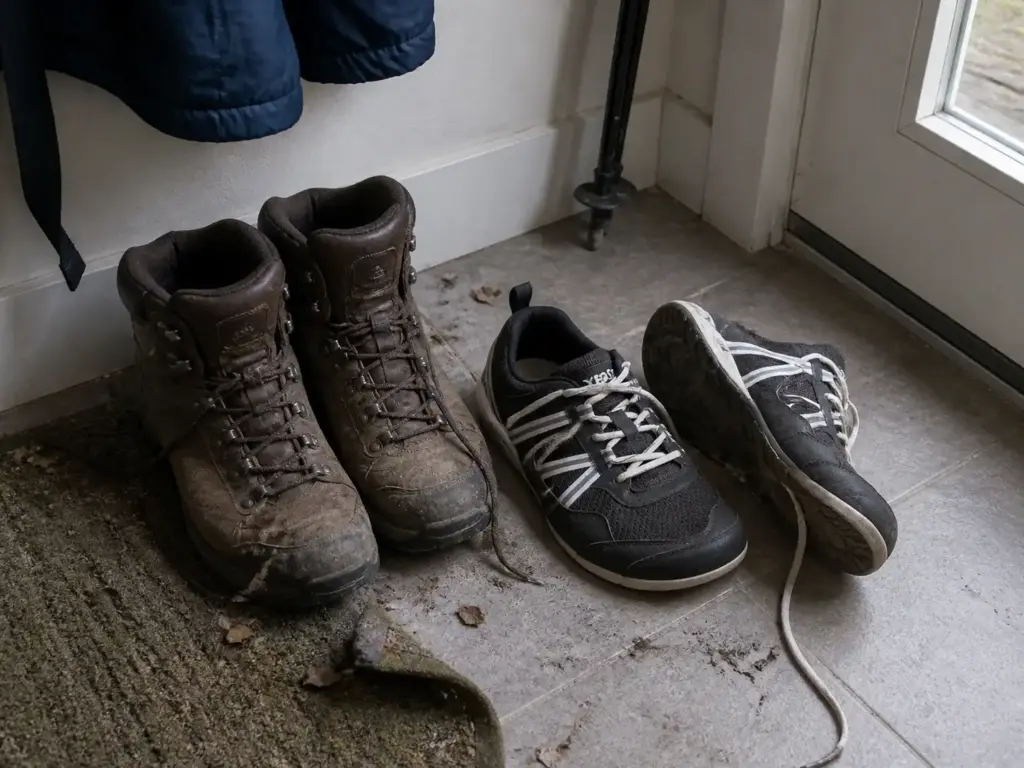
Here’s where people go wrong, in rough order of how often it happens.
Ramping up because day one felt fine. This is the big one, and it’s counterintuitive: the injuries land on people who jumped in enthusiastically, not on people who were careless. Enthusiasm is the risk factor. Your feet feel great in minimalist shoes precisely because nothing is squeezing them, and that feeling arrives long before the tissue capacity does.
Still heel-striking out of habit. Years in an 8 to 12mm drop boot trained a gait that lands heel-first, and the raised heel hid the cost. Take away the heel lift and that same strike sends impact straight up the leg with nothing absorbing it. A midfoot strike is what the shoe is asking for, and it tends to arrive on its own once the calves adapt, which is another reason rushing the timeline backfires. Here’s the trouble: the habit doesn’t announce itself. Most people have no idea they’re doing it until a downhill points it out, usually as a jarring sensation through the shin. If you can hear your own footfalls slapping on a hard surface, that’s your answer.
Wearing them for a big trip before adaptation is finished. The shoulder season before a goal hike is the window. The week before is not. New shoes on a trip you’ve been planning for a year is a gamble with terrible odds on both sides of the bet.
Going cold turkey when rotation would have worked. Dropping your old shoes entirely is a choice, not a requirement, and it costs you the option of banking adaptation time on hikes you’d otherwise skip. Old shoes for the first eight miles, minimalist pair for the last two. That’s a legitimate transition strategy that a lot of people talk themselves out of for no reason. And if you’re rethinking the premise altogether, whether you should be switching at all is a fair question with a real answer for some hikers.
Ignoring the season. Thin lugs on wet trail give up traction that a deep-lugged boot has, and minimalist shoes with no insulation get cold fast once temperatures drop and your feet stop generating much heat. Transitioning in shoulder season beats transitioning in peak summer for a different reason too: no goal hikes on the calendar means no pressure to skip a phase.
Conclusion
Ninety days is the floor, not the promise, and the first month of it happens on a kitchen floor rather than a trail. Change one variable at a time once you’re hiking, because distance, elevation and pack weight each ask something different from feet that are still building. And buy for the phase you’re in rather than the phase you want to be in, because the premium zero-stack shoe is a graduation gift, not a starting kit.
Pick an easy stretch of calendar to start the clock. A shoulder-season window with nothing important on it, no goal hike waiting, nothing that punishes you for taking a week off. Then spend the first month just wearing them around the house and doing errands in them. The trail part takes care of itself once the feet are ready.
Frequently Asked Questions
01How long does it take to transition to minimalist hiking shoes?
Plan on 90 days minimum before minimalist hiking shoes are your default trail shoe, and 12 to 24 weeks before the intrinsic foot muscle adaptation is genuinely complete. Add another 30 days if you intend to hike with a loaded pack.
02Can I hike in minimalist shoes right away if they feel comfortable?
No. Day-one comfort is exactly what leads people into overuse injuries, because the shoes feel great long before your foot muscles and Achilles have the capacity to back that feeling up. Casual wear only for the first 30 days.
03What are the signs I am transitioning too fast?
Sharp pain, overnight swelling that persists into the morning, toe numbness or burning, first-step morning pain, or localized bone tenderness on the metatarsals. Mild calf soreness and arch fatigue that ease as you walk are normal.
04Do I need foot exercises, or is wearing the shoes enough?
Walking in them is roughly as effective as a dedicated foot-strengthening program, per Irene Davis’s research. Added toe splay work, short-foot exercises and single-leg balance help, but the barefoot time itself is the program.
05Can I backpack with a loaded pack in minimalist shoes?
Not during the transition. Pack weight is a second adaptation stacked on the first, and combining a new minimalist shoe with a first loaded overnight is the pattern that produces bruised soles and overuse injury. Build unloaded day-hike mileage first.
Risk Disclaimer: Hiking, trekking, backpacking, and all related outdoor activities involve inherent
risks which may result in serious injury, illness, or death. The information provided on The Hiking Tribe is for
educational and informational purposes only. While we strive for accuracy, information on trails, gear, techniques,
and safety is not a substitute for your own best judgment and thorough preparation. Trail conditions, weather, and
other environmental factors change rapidly and may differ from what is described on this site. Always check with
official sources like park services for the most current alerts and conditions. Never undertake a hike beyond your
abilities and always be prepared for the unexpected. By using this website, you agree that you are solely
responsible for your own safety. Any reliance you place on our content is strictly at your own risk, and you assume
all liability for your actions and decisions in the outdoors. The Hiking Tribe and its authors will not be held
liable for any injury, damage, or loss sustained in connection with the use of the information herein.
Affiliate Disclosure: We are a participant in the Amazon Services LLC Associates Program, an
affiliate advertising program designed to provide a means for us to earn advertising fees by advertising and linking
to Amazon.com. As an Amazon Associate, we earn from qualifying purchases. We are also an official affiliate partner
of Black Diamond Equipment via the AvantLink network. If you click on a Black Diamond affiliate link and make a
purchase, we may earn a commission at no additional cost to you. We also participate in other affiliate programs and
may receive a commission on products purchased through our links. Additional terms are found in the terms of
service.