
In this article
Stand in any gear shop and the split shows up instantly. The traditional packs still wear a bulky top lid up top, while the ultralight rigs just roll shut and clip. Most hikers chalk that difference up to personal taste, but it isn’t taste.
There’s a real mechanical reason the ultralight world walked away from the brain lid, and a real practical reason plenty of seasoned hikers still won’t give it up. Here’s what each pack closure system actually does well, where each one fails, and how to match the right one to the trips you actually take.
| Feature | Brain Lid | Roll-Top |
|---|---|---|
| Quick access | Strong (second entry point, lid pocket) | Weak (one opening, dig to the bottom) |
| Waterproofing | Fair (zippers can wick) | Strong (sealed fold, no main zipper) |
| Weight | Heavier (adds 4 to 6 oz) | Lighter (fewer parts) |
| Volume flex | Limited (lid floats up only) | Strong (roll tighter as food drops) |
| Organization | Strong (dedicated pockets) | Weak (needs stuff sacks) |
| External gear | Strong (lid straps, lash points) | Fair (fewer attachment spots) |
| Best for | Weekends, winter loads, quick access | Thru-hikes, wet weather, ounce-counters |
What Is a Brain Lid (and Why the Weird Name)?
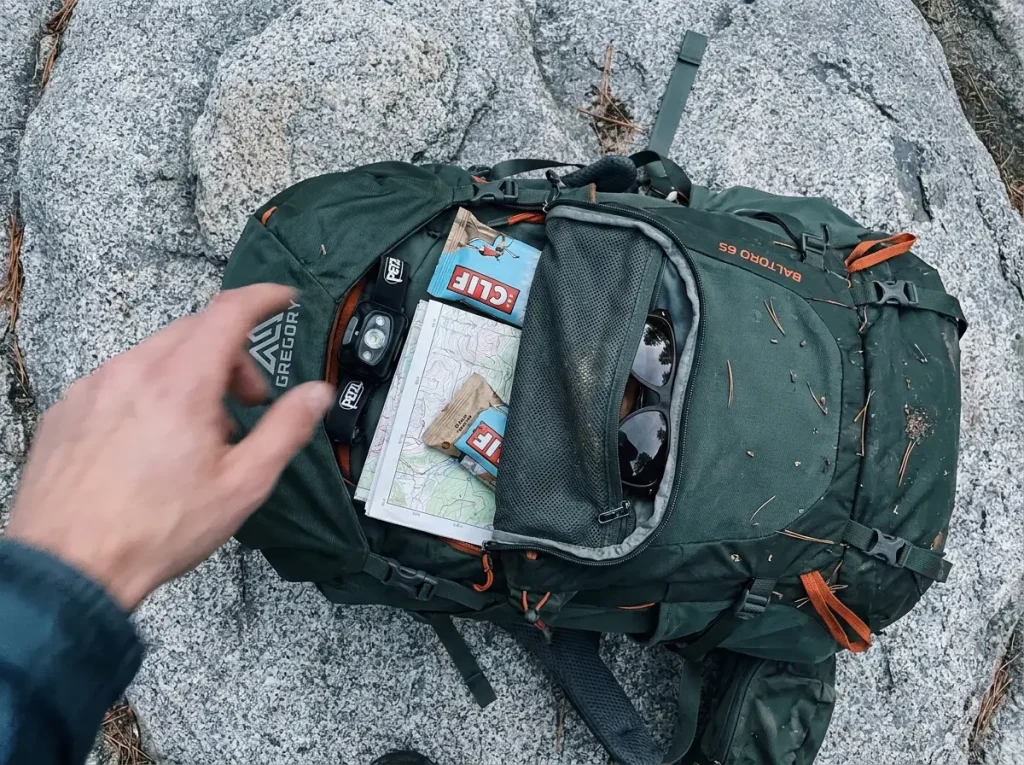
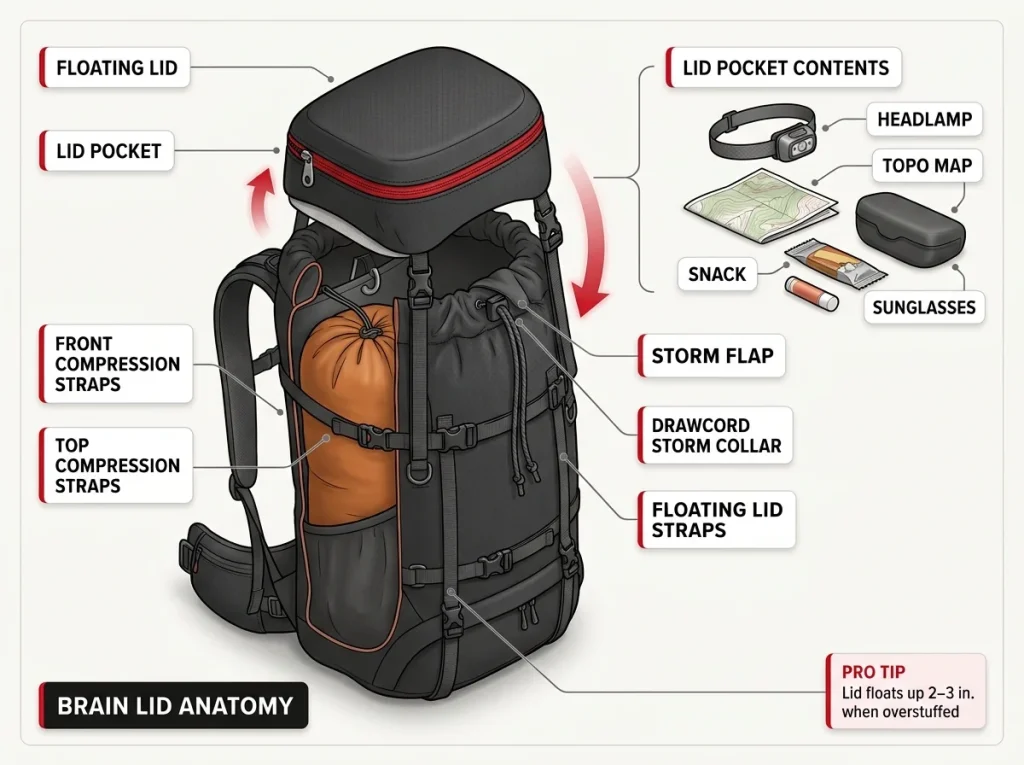
A brain lid is the padded, zippered pocket that sits on top of your pack like a cap. You’ve probably used one a hundred times without ever knowing it had a name. Gear nerds also call it the top lid or just “the brain,” and nobody really agrees where the slang came from. It stuck because the thing perches on top of the pack like a head.
The word “floating” is the part that matters. The lid is held on by adjustable straps front and back, so it can ride up two or three inches when the pack is stuffed past the top, then cinch down flat when your load is lean. That floating lid design is the whole trick. Underneath it, the main bag usually closes with a drawcord closure and a storm collar, and the lid is the second layer sitting over that opening.
What lives in the top lid pocket is the small, grab-often stuff: headlamp, snacks, paper map, sunglasses, the things you want without digging. That’s its job, and it does it well.
What Is a Roll-Top Closure?
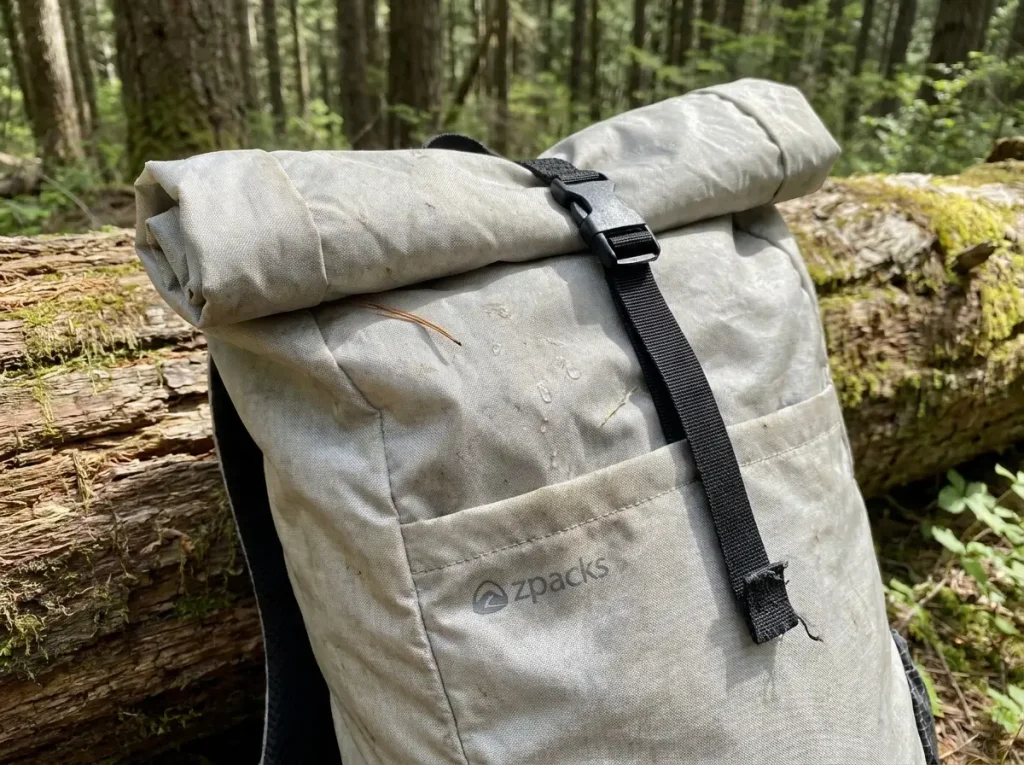
If you’ve ever owned a dry bag for a canoe trip, you already understand a roll-top closure. Same fold, same buckle, scaled up to a backpacking backpack. The top of the main compartment is a tube of fabric that you fold over on itself a few times and then clip shut with a buckle across the top. That’s the entire dry bag closure mechanic, borrowed straight from the boating world.
There’s no lid and no zipper on the main bag. The fabric tube above your gear is the closure, and the number of times you roll it sets the size. A 60-liter roll-top backpack rolled down tight behaves like a 45-liter pack, which is a real advantage we’ll come back to. This is adjustable volume built into the design.
Fewer moving parts is the other headline. One buckle, no zipper teeth to blow out. That simplicity is a big reason roll-tops took over the ultralight backpack scene, the same sub-2-pound territory covered in our look at the sub-2-pound packs dominating ultralight builds. The catch is access: a roll-top is single-barrel, one opening into one chamber.
The Brain Lid’s Real Strengths and Weaknesses
The lid gets dismissed by the ounce-counters, and that’s a mistake. It does two things a roll-top simply can’t, and one of them is a feature most owners never even use.
Fast Access Without Unpacking
The lid pocket plus the under-lid space give you a second entry point into the pack. Grab a layer, dig out snacks, check the map, all without opening the main compartment and repacking it on the trail. On a cold ridge above treeline when you need a shell fast, that speed is the difference between stopping for ten seconds and stopping for two minutes.
The front and top compression straps earn their keep too. They double as external attachment points, and between the lid straps, a daisy chain, and an ice axe loop, a wet rain jacket, foam pad, or coil of rope rides on the outside instead of soaking everything inside. If you’re not sure how to rig that safely, our guide on attaching gear to the outside of a pack walks through the lash points that hold and the ones that fail.
The Lid Is a Hidden Summit Pack
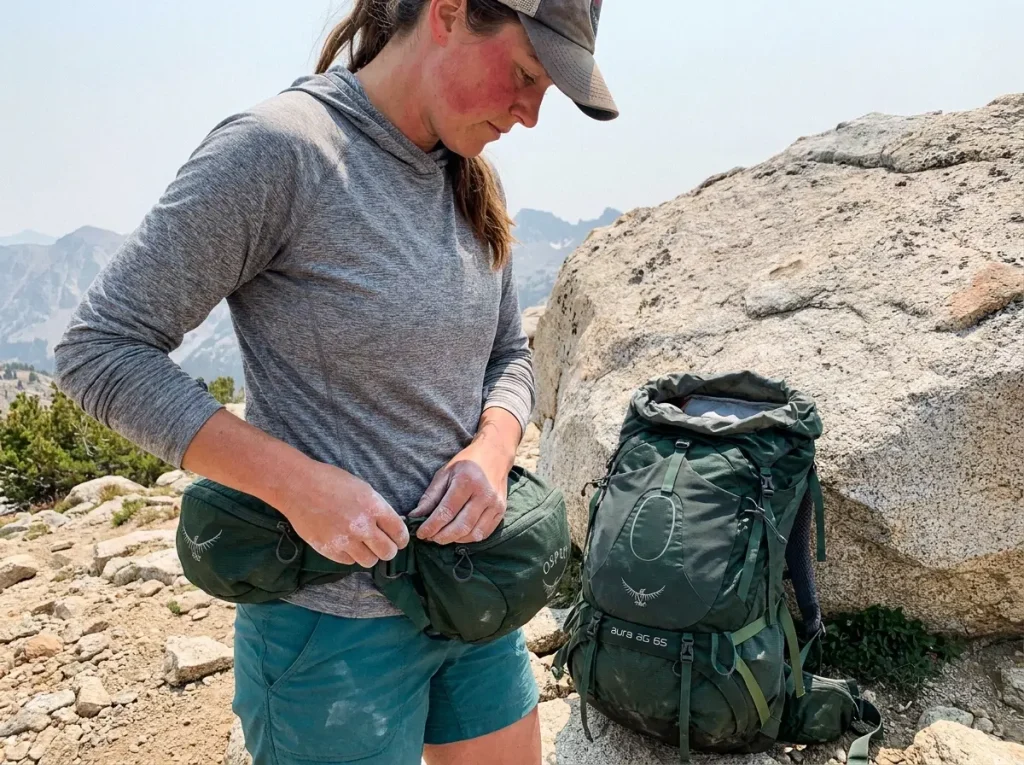
Here’s the trick almost nobody uses. On a lot of premium packs, the lid fully detaches and clips around your hip belt as a fanny pack conversion. That hip belt conversion lets you leave the heavy pack at camp and bag the peak with just the lid riding your waist. The Osprey Atmos AG 65 (men’s) and Osprey Aura AG 65 (women’s) build this in: the detachable lid pops off with the supplied quick-release buckles, and a panel called the FlapJacket folds over the open collar so the pack still closes without it.
Be honest about the limits, though. Ask anyone who’s tried it for a full day out and they’ll tell you a detached lid rides sloppy and isn’t the comfiest setup. It shines for a two-to-four-hour side trip, not a ten-mile summit push. For that quick scramble above camp, though, having a summit pack you already paid for is hard to beat.
When you peel the lid off for a side trip, load it like a fanny pack, not a daypack: one extra layer, a snack, and your phone or camera. Stuff it past that and it sags off your hip belt and bounces. The hikers who love this trick keep it light on purpose.
Where the Lid Costs You
The bill comes due in weight. A full lid runs roughly 4 to 6 ounces of fabric, padding, and hardware. Strip it off and you pocket that savings for free, which is exactly why gram-counters and self-described ounce weenies yank theirs at home. There’s also snag risk and strap fiddle: more buckles to manage, and a tall lid can catch on brush or rock when the terrain gets tight.
If you want the loaded end of the spectrum, the Gregory Baltoro 65 (men’s) and its sibling the Deva 70 (women’s) carry the most equipped lid on the market: a Double Barrel design with three zippered pockets plus a detachable SideKick daypack tucked in the front. It’s a brilliant organization system, and it weighs what you’d expect. Gregory builds packs for haulers who want every pocket, and you can see that philosophy across the full Gregory pack lineup. The trade is real ounces, so go in with eyes open.
The Roll-Top’s Real Strengths and Weaknesses
The roll-top won the ultralight market for reasons most pros-and-cons lists never explain. It’s not just about saving weight, though it does that.
Why Ultralight Brands Went All-In
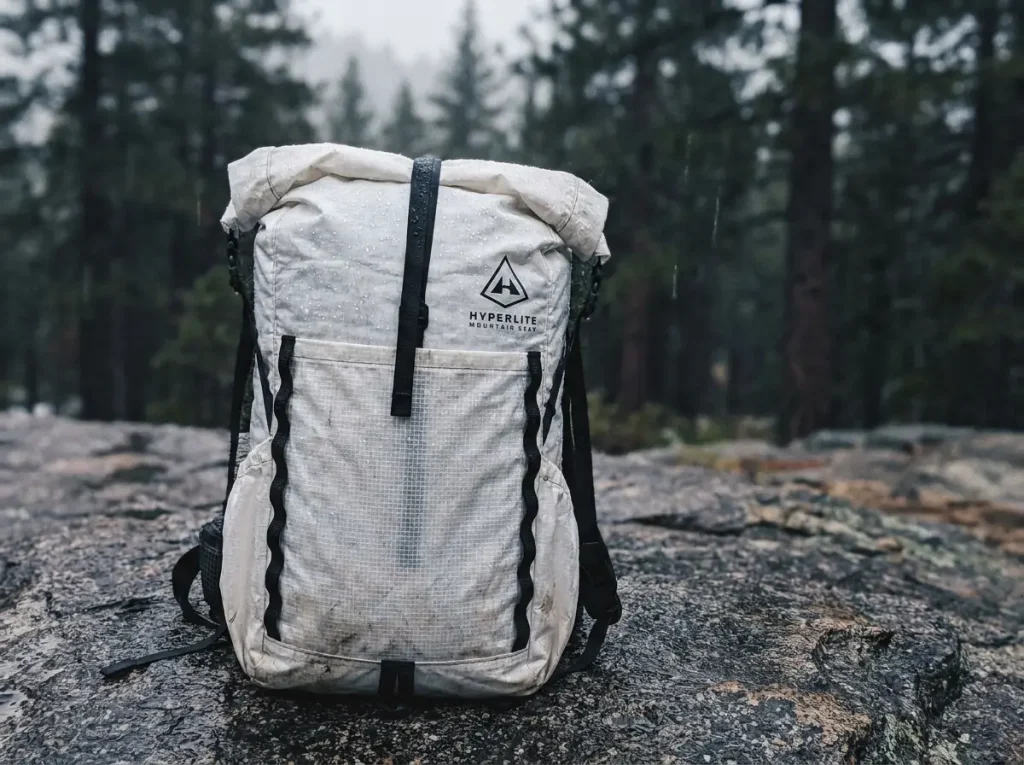
Here’s the part competitors skip. The ultralight shift to stiff laminate fabrics like DCF (Dyneema Composite Fabric, once sold as Cuben Fiber) and X-Pac broke the old drawcord closure. Those fabrics are rigid, and gear designers point out that a drawcord can’t actually cinch them shut.
You haul on the cord with everything you’ve got and a noticeable gap stays open at the top. The fabric won’t collapse the way soft nylon does.
A roll-top is the only closure that seals a fabric that stiff. The same rigidity that defeats a drawcord is what lets the material hold a clean, tight fold. So when brands moved to these laminates for the weight and water resistance, the roll-top came along as the only closure that worked.
Brands like Hyperlite Mountain Gear and Zpacks now build their whole lineups around DCF fabric for exactly this reason. The Hyperlite Mountain Gear Southwest 55 is the pure example: a DCF body with a roll-top and zero zippers on the main bag.
Fewer zippers is a quiet durability win, too. Zipper failure on the main compartment is one of the first things to go wrong on a hard-used pack, and it’s a common reason packs get retired, as we cover in the signs your backpack is done. A roll-top removes that failure point entirely.
Volume That Shrinks With Your Food
This is the roll-top benefit nobody mentions at purchase. As you eat down the food bag over a multi-day trip, you roll the top further each morning. By day five a 60-liter pack settles onto your hips like a 45-liter, instead of staying a half-empty sail flopping around on your back.
That volume management is a genuine edge on thru-hiking and long routes where the load drops daily. The silhouette stays clean, nothing snags, and the fold itself creates a sealed seam that sheds water.
The Single-Barrel Problem
The cost is access. One opening, one chamber means the headlamp at the bottom is a full unpack away. Mid-trail retrieval is slow, and you get fewer dedicated outside pockets than a lidded pack hands you. New roll-top owners often dump the whole bag on the ground every night just to find one item.
The fix is a stuff sack system, and it works well once you commit to it. A roll-top user can also claw back the grab-often storage a lid would have provided with good hip belt pockets that actually clip on for the small stuff.
Color-code your stuff sacks and a roll-top stops feeling like a bottomless pit. The system hikers keep recommending: red for the stove and kitchen, blue for food, yellow for toiletries, green for electronics. You stop excavating and start grabbing the right color.
The Hybrid Option Nobody Tells You About
The whole lid-versus-roll-top framing is a bit of a false choice. A growing class of packs gives you both, and there’s a third closure type most comparisons forget entirely.
Roll-Top Body, Removable Lid
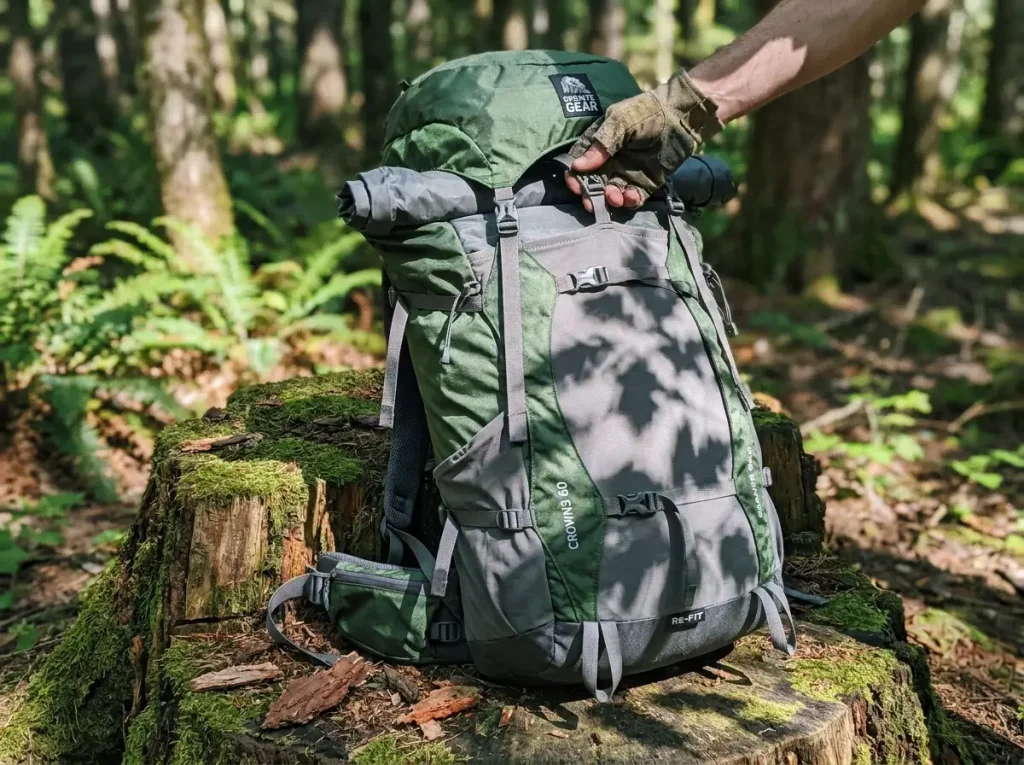
Some packs roll shut at the top and add a removable top lid for organization. Keep the lid on for weekend trips when you want the pockets, strip it for fast-and-light when you don’t. The Granite Gear Crown3 60 is the clean example: a roll-top main bag, a fully removable lid, and a detachable Re-Fit hip belt, all at around 2 pounds 6 ounces.
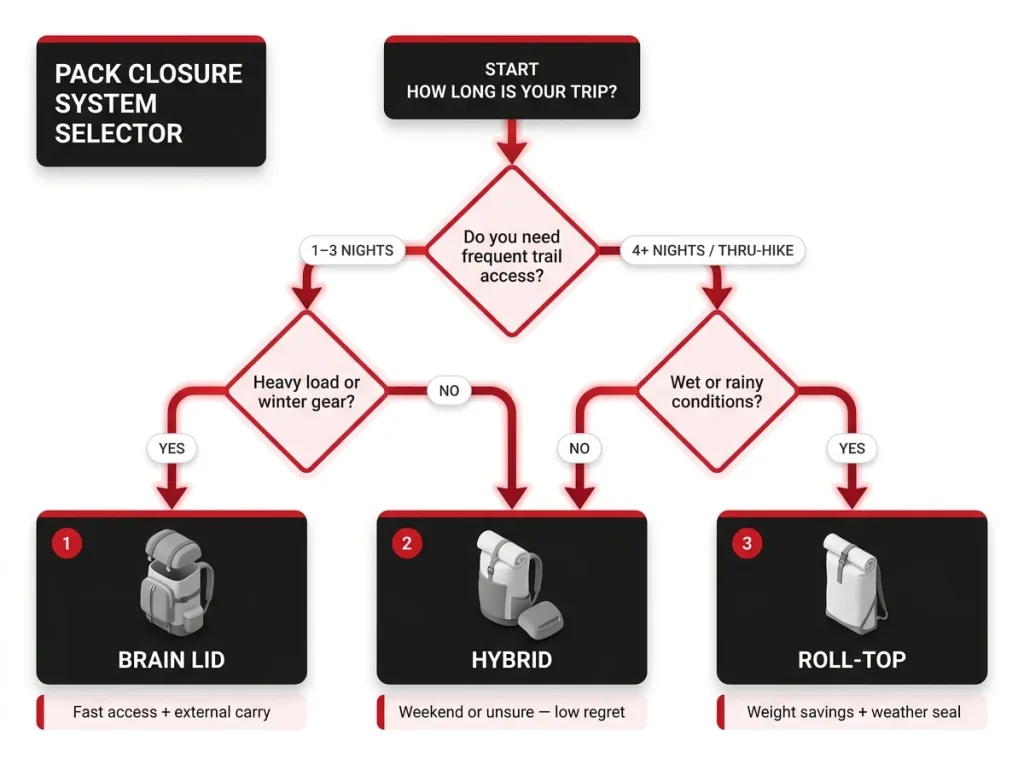
You can run the Crown3 in either configuration depending on the trip, which is the point. If you’re a beginner who isn’t sure which camp you fall into yet, a hybrid is the low-regret pick.
The Forgotten Third Type: Drawcord Plus Lid
Before laminates took over, the classic build was a soft-fabric main bag with a drawcord closure and a floating lid on top. Older ULA Circuit and Gossamer Gear packs still run this drawcord-and-lid build, sometimes called a stovepipe top, and it genuinely splits the difference: the soft fabric cinches down fine, and the lid gives you organization.
It faded for one reason. It only works with softer fabrics, and the industry’s move to stiff laminates pushed nearly everyone to roll-tops. If you find a drawcord-and-lid pack you like, there’s nothing wrong with it.
How to Choose for the Trips You Actually Take
Every other article ends on “it comes down to preference.” That’s a cop-out. The decision actually breaks down pretty cleanly by the kind of trips you do.
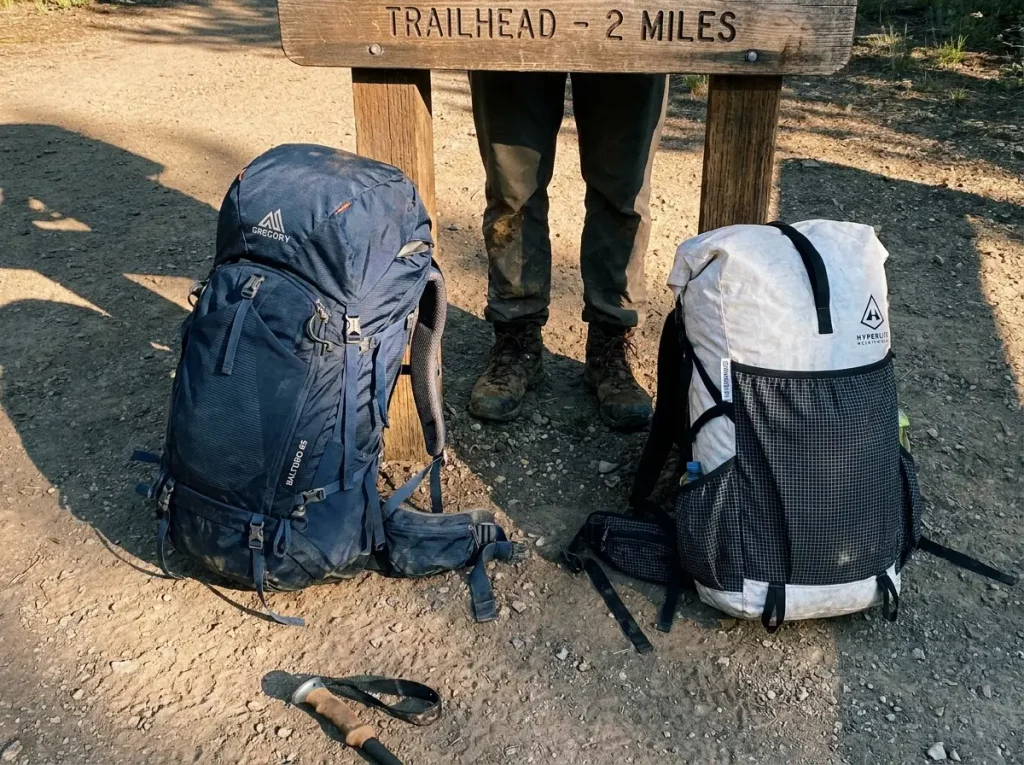
Reach for a brain lid when your trips run one to three nights and you’re into the pack constantly for layers, snacks, a camera, or sunglasses. The same goes for heavy winter loads. When you overstuff a pack with a bulky sleeping bag and an extra puffy, the floating lid seals down over a bulging collar where a roll-top physically can’t reach. Beginners who like compartments and knowing where everything lives also tend to be happier with a lid.
Reach for a roll-top when your trips run four-plus days or you’re thru-hiking, because the food weight drops daily and the rolling volume tracks it. The same goes for wet, zipper-stressing conditions: sustained PNW rain, repeated waterproof backpack abuse, river crossings. The sealed fold and zipper-free body just hold up better. And if you count grams, the roll-top wins on weight every time.
Honestly, closure type is only one piece of the puzzle, and it sits inside the bigger pack selection question of fit, capacity, and frame covered in the full guide to choosing a hiking backpack. The food-weight argument in particular ties straight into how many liters you actually need for overnight versus weekend trips, since a pack that adjusts its own volume changes the math on what size to buy.
Roll-Top Waterproofing The Technique Most People Get Wrong
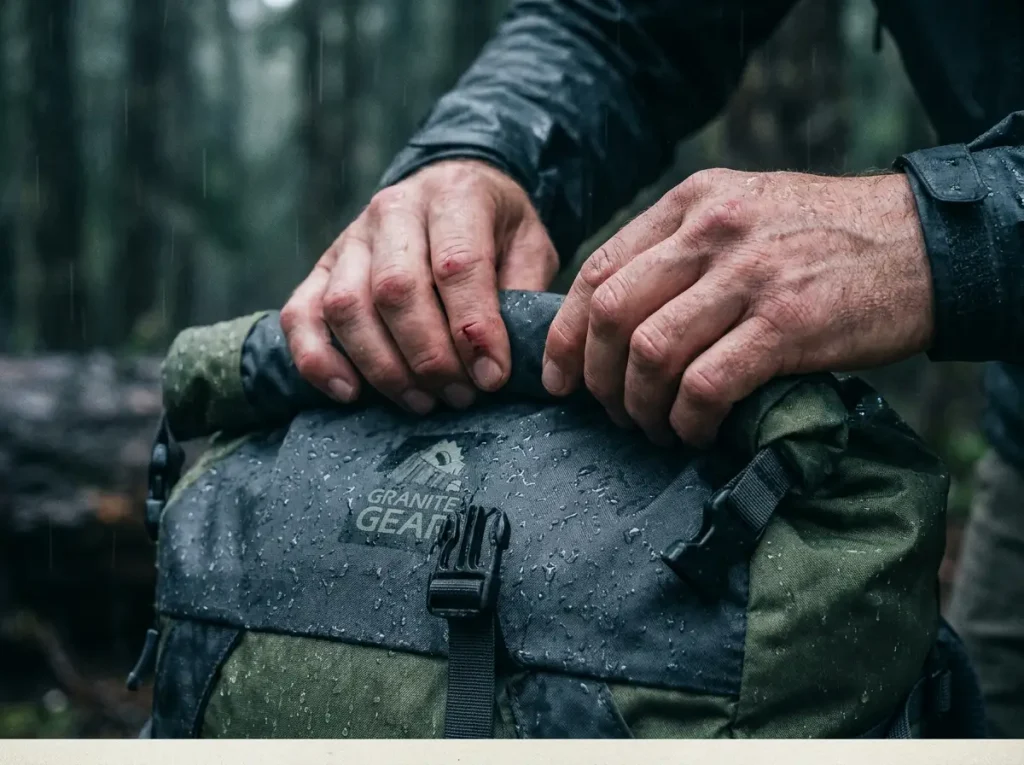
“Roll-tops are waterproof” is half-true, and the missing half is where people get burned. A roll-top is only as sealed as your roll technique, and most hikers do it wrong without realizing it until their wet sleeping bag tells them at camp.
The mistake is two quick folds and a clip. Two folds leave a seam the rain wicks straight through in sustained weather. The rule is a minimum 3 rolls, and three to five in hard rain.
You also need at least 4 inches, roughly 10 centimeters, of empty collar fabric above your gear to form the seal. Overstuff the pack so there’s no slack to roll, and the seal fails every single time. That’s the part nobody explains: a roll-top is only waterproof if you leave it room to roll.
Buckle technique matters more than it looks. Clip the buckle inward across the body of the pack, not just tab-to-tab at the sides. The gap between the two tabs is an open water channel right at the top of your gear, and clipping across the body closes it.
Treat all of this like it matters, because the stakes aren’t just comfort. A soaked insulation layer at eight miles in is a fast path to hypothermia, since your body loses heat far faster when your gear is wet, and that hypothermia risk is real, not a gear-nerd worry. Even a perfectly sealed roll-top isn’t submersion-proof either, so pair it with a liner for river crossings and storms. That closure technique is one layer of the full system for keeping a pack’s contents dry, not the whole answer on its own.
Test the roll on your living room floor before it counts. Load the pack the way you’d load it for a real trip, then see if you can still get three full rolls with room to spare. If you can’t, your gear list is too big for that pack, and you’d rather learn it at home than in the rain.
The Bottom Line
The closure on your pack isn’t a matter of taste, it’s a match between fabric, features, and the trips you actually take. Brain lids buy you fast access, external carry, and a hidden summit pack; roll-tops buy you weight savings, weatherproofing, and volume that shrinks with your food. And if you run a roll-top, the three-roll rule is non-negotiable, not optional.
So go pull whatever pack you already own off the hook. Find its closure, load it for real, and pressure-test it on your next overnight, before a trip you’ve waited all year for is the day you find out it leaks.
Frequently Asked Questions
01What is a brain lid on a backpack?
A brain lid is the padded, zippered pocket that floats on top of a pack, secured by adjustable straps over the main compartment. Hikers also call it the top lid. It holds grab-often items like a headlamp, snacks, and a map.
02Is a roll-top backpack actually waterproof?
Mostly water-resistant, not submersion-proof. A roll-top seals well with at least three full rolls and enough empty collar fabric, but two quick folds let rain wick through the seam. For river crossings, add a pack liner.
03Can you remove the top lid from an Osprey backpack?
Yes, on many models. Packs like the Atmos and Aura AG let the lid detach and clip to your hip belt as a summit pack, and a built-in FlapJacket panel covers the collar so the pack still closes without it.
04Which closure is better for thru-hiking?
Most thru-hikers run roll-tops. They save weight, shed water, and shrink down as the food bag empties through a resupply stretch. The single-barrel access is the trade-off, which a color-coded stuff-sack system solves.
05Are roll-top backpacks lighter than top-lid packs?
Usually yes. A full brain lid adds roughly 4 to 6 ounces of fabric and hardware. Many lidded packs let you remove the lid to split the difference, dropping most of that weight while keeping the pack usable.
Risk Disclaimer: Hiking, trekking, backpacking, and all related outdoor activities involve inherent
risks which may result in serious injury, illness, or death. The information provided on The Hiking Tribe is for
educational and informational purposes only. While we strive for accuracy, information on trails, gear, techniques,
and safety is not a substitute for your own best judgment and thorough preparation. Trail conditions, weather, and
other environmental factors change rapidly and may differ from what is described on this site. Always check with
official sources like park services for the most current alerts and conditions. Never undertake a hike beyond your
abilities and always be prepared for the unexpected. By using this website, you agree that you are solely
responsible for your own safety. Any reliance you place on our content is strictly at your own risk, and you assume
all liability for your actions and decisions in the outdoors. The Hiking Tribe and its authors will not be held
liable for any injury, damage, or loss sustained in connection with the use of the information herein.
Affiliate Disclosure: We are a participant in the Amazon Services LLC Associates Program, an
affiliate advertising program designed to provide a means for us to earn advertising fees by advertising and linking
to Amazon.com. As an Amazon Associate, we earn from qualifying purchases. We are also an official affiliate partner
of Black Diamond Equipment via the AvantLink network. If you click on a Black Diamond affiliate link and make a
purchase, we may earn a commission at no additional cost to you. We also participate in other affiliate programs and
may receive a commission on products purchased through our links. Additional terms are found in the terms of
service.