

In this article
Walk into any outfitter and someone will steer you toward a rain cover for your pack. But the gear that actually keeps your sleeping bag dry in an all-day soaker costs about a dollar, weighs less than a candy bar, and rides on the inside. Ask most thru-hikers what they trust and the answer is the same: the pack liner does the heavy lifting, and the rain cover is a situational backup at best. So let’s settle the pack liner vs rain cover question for good, what each one is, which keeps your gear drier, the budget pick that beats both, when a cover still earns a spot, and how to pack so nothing inside ever gets wet.
Here’s the short version before we dig into the why and the how.
| What Matters | Pack Liner | Rain Cover |
|---|---|---|
| Where it goes | Inside the pack, around your gear | Over the outside of the pack |
| What it protects | Your gear (sleep system, insulation) | The pack’s outer fabric |
| Weight | About 1 to 2 oz, no hardware | Heavier, gains water weight when wet |
| Wind and wet ground | Sealed inside, unaffected | Lifts in wind, useless from below |
| River crossing | Real protection if sealed right | Almost none |
| Best for | Keeping the gear that matters dry | Quick showers, dust, pack fabric |
What a Pack Liner and a Rain Cover Actually Are
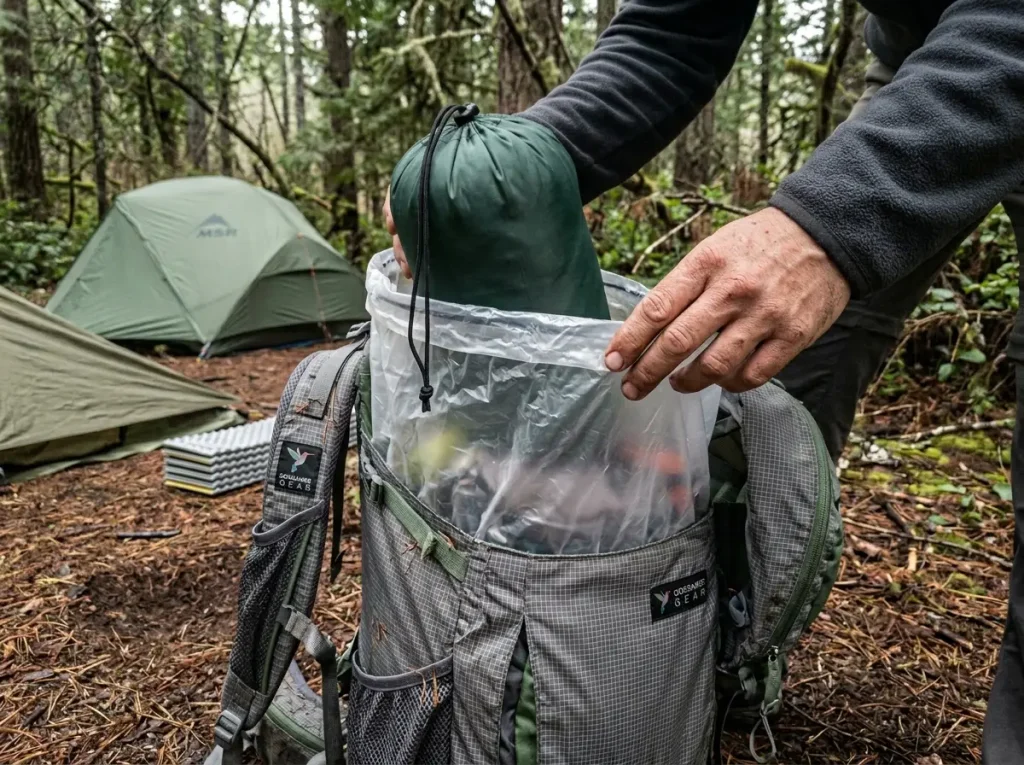
Before we argue about which one wins, here’s what each piece of gear actually does, because half the confusion comes from people picturing the wrong thing.
A Pack Liner Goes Inside Your Pack
A pack liner is a waterproof bag that drops inside your backpack’s main compartment. You pack your gear into it, then roll the top down and seal it shut. Everything lives inside a dry bubble, and the pack itself is just the frame and fabric carrying it. Most people have never seen one in action because it hides inside the pack, doing its job out of sight.
A Rain Cover Goes Over the Outside
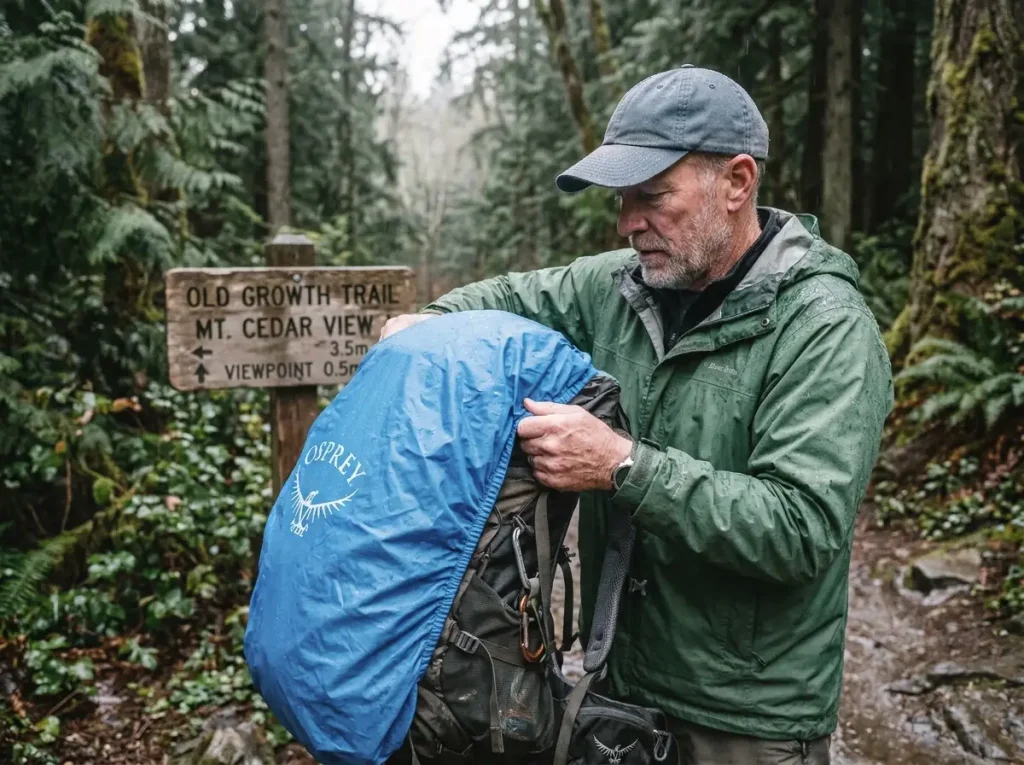
A rain cover (some brands call it a pack cover) is the elastic, cinch-fit shell you stretch over the outside of a loaded pack, like a shower cap for your backpack. It’s the method you’ve seen on trail, the bright shaped cover that comes folded into a lot of store display models. It sheds rain off the top of the pack and looks reassuring. Looking reassuring and keeping your gear dry, it turns out, are two very different things.
What Each One Actually Protects
Here’s the distinction that settles most of the debate: a cover tries to keep the pack dry, while a liner keeps your gear dry. Those are not the same goal. The stuff that has to stay dry is your sleeping bag or quilt and your insulation, and a soaked down bag isn’t just a miserable night. In cold, wet conditions it’s a genuine hypothermia risk, and guides like Andrew Skurka warn that down can soak up enough overnight moisture to threaten your warmth the next night. Keep that one fact in your head and the rest of this gets easy. If you want the bigger picture, we cover the full rundown on waterproofing your hiking backpack separately, but the liner-versus-cover call is the heart of it.
Pack Liner vs Rain Cover, Head to Head
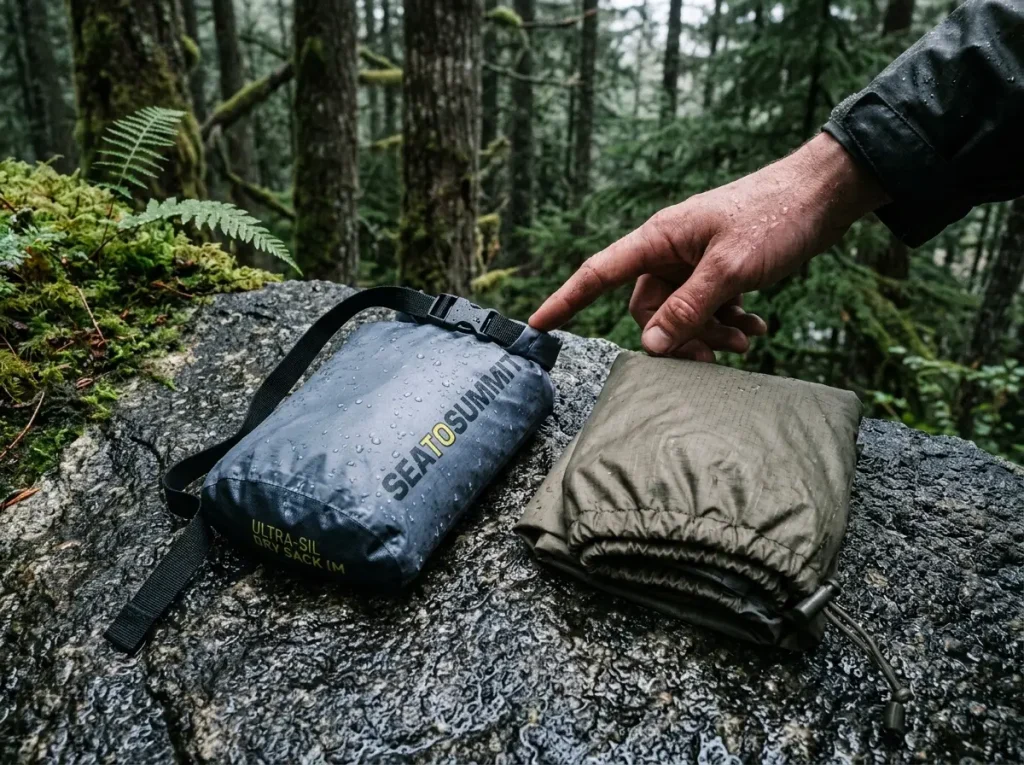
You know what each one is. Now the honest comparison, the kind your hiking buddy gives you instead of a shrug and an “it depends.”
Where the Water Actually Gets In
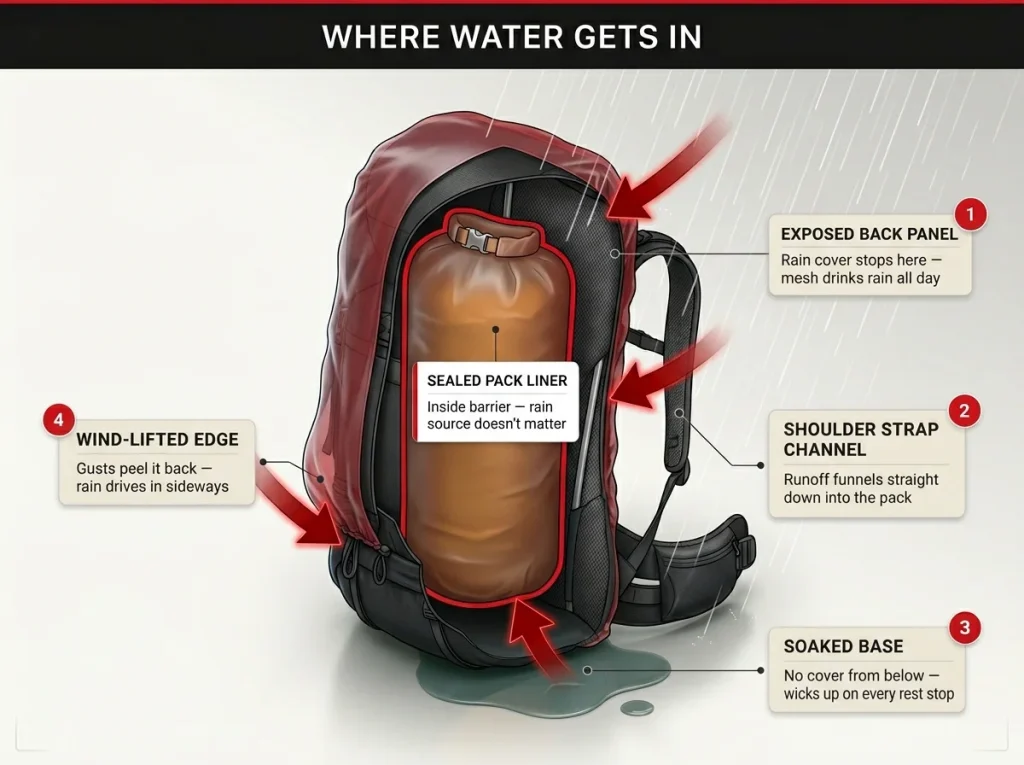
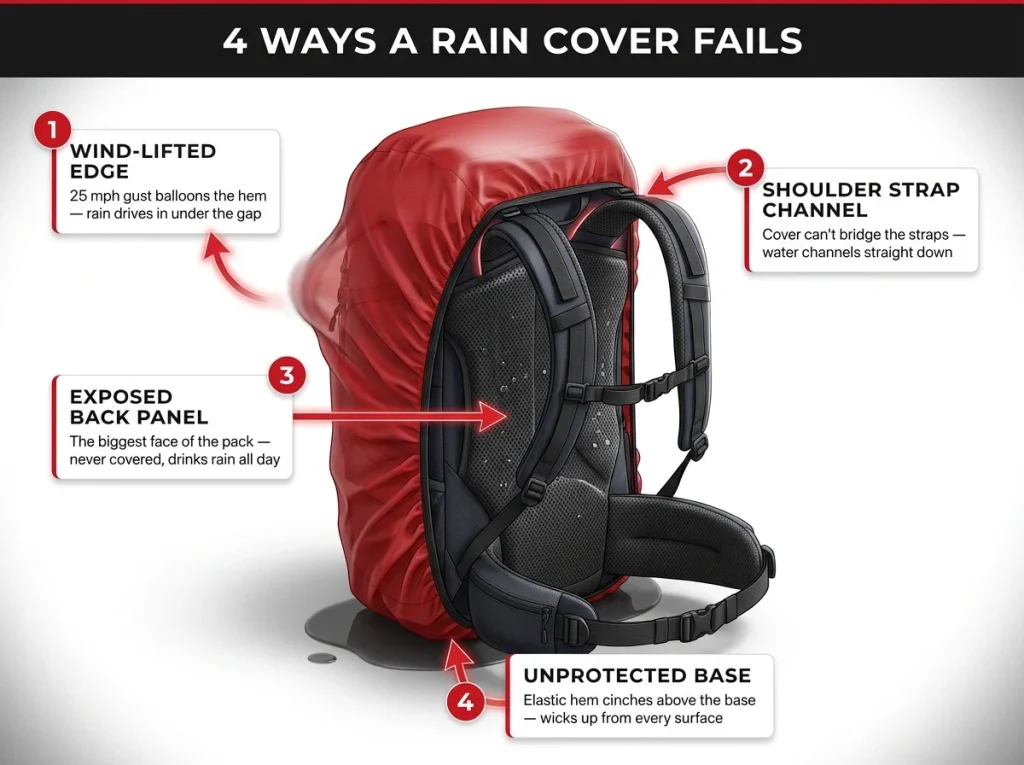
A rain cover sheds water off the top of your pack, and that part it does fine. The trouble is everywhere else. The back panel riding against your spine stays exposed, the channels behind your shoulder straps funnel water straight down into the pack, and the bottom soaks up whatever it sits on. A liner doesn’t care where the water comes from, because the seal is on the inside and the weather stays on the wrong side of it.
Weight, Cost, and Day-to-Day Convenience
A liner adds an ounce or two and nothing to fuss with. A cover adds straps and clips, and once it wets out it carries water weight of its own, so you finish a wet day hauling extra ounces of soaked fabric. Where the cover wins is speed: for a ten-minute shower you can see rolling in, snapping a cover on beats digging into a sealed liner. That’s the real tradeoff, convenience traded for reliability.
The One-Line Verdict Most Thru-Hikers Agree On
If you only carry one, carry the liner. That’s the consensus on long trails like the Pacific Crest Trail (PCT), and it holds up because the liner solves the problem the cover only half-solves. Watch all three waterproofing methods side by side, the rain poncho, the cover, and the liner, and the difference is obvious: a cover flaps and exposes straps while a liner quietly seals the gear inside.
The Trash Compactor Bag That Beats a Pricey Cover
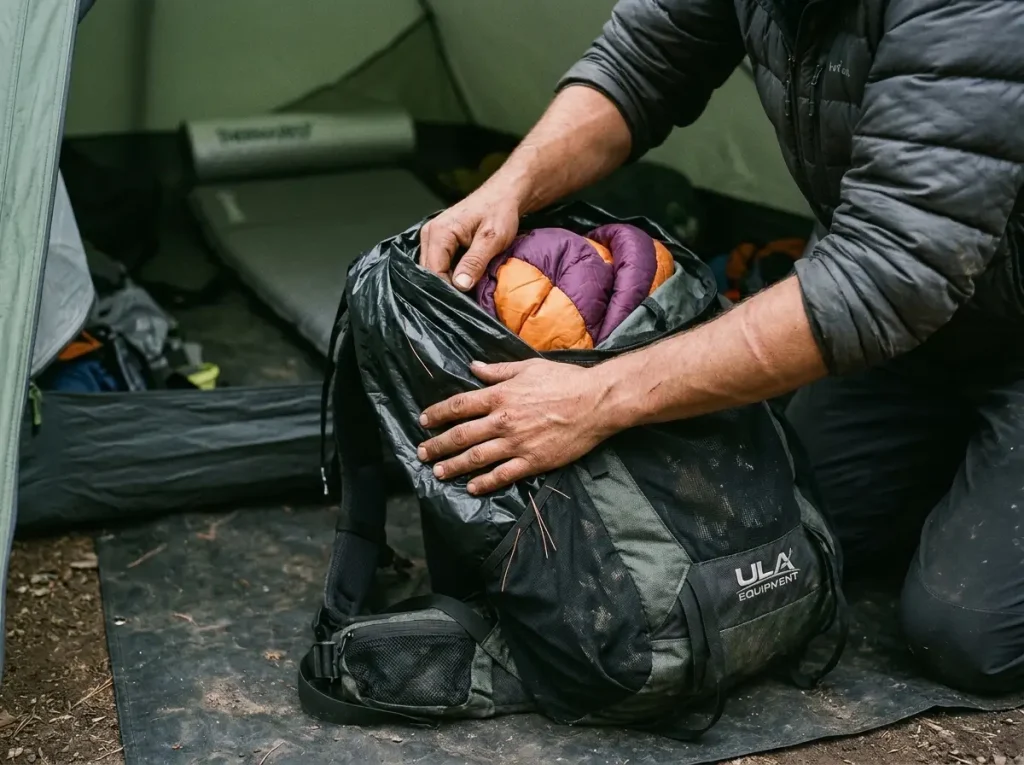
Here’s the part the gear shops won’t lead with. Before you spend real money on a cover, know that a big chunk of the thru-hiking world keeps their gear dry with something that costs pocket change and already lives in a kitchen drawer.
Why a Compactor Bag, Not a Kitchen Garbage Bag
A trash compactor bag is the unofficial ultralight standard, and it’s not the same thing as a regular garbage bag. Compactor bags are built to hold trash crushed under real pressure, so they shrug off the pinholes and tears that wreck standard “heavy duty” kitchen bags a few days into a trip. That difference matters: a kitchen bag that splits at the seam at mile thirty is worse than no liner at all, because you trusted it. The Hefty Compactor Heavy-Duty Trash Bags in the 18-gallon size are the easy pick, and if you’d rather grab Glad, make sure you get their actual compactor bag and not the ForceFlex kitchen bags, which are a flimsier, different product entirely.
How a Dollar Bag Stacks Up Against a Pricey Cover
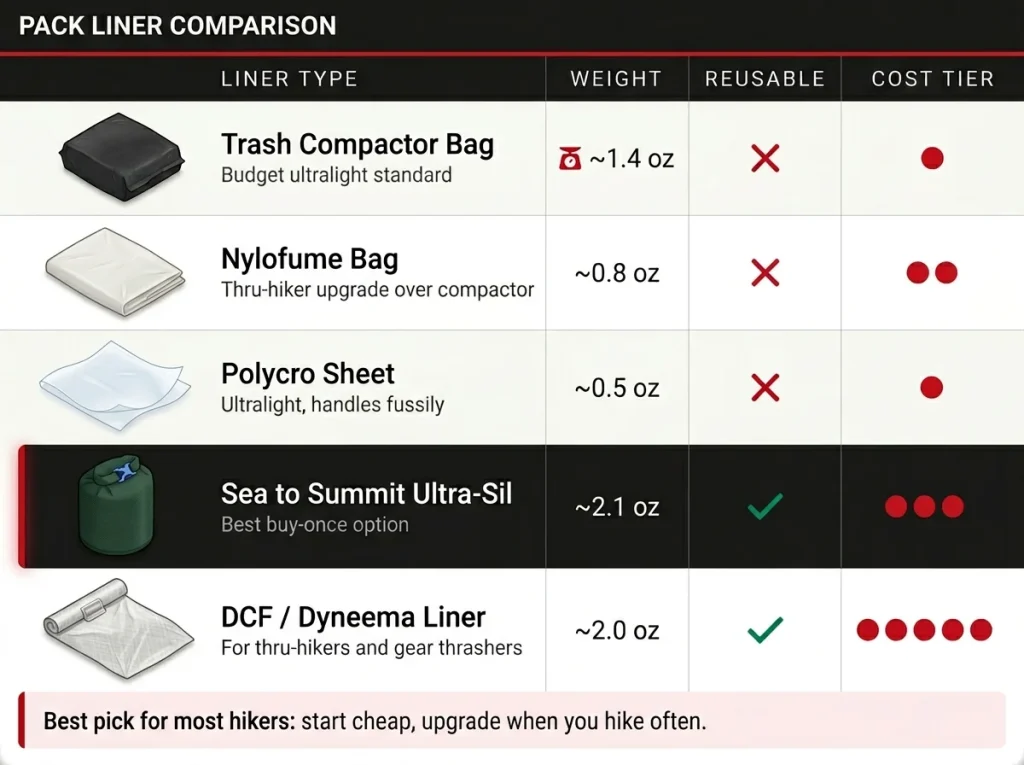
A compactor bag weighs roughly an ounce and a half, costs about a dollar, and protects the gear that matters as well as a cover many times its price. It’s the budget alternative the ultralight backpacking crowd actually trusts, and it barely registers on your pack weight. It goes inside, so it never catches wind, never wets out, and never soaks up water weight. This is the same don’t-waste-money thinking that goes into choosing the pack itself: spend where it counts and skip the hype where it doesn’t. For most weekend trips and plenty of long ones, the dollar bag is genuinely the right answer, not a sad compromise you apologize for.
A compactor bag earns its weight twice. Turn it inside out at camp and it’s a clean ground sheet to sort gear on, and stuffed tight it doubles as a pack-shaped compression sack. You carried it anyway, so put it to work, then pack it out when it finally tears, the Leave No Trace way.
The Catch, and What a Trash Bag Will Not Do
The honest catch is that a trash bag is disposable. It will eventually tear, the top is fiddlier to seal cleanly than a purpose-built closure, and you’ll swap it out every handful of trips. That’s fine if you treat it as the cheapest place to start rather than the last word. If you find yourself reaching for the same roll of compactor bags trip after trip, that’s your signal to look at a reusable liner, which is exactly where we’re headed next.
Where a Rain Cover Falls Short
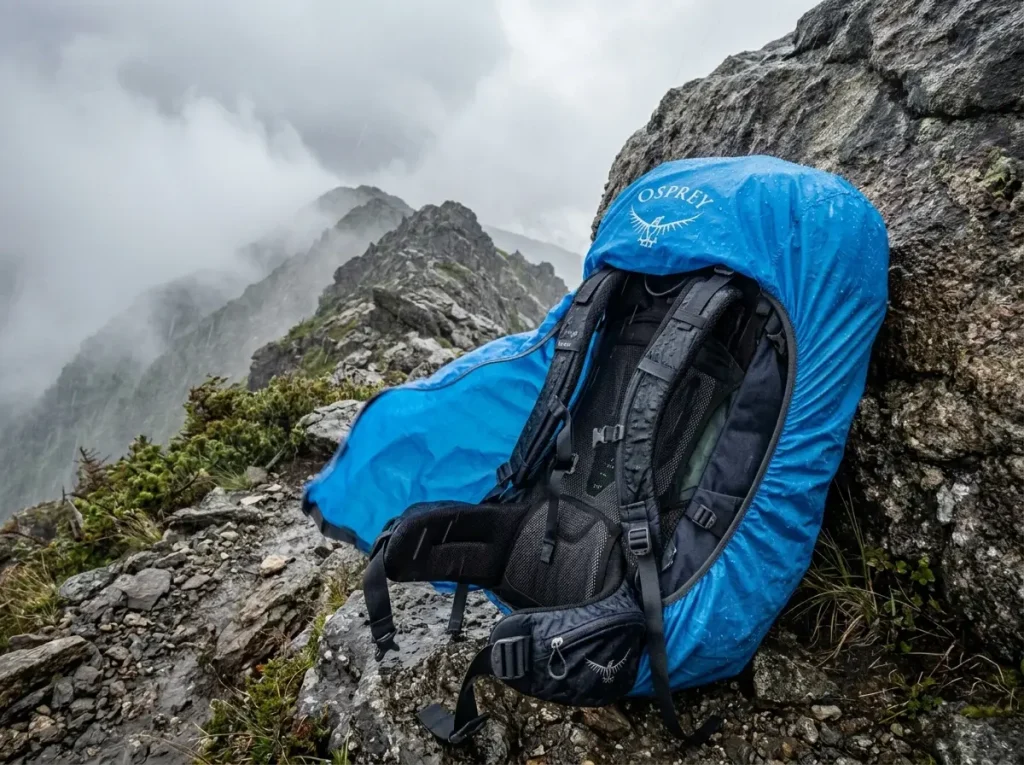
None of this means a cover is junk. It means you should know exactly where it quits, so you’re not the hiker standing in a downpour wondering why the inside of the pack is wet.
Wind Turns It Into a Kite
The first time a real gust hits, a cover stops being a cover. A gust around 25 mph (40 km/h) lifts the edge and balloons it, exposing the seams, zippers, and shoulder straps underneath, while wind-driven rain drives sideways straight in along the fabric. It always seems to happen at the worst moment, on an exposed ridge when the storm is at its hardest. That’s the scene people remember: cover on, feeling smart, then watching it peel back like a kite.
Wet Ground, Snow, and the Soaked Back Panel
A cover also does nothing from below. Set your pack down at a rest break on wet ground or snow and water wicks up from the bottom. The back panel against your spine never had a cover over it in the first place, so it drinks water all day. And in a long storm the cover’s own coated silnylon or ripstop nylon wets out, meaning the coating stops repelling and the shell starts absorbing, right when you needed it most.
Sizing, the Number One Reason Covers Leak
The single most common cover failure is fit. Too big and it catches wind like a sail; too small and the corners and base stay exposed. A cover only works when it’s sized to your pack’s actual volume, loaded, with gear strapped on. Get the size wrong and even a good cover leaks, which is a frustrating way to learn that fabric quality was never the whole story.
Liner Materials and Weight, From Trash Bag to Dyneema
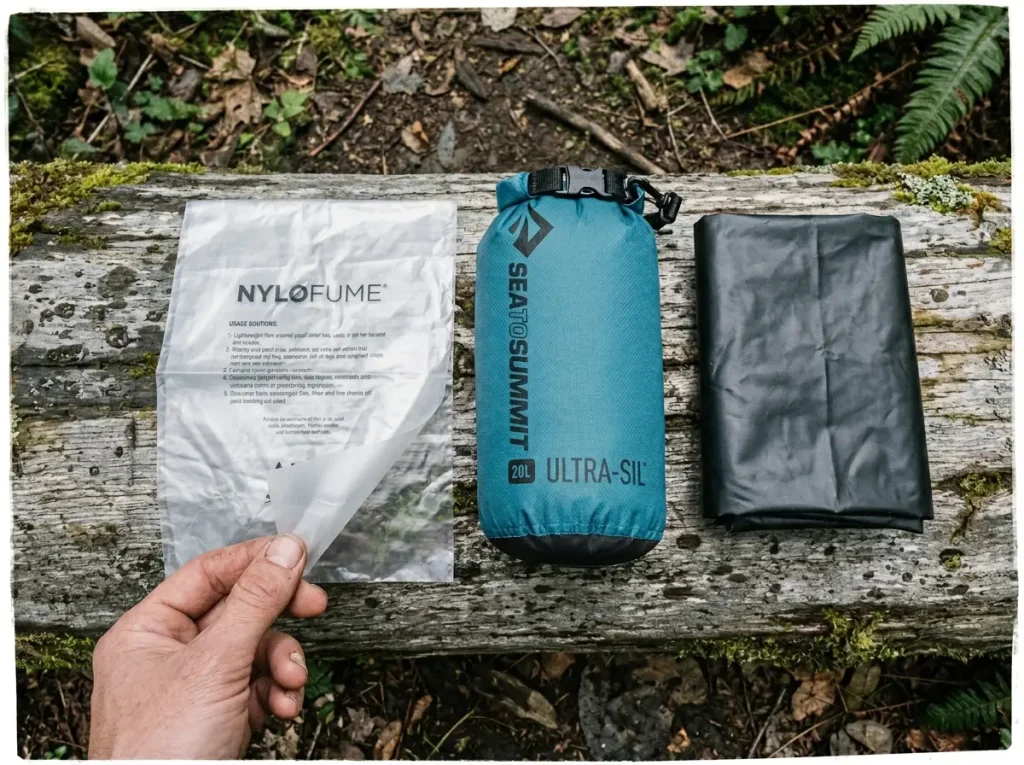
Once you decide the liner is doing the real work, the only question left is which one. Here’s the ladder, from a dollar to a splurge, and where most people should get off it.
The Lightweight Workhorses
The featherweight champions are thin, tough films that barely register on a scale. A Nylofume liner runs under an ounce, lighter than almost anything, and far tougher than a kitchen bag for the same near-zero weight. The Nylofume Pack Liner Bags are the thru-hiker’s standard upgrade over a compactor bag, the same idea with more puncture resistance and a longer life. Polycro is another ultralight option in the same spirit, cheap and light if a little fussy to handle.
The Reusable Upgrades
If you’d rather buy once and forget it, a purpose-built liner is worth the money. The Sea to Summit Ultra-Sil Pack Liner is shaped like your pack, made from 30D Cordura nylon (the D stands for denier, a measure of how thick the fabric is), and closes with a roll-top closure and buckle that seals far more cleanly than a twisted trash bag. At the top end, Dyneema Composite Fabric (DCF) liners are nearly bombproof and run around a couple of ounces, but you pay for that in dollars, not grams, and most hikers genuinely don’t need it. Buy the Dyneema if you thrash your gear or thru-hike for months; otherwise it’s more liner than you need.
What Actually Matters When You Pick One
Strip away the brand talk and three things decide it: weight, durability, and whether you’ll actually reuse it. A weekend hiker who gets out a few times a year is well served by a compactor bag. Someone out most weekends saves money over time with a reusable liner. The best pack liner is not the priciest one; it’s the waterproof pack liner you’ll actually reuse, matched to how hard, and how often, you hike.
Do You Actually Need Both
The honest answer for most hikers is no. Pick a liner and you’ve solved the problem the cover only half-solves. But there’s a real short list of times a cover earns its keep, so let’s be fair to it.
When the Liner Alone Is Plenty
For the vast majority of trips, a liner by itself is the whole answer. Day hikes, weekend overnights, normal rain: the gear that matters stays sealed and dry, and there’s nothing flapping in the wind to fail. If you’re starting from zero and want one purchase that stops the worrying, make it the liner and stop there. Stacking a cover on top of a good liner is, for most people, solving a problem they don’t have.
When a Rain Cover Still Earns Its Place
A cover does have honest uses. It keeps your pack’s outer fabric and foam back panel from soaking up water weight on long, sustained-rain days, which is a real comfort over a week. It shields the pack from trail dust, abrasion against rock, and tree sap, and it goes on and off fast in a passing shower without opening your pack. It also gives the pack some breathability, sidestepping the muggy condensation that can build up inside a fully sealed liner. If those match your trips, the Osprey Ultralight Raincover is a sensible pick: a light 40D ripstop nylon shell that packs into its own pocket and deploys fast. Just buy it knowing what it is, a situational helper, not your main defense.
Keep the cover stowed in an outer pocket, not buried inside. It’s your grab-and-go for a shower you can see coming, while the liner stays in permanently as the real barrier. Two tools, two jobs, and you never have to unpack to deploy either one.
The Layered Setup for Serious Storms
For multi-day trips in serious, sustained rain, running both makes sense: liner inside as the real barrier, cover outside to keep the pack from gaining water weight. That’s a deliberate choice for hard conditions, not a default everyone needs. And it’s worth knowing the whole menu before you buy, because others skip pack rain gear and fight the weight debate a different way, with a trekking umbrella or a rain regime of their own.
How to Pack So Everything Stays Dry
This is the part competitors skip, and it’s the part that actually keeps your gear dry. A liner you pack wrong is just an expensive bag. Here’s the system.
The Pack-It-Right Map
Think in three zones. The liner holds the must-stay-dry gear: your sleep system and insulation, the things that turn a bad night into a real problem if they get wet. The wet and don’t-care items, the tent fly that’s already soaked and your dirty socks, go outside the liner, often in exterior pockets or lashed to the outside of the pack where they can drip without touching anything important. Electronics get their own small dry bag or stuff sack inside the liner, because one phone-soaking leak is enough. Sort it that way once and it becomes automatic.
Sealing the Liner for River Crossings
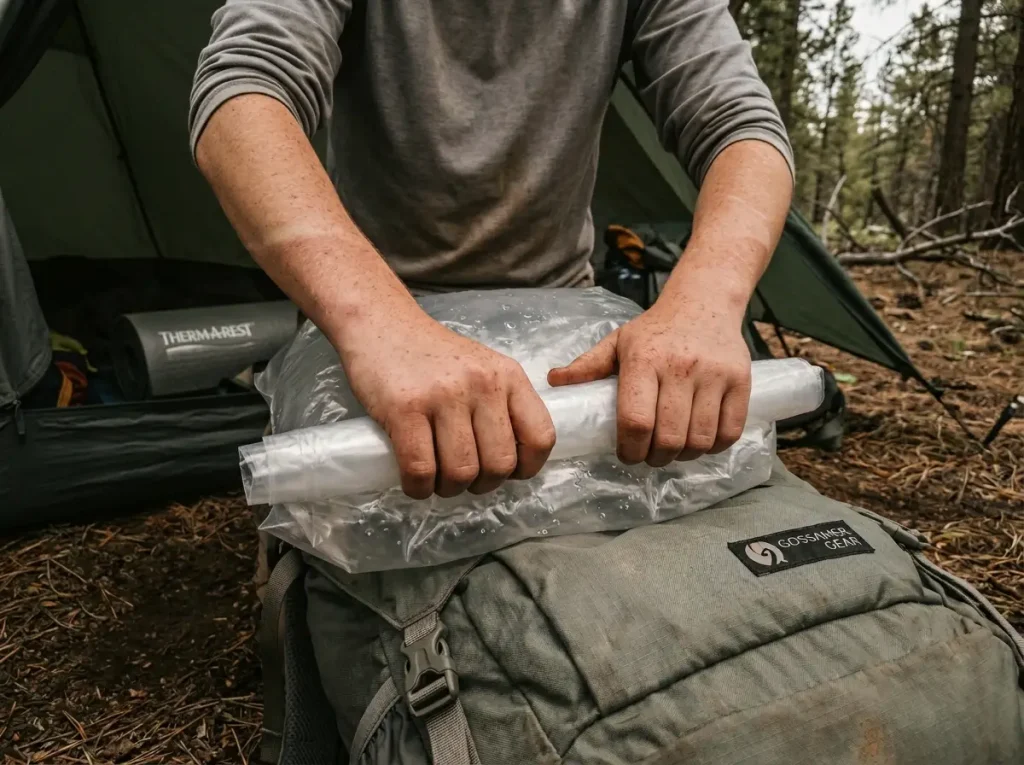
Sealing is what makes a liner waterproof, not the bag itself. Burp the air out, roll the top down on itself several times, then buckle or twist and tuck it. Done right, a liner is real submersion protection: hikers have crossed and even swum streams with a fully submerged pack and pulled out bone-dry gear, held shut by nothing more than a tied-off compactor bag. It’s the same roll-top closure idea that seals a pack’s main compartment, and the cover, for the record, does nothing for you here. Before you trust any river crossing, though, the gear is the easy part: follow the National Park Service’s water-safety guidance for fording creeks and turn back when the water tells you to.
The seal is in the roll, not the bag. Squeeze the air out first, then roll the top down at least three times before you buckle or twist it. Roll it down partway and you can wall wet gear off from dry, tossing the soaked fly on top while your sleep system stays sealed below.
The Condensation Trap Nobody Warns You About
Here’s the mistake nobody mentions: seal damp or sweaty gear inside a liner and it can stay damp, because the moisture has nowhere to go. The liner keeps outside water out, but it also keeps inside moisture in. Dry your gear before it goes in when you can, and roll the liner down partway to wall the wet items off from the dry ones instead of sealing everything into one humid bubble. This is the same reason a soaked sleeping bag is the real stakes here: keeping the sleep system dry is the difference between a cold night and a genuinely hazardous one.
The Bottom Line
A liner protects the gear that actually matters, while a cover only guards the pack’s shell, so if you carry one thing, carry the liner. The cheapest liner usually wins, too: a compactor bag worth pocket change outperforms a cover many times its price for most trips. And a cover is a situational add-on, not a default, worth keeping for passing showers, trail dust, and protecting your pack’s fabric on long wet hauls.
Before your next wet-weather trip, line your pack, seal the top, and tip a little water over it in the backyard. Better to find a pinhole at home than at nine thousand feet.
Frequently Asked Questions
01Do I need both a pack liner and a rain cover?
For most hikers, no. A pack liner alone keeps the gear that matters dry. Add a rain cover only if you want to protect the pack fabric from soaking up water weight on long, sustained-rain trips, or to shield it from dust and abrasion.
02Are backpack rain covers actually waterproof?
Only up to a point. Rain covers shed light and moderate rain, but the fabric wets out in a long storm, lifts in wind, and leaves the back panel and base exposed. In practice they are water-resistant, not waterproof.
03Can I use a regular garbage bag instead of a trash compactor bag?
In a pinch, yes, but regular kitchen garbage bags pinhole and tear under pack pressure. True trash compactor bags are built for compacted trash, so they last far longer for the same near-zero weight. The few extra cents are worth it.
04How much does a pack liner weigh compared to a rain cover?
Liners are featherweight. A Nylofume bag is under an ounce and a compactor bag about 1.4 ounces, with no straps or clips. A rain cover weighs more and gains extra water weight once it wets out.
05Do pack liners keep gear dry during river crossings?
Yes, if you seal them right. Burp out the air, roll the top down several times, and buckle or tie it. A properly sealed liner has kept gear dry through full submersion, something a rain cover cannot do at all.
Risk Disclaimer: Hiking, trekking, backpacking, and all related outdoor activities involve inherent
risks which may result in serious injury, illness, or death. The information provided on The Hiking Tribe is for
educational and informational purposes only. While we strive for accuracy, information on trails, gear, techniques,
and safety is not a substitute for your own best judgment and thorough preparation. Trail conditions, weather, and
other environmental factors change rapidly and may differ from what is described on this site. Always check with
official sources like park services for the most current alerts and conditions. Never undertake a hike beyond your
abilities and always be prepared for the unexpected. By using this website, you agree that you are solely
responsible for your own safety. Any reliance you place on our content is strictly at your own risk, and you assume
all liability for your actions and decisions in the outdoors. The Hiking Tribe and its authors will not be held
liable for any injury, damage, or loss sustained in connection with the use of the information herein.
Affiliate Disclosure: We are a participant in the Amazon Services LLC Associates Program, an
affiliate advertising program designed to provide a means for us to earn advertising fees by advertising and linking
to Amazon.com. As an Amazon Associate, we earn from qualifying purchases. We are also an official affiliate partner
of Black Diamond Equipment via the AvantLink network. If you click on a Black Diamond affiliate link and make a
purchase, we may earn a commission at no additional cost to you. We also participate in other affiliate programs and
may receive a commission on products purchased through our links. Additional terms are found in the terms of
service.