In this article
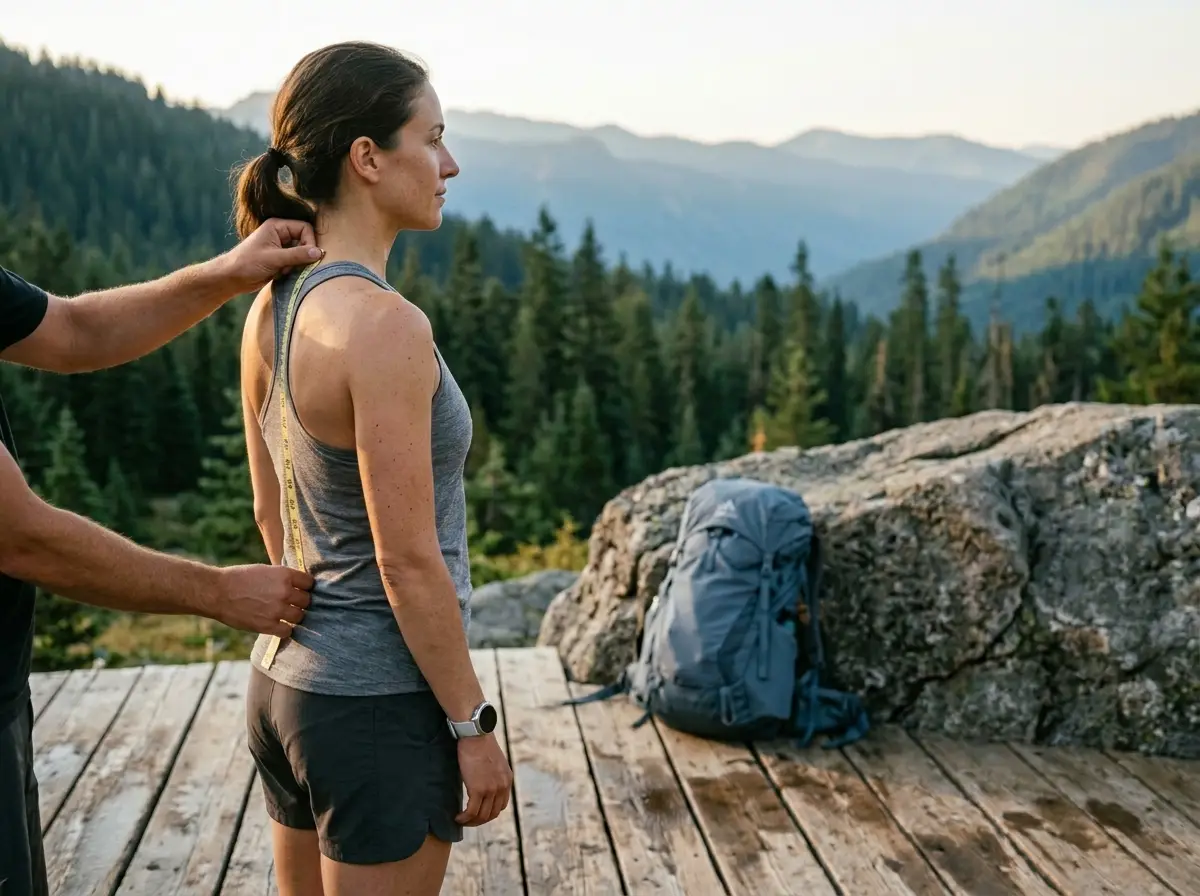
If your pack keeps sliding onto your shoulders no matter how hard you crank the straps, the strap isn’t the problem. The number underneath it is. Height doesn’t size a backpack; your torso length does, and the two have almost nothing to do with each other. Brand fitters and small-batch pack-makers all run the same simple measurement from one bony landmark to another, and once you know it, you can measure your torso length in about two minutes. This guide walks you through finding your landmarks, running the tape the right way, getting an accurate number even when there’s nobody home to help, and confirming the fit with real weight in the pack.
Why Torso Length, Not Height, Sizes Your Pack
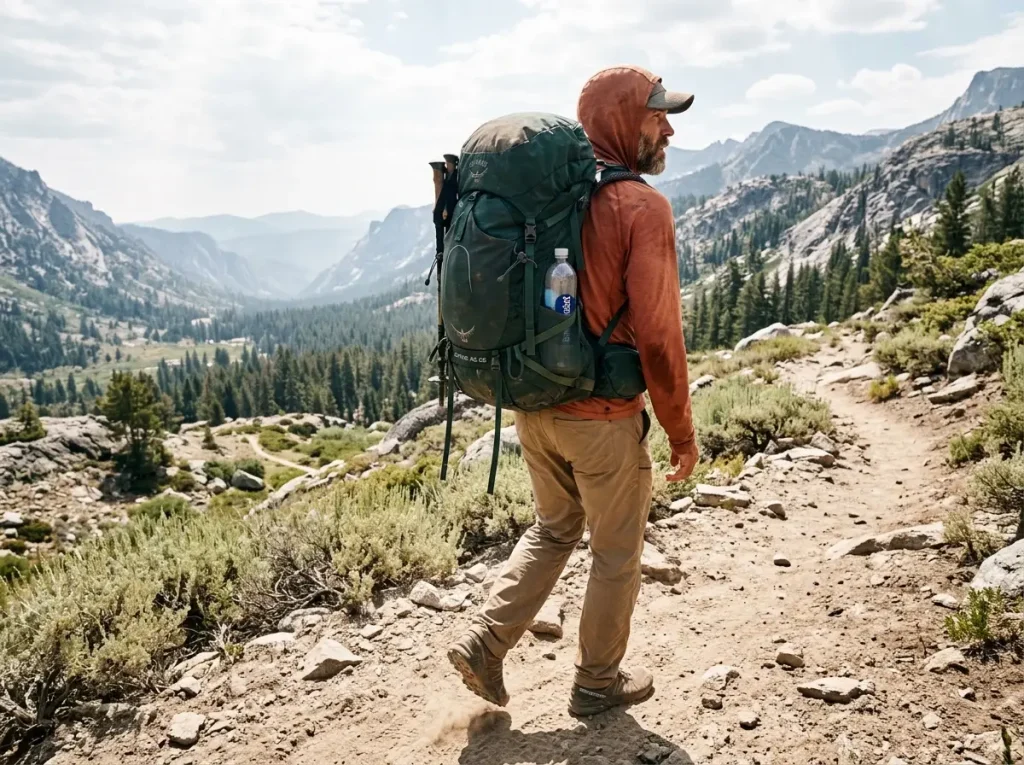
The most common sizing mistake sounds perfectly reasonable. “I’m six feet, so I need a Large.” Height feels like it should matter. It doesn’t. A properly fitted pack puts about 80% of the load on your hips and only 20% on your shoulders, and the thing that makes that ratio possible is your torso length, not how tall you stand.
The 80/20 rule lives or dies on your torso
Your hips are built to carry weight. Your shoulders are not. Get the torso number right and the hip belt parks the load on your iliac crest where your legs can drive it. Get it wrong and the belt sits too high or too low, so the weight rolls back onto your shoulders and stays there. There’s research on how a loaded pack changes the pressure your feet absorb over a long day, and a load riding on your shoulders instead of your hips only makes that worse.
Two hikers, a foot apart, same size
Here’s the part that trips people up. Two people who differ by almost a foot in height can wear the exact same pack size, because one is all leg and the other is all torso. Height is the distance from the floor to the top of your head. Torso length is just the stretch of spine the pack actually touches.
They’re unrelated measurements, and a couple who can swap packs despite a big height gap aren’t a fluke. It’s just how people are built.
What a wrong number feels like
A too-long torso setting has a signature symptom: the pack rides up. You cinch the hip belt, walk a mile, and feel the weight creeping back onto your shoulders and neck, and that steady shoulder strain is what turns the back half of a long day into a slog. Most adult torsos land between 15 and 22 inches, so if your tape ever reads wildly outside that, you probably slouched or missed a landmark. The fix always starts the same way, by measuring right, and it helps to see how that number feeds into the bigger picture of choosing a backpack before you buy anything.
Find Your Two Landmarks (C7 and the Iliac Crest)
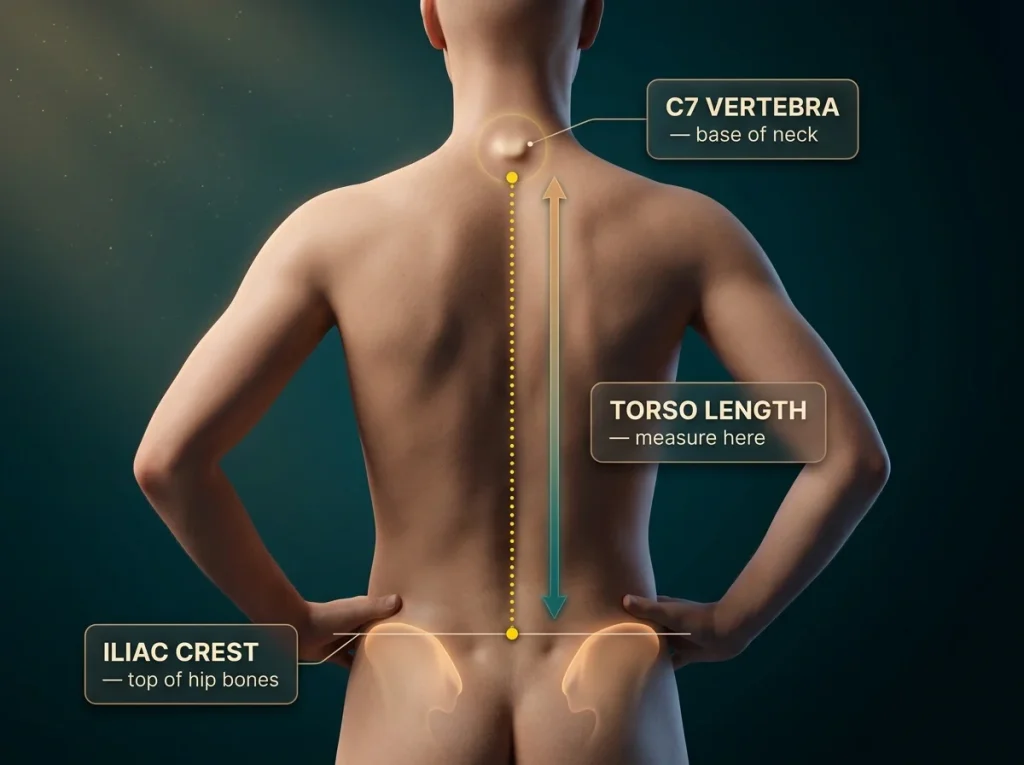
Nobody’s born knowing where their C7 vertebra or iliac crest sits. The good news is you can find both in about ten seconds, and getting them right is most of the job.
Locating the C7 vertebra
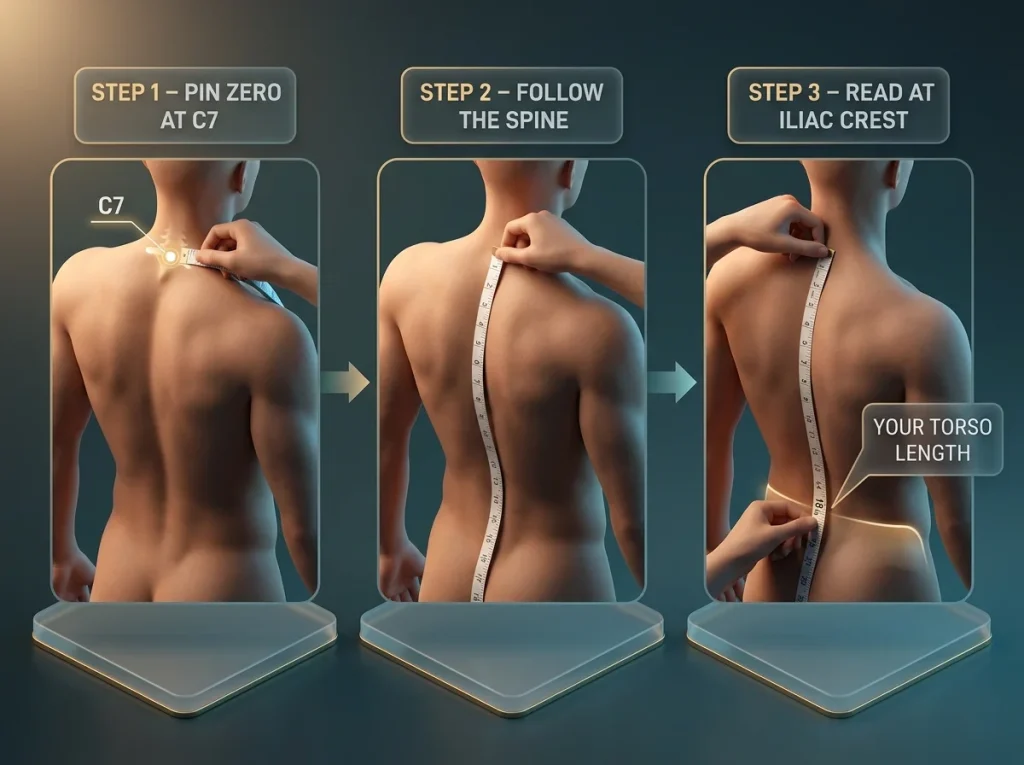
Tip your head forward and run your fingers down the back of your neck until you hit the bony bump where your neck meets your shoulders. That’s usually C7. To be sure, use the head-tilt test: rest a finger on the bump and tip your head back. If it slides forward and disappears, that’s C6, and the next one down is C7. The one that stays put under your finger is the top of your measurement.
Finding the iliac crest
Put your hands on your hips like you’re annoyed at someone. Press in and slide them up until they rest on the top shelf of your hip bones. Point your thumbs toward your spine, and the imaginary line between them is your iliac crest, the bottom of your measurement. This is also exactly where your hip belt has to land, which is why molding the hip belt to that bony shelf matters once you actually own the pack.
The mistake that sizes you down a whole size
Here’s where people go wrong. The iliac crest sits higher than your beltline, often a couple of inches higher. Measure down to where your pants ride and you’ll read your torso short, sometimes by enough to drop you a full size.
There’s a hiker on WhiteBlaze who swore he’d never seen anyone on the trail wearing a hip belt as high as his, until he learned his own crest sat well above his navel and his pack finally rode right. Find the bone, not the belt.
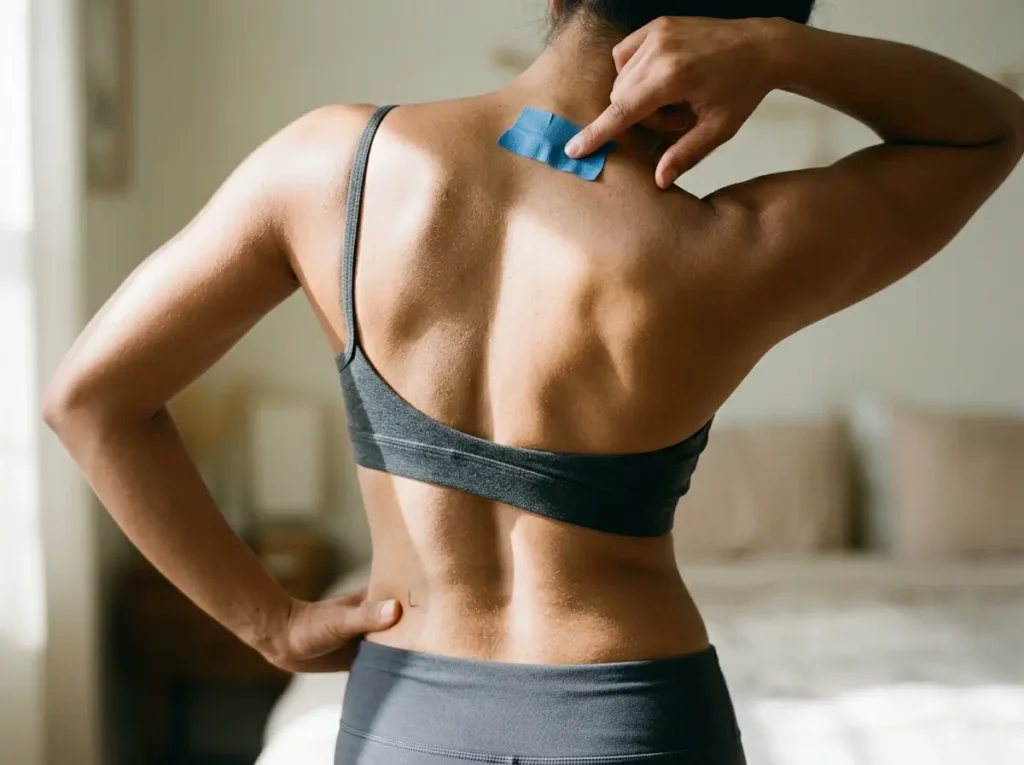
Before you measure anything, stick a small piece of tape or a sticker on your C7 bump and another at your iliac crest. The second you twist or reach back, you lose the landmark, and re-finding it by feel mid-measure is how the number drifts. Mark first, measure second.
Take the Measurement (Tools and the 3-Step Method)
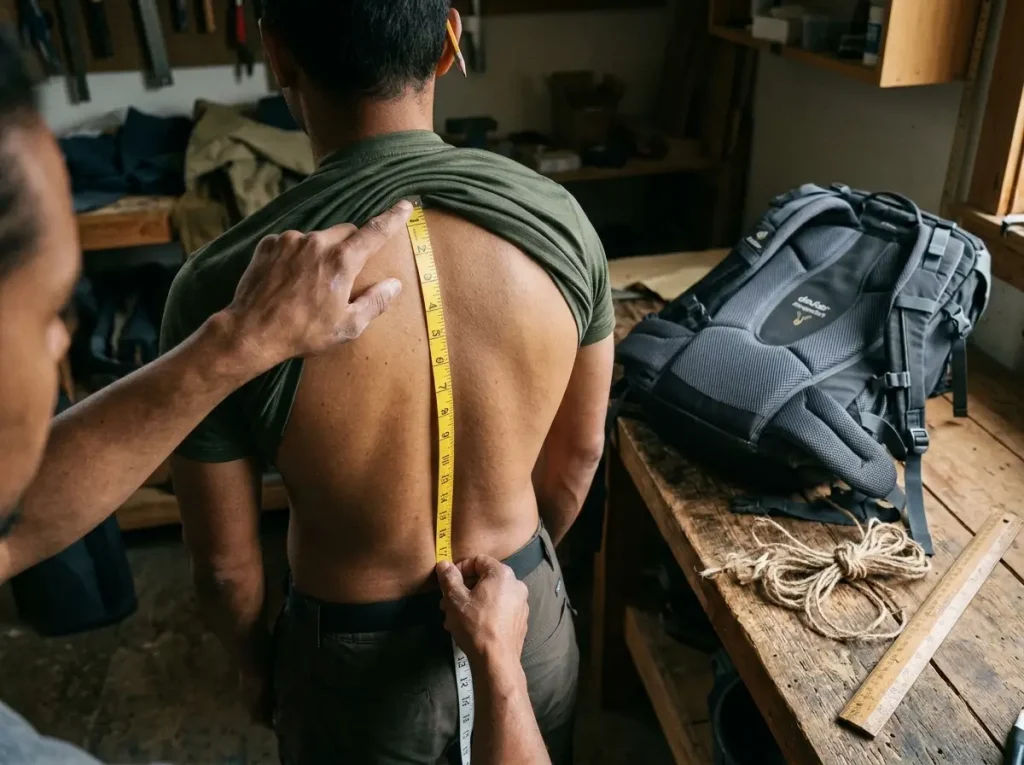
This is the part everyone rushes, and it’s exactly where the number goes wrong. Two things matter: the right tool and a steady three-step pass.
Why a flexible tape beats a rigid one
Your spine isn’t a straight line. It has a natural S-curve, and that curve is the surface your pack frame rides against. A stiff carpenter’s tape can’t follow it, so it cuts the corner and reads short. A soft, flexible cloth tape measure follows your back the way the pack will.
A sewing tape from a kit works perfectly, and the GDMINLO Soft Tape Measure is a cheap stand-alone option if you don’t own one. No tape at all? Knot a string at C7 and at the crest, then lay it flat against any ruler.
The three-step tape run
Start the tape’s zero end at your marked C7. Follow your spine straight down, letting the tape sink into the curve of your lower back instead of bridging it. Stop at the iliac-crest line between your thumbs and read the number. That’s your torso length, full stop. Stand the way you actually stand on the trail while you do it, not at rigid attention and not slouched, because both change the distance.
Measure three times
One pass hides mistakes. Three passes reveal them. If you get 18, 18, and 18, you’re done. If you get 17, 19, and 18, something moved, so reset your landmarks and go again until two or three runs agree. It takes an extra minute and saves you from sizing an expensive pack off one sloppy reading.
How to Measure Your Torso Solo (No Friend Required)
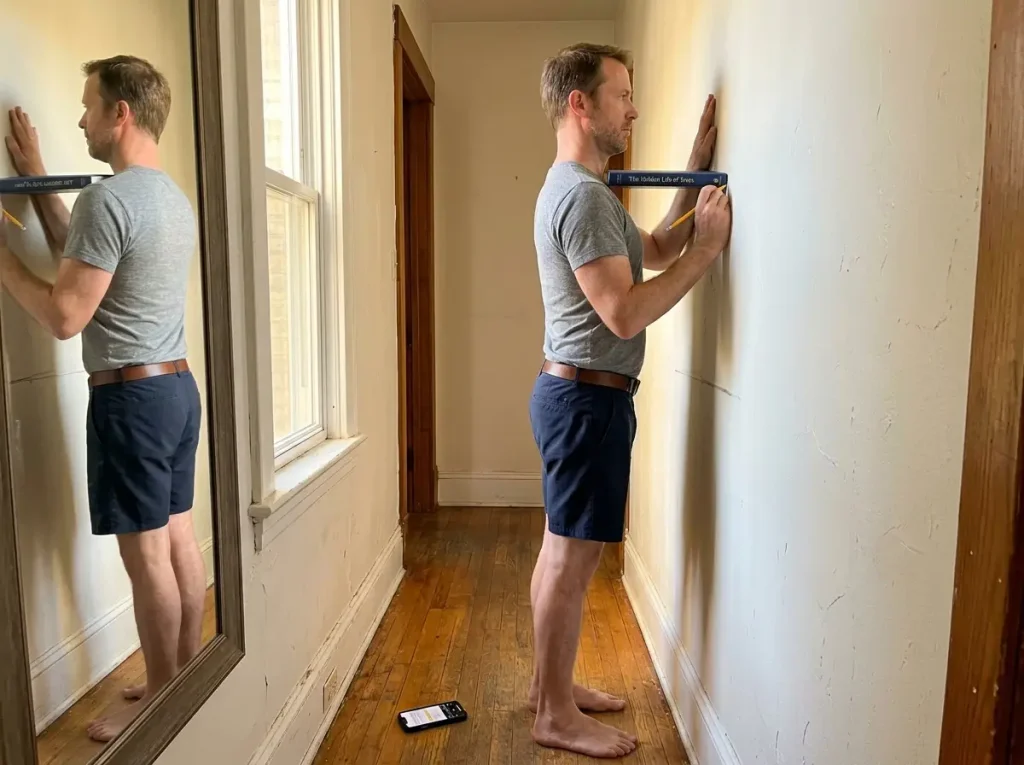
Almost every guide ends with the same line: now have a friend read the tape. Great, for the people with a friend in the room. If it’s just you, reaching back to read a tape at your own neck rotates your spine and wrecks the number before you even see it. Here’s how to measure yourself accurately, alone.
The wall-and-pencil method
This one takes your arms out of the equation, and it’s the most accurate solo option there is. Cinch a belt so its top edge sits right on the top of your iliac crest. Stand barefoot with your heels, seat, and shoulder blades flat against a blank wall, eyes level. Hold a hardcover book flat against the wall and slide it down until its bottom edge rests on your C7 bump, then mark the wall at the book’s edge with a pencil.
Mark the wall at the belt line too. Measure the vertical distance between the two marks with a ruler, and that straight-line number is your torso length. Because the wall keeps you upright and the marks hold still, it’s often more repeatable than the tape method even with a helper.
The mirror and hanging-tape method
If you’d rather use the flexible tape, stand sideways to a full-length mirror. Pin the tape’s zero at your marked C7, let the tape hang free down your spine, and read where it crosses the belt-marked crest line in the mirror. The mirror does the job your missing friend would do. It lets you read the number without twisting out of position.
The string trick when you’ve got nothing
No flexible tape and no helper? Tie a knot in a length of string, hold the knot at C7, run the string down your spine, and pinch it at the iliac crest. Lay the pinched string flat against a yardstick. It costs nothing, and because string drapes along the curve of your back, it lands surprisingly close to a proper tape reading.
If you live alone, the wall-and-pencil method isn’t a compromise. It’s arguably the most accurate way to measure a torso, friend or no friend, because the wall guarantees you’re standing straight. Bad posture during the measurement is the single biggest variable people get wrong.
Read Your Number on a Size Chart (and Measure Your Hips)
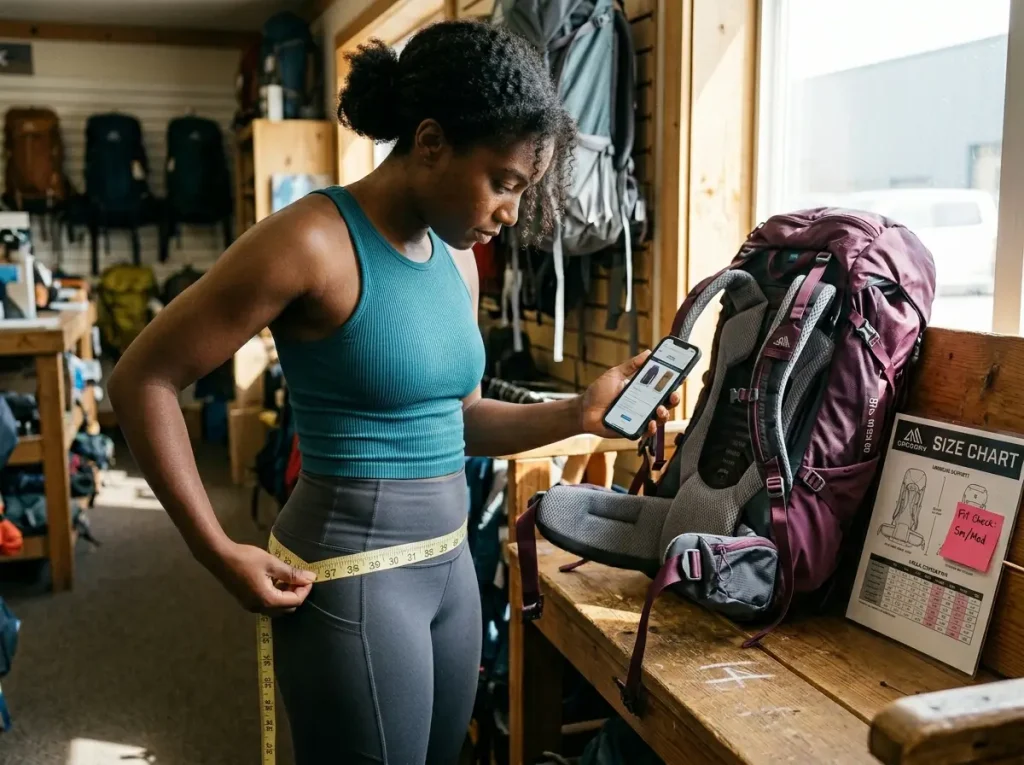
You’ve got a number. Now the mildly annoying part: a Medium at one brand isn’t a Medium at the next, so the inches matter more than the letter on the tag.
Turning inches into a pack size
The rough map runs like this: under 16 inches is an extra-small, 16 to 17 a small, 18 to 19 a medium, and 20-plus a large. Treat that as a starting point, not gospel, because every maker draws its own lines. Always check the specific model’s torso chart before you commit, and if you’re choosing a multiday pack, picking a backpacking pack that fits your number starts with this exact step. Women’s packs are built on shorter torso and narrower hip ranges, so women’s packs run different fit numbers than the unisex or men’s versions of the same line.
Don’t skip your hip measurement
Your torso sizes the frame. Your hips size the belt. Wrap the flexible tape around the top of your iliac crest, not your soft waist and not your pant size, which usually sits lower and reads smaller. The hip belt is sized off this number, and it’s where the load actually lands. The Appalachian Mountain Club’s guide to carrying a pack in comfort makes the same point: the weight belongs on the hips, so the belt has to fit the hips.
Where the hip belt actually sits
A hip belt is about four inches tall, so its center, not its top edge, should land on your iliac crest. REI’s rule of thumb is roughly half the belt above the crest and half below. Picture it wrapping the bone, not cinched around your stomach like a pants belt. That one mental image fixes more bad fits than any chart.
If you already own a pack that fits you well, skip the guesswork. Measure its harness from the top of the shoulder-strap attachment down to the hip belt and match that number. A pack that already rides right is the most honest size chart you’ll find.
When You’re Between Sizes (Adjustable Packs and the Loaded Check)
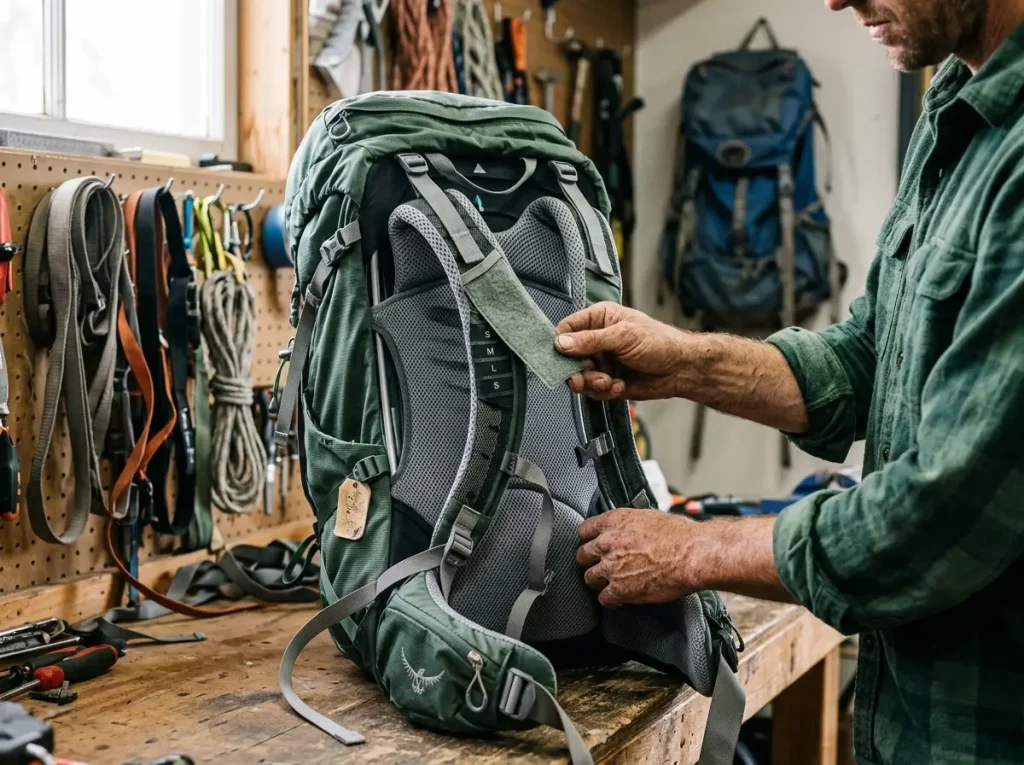
Sometimes your number lands right on a boundary, like 18 or 20 inches, and it feels like you measured wrong. You didn’t. Those are size lines, and there’s a clean rule plus an escape hatch for exactly this.
The between-sizes rule
On a framed or adjustable pack, size down. On a frameless ultralight pack, size up. That’s the rule. The reason is simple: an internal-frame pack transfers load through a stiff frame, so a slightly shorter torso setting keeps the hip belt parked on the crest, while a frameless pack leans on your packing and a touch more length helps. Whether you end up on a framed or a frameless pack decides which way you round.
Adjustable-torso packs are the escape hatch
The cleanest fix for a boundary number is a pack that moves to meet it. An adjustable-torso harness slides up and down a track in one-inch increments using a Velcro rip-and-stick panel, no tools needed. The Osprey Atmos/Aura AG 65 (men’s · women’s) is the textbook example, with the S/M frame covering 17 to 20 inches and the L/XL covering 21 to 23. The Gregory Baltoro/Deva (men’s · women’s) does the same with a deeper hip-belt range.
Osprey’s own size and fit guidance spells out the exact frame ranges if you want them. The tradeoff is weight, since an adjustable frame adds a few ounces of hardware, so if you already know your number cold and want to save grams, a fixed-torso ultralight pack is the smarter buy.
Confirm it loaded
A number on paper isn’t a fit until there’s weight in the pack. Load it with what you’d actually carry, buckle the hip belt on your crest, and check two things. The belt should wrap the iliac crest, half above and half below. The load lifters should angle back to the pack at roughly 30 to 45 degrees off your shoulder straps.
If those straps lie flat or pull straight up, your torso setting is off no matter what the tape said, and setting your load lifters to the right angle is the final tell. This last step, dialing in the fit, is what turns a measurement into a pack that disappears on your back.
Snap a phone photo of yourself from the side with the loaded pack on. Flat load lifters mean the torso is set too long; straps pulling sharply upward mean it’s too short. That 45-degree angle is the fastest fit check you’ll ever do.
Get the Number, Then Trust It
Height is a guess. Torso length, measured from your C7 down your spine to the iliac crest with a flexible tape, is the answer. You can get that number accurately on your own with the wall-and-pencil method, as long as you mark your landmarks and measure three times.
And a number isn’t a fit until you load the pack and confirm the belt wraps your crest while the load lifters sit near 45 degrees. Once you’ve got your torso length locked in, dialing in the rest of the fit is the natural next step, and it’s the whole difference between a pack you notice all day and one you forget you’re wearing.
Frequently Asked Questions
01Is your torso length the same as your height?
No, they’re barely related. Two hikers a foot apart in height can have the same torso length, which is exactly why you size a pack by torso, not by how tall you are.
02Where exactly is the iliac crest?
It’s the top shelf of your hip bones. Put your hands on your hips with your thumbs pointing back, and the line between your thumbs marks it. It sits higher than your beltline, which is the spot most people measure to by mistake.
03Can you measure your torso length without a tape measure?
Yes. Knot a string at your C7 vertebra and again at your iliac crest, then lay the string flat against any ruler or yardstick. It gives you the same number a flexible cloth tape would, for free.
04What torso size do you need if you’re between two sizes?
On a framed or adjustable pack, size down; on a frameless ultralight pack, size up. Landing on a boundary number like 18 or 20 inches is normal, or pick an adjustable-torso pack that slides to your exact number.
05Why does your pack still ride on your shoulders after you measured?
Usually the torso is set too long, so the weight never reaches your hips. Load the pack and check: the hip belt should wrap the iliac crest and the load lifters should sit at about 30 to 45 degrees. If they’re flat, shorten the torso setting.
Risk Disclaimer: Hiking, trekking, backpacking, and all related outdoor activities involve inherent
risks which may result in serious injury, illness, or death. The information provided on The Hiking Tribe is for
educational and informational purposes only. While we strive for accuracy, information on trails, gear, techniques,
and safety is not a substitute for your own best judgment and thorough preparation. Trail conditions, weather, and
other environmental factors change rapidly and may differ from what is described on this site. Always check with
official sources like park services for the most current alerts and conditions. Never undertake a hike beyond your
abilities and always be prepared for the unexpected. By using this website, you agree that you are solely
responsible for your own safety. Any reliance you place on our content is strictly at your own risk, and you assume
all liability for your actions and decisions in the outdoors. The Hiking Tribe and its authors will not be held
liable for any injury, damage, or loss sustained in connection with the use of the information herein.
Affiliate Disclosure: We are a participant in the Amazon Services LLC Associates Program, an
affiliate advertising program designed to provide a means for us to earn advertising fees by advertising and linking
to Amazon.com. As an Amazon Associate, we earn from qualifying purchases. We are also an official affiliate partner
of Black Diamond Equipment via the AvantLink network. If you click on a Black Diamond affiliate link and make a
purchase, we may earn a commission at no additional cost to you. We also participate in other affiliate programs and
may receive a commission on products purchased through our links. Additional terms are found in the terms of
service.