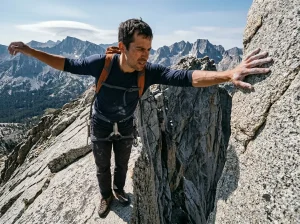








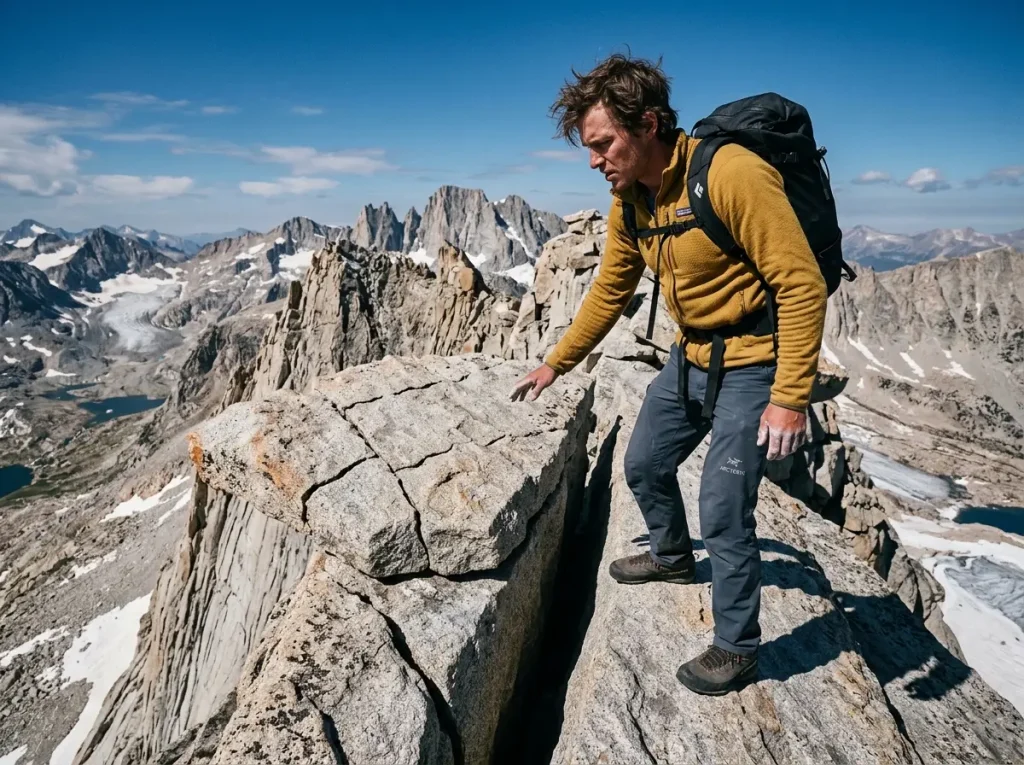
My left hand wrapped around a knuckle-sized flake of granite on the eastern ridge, and the moment I committed my weight I heard it — not a crack, but a dead, drum-like thud radiating through my palm. The flake wasn’t attached. It was resting on the mountain the way a dinner plate rests on a tablecloth. Three feet of air below my feet, the nearest ledge twenty meters down. I let go slowly, climbed back down on trembling legs, and went looking for another line.
That was twelve years into scrambling. I knew the terrain. I liked that ridge. That’s exactly why I didn’t test the hold.
This guide breaks down exactly what I missed that day — and what most scramblers miss every time they grab a hold: a forensic, step-by-step protocol for assessing rock stability before you commit your weight. By the time you’re done reading, you’ll be able to hear, touch, and vector-test every hold on Class 2–4 terrain with the confidence of someone who’s built that habit through years of getting it wrong first.
⚡ Quick Answer: To test a scrambling hold before committing, use the three-step HT-Protocol: (1) strike it with the heel of your palm — a hollow, drum-like sound means a detached flake, don’t use it; (2) push and pull gently in multiple planes — any movement disqualifies it; (3) pull down, never out — downward force keeps rock in compression, outward force levers flakes off the face. All three tests must pass before you weight the hold. On sandstone, never scramble within 48 hours of rain — the rock loses structural integrity at the granular level.
| Rock Stability Assessment Guide | ||
|---|---|---|
| Visual Cue | Sound Test Result | Action Required |
| Clean, lichen-free patch in lichen field | Hollow / drum-like | Assume recent movement. Do not use. |
| Closed-loop cracks encircling a block | Any result | Bypass entirely. Block is detached. |
| Water seeping from joints (crying rock) | N/A | Retreat. Internal lubrication. |
| Fresh white fractures (unweathered) | Any result | Active freeze-thaw terrain. Turn around. |
| Plants or shrubs rooted in cracks | Any result | Root wedging in progress. Condemn the hold. |
The Rock Beneath Your Hands Is Not What You Think
Here’s where most scramblers get it wrong: they treat rock as a constant. It’s not. Rock quality is an emergent property — a product of mineral composition, crystalline structure, and weathering history. The surface doesn’t tell you the story. The geology does.
Granite is the gold standard, but its failure mode surprises people. Sheeting joints develop parallel to the surface as internal pressure releases through erosion. A slab can look completely attached while separated from the main mass by only a few millimeters, held in place by nothing more than friction and mineral bridges. When you pull outward on that slab, you convert it into a cantilever beam. Granite is strong in compression, weak in tension — the outward pull is exactly the wrong direction. According to the Yosemite National Park rockfall database and geology, exfoliation events constitute a significant portion of Yosemite’s documented rockfall incidents, many triggered not by storms but by cumulative loading changes.
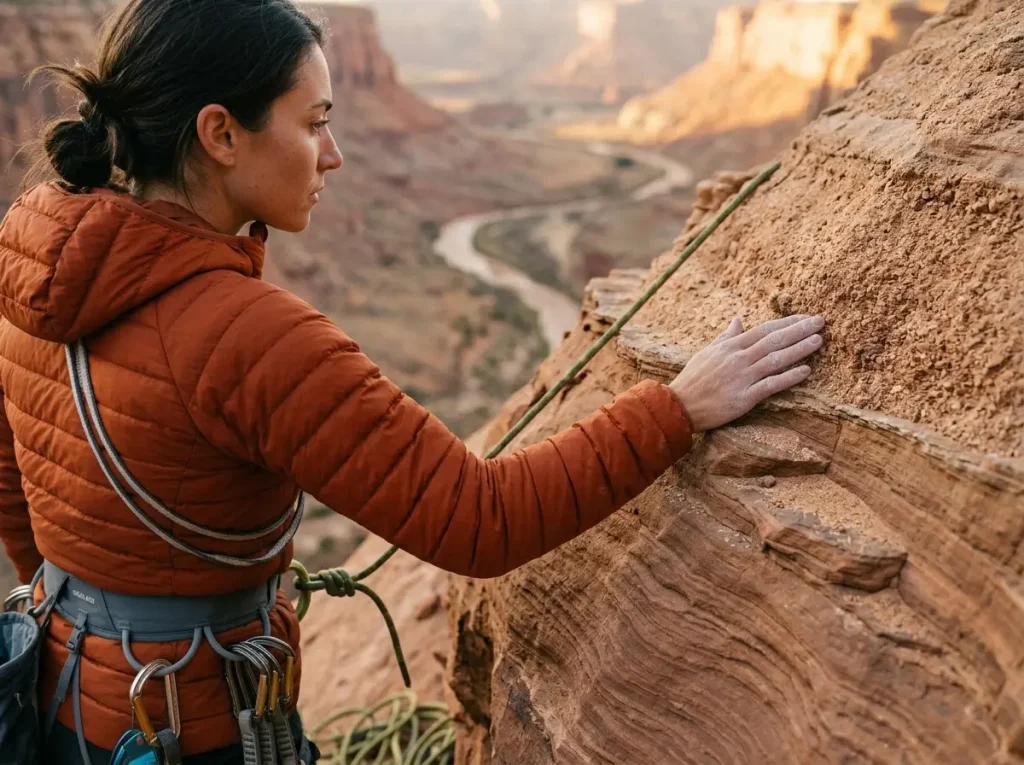
Sandstone is a fundamentally different animal. It’s highly permeable, so moisture infiltrates and dissolves the silica or calcium carbonate cement bonding the grains together. At Red Rocks, guides enforce a near-total ban on post-rain ascents. That ban isn’t overcautious — it’s physics. Shale and siltstone delaminate under compression like a deck of wet cards. Their choss factor is the highest of any common scrambling lithology. And limestone, for all its pocketed, grippy texture, can be brittle at solution edges and chemically undercut beneath surfaces that feel solid.
Pro tip: On a granite face, look for hair-width shadow lines running parallel to the rock surface. That’s a sheeting joint. Don’t pull outward on anything above it, and tap-test anything below it before trusting it.
The critical mistake intermediate scramblers make is assuming that “bomber rock” is a fixed label. It isn’t. Granite that’s solid in August can behave like cardboard in May, after a winter of freeze-thaw cycles. Every new season resets what you think you know about a route. A good habit before any scramble starts the same way a good diagnosis does: with the question “what kind of rock is this, and what’s it been through lately?” If you want a hands-on framework for testing handholds for stability before committing weight, the HT-Protocol in the next section is built exactly for that.
Intrusive Igneous: When “Bomber” Granite Deceives You
Experienced scramblers trust granite. That trust builds over time and is, up to a point, earned — granite is dense, crystalline, high-friction. But its failure mode is sneaky. Exfoliation slabs develop when internal pressure releases through long-term erosion; the result is sheets of rock that parallel the surface and separate from the main mass by millimeters. You can’t see the gap. You can hear it.
A scrambler who pulls outward on a granite slab converts it into a lever. The longer the flake, the more torque you apply to its root with any outward pull. That’s the hinge failure pattern — and it doesn’t announce itself first.
Sedimentary Hazards: Sandstone, Limestone, and the Choss Pile
Sandstone grades from trustworthy to catastrophic depending entirely on recent weather. Dry sandstone can feel bomber. Post-rain sandstone is a different substance. The cement dissolving between grains doesn’t show on the surface — the hold looks the same, feels the same, and then isn’t there.
“Crying rock” — water seeping from joints or cracks in sedimentary faces — is one of the most reliable retreat signals in scrambling. It means internal lubrication is active. You don’t want to be on something that’s actively lubricating.
Shale layers at the base of mixed faces are the transition zone most scramblers underestimate. Delamination striations run parallel to the surface. If you see those lines, skip that hold.
The HT-Protocol: Hear, Touch, Vector
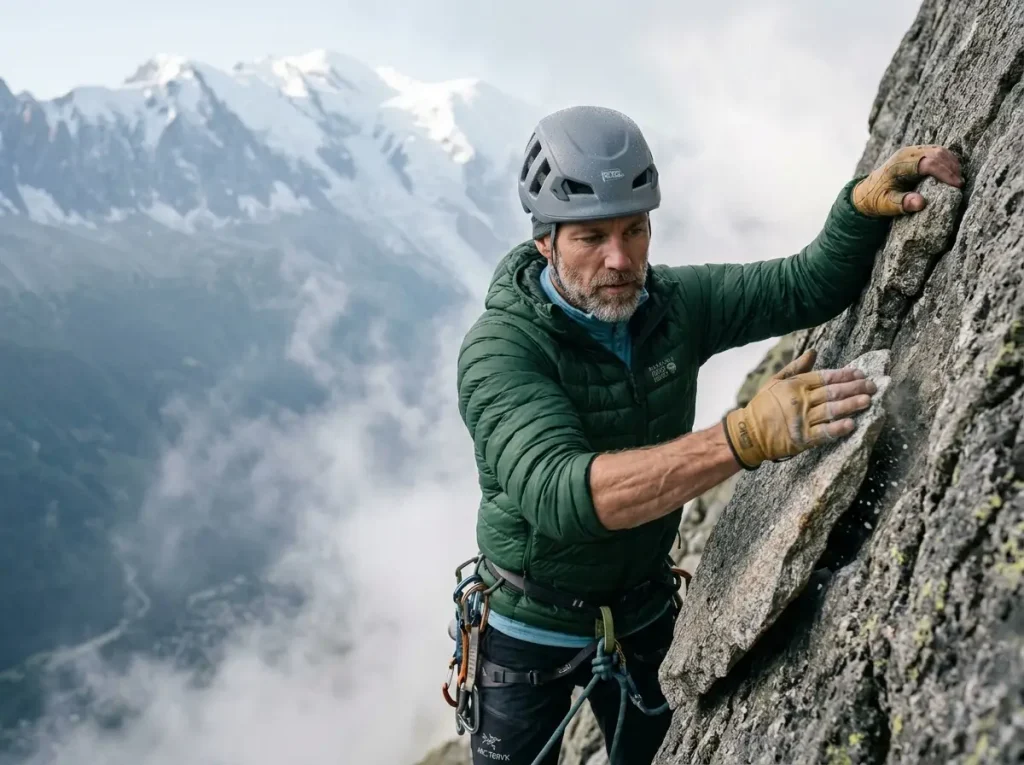
The protocol isn’t for the holds that look sketchy. It’s for the ones that look fine.
That’s a line I repeat to every new scrambler I take out: the holds that look fine are the ones that get you. Experienced people skip the assessment on holds that feel “obviously solid.” That’s where the accidents happen. The Mountaineers 2022 Alpine Scrambling Standards codify hold testing protocols for exactly this reason — the habit only works if it’s applied systematically, not selectively.
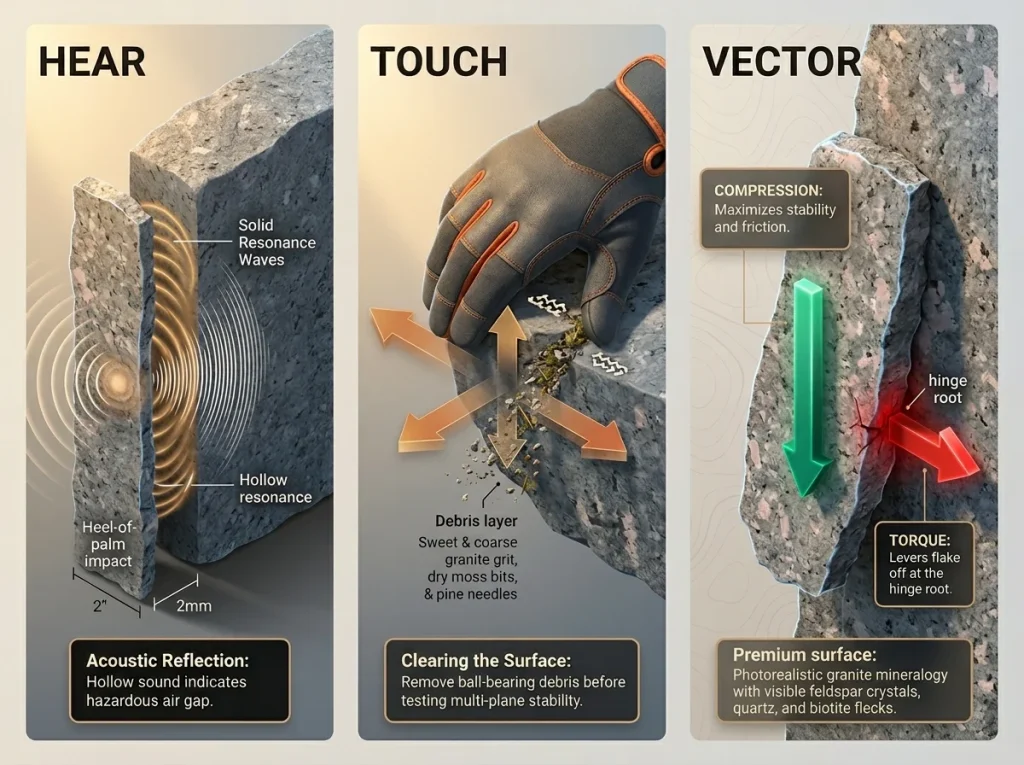
Hear: Acoustic Testing and the Physics of the Hollow Sound
Strike the hold with the heel of your palm before gripping it. Not a fist, not fingers — the heel. A solid, attached hold returns a high-pitched clink or dense thud. Energy travels into the surrounding rock mass and gets absorbed. A detached flake returns a hollow, resonant, drum-like sound. What you’re hearing is vibration reflecting off the air gap between the hold and the substrate behind it.
The physics here aren’t complicated: the air gap acts as a resonance cavity. The more detached the flake, the hollower the sound. Larger blocks produce lower resonant frequencies than small chips, so the auditory signature varies — but both hollow sounds signal the same problem. Neither one is safe to weight.
One thing worth knowing: thick gloves dampen this feedback. If you’re on technical terrain in insulated mitts, you’re working blind on the acoustic layer. Thin palm sections give you the tactile feedback you need. This matters most in shoulder-season conditions when you most want the insulation.
Pro tip: Tap every hold on your first time through a section, even holds that feel obviously solid. The holds I’ve been most wrong about were exactly those — the ones I didn’t test because they “felt fine.” The protocol works precisely because you apply it before you have an opinion about the hold.
Touch: The Wobble Test and Cleaning the Contact Surface
After the acoustic test, apply the wobble test: push and pull the hold in multiple planes using minimal force. Any micro-vibration, shifting, or play disqualifies it as a primary hold. One pass in one direction isn’t enough — you’re looking for movement in every plane, because some flakes are stable in compression but mobile laterally.
Then clean it. A firm gloved sweep removes loose grit, pine needles, dry moss, organic matter — everything that acts as ball bearings between your rubber and the rock surface. Cleaning a hold isn’t about polish; it’s about friction restoration. You’re removing the debris layer that sits between your footwear and a direct rock contact.
In high humidity or post-rain conditions, even a cleaned hold may retain a hydrated surface film that reduces friction significantly. Factor weather timing into your overall assessment. Fatigued arms can’t test gently — you need enough left in the tank to be deliberate. That’s one reason scrambling fitness exercises that build the body control needed for this kind of precise movement matter more than they get credit for.
Vector: Why Pulling Down Saves Lives
Every force you apply to a hold has a direction. That direction determines whether the rock resists you or fails under you.
Rock’s compressive strength far exceeds its tensile strength. A downward force on a hold pushes it into compression against the face — the rock’s strongest state. An outward pull generates torque on the flake’s root. A three-foot flake acts as a lever arm: the longer the flake, the more torque you apply at its base with any outward pull. That’s the hinge failure pattern. The flake doesn’t crack — it pivots.
“Pulling down, not out” is the single highest-leverage behavioral change a scrambler can make. It eliminates the primary mechanical failure mode for flakes and applies equally to footholds: direct force perpendicular to the shelf, maximizing normal force and friction. Never push sideways on a foothold — lateral force introduces shear stress on rock that may already have compromised bonding internally.
Here’s the video from the BMC that shows exactly this kind of ground-based assessment before entering the fall line:
The Visual Field Dictionary: Reading Hazard at Distance
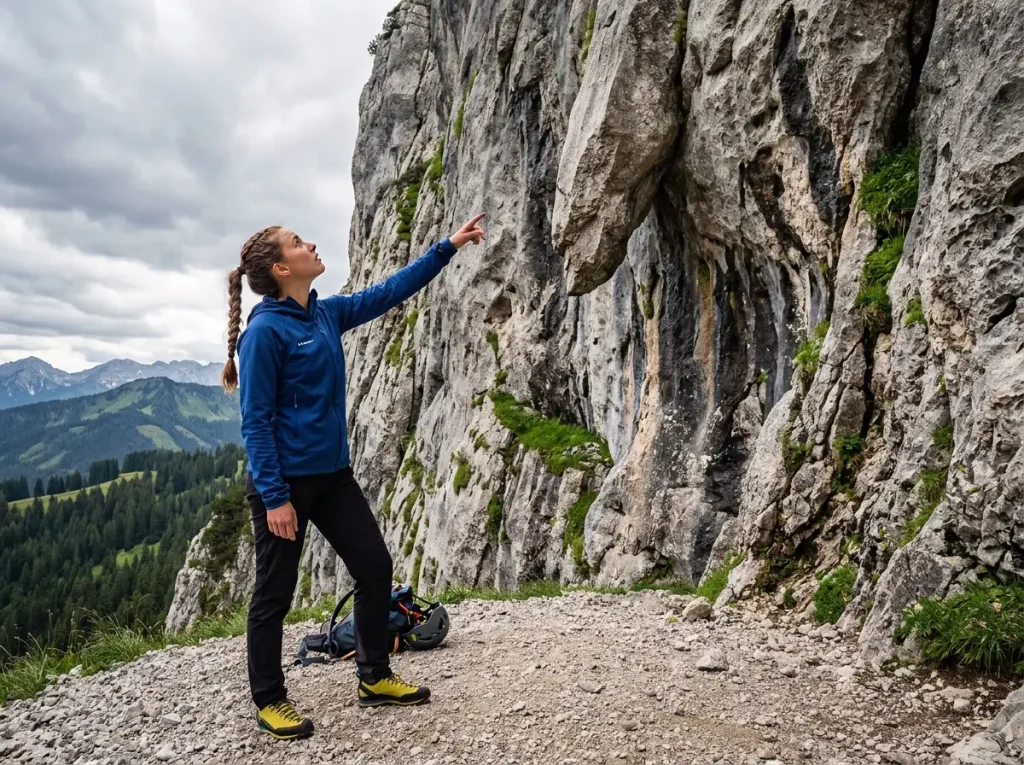
The best time to identify a bad hold is before you’re on it.
Ground-based assessment from the base of a feature reduces your exposure to the fall line of any potential rockfall during the assessment process itself. Get in the habit of reading the face from 10–15 feet back before you start up. What you’re looking for takes less than two minutes once you know the vocabulary.
Fracture density is your first read: single isolated cracks are normal. The hazard marker is a closed loop — a crack system that encircles a block on all sides, indicating full detachment from the substrate. Fresh fractures are bright white and unweathered; they indicate recent movement and active terrain. Weathered fractures that match the surrounding rock color and may be lichen-filled are historical and lower-risk, though still suspect.
Hanging fangs — sections where rock below has already fallen away, leaving an unsupported overhang — are the visual warning most scramblers don’t train themselves to notice. Start noticing them. They tell you where the mountain has already been shedding. That pattern continues. For the timing strategy around areas with visible active rockfall signs, understanding couloir rockfall timing and the safe ascent window gives you the next layer of decision-making.
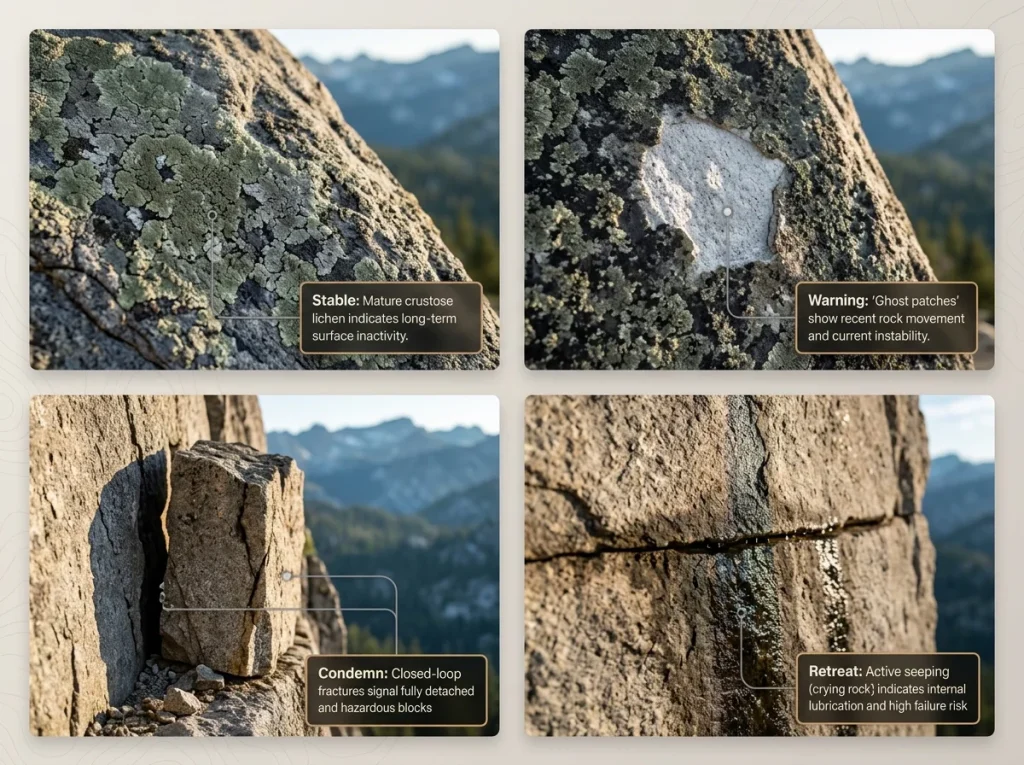
The Lichen Stability Clock
I started reading lichen as a forensic tool after a guide in the Enchantments pointed out something I’d never considered: the clean white patches on the granite slabs weren’t climber chalk. They were zones where slabs had recently moved, and the lichen hadn’t had time to re-colonize. I haven’t looked at a clean patch the same way since.
Crustose lichens — paint-flat against the surface, needing decades to establish — are your stability signal. Their presence means that patch of rock hasn’t moved in a long time. Foliose and fruticose lichens, the three-dimensional leafy varieties, indicate more recent establishment and may conceal bioweathering beneath: acid dissolution, secondary mineral formation, the slow biological prying-apart of the rock surface. A “ghost patch” — lighter rock within a darker lichen field — means the surface recently moved. Leave it alone.
Vegetation in cracks is a different category of problem. Mature shrubs or trees rooted in rock fissures aren’t just indicating instability — they’re actively creating it. Root wedging applies continuous biological leverage that progressively pries blocks away from the face. Treat any hold with vegetation in an adjacent crack as condemned, regardless of how solid it sounds.
Pro tip: On a morning after a cold night, look for joint lines that are wet while surrounding rock is dry. That differential marks a zone of active freeze-thaw expansion from the previous night. Don’t scramble on or below it until the sun has had time to equalize.
Scientific literature on lichen bioweathering and secondary mineral genesis on granite documents exactly this mechanism: lichen root acids dissolve mineral bonds and produce secondary minerals that weaken surface integrity over time. The lichen field is reading you a stability timeline.
Crying Rock and Hydrostatic Pressure
Water seeping from joints under no-rain conditions signals internal hydrostatic buildup behind slabs — a precursor to wedge failure. This is “crying rock,” and it is not a metaphor. Dark staining lines running vertically down a face indicate repeated saturation at that joint. Multiple lines in the same vertical zone mean a chronic pressure point. The mountain has been telling that story for years before you arrived.
When Seasons and Weather Turn Rock Into a Trap
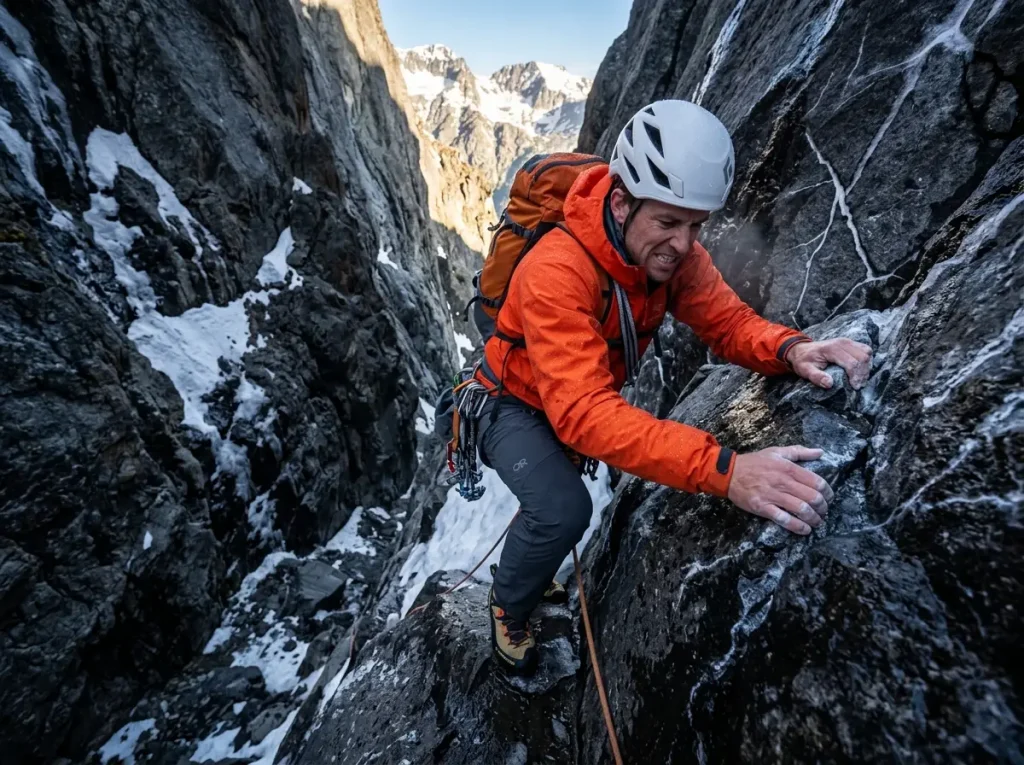
Most scramblers assume spring means safety and summer means stability. Both are wrong in specific situations.
The freeze-thaw cycle — also called frost wedging — is the engine of mountain erosion. Water enters micro-fractures during the day, freezes overnight, and expands roughly 9% by volume. That expansion exerts internal pressure that propagates existing cracks and levers blocks away from the face. The critical finding, documented in research on short-term freeze-thaw cycles and granite damage evolution, is that frequent short-term diurnal cycles are more structurally destructive than a single deep sustained freeze. Repeated daily thaw-and-refreeze events create cumulative micro-fracture propagation that a single prolonged cold spell doesn’t.
This is why early spring — not mid-winter — is the highest rockfall risk period. The 2009 Ahwiyah Point event in Yosemite: roughly 7,600 cubic meters of granite, triggered not by a single storm but by cumulative weathering and the transition from frozen to unfrozen conditions. That event occurred in spring. The shoulder season weather patterns and the terrain conditions they create determine when this window is open on any given range. Learn the timing before you plan your routes.
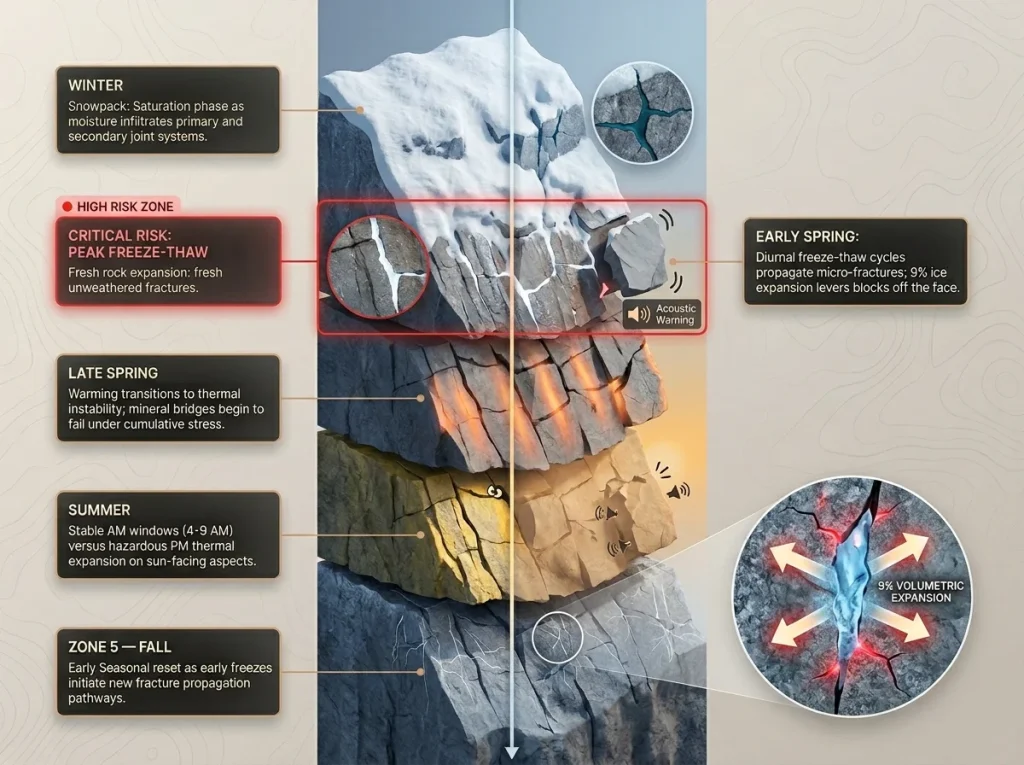
In high summer, the hazard shifts. On sun-facing granite faces, large slabs absorb solar radiation and expand microscopically during the day. On exfoliation faces, this thermal cycling progressively weakens the mineral bridges holding flakes to the main mass. If you hear “popping” sounds from a granite face on a hot afternoon, that’s thermally active terrain. Schedule your technical scrambles for the 4–9 AM window on sun-facing granite. The difference in rockfall risk between that window and the 11 AM–3 PM window is significant.
Wet rock protocols differ by lithology. Granite after rain retains most structural integrity — the risk is footing, not hold failure, unless sheeting joints are actively responding. Sandstone after any precipitation is categorically different: avoid technical scrambling until you have 48 hours of dry time confirmed, and longer in humid conditions or shade. Limestone after rain accelerates chemical dissolution briefly at solution pockets — test carefully at any pocketed or undercut holds. “No rain” is not sufficient for sedimentary faces. The internal hydration timeline is slower than the surface appearance suggests.
Gear That Fails Gracefully When Your Assessment Doesn’t
Equipment is the last line of defense. If your hold assessment fails, gear either catches you or it doesn’t.
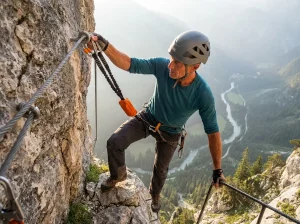
Helmets are non-negotiable on any terrain where rockfall is possible — not just when you’re moving but when any party is above you. The certification standard matters: EN 12492 and UIAA 106 for technical scrambling. Not bike helmets. Not ski helmets. After any significant impact, retire it. No exceptions. EPS foam permanently deforms on the first impact — it does not recover its protective capacity for a second event. Position it correctly: two finger-widths above the eyebrows. A helmet that rides back leaves the back of your skull exposed, which is exactly where rockfall strikes from above.
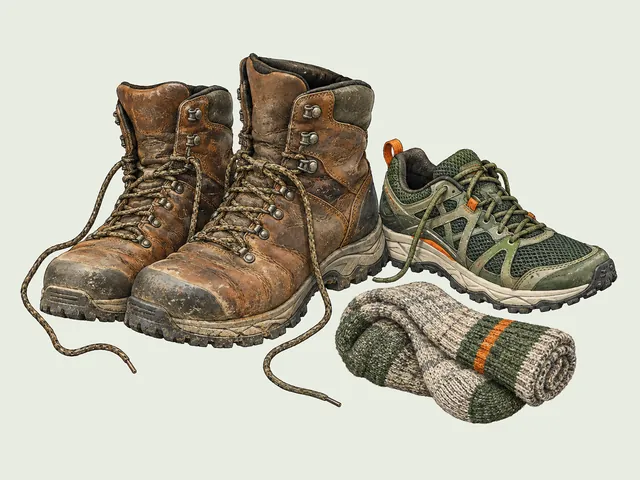
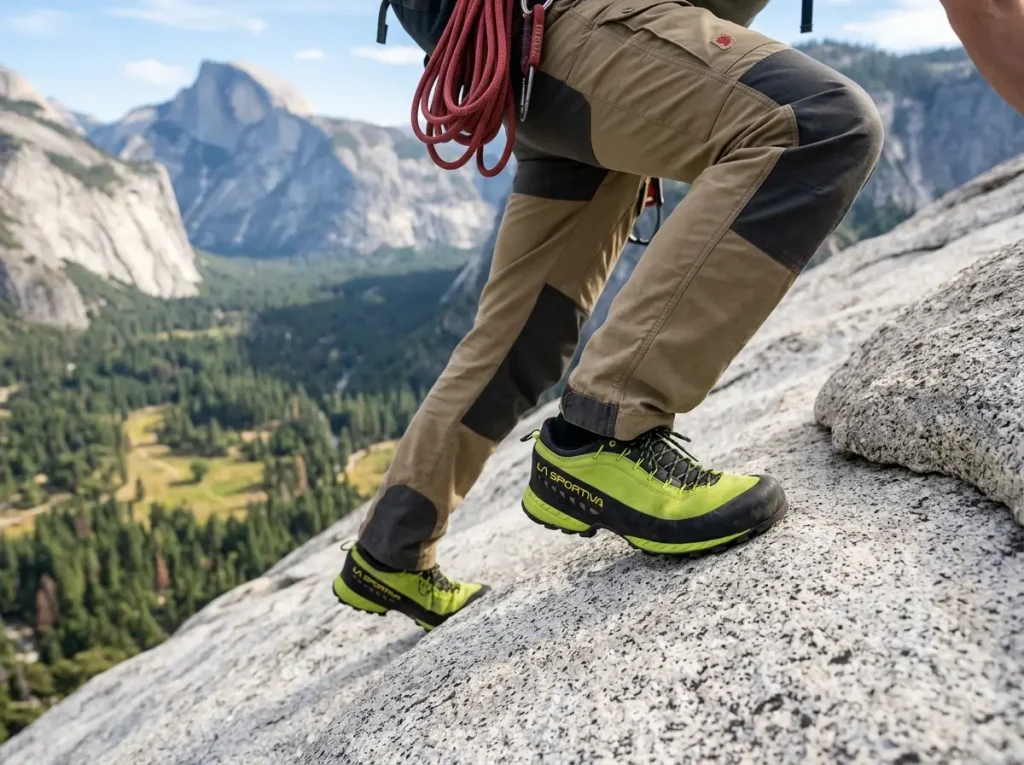
Approach shoes change your safety margin on technical terrain in a way that hiking boots simply can’t. Standard hiking boot deep-lug outsoles are excellent at mechanical interlocking in mud and loose trail. On smooth rock faces, those same lugs act as standoff spacers that reduce contact area. Approach shoes with flat or micro-textured Vibram Megagrip or XS Edge compounds are designed to maximize rubber-to-rock contact — smearing — which maximizes frictional resistance. When a hold feels “soapy,” approach shoes buy you margin that a lug sole cannot. Look at approach shoes tested on Class 4 scrambles for a direct comparison of how this plays out in practice.
The three-points-of-contact rule is most commonly broken on the easiest ground. That’s not an accident — it’s complacency. Data from rock climbing rescue causes, injuries, and trends from Boulder County shows that experienced scramblers with 3+ years of experience account for a disproportionate share of accidents, specifically on terrain they judged “easy.” The rule works on Class 4 terrain because people apply it. It fails on Class 2–3 terrain because people don’t.
Count your contact points before every move. Not after. You should have three before you release the fourth. If you can’t count to three, you’re not ready to move.
The Decision Matrix: When to Commit and When to Back Off
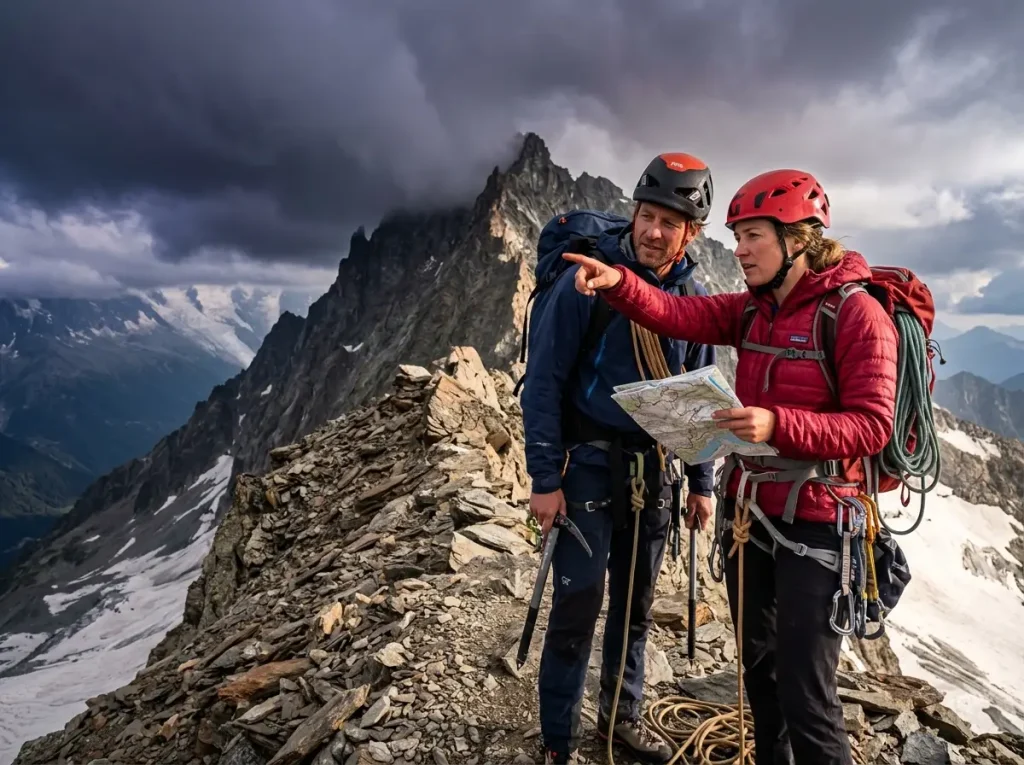
Technical scrambling is a “no-fall zone.” Unlike sport climbing where gear manages a fall, a scrambler’s safety is entirely a function of movement quality and hold assessment. That distinction changes how you have to think about risk.
The bias that causes serious injury is summit fever: the progressive minimization of warning signs as the summit gets closer. Making hold assessments faster. Skipping the acoustic test on holds that “feel fine.” The data from NPS Yosemite climbing safety protocols and human error statistics shows that human error accounts for the majority of preventable climbing fatalities. Most of those errors weren’t made in objectively hazardous conditions — they were made when experienced people stopped following their own protocols.
The Decision Matrix integrates five variables before committing to a section:
Variable 1 — Acoustic: Pass (solid clink or dense thud) means proceed with the next test. Fail (hollow drum) means do not weight that hold as a primary contact under any circumstances.
Variable 2 — Visual: No closed-loop cracks, no hanging fangs, no crying rock directly on the route above — proceed. Any single failure means suspect everything in that block’s vicinity.
Variable 3 — Environmental: Granite after 24+ hours dry — proceed with caution. Sandstone after any precipitation in the prior 48 hours — do not proceed. Active freeze-thaw window — evaluate by face aspect and time of day before committing.
Variable 4 — Gear: Helmet, approach shoes, three-points-of-contact available — mitigated risk. Missing any one element on exposed terrain — raise your caution threshold accordingly.
Variable 5 — Retreat: Clear retreat path available — proceed. Committed terrain with no retreat option — raise all thresholds significantly before committing to the next section.
In a group, more people means more exposure, not less. Rockfall from one climber falls on the party below. Maintain 20+ feet of vertical separation on loose terrain. The lead scrambler communicates hold quality in real time: “left knob solid, right shelf hollow — stay right.” When opinions diverge on route condition, the most cautious assessment wins. Never negotiate the risk threshold upward in a group setting.
Pro tip: When you notice you’ve stopped testing holds — and you will notice this if you’re paying attention — stop, breathe, verbalize the protocol, and run the full assessment on the next five holds before you do anything else. The reset takes thirty seconds. What it prevents is not something you want to calculate on the descent.
The best mountaineers I’ve been on route with have a phrase: “The mountain will be there next year.” I’ve seen people walk away from summits forty minutes from the top because conditions changed. None of them regretted it. For the broader discipline of the turnaround time rule and how summit fever overrides it, that habit is built before the summit fever starts, not after.
Conclusion
Three things worth carrying off this ridge.
Rock is a variable, not a constant. Geology, moisture, freeze-thaw history, and thermal cycling change the reliability of holds constantly — and experienced scramblers fail precisely because they stop accounting for this. The holds you trusted last summer have been through one more winter.
The HT-Protocol is a ten-second investment per hold: acoustic test, wobble verification, vector discipline. It filters out the holds that fail before you’re on them. Both tests must pass. “It feels fine” is not a test.
Visual forensics from the ground save your hands for climbing. Closed-loop fractures, lichen ghost patches, crying rock, vegetation in cracks — these can all be read from distance before you’re in the fall line. Get in the habit of reading the face before you touch it.
On your next scramble, apply the full protocol to the first ten holds — even on terrain you’ve done before. The mountain you climbed last summer has been through one more winter since you were last on it. Treat it like new terrain. That habit, consistently applied over years, is what separates a long scrambling career from a short one.
FAQ
How do you tell if a rock is loose while scrambling?
Strike the hold with the heel of your palm before gripping it — a hollow, drum-like sound means an air gap exists between the hold and the rock behind it. Follow that with the wobble test: push and pull gently in multiple planes; any movement or micro-vibration disqualifies the hold from primary weight-bearing. These two steps together — the acoustic test plus physical test — give you the most reliable field read available without specialized equipment.
What does a hollow sound in rock mean?
It means the rock is detached or has a vibration-reflecting air gap between it and the substrate. Solid, attached rock absorbs strike energy into the surrounding mass and returns a dense thud or sharp clink. A detached flake reflects that vibration off the air cavity behind it, producing the resonant, drum-like hollow sound. That acoustic signature is the most reliable single indicator of hold failure risk in technical terrain.
What is the safest way to test a handhold before committing?
Use the three-step HT-Protocol: (1) acoustic test — heel-of-palm strike before gripping; (2) wobble test — gentle multi-directional push or pull; (3) vector check — confirm your intended pull direction is downward, not outward. All three must pass before you commit body weight. A hold that passes the acoustic test but fails the wobble test is still disqualified.
How do you scramble safely on wet rock?
Rock type determines the answer. Wet granite retains structural integrity but loses surface friction — slow down, smear with approach shoes, run the HT-Protocol on every hold. Wet sandstone is categorically unsafe for technical scrambling; wait for 48+ hours of confirmed dry conditions. Wet limestone requires careful testing at any pocketed or undercut holds where dissolution channels may have been extended by recent precipitation.
How does the freeze-thaw cycle affect scrambling safety?
Freeze-thaw cycles physically expand water in rock cracks by approximately 9%, propagating fractures over repeated cycles. Frequent short-term diurnal freeze-thaw events are more structurally destructive than a single deep freeze — they create cumulative micro-fracture propagation across the interior of the rock. This makes early spring the highest rockfall risk period: daytime melt refreezes each night, and previously reliable holds may have degraded significantly over winter. Fresh, bright white fractures on an otherwise grey granite face mean recent activity. If you see a field of them on approach, turn around.
I've spent more than a decade researching hiking gear and trail technique. I read the specs, the forum threads and the long-term reviews, and every pick here comes with what it gets wrong.
End of the trail
You read every mile of this one. Here's where the trail goes next.