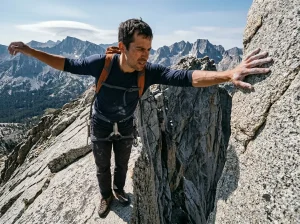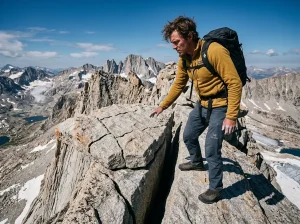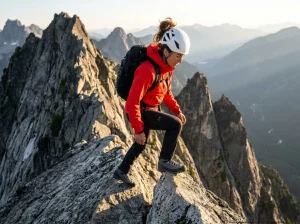
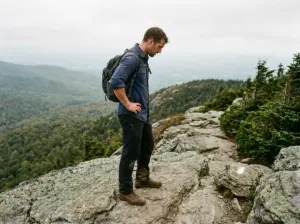
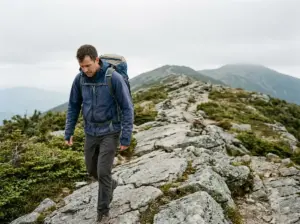
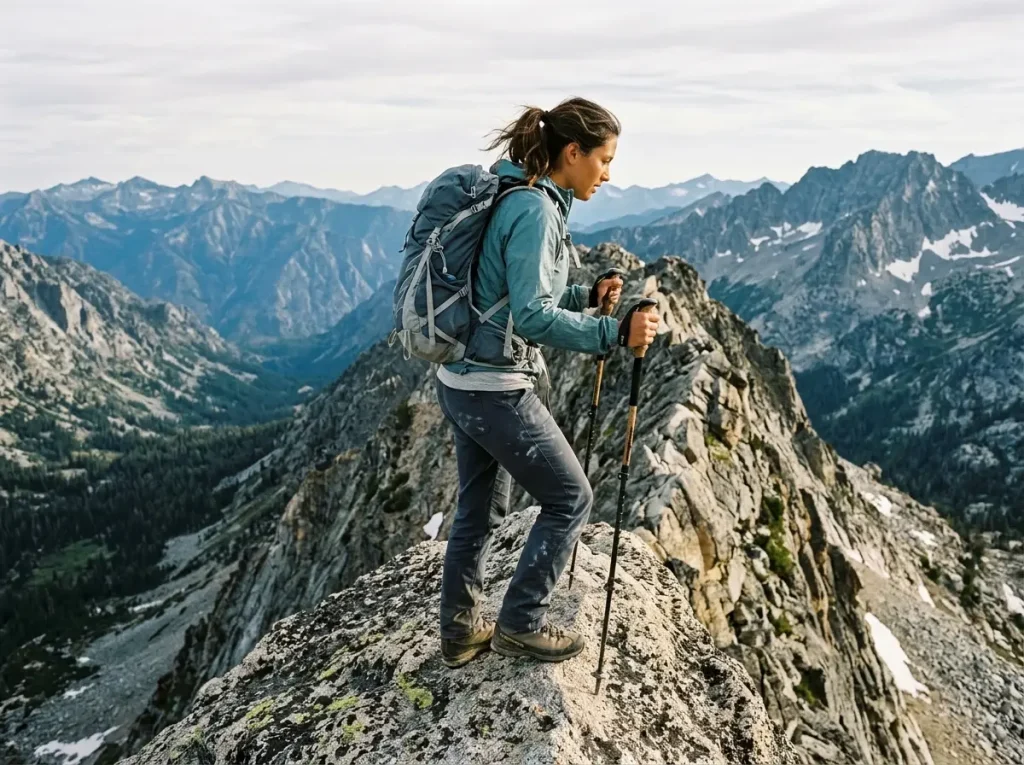
You’re 200 feet into a knife-edge ridge and your legs stop cooperating. The trail ahead is fine — you can see that. Three feet of solid rock, handholds everywhere. But your brain has already decided this is where you stop moving. I’ve been that hiker, frozen on Knife Edge in Maine, hands shaking while people twice my age strolled past like they were walking to the mailbox. After years of white-knuckling through exposed ridges, I figured out that most of my fear wasn’t about the height itself — it was about five specific mistakes I kept making that turned manageable discomfort into full-blown panic.
Quick Answer: Most hikers make their fear of heights worse on exposed ridges by staring into the drop, tensing up instead of lowering their center of gravity, holding their breath, carrying the wrong gear, and having no plan for when to turn back. Fixing these five mistakes won’t eliminate the fear, but it changes the experience from paralysis to controlled discomfort you can walk through.
Why Exposed Ridges Trigger Your Brain Harder Than Cliffs
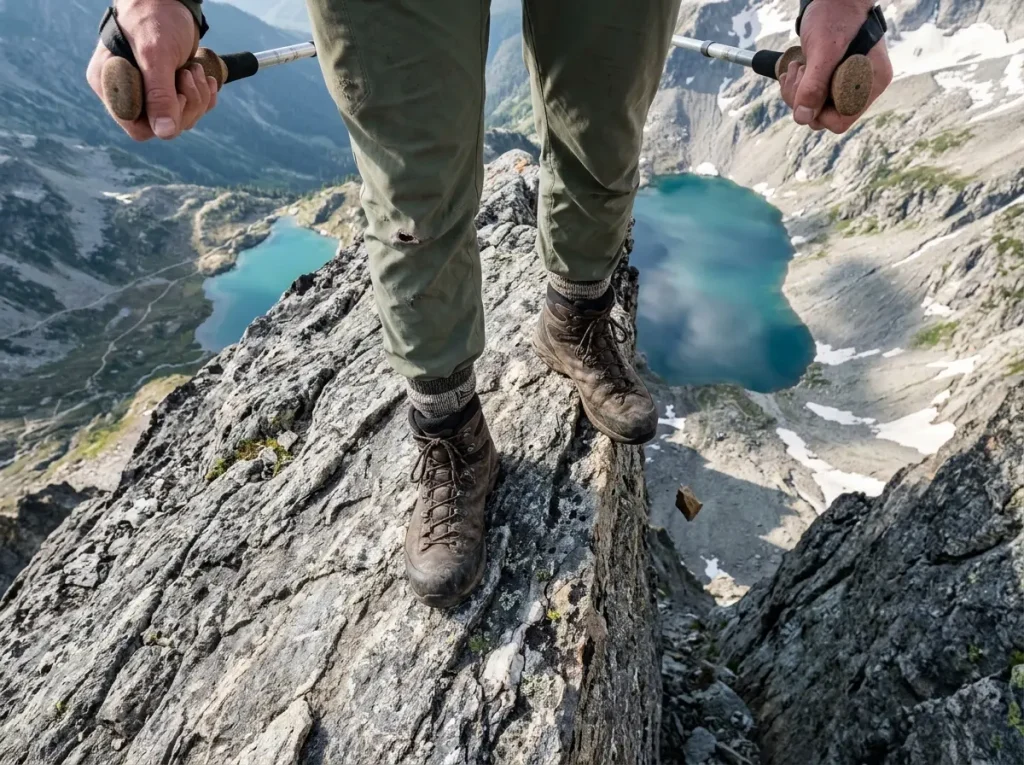
Standing at the edge of a cliff with a guardrail barely registers for most people. Put that same person on a three-foot-wide ridge with drops on both sides and they’re suddenly gripping rock like it owes them money. That’s not weakness — it’s neuroscience.
Your Balance System Runs on Three Inputs
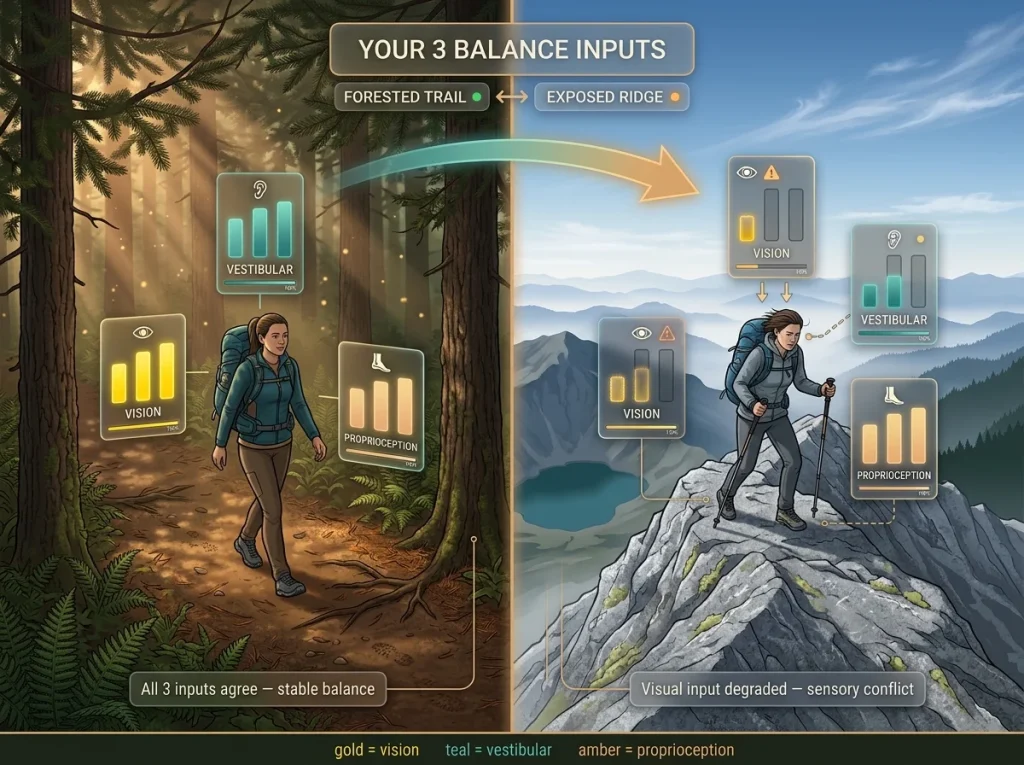
Your brain keeps you upright using three systems that work together: vision (what you see), the vestibular system in your inner ear (which tracks head position and acceleration), and proprioception (the pressure sensors in your feet, ankles, and joints that tell you where you are in space). On flat ground these three inputs agree with each other and you don’t think about balance at all.
On a ridge, everything goes sideways. Research on postural responses to height-related fear shows that when visual reference points move far away — no trees, no walls, just open sky and a valley floor hundreds of feet below — your visual system stops providing useful balance data. Your brain has to lean harder on your inner ear and your feet to figure out whether you’re actually tilting or just scared.
What Happens When Visual Cues Disappear
Here’s the problem: most people are visual-dominant for balance. They don’t know it because it never matters on normal terrain. But on a ridge traverse with nothing close to look at, their primary balance input essentially goes offline. The mismatch between what their eyes report (“hazard, open space, nothing to grab”) and what their feet report (“you’re standing on solid rock, you’re fine”) creates a conflict your brain interprets as instability — even when you’re perfectly stable.
That conflict is what makes your legs shake. It’s not fear making you unstable. It’s a sensory mismatch that your brain reads as “you’re about to fall” when you’re not.
The Wind Factor Nobody Talks About
Wind amplifies every part of this. A 25 mph gust on a forested trail is barely noticeable. That same gust on an exposed ridge pushes against your pack, shifts your center of gravity, and adds a real physical force to the sensory mismatch already happening in your head. Your vestibular system detects the sway. Your feet feel the shift. Your eyes see nothing but open space. All three inputs scream at once.
This is why ridges with even moderate wind feel dramatically scarier than calm ones. The wind isn’t just uncomfortable — it’s adding a genuine balance challenge on top of a neurological one. Understanding that distinction matters because the fix is different for each. You can train your brain to handle the sensory mismatch. You can’t argue with physics — and that’s where managing backcountry anxiety before you hit the ridge becomes part of the strategy.
Mistake 1 — Staring Into the Drop Instead of the Path
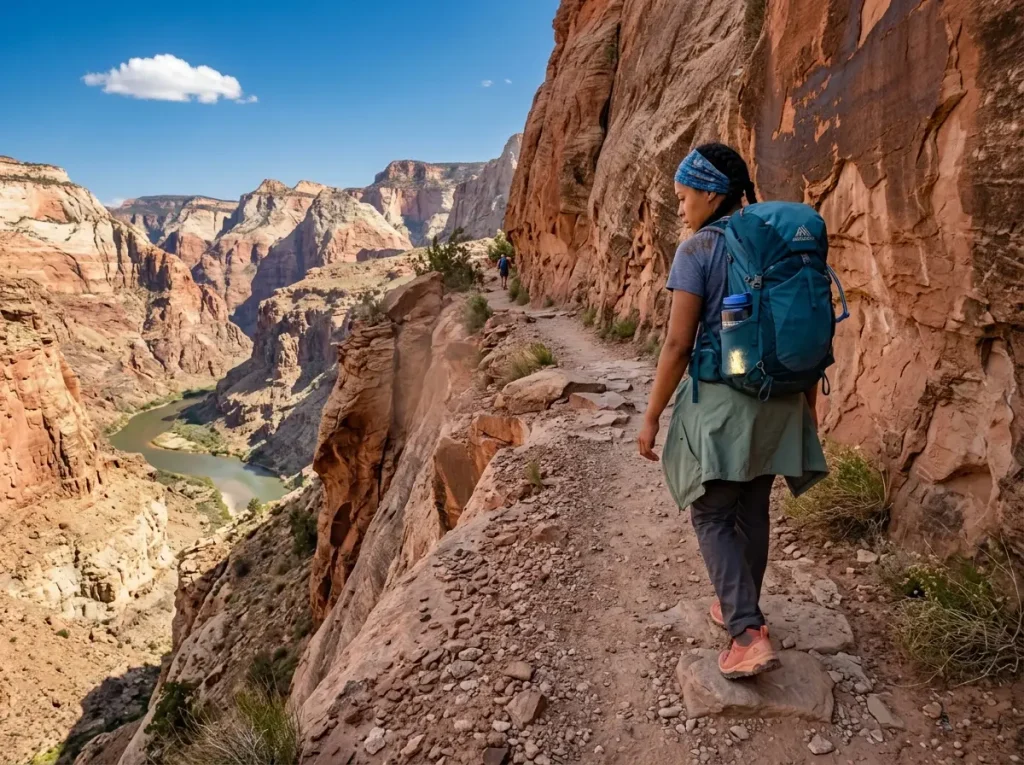
Your eyes want to look at the thing that scares you. It’s a survival reflex — your brain needs to assess the threat. The problem is that on a ridge, looking at the drop isn’t assessing anything useful. You already know it’s far down. What you’re actually doing is feeding your visual system the worst possible input for balance while simultaneously triggering your fight or flight response.
The 3-Meter Bubble Technique
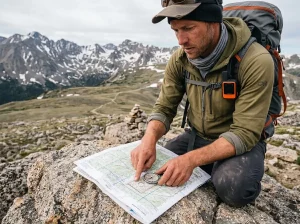
The fix is simple and it works immediately. Shrink your visual world to a bubble about three meters in front of your feet. Look at the texture of the rock. Count the cracks. Notice where the trail is flat and where it angles. Your brain gets a concrete, manageable task — process the path — and it stops spinning on the loop of “look how far down that is.”
Pro tip: Practice this on normal trails first. Walk a mile looking only at the three meters ahead of you. It feels weird at first because you’re used to scanning the landscape. But that practice means your brain already knows the pattern when you need it on exposed terrain.
Why Looking Down Breaks Your Balance
When you look straight down from a ridge, your visual field fills with distant ground and open space. Your eyes track the scale of the drop and your visual cortex overloads trying to process depth at that distance. Meanwhile your feet are reporting solid ground. That disconnect is what makes you dizzy — technically called visual vertigo — and it gets worse the longer you look.
Keeping your gaze on the path short-circuits the whole cycle. Your eyes see close objects with clear spatial relationships. Your brain can calculate balance again. The dizziness fades in seconds.
Following a Partner’s Boots
If you’re hiking with someone who handles exposure well, walk directly behind them and fix your eyes on their boots and the back of their pack. Place your feet where they place theirs. This works on two levels: it gives your visual system a close, stable reference point, and your mirror neurons — the same brain circuits that make you yawn when someone else yawns — begin mimicking their calm movement pattern.
It’s not cheating. It’s neuroscience. And it’s the fastest way to get through a section that has you frozen — because following someone else’s pace means you don’t have to make any decisions about where to step. One less thing for your overloaded brain to process.
When the exposure starts exceeding your comfort and you can’t keep moving even behind a partner, that’s worth knowing about ahead of time. Understanding when the exposure exceeds your skill is a separate skill entirely.
Mistake 2 — Tensing Up Instead of Getting Low
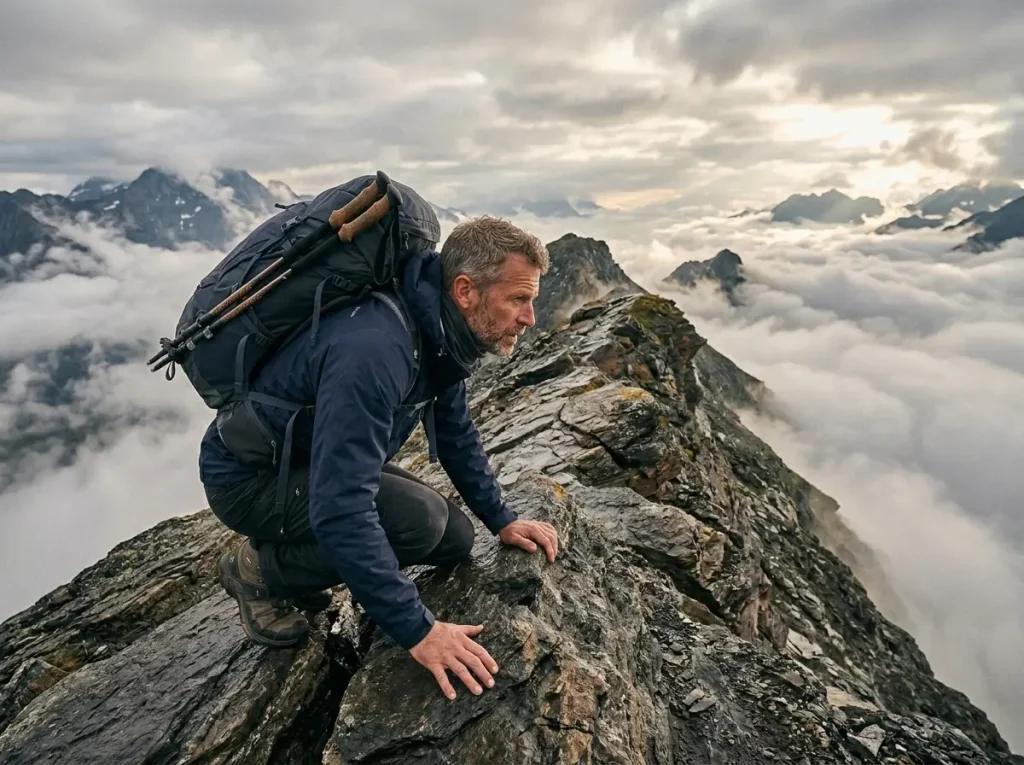
The instinct when you’re scared on a ridge is to tense up. Lock your knees. Clench your hands. Stand as rigidly upright as possible because that feels like control. It’s the opposite of what you need.
Drop Your Center of Gravity
Bend your knees. Not a dramatic squat — just soften them so they’re slightly flexed, like you’re about to absorb a step down. This drops your center of gravity closer to the rock and immediately increases your actual physical stability. Your feet get better ground contact. You can absorb gusts and small stumbles instead of toppling.
Pro tip: If you feel your quads burning from the bent-knee stance, you’re too deep. Just a slight softening at the knees is enough. Think “ready stance” in any sport — knees unlocked, weight centered, ready to move in any direction.
It sounds too simple to matter. It matters enormously. A rigid, locked-knee stance on a narrow ridge is objectively less stable than a slightly crouched one. The physics are straightforward — lower center of mass plus wider base equals more resistance to tipping. You know this instinctively for every other balance situation. Fear overrides it on ridges.
The Sit-and-Reset Method
When the fear locks you in place and the knee bend isn’t enough, sit down. Get your butt on the rock. This does three things: it maximizes your contact with solid ground, it makes falling off the ridge nearly impossible, and it sends a powerful “you are safe” signal to your nervous system.
Sit for 60 seconds. Breathe. Look around at the close rock. Touch the rock with your hands. These tactile inputs feed your proprioception system raw data that says “solid, stable, not moving.” Once your heart rate comes down — and it will — stand up slowly and continue with the bent-knee stance.
When Crawling Is the Smart Move
On genuinely narrow ridges — we’re talking two feet wide with serious exposure on both sides — there is absolutely nothing wrong with going to your hands and knees. You’ve just quadrupled your contact points with the rock and dropped your center of gravity to its lowest possible position while still moving forward.
Pro tip: If you crawl on rock, wear light gloves or keep your palms flat. Gripping sharp rock edges with bare hands tears skin and the pain adds another stress signal your brain doesn’t need right now.
I’ve seen experienced mountaineers crawl on particularly nasty ridge sections in high wind. Nobody on the mountain cares how you got across. They care that you got across.
Mistake 3 — Holding Your Breath When You Should Be Counting
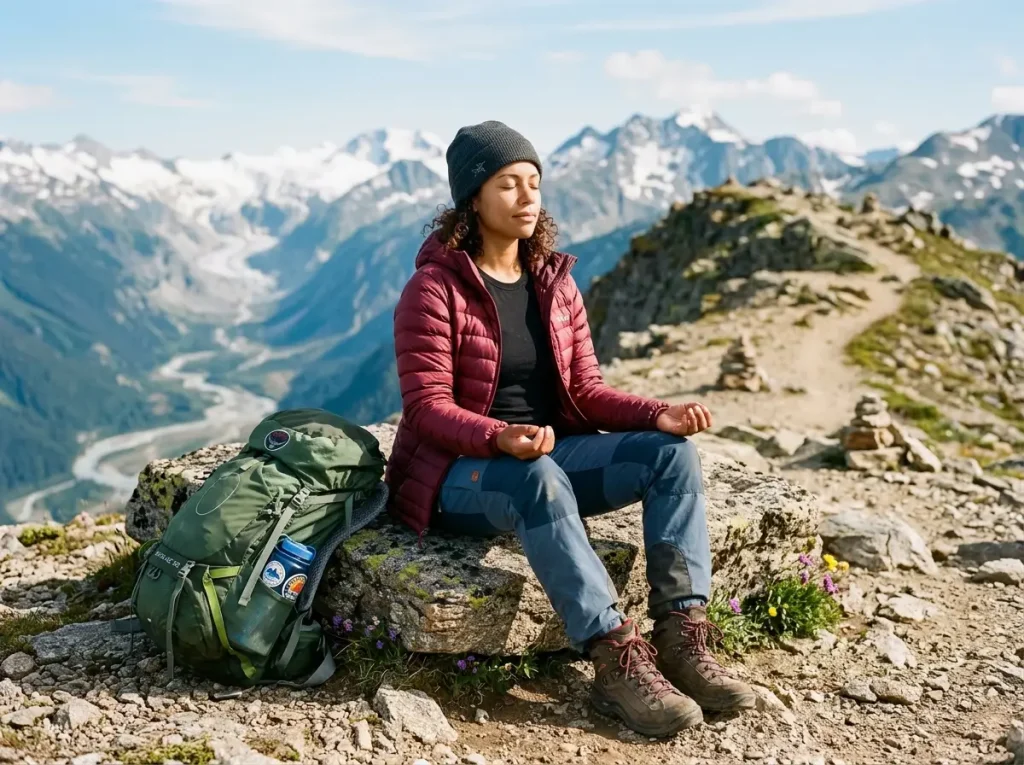
Fear makes you hold your breath. You might not even realize you’re doing it until you’ve been on a ridge for 30 seconds and suddenly gasp for air. That breath-holding triggers a cascade: oxygen drops, carbon dioxide rises, your heart rate spikes, your muscles tighten, and your brain interprets all of it as “things are getting worse.” It’s a feedback loop that turns moderate anxiety into full panic in under a minute.
Box Breathing on the Ridge
Box breathing is the single fastest way to break that loop. Inhale for 4 counts. Hold for 4 counts. Exhale for 4 counts. Hold for 4 counts. Repeat. It’s the technique Navy SEALs use in combat situations — not because it’s exotic, but because it works under extreme stress when nothing else does.
The 4-count hold after exhaling is the key. It forces a pause that interrupts the hyperventilation pattern. Three cycles of box breathing — about 48 seconds total — is usually enough to bring your heart rate down noticeably.
The 4-7-8 Method for Longer Sections
For sustained ridge exposure where you need to stay calm for 20 minutes or more, the Cleveland Clinic’s guide to the 4-7-8 method describes a pattern that extends the exhale: breathe in for 4 counts, hold for 7, exhale slowly for 8. The extended exhale activates your vagus nerve, which directly triggers your parasympathetic nervous system — the “rest and digest” mode that opposes fight or flight.
The longer you extend the exhale, the stronger the calming signal. On a ridge this means counting your exhales as you walk. Four steps breathing in, seven steps holding, eight steps breathing out. The counting gives your brain yet another concrete task and the breathing keeps your nervous system from spiraling.
Practice Before You Need It
Neither technique works well the first time you try it if the first time is on an exposed ridge with your legs shaking. Practice box breathing at home, in the car, on easy hikes. Build the pattern so deeply into muscle memory that it activates automatically when you need it — the way you reflexively brake when a car stops in front of you. You don’t think about braking. You just brake.
Mistake 4 — Wrong Gear Turns Discomfort Into Panic
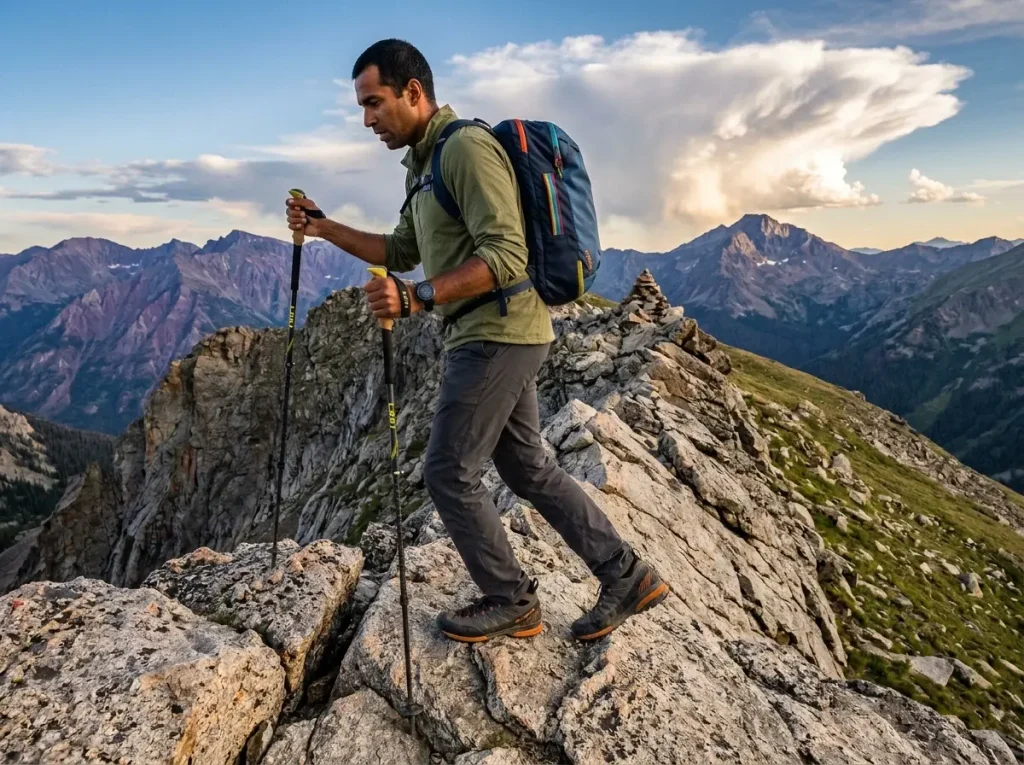
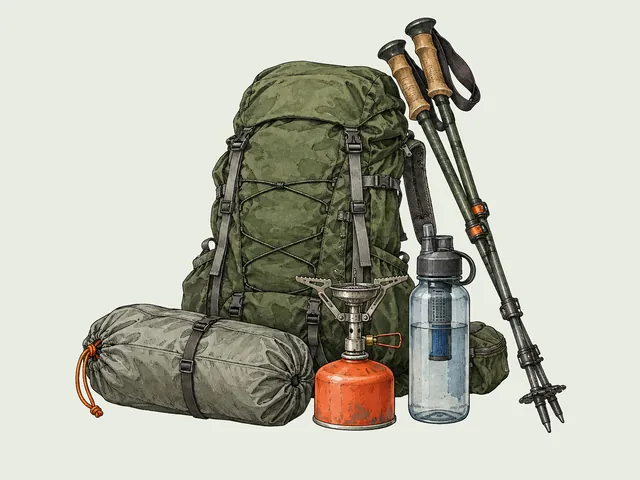
Nobody talks about gear in the context of fear management. But the wrong boots, the wrong pack setup, or the wrong pole configuration can take a manageable ridge and make it feel hazardous — because it literally becomes less stable.
Boot Stiffness Matters More Than Ankle Height
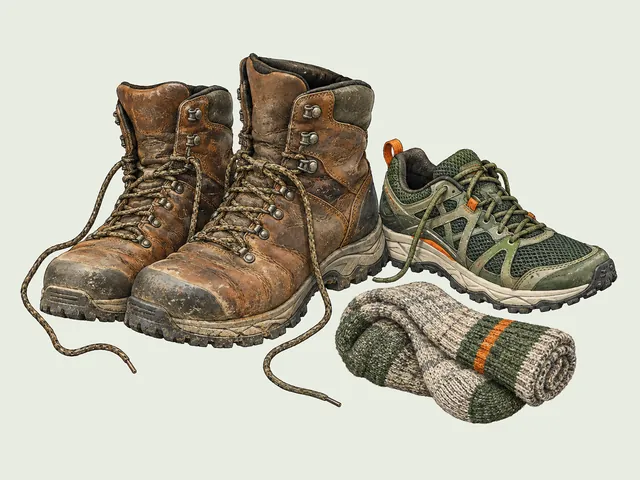
The old advice about high-top boots for “ankle support” on technical terrain is mostly myth. What actually matters on ridges is sole stiffness. A stiff-soled boot — a B1 or B2 rating in the mountaineering boot classification system — gives you a stable platform on angled rock. Your foot doesn’t flex and roll on edges the way it does in soft trail runners or flexible hiking shoes.
You don’t need full mountaineering boots for ridge hiking. But you need something stiffer than your average trail shoe. Understanding the difference between hiking and mountaineering boot stiffness helps you pick the right tool without overspending. A good approach shoe with a stiff midsole and sticky rubber outsole is the sweet spot for most exposed ridge hikes that don’t involve technical scrambling.
Trekking Poles as a Four-Point Stability System
Going from two ground contact points (feet) to four (trekking poles plus feet) changes the math on ridges dramatically. Your stability base widens. Your balance inputs multiply. And psychologically, gripping something solid that touches the ground gives your brain a reference point it desperately wants.
Set poles shorter than normal for ridge traverses — about chest height when the tip is on the ground. This keeps them from catching on rock above you and lets you plant them with a downward push rather than a forward swing. On very narrow ridges where pole tips might catch on the sides, consider when one pole beats a pair on technical terrain — one pole in the uphill hand, the other hand free for rock contact.
Pro tip: Tighten your pole wrist straps before the ridge section. If you fumble and drop a pole on a narrow ridge, losing that stability point while bending down to pick it up is worse than the momentary scare.
Pack Weight and Position on Ridges
A heavy pack with a high center of gravity swings when you move and pushes you off balance in wind. Before any ridge section: tighten every compression strap, cinch the hipbelt and sternum strap, and make sure nothing is swaying or dangling. The pack should feel like it’s bolted to your back, not riding on top of it.
If you can, keep the heaviest items low and centered — closest to your back at waist level. A top-heavy pack on a windy ridge adds a pendulum effect that your vestibular system reads as instability. And it’s right.
Mistake 5 — No Plan B (The Abort Criteria You Need)
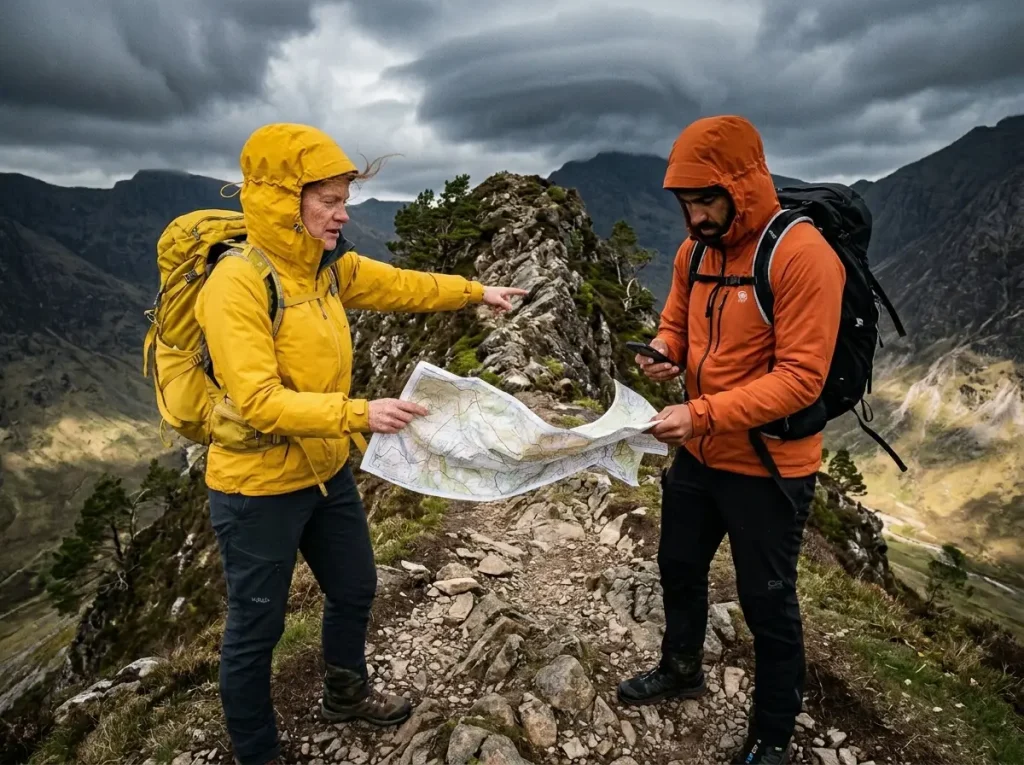
Here’s the mistake that compounds all the others: going onto an exposed ridge without deciding in advance what would make you turn back. Without a pre-set abort line, your decision-making on the ridge is happening while your brain is flooded with adrenaline and cortisol. That’s the worst possible mental state for rational risk assessment.
Wind Speed Thresholds for Ridges
Sustained winds above 30 mph on an exposed ridge are a legitimate physical hazard for most hikers, regardless of experience. Above 40 mph, gusts will physically push a hiker with a pack off balance. Above 50 mph, experienced mountaineers consider retreat.
The problem is that most hikers don’t carry anemometers. So use proxies: if you have to lean into the wind to walk straight, you’re above 30. If gusts stagger you or make you grab for something, you’re above 40. If you cannot stand upright in a gust, you’re above 50 and you should already be off the ridge.
Check mountain weather forecasts that include summit wind speeds before you go. Not valley forecasts — summit forecasts. Ridge winds are typically 2-3x stronger than valley winds at the same elevation.
The Shaking Test
There’s a difference between manageable fear and a nervous system that has left your control. If your hands are shaking so badly you can’t operate a zipper or hold a water bottle steady, your fine motor control is gone. That means your gross motor control is next. On a ridge, that’s a real problem.
The shaking test is honest and binary. Hands steady enough to open a snack bag? Keep going. Hands trembling too much to grip a pole properly? Sit down, breathe, and reassess. If the shaking doesn’t stop after five minutes of rest and breathing, turn back. Your nervous system is telling you something your ego doesn’t want to hear.
Building Your Personal Abort Card
Before the hike, set three conditions that would make you turn around. Write them down. Tell your hiking partner. Examples:
Winds that stagger you on the approach — before you’re committed to the ridge. Persistent hand tremor that doesn’t respond to breathing exercises. Visibility dropping below 50 feet, because now you can’t see the path and your visual system loses its last reference point.
These aren’t signs of failure. They’re signs of good judgment. The mountain isn’t going anywhere. You can come back when conditions are better and your nervous system is ready. Understanding our full turn-back decision framework for scrambles gives you a structured approach to this kind of call.
The Micro-Commitment Method for Getting Across
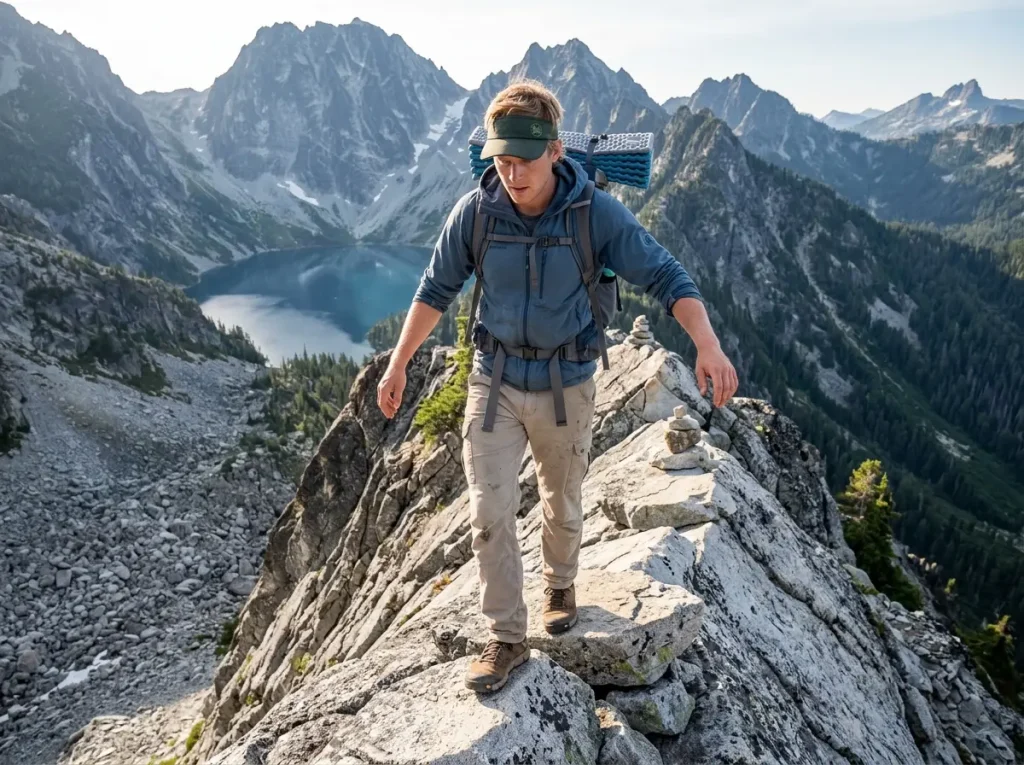
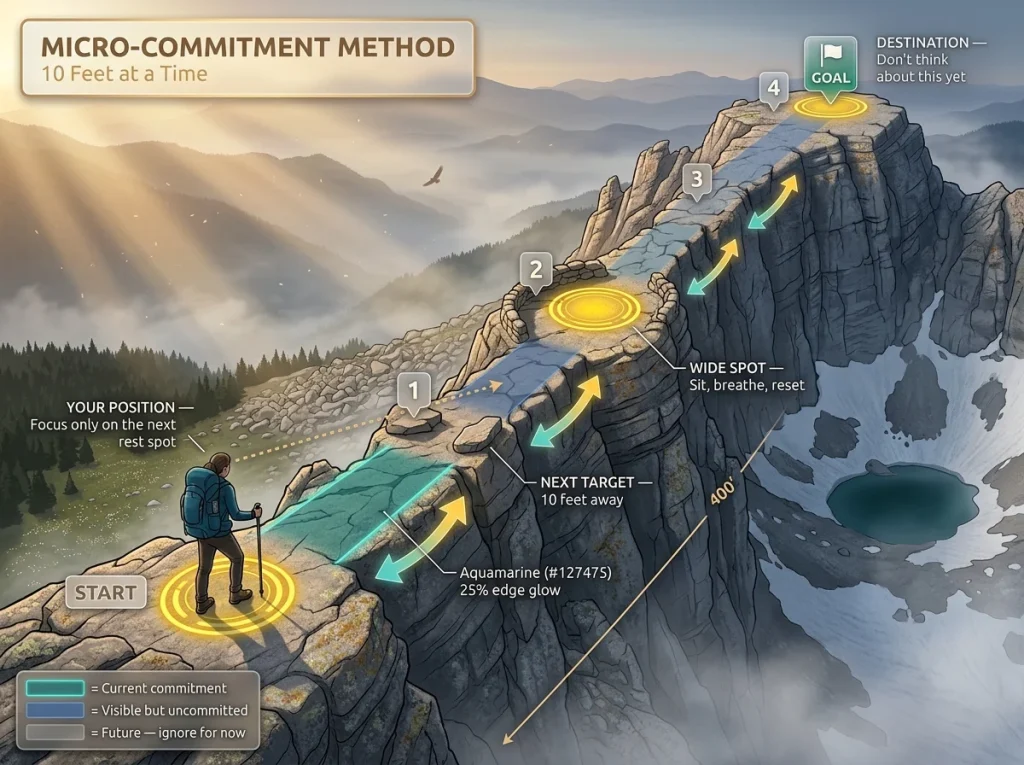
Most ridge fear comes from looking at the full traverse and thinking “I have to walk that whole thing.” You don’t. You have to walk ten feet. That’s it.
How 10-Foot Segments Change Everything
Before you step onto the ridge, scan ahead and pick the first flat spot, wide section, or stable rock where you could comfortably stand and rest. It should be about 10 feet away. Walk to it. Stop. Breathe. Look at the next one. Walk to that. Stop. Breathe.
This is the micro-commitment method and it works because your brain can handle “walk ten feet” when it cannot handle “walk 300 yards along a knife edge.” Each completed segment builds a tiny deposit of confidence — proof that you can do this. By the fifth segment, you’ve covered 50 feet and your nervous system has started to recalibrate.
Picking Rest Spots Before You Start Moving
The trick is choosing your rest spots from a stable position, not mid-stride when anxiety is climbing. Stand at the start of the ridge and visually identify your first three or four rest points. Look for wider sections, flat rocks, or places where the trail dips below the ridgeline briefly.
Pro tip: If you can’t identify at least three rest spots in the first 50 feet of ridge, the terrain may be too sustained for the micro-commitment approach. Consider whether this ridge is right for your current comfort level.
The Group Pace Problem
Ridge traverses with a group create a specific pressure: the fear of slowing everyone down. This is one of the most common reasons hikers push through fear instead of managing it. The solution is to talk about it before the ridge, not on it.
Tell your group you plan to take it in segments. Ask the most confident person to go first and set pace marks. Ask the group to stop at wider sections and wait so nobody feels rushed. This turns the ridge from a race into a team move — and removes the social pressure that makes fear worse.
Building the physical fitness to handle ridge terrain with confidence starts before the hike. Working on scrambling fitness exercises that build ridge confidence makes the physical demands of exposed terrain less taxing, which frees your brain to focus on managing the fear instead of managing exhaustion.
Building Long-Term Ridge Confidence
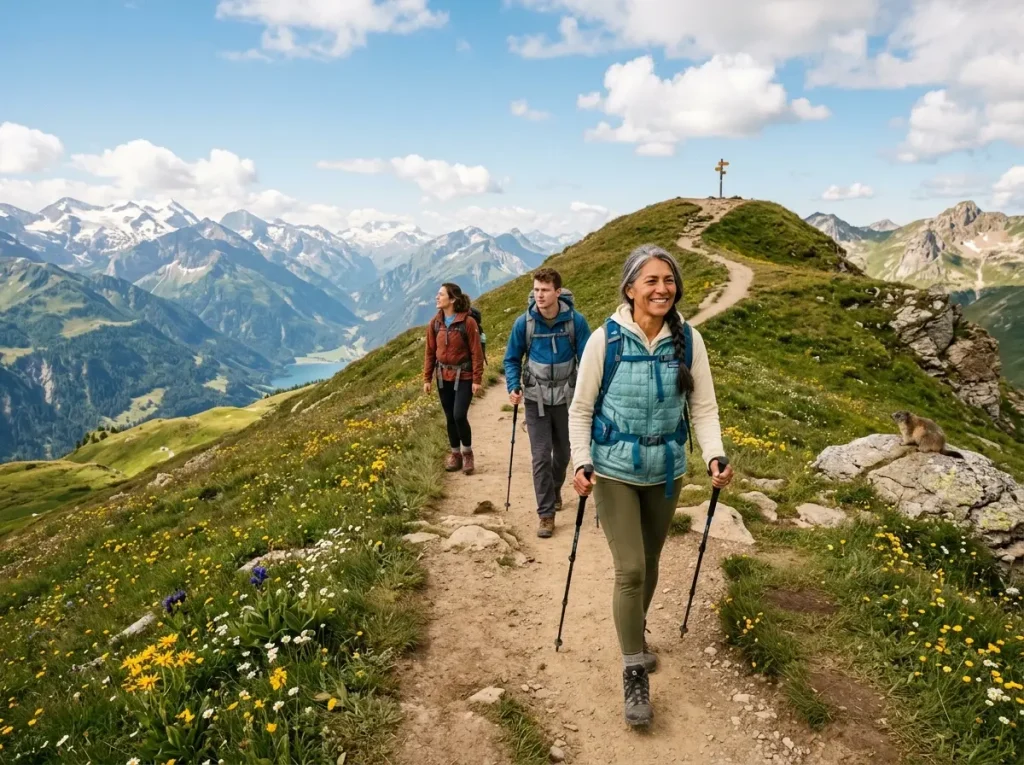
The techniques above manage fear in the moment. Long-term confidence requires something different: progressive exposure that rewires your brain’s response to height.
The Exposure Ladder for Ridge Hikers
Think of it as a training plan, not a test. Start with trails that have one short exposed section — maybe a viewpoint with a drop-off, or a 50-foot ridge section with a wide path. Hike it. Sit at the edge. Breathe. Go home.
Next time, pick something with longer exposure — a quarter mile of open ridgeline. Then a half mile. Then a full ridge traverse. The key is staying in the growth zone: anxiety at about a 4-7 on a 1-10 scale. Uncomfortable enough that you’re facing the fear, not so overwhelming that you lock up. Each successful hike at that level rewires the neural pathways that currently scream “you’re going to fall.”
Training Hikes That Build Tolerance
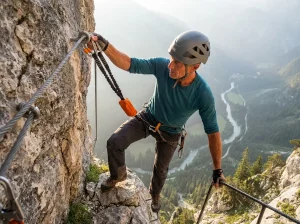
Good stepping stones include via ferrata routes, which provide cables and protection on exposed terrain. They let you experience serious exposure with a safety system that keeps the anxiety manageable. Trying via ferrata as a stepping stone to exposed terrain is one of the fastest ways to build comfort with height because you’re genuinely exposed but objectively safe.
Other options: short scrambling sections on otherwise normal hikes, fire lookout towers with exterior catwalks, and suspension bridges over canyons. Anything that puts you at height with a clear safety margin while your brain learns that height doesn’t mean falling.
When to Talk to a Professional
If your fear of heights prevents you from hiking trails you want to do, if it’s getting worse over time instead of better, or if it extends beyond hiking into daily life (bridges, balconies, upper floors of buildings), that’s worth a conversation with a therapist who specializes in cognitive behavioral therapy for phobias.
This isn’t a weakness and it’s not something you just push through. Acrophobia — clinical fear of heights — responds well to structured CBT and exposure therapy with professional guidance. The hike will still be there when you’re ready. Getting help means you’ll actually get to enjoy it instead of surviving it.
Conclusion
Your brain isn’t broken when it panics on a ridge — it’s processing a genuine sensory conflict between what your eyes see and what your feet feel. Understanding that the fear is neurological, not personal, changes how you approach it.
The five mistakes — staring at the drop, tensing up, holding your breath, carrying the wrong gear, and having no abort plan — are all fixable without years of therapy or climbing experience. Fix the visual focus. Drop your center of gravity. Count your breathing. Set your pack right. Decide your limits before you need them.
Pick a trail with one exposed section and try the micro-commitment method on your next hike. Ten feet at a time. That’s all it takes to start rewriting your brain’s response to ridges.
Q1 Is fear of heights the same as vertigo?
No. Vertigo is a medical condition involving the inner ear that creates a spinning sensation regardless of height. Fear of heights is a psychological response to perceived fall risk. They feel similar on a ridge because both disrupt balance, but vertigo happens on flat ground too and needs medical evaluation.
Q2 Can you train yourself to not be afraid of heights?
You can reduce the response through gradual exposure, but complete elimination is unlikely and unnecessary. The goal is managing the fear so it doesn’t control your movement. Most experienced ridge hikers still feel discomfort — they’ve just built enough practice to walk through it.
Q3 Should I hike exposed ridges if I’m afraid of heights?
Start with mildly exposed trails and build up. Avoiding all exposure reinforces the fear. But jumping straight to a knife edge traverse without preparation is counterproductive. Match the exposure level to your current tolerance and expand gradually.
Q4 How do I stop feeling dizzy on exposed hiking trails?
Focus your gaze on the path three meters ahead, not the drop. Bend your knees slightly to lower your center of gravity. Use trekking poles for additional balance points. The dizziness comes from a visual-vestibular mismatch — close visual references fix it within seconds.
Q5 What causes sudden fear of heights in adults?
It can develop after a near-fall experience, during periods of high general anxiety, or as vestibular function changes with age. A significant life stressor can also lower your threshold for tolerating height exposure. If it appears suddenly and severely, a medical checkup rules out inner ear issues.

I've spent more than a decade researching hiking gear and trail technique. I read the specs, the forum threads and the long-term reviews, and every pick here comes with what it gets wrong.
End of the trail
You read every mile of this one. Here's where the trail goes next.