
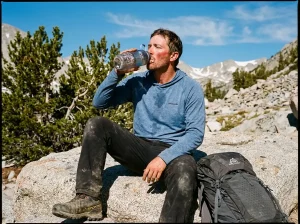
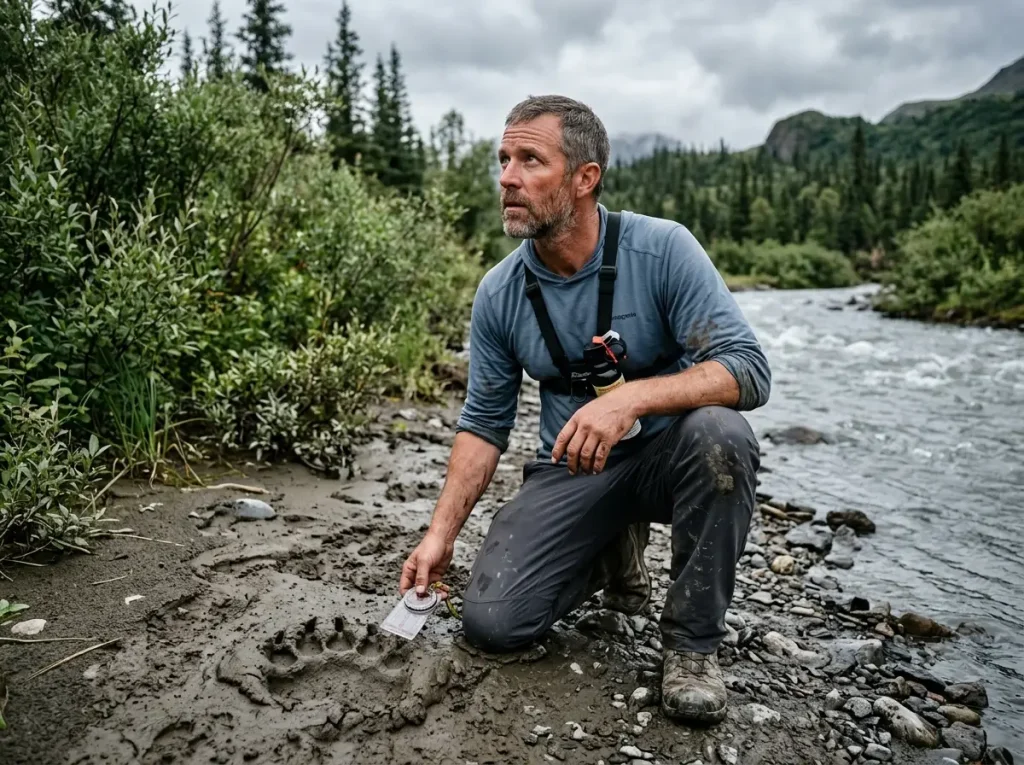
The bear was forty feet away before he saw it — a dark shape stepping out of the creek-bed willows without a sound, no huff, no jaw pop, just that flat, locked gaze that serious hikers learn to read as one thing: predatory intent. He’d been making noise the entire approach. What he hadn’t accounted for was the creek behind him, running hard and loud enough to swallow every syllable. In the next four seconds, he had to decide: grizzly or black bear? And the answer would dictate whether he fought or played dead.
Most bear-encounter advice hands hikers two-word mantras — “play dead,” “fight back” — without teaching the biological and environmental principles that determine which response applies. This guide is the field manual your mantra is missing: a differential diagnosis framework that works in under three seconds, a behavior-based decision matrix, the physics of deterrents, and the post-encounter protocol that survivors use to walk out without a secondary accident.
⚡ Quick Answer: You cannot tell a grizzly from a black bear by color alone — roughly 50% of black bears in the Rockies are brown or cinnamon. Use the three-point structural checklist instead: (1) prominent shoulder muscle hump, (2) concave dish-face versus straight Roman nose, (3) small rounded ears versus tall pointed ears. Once you’ve identified the species and whether the bear is acting defensively or predatorily, the correct response — stand ground and play dead, or fight back — follows from that read. Carry EPA-registered bear spray with at least 2.0% major capsaicinoids; it stops charges at 92% effectiveness, more than 25 points higher than firearms in longitudinal Alaska data.
How to Tell Them Apart Before the Clock Runs Out
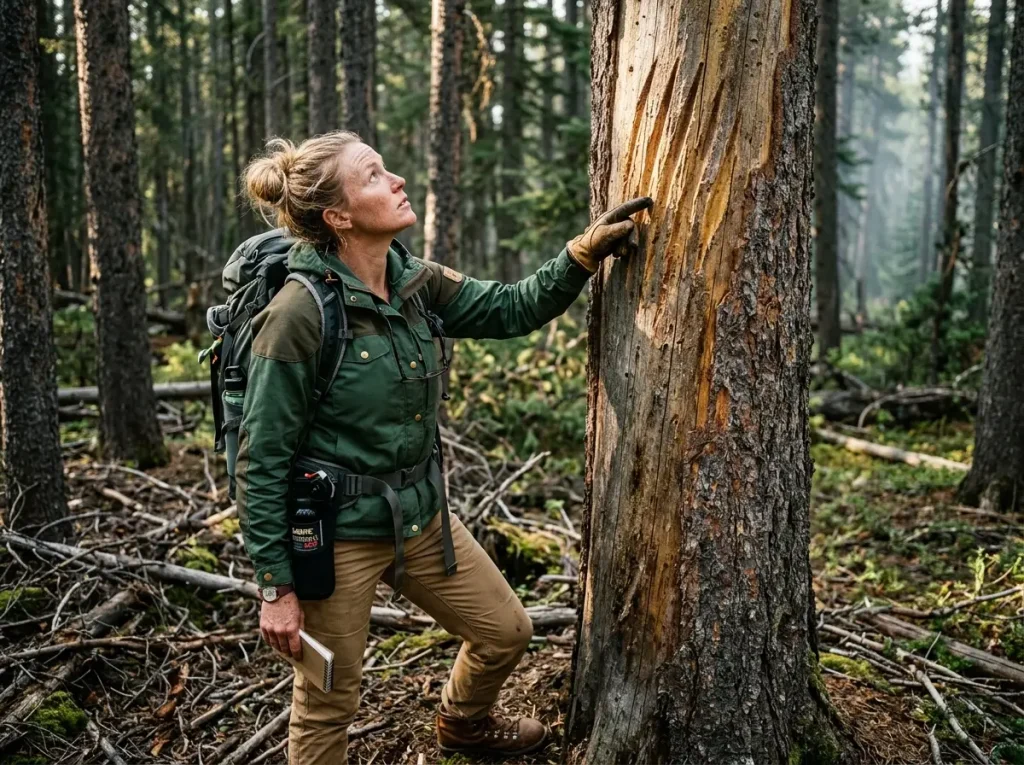
Color is the first thing your brain reaches for, and it’s the worst tool in your kit. Approximately 50% of black bears in the Yellowstone ecosystem and Rocky Mountain corridors are brown, cinnamon, or blonde. Grizzlies can be so dark they appear pure black. Relying on color is a confirmed cause of misidentification — and misidentification costs lives, because a black bear identified as a grizzly triggers the “play dead” response when the bear is actually predatory.
Structure doesn’t lie. The anatomical differences documented by NPS Yellowstone wildlife biologists give you three features that remain readable at fifty meters in low light: shoulder hump, facial profile, and ear shape.
The Hump, Face, and Ears — Your Three-Second Checklist
Start with the hump. A grizzly’s trapezius muscle creates a pronounced shoulder mass that is always the highest point on its body when it stands on all four legs. A black bear’s highest point is the rump or mid-back — its spine slopes upward toward the hindquarters. This binary is the fastest single check you can do. If you see hump, you’ve likely already made the call.
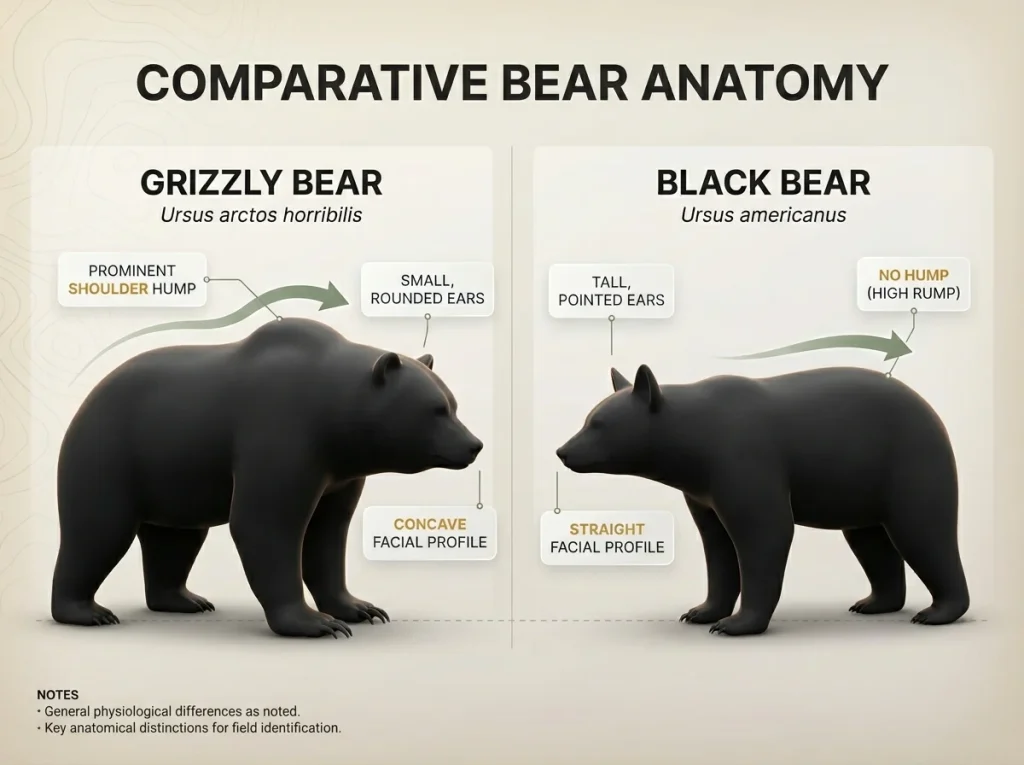
Next, look at the face. A grizzly’s facial profile is concave — there’s a visible dip between the forehead and the snout. A black bear has a straight or slightly convex “Roman nose” profile that runs flat from forehead to tip. This is the most reliable marker at long range when the bear is angled toward you. Third: ears. Grizzly ears are small, rounded, and set wide on a broad head. Black bear ears are tall, pointed, and erect — like a German Shepherd’s.
Wilderness instructors teach this as a three-step sequence: hump check, facial profile, ear shape. “In fifteen years of guiding in grizzly country, I’ve never let a student call a species by color alone. I make them say ‘hump’ or ‘no hump’ first, every time.” That habit takes thirty seconds to build in camp and four seconds to execute on the trail.
A note on the false hump: a black bear leaning over a log can create the impression of a shoulder rise. But a true grizzly hump is structural — it holds its shape at every head position, regardless of posture. You’ll know the difference after you’ve seen it once. Until then, apply the full three-step check.
Pro tip: For quick visual recall in the field, burn this binary: Hump = Grizzly, High Rump = Black Bear. That’s one sentence. Practice calling it on photos before your trip — run through twenty images and time yourself. If you’re slower than three seconds on photos, you need more reps before you’re ready for grizzly terrain.
Reading Tracks and Scat When the Animal Isn’t There
If you never see the bear but find sign on the trail, you still need a species read — and fresh sign tells you how close the animal is. The IGBC field identification standards for bear sign give you two tools: the Straight-Edge Test for tracks, and scat composition for species and diet.
For tracks: lay a straightedge across the top of the toe impressions. Grizzly toes align in a near-straight horizontal line — the edge won’t intersect the toes. Black bear toes arc significantly — the straight edge will cut through the inner or outer toes. Grizzly claw impressions appear two to four inches from the toe pad, distinct and often light-colored. Black bear claws leave impressions within an inch and a half, or nothing at all.
Scat freshness is your temporal radar. Steaming or glistening surface means the bear passed within roughly a thousand meters — you’re in an active zone. Grizzly scat tends to be larger than two inches in diameter, with bone fragments, hair, and a strong protein smell. Black bear scat runs smaller, with berry seeds, insect husks, and nut shells. You can identify animal scat for real-time trail risk assessment and build the habit of reading it on every trip.
Rangers call fresh scat “the bear’s calendar.” It tells you what the animal has been eating — protein-heavy composition signals higher predatory risk during late-season hyperphagia — when it passed, and often the direction of travel.
Decoding Bear Behavior — Intent Is Everything
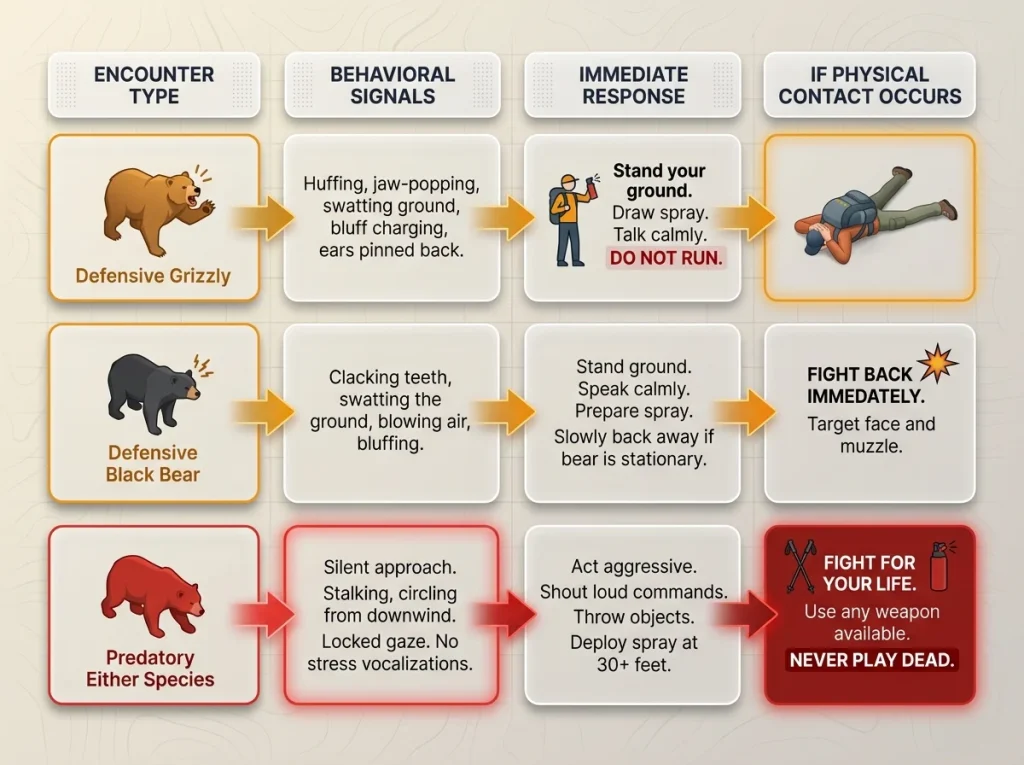
Here’s where most hikers’ training breaks down. They learn the species read. They skip the behavioral read. The species tells you the statistical baseline; the behavior tells you which response actually applies in the next four seconds.
The Defensive Bear — Stress Signals and the Bluff Charge
Defensive encounters are the most common interaction with grizzlies, particularly sows with cubs near willow corridors in July through September — peak hyperphagia buildup. A defensive bear is acting to neutralize a perceived threat. It is not hunting you.
The stress signals come in layers. Acoustic: huffing, woofing, moaning, and jaw-popping — a loud, rhythmic clicking produced by snapping the teeth together. Most people don’t know this sound until they hear it. It’s like someone cracking their knuckles, hard and fast. Visual: ears pinned back against the skull, head bowed, excessive salivation, exaggerated ground swatting. Kinetic: the bluff charge — the bear bounds toward you, head up and ears forward, then stops short or veers at the last second. This is a threat display. It is not a committed attack.
The NPS bear attack classification: defensive versus predatory encounters is clear on what to do when a bear goes defensive: stand your ground, talk in a calm, low voice, and keep your hand on your spray. Do not run. Do not scream. If contact occurs in a defensive grizzly attack, go flat on your stomach — hands laced behind your neck, legs spread to prevent the bear from rolling you over. Hold it until the bear leaves. “Playing dead” works here because going limp signals “threat neutralized,” and the bear’s defensive circuit switches off.
The jaw pop is often the only warning you get. If you hear it, you’re already inside a defensive encounter. Slow everything down immediately.
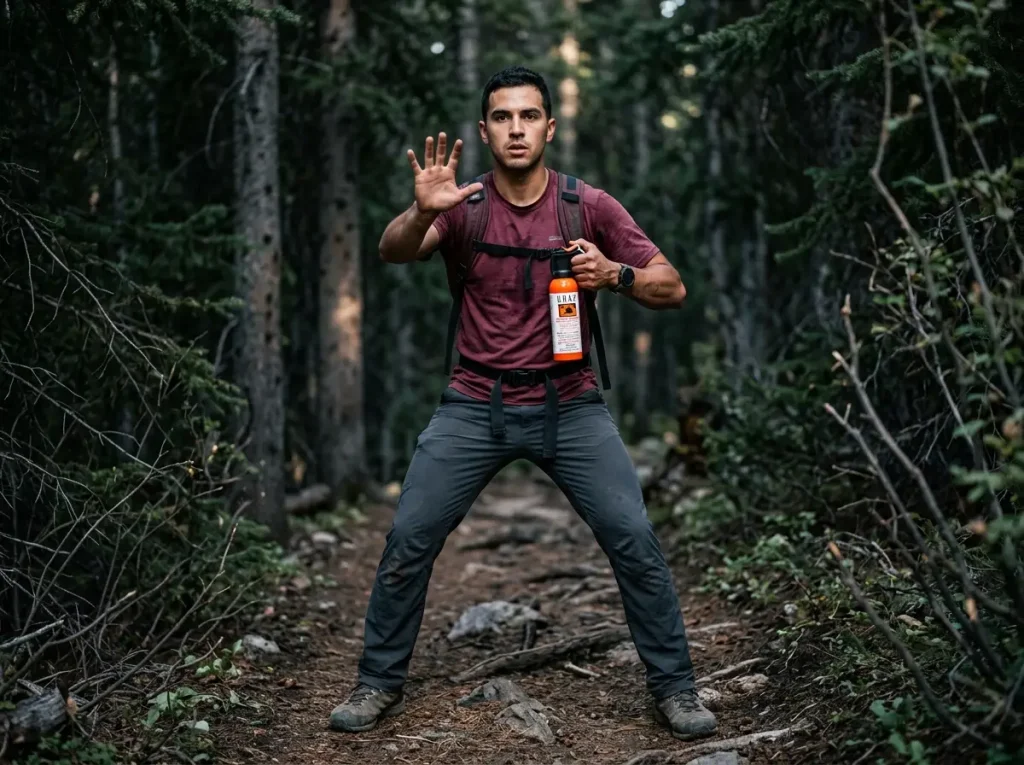
Pro tip: Keep one hand on your spray canister and one hand raised, palm out, at the first sign of an approach. You’re activating your draw while sending a visual “I’m not a threat” signal. Practice this sequence at home until it’s automatic — your hands should move before your brain catches up.
The Predatory Bear — Silence Is the Warning Sign
A predatory bear is quiet. No huffing. No jaw-popping. No bluff charges. It has identified you as a calorie source and it’s operating on a different circuit entirely. The IGBC predatory vs. defensive encounter protocol describes predatory behavior markers: methodical following using terrain and cover, circling from downwind, sustained eye contact, and the locked gaze that reads less like fear and more like calculation.
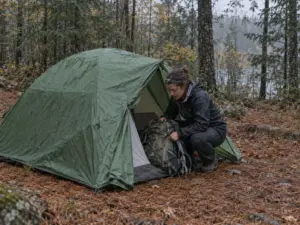
Nighttime tent attacks are always predatory by definition. The bear is treating your shelter as a food source.
Both species can go predatory. Food-conditioned black bears are statistically the most common predatory threat to humans in North America — habituation and conditioning, not territorial aggression, drive most predatory black bear attacks. Todd Orr, who survived two consecutive attacks by the same grizzly, attributes his survival to one decision: suppressing the instinct to vocalize pain. A scream signals prey. Silence signals something the bear hasn’t fully classified yet.
Playing dead in a predatory encounter is catastrophic. You’re signaling “accessible food.” The only technically correct response is immediate, aggressive resistance — shout, throw objects, use your spray at range, and if contact occurs, fight for every inch using any available tool.
The Physics of the Encounter — Why Escape Strategies Fail
You’ve made the species read. You’ve read the behavior. Now your legs want to run. Every cell in your body says run. Understand why this is a survival math problem with exactly one correct answer before you ever set foot in bear country.
Bear Speed vs. Human Speed — The Numbers That End the Debate
Both black and grizzly bears sustain 35 mph on flat ground and uphill terrain. They don’t slow on inclines. A hiker fleeing in panic on uneven trail moves at six to eight mph. Even an Olympic 100-meter sprinter peaks around twelve meters per second on a track — not broken terrain, not with a pack, not with adrenaline distorting muscle coordination.
At a fifty-meter surprise encounter distance — common in dense brush — the bear closes the gap in roughly 3.2 seconds. The human flight response takes 0.8 to 1.2 seconds to initiate. You start the race already behind. Running also triggers the bear’s hardwired predatory chase circuit. A defensive bear that might have stopped short becomes a committed attacker the moment a target bolts.
The NPS bear flight response guidelines and speed data back this up. “I have participants practice the freeze-and-assess drill until it becomes automatic. When the adrenaline hits, your legs want to go. The skill is overriding that with physics.”
The Acoustic Dead Zones — When “Making Noise” Fails
This is the thing most bear safety guides mention in passing without explaining: running water doesn’t just muffle sound — it creates an acoustic dead zone where neither you nor the bear can hear the other’s approach until you’re within striking distance.
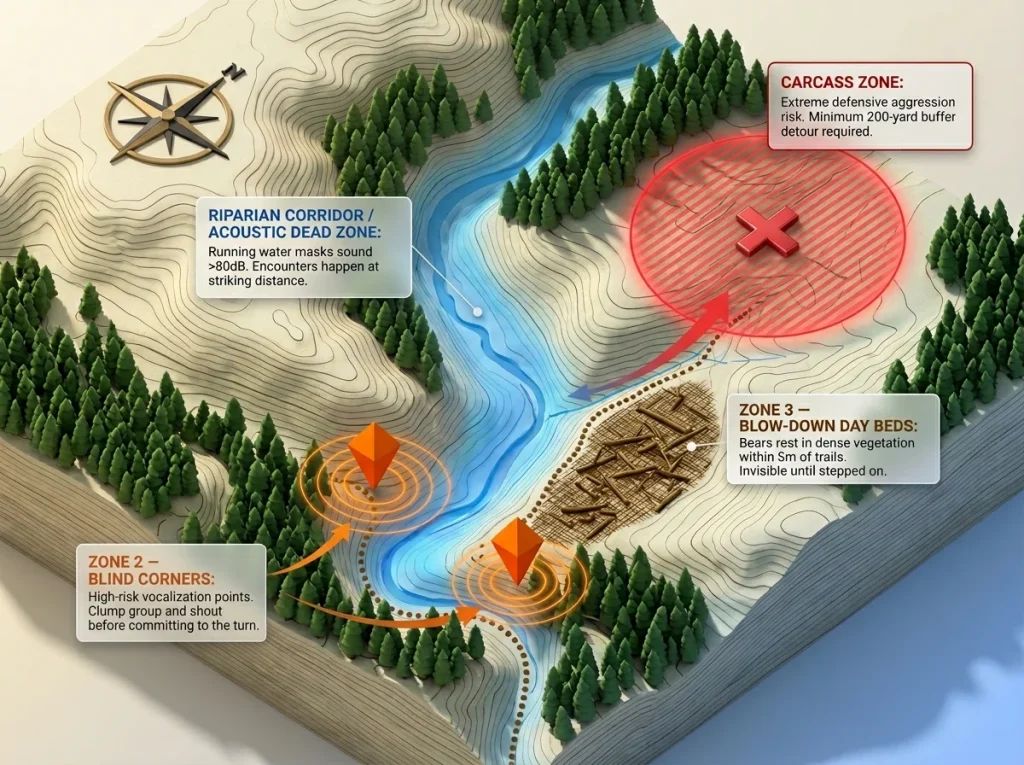
Running water in riparian corridors generates white noise exceeding 80 dB, roughly the ambient level of a lawnmower. Your voice at conversational volume is around 60 dB — completely absorbed. Dense timber and blow-downs absorb high-frequency sounds faster than low-frequency human voices, which means bear bells and whistles are acoustically nearly useless in heavy forest. Add wind carrying your scent toward the bear while your voice goes the other direction, and creek beds become the highest encounter-risk terrain on the trail.
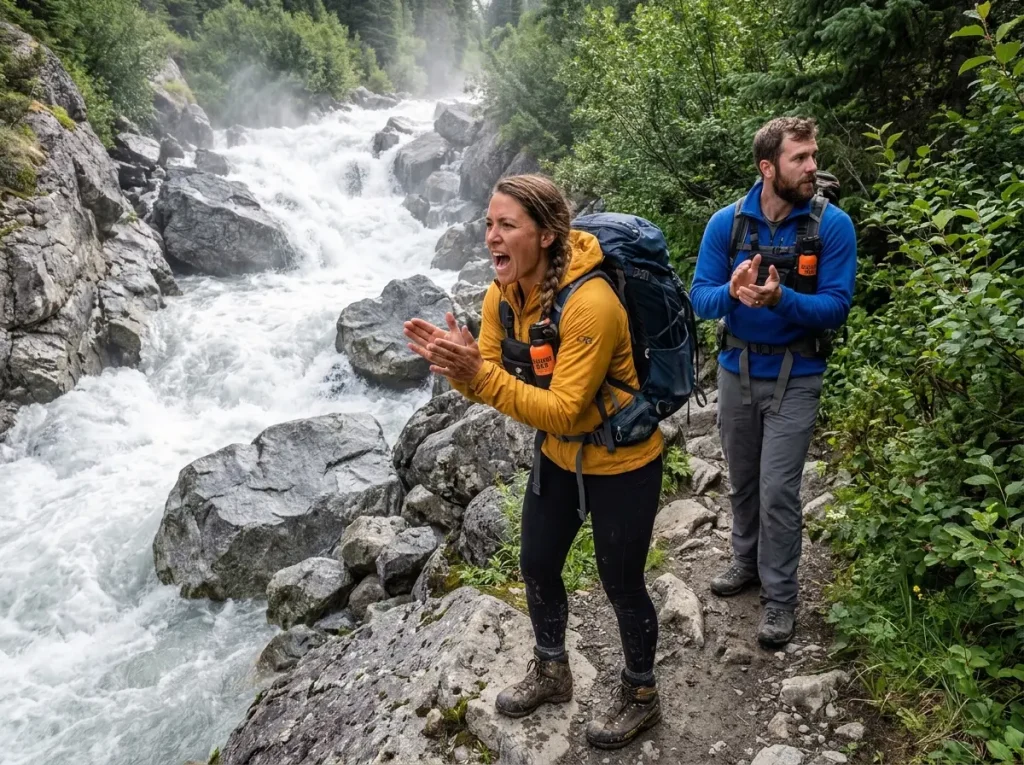
The acoustic hazard protocol from the Coast to Cascades Grizzly Bear Initiative validates the mitigation strategy: in dense timber, use frequent low-frequency vocalization (“Hey Bear”) every thirty to sixty seconds. At creek and river beds, group up and switch to sharp loud clapping, which penetrates white noise better than continuous speech. Near windy ridges, travel into the wind and keep your eyes scanning constantly.
At blind trail corners near water, use the “shout, wait five seconds, listen, proceed” protocol. It takes eight seconds and is the most effective thing you can do to announce your presence where the terrain works against you.
Pro tip: At any point where creek noise is loud enough that you can’t hear yourself clearly, treat it as a deaf zone. Switch to clapping — three sharp claps, pause, listen. It cuts through water noise better than voice and carries further in a lateral direction along a creek bed.
The Climbing Myth — Trees, Context, and What Actually Works
Black bears are faster and more agile in trees than humans. Climbing away from an aggressive black bear puts you directly into its optimal hunting environment. Grizzlies are less efficient climbers due to limited claw articulation and muscle mass, but can reach thirty or forty feet. “Climb a tree from a grizzly” buys minutes, not survival.
The only scenario with marginal utility: buying time from a defensive grizzly whose charge has committed, provided the tree is immediately accessible within two to three body lengths and large enough that the bear can’t shake you out. You do not run for a tree. If the sprint takes more than two strides, you’ve triggered the chase circuit and the bear is already closing.
For solo hiking safety protocols for solo travelers in bear country, the preparation calculus shifts significantly — you’re statistically in a higher-risk category before the encounter even begins.
Bear Spray — The Only Effective Deterrent
There’s a lot of debate in backcountry culture about spray versus firearms. The data resolves this cleanly.
The Statistics No One Quotes — Spray vs. Firearms Data
BYU bear biologist Tom Smith’s analysis of 441 Alaskan bear attack incidents is the most comprehensive dataset on this topic. Bear spray: 92% behavioral cessation rate, 2% hiker injury rate, zero human fatalities. Firearms: 67% effectiveness, 56% severe injury rate, 17 lives lost. The North American Bear Center analysis of spray vs. firearms efficacy data covers this in full.
The lower firearm effectiveness isn’t a gun quality issue — it’s a human performance issue under extreme duress. A charging grizzly closing fast requires an average of four stopping hits to the central nervous system. You’re attempting precision marksmanship while experiencing tachypsychia, tunnel vision, and fine motor failure from the adrenaline surge.
Bear spray bypasses the precision problem entirely. It creates a capsaicin cloud — an atmosphere of 2.0% major capsaicinoids — that causes involuntary bronchoconstriction and temporary blindness in an animal with seven times the olfactory receptor density of a human. The cloud does the work. The bear enters it; the encounter stops.
“I carry a firearm in Alaska. I also carry spray. The spray works before the bear reaches me. The firearm requires the bear to get close enough to shoot accurately — which means it got past my spray. Those are two different problems.” Carry both if you want, but your primary deterrent is the spray.
Technical Specs — What the Label Must Say
Personal defense pepper spray — Mace, standard keychain canisters — tops out at 0.2 to 1.0% major capsaicinoids. That’s insufficient for ursid deterrence. EPA-registered bear spray minimum is 2.0% MC. Check the label.
Volume minimum is 7.9 oz, though 9.2 to 10.2 oz canisters provide more bursts and are critical in crosswind scenarios where you may need multiple corrections. Spray duration minimum is 7 continuous seconds. Effective range minimum is 30 feet, though Counter Assault and Sabre Frontiersman MAX models reach 40 to 44 feet.
The Montana FWP technical specifications for EPA-approved bear spray validate these benchmarks. Counter Assault (10.2 oz, 32–44 ft range, 7–9.2 sec, glow-in-dark safety clip) is the standard for nighttime tent situations. Sabre Frontiersman MAX (9.2 oz, 35–40 ft, one-hand deployment) handles most trail scenarios. UDAP Safety Orange (7.9 oz, 30 ft, 4 sec) dumps maximum capsaicin per second — an instant wall for extreme close encounters, one-shot capacity.
One critical warning: bear spray residue is a confirmed attractant. Settled capsaicin on tent fabric or gear invites bears to investigate. Never test-fire near camp. Think carefully about where you store your bear canisters versus bags for backcountry food storage — the same principle applies.
The Physics of Deployment — Wind, Distance, and the 15-Yard Rule
Deploy at 15 yards (45 feet). That distance is calibrated to average bear approach velocity — the cloud reaches peak density exactly when the bear’s snout enters it. Spray earlier in heavy crosswind; the cloud will drift toward the bear’s approach path.
Wind direction is a binary survival variable. Tailwind (wind at your back): the cloud carries toward the bear and doubles effective range. Headwind (wind in your face): you incapacitate yourself. Read the wind before you reach for the safety clip. In a crosswind, aim slightly upwind of the bear’s path and let the expanding cloud drift into the approach corridor.
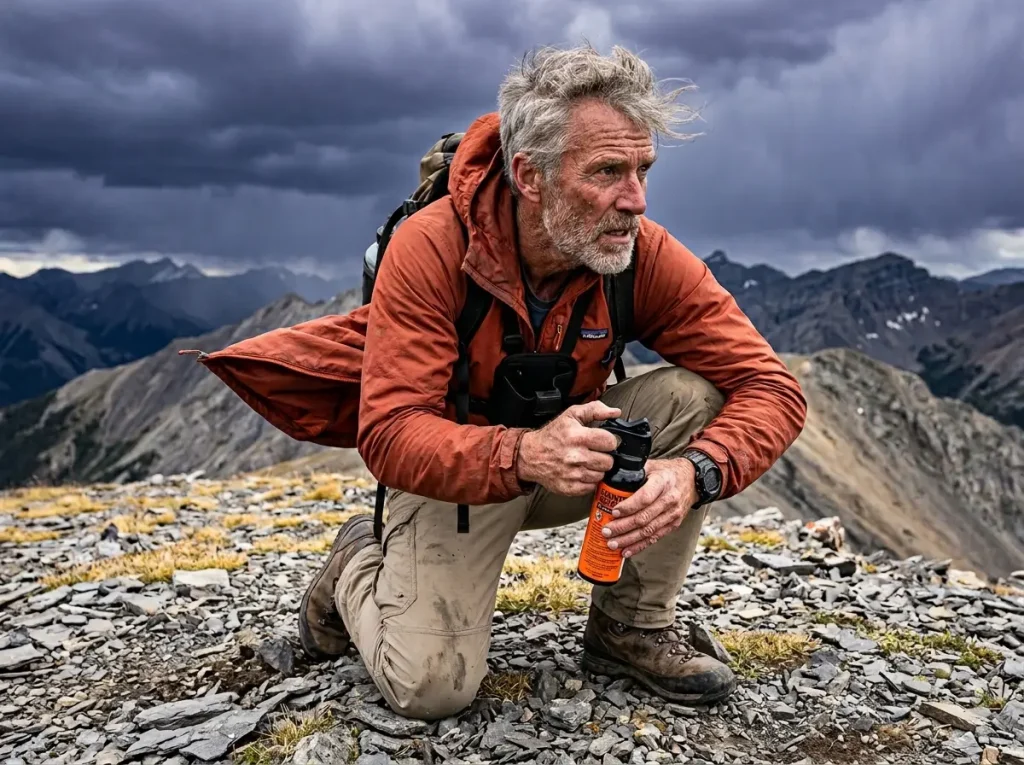
Holster placement matters more than most people acknowledge. Chest-mounted holsters allow sub-2-second draw access. Hip-mounted holsters with a backpack hip belt frequently snag — and bear spray holster reaction time — the 2-second standard is the difference between a successful deployment and an empty hand when the bear is at ten yards.
Terrain, Group Dynamics, and Attractant Management
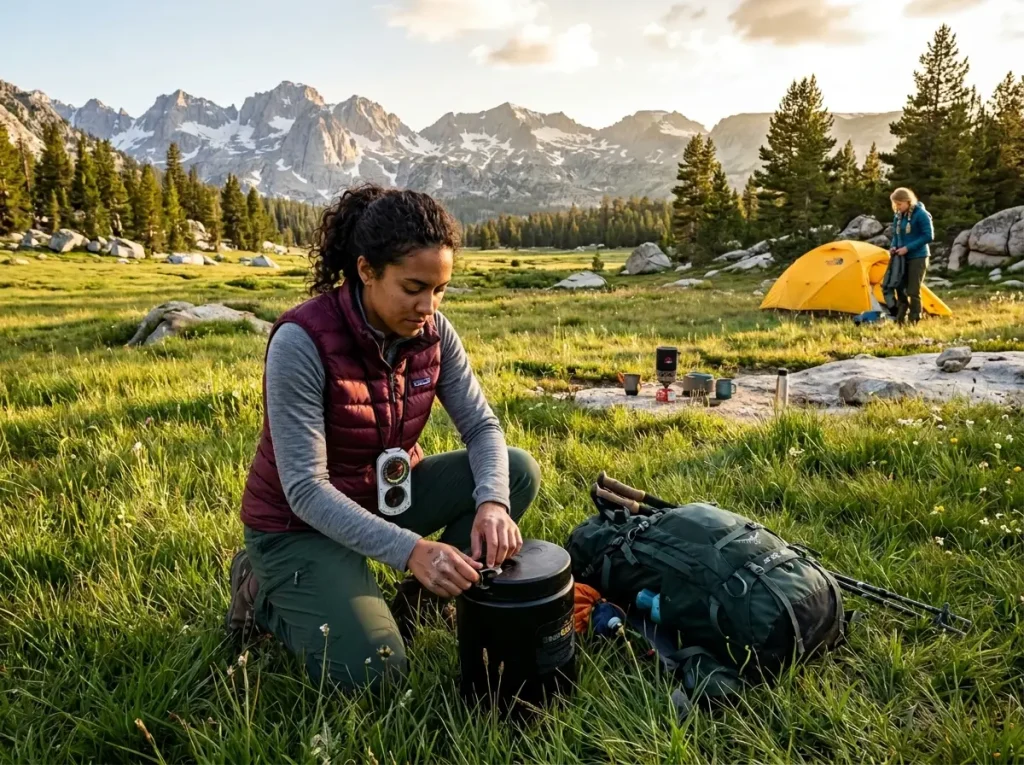
The bears you never see are the ones you prevented. Most encounter risk is managed before you leave the trailhead.
High-Risk Terrain Archetypes — Where Bears Are When You Don’t See Them
Riparian corridors — creek beds and river banks — are the highest encounter-risk terrain on any trail. Food density (salmon, tubers, berries) plus acoustic masking creates the worst possible combination: bears that are exactly where they want to be, and a noise environment that keeps both species unaware of each other until they’re within striking distance. If you’re hiking near water, slow down.
Game trails are energy-efficient travel routes, and bears know this. They use established paths, including hiking trails, preferentially. Fresh game-trail sign — bent vegetation, muddy prints, disturbed leaf litter — is your signal to slow pace, increase vocalizations, and get your hand on your spray.
Day beds are the most hazardous terrain feature most hikers never look for. Bears rest in flattened depressions in dense blow-down vegetation, often within five meters of a game trail. They’re invisible until you step on them. Most surprise encounters originate here — not on open trail, but at the edge of the brush pile you walked past without looking.
Carcass zones deserve the highest caution. A bear guarding a cached carcass during late-season hyperphagia will defend with maximum aggression. Watch for carrion odor, raven and magpie concentrations hovering over one spot, and anomalous mounds of branches and dirt. Minimum buffer: 200 yards. “I use the birds-and-smell rule. Ravens circling one spot is a bear alarm every time. Stop, assess from distance, plan a detour — not an investigation.” If the trail passes closer than 200 yards, navigating off-trail is the right call, and that requires understanding magnetic declination — the navigation skill carcass detours require.
The Group as a Single Organism — Statistical Safety in Numbers
Longitudinal Alaska data is unambiguous: groups of three or more are involved in serious bear attacks at dramatically lower rates than solo or paired travelers. The mechanism is acoustic and olfactory mass — four people are noisier and smell like more of a presence than one, giving approaching bears more time to identify the source and move away quietly before contact occurs.
When an approach starts, the “clumping” technique is your group’s physical response. Stand shoulder to shoulder and spread arms wide. You create the silhouette of a single large organism, and the bear’s threat-assessment reads it as too risky to challenge. This only works if everyone is within five meters. A group strung out fifty meters along a trail presents as isolated individuals — three separate soft targets instead of one large deterrent.
Solo hikers: you’re statistically more exposed. Solo hiking safety — the trip plan protocol SAR teams want is your starting point. Add a satellite communicator, file a detailed trip plan, and treat noise discipline as a core skill. Earbuds in bear country are not a personal choice — they’re a removal of your primary sensory system in a threat environment.
Attractant Management — The Chemistry That Invites Encounters
A bear’s nasal mucosa has 100 times the surface area of a human’s. Their olfactory bulb is five times larger. They detect toothpaste, vanilla sunscreen, and tuna packet residue from miles away. There is no genuinely neutral scent in an ecosystem occupied by bears — only “not yet investigated.”
The camp triangle applies everywhere: sleeping area, cooking area, and food storage area each separated by 100 yards, with food storage positioned downwind. Backcountry food safety — the complete field protocol covers this in full depth, including canister regulations by area. The Yosemite NPS field study on bear olfactory sensitivity and attractant detection validates the underlying biology.
Once a bear receives a food reward — intentional or accidental — it enters food conditioning. That conditioning is the most reliable predictor of future predatory behavior and eventual removal by park authorities. The chemistry doesn’t care about your packaging intentions.
Pro tip: Triple-seal everything with odor. The bear doesn’t care about Ziploc branding — it cares about the molecules. Boil or bleach your cook pot, pack your trash in the bear canister, and never bring food-adjacent items (lip balm, scented wipes, chapstick) into your tent. The sixty seconds you spend on this protocol every night is the cheapest bear deterrent you own.
Post-Encounter Psychology — Managing the Surge That Causes Secondary Accidents
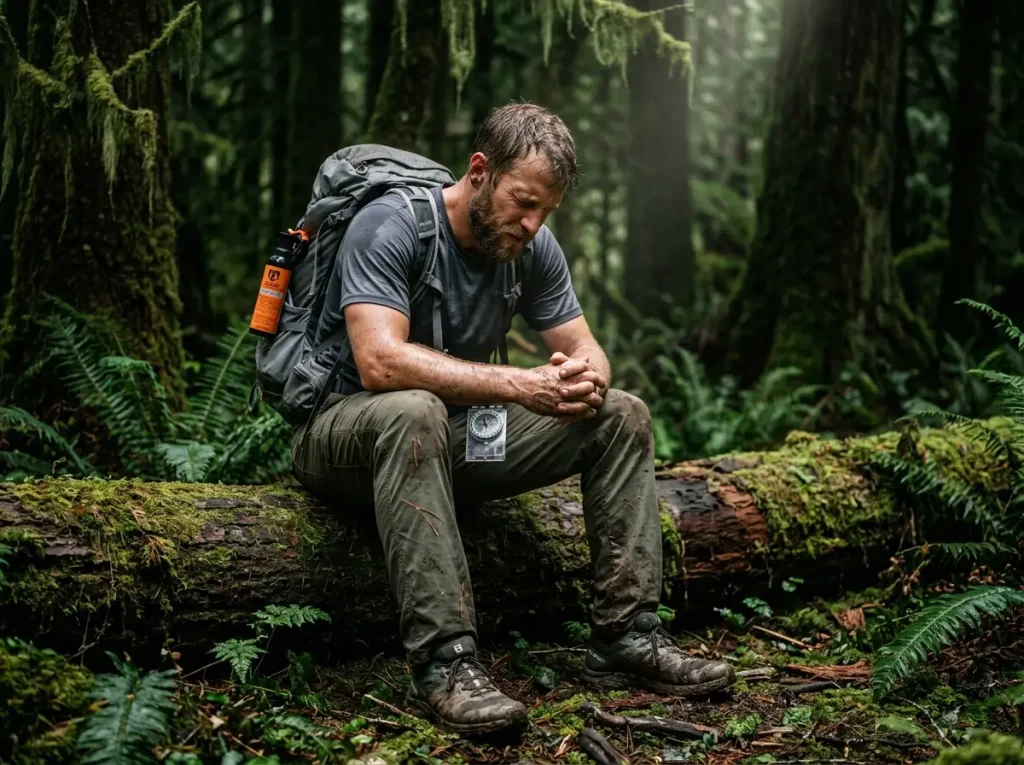
You survived the encounter. The bear is gone. Now you’re more likely to get hurt than you were during the charge. This is the part of bear safety that NPS, BearWise, and most backcountry guides don’t cover at all.
The Survival Stress Response — What Adrenaline Does to Your Brain and Body
An encounter triggers the amygdala’s fight-or-flight circuit within milliseconds — epinephrine and noradrenaline flood the bloodstream and your system reconfigures for immediate threat response. What this means practically, after the bear leaves:
Tachypsychia is the time distortion survivors consistently report. A three-second charge feels like thirty seconds. Timeline recall becomes unreliable. Your memory of the encounter will have gaps and distortions — this is normal, not a sign you missed something.
Fine motor skill degradation kicks in fast. The epinephrine surge causes vasoconstriction in the extremities — your hands become clumsy and unreliable for ten to twenty minutes. Map reading, GPS operation, and first-aid tasks are harder than they feel. Your confidence in your hands will exceed their actual capability.
Tunnel vision and perceptual narrowing are standard. You may not accurately remember terrain features ten meters beyond the bear’s position. Shaking, nausea, and dissociation are normal physiological reactions — the system metabolizing excess epinephrine. Do not walk while shaking violently. You will fall.
The STOP Protocol — A Structured Reset After the Encounter
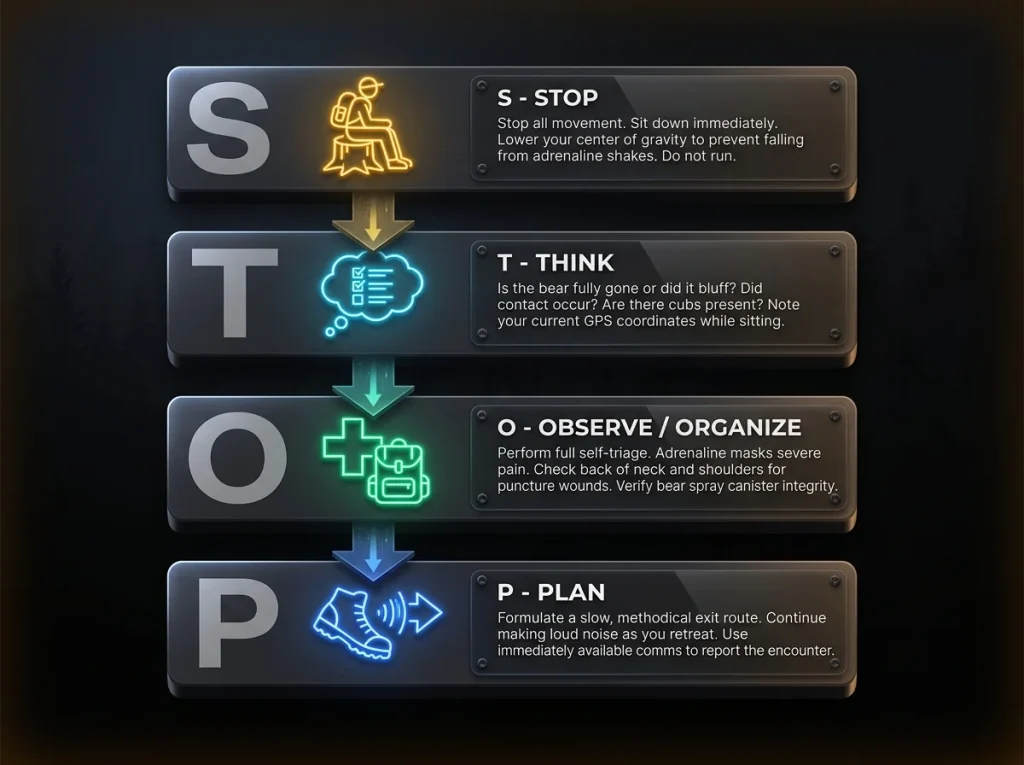
The STOP protocol is a decision-making scaffold for when your brain is flooded with hormones. Use it after every close encounter, every time.
S — Stop. Cease all movement. Sit down. Lowering your center of gravity cuts fall risk from shaking limbs. Don’t run, even if every instinct says keep moving. The bear is gone.
T — Think. Is the bear gone, or did it bluff? Did contact occur? Were cubs visible (possible return visit)? What’s your current GPS position?
O — Observe/Organize. Full self-triage. Adrenaline masks pain — you may be injured and feel nothing. Check specifically for puncture wounds on the back of the neck and upper shoulders, the most common attack zones in both defensive and predatory contact. Verify spray canister integrity.
P — Plan. Formulate a slow, methodical exit. Continue making noise as you move. Use your satellite communicator to file an encounter report — the next party on that trail needs that information.
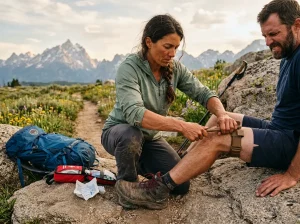
If contact occurred, wound assessment is medical priority one. Bear claws carry bacteria. Even minor lacerations should be cleaned immediately with available water and require professional medical evaluation as soon as you’re out. Wilderness first aid protocols for bear contact injuries walk through the patient assessment and evacuation decision tree.
Give yourself five full minutes minimum before making any navigation decisions post-encounter. “I’ve had participants freeze in the middle of STOP because the adrenaline is still running its program in the background. You can’t shortcut the timer.”
Conclusion
Three things separate the hiker who walks out from the one who doesn’t:
Identification is binary, not aesthetic. Hump or no hump. Dish-face or Roman nose. Rounded ears or pointed ears. Color is a lie; structure is survival truth. Build this read until it’s automatic — you’re not ready for bear country when you can make it standing still; you’re ready when you can make it at the same moment your adrenal system fires.
Intent overrides species. A defensive bear of either species responds to “play dead.” A predatory bear of either species requires you to fight back immediately with everything available. The most hazardous mistake in bear safety isn’t failing to carry spray — it’s confusing a predatory approach for a defensive one, or vice versa. Read the behavior, not just the animal.
Prevention physics outperform encounter response. Acoustic dead zones, group clumping, the 100-yard camp triangle, and the 200-yard carcass buffer exist to make the encounter unnecessary. The best response to a charging bear is the one you never needed.
Before your next trip into grizzly range, run through the three-second identification drill with your hiking partners. Pull up photos of both species and time their answers. If they’re slower than three seconds, they need more reps before they’re ready for that terrain. Build the habit before the mountain builds it for you.
FAQ
Can you outrun a black bear or grizzly bear?
No — both species sustain 35 mph, more than twice the fastest a hiker moves on broken terrain. Beyond the raw speed gap, running triggers the bear’s predatory chase circuit, converting a potentially non-aggressive encounter into a committed pursuit. Standing your ground is the only viable option.
How do you tell the difference between a black bear and a grizzly in the wild?
Use the three-point structural checklist in order: (1) prominent shoulder hump — grizzly’s highest point is the hump, black bear’s is the rump; (2) facial profile — grizzly is concave and dished, black bear is straight or slightly convex; (3) ear shape — grizzly has small rounded ears, black bear has tall pointed ears. Color is unreliable — roughly half of Rocky Mountain black bears are brown, cinnamon, or blonde.
Should you climb a tree to escape a bear?
Not from a black bear — they climb faster and more aggressively than humans. From a defensive grizzly, a large tree immediately accessible within two or three strides may buy time, since grizzlies are less efficient climbers. Running for a distant tree from any bear triggers the chase response. If the tree isn’t within arm’s reach, it’s not a viable option.
Does bear spray work on both black bears and grizzly bears?
Yes. Tom Smith’s BYU meta-analysis of 441 Alaskan bear attacks shows 92% behavioral cessation against both species, compared to 67% for firearms. Bear spray creates an atmospheric cloud of 2.0% major capsaicinoids that causes involuntary bronchoconstriction and temporary blindness. The physics apply regardless of species; the spray doesn’t require accuracy under extreme duress the way a firearm does.
What if a bear attacks you in your tent at night?
A nighttime tent attack is predatory by definition — the bear is treating your shelter as a food source. Playing dead is the wrong response. Fight back immediately with any available object: trekking poles, headlamp, boot, anything that creates pain and resistance. This is the scenario where having your bear spray clipped inside the tent door — not stored in a pack pocket outside — is not a preference but a survival decision.
I've spent more than a decade researching hiking gear and trail technique. I read the specs, the forum threads and the long-term reviews, and every pick here comes with what it gets wrong.
End of the trail
You read every mile of this one. Here's where the trail goes next.