



Night twelve on the PCT. I’d just finished what I thought was a solid hang near Dollar Lake, tossed the line over a branch that looked perfect in fading light, set the toggle, and crawled into my sleeping bag feeling smug. Three hours later, claws scraping bark woke me up. A black bear had shimmied along a branch I was sure was too thin to hold it, swiped my rope, and sent eight days of resupply crashing to the ground. The bear won because I picked the wrong branch. Four feet from the trunk looked a lot like six when I was squinting upward at dusk.
That night cost me two days of rationing and a long detour to the next resupply town. But it also taught me something I’ve been sharing with every hiker I meet since. There’s a gap between thinking you know the PCT method and actually nailing it. And most hikers I’ve camped near on the Pacific Crest Trail, the Appalachian Trail, and everywhere in between fall into that gap.
This guide breaks down every step of the PCT bear bag hang, and more importantly, why each step fails when done carelessly, so you never wake up to a ransacked camp.
⚡ Quick Answer: The PCT method uses a single 50–60 foot throw line, a mini carabiner, and a clove-hitch toggle stick to hang your food bag 10–12 feet off the ground and 4 feet out from the trunk. The toggle jams against carabiner so there’s no ground tie-off for bears to slash. Total system weight under 2 oz, but the technique only works if you nail the branch selection, knot, and height specs without shortcuts.
Why Traditional Bear Hangs Fail (And What the PCT Method Fixes)

How Bears Learned to Beat the Old System
If you’ve been hanging a bear bag the old-fashioned way, with a ground tie-off wrapped around a tree trunk, you’re giving bears exactly what they need. A road map.
Black bear populations in the Sierra and along busy stretches of the Appalachian Trail have been watching hikers for decades. They’ve figured out that the rope running from the hanging food to the ground is the weak link. Bite it, slash it, or just lean on it, and the whole thing comes down. The Appalachian Trail Conservancy put it bluntly: bears have “figured out how to defeat the traditional food hanging methods.” In grizzly bear habitat, the stakes are even higher, and no hang method is considered safe.
The counter-balance method isn’t much better. You need two perfectly matched bags and a branch at exact specs, and after twenty trail miles at dusk, most hikers can’t pull it off cleanly. The two-tree method adds even more complexity with twice the gear. I’ve watched more counterbalance attempts turn into tangled messes than I care to count.
The Toggle Principle That Changes Everything
The PCT method eliminates the ground tie-off entirely. That’s the whole point. You hoist your bag up on a single line, then tie a clove-hitch toggle (a small stick wedged with a clove hitch knot) that jams against the carabiner. The free end of the rope just dangles. There’s nothing on the ground for a bear to follow, bite, or pull.
Even if a bear reaches the dangling tail, pulling it only tightens the toggle against the carabiner. The harder anything pulls down, the tighter the stick locks up. That’s why experienced bear bagging hands call a clean PCT hang a “textbook hang,” and that’s what you should be shooting for. Retrieval is just as simple. Lift the bag a few inches to unweight the toggle, slide it off, and lower your food.
This single-rope system saves 50% of the cordage compared to a counterbalance setup. For thru-hikers chasing a system weight under 2 oz, that matters.

If you’re still weighing the broader question of whether to hang at all versus carrying a canister, our breakdown of the real tradeoffs between canisters and bear bags covers the full picture.
Gear Breakdown for a Sub-2-Oz PCT Hang System

The Line That Makes or Breaks Your Hang
Your throw line is everything. You need 50–60 feet of 2–3 mm Spectra or Dyneema cord, the kind made from ultra-high-molecular-weight polyethylene. It’s slippery on purpose. That slick surface slides over bark instead of catching, which means smoother hoisting, cleaner retrieval speed, and less damage to the tree.
Don’t use paracord. I know it’s cheap and you’ve got a hundred feet of it in the garage. But it catches on bark, frays after three uses, and stretches just enough to let your bag sag overnight. The AntiGravityGear Spectra line runs about 0.7–1.2 oz for fifty feet depending on diameter. That’s lighter than most snack bar wrappers. DynaGlide is another popular option with similar performance.
One trick that almost nobody mentions: grab a reflective cord option. At night, when you’re stumbling around camp with a headlamp trying to find your hang, a line that glows under light is worth every penny. Solo hikers especially benefit from this.
Carabiner, Rock Sack, and the Toggle Decision
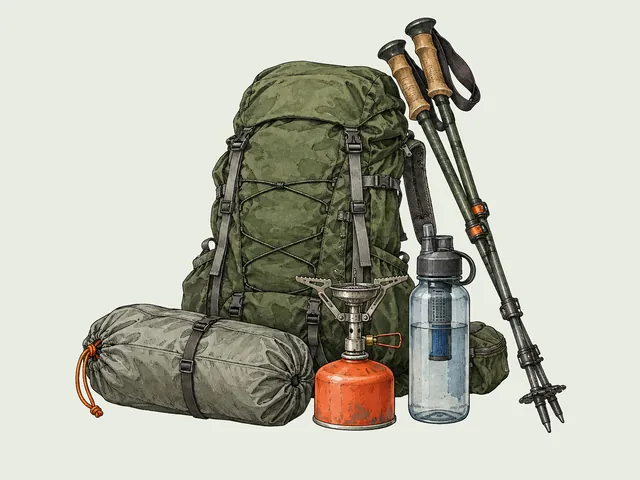
A mini carabiner clips the food bag to the line. A small stuff sack (your rock sack) holds a fist-sized rock or a couple of tent stakes for throwing weight. Together these weigh next to nothing. Companies like LiteAF make ultralight rock sacks that shave every fraction of an ounce.
For the toggle, you have two choices. You can find a small stick on the ground, about 6–12 inches and pencil-thick, or you can carry a commercial dogbone toggle from Hilltop Packs. The dogbone is pre-shaped and slides off the clove hitch cleanly every time. Found sticks with knots or bends tend to get jammed in the hitch, especially with wet Dyneema line. That said, a good natural stick works fine if you pick one without bumps.
Right-Sizing Your Bear Bag by Trip Length
Most guides skip this, but bag size matters more than people think. For 1–3 day trips, a 5–8 liter storage bag handles food and smellables for a solo hiker. For 3–7 day stretches (common between PCT resupply points), you’ll need an 8–14 liter bag, and the exact bag-size chart from Hilltop Packs is one of the few resources that maps this clearly. A waterproof Dyneema or silnylon storage bag keeps contents dry and contains odors better than mesh. The Sea to Summit Ultra-Sil and Zpacks options are popular for a reason.
Remember, smellables means everything scented. Food, wrappers, trash, sunscreen, toothpaste, deodorant, lip balm, bug spray. All of it goes in the bag. An odor-resistant bag adds another layer of protection, but it’s not a substitute for properly storing food at height.
Pro tip: Split heavy bear bags into two smaller ones for easier hoisting. One 14-liter bag packed with a week of food can weigh 8+ pounds, and getting that much weight 12 feet up on a solo hang is brutal.
If you’re deciding between Dyneema and silnylon for your bag fabric, our comparison of how silnylon and Dyneema compare for lifetime value breaks it down.

The 7-Step PCT Hang Sequence (And Where Each Step Goes Wrong)

Steps 1–3: Scout, Throw, and Thread
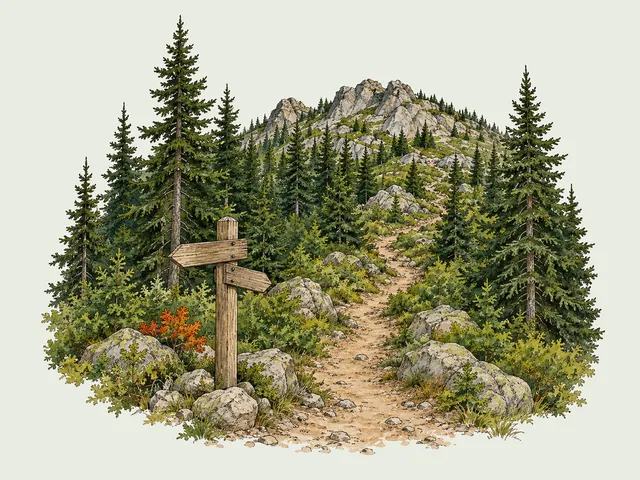
Step 1 — Scout your tree before you do anything else. You’re looking for a live sturdy branch that’s 15–25 feet high, 4–6 inches thick at the hang point, and extends at least 4 feet from trunk. Dead limbs snap. The sound of your food hitting the ground at 2 AM is never funny.
Step 2 — Load a fist-sized rock into your rock sack, tie it to one end of the line, and lob it over the target branch. Underhanded throws with a clear swing path work best. Your first throw almost never lands. Don’t get frustrated, just clear the brush below and try again.
Step 3 — Remove the rock sack, clip the mini carabiner to the line, and clip that carabiner to the top loop or grommet of your bear bag.
One common mistake here: throwing over a branch junction creates a friction point where two branches meet. Your line won’t slide smoothly, and hoisting turns into a tug-of-war.
Pro tip: Practice the entire throw-to-hang sequence in your backyard with a weighted bag before you ever need it on trail. I failed my first six throws on the Pacific Crest Trail. Backyard practice would have saved me from hanging my food at three feet like a piñata.
Steps 4–5: Hoist and Toggle
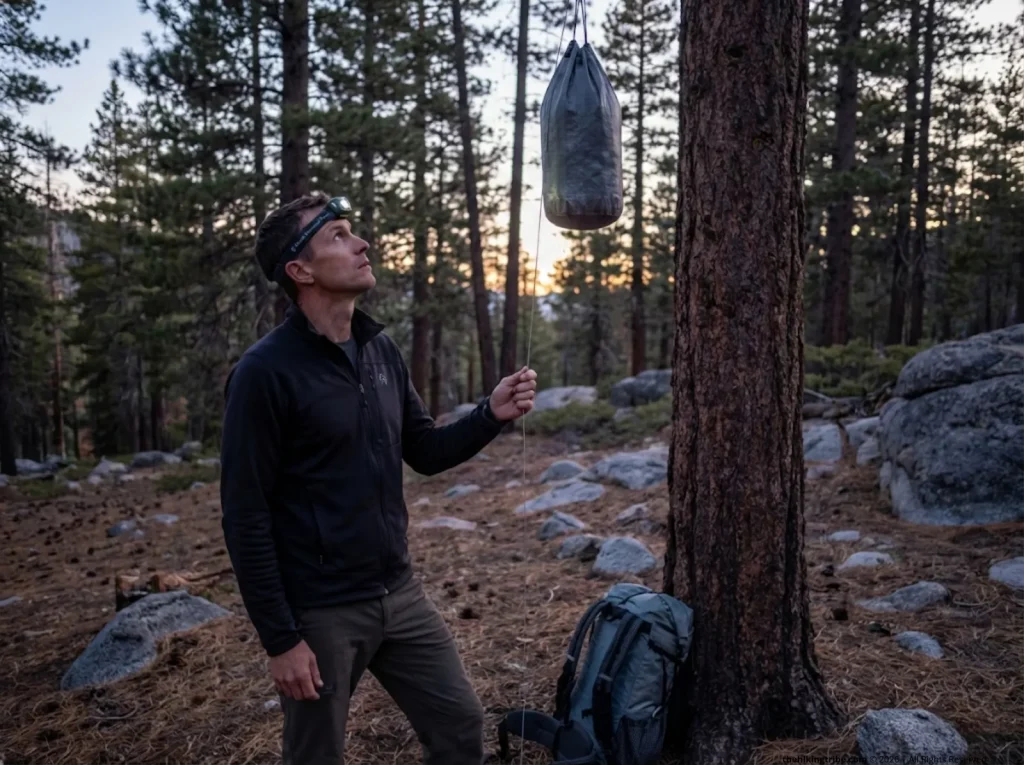
Step 4 — Pull the free end of the line to raise the bag until it’s 10–12 feet high off the ground and the carabiner sits snug against the branch.
Step 5 — While holding the line taut with one hand, grab your toggle stick or dogbone toggle. Tie a clove hitch around it on the standing line, as high as you can reach. The toggle jams against carabiner when you release, and the bag stays up.
If there’s any slack between the toggle and the carabiner, your bag drops. And if the clove hitch is loose, the toggle slides down the slippery Spectra line over the next few hours as temperature swings tighten and loosen the cord.
Steps 6–7: Lower, Verify, and Walk Away
Step 6 — Release the standing line slowly. The toggle catches against the carabiner and holds everything in place. The free line dangles below, and that’s normal and intentional.
Step 7 — Step back and verify. Bag 10–12 feet up? At least 4 feet from trunk? Toggle tight? Free line hanging without any ground tie-off? If yes, walk 200 feet downwind to your sleeping area.
Morning takedown technique: lift the bag 6–12 inches to unweight the toggle, slide the stick off, and lower the bag smoothly. Never yank. Yanking only jams the toggle tighter and risks snapping the branch.
When setting up camp, picking a campsite that handles wind and rain keeps your 200-foot buffer practical rather than a fight against terrain.

The 5 PCT Hang Mistakes That Cost Hikers Their Food

Wrong Branch, Wrong Night
The number one failure. Hikers pick a branch that’s too low, too thick for the line to slide over, or too close to the trunk. “Chose a branch too close to the trunk, bear just reached over” is the most common regret I hear in trail shelters and on forums. The 4 feet from trunk rule is hard to judge from the ground. At any upward sighting angle, horizontal distance looks much wider than it is.
Dead limbs are quiet killers. They look solid until the weight of your bag plus overnight frost weakens them. Always test live branches by watching them flex slightly under your test pulls. Writers at The Ultimate Hang and TrailGroove have documented the same mistake across hundreds of trail stories.
The Forgettable Smellables
The National Park Service defines smellables as all scented items: food, trash, toiletries, sunscreen, toothpaste, deodorant, bug spray, lip balm, menstrual products. “Forgot toothpaste in pocket, whole bag raided” is a real story repeated across forums. A single protein bar wrapper left in your jacket pocket can bring a bear to your tent. Every scented item belongs with the smellables in the bag.
Build a dump-everything checklist and run through it before you zip the bag shut every night. Following a solid backcountry food safety protocol covers the full smellables sweep.
Pro tip: Use Spectra or Dyneema line, not paracord. It slides over bark like butter, doesn’t damage the tree, and weighs almost nothing. As experienced hikers say, paracord is for bracelets, not bear bagging.
Sloppy Knots and Short Lines
A loose clove hitch lets the toggle slide down over hours. The bag sags overnight, and by morning it’s hanging at bear height. That’s what trail folks call getting “foiled.” Wet Dyneema line loses friction, making knot slippage worse. Give the hitch an extra wrap in damp conditions.
If your line is too short to reach high enough for the toggle, your hang is already failed. Carry the full 50–60 foot throw line. Going shorter to save weight is a false economy. Think of your line as part of the bear-aware backpacking safety foundation, not an optional luxury.
When to Skip the PCT Hang and Use a Canister Instead

The Regulatory Reality on the PCT
No technique matters if hanging is illegal where you’re camping. In Yosemite, bear canisters are required for all overnight backpackers. Any form of hanging, including the PCT method, is against the rules. Sequoia and Kings Canyon require canisters in specific high-traffic bear canister zones like Rae Lakes and Rock Creek. The Inyo National Forest mandates bear-resistant containers across much of the Eastern Sierra.
The PCTA strongly recommends canisters for the entire Pacific Crest Trail despite regional regulations varying by section. Fines run up to $5,000 plus food impoundment. Rangers actively check packs in canister zones. “I didn’t know” doesn’t work. Having a regional regulations decision tree mapped to trail miles is the smartest thing you can carry besides the canister itself.
For the official rules on where exactly canisters are mandatory, check the Yosemite National Park bear food storage regulations and Sequoia and Kings Canyon wilderness food storage rules.
PCT Hang vs Canister vs Ursack Decision Matrix
The PCT bear hang weighs under 2 oz and works where hanging is legal. But bear effectiveness is not 100% against trained Sierra bears. The BearVault BV500 weighs 2 lbs 9 oz and is legally compliant everywhere, but it’s heavy and bulky. An Ursack splits the difference at about 5 oz, though it’s not accepted in all canister-required areas.
Andrew Skurka, a respected ultralight thru-hiking voice who’s logged thousands of trail miles using long-distance trail techniques, put it plainly: “I no longer hang bear bags… outdated and ineffective method.” That’s a strong stance, and serious hikers should weigh it against their own conditions. The decision framework is simple: regulatory compliance first, bear population density second, weight priority third.
The Pacific Crest Trail Association canister recommendations lay out the full official guidance. And knowing wildlife watching distance rules every hiker blows keeps your broader bear awareness sharp.

Practice Drill and Pre-Trip Checklist

The Backyard Simulation
Find a tree in your yard with a branch 15+ feet high. Load your bag with 5–8 pounds of canned goods to simulate a 3-day food load. Run the full 7-step sequence three times until you can complete it in under five minutes. Focus especially on retrieval, which is where most fumbling happens. Lift to unweight, slide the toggle, lower smoothly.
Time your throws. If you can’t consistently hit a four-foot horizontal target, you’ll waste critical daylight at camp. A backyard simulation with a weighted bag is the single most useful thing you can do before any multi-day backpacking trip.
The Trail-Ready Gear and Safety Checklist
Before you leave, confirm your bag kit has everything: 50–60 foot throw line (Spectra or Dyneema), mini carabiner, rock sack, and either a dogbone toggle or a plan to find a solid stick. A lightweight throw bag system weighing under 2 oz total is the sweet spot for most hikers.
On trail every night: scout your tree before setting up camp, hang your bag before cooking so you know the system works, and verify you’re 200 feet downwind of your sleeping area per Leave No Trace standards.
Run a smellables sweep: food, wrappers, toothpaste, sunscreen, deodorant, lip balm, bug spray, anything scented. All items go in the bag. If you’re handling food for a group, you may need multiple bags across separate branches. Carry bear spray as a backup, and make sure you can access it fast. Knowing the 2-second bear spray draw standard might matter more than you expect.
Check the Inyo National Forest bear-resistant container requirements and the Leave No Trace principles for proper food storage before every trip. Regulations change, and a system that was legal last year might not be this year.
Conclusion
Three things separate a hiker who sleeps easy from one who loses a week of food to a bear.
First, the PCT method works because of one mechanic: the toggle jams against carabiner, and no ground tie-off exists for a bear to exploit. But that only holds if you nail the branch selection, knot, and height specs without cutting corners.
Second, know your regulations before you hit the trail. No amount of technique matters in a canister-required zone, and the fines are real.
Third, practice at home. Every failed throw, every slipped toggle, every fumbled retrieval is better done in your backyard than at 9,000 feet with a black bear circling your camp.
Next time you set up for the night, run through all seven steps without rushing. If you can nail a textbook PCT bear bag hang in under five minutes, you’ve earned the right to sleep easy.
FAQ
What is the PCT bear bag method?
The PCT method is a single-rope bear bag hanging technique that uses a carabiner and a clove-hitch toggle stick to suspend food 10–12 feet off the ground. Unlike traditional hangs, it eliminates the ground tie-off line that bears have learned to exploit.
How high do you need to hang a bear bag with the PCT method?
A minimum of 10–12 feet off the ground and at least 4 feet from the trunk or branch junction. Leave No Trace recommends 12 feet high and 6 feet from the trunk as the gold standard, with the entire setup 200 feet downwind from your sleeping area.
Is the PCT method better than a bear canister?
It depends on where you are. In bear canister zones like Yosemite and parts of Sequoia and Kings Canyon, hanging is illegal regardless of method. Outside those zones, the PCT hang weighs under 2 oz versus 2+ pounds for a canister, but trained Sierra bears can still defeat hangs. Check trail-specific regulations before deciding.
What kind of rope is best for a PCT bear hang?
Use 50–60 feet of 2–3 mm Spectra or Dyneema (UHMWPE) line. Its slippery Spectra line surface slides over bark for smooth hoisting and retrieval, resists fraying, and weighs under 1.5 oz. Avoid paracord, which catches on bark and stretches.
How do you take down a PCT bear hang in the morning?
Lift the bear bag 6–12 inches to unweight the toggle from the carabiner, slide the toggle stick off the line, then slowly lower the bag. Never yank the line, as that jams the toggle tighter and risks snapping the branch.

I've spent more than a decade researching hiking gear and trail technique. I read the specs, the forum threads and the long-term reviews, and every pick here comes with what it gets wrong.
End of the trail
You read every mile of this one. Here's where the trail goes next.