In this article
Picture the pack that feels perfect on the showroom carpet, empty, under the store lights, the straps soft on your shoulders. That empty pack on a hanger is exactly where a backpack lies to you.
Veteran backpackers keep repeating two things to anyone buying their first real pack: buy your pack last, and size it by your torso, not your height. This guide walks the actual decision the way a hiking buddy would at the trailhead, how much pack you need, the one measurement that matters, how to get the fit right, and which packs are worth buying across budget, lightweight, and heavy-haul trips.
How Much Hiking Backpack Do You Actually Need?
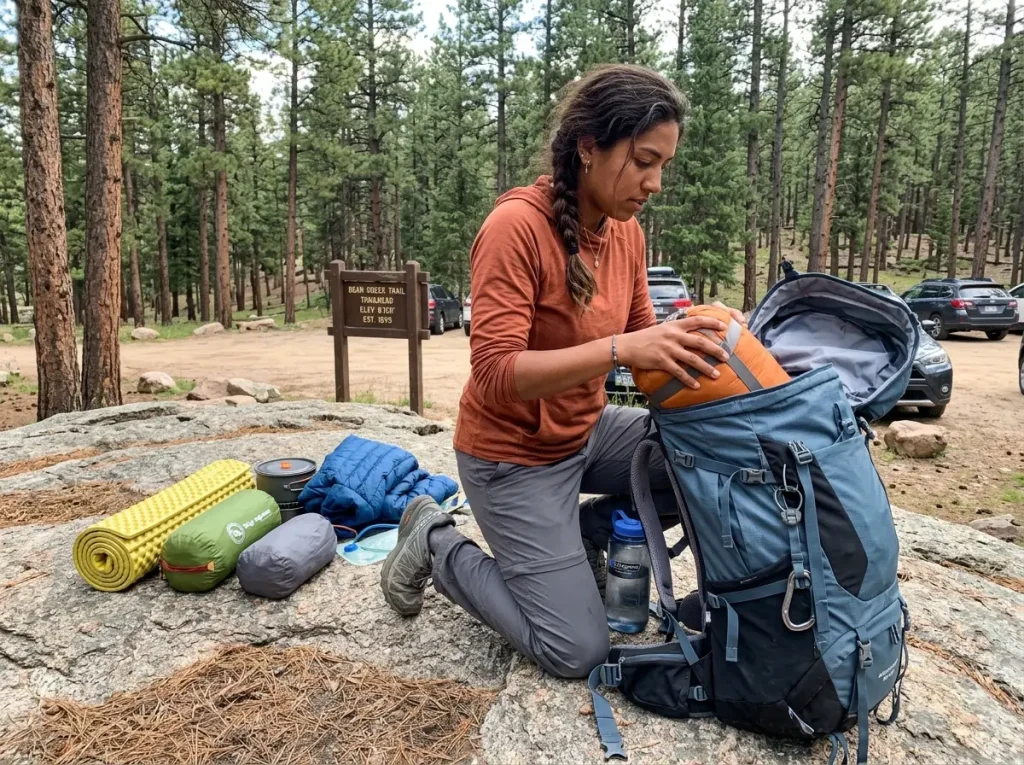
Most first packs are too big. The instinct is to buy for the worst-case trip you can imagine, then half-fill it on every hike you actually take. A veteran’s first question to a friend is never how many liters. It’s how many nights, and what season.
That’s the honest starting point, and it’s worth reading alongside our complete guide to choosing a backpack before you spend a dollar. Get the volume right and everything downstream, fit, weight, comfort, gets easier.
Capacity by Nights Out
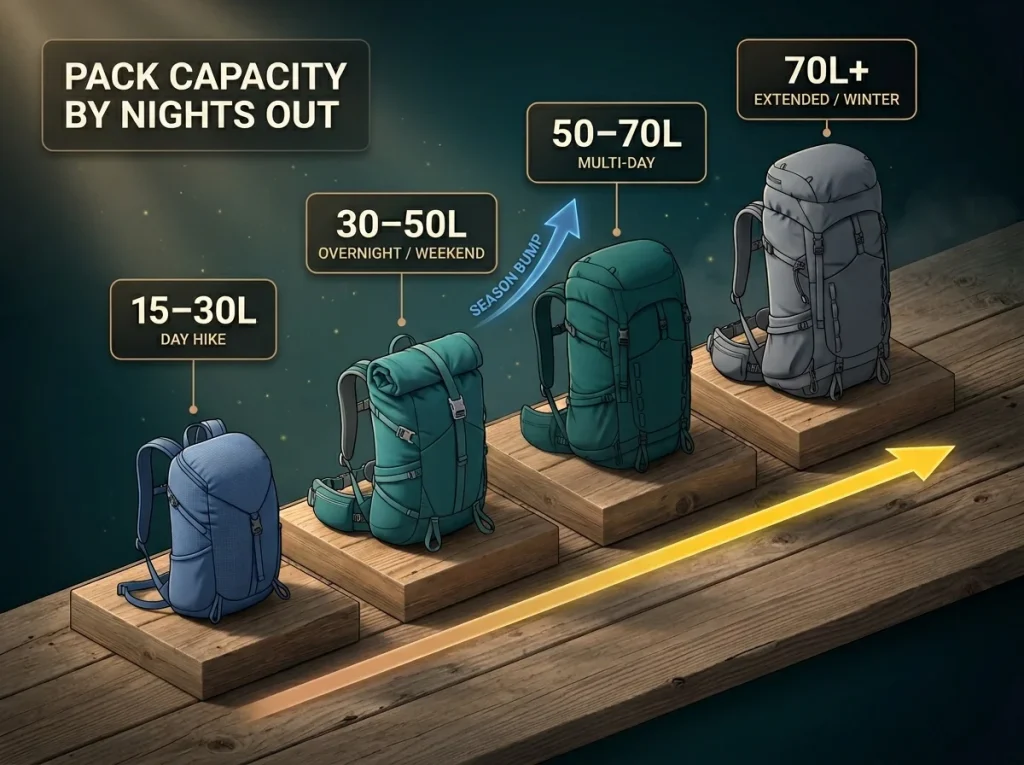
Pack capacity is measured in liters, and the right number tracks your nights on trail, not your ambition.
A daypack lives in the 15 to 30L range. An overnight pack runs 30 to 50L, the same range a weekend pack lives in. A multi-day pack sits at 50 to 70L. Past 70L is extended or winter territory, and most hikers never need it.
If you’re stuck between two sizes, the smaller one usually teaches better habits. A pack you have to pack carefully is a pack that rides well, and the in-between sizes mostly come down to how disciplined a packer you are.
The 65L Trap
Here’s where beginners go wrong. They reach for a 65L “do-everything” pack for a single overnighter, then spend the trip fighting a half-empty bag that shifts and sloshes with every step. A loose load throws off your balance on uneven ground, and a 65L shell half-filled is the loosest load there is.
Capacity you don’t fill is pack weight and bulk you carry for nothing. If your kit fits in 45L, a 65L pack doesn’t make you more prepared. It makes you slower.
Season Bumps the Number
The one honest reason to size up is the calendar. Shoulder-season and winter trips bump you a tier because insulation and layers are bulky, not heavy. A 20-degree night needs a bigger sleep system and more clothing volume than a July overnighter, even if the trip is the same length.
For a pure day hike, you don’t need any of this. A packable 25L is plenty, and something like the ZOMAKE 25L Ultra Lightweight Packable folds down to the size of a water bottle when you don’t need it. A daypack and a true backpacking pack are different animals, and knowing the difference keeps you from hauling a frame you’ll never fill.
Torso Length, Not Height, Picks Your Pack
Buying a pack by your height is the number-one reason a pack fits in the store and hurts on the trail. A 5’6″ hiker can have a longer torso than someone who stands 6’0″. Height tells the pack almost nothing. Torso length tells it everything.
How to Measure Your Torso (C7 to Iliac Crest)
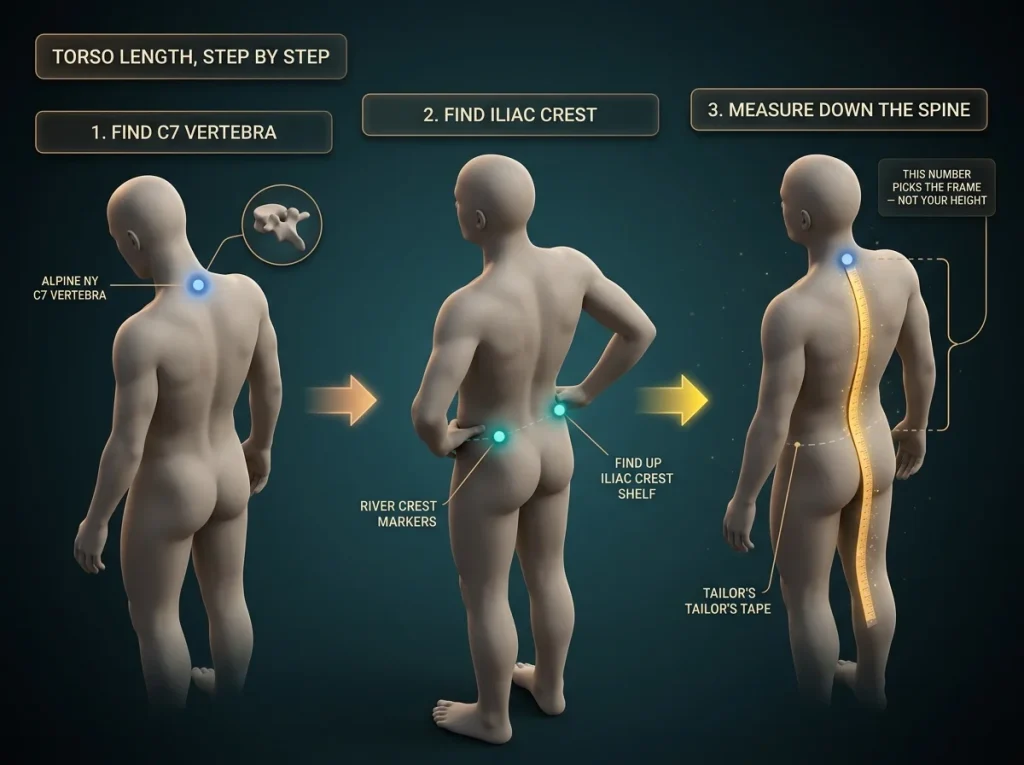
Tilt your head forward and feel for the bony bump at the base of your neck. That’s your C7 vertebra, the top of the measurement.
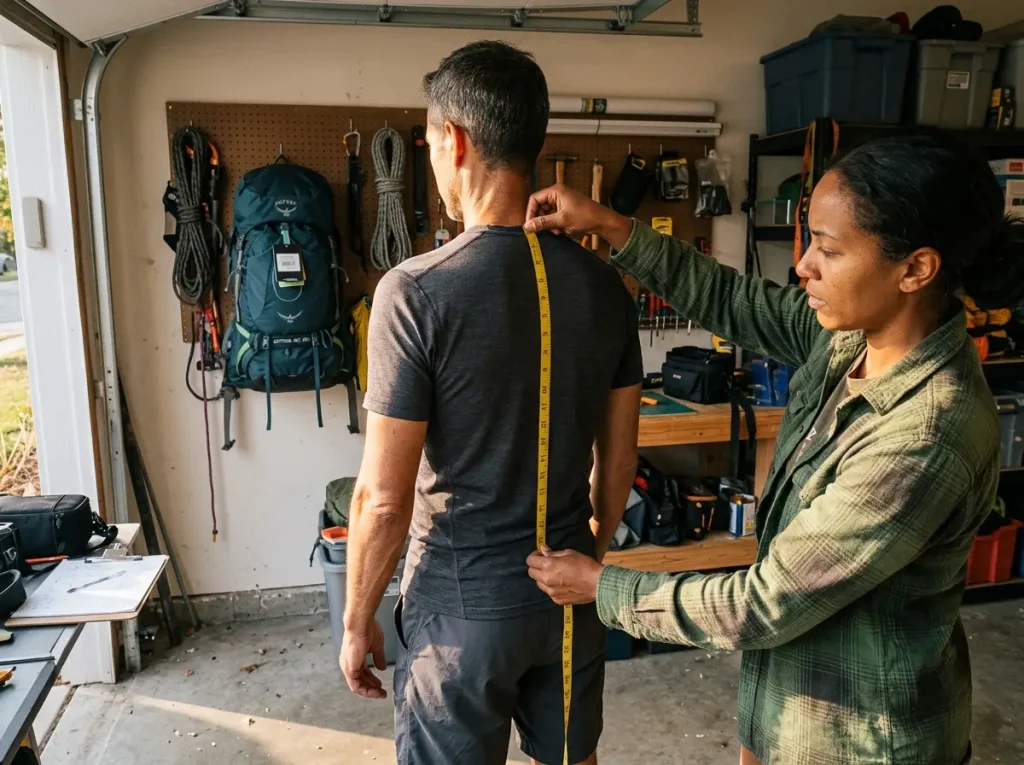
Now find your iliac crest, the shelf at the top of your hip bones, by putting your hands on your hips with thumbs pointing back. Measure straight down your spine from the C7 bump to the line between your thumbs. That inch number, not your shirt size, picks the frame.
It’s a two-person job done right, and a soft tailor’s tape beats a stiff one. Osprey, REI, and Hyperlite all publish charts, and how to find your torso length with a tape measure is laid out cleanly if you want the manufacturer version. Our own walkthrough on measuring your torso length step by step covers the same ground with photos.
Why Height Lies
Two hikers the same height can wear completely different frame sizes. Long legs and a short torso are common, and they wreck height-based sizing. When the frame is too long for your torso, it rides up above your shoulders and pulls the load backward, so you lean forward all day like you’re walking into wind.
The fix isn’t strength or “breaking it in.” It’s the right frame length. A pack that’s too tall for you will never sit right, no matter how you crank the straps.
Don’t Forget the Hip Belt Circumference
Torso length sizes the frame, but the hip belt has to fit too. The padded belt should wrap your iliac crest, the bony shelf, not your soft waist and not your shoulders. Some packs ship with interchangeable belts because hip size and torso length don’t always come in the same box.
If the belt’s smallest setting still gaps at your hips, or its largest barely closes, that’s the wrong pack, not a fixable quirk.
Getting the Fit Right, 80% on Your Hips
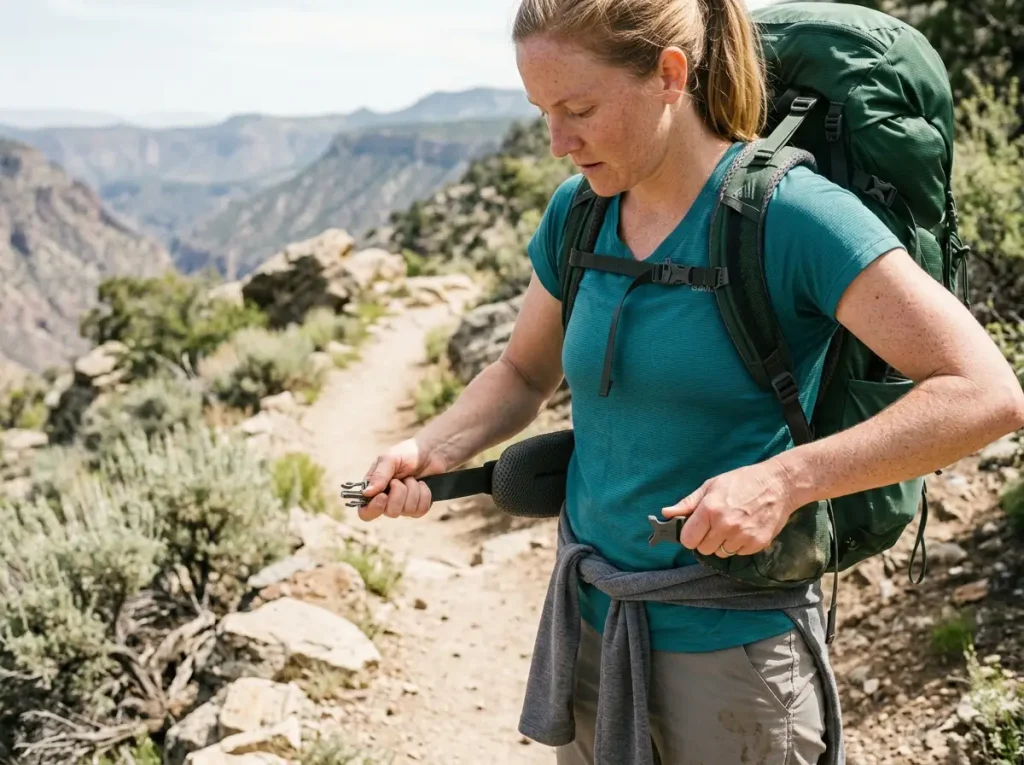
If your shoulders ache by mile 3, the weight is in the wrong place. The instinct is to cinch the shoulder straps tighter, which is the exact wrong fix.
A loaded pack should carry 80% of its weight on your hips and only about 20% on your shoulders. That hip-to-shoulder ratio is the whole point of good weight distribution. Your hips and legs are built to carry, and your shoulders only steady the load.
The Strap Sequence (Hip Belt First)
Veterans fit a pack in a set order, and everyone else chases their tail. Load the pack first, at least to trail weight, then work the straps in sequence:
- Hip belt first, seated on the iliac crest, snug enough that it carries the load.
- Shoulder straps next, just enough to close the gap, not to lift the weight.
- Load lifters to set the top of the pack against your back.
- Sternum strap last, to keep the shoulder straps from sliding.
Fit it out of order and nothing settles. REI’s step-by-step guide to adjusting a pack’s fit walks the same sequence, and getting it right is most of what people mean when they talk about dialing in the fit so you hike pain-free.
Load Lifters at 30 to 45°
The load lifters are the short straps running from the top of the shoulder harness to the frame. They should sit at roughly a 30 to 45° angle. Too flat and the pack sags off your back. Too steep and they dig into the tops of your shoulders.
At 45° they pull the top of the load into your spine so you stand upright instead of hunching. If you’ve never paid attention to them, learning to set your load lifters to the right angle is the single fastest comfort upgrade on a pack you already own.
Loosen your load lifters completely on a steep climb, then snug them again on flat ground. On a hard uphill you want the load to sit a touch lower and closer; on the flats you want it pulled in high and tight. It takes two seconds and saves your shoulders on long days.
The Sign Your Load Isn’t Transferring
The clearest signal a pack is set up wrong is shoulder pain by mile 3, not mile 13. That ache means the load is riding your shoulders instead of your hips. Stop, loosen everything, reset the hip belt on the bony shelf of your hips, and rebuild the fit from the belt up.
A hip belt that sits entirely above or below your hip bones is either the wrong size or the wrong setup. Either way, more shoulder tension won’t save it.
The Store Test That Saves Your Trip
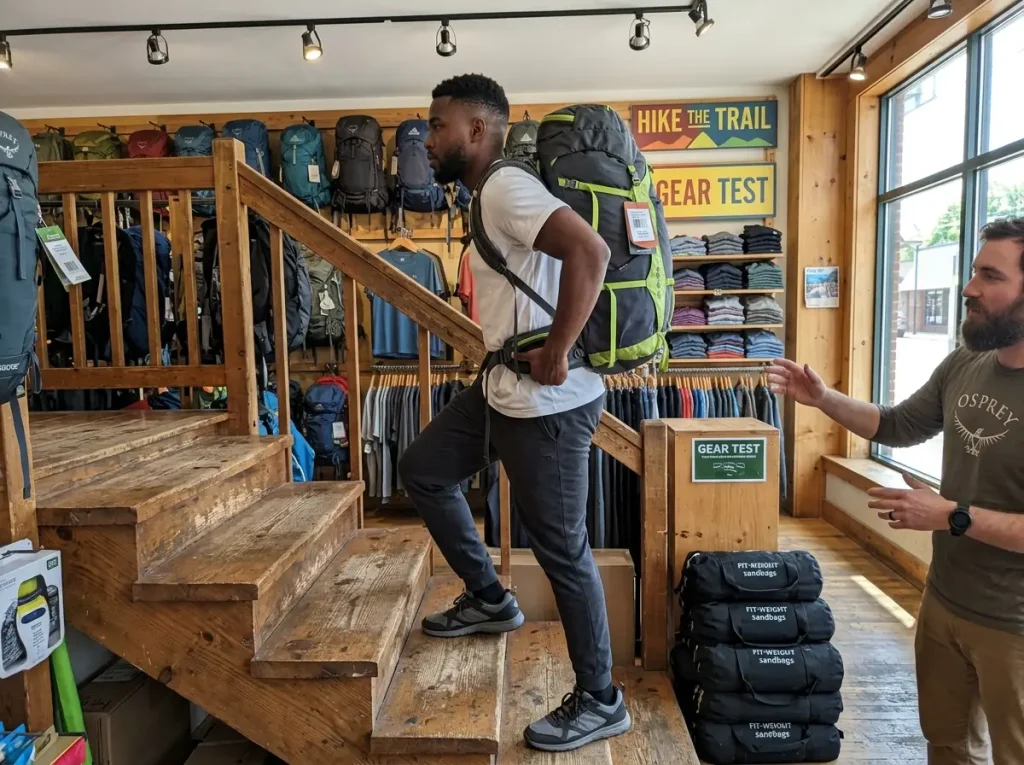
This is the section nobody writes, and it’s the one that matters most. A pack that feels fine empty on the showroom carpet can be a shoulder-grinding mistake once it’s loaded and eight miles in. The fix is a five-minute test almost no one bothers to do, and it surfaces every problem before you’ve paid for it.
How to Load-Test at the Rack
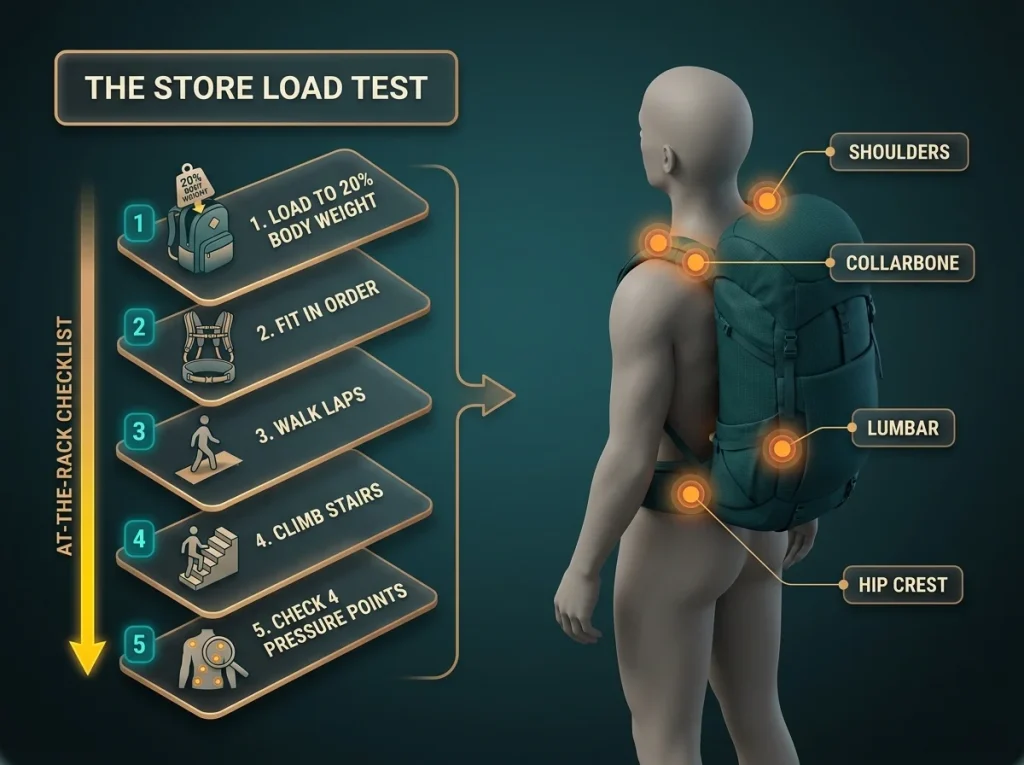
Don’t judge a pack standing still and empty. Ask the shop for their fit weights, or load the pack with at least 20% of your body weight using whatever’s on hand.
Then fit it in the proper strap sequence and actually move. Walk laps around the store. Find a flight of stairs and climb it.
Hot spots and a too-short frame show up under weight in motion, never empty on a hanger. Stairs in particular expose a hip belt that won’t bite and a frame that rides too high. A “hot spot” is a small pressure or rub point that becomes a sore under load, and catching one at the rack is free. Catching it at mile 8 costs you the rest of the trip.
Wear the same clothes you’ll hike in when you test a pack, or close to it. A hip belt that sits perfectly over a t-shirt can ride up over a puffy or pinch over a fleece. The fit you test in your street jacket is the fit you get on trail.
Why Packs Fail in the Field
Most guides list features and never explain how a pack actually fails. Three failure modes cover almost all of it.
First, a hip belt that won’t tighten enough, so the weight rides your shoulders no matter what you do. Second, a frame too short for your torso, which leaves the load pulling backward off your back. Third, a ventilated mesh back panel that pulls the load slightly off your spine on steep climbs, great for airflow on hot rolling terrain, a real trade-off when you’re scrambling under a heavy load.
Name the failure, then the fix. A hip belt that won’t bite can sometimes be molded to your hips so it finally grips. A frame that’s simply too short can’t be fixed, which is its own answer, and learning the signs a pack has reached the end of its life tells you when to stop fighting it.
Use the Home-Trial Policy
Most good outfitters let you take a pack home, load it with your real gear, and walk it before you commit. Use that policy. Pack it with the actual sleep system, shelter, food bag, and layers you’ll carry, not the store’s beanbags, and walk your neighborhood for twenty minutes.
Your own gear loads the pack differently than shop weights. This is the closest you’ll get to a trail test without a return-shipping label hanging over you.
Frame Types and What They’re For
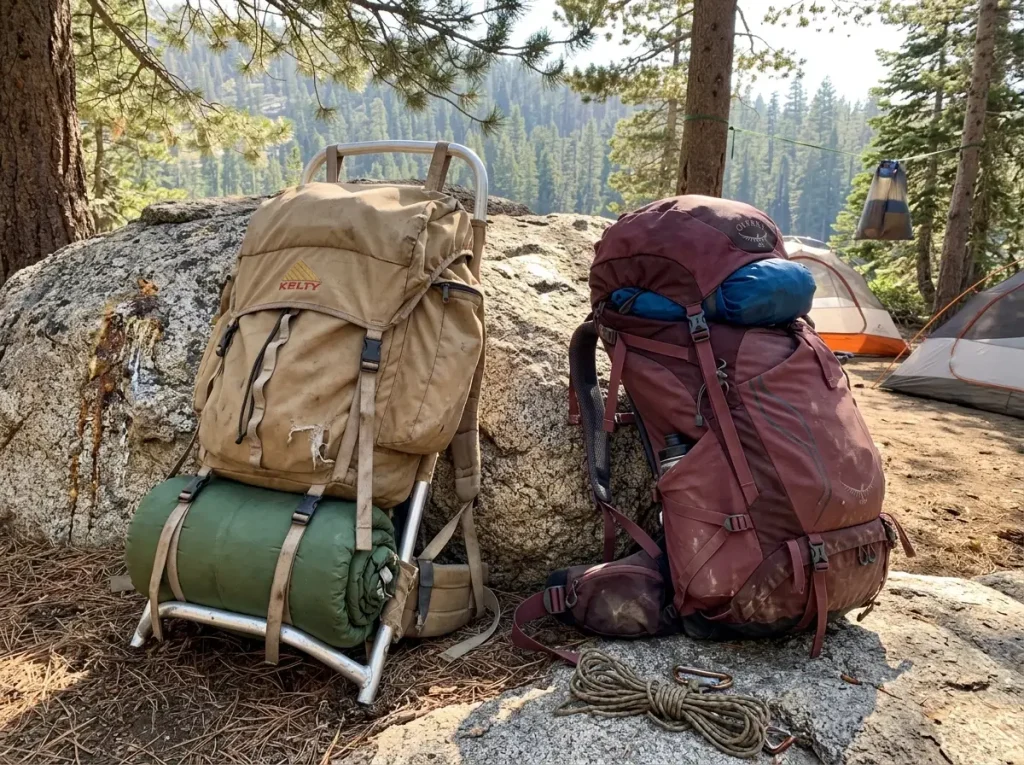
Almost every modern hiking backpack is an internal frame, and for good reason. But knowing why, and when the other two frame styles make sense, keeps you from paying for the wrong tool.
Internal, External, or Frameless
An internal frame sits inside the pack body and hugs your back, keeping the load close and stable on uneven trail. It’s the default for a reason, and it’s what most hikers should buy.
An external frame rides outside the pack on a visible rigid structure, ventilates better, and hauls heavy or boxy loads well, but it’s less stable when the trail gets technical. A frameless pack drops the structure entirely to save weight, which only works if you keep your base weight low and pack carefully. Our deeper look at the case for framed versus frameless packs sorts out who each one is really for.
Materials and Durability
Pack fabric is rated in denier, a measure of thread thickness. Higher denier is tougher and heavier, lower denier saves weight and scuffs faster. Ripstop nylon is the everyday standard, while Dyneema (DCF), the fabric Hyperlite Mountain Gear built its ultralight packs around, and recycled nylon trade some abrasion resistance for big weight savings. None of it is fragile, but a thin, low-denier ultralight pack wants more care around granite and deadfall than a burly high-denier hauler.
There’s no single right answer here. A thru-hiker counting grams and a hunter dragging a pack through brush want opposite fabrics, and both are correct for their trip.
The Ventilated-Mesh Trade-off
That suspended trampoline mesh back panel you see on a lot of packs, branded as Anti-Gravity or AirSpeed, is a genuine comfort feature in hot weather. Air moves across your back instead of soaking your shirt. The catch is that the same tensioned mesh holds the load a little off your spine, which costs you stability on steep climbs and scrambles. It’s a fair trade on hot rolling terrain and a liability under a heavy load on technical ground, so match the suspension system to the trips you actually take.
Features Worth Paying For (and the Ones You Won’t Use)
Every pack ships with a feature list a mile long. Most of it you’ll never touch. Here’s the short list that actually changes a hike, and the stuff you can ignore.
Top-Loading vs Panel-Loading Access
A top-loading pack is simpler and lighter, but you dig through everything to reach the bottom. A panel-loading or side-zip pack opens like a suitcase so you can grab the thing you buried at 6 a.m. without unpacking camp. If you hate digging, the zipper is worth the few extra ounces, and the brain-lid versus roll-top closure choice is part of the same decision.
The Features That Earn Their Weight
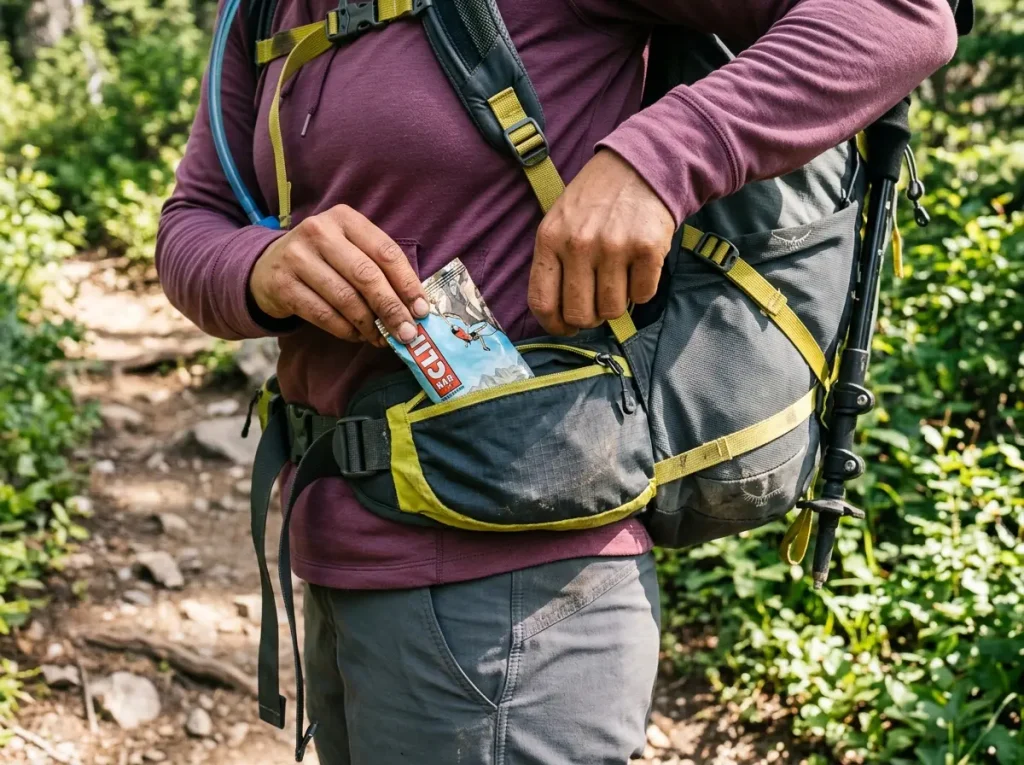
A short list does most of the work. Hipbelt pockets keep snacks, a phone, and lip balm within reach without stopping. A hydration reservoir sleeve lets you drink without digging for a bottle. Compression straps cinch a half-full load so it stops shifting.
A couple of external attachment points carry trekking poles when you don’t need them in hand, and lashing gear to the outside the right way keeps it from swinging loose. Stow-on-the-go pole loops and an ice axe loop only matter if you actually use them, so don’t pay extra for hardware you’ll never clip.
Keeping Your Gear Dry
A rain cover sheds a passing shower, but it does nothing for water running down your back and soaking in through the shoulder straps. A pack liner, even a cheap trash-compactor bag inside the main compartment, keeps your sleep system and layers dry from the inside out. Most veterans run a liner and skip the cover, because the liner keeps gear dry from the inside even when the outside is soaked.
Do Women’s Packs Really Matter?
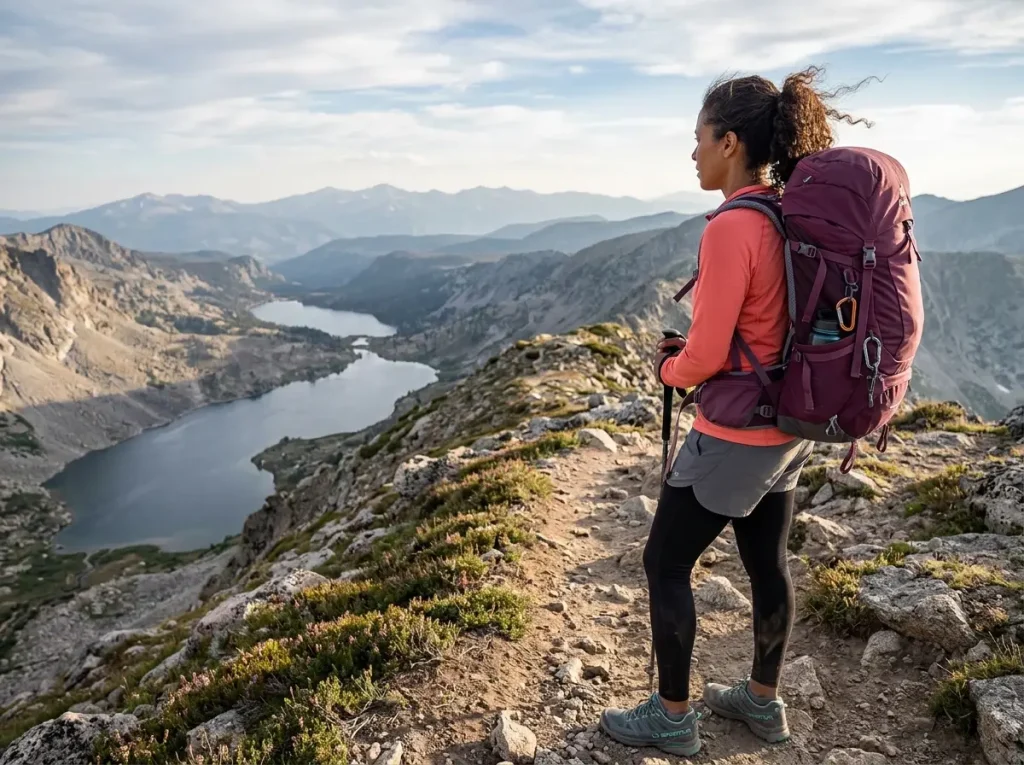
“Women’s pack” sounds like a pink colorway with a markup. It isn’t. It’s a different frame geometry, and this is the buying decision most guides skip or bolt on at the end. Get it right and a lot of people find the pack that finally fits.
What’s Actually Different (Geometry, Not Color)
Women’s packs are built around a different build, and the changes are structural. They run a shorter torso range, a narrower and closer-set shoulder harness with S-curve straps shaped for a narrower chest, hip-belt flaps canted upward to cup the hips instead of squaring off a waist, and a higher sternum strap. None of that is cosmetic. It’s the frame and harness doing a different job.
Short-Torso Men Fit Women’s Packs Too
Here’s the part the SERP almost never says out loud. A short-torso man often fits a women’s pack better than a men’s, because the label is about frame geometry, not gender. If the smallest torso setting on a men’s pack still rides high on you, that’s your cue to try the women’s or short-torso line, not to crank the straps harder and hope.
Ignore the label on the tag and try both fits if a men’s pack rides high on you. Plenty of shorter-framed men hike happier in a women’s pack, and plenty of long-torso women fit a men’s frame better. The tape measure decides, not the marketing.
The Sibling Models
The good news is most quality packs come in sibling pairs built on the same platform. The Osprey Aura is the women’s version of the Atmos, the Eja mirrors the Exos, Gregory’s Maven pairs with the Paragon, and the Deva matches the Baltoro. Same pack, different geometry. If you want the full rundown of options, our roundup of women’s hiking packs covers the field.
When You Don’t Need to Spend a Fortune
The search results default to premium Osprey and Gregory flagships, and for a lot of hikers that’s more pack than the trip needs. The honest take nobody selling packs wants to give you: spend the money where it earns its keep, and keep it in your pocket everywhere else.
Who Actually Needs a Heavy-Hauler
A burly 70L heavy-hauler is built to carry 40-plus pounds comfortably, which is genuinely what you want for winter trips and extended routes with bulky insulation. The Gregory Baltoro 65 and its women’s sibling, the Deva 70, are exactly that pack, with a reinforced frame and a rotating hip belt that move big loads well. They’re also complete overkill for an overnighter, where you’d carry five pounds of empty pack to haul fifteen pounds of gear. Match the pack to the trip, not to the most ambitious version of yourself, and the weight-versus-comfort trade-off that drives the price starts making decisions for you.
A Framed Budget Pack Carries Fine
You don’t need to spend premium money to carry weight well on moderate loads. A framed budget pack with a real hip belt transfers the load to your hips just like the expensive ones do, up to a point. The premium packs earn their price on big loads and long days, where better suspension and tougher fabric pay off. Under that ceiling, a solid budget pack does the same job for far less.
Used Gear and Rental Are Legit First Packs
For a first pack, you have two routes the roundups never mention. Outfitters rent packs by the weekend, so you can carry a category before you commit to owning it. And the used-gear market is full of barely-worn packs from people who bought a 65L for one trip and never went back. Either way, you learn what fits you before you spend, which matters most when you’re stepping up from day hikes to your first overnight and still figuring out your style.
The Hiking Backpacks Worth Buying
You’ve got the framework. Here are the packs that consistently earn it across budget, all-around, value, and lightweight trips. No superlatives, just what each one is genuinely good at and who it’s wrong for. Our picks aimed at men’s fit specifically go deeper on the men’s lineup if that’s what you’re after.
Best All-Around (Osprey Atmos AG 65 / Aura AG 65)
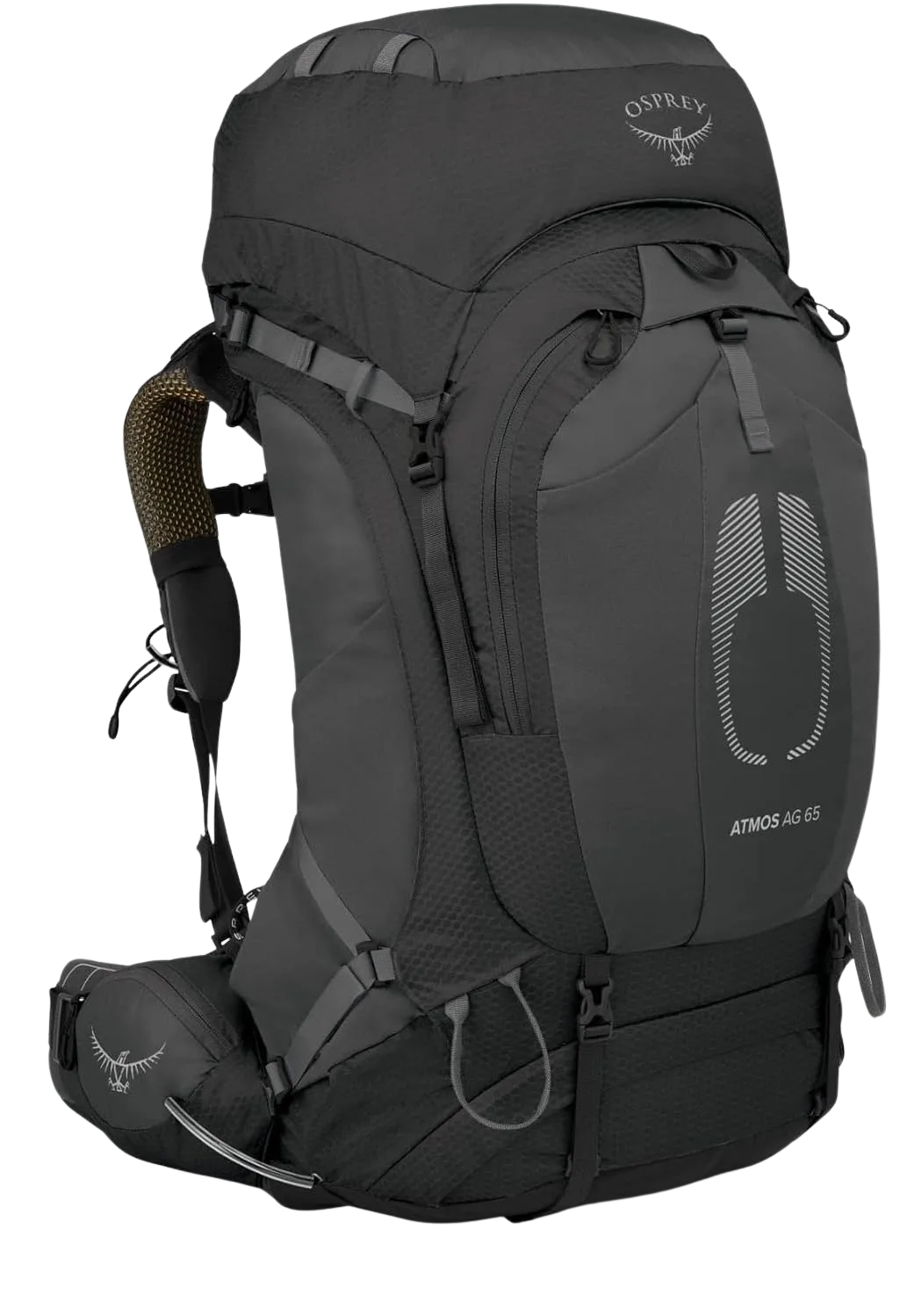
If you buy one pack to cover most of your hiking, this is the safe call. The ventilated back panel keeps you cooler on hot climbs, and the adjustable torso means you can fine-tune the fit at home instead of living with a sizing guess. The trade-off is weight, since at about 4.6 pounds it’s no ultralight, and the suspended mesh holds the load slightly off your spine on steep scrambles. For general backpacking, that’s a trade most hikers happily make.
The Honest Budget Pick (Granite Gear Crown3 60)
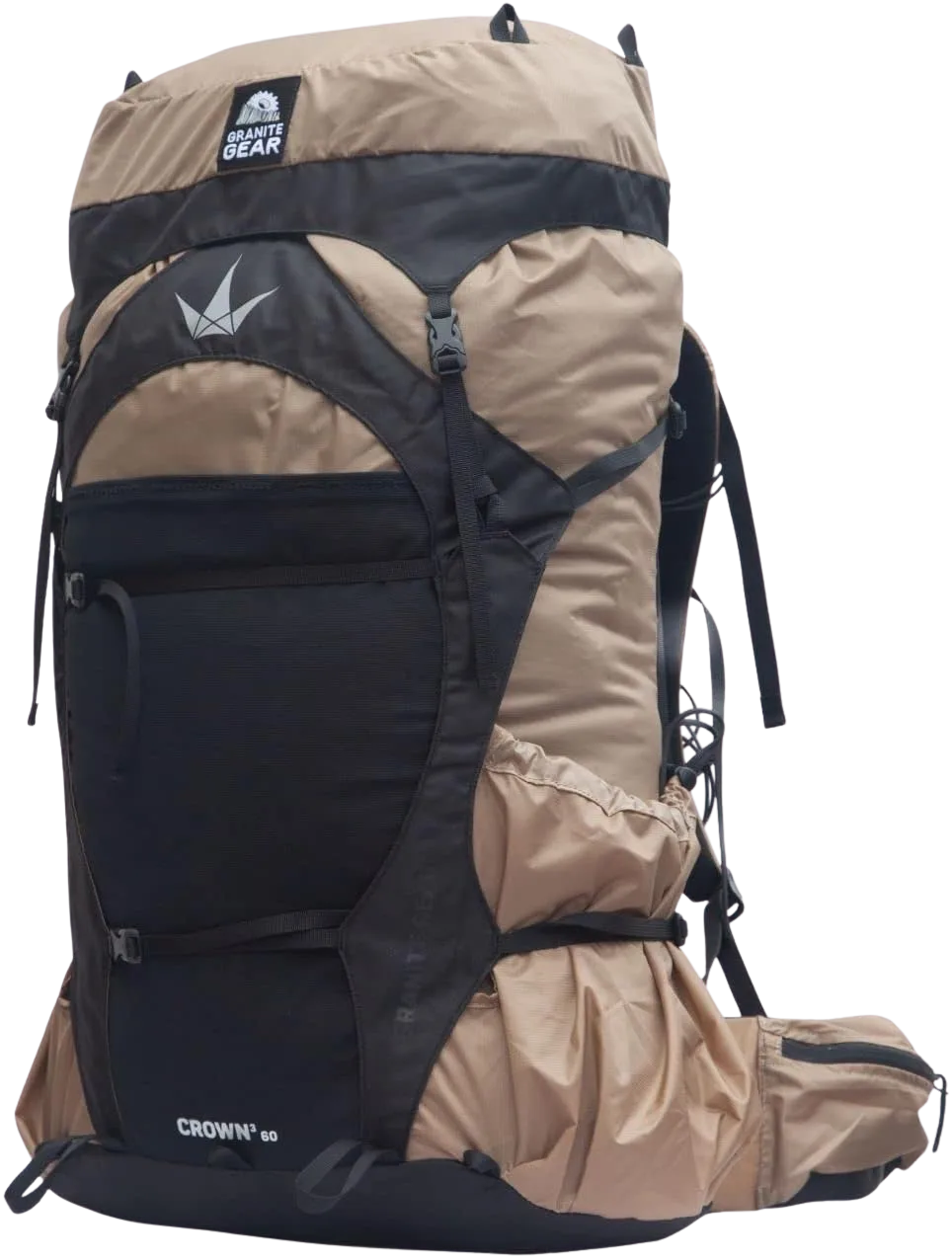
The Crown3 isn’t trying to be the Atmos, and that’s the point. It carries moderate loads on the hips, strips down to save weight when you remove the lid, and costs a fraction of the premium packs. Where it gives ground is on heavy loads, since the frame and belt don’t move 40 pounds as smoothly as a burly suspension does. Keep your load reasonable and most hikers won’t feel the ceiling.
Value and Lightweight Alternatives
Two pairs round out the lineup for hikers who want something other than the all-around or the budget pick. For an all-around pack that costs less than the Atmos with similar adjustable-fit comfort, the Gregory Paragon 58 (men’s) and Maven 55 (women’s) are the smart value play, lighter at about 3.7 pounds with a FreeFloat suspension that still adjusts to your torso. They’re the pick when you want most of the premium fit for less money.
For hikers chasing grams, the Osprey Exos 58 (men’s) and its women’s sibling the Eja 58 (women’s) drop into lightweight territory, around 2.6 and 2.2 pounds, with a semi-frameless build and AirSpeed mesh. The Eja uses 100% recycled fabric and is one of the lightest framed 58L packs you’ll find. The trade is comfort under heavy loads, so these reward a fit thru-hiker who keeps the weight down, not a first-timer hauling 40 pounds.
The Bottom Line
Pick the pack that fits the trips you actually take, not the trip you’re dreaming about. Size by nights out, not by “what if.” Fit by your torso length and let the hip belt carry 80% of the weight. And load-test before the trail, not at mile 8, because a pack that feels great empty tells you nothing.
Do one thing tonight: find your C7 and measure your torso. Then, before you buy anything, load a pack to 20% of your body weight and walk a flight of stairs. That five-minute test outranks any spec sheet, any review, and any badge a pack can wear.
Frequently Asked Questions
01What size hiking backpack do I need?
Size by trip length: 30 to 50L for an overnight or weekend, 50 to 70L for multi-day, and 70L+ only for extended or winter trips. A day hike is fine in 15 to 30L. Match liters to nights out, not to worst-case worry.
02How should a hiking backpack fit?
It should carry about 80% of the weight on your hips and 20% on your shoulders. Fit it loaded, in sequence: hip belt on your hip bones first, then shoulder straps, load lifters at 30 to 45°, then the sternum strap. If your shoulders ache, reset the hip belt.
03How much should a loaded hiking backpack weigh?
Aim to keep the loaded pack under about 20% of your body weight for multi-day comfort. A 150-pound hiker wants a load near 30 pounds, not 45. The pack’s own empty weight counts toward that number, which is why a lighter pack helps.
04What is the difference between an internal and external frame backpack?
An internal frame sits inside the pack and hugs your back for balance on uneven trail, which is what most hikers want today. An external frame rides outside, ventilates better, and hauls heavy or boxy loads, but it’s less stable on technical terrain.
05Do I need a women’s-specific hiking backpack?
Not because of gender, but because of frame geometry. Women’s packs have a shorter torso range, a narrower S-curve harness, and an upward-canted hip belt. If a men’s pack rides high on a shorter torso, try the women’s or short-torso line. Plenty of short-torso men fit them better.
Risk Disclaimer: Hiking, trekking, backpacking, and all related outdoor activities involve inherent
risks which may result in serious injury, illness, or death. The information provided on The Hiking Tribe is for
educational and informational purposes only. While we strive for accuracy, information on trails, gear, techniques,
and safety is not a substitute for your own best judgment and thorough preparation. Trail conditions, weather, and
other environmental factors change rapidly and may differ from what is described on this site. Always check with
official sources like park services for the most current alerts and conditions. Never undertake a hike beyond your
abilities and always be prepared for the unexpected. By using this website, you agree that you are solely
responsible for your own safety. Any reliance you place on our content is strictly at your own risk, and you assume
all liability for your actions and decisions in the outdoors. The Hiking Tribe and its authors will not be held
liable for any injury, damage, or loss sustained in connection with the use of the information herein.
Affiliate Disclosure: We are a participant in the Amazon Services LLC Associates Program, an
affiliate advertising program designed to provide a means for us to earn advertising fees by advertising and linking
to Amazon.com. As an Amazon Associate, we earn from qualifying purchases. We are also an official affiliate partner
of Black Diamond Equipment via the AvantLink network. If you click on a Black Diamond affiliate link and make a
purchase, we may earn a commission at no additional cost to you. We also participate in other affiliate programs and
may receive a commission on products purchased through our links. Additional terms are found in the terms of
service.