In this article
Mile 43 on the PCT, late afternoon. I squeezed my Sawyer Squeeze and nothing came out. Not a drip. I’d backflushed it that morning. My bottles were empty, the next water source was six miles ahead, and I had a filter rated for 100,000 gallons — dead after less than 90.
That number on the packaging is real. It’s just not the number that matters on trail.
After years of multi-day backpacking on everything from Sierra snowmelt to Arizona desert cattle tanks, I’ve filtered a lot of water and replaced more filters than I care to admit. Here’s what you actually need to know about how long a sawyer filter actually last — and what to do when it starts giving out.
⚡ Quick Answer: Sawyer filters are advertised for up to 100,000 gallons, but real-world thru-hiker data puts the realistic lifespan at 300–1,000 gallons depending on water source quality and maintenance habits. Your filter won’t stop catching pathogens when it slows — it’ll just become impractical. Replace it when a fully backflushed filter still takes more than 90 seconds-per-liter. Daily backflushing and the knock-on-wood technique are your two most effective tools for extending filter life on trail.
The 100,000-Gallon Claim vs. Trail Reality
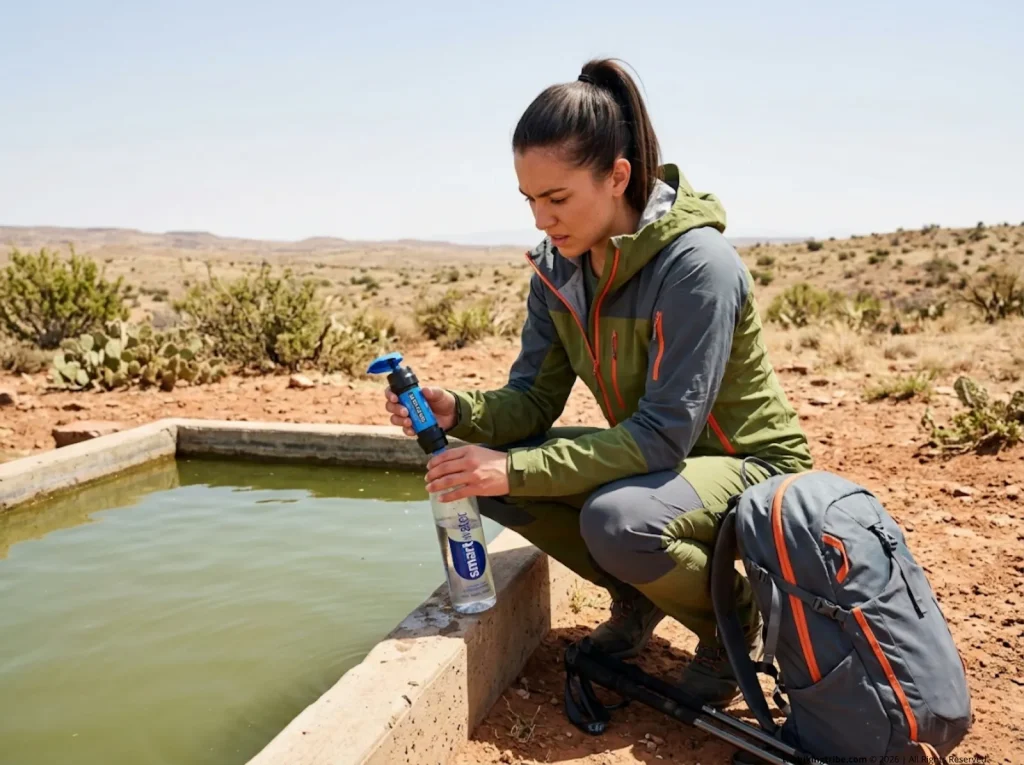
Sawyer rates the Mini, Micro Squeeze, and Squeeze at “up to 100,000 gallons.” That ceiling exists. What they don’t print on the box is that it was measured in a lab using clean, controlled water — not the tannin-brown creek water you’ll encounter after a rainstorm, or the thick green runoff draining into a cattle tank in the Arizona high desert.
“Up to” is the qualifier most hikers skip right past.
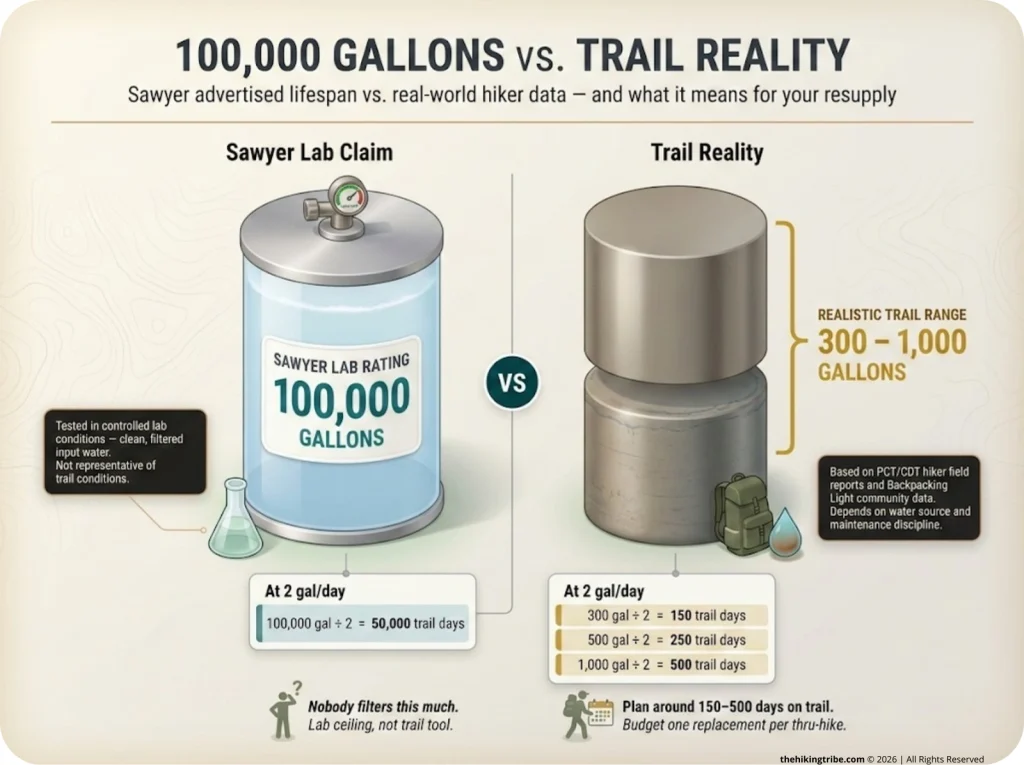
Trail data tells a different story. A PCT hiker documented in The Trek found their Sawyer Mini flow rate had dropped to 22% of its original value after filtering less than 86 gallons over 43 days. A CDT hiker reported needing to consider replacement of their Squeeze after approximately 260 gallons.
Community consensus across Backpacking Light forums and Reddit’s ultralight threads consistently lands at 300–1,000 gallons as the realistic lifespan — heavily dependent on your water sources and how disciplined you are with gear maintenance.
At two gallons a day — a reasonable estimate for a backpacker in warm weather — 300 gallons is 150 trail days. For most thru-hikers, that’s one season. Budget accordingly.
You can also cross-reference what 0.1 micron actually means for virus protection — because understanding the membrane helps explain exactly why it clogs the way it does.
Why Sawyer Filters Clog (The Science Hikers Skip)
The hollow-fiber membrane inside every Sawyer filter is a bundle of tiny U-shaped tubes, each with pores measured at 0.1 micron absolute. That means no pore is larger than 0.1 micron — small enough that bacteria and protozoa physically cannot squeeze through. It’s a mechanical water filter, not a chemical one.
Nothing in the membrane “wears out.” It clogs. Every time you squeeze water through, particles lodge in those pores. The debris accumulates, and the restriction compounds. That’s why your flow rate drops steadily over a trip rather than failing all at once.
What accelerates the clog depends entirely on your water source. Clear mountain streams fed by snowmelt are as close to filtered input as you’ll get — your Sawyer can last 800 gallons or more in those conditions with proper care. But glacial flour — the ultra-fine rock dust suspended in glacial meltwater — is insidious. The particles are fine enough to push deep into fiber walls without being stopped at the surface.
Desert cattle tanks are worse: thick with organic turbidity, algae, and mineral buildup that compounds the problem fast. This is where pre-filtering becomes your best tool.
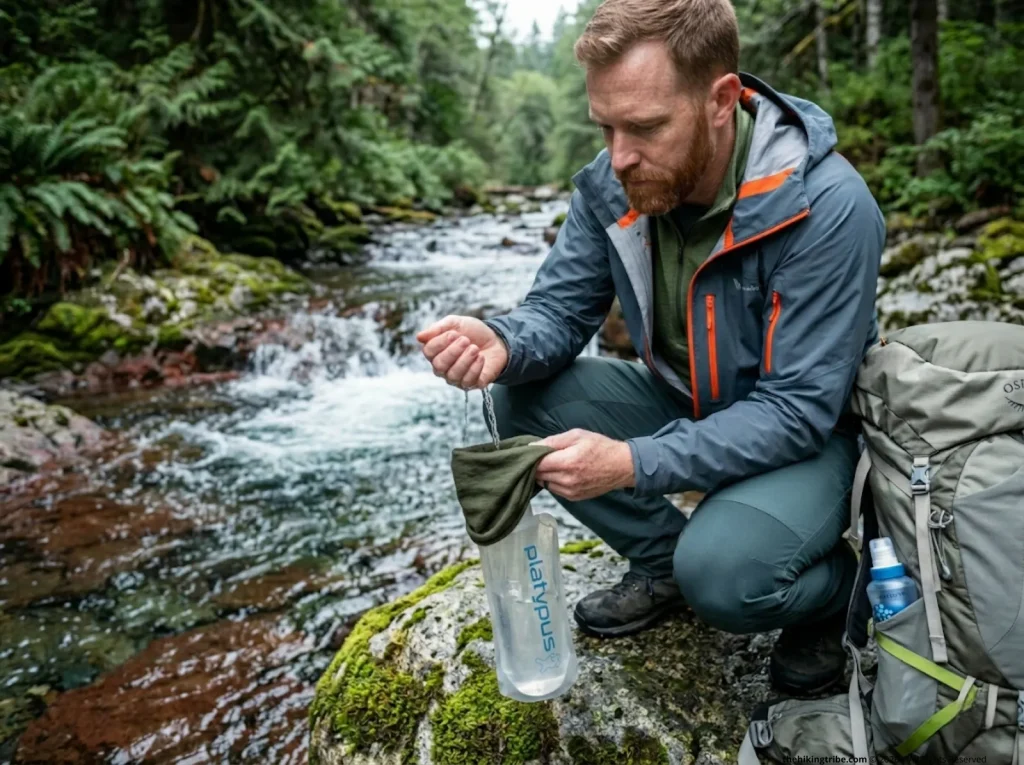
Pour water through a bandana or coffee filter before it hits your Sawyer. You’d be amazed how much suspended material you can remove before it reaches the membrane. Andrew Skurka recommends adding a few drops of alum solution to highly turbid water to settle particles out before filtering — and it’s worth the extra step when you’re filtering from a source that looks like green soup. For a deeper look, our guide on pre-filtering silty water before it hits your main filter breaks down the mechanics.
Pro tip: If you’re backpacking in the desert Southwest and relying on cattle tanks or stock ponds, expect to replace your filter up to twice as often as you would on a typical alpine route. Plan your resupply strategy around that.
Restoration Methods Ranked by Field Data
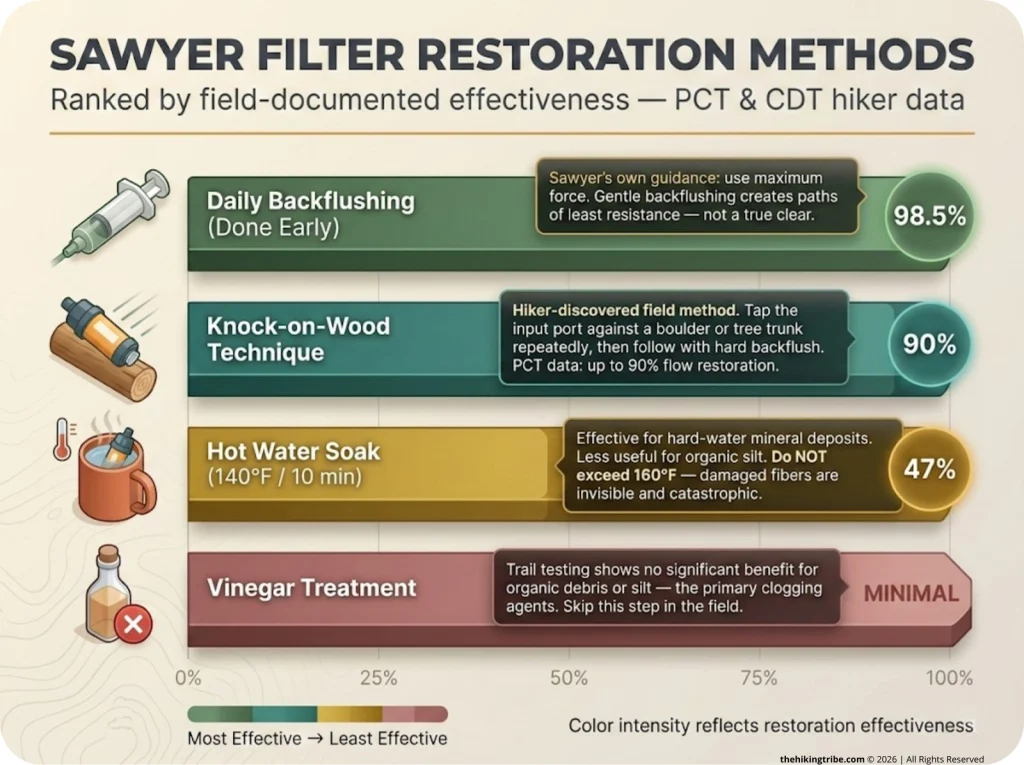
When your Sawyer slows down, you have three real options. Here’s how they stack up.
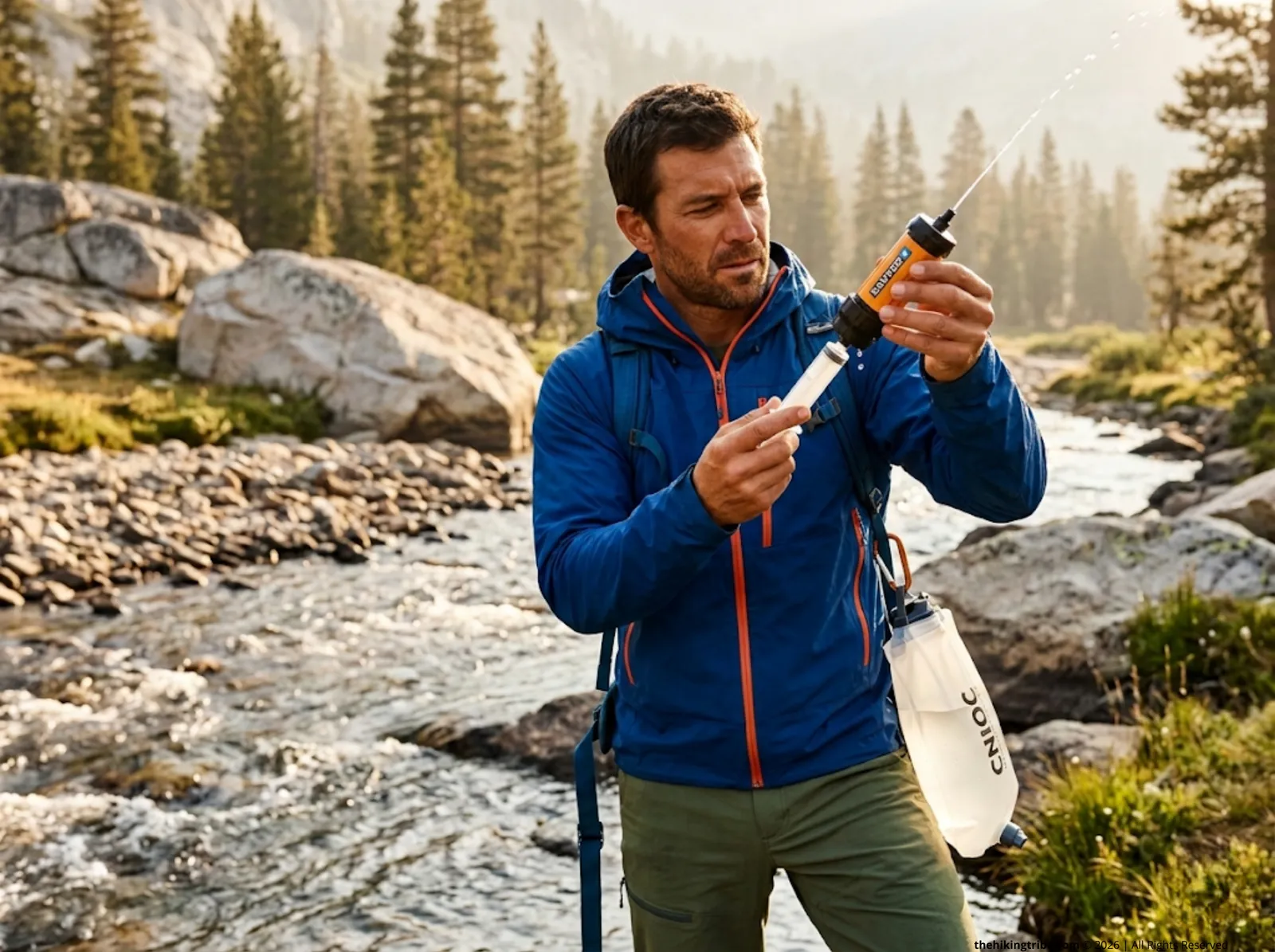
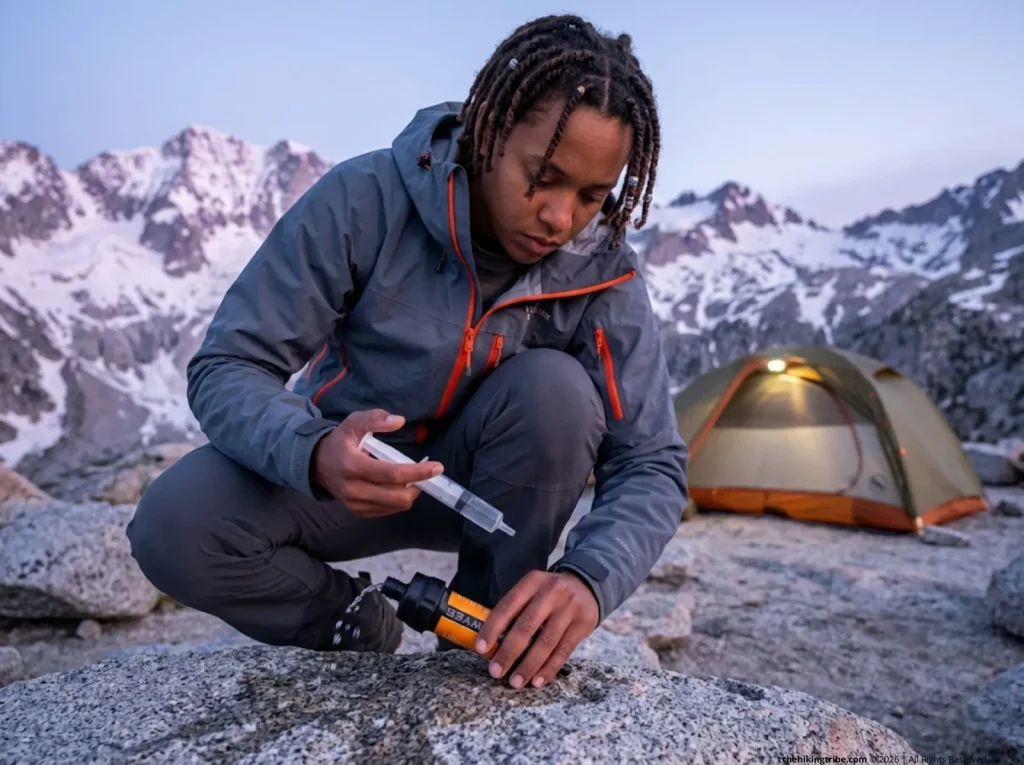
Backflushing is non-negotiable and should happen every day — not just when the flow drops. Sawyer’s own guidance is explicit: be very forceful with the backflush syringe. Being gentle only creates paths of least resistance through the debris, punching temporary channels without clearing the compacted material.
Hit it hard, multiple times, until water runs clear from the input end. Sawyer’s official backwashing technique guide demonstrates exactly how much pressure is needed. Done consistently before sediment can compact, regular backflushing can restore up to 98.5% of your flow rate.
When backflushing alone isn’t enough, reach for the knock-on-wood technique. Tap the filter firmly against a tree trunk, a boulder, or your trekking pole — the input port side hitting the hard surface — to physically dislodge debris that has worked itself into the fibers. PCT data puts this method at restoring up to 90% of original flow.
Combine it with another hard backflush immediately after to push the loosened material out. This is a hiker-discovered method, not something Sawyer promotes, and it’s consistently the most effective DIY restoration tool field testers report.
Hot-water restoration restores approximately 47% of flow — less effective than knock-on-wood, but it targets a different problem: mineral buildup from hard water sources. Soak the filter in water at around 140°F for ten minutes. This is the move when you’ve been filtering from limestone springs or water sources known for high mineral content. Just don’t go to boiling — heat above 160°F can damage the fibers.
Vinegar treatment? Skip it. Trail testing shows vinegar provides no meaningful benefit for the organic sediment and silt clogging most hikers encounter. It may have marginal use against severe mineral deposits from extremely hard water, but knock-on-wood and hot water handle that better.
For our complete step-by-step cleaning protocol, see our full diagnostic Sawyer Squeeze cleaning guide.
Pro tip: Backflush every day on the trail, not just when it slows down. Prevention is easier and more effective than restoration. A filter you maintain daily will outlast one you ignore by a significant margin.
Mini vs. Squeeze vs. Micro Squeeze for Your Trip Length
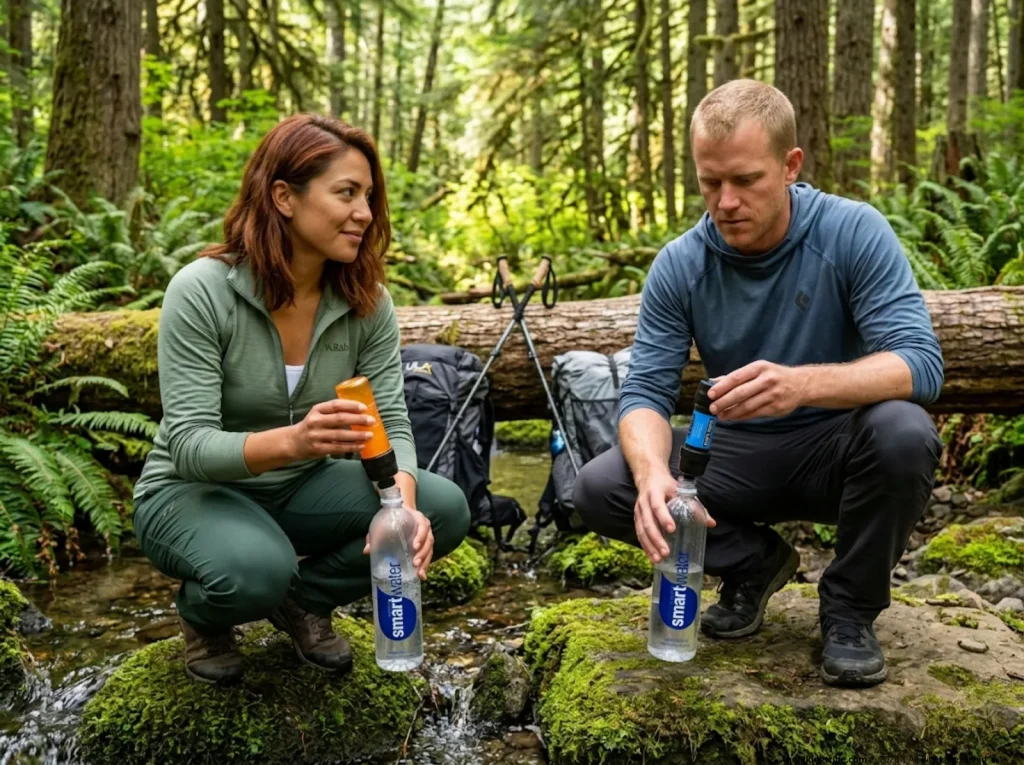
This choice comes down to one honest tradeoff: weight versus time.
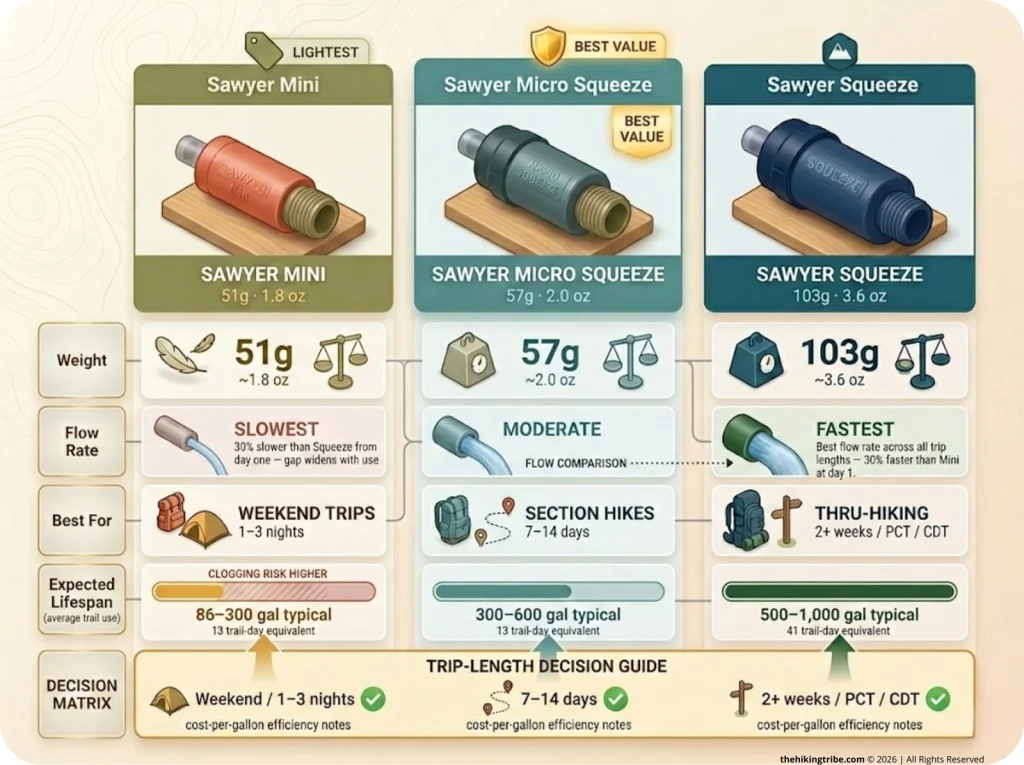
The Sawyer Mini weighs 51 grams (about 2 oz) and is genuinely excellent for short trips where clogging isn’t a major variable. But it flows 30% slower than the Sawyer Squeeze out of the box, and that gap only widens as the filter accumulates use. Far Out Guides, after extended field testing, noted the Mini’s low flow rate “will likely require replacing the filter the first time you have the chance on a long-distance hike.”
On a weekend trip, that barely matters. On a thru-hike, filtering two gallons a day with a clogging Mini is a real time cost.
The Sawyer Micro Squeeze sits between them at 57 grams — a meaningful bump in flow over the Mini without jumping to the full Squeeze’s 103 grams. For section hikers doing 7-14 day trips, it’s often the smart sweet spot.
The Squeeze at 103 grams wins on anything longer than two weeks. The extra 52 grams — less than two ounces — buys you significantly faster filtering throughout the trip. On a long-distance route like the PCT or CDT, that time adds up. Experienced thru-hikers almost universally switch from the Mini after their first long-distance attempt. Pair any of them with a CNOC Vecto bag for fast, hands-free filling.
If you want to compare these against gravity-fed systems for group setups, our review of gravity-fed alternatives for group camping covers the options in detail.
Pro tip: Whatever model you carry, keep a small bottle of Aquamira drops (one ounce) as hiker safety redundancy. If your filter develops a crack or fails catastrophically — which can happen from a sharp drop — chemical treatment keeps you safe while you figure out your next move.
Storage, Freezing, and the Mistakes That Kill Filters Early
The mistakes that kill Sawyer filters most often don’t happen on trail. They happen at home, between seasons.
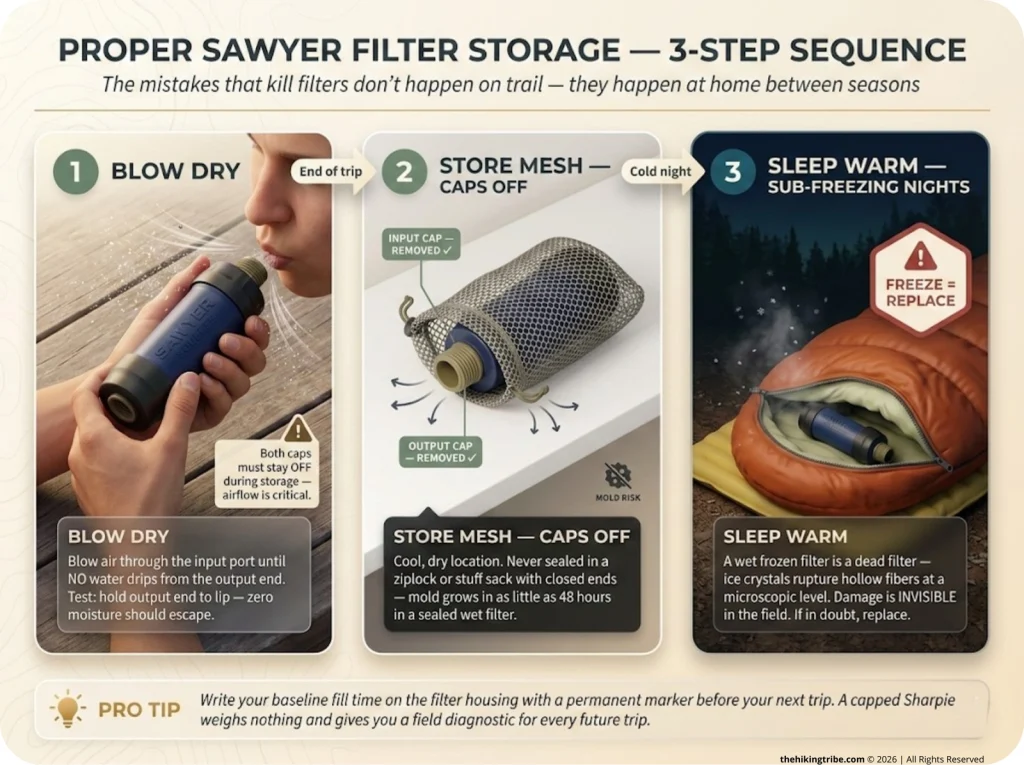
Mineral buildup from dried storage is the first threat. If you pack your filter away with hard-water residue from your last trip still inside, those minerals dry into deposits that are significantly harder to clear. Always do a thorough backflush with clean tap water before storage, then blow air through the filter until no water drips out.
Store with caps off — both ends — in a cool, dry place with airflow. A filter stored wet in a closed bag will grow mold inside the hollow fibers. The fibers don’t fail immediately, but you’ll spend your first night on trail running aggressive backflushes to clear the contamination. Seasonal hikers who use their filter three or four trips a year are the most likely to make this mistake.
The freeze rule is non-negotiable: a wet frozen filter is a dead filter. Ice crystals expand inside the fibers and rupture the microscopic pores. The damage is invisible — the filter will still pass water, but compromised pores allow pathogens through.
Sawyer’s warranty doesn’t cover freeze damage, and there’s no way to confirm physical damage has occurred in the field without lab testing. If your filter freezes, replace it.
On cold-weather trips, sleep with your filter inside your sleeping bag. In your garage over winter, don’t store it in an unheated space where overnight temps drop below 32°F. For broader guidance on protecting your gear between seasons, our piece on how to store hiking gear properly between seasons covers the full protocol — and don’t forget to dispose of spent filter cartridges according to Leave No Trace principles rather than tossing them trailside.
When to Replace (The Field Decision Framework)
The membrane in a Sawyer filter doesn’t stop catching pathogens when it slows down. It just becomes impractical. The flow rate as dead indicator — not pathogen failure — is what you’re watching for.
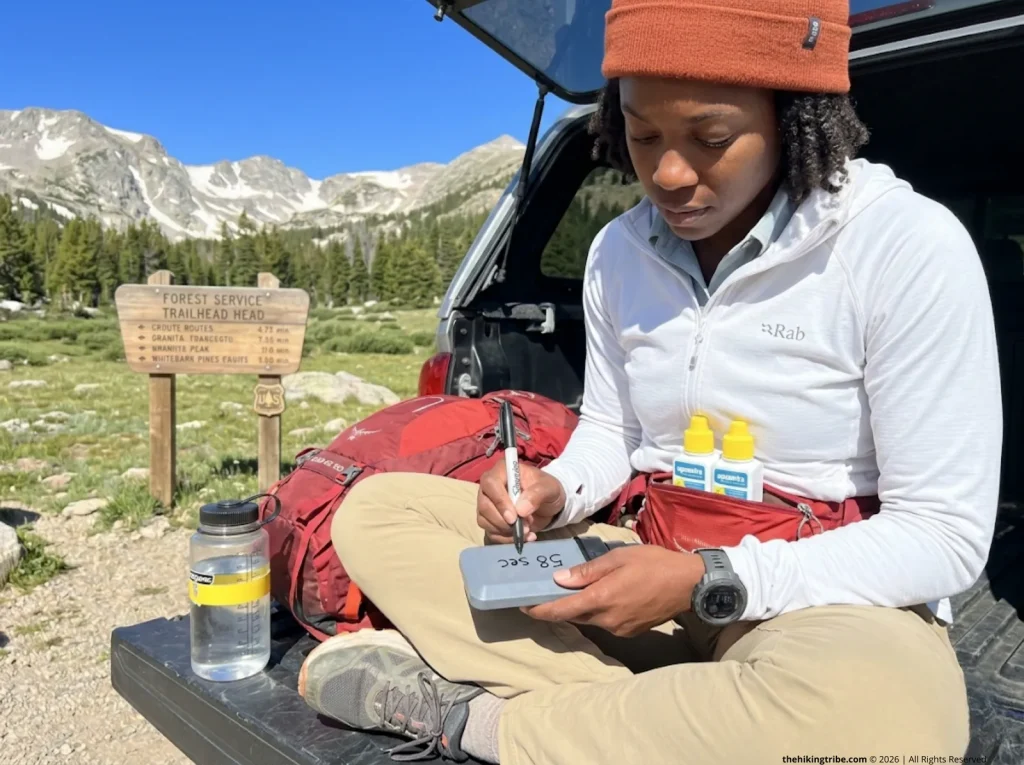
Here’s the most useful thing you can do right now: grab a permanent marker and write your baseline fill time on the filter housing before your next trip. Time how long it takes a new filter, fully backflushed, to fill a 24 oz bottle. Write that number on the plastic. That baseline becomes your field diagnostic tool.
When a backflushed and knock-on-wood treated filter still takes more than 3-4x your baseline time, run hot water treatment. When a restored filter still crawls past 5x baseline — or more than 90 seconds-per-liter — that’s your replacement signal. On thru-hikes covering 500+ miles, budget for one replacement as a baseline expectation.
One more thing: Sawyer water filters don’t remove viruses. The Mini, Squeeze, and Micro Squeeze filter at 0.1 micron absolute — sufficient for bacteria and protozoa, but viruses are smaller. In North American backcountry, viral contamination is rare enough that most experienced hikers don’t worry about it.
But if you’re traveling internationally to areas with greater human waste contamination near water sources, water purification beyond filtration matters. The CDC guidelines for backcountry water treatment outline when to add a chemical treatment step. And if you’re looking at chemical backup options, our guide on chemical treatment timing in cold water gives you the real numbers.
Conclusion
Three things worth taking with you.
First: 100,000 gallons is a lab ceiling, not a trail promise. Real-world lifespan is 300–1,000 gallons depending on your water sources and how diligently you maintain the filter. Plan your resupply — and your backup — around that number.
Second: daily backflushing combined with the knock-on-wood technique is the most effective maintenance protocol field data has produced. Use both, and use them proactively — before the filter gets slow, not after.
Third: your filter won’t warn you when it’s been compromised by freezing. If temperatures dropped below freezing and your filter was wet, assume the worst and replace it before you depend on it.
Grab a marker before your next trip and write your baseline fill time on the housing. That single number is your field diagnostic, your early warning system, and your replacement trigger — all in one.
FAQ
Does a Sawyer filter expire if I don’t use it?
No — Sawyer hollow-fiber membranes have no expiration in storage when kept dry and unfrozen. However, filters stored wet can develop mold, and mineral deposits left to dry inside the housing reduce flow over time. Always backflush with clean water and dry completely before seasonal storage.
Why is my Sawyer filter so slow even after backflushing?
Compacted sediment or mineral buildup may be lodged too deep for standard backflushing to clear. Try the knock-on-wood technique first, then backflush again hard. If a 140°F hot water soak for ten minutes doesn’t restore flow close to your baseline, the filter has reached end-of-life.
How long does a Sawyer Squeeze last on the PCT?
PCT thru-hikers report a realistic lifespan of 250–800 gallons depending on water source quality and maintenance habits. At 2 gallons per day, that’s roughly 125–400 trail days. Most hikers on the PCT or CDT budget for at least one replacement during a full thru-hike.
Can I use vinegar to clean my Sawyer filter?
Vinegar treatment shows no significant benefit for the organic debris and silt that cause most trail clogging. The knock-on-wood technique and hot-water restoration are more effective in nearly every real-world test hikers have documented.
Is the Sawyer Mini or Squeeze better for thru-hiking?
The Sawyer Squeeze. Despite 52 extra grams, it flows 30% faster than the Mini from day one, and that gap widens as clogging progresses across hundreds of miles. On any trip longer than a week, the time saved filtering two gallons a day justifies the weight.
Risk Disclaimer: Hiking, trekking, backpacking, and all related outdoor activities involve inherent
risks which may result in serious injury, illness, or death. The information provided on The Hiking Tribe is for
educational and informational purposes only. While we strive for accuracy, information on trails, gear, techniques,
and safety is not a substitute for your own best judgment and thorough preparation. Trail conditions, weather, and
other environmental factors change rapidly and may differ from what is described on this site. Always check with
official sources like park services for the most current alerts and conditions. Never undertake a hike beyond your
abilities and always be prepared for the unexpected. By using this website, you agree that you are solely
responsible for your own safety. Any reliance you place on our content is strictly at your own risk, and you assume
all liability for your actions and decisions in the outdoors. The Hiking Tribe and its authors will not be held
liable for any injury, damage, or loss sustained in connection with the use of the information herein.
Affiliate Disclosure: We are a participant in the Amazon Services LLC Associates Program, an
affiliate advertising program designed to provide a means for us to earn advertising fees by advertising and linking
to Amazon.com. As an Amazon Associate, we earn from qualifying purchases. We are also an official affiliate partner
of Black Diamond Equipment via the AvantLink network. If you click on a Black Diamond affiliate link and make a
purchase, we may earn a commission at no additional cost to you. We also participate in other affiliate programs and
may receive a commission on products purchased through our links. Additional terms are found in the terms of
service.