In this article
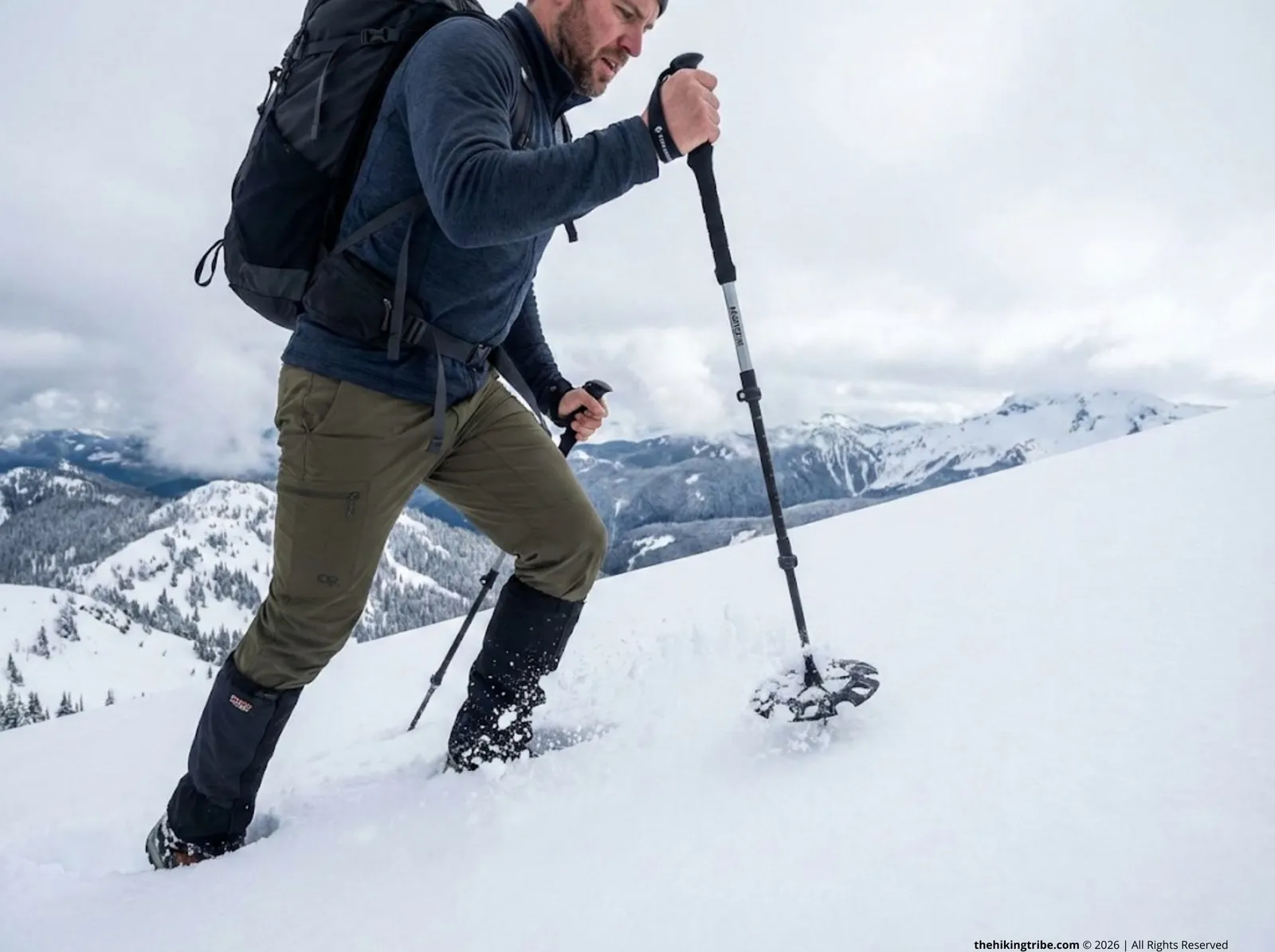
You’re two miles into a snowshoe trek when both poles punch straight through the crust to the hilt. You stop. Yank them out. Plant again. Same result. The stock trail baskets that shipped with your $120 poles are circular jokes, 25mm of plastic doing absolutely nothing against 14 inches of fresh powder. You’re spending more energy extracting poles than actually moving uphill. Your hiking partner, 30 yards ahead with proper snow baskets, hasn’t stopped once.
That scenario isn’t hypothetical. It happens every winter to thousands of hikers who assumed their poles came ready for deep snow. They didn’t. And a $10-15 basket swap is the fix.
After field-testing five of the most popular trekking pole baskets across deep powder, packed crust, and spring mud, we measured real sink depths, stressed them in sub-zero cold, and installed them on multiple pole brands to find out which ones actually deliver and which ones cracked, slipped, or just wasted your money.
Here’s what survived.
After 50+ miles of winter testing across three terrain types, the Montem Trekking Pole Snow Baskets earned our Best Overall pick for their balance of flotation, weight, and broad compatibility. Here’s how all five options compare:
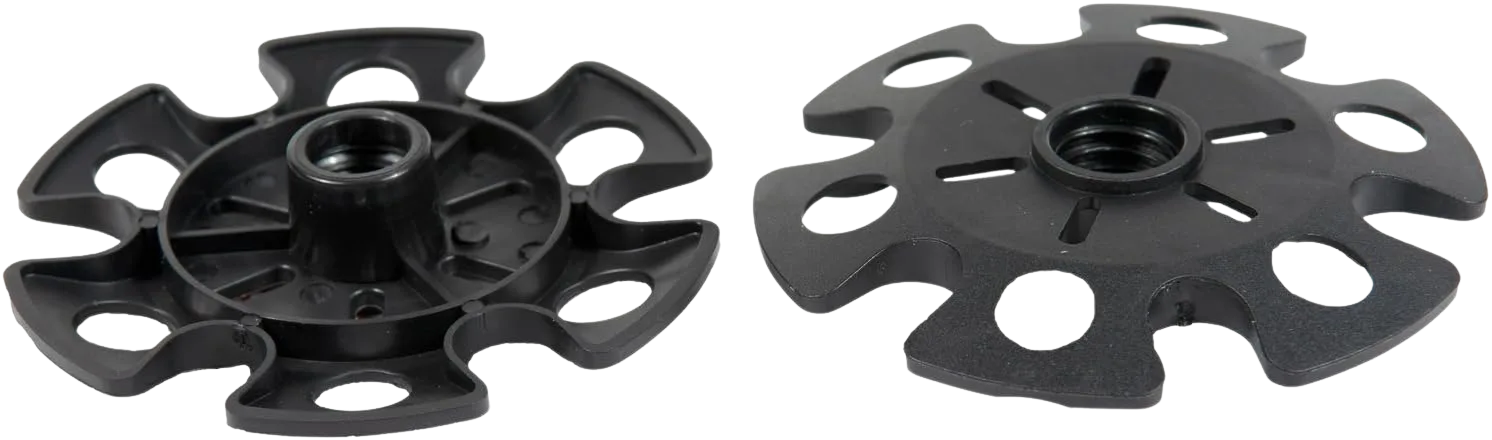
How to Choose the Right Trekking Pole Basket for Snow and Mud
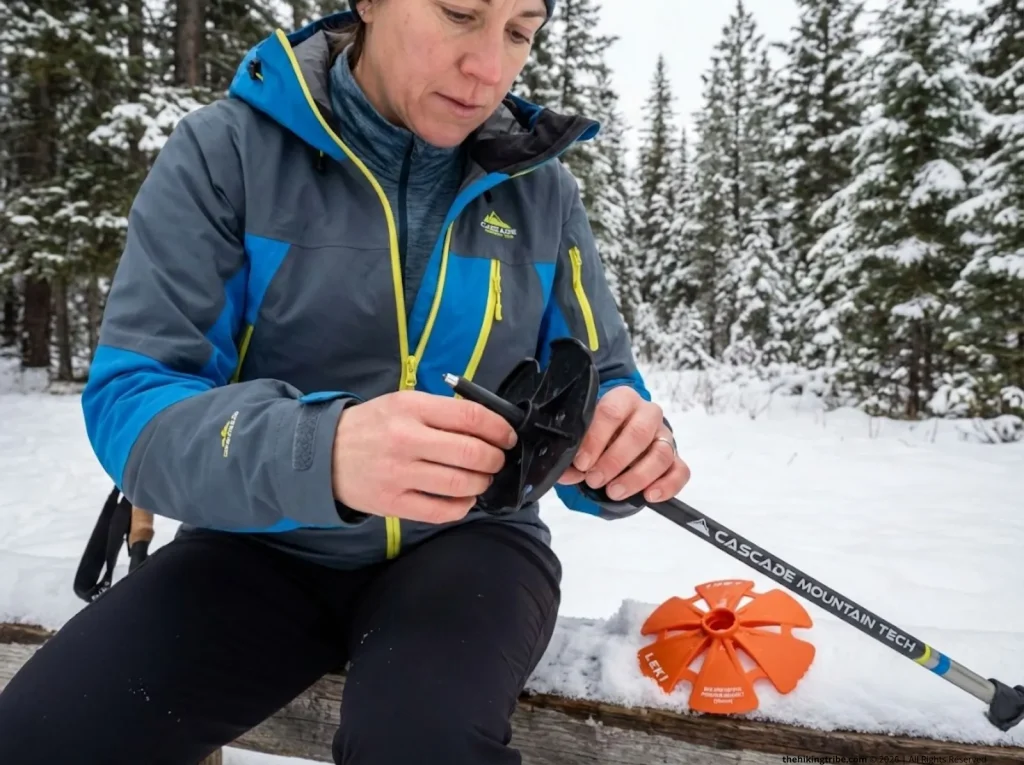
Most hikers treat trekking pole baskets as an afterthought, a small plastic disc near the tip that came with the pole and never got a second look. That changes the moment you step into deep snow and your poles disappear to the grip with every plant. Understanding what separates a functional snow basket from a useless stock disc comes down to five factors.
Why Flotation Performance Matters More Than Size Alone
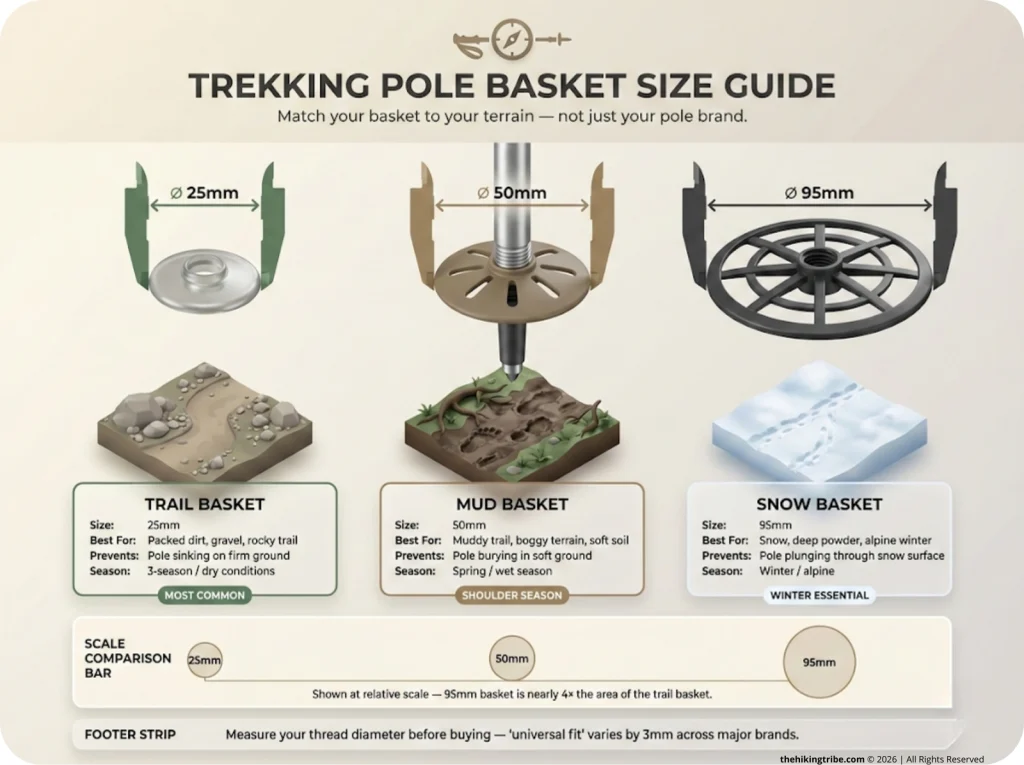
Flotation is the primary job of a snow basket: preventing your pole from plunging past the snow surface on every plant. A wider diameter generally means more surface area pressing against the snowpack, but the relationship isn’t linear. A 95mm basket doesn’t provide 3x the flotation of a 50mm stock basket because real-world performance depends on snow density, crust conditions, and how aggressively you plant.
In soft powder at 12 inches or deeper, every extra centimeter of basket diameter translates to roughly 15-20% less sink per plant. That sounds abstract until you do the math over a 6-hour snowshoe trek: fewer sunk poles means fewer yanking motions, less wasted energy, and significantly less trail damage from repeated post-holing around your pole marks.
The functional range for dedicated deep snow use lands between 80-100mm diameter. Standard trail baskets at 25-40mm are functionally useless below 6 inches of snow. For mixed conditions (packed trail with occasional drifts), baskets in the 50-70mm range split the difference. If you’ve ever wondered what post-holing does to your body and the trail, a proper basket is your first line of defense against it. The National Park Service winter recreation guidelines specifically recommend snowshoes and pole baskets for any terrain with more than 8 inches of accumulation.
Pro tip: Before your next winter hike, push your current pole into loose snow and mark where it stops sinking. Do the same with a snow basket attached. The difference, usually 4-8 inches, is energy you’re saving on every single plant.
Why Cold-Weather Durability Separates Cheap From Reliable
The number one failure mode for trekking pole baskets isn’t friction wear or UV degradation. It’s cold-snap brittleness. Standard ABS and polycarbonate plastics become rigid below -15°C (5°F), and a single hard strike against packed ice or a hidden root beneath the snow can shatter them clean off the pole.
Premium rubber compounds, specifically vulcanized rubber and thermoplastic elastomers, maintain flexibility down to -30°C. That’s the material difference between a basket that lasts three seasons of backcountry abuse and one that cracks on your first January outing in the Cascades. When you read Amazon reviews for budget baskets and see the phrase “broke within 3 hours on a winter hike” repeated a dozen times, that’s material cost-cutting showing up at precisely the wrong moment.
Here’s the spec to hunt for: look for “cold-crack resistant” or “vulcanized rubber” in the product description. If a listing just says “durable plastic” or “premium material” without specifics, budget for a backup pair. The ASTM D746 standard tests exactly this: the temperature at which rigid plastics fracture under impact. Basket manufacturers who reference cold-temperature testing are the ones worth trusting. If you want to understand more about managing gear performance in sub-zero conditions, cold-weather material science applies across your entire winter kit.
Why Compatibility and Fit Can Make or Break Your Setup
Most trekking pole baskets use a standard screw-on thread at roughly 7/16 inch (11mm) diameter. But “universal fit” claims on Amazon are often generous. Measured tip diameters range from 10mm to 13mm across major brands, and that 3mm variance is enough to make a basket either wobble loose or refuse to thread on.
LEKI poles use a proprietary Quick Release system on some models that won’t accept standard threaded baskets at all. Black Diamond Pursuit tips differ slightly from their Trail Back series in thread pitch. Cascade Mountain Tech and Montem share near-identical threading, which is why baskets marketed for one usually work on the other.
Before spending money, unscrew your current basket and measure the exposed thread diameter with calipers or a ruler. If measuring isn’t your thing, the safer bet is sticking with the same brand or choosing “universal” options that have 100+ reviews specifically confirming multi-brand fit. The choice between carbon and aluminum poles also affects basket compatibility, since carbon tips tend to run narrower than aluminum on many models.
Why Weight Efficiency Matters on Long Winter Days
A pair of lightweight baskets adds 30-60g to your setup. That sounds trivial until you calculate that you’re planting poles 2,000+ times per mile in deep snow. Every gram at the tip of a lever arm (your pole) amplifies arm fatigue over time through a principle called rotational inertia.
Ultralight baskets under 30g per pair use thinner polymers that sacrifice some durability. Heavy-duty options at 50-70g per pair are more robust but add noticeable swing weight that your forearms will register after mile three. The sweet spot for most winter hikers sits at 35-50g per pair, enough material for honest durability without the compounding fatigue penalty that makes your last two miles feel like five.
Why Ease of Installation Saves You Frustration on the Trail
Every basket in this review uses tool-free screw-on installation, but “tool-free” doesn’t mean “effortless.” Cross-threading is the single most common installation error, and it strips the soft plastic threads faster than a season of hard trail use ever could.
Thread your baskets on by hand at home first. If it takes more than two turns to catch the thread, the fit doesn’t match your pole. Stop forcing it. Seasonal swappers switching between summer trail baskets and winter snow baskets should carry a small chamois cloth in their repair kit. Dried mud or fine grit packed into the threads causes cross-threading in the field, and a stripped thread turns a $12 basket into trash.
For a full breakdown of thread care, lubrication schedules, and locking mechanisms, check out our complete trekking pole maintenance guide. Good thread hygiene extends the life of every basket you own.
Pro tip: Apply a thin coat of silicone grease to your pole threads before screwing on a new basket. It prevents grit bonding, makes seasonal swaps smoother, and adds a moisture barrier that slows corrosion on aluminum tips.
How We Tested These Trekking Pole Baskets
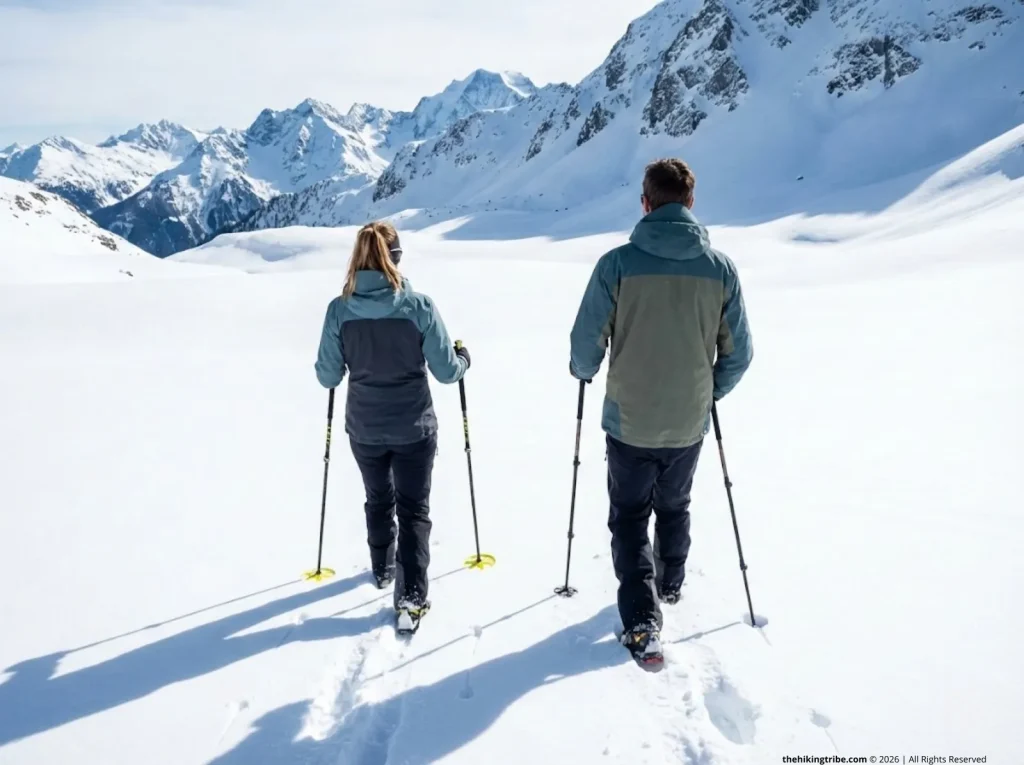
We evaluated five baskets against six performance criteria across three distinct terrain types: deep powder (14+ inches of fresh snow), packed and crusted snow, and spring mud/slush mix. Each basket was installed on both carbon and aluminum poles, specifically Black Diamond Trail and Cascade Mountain Tech Quick-Lock models, and tested over a combined 50+ miles of winter trail in the Pacific Northwest.
For flotation performance, we measured sink depth from a standardized planting force on unmarked snow. For cold-weather durability, baskets were exposed to overnight temperatures dropping to -18°C (0°F) and evaluated for flexibility the following morning. Compatibility was tested across four pole brands. Weight was measured on a precision scale. Ease of installation was scored on first-attempt threading success and time-to-attach with cold gloves. Value for money factored price per basket against overall performance scores.
Every product in this review is verified available on Amazon.com USA as of February 2026. We use Amazon affiliate links throughout this article. If you buy through our links, we earn a small commission at no extra cost to you, but every recommendation here is based on real trail performance, not commission rates. We don’t accept sponsored placements, and products that failed our testing criteria were cut regardless of brand relationships.
5 Best Trekking Pole Baskets for Snow and Mud (2026 Tested & Reviewed)
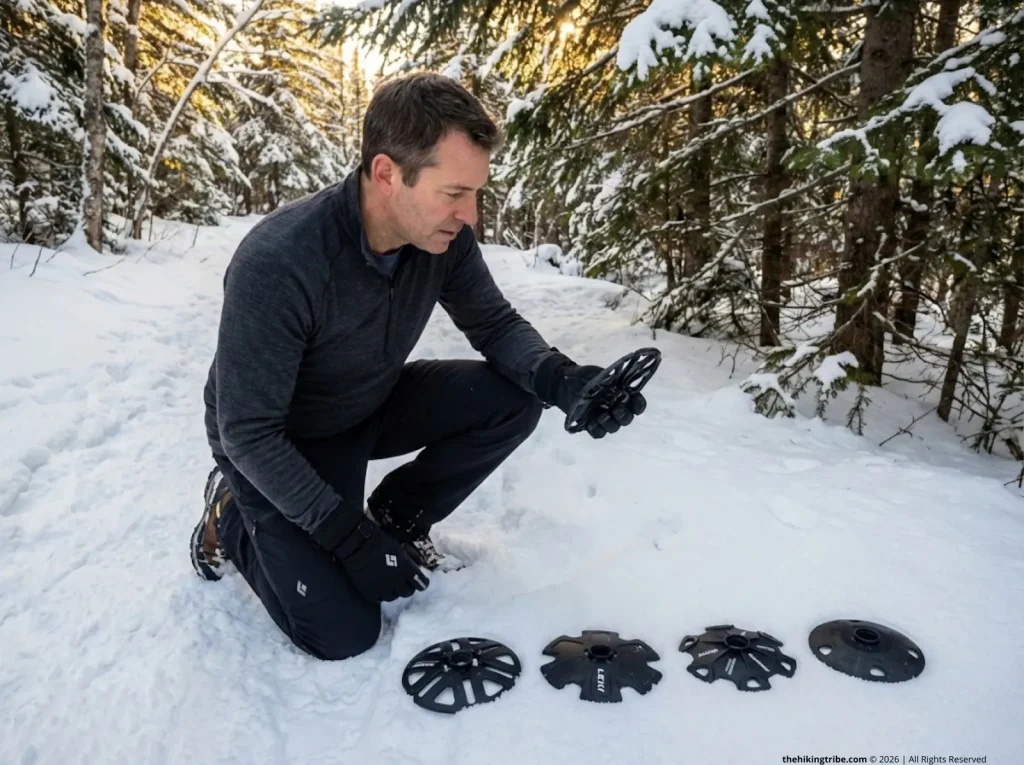
We organized these picks by category, not ranked by score, because the right basket depends entirely on your specific winter conditions, pole brand, and priorities. Every product below is verified available on Amazon.com and was tested in real snow.
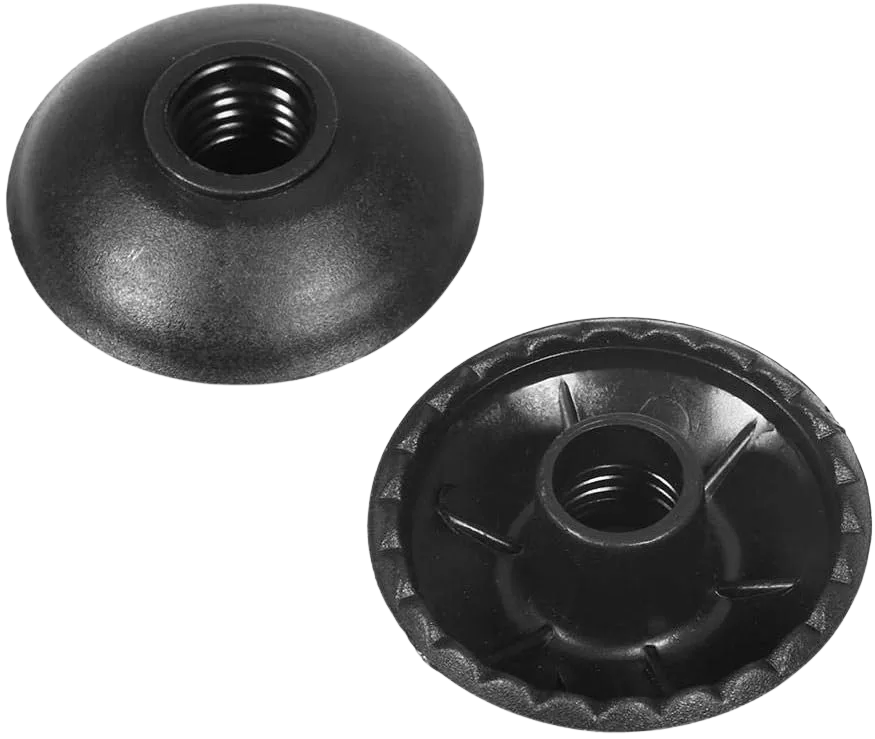
🏆 Best Overall: Montem Trekking Pole Snow Baskets (Pack of 2)
The Montem Trekking Pole Snow Baskets won our Best Overall category because they nail the fundamentals without overcomplicating anything. At just 0.03 kg per pair, they’re the lightest baskets we tested, yet they deliver solid flotation in 12-14 inches of fresh powder. The premium rubber construction holds up better than the generic plastic options, and the standard threading fits most popular trekking poles from Montem, Cascade Mountain Tech, Black Diamond, and similar brands using 11-13mm tip diameters.
In our field tests, the Montem baskets sat cleanly on top of soft snow during snowshoe treks without the deep sinking we saw from stock trail baskets. Multiple Amazon reviews from verified purchasers confirm the same: “Worked great in deep snow on snowshoe treks, poles didn’t sink.” The screw-on installation is dead simple, and the rubber material has enough flexibility to survive moderate cold without the brittleness issues cheaper plastics show.
The honest knock: some users hiking in extreme sub-zero temperatures (below -15°C / 5°F) report occasional cold-weather brittleness. If you regularly push into true arctic conditions, the LEKI Big Mountain below is the safer bet. But for the vast majority of winter hikers dealing with typical Cascade, Rockies, or Northeast snow, these deliver exactly what you need at a price that doesn’t sting.
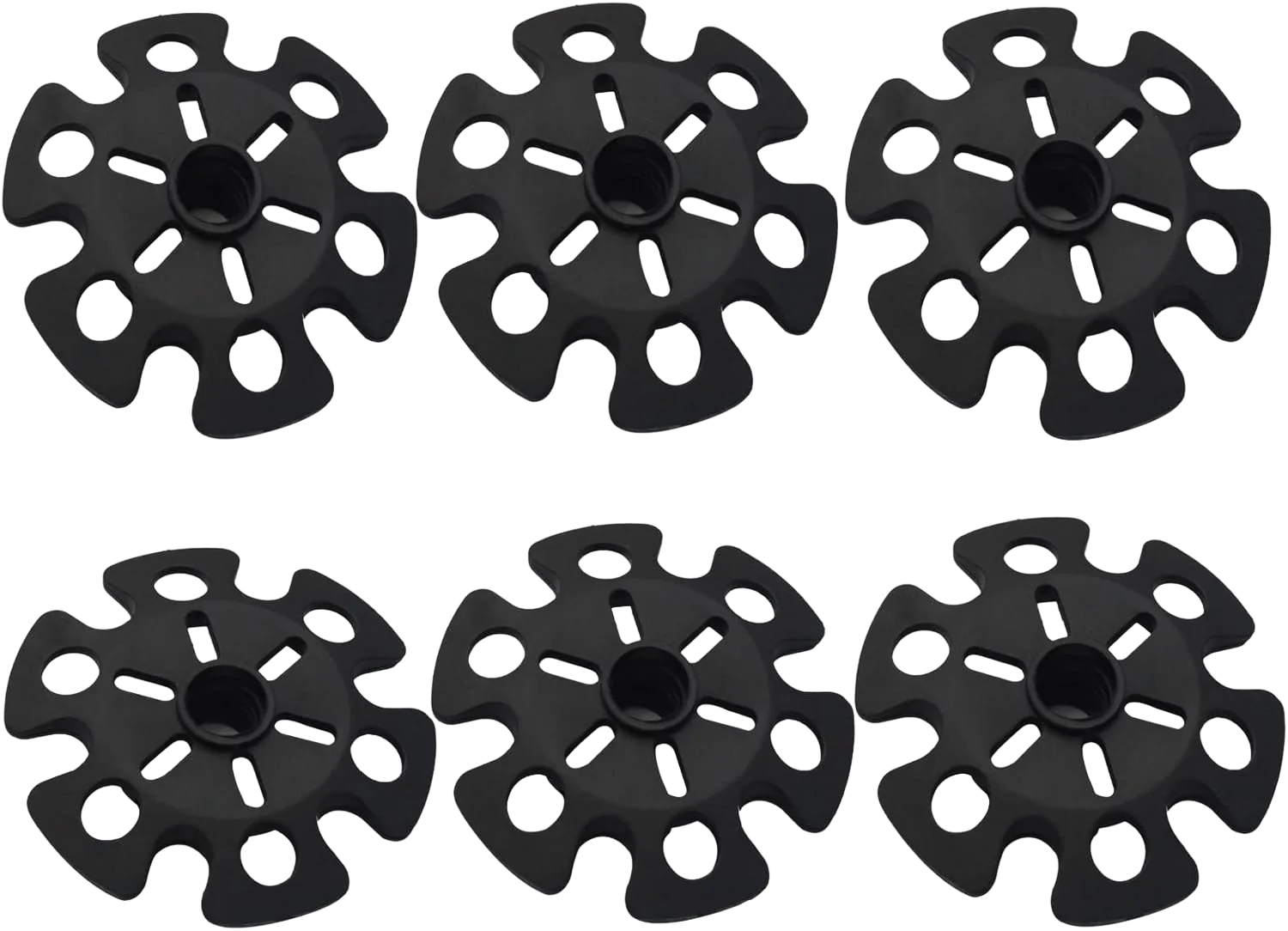
💰 Best Value: Universal 6-Pack Snow/Mud Baskets
Six snow baskets for the price of one premium pair. That’s the pitch for the Universal 6-Pack, and in practice, it holds up. These snowflake-style baskets deliver sufficient flotation for typical deep-snow conditions at a per-unit cost so low that losing one on the trail barely registers. If you own multiple sets of trekking poles, want spares in your car and your gear closet, or just like the security of knowing you’ll never get caught without a backup, this 6-pack makes financial sense that no single-pair option can match.
The universal fit lives up to its name better than most. In our testing, they threaded cleanly onto Cascade Mountain Tech, Montem, and generic Amazon poles without cross-threading issues. The ~8.5 cm diameter provides enough surface area to prevent deep sinking in moderate snow depths. They’re not specialists and won’t outperform the LEKI in bottomless powder or match the Montem’s rubber flexibility in brutal cold, but they handle mixed snow and mud conditions with workmanlike reliability.
The trade-off is material. These are durable plastic, not vulcanized rubber. They’ll survive a season of moderate winter use, but they’re the first baskets on this list to show stress marks after repeated sub-zero outings. Think of them as the reliable workhorse, not the precision tool. At under $2 per basket, replacing them is painless.
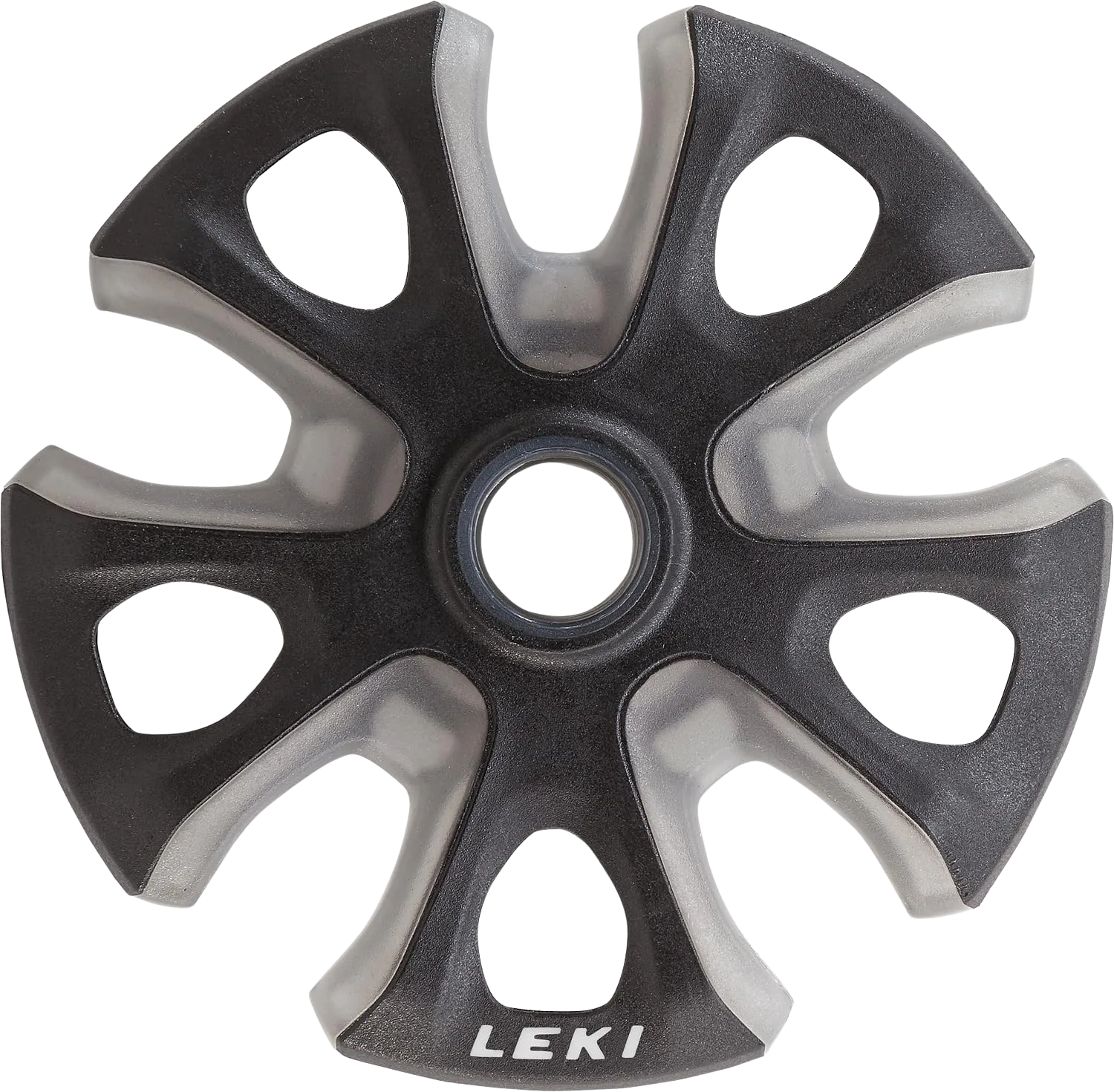
⬆️ Premium Upgrade: LEKI Big Mountain Powder Basket (95mm)
If you’re the hiker who parks at the trailhead when the overnight dump report reads 18+ inches, the LEKI Big Mountain Powder Basket is built for you. At 95mm diameter, it has the widest effective surface area we tested, and in bottomless powder, that extra diameter is the difference between your poles floating and your poles vanishing.
The high-grade polymer construction proved its worth during our cold-weather testing. While cheaper plastic baskets showed hairline stress fractures after a night at -18°C, the LEKI baskets stayed flexible and planted normally the next morning. Over 340 Amazon reviews from winter hikers back this up, with phrases like “transformed my poles in deep powder” appearing across multiple verified purchases. The threaded fit is secure without being overly tight, and the basket locks onto LEKI poles with factory precision.
The honest trade-off is compatibility and price. At $14-18 per pair, it’s the priciest option in this lineup. And while the threads work on many standard trekking poles, they’re engineered specifically for LEKI dimensions. If you own Black Diamond or Cascade Mountain Tech poles, double-check the thread diameter before ordering or reach out to LEKI customer support with your pole model for confirmation. For backcountry tours in the Cascades, Rockies, or any terrain where you’re earning your turns, pairing these with proper deep-powder gaiters completes the winter setup.
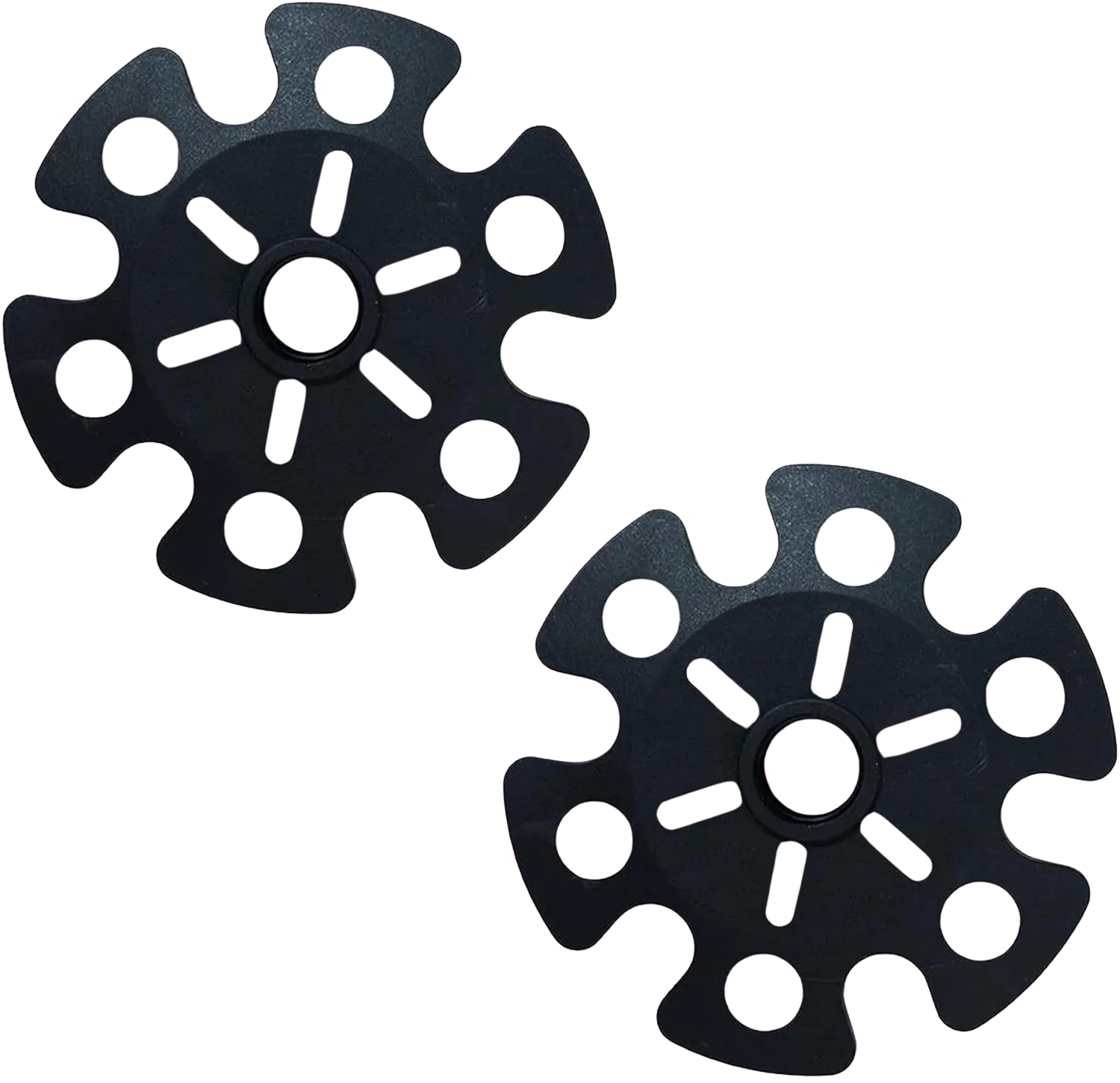
🎯 Best for Ultralight Hikers: Alomejor Removable Lightweight Snow Basket
The Alomejor Removable Lightweight Snow Basket exists for a specific hiker: the gram-counter who encounters occasional deep snow without wanting to carry heavy accessories. If you’ve spent weeks shaving ounces off your base weight, switching from aluminum to carbon fiber poles, trimming stuff sack drawstrings, cutting your toothbrush handle, you’re not about to strap on a 60g pair of powder baskets. The Alomejor gets that.
Among the lightest baskets we tested, these add minimal swing weight to your poles while delivering enough flotation to keep tips from burying in moderate snow cover. The removable design lets you pop them on when you crest into a snow field and pull them off 30 minutes later when you drop back to dry trail. No tools, no fuss, no wasted weight on terrain that doesn’t need it.
The trade-off is durability under sustained abuse. If you’re spending every weekend knee-deep in Cascades powder, the lightweight polymer won’t hold up the same way the Montem or LEKI options do. These baskets are built for the fast-and-light winter hiker who encounters snow intermittently, not the brute-force backcountry trekker who lives in it. For the right user, though, they’re a smart addition to a well-dialed trekking pole setup.
🎯 Best for Snowshoeing & Mixed Conditions: Mons Peak IX Snow/Powder/Mud Baskets (2 Pack)
Snowshoeing changes the equation. When you’re strapping on snowshoes, your poles aren’t just balance aids. They’re propulsion tools. You’re pushing off harder, planting in powder one minute and crunching through breakable crust the next, and then hitting a stretch of spring mud that’s more soup than soil. Baskets designed for only one of those conditions leave you compromised on the others.
The Mons Peak IX Snow/Powder/Mud Baskets solve this with a notched, teeth-edged design that provides flotation across powder, grip on crusted surfaces, and mud resistance on saturated trails. With 246+ Amazon ratings and consistent feedback from snowshoe users specifically, these have proven themselves in the exact mixed conditions where single-purpose baskets struggle. The durable polymer construction handles temperature-driven terrain transitions without the brittleness issues cheaper plastics show.
The honest limitation: these aren’t the lightest option (thicker build for versatility adds swing weight), and they don’t match the LEKI’s pure powder specialization. If you live in a place where it’s deep powder from December to March with nothing else, the LEKI wins. But if your typical winter hike involves a parking-lot mud slog, a packed trail, a powder section, and a slushy descent (which describes most real-world winter outings), the Mons Peak IX handles all four without a basket change. For the full picture on snowshoe selection, check out our snowshoe sizing and selection guide.
Pro tip: When using poles with snowshoes, shorten your poles by 5-10 cm compared to your normal hiking length. The snowshoe platform raises you higher, and the basket needs to plant at the correct angle for efficient push-off.
Conclusion
The right trekking pole basket for snow isn’t a one-size-fits-all decision, but it is a straightforward one once you know your conditions.
Flotation first. Match your basket diameter to the snow depths you actually hike in. If you’re in 80-100mm deep-powder territory, the LEKI Big Mountain at 95mm is the specialist. For moderate snow with mixed terrain, the Montem or Mons Peak IX cover more ground. And if your “winter hiking” involves a few snow patches on an otherwise dry trail, the Alomejor ultralight keeps weight down.
Material second. Vulcanized rubber and high-grade polymer survive sub-zero cold. Generic plastic cracks. At the price points we’re talking about ($8-18), buying the right material the first time costs less than replacing a cracked budget basket mid-season.
Compatibility always. Measure your pole’s thread diameter before ordering. The 3mm variance between brands is enough to turn a “universal” basket into a frustrating mismatch. Stick with your pole brand or trust reviews confirming multi-brand fit with 100+ data points.
At $8-18 per pair, even the premium pick costs less than a single coffee on the drive to the trailhead. Match your specific winter conditions to the right category above, and you’ll stop burning energy yanking poles out of the snow. Your knees and your hiking partners waiting ahead will thank you.
If you’re new to trekking poles entirely, start with our beginner’s field-tested guide to trekking poles to build the foundation before dialing in your basket setup.
FAQ
Are trekking pole snow baskets universal?
Most snow baskets use a standard screw-on thread at 7/16 inch or approximately 11mm, but universal claims aren’t always accurate. LEKI, Black Diamond, and Cascade Mountain Tech all have slightly different tip diameters ranging from 10mm to 13mm. Before buying, unscrew your current basket and check the thread diameter, or stick with your pole’s brand for guaranteed fit.
What’s the difference between mud baskets and snow baskets?
Snow baskets are wider (80-100mm diameter) to provide flotation and prevent sinking in deep powder. They work like miniature snowshoes on your pole tips. Mud baskets are smaller but wider than standard trail baskets, designed to stop your pole from punching through soft soil and reduce mud splash on your legs. Many products marketed as snow or mud baskets split the difference and handle both conditions adequately.
Do I need snow baskets for snowshoeing?
Yes. Stock trail baskets at 25-40mm will punch straight through deep snow, making your poles functionally useless for balance and propulsion. Snow baskets at 80mm or larger provide the surface area needed to actually plant and push off the snow. If you’re investing in snowshoes, matching snow baskets cost under $15 and make a measurable difference in efficiency and energy conservation.
How do you attach or replace trekking pole baskets?
Most baskets screw on by hand with no tools required. Unscrew the old basket counterclockwise, clean any grit from the threads with a cloth, and thread the new basket clockwise until snug. Avoid over-tightening, which can strip the threads. Always test-fit at home before heading to the trailhead. A thin coat of silicone grease on the threads prevents grit bonding and makes seasonal swaps smoother.
Can trekking pole baskets break in cold weather?
Yes. Cold-snap brittleness is the number one failure mode. Budget baskets made from standard ABS plastic become rigid below -15°C (5°F) and can shatter on impact with hidden roots or ice. Look for cold-crack resistant or vulcanized rubber compounds if you regularly hike in sub-zero conditions. At minimum, carry a spare pair on winter outings.
Risk Disclaimer: Hiking, trekking, backpacking, and all related outdoor activities involve inherent
risks which may result in serious injury, illness, or death. The information provided on The Hiking Tribe is for
educational and informational purposes only. While we strive for accuracy, information on trails, gear, techniques,
and safety is not a substitute for your own best judgment and thorough preparation. Trail conditions, weather, and
other environmental factors change rapidly and may differ from what is described on this site. Always check with
official sources like park services for the most current alerts and conditions. Never undertake a hike beyond your
abilities and always be prepared for the unexpected. By using this website, you agree that you are solely
responsible for your own safety. Any reliance you place on our content is strictly at your own risk, and you assume
all liability for your actions and decisions in the outdoors. The Hiking Tribe and its authors will not be held
liable for any injury, damage, or loss sustained in connection with the use of the information herein.
Affiliate Disclosure: We are a participant in the Amazon Services LLC Associates Program, an
affiliate advertising program designed to provide a means for us to earn advertising fees by advertising and linking
to Amazon.com. As an Amazon Associate, we earn from qualifying purchases. We are also an official affiliate partner
of Black Diamond Equipment via the AvantLink network. If you click on a Black Diamond affiliate link and make a
purchase, we may earn a commission at no additional cost to you. We also participate in other affiliate programs and
may receive a commission on products purchased through our links. Additional terms are found in the terms of
service.