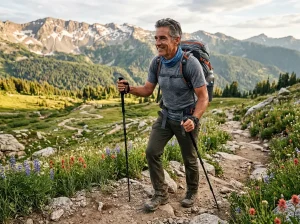
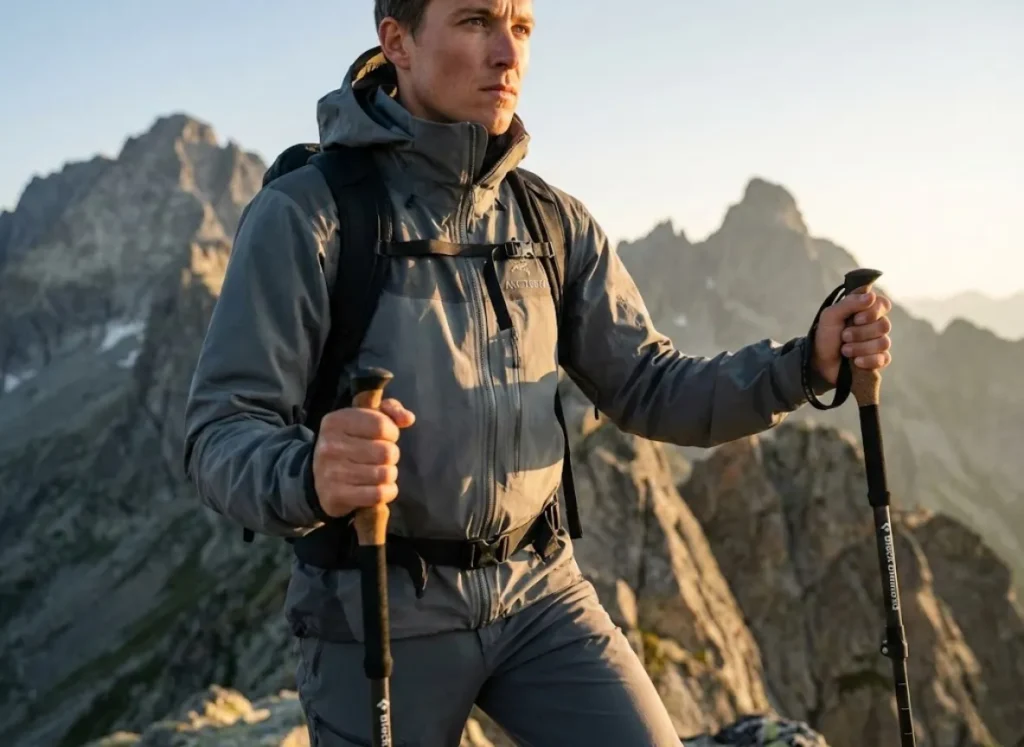
I remember a specific descent off the Aiguille du Midi in Chamonix early in my guiding career. My knees were screaming, my quads were trembling, and my poles were set to the exact same length they had been on the way up. I was essentially carrying two expensive sticks while my joints absorbed every ounce of impact.
It took a seasoned climber pointing out my mistake to change my perspective. He didn’t view his poles as simple walking sticks or a static hiking staff; he treated them like a precision instrument for trekking pole optimization.
Gravity takes a toll for every step you take in outdoor recreation. On the way up, it targets your lungs and leg muscles. On the way down, it hammers the cartilage in your knees. By actively changing the length of your poles, you change the physics of how you walk. You can turn your arm strength into power transfer and stop impact forces before they reach your bones.
Here is how you turn a simple piece of gear into a tool for hiking ergonomics and hacking gravity.
What Defines the “Zero Point” of Pole Sizing?
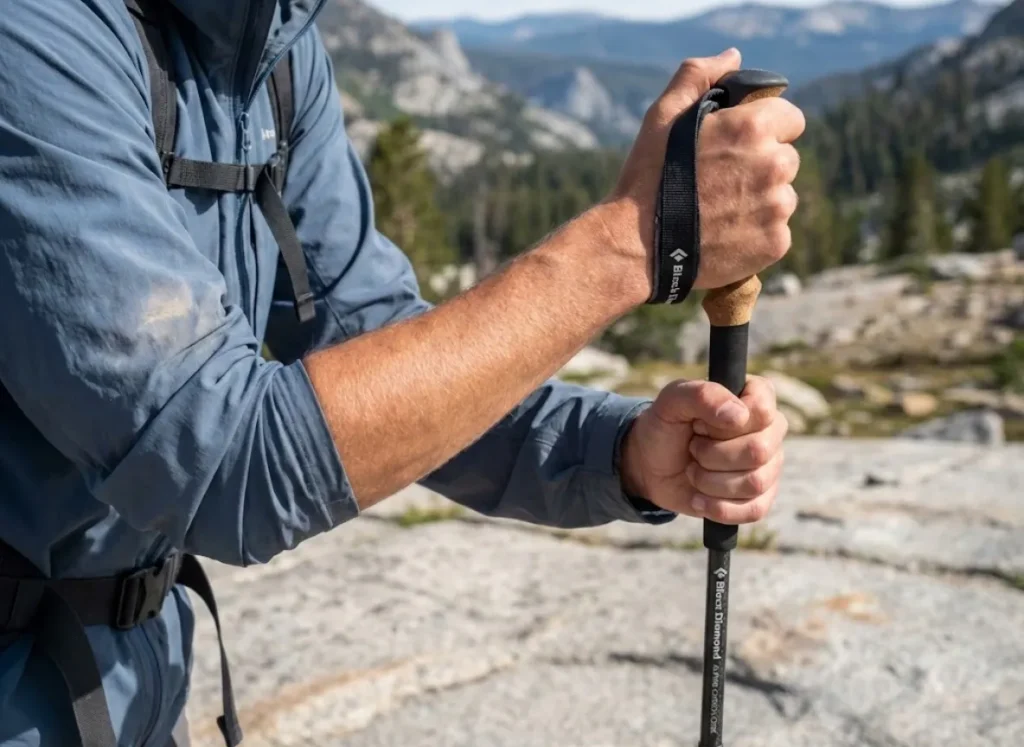
The “Zero Point” is your starting line for terrain-responsive gear management. It is the setting where your elbow forms a perfect 90-degree elbow angle (a right angle) while the pole tip rests near your heel on flat terrain. This neutral position lines up your upper arm and forearm bones so they can support weight without causing shoulder fatigue.
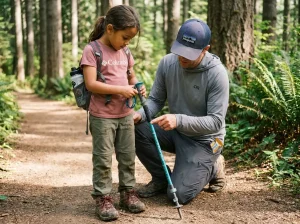
You cannot adjust for hills if you don’t have a standard setting for level ground first. To find this baseline length, stand on the flats wearing your hiking boots. Open the adjustable sections and grip the handle naturally. Adjust the pole height until your elbow sits at that perfect right angle.
If you skip this step, you start at a disadvantage. If the pole is too short (angle greater than 90 degrees), you have to hunch over, which cramps your breathing. If the pole is too long (angle less than 90 degrees), it pushes your shoulders up toward your ears. That leads to neck pain very quickly.
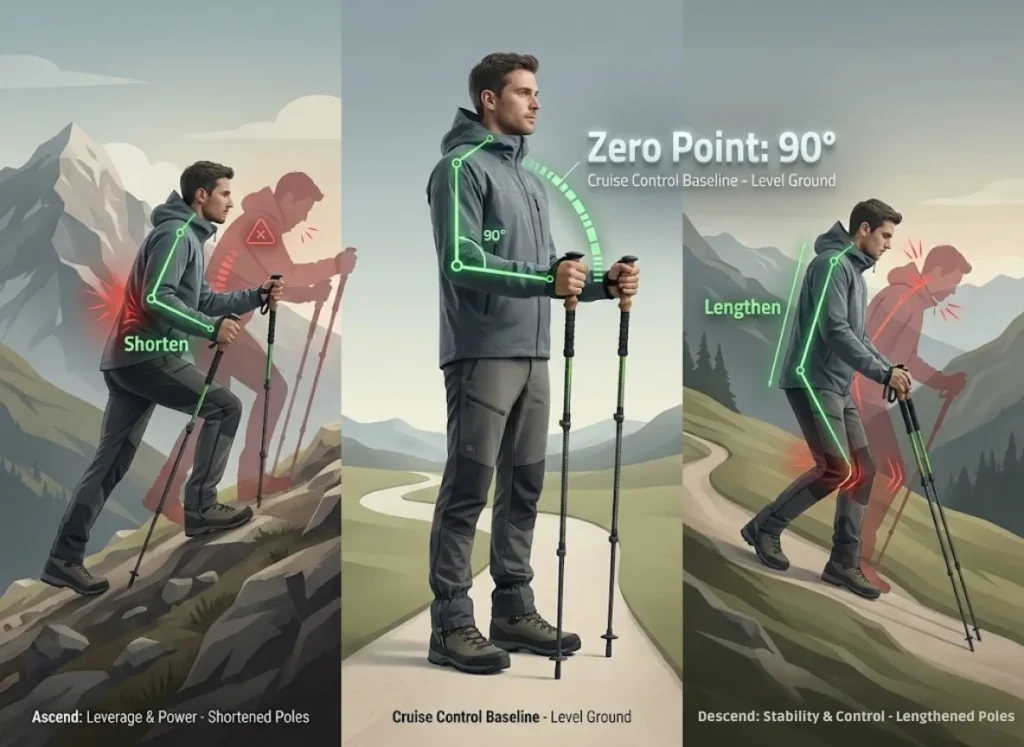
This setting is your “Cruise Control.” It works best for general hiking on rolling trails where the terrain is mostly even. A biomechanical analysis of walking pole usage backs up the idea that proper joint angles save energy, but the real test is simply how relaxed your shoulders feel.
If you are shopping and don’t have the gear in hand, a trekking pole sizing calculator or the common 0.68 formula (height x 0.68) can help you estimate. Sizing charts often list a static number, but nothing beats the physical elbow test. Whether you use fixed-length trekking poles or adjustable-length trekking poles, finding this biomechanical layer is critical. Once you have this flat-ground baseline, you are ready to adjust for the steep climbs.
How Do I Adjust for Maximum Uphill Propulsion?
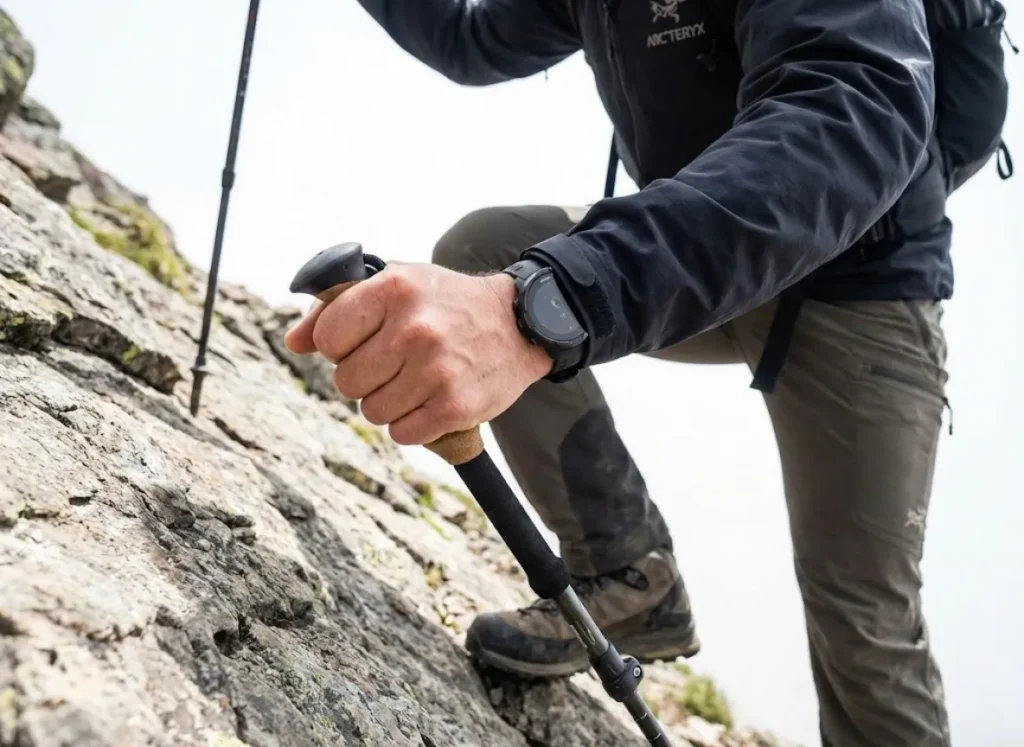
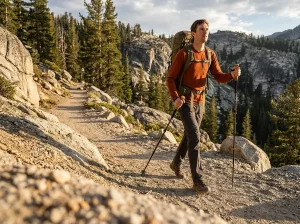
To get the most leverage on a climb, you need to shorten your poles by about 5-10cm (2-4 inches) from your Zero Point. This accounts for the incline rising to meet your hands.
As the slope gets steeper, the trail effectively raises the pole grip higher than your waist. If you keep your poles at their flat-ground length, your elbows get pushed into a tight, bent position. This forces your weaker biceps and front shoulder muscles to “pull” your body up, which is tiring and inefficient.
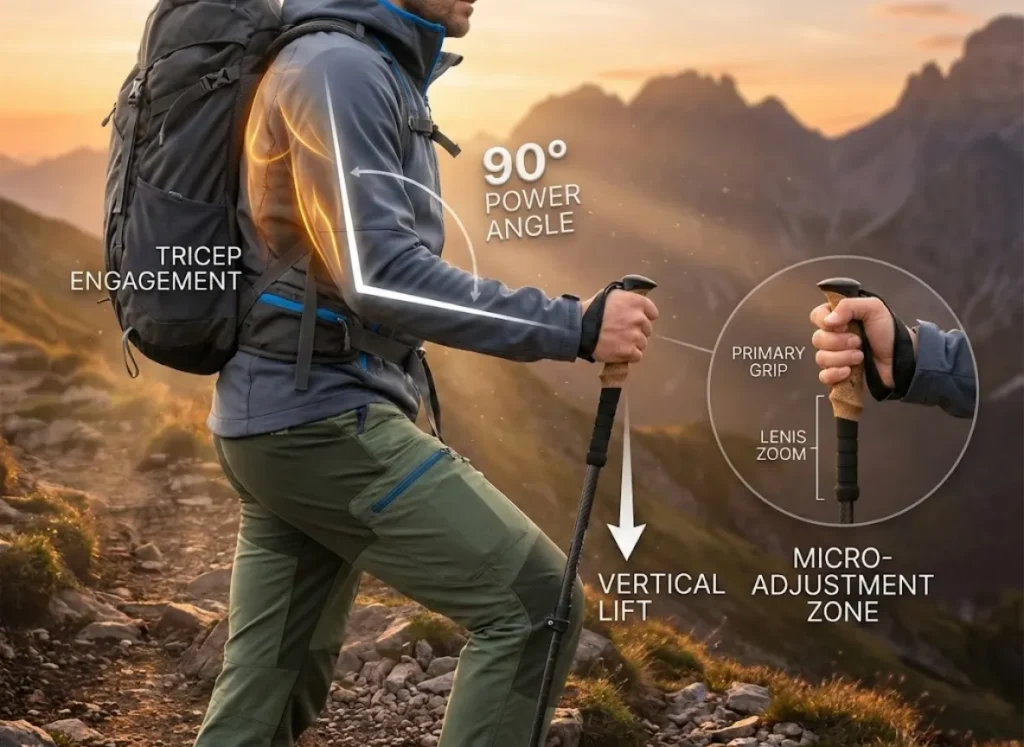
By shortening poles 5-10cm, you return your arm to that comfortable 90-degree angle. This position allows you to use your strong triceps and back muscles to “push” down. It turns your upper body strength into vertical lift. This is the “4WD Effect.” You aren’t just hiking anymore; you are using a second engine to help your legs on steep uphills.
Pro-Tip: If you are on rolling terrain where stopping to adjust clamps every ten minutes is annoying, use the “secondary grip.” Most premium poles feature an extended sleeve of foam below the main handle. Simply hold the pole lower on this foam to momentarily shorten your reach without touching the locks.
Research indicates that using this technique leads to a noticeable reduction in rate of perceived exertion. This means you feel less tired even though you are doing the same amount of work. You burn calories to save your muscles from fatigue during short uphill bursts.
Understanding this concept is key to mastering terrain and performance. It transforms a steep incline from a painful struggle into a steady, rhythmic ascent.
How Do I Set Poles to Save My Knees on the Descent?
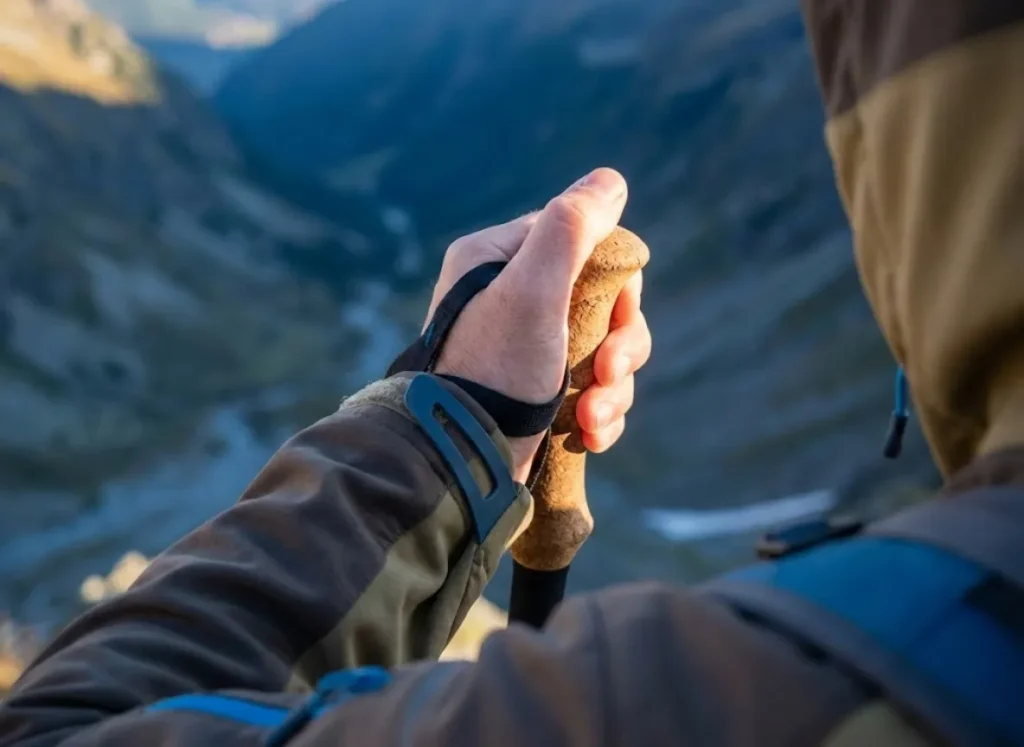
When you head downhill, you should lengthen your poles by 5 to 10 centimeters. This creates a braking system that touches the ground before your feet do.
On a descent, the ground drops away from you. If your poles are too short, you have to lean forward just to make them touch the trail. This puts you off balance and shifts your center of gravity dangerously forward. By lengthening poles 5-10cm, you can plant the tips well in front of your boots while keeping your body upright.
This setup creates a connected system that supports you. You engage the ground early, absorbing force through your arms and shoulders. Physical therapists often suggest this to reduce impact on knees, potentially lowering the pressure by up to 25%.
Hiking Pole Adjustment Guide
Master your trekking pole technique for different terrain types and safety scenarios.
Pole Length
Base Length: Adjust the poles so your elbow forms a 90-degree angle when the tip touches the ground.
Grip & Strap
Use a Neutral Grip. Hand enters strap from below for an Active Load connection.
Adjustment
Shorten 5-10 cm or utilize the lower foam extension on the grip to maintain leverage.
Mechanics
Active Load is critical here; it maximizes power transfer from the arms to assist the legs.
Adjustment
Lengthen 5-10 cm to reach the ground earlier and keep your body more upright.
Safety Note
Use Palming (hand over pommel). Keep straps Loose or None to safely release poles in case of a fall.
Balancing
Asymmetrical adjustment: Shorten the uphill pole and lengthen the downhill pole to keep shoulders level.
Strap Usage
Continue using Active Load straps to maintain stability while traversing steep slopes.
Action
Collapse / Stow: When moving through large boulders or talus, poles can become a trip hazard. Keep hands free.
Safety Critical
HANDS OUT: Never use straps in technical terrain. If you fall, you must be able to jettison the poles to prevent wrist fractures.
The technique here is different from climbing. Rather than gripping tight, practice the palming technique. Rest the center of your palm over the rounded top of the grip, effectively palming the handle head. This transfers the weight directly through your arm bones, so your hand muscles don’t get tired on long downhill sections.
Pro-Tip: Before a long, steep descent, double-check your locks. The impact forces on the downhill are much higher than on the uphill. If a lock slips while you are leaning your full weight on it, you could fall.
Using this method leads to a measured decrease in muscle damage markers, which means your legs won’t be as sore the next day. It is the core of the science of using trekking poles downhill effectively for joint protection.
What Are the Critical Nuances for Technical Terrain?
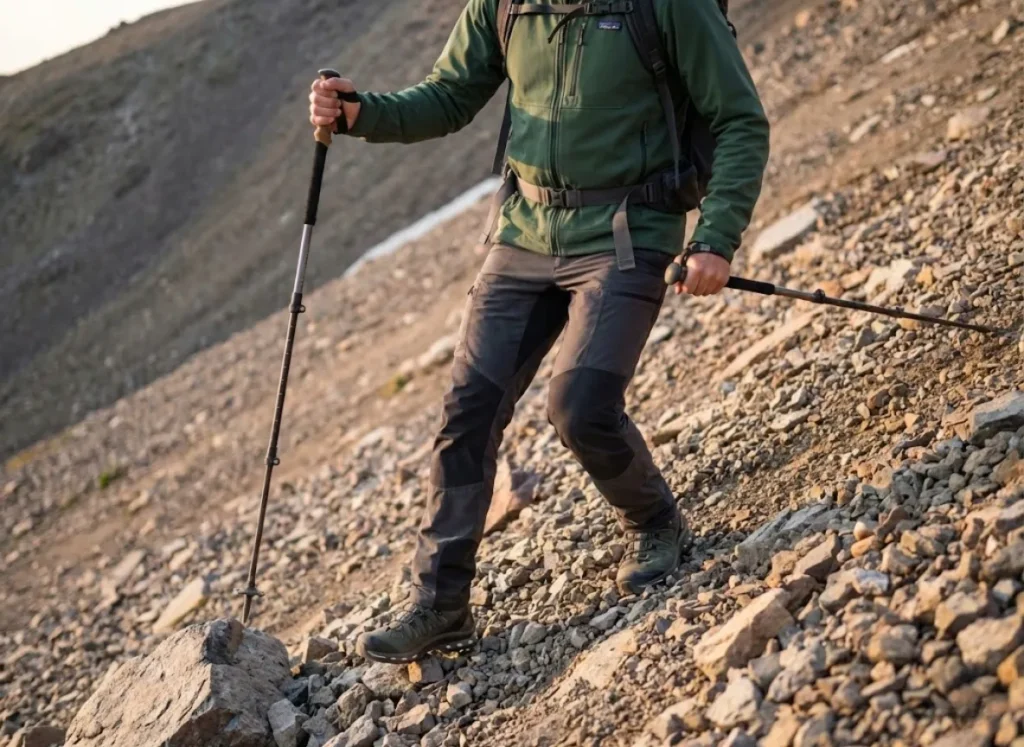
Rugged backcountry terrain often requires asymmetry. This means using asymmetrical pole lengths—shortening the uphill pole and lengthening the downhill pole—when you are side-hilling or traversing a slope.
Most hikers think poles always need to be the same length. But when you cut across a slope, one foot is higher than the other. If you don’t adjust, you will end up shrugging your uphill shoulder and leaning too far to reach the downhill side. Leveling your shoulders by changing the pole lengths improves your balance and stops your back from twisting on uneven terrain.
The weather also changes how your gear works. In freezing temperatures, the plastic parts inside twist lock poles shrink more than the metal shafts. This can cause the lock to fail.
Lever lock users (like Black Diamond’s FlickLock) need to be careful too. The vibration from hiking on rocks can loosen the screws over time. Always carry a small tool to tighten these on the trail.
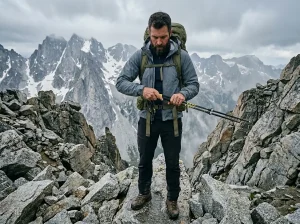
Safety is the top priority on rough ground. If you are scrambling over large boulders where a fall could be bad, take your hands out of the wrist straps. If a pole gets stuck in a crack while you fall, being strapped to it can dislocate your shoulder or injure your thumb.
Finally, know your materials. Carbon fiber is light, but it can snap if it hits a rock sideways. Aluminum will bend before it breaks, giving you a warning. This is a major point in the carbon vs. aluminum poles debate.
Always ensure your gear meets UIAA safety standards for trekking poles regarding how much weight it can hold to prevent it from collapsing when you need it most.
Conclusion
Being good at hiking is about adapting your tools to the terrain, not forcing your body to struggle with bad settings. The “Zero Point” gives you a baseline for flat terrain. Shortening your poles helps you power up steep terrain. Lengthening them provides knee-strain reduction on the way down.
Next time you are on a trail with some elevation, try these small adjustments. Don’t just walk over the mount—manage it.
Frequently Asked Questions about Trekking Pole Adjustment
What is the correct height for trekking poles if I am between sizes?
If you are between sizes, choose the pole size that puts your Zero Point (90-degree elbow) in the middle of the adjustment increment range. This makes sure you have enough extra length to extend for downhills and enough room to shorten for steep uphills without running out of pole shaft.
Should I use rubber tips or carbide tips?
Use carbide tips for 90% of hiking. They bite into rock, ice, and hard dirt to keep you safe. Rubber tips are only for pavement, indoors, or sensitive soft-rock areas (like sandstone) where you want to avoid leaving scratches.
How tightly should the wrist straps be adjusted?
The strap should be tight enough that when you put your hand in up from the bottom, you can let go of the handle and the pole hangs from your wrist without falling. This lets you push down on the strap rather than squeezing the handle, which saves your energy.
Why do my poles slip or collapse when I put weight on them?
This is usually caused by cold weather shrinking the plastic parts or vibration loosening the screws on lever locks. Tighten the screw on the clamp slightly (a quarter turn). If you use twist locks, take them apart and clean the inside to remove dust and oil.
I've spent more than a decade researching hiking gear and trail technique. I read the specs, the forum threads and the long-term reviews, and every pick here comes with what it gets wrong.
End of the trail
You read every mile of this one. Here's where the trail goes next.