
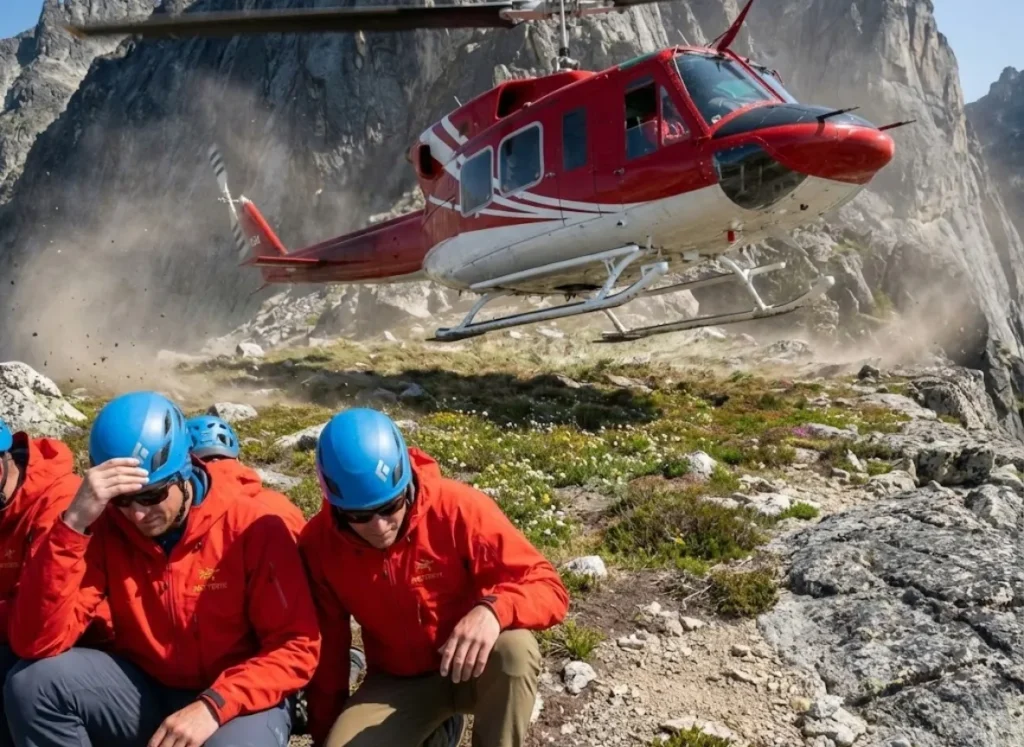
The rotor wash flattens the sub-alpine firs against the slope. As the skids lift and the Bell 212 helicopter banks away toward the valley floor, the mechanical roar is instantly replaced by a profound, ringing silence.
You are standing at 2,400 meters on a granite ridge in the Bugaboo Mountains of the Purcell Mountains, a location that would have required two days of grueling approach with a 50-pound pack.
This is the reality of heli-hiking: it is the art of vertical compression. It strips away the arduous approach to grant immediate access to the most fragile and dramatic biotic zones on the continent.
As someone who has spent decades guiding groups from the dense forests of British Columbia to the glaciated peaks of the Columbias, I can tell you this isn’t just a form of luxury backcountry exploration. It is a sophisticated logistical tool that transforms the high wilderness into an accessible classroom.
In this guide, we will move past the brochure aesthetics to understand the helicopter transport mechanics, the specific physiological demands of descent-heavy days, and the ethical responsibilities required to step out of the chopper and onto the ridge.
What Exactly Is Heli-Hiking and How Did It Evolve?
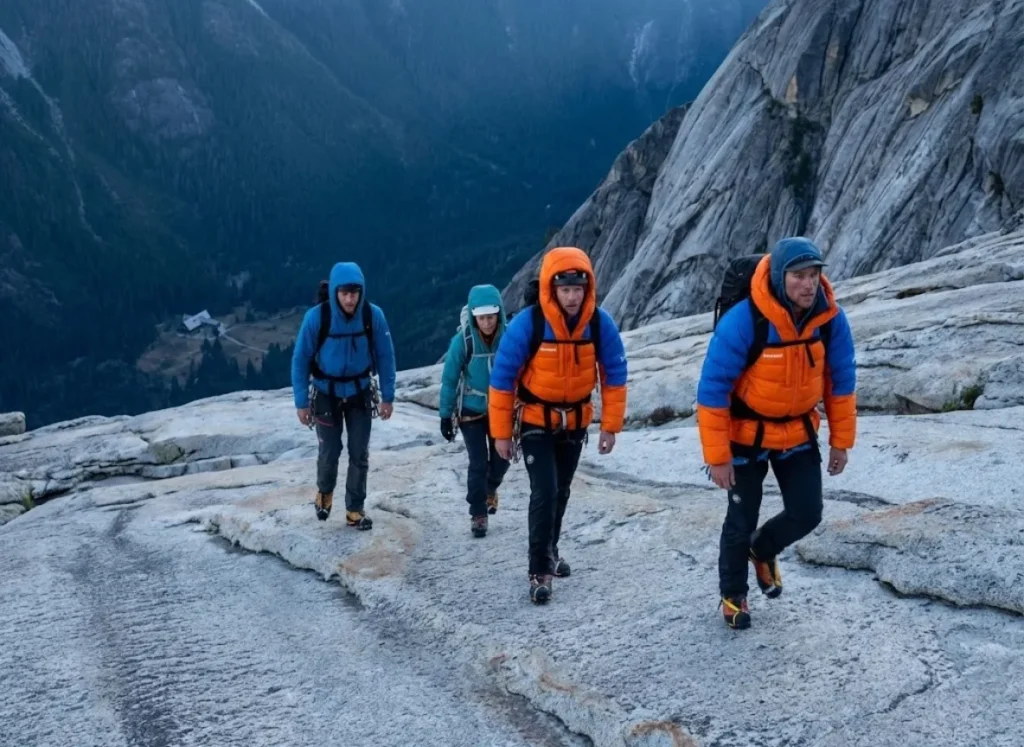
Heli-hiking is a calculated logistical innovation that solves the problem of access to inaccessible terrain. It inverts the traditional mountaineering ratio: instead of spending 80% of your energy on the approach and 20% on the objective, the helicopter eliminates the lower-elevation slog entirely.
How does “Vertical Compression” change the hiking equation?
The daily workflow involves lifting groups from a lodge—such as Bugaboo Lodge or Bobbie Burns Lodge—directly to ridge-lines or glaciers, bypassing the dense bushwhacking and tree-line transitions that usually consume the first six hours of a climb. Guides utilize “Terrain Farming,” a strategy where we use the helicopter’s mobility to select heli-hiking areas based on real-time micro-climates.
If the Purcell Mountain Lodge area is socked in, we fly to a sunny valley; if the valleys are hot, we drop onto a high glacier like the North Canoe Glacier. This logistical shift allows us to cover vast horizontal distances across varying drainages in a single day.
However, it also changes the safety dynamic. The helicopter acts as a dynamic safety net, allowing for rapid evacuation or relocation if weather turns hazardous—a significant evolution found in the broader history of hiking.
This model opens remote backcountry to demographics who possess the fitness for hiking but perhaps lack the durability for multi-day approaches with heavy packs. It allows for a focus on the experiential narrative rather than the sheer physical toll of getting there.
Who invented heli-hiking and why isn’t it just summer ski-tourism?
The discipline was architected in 1978 by Hans Gmoser’s pivotal role in Canadian skiing history—founder of CMH Heli-Skiing (Canadian Mountain Holidays)—and Arthur Tauck. They pivoted from the established winter heli-skiing model to solve an economic problem: expensive remote lodges and aviation contracts lay dormant during the summer season (July to September).
During a 1977 reconnaissance mission, accompanied by geologist Art Patterson, they identified that the “skiing model” (flying to the top) could be adapted for hikers without technical mountaineering skills. Patterson helped translate the stark alpine terrain into an educational experience, focusing on the geology and canadian mountain flora.
However, the operation differs wildly from skiing. Summer hiking requires landing on uneven, rocky ridge-lines rather than deep snow buffers, demanding higher pilot precision.
The experience has also evolved. It has moved from simple walks on alpine meadows to bridging the gap between hiking vs. trekking, integrating glacier travel and technical routes to match the adrenaline levels of winter guests.
How Does the Aviation Logistics and Staging Process Work?
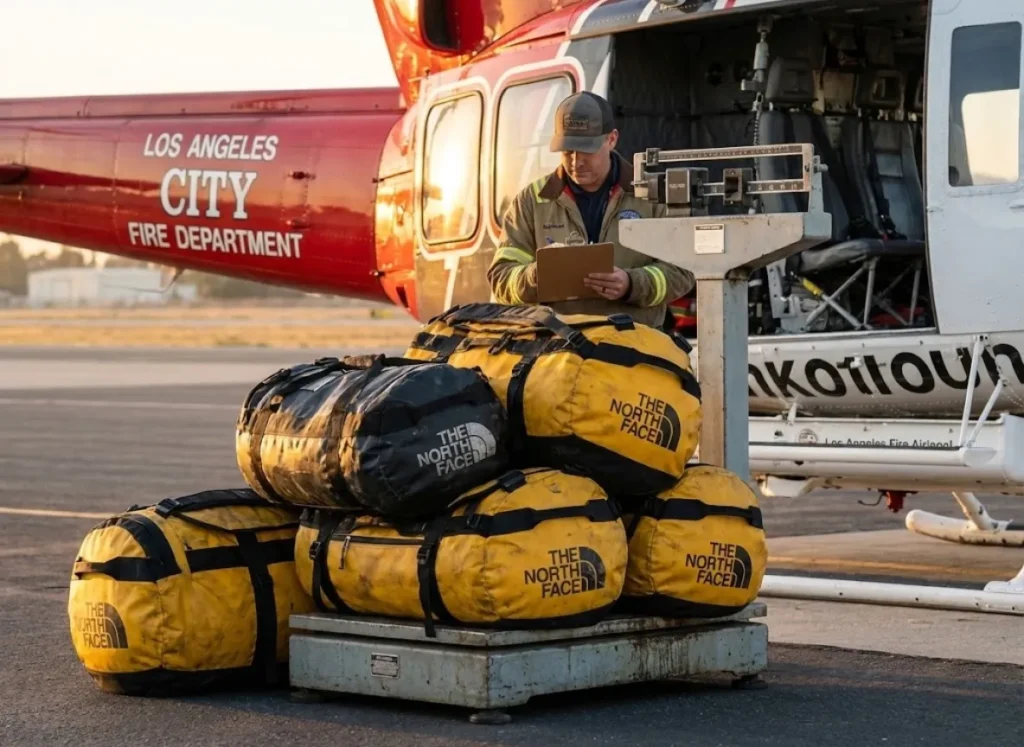
Adapting winter machinery to summer environments introduces a distinct set of physical limitations that every guest must understand. The “bus in the sky” is governed by strict physics, whether you are in the Cariboo Mountains or the Wasatch Range.
What are the strict weight limits and why do they exist?
The hard limit for personal gear is typically 35-40 lbs (16-18 kg). This is non-negotiable due to the Maximum Gross Weight (MGW) of the Bell 212 aircraft, which sits around 11,200 lbs. Unlike a commercial airliner, every pound counts.
You must use soft-sided duffel bags. Hard-shell suitcases cannot conform to the curved “cheeks” or external cargo baskets of the helicopter, wasting critical volume. At staging bases like Canmore or Golden, passengers and gear are weighed on calibrated scales to ensure the manifest is accurate.
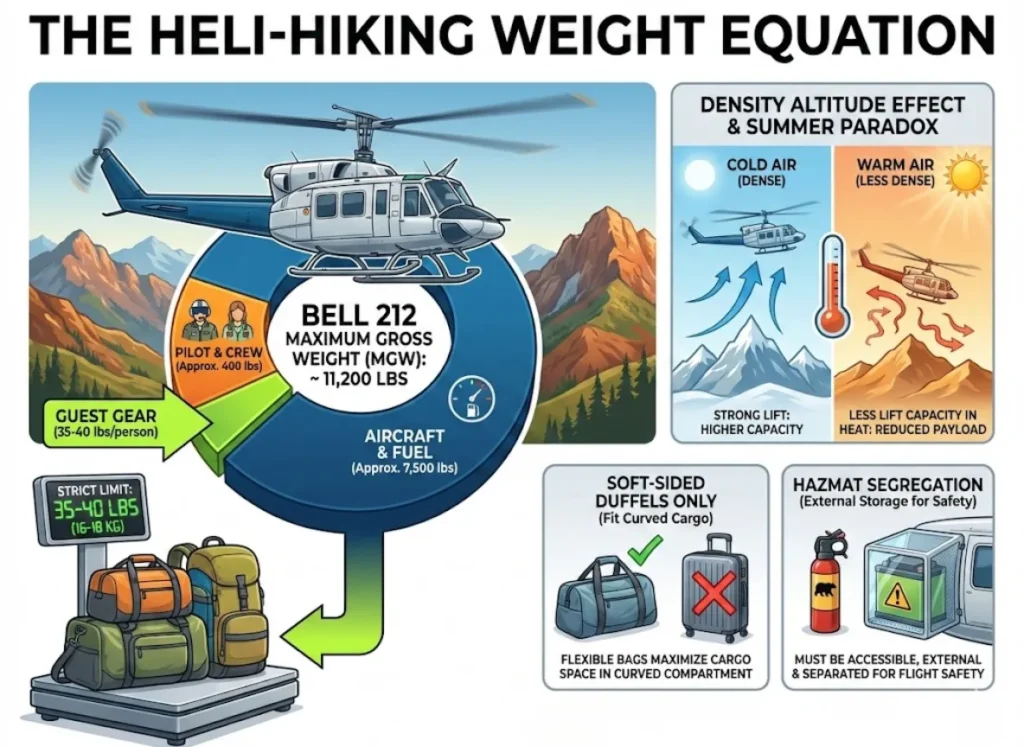
This strictness is due to “Density Altitude.” National Geographic’s analysis of the Canadian Rockies highlights the beauty, but the heat is the pilot’s enemy. Warm summer air is less dense than cold winter air, significantly reducing the lift capacity of the rotor blades.
This creates the “Summer Paradox”: even though summer clothing is lighter than ski gear, the aircraft’s degraded performance in heat forces tighter payload restrictions.
Pro-Tip: When curating a lightweight backpacking gear list for heli-hiking, prioritize density. Wear your heaviest boots and jacket during the flight to keep your checked bag weight down.
Additionally, there is a strict prohibition and segregation of hazardous materials. Bear spray and lithium batteries must be stored externally to prevent catastrophic in-cabin incidents. Check the Safety Alert regarding Bell 212 load calculations to understand why weight balance is critical for this airframe.
What Unique Terrain and Ecosystems Will You Encounter?
Once the bird lifts off, the destination isn’t just a higher altitude—it’s an entirely different geological planet compared to the crowded trails of Banff National Park or Jasper National Park.
How does the geology of the Columbia Mountains differ from the Rockies?
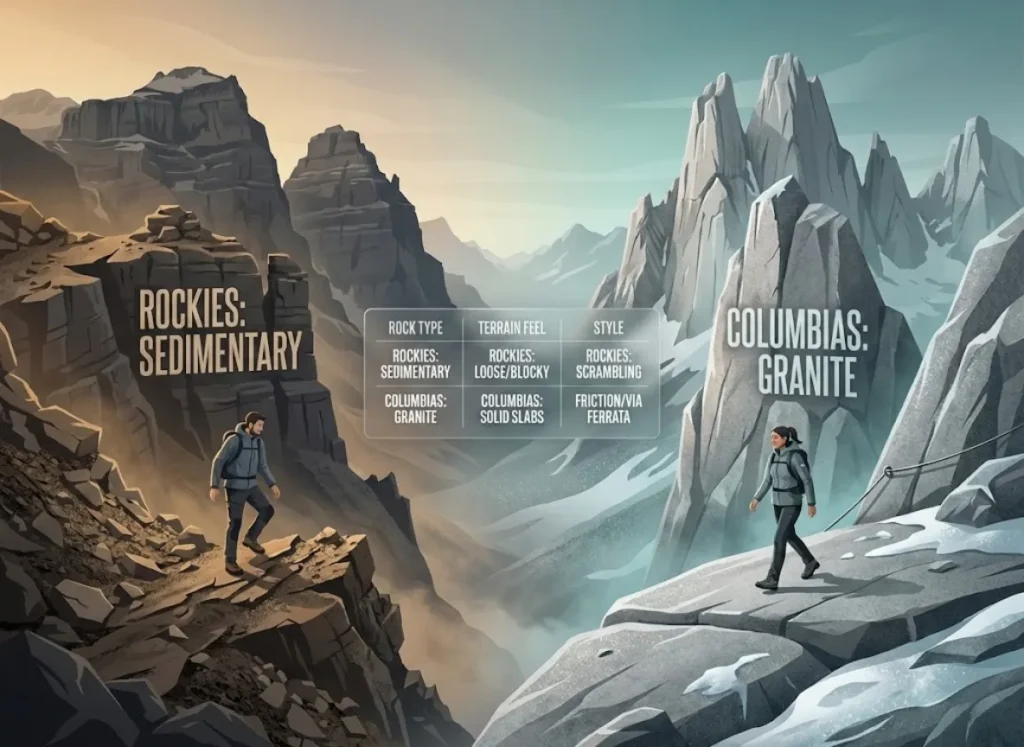
Heli-hiking trips predominantly happen in the Columbia Mountains (Purcells, Selkirks, Monashees, Cariboos), not the adjacent Rockies. The Columbias are geologically older and consist of solid granite and granodiorite spires.
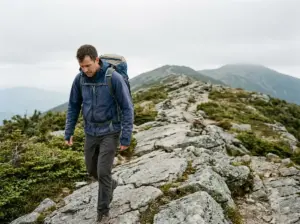
This rock quality dictates the hiking experience. Unlike the loose, blocky limestone and shale of the Rockies, the Bugaboos offer stable friction. This allows for travel across massive, singular granite slabs and ridges that feel like “sidewalks in the sky.”
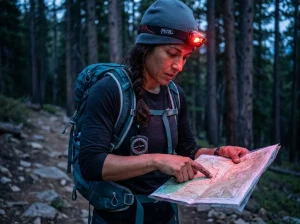
You will often traverse “moonscapes”—high-alpine nival zones consisting of scree, talus, and ice where no marked trails exist. This terrain requires navigating Class 3 and 4 scrambling terrain skills, even if ropes aren’t always used.
The solid granite also allows for “Via Ferrata” potential, where secure anchor systems can be drilled into the rock, unlike the crumbling geology found further east.
What Technical Skills and Physical Demands Are Involved?
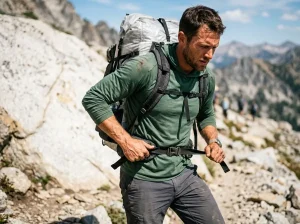
There is a myth that a heli-hiking adventure is effortless because you don’t hike up. This is false. Moving through these ancient stone zones requires a specific type of physiological adaptation.
Why is “downhill fitness” more critical than uphill stamina?
“Eccentric Loading” is the primary physiological stressor. While the helicopter handles the elevation gain, the hiking often involves long traverses or significant elevation loss to pickup zones in lower valleys.
Your quadriceps must lengthen under tension to brake the body against gravity. This causes significantly more micro-trauma to muscle fibers than uphill walking. The common outcome is Delayed Onset Muscle Soreness (DOMS), affectionately known as “heli-leg.” This peaks 24-48 hours later and can ruin a heli-hiking trip if you are unprepared.
To prepare, you must focus on stabilizer muscles. Implementing a comprehensive training for hiking system that includes stair-descent drills and single-leg lunges is vital. You also need proprioception (body awareness) for off-trail navigation on loose scree, where every step requires micro-adjustments.
Pro-Tip: Adopt the “plunge step” on loose scree. Lead with your heel and let your foot slide slightly with the shifting rock. Fighting the slide wastes energy; riding it is efficient. Check the Fit For Trips training protocol for specific eccentric exercises.
How does the Via Ferrata integration transform the experience?
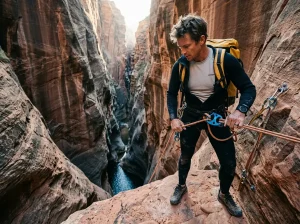
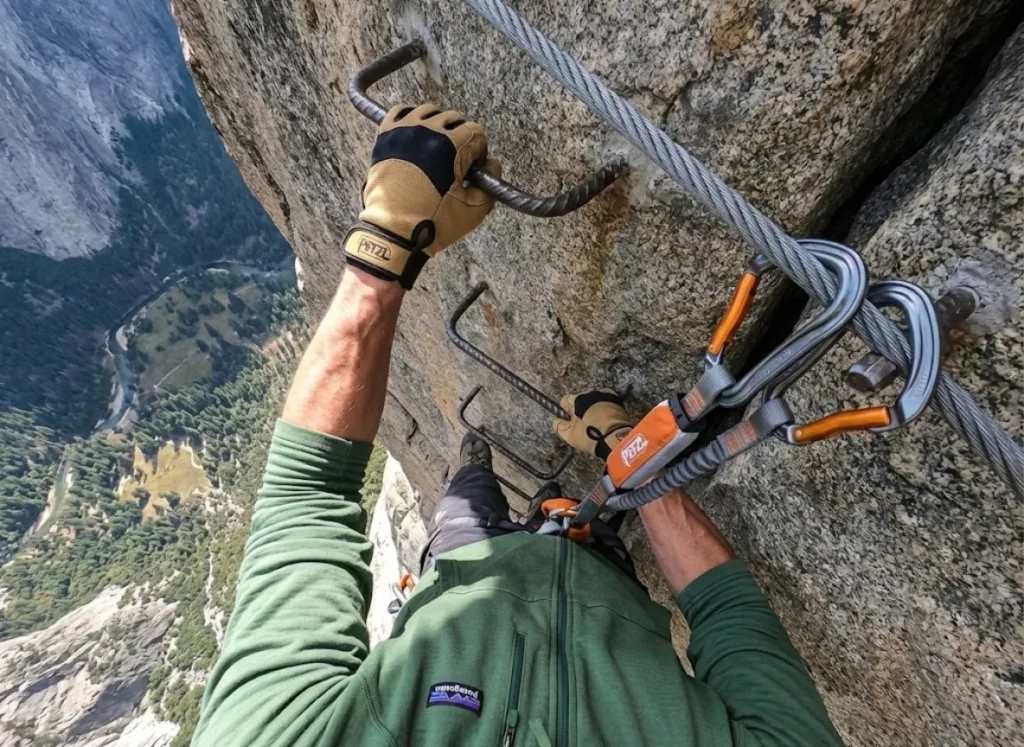
Via Ferrata, or “Iron Way,” is a system of fixed steel cables, rungs, and ladders that allows non-climbers to access vertical technical terrain. Premier routes like the Mt. Nimbus Via Ferrata offer massive exposure with high safety margins.
The safety engineering involves anchors capable of holding 100+ kN forces. You use a specialized lanyard with two carabiners, ensuring you are always attached to the safety cable while passing intermediate anchors.
This “Self-Belay” mechanism allows you to start stepping into non-technical mountaineering terrain safely. While the difficulty is typically moderate (K2-K4 on Bergfreunde’s explanation of Via Ferrata grades), the “head game” of exposure is the real challenge. You can view a 360-degree panorama of Mt. Nimbus Via Ferrata to understand the vertical scale.
How Do We Manage Environmental Stewardship in Pristine Zones?
Accessing these remote heights brings us face-to-face with inhabitants who are far less robust than the granite walls they live on.
What is the “Fan Out” technique and why is it mandatory?
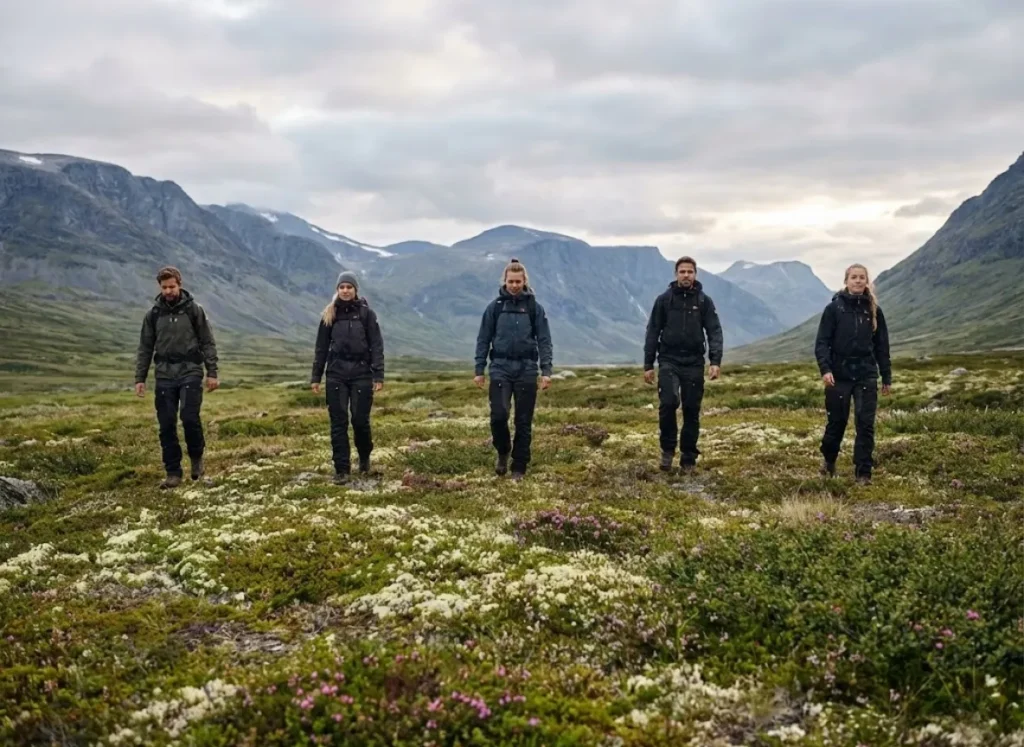
In standard hiking, we walk single file to protect the trail edges. In trackless alpine tundra, we do the exact opposite. This is the “Fan Out” mandate.
In fragile alpine meadows, repeated footsteps on the same line create a permanent “cow path” scar that takes decades to heal due to the short growing season. Guides from the Association of Canadian Mountain Guides instruct the group to spread out horizontally, dispersing the impact load so that no single plant is trampled more than once.
This protects vulnerable vegetation like heather and moss campion. It connects to the broader principle of mastering outdoor ethics beyond basic rules.
When rock or snow is available, the group converges back to those durable surfaces to spare vegetation entirely. See the Leave No Trace principles for alpine travel for the official stance on dispersal techniques.
How do operations mitigate impact on sensitive wildlife like Mountain Goats?
Mountain Goats, Grizzly Bears, and Caribou are acutely sensitive to aerial disturbance. The sound of a helicopter can trigger panic and energy-depleting flight responses, which can be fatal in harsh environments.
HeliCat Canada sets operational guidelines that include maintaining vertical and horizontal buffers (typically 500m to 2000m) from observed wildlife. We also utilize “Exclusion Zones,” where critical habitats like nursery areas are permanently mapped as no-fly zones to prevent animal displacement.
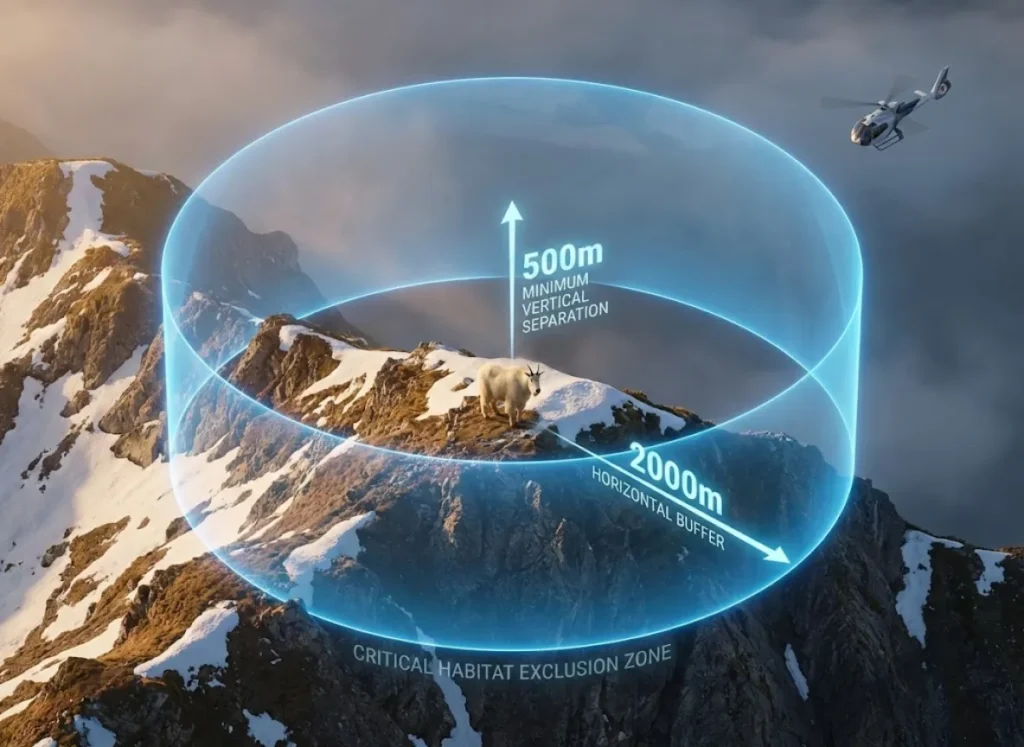
If a mountain guide or pilot spots marmots or goats near a landing zone, we enact a “Run Closure.” That area is closed to all groups to allow the animals to move through undisturbed. Recognizing the deeper indigenous history in these territories also means respecting the fauna that have inhabited these ranges long before heli-tourism existed.
For regulatory context, review the BC Government guidelines on caribou management.
Critical Gear Systems: What Is Different for Heli-Hiking?
Navigating these ethical and physical realities safely relies on one final component: the kit on your back and feet.
Why do operators enforce a “Leather Mandate” for boots?
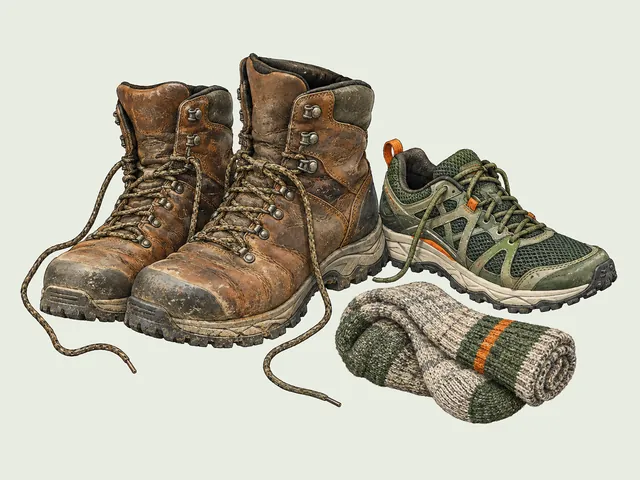
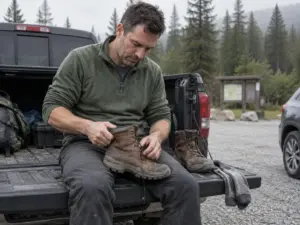
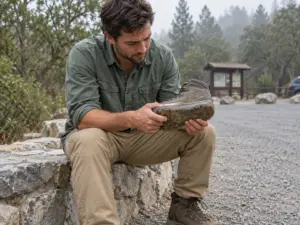
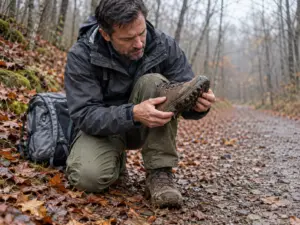
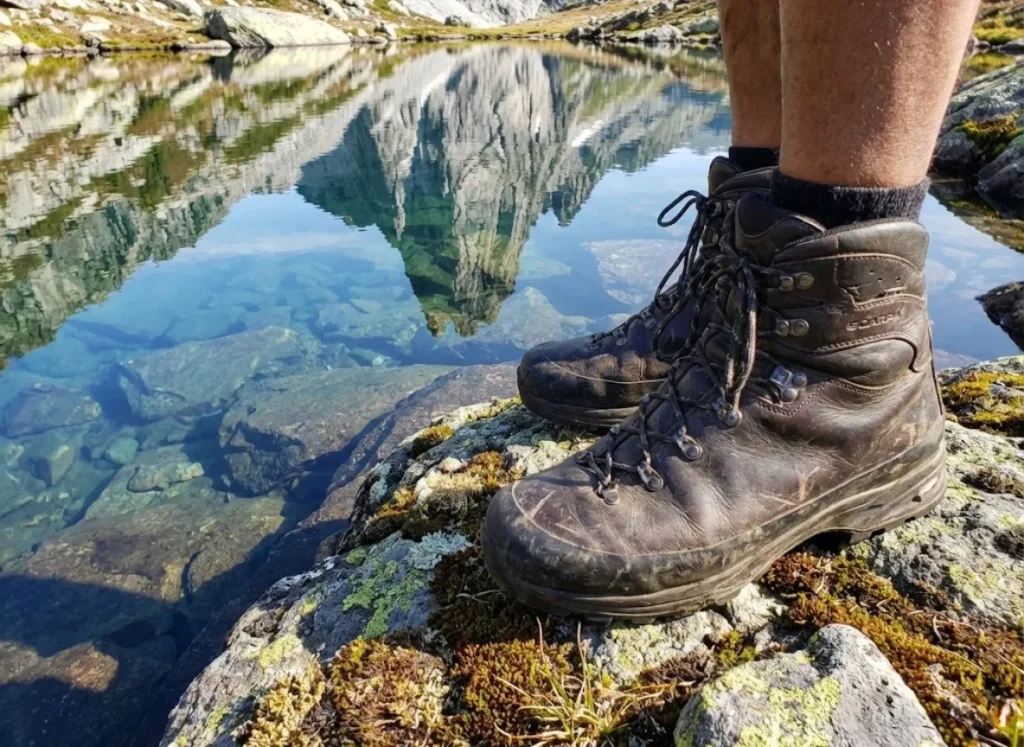
Most operators prefer, or even require, heavy-duty, full-leather hiking boots over light hikers or trail runners. Traversing sharp shale and unstable talus requires a rigid upper to act as an external ligament. This prevents ankle rolls when foot placement is uneven.
Furthermore, sharp limestone and granite can shred lightweight synthetic meshes in a single trip. Leather provides a durable armor against rock cuts. This creates a “Flex Paradox” for Via Ferrata: the boot needs stiffness for scree but enough flex to smear on rock rungs.
We recommend analyzing the trade-offs in leather vs synthetic hiking boots to find a hybrid mountain boot that works. Check the CMH Summer Adventures packing list for specific examples.
How does the “Onion” layering system adapt to helicopter transitions?
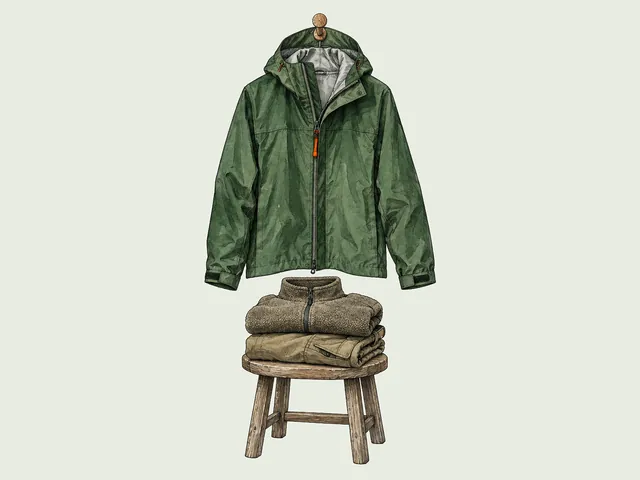
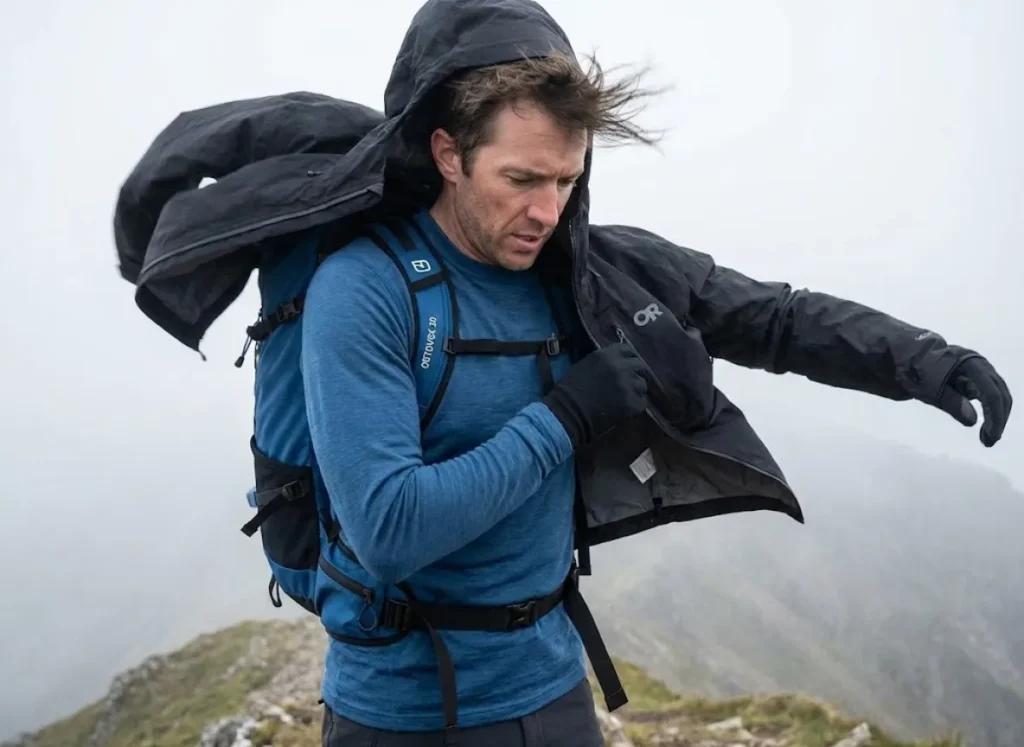
Moving from a warm, pressurized helicopter cabin to the alpine chill of a windy ridge-line instantly requires a rapid, modular layering strategy. We use the “Onion” system.
A hydrophobic base layer (Merino wool or polypropylene) is essential to transport sweat away from the skin. You also need an active mid-layer—highly breathable fleece or synthetic insulation that retains heat even when damp.
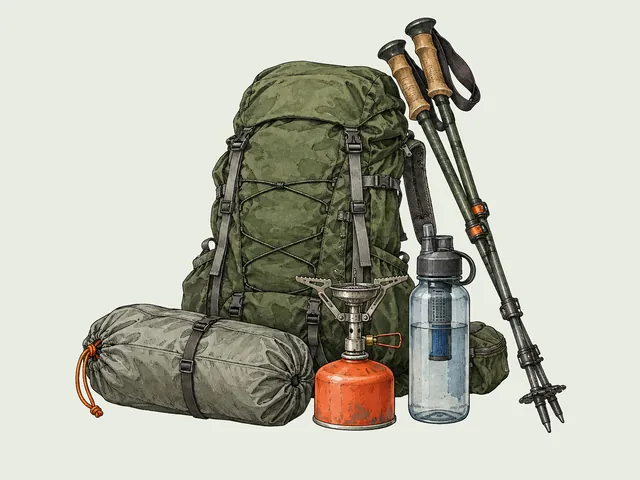
A hard shell is non-negotiable. It is your primary wind block against the severe wind chill found at 2,500+ meters. Cotton is strictly forbidden due to its water retention, which can lead to hypothermia. These layers must compress small enough to fit in the mandated 30-liter daypack.
To get the system right, start by applying the science of layering.
Summary & Final Thoughts
Heli-hiking is defined by “Vertical Compression.” It bypasses the approach to grant immediate access to high-alpine terrain and “farms” the best weather windows for an optimal experience.
But do not mistake this for a passive activity. The descent requires significant eccentric leg strength, and terrain management demands active proprioception on scree and talus. Strict aviation protocols dictate gear limits and wildlife buffers to ensure safety and conservation.
At its core, the experience is a masterclass in alpine environments, providing high adventure made achievable. It moves you from the adrenaline of a Via Ferrata to the delicate preservation of a glorious alpine meadow via the “Fan Out” technique.
If you are ready to expand your hiking skills beyond the trail, start training your “downhill legs” today and explore our guide to Advanced Trekking Techniques to prepare for the alpine.
FAQ – Frequently Asked Questions about Heli-Hiking
How fit do I need to be for heli-hiking?
You do not need to be an Olympic athlete, but you need hiking fitness—the ability to walk uneven terrain for 4-6 hours. Crucially, you need joint stability and eccentric leg strength for long descents, even though the ascent is mechanized.
Is heli-hiking safe compared to traditional mountaineering?
While objective hazards (weather, rockfall) exist, risk is aggressively managed through ACMG-certified ACMG guides and pilot protocols. The ability to evacuate via helicopter significantly reduces the consequences of minor injuries compared to remote backpacking.
What is included in the heli-hiking cost?
Most operators offer all-inclusive pricing. This typically covers luxury accommodation, gourmet meals, gear provided (like rain jackets and boots), and professional guiding services. It positions the experience as aspirational luxury combined with rugged adventure.
Can children or older adults go heli-hiking?
Yes, the lodge-based model allows for group pacing to be adjusted. Groups can be split by ability level, accommodating paces from meandering meadow walks to aggressive ridge traverses. The helicopter lift makes the high alpine accessible to those (like active seniors) who can hike but cannot carry heavy packs uphill.

I've spent more than a decade researching hiking gear and trail technique. I read the specs, the forum threads and the long-term reviews, and every pick here comes with what it gets wrong.
End of the trail
You read every mile of this one. Here's where the trail goes next.