In this article
Last February I watched a friend try to operate his pack buckles on an exposed ridge with thick ski gloves. His fingers were warm, sure — but functionally useless. He ended up ripping both gloves off with his teeth, fumbled the buckle bare-handed in 15°F wind, and spent the next hour with numb fingers because he couldn’t rewarm them. One pair of gloves for all conditions doesn’t work. I learned this the expensive way across a dozen winter seasons.
Choosing hiking gloves comes down to matching insulation weight to temperature, then factoring in what your hands actually need to DO at that temperature. Here’s the system that works after years of cold-weather trail testing.
Quick Answer: The right hiking gloves depend on the temperature range you’ll encounter:
- 50°F to 32°F — thin liner gloves (merino or Power Stretch fleece)
- 32°F to 15°F — insulated gloves with waterproof membrane
- 15°F to 0°F — puffy mitts over liner gloves
- Below 0°F — puffy mitts + waterproof shell mitts (full layered system)
- Variable conditions — convertible gloves with flip-back mitt cover
- Wind exposure — drop effective temperature 10-20°F and dress for the lower number
The Temperature Ranges That Actually Matter
Why One Pair Fails Every Time
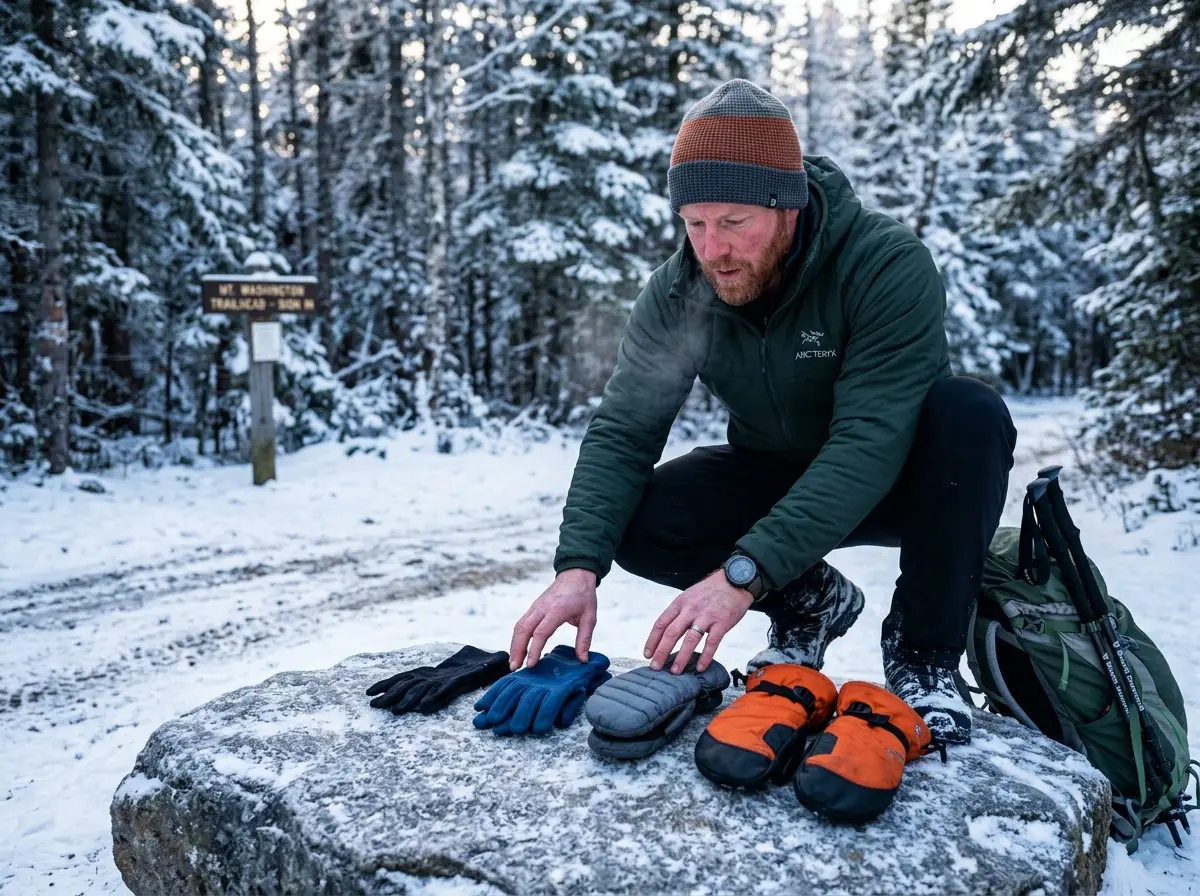
No single glove handles the full spectrum of hiking conditions. The same insulation that saves your fingers at 10°F turns your hands into sweat puddles during a steep climb at 35°F. Wet gloves in cold air lose roughly 90% of their insulating value — which means the “warm” glove you sweated through on the uphill now actively chills you on the exposed ridge.
This is why experienced winter hikers carry two to four pairs of gloves and swap throughout the day. It’s not luxury — it’s thermal management. The same logic that drives your clothing layering system for extreme cold applies to your hands.
The Four Temperature Zones
Here’s how to think about temperature ranges for hiking gloves. These assume moderate wind (5-15 mph) and active hiking pace:
Zone 1: Cool (50°F to 32°F) — Thin liner gloves. Your hands generate enough heat while hiking that minimal insulation suffices. You need full dexterity for poles, zippers, phone, and maps.
Zone 2: Cold (32°F to 15°F) — Insulated gloves. You need real insulation plus wind and water protection. Dexterity drops but should still handle pack adjustments and pole straps.
Zone 3: Severe (15°F to 0°F) — Puffy mitts over liners. Finger separation costs warmth you can’t afford. Switch to mittens and accept reduced dexterity.
Zone 4: Extreme (below 0°F) — Layered mitt system. Puffy mitts + waterproof shell + liner gloves underneath. Frostbite prevention becomes the priority over all other concerns.
Pro tip: Wind drops effective temperature 10 to 20 degrees. If the thermometer reads 25°F but the ridge is blowing 20 mph, dress your hands for 5-15°F. Wind chill isn’t a suggestion — it’s the temperature your skin actually feels.
Adjusting for Exertion Level
These zones assume you’re moving at a normal hiking pace. If you’re resting, eating lunch, or setting up camp, drop one zone cooler. Your hands cool fast when you stop generating metabolic heat.
Conversely, steep sustained climbing generates so much heat that most hikers strip down one zone warmer than the air temperature suggests. The real skill is anticipating transitions — more on that in the sweat management section below.
Liner Gloves — Your 50°F to 32°F Workhorse
Why Liners Do Most of the Work
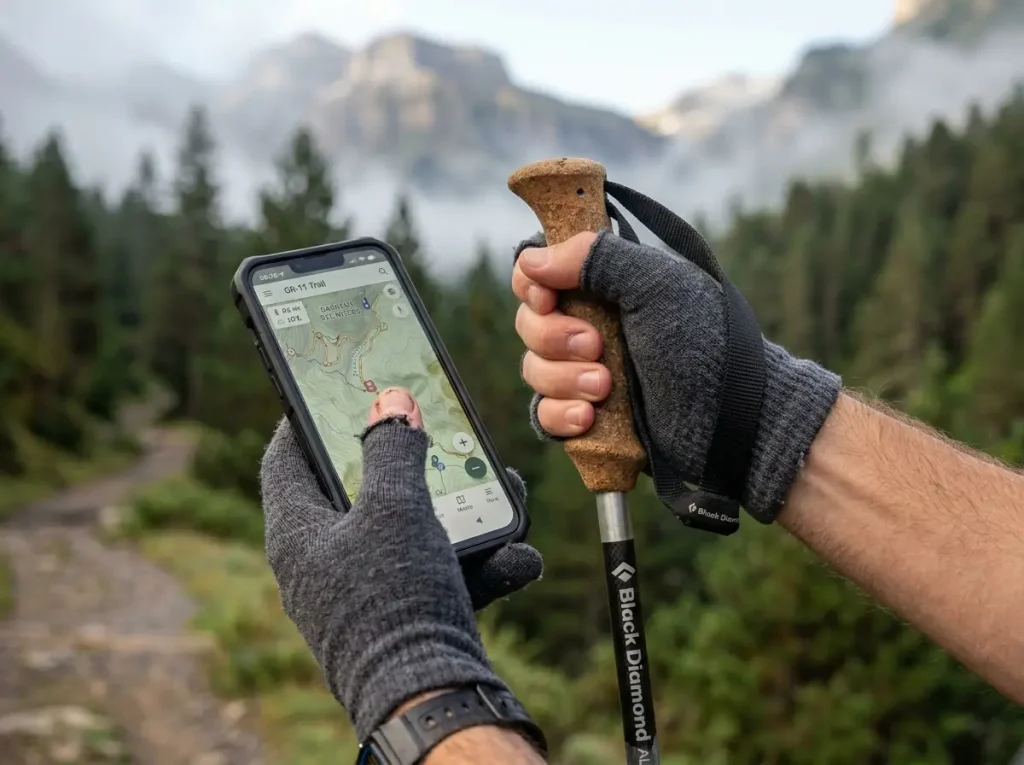
Liner gloves handle more trail time than any other glove in your system. From crisp autumn mornings through early winter day hikes, a thin glove that preserves full finger dexterity covers the widest usable temperature window.
The key quality: your hands stay warm enough to function while the glove stays thin enough to grip trekking poles, operate phone touchscreens, zip jackets, tie bootlaces, and manage pack straps. The moment you can’t do those tasks without removing gloves, you’ve lost the point of wearing them.
Materials That Work as Liners
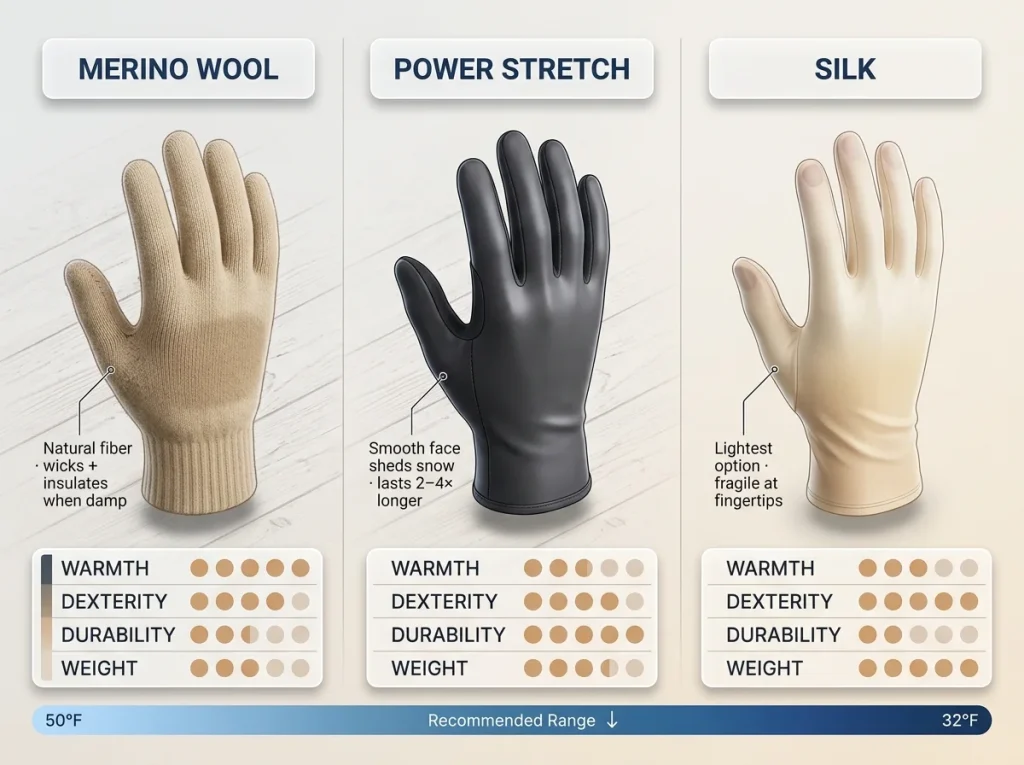
Merino wool (150-200 gsm) — Best warmth-to-thickness ratio, naturally controls odor, and continues insulating when damp. The downside is durability: merino liners develop holes at finger tips within one to two seasons of regular use.
Power Stretch fleece — Slightly less warm than merino at the same thickness but dramatically more durable. Smooth exterior sheds snow instead of absorbing it. Most experienced winter hikers eventually land on Power Stretch as their primary liner.
Silk — Ultralight and surprisingly warm, but fragile and expensive. Only worth considering if you’re an aggressive gram-counter running ultralight shoulder season setups.
The Touchscreen Question
Conductive fingertips on liner gloves sound great until you try to use them at 28°F with numb fingers. The technology works — barely — when your fingers are warm and you’re pressing deliberately. It fails completely with cold-stiffened fingers or wet screens.
The honest solution: learn to use your phone with your nose for urgent map checks, or accept that you’ll briefly strip one glove. Buying liner gloves specifically for touchscreen capability often means sacrificing warmth and durability for a feature that works 60% of the time.
Insulated Gloves — Covering 32°F to 15°F
What “Insulated” Actually Means
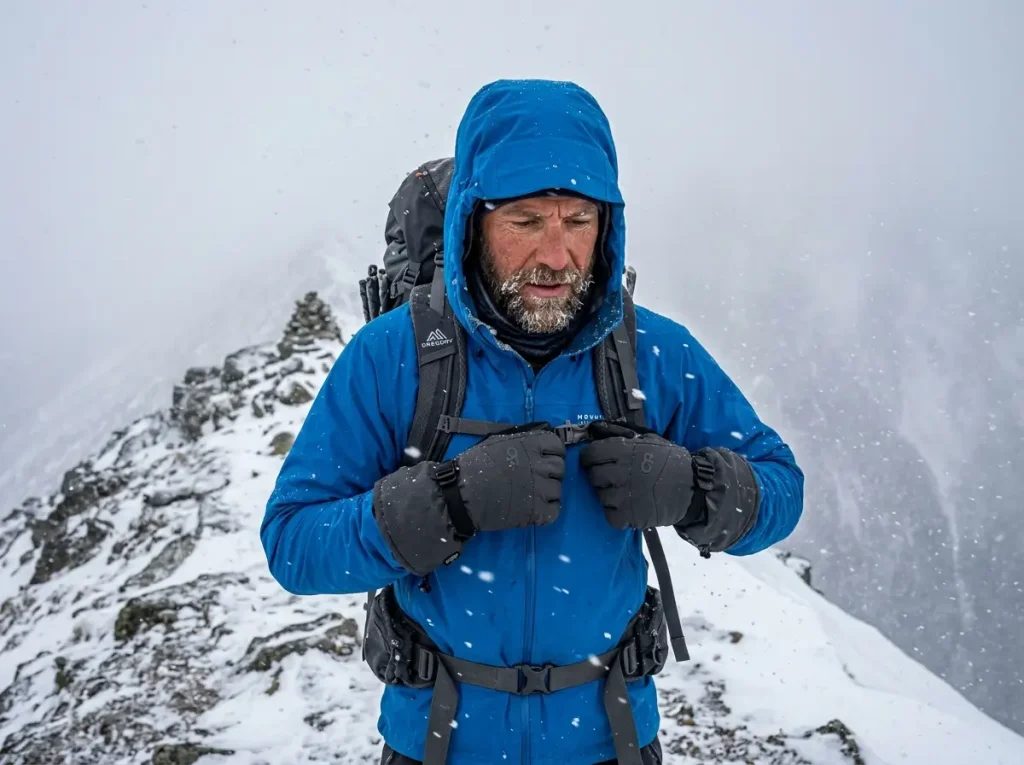
Between freezing and 15°F, you need gloves with dedicated insulation between an outer shell and an inner lining. This category is where most hiking-specific gloves live — the sweet spot between liner-thin and expedition-thick.
PrimaLoft Gold — The industry standard for synthetic hiking glove insulation. Warm when wet, maintains loft under compression (important when gripping poles), and dries faster than any alternative. Most gloves in the $60-120 range use some version of PrimaLoft.
Fleece lining + membrane — Budget insulated gloves often skip dedicated insulation and rely on thick fleece backed by a waterproof membrane (Gore-Tex or proprietary). Warmer than liners, less warm than PrimaLoft, but significantly cheaper.
Waterproofing — When You Need It
If you’re hiking in snow, sleet, or freezing rain, waterproofing isn’t optional. Wet insulation in below-freezing air accelerates heat loss to the point where you’d be warmer with no gloves at all.
Gore-Tex inserts deliver reliable waterproofing with reasonable breathability. Expect to pay $80-150 for Gore-Tex hiking gloves from brands like Outdoor Research or Black Diamond.
Budget waterproofing (SHOWA Temres, Sealskinz) uses rubber or proprietary membranes at $20-50. Less breathable — your hands will be sweatier — but they keep water out reliably.
For dry-cold conditions (common in the Rockies and high desert), you can skip waterproofing and gain breathability. If precipitation is possible, waterproofing is non-negotiable.
Pro tip: Carry your insulated gloves in an accessible pocket, not buried in your pack. You’ll need them when conditions change at a ridge or pass — and digging through your pack with freezing fingers is a recipe for dropping gear off a cliff.
The Gloves vs Mittens Decision
At 32-15°F, you still have a choice. Five-finger insulated gloves maintain enough dexterity for most hiking tasks: trekking pole grips, buckles, water bottle caps. Mittens at this range are warmer by roughly 5-10°F equivalent, but you lose the ability to operate anything requiring finger separation.
The decision framework: if your circulation runs warm and you need to handle gear frequently, gloves win. If you run cold, have circulation issues, or plan to hike with minimal gear interaction for extended periods, mittens win.
Puffy Mitts and Shell Systems — Below 15°F
When Fingers Must Share Warmth
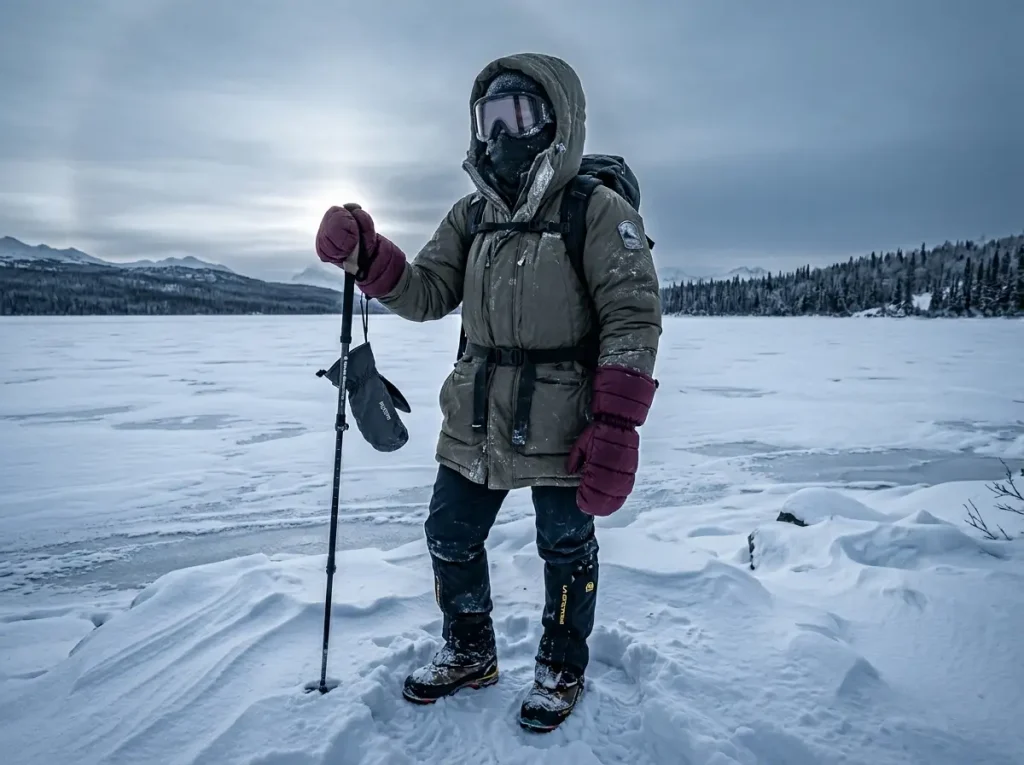
Below 15°F, the physics change. Individual fingers in separate glove compartments lose heat too fast from their high surface-area-to-volume ratio. Mittens let your fingers share warmth in a single cavity — and that shared warmth makes the difference between comfortable hands and early frostbite.
Synthetic puffy mitts (PrimaLoft or Climashield) deliver warmth equivalent to much heavier insulated gloves at a fraction of the weight. Enlightened Equipment Torrid Mitts weigh under 2 ounces per pair and handle temps down to 0°F when layered over liners.
Down mitts are warmer per ounce but fail catastrophically if wet. Reserve them for guaranteed dry-cold conditions.
The Shell Layer — Wind and Wet Protection
In extreme cold, add a waterproof shell mitt over your puffy mitts. This creates the same three-layer system you use for your torso: base (liner gloves) → insulation (puffy mitts) → shell (waterproof mitts).
The shell blocks wind from compressing your insulation and keeps precipitation off the down or synthetic fill. Without it, a 20 mph wind at 5°F cuts through puffy mitts like they aren’t there.
Good shell mitts: SHOWA Temres 02 ($25, rubber palm, bombproof), Outdoor Research Alti Mitts (expedition grade), or any lightweight nylon shell that fits over your insulated layer.
Keeper Cords — Not Optional
Below 15°F, dropping a mitt in wind can become a serious safety issue. You won’t have the dexterity to pick it up quickly, and bare skin at those temperatures starts frostbite risk within minutes. Keeper cords (also called idiot strings) run from each mitt through your jacket sleeves so a dropped mitt dangles rather than blowing away.
Every single experienced winter mountaineer uses them. There’s a reason for that.
Internal link placement: Winter hike planning protocols should include glove system decisions before you leave the car.
The Dexterity Problem Nobody Warns You About
Tasks That Fail with Thick Gloves
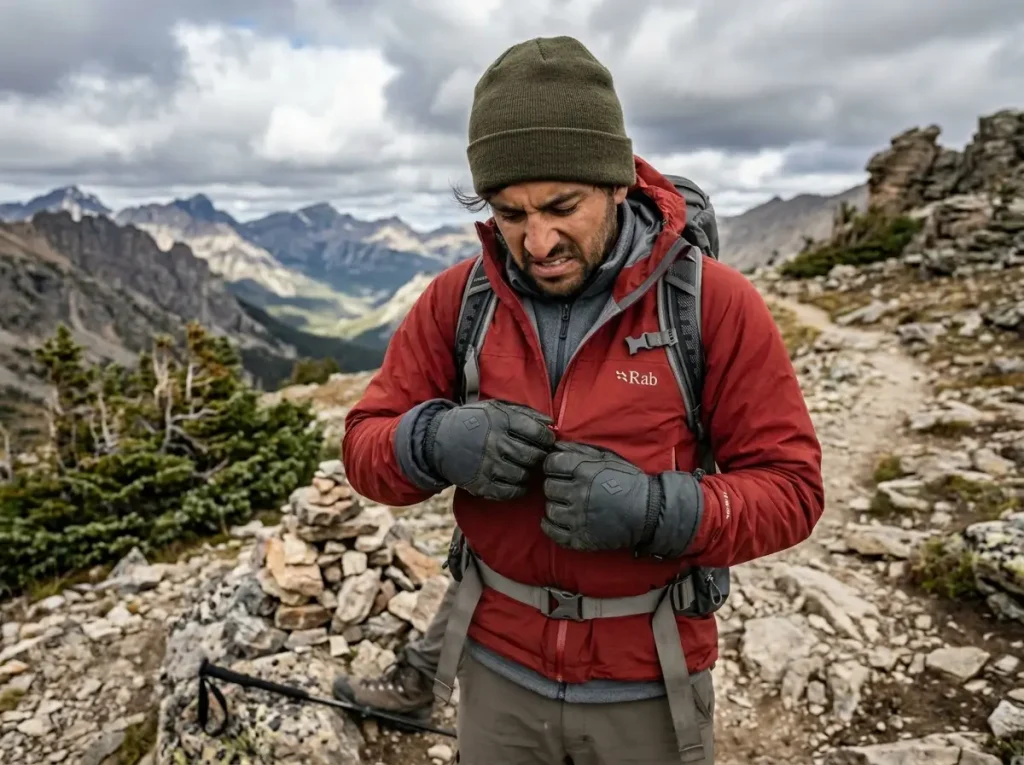
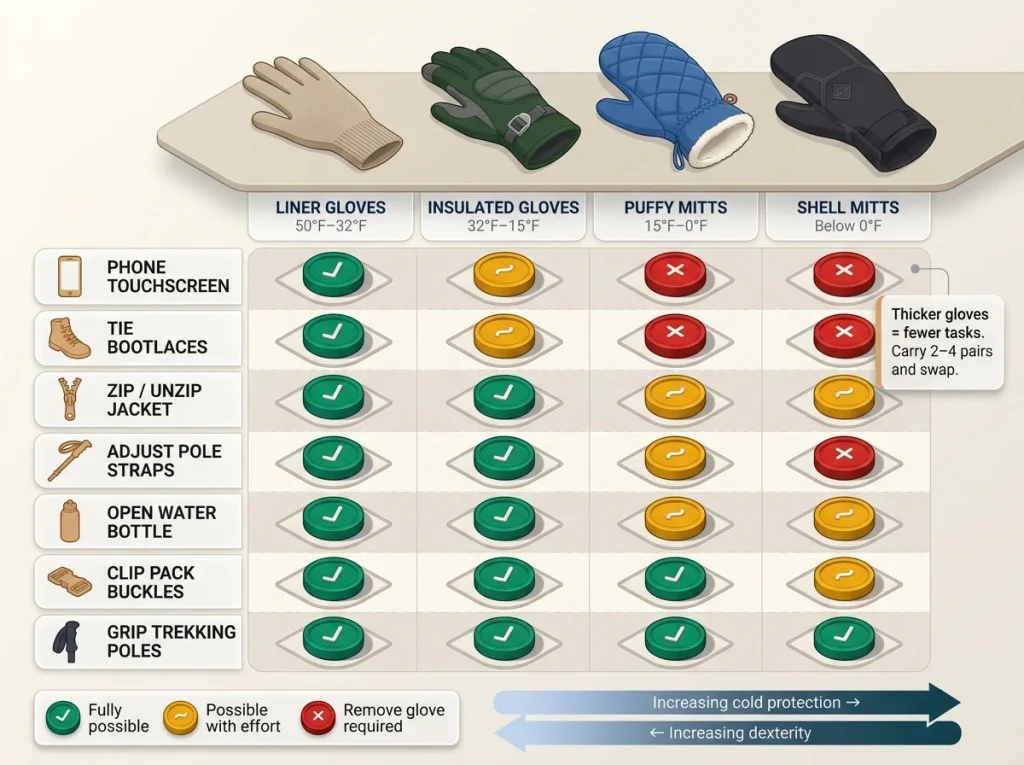
Here’s what competitors won’t tell you clearly: most hiking tasks require at least moderate finger dexterity. When your gloves are too thick for the job, you remove them — and bare hands in cold air lose feeling within 30 to 90 seconds depending on temperature and wind.
Tasks ranked by dexterity required (highest to lowest):
Operating a phone touchscreen → tying bootlaces → zipping/unzipping jackets → adjusting trekking pole straps → opening water bottle caps → clipping pack buckles → gripping trekking pole shafts
Thin liner gloves handle all of these. Insulated gloves handle the bottom four reliably. Puffy mittens handle only the last two. This is why you carry multiple pairs — not because one pair isn’t “warm enough,” but because one pair can’t do everything.
The Convertible Glove Compromise
Convertible gloves — with a flip-back mitten shell over fingerless glove base — offer a middle path. Flip the mitt back for dexterity tasks, flip it forward when you don’t need fingers. TrailHeads Convertible Running Gloves are the current gold standard: clean flip action without bulk, warm enough for 35-20°F active hiking.
The limitation: convertibles aren’t warm enough below 20°F for most people, and the convertible mechanism adds a failure point (velcro wears out, magnets weaken). They’re a brilliant solution for the 35-20°F window where you’re constantly switching between “need fingers” and “need warmth.”
Pro tip: Clip your liner gloves to your pack’s shoulder strap daisy chain with a small carabiner. When you strip insulated gloves for a dexterity task, you can pull on liners instantly without digging through pockets. Two seconds versus thirty — that matters when your fingers are already cooling.
Managing the Sweat-to-Freeze Cycle

The Real Reason Your Hands Get Cold
The number one cause of cold hands during winter hiking isn’t insufficient insulation. It’s sweat. You climb hard, your hands overheat, moisture saturates your glove liner, then you hit an exposed ridge or stop for a break — and that trapped moisture conducts heat away from your skin twenty-five times faster than dry air.
This is the sweat-to-freeze cycle, and it catches people who buy the “warmest” gloves thinking that solves the problem. Warmth without breathability creates the conditions for freezing.
How to Break the Cycle
Vent early, not late. The moment your hands feel warm — not hot, warm — strip down one layer. Go to liners on the steep uphill even if the air temperature says you should wear insulated gloves. Better to be slightly cool on the climb than soaking wet at the top.
Carry a dry transition pair. Keep a dedicated “ridge pair” of dry liner gloves clipped to your pack. When you crest the climb and your hiking liners are damp, swap immediately. The dry pair buys you time to layer up properly without bare skin exposure.
Wring out damp gloves. Sounds obvious but most people skip it. A wrung-out fleece liner performs dramatically better than a saturated one. Stop, squeeze them, shake them out, put them back on. Ten seconds prevents thirty minutes of cold.
Pro tip: During the uphill, stuff your insulated gloves inside your jacket front — between base layer and midlayer. They stay dry, pre-warmed by your torso heat, and are ready for instant deployment when you hit the ridge. Cold gloves on sweaty hands make everything worse.
Circulation and Cold Sensitivity
Roughly 5 to 10 percent of people have Raynaud’s phenomenon — a condition where blood vessels in fingers overreact to cold by constricting completely, turning fingers white and numb. If your fingers go white and waxy in cold that doesn’t bother other hikers, this may be you.
The fix isn’t thicker gloves on your hands. It’s keeping your CORE warm. Your circulatory system restricts blood to extremities when your torso temperature drops. A warmer hat, a better insulating layer on your trunk, or strategic hand warmer placement on arterial pulse points (wrists, neck) can keep fingers warm better than expedition mitts alone.
The “windmill” trick: snap your arm forward hard like casting a fishing rod — this forces blood past constricted capillaries in your wrist and temporarily reopens circulation to your fingers. Works in about 20 seconds. Repeat as needed.
Building Your Glove System Without Going Broke
The Three-Pair Starter System ($45-80 total)
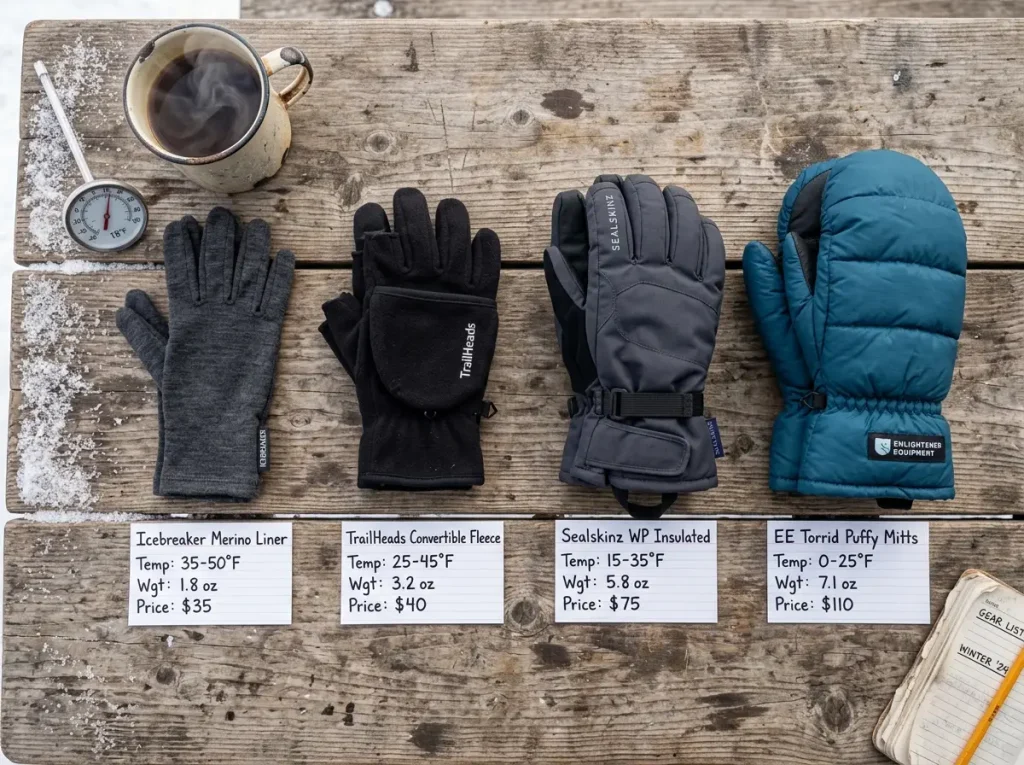
You don’t need to spend $300 on a full expedition glove kit. For three-season hiking with occasional winter use, three pairs cover every scenario:
Pair 1 — Merino liner gloves ($15-25). Icebreaker Quantum or Smartwool liner weight. These handle 50-32°F solo and serve as the base layer beneath everything else.
Pair 2 — Insulated waterproof gloves ($25-50). Sealskinz Waterproof All Weather or SHOWA Temres 02 Winter. Covers 32-15°F reliably with real waterproofing.
Pair 3 — Puffy mitts ($20-45). Enlightened Equipment Torrid Mitts or any synthetic insulated mitt. Covers below 15°F over your liners.
Total: roughly $60-120 for a complete system that handles every temperature from 50°F down to well below zero.
When to Upgrade vs When to Layer
The temptation is to buy one expensive “do everything” glove. Resist it. A $150 heated glove handles a narrower temperature range than three cheaper pairs used in combination. Layering gives you flexibility that no single product matches.
Upgrade only when you have a specific failure point: liners wearing through at the fingertips? Buy more durable Power Stretch. Mitts not blocking wind? Add a $25 shell. Hands sweating through everything? Switch to more breathable materials with better moisture management.
The best glove system isn’t the most expensive one. It’s the one where you know which piece to grab when conditions change — and you actually carry all of it.
Weight Considerations for Ultralight Hikers
A full four-tier system weighs under 10 ounces total:
Merino liners: 1.5 oz. Convertible fleece gloves: 2.5 oz. Synthetic puffy mitts: 2 oz. Shell mitts: 2 oz. Total: 8 oz.
For comparison, a single pair of heavy insulated ski gloves weighs 8-12 oz and covers only one temperature range. The layered system weighs less AND handles more conditions. Weight-obsessed hikers should embrace layers, not avoid them.
Conclusion
Three things to remember when choosing hiking gloves by temperature.
First, no single glove works for all conditions — carry a system of two to four pairs and swap as temperature, wind, and exertion change. The layering logic is identical to your clothing system: base, insulation, shell.
Second, manage sweat before it manages you. The sweat-to-freeze cycle ruins more winter hikes than insufficient insulation. Strip layers on the uphill, carry a dry transition pair, and keep your insulated gloves pre-warmed inside your jacket.
Third, warm hands start at your core. If your fingers are cold and your gloves are adequate, the problem is your torso temperature or circulation — not your hand insulation. Fix the core first.
Test your system on a short cold-weather hike this season before committing to it on an all-day ridge traverse. Your hands will tell you exactly what’s missing.
Q1 What temperature do you need gloves for hiking?
Most hikers need gloves below 50°F, though personal cold sensitivity varies. At 40-50°F thin liner gloves suffice while hiking actively. Below 32°F you need insulated gloves or a layered system with real wind protection.
Q2 Are mittens or gloves better for cold weather hiking?
Mittens are warmer below 15°F because fingers share heat in a single cavity. Gloves are better between 32-15°F when you still need dexterity for trekking poles, zippers, and pack adjustments. Carry both and switch based on temperature and task.
Q3 What are the warmest hiking gloves?
A layered mitt system — liner gloves under synthetic puffy mitts under waterproof shell mitts — provides the most warmth for extreme cold hiking. This combination handles well below 0°F and weighs under 6 ounces total.
Q4 Should hiking gloves be tight or loose?
Hiking gloves should fit snug without restricting blood flow. Too tight compresses insulation and restricts circulation, making hands colder. Too loose lets cold air circulate inside and reduces dexterity. You should be able to make a fist comfortably without fabric bunching.
Q5 How do you keep your hands warm while hiking in cold weather?
Keep your core warm first — cold core triggers vasoconstriction that starves fingers of blood. Swap between glove layers before you sweat, carry dry backup liners, and windmill your arms to force blood to fingertips when numbness starts. Warm gloves on cold wet hands make things worse.
Risk Disclaimer: Hiking, trekking, backpacking, and all related outdoor activities involve inherent
risks which may result in serious injury, illness, or death. The information provided on The Hiking Tribe is for
educational and informational purposes only. While we strive for accuracy, information on trails, gear, techniques,
and safety is not a substitute for your own best judgment and thorough preparation. Trail conditions, weather, and
other environmental factors change rapidly and may differ from what is described on this site. Always check with
official sources like park services for the most current alerts and conditions. Never undertake a hike beyond your
abilities and always be prepared for the unexpected. By using this website, you agree that you are solely
responsible for your own safety. Any reliance you place on our content is strictly at your own risk, and you assume
all liability for your actions and decisions in the outdoors. The Hiking Tribe and its authors will not be held
liable for any injury, damage, or loss sustained in connection with the use of the information herein.
Affiliate Disclosure: We are a participant in the Amazon Services LLC Associates Program, an
affiliate advertising program designed to provide a means for us to earn advertising fees by advertising and linking
to Amazon.com. As an Amazon Associate, we earn from qualifying purchases. We are also an official affiliate partner
of Black Diamond Equipment via the AvantLink network. If you click on a Black Diamond affiliate link and make a
purchase, we may earn a commission at no additional cost to you. We also participate in other affiliate programs and
may receive a commission on products purchased through our links. Additional terms are found in the terms of
service.