In this article
You are three days deep into the backcountry, miles from the trailhead, when the cramping starts. It isn’t just trail fatigue; it is a distinct, churning nausea that threatens to derail the entire expedition. In this environment, distinguishing between a passing stomach bug and a parasitic infection like Giardia duodenalis (also known as Giardia lamblia or Giardia intestinalis) is not a matter of comfort—it is a critical safety calculation.
As a mountaineering instructor, I have seen strong climbers brought to their knees by these microscopic cysts. Field diagnosis is rarely about precise lab work; it’s about recognizing patterns in timing and biology. This guide bridges the gap between clinical microbiology and wilderness survival, translating complex symptoms into actionable field diagnostics so hikers and travelers can decide whether to push on or initiate a rescue.
What is the “Slow Burn” of a Giardia Infection?

Giardiasis does not make you sick immediately because the ingested cysts require a 1 to 3 week incubation period to colonize the small intestine. This timeline is the single most important factor in ruling out other common trail ailments.
Why doesn’t Giardia make you sick immediately?
The Giardia lifecycle begins with the ingestion of a hardy, environmentally resistant cyst from contaminated water sources. Unlike bacteria that may produce immediate toxins, these Giardia parasites must travel through the stomach where acid triggers “excystation,” releasing active trophozoites. These trophozoites must then mechanically attach to the wall of the small intestine and multiply in sufficient numbers to blanket the gut lining.
This biological process creates a distinctive incubation period of 1 to 3 weeks (average 7 days), known as the “slow burn.” The CDC confirms the delayed onset of symptoms is standard for this parasite, historically nicknamed “beaver fever.” If you are vomiting within 12 to 24 hours of drinking sketchy water, you are likely dealing with viral gastroenteritis (Norovirus) or bacterial food poisoning, not Giardia.
Symptoms often manifest only after a hiker has been on the trail for a week or has already returned home. This delay makes retrospective analysis of untreated water sources critical. Because the infection cycle is driven by fecal-oral transmission, preventing re-infection requires strict adherence to proper backcountry hygiene and poop in the woods protocols to stop the spread to your campmates.
What are the tell-tale sensory signs of Giardia?
The most reliable field indicators of Giardia are “sulfur burps” and greasy, floating stool caused by intestinal malabsorption. Once the incubation clock has run out, the body begins to send these specific, unmistakable distress signals.
Why do hikers experience “Sulfur Burps”?
Sulfur burps occur because the parasite blunts the villi in the small intestine, blocking the absorption of sulfur-containing proteins which then ferment in the lower gut.
Because proteins from trail foods like nuts, eggs, or jerky are not absorbed, they pass into the lower intestine where gut bacteria attack them. This fermentation process releases hydrogen sulfide gas, which rises back through the digestive tract. Research archived by the NIH outlines the mechanism of malabsorption that leads to this specific gas production and foul-smelling flatulence.
The result is a pathognomonic clinical sign known as the “sulfur burp”—an eructation that distinctly tastes and smells of rotten eggs. This is not just bad breath; it is a chemical indicator of upper-intestinal trouble. Differentiating this symptom helps in ruling out common bacterial issues by mastering backcountry food safety, as food poisoning rarely produces this specific hydrogen sulfide signature.
How does the appearance of stool confirm the diagnosis?
The hallmark of Giardiasis is steatorrhea, a condition where stool becomes pale, greasy, and foul-smelling due to excess fat that the body failed to absorb.
In a wilderness setting, look for floating stool. Because the waste has a high fat content, it defies gravity in a cat-hole or latrine, distinguishing it from the watery diarrhea of general dysentery. The Mayo Clinic details the specific characteristics of parasitic stool, noting that the “greasy” texture is a key identifier.
Crucially, you should look for the absence of blood or mucus. Giardia is non-invasive and rarely causes intestinal bleeding. If blood is present, your diagnosis shifts toward invasive bacterial infections like Salmonella. Additionally, Giardia diarrhea is often cyclic—you may feel fine one day and debilitated by stomach cramps the next. Recognizing these signs allows you to categorize the illness, but you must also be diligent about managing waste responsibly using standard how to poop in the woods techniques to protect the watershed.
How should a hiker manage the illness in the backcountry?
Management focuses on hydration and “gut rest” to maintain mobility, with immediate evacuation reserved for red-flag symptoms like blood or intractable vomiting.
When does diarrhea require emergency evacuation?
Most cases of Giardia, while uncomfortable, do not require a helicopter rescue; however, specific criteria demand immediate exit. The Wilderness Medical Society provides guidelines for waterborne illness management, advising evacuation if there is blood in the stool, a fever exceeding 102°F (39°C), or signs of severe dehydration such as confusion or dark urine.
Intractable vomiting that prevents fluid retention for more than 24 hours is a critical emergency, whether you are on the Appalachian Trail or the John Muir Trail. If diarrhea persists for more than 3 days without improvement despite field treatment, self-evacuation is necessary. Decision-making must account for terrain difficulty; a dehydrated hiker is prone to sprains and injury on technical trails.
Pro-Tip: Use Loperamide (Imodium) sparingly. It stops the diarrhea, which is helpful for hiking out, but it also traps the pathogen inside your gut. Use it only to facilitate travel, not as a cure.
When these red flags appear, start consulting your hiker’s emergency guide for evacuation protocols immediately. Definitive antibiotic treatments like Metronidazole (Flagyl), Tinidazole (Tindamax), or Nitazoxanide (Alinia) typically require a prescription after an O&P test (stool sample) back in civilization.
How does diet impact recovery while on the trail?
Dietary management requires cutting all dairy and high-fat foods to accommodate the temporary lactose intolerance and malabsorption caused by the parasite.
NOLS case studies highlight the importance of dietary management in the field, suggesting a “Gut Rest” protocol. Stop consuming cheese, heavy nuts, or sausage. Switch to simple, bland carbohydrates like rice, oatmeal, or crackers if available.
Hydration is the priority, but concentrated sugary sports drinks can worsen “osmotic diarrhea” by drawing more water into the gut. Electrolyte powders should be diluted to half-strength (1 part drink to 4 parts water). This approach optimizes absorption without triggering further fluid loss, helping you maintain balance using electrolytes for hiking recovery.
Why do water treatment systems fail against Giardia?
Failures are rarely due to the device itself, but rather physics: freezing temperatures shatter filter fibers, and cold water slows chemical disinfection reactions.
How does freezing temperature compromise hollow fiber filters?
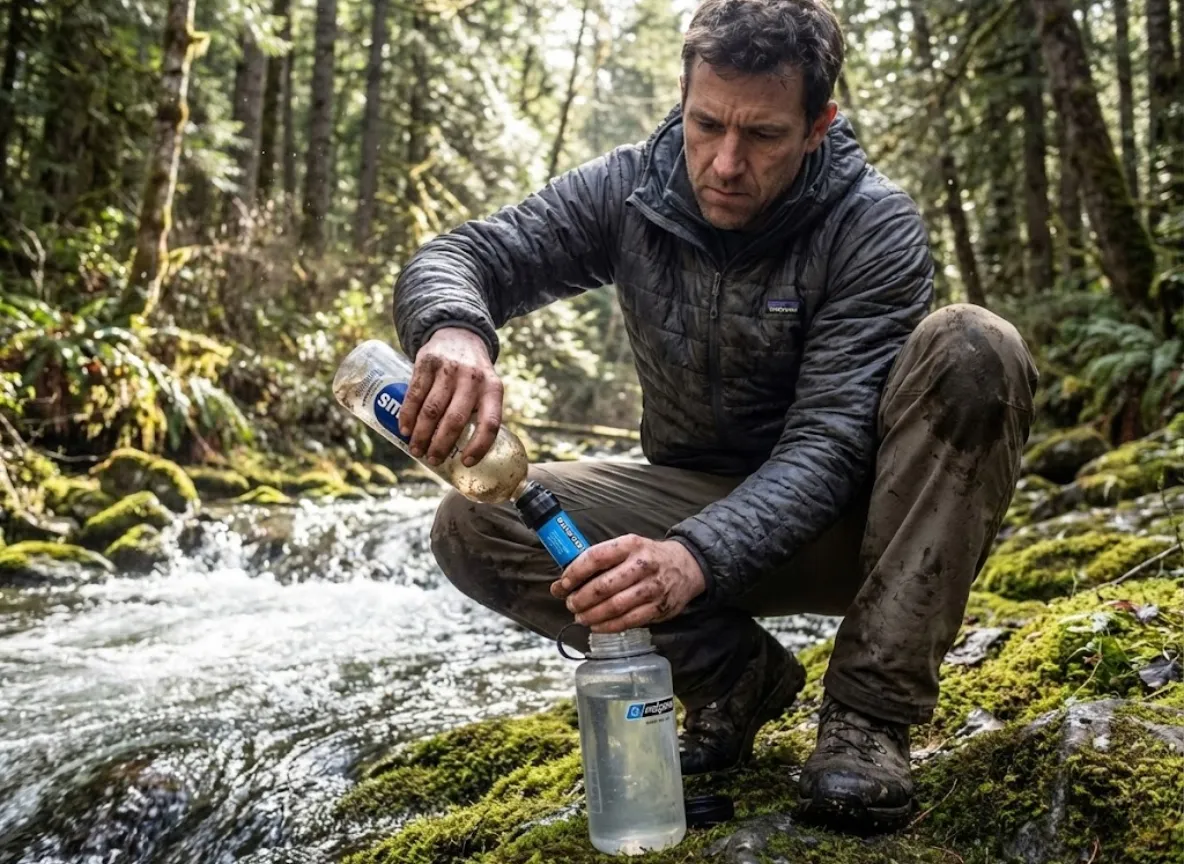
If a hollow-fiber filter (like a Sawyer Squeeze or Katadyn BeFree) contains residual water and freezes, the ice expansion shatters the internal fibers, creating bypass channels larger than the Giardia cyst.
Princeton University’s Outdoor Action Guide warns about filter limitations, noting that there is no reliable field test for this failure. A broken filter often flows faster than an intact one, deceiving the user. To prevent this, hikers in alpine environments must sleep with their filters inside their sleeping bags to maintain core temperature.
If you suspect your filter has frozen, discard it immediately. This maintenance nuance is just as critical as learning how to clean Sawyer Squeeze filters correctly to maintain flow rate. Always verify that your mechanical filter meets NSF 53 standards for cyst reduction.
Why does cold water render chemical treatment less effective?
Chemical disinfection relies on a “Ct value” (Concentration × Time), and these reactions slow significantly in cold water, often requiring double the standard wait time.
The FDA and CDC provide data on the efficacy of iodine and chlorine against cysts, indicating that a treatment time effective at 68°F (20°C) is insufficient at 40°F (4°C). In cold mountain streams, standard wait times of 30 minutes must often be extended to 60 minutes or more to kill Giardia germs.
For Cryptosporidium, iodine tablets are completely ineffective, and Chlorine Dioxide requires up to 4 hours of contact time in cold water. Understanding the distinctions in our water filter vs purifier expert trail gear guide is essential for choosing the right defense for winter conditions.
Pro-Tip: If you are treating freezing water with drops or tablets, put the water bottle inside your jacket against your base layer. Your body heat will warm the water, speeding up the chemical reaction and reducing the wait time.
Conclusion
Diagnosing Giardia in the wild is an exercise in observation and patience. If symptoms hit within 24 hours, it’s likely viral; Giardia plays the long game (1–3 weeks). When the symptoms do arrive, trust your nose and eyes: “sulfur burps” and greasy, floating stool are your most reliable indicators.
Remember that treatment is governed by physics. Your filter cannot survive freezing, and your chemical drops need extra time in cold water. If you do fall ill, watch for the red flags—blood, fever, or intractable vomiting—as your signal to evacuate. Otherwise, focus on hydration and gut rest.
For more insights on building a bulletproof backcountry kit, explore our comprehensive guide to water filtration systems to ensure your next adventure stays parasite-free.
FAQ – Frequently Asked Questions
How long does giardia last if left untreated?
Without treatment, Giardia symptoms can persist for 2 to 6 weeks, often becoming cyclic (waxing and waning). In some cases, it can develop into a chronic infection lasting months, leading to significant weight loss and nutrient malabsorption similar to irritable bowel syndrome (IBS).
Can I use hand sanitizer to kill Giardia on my hands?
No, alcohol-based hand sanitizers are ineffective against Giardia cysts, which are encased in a hard protective shell. The only effective hygiene method is vigorous hand washing with soap and water to mechanically scrub the cysts off your skin.
Is there an instant test for Giardia on the trail?
Currently, there is no reliable rapid field test for Giardia available to hikers; diagnosis must be based on the timeline and symptom profile. Confirmation requires a stool antigen test (O&P) performed in a clinical laboratory after you return.
Does boiling water kill Giardia?
Yes, boiling water is the most effective method; water needs to reach a rolling boil for 1 minute (or 3 minutes at elevations above 6,500 feet). This heat instantly destroys the cyst structure, rendering the parasite incapable of infection.
Risk Disclaimer: Hiking, trekking, backpacking, and all related outdoor activities involve inherent
risks which may result in serious injury, illness, or death. The information provided on The Hiking Tribe is for
educational and informational purposes only. While we strive for accuracy, information on trails, gear, techniques,
and safety is not a substitute for your own best judgment and thorough preparation. Trail conditions, weather, and
other environmental factors change rapidly and may differ from what is described on this site. Always check with
official sources like park services for the most current alerts and conditions. Never undertake a hike beyond your
abilities and always be prepared for the unexpected. By using this website, you agree that you are solely
responsible for your own safety. Any reliance you place on our content is strictly at your own risk, and you assume
all liability for your actions and decisions in the outdoors. The Hiking Tribe and its authors will not be held
liable for any injury, damage, or loss sustained in connection with the use of the information herein.
Affiliate Disclosure: We are a participant in the Amazon Services LLC Associates Program, an
affiliate advertising program designed to provide a means for us to earn advertising fees by advertising and linking
to Amazon.com. As an Amazon Associate, we earn from qualifying purchases. We are also an official affiliate partner
of Black Diamond Equipment via the AvantLink network. If you click on a Black Diamond affiliate link and make a
purchase, we may earn a commission at no additional cost to you. We also participate in other affiliate programs and
may receive a commission on products purchased through our links. Additional terms are found in the terms of
service.