In this article
Half the packs marketed as ultralight backpacks “under 2 pounds” tip the scale past it the moment you clip the lid back on and load the hip belt. Ask any thru-hiker who weighed their pack on a luggage scale instead of trusting the tag, because the gap between the spec sheet and the scale is the first thing the ultralight world quietly stops pretending about. The good news is that a handful of packs genuinely come in under 2 pounds, and a few more round past it for reasons worth the trade. This guide names them, tells the weight straight, and shows you how to pick the one that fits your load and your back instead of the marketing copy.
Here’s how the five picks compare before we get into why the number on the tag and the number on your back rarely line up:
| Pack | Weight | Capacity | Frame | Best For |
|---|---|---|---|---|
| Granite Gear Virga3 55 | 26.9 oz | 55L | Frameless | Lowest base weights |
| Osprey Exos Pro 55 / Eja Pro 55 | 33.2 / 30.8 oz | 55L | Framed, ventilated | All-around, store fitting |
| Granite Gear Crown3 60 | ~38 oz | 60L | Framed, removable | Heavier loads |
| Six Moon Designs Swift V | 34 oz | 49–50L | Convertible | Switching framed or frameless |
| Black Diamond Beta Light 45 | ~33 oz | 45L | Frameless roll-top | Fast, minimalist trips |
What “Under 2 Pounds” Actually Buys You
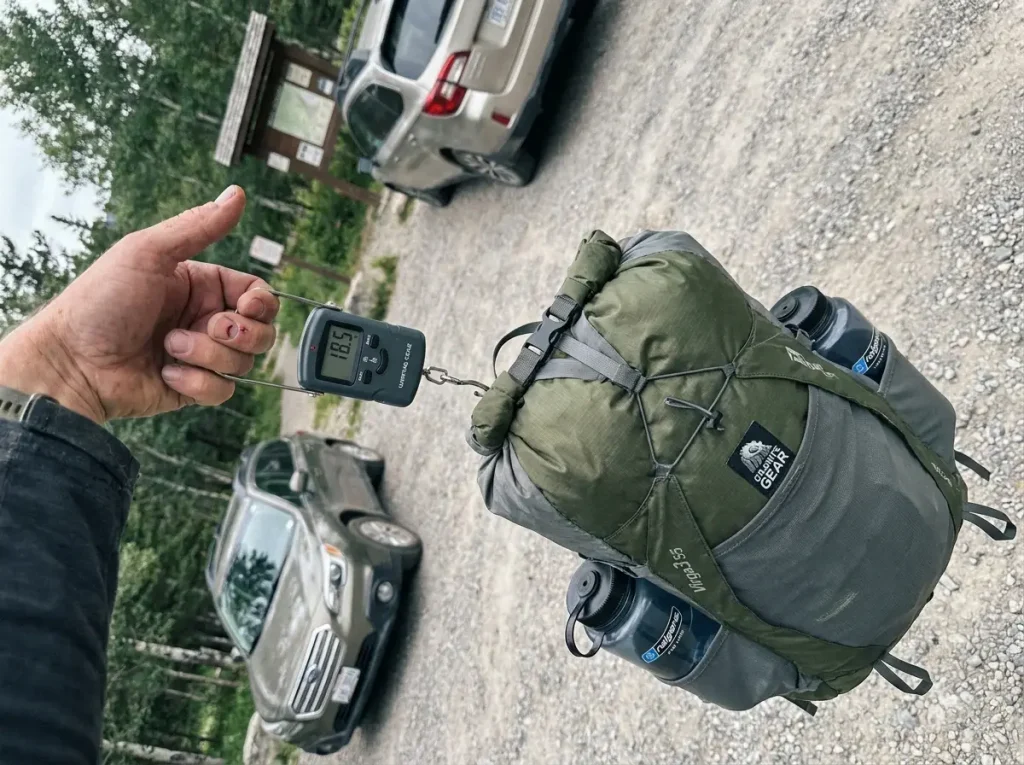
Two pounds is 32 ounces, and that line is stricter than the marketing wants you to believe. Plenty of packs wear the ultralight label while sitting at 34 or 36 ounces in the configuration you’ll actually hike. Before you trust any number, it helps to know where the number comes from.
The Number on the Tag vs the Number on the Scale
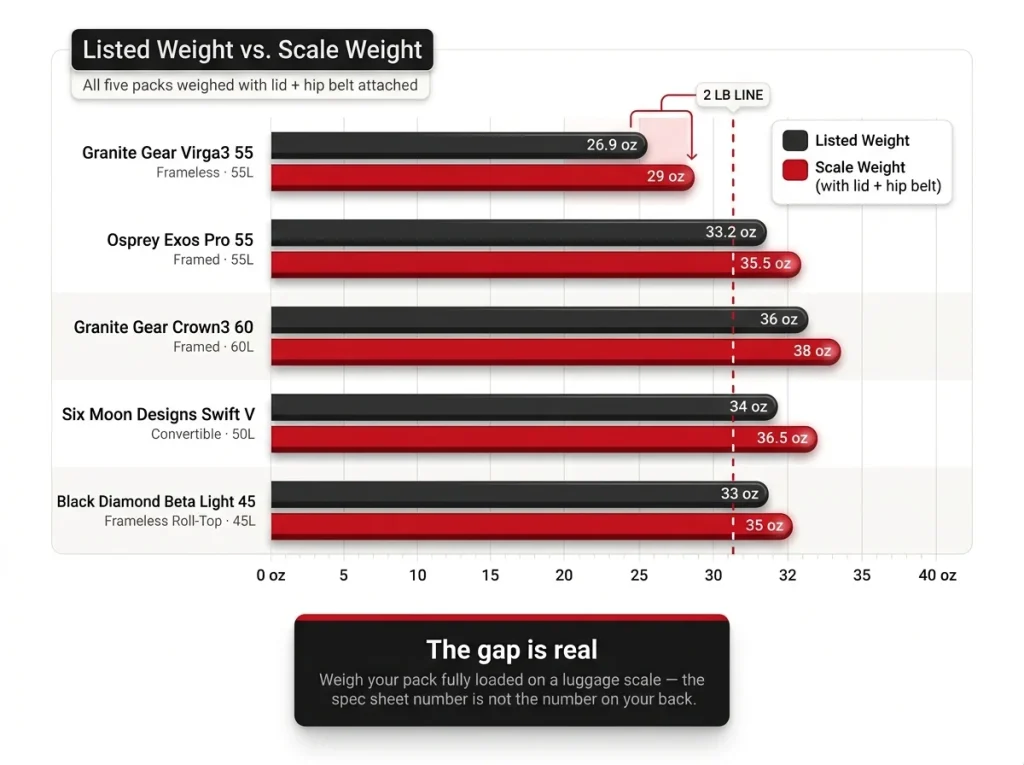
Manufacturers list the weight that flatters the pack. Sometimes that’s the stripped weight with the lid and hip-belt pockets removed, sometimes it’s a smaller size than you’ll carry. The Gossamer Gear Mariposa, for example, lists around 31 ounces and lands closer to 34 on an honest scale. The pattern repeats across the category, so the only weight that matters is the one you measure yourself, fully kitted, on a hanging scale.
Hang the pack you’re considering from a five-dollar luggage scale with the lid on and the hip belt attached. That number, not the one on the website, is what rides on your shoulders at mile twelve. Most hikers who do this once stop trusting spec sheets for good.
Why Frameless Packs Hit a Wall Around 25 Pounds
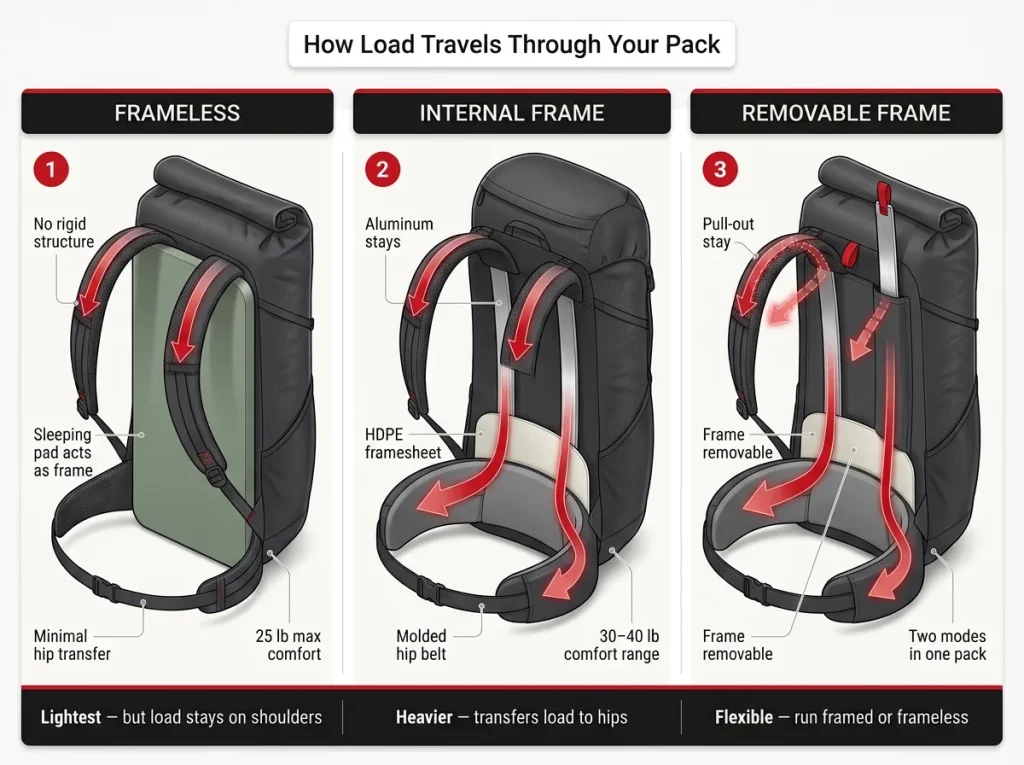
A true sub-2-pound pack buys its weight savings by dropping the frame, and that frame is what moves load onto your hips. A frameless pack carries fine up to about 25 pounds. Past that, the load starts hanging off your shoulders, and the comfort drains out of the hike fast. The story that keeps surfacing in long-trail forums is the hiker who left Kennedy Meadows on the PCT with a frameless pack and thirty-plus pounds of food and water, then called it the longest week of their life.
The 60-Liter Pack That’s Really 35
Volume gets inflated the same way weight does. A pack advertised at 60 liters often means roughly 35 liters in the main body and another 25 spread across external pockets. Those outer pockets aren’t weatherproof, so anything you stash there needs its own protection in rain. If you’re sorting out how much room you truly need, our breakdown of how many liters you actually need for an overnight versus a weekend untangles the advertised number from the usable one.
Framed or Frameless, the Fork in the Road
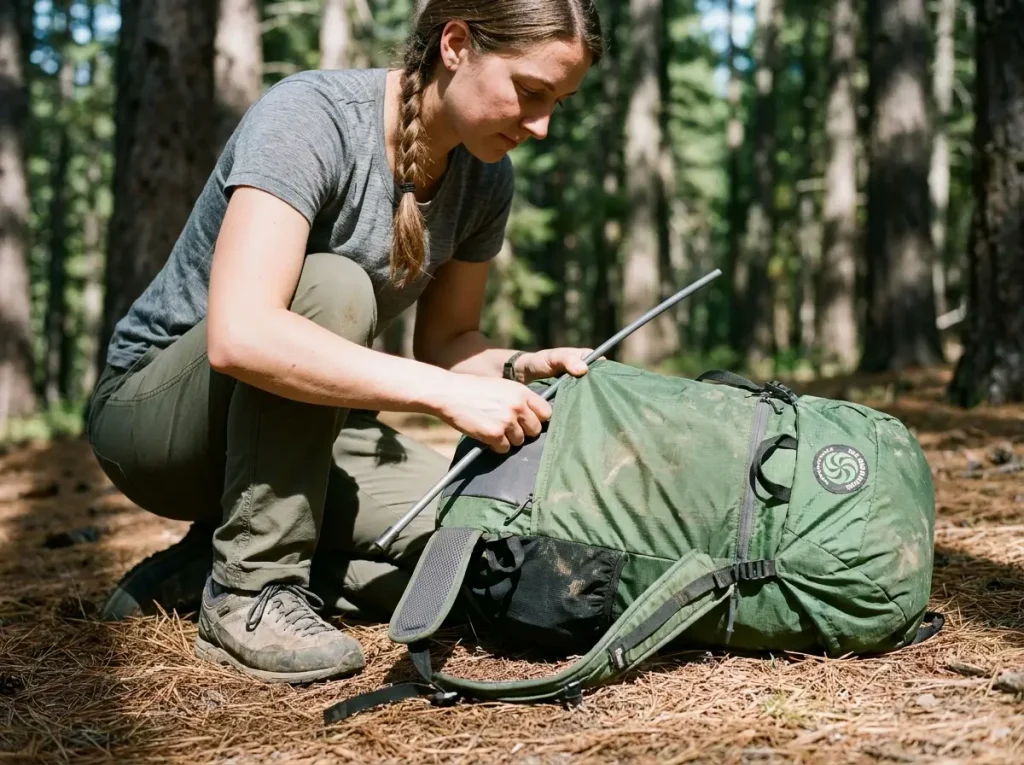
Skip the brand loyalty arguments. The honest split between framed and frameless is a weight question, and you settle it by weighing the load you actually carry, not the pack.
When a Frame Earns Its Weight
A frame starts paying for itself around 25 to 30 pounds. Below that you’re carrying structure you don’t need; above it, the frame transfers weight to your hips and saves your shoulders the whole day. That threshold, not the brand on the pack, is what should drive the call, and we walk through it in detail in our guide to the 25-pound rule that settles the framed-versus-frameless debate. If you want to understand the mechanism, how a pack’s suspension actually moves weight onto your hips is worth a read before you spend the money.
Where Frameless Wins
Frameless packs save the most weight, and a well-packed one builds its own structure. Pack it tight, with the sleeping pad against your back as a virtual frame, and a frameless pack rides better than people expect. The catch is that the skill ceiling is higher. A sloppy frameless pack sags and sways, and there’s no frame to bail you out.
The Convertible Middle Ground
Some packs let you have it both ways. A removable stay or a pull-out frame means you run light on a fast overnight and add support for a resupply-heavy stretch. It’s the most forgiving answer if you’re not ready to commit to one philosophy, and it’s why the convertible packs below keep showing up on experienced hikers’ shortlists.
The Best Ultralight Backpacks Under 2 Pounds
Here are the five, ranked by the job each does best, with the weight told straight, including the ones that round past two pounds and why that’s still fine.
Best Frameless — Granite Gear Virga3 55
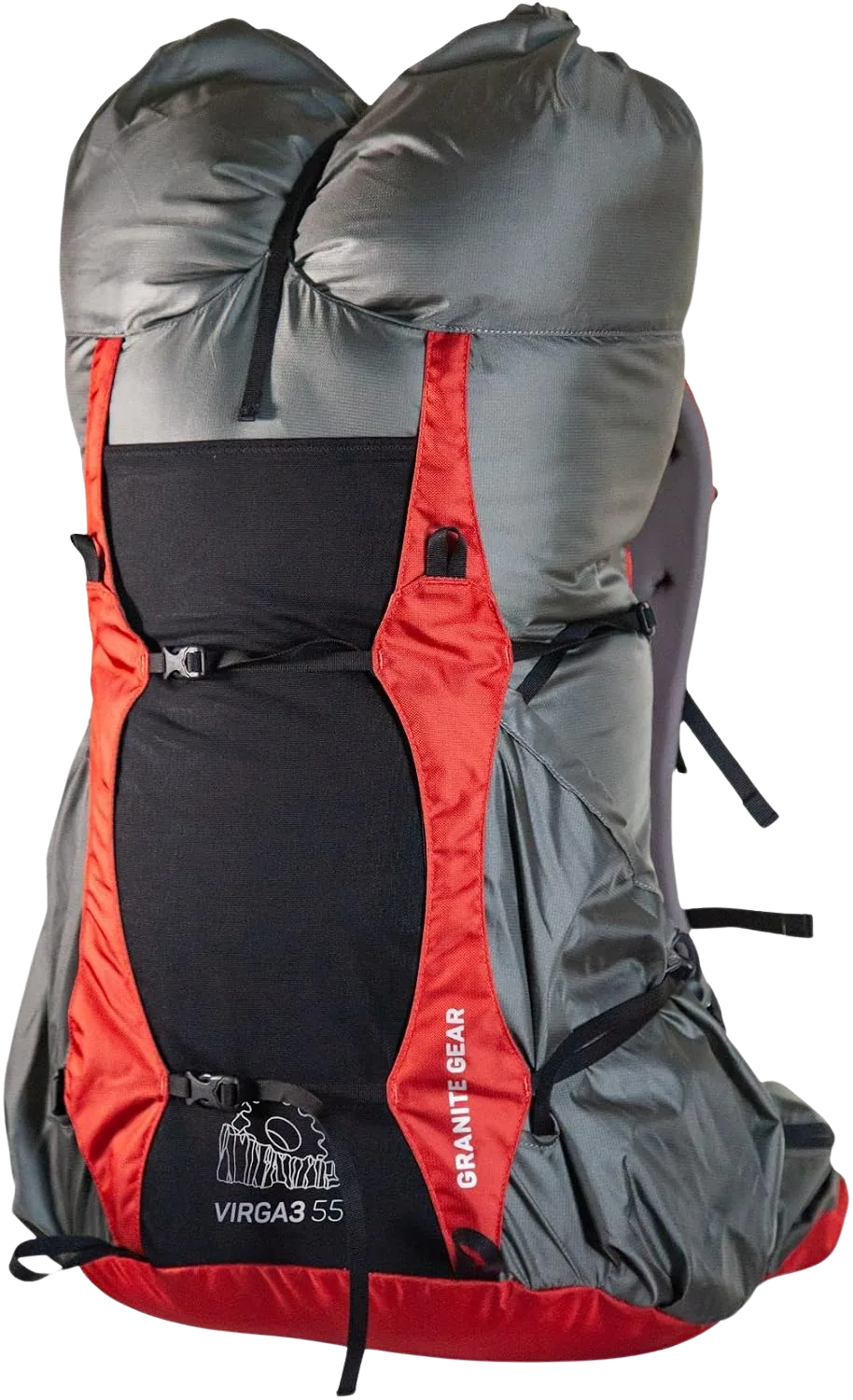
The Virga3 is what “under two pounds” should mean. Strip the lid and the collar and you’re near 19 ounces, which is cottage-pack territory at a mainstream price. The trade is honest: the webbing hip belt has minimal padding, so once you push past 25 pounds the comfort fades. Keep your Granite Gear Virga3 55 loads light and it disappears on your back, which is the highest compliment a frameless pack earns.
Best Overall — Osprey Exos Pro 55 and Eja Pro 55
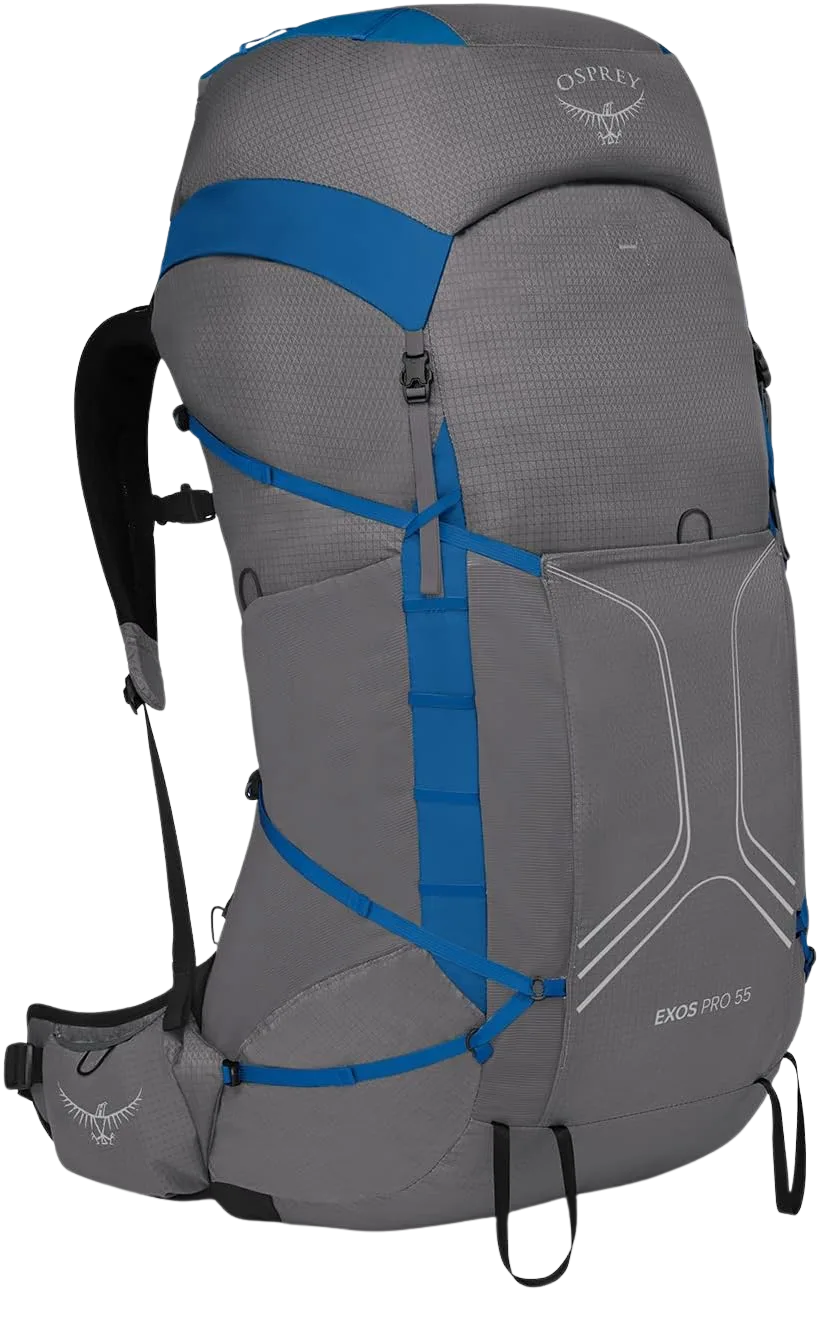
This is the pack to recommend to someone making their first jump into lightweight gear. The ventilated AirSpeed back panel keeps your spine off the load, which matters in summer heat, and the suspension carries a real 30-pound load far better than any frameless pack on this list. The honesty note: the men’s Osprey Exos Pro 55 lands at 33.2 ounces, so it nudges past two pounds, while the women’s Eja Pro 55 in the smaller size actually clears the line. If you can stand in a store, get fitted, and walk loaded laps, this is the pack that rewards it.
Best for Heavy Loads — Granite Gear Crown3 60
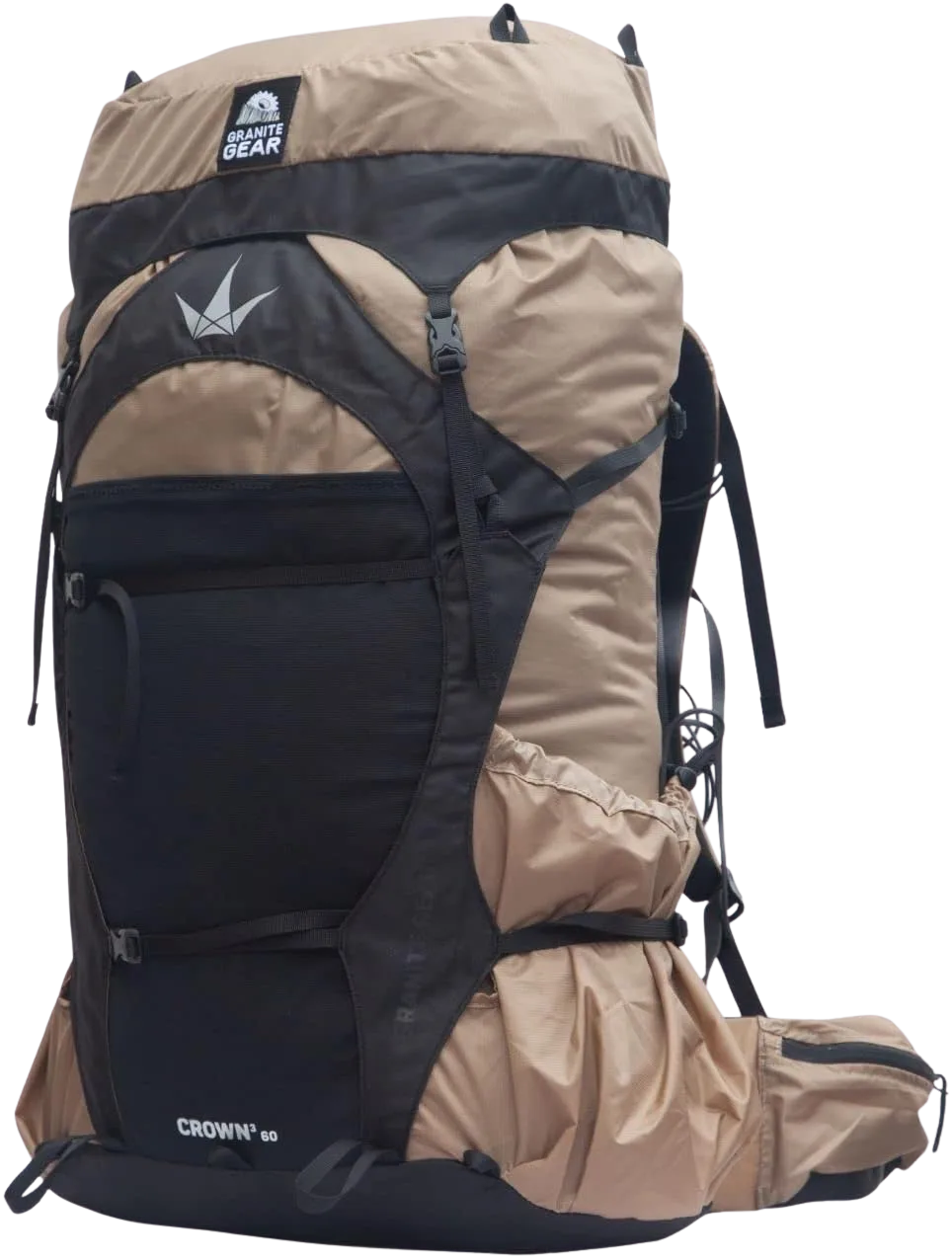
This one wears its weight honestly: with the lid on, it’s well past two pounds. But that’s the point. The Crown3 is the pack for desert water carries and eight-day food hauls, the trips where a frameless pack would punish you. The adjustable Re-Fit hip belt molds to your hips, and the Granite Gear Crown3 60 frame pops out when you want to run lighter, which makes it the most flexible high-load option here. It’s also the most approachable pack on the list for someone newer to backpacking.
Best Convertible — Six Moon Designs Swift V
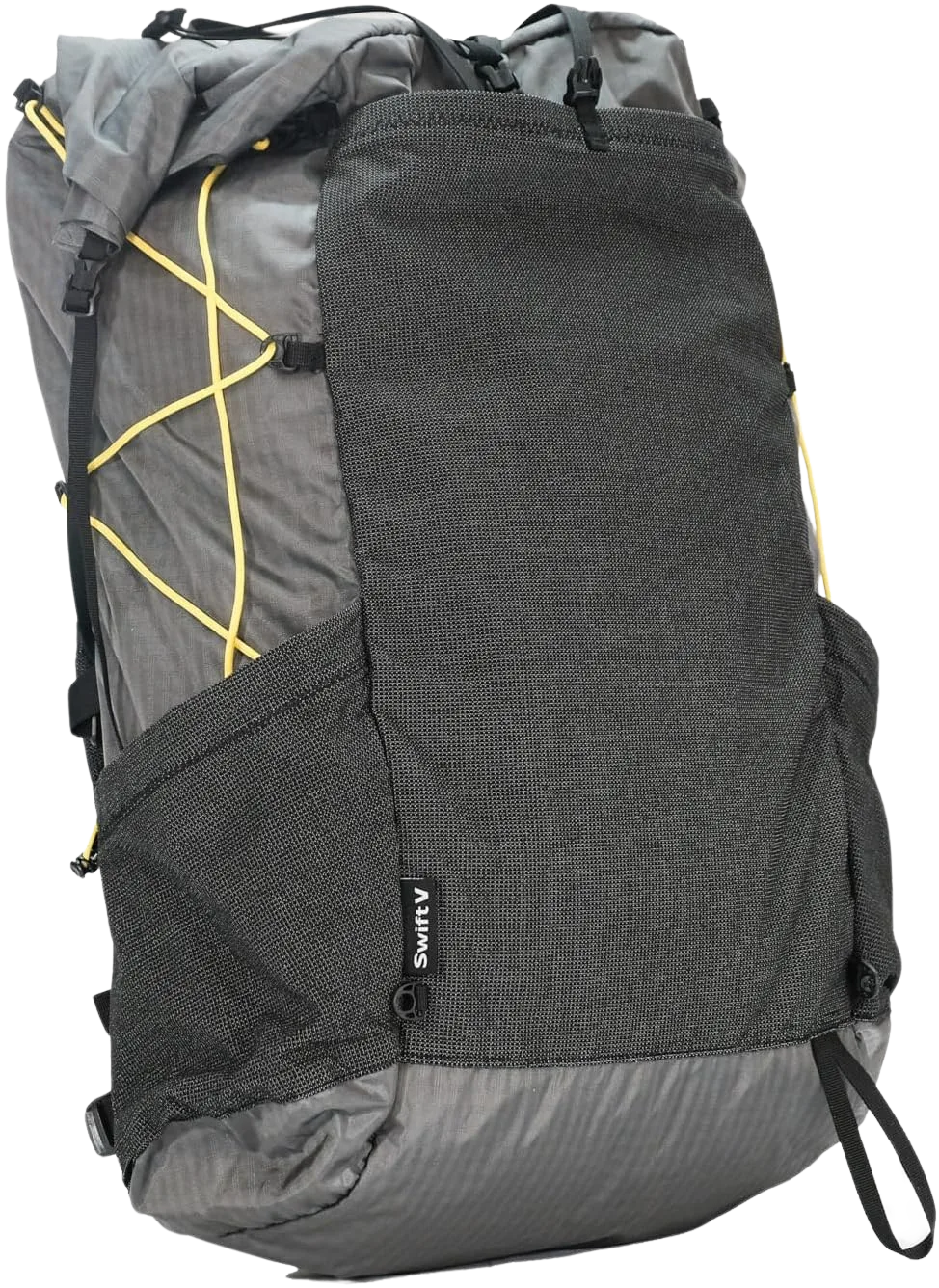
The Swift V solves the framed-versus-frameless argument by refusing to answer it. For a weekend with a light kit, you run it frameless at 34 ounces. For a longer haul with more food, the hoop stay goes back in and the pack carries the extra weight without complaint. That flexibility costs a little versus a dedicated design, but the Six Moon Designs Swift V earns its spot for the hiker whose loads swing trip to trip. The generous side and front pockets are a quiet bonus that experienced hikers notice fast.
Best Minimalist Roll-Top — Black Diamond Beta Light 45
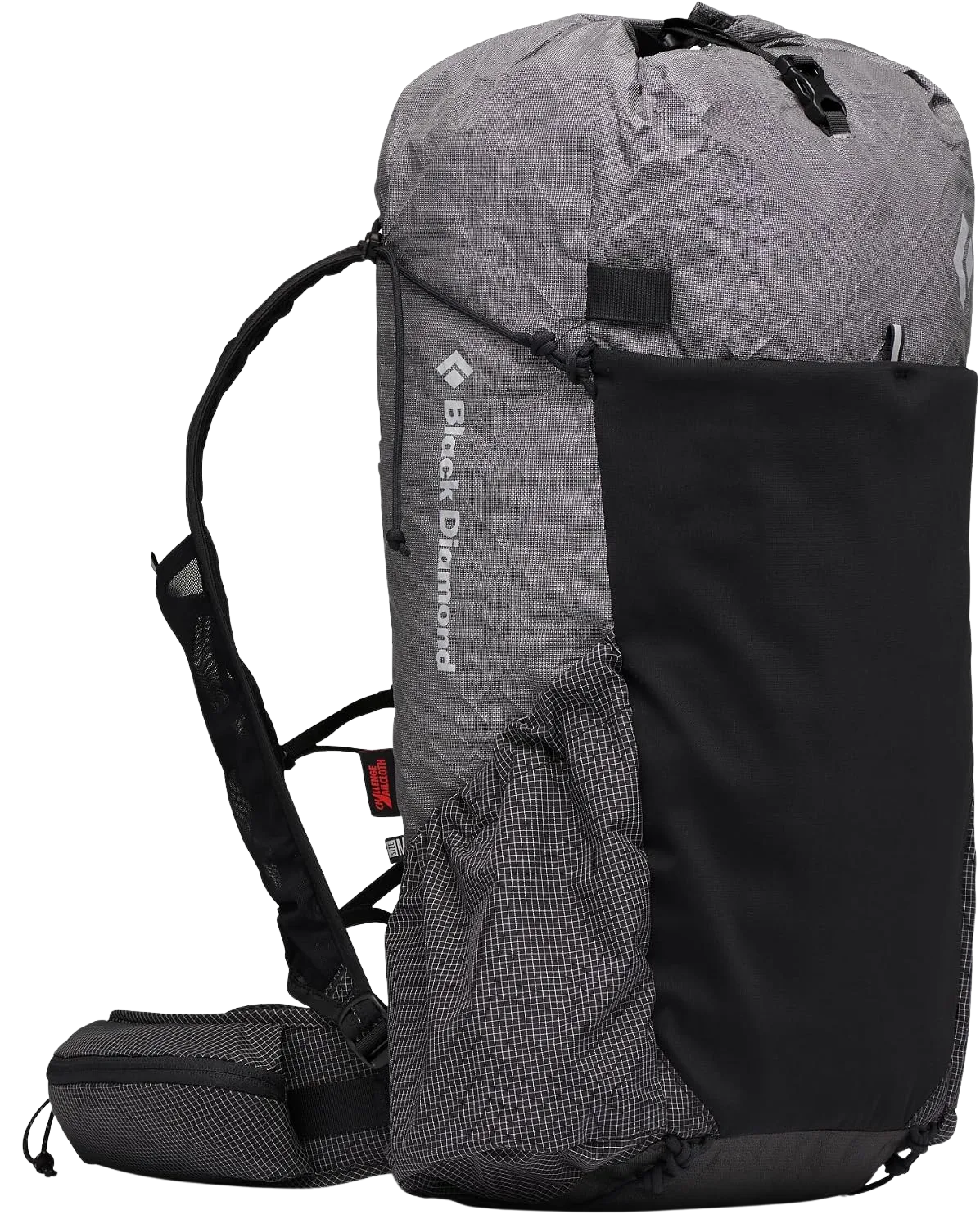
If your trips lean fast and light, the Beta Light gives you the minimalist roll-top experience without hunting down a small-batch maker. The vest-style harness keeps the pack tight to your back when you’re moving quickly, and the 45-liter body is sized for hikers who’ve trimmed their kit. Strip the hip belt and back panel and the Black Diamond Beta Light 45 becomes a near-frameless fastpacking pack. It carries best under about 35 pounds, so it’s not your desert-resupply hauler, but for moving fast it’s hard to beat at this availability.
Matching the Pack to the Weight You Carry
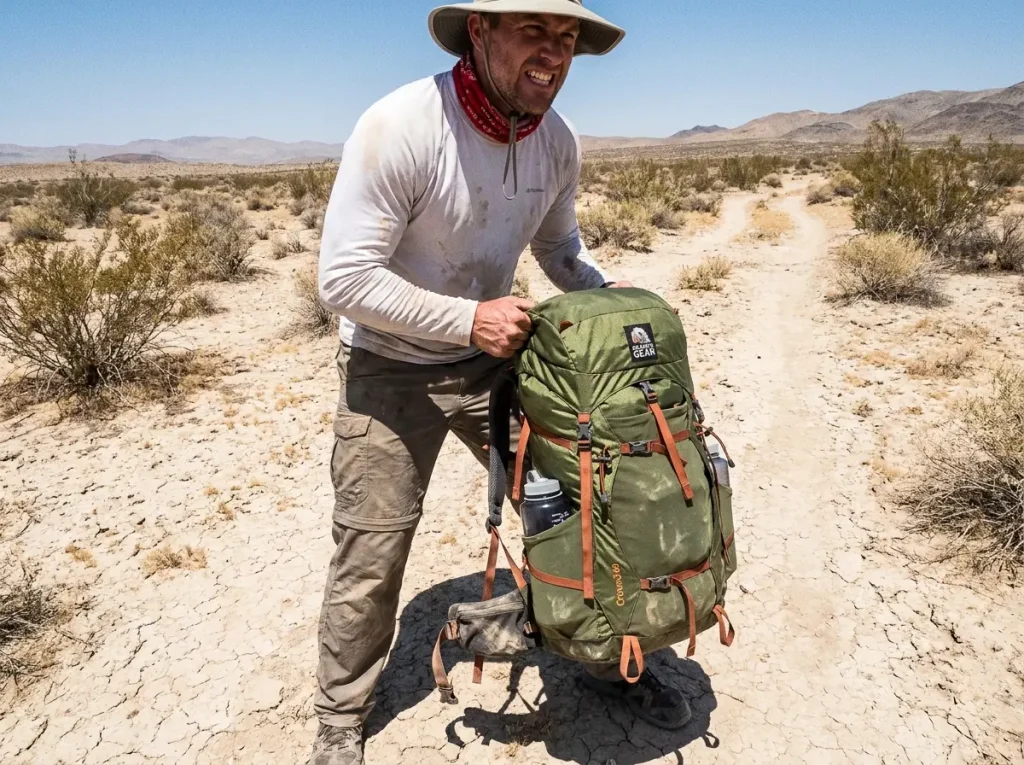
Theory only gets you so far. The pack that’s right for you depends on the load you actually carry, and the only way to know that load is to weigh it. Our complete guide to choosing a hiking backpack by size and fit covers the whole decision, but the load-first method below is where it starts.
Weigh Your Base Weight First
Your base weight is everything in the pack except food, water, and fuel. Add those consumables and your worst-case water carry, and you get the peak number that actually decides the pack. That peak, not your average day, is what matters. A pack that’s comfortable at 22 pounds and miserable at 32 will be miserable on the one day it counts.
Pack for your hardest morning, not your average one. Weigh the kit with a full food bag and the longest water carry on your route. Buy the pack that’s comfortable at that number, and every other day feels easy.
The Desert Water Carry Problem
Water weighs about two pounds a liter, and a dry stretch can mean carrying six to eight liters at once. Stack that on a week of food and a frameless pack blows right past its comfort ceiling. This is exactly the situation where the load ceiling matters more than the pack’s empty weight, and where a framed pack like the Crown3 quietly earns back every ounce it added.
Reading a Pack’s Real Load Ceiling
Every pack has a weight past which it stops carrying well, and the makers rarely advertise it plainly. From the field, the rough ceilings look like this: the Virga3 around 25 pounds, the Beta Light near 35, and framed haulers like the Crown3 up to 40 or so. A pack one notch short on support feels heavier than a slightly heavier pack that carries the load right, which is the trade-off most beginners get backward. For loading guidance grounded in real ergonomics, the American Hiking Society’s advice on loading a pack to your back is a solid non-commercial reference.
Torso Length Is the Spec Nobody Checks
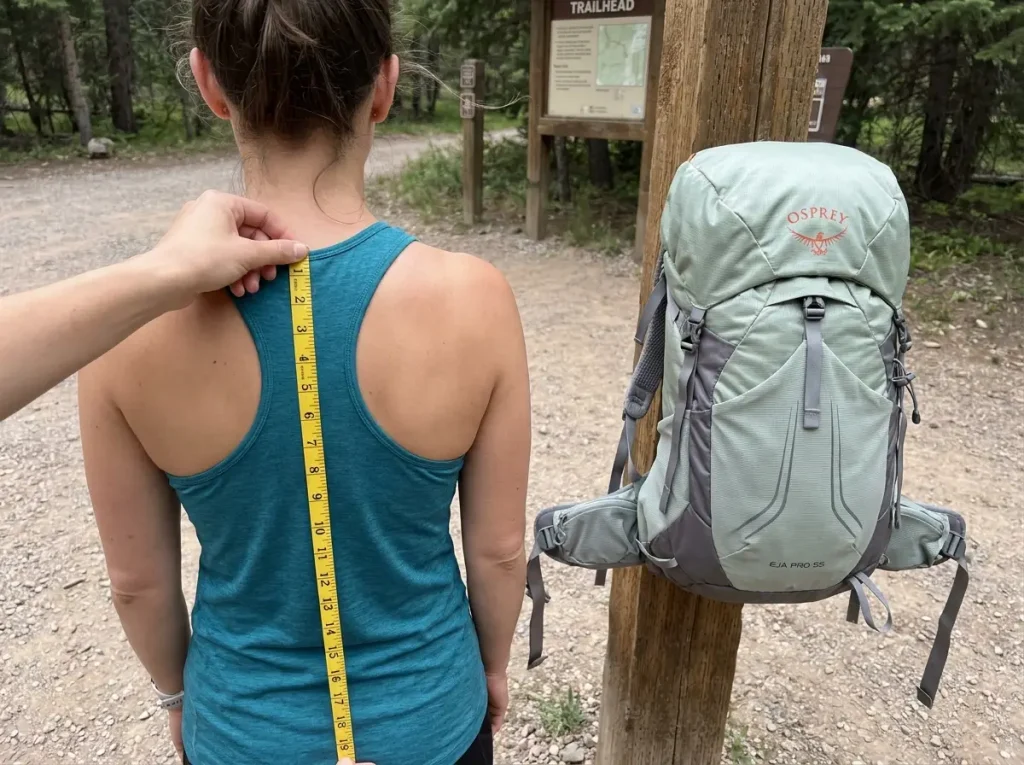
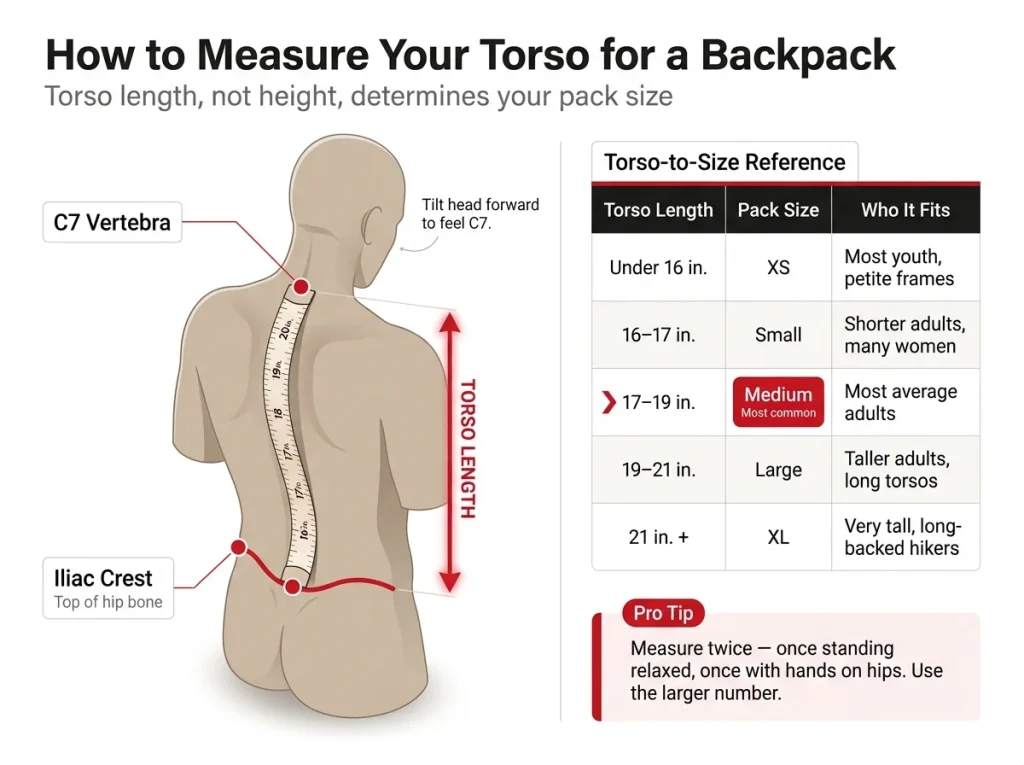
Here’s the part the weight obsession hides: fit matters more than grams. A pack one size off your torso length feels three pounds heavier than its spec, because the load rides on your shoulders instead of your hips. Get this number right and a heavier pack outperforms a lighter one that doesn’t fit.
How to Measure Your Torso (C7 to Iliac Crest)
Find the C7 vertebra, the bump that sticks out when you tip your head forward, and measure straight down your spine to the level of your iliac crest, the top of your hip bones. That distance, usually 14 to 21 inches, is your torso length, and it maps to a pack size. Our walkthrough on how to measure your torso length from the C7 vertebra to the iliac crest covers doing it solo when no one’s around to hold the tape.
Why Fixed-Size Ultralight Packs Are Unforgiving
Many ultralight packs come in fixed torso sizes with no adjustment between them. If you fall between a medium and a large, there’s no dial to split the difference, and a near-miss has no fix on trail. The story that circles in long-trail threads is the hiker who took a medium when they needed a large and spent the John Muir Trail with the hip belt blistering their iliac crest. Measure before you buy, and if you’re between sizes, favor the pack that offers an adjustable harness.
When the Pack Fits but Still Hurts
If the torso length is right and the pack still digs in, the problem is almost always the hip belt, not the frame. The belt should wrap the top of your hip bones and carry the weight there, not slide down or pinch. Dialing in the belt and load lifters is its own skill, and how to adjust the hip belt and load lifters so the pack rides pain-free walks through the sequence. You know it’s right when the belt wraps the crest and the shoulder straps just kiss the load, no gap and no dig.
The Fabrics Doing the Heavy Lifting
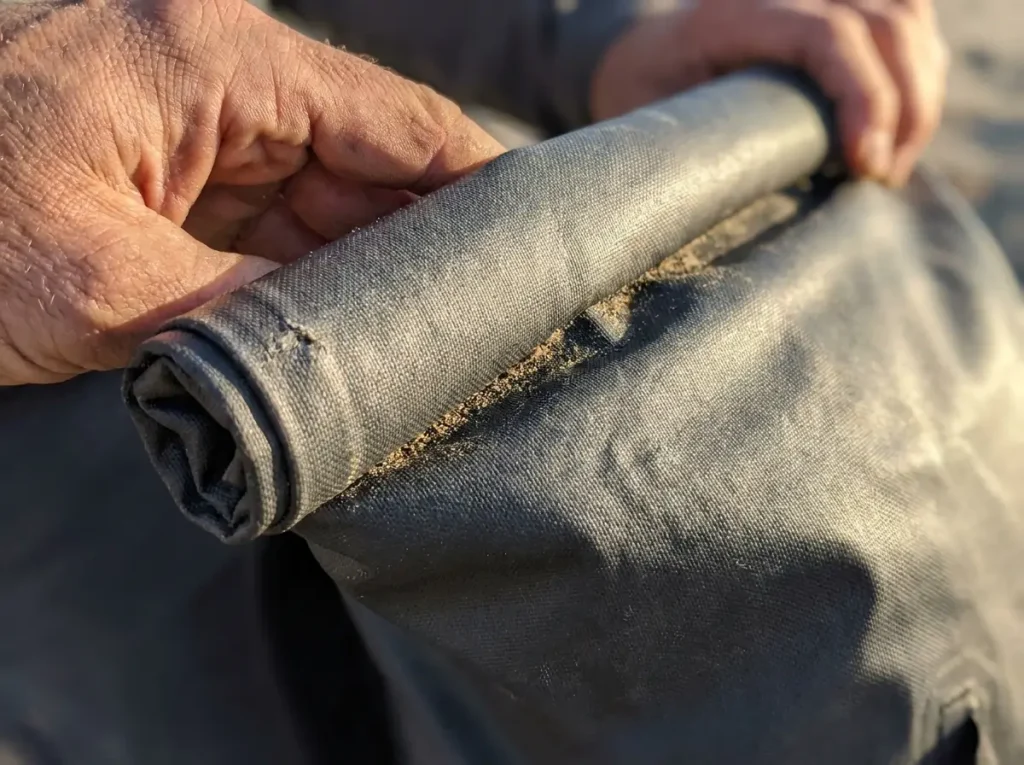
The fabric is half the price and most of the durability story, and each one has a failure mode the tag won’t mention. Knowing the materials tells you what you’re paying for and where the pack will eventually wear out.
Dyneema Composite vs Woven Dyneema
Dyneema Composite Fabric, the non-woven UHMWPE sheet stock often called DCF, is very light and naturally waterproof, but it abrades where it rubs rock and creases at the fold lines over time. Woven Dyneema trades a little of that weight back for far better abrasion resistance, which is why the premium roll-top packs use it. If you scramble on granite, the abrasion behavior matters more than the headline weight.
Ultra and Robic, the Nylon Workhorses
Most of the packs here, the Virga3, Swift V, and Crown3, use tough nylons like Robic or modern Ultra 200X fabric. They’re durable and hold up to abuse, but they aren’t fully waterproof, so they need a liner in sustained rain. That’s not a flaw, it’s a different trade: more toughness, a little more weight, and a thirty-cent fix for the water.
A trash-compactor bag liner inside your pack keeps gear drier than any rain cover, for about thirty cents. It can’t ride up, blow off, or leave the back panel exposed, and it doubles as a pack-float at a stream crossing.
Where Ultralight Fabrics Fail
Every light fabric ages somewhere. DCF wears at the abrasion points and the creases; coated nylons fail at the seams and the coating first. None of this is a reason to avoid ultralight gear, it’s a reason to line your pack, store it dry, and watch the high-wear spots. A pack liner beats a rain cover here too, and why a pack liner keeps your gear drier than a rain cover makes the case in full.
Bear Canisters and the Liters You Don’t Get
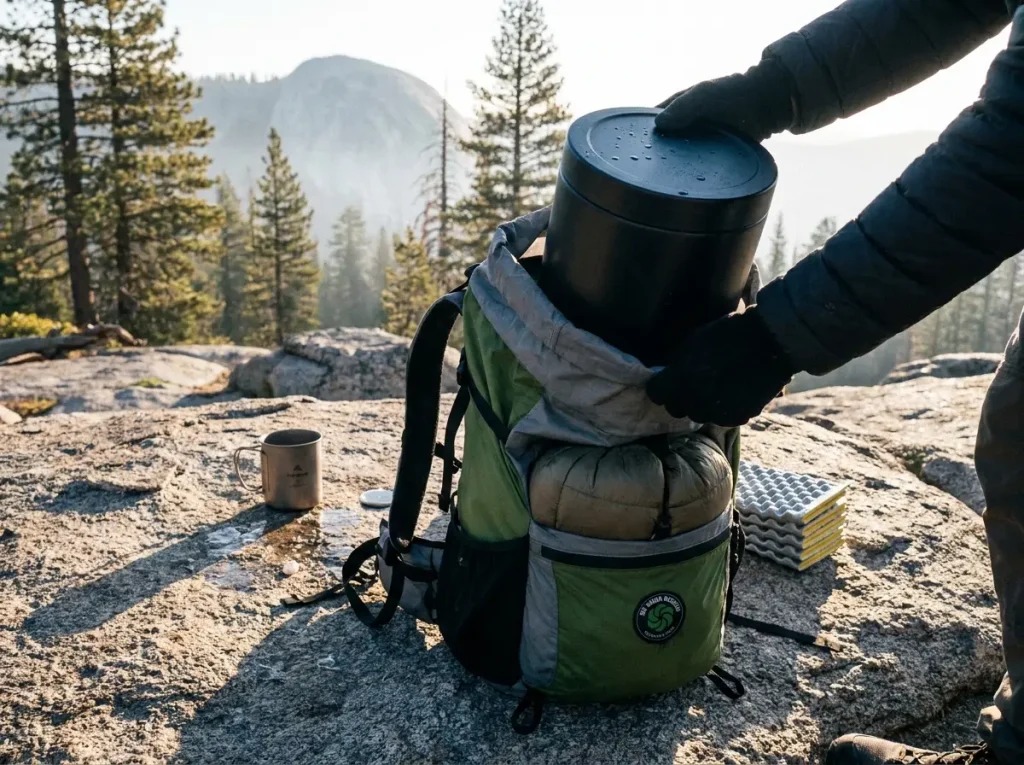
In a lot of the best backpacking country, you pick the bear canister before you pick the pack. Then you find out how many of those advertised liters you actually get to use.
Which Canisters Fit Which Packs
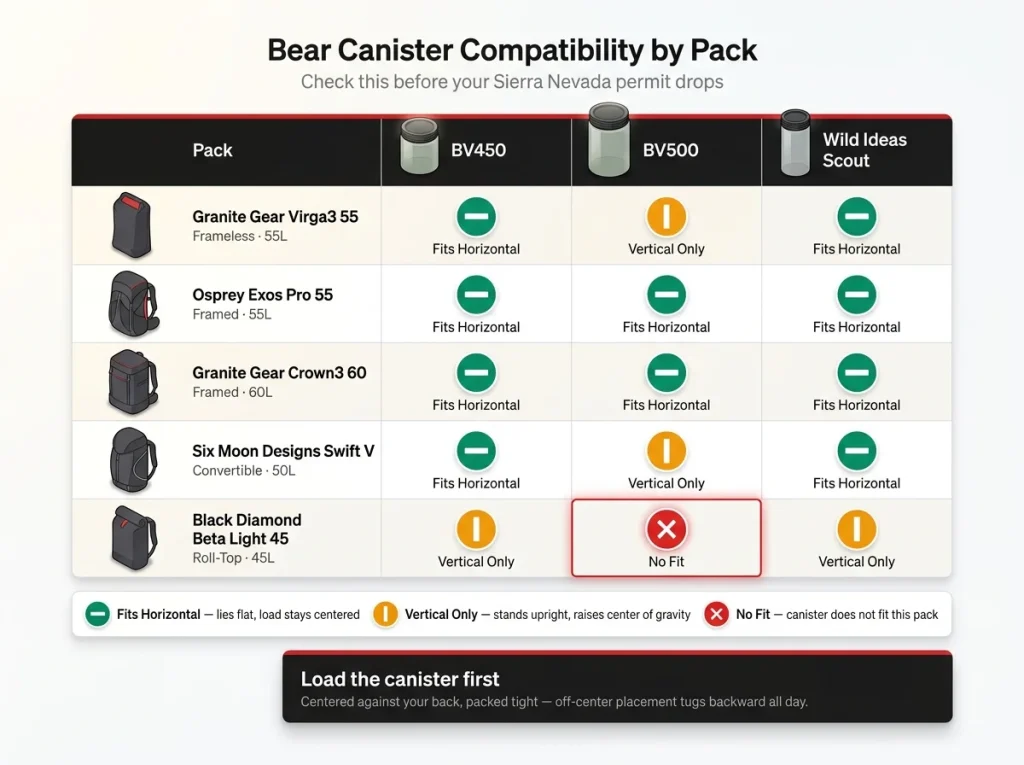
Bear canisters are required across much of the Sierra Nevada and parts of Wyoming, and that requirement shapes your pack choice before anything else. Storing your food in an approved canister isn’t only a regulation, it’s core Leave No Trace practice in bear country, since a bear that learns to raid camps for food usually ends up being removed by wildlife managers. A BV500 is a wide cylinder, and it doesn’t drop horizontally into every ultralight pack; some only take it standing vertical, which eats into your usable space. If you’re planning a route where it’s mandatory, where bear canisters are required across Northern California’s Sierra routes is worth checking before you finalize gear.
Horizontal vs Vertical Loading
A canister that lies flat packs easier and keeps your load centered; one forced upright pushes your other gear around it and raises your center of gravity. Before you commit to a pack, confirm the canister you’ll carry fits the way you want. BearVault’s own guidance for matching a canister to your pack lists the dimensions so you’re not guessing.
Load the canister first, centered against your back, and pack soft gear around it. Get it off-center or too high and the pack tugs you backward all day, the kind of slow drain that turns a good afternoon into a grind.
External Pockets and the Rain Problem
Those big stretch pockets that make a 35-liter body feel like 60 are not weatherproof. Food, layers, or a tent stashed outside the main body need their own protection when the weather turns. Plan for it, because the advertised volume that lives in external pockets comes with an asterisk you only notice in a downpour.
The Bottom Line on Sub-Two-Pound Packs
Three things decide this purchase. Weigh your real Day-1 load and let that number pick the pack, because the heaviest morning is the one that matters. Know which packs truly clear two pounds and which round past it, and choose the rounding you’re willing to accept and why. And remember that torso fit beats grams every time, since a pack that fits carries lighter than one that doesn’t.
Before you buy anything, do two things: measure your torso from the C7 vertebra to your iliac crest, and weigh a loaded pack on a luggage scale. Those two numbers tell you more than any spec sheet, and they cost nothing but five minutes at home.
Frequently Asked Questions
01What is the lightest backpack under 2 pounds?
Among mainstream packs you can buy easily, the Granite Gear Virga3 55 at 26.9 ounces is the lightest genuine 55-liter option. Strip its lid and collar and it drops near 19 ounces, though its frameless build carries best under about 25 pounds.
02Can you carry heavy loads in an ultralight backpack?
Yes, but only with a framed ultralight pack. A removable-frame model like the Granite Gear Crown3 60 carries up to roughly 40 pounds comfortably, while frameless packs start to hurt past 25. Match the frame to your heaviest expected load.
03Are ultralight backpacks durable enough for thru-hiking?
It depends on the fabric. Woven Dyneema and tough nylons like Robic handle a full thru-hike well, while non-woven DCF saves weight but abrades faster at rub points. Pick the fabric for your terrain, and line the pack to protect the contents.
04Do you really need a frame for a 55-liter pack?
Not always. The deciding factor is weight, not volume. Under about 25 pounds a frameless 55-liter pack works fine; above that a frame transfers load to your hips and saves your shoulders. Weigh your loaded kit before deciding.
05Is an ultralight backpack a good idea for beginners?
A framed ultralight pack with an adjustable harness, like the Osprey Exos Pro or the Crown3, is beginner-friendly. Skip the pure frameless packs until your base weight and packing skills are dialed, since they punish a heavy or sloppy load.
Risk Disclaimer: Hiking, trekking, backpacking, and all related outdoor activities involve inherent
risks which may result in serious injury, illness, or death. The information provided on The Hiking Tribe is for
educational and informational purposes only. While we strive for accuracy, information on trails, gear, techniques,
and safety is not a substitute for your own best judgment and thorough preparation. Trail conditions, weather, and
other environmental factors change rapidly and may differ from what is described on this site. Always check with
official sources like park services for the most current alerts and conditions. Never undertake a hike beyond your
abilities and always be prepared for the unexpected. By using this website, you agree that you are solely
responsible for your own safety. Any reliance you place on our content is strictly at your own risk, and you assume
all liability for your actions and decisions in the outdoors. The Hiking Tribe and its authors will not be held
liable for any injury, damage, or loss sustained in connection with the use of the information herein.
Affiliate Disclosure: We are a participant in the Amazon Services LLC Associates Program, an
affiliate advertising program designed to provide a means for us to earn advertising fees by advertising and linking
to Amazon.com. As an Amazon Associate, we earn from qualifying purchases. We are also an official affiliate partner
of Black Diamond Equipment via the AvantLink network. If you click on a Black Diamond affiliate link and make a
purchase, we may earn a commission at no additional cost to you. We also participate in other affiliate programs and
may receive a commission on products purchased through our links. Additional terms are found in the terms of
service.