In this article
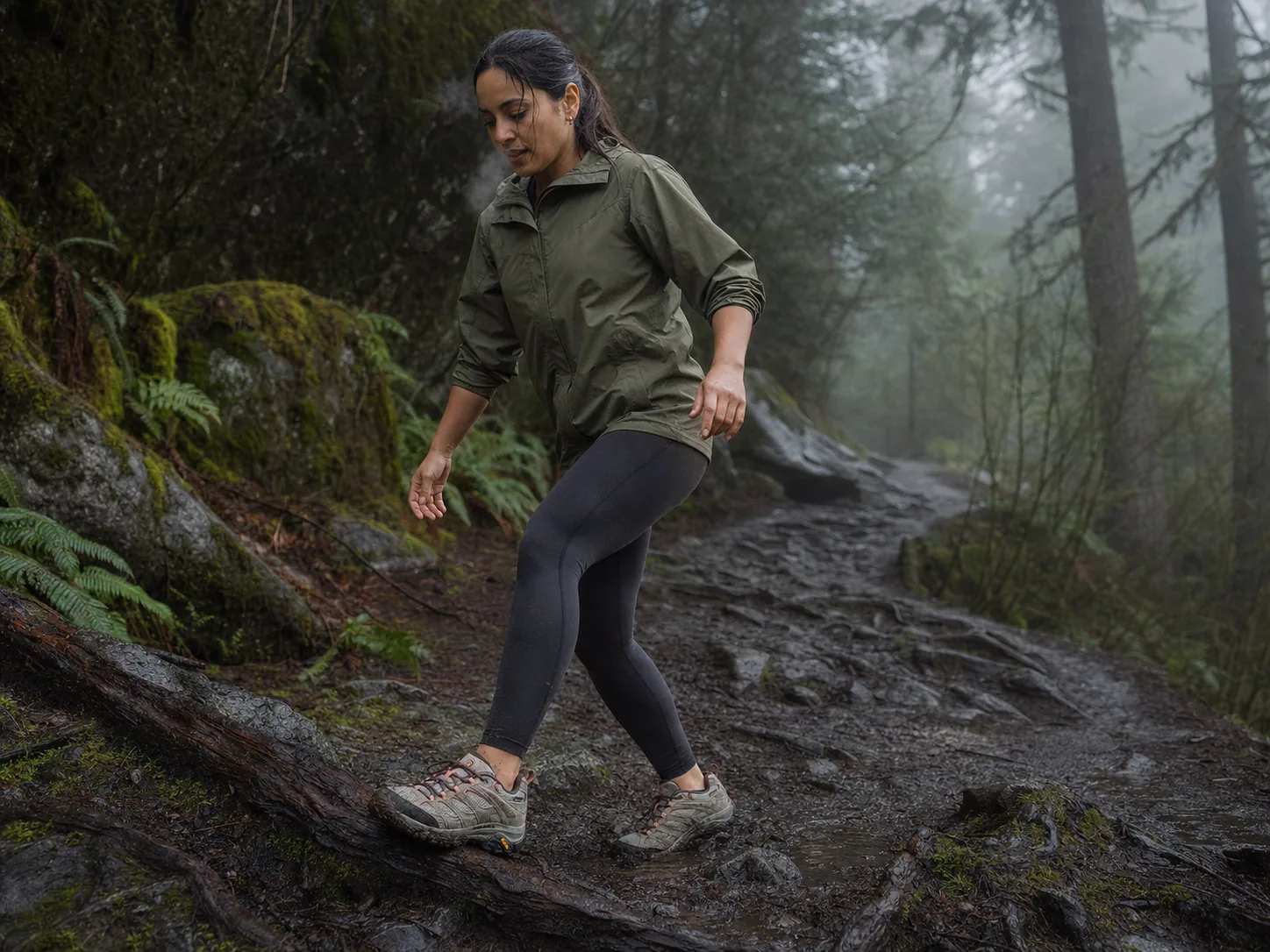
You’re three miles in when you feel it: cold water sloshing around your toes inside the shoe that was supposed to keep them dry. The stream looked ankle-deep, you stepped a little past that, and now your waterproof shoe is doing the one thing nobody warns you about, holding the water against your foot instead of letting it drain. Here’s the honest truth the big roundups skip: waterproof isn’t automatically the right call, and for plenty of hikers it’s the wrong shoe most of the year. The picks below are the women’s hiking shoes that keep coming up when women compare notes on wet trails, sorted by how you actually shop, plus the fit fixes and honest tradeoffs that decide whether a waterproof shoe helps you or just traps a puddle.
Here’s the fast version, sorted the way women actually shop for a trail shoe:
| Category | Shoe | Membrane | Best For |
|---|---|---|---|
| Best Budget | Merrell Moab 3 GTX Low | Gore-Tex | The safe first waterproof shoe |
| Best for Wide Feet | Oboz Sawtooth X Low | B-DRY | Roomy forefoot and toe box |
| Best Traditional Wide Fit | KEEN Targhee 4 Low WP | KEEN.DRY | Forgiving all-day fit |
| Most Technical Fit | La Sportiva Spire GTX | Gore-Tex | Precise, low-volume feet |
| Most Protective | Oboz Katabatic Low | B-DRY | Rough, all-terrain days |
| Best for Trail-to-Town | Danner Trail 2650 GTX | Gore-Tex | Looks good off the trail too |
The Best Women’s Waterproof Hiking Shoes, by Category
Two shoes win almost every roundup you’ll read: the Salomon X Ultra 5 GTX Low and the HOKA Anacapa 2 Low GTX. They earn it. The problem is you can’t reliably buy either one right now, both are sold out across sizes and colorways as of this writing, which is exactly why the picks below are the ones you can actually get, actually trust, and actually keep on your feet for a few seasons.
A quick warning before the list. Almost every one of these shoes feels great standing on the store carpet. Heel slip, the number-one fit complaint in women’s trail shoes, only shows up on descents, after miles, right when it starts chewing a blister into your heel.
So read the fit notes as carefully as the specs, and know that the lacing section further down fixes more heel problems than swapping shoes ever will. If you’re still deciding whether a low-cut shoe gives you enough ankle support, our take on why a low-cut shoe beats a boot on most trails is the place to start.

Best Budget — Merrell Moab 3 GTX Low-Cut

If you buy exactly one waterproof hiking shoe and never think about it again, make it the Merrell Moab 3 GTX. The Gore-Tex membrane keeps rain and short puddle-hops out, the M Select DRY lining handles the rest, and the standard-width last fits a broad range of feet without much fuss. The out-of-box comfort is the real selling point, most people wear these straight onto a trail with no hot spots.
Where it gives ground is precision and terrain. The cushioning is moderate rather than plush, and the fit runs standard, so genuinely wide or genuinely narrow feet will want one of the picks below. For general trail use in cool, wet conditions, though, this is the smart-money shoe, and the one to beat.
Best for Wide Feet — Oboz Sawtooth X Low B-DRY

If your toes feel crammed in most hiking shoes, the Oboz Sawtooth X is the fix. Oboz cuts a genuinely roomier last through the forefoot and toe box, and that extra room matters most on long descents when your foot slides forward and your toes need somewhere to go. The B-DRY waterproof membrane does the same job as Gore-Tex, and the supportive platform gives you a planted, stable ride on uneven ground.
It’s not the lightest shoe here, and the roomy fit that wide feet love will feel sloppy on a narrow foot. But for the reader whose real complaint is a pinched toe box, this is the one. If wide fit is your whole search, our full guide to wide-foot women’s hiking shoes goes deeper on the brands that cut roomy lasts.
Best Traditional Wide Fit — KEEN Targhee 4 Low WP

KEEN and Oboz are the two brands wide-footed hikers keep circling back to, and the KEEN Targhee 4 Low WP is KEEN’s take on a do-everything trail shoe. The KEEN.DRY waterproof membrane keeps you dry, the KEEN Original Fit gives the forefoot room to spread, and the signature rubber toe cap saves your toes on rooty, rocky trails.
The tradeoff is a slightly bulkier, less nimble feel than a technical shoe like the La Sportiva below. If you want a precise, locked-in ride you’ll feel boxy here. If you want all-day comfort and a toe box that leaves room to breathe, it’s hard to beat.
Most Technical Fit — La Sportiva Spire GTX

If the Merrell and Oboz fits feel like you’re swimming, the La Sportiva Spire GTX is the antidote. This is a technical hiking shoe with a precise, low-volume last that locks a narrow-to-standard foot in place, so you can move fast over rough ground without your foot sliding around. The Matryx upper weaves in Kevlar for abrasion resistance, and the Gore-Tex Surround construction vents better than most fully-waterproof shoes.
It’s the priciest fit-focused pick here, and the snug last will feel punishing on a wide foot. For hikers with lower-volume feet who want performance over plushness, it’s the standout, and it holds up to serious mileage.
Most Protective — Oboz Katabatic Low B-DRY

When the trail turns to mud, scree, and rock, the Oboz Katabatic Low is the Sawtooth turned up a notch. Deeper, more aggressive lugs grab loose ground that a moderate tread would slide across, and the more structured upper protects the sides of your foot from rock strikes. The B-DRY membrane handles the wet, and you still get an Oboz-roomy front end.
The extra structure adds a little weight and stiffness, so it’s overkill for smooth, easy trails. On genuinely rough, technical terrain, though, it’s the shoe that keeps its footing when the moderate picks start slipping.
Best for Trail-to-Town — Danner Trail 2650 GTX

Not every hike ends at the trailhead, and the Danner Trail 2650 GTX is the pick for anyone who wants a shoe that doesn’t scream “gear” the moment you leave the mountain. The clean suede-and-textile upper looks at home in town, but underneath it’s a real trail shoe with Gore-Tex waterproofing and a grippy Vibram outsole. It’s lighter and more nimble than the burly picks, which is part of why it wears so well all day.
The style-first build means it’s less protective than the Katabatic and less locked-in than the Spire on truly technical ground. For everyday trails and the errands after, it’s the one you’ll actually reach for. If good looks are high on your list, our roundup of hiking shoes that still look good off the trail has more in this lane.
How Waterproof Shoes Actually Keep Water Out

Here’s the thing nobody explains when they’re selling you on Gore-Tex: the same membrane that keeps rain out is exactly why your feet cook on a hot climb. Understanding that tradeoff is the difference between buying the right shoe and being annoyed at the right shoe.
A waterproof membrane works on a simple size trick. The pores in a Gore-Tex layer are roughly 20,000 times smaller than a water droplet, so liquid rain can’t push through, but they’re still about 700 times larger than a water vapor molecule, so your sweat can (in theory) escape as vapor. That pore geometry is the whole mechanism, not marketing, just very small holes doing physics. If you want the full picture, how the Gore-Tex membrane is actually built lays out the construction from the manufacturer’s side.
The proprietary membranes you’ll see, KEEN.DRY, B-DRY, M Select DRY, Omni-Tech, all do the same job with the same basic trick. The brand name on the tag matters far less than how the shoe fits and how well you maintain the outer coating. Don’t pay a premium chasing a specific membrane logo when a well-fitting shoe with a proprietary one will keep you just as dry.
Now the catch. Breathability isn’t a fixed number, it drops as you heat up and work harder. Research on waterproof-breathable fabrics has shown vapor permeability falls as temperature and exertion rise, which means your “breathable” shoe breathes worst exactly when you’re sweating hardest on a hot uphill.
That’s the core tradeoff of the whole category, and it’s why so many hikers feel betrayed by an expensive shoe on a summer climb. Our deeper look at why your Gore-Tex shoes still feel wet inside unpacks that clammy feeling.
There’s a term for the moment your shoe stops breathing: wetting out. When the outer fabric gets fully soaked, it blocks the membrane’s pores from the outside, so breathability dies even though the membrane itself is fine. You can feel it happen on a long wet descent, the shoe goes from warm-damp to cold-clammy. That’s not a defect, that’s the outer fabric saturating.
There’s real tech packed into a modern trail shoe beyond the membrane, from the midsole foam to the outsole rubber. But the membrane is the part buyers overpay for and understand least, so it’s worth getting straight before anything else.
The PFAS Question Nobody Else Answers Straight
Somewhere between reading reviews and clicking buy, a lot of hikers hit the same quiet worry: are there forever chemicals in my shoes? Five of six major roundups just skip it. Here’s the straight answer.
PFAS stands for a family of “forever chemicals” long used in the durable water repellent coatings on the outside of waterproof gear, and in some membranes themselves. They’re the reason a jacket beads water, and the reason environmental and health groups have pushed hard to phase them out. The concern is real, but the picture in 2026 is very different from a few years ago.
Here’s what actually changed. Gore-Tex membranes have been PFAS-free since 2023. In 2025, California and New York passed laws banning PFAS in apparel and textiles, and because those two states are such a big slice of the gear market, brands reformulated nationwide rather than make two versions of every product.
Patagonia, to name one concrete example, reached 100% PFAS-free waterproof membranes and finishes by spring 2025. The shift happened fast because it was driven by regulation, not brand goodwill, which is exactly why it’s durable and not a passing trend. The industry’s move away from PFAS in textiles has the standards-side detail if you want to verify it.
So does that mean every waterproof shoe on the shelf is clean? Not quite. For a shoe bought new from a major brand in 2026, the forever-chemicals fear is largely outdated.
The caveats worth knowing: budget and off-brand shoes with cheaper DWR coatings may not have reformulated yet, and older or discontinued-model stock still sitting in warehouses can carry legacy PFAS-based treatments. It’s a check-the-brand-and-model-year situation, not a blanket all-clear.
The honest, anti-panic takeaway: you don’t need to throw out a shoe you already own and love. This matters most at the point of a new purchase, where choosing a current-model shoe from a brand that’s completed the transition quietly solves the whole problem. And when it’s time to re-treat a shoe yourself, PFAS-free reproofing sprays are now the standard, so you can restore water repellency without reintroducing the chemicals you were trying to avoid.
Getting the Women’s Fit Right
Two shoes in the same size can feel like completely different footwear, and the reason usually comes down to the last, the foot-shaped mold a shoe is built around. A women’s-specific last isn’t a marketing sticker, it’s a different shape, and knowing where those differences live saves you from a shoe that fits everywhere except the one spot that matters.
Women’s lasts generally run with a narrower heel, a higher instance of a high arch, and different forefoot and toe-box volume than a men’s or unisex last. The narrow heel is the big one. Pair a narrow heel with a generically-shaped shoe and you get the single most common women’s fit complaint in every roundup out there: heel slip. Your heel lifts and drops with each step, and that little up-and-down motion is what grinds a blister into you on a long day.
Sizing for a waterproof shoe specifically has a couple of wrinkles. The membrane adds a hair of stiffness and warmth, so size for the hiking socks you’ll actually wear, and leave a little room up front, roughly a thumb’s width past your longest toe, so your foot has somewhere to go when the trail points downhill. Dialing in a shoe for a narrow heel is its own small skill, and it’s worth learning before you blame the shoe.
The store-fit trap is the thing that gets everyone. A shoe that feels locked-in standing on carpet can still slip the first time you point it downhill, because heel slip only reveals itself on descents, after miles. So test the fit properly: do the thumb’s-width check while standing and leaning forward, not sitting, and if the store has a ramp or stairs, use them. A two-sock setup that cuts heel friction is cheap blister prevention for anyone whose heel runs narrow.
Before you decide a shoe doesn’t fit your heel, try it on late in the day. Feet swell over hours of standing and walking, and a shoe that fits perfectly at 9 a.m. can feel tight by evening, which is closer to how it’ll feel deep into a hike. Shopping with already-swollen feet gives you the honest fit, not the best-case one.
The Heel-Slip Fix That Actually Works
Every roundup names heel slip as the top women’s fit complaint. Not one of them tells you how to fix it. That’s a strange gap, because the fix is free, takes thirty seconds, and lives in the laces you already have.
First, the mistake. When a shoe slips at the heel, most people either return it or size down. Sizing down is usually wrong, it cramps your toes on descents to solve a problem at the other end of your foot. The real fix is a lacing pattern called the heel-lock, or the runner’s loop, and it uses a part of the shoe you’ve probably never touched.
Look at the top of your shoe’s lacing, near the ankle. There’s usually one extra eyelet set slightly back from the rest, the one everyone ignores. That “surprise” eyelet is the whole trick. Here’s the pattern:
- Lace the shoe normally up to the second-from-top eyelet on each side.
- Instead of crossing over, take each lace straight up and thread it through the extra top eyelet on the same side, leaving a small loop of lace on the outside of the shoe.
- Now cross each lace over and thread it through the opposite loop you just made.
- Pull both laces down and out to cinch the loops tight, then tie as normal.
What that does is pull the top of the shoe snug around your ankle and lock your heel down into the heel cup, without choking your forefoot. The technique comes straight from standard running-shoe lacing guidance, and it’s the same move ultrarunners use to keep their heels planted for a hundred miles.
When does it work, and when doesn’t it? Heel-lock lacing fixes mild-to-moderate slip, which is most of what women’s-last shoes throw at you. What it can’t fix is a heel pocket that’s simply too big in volume for your foot, if the shoe is swimming back there no lacing will save it, and that’s your signal to try a different shoe (a narrower-heeled model like the La Sportiva above).
For everything short of that, this is the answer. If you want the fuller walkthrough with more heel-hold variations, our downhill heel-lock lacing walkthrough has it.
You’ll feel the difference on the very first descent. A properly-tied heel-lock makes your heel “sit down” into the cup and stay there, so tie it before a downhill stretch, not after your heel’s already rubbing raw. Once you learn the pattern, it takes about as long as a normal bow.
How Deep Is Too Deep for a Low-Cut Shoe
There’s an exact moment when “waterproof” flips from asset to liability, and it happens much lower than you’d think. Knowing where that line sits is the difference between a shoe that keeps you dry and one that turns into a bucket strapped to your foot.
Here’s the mechanism. A waterproof shoe only protects up to its collar, the top edge where the shoe meets your ankle. Below that line, water stays out. Go one inch above it, and water pours in from the top, and now the same one-way membrane that kept water out does something cruel: it keeps the water in.
The physics that block liquid from entering also block it from draining, so a flooded waterproof shoe holds a cold puddle against your foot for hours. Trail hikers have a name for it, the bucket effect, and it’s why a flooded waterproof shoe is genuinely worse than a mesh one.
So what’s the real depth limit? For any footwear, the National Park Service advises against crossing water deeper than knee height whenever there’s an alternative. But for a low-cut shoe, your waterproofing has functionally “already failed” far below that, right around ankle-to-shin height, which is where the collar sits.
Knee-deep is the hard safety ceiling, the collar line is where the shoe stops helping you. Those are two very different numbers, and the shoe stops helping first.
This is also where gear meets judgment, because depth isn’t the only thing that decides a crossing. The Park Service suggests a simple field test: toss a stick into the water upstream, and if you can’t out-walk its current, the crossing isn’t safe no matter how shallow it looks. And water is almost always deeper and faster than it appears from the bank, so assume both by default rather than trusting the visual read. Both habits come straight from the pros, and the National Park Service’s guidance on safe river crossings plus the American Hiking Society’s stream-crossing advice are worth reading before your next wet route.
Gaiters get oversold here, so let’s be straight about them. A good pair of gaiters with a tight ankle seal buys you a few inches of extra margin above the collar, useful for wet grass, shallow splashes, and light snow. They do not turn a low-cut shoe into a wading boot, and they won’t survive you standing in a stream.
If you know a route has real crossings, the honest move is different footwear entirely. A dedicated drainage shoe that lets water flow straight through beats a flooded waterproof one every time, which is the whole argument in our piece on why drainage shoes beat waterproof ones for wet crossings. And getting your gaiters to actually seal at the ankle matters more than which pair you buy.
Why Your Waterproof Shoes Stopped Being Waterproof
“My expensive shoes soaked through after one season” is one of the most common gear complaints out there, and it’s almost always a misdiagnosis. The membrane rarely fails. What fails is the coating on the outside, and that’s a fix, not a funeral.
The outer fabric of your shoe has a treatment called DWR, durable water repellent, that makes water bead up and roll off. That coating wears off from dirt, skin oils, and plain abrasion long before the internal membrane ever quits. So when water stops beading and starts soaking into the fabric, the shoe hasn’t failed, its DWR has just worn thin. The tell is exactly that wetting-out we covered earlier: the fabric goes dark and saturated instead of beading, and suddenly the shoe feels clammy and heavy.
The fix is simple and cheap. Clean the shoe first, because reproofing over dirt just seals the dirt in, then apply a spray-on DWR treatment to the dry-ish upper. The Nikwax Fabric & Leather Proof is the standard pick here, it’s PFAS-free and safe for Gore-Tex and the proprietary membranes alike, so you’re restoring water repellency without reintroducing forever chemicals. One treatment brings the beading right back.
Timing matters more than a calendar. Reproof when the beading stops, not on a fixed schedule, which for a regularly-used shoe usually works out to a couple times a season. If you want the deeper comparison of methods, wax vs spray reproofing compared breaks down which treatment suits which upper.
Some DWR sprays work best on a slightly damp shoe and set faster with gentle heat, a few minutes with a hair dryer on low, or just a warm room. Check the bottle. Reproofing a bone-dry shoe in a cold garage is the most common reason a treatment seems like it “didn’t work.”
The takeaway that saves you money: a reproof extends a good shoe’s life by seasons. You’re not buying a new pair because the old one “died,” you’re spending a few minutes and a few dollars to bring it back.
Do You Even Need Waterproof Shoes?
Here’s the section every competitor is too invested to write, because talking you out of a purchase doesn’t sell shoes. But for a real chunk of hikers, waterproof is the wrong shoe, and you deserve to know if you’re one of them before you spend the money.
Start with a simple framework. Waterproof wins for cold, wet, and shoulder-season hiking, snow-edge conditions, and short puddle-and-mud days where you’re stepping over water, not through it. Breathable non-waterproof wins for hot and humid climates, routes with frequent deep crossings where drain-and-dry beats stay-dry, and high-mileage summer hiking where sweat management is the real challenge. Match the shoe to your climate and your trails, not to the word on the box.
The trap catches humid-climate hikers hardest. If you hike the Southeast or the mid-Atlantic in summer, marketing will happily sell you a waterproof shoe, and then you’ll spend most of the year with permanently damp, overheated feet, because the membrane traps sweat it can’t vent fast enough in the heat. For a lot of those hikers, a breathable shoe that gets wet and dries in a mile is flatly more comfortable than a waterproof one that never quite breathes.
That drain-and-dry logic is the whole case. A flooded mesh shoe is dry again within a mile of walking, a flooded waterproof shoe stays wet for hours (there’s the bucket effect again). So if your trails involve regular water, the “waterproof” label is working against you. For the hiker who realizes waterproof isn’t their answer, a breathable, max-cushion trail runner is the shoe to point to.

The HOKA Speedgoat 6 in its non-waterproof version is that shoe: breathable mesh that drains fast, a big cushioned midsole for long days, and grippy Vibram Megagrip underfoot. It won’t keep out a cold drizzle the way a membrane does, that’s the point. The bottom line you can act on: match the shoe to your conditions, not to a label, and let your climate and how wet your trails really get make the call for you.
What to Look for When You Buy
Once you’ve stopped obsessing over the membrane, the rest of the shoe decides whether you actually enjoy the hike. A waterproof shoe with bad traction is just a dry way to slip, so here’s what matters after the waterproofing question is settled.
Traction comes down to lug depth, the lug pattern, and rubber compound matched to your terrain. Deep, widely-spaced lugs bite mud and loose dirt, a stickier rubber like Vibram Megagrip grips wet rock, and a moderate all-rounder handles mixed trail. Think about where you actually hike most, not the one epic route you do twice a year.
Support and structure are about how much stiffness you genuinely need. A softer, more flexible shoe feels great on smooth trail but lets your foot work harder on rough ground, while a stiffer midsole and a shank protect you over rock and roots. Midsole foam matters too: EVA is lighter and cushier but packs out sooner, while PU is firmer and lasts longer. Neither is “better” until you know your mileage and terrain.
Durability shows up first at the flex creases and the toe bumper, which is where waterproof shoes usually crack or delaminate. A leather or nubuck upper generally outlasts a lightweight mesh one, at the cost of some breathability and weight, so weigh how long you want the shoe to last against how cool you need your feet to run.
Break-in and support for your feet round it out. Modern low-cut waterproof shoes need very little break-in, and here’s the rule that saves you real pain: if a shoe hurts in the store, it will hurt on trail, so never try to “break through” genuine pain. If you deal with arch pain or plantar fasciitis, prioritize a supportive footbed or plan to swap in an aftermarket insole that matches your arch. Buy for the trail you actually hike most, and the rest sorts itself out.
Budget vs Premium, Which Tier Is Right for You
The most expensive shoe on this page isn’t the “best” one. The best one is whichever fits your foot and your trails, and plenty of experienced hikers happily stay in a mid-tier shoe for years. Here’s how to think about tiers without chasing price for its own sake.
Think of the picks in lanes rather than dollar amounts. The reliable-starter lane is the Merrell Moab 3, forgiving and proven. The wide-fit workhorse lane is the Oboz and KEEN, roomy and comfortable for the long haul.
The technical, precise lane is the La Sportiva, for specific feet and rough ground. The style-crossover lane is the Danner, for a shoe that lives on and off the trail. Each lane solves a different problem, and paying more only helps if it buys you the fit or capability you actually need.
Who should stay budget? Occasional and day hikers, beginners, and anyone still learning their own foot shape. A forgiving mid-tier shoe is the smart money there, because you don’t yet know which premium feature is worth paying for, and a great-fitting affordable shoe beats a poorly-fitting expensive one every day.
When should you pay up? Specific fit needs like a narrow or low-volume foot, frequent rough or technical terrain, or a shoe you’ll live in several days a week, those are the cases where a premium last or tougher build earns its keep.
The honest truth underneath all of it: a premium shoe in the wrong shape is a waste, and a budget shoe in the right shape is a bargain. Spend the savings where they quietly matter more, good socks and, if your feet want them, better insoles, which often do more for comfort than a pricier shoe. And if you’re shopping for a partner or family member while you’re at it, our men’s waterproof shoe picks cover the same ground on the other side.
The Bottom Line
Buy for your foot shape and your actual trails, not for the word “waterproof” stamped on the box. That single shift solves more bad-shoe purchases than any spec sheet.
Remember that the two most common “this shoe failed me” complaints have free or cheap fixes: heel slip usually dies with a proper heel-lock lacing, and a shoe that “stopped being waterproof” almost always just needs its DWR reproofed. And if you hike hot and humid, give yourself permission to skip the category entirely, breathable often beats waterproof most of the year.
Before your next wet hike, try the heel-lock lacing on the shoes already in your closet. It costs nothing, takes thirty seconds, and you’ll feel the difference on the very first descent.
Frequently Asked Questions
01Are waterproof hiking shoes worth it for women?
They are worth it for cold, wet, and shoulder-season hiking, but not for hot or humid climates where breathable shoes serve you better most of the year. Match the shoe to your conditions, not to the label on the box.
02Do waterproof hiking shoes make your feet sweat more?
Yes. A waterproof membrane breathes worse as you heat up and work harder, so feet run warmer and damper on hot climbs than they would in a mesh shoe. That reduced breathability is the core tradeoff of the whole category.
03How long do waterproof hiking shoes stay waterproof?
The membrane usually outlasts the shoe, but the outer DWR coating wears off in a season or two, which is when water starts soaking in. A clean-and-reproof restores it, so it is maintenance, not failure.
04What is the best waterproof membrane for hiking shoes?
Gore-Tex is the best known, but proprietary membranes like KEEN.DRY, B-DRY, and M Select DRY do the same job. Fit and DWR upkeep matter more than which membrane name is printed on the box.
05Can a waterproof shoe be both waterproof and breathable?
Somewhat. The membrane lets vapor out while blocking liquid water, but breathability drops sharply as heat and exertion rise. No waterproof shoe breathes as well as an open mesh one on a hot day.
Risk Disclaimer: Hiking, trekking, backpacking, and all related outdoor activities involve inherent
risks which may result in serious injury, illness, or death. The information provided on The Hiking Tribe is for
educational and informational purposes only. While we strive for accuracy, information on trails, gear, techniques,
and safety is not a substitute for your own best judgment and thorough preparation. Trail conditions, weather, and
other environmental factors change rapidly and may differ from what is described on this site. Always check with
official sources like park services for the most current alerts and conditions. Never undertake a hike beyond your
abilities and always be prepared for the unexpected. By using this website, you agree that you are solely
responsible for your own safety. Any reliance you place on our content is strictly at your own risk, and you assume
all liability for your actions and decisions in the outdoors. The Hiking Tribe and its authors will not be held
liable for any injury, damage, or loss sustained in connection with the use of the information herein.
Affiliate Disclosure: We are a participant in the Amazon Services LLC Associates Program, an
affiliate advertising program designed to provide a means for us to earn advertising fees by advertising and linking
to Amazon.com. As an Amazon Associate, we earn from qualifying purchases. We are also an official affiliate partner
of Black Diamond Equipment via the AvantLink network. If you click on a Black Diamond affiliate link and make a
purchase, we may earn a commission at no additional cost to you. We also participate in other affiliate programs and
may receive a commission on products purchased through our links. Additional terms are found in the terms of
service.