In this article
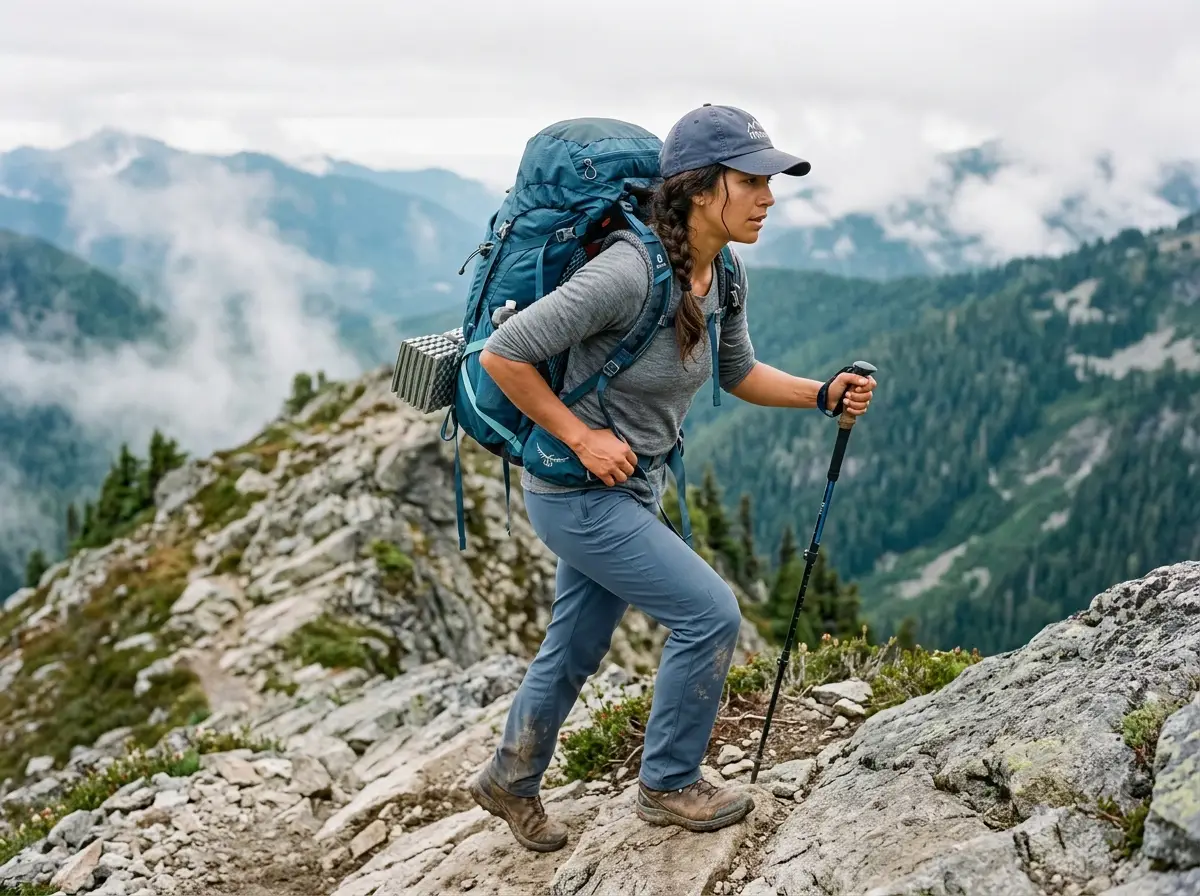
She bought the pack everyone online told her to buy, cinched it on at the trailhead for a six-night trip, and by mile three the hipbelt was grinding into her hip bone. The pack was two inches too long for her torso, and there was no fixing it without dumping the whole load on the trail. The “women’s” label on the tag did nothing for her. Ask anyone who’s helped a friend pick a first multi-day pack: the word on the tag matters far less than the torso measurement underneath it. This guide ranks the best women’s backpacking packs for multi-day trips in the 45 to 70-liter range, but more than that, it shows you how to match one to your torso, your load, and your trip length, so the pack you buy is the pack that still feels good on day three. If you’re shopping for day hikes or sub-40L overnights instead, start with our women’s pack roundup that spans day hikes to overnights.
Here’s the short version before the deep dive.
| Pack | Best For | Capacity | Weight |
|---|---|---|---|
| Osprey Eja 58 | Lightweight, loads under ~35 lb | 58L | 2 lb 8 oz |
| Osprey Aura AG 65 | Versatile all-rounder | 65L | ~4 lb 8 oz |
| Osprey Ariel 65 | Very heavy loads, canister trips | 65L | ~5 lb |
| Deuter Aircontact Core 60+10 SL | Contact-load stability | 60+10L | ~5 lb 5 oz |
| Gregory Jade 63 | Budget entry, beginners | 63L | ~4 lb 3 oz |
Why “Women’s” Packs Fit Differently (and When the Label Lies)
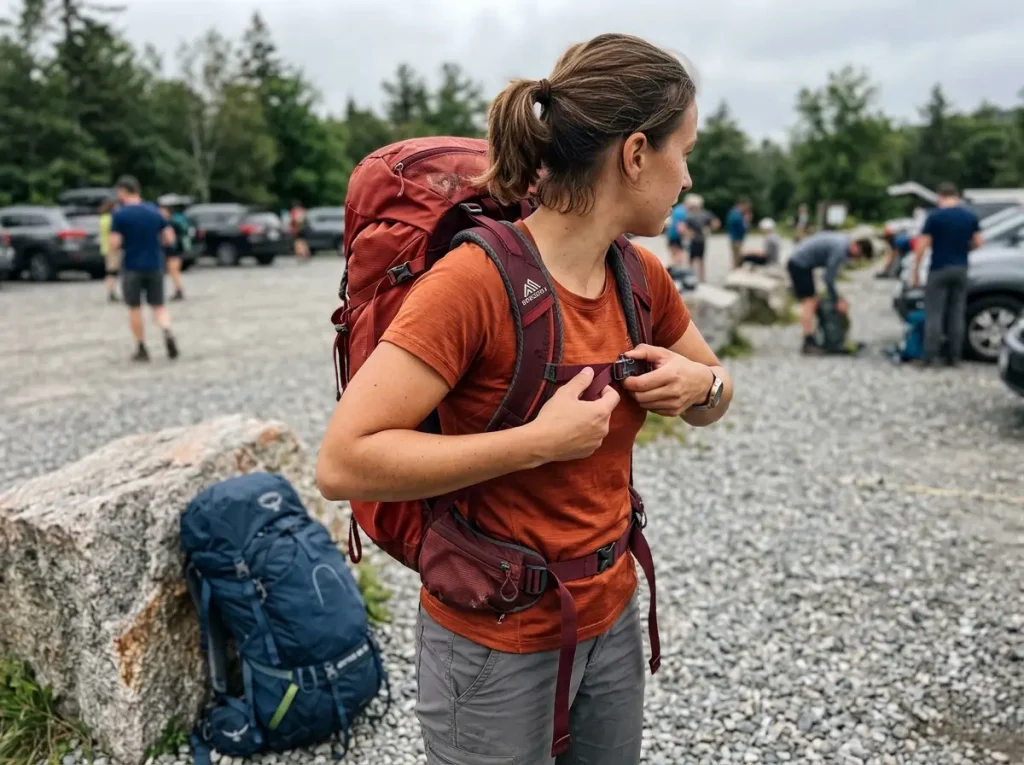
Start with the same fit-first thinking that drives every smart pack decision: the pack that fits you beats the pack with the right marketing. A women’s-specific pack isn’t a pink version of a men’s pack. The real changes are structural, and they exist because a lot of women carry a load differently than the average men’s frame the original pack was built around.
What “Women’s-Specific” Actually Changes
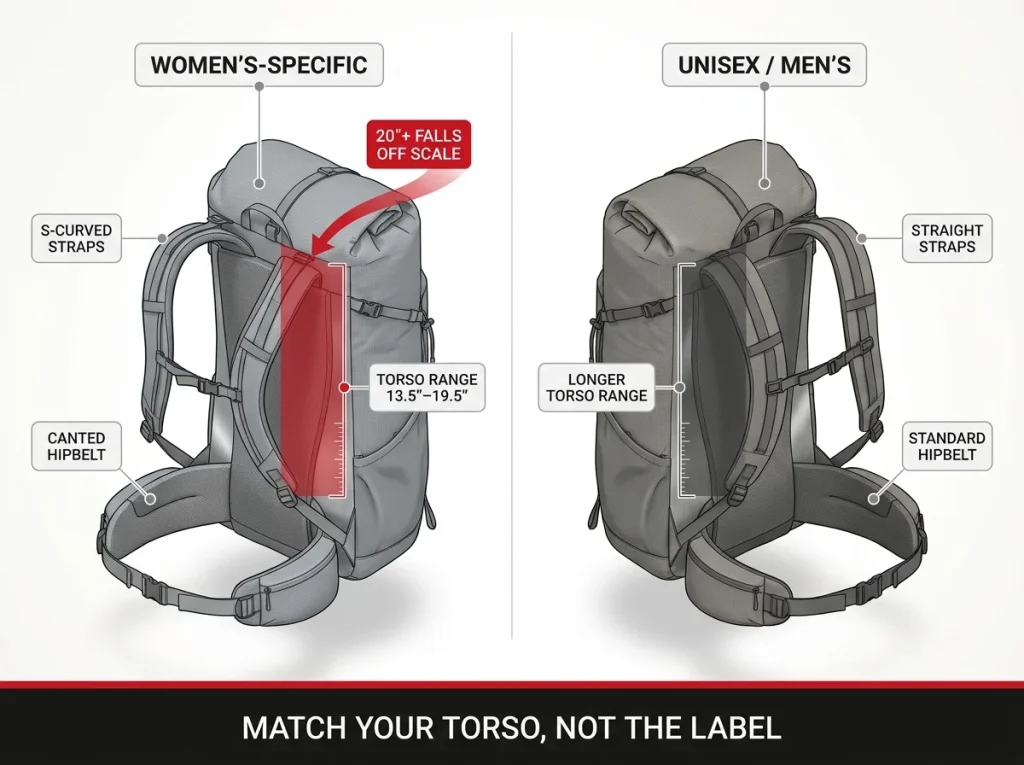
Three things change, and only three. The torso range runs shorter, usually somewhere around 13.5 to 19.5 inches instead of the longer men’s spread. The shoulder straps are narrower and more S-curved, so they clear the chest instead of digging into it. And the hipbelt is canted for a wider hip-to-waist ratio, so it wraps the hip bones instead of sliding off them. That’s the engineering. Everything else is colorway.
Those changes matter because the load has to land somewhere. Eighty percent or more of a loaded pack’s weight should ride on your hips, not your shoulders. When the hipbelt is shaped wrong for your frame, that weight migrates up to your shoulders and down into your lower back, which is where almost every “my pack hurts” story actually starts.
When the Women’s Label Genuinely Helps
If your torso lands inside that 13.5 to 19.5-inch window and your hips are proportionally wider than your waist, a women’s-specific pack will almost always fit you better straight out of the box. You’ll spend less time fighting the hipbelt angle and the strap width, and more time hiking. For most women, this is the easy, correct answer, and the picks further down are built around it. If your hips sit right at the edge of the belt range, a heat-moldable hip belt can rescue a borderline fit that’s otherwise close.
When to Go Unisex Instead (the Long-Torso Problem)
Here’s the part the gear shops skip. A woman with a 20-inch or longer torso falls outside every mainstream women’s range. Buy the women’s pack in a large and you’ll get a hipbelt that fits and shoulder straps built for a 17 to 19-inch torso that now sit too short, so the load lifters can’t do their job and the weight pulls backward off your shoulders.
The honest move there is a unisex or men’s pack with a long-torso size and a hipbelt you can swap down. Two packs in this guide brush that territory on the women’s side: the Osprey Ariel 65 covers torsos from 15 to 21 inches, and the Deuter Aircontact Core 60+10 SL runs 15 to 20. Those are the only women’s-side options that reach long-torso range. Past that, stop shopping the women’s rack. The most common mistake we see is a hiker buying a women’s pack “because I’m a woman” without ever measuring her torso, which brings us to the measurement nobody wants to do.
This isn’t a small-stakes detail. Women are now 40.6% of US hikers and about 28% of Appalachian Trail thru-hikers, and in a prospective study of women Appalachian Trail backpackers, injury was the second most common reason women left the trail. A pack that fights your frame for two thousand miles of thru-hiking feeds straight into that number.
Size the Pack to Your Torso, Not Your Height
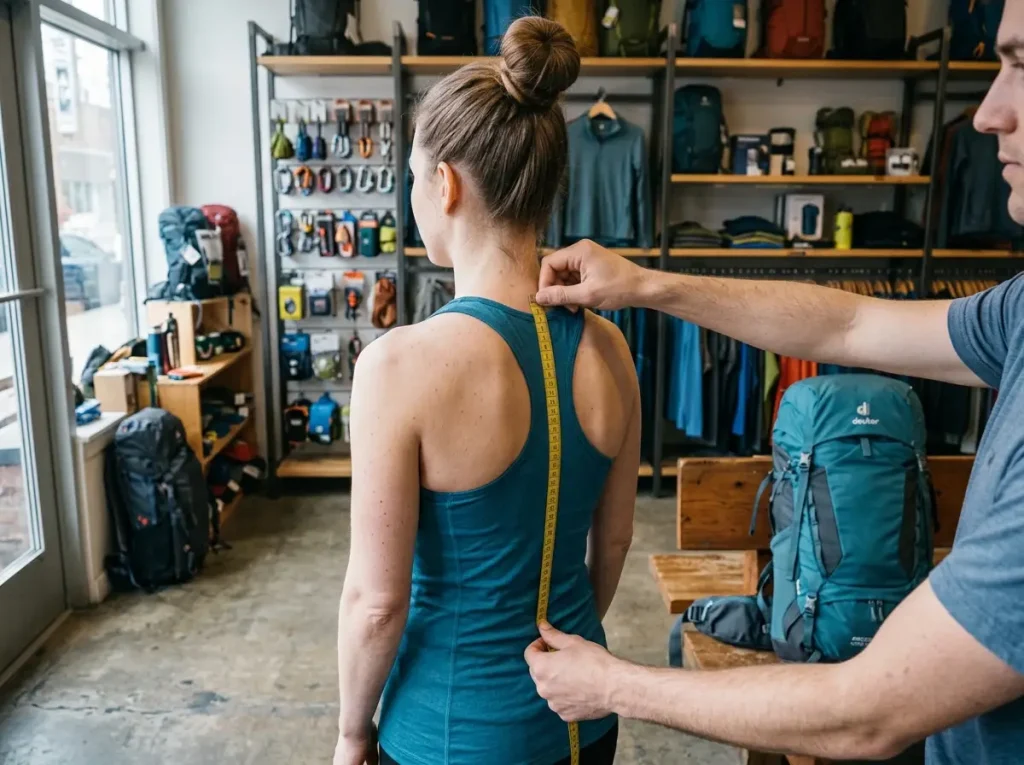
Two women who are both five-foot-six can need different pack sizes. One has a long torso and short legs, the other long legs and a short torso. Height tells you almost nothing. The number that matters is your torso length, measured from bone to bone.
Measure Torso Length (C7 to Iliac Crest)
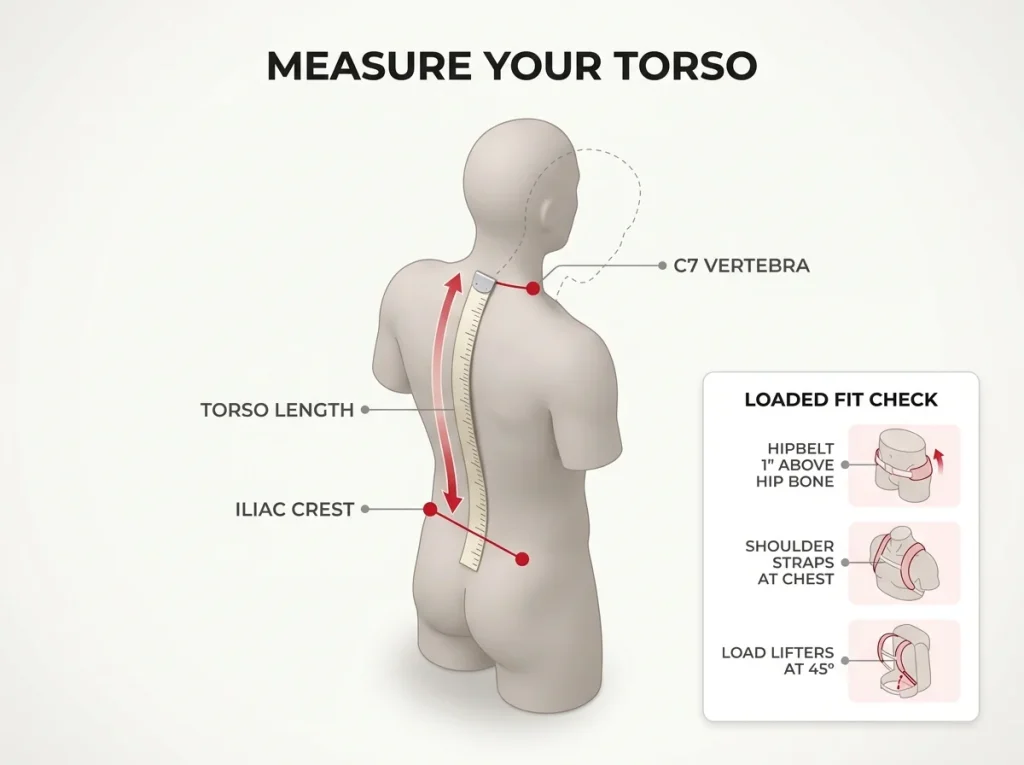
Find the C7 vertebra first. Tip your head forward and feel for the bump that sticks out most at the base of your neck. That’s the top. The bottom is your iliac crest, the top ledge of your hip bones, which you find by putting your hands on your hips with thumbs pointing back until they meet your spine. Have a friend run a flexible tape between those two points while you stand normally. That measurement, not your height, is your pack size. If you want the full walkthrough with the common errors, here’s how to measure your torso length the right way.
Why Height Lies
Pack makers size on torso because that’s the span the suspension has to cover. A tall woman with a short torso who buys “large because I’m tall” ends up with a pack whose hipbelt sits below her hips and whose load lifters angle wrong. The pack feels heavy not because it is, but because the geometry is throwing the weight in the wrong direction. Sizing on height is the single most common way women buy the wrong pack.
The Loaded Fit Test (and Its Three Checkpoints)
An empty pack in the store lies. The hipbelt that feels fine with nothing in it can clamp onto your hip bone after three hours under real weight. So load the pack with 15 to 20 pounds, water bottles work fine, cinch it on in a slight walking lean instead of standing stiff, and walk for ten minutes with some pace changes and a ramp or stairs if you can find them. Where it hurts after ten minutes is where it hurts on day two.
While you walk, check three things. The hipbelt should wrap about an inch above your hip bone, cupping the iliac crest, not sitting on top of it. The shoulder straps should contour to your chest without gapping at the top or splaying at the sides, and if they gap, set the sternum strap so the shoulder straps stop pulling away. And the load lifters should sit at that 45-degree angle running from the top of the shoulder strap back to the pack body. Near-vertical lifters mean the pack is too short for your torso; near-horizontal means it’s too long. No competitor roundup walks you through these three under load, and they’re the whole game.
When the pack feels heavy, your instinct is to crank the shoulder straps. Wrong move. Loosen them, re-seat the hipbelt high on the iliac crest, snug that down first, then pull the shoulder straps just until they contour. The shoulders stabilize the load; the hips carry it. Get that order backward and you’ll be rubbing your traps raw by lunch.
How Many Liters You Actually Need for Multi-Day
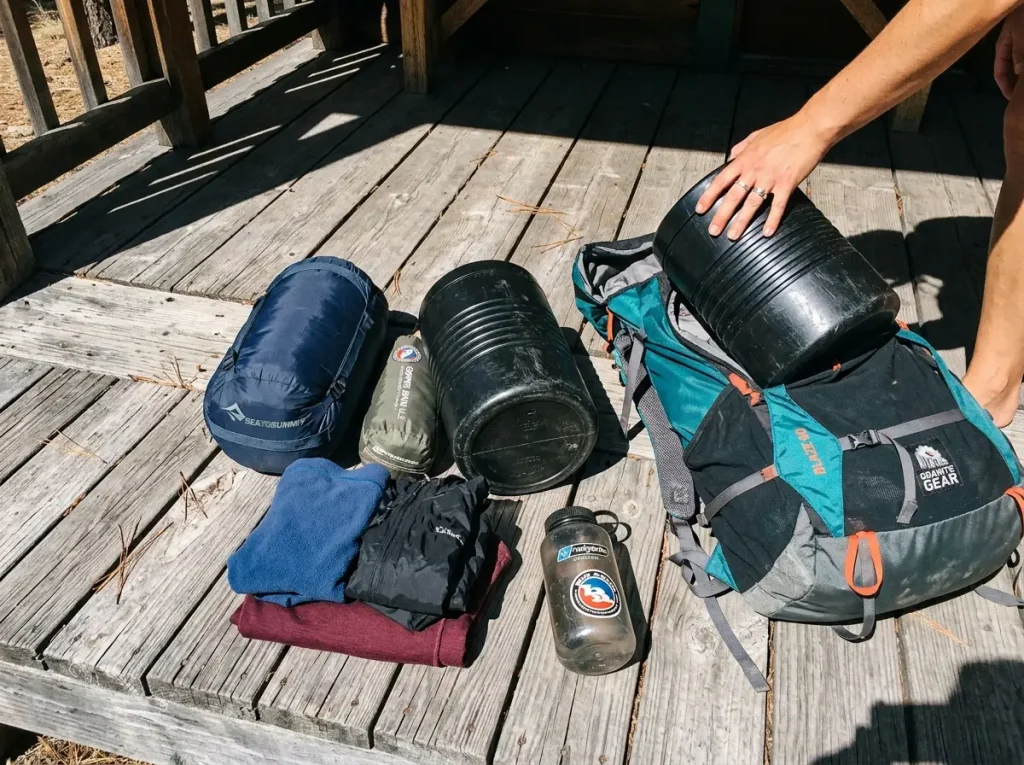
“Fifty-five liters looked huge in the store” is how a lot of cold-weather trips end with the tent strapped to the outside of the pack. The volume disappears faster than anyone expects, because the bulky gear goes in before the clothes do.
The Hidden-Volume Math (Big Three + Canister)
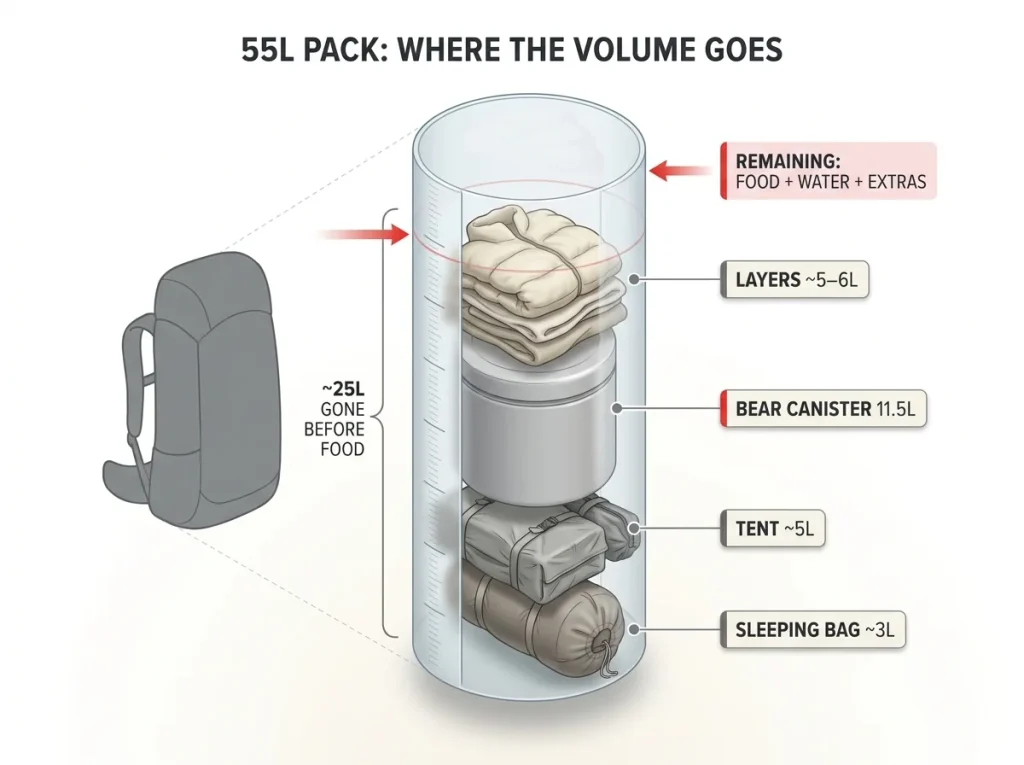
Run the actual numbers. A 20-degree down bag compresses to roughly 3 liters. A two-person tent packs to about 5. A BearVault BV500 bear canister is a fixed 11.5 liters whether it’s full or empty. Add three days of layers and a warm jacket and you’re at another 5 or 6 liters. That’s around 25 liters gone before a single bottle of water or loose snack goes in.
In a 55-liter pack, that leaves you about 29 liters for food, water, and everything else. In a 45-liter pack, it leaves 19, which is tight for three nights and unworkable past five. The canister is the volume bully here, and it doesn’t shrink. A rough rule for food storage is 1 to 1.2 liters of canister space per person per day, so a five-night trip needs about 6 liters of canister just for meals.
Capacity by Trip Length (45–55L vs 60–70L)
For most women, 45 to 55 liters covers a 3 to 5-night trip in mild weather. Go to 60 to 70 liters or more for trips longer than five nights, cold weather, or anywhere a bear canister is required. If you want to see how volume scales across shorter trips, we break down how pack volume changes from an overnight to a weekend separately. This guide starts at 45 liters on purpose; if you mostly do day hikes and the odd overnight, that sub-40L women’s pack roundup is the better fit.
Why Summer Liters Shrink in Winter
A down bag rated for summer takes two to three times the space when you size it for cold. So a 60-liter pack that swallows a July kit with room to spare behaves like a 50-liter pack in October, when the bag is fatter, the layers are thicker, and the jacket alone eats a stuff sack. The experienced hiker who used the same 60-liter pack for years and then took it on her first winter trip in the Sierras found that out the hard way, when the down bag, the extra insulation, and the canister left the tent riding outside. Plan your liters for your coldest planned trip, not your easiest one. While you’re tallying volume, knowing how much packed space your tent actually claims makes the whole math honest.
Matching Suspension to Your Real Load Weight
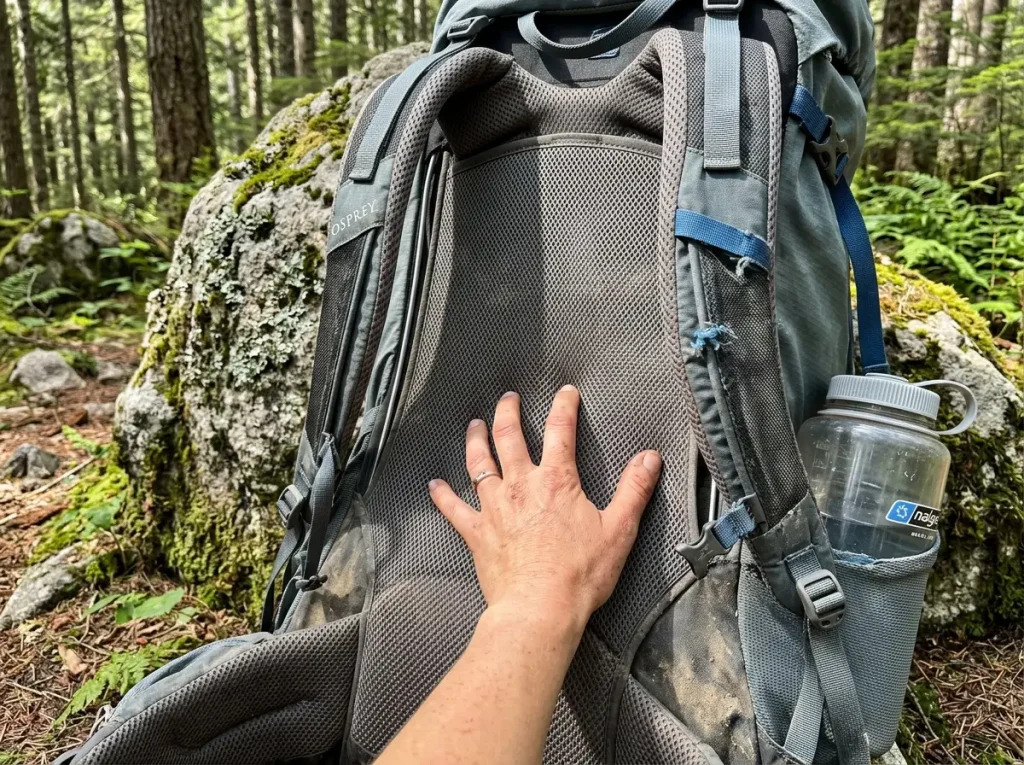
Those floating mesh back panels feel like magic in the store at ten pounds. Load one with a canister and a week of food and it starts to wallow. The fix isn’t a better strap, it’s the right suspension system for the weight you’ll carry.
Ventilated / Trampoline Suspension (Best Under ~35 lb)
Ventilated suspension, the trampoline-style mesh you see on Osprey’s AirSpeed and Anti-Gravity packs, suspends the load on a taut panel held off your back by a peripheral frame stay. The airflow is genuinely excellent, and your back stays drier than any contact system. It carries beautifully up to about 35 pounds. Past that, the mesh starts to flex under the weight and the load begins to sway side to side, which on uneven ground is its own kind of tiring.
Contact-Load Suspension (35–55+ lb)
Contact-load suspension puts the pack body against your back and drives the weight through a stiffer internal frame straight into the hipbelt. The Deuter Aircontact and the Osprey Ariel’s frame both work this way. Your back runs hotter because there’s no air gap, but the load doesn’t sway and the transfer holds at weights that make a trampoline panel give up. This is the frame doing the work a frameless or flexible pack can’t once the numbers climb.
The 35-Pound Rule
Here’s the field rule worth memorizing: if your Big Three plus a canister plus five days of food clears 35 pounds, go contact-load even if you love the ventilation. Weight wins that argument. The reason to care is your nervous system. In research on plantar pressure and pack load in long-distance hikers, about 35% of carriers reported numbness or tingling at 10 to 20 pounds, and that climbed to 68 or 69% past 30 pounds. A suspension that quits under load is part of why. There’s also a total-load ceiling worth respecting: most guidance caps a loaded pack at 20 to 25% of your body weight, with musculoskeletal injury risk climbing once you pass 30 percent of your body weight. Match the suspension to the weight and you keep the feeling in your hands.
Weigh your loaded pack on a bathroom scale before the trip, not after you’re standing at the trailhead wondering why your shoulders hurt. Step on holding the pack, subtract your bodyweight, and you’ve got the real number. Do it once with your actual gear and you’ll know forever which suspension family you belong in.
Best Lightweight & All-Round Women’s Packs
For most multi-day trips that skip the canister and the deep cold, these three are the packs that keep showing up on trail. Light, ventilated, and comfortable in their load range. All three are happiest under about 35 pounds; if you’ll carry more, jump to the next section.
Best Overall Lightweight: Osprey Eja 58
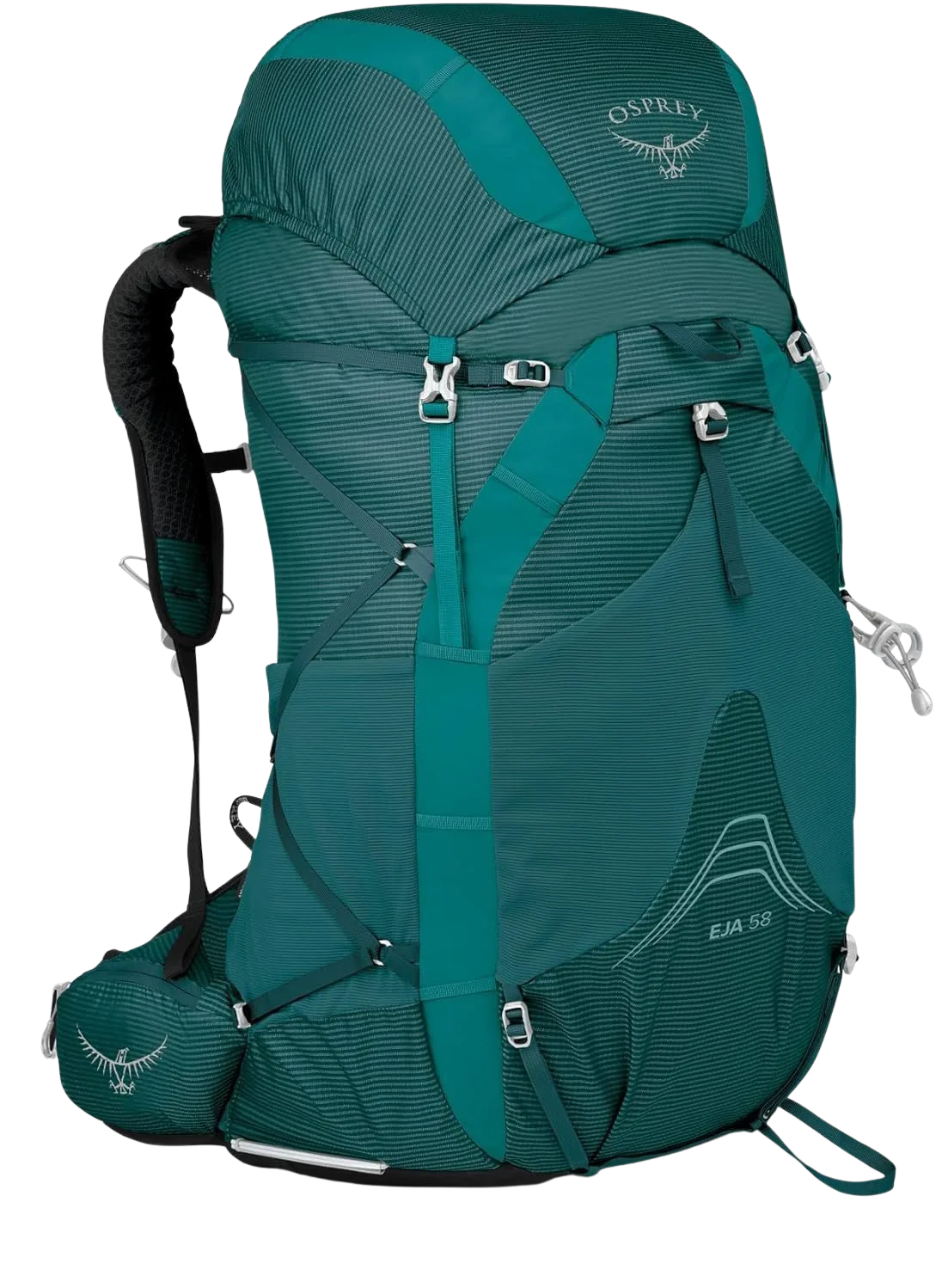
The Eja is the pack to beat for a woman who wants comfort without hauling a five-pound suspension she doesn’t need. The trade-off is real, though: this is a ventilated panel, so the same lightness that makes it sing on a three-day trip is what makes it wallow if you load a canister and a week of food. It’s light, but it isn’t ultralight; if shaving every ounce is the goal, our list of packs that genuinely clear the 2-pound mark goes lighter still, with the comfort trade-offs that come with it.
Best All-Rounder: Osprey Aura AG 65
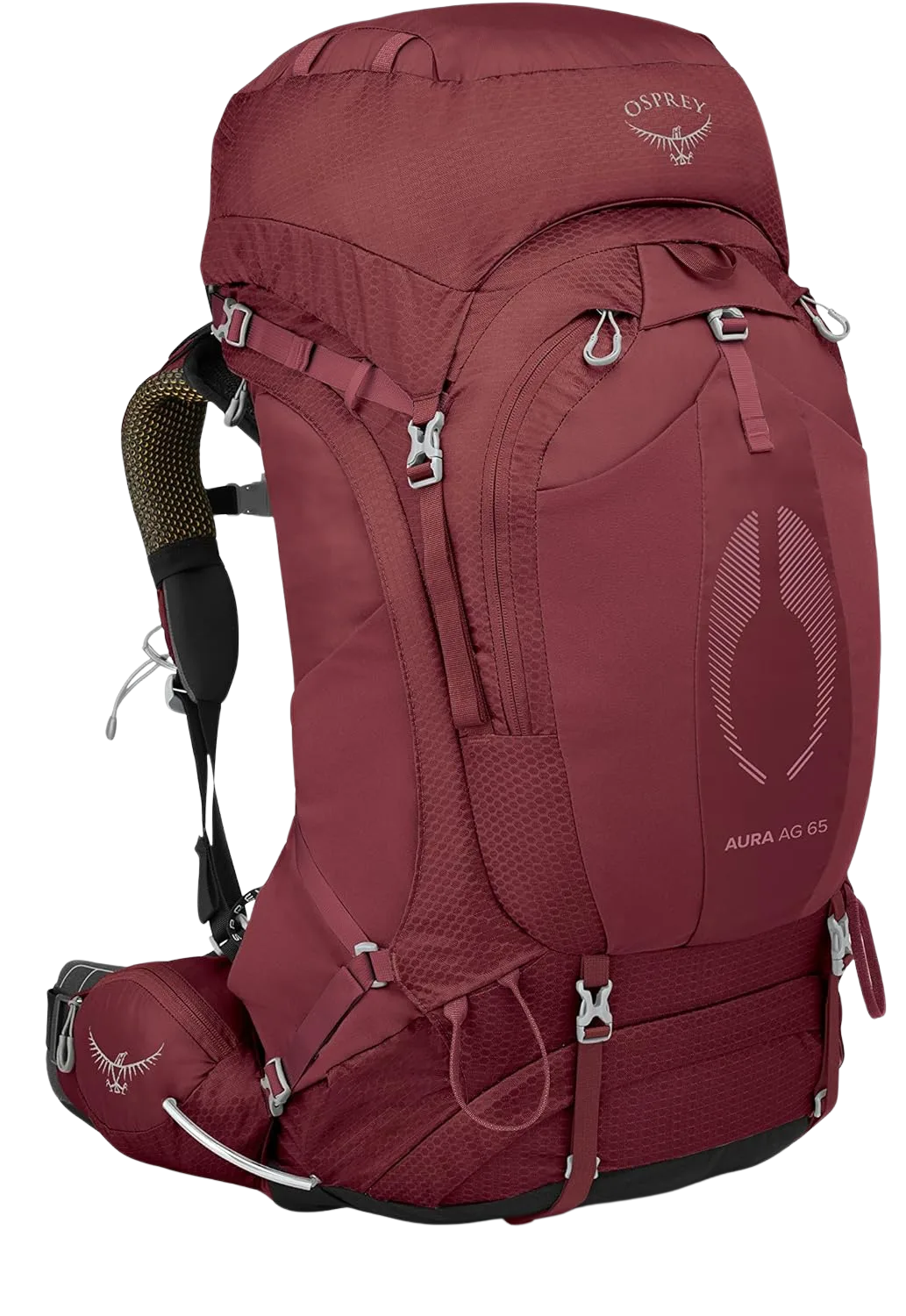
If you only ever own one multi-day pack, the Aura AG is the safe, smart bet. It stretches further up the load scale than the Eja before the ventilated panel starts to flex, and the adjustable harness means it dials in across a range of torsos. It’s heavier than the Eja by almost two pounds, which is the price of that versatility. For a hiker who does everything from weekend trips to the occasional weeklong route, that’s a trade worth making.
Best Mid-Range Alternative: Gregory Maven 58
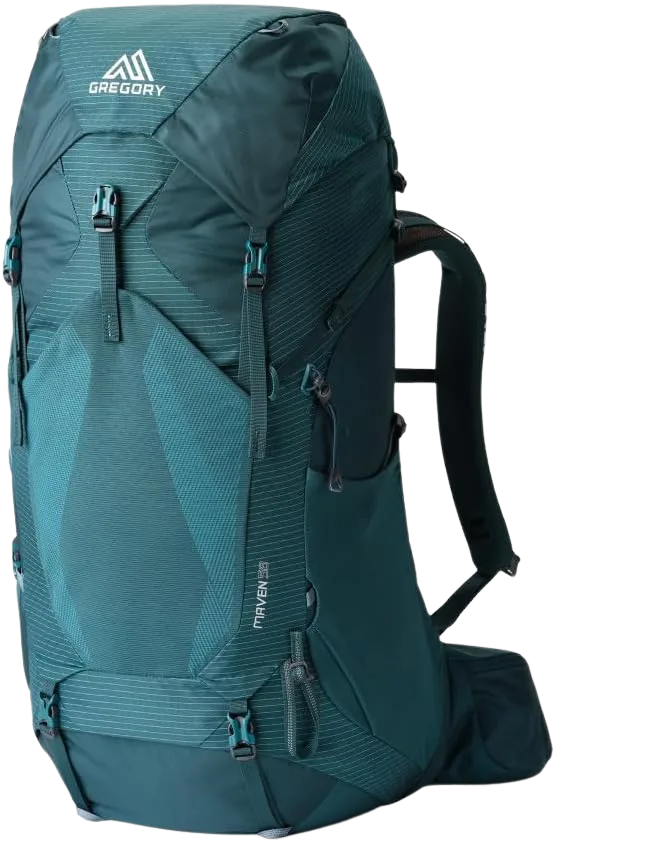
Pack fit is personal, and the single best reason the Maven is here is that Osprey and Gregory shape their hipbelts and harnesses differently. Some women who never get comfortable on an Osprey settle right onto a Gregory and never look back. The Maven matches the Eja’s lightweight, ventilated formula, adds a touch more storage, and usually costs a bit less. Same load ceiling, same caveat: keep it under 35 pounds and it’s a gem.
Best Packs for Heavy & Cold-Weather Loads
When the load crosses 35 pounds, ventilation stops being the priority and stable load transfer takes over. Canisters, winter kits, long carries between resupply. These three don’t wallow.
Best for Very Heavy Loads: Osprey Ariel 65
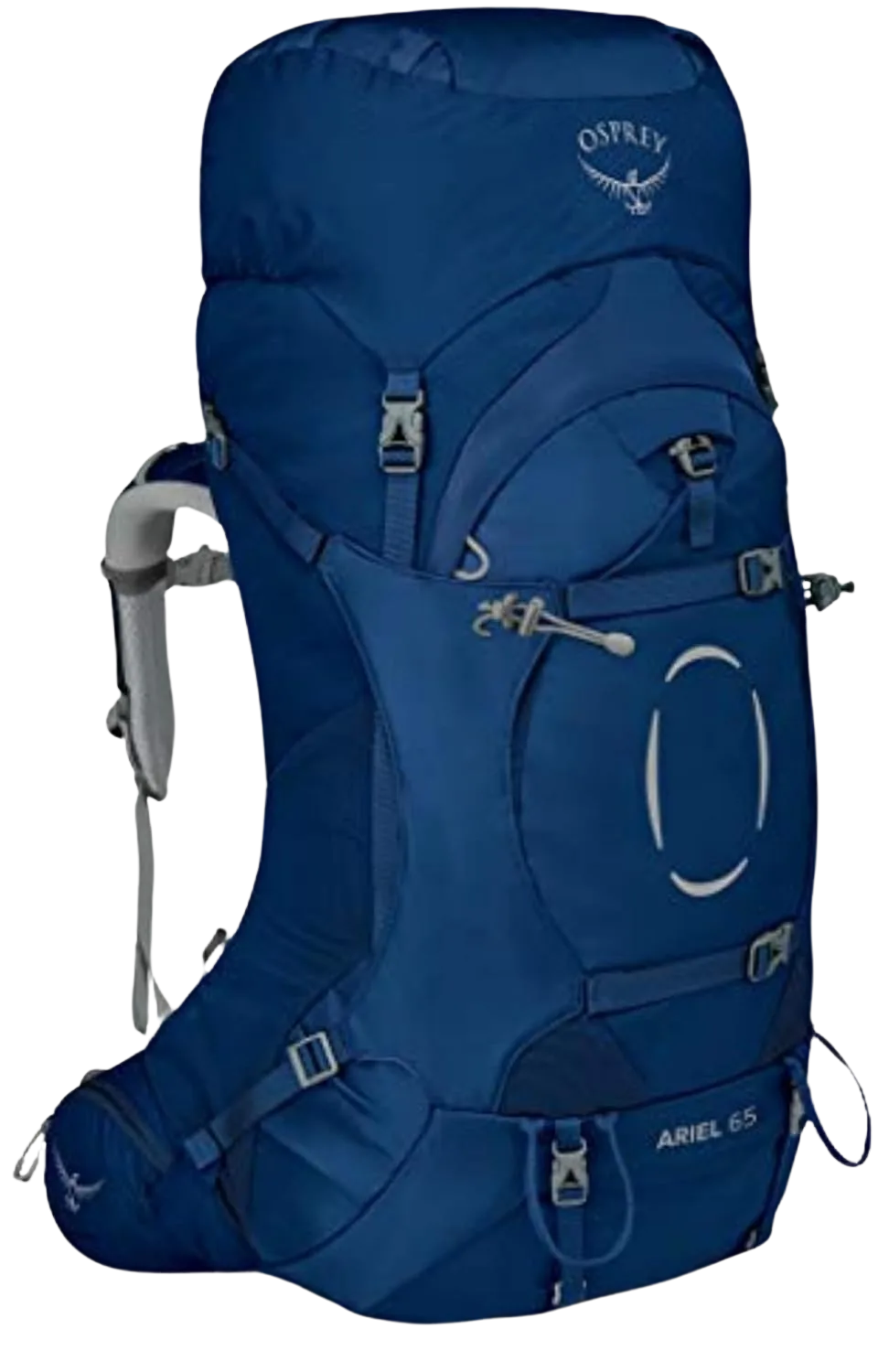
The Ariel is the pack you reach for when the trip demands real weight: a bear canister, extra water in the desert, or a full winter kit. The frame transfers heavy loads better than any ventilated panel, and the moldable hipbelt can be heat-shaped to your hips. It does two jobs at once for many women, because that 15-to-21-inch torso range catches the long-torso hikers who fall off the end of the women’s-specific scale. The cost is weight on your back, so it’s more pack than a light-and-fast weekender needs.
Best Contact-Load Suspension: Deuter Aircontact Core 60+10 SL
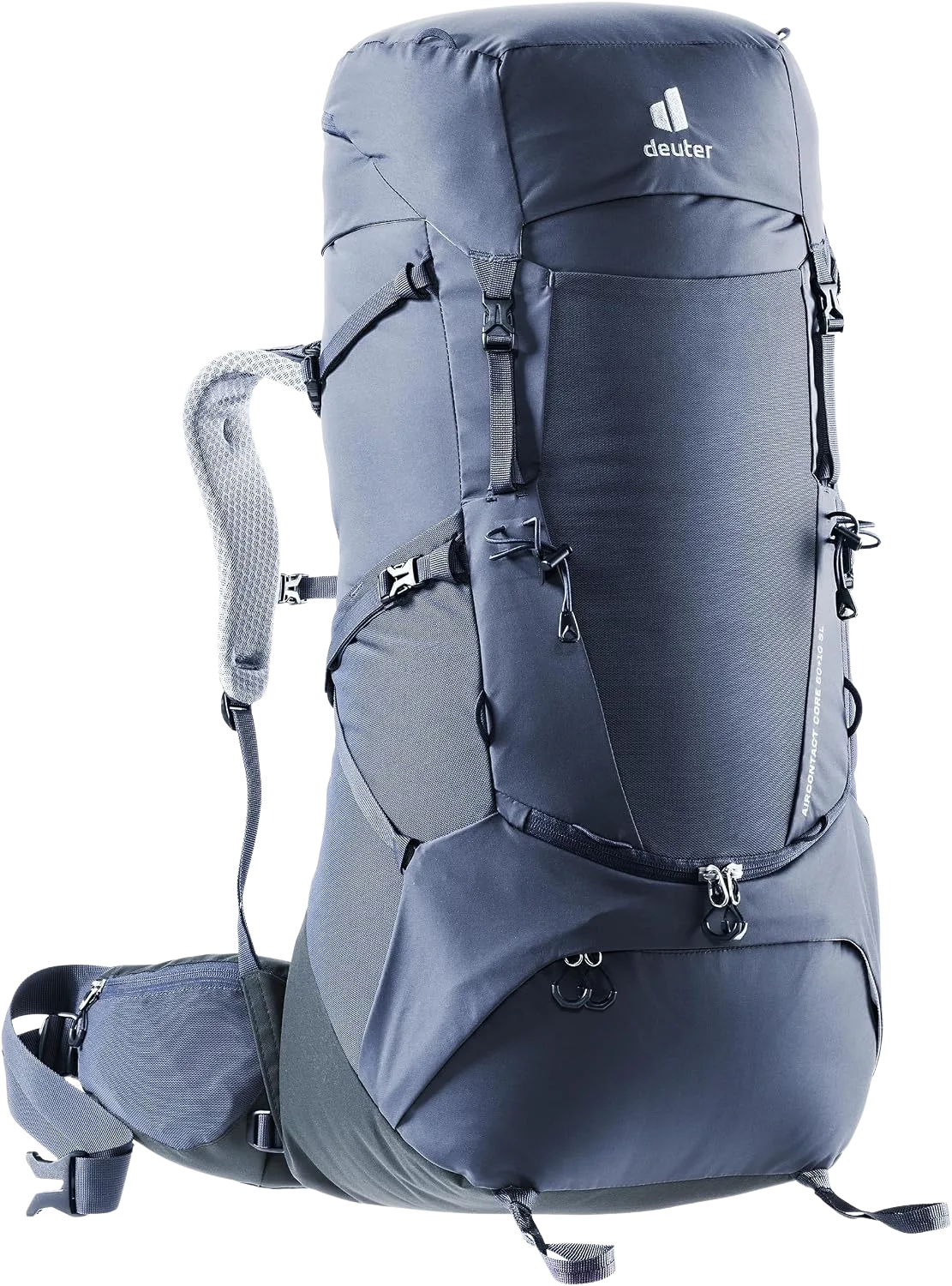
If the last section sold you on contact-load suspension, this is the pack that delivers it best on the women’s side. The Aircontact Core was built for exactly the loads that defeat a trampoline panel, and the women’s SL version isn’t a marketing label; it genuinely shortens the back length and narrows the shoulder harness. The expandable collar is the sleeper feature, turning a 60-liter pack into a 70-liter one for a shoulder-season trip without owning two packs. Your back runs warmer than on an Osprey AG, which is the honest trade for that stability.
Best for Moderate-Heavy Comfort: Gregory Deva 60
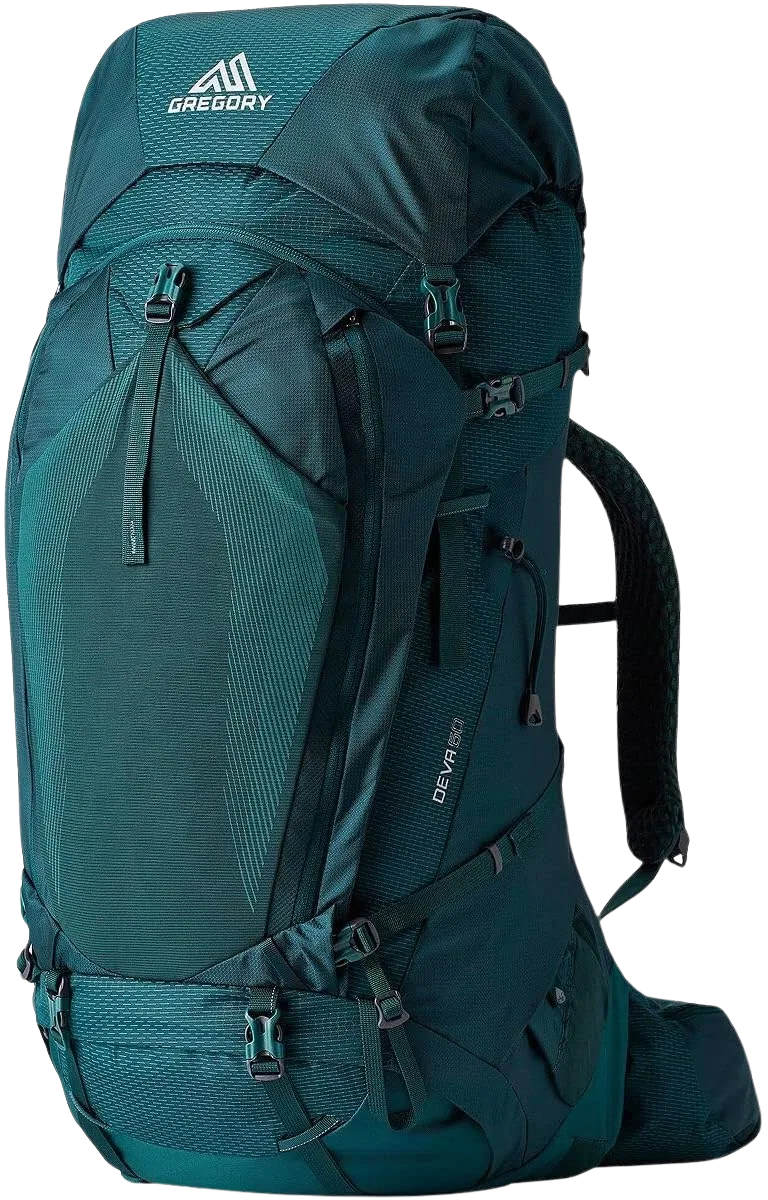
The Deva has been one of the most-recommended women’s packs in fit threads for years, and the reason is simple: it’s just comfortable. The rotating hipbelt tracks your hips as you walk instead of fighting them, the padding is generous, and the hipbelt pockets actually hold a phone and snacks without bouncing. It’s not light, and it isn’t trying to be. This is the pack for a hiker who’d rather carry a few extra ounces than feel the load, on trips in the 30-to-45-pound range.
Best Budget & Specialty Picks
A first multi-day pack shouldn’t cost a paycheck, and a tall woman shouldn’t be stuck cramming into a too-short pack. These three close those gaps.
Best Budget Entry: Gregory Jade 63
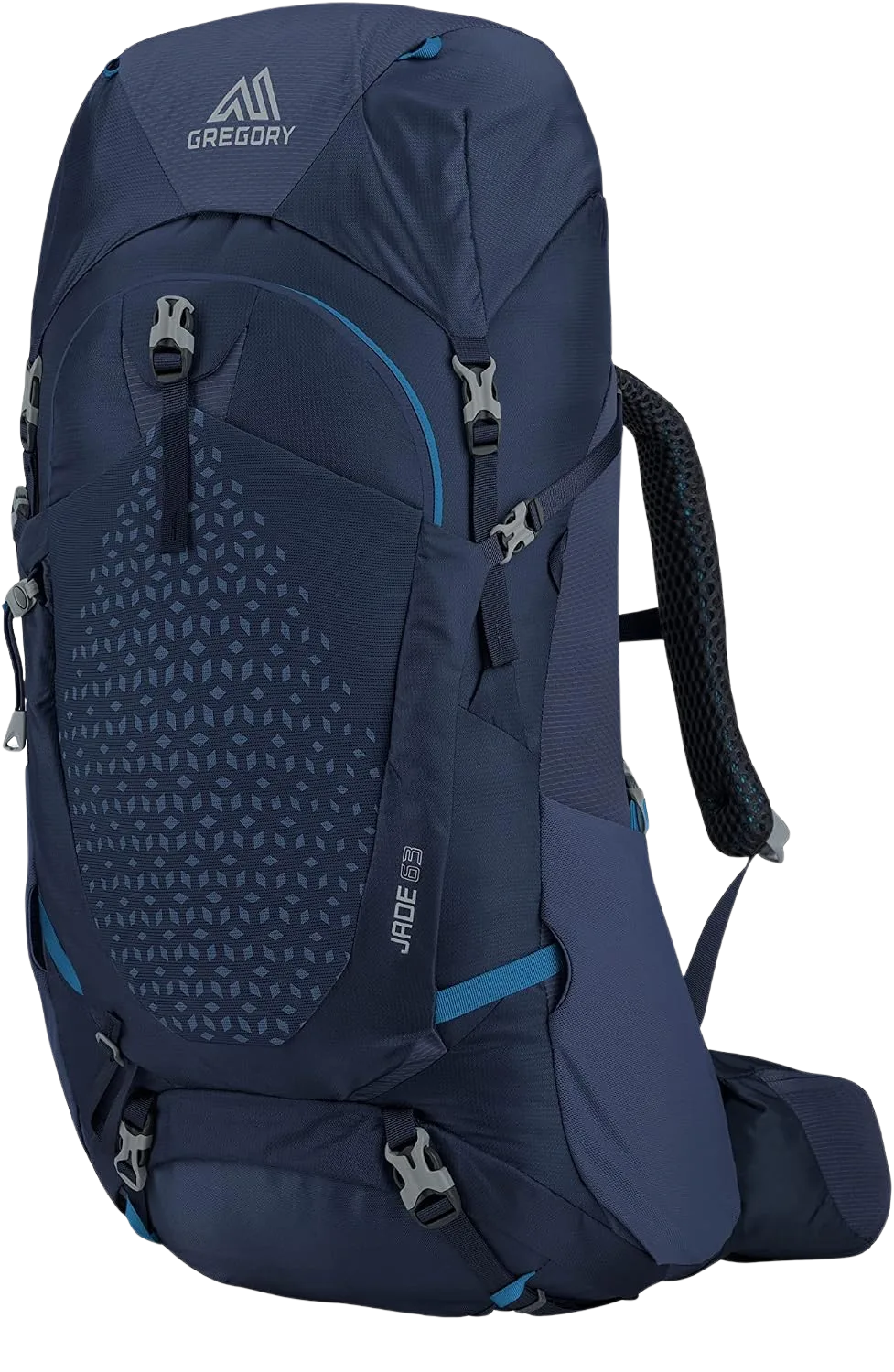
For a first multi-day pack, the Jade is the one to beat. The adjustable torso is the key feature for a beginner, because it lets you fine-tune the fit while you’re still learning where your hipbelt should sit, and it gives the pack resale life if your measurements were a little off. It weighs more than the premium picks and the ripstop nylon isn’t as burly, but none of that matters on your first few trips. Buy this, learn your load, and upgrade later if you ever feel the limits.
Best Lightweight-Value: Granite Gear Blaze 60
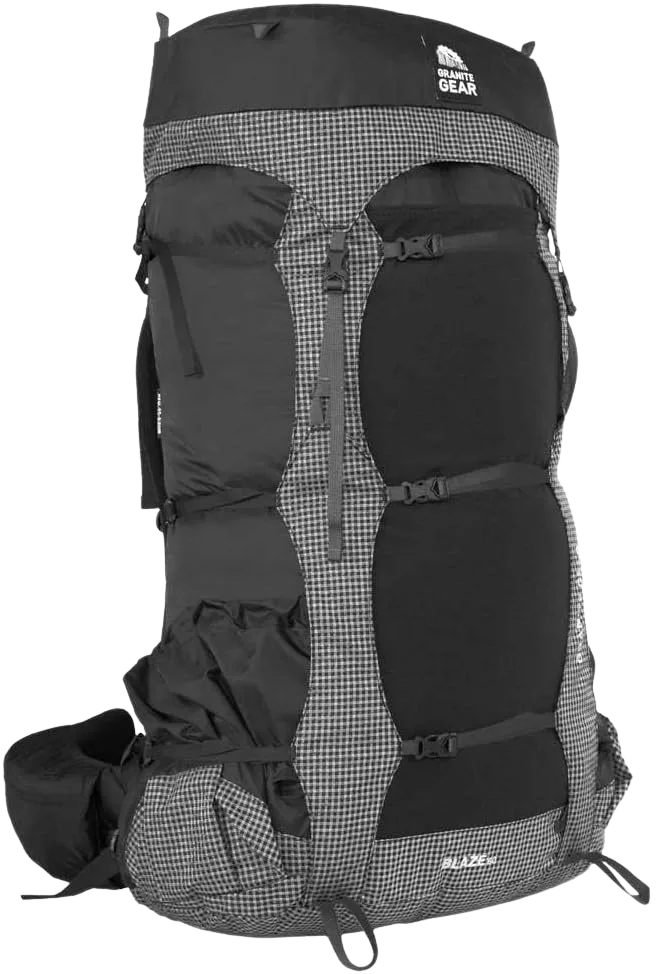
The Blaze is the bridge between a heavy traditional pack and a true ultralight rig, without the cottage-brand price or the bare-bones feel. Three pounds is genuinely light for a framed 60-liter pack, and the heat-moldable hipbelt is a feature you usually only see on pricier models. It transfers weight better than its scale suggests, which makes it the smart pick for a hiker who wants to shed pounds off her base weight but isn’t ready to give up a real frame and hipbelt to do it.
Best for Tall Women: Gregory Amber 68
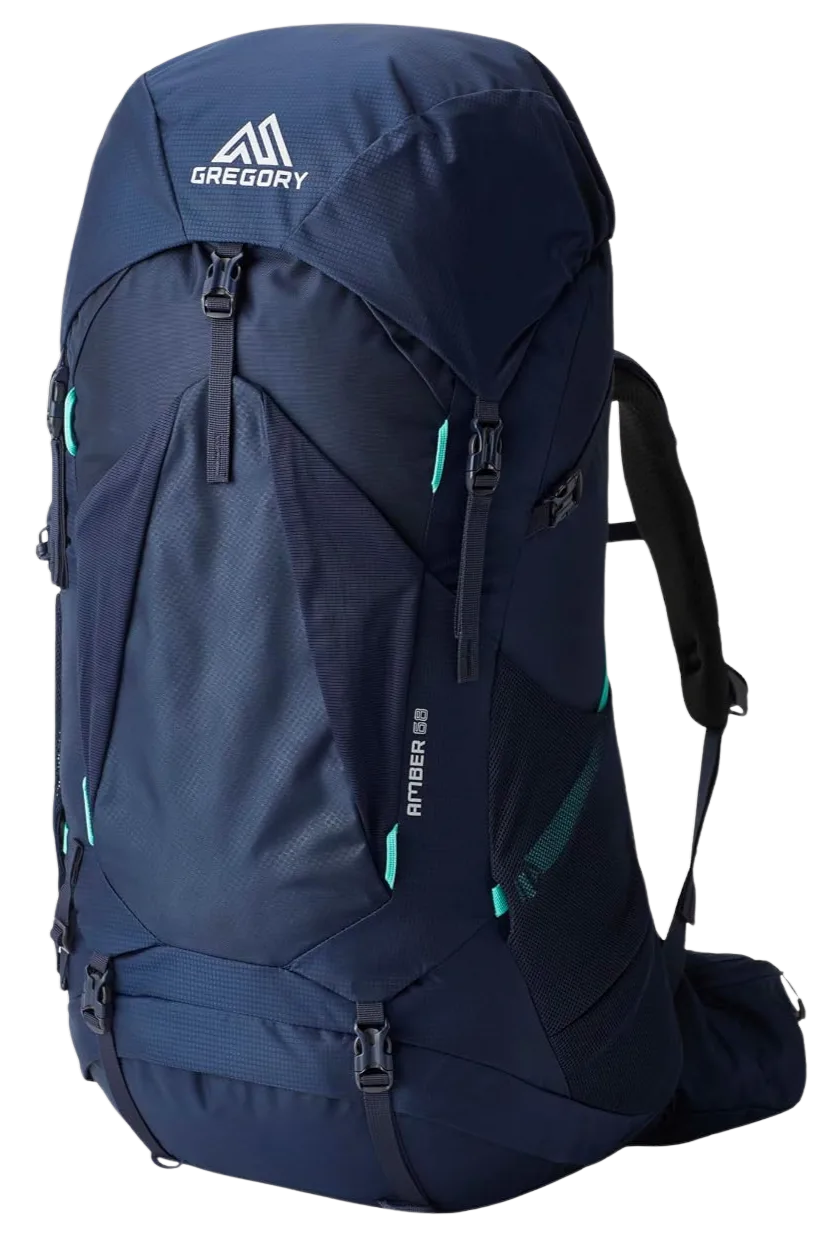
The Amber solves a problem the rest of the women’s market mostly ignores: tall women and those with a longer torso who keep running off the top of the size charts. The wide adjustable torso gives you room the standard women’s packs don’t, the 68 liters handles long or cold trips, and at around three and a third pounds it stays reasonable for the volume. If you’ve tried women’s packs and they always feel a size too short, start here before you give up and shop the unisex rack. A good pack lasts years, so it’s worth getting the fit right; here’s how to read the signs a pack is actually worn out when the time finally comes.
Before any long trip with a new pack, take it on a short shakedown hike loaded the way you’ll actually carry it. An afternoon out and back is enough to surface a hotspot or a strap that won’t stay put, while you’re still close enough to fix it. Finding that on day one of a weeklong route, miles from the car, is how good trips turn into long ones.
Conclusion
Three things carry more weight than any pick on this list. First, the torso measurement beats the women’s label every time, so measure C7 to iliac crest before you shop, and if you’re past 20 inches, don’t be afraid of the unisex rack. Second, match the suspension to your real load: ventilated under 35 pounds, contact-load above it. Third, buy your liters for your gear and your coldest season, not for how the pack looks empty on the store shelf.
Do one thing before you commit to any of these: run the loaded fit test. Fifteen to twenty pounds, ten minutes walking, and let your day-three self pick the pack. The right one is the pack you stop noticing by lunch.
Frequently Asked Questions
01What size backpack do I need for a week-long backpacking trip?
Most women need 60 to 70 liters for a seven-day trip, and more if a bear canister is required or the weather is cold. The Big Three plus a canister eat about 25 liters before food even goes in.
02What is the difference between a women’s and a men’s backpack?
Women’s packs use a shorter torso range, S-curved shoulder straps that clear the chest, and a hipbelt canted for a wider hip-to-waist ratio. It’s about fit geometry, not branding or color.
03How should a backpacking pack fit a woman?
The hipbelt wraps about an inch above the hip bone carrying roughly 80% of the weight, the shoulder straps contour without gapping, and the load lifters sit at 45 degrees. Confirm all three under 15 to 20 pounds, not with an empty pack.
04Is a 50L pack big enough for backpacking?
For 3 to 5 nights in mild weather, yes. For a full week, winter, or a mandatory bear canister, size up to 60 liters or more, because cold-weather gear can take up to twice the volume of summer gear.
05What is the best backpacking pack for a beginner woman?
A ventilated women’s-fit pack around 60 liters with an adjustable torso, like the Gregory Jade 63, balances comfort, capacity, and price. The adjustable torso lets you dial in the fit while you’re still learning your load.
Risk Disclaimer: Hiking, trekking, backpacking, and all related outdoor activities involve inherent
risks which may result in serious injury, illness, or death. The information provided on The Hiking Tribe is for
educational and informational purposes only. While we strive for accuracy, information on trails, gear, techniques,
and safety is not a substitute for your own best judgment and thorough preparation. Trail conditions, weather, and
other environmental factors change rapidly and may differ from what is described on this site. Always check with
official sources like park services for the most current alerts and conditions. Never undertake a hike beyond your
abilities and always be prepared for the unexpected. By using this website, you agree that you are solely
responsible for your own safety. Any reliance you place on our content is strictly at your own risk, and you assume
all liability for your actions and decisions in the outdoors. The Hiking Tribe and its authors will not be held
liable for any injury, damage, or loss sustained in connection with the use of the information herein.
Affiliate Disclosure: We are a participant in the Amazon Services LLC Associates Program, an
affiliate advertising program designed to provide a means for us to earn advertising fees by advertising and linking
to Amazon.com. As an Amazon Associate, we earn from qualifying purchases. We are also an official affiliate partner
of Black Diamond Equipment via the AvantLink network. If you click on a Black Diamond affiliate link and make a
purchase, we may earn a commission at no additional cost to you. We also participate in other affiliate programs and
may receive a commission on products purchased through our links. Additional terms are found in the terms of
service.