In this article
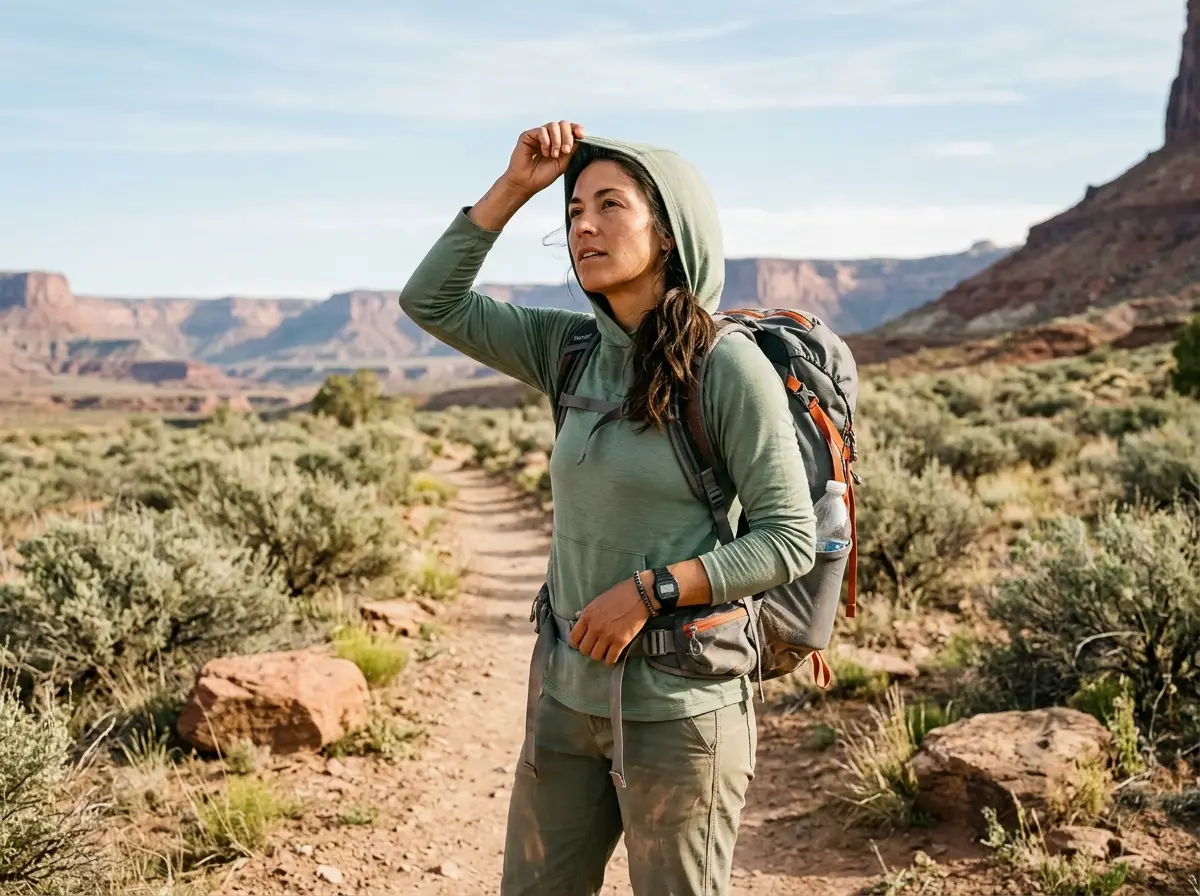
I grabbed a bamboo sun hoodie before a week in the Utah desert because the shop guy promised it would keep me cool, block the sun, and never stink. Two of those things turned out to be true. The third one got complicated fast. After testing bamboo shirts, socks, and base layers across three seasons and a couple hundred trail miles, I have a pretty clear picture of where this fabric shines and where it falls apart — sometimes literally.
Here’s what bamboo fabric actually does on trail, no marketing fluff attached.
Quick Answer: Bamboo fabric is soft, breathable, and genuinely good at managing odor on warm-weather hikes, but it dries slower than synthetics, loses strength when wet, and the “antibacterial” claims are mostly marketing. It works best as a summer base layer between 60–100°F. Below 50°F or in sustained rain, switch to merino or polyester.
What Bamboo Fabric Actually Is (And What It Isn’t)
The Viscose Reality
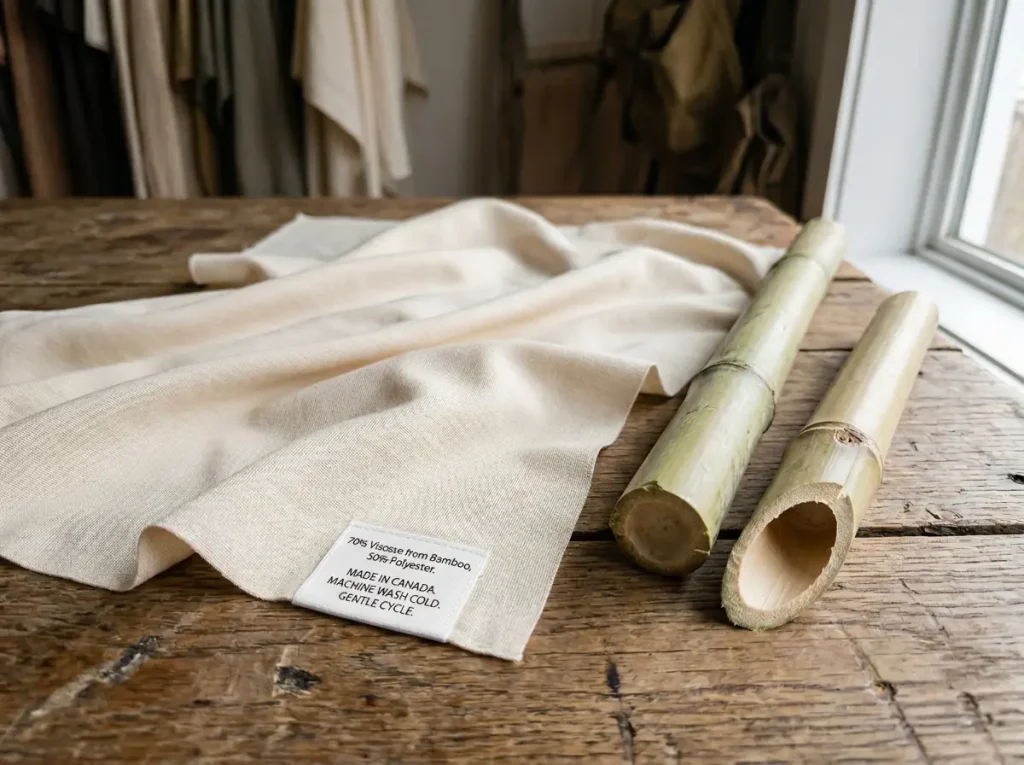
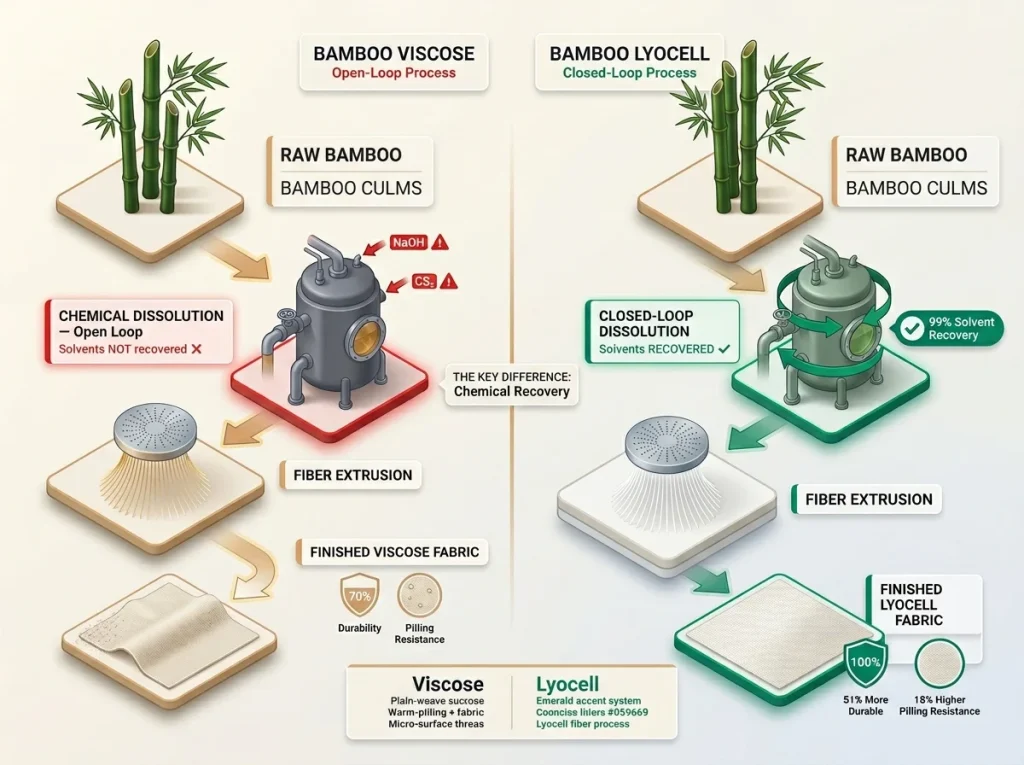
That bamboo shirt in your hand is not woven from bamboo fibers. It’s viscose — a semi-synthetic rayon made by dissolving bamboo cellulose in sodium hydroxide and carbon disulfide, then extruding it into fibers. The process is closer to making plastic than weaving cotton.
The Federal Trade Commission has fined companies including Nordstrom, Kohl’s, and Walmart over $1.3 million for labeling rayon products as “bamboo” and making unsubstantiated antibacterial claims. If your label says “bamboo,” check the fine print — it almost certainly says “viscose from bamboo” or “bamboo rayon.”
Viscose vs Lyocell — The Processing Gap
Not all bamboo fabrics are created equal. Standard bamboo viscose uses an open-loop process where chemical solvents are not fully recovered. Bamboo lyocell uses a closed-loop system that recovers over 99% of its solvents — and the resulting fabric is 51% more durable with 18% higher pilling resistance than viscose.
Pro tip: Check the label for “lyocell” or “Tencel” — these closed-loop bamboo fabrics cost more but last significantly longer in your pack and produce far less environmental waste during manufacturing.
Why This Matters on Trail
The processing method determines how your shirt performs. Viscose fibers are solid and extruded, unlike cotton’s natural hollow fibers. That means bamboo viscose absorbs moisture differently — it wicks decently but holds water longer. Understanding this distinction saves you from expecting merino-level performance from a fabric that behaves more like a refined cotton.
Moisture Management on Trail
How Bamboo Handles Sweat
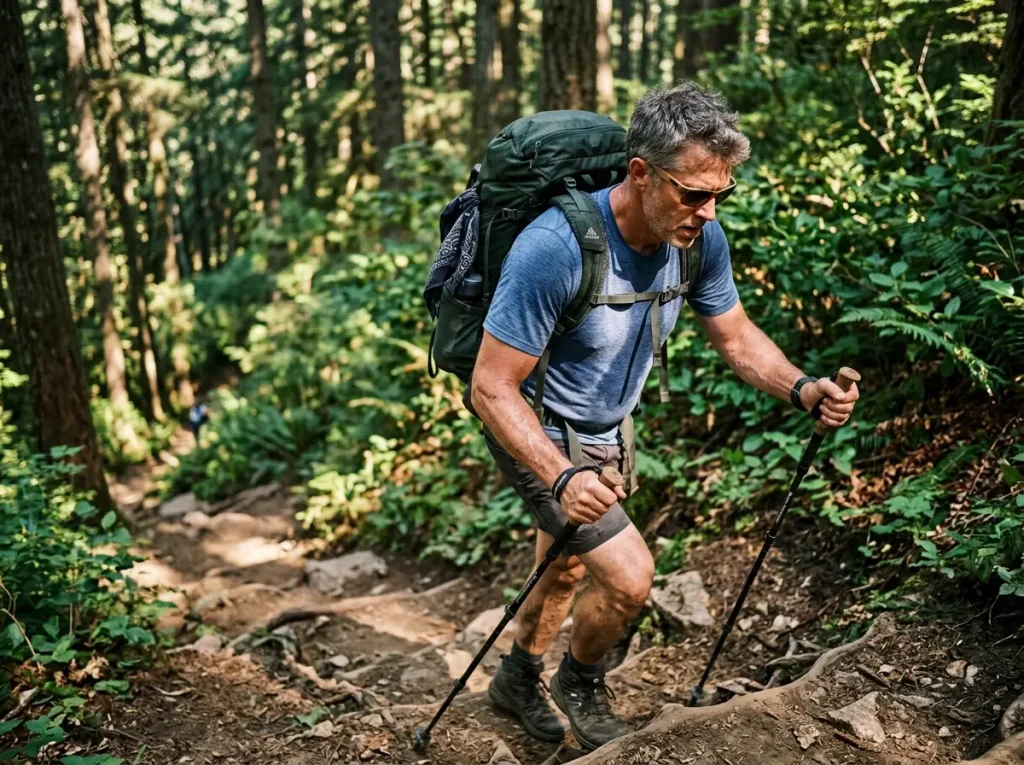
Bamboo viscose absorbs moisture — roughly 60% more than cotton by weight. On a moderate day hike, that absorption feels great during the first hour. The fabric pulls sweat off your skin and you feel dry. The catch is what happens after the fabric saturates.
Once a bamboo shirt is fully loaded with moisture, it holds it. You’ll notice the fabric getting heavier and clinging to your back under your pack straps. On a 70°F day with moderate humidity, my bamboo blend shirt stayed damp for about twice as long as a comparable polyester shirt after a hard uphill push.
The Drying Time Problem
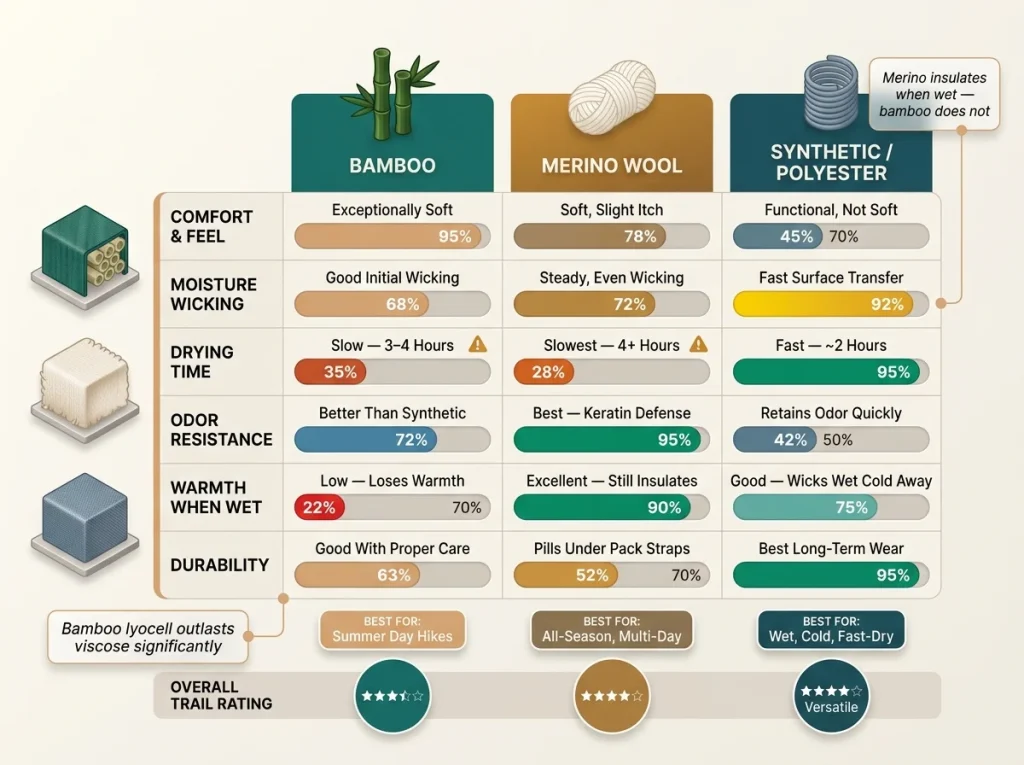
This is where bamboo loses to synthetics and it’s not close. Polyester dries in roughly two hours in moderate conditions. Bamboo viscose takes three to four hours or more depending on humidity and airflow. Merino is even slower, but merino keeps insulating when wet — bamboo does not.
Hikers on the Camino de Santiago forum report that bamboo socks “literally take days to dry” in humid conditions. If you’re doing multi-day trips where you need to wash and dry gear overnight, bamboo is a liability.
Pro tip: If you love bamboo’s comfort but need faster drying, look for blends with 30% or more polyester or nylon — the synthetic component speeds up evaporation without completely killing the soft hand feel.
Where It Works
Bamboo handles moisture best on single-day warm-weather hikes where you’re not planning to soak through your shirt and need it dry by morning. The initial wicking is comfortable, and if you’re moving steadily rather than grinding uphill, the absorption rate matches your sweat output nicely.
The Odor Test — Does Bamboo Really Stay Fresh?
The Bamboo Kun Myth
You’ll see brands claim bamboo has a natural antimicrobial agent called “bamboo kun” that prevents bacteria from growing. Here’s the problem: according to the FTC’s guidance on bamboo fabric labeling, the chemical processing that turns bamboo into rayon destroys whatever antimicrobial properties the raw plant had. Claiming your bamboo viscose shirt is naturally antibacterial is like claiming your paper is still a tree.
What Actually Happens With Odor
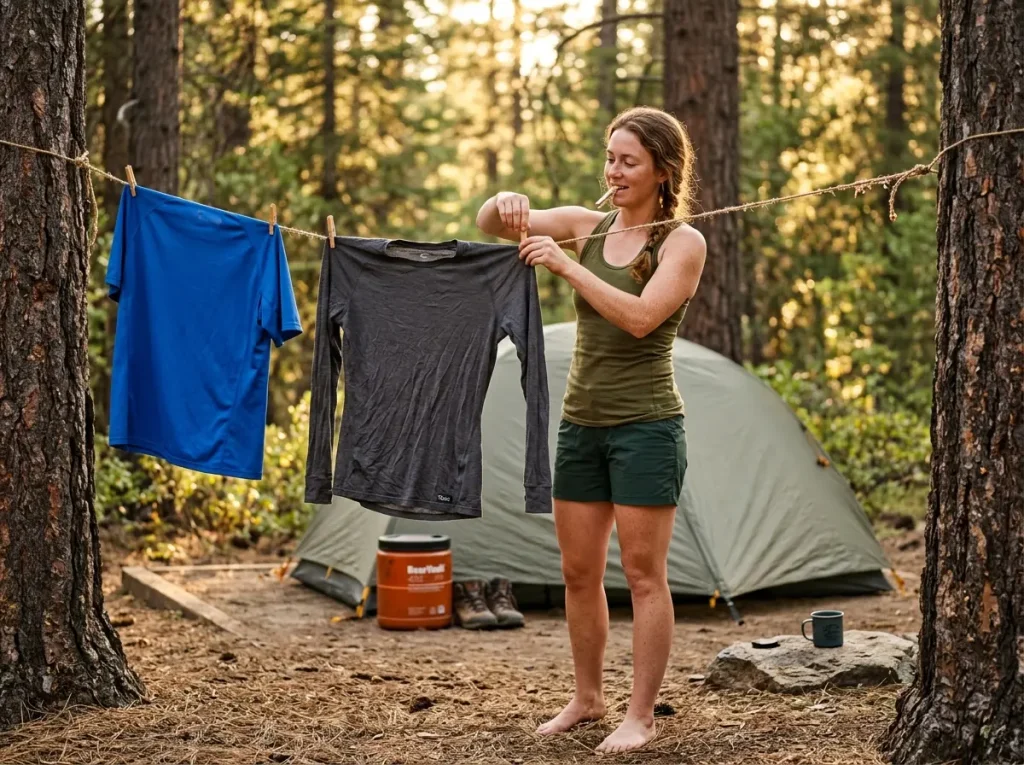
That said, bamboo does resist odor better than polyester in real-world use — just not for the reasons brands claim. The smooth fiber surface gives bacteria fewer places to cling compared to polyester’s textured microfibers. One PCT hiker wore a Free Fly bamboo hoodie daily for two months and reported it never developed the funky smell polyester shirts get after two days.
Merino still wins the odor game. The keratin structure of wool actively breaks down odor-causing bacteria. Bamboo sits in a solid middle ground — better than synthetic, not quite as good as merino wool’s odor resistance on trail.
Bamboo vs Merino vs Synthetic — The Honest Comparison
Comfort and Feel
Bamboo is the softest of the three. Period. If comfort against skin is your top priority, nothing in the outdoor fabric world matches the hand feel of a good bamboo blend. Merino is soft but can itch — especially cheaper blends under 18.5 micron. Polyester feels like polyester no matter what brands do to the surface texture.
Performance in Conditions
For warm weather (60–100°F), bamboo and synthetics trade blows. Bamboo feels cooler against skin because it absorbs moisture rather than pushing it to the surface. Synthetic feels drier because it moves moisture to the outer face faster, but that surface moisture creates a clammy sensation some hikers hate.
For cold and wet conditions, merino is the clear winner. It insulates when wet, regulates temperature across a wider range, and handles multi-day wear without odor buildup. If you’re choosing one fabric for a trip that spans conditions, merino base layers remain the safer choice.
Durability
Polyester lasts the longest. Merino pills and wears through under pack straps after a season or two. Bamboo viscose falls somewhere between — it pills if you abuse it in the wash but holds up under pack abrasion surprisingly well. One long-term tester reported TrekMates bamboo shirts outlasting Icebreaker merino under the same conditions.
UV Protection — The Number Most Brands Skip
What the UPF Numbers Actually Mean
UPF (Ultraviolet Protection Factor) measures how much UV radiation passes through fabric. UPF 50+ blocks 98% of UV rays. UPF 15 lets over 6% through — enough to burn on a long exposed ridge.
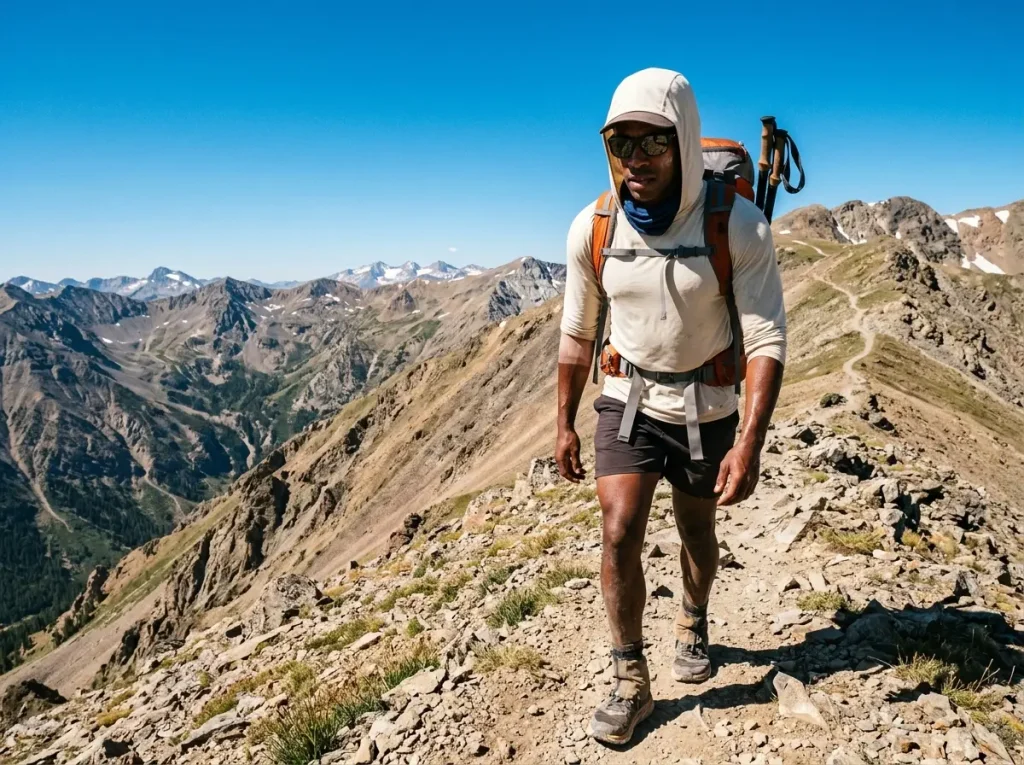
Bamboo gets a lot of UPF claims. Testing by Australian brand Bamboo Body found that dense, dark-colored bamboo garments consistently hit UPF 50+. But light-colored, thin bamboo fabrics sometimes dropped to UPF 30 or lower. The Free Fly Bamboo Lightweight Hoodie tested at UPF 20 — decent but not exceptional.
Color and Weave Matter More Than Fiber
Here’s what nobody tells you: fabric density and color determine UV protection more than the fiber itself. A dense navy bamboo shirt blocks more UV than a thin white merino one. Research published in the Textile Research Journal confirmed that bamboo viscose outperformed cotton at equal weave density — but the protection came from the weave structure, not some magical property of bamboo.
If you’re hiking exposed ridges where sun protection is critical, choose a darker bamboo hoodie with tight weave construction. Or pair a lighter bamboo layer with proper sunscreen on exposed skin.
Pro tip: A wet bamboo shirt loses significant UPF protection — water fills the gaps between fibers and changes how UV passes through. Apply sunscreen underneath if you expect to soak through on exposed terrain.
How Blend Ratios Change Everything
Understanding the Label
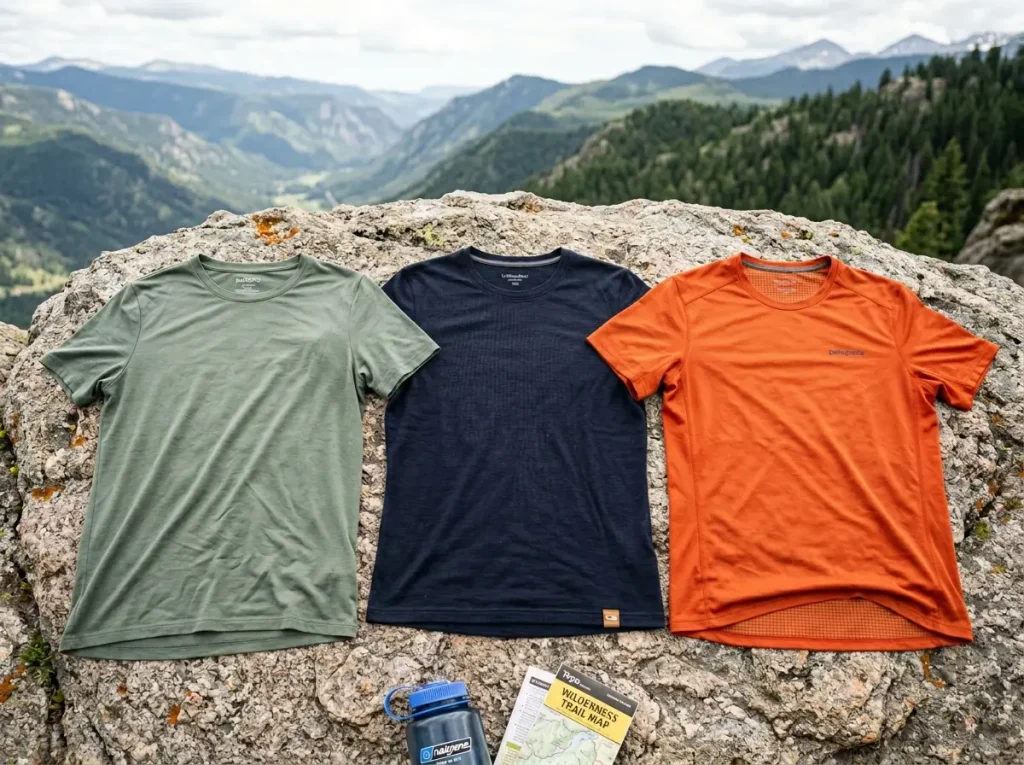
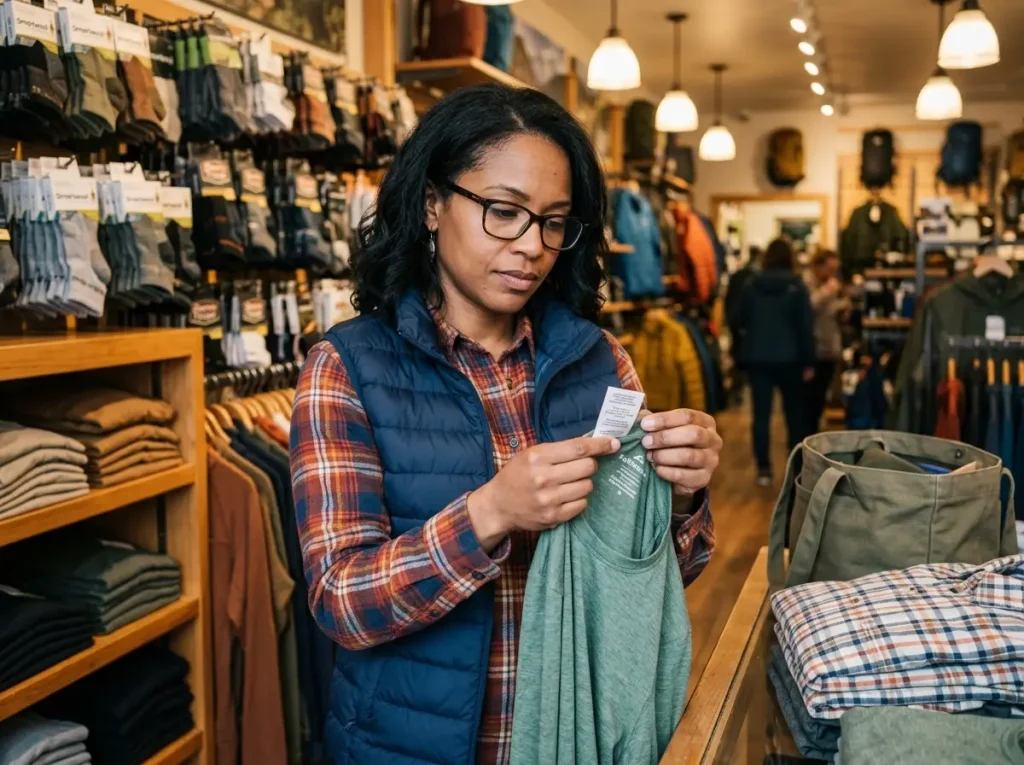
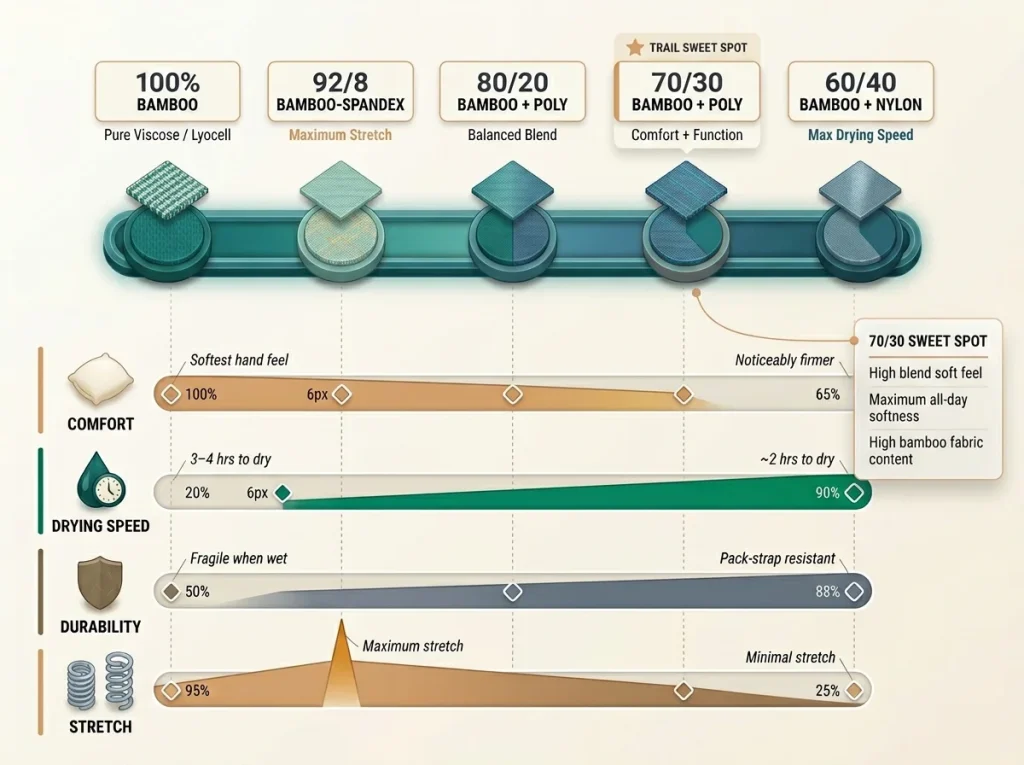
The percentage of bamboo viscose in your shirt determines its behavior more than anything else. Here’s the practical breakdown:
70/30 bamboo-polyester (like Free Fly’s lineup) — good balance of softness and drying speed. The polyester component keeps the fabric from getting waterlogged on humid days while maintaining most of bamboo’s comfort edge.
60/40 bamboo-cotton — softer than pure cotton but dries about the same speed. These are town shirts, not trail shirts. Skip these for anything involving a pack and sweat.
92-95% bamboo with 5-8% spandex — maximum stretch and comfort but fragile. Good for yoga, not for granite scrambles with a 30-pound pack.
What to Look For
For hiking, the sweet spot is 60-70% bamboo with the balance in polyester or nylon. You get enough bamboo for comfort and odor management while the synthetic component handles moisture wicking and durability. Higher synthetic content means faster drying — which matters more than softness when you’re 8 miles from the trailhead and the afternoon thunderstorm just hit.
When Bamboo Works — and When It Doesn’t
The Sweet Spot
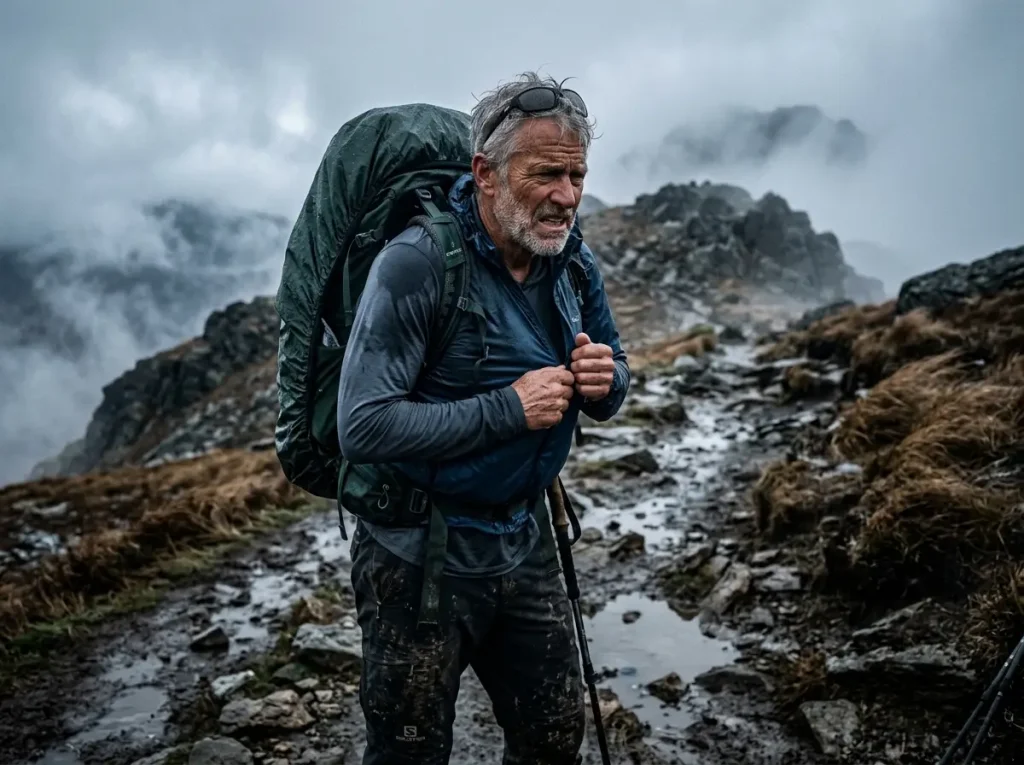
Bamboo earns its keep on summer day hikes. Temperature between 60-100°F, low chance of sustained rain, single-day effort. In desert heat, a bamboo sun hoodie feels noticeably cooler than a synthetic one because the moisture absorption creates a mild evaporative cooling effect against your skin.
It’s also solid for shoulder-season town days — the kind of hiking where you walk 5-8 miles on groomed trails and stop at a brewery after. The comfort factor is unmatched, and you won’t clear the room when you walk in post-hike.
Where to Leave It Home
Below 50°F, bamboo stops making sense. It doesn’t insulate when wet, it dries too slowly for changing weather conditions, and it offers zero wind resistance. Multi-day backpacking trips where you might need to wash gear and dry it overnight are a problem — you’ll be putting on a damp shirt at dawn.
Alpine scrambles, river crossings, and any situation where getting soaked is likely call for synthetic or merino. This isn’t a knock on bamboo — it’s just the wrong tool for those conditions, the same way running shoes are the wrong tool for a mountaineering route.
How to Make Your Bamboo Gear Last
Washing Without Wrecking
The number one mistake hikers make with bamboo is washing it like synthetic gear — hot water, normal spin cycle, tumble dry. Bamboo viscose fibers weaken when wet and heat accelerates degradation.
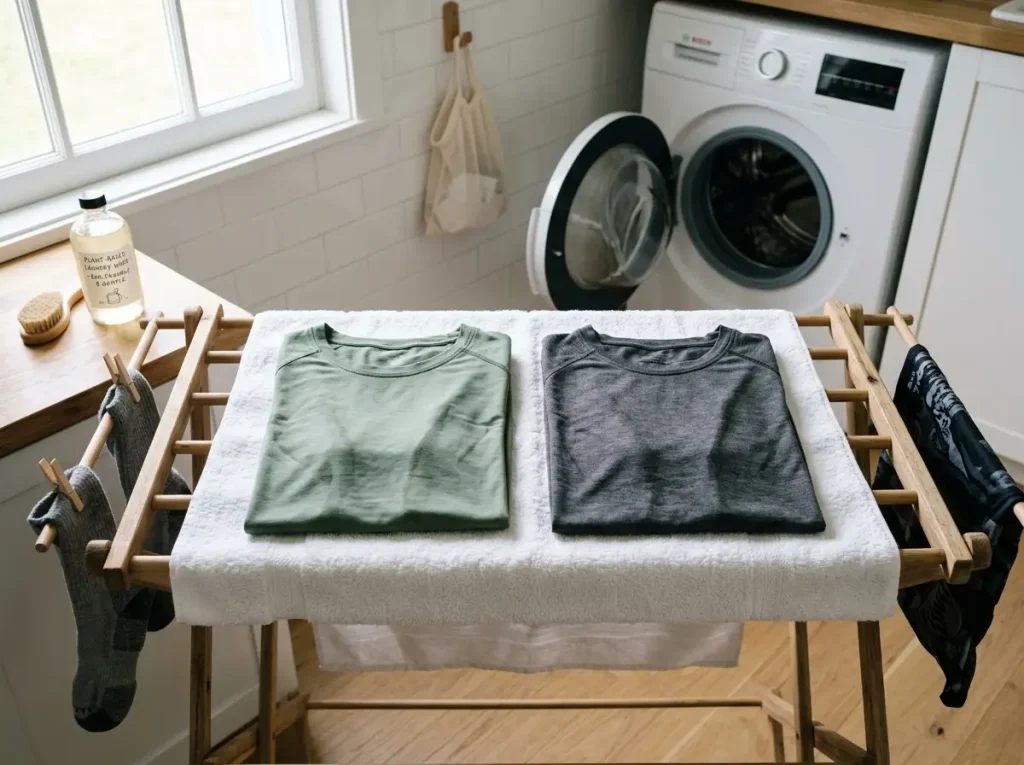
Wash in cold or lukewarm water on a gentle cycle at 700-800 RPM. Turn the shirt inside out before washing to protect the face from abrasion against zippers and buckles from other garments. Use a mild liquid detergent — skip fabric softener entirely, because it coats the fibers and reduces the breathability you’re paying for.
Drying Smart
Air dry flat on a clean towel. Hanging wet bamboo stretches the fibers under their own weight — you’ll end up with a misshapen shirt by the third wash. If you need the dryer, use the lowest heat setting and pull the garment out while still slightly damp.
Never put bamboo in a hot dryer. One hot cycle can shrink a shirt permanently and start the pilling process that turns a $50 shirt into a $50 cleaning rag. Treat it the way you would merino wool care — gentle handling pays for itself in longevity.
Pro tip: A mesh laundry bag is the cheapest investment you can make for your bamboo gear. It prevents the fabric from tangling with rougher garments in the wash and cuts pilling dramatically.
Conclusion
Bamboo fabric is a legitimate option for warm-weather hiking, not a gimmick — but it’s not the miracle fiber that marketing departments want you to believe. It does three things well: it feels incredible against skin, it manages odor better than polyester, and it breathes comfortably in heat. It does three things poorly: it dries slowly, it weakens when saturated, and it offers inconsistent UV protection unless you choose dark, dense weaves.
Know your conditions. Bamboo earns a permanent spot in your summer day hike rotation and your town-day wardrobe. For cold weather, wet multi-day trips, or anything where drying speed matters, stick with merino or synthetic. Match the fabric to the hike and you won’t be disappointed.
Your next step: check the label on that bamboo shirt you’ve been eyeing. If the blend is 60-70% bamboo with polyester or nylon making up the rest, and you’re hiking in warm conditions, buy it. If it’s 95% bamboo and you’re heading into the backcountry for a week, put it back.
Q1 Is bamboo fabric good for hiking?
Bamboo works well for warm-weather day hikes between 60-100°F where comfort and odor resistance matter most. It absorbs moisture and feels cooler than synthetics against skin. For cold, wet, or multi-day conditions, merino or polyester outperforms bamboo with faster drying and better insulation when wet.
Q2 Is bamboo better than merino for hiking?
Bamboo is softer and cheaper, but merino is more versatile. Merino insulates when wet, resists odor better, and works across a wider temperature range. Bamboo wins on comfort feel and price point. Choose bamboo for summer day hikes, merino for everything else.
Q3 Does bamboo clothing really have antibacterial properties?
The FTC says no. Processing bamboo into viscose rayon destroys the plant’s natural antimicrobial properties. However, bamboo does resist odor better than polyester because its smooth fiber surface gives bacteria fewer places to cling. The effect is real — the marketing explanation is not.
Q4 How long does bamboo hiking clothing last?
With proper care — cold wash, air dry flat, mesh laundry bag — bamboo shirts last one to two hiking seasons. Bamboo lyocell outlasts viscose by a wide margin. Pack strap abrasion is the main wear point, and bamboo handles it better than merino but worse than synthetics.
Q5 Can you wear bamboo fabric in cold weather hiking?
Bamboo is not recommended below 50°F. It does not insulate when wet, takes much longer to dry than synthetic alternatives, and offers no wind resistance. For cold weather, a merino base layer under an active insulation mid layer is a safer and warmer system.
Risk Disclaimer: Hiking, trekking, backpacking, and all related outdoor activities involve inherent
risks which may result in serious injury, illness, or death. The information provided on The Hiking Tribe is for
educational and informational purposes only. While we strive for accuracy, information on trails, gear, techniques,
and safety is not a substitute for your own best judgment and thorough preparation. Trail conditions, weather, and
other environmental factors change rapidly and may differ from what is described on this site. Always check with
official sources like park services for the most current alerts and conditions. Never undertake a hike beyond your
abilities and always be prepared for the unexpected. By using this website, you agree that you are solely
responsible for your own safety. Any reliance you place on our content is strictly at your own risk, and you assume
all liability for your actions and decisions in the outdoors. The Hiking Tribe and its authors will not be held
liable for any injury, damage, or loss sustained in connection with the use of the information herein.
Affiliate Disclosure: We are a participant in the Amazon Services LLC Associates Program, an
affiliate advertising program designed to provide a means for us to earn advertising fees by advertising and linking
to Amazon.com. As an Amazon Associate, we earn from qualifying purchases. We are also an official affiliate partner
of Black Diamond Equipment via the AvantLink network. If you click on a Black Diamond affiliate link and make a
purchase, we may earn a commission at no additional cost to you. We also participate in other affiliate programs and
may receive a commission on products purchased through our links. Additional terms are found in the terms of
service.