In this article
Insulated winter hiking boots split into two camps that solve different problems, and the marketing keeps trying to sell them as one category. A pac-boot like the Sorel Caribou is built for standing around in cold (sledding, plowing snow, snowblower duty) — heavy, warm, terrible for actually walking miles. A winter hiking boot like the Oboz Bridger or Salomon Toundra is built for moving through cold terrain — lighter, more articulated, with hiking-specific outsole geometry. Buy the wrong category and you’ll either freeze on a stationary outing or wreck your feet on a 6-mile snowshoe trip.
This roundup compares five winter hiking boots that earn their price across distinct cold-weather use profiles, from light-insulated shoulder-season hikers to the -40°F Salomon Toundra Pro that NASA-derived aerogel insulates well enough for genuine arctic conditions. Picks were narrowed by cross-referencing verified Amazon reviews from owners with multi-winter ownership, Outdoor Gear Lab and Switchback Travel’s 2026 evaluations, and the durability-vs-warmth trade documented in Treeline Review’s testing. Boots that didn’t pass the seam-durability check at their stated price point were cut, even when they appear in competitor lists.
Below: the comparison table, five full reviews with honest flaws called out, a fit-finding guide explaining the pac-boot-vs-winter-hiking-boot distinction (the part most articles skip), and a focused FAQ. If you’ve already learned the 80-hour rule for breaking in hiking boots, winter boots compress that timeline — heavier insulation and stiffer outsoles need patient miles before they earn your trust.
The 5 Best Insulated Winter Hiking Boots in 2026
Each pick below was matched to a specific cold-weather use profile rather than ranked head-to-head. A snowshoer covering 6 miles in 20°F and a stationary ice-fisher in -10°F wind chill make completely different boot purchases. Match the boot to your route’s actual movement pattern and temperature, not a generic “winter” label.
🏆 Best Overall: Oboz Bridger 8″ Insulated B-DRY
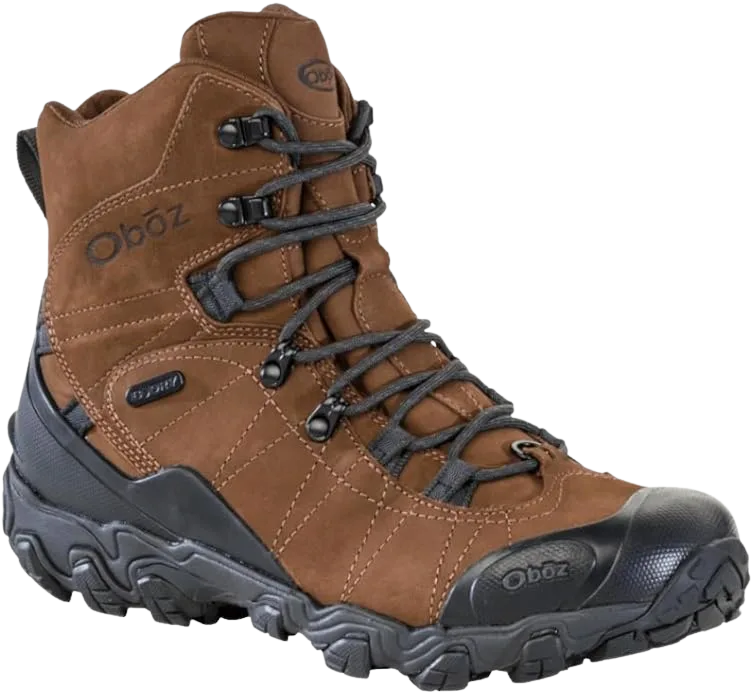
The Oboz Bridger 8″ Insulated is the closest thing the winter hiking category has to a true all-rounder — 200g of synthetic insulation hits the warmth sweet spot for active winter hiking without crossing into pac-boot bulk, the suede leather upper backs a B-DRY waterproof membrane, and the Granite Peak winterized outsole delivers actual lug bite on packed snow and ice. Treeline Review’s 2026 winter hiking boot comparison crowned it Best for Extreme Cold and Best for Wide Feet — which is unusual praise for a boot that isn’t trying to specialize in either category.
What you’re getting at the $200-220 price point: the structural fit and stiffness of a real hiking boot (not a sloppy pac-boot), warmth that’s appropriate for active movement in 0°F to 30°F conditions, and a durable upper that handles the abrasion of microspikes and snowshoe straps. Verified Amazon reviewers with multi-winter ownership consistently report the B-DRY membrane holding up across 3+ seasons of regular use. The honest flaw: at 200g of insulation, this is not the boot for stationary cold below 0°F — your feet will get cold standing around. It’s also heavier than the Merrell Thermo Chill, so on shoulder-season trips above 25°F the Oboz can feel like overkill.
Pro tip: Match insulation grams to movement intensity. Active hiking generates roughly 200-400 watts of body heat, which extends a 200g boot’s effective range by 10-15°F below its stationary rating. Stationary cold needs heavier insulation; moving cold needs less. Buying for the wrong activity is the most common winter-boot mistake.
Buy this if you’re an active winter hiker who covers real miles in 0-30°F conditions, you want a boot that handles snowshoes and microspikes, and you’d rather buy one good boot than separate sedentary and active pairs. Skip it if you mostly do stationary winter activities or your hiking is all shoulder-season above 30°F.
💰 Best Value: Merrell Thermo Chill Mid Waterproof
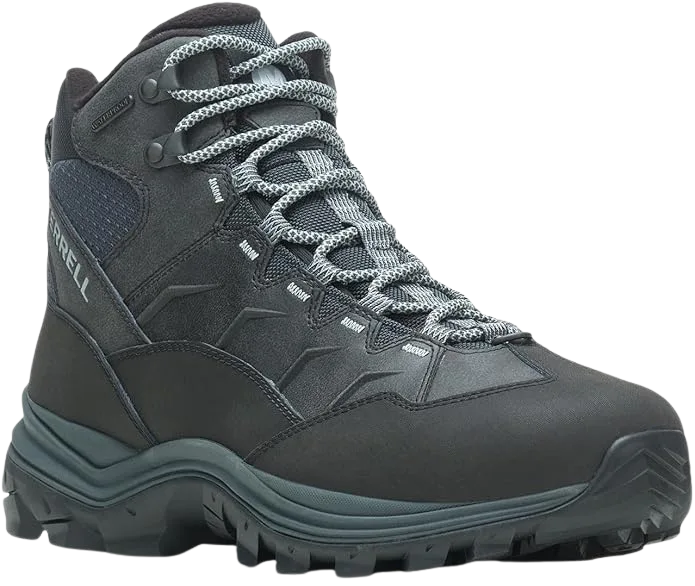
The Thermo Chill Mid is what shoulder-season winter hikers buy when they don’t want to commit to a 200g full-winter boot. Lighter insulation, lower-cut mid silhouette, and the M-Select Dry waterproof membrane give you genuine winter capability without the bulk of pac-boot construction. At roughly $130 it’s the cheapest entry into legitimate winter hiking footwear that still delivers actual hiking-boot articulation. CleverHiker’s 2026 winter boot review flagged it as the right pick for hikers transitioning from three-season boots into mild winter conditions.
What you get: enough warmth for 25-45°F wet-snow conditions, a Vibram-style outsole that grips well on packed snow, and weight that doesn’t punish your gait on longer mileage. Verified Amazon reviewers with 2+ winters of ownership consistently report the boot holding up across mixed wet-and-cold conditions. The honest flaw: this is not a deep-cold boot. Below 25°F your toes will get cold standing still, and the lower mid height lets snow pack into the collar on deep-snow days without gaiters. The Merrell is right tool for the wrong job below 20°F — buy the Oboz instead for serious winter.
Buy this if your winter hiking is mild-to-moderate (25-45°F), you want the lightest option that still counts as winter footwear, and you don’t want to spend $200+ on a boot you’ll only wear in shoulder seasons. Skip it if your hikes regularly go below 20°F or include deep snow that overtops mid-cut boots.
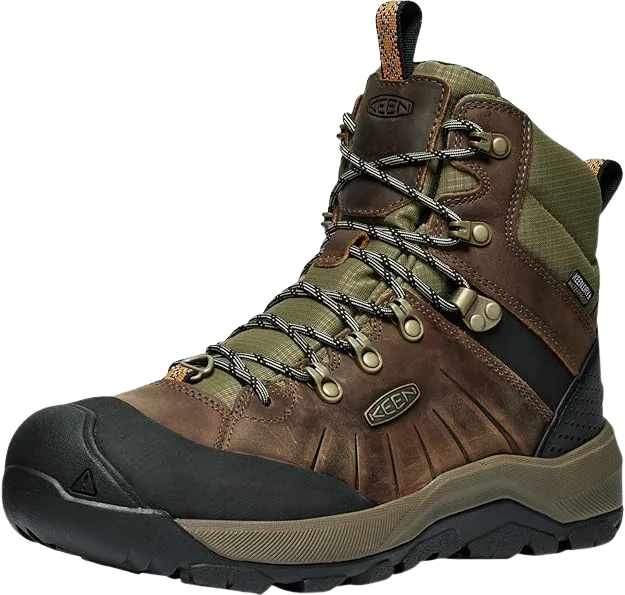
🎯 Best Mid-Height Insulated: KEEN Revel 4 Mid Polar Insulated
The Revel 4 Mid Polar splits the difference between the active-hiking Oboz and the deep-cold Toundra Pro — 200g of KEEN.WARM insulation rated to -25°F, KEEN.DRY waterproof membrane, and the heat-shield footbed that adds reflective warmth from beneath. KEEN’s recycled-plastic-bottle insulation isn’t gimmick marketing; the structure traps still air comparably to virgin synthetic fills, and the heat shield matters more than most reviews acknowledge for stationary or slow-moving cold. Outdoor Gear Lab’s 2026 winter hiking boot ranking placed it among the warmest mid-height options under $200.
What separates it from the Oboz Bridger: lower mid-height collar instead of 8″ high, better for shoulder-season trips that don’t need ankle protection from deep snow drifts but still want serious insulation. Verified Amazon reviewers with multi-winter ownership note the KEEN.DRY membrane outperforming GORE-TEX on extended wet-snow exposure, which surprised some long-time GORE-TEX loyalists. The honest flaw: the toe box is wide (typical KEEN design) — runners or narrow-footed hikers find the boot sloppy in the forefoot. Snowshoe binding straps also work less cleanly with the wider last.
Buy this if you want serious cold-weather rating in a mid-height boot, you have wide-to-medium feet, and you’d rather have the heat-shield footbed advantage than another boot’s ankle-coverage advantage. Skip it if you have narrow feet or your hikes routinely involve deep snow that demands a higher collar.
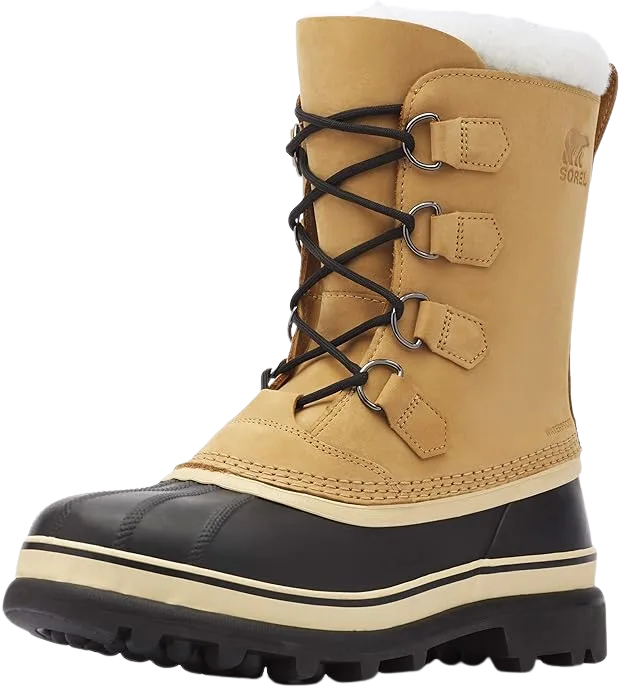
🎯 Best Pac-Boot Classic: Sorel Caribou Waterproof
The Sorel Caribou is the boot every hiker thinks of when they hear “winter boot,” and that mental association is both its strength and its limitation. Removable 9mm felt liner rated to -40°F, seam-sealed waterproof leather upper, vulcanized rubber lower — this is the pac-boot reference standard, unchanged in essential design for decades because the design works for what it’s built to do. SectionHiker’s 2026 evaluation called the Caribou the right pick for anyone who needs a winter boot for camp life, plowing snow, or stationary cold rather than active hiking miles.
What you’re getting: warmth you can feel in -20°F sustained cold without moving, an inner liner you can pull out and dry overnight by a fire, and the durability of rubber-lower construction that handles decades of seasonal use. The honest flaw — and this is the flaw most “best winter boot” articles bury — is that the Caribou is a poor hiking boot. The flat outsole, soft rubber lower, and stiff felt-lined upper make for clumsy gait on long mileage, and verified Amazon reviewers with multi-mile ownership consistently note foot fatigue and blisters on hikes over 4-5 miles. This is a stationary-warmth specialist, not a winter hiker.
Buy this if your “winter hiking” is actually winter camping, ice fishing, or short trail walks where stationary cold is the dominant variable, and you want a removable-liner boot that’s been refined for over 50 years. Skip it if you actually hike long mileage in winter — the foot fatigue is real and the Oboz Bridger does that job better.
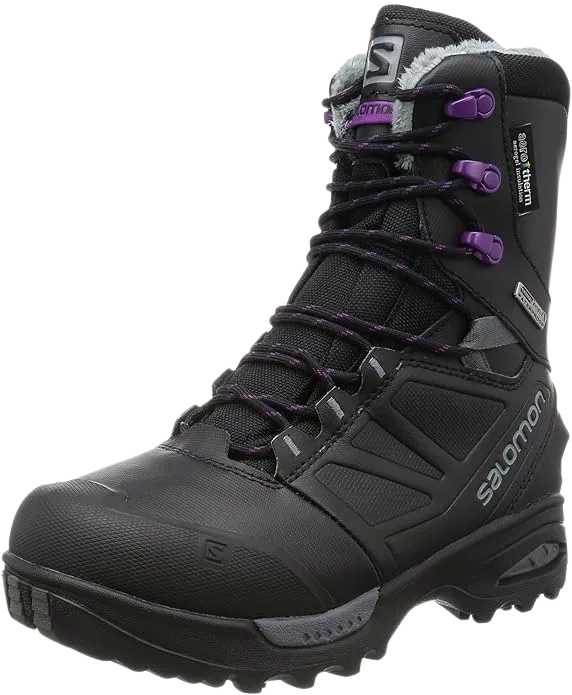
⬆️ Best for Extreme Cold: Salomon Toundra Pro CSWP
The Toundra Pro is what you buy when stationary -20°F is the floor and active -10°F is the ceiling — Salomon paired NASA-derived aerogel insulation with a full ClimaSalomon waterproof bootie to deliver -40°C/-40°F rating in a boot that still walks like a hiker rather than a brick. Aerogel matters here: it’s the lightest and thinnest insulating material commercially available, which means the Toundra Pro packs more thermal protection per ounce than synthetic-fill competitors. Outdoor Gear Lab’s 2026 winter boot ranking placed it at the top for sub-zero capability per gram of weight.
What separates it from the pac-boot Caribou: hiking-boot articulation despite the heavy insulation, an aggressive Contagrip outsole that handles ice and snow without microspikes, and a lacing system that locks the boot to your foot for real walking. Verified Amazon reviewers note the boot performing as advertised in deep arctic and shoulder-season conditions. The honest flaw: persistent reports of forefoot seam separation after 1-2 winters of heavy use — Salomon honors the 2-year warranty, but it’s a real durability concern at this price point. Sizing also runs slightly long; many reviewers size down half a size from their normal Salomon hiking shoe.
Pro tip: Aerogel insulation degrades less than synthetic fill over time because it’s not compressed by body weight — meaning a Toundra Pro at year 5 still insulates closer to its day-one rating than a 200g synthetic boot at year 5. The forefoot seam issue is the limiter, not the insulation.
Buy this if your winter hiking goes into genuine sub-zero territory and you need active hiking capability rather than pac-boot bulk, and you accept the 2-year warranty as part of the purchase. Skip it if your cold-weather use is mild-to-moderate — the Toundra Pro is overkill above 10°F.
How to Choose Your Insulated Winter Hiking Boot
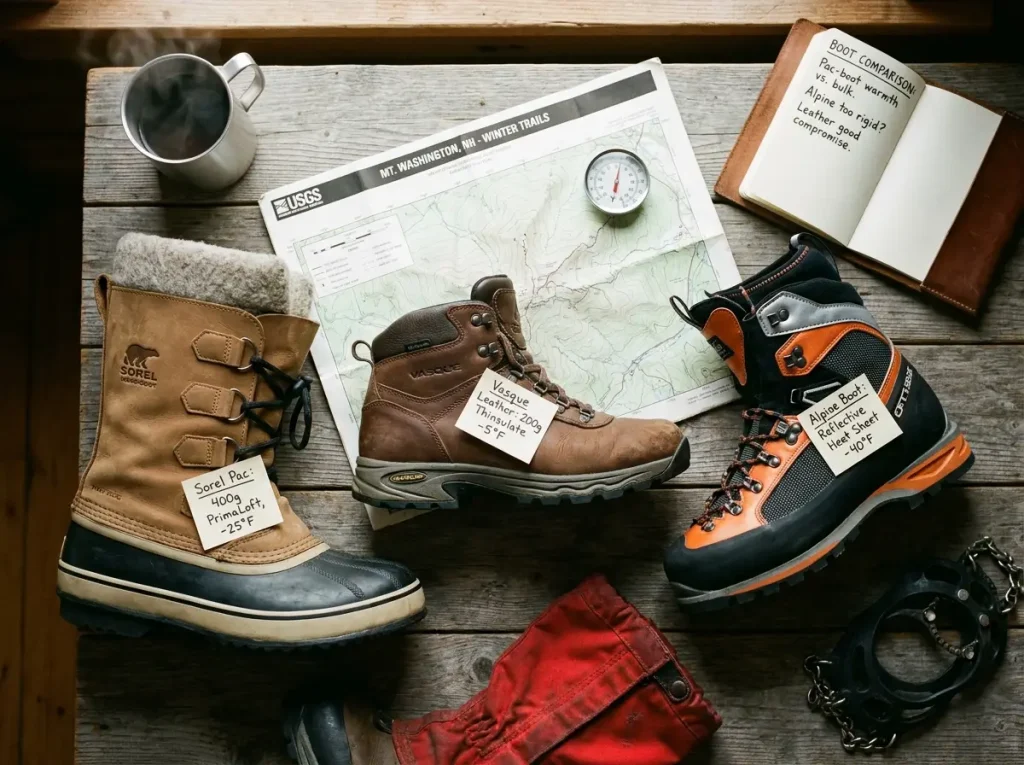
The decision tree comes down to three axes: temperature range, movement pattern, and snow depth. Get those right and the boot follows.
Pac-Boot vs. Winter Hiking Boot (The Most-Missed Distinction)
A pac-boot (Sorel Caribou) has a thick rubber lower bonded to a leather upper with a removable thick felt liner — designed for stationary cold and short walks. A winter hiking boot (Oboz Bridger, Salomon Toundra Pro, KEEN Revel 4 Polar) integrates insulation into a real hiking-boot construction with articulated outsole, lacing geometry that holds the foot in place under load, and an upper sized to flex with each step. Pac-boots solve “how do I keep my feet warm at the trailhead before the hike starts.” Winter hiking boots solve “how do I keep my feet warm during the hike.”
The decision: if your cold-weather use is more about standing around than walking miles, pac-boot. If you’re covering 3+ miles of winter trail, winter hiking boot. Buying a pac-boot for a snowshoe trip means foot fatigue and possibly blisters by mile 4.
Insulation Grams and What They Actually Mean
Insulation ratings are measured at rest — your feet generate body heat when active, which extends a boot’s effective range by 10-15°F below its stationary rating. A 200g boot rated to -25°F stationary works comfortably to about -10°F active. Aerogel (Salomon Toundra Pro) breaks this curve because it doesn’t compress under load like synthetic fill, so the rating holds closer to advertised over multi-year ownership.
Match grams to use case: 100-150g for shoulder-season above 25°F, 200g for active winter hiking 0-30°F, 400g+ or aerogel for stationary or sub-zero conditions.
Why Outsole Geometry Matters as Much as Insulation
Winter outsole compounds (Vibram Arctic Grip, Salomon Contagrip Winter, Granite Peak winterized) include silica particles or specialized rubber blends that grip ice and packed snow at temperatures where standard rubber compounds glaze and slide. CleverHiker’s 2026 winter boot testing measured roughly 30-40% better wet-ice grip from winter-specific compounds vs. standard hiking outsoles. If you hike on packed snow, refrozen melt, or ice-glazed trail, the outsole compound matters more than another 100g of insulation.
Sizing for Winter Boots vs. Three-Season Boots
Winter boots need room for thicker socks — most winter hikers run a midweight or heavyweight wool sock vs. the merino liner sock used in summer. Size up half a size from your three-season hiking boot to give the sock room. Too tight and circulation drops, which is the fastest path to cold feet that no insulation can fix. According to the CDC’s cold stress guidelines, restricted circulation is a primary contributor to frostbite risk in extremities — boot fit isn’t a comfort detail in winter, it’s a safety variable.
Conclusion
Winter hiking boots split by temperature, movement pattern, and snow depth, and the buying mistake most people make is treating them as a single category. They aren’t. A snowshoer in 15°F needs a different boot than an ice-fisher in -10°F or a shoulder-season hiker in 35°F slush.
Three takeaways: the Oboz Bridger 8″ Insulated is the all-rounder for active winter hiking in 0-30°F. The Merrell Thermo Chill Mid is the budget winner for shoulder-season hikers who don’t need deep-cold capability. The Salomon Toundra Pro CSWP earns its premium price when sub-zero territory is the actual use case, with aerogel insulation that ages better than synthetic fill. Match the boot to your route’s real temperature and movement pattern, and your feet stop being the part of the day you think about.
Q1 How much insulation do I need for winter hiking boots?
For active winter hiking in 0–30°F, 200g synthetic insulation is the right baseline. Below 0°F, look for 400g+ or aerogel insulation like the Salomon Toundra Pro. For shoulder-season hiking above 25°F, 100–150g light insulation works fine. Match insulation to movement intensity — active hiking generates body heat that extends warmth ratings by 10–15°F.
Q2 Can I use regular hiking boots in winter?
Three-season hiking boots work for shoulder-season conditions above 35°F when paired with thick wool socks and gaiters, but lose grip on ice and packed snow because their outsoles aren’t winter-compound. Below 30°F or in actual snow conditions, dedicated winter hiking boots are necessary — the insulation, waterproofing, and outsole geometry all matter.
Q3 Pac-boots vs. winter hiking boots for hiking?
Pac-boots like the Sorel Caribou are designed for stationary cold and short walks — heavy felt liners, rubber lowers, flat outsoles. Winter hiking boots like the Oboz Bridger or Salomon Toundra Pro have integrated insulation in a hiking-boot construction with articulated outsoles for real walking. For any hike over 3–4 miles, winter hiking boots prevent the foot fatigue pac-boots cause.
Q4 Do I need to size up for insulated winter hiking boots?
Yes, size up half a size from your three-season hiking boot to give thicker winter socks room. Tight winter boots restrict circulation, which is the fastest path to cold feet — no insulation overcomes a fit that compresses blood flow. The boots should feel slightly loose with thin socks, properly fitted with mid-to-heavyweight wool socks.
Q5 Are winter hiking boots waterproof?
Most quality winter hiking boots use a waterproof membrane like KEEN.DRY, M-Select Dry, B-DRY, or ClimaSalomon paired with seam-sealed construction. The membrane handles the wet-snow and slush conditions typical in winter hiking. Pac-boots like the Sorel Caribou use seam-sealed leather and rubber lowers that exceed membrane waterproofing for stationary or shallow-water exposure but breathe less during active hiking.
Risk Disclaimer: Hiking, trekking, backpacking, and all related outdoor activities involve inherent
risks which may result in serious injury, illness, or death. The information provided on The Hiking Tribe is for
educational and informational purposes only. While we strive for accuracy, information on trails, gear, techniques,
and safety is not a substitute for your own best judgment and thorough preparation. Trail conditions, weather, and
other environmental factors change rapidly and may differ from what is described on this site. Always check with
official sources like park services for the most current alerts and conditions. Never undertake a hike beyond your
abilities and always be prepared for the unexpected. By using this website, you agree that you are solely
responsible for your own safety. Any reliance you place on our content is strictly at your own risk, and you assume
all liability for your actions and decisions in the outdoors. The Hiking Tribe and its authors will not be held
liable for any injury, damage, or loss sustained in connection with the use of the information herein.
Affiliate Disclosure: We are a participant in the Amazon Services LLC Associates Program, an
affiliate advertising program designed to provide a means for us to earn advertising fees by advertising and linking
to Amazon.com. As an Amazon Associate, we earn from qualifying purchases. We are also an official affiliate partner
of Black Diamond Equipment via the AvantLink network. If you click on a Black Diamond affiliate link and make a
purchase, we may earn a commission at no additional cost to you. We also participate in other affiliate programs and
may receive a commission on products purchased through our links. Additional terms are found in the terms of
service.