In this article
Scrambling lives in the awkward gear gap between rock climbing and hiking — too technical for bare hands, not technical enough to justify proper climbing gloves designed for ropework and belaying. Most articles miss this and recommend either belay gloves built for rope friction (overkill on rock) or insulated alpine gloves built for ice (no dexterity for hand-jamming a granite crack). The right scrambling glove is its own category, sized to the route’s grade and the season’s temperature.
This roundup compares six gloves that work for the scrambling spectrum from Class 2 talus to Class 4 exposure, drawing from verified Amazon reviews from owners with multi-year alpine experience, Outdoor Gear Lab’s 2026 climbing glove rankings, manufacturer durability specs, and the rotation patterns that experienced alpine guides actually use across temperature ranges. Picks were narrowed by use profile (warm-weather rock vs. cold-weather mixed terrain) rather than ranked head-to-head — these gloves don’t compete on a single axis.
Below: the comparison table, six full reviews with honest flaws, a fit-finding guide explaining the scrambling-glove-vs-belay-glove-vs-mountaineering-glove distinction (the part most articles skip), and a focused FAQ. If you’ve already trained the scrambling fitness routine for technical terrain, the gloves are the last gear-related variable before route conditions take over.
The 6 Best Gloves for Class 2-4 Scrambling
Each pick below was matched to a specific use profile and temperature range. A summer Class 3 scrambler in the Sierra needs different gloves than a shoulder-season Class 4 alpine route in the Cascades. Match the glove to your route’s actual conditions, not a generic “scrambling” label.
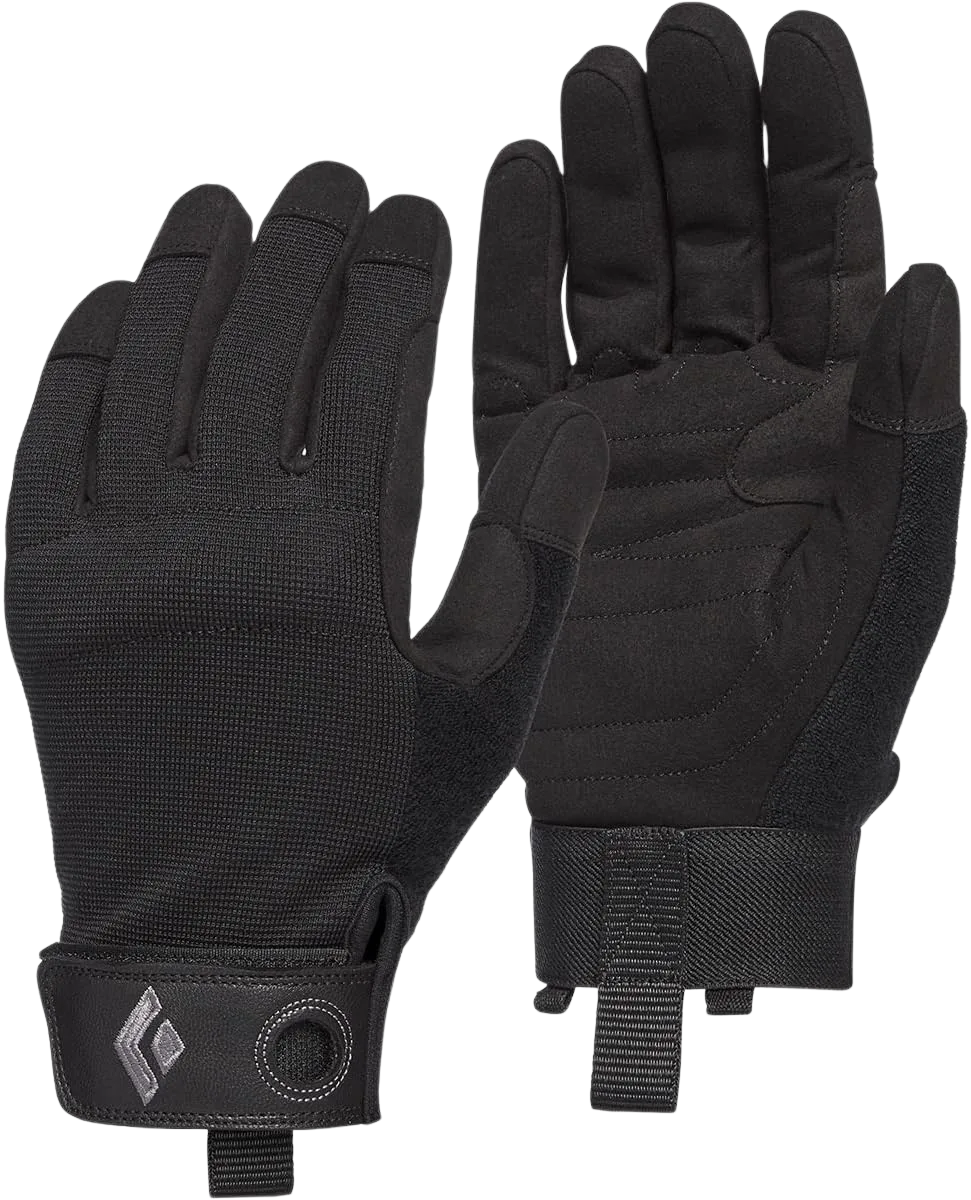
🏆 Best Budget Scrambling: Black Diamond Crag Gloves
The BD Crag is what most experienced scramblers reach for when they don’t need leather durability and don’t want to wear out a $60 Cordex on rough granite. Synthetic leather palm with reinforced index finger and thumb crotch handles the abrasion of Class 2-3 scrambling, mesh back vents heat, and the 70-gram weight per pair means you’ll actually carry them instead of leaving them at the trailhead. Outdoor Gear Lab’s 2026 climbing glove comparison flagged the Crag as the dexterity-per-dollar leader for under-$30 cragging gloves.
What you get: enough hand protection for the granular rough rock that strips skin off bare hands, articulated finger seams that don’t bind when you’re palming a sloper, and a hook-and-loop cuff that doesn’t load up with grit. Verified Amazon reviewers with multiple seasons of use consistently note the synthetic leather wearing through at the fingertips after roughly 60-80 days of intensive use — significantly less than the leather Cordex but appropriate for the price. The honest flaw: synthetic leather grip is noticeably worse than real leather when wet, and the mesh back offers zero rain protection. These are warm, dry-condition gloves.
Buy this if you scramble Class 2-4 in summer conditions on granite or rough rock, you don’t need rappel-rated palm protection, and you’d rather replace gloves every 2-3 seasons than spend on premium leather. Skip it if your routes go into wet conditions or if you do enough rappels that palm wear matters.
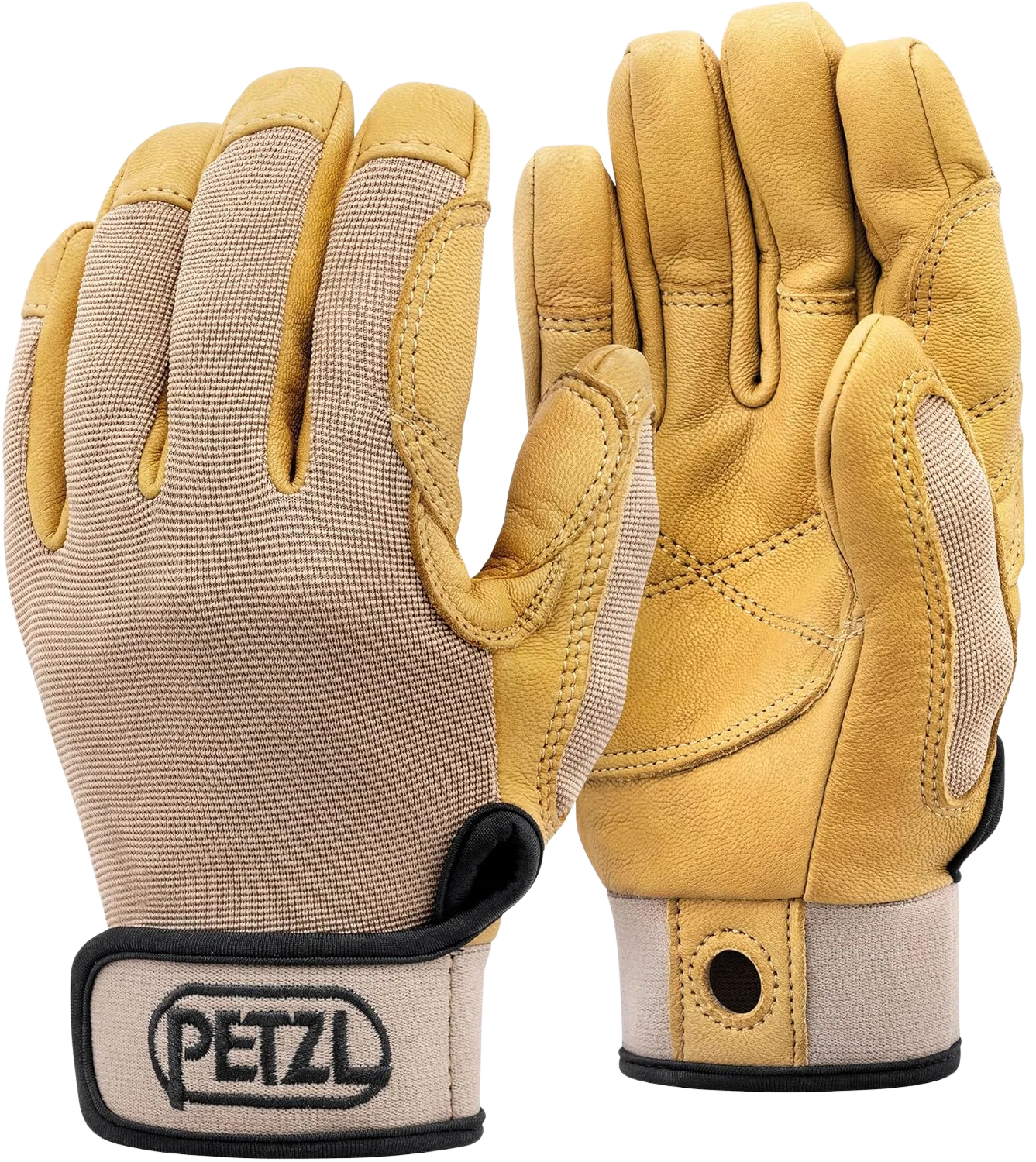
🏆 Best Leather Full-Finger: Petzl Cordex
The Petzl Cordex is the reference-standard climbing-and-scrambling glove for a reason — Petzl built it as a belay and rappel glove, and that pedigree means the leather palm handles rope friction without melting or glazing the way synthetic palms do. For scramblers, what matters is the same property: real goat leather grips wet rock noticeably better than synthetic, and the double-layered palm absorbs the abrasion of crack work and downclimbing without wearing through. Outdoor Gear Lab’s 2026 climbing glove review crowned the Cordex the dexterity-and-comfort winner, citing the no-break-in soft leather as a meaningful advantage over stiffer competing leathers.
What you get for the higher price: a glove that lasts 3-4x longer than synthetic equivalents in the same conditions, real grip when conditions go wet, and a fit that thru-hikers and alpine guides have validated across thousands of miles of use. The honest flaw: the leather palm runs hot in summer above 80°F — the breathable stretch nylon back helps, but the leather itself doesn’t vent. Verified Amazon reviewers also note the cuff is shorter than some competitors, which can let grit work in on dirt-scramble days.
Buy this if you do regular scrambling that includes downclimbing, light rope work, or mixed wet/dry conditions, and you want gloves that earn their keep over multiple seasons. Skip it if your scrambling is purely warm dry trail and you’d rather replace cheap gloves than maintain a leather pair.
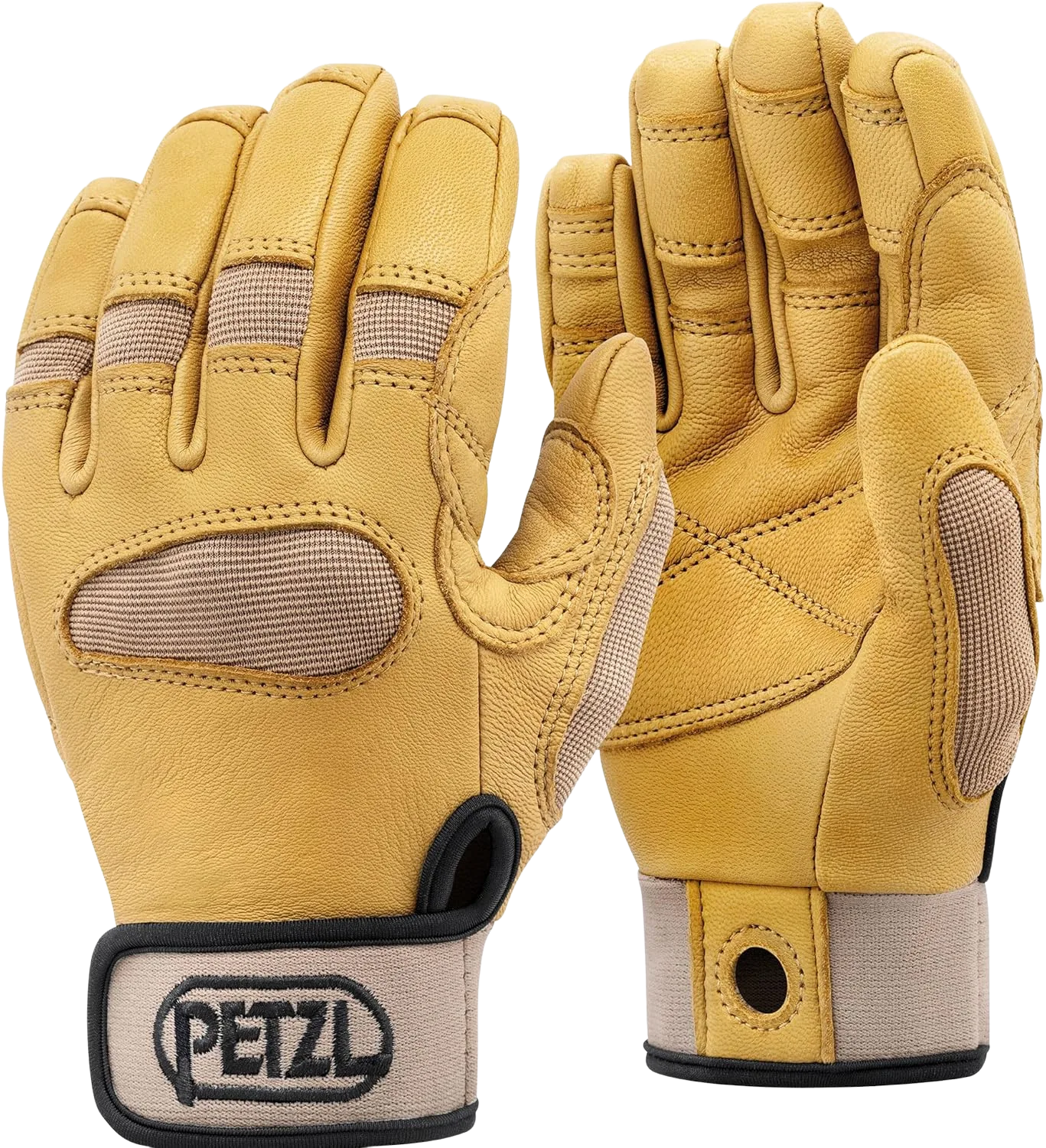
🎯 Best for Rope-Heavy Routes: Petzl Cordex Plus
The Cordex Plus is the heavier-duty cousin of the Cordex, and the differences matter for scramblers who do enough rappels or rope work that palm wear becomes the limiting factor. Double-layer leather extends across more of the palm and onto the back of the glove, padding protects against heat generated during long rappels (kinetic friction creates real heat — enough to burn through thinner leather), and the cuff is longer to keep grit out on dirt-and-scree days. CleverHiker’s 2026 climbing glove comparison flagged the Plus as the right pick for hikers who do mountaineering routes that include glacier travel or fixed-line work where rope handling is constant.
For Class 4 scrambling with sustained downclimbing or shoulder-season alpine routes that include short rappel sections, the extra leather is meaningful. The honest flaw: at the heavier weight, the Plus loses some of the tactile feedback that made the standard Cordex feel like a second skin. Verified Amazon reviewers note the dexterity step-down particularly when handling small wires or hardware. The price is also roughly 25% higher than the standard Cordex for what’s marginal benefit if your routes don’t include rope.
Pro tip: If you’re moving toward routes that include short technical sections, owning both the Crag (warm summer Class 3) and the Cordex Plus (shoulder-season Class 4 with rappels) gives you a complete kit cheaper than buying a single $80+ all-purpose glove that compromises on both ends.
Buy this if your scrambling routinely includes rappels or rope handling, you do long descents on fixed lines, or your routes hit shoulder-season conditions. Skip it if you only do dry summer Class 2-3 — the standard Cordex saves money and weight for that use.
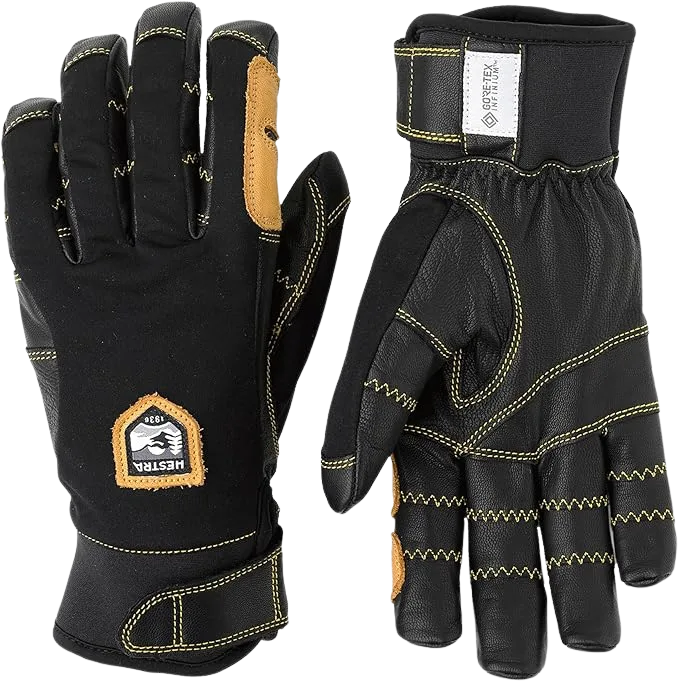
⬆️ Premium Pick: Hestra Ergo Grip Active
Hestra is what you buy when leather gloves matter to you the way leather boots matter to mountaineers. The Ergo Grip Active uses Hestra’s ergonomic cut — fingers shaped to the natural curl of the hand under load — paired with full leather construction that breaks in to your hands over the first 20-30 days. Long-term Amazon reviewers from European alpine guides consistently report 5+ years of use before retirement. The leather and stitching are premium, the windproof construction handles cold scrambling, and the fit is the most refined in this list.
The Active variant specifically targets the scrambling-and-active-mountaineering use case rather than belay or pure ski use. The honest flaw: the price is roughly 2-3x the Petzl Cordex, and the fit is European-narrow — North American hands sometimes find them tight across the palm even after break-in. Verified Amazon reviewers also note that the leather treatment requires occasional reconditioning to maintain water resistance, which is more maintenance than most synthetic alternatives.
Buy this if you’re a serious scrambler who wears gloves enough to amortize a $90+ pair across 5+ seasons, you appreciate the difference real leather makes, and you want windproof construction for cold weather routes. Skip it if you have wide hands, you don’t want to maintain leather, or you scramble too rarely to justify the cost.
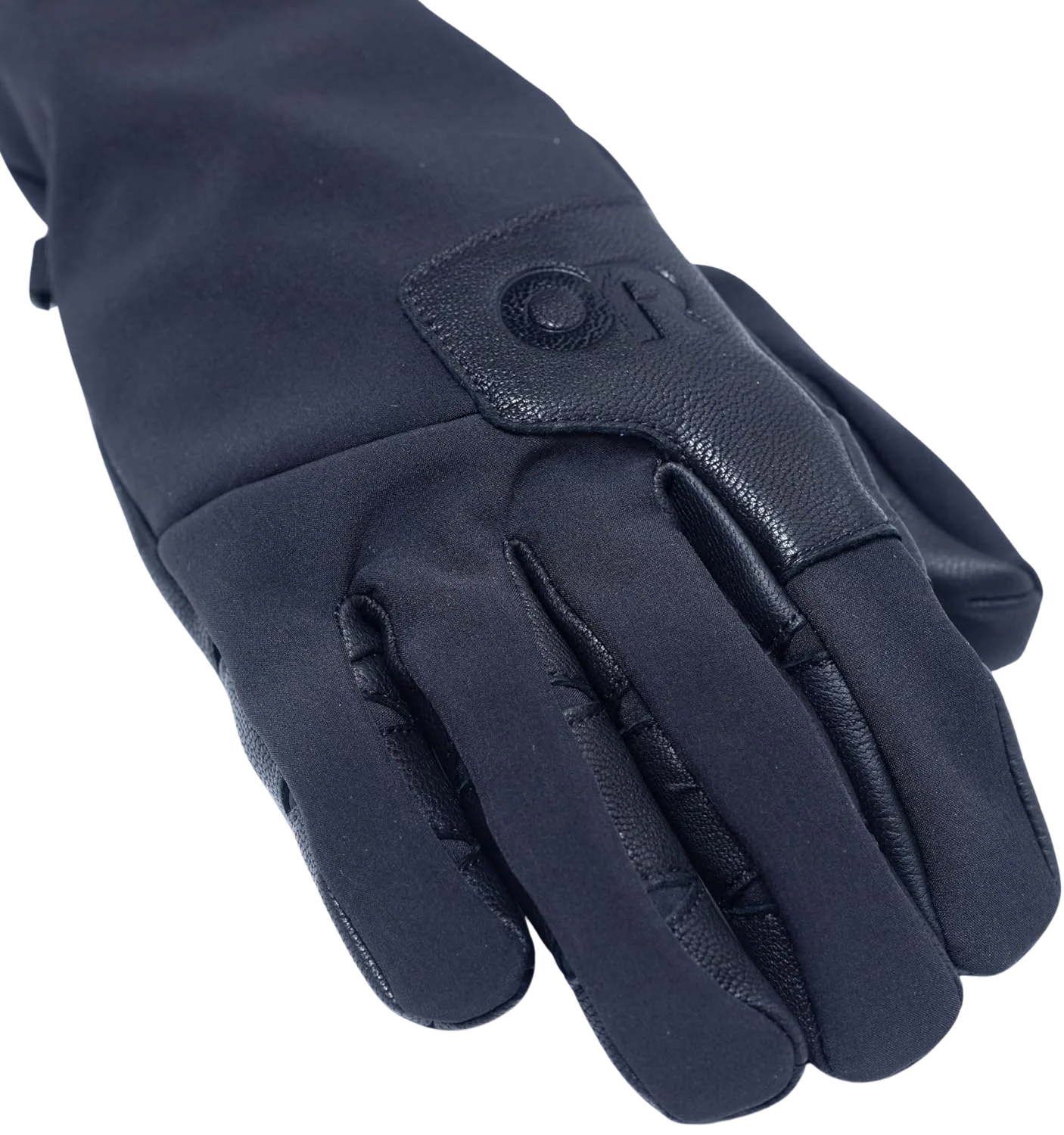
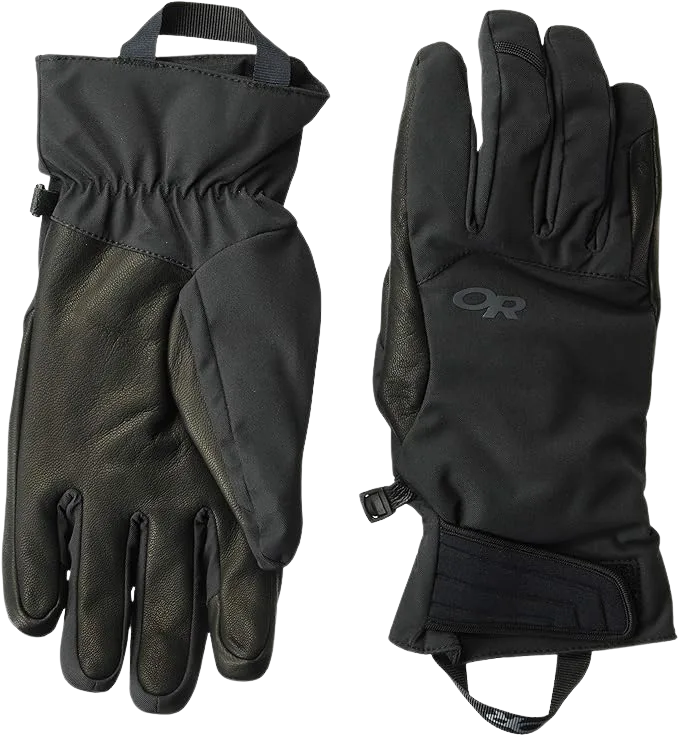
🎯 Best for Cold Scrambling: Outdoor Research Stormtracker Sensor
The Stormtracker Sensor is what you reach for when scrambling temps drop into the 30s and 40s — softshell construction with GORE-TEX INFINIUM WINDSTOPPER backed by water-resistant goat leather palm. The combination handles cold mountain mornings and shoulder-season alpine routes while still letting you operate carabiners and read maps without removing the gloves. Touchscreen-compatible thumb and index finger means you don’t need to peel them off to check a route on your phone — a small detail that matters when fingers get cold.
What separates the Stormtracker from heavier insulated gloves: thin profile preserves dexterity, and the goat leather palm offers more grip than nylon-palmed alpine ski gloves on rock. Outdoor Gear Lab’s softshell glove rankings consistently place the Stormtracker in the top tier for active cold-weather use. The honest flaw: at warmer temperatures the windproof construction runs hot, and the goat leather palm wears faster than the Cordex’s heavier leather under sustained abrasion. These are cold-weather specialists — wrong tool for summer scrambling, exactly right for cold.
Buy this if your scrambling extends into shoulder seasons or cold mornings, you want touchscreen functionality without taking gloves off, and you already have a warm-weather pair. Skip it if your scrambling is mostly summer or you need a single all-temperature glove.
🎖️ Honorable Mention: Outdoor Research Direct Contact
The Direct Contact gets the Honorable Mention slot because it bridges the gap between scrambling gloves and full mountaineering gloves — light enough for technical handwork on rock and ice, insulated enough for high-alpine routes that bring real cold. EnduraLoft back-of-hand insulation paired with a heat-trapping leather palm gives you tactile control without losing warmth, and the Ventia stormproof shell handles wind-driven snow that the Stormtracker would let through. For Class 4 routes that go into mixed terrain or shoulder-season alpine where temperatures stay below freezing, this is the right tool.
What sets the Direct Contact apart from heavier alpine gloves: dexterity for handling small hardware (carabiners, ice screws, route nuts) without numb-fingered fumbling. The honest flaw: at the price-and-warmth tier, you’re looking at a more specialized glove than most scramblers actually need. If your routes don’t go into freezing temps with active rope work, the Stormtracker Sensor delivers 80% of the function for 60% of the price. Verified Amazon reviewers also note the leather palm wears faster than the heavier Cordex on sustained granite abrasion — this glove is built for the cold-weather technical use case, not summer scrambling.
Buy this if your scrambling progresses into Class 4 alpine routes with real cold and rope handling, you want one glove that bridges scrambling and basic mountaineering, and the price reflects the specialization. Skip it if you scramble mostly in moderate temps or you’re not yet doing rope-heavy routes that require warm dexterity.
How to Choose Your Scrambling Glove
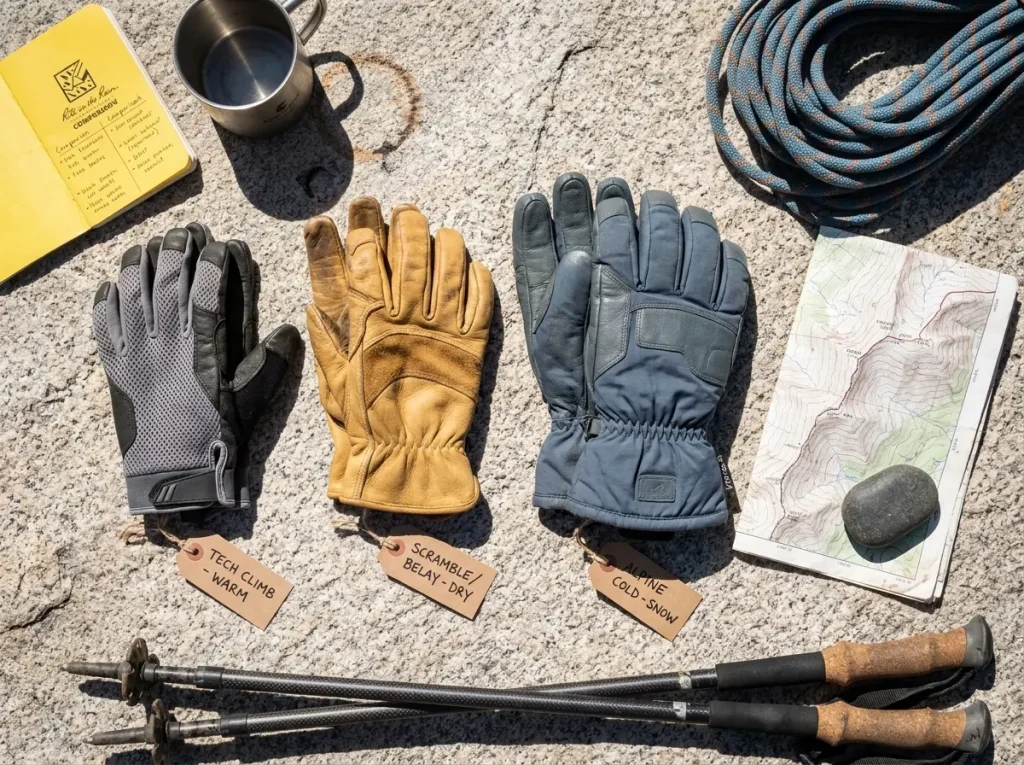
The decision tree for scrambling gloves comes down to two axes: temperature and abrasion intensity. Get those right and the glove follows.
Scrambling Glove vs. Belay Glove vs. Mountaineering Glove
A scrambling glove is built for hand contact with rough rock — palm protection, dexterity, breathability — without belay-rated rope friction or mountaineering-grade insulation. A belay glove (Petzl Cordex, Cordex Plus) overlaps significantly with scrambling needs because the leather palm and tactile fit work for both rope work and rock contact. A mountaineering glove (Black Diamond Guide, OR Direct Contact) prioritizes insulation and weather protection over dexterity and rock-grip. For most scrambling, the belay-glove pedigree fits better than the mountaineering-glove pedigree.
The decision: if your scrambling stays warm and dry, a synthetic-palmed glove like the BD Crag works. If you go into wet or sustained-rappel conditions, leather (Cordex, Cordex Plus, Hestra) earns its price. If you go into cold or alpine conditions, softshell (Stormtracker) or insulated (Direct Contact) become necessary.
Why Synthetic Palm vs. Leather Palm Matters Beyond Cost
Leather palms grip wet rock better than synthetic palms — this is consistent across CleverHiker and Outdoor Gear Lab testing, and consistent in long-term verified Amazon reviews. Synthetic palms grip dry rock comparably and breathe better in heat. The trade isn’t durability vs. cost — it’s wet-condition grip vs. warm-weather comfort.
If your routes never see wet conditions, synthetic is the better choice. If your routes go into shoulder seasons, morning dew on the rock, or actual rain, leather earns its price every time.
Temperature Range Mapping
Match the glove to the route’s actual temperature, not the trailhead temperature:
Above 65°F: BD Crag (mesh back vents, synthetic palm). Above 50°F with wet rock: Petzl Cordex (leather grips wet, breathable nylon back vents). 35-50°F dry: OR Stormtracker Sensor (windproof but not insulated, retains dexterity). Below 35°F or alpine cold: OR Direct Contact (insulation matters here, dexterity sacrifice acceptable). All temperatures with rope work: Petzl Cordex Plus (heavier leather handles rappels).
Why Most “Mountaineering Gloves” Are Wrong for Scrambling
The mountaineering-glove category is dominated by ski-and-ice-climbing designs that prioritize warmth and waterproofness over dexterity and rock-grip. They’re built for routes where cold and wet are the dominant variables and you’re not doing fine handwork. Scrambling — even Class 4 — is dominated by dexterity needs, palm protection, and warm-to-cool conditions. Buying a “mountaineering glove” for summer Class 3 means buying the wrong tool. The Hestra Ergo Grip Active and OR Stormtracker Sensor are mountaineering-glove-adjacent without the temperature specialization that makes most ski-and-alpine gloves overkill.
Conclusion
Scrambling gloves split by temperature and route type, and the buying mistake most people make is treating “mountaineering gloves” as a single category. They aren’t. A summer Class 3 scrambler needs a different glove than a shoulder-season Class 4 alpine ascender, and forcing one to do the other’s job means accepting compromise on both ends.
Three takeaways: the Black Diamond Crag is the warm-weather budget default — synthetic palm, mesh back, replace as needed. The Petzl Cordex earns its price as the leather mid-tier reference standard for routes that mix wet and dry conditions. The OR Stormtracker Sensor is the right pick for shoulder seasons where windproof and touchscreen dexterity matter. Match the glove to your route’s actual temperature and the abrasion intensity, and the glove stops being the part of the day you think about.
Q1 What’s the difference between scrambling gloves and belay gloves?
Belay gloves are designed for rope friction and rappel heat — heavier leather palms, longer cuffs, more padding. Scrambling gloves prioritize dexterity, palm protection against rough rock, and breathability for hand contact rather than rope contact. There’s significant overlap: the Petzl Cordex works well for both because its leather palm handles rope friction and rock abrasion equally well.
Q2 Do I need full-finger or half-finger gloves for scrambling?
Full-finger gloves are the right choice for any Class 3+ scrambling — you’re using your hands for grip-loaded contact with rough rock, and exposed fingertips wear skin off fast on granite or sandstone. Half-finger gloves (climbing gym style) are for belaying and rope handling where finger dexterity matters more than palm-and-finger protection. For trail-and-scramble use, go full-finger every time.
Q3 Are climbing gloves the same as mountaineering gloves?
No. Climbing gloves are dexterity-first designs for belay, rappel, and gear handling — the Petzl Cordex and Black Diamond Crag fit this category. Mountaineering gloves are warmth-and-weather-first designs for cold alpine and ski-tour use — the BD Guide and OR Direct Contact fit this category. Scrambling sits between the two, and most scramblers do better with climbing-glove pedigree than mountaineering-glove pedigree.
Q4 How long should mountaineering gloves last?
Synthetic-palm scrambling gloves last roughly 60–100 days of intensive use before palm wear becomes a problem. Leather-palm gloves like the Petzl Cordex last 200–400 days of similar use. Premium leather like the Hestra Ergo Grip Active routinely makes it past 5 years of frequent use. Cold-weather softshell gloves wear primarily at the leather palm, which can be conditioned periodically to extend service life.
Q5 Should I size up or down for scrambling gloves?
Size for a snug fit at the metacarpals with the fingertips reaching just to the end of the glove fingers. Too loose and you lose tactile feedback on holds; too tight and circulation suffers in cold conditions. Hestra runs European-narrow — most North American hands size up half a size. Petzl and BD run true to standard glove sizing. Try them on with the same liner setup you’d actually use on route.
Risk Disclaimer: Hiking, trekking, backpacking, and all related outdoor activities involve inherent
risks which may result in serious injury, illness, or death. The information provided on The Hiking Tribe is for
educational and informational purposes only. While we strive for accuracy, information on trails, gear, techniques,
and safety is not a substitute for your own best judgment and thorough preparation. Trail conditions, weather, and
other environmental factors change rapidly and may differ from what is described on this site. Always check with
official sources like park services for the most current alerts and conditions. Never undertake a hike beyond your
abilities and always be prepared for the unexpected. By using this website, you agree that you are solely
responsible for your own safety. Any reliance you place on our content is strictly at your own risk, and you assume
all liability for your actions and decisions in the outdoors. The Hiking Tribe and its authors will not be held
liable for any injury, damage, or loss sustained in connection with the use of the information herein.
Affiliate Disclosure: We are a participant in the Amazon Services LLC Associates Program, an
affiliate advertising program designed to provide a means for us to earn advertising fees by advertising and linking
to Amazon.com. As an Amazon Associate, we earn from qualifying purchases. We are also an official affiliate partner
of Black Diamond Equipment via the AvantLink network. If you click on a Black Diamond affiliate link and make a
purchase, we may earn a commission at no additional cost to you. We also participate in other affiliate programs and
may receive a commission on products purchased through our links. Additional terms are found in the terms of
service.