In this article
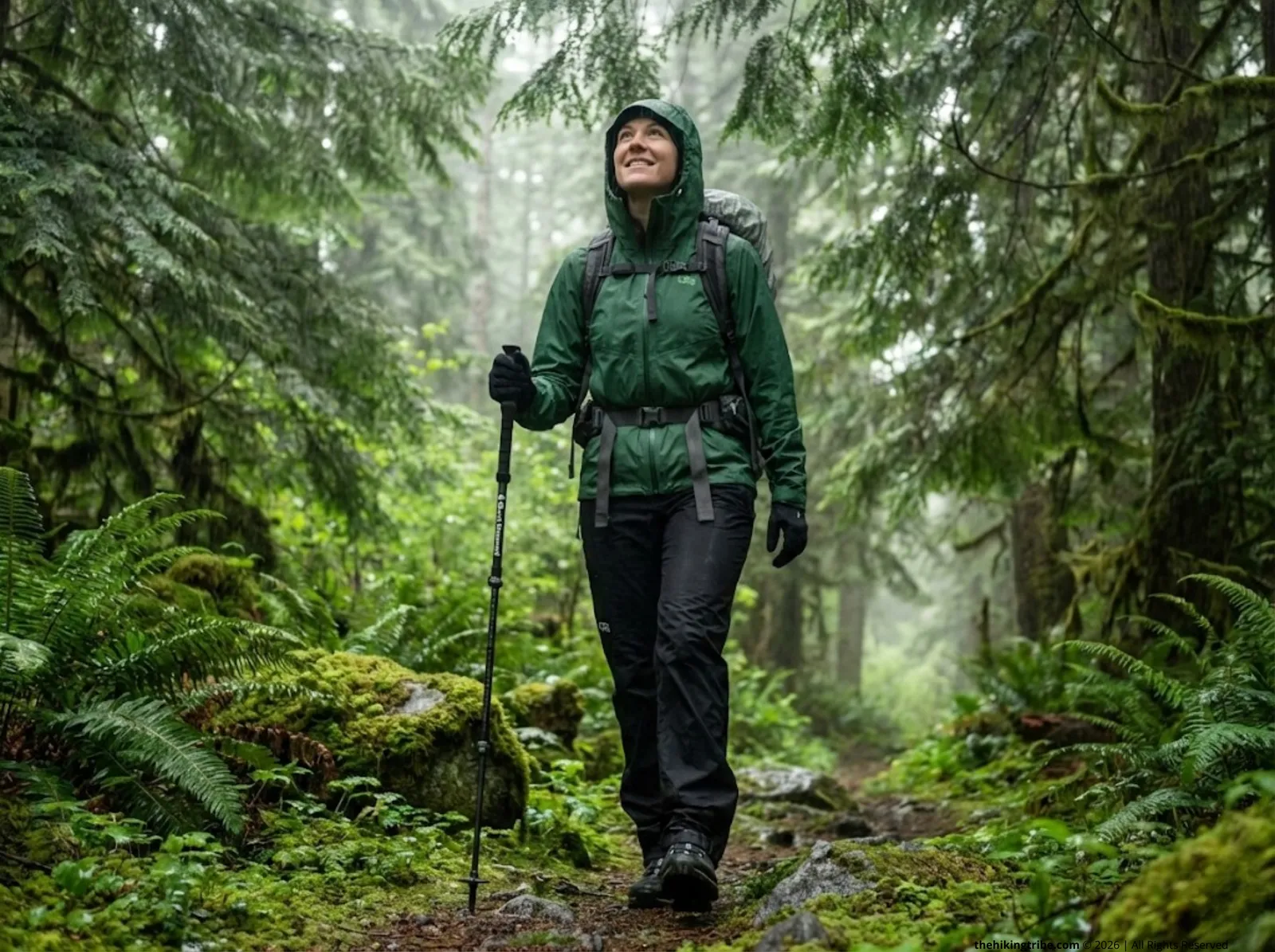
Rain was hammering the canopy hard enough to drown out conversation. The trail had turned into a creek, and my hiking partner was already lobbying for the car. Three hours later we stood under a roaring waterfall with the entire basin to ourselves—no crowds, no noise, just fog rolling through hemlocks and the smell of wet earth so strong you could taste it. That was the day I stopped treating rain as a reason to cancel and started treating it as a system to manage.
After years of hiking in the Cascades, Olympic NP, and the coastal forests of Squamish BC, I can tell you this: the hikers who bail on gray forecasts miss the best days on trail. The ones who show up prepared own the mountains.
This article builds your complete rain plan—clothing layers, pack protection, trail choices, safety protocols, and the mindset shift that turns a gray forecast into one of the best days you will spend outdoors.
⚡ Quick Answer: A rain plan is a system, not a prayer. Layer synthetic or merino wool (never cotton), protect your pack from the inside with a trash compactor bag, carry trekking poles for slippery terrain, and set a turn-around rule before you leave the trailhead. Monitor for early hypothermia signs—the “umbles” (mumbling, fumbling, stumbling)—and eat more than usual. The real enemy is cold, not wetness: manage heat loss and you can hike comfortably in anything short of severe weather.
Why Rain Days Are Better Than You Think
The Empty-Trail Advantage
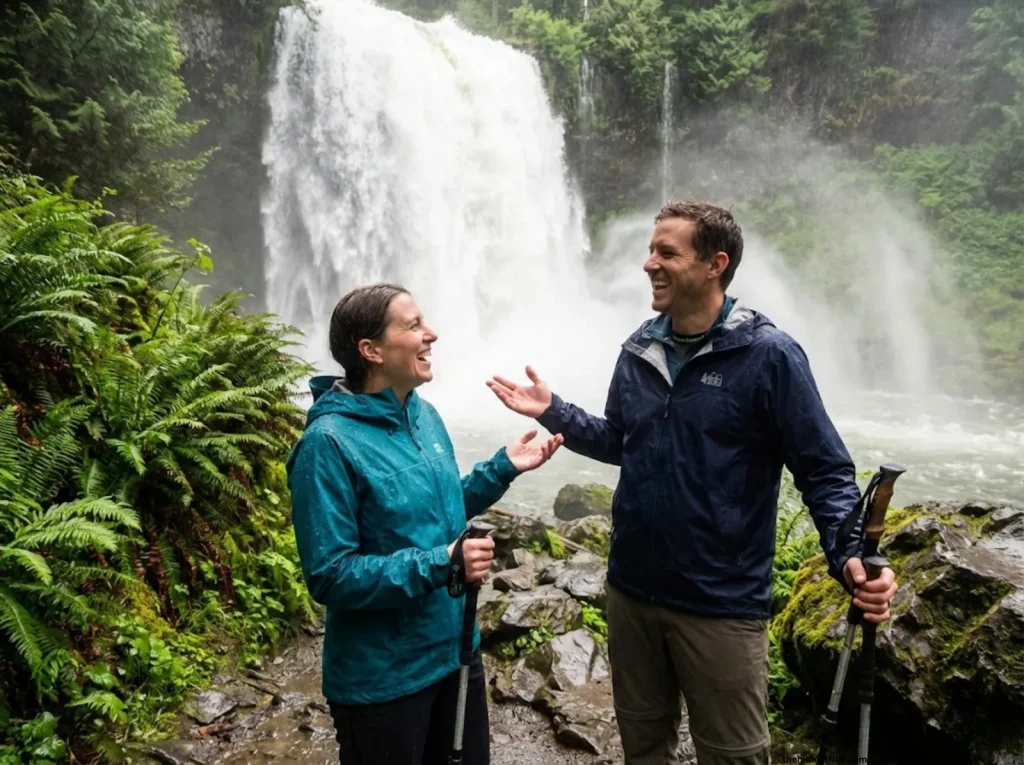
Most hikers cancel at the first drop. That means popular trails that normally draw 50+ people on weekends become near-private experiences. You get the overlook to yourself. You get silence instead of Bluetooth speakers. You get the kind of photographs that only fog, mist, and overcast light can produce—dramatic depth, saturated greens, texture that sunny days cannot replicate.
Waterfalls peak during and after rain events. If you have ever wanted that dramatic cascade shot from a place like Olympic NP or the Great Smoky Mountains, gray days deliver bigger volume and fewer elbows. The smell of petrichor—oils released by soil microbes when rain hits dry ground—is one of the most universally pleasant scents in the outdoors. You do not get that from a bluebird day.
Experienced hikers already know that shoulder season hiking avoids the crowds for good reason, and that same logic applies to weather windows. A rainy Tuesday in September beats a sunny Saturday in July for solitude.
Shifting Your Mindset from “Staying Dry” to “Staying Warm”
Here is the core principle behind every effective rain plan: “You can hike wet. You cannot hike super cold, chafed, or defeated for days on end.” That line comes from Gossamer Gear’s thru-hiking program, and it is the single most useful sentence in rain preparedness.
Perfect dryness is impossible in sustained rain. Sweat builds inside your shell. Mist wicks into every gap. The goal is not zero moisture—the goal is thermal regulation. If you stay warm and functional, rain becomes background noise. PNW hikers call steady drizzle “liquid sunshine” for a reason: once your system works, the reframe is not just attitudinal. It is practical.
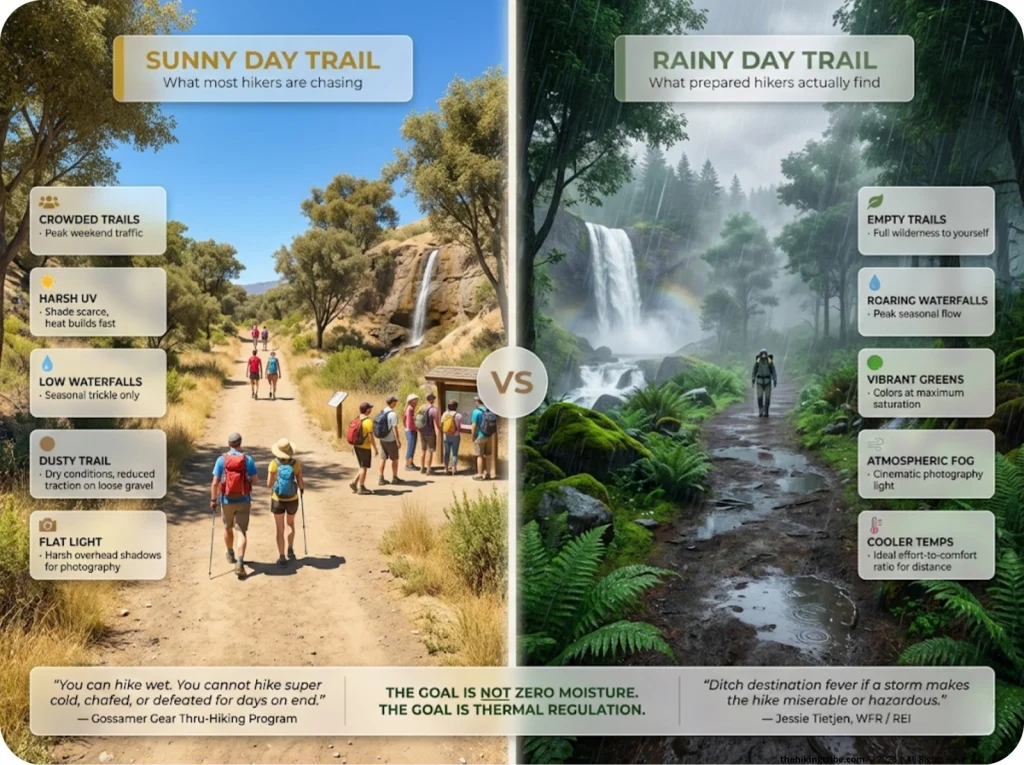
The biggest psychological trap on rainy days is destination fever—the obsession with reaching a specific point despite worsening conditions. Jessie Tietjen, a wilderness emergency medical technician and REI contributor, puts it bluntly: “Ditch destination fever if a storm makes the hike miserable or hazardous.” That advice saves lives.
The Layering System That Keeps You Warm in Rain
Base and Mid Layers — Why Cotton Kills
The phrase “cotton kills” exists for a reason. Cotton retains water and accelerates heat loss—the USDA Forest Service warns that wet clothes lose about 90% of their insulating value. On a 55°F rainy trail, a soaked cotton t-shirt can drop your core temperature fast enough to trigger hypothermia before you realize what is happening.
Swap cotton for synthetic polyester or merino wool base layers. Merino absorbs up to 30% of its weight in moisture before it feels wet to the touch, giving it a real performance edge in sustained precipitation. A brand like Smartwool builds their entire line around this property. Pair that with a breathable mid layer—something like the Outdoor Research Ferrosi Convertible—and you have a layering system that wicks, insulates, and vents without trapping cold moisture against your skin.
Understanding the physics of heat loss in wet cotton vs. wool is not trivia. It is the difference between a comfortable rainy hike and an evacuation.
Pro tip: Start hiking slightly cool and vent early. Adjust before you overheat. Managing sweat proactively is easier than wicking it away after your base layer is saturated.
Your Waterproof-Breathable Shell — Pit Zips Are Non-Negotiable
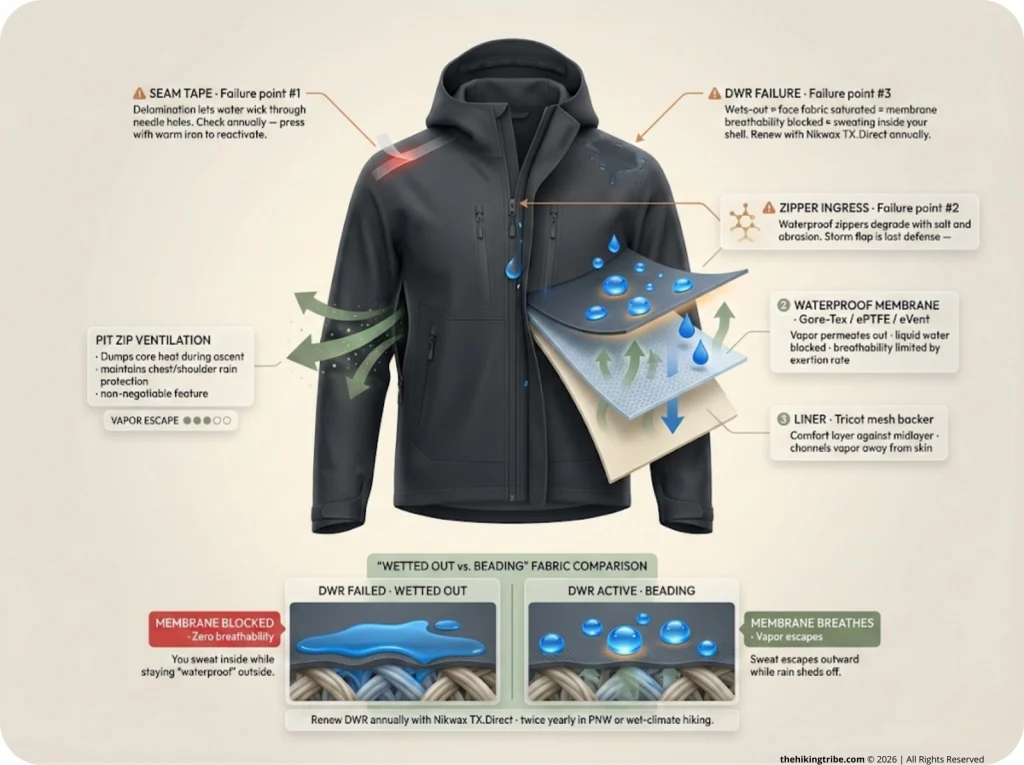
A waterproof-breathable shell jacket is your outer defense, but breathability degrades during high exertion. Sweat condenses on the jacket interior, and you end up wet from the inside—the opposite of the problem you are trying to solve. Membranes like Gore-Tex and its alternatives work by allowing sweat vapor to escape while blocking liquid water, but that process stalls when your exertion rate exceeds the membrane’s vapor transfer capacity.
Pit zips fix this. Underarm vents dump heat and moisture during uphill pushes without sacrificing rain protection on the chest and shoulders. If a rain jacket does not have pit zips, skip it. The Great Smoky Mountains National Park advises putting on rain gear before you get wet to prevent hypothermia, and that rule is critical: once you are already soaked, adding a shell traps cold moisture against your body. Gear up preemptively.
The DWR (Durable Water Repellent) coating on your shell causes water to bead and roll off. When DWR fails, the face fabric “wets out” and blocks the membrane’s breathability entirely. Renew it annually with a product like Nikwax TX.Direct—or twice yearly if you hike in wet climates regularly. Read about how pit zips regulate core temperature while moving if you want the full breakdown on ventilation strategy.
Rain pants vs. rain skirt: the Enlightened Equipment Rain Wrap offers better airflow in mild-to-moderate rain, while full pants like the Outdoor Research Helium are necessary in sustained heavy rain or cold wind. Pick based on forecast severity, not habit.
The Umbrella Option Most Hikers Overlook
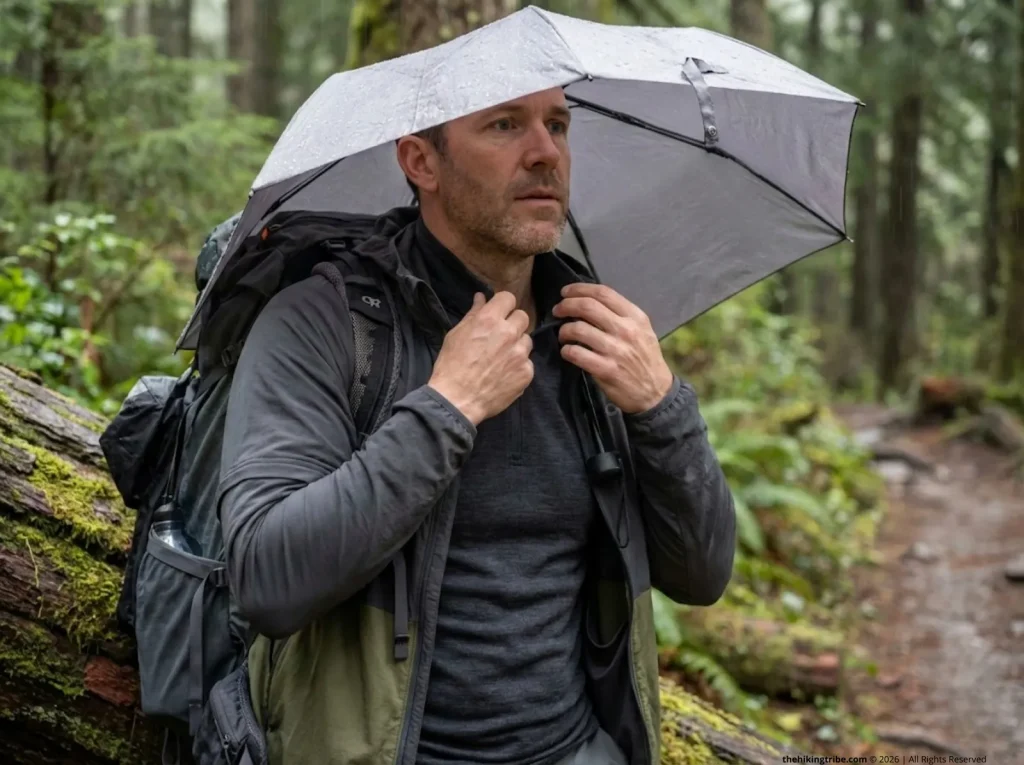
In mild, steady rain with low wind, a trekking umbrella provides superior ventilation over a full rain shell. No sweat buildup, no condensation—just open air above you and dry shoulders.
Hands-free umbrella kits like the Gossamer Gear Lightrek with its dedicated mount attach the umbrella to your pack straps, freeing both hands for trekking poles. The weight penalty is 6-10 oz depending on model—comparable to a lightweight rain jacket but with dramatically better comfort in the right conditions. The Sea to Summit Ultra-Sil Trekking Umbrella is another solid option if you want something that packs flatter.
The catch: umbrellas fail in high wind conditions above roughly 15 mph sustained, and in heavy canopy where branch drip negates coverage. But for open trails in steady light rain, they are the best tool most hikers never consider.
Pro tip: Carry extra dry socks in a sealed bag and rotate them midday. Wet feet are the fastest path to blisters and misery, and a fresh pair of Smartwool merino socks at the halfway point resets your comfort completely.
Protect Your Pack — The Sleep System Rule
Pack Liner vs. Rain Cover — The Data
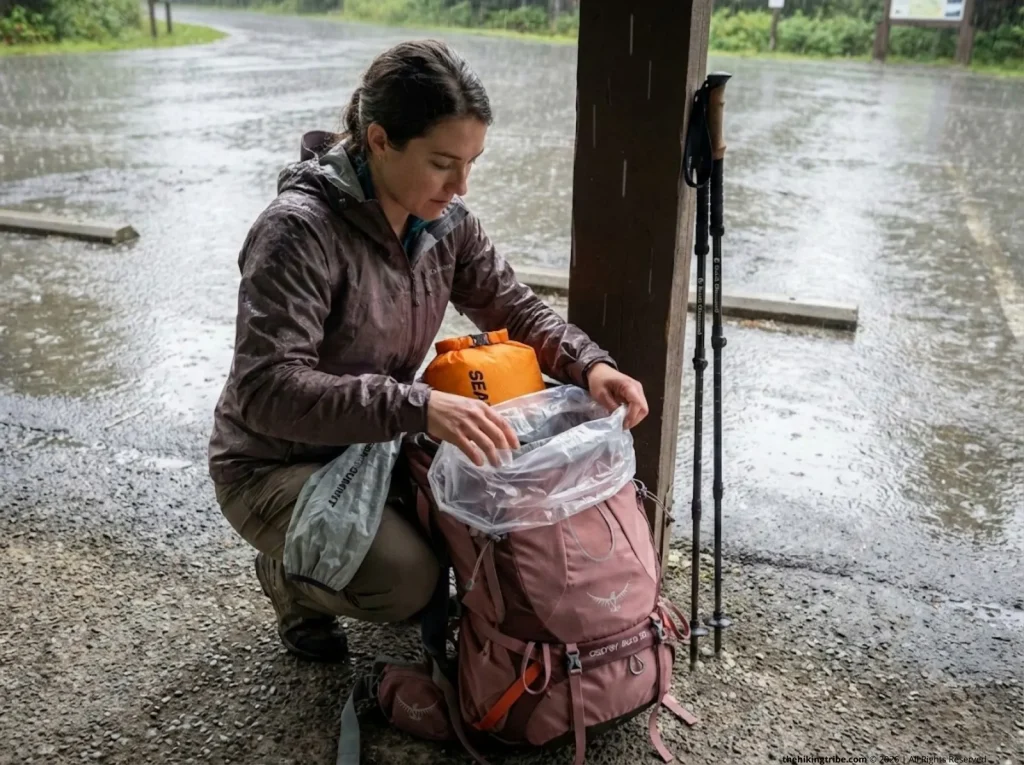
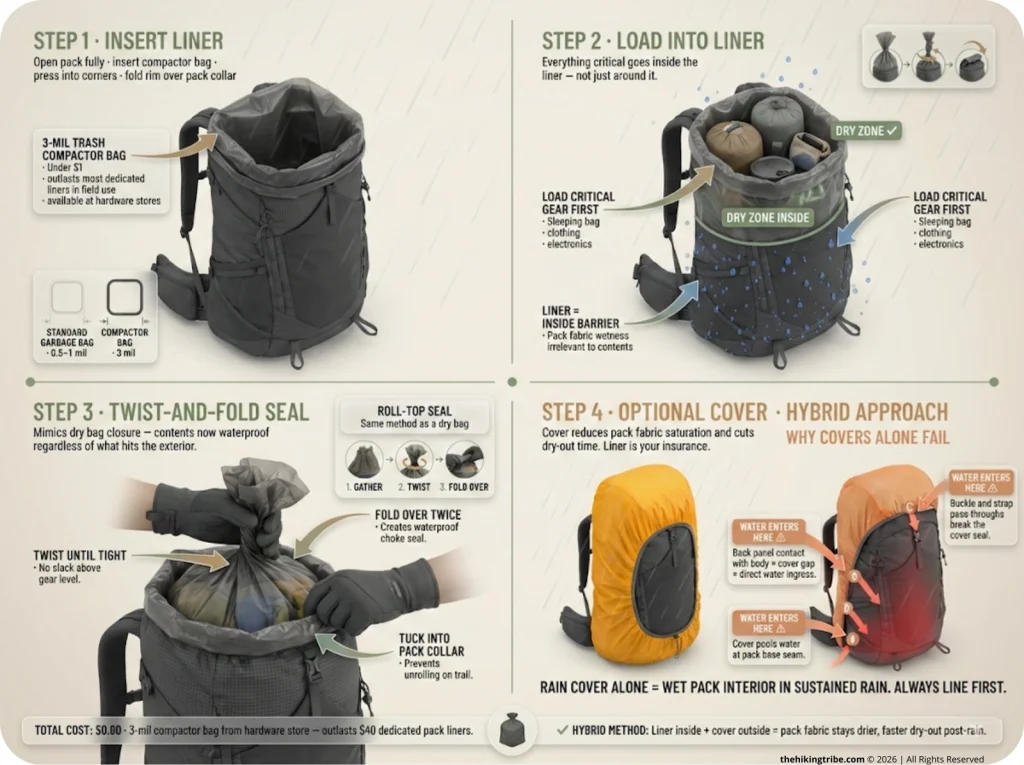
A pack rain cover fails from the bottom up. Water pools where the pack contacts your back and seeps through seams. In sustained rainfall, a cover alone guarantees a wet pack interior.
A full pack liner—a trash compactor bag or a dedicated dry bag like the Sea to Summit Evac—waterproofs from the inside out. Everything critical stays dry regardless of how much water hits the pack exterior. The hybrid approach works best: use both a liner for insurance and a cover to reduce pack fabric saturation and cut dry-out time later. Trash compactor bags cost under a dollar and the 3-mil thickness outlasts most dedicated pack liners in field use. Read our data-driven analysis of backpack liners vs. covers for the full comparison.
The “Dry Sleep System at All Costs” Principle
On multi-day trips, your quilt or sleeping bag plus sleeping pad plus dedicated sleep clothes equals your sleep system. If this gets wet, you lose the ability to reset overnight. Your body cannot recover. Your morale craters. Day two becomes a survival situation instead of an adventure.
“Protect the sleep system at all costs” is the most-repeated piece of rain plan wisdom across thru-hiking communities, and it is non-negotiable. Everything else can be wet—your shell, your pack fabric, your hat. But your sleep system stays dry or your trip is over.
Store it inside the pack liner at the bottom of your pack. Double-bag it if the forecast calls for multi-day rain. And carry a separate set of dry camp clothes (base layer + socks) in a sealed dry bag. Change into them the moment you reach camp. That morale reset is not just psychological—it is physiological. Your body stops losing heat, core temperature stabilizes, and you feel human again.
Pro tip: Pitch shelter first, change into dry layers immediately, then eat hot food. This shelter-first pitching sequence is the fastest recovery protocol after a soaked day on trail. It creates an immediate dry workspace for organizing the rest of your gear.
Trail Selection and Safety Decisions in Rain
Rain-Friendly Trails vs. Exposed Routes
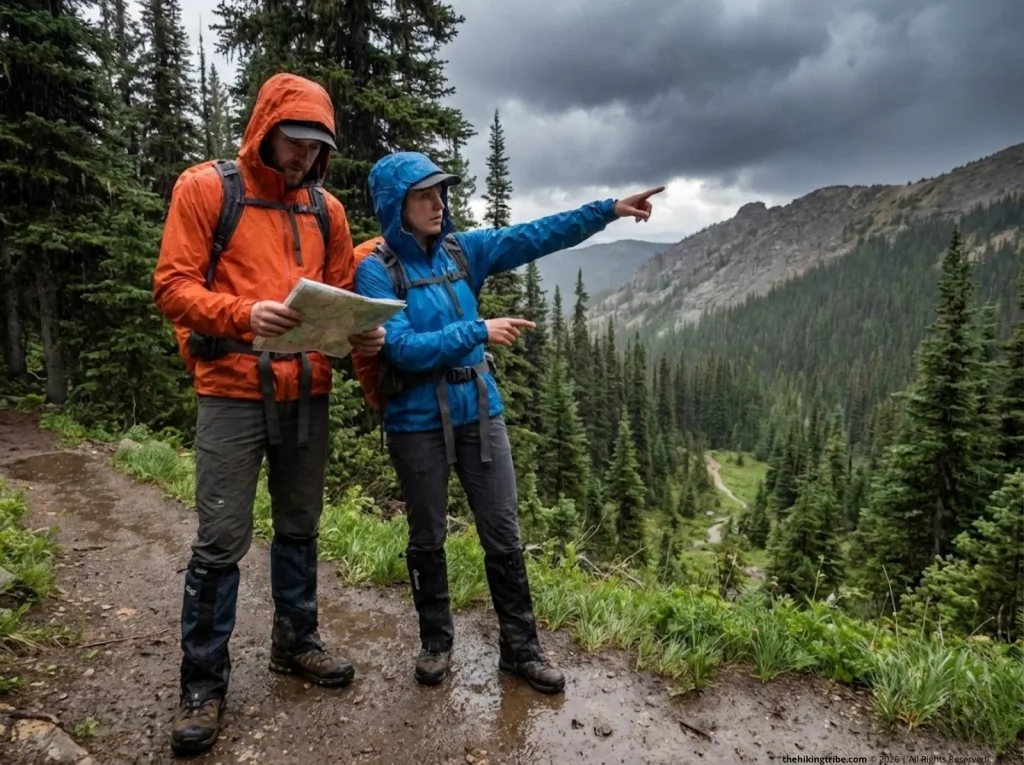
Forest canopy trails at low elevation provide natural rain shelter, reduced wind exposure, and often feature waterfalls that peak during rain events. A rainy-day friendly trail is one with tree cover, well-maintained tread, and flexible length options—loop systems or out-and-back routes with bail points that let you cut short without feeling stranded.
Exposed ridgelines, alpine climates, and summit pushes carry dramatically higher risk in rain: lightning, wind chill, zero visibility, and slippery rock slab. The trail risk factors multiply fast above treeline when weather conditions deteriorate. Check NOAA forecasts and tools like SpotWX before you leave—weather forecasting for your specific trailhead elevation matters more than a generic city forecast.
Approximately 50% of hiking injuries result from falls and slips on slippery roots and unstable terrain. Trekking poles are not optional in wet conditions—they are load-bearing safety tools. Probe uncertain footing, brace on descents, and use them for balance on every creek crossing. Adjust your pace downward on wet ground; rushing on slick rock and roots is how people get carried out.
Creek Crossings, Lightning, and the Turn-Around Rule
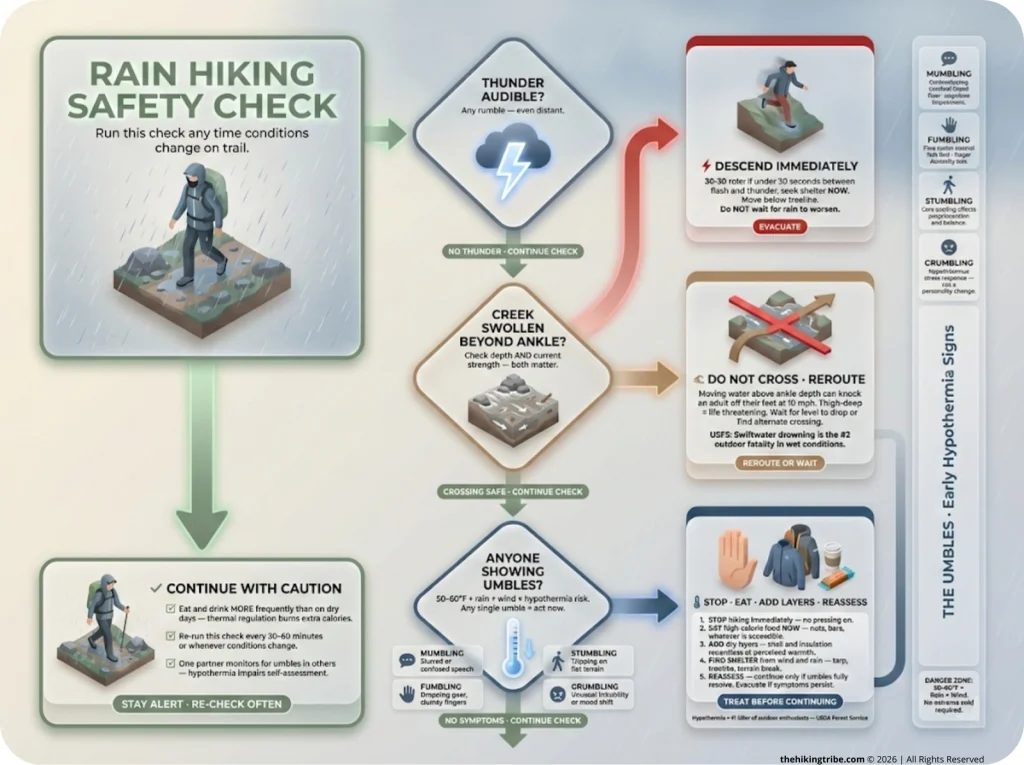
Never cross swollen creeks or flooded streams. Flash floods originate from storms miles upstream that you cannot see. Zion National Park issues specific warnings about this for slot canyons—Zion National Park flash flood warnings for rainy conditions are posted for good reason.
If you hear thunder, you are within striking distance. The American Hiking Society notes that hikers face greater risk of lightning strikes, with approximately 300 people struck annually in the US. Descend ridges immediately and seek proper shelter—a vehicle or building, not under a tree. The Rocky Mountain National Park lightning safety protocols for hikers reinforce that exposed ridgelines above treeline are the single most dangerous place to be during a thunderstorm.
Set your turn-around rule BEFORE you leave the trailhead. Examples: “If rain intensifies beyond moderate.” “If temperature drops below 40°F.” “If anyone shows hypothermia signs.” Deciding in advance eliminates the destination fever bias in the moment. Learn about calculating turnaround time using the math that saves lives to build this habit into every trip. It belongs right alongside your 10 essentials checklist.
Monitoring the “Umbles” — Early Hypothermia Detection
The umbles are four classic early signs of mild hypothermia: mumbling, fumbling with objects, stumbling on flat ground, and grumbling or unusual irritability. Hypothermia is the #1 killer of outdoor enthusiasts according to the USDA Forest Service, and it develops in surprisingly mild temperatures—50 to 60°F is enough when rain and wind combine.
If you or a hiking partner shows any umble, STOP. Eat high-calorie food immediately. Add dry layers. Find shelter from wind and rain. Reassess whether to continue or evacuate. Eating and drinking more frequently in rain is not optional—your body burns significantly more calories maintaining core temperature in wet weather.
After the Rain — Recovery and Gear Care
The Post-Hike Mold Prevention Protocol
Most articles about hiking in the rain end at “get back to the car.” That skips the part that protects your gear for years.
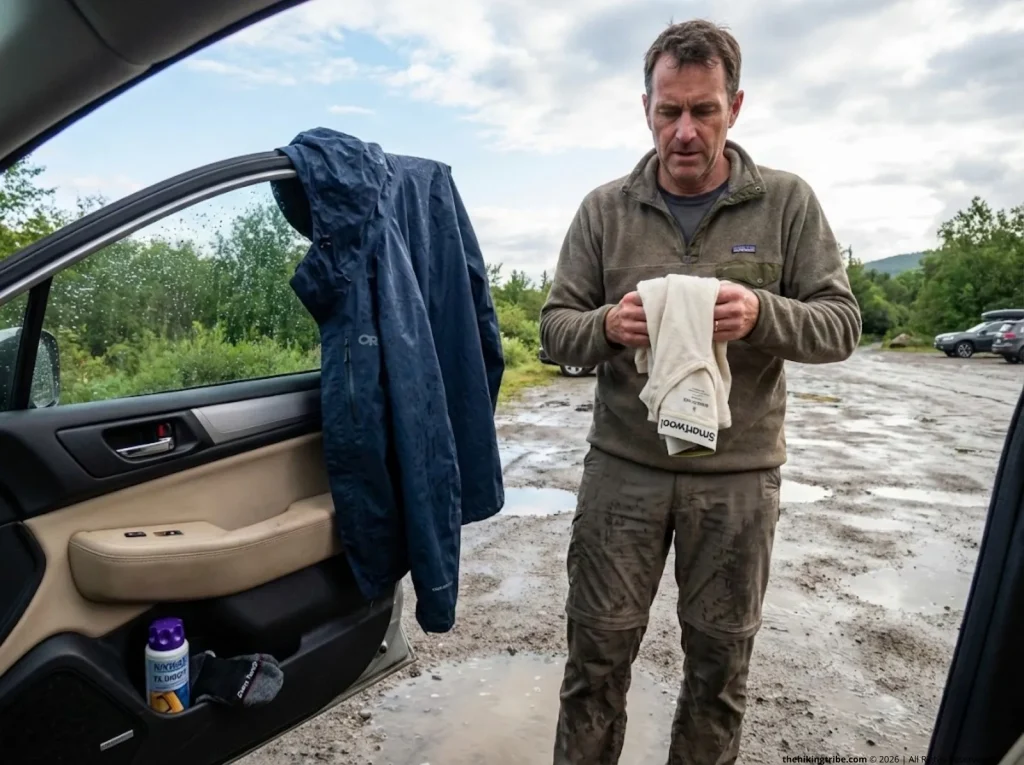
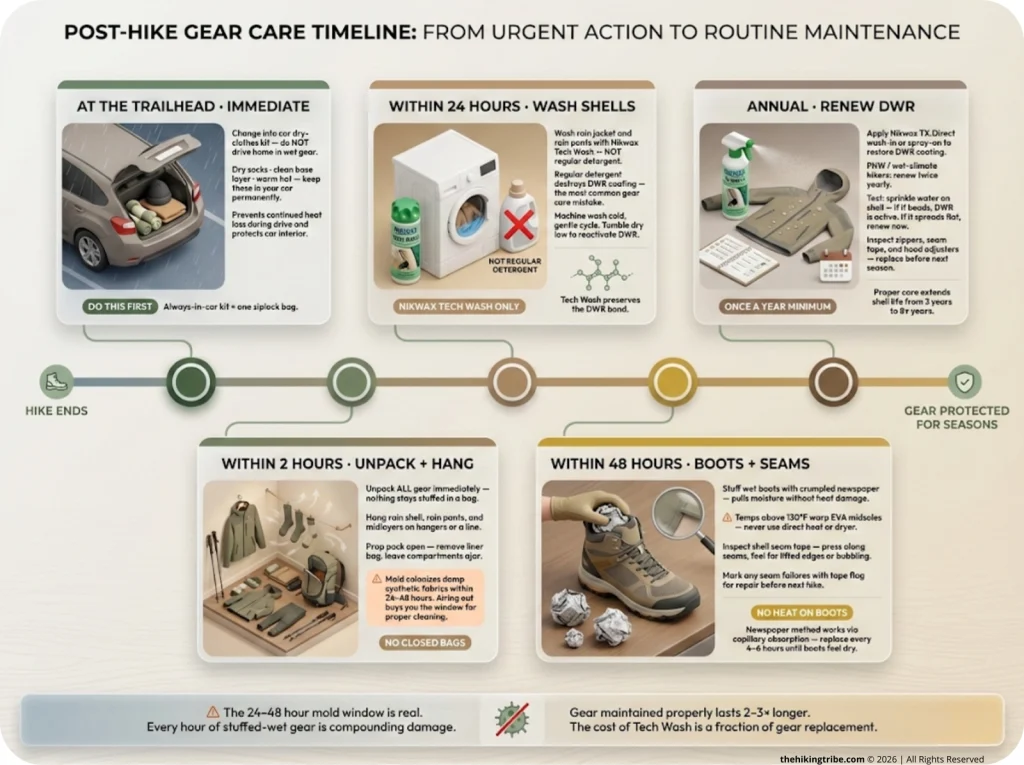
Never store wet gear in a stuff sack or closed closet. Mold begins colonizing damp synthetic fabrics within 24-48 hours. Wash rain shells with Nikwax Tech Wash—not regular detergent, which destroys DWR. Stuff wet boots with crumpled newspaper to pull moisture without heat damage (temps above 130°F warp EVA midsoles in most hiking boots, including models from Salomon).
Keep a “car dry-clothes kit” in your vehicle: dry socks, a clean base layer, a warm hat. Change out of wet clothes immediately after the hike. This prevents continued heat loss during the drive home and keeps your car upholstery from smelling like a wet dog for a week.
Maintaining Your Rain Gear Between Trips
DWR coating degrades with dirt, body oils, and abrasion. Renew it after every 10-15 uses or when water stops beading on the fabric surface. Heat reactivation—20 minutes in the dryer on low—restores DWR temporarily before full re-treatment with Nikwax TX.Direct or Nikwax Fabric Proof is needed. Explore the heat-first protocol that actually restores DWR performance for the step-by-step process.
Inspect pit zips, hood drawcords, and jacket seams annually. Seam tape failure is the most common rain jacket waterproofing failure mode—and you will not discover it until you are three miles from the trailhead in a downpour. Store rain gear loosely hung, never compressed in a stuff sack long-term. Compressed fabrics develop creases that break down the waterproof membrane faster than normal wear.
Pro tip: Embrace the mud but stay on trail. Use trekking poles to probe uncertain footing. The quieter trails on rainy days are worth the extra laundry—and stepping off-trail in wet conditions causes erosion that takes years to repair. Leave No Trace applies double when the ground is soft.
Conclusion
A rain plan is a system, not a prayer. Layer synthetic or merino, waterproof from inside your pack out, and set turn-around rules before the rain starts. The real enemy is cold, not wetness—monitor the umbles, eat more, and protect your sleep system above everything else.
Rainy trails are quieter. Waterfalls are bigger. The fog makes everything look like a painting. Once your system works, you will start hoping for gray forecasts.
Pick a trail with good canopy cover, check the forecast for steady but not severe rain, and test your rain plan on a short day hike before committing to a multi-day. The worst that happens is wet socks. The best that happens is a trail you will remember longer than any sunny summit.
FAQ
Is it safe to hike in the rain?
Yes, with preparation. A proper rain plan with layered clothing, pack protection, and a turn-around rule makes moderate rain manageable and often enjoyable. The exceptions are severe weather: lightning, flash flood warnings, or sustained cold and wind combinations that create hypothermia risk.
What should I wear hiking in the rain?
Synthetic or merino wool base layer (never cotton), a waterproof-breathable shell jacket with pit zips, and either rain pants or a rain skirt depending on conditions. Add extra dry socks in a sealed bag and trekking poles for slippery terrain.
How do I keep my backpack dry in heavy rain?
Line the inside with a trash compactor bag or dedicated dry bag—not just a rain cover. Covers fail at the back panel where moisture seeps through. The liner protects everything that matters, especially your sleep system on multi-day trips.
What are the signs of hypothermia while hiking?
Watch for the umbles: mumbling, fumbling with zippers or gear, stumbling on flat ground, and unusual grumbling or irritability. These are early warning signs. Stop immediately, eat high-calorie food, add dry layers, and seek shelter from wind and rain.
Should I cancel my hike if rain is in the forecast?
Not automatically. Check the severity: steady light rain with no lightning risk is manageable with proper gear. Thunderstorms, flash flood warnings, or sustained cold rain below 40°F are legitimate reasons to postpone. Switching to a lower-elevation forest trail with canopy cover is almost always a better alternative than canceling entirely.
Risk Disclaimer: Hiking, trekking, backpacking, and all related outdoor activities involve inherent
risks which may result in serious injury, illness, or death. The information provided on The Hiking Tribe is for
educational and informational purposes only. While we strive for accuracy, information on trails, gear, techniques,
and safety is not a substitute for your own best judgment and thorough preparation. Trail conditions, weather, and
other environmental factors change rapidly and may differ from what is described on this site. Always check with
official sources like park services for the most current alerts and conditions. Never undertake a hike beyond your
abilities and always be prepared for the unexpected. By using this website, you agree that you are solely
responsible for your own safety. Any reliance you place on our content is strictly at your own risk, and you assume
all liability for your actions and decisions in the outdoors. The Hiking Tribe and its authors will not be held
liable for any injury, damage, or loss sustained in connection with the use of the information herein.
Affiliate Disclosure: We are a participant in the Amazon Services LLC Associates Program, an
affiliate advertising program designed to provide a means for us to earn advertising fees by advertising and linking
to Amazon.com. As an Amazon Associate, we earn from qualifying purchases. We are also an official affiliate partner
of Black Diamond Equipment via the AvantLink network. If you click on a Black Diamond affiliate link and make a
purchase, we may earn a commission at no additional cost to you. We also participate in other affiliate programs and
may receive a commission on products purchased through our links. Additional terms are found in the terms of
service.