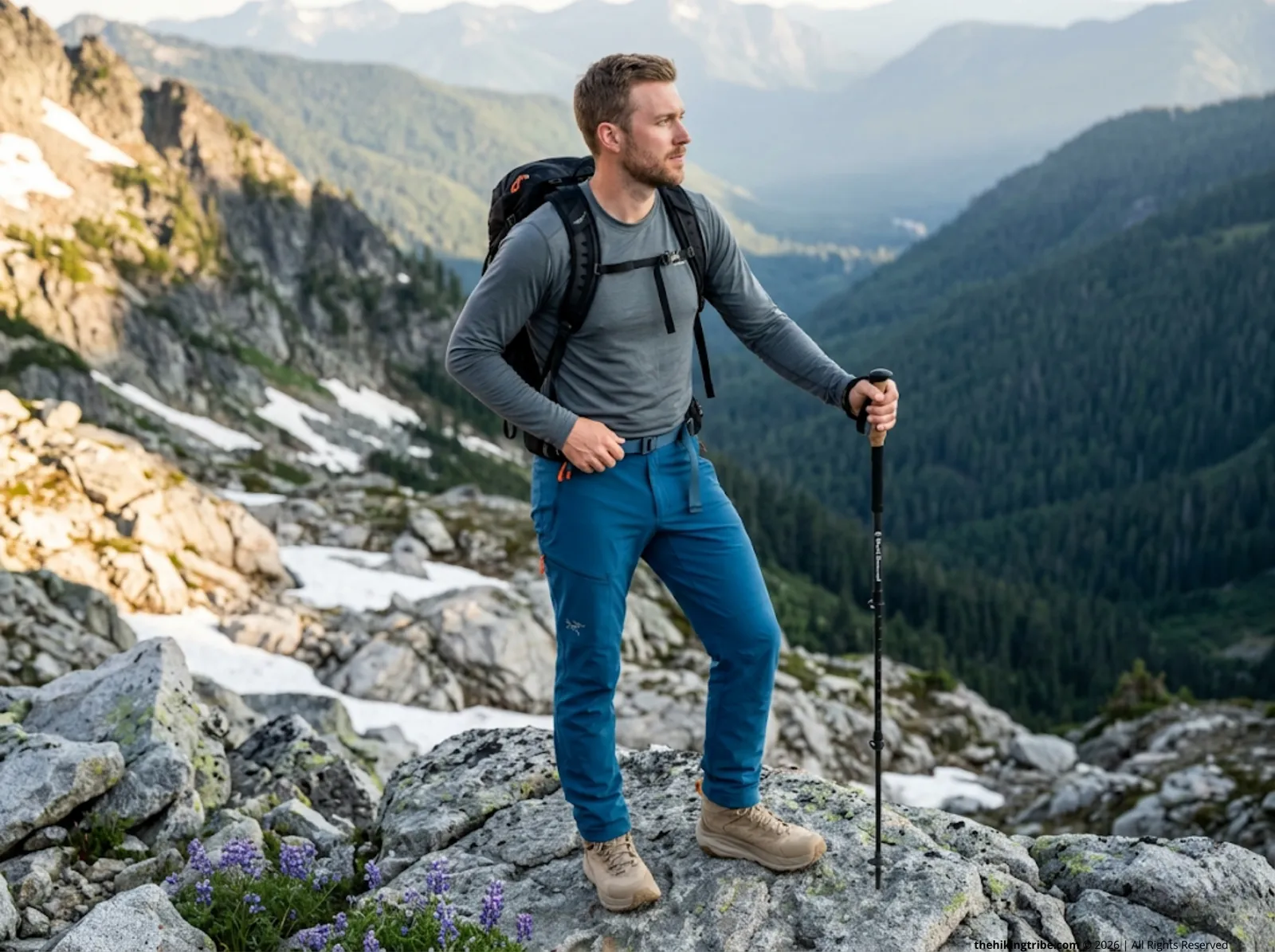
In this article
The granite slab offered no handholds—just a friction slide down twenty feet of abrasive stone. When I finally reached the scree field, my lightweight nylon trail pants were shredded to ribbons, exposing bloody knees that would plague me for the rest of the trek. Choosing the right hiking pants isn’t about looking good at the trailhead. It’s a strict calculation of material physics, thermodynamics, and the specific terrain you plan to face. The backcountry gives zero points for style when your gear fails.
After years of field testing and destroying gear across multiple continents, I’ve learned that you must match your technical legwear to the trail reality. This approach ensures you don’t suffer a catastrophic fabric failure miles from your vehicle. Here is the exact framework I use to evaluate pants before committing them to my pack.
⚡ Quick Answer: You must match your hiking pants to your activity using the 4-D Activity Framework: Durability, Dry-time, Density of Terrain, and Degree of Incline. Use midweight, high-elastane softshell pants for alpine scrambling. Choose high-denier poly-cotton blends for dense bushwhacking armor. Select lightweight, 90-denier nylons with high breathability for long-distance thru-hiking.
The Physics of Trail Resilience: Decoding Durability and Breathability
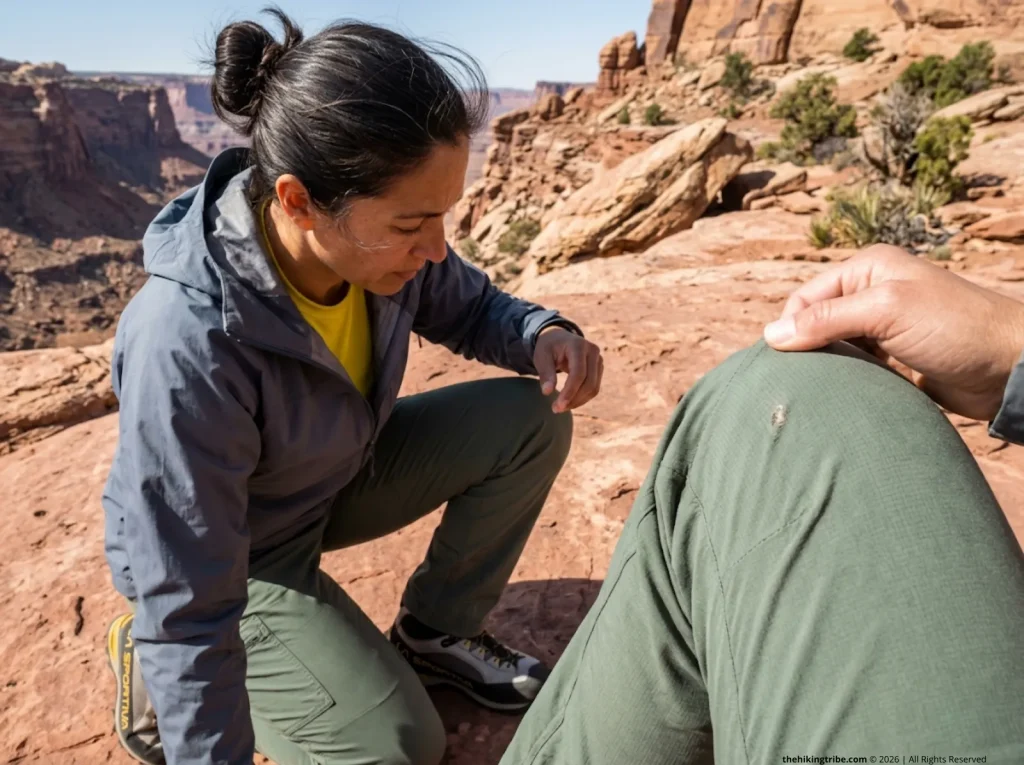
Marketing departments love to throw around vague claims about toughness. We look at the actual laboratory metrics and material science that dictate how long a fabric lasts and how well it handles moisture. Your pants require extreme abrasion resistance to survive out here.
The Martindale Benchmark for Abrasion
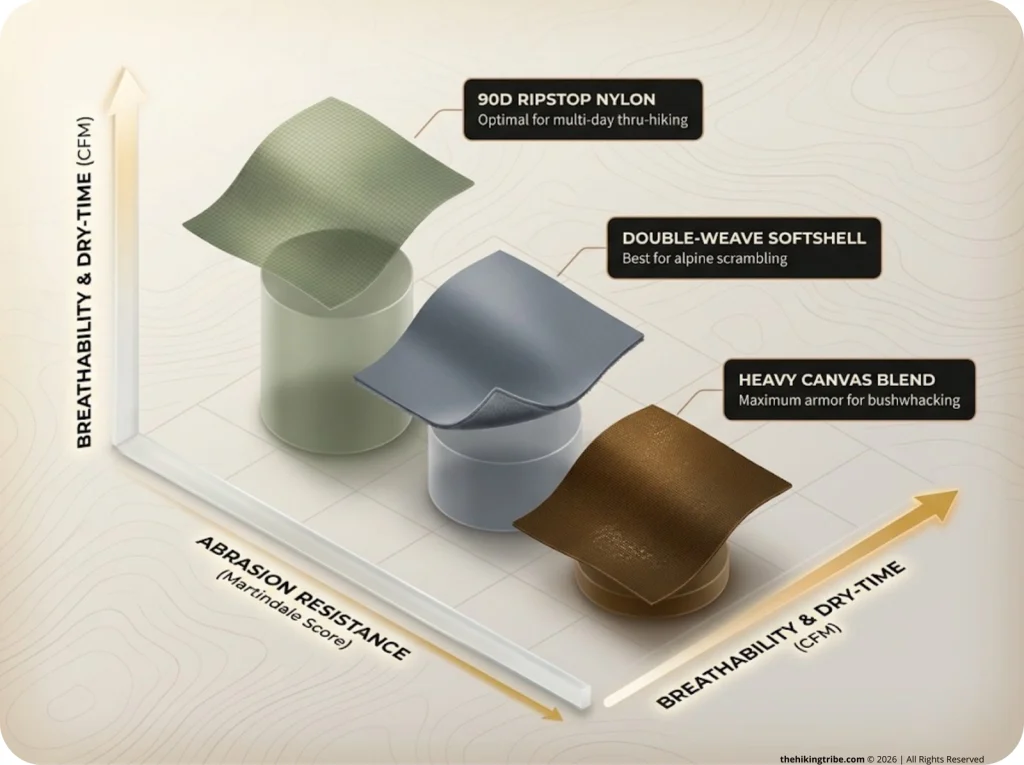
The industry standard for measuring durability is the Martindale test. It drags an abrasive pad across the fabric in a figure-eight motion to simulate real trail friction. A score of 20,000 to 30,000 abrasion cycles handles general wilderness use. However, if you plan on rubbing against sharp granite all day, your pants need to exceed 30,000 cycles. Anything less will rip exactly when you need it most.
For a reliable balance between mobility and weight, look for 90-denier ripstop nylon. This provides a sweet spot that weighs around 10.7 ounces and survives moderate abuse. The grid pattern woven into ripstop actually arrests a tear before it destroys the entire leg.
The Thermodynamics of Moisture Vapor (CFM vs MVTR)
Breathability dictates whether you stay safe or freeze from your own sweat. You have two metrics to watch: Air Permeability (CFM) and Moisture Vapor Transmission Rate (MVTR). A rating between 20-40 CFM blocks cold wind while venting the massive amount of heat you generate during a steep ascent.
If the factory DWR (Durable Water Repellent) coating wears off, rain soaks the outer fabric. This is called “wet-out.” Once that happens, breathability drops to absolute zero, trapping your sweat inside to create a hypothermia-inducing sweat box. If you are reviewing the science of layering to dress for any hike, you must understand how quickly DWR can fail before selecting your outer shell. Recent research on functional smart and wearable textiles for sportswear confirms how surface saturation obliterates physiological moisture management.
Mechanical Stretch vs Elastane Decay
Elastane gives fabric its stretch, but it has a severe weakness. The fibers physically break down, lose their rebound, and “pucker” under high heat or sustained mechanical stress. Throwing your expensive technical gear in a hot dryer accelerates this permanent decay.
Mechanical stretch weaves solve this problem. The flexibility comes from how the yarn is physically woven together, rather than relying on an elastic rubber fiber. In my experience across dozens of similar trails, emphasizing high spandex content (over 10%) usually leads to permanent fabric sagging after just one season. Mechanical stretch outlasts standard elastane every single time.
Pro tip: Always line-dry any hiking pants that contain elastane. A single trip through a hot commercial dryer can permanently ruin the elastic fibers and destroy the fit.
Technical Scrambling and Alpine Ridges: The Softshell Imperative
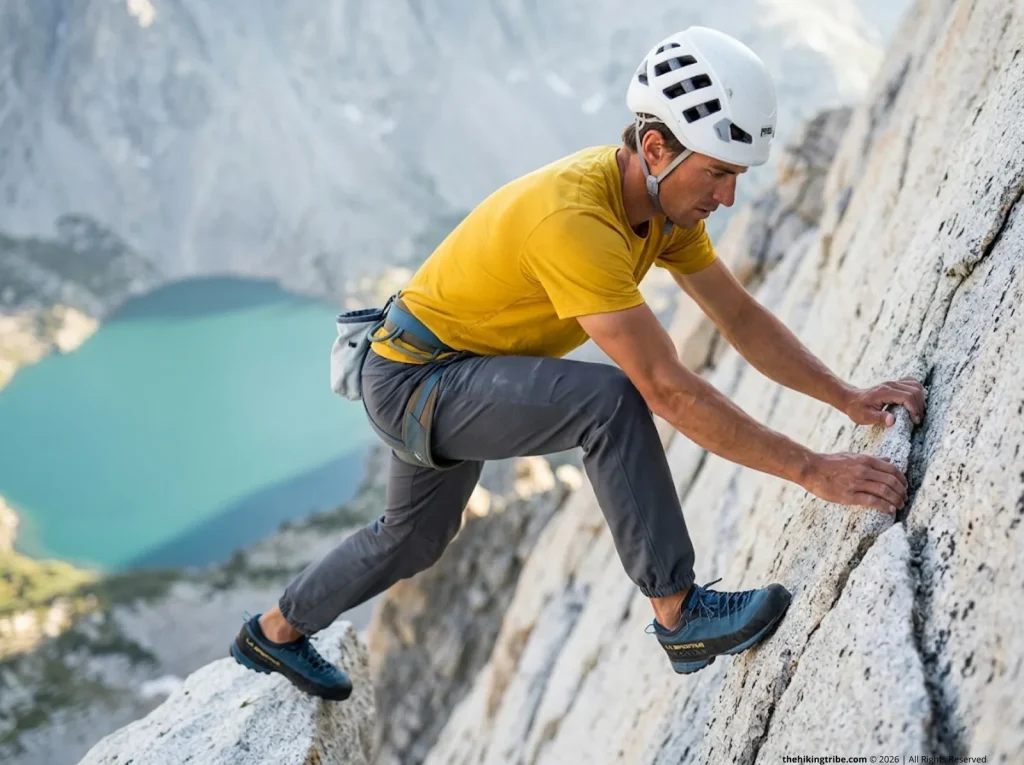
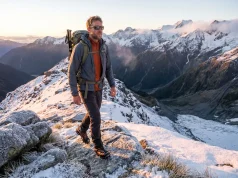
When the trail turns vertical and you hit Class 2-4 terrain, your needs shift drastically. You must prioritize absolute mobility and the ability to survive rock friction. Standard trekking pants will shred against sharp ledges.
The Biomechanics of Articulated Knees and Gussets
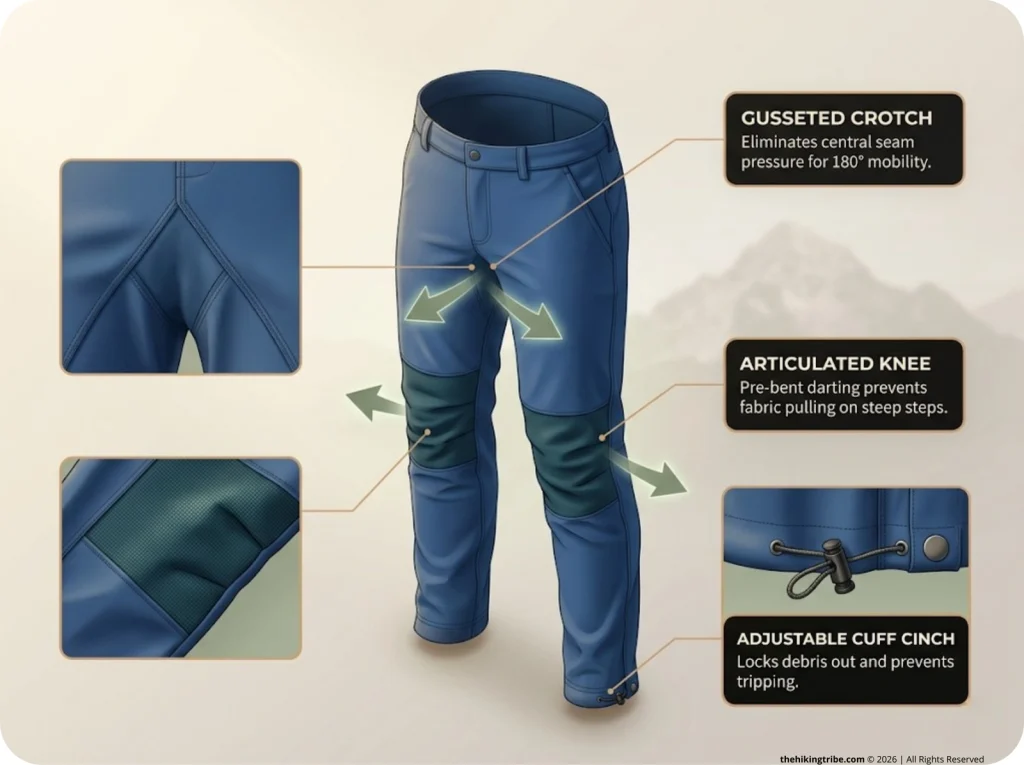
An exposed scramble forces you into deep lunges and unnatural body positions. Articulated knees enhance your range of motion without pulling the fabric taut. Manufacturers sew permanent folds directly into the fabric above and below the joint so the pant bends organically.
You also need a gusseted crotch. This is a diamond-shaped piece of fabric sewn into the crotch seam that prevents the pants from splitting wide open during a high-step.
Navigating Granite: The 4-Way Stretch Requirement
Surviving an exposed alpine ridge demands fabric that moves exactly as you do. Double-weave softshells remain the professional standard for this enviornment. They place a rugged, tightly woven exterior against the abrasive rock and a softer, moisture-wicking layer right against your skin.
To pull off a stem or a high-step on a ledge, you need a minimum of 10-12% elastane for true 4-way stretch. Professional alpine guides practically live in softshell pants for 200+ days a year for this exact reason. The fabric handles direct granite grit without blowing out a seam. Brand options like the Arc’teryx Gamma line or the Salewa Pedroc excel in these conditions.
Cinch Systems for Unobstructed Foot Placement
When you are two hundred feet off the deck, you must see exactly where you are placing your toe. Baggy pant legs obscure your line of sight and catch on rock horns. Cinch leg openings exist to lock the hem down securely above your boot.
Whether you use an integrated bungee cord or metal snaps, securing the cuff is mandatory for stability. You should remember that even the best softshells rely on good footwear underneath; pair them with proper hiking socks to avoid blistering on the ascent. Too much fabric bunches up and creates a tripping hazard, while too little exposes your ankles to razor-sharp scree.
Bushwhacking and Dense Off-Trail Navigation: The Armor Approach
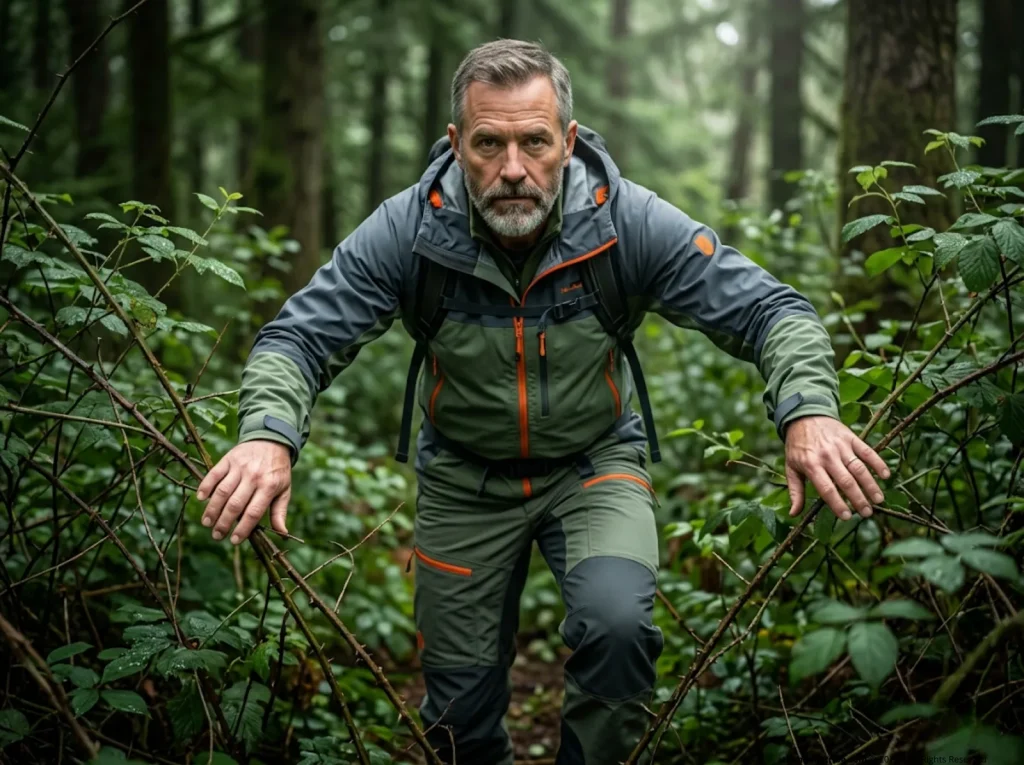
Leaving the established trail means breathability takes a back seat to sheer survival. When you hit a dense thicket, your legwear transitions from clothing into strict protective armor. If you wear thin synthetic fabrics here, you will walk out bleeding.
High Denier Counts and Snag Resistance
You must select ultra-high denier counts for off-trail travel. Dense nylon blends provide excellent defense against puncturing forces and slicing thorns. Look for heavy-duty polyester and cotton blends, such as the renowned Fjallraven Vidda Pro.
The tradeoff is brutal. Thicker armor weaves trap your body heat rapidly. If they get soaked in a river crossing, the dry-time slows down exponentially. When deciding between hiking pants vs. leggings for all conditions, remember that heavy bushwhacking in lightweight leggings is a reliable recipe for shredded fabric. My heavy-duty poly-cotton pants survived a mesquite thicket that would have destroyed standard trail synthetics in minutes.
Double-Layer Seat and Knee Reinforcements
Bushwhacking forces you to crawl under deadfalls and slide down muddy embankments. You need a reinforced seat and double-layered knee panels to handle this abuse. Single-layer fabrics simply wear through from the intense localized friction.
If you snag a thorn and rip the fabric, you have to patch it fast before the hole widens. Use a tenacious tape specifically designed for technical nylon to save your expensive gear from the trash bin.
Pro tip: Before applying a field patch to a torn pant leg, clean the area with an alcohol prep pad from your first-aid kit. Tape will not stick to DWR coatings or body oil.
The Mechanical Barrier Against Ticks and Thorns
A thick weave acts as a literal mechanical barrier against vector-borne diseases. The tight fabric matrix physically blocks a tick from reaching your skin. Thin summer fabrics allow insect mouthparts to bite straight through to your leg.
For maximum protection during a heavy brush push, you should use both mechanical barriers and permethrin treatments for tick prevention. I spray all my heavy canvas pants with permethrin at the start of the season.
Thru-Hiking and Multi-Day Trekking: Minimizing Weight and Moisture
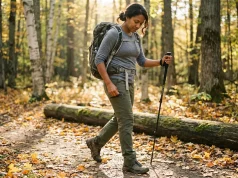
Over a multi-month thru-hiking expedition, your priorities shift entirely. The primary threats become accumulated moisture, severe chafing, and pack-weight fatigue. You need minimal weight and rapid evaporation.
Rapid Dry-Time and Convective Ventilation
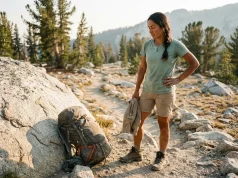
Lightweight, 90-denier technical synthetics weighing under 11 ounces hit the perfect balance for rapid dry-times. When you wash your pants in a creek, you need them dry by sunset. High air permeability allows convective airflow to strip away sweat before friction creates blistered skin.
Because you wear the same clothing for days on end, look for fabrics treated with silver-ion antimicrobial washes to kill odor-causing bacteria. Standard jeans for hiking are dangerous here—cotton absorbs water, refuses to dry, and rapidly steals body heat.
The Importance of Integrated Waistbelts
If you carry a forty-pound pack, your hip belt clamps down hard across your waist. If you wear a traditional leather belt, the pack will grind the stiff buckle directly into your stomach, causing deep bruising over several days.
An integrated belt that sits perfectly flat is non-negotiable for multi-day trips. Low-profile webbing distributes the tension evenly without creating distinct pressure points underneath your pack suspension.
Convertible Legs and Thermal Versatility
The temperature swings wildly on a high-desert trail. Convertible pants offer excellent temperature versatility without forcing you to stop and dig through your backpack.
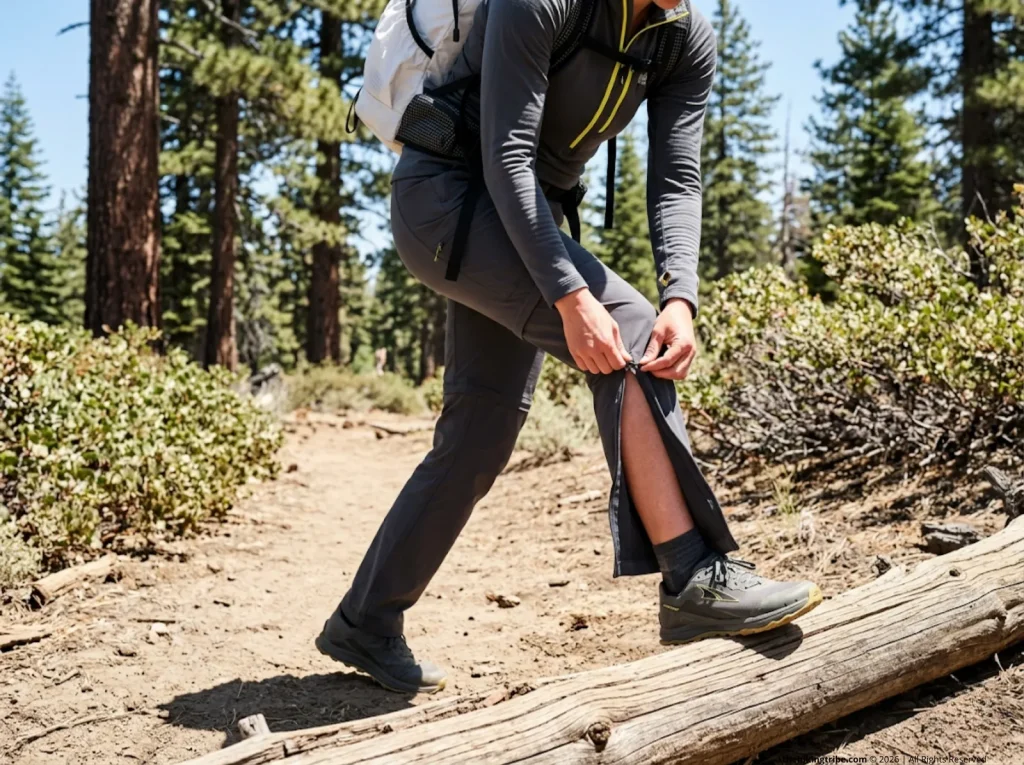
Designs featuring a T-zip on the lower leg allow you to switch from pants to shorts dynamically without removing your muddy trail runners. You should spend time researching the best lightweight backpacking gear to keep your total pack weight manageable over long distances. After a week of field testing, the ability to dump core heat mid-stride without dropping my heavy pack kept my energy levels much higher.
The Overlooked Attributes: Acoustic Stealth and Pocket Ergonomics
Standard gear reviewers rarely talk about the niche features that define specialized outdoor pursuits. If you step outside casual day hiking, the sound of your pants and where you store your gear become critical factors.
The Problem of “Knee-Bang” and Natural Crease Pockets
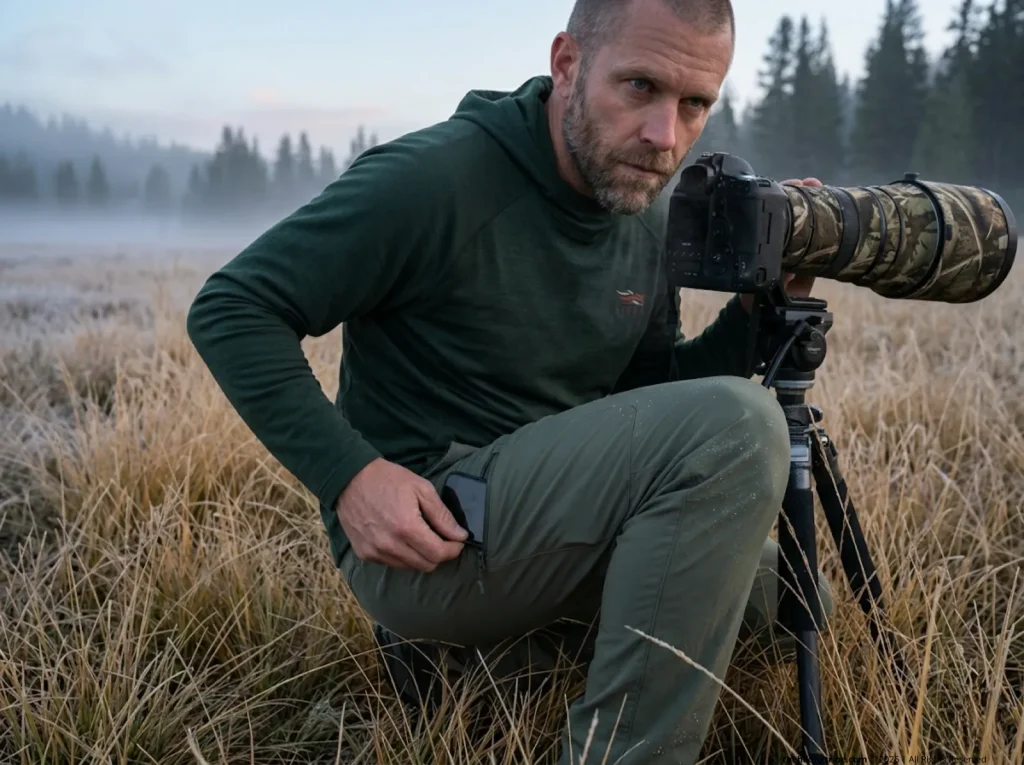
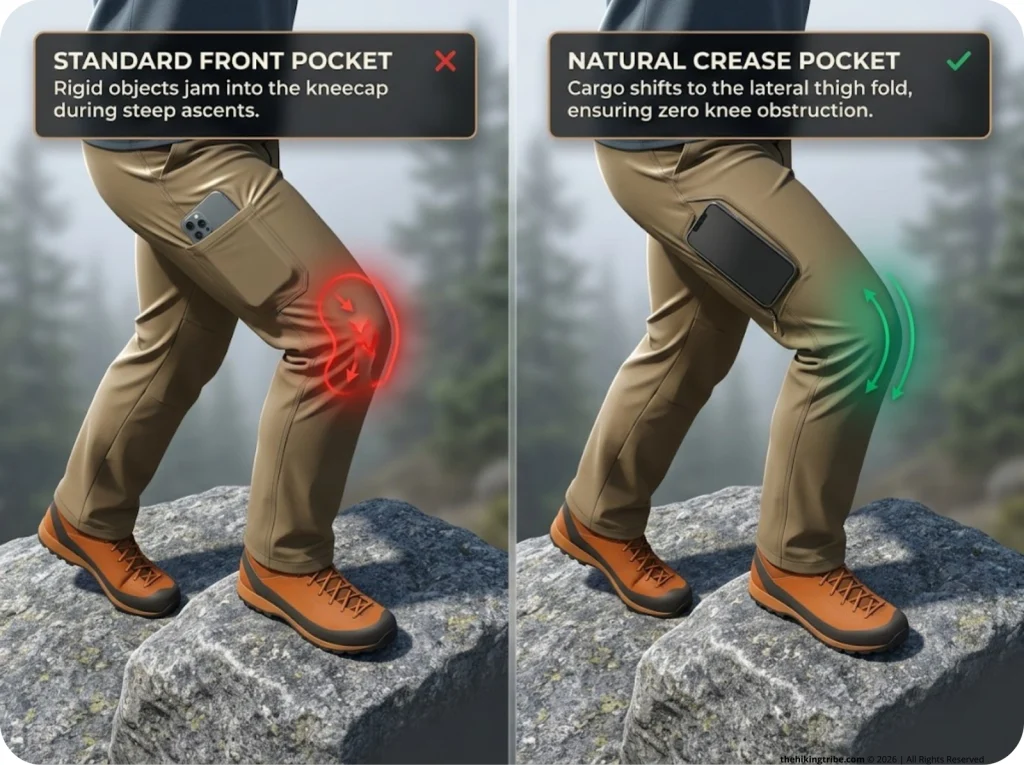
Traditional front pockets align perfectly over your upper thigh. If you drop a heavy smartphone into a front pocket, it will smash repeatedly against your kneecap during a steep ascent.
Premium pocket ergonomics utilize “Natural Crease Positioning.” Designers place zippered pockets on the lateral side of the thigh. This allows rigid devices to rest safely in the anatomical fold of your leg.
Acoustic Engineering for Wildlife Observation
High-denier ripstop nylons produce a loud, high-frequency “swish” with every step you take. This fabric noise acts as an alarm bell, alerting wildlife long before you establish visual contact. It ruins opportunities for birdwatching and photography.
“Acoustic Engineering” through brushed polyester-cotton fabrics creates a low-frequency hum rather than a sharp plastic crinkle. Brands like Norrøna and Fjallraven excel here. If you are comparing men’s or female hiking pants, make sure to check for these acoustic properties before you purchase. I tracked elk in standard hardshells and gave away my position instantly; switching to a brushed acoustic-stealth pant made all the difference.
Managing Harness-Compatible Storage
Mountaineering forces you into a complex webbing harness. Standard hand pockets become completely inaccessible once you buckle your waist belt. Specialized alpine pants shift the thigh pockets drastically downward. This ensures you can access your topo map or a small snack while dangling from a rope.
Pro tip: When testing pants for alpine use, put on your actual climbing harness in the store. Try to bend your leg to 90 degrees and unzip the thigh pocket. If the harness blocks the zipper, find a different pant.
Conclusion
The backcountry operates as an unforgiving laboratory where slick marketing claims get shredded alongside cheap fabric. Buying technical legwear is a strict calculation of physics.
- Assess your trail profile and pick an elastane softshell for granite scrambling or high-denier armor for thickets.
- Check the true denier count and material composition to guarantee durability.
- Apply the 4-D Activity framework before you pack.
Next time you hit a brutal scree field, you will move with confidence knowing your gear can handle the friction.
FAQ
What is the difference between trekking and hiking pants?
Trekking pants prioritize rapid dry-times and low weight for multi-day endurance over long miles. Hiking pants often utilize heavier, abrasion-resistant materials designed for rugged day-use or scrambling, rather than prioritizing long-term moisture management.
Are jeans okay for hiking?
No, jeans are unsafe for any technical hike. Denim is simply heavy cotton that soaks up moisture like a sponge, refuses to dry, and rapidly strips heat away from your body, which massively increases your risk of hypothermia in a rainstorm.
Should hiking pants be tight or loose?
Your fit must map directly to your activity. Alpine scramblers need an athletic, articulated slim fit to clearly see their footholds and prevent dangerous rock snags, whereas thru-hikers benefit from a looser, relaxed fit to maximize convective airflow and stop severe chafing.
Are leggings better than hiking pants?
Tights offer massive stretch and eliminate loose-fabric chafing, but they provide zero durability against sharp thorns or rough granite. They work well for manicured dirt trails but become a liability on exposed alpine ridges or dense bushwhacking routes.
Risk Disclaimer: Hiking, trekking, backpacking, and all related outdoor activities involve inherent
risks which may result in serious injury, illness, or death. The information provided on The Hiking Tribe is for
educational and informational purposes only. While we strive for accuracy, information on trails, gear, techniques,
and safety is not a substitute for your own best judgment and thorough preparation. Trail conditions, weather, and
other environmental factors change rapidly and may differ from what is described on this site. Always check with
official sources like park services for the most current alerts and conditions. Never undertake a hike beyond your
abilities and always be prepared for the unexpected. By using this website, you agree that you are solely
responsible for your own safety. Any reliance you place on our content is strictly at your own risk, and you assume
all liability for your actions and decisions in the outdoors. The Hiking Tribe and its authors will not be held
liable for any injury, damage, or loss sustained in connection with the use of the information herein.
Affiliate Disclosure: We are a participant in the Amazon Services LLC Associates Program, an
affiliate advertising program designed to provide a means for us to earn advertising fees by advertising and linking
to Amazon.com. As an Amazon Associate, we earn from qualifying purchases. We are also an official affiliate partner
of Black Diamond Equipment via the AvantLink network. If you click on a Black Diamond affiliate link and make a
purchase, we may earn a commission at no additional cost to you. We also participate in other affiliate programs and
may receive a commission on products purchased through our links. Additional terms are found in the terms of
service.