In this article
The tick was the size of a grape, bloated with blood, and wedged behind my knee. A souvenir from a single afternoon in shorts on an overgrown section of the Appalachian Trail. Three weeks of antibiotics and a lingering fear of Lyme disease later, I became a convert.
After fifteen years on summer trails from the Colorado Rockies to the Australian Alps, I’ve learned that roll up hiking pants aren’t just another gear choice. They’re a protection system that changes how you move through warm-weather wilderness.
Here’s exactly what the data shows—and why your hiking pants might be the most important decision you make before your next hike.
⚡ Quick Answer: Roll-up hiking pants outperform shorts on most summer hiking days because they provide tick protection, UV defense (UPF 50+ blocks 98% of radiation), and poison ivy shielding—while modern fabrics and roll-up designs deliver ventilation comparable to bare legs. The sweet spot: 75-95°F with any vegetation or insect pressure. Above 95°F on open trails, shorts become viable.
The Protection Matrix: Why Coverage Wins in Summer

Most hikers think summer means shorts by default. The logic seems obvious: expose more skin, stay cooler. But the biology of what’s waiting in that long grass tells a different story.
The Tick Equation: Understanding Questing Behavior
Ticks don’t jump or fly. They quest—holding onto vegetation with rear legs while front legs reach outward, waiting. This behavior happens exactly at ankle-to-knee height, putting your bare legs in the strike zone.
The CDC tick prevention guidelines recommend clothing as the PRIMARY defense layer. Here’s why: permethrin treatment bonds to nylon and polyester fibers. A tick crawling up a treated pant leg faces a “toxic landscape” the entire climb—typically becoming incapacitated before reaching skin at your waistband.
With shorts, that same tick has a free highway of bare skin. Topical repellents like DEET evaporate and rub off. Your hiking pants don’t.
Pro tip: Treat your pants with 0.5% permethrin before the season. One treatment lasts through multiple washes and creates an invisible shield that ticks can’t beat.
If you’re serious about prevention, pair treated pants with our 3-Stage Tick Prevention System for complete coverage.
Mosquito Proboscis Physics: Why Leggings Fail
Mosquito proboscis length runs 1.5mm to 3.0mm. Any fabric thinner than that, or pressed tight against skin, allows penetration. This is why leggings and yoga pants fail miserably—the tight fit eliminates the critical air gap between fabric and skin.
Woven hiking pants solve this. The loose drape creates standoff distance exceeding proboscis length, while dense nylon blend weaves resist penetration. Andrew Skurka, legendary long-distance hiker, shifted from shorts to pants specifically for “moderate or heavy bug pressure.” That’s not preference—that’s experience talking.
The Poison Ivy Sacrificial Layer
Urushiol oil from poison ivy and poison oak doesn’t evaporate. It persists on surfaces for months—sometimes years. When you brush through contaminated vegetation in shorts, that oil transfers directly to skin and binds within 10-20 minutes.
Your pants become a sacrificial layer. They collect the oil, preventing direct contact. At day’s end, remove them without touching the exterior, wash in hot water, and the threat is neutralized. You can’t wash your legs mid-trail when the nearest stream is two miles away.
For added protection on overgrown trail sections, consider adding hiking gaiters for additional protection between your boots and pant cuffs.
The Thermodynamics Myth: Why Bare Skin Isn’t Always Cooler
Here’s where conventional wisdom falls apart. “Shorts are cooler” sounds logical until you understand how solar radiation actually works on exposed skin.
Solar Load Physics: When Coverage Keeps You Cooler
Direct sunlight on bare skin doesn’t just risk sunburn—it adds significant thermal load. Your body absorbs radiation and converts it to heat. Light-colored hiking pants in khaki, silver, or light grey reflect that radiation before it reaches you.
The air gap between loose-fitting trousers and your legs provides insulation against radiant heat. A peer-reviewed study of outdoor workers in tropical conditions found no significant difference in core temperature, heart rate, or sweat rate between those wearing shorts versus long pants.
Your body’s thermoregulatory system—sweating, blood vessel dilation—compensates effectively for lightweight coverage. The “shorts are cooler” argument doesn’t hold up to actual physiology.
The Chimney Effect: How Roll-Ups Maximize Airflow
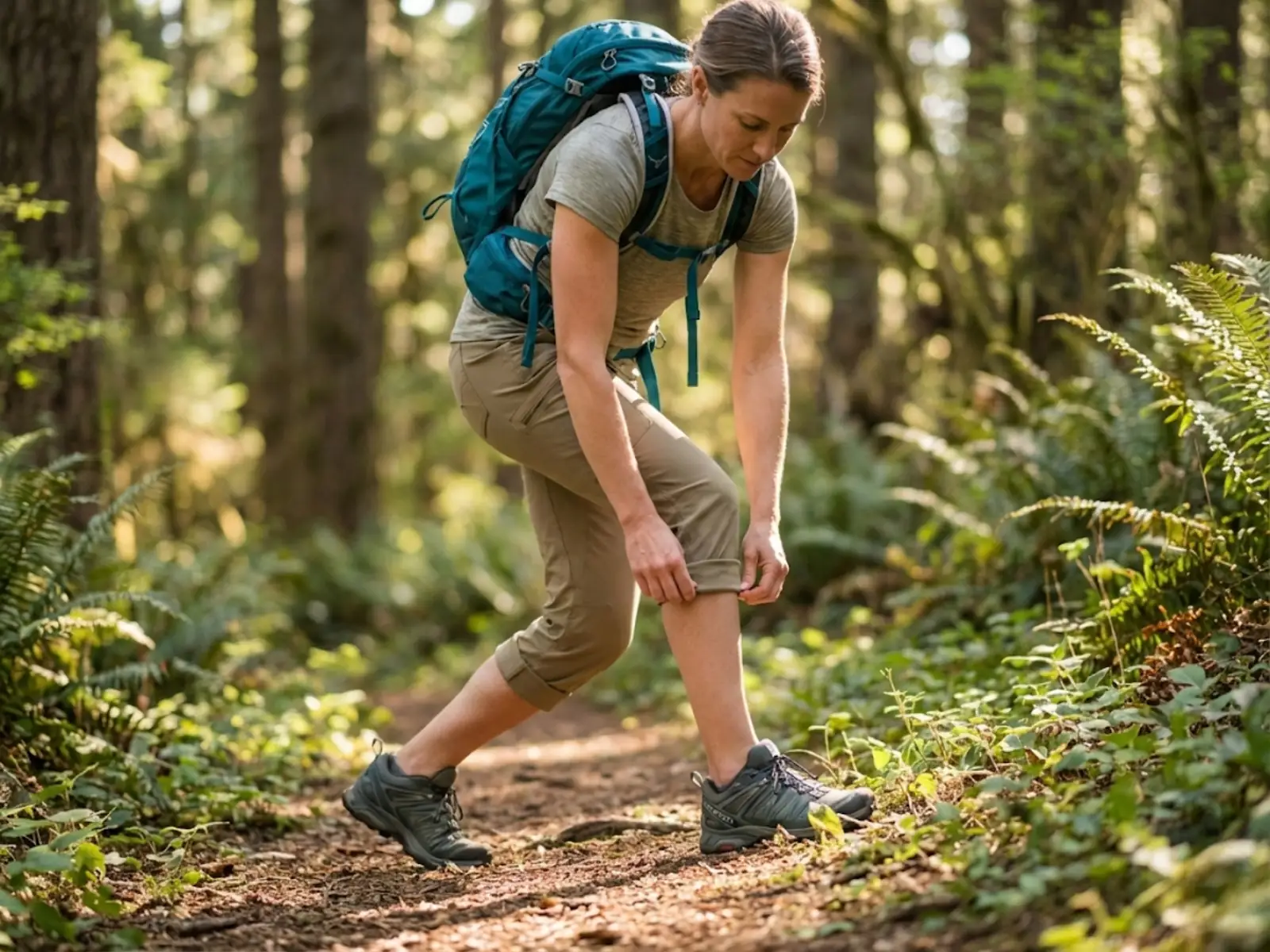
Roll up hiking pants create an airflow advantage shorts can’t match. When you secure the cuff at your calf using snap closure or cinch cord systems, the open bottom acts as an air intake.
Walking motion pumps cool air up your leg. Body heat warms that air, which rises and exits through permeable fabric or your waistband. This convective loop keeps the microclimate against your skin drier and cooler than sealed pants—or even bare skin under direct sun.
The transition speed advantage is real: roll-up conversion takes roughly 12 seconds without stopping. Convertible pants with zip-offs require 45+ seconds, often boot removal, and create zip chafing issues.
UPF vs. SPF: The Reliability Gap
UPF 50+ fabric blocks 98% of ALL UV radiation—both UVA (aging rays) and UVB (burning rays). That protection is constant, doesn’t degrade throughout the day, and doesn’t require reapplication.
Compare that to sunscreen: requires 2mg/cm² density, needs reapplication every two hours, and almost nobody applies it properly to the back of their legs or behind their knees. The Skin Cancer Foundation UPF guidelines confirm that fabric coverage is simply more reliable.
For a deeper understanding of sun protection ratings, see our guide to understanding UPF ratings for hiking.
Pro tip: The back of your knee (popliteal fossa) burns more than almost any other spot because of sun angle during forward hiking motion. Pants eliminate this problem entirely.
The Gear Breakdown: Roll-Up Pants That Actually Perform
Not all hiking pants deliver equal performance. Material science matters, and the differences show up fast on hot summer days.
Outdoor Research Ferrosi: The Airflow Champion
The Outdoor Research Ferrosi fabric has the highest air permeability in its class. You can literally feel the breeze through it. The 14% elastane blend provides excellent mobility without needing a gusseted crotch design.
Best for: extreme heat, dry climates, desert hiking, high-activity scrambling. Trade-off: wind cuts right through on cold summits or exposed ridges. If your adventure includes alpine exposure after a warm weather valley approach, pack a layer.
For understanding why mobility matters, see our breakdown of articulated knees for mobility in technical apparel.
Kuhl Freeflex: The Humidity Handler
The Kuhl Freeflex Rollup uses 100% polyester with mechanical stretch—no spandex means near-zero water absorption. Polyester is hydrophobic (less than 1% moisture regain) compared to nylon‘s 4-9%. In a sudden downpour, Freeflex pants dry significantly faster than any nylon blend.
Best for: humid East Coast summers, wet terrain, stream crossings. Trade-off: the snap closure buttons have a reputation for being weak; some outdoor enthusiasts report popping under stress.
Cost-per-wear economics: At $99 with a 300+ wear lifespan, Freeflex costs roughly $0.33 per wear—pennies compared to the protection value.
Prana Stretch Zion (Original): The Durability Standard
For off-trail bushwhacking and rocky terrain, the Prana Stretch Zion II Original offers superior abrasion resistance. The heavier nylon weave handles brush contact that would shred lighter fabrics. PFAS-free DWR finish, ventilated inseam gusseted crotch, integrated webbing belt.
Critical warning: Avoid the “Zion II” version. The hiking community universally panned it for inferior plastic buttons (replacing metal), thinner fabric that pills immediately, and poor fit. Demand the “Original” re-release or find remaining old stock.
For comparing all your options, see our full convertible hiking pants comparison.
The Decision Framework: When to Choose What
Every trail presents different conditions. Here’s how to match your summer hiking legwear choice to what you’ll actually face.
Temperature Zone Mapping
Below 75°F: Full-length pants in roll-down mode. Protection without overheating, period.
75-95°F: Roll-up mode. Maximum ventilation with maintained tick protection and UV defense. This is the sweet spot where roll-ups beat both shorts and full coverage.
Above 95°F: Shorts become viable—but only on maintained trails with minimal vegetation and low insect pressure. Desert hikers on groomed paths fit this profile. Most backcountry doesn’t.
The Ultralight Counterpoint: When Shorts Win
A vocal minority in lightweight backpacking circles advocates running shorts plus separate wind pants for bugs and cold. This system weighs less and packs smaller.
Trade-offs: less durable, requires carrying and managing two items, and the wind pants aren’t designed for abrasion. For general hiking and weekend trips—not ultralight thru-hiking—roll-up pants remain the more robust “one-garment” solution.
Think of roll-ups as the quiver killer for 3-season hikers: one piece of gear that handles 85% of summer conditions. For the ultralight philosophy in full, see our ultralight philosophy and trade-offs guide.
Failure Mode Analysis: When Things Break
Roll-up snap failure is annoying but not catastrophic—your pant leg just stays down. Zip-off zipper failure means slider spreading or tape separation, leaving a leg detached or flapping.
Field repairability: snaps can be sewn as simple buttons with any repair kit. Zipper repair requires replacement or complex field surgery far from trailhead resources. The durability edge goes to snap closure systems for extended hikes and long backcountry trips.
Keep a basic kit for unexpected failures—see our trail repair kit essentials for what to carry.
Pro tip: Before any multi-day trip, test your roll-up snaps under load. A failed snap 20 miles from the trailhead is frustrating. A failed snap in your living room is a 5-minute fix.
Material Science: Understanding What You’re Wearing
The fabric in your pants determines everything from dry time to breathability. Here’s what the specs actually mean.
Nylon vs. Polyester: The Drying Speed Trade-off
Nylon: 4-9% moisture regain. Softer hand-feel, but holds water longer after stream crossings or sweat saturation. Preferred for abrasion resistance.
Polyester: Less than 1% moisture regain. Hydrophobic, dries faster, but can feel slick against skin. Better quick-dry capability.
Elastane blend (spandex): Highly absorbent. More spandex means more extra stretch and comfort, but slower drying. The Kuhl Freeflex Rollup uses “mechanical stretch” from weave geometry instead of elastane, eliminating this penalty entirely.
Denier, GSM, and CFM: Decoding the Specs
Denier (D): Measures fiber thickness. 90D is mid-weight—lower is lighter but fragile, higher is expedition-grade but heavy for summer.
GSM (Grams per Square Meter): Fabric density. 125 GSM is summer weight (like Patagonia Quandary). 180+ GSM is three-season or alpine weight.
CFM (Cubic Feet per Minute): Air permeability. Higher CFM means more breathable fabric with better evaporative cooling but offers less wind resistance. The Ferrosi hiking pants run around 40+ CFM—you can feel the air move through.
For deeper fabric knowledge, explore our guide to four-way stretch fabric explained.
Conclusion
The evidence is clear: roll up hiking pants aren’t a compromise—they’re often the superior choice for summer trail conditions.
Protection is non-negotiable. Tick questing behavior, mosquito defense mechanics, and urushiol persistence all favor full-leg coverage. The physics don’t care about your comfort preferences.
The “shorts are cooler” myth falls apart. Solar load physics and thermoregulation research show lightweight pants maintain similar thermal regulation while blocking 98% of UV radiation.
One garment, three modes. Bushwhack mode, tick mode, and full-vent mode—all without stopping to unzip or carrying separate shorts.
Next time you’re packing for a summer hike, reach for the roll-ups first. Save the shorts for the beach.
FAQ
What temperature is too hot for hiking pants?
Above 95°F on open, well-maintained trails with minimal vegetation and low insect pressure, shorts become viable. Below that threshold, roll-up pants provide better overall thermal regulation and protection balance than exposed skin under direct sun.
Can you hike in shorts in snake country?
Not recommended. While standard hiking pants don’t provide true snake bite mitigation, the additional layer creates reaction time and may deflect glancing strikes. For high-risk areas, dedicated snake gaiters or reinforced pants are the only reliable protection.
Are roll-up hiking pants better than convertible zip-offs?
For most hikers, yes. Roll-ups convert in roughly 12 seconds without stopping; zip-offs require 45+ seconds and often boot removal. Snap closure systems are more field repairable than zip failures. The main zip-off advantage is true shorts length, but that benefit comes with comfort trade-offs.
Do hiking pants keep you cooler than shorts?
In direct sunlight, light-colored hiking pants can maintain similar or cooler microclimate temperatures by reflecting solar radiation. Research found no significant difference in core temperature between workers in shorts versus long pants in tropical conditions.
What’s the difference between hiking pants and tactical pants?
Tactical pants prioritize cargo capacity, reinforced knee pads, and durability over weight and packability. Hiking pants optimize for moisture-wicking properties, breathability rating, and trail comfort. Some overlap exists in durable options like Prana Stretch Zion II, but tactical pants are generally too heavy for summer hiking.
Risk Disclaimer: Hiking, trekking, backpacking, and all related outdoor activities involve inherent risks which may result in serious injury, illness, or death. The information provided on The Hiking Tribe is for educational and informational purposes only. While we strive for accuracy, information on trails, gear, techniques, and safety is not a substitute for your own best judgment and thorough preparation. Trail conditions, weather, and other environmental factors change rapidly and may differ from what is described on this site. Always check with official sources like park services for the most current alerts and conditions. Never undertake a hike beyond your abilities and always be prepared for the unexpected. By using this website, you agree that you are solely responsible for your own safety. Any reliance you place on our content is strictly at your own risk, and you assume all liability for your actions and decisions in the outdoors. The Hiking Tribe and its authors will not be held liable for any injury, damage, or loss sustained in connection with the use of the information herein.
Affiliate Disclosure: We are a participant in the Amazon Services LLC Associates Program, an affiliate advertising program designed to provide a means for us to earn advertising fees by advertising and linking to Amazon.com. As an Amazon Associate, we earn from qualifying purchases. We also participate in other affiliate programs and may receive a commission on products purchased through our links, at no extra cost to you. Additional terms are found in the terms of service.