In this article
The couscous had been soaking for three hours in my pack—well past the safe limit. I’d started the soak at lunch, planning to eat at 2pm, but a wrong turn added miles. Now it was 4pm, the jar was warm from the sun beating on my pack, and I had a choice: eat potentially contaminated food or go hungry until camp. This is the reality of stoveless backpacking that the Instagram posts don’t show you.
After seven years of field-testing no-cook backpacking meals on everything from weekend trips to month-long sections, I’ve learned what actually works. The physics are unforgiving. The margin for error is thin. But when you get it right, you save 8-16 ounces of pack weight, hours of cooking time, and the hassle of fuel resupply.
Here’s what you need to know before ditching your stove.
⚡ Quick Answer: Cold soaking works for pre-gelatinized starches (instant ramen, couscous, minute rice, instant mashed potatoes, dehydrated refried beans) that rehydrate via capillary action, not thermal energy. Raw pasta and raw rice will fail. Follow the 2-hour danger zone rule strictly—bacteria multiply rapidly between 40°F-140°F. Success requires understanding food science, safety protocols, and texture strategies to break the “mush monotony.”
The Physics of Cold Soaking: Why Some Foods Work and Others Don’t

The difference between edible cold soak meals and inedible mush comes down to starch structure. Starch gelatinization—the process where granules swell, absorb water, and lose their crystallinity—requires temperatures between 140°F and 158°F. Cold water from a mountain stream sits at 50°F. It lacks the thermal energy to penetrate the crystalline regions of raw starch granules.
This is why soaking raw pasta for 24 hours gives you a flour stick—mushy on the outside, chalky on the inside. The granule swells slightly but never “bursts.” The crystalline core remains intact.
Instant foods solve this problem through industrial pre-gelatinization. Manufacturers cook the starch (gelatinizing it), then dehydrate it. This creates a porous, open matrix that acts like a sponge. When you add cold water, it’s absorbed physically into pre-existing pores rather than needing chemical energy to open the structure.
Instant ramen is flash-fried or air-dried after steaming. Cold water displaces the oil or fills the air gaps in 20-30 minutes. Couscous is semolina wheat that’s been steamed and dried—small particle size means massive surface area, so it rehydrates in 5-10 minutes. Instant mashed potatoes are separated potato cells dried into flakes. The high amylopectin content allows rapid swelling even in 40°F water.
I tested this the hard way. On a five-day trip, I brought regular spaghetti thinking “pasta is pasta.” After 12 hours of soaking, it was still inedible. I ended up crushing it into my instant rice just to add calories. The texture was terrible, but I learned the lesson: if it’s not pre-cooked, it won’t work.
Pro tip: Add salt or sugar AFTER rehydration is mostly complete, not at the start. High concentrations create osmotic pressure that competes with starch granules for available water, slowing down the process.
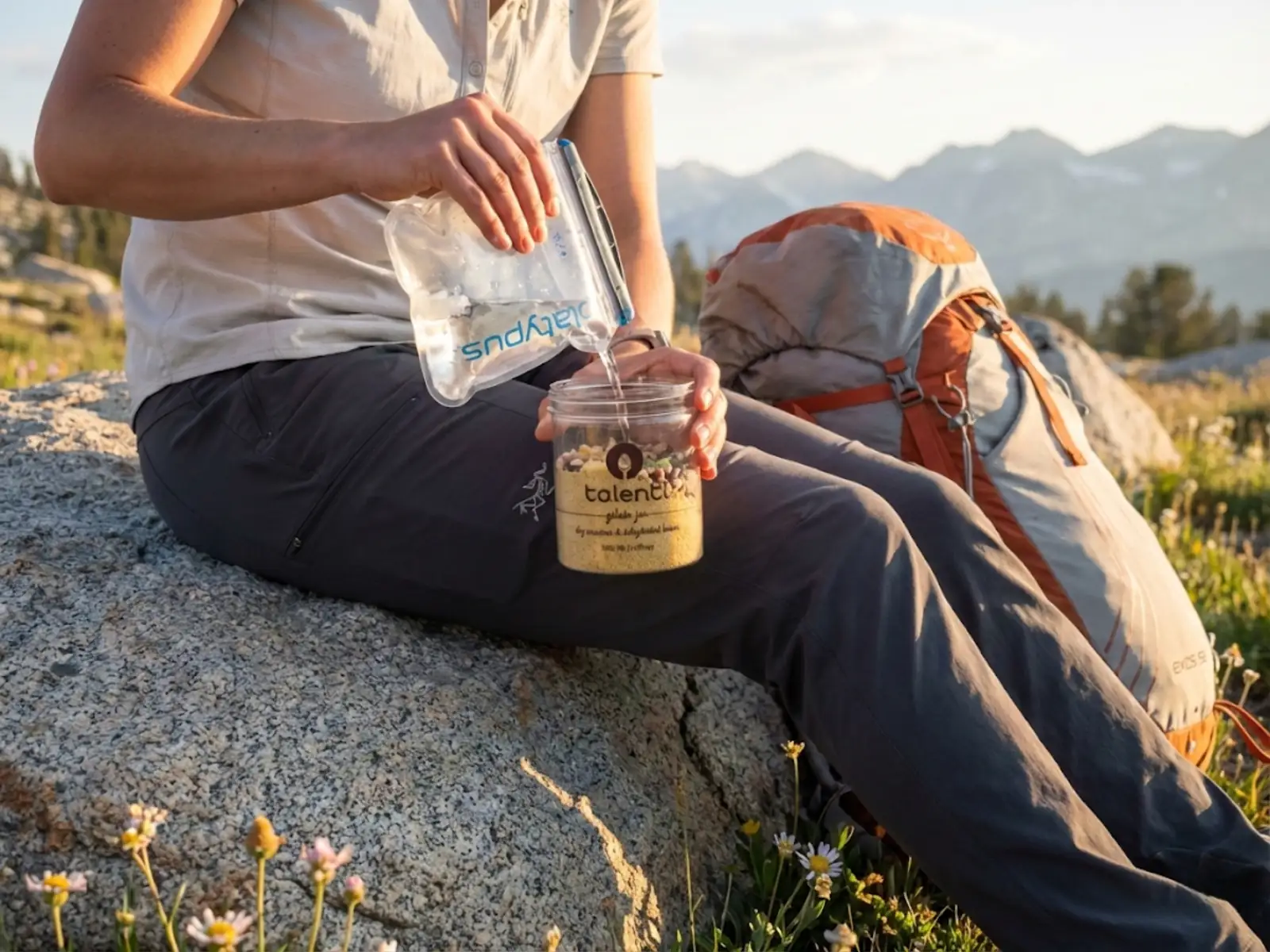
The “crotch pot” method—wearing your food pouch against your body—uses metabolic heat (98°F) to push rehydration closer to the warm range. I’ve used this for stubborn dehydrated beans on cold mornings. It cuts soak time by about 30% and feels ridiculous, but it works.
Understanding how elevation affects cooking temperatures helps explain why even boiling water behaves differently at altitude. Cold soaking eliminates that variable entirely—you’re working with ambient temperature, period. The science behind starch gelatinization temperatures confirms why cold water can’t replicate what heat does to starch molecules.
Food Safety Protocols: The 2-Hour Rule and Danger Zone Thermodynamics
Stoveless hiking removes the “kill step” from your food prep. Boiling water pasteurizes. Cold water doesn’t. This means bacteria that would normally die now thrive.
The USDA danger zone sits between 40°F and 140°F. Bacteria populations double every 20 minutes in this range. The 2-hour rule is cumulative—if your food spends 3 hours total in the danger zone across the day, bacterial load reaches pathogenic levels.
Your pack in direct sunlight acts as an incubator. I’ve measured jar temperatures 15-20°F above ambient air temp on exposed ridgelines. At 90°F+, safe holding time drops from 2 hours to just 1 hour.
I learned this on a desert section of the PCT. Soaked lunch at 11am, got distracted by navigation, ate at 3pm in 95°F heat. Spent that night violently ill. The math was simple: 4 hours in the danger zone at high temperature. My body paid the price.
The protocol is non-negotiable: soak-and-eat, not soak-and-carry. Start your soak 45-60 minutes before your planned meal time, no earlier. If the jar feels warm to touch, it’s been in the danger zone too long. Dump it.
Bacillus cereus in rice deserves special attention. The spores survive cooking. If cooked rice cools slowly (in the danger zone) before dehydrating, heat-stable toxins form. Rehydrating this rice—even with boiling water—won’t destroy the toxin. For DIY dehydrated rice: cook it, cool it rapidly (spread thin on trays in the fridge to <40°F), then dehydrate immediately at >135°F. Safe cooling protocols for cooked rice are critical to prevent toxin formation. On trail, consume rehydrated rice immediately.
Botulism risk comes from anaerobic environments. Adding fresh garlic or herbs to oil and sealing it in a pouch creates perfect conditions for Clostridium botulinum. Use commercially processed garlic oils or dried garlic granules. Never store fresh garlic in oil on the trail.
In bear country, your soaking jar smells like food. It must go inside an odor-proof bag (Opsak) or bear canister, even while hiking. I’ve had a black bear follow me for half a mile because I had beans soaking in an external pocket. Learn from my mistakes.
The comprehensive backcountry food safety protocols cover storage and wildlife considerations beyond just cold soaking. Food safety is a system, not a single rule.
Pro tip: Carry a small digital thermometer. If you’re unsure whether your jar has been in the danger zone too long, check the temp. Above 70°F for more than 2 hours? Don’t risk it.
The Cold Soak Ingredient Tier System: Success Rates and Rehydration Times
Not all dehydrated foods are created equal. After testing dozens of ingredients across multiple trips, I’ve organized them into three tiers based on success rate and rehydration time.
Tier 1: The Instant Elites (>95% success rate) are your foundation. Couscous rehydrates in 5-10 minutes—it’s the premier cold soak carb. Avoid pearled or Israeli couscous; it’s larger and denser, staying crunchy in the center. Instant ramen takes 20-30 minutes. The high fat content from frying provides essential calories but leaves a greasy residue in cold jars. Instant mashed potatoes are instant—literally. I use them as a thickening agent for soups or to absorb excess water from other dishes (the “Ram-Bomb” strategy). Dehydrated refried beans reconstitute in 5-10 minutes and provide protein and fiber. Quick oats work for overnight oats; steel-cut oats remain too hard.
Tier 2: The Patient Hydrators (70% success rate) require time and patience. Instant rice must be the pre-cooked variety—Uncle Ben’s or Minute Rice. Standard raw rice won’t work. Even instant rice can taste grainy in very cold water (\<50°F). I extend soak time to 60+ minutes or use the crotch pot method. Freeze-dried meats (chicken, beef chunks) take 60+ minutes and feel stringy or tough without heat to relax protein fibers. Heavy seasoning is mandatory. TVP (textured vegetable protein) rehydrates reliably but tastes like cardboard without flavor. Dehydrated vegetables (peas, corn, carrots) often stay chewy or leathery even after hours. Freeze-dried vegetables perform better due to their sponge-like structure.
Tier 3: The Fail Zone taught me expensive lessons. Raw pasta is inedible. Raw rice and lentils remain hard pebbles. Raw legumes contain lectins that require boiling to neutralize—cold soaking raw beans causes severe GI distress. Coconut milk powder clumps into waxy globules in cold water due to high saturated fat melting point. Chickpea flour (unless roasted like Besan) tastes grassy and bitter. “Chickpea sludge” is a common forum complaint.
Most commercial freeze-dried meals (Mountain House, Peak Refuel) are designed for boiling water. Cold soaking yields crunchy, tough results. Exception: Outdoor Herbivore and Fernweh Food Co. specifically label meals as “Cold Soak Friendly” with smaller particle sizes and pre-cooked grains.
I tested 10 pasta types over three trips. Only pre-cooked tortellini softened adequately. Regular spaghetti was inedible after 12 hours. I ended up crushing it into instant rice just to add calories.
Crushing ramen noodles before packing increases density by ~30% and speeds rehydration by exposing more surface area. It also saves space in bear canisters.
The complete cold soaking recipes ranked by calories and clean-up shows how to combine these ingredients into actual meals.
Pro tip: For difficult-to-hydrate items like thicker dehydrated beans, soak in plain water first. Add flavor packets only after rehydration is 80% complete to maximize water absorption efficiency.
Container Selection: Material Science and Durability Analysis
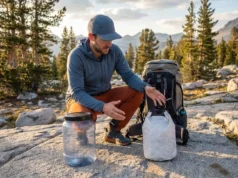
The Talenti jar has become the mascot of cold soaking. Perfect size (473ml), wide mouth for eating and cleaning, transparent to see contents. Weight: ~54g. Cost: ~$5 plus gelato.
But it has structural deficiencies. The threading is shallow—overtightening strips it. Pack compression can pop the lid off, spilling food everywhere. PET plastic melts or deforms above 160°F, so cleaning with boiling water warps the jar. The lid no longer seals. I’ve ruined three this way.
PET becomes brittle in freezing temps and cracks upon impact. The translucent plastic scratches easily. Metal spoons create micro-abrasions that harbor biofilms cold water rinsing can’t remove.
The peanut butter jar (polypropylene, ~33-50g, free) offers better seal integrity and impact resistance. PP is more flexible, dishwasher safe, and resists warping. It’s designed for viscous liquids, so the seal is robust. If you’re on a budget, this is your container.
The Vargo BOT (titanium, ~136g, $100+) is the hybrid solution. Watertight screw-top with O-ring gasket for cold soaking. Fireproof titanium for boiling water. It resolves durability and heat resistance issues but costs as much as a week’s worth of food. I only recommend it if you’re carrying a small stove for hybrid use—cold soak during the day, hot dinner at night.
Ziploc bags leak under pack compression. Stasher bags (silicone) seal well and withstand 400°F+, but cost $15 vs. $0.10 for Ziploc.
For jar hygiene, I use the “swish method.” Add a drop of biodegradable soap (Dr. Bronner’s) and water to the jar after eating. Seal it. The agitation of hiking scrubs the interior. Rinse well at the next water source (away from the source, per Leave No Trace).
The ultralight gear selection strategies explain the multi-use gear philosophy. The Vargo BOT embodies this: one item, two functions, worth the weight if you’re already carrying a stove.
Caloric Economics: Cost-Per-Calorie and Weight Efficiency Analysis
Weight-conscious hikers aim for 125 Cal/oz minimum. Foods below this threshold are “heavy” relative to energy output.
Olive oil and MCT oil hit 240-250 Cal/oz—pure fuel. Walnuts and macadamias: 170-190 Cal/oz. Peanut butter: 165-170 Cal/oz. Fritos: 160 Cal/oz (vital for texture contrast). Ramen: 120-130 Cal/oz. Commercial freeze-dried meals: 100-130 Cal/oz, often lower due to lean proteins and vegetables.
Cold soaking supports high-calorie density strategies because fats (oils, nuts, chips) don’t require cooking. You can add them liberally without “breaking” a sauce the way heat might cause separation.
The cost disparity is vast. Commercial freeze-dried (Mountain House, Peak Refuel): $10-14 per pouch, 600-900 kcal, ~$1.50-2.00 per 100 calories. Most are designed for boiling water—cold soaking yields crunchy results. DIY grocery (ramen + tuna + oil): $0.30 + $1.50 + $0.20 = $2.00 total, ~700 kcal, ~$0.30-0.40 per 100 calories. Excellent cold soak viability. Bulk bin (Winco couscous + peanuts): \<$0.20 per 100 calories.
On a 5-day trip, I spent $12 total on DIY cold soak meals vs. $70 for commercial freeze-dried—same caloric intake. The savings fund my next permit.
In regions requiring bear canisters (Sierra Nevada), volume is as critical as weight. Freeze-dried meal pouches contain ~40% air and rigid ingredients. They fill a canister inefficiently. Couscous, mashed potatoes, and nut butters conform to the container shape—zero wasted airspace. Repackaging strategy: prick commercial meals to release air or repackage into plastic bags. Crushing ramen noodles before packing increases density by ~30%.
The complete trail nutrition matrix covers macro balance, hydration, and electrolytes beyond just calories. Caloric density is one variable in a larger system.
The bear canister regulations and volume optimization guide explains regional requirements and Ursack alternatives.
Pro tip: Carry single-serve condiment packets (mayo, hot sauce, soy sauce) scavenged from fast food. They weigh nothing and transform bland couscous into something you’ll actually want to eat.
Master Recipes and Flavor Strategies: Breaking the Mush Monotony
The primary complaint with stoveless hiking is the mush factor. Without browning (Maillard reaction) or crisping, texture becomes monotonous. Cold food also requires more seasoning than hot food—volatile flavor compounds are less active at low temperatures.
Skurka’s Beans & Rice (cold soak variant) is my foundation meal. Instant dehydrated refried beans + instant rice + taco seasoning + cheese + Fritos. Soak the rice and beans with seasoning for 30-45 minutes. Add cheese. Add Fritos immediately before eating—this timing is critical for crunch retention. The beans create a binder for the rice. The Fritos provide salt, fat, and the texture contrast that breaks the monotony.
Hiker Trash Pad Thai uses emulsification chemistry. Ramen (no flavor packet) + peanut butter + soy sauce/Sriracha + crushed peanuts. Soak noodles 20-30 minutes. Drain most water. Stir in peanut butter and sauces. The emulsification of peanut butter with residual starchy noodle water creates a creamy sauce that coats the noodles rather than sliding off. Top with crushed peanuts for texture.
The “Ram-Bomb” maximizes calories. Soak ramen. When nearly done, add instant mashed potato flakes to absorb the remaining broth. It creates a calorie-dense “mortar” that fills the stomach. High satiety, low cost.
Flavor dynamics require three elements. Acid: True Lime/Lemon packets (crystallized citrus) cut through the fattiness of peanut butter or oil. Heat: Sriracha, red pepper flakes increase blood flow and perceived warmth—crucial on cold nights. Umami: Soy sauce packets, sun-dried tomatoes, shelf-stable parmesan cheese add depth to bland starches.
I carry single-serve condiment packets scavenged from fast food. They weigh nothing. A packet of mayo turns tuna and crackers from “edible” to “actually good.”
The complete trail recipe collection includes hot-cook alternatives and hybrid strategies for when you want the morale boost of a warm meal.
Pro tip: Pack crunchy toppings (Fritos, crushed peanuts, sunflower seeds) separately and add them immediately before eating. If you add them to the soak, they turn to mush. Texture is as important as flavor.
Conclusion
Cold soaking works—but only if you respect the physics. Pre-gelatinized starches (couscous, instant ramen, minute rice) rehydrate via capillary action, not thermal energy. Raw pasta and raw rice will fail every time.
The 2-hour danger zone rule is non-negotiable. Your pack in the sun is an incubator. Bacteria multiply rapidly between 40°F and 140°F. Soak-and-eat, not soak-and-carry.
Texture matters as much as calories. Fritos, crushed peanuts, and acid/heat/umami seasoning are the difference between “edible” and “I’m switching back to a stove.”
Test this system on a weekend trip before committing to a thru-hike. Start with Tier 1 ingredients (couscous, ramen, refried beans), follow the soak-and-eat protocol, and see if the weight savings (8-16 oz) and time savings (no cooking) outweigh the texture tradeoffs. For most hikers, the answer is a hybrid approach: cold soak breakfast and lunch, hot dinner when you need the morale boost.
Next time you’re on the trail and your jar is soaking, you’ll know exactly what you’re doing—and why it works.
FAQ
How long can I safely cold soak food before eating it?
Maximum 2 hours in temperatures between 40°F-90°F, or 1 hour if temperatures exceed 90°F. This is cumulative time in the danger zone where bacteria multiply rapidly. If your pack is in direct sun, internal temperature can exceed ambient air temp by 15-20°F. Treat the jar as a biological clock and eat immediately upon rehydration.
Can I cold soak Mountain House or Peak Refuel freeze-dried meals?
Most commercial freeze-dried meals are designed for boiling water and perform poorly with cold soaking—expect crunchy, tough textures. Exception: Brands that specifically label meals as Cold Soak Friendly (Outdoor Herbivore, Fernweh Food Co.) use smaller particle sizes and pre-cooked grains that rehydrate in cold water.
What’s the best container for cold soaking on a budget?
Upcycled peanut butter jar (polypropylene, ~33-50g, free) offers better seal integrity and impact resistance than the popular Talenti jar. If you already have Talenti jars, they work but avoid overtightening (strips threads) and never clean with boiling water (warps plastic). For long-term durability, invest in a Vargo BOT (titanium, $100+) if you’re also carrying a stove for hybrid use.
Why does my instant rice still taste grainy after soaking?
In very cold water (<50°F), even pre-cooked instant rice can have a grainy texture because the starch granules swell more slowly. Solutions: (1) Use body-heat soaking (crotch pot method) to raise water temp closer to 98°F, (2) Extend soak time to 60+ minutes, (3) Add instant mashed potato flakes to absorb excess water and mask graininess.
How do I prevent my cold soak meals from tasting bland?
Cold food requires more seasoning than hot food because volatile flavor compounds are less active at low temperatures. Add acid (True Lime packets), heat (Sriracha, red pepper flakes), and umami (soy sauce, sun-dried tomatoes, parmesan). Pack crunchy toppings (Fritos, crushed peanuts) separately and add them immediately before eating to break the mush monotony. Texture is as important as flavor.
Risk Disclaimer: Hiking, trekking, backpacking, and all related outdoor activities involve inherent risks which may result in serious injury, illness, or death. The information provided on The Hiking Tribe is for educational and informational purposes only. While we strive for accuracy, information on trails, gear, techniques, and safety is not a substitute for your own best judgment and thorough preparation. Trail conditions, weather, and other environmental factors change rapidly and may differ from what is described on this site. Always check with official sources like park services for the most current alerts and conditions. Never undertake a hike beyond your abilities and always be prepared for the unexpected. By using this website, you agree that you are solely responsible for your own safety. Any reliance you place on our content is strictly at your own risk, and you assume all liability for your actions and decisions in the outdoors. The Hiking Tribe and its authors will not be held liable for any injury, damage, or loss sustained in connection with the use of the information herein.
Affiliate Disclosure: We are a participant in the Amazon Services LLC Associates Program, an affiliate advertising program designed to provide a means for us to earn advertising fees by advertising and linking to Amazon.com. As an Amazon Associate, we earn from qualifying purchases. We also participate in other affiliate programs and may receive a commission on products purchased through our links, at no extra cost to you. Additional terms are found in the terms of service.