In this article
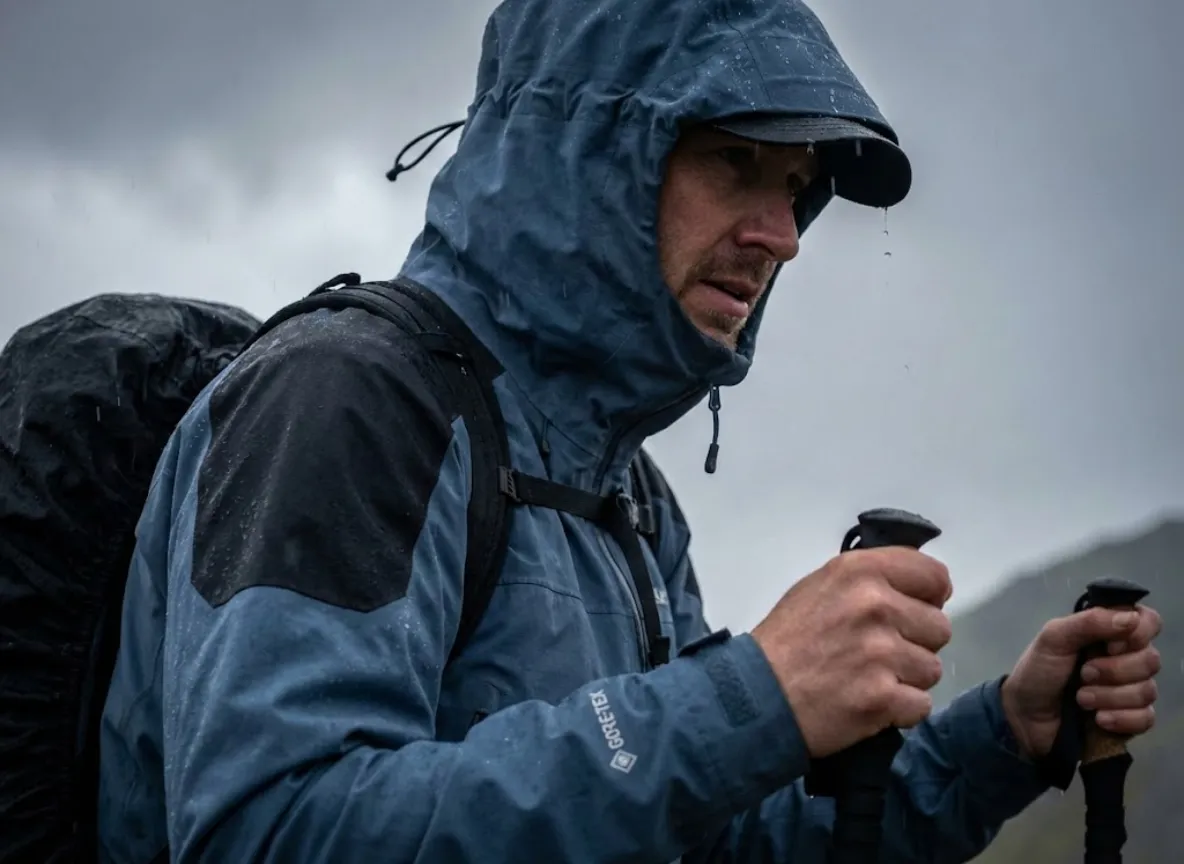
You are three hours into a torrential downpour on an exposed ridge. The water stops beading on your shoulders and begins to sheet, creating a dark, heavy patch that sucks the heat right out of your base layers. You feel a clammy chill seeping through.
In my twenty years of leading mountaineering courses, I have seen this moment panic countless students. They assume their expensive waterproof membrane has failed. They assume they have a leak.
Almost always, they are wrong. This isn’t necessarily a failure of your waterproof membrane, nor is it a sign that your jacket is garbage. It is a failure of physics in your outdoor gear maintenance routine.
Most modern performance apparel restoration relies on maintenance, not replacement. Most outerwear is not broken; it is simply dirty or thermodynamically dormant. Before you retire your gear, you need to understand the DWR restoration process known as the “Heat First” protocol.
What Actually Happens When Your Jacket “Wets Out”?

“Wetting out” is the physical collapse of the microscopic topography on the surface of your fabric, causing water to spread rather than bead.
Why does water stop beading on technical fabrics?
Durable Water Repellent (DWR) is not a smooth coat of paint. Visualize the DWR finish as billions of microscopic “spikes” or hairs standing perpendicular to the fabric.
When these chemical spikes stand upright, they create a rough surface texture at the molecular level—known as the Cassie-Baxter state—that forces water into spherical droplets. Because the water cannot flatten out, it rolls off.
Wetting out happens when these spikes are either physically crushed by abrasion or masked by contaminants like body oils, campfire smoke, and dirt. Dirt masking chemical spikes effectively bridges the gap, allowing water to pin to the surface.
When the face fabric saturates, the problem usually isn’t water getting in; it’s moisture failing to get out. A saturated face fabric blocks the vapor escape route. This breathability failure traps your body heat and sweat inside the jacket.
This creates a cold feeling and clammy feeling due to condensation that is universally mistaken for a leak. This mechanism is often what people misinterpret as a membrane failure, leading them to question the integrity of high-end ePTFE membranes like those found in Gore-Tex.
If the “spikes” are simply flattened or dirty, the solution becomes clear: we need to clean them and stand them back up. This concept is supported by extensive research on the properties of superhydrophobic surfaces, which details how surface roughness directly impacts water repellency.
How has the shift from C8 to C0 chemistries changed gear maintenance?
Understanding the physical structure is half the battle; the other half lies in the chemistry itself. The “set it and forget it” era of textile care is dead, largely due to a necessary shift in global chemical standards.
Historically, DWR formulas used Long-Chain Fluorocarbons (C8 fluorocarbons). These were incredibly durable and possessed a unique chemical superpower: they were oleophobic (oil-repellent). However, C8 chemistries produced toxic byproducts (PFOA/PFOS) that persist in the environment.
The industry has largely shifted to C0 PFC-free alternatives based on hydrocarbons, silicone, or wax. While these align with the principles of mastering outdoor ethics, they lack the thermodynamic stability of the old C8 chemistry.
Crucially, in this PFC-free reality, modern DWR has almost zero resistance to body oils. Sebum from your neck and wrists will “mask” the DWR much faster than it used to.
Users must accept that high-performance eco-gear requires active, frequent care. The European Commission findings on textile finishing toxicity validate this regulatory shift. For the end-user, it means your jacket requires washing and heating far more often than your gear from ten years ago.
Pro-Tip: If you see dark stains on the neckline or cuffs of your jacket, that is body oil. No amount of spray-on waterproofing will fix it until that oil is washed away.
Is Your Gear Actually Dead or Just Dirty? (Phase 1: Diagnosis)
Before applying aftermarket DWR, you must diagnose the specific failure point. Think of yourself as a gear technician running a troubleshooting matrix in a gear performance lab.
How do you perform the “Spray Test” at home?
Hang the dry garment and use a spray bottle to mist water onto the high-abrasion zones: shoulders, hood, and cuffs.
Watch the water’s behavior for 60 seconds. Healthy DWR beads up like mercury, rolling off effortlessly. Failing DWR allows the water to soak into the fibers, turning the fabric into dark patches. This visual check mirrors the industry-standard ISO 4920 standard for textile wettability.
If the fabric wets out but you haven’t washed it in months, assume it is masked by dirt, not dead.
To rule out a catastrophic membrane failure, perform the “Ice Bucket” test. Place a section of the jacket over a bowl and pour water onto it. If the inside stays dry while the face fabric soaks, your membrane is intact. You simply have a DWR problem.
While testing, inspect for delamination. Look for “bubbling” or puckering of the fabric. This indicates the glue holding the layers together has failed via hydrolysis. If you see this, or peeling seam tape, the jacket is terminal. This diagnostic process is vital for testing the integrity of your gear as detailed in our guide on waterproof ratings explained.
How Do You Execute the “Heat First” Protocol? (The Step-by-Step)
Restoring water repellency is an exercise in cleaning and thermodynamics. This 3-phase restoration protocol resolves approximately 80% of DWR failures without buying a single bottle of new waterproofing.
Why is the cleaning phase the most critical step for restoration?
You cannot reactivate DWR that is covered in oil; washing removes hydrophilic contaminants to reveal the hydrophobic polymers underneath.
Detergent choice is paramount. Use a technical cleaner (like Nikwax Tech Wash, Grangers, or a specific tech wash) or a pure liquid detergent.
Do not use standard laundry detergents like Tide or Ariel. These contain hydrophilic (water-loving) residues, optical brighteners, and enzymes that actively attract water to the fabric. If you wash a waterproof jacket in standard detergent, you are effectively coating it in a wetting agent.
Whether using a front-load washer or a top-load washer (heed the agitator warning—it can rip lightweight gear), set the wash temperature to a warm wash (usually 40°C or 105°F) on a gentle cycle or synthetic cycle.
Always program a double rinse. You need to ensure absolutely zero surfactant remains on the garment. Also, zip all zippers and close all velcro to prevent abrasion during the wash. This pre-wash prep is non-negotiable.
Pro-Tip: Never, under any circumstances, use fabric softener. It coats fibers in a wax or silicone layer that permanently masks DWR and ruins breathability.
Proper cleaning extends the life of the garment, which is a critical part of the hiking gear recycling and lifecycle management process. Research on the thermal stability of fluoropolymer coatings confirms that surface contamination significantly degrades performance, regardless of the underlying chemistry.
How does heat scientifically reactivate the DWR polymer chains?
Heat provides the energy required for the DWR polymer chains to undergo “chain relaxation” and re-orient themselves into a vertical structure.
Once the jacket is clean, the polymer “spikes” are free of oil, but they are likely still matted down. To fix this, we need to push the polymer past its glass transition temperature. This thermodynamic reset allows the microscopic structures to spring back up.
Use a tumble dryer on medium heat (approximately 55-60°C) for 20 minutes. Do not remove the jacket immediately when it feels dry. The extra time provides the activation triggers for curing, not just drying.
If you do not have a dryer, or are treating a vintage jacket with fragile seam glue, use an iron. Set it to “warm” (no steam) and place a thin towel between the iron and the jacket. This applies the necessary activation energy safely. This process relies on understanding thermodynamics, much like in the science of layering.
For a closer look at why this works, examine studies regarding molecular orientation in thermal extrusion, which explain how heat organizes polymer structures.
When and How Should You Reapply DWR Chemicals? (Phase 3: Reinforcement)
If you pull the jacket from the dryer, perform the spray test, and it still wets out, then—and only then—has the factory applied DWR actually worn off. It is time to reapply DWR.
Should you use Wash-In or Spray-On DWR products?
For breathable technical shells, always use spray-on application products; reserve wash-in application products for unlined rain gear only.
Wash-in products (like Nikwax TX.Direct Wash-In) are immersive. They coat every fiber of the garment, inside and out. While effective, this creates a fatal flaw for 3-layer jackets: it coats the interior lining and wicking layers. This makes the inside of the jacket hydrophobic, preventing it from pulling sweat off your skin.
Spray-on DWR (using a pump spray or aerosol) allows you to target the face fabric only. You can double-dose high-wear areas like the shoulders and cuffs while leaving the interior untouched. This preservation of the hydrophobic liner is essential for high-performance gear like the best rain jacket for hiking.
Apply the spray to a damp jacket. The moisture in the fabric helps the chemical wick into the fibers before it cures.
According to the association for contract textiles on hydrolysis, maintaining the correct chemical balance on the face fabric protects the underlying membrane adhesives from premature aging.
Which eco-friendly products actually work in the post-PFAS era?
The efficacy of modern DWR treatments depends heavily on whether the product is heat-cured or air-cured.
Brands like Grangers (Performance Repel) and Gear Aid (ReviveX) often use acrylic or polymer-based formulas that require heat to cross-link. They are highly durable but will fail if you simply let them air dry. ReviveX, in particular, is noted for durability but strictly requires a dryer cycle.
Nikwax uses an acidic elastomer (noticeable by the vinegar smell) that is unique because it air-cures. This makes it the superior choice for field maintenance or for items that cannot be tumble dried, such as tent rainflys, backpacks, or glued waders.
When choosing the best DWR spray, look for BlueSign or Oeko-Tex certifications. These verify that the “eco” claim is backed by the absence of harmful PBTs, as monitored by agencies like the California DTSC safety data on waterproofing sprays.
You can also use these sprays to add water resistance to lighter layers. Effectively, you are applying these finishes to items like soft shells, down jackets (especially hydrophobic down), and the best hiking wind jacket to increase their versatility.
Conclusion
The failure of your rain gear is rarely permanent. It is usually a symptom of the jacket being “masked” by dirt or “matted” by use.
This chronological how-to guide proves that washing away dirt and oils does much to restore DWR water-shedding abilities.
Remember the Heat First Protocol: Cleanliness is function. You cannot waterproof a dirty jacket. Heat is the key. The dryer is a tool for chemical activation, not just moisture removal. Spray, don’t soak. Keep new DWR on the outside of your breathable shells.
The shift to C0 chemistry means we must work harder to keep our gear functional. Accept this maintenance as the cost of sustainability. Before you replace that “failing” $400 shell from Arc’teryx, Patagonia, or REI, run it through this protocol this weekend. Share your results in the comments—did it bead up like new?
FAQ – Frequently Asked Questions
Can I use regular laundry detergent on my Gore-Tex jacket?
No, you should avoid standard detergents because they contain hydrophilic residues (wetting agents) and optical brighteners that attract water. Always use a residue-free Technical Wash or a pure liquid soap to preserve the DWR finish.
How often should I re-spray my waterproofing?
Only re-spray when the Heat First protocol (Wash + Heat) fails to restore water beading. Re-spraying a dirty jacket seals in the dirt; always clean and heat-test before adding new chemicals.
Will putting my jacket in the dryer melt the seams?
Most technical apparel is designed to be tumble dried on medium heat (55-60°C) specifically to reactivate DWR coating. However, always check the care label, and be cautious with very old gear where the seam glue may already be degrading.
Is wash-in waterproofing better than spray-on?
Wash-in provides better coverage but coats the inside of the jacket, which can inhibit the liner’s ability to wick sweat. Spray-on is superior for waterproof-breathable hard shells (3-layer Gore-Tex, etc.) as it targets only the exterior face fabric.
Risk Disclaimer: Hiking, trekking, backpacking, and all related outdoor activities involve inherent risks which may result in serious injury, illness, or death. The information provided on The Hiking Tribe is for educational and informational purposes only. While we strive for accuracy, information on trails, gear, techniques, and safety is not a substitute for your own best judgment and thorough preparation. Trail conditions, weather, and other environmental factors change rapidly and may differ from what is described on this site. Always check with official sources like park services for the most current alerts and conditions. Never undertake a hike beyond your abilities and always be prepared for the unexpected. By using this website, you agree that you are solely responsible for your own safety. Any reliance you place on our content is strictly at your own risk, and you assume all liability for your actions and decisions in the outdoors. The Hiking Tribe and its authors will not be held liable for any injury, damage, or loss sustained in connection with the use of the information herein.
Affiliate Disclosure: We are a participant in the Amazon Services LLC Associates Program, an affiliate advertising program designed to provide a means for us to earn advertising fees by advertising and linking to Amazon.com. As an Amazon Associate, we earn from qualifying purchases. We also participate in other affiliate programs and may receive a commission on products purchased through our links, at no extra cost to you. Additional terms are found in the terms of service.