In this article
Halfway up Granite Peak in the North Cascades, with sleet drilling sideways into my face fabric, I realized I’d made the $400 mistake. My brand-new hardshell jacket—a 3-layer Gore-Tex fortress rated to 28,000mm hydrostatic head—was keeping the rain out. But I was soaked anyway. From the inside.
Three hours of high-output climbing had turned my expensive shell into a portable sauna. Now I was wet, hypothermic, and questioning every gear review I’d ever trusted. After twenty years of backcountry travel, I’d fallen for the most common error in outerwear selection: buying the “best” jacket instead of the right jacket for the conditions.
Here’s what I’ve learned about hardshells, softshells, and the physics that actually determine which one belongs in your pack.
⚡ Quick Answer: A hardshell prioritizes waterproofness (measured in hydrostatic head) and is best for sustained rain and severe weather. A softshell prioritizes breathability and air permeability (measured in CFM) and is best for cold, dry conditions with high physical output. Most experienced hikers carry both—a breathable layer for movement and a protective layer for storms. Neither is “better.” The right choice depends on your conditions.
The Physics of Shell Fabrics: What Specs Actually Mean

Every jacket tag lists impressive-sounding numbers. Hydrostatic head, MVTR, RET—these metrics determine whether you stay comfortable or end up drenched from sweat on a steep trail. Understanding what they mean separates informed gear buyers from marketing victims.
Hydrostatic Head: The Pressure Test You’ll Never Replicate
Hydrostatic head measures water pressure resistance in millimeters. It’s the column of water a fabric can withstand before liquid pushes through. Gore-Tex Pro rates at over 28,000mm. AscentShell comes in around 15,000-16,000mm. Basic DWR-only fabrics effectively rate at zero—they resist water but don’t block it under pressure.
Here’s what those numbers mean in the real world: kneeling in wet snow, having your pack’s hip belt press against your back in a downpour, or facing wind-driven rain all create localized pressure spikes. A 10,000mm rating might handle a light drizzle perfectly while failing during loaded multi-day backpacking in sustained rain.
Pro tip: Your pack’s shoulder straps can exert enough pressure to push water through lower-rated membranes. For loaded backpacking in serious rain, 20,000mm is the minimum threshold.
The rating matters less than the type of water exposure. A 28,000mm shell is overkill for morning mist but essential for eight hours of torrential mountain rain.
Breathability Metrics: MVTR vs. RET vs. CFM
This is where most hikers get confused—and where marketing loves to exploit that confusion.
MVTR (Moisture Vapor Transmission Rate) measures how much water vapor passes through fabric in 24 hours (g/m²/24h). Higher is better. But testing methods vary wildly. “30,000 MVTR” from one lab doesn’t equal “30,000 MVTR” from another. It’s an inconsistent metric that manufacturers exploit with carefully chosen testing conditions.
RET (Resistance to Evaporative Heat Transfer) is more consistent. Lower is better. Below 6 means extreme breathability. Between 6-13 is good for most outdoor activities. Above 20 feels restrictive. When comparing Gore-Tex to eVent membranes, RET provides more useful comparisons than MVTR.
CFM (Cubic Feet per Minute) measures actual airflow—and it’s the metric most hikers ignore. Standard Gore-Tex has essentially zero CFM. It relies on diffusion—moisture vapor moving through a solid membrane due to humidity differences. AscentShell, Futurelight, and NeoShell have measurable CFM (above 0.1). Air actually moves through the membrane, enabling convective cooling.
This matters because pit zips remain the most effective mechanical venting solution for many activities. But air-permeable membranes vent continuously without requiring you to unzip anything.
Construction Types: Why Layer Count Matters More Than Brand
You can have the finest waterproof membrane in existence, but if it’s poorly protected, your expensive jacket will fail within two seasons. Construction architecture—specifically layer count—often matters more than which membrane sits inside.
3-Layer (3L): The Durability Standard
3-layer construction bonds a face fabric, membrane, and interior liner (usually tricot or C-Knit) into a single laminated sheet. The liner protects the membrane from body oils and internal abrasion.
Why does this matter? Body oils degrade PU coatings over time. A 3L jacket with a tricot backer can last ten years or more. The same membrane without that backer may fail in two or three seasons—not because the technology is inferior, but because there’s nothing protecting it from constant contact with your skin and clothing.
The Patagonia Torrentshell 3L at $179 represents unusual value—bringing 3-layer durability to a price point usually reserved for inferior 2.5-layer jackets. The Arc’teryx Beta AR at $650 uses 40D body fabric with 80D reinforced shoulders for abrasion resistance where pack straps rub.
Pro tip: Before buying any rain jacket, press your thumb against the interior. If you feel slick plastic coating instead of soft fabric, you’re looking at 2.5L construction. Plan accordingly.
2.5-Layer (2.5L): Packable But Perishable
2.5-layer construction bonds a face fabric to the membrane, then applies a thin protective coating—a sprayed or printed layer rather than a true fabric backer. The result is lighter, more packable, and considerably less durable.
The infamous “trash bag” feel comes from this construction. Sweat condenses directly on the coating, creating a slime-like sensation against bare skin. The technical term is “camminess,” and it’s why some hikers swear they’re wet inside their jacket even when the membrane isn’t leaking.
The failure mode here is delamination. That printed coating peels away from the membrane over time (hydrolysis), especially in high-wear areas like neck and shoulders where body oils concentrate. Proper storage prevents delamination and hydrolysis, but 2.5L jackets like the Outdoor Research Helium remain emergency layers—not daily drivers.
Expect two to three seasons of heavy use before problems emerge. For ultralight thru-hikers who need packability over longevity, this trade-off often makes sense.
The Hybrid Exception: Knit-Backed Softshells
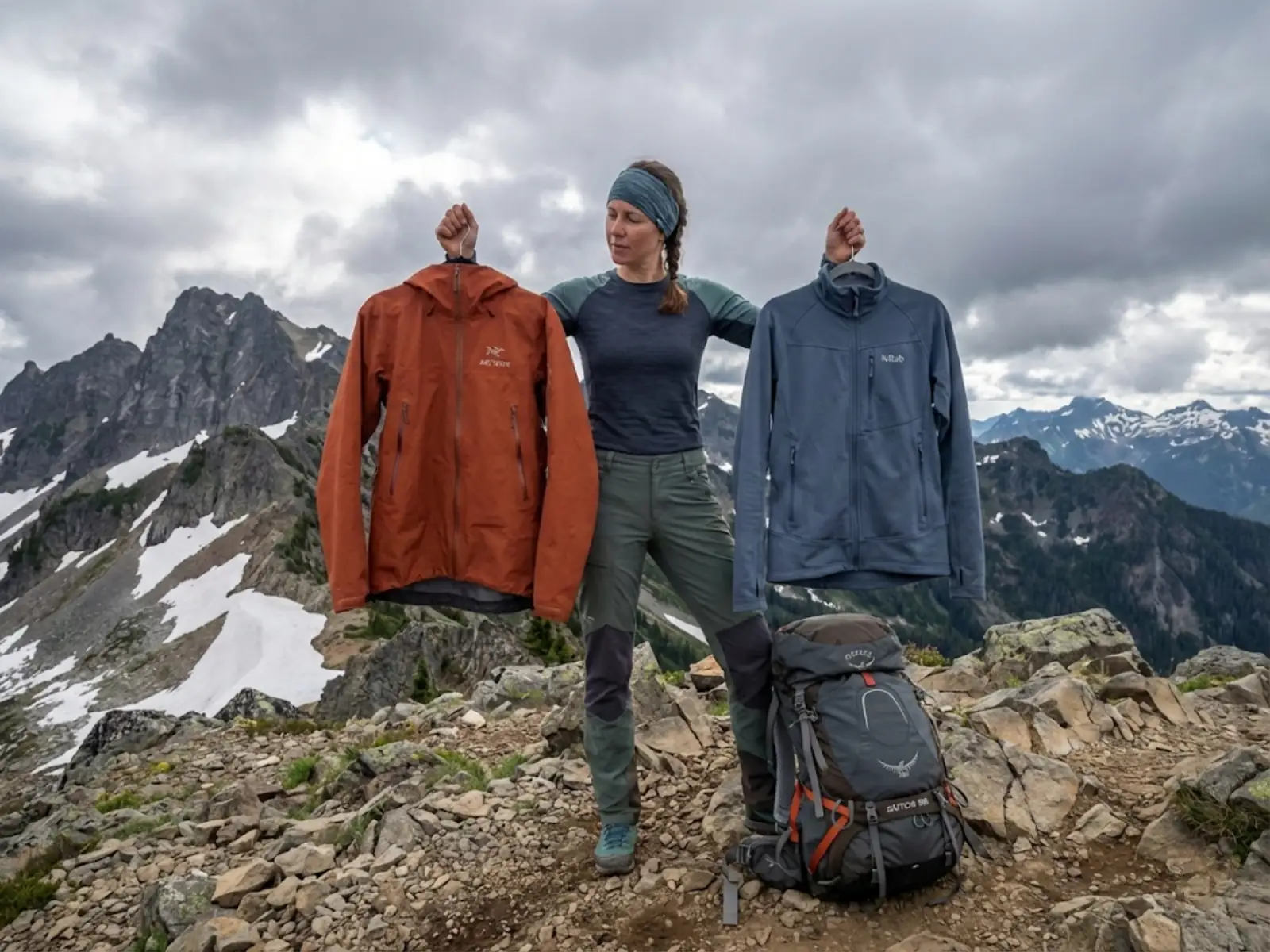
The Rab Kinetic 2.0 uses Proflex—a waterproof membrane with knit face and backer. It feels like a softshell, specs like a hardshell (20,000mm hydrostatic head), and represents a growing category of hybrid shells.
The trade-off: less abrasion resistance than traditional 40D nylon. Knit fabrics tear more easily in brush or against sharp rock. If you want softshell comfort with hardshell ratings, this category exists—just don’t expect hardshell durability.
Membrane Technology: The ePE Revolution and Air-Permeable Alternatives
The outdoor industry is undergoing its largest shift in material science since Gore-Tex first appeared. The transition from ePTFE to ePE changes how your jacket performs—and how you need to care for it.
ePTFE vs. ePE: The PFAS-Free Transition
ePTFE (Expanded Polytetrafluoroethylene) is the original Gore-Tex membrane. It contains PFAS—per- and polyfluoroalkyl substances sometimes called “forever chemicals.” These are now banned or phasing out in the EU and California by 2025-2026.
ePE (Expanded Polyethylene) is Gore’s new standard. It’s PFAS-free, thinner, lighter, and has a lower carbon footprint. The 2025 Arc’teryx Beta and Patagonia lines use this technology. You can read more about Patagonia’s PFAS-free transition on their corporate responsibility page.
The catch: early chemical theory suggests ePE is less inherently oil-resistant than ePTFE. Body oils, sunscreen, DEET, and even hand lotions may compromise performance faster. The implication is significant: proper Gore-Tex washing and DWR reactivation now requires more frequent attention.
If you treat an ePE jacket like an old Gore-Tex jacket—washing it rarely—expect faster degradation. The new rule: wash after every three to five days of use. Tumble dry after every trip to reactivate the DWR. Old maintenance habits destroy new jackets.
Air-Permeable Membranes: The Third Category
Beyond traditional hardshells, a third category has emerged. AscentShell (Outdoor Research), Futurelight (The North Face), and Polartec NeoShell use electrospun or nanospun polyurethane membranes.
The key difference: measurable air permeability (CFM). Air actually moves through the membrane, enabling convective cooling. Instead of waiting for a humidity differential to drive diffusion, these shells vent continuously.
The sacrifice: lower hydrostatic head (15,000-17,000mm versus Gore-Tex’s 28,000mm). They’ll handle most rain conditions but may leak under sustained pressure—kneeling in wet snow, extended torrential downpours, or wind-driven rain.
When to choose: high-output activities like ski touring, fastpacking, or alpine climbing where breathability matters more than absolute waterproofness. When to avoid: any scenario with sustained water pressure for hours at a time.
DWR and the PFAS Problem: Maintaining Water Repellency
Your jacket isn’t leaking. Your DWR is failing. This distinction—misunderstood by most hikers—explains why so many “defective” jackets perform perfectly after a simple wash-and-dry cycle.
Why Your New Jacket Wets Out Faster Than Your Old One
C8 (long-chain PFAS DWR) resisted both water AND oil. It required minimal maintenance and lasted for years. It’s now banned.
C0 (PFAS-free DWR) resists water but NOT oil. Body oils, sunscreen, insect repellent, and even hand lotions reduce surface tension on the face fabric. Once contaminated, the exterior absorbs water even though the membrane remains intact.
What users experience: “My jacket is leaking!” In reality, the face fabric is saturated. Moisture transfer stalls because the temperature differential drops. Condensation builds inside. You feel wet—even though water never penetrated the membrane.
This isn’t jacket failure. It’s maintenance failure.
The New Washing Protocol
The rules have changed. The “heat first” protocol for DWR restoration is now required, not optional.
Old rule: Wash rarely, jacket lasts forever.
New rule: Wash after every three to five days of use. Use technical detergent—Nikwax Tech Wash or Grangers Performance Wash. Standard detergent leaves hydrophilic residues that attract rather than repel water.
Never use fabric softener. It destroys DWR surface tension permanently.
Tumble dry on low after washing. C0 DWR requires heat to reorient the molecular structures that create water repellency. Air drying is often insufficient.
When water stops beading after the wash-dry cycle: apply spray-on proofer (TX.Direct, Revivex) to the wet shell before drying. This adds a fresh DWR layer.
Pro tip: Before any backcountry trip, run water over your jacket’s shoulder. If it soaks in instead of beading, wash and dry your shell. That 90-second test is the difference between a comfortable summit and a hypothermic retreat.
Softshell Categories: More Than “Not Waterproof”
Softshell jackets aren’t watered-down hardshells. They’re purpose-built tools for specific conditions—usually the conditions where most hiking actually happens.
Stretch Woven (High CFM)
The Black Diamond Alpine Start and Patagonia Airshed represent the breathable end of the spectrum, with CFM rates above 10. They have nearly zero water resistance beyond DWR coating. They’ll soak through in actual rain.
The advantage: instant moisture transport. Sweat evaporates before it builds. For cold, windy conditions with high physical output—trail running, backcountry skiing uphills, technical rock climbing—nothing beats the comfort of high-CFM stretch-woven fabric.
For precipitation beyond morning mist, look elsewhere.
Double Weave (Wind Resistance + Warmth)
The Arc’teryx Gamma Hoody and Fjallraven Keb represent the workhorse softshell category. Tight outer weave blocks 80-90% of wind while a lofted inner face traps warmth.
These are extremely abrasion-resistant. Full-grain double-weave softshells won’t tear on granite approach pitches or dense brush. Experienced mountaineers in the Cascades and Rockies report preferring double-weave softshells over hardshells 90% of the time in winter conditions. Hardshells become “emergency only” when it’s not actively raining.
For cold, dry climates—Colorado high country, Sierra winter, Canadian Rockies—the complete science of layering for hiking starts with a quality double-weave softshell.
Membrane Softshells (Gore-Tex Infinium)
Confusingly, some softshells contain membranes. Gore-Tex Infinium jackets are windproof (zero CFM) but NOT waterproof—they lack seam taping.
For many hikers, this represents the worst of both worlds: no airflow for active use, no full weather protection when storms hit. The only real use case: static activities in cold wind, like belaying a partner on a frigid crag or waiting out a summit sunrise.
The Decision Matrix: Matching Shell to Trail Conditions
Smart hikers don’t ask “hardshell or softshell?” They ask: “What are my conditions?”
By Weather Condition
Heavy sustained rain (4+ hours): 3-layer hardshell with high hydrostatic head. Gore-Tex Pro, Gore-Tex ePE, or H2No Performance Standard. This is when HH actually matters.
Intermittent showers: Lightweight 2.5L or packable 3L like the Torrentshell. Quick on/off convenience outweighs maximum protection.
Cold wind, dry snow: Double-weave softshell. Snow sheds off face fabric, and breathability prevents sweat buildup. Hardshells trap moisture during exertion.
High output plus precipitation: Air-permeable shells like AscentShell. CFM prevents overheating while membrane blocks rain.
Variable alpine conditions: Hybrid shells like the Rab Kinetic 2.0. Softshell feel, hardshell specs.
The Two-Jacket System
After those wet hours on Granite Peak, I restructured my entire outerwear strategy. Now I carry two layers: one breathable (softshell or wind shirt) for active use, one protective (packable hardshell) for camp and storms.
This system is cheaper than one “do-everything” hybrid. It’s often lighter total weight than a single heavy hardshell worn all day. And it covers more conditions than any single jacket ever could.
The $500 mistake revisited: buying one $600 Gore-Tex Pro jacket and overheating in it 80% of the time versus carrying a $120 softshell plus a $180 packable hardshell—and using the right tool for every condition.
Consider what fleece vs down for the active insulation layer means for your system. The shell is only one piece of the puzzle.
Conclusion
Three key takeaways from twenty years of getting this wrong before getting it right:
Metrics matter more than brands. A 15,000mm air-permeable shell will outperform a 28,000mm Gore-Tex Pro jacket on a hot, sweaty climb—every single time. Know your HH, RET, and CFM. Match the numbers to your conditions.
Maintenance changed in 2025. PFAS-free DWR requires aggressive washing (every three to five uses) and heat reactivation. Treat your new ePE jacket like your old Gore-Tex, and it will fail within two seasons. Adapt or replace gear constantly.
Two shells beat one. A breathable softshell for movement plus a packable hardshell for protection covers more conditions than any single hybrid—and often weighs less combined.
Before your next backcountry trip, check your DWR. Run water over your jacket’s shoulder. If it soaks in instead of beading, wash it. That 90-second test is the difference between a comfortable summit and a hypothermic retreat.
FAQ
Is a softshell or hardshell better for winter hiking?
For temperatures below freezing in dry conditions, a softshell is usually better. Snow sheds off the face fabric, and the breathability prevents sweat buildup that causes chilling during exertion. Reserve your hardshell for active precipitation or high wind with blowing snow.
Do I need both a hardshell and softshell?
For serious backcountry use, yes. A breathable softshell for active hiking plus a packable hardshell for storms and camp covers far more conditions than one hybrid jacket. Total weight is often similar to carrying a single heavy shell.
Can you wear a hardshell every day?
You can, but you’ll overheat during any significant exertion. Hardshells are designed for weather protection, not temperature regulation. Wearing Gore-Tex Pro on a moderate uphill is a recipe for soaking yourself from the inside out.
How often should I wash my Gore-Tex jacket?
With modern PFAS-free DWR (ePE membranes), wash after every three to five days of active use. This removes body oils that compromise water repellency. Tumble dry on low to reactivate DWR. The old wash rarely advice destroys modern jackets.
Are softshell jackets worth it?
For 3-season hiking in non-torrential conditions, a quality softshell provides better comfort than a hardshell 80% of the time. They’re not compromised versions of real shells—they’re purpose-built for breathability during movement. The value depends entirely on your activity type.
Risk Disclaimer: Hiking, trekking, backpacking, and all related outdoor activities involve inherent risks which may result in serious injury, illness, or death. The information provided on The Hiking Tribe is for educational and informational purposes only. While we strive for accuracy, information on trails, gear, techniques, and safety is not a substitute for your own best judgment and thorough preparation. Trail conditions, weather, and other environmental factors change rapidly and may differ from what is described on this site. Always check with official sources like park services for the most current alerts and conditions. Never undertake a hike beyond your abilities and always be prepared for the unexpected. By using this website, you agree that you are solely responsible for your own safety. Any reliance you place on our content is strictly at your own risk, and you assume all liability for your actions and decisions in the outdoors. The Hiking Tribe and its authors will not be held liable for any injury, damage, or loss sustained in connection with the use of the information herein.
Affiliate Disclosure: We are a participant in the Amazon Services LLC Associates Program, an affiliate advertising program designed to provide a means for us to earn advertising fees by advertising and linking to Amazon.com. As an Amazon Associate, we earn from qualifying purchases. We also participate in other affiliate programs and may receive a commission on products purchased through our links, at no extra cost to you. Additional terms are found in the terms of service.