In this article
My fingers had stopped shivering—and that scared me more than when they hurt. At 6 AM on the Longs Peak approach, fumbling with frozen zippers while my hand warmers sat useless in the wrong pockets, I learned that where you place these little iron packets matters far more than whether you carry them.
After twenty years of winter hiking in the Rockies, I’ve watched dozens of hikers burn through a pack of warmers before lunch while their fingers still ached with cold. The problem isn’t the technology—it’s the strategy. This guide teaches you the arterial gateway strategy for placing chemical hand warmers—a systematic approach that targets major blood vessels to deliver warmth where it counts, maintains finger dexterity for critical tasks, and extends heat duration through strategic oxygen management.
⚡ Quick Answer: Place air-activated warmers on your inner wrists (radial artery), groin area (femoral triangle), and top of feet (dorsal surface)—not in your palms or boot soles. These arterial sites warm blood before it reaches your extremities. Use the “Ziploc pause technique” during exertion to extend a single warmer across multiple days. Never apply warmers directly to skin, and keep them outside vapor barrier liners where they can access oxygen.
The Chemistry Behind the Heat: Why Placement Affects Performance

Every disposable hand warmer runs on rust. When you tear open that outer package, you’re triggering an accelerated rusting process—iron powder, salt, water, and activated charcoal react with atmospheric oxygen to release heat through an exothermic chemical reaction.
The typical HotHands or Grabber warmer reaches operating temperatures between 104°F and 135°F, lasting 7-12 hours depending on conditions. The reaction continues until the iron fully converts to iron oxide—at which point the packet becomes rigid and inert.
Here’s what most hikers miss: heat intensity scales directly with oxygen flow. When researchers tested these devices in pure oxygen environments, temperatures spiked past 500°F—hot enough to ignite fabric. Your Gore-Tex shell, while vapor-permeable, restricts air exchange. That warmer stuffed in your hardshell pocket? It’s suffocating.
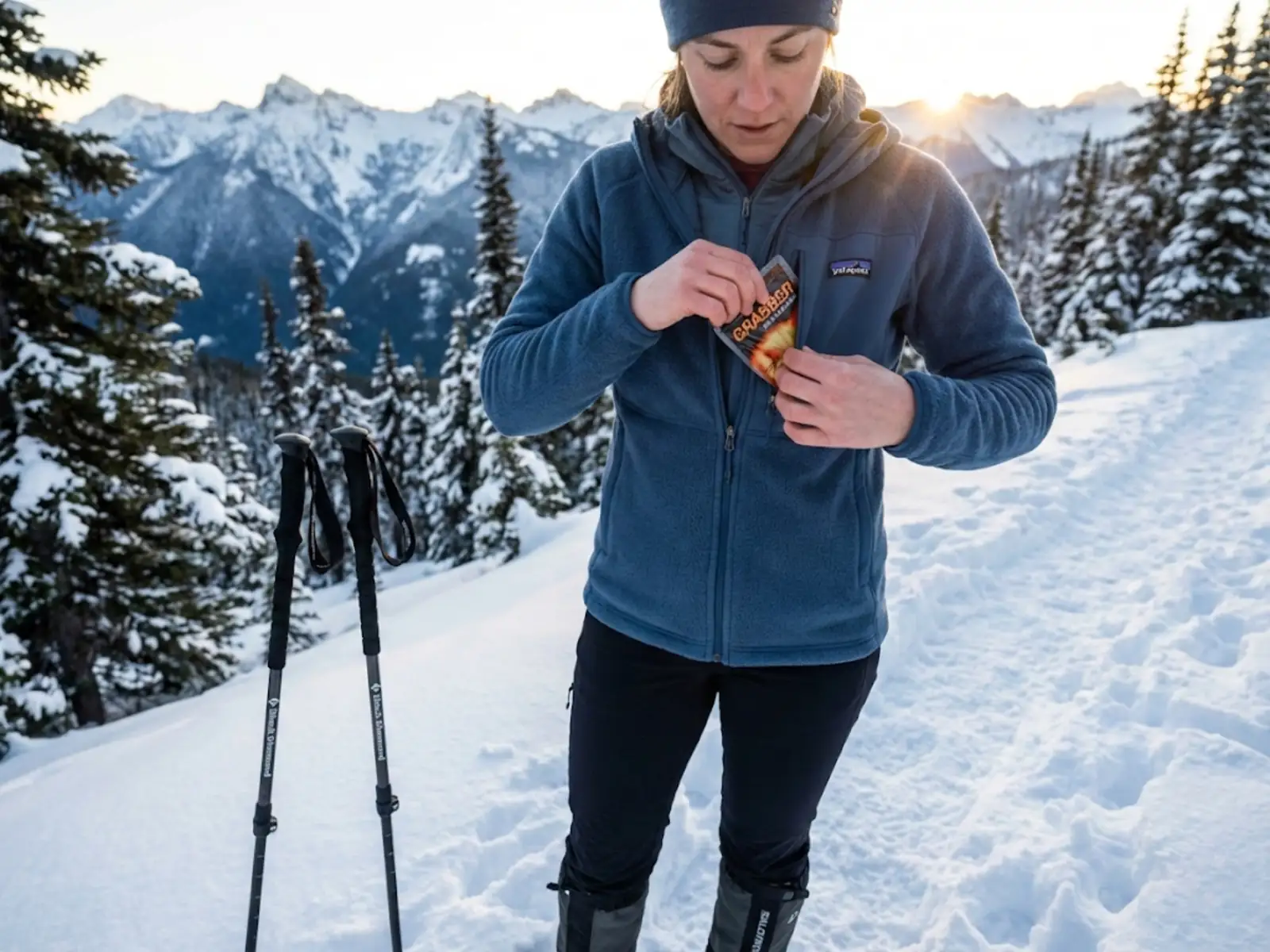
Pro tip: Place warmers under your shell but over breathable mid-layers. The trapped air in your fleece provides oxygen while the shell blocks wind. A warmer in your jacket pocket performs twice as well as one in an exterior pouch.
This oxygen-fabric relationship explains why wet gloves kill warmer performance. Liquid moisture fills the pouch’s microporous mesh, blocking oxygen from reaching the iron powder. The fix is simple: keep warmers in dry pockets until your hands stabilize.
The Arterial Gateway Strategy: Where to Place Hand Warmers
Forget intuition. The “cold spot” approach—shoving warmers wherever you feel coldest—wastes both energy and money. Strategic placement targets your body’s cardiovascular highways, warming blood before it reaches the extremities.
When your hypothalamus detects cold, it triggers peripheral vasoconstriction—your body essentially shuts down blood flow to fingers and toes to protect your core. You can’t fight physiology with brute force. Instead, intercept the blood at key gateways.
Inner Wrist: The Radial Artery Approach
The radial and ulnar arteries run just beneath the skin at your inner wrist—warming blood before it enters your hand’s palmar arch. Position your warmer on the pulse point inside your glove cuff, not in your palm where it restricts grip.
Professional guides use the “gauntlet cinch” technique: anchor the warmer with your glove drawcord directly over the radial pulse. This delivers heat to every finger without creating a hot spot in your palm that makes you drop your trekking pole.
The Femoral Triangle: Core Stability Hack
The common femoral artery (6-10mm diameter) is the primary blood supply for your entire lower body. It sits in the groin “triangle” just below the inguinal ligament. Passive femoral heating can increase limb blood flow up to 2-fold, even while standing still.
Place an adhesive body warmer on the lateral thigh within your layer pocket—NOT directly on midline. Positioning too close to sensitive tissues creates severe burn risk. This eliminates the “cold lead” sensation in your legs during long descents.
Dorsal Foot: The Army Surplus Method
The dorsalis pedis artery is exceptionally shallow on top of the foot, making it the primary target for toe warmers. Apply warmers to the dorsal surface (top of foot) above your liner socks, under wool socks—never on the sole where crushed packets cause hotspots.
Dorsal proximal temperatures run consistently higher than distal toe temperatures. Heat naturally migrates downward through circulation. This prevents the “bucket of ice” sensation without compromising boot fit.
Fabric Compatibility: Which Layers Work Best With Warmers
Your clothing layering system can either boost or sabotage that chemical reaction. Understanding fabric interactions prevents both gear damage and performance failures.
The Breathability Gradient Problem
Merino wool base layers (17.5 microns or finer) absorb up to 30% of their dry weight in moisture, preventing sweat from blocking warmer mesh. This makes wool ideal for direct warmer contact. Synthetic fleeces offer excellent air permeability for “boosting” warmer temperature during rest breaks, but their low vapor absorption means liquid sweat can stall output.
Gore-Tex shells present a challenge: understanding breathability differences between hardshells and softshells reveals that technical membranes allow vapor through but restrict air flow. Oxygen diffuses slowly through ePTFE membranes. Warmers in exterior shell pockets consistently underperform.
The solution is layer hierarchy: position warmers where they access trapped air in breathable mid-layers while staying protected by your outer shell.
Protecting Your Gear: Adhesive Damage Prevention
Adhesive body warmers use industrial-grade pressure-sensitive glues that can damage delicate fibers. High risk targets include silk liners (extreme damage), fine merino (fiber breakage), and Gore-Tex laminate interiors (pore occlusion).
Safe application zones include synthetic base layer waistbands, fleece mid-layers, and designated warmer pockets. When removing adhesive warmers, peel slowly at room temperature—fast removal increases fiber snag risk. For technical shells, follow guidelines on maintaining your Gore-Tex membrane to preserve long-term performance.
Pro tip: The merino wool versus synthetic debate concludes that synthetic waistbands handle adhesive best. Your expensive merino shirt should stay glue-free.
The 24-Hour Protocol: Transitioning Heat Through Activity States
Maintaining all-day comfort requires dynamic transitions. Heat requirements shift as you move from active ascent to stationary lunch break to overnight sleeping bag integration.
Morning Phase: The Pre-Heat (0400–0800)
During the early morning “Alpine Start,” metabolic heat hits its lowest point. Activate warmers 15-20 minutes before departure to reach peak temperature. Initial placement: palms of mittens and inside boots.
Throw warmers into your boots during the drive to the trailhead. This softens the stiff, cold materials of insulated gloves and footwear that are notorious for retaining freezing temperatures from overnight storage.
Active Hiking Phase: Arterial Priming (0800–1600)
As heart rate increases, shift warmers from palms to inner wrists—this prevents sweat-induced chilling while maintaining finger mobility. Move large body warmers from chest to small of back to avoid overheating during exertion.
Here’s where the Ziploc pause technique saves money: seal warmers in a freezer bag, squeeze out air, and stow them in your pack. This arrests the chemical reaction, preserving iron fuel for colder evening hours. A single 10-hour warmer can stretch across 2-3 days with proper core temperature management during exertion coordination.
Evening Phase: Core Stabilization (1600–2100)
When physical activity stops, your body aggressively shunts blood to the core. Counter this by moving body warmers to the femoral artery sites in your groin and behind your neck near the jugular veins. This warms returning venous blood, reducing the metabolic cost of maintaining core temperature stability.
Sleep System Integration: Footbox Safety (2100–0400)
During sleep, the primary risk is rolling onto a warmer and causing a high-pressure contact burn. Never adhere warmers to your body overnight. Place them inside loose “sleep socks” on the dorsal foot surface or at the extreme bottom of your sleeping bag footbox.
Check expiration dates before every trip. Old warmers with partially oxidized iron powder underperform when you need them most—the packaging may look intact while the internal chemistry has degraded.
Advanced Vapor Barrier Integration for Extreme Cold
Below -15°F, vapor barrier liner socks become mandatory to prevent insulation wetout from perspiration. But VBL systems create a critical conflict with chemical warmers.
The Oxygen Conflict in VBL Systems
A vapor barrier liner is by definition non-breathable—made of Sil-Nylon or Mylar. Placing a chemical warmer inside the VBL sock creates a zero-oxygen environment. The iron oxidation stalls instantly. Your warmer becomes useless.
The Sandwich System Protocol
Follow this specific layering order from our complete guide to layering systems for extreme cold:
- Skin Layer: Bare foot or ultra-thin wicking liner
- Barrier Layer: VBL sock
- Active Heat Layer: Chemical warmer placed OUTSIDE the VBL
- Insulation Layer: Heavy wool sock or expedition mitten
- Environmental Layer: Boot or overboot
The warmer draws oxygen from air trapped in the wool layer while the VBL protects the wool from sweat saturation. Field testing confirms this sequence maintains foot temperatures 5-7°F higher than breathable systems alone.
Pro tip: The transition matters. When removing VBL socks that used warmers, your skin is soft and vulnerable to rapid evaporative cooling. Switch immediately into dry socks to prevent sudden chilling.
Safety: Burns, Erythema ab Igne, and Hypothermia Limits
Thermal safety matters most when you feel it least. Cold environments numb nerve endings, compromising the feedback loop that normally warns you about injury.
Low-Temperature Burn Thresholds
Medical professionals have established that temperatures as low as 111°F cause second and third-degree burns with just 15-20 minutes of sustained contact. Most hand warmers routinely reach 135°F—more than sufficient for deep tissue damage on numb skin.
Never place warmers directly against skin, especially while sleeping when you can’t monitor sensation. Always separate warmers from skin by at least one fabric layer.
Erythema ab Igne: The “Toasted Skin” Hazard
Chronic heat exposure in the same location creates reticulated (net-like) hyperpigmentation called “toasted skin syndrome.” The pattern comes from hemosiderin and melanin deposits. Initially benign, long-term cases carry transformation risk for squamous cell or Merkel cell carcinoma.
Prevention is simple: rotate placement sites daily. Never use warmers in identical positions for consecutive trips. Our complete guide to treating hypothermia on the trail covers broader winter hiking safety considerations.
When Hand Warmers Can’t Save You: Hypothermia Limits
The Wilderness Medical Society clinical practice guidelines on hypothermia issue a critical warning: chemical heat packs provide insufficient total energy for core rewarming in moderate or severe hypothermia.
Worse, applying warmers to extremities of a severely hypothermic patient can trigger “afterdrop”—cold, acidic blood returns to the heart, potentially causing fatal ventricular fibrillation. The general protocol:
- Cold Stress (>95°F): Comfort and morale; extremity use acceptable
- Mild (95°F-89.6°F): Trunk and armpit only; monitor for burns
- Moderate (89.6°F-82.4°F): CAUTION—potential afterdrop risk
- Severe (<82.4°F): PROHIBITED—afterdrop and tissue damage risk
Chemical warmers support comfort, not rescue. Know when they’ve reached their limits.
Conclusion
Strategic hand warmer placement transforms disposable heat packs from passive comfort items into active thermoregulation tools. Three principles make the difference:
Target arterial gateways. Place warmers on the femoral triangle, inner wrists, and dorsal foot to leverage your circulatory system for whole-body heat distribution.
Respect the oxygen gradient. Layer warmers under shells but over breathable mid-layers. Never seal them inside vapor barrier liners where they can’t access the air they need.
Transition with activity. Use the Ziploc pause technique during exertion and shift placement as your metabolic heat changes throughout the day.
Next time you’re packing for a cold weather trip, sketch your 24-hour protocol before you leave the house. Know which arterial sites you’ll target at each phase, which pockets give your warmers oxygen, and when you’ll pause the reaction to conserve fuel. The hikers who stay warm aren’t the ones who carry more warmers—they’re the ones who place them smarter.
FAQ
Where is the best place to put hand warmers in gloves?
Place warmers on the back of your hand or against the inner wrist over the radial artery—not in the palm. Palm placement restricts grip and wastes heat on calloused skin that doesn’t transfer warmth efficiently. The wrist and hand dorsum have thinner skin and better blood flow access.
Can hand warmers actually burn my skin?
Yes. Temperatures of 111°F cause burns with sustained 15-20 minute contact, and most warmers reach 135°F. Never apply directly to skin, especially while sleeping or if you have reduced sensation from cold. Separate warmers from skin by at least one fabric layer.
Why do my hand warmers stop working in my boots?
Chemical hand warmers require oxygen to generate heat. Tightly compressed boots or wet socks block oxygen diffusion to the iron powder, stalling the reaction. Place toe warmers on top of your foot (not the sole), ensure boots aren’t too tight, and keep the liner sock layer dry.
Can I reuse hand warmers by putting them in a Ziploc bag?
You can pause—not reuse—an active warmer. Seal it in a freezer bag, squeeze out air to stop the reaction, then reopen when needed. This extends a 10-hour warmer across 2-3 days. Once fully oxidized (packet feels stiff and rigid), the warmer is done and cannot be reactivated.
Are hand warmers safe to use in sleeping bags overnight?
With precautions, yes. Never adhere warmers to your body overnight. Place them in loose socks or at the footbox bottom, never under direct body weight. Rolling onto a warmer creates high-pressure contact that causes burns on numb skin you can’t feel until morning.
Risk Disclaimer: Hiking, trekking, backpacking, and all related outdoor activities involve inherent risks which may result in serious injury, illness, or death. The information provided on The Hiking Tribe is for educational and informational purposes only. While we strive for accuracy, information on trails, gear, techniques, and safety is not a substitute for your own best judgment and thorough preparation. Trail conditions, weather, and other environmental factors change rapidly and may differ from what is described on this site. Always check with official sources like park services for the most current alerts and conditions. Never undertake a hike beyond your abilities and always be prepared for the unexpected. By using this website, you agree that you are solely responsible for your own safety. Any reliance you place on our content is strictly at your own risk, and you assume all liability for your actions and decisions in the outdoors. The Hiking Tribe and its authors will not be held liable for any injury, damage, or loss sustained in connection with the use of the information herein.
Affiliate Disclosure: We are a participant in the Amazon Services LLC Associates Program, an affiliate advertising program designed to provide a means for us to earn advertising fees by advertising and linking to Amazon.com. As an Amazon Associate, we earn from qualifying purchases. We also participate in other affiliate programs and may receive a commission on products purchased through our links, at no extra cost to you. Additional terms are found in the terms of service.