In this article
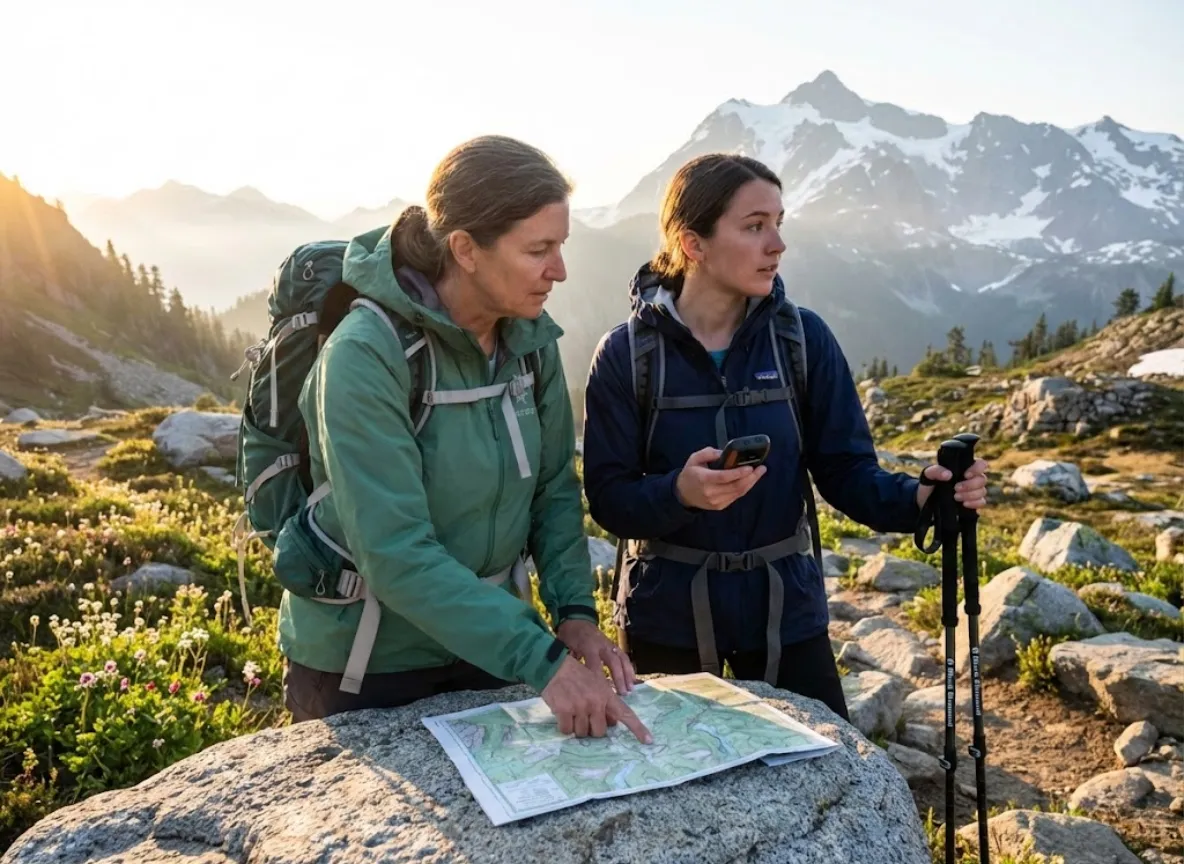
I watched the provisional leader freeze at the trail junction. Twelve hikers waited behind her, clouds building over the ridge, and her Gaia GPS app had crashed. Her mentor—a twenty-year Mountaineers veteran—stepped forward, not to take over, but to ask one question: “What did you see on CalTopo before we left the trailhead?” In that moment, I understood what separates a hiking class from true mentorship: it’s not about rescuing the student. It’s about building the neural pathways that prevent the rescue.
Whether you’re eyeing a $9,000 Mountain Mentor Program with professional guides or grinding through 12-24 months of volunteer club leadership with the Sierra Club, there’s a pathway to becoming the person others trust on the mountain. After observing dozens of mentor-mentee pairings across organizations from The Mountaineers to the Potomac Mountain Club, I can tell you this: the “best” program isn’t the most expensive or the most prestigious. It’s the one that matches your resources to your goals.
Here’s exactly how these systems work—from the hidden costs nobody mentions to the specific skills that separate leaders from followers.
⚡ Quick Answer: Hiking mentorship programs fall into two categories: commercial programs ($3,700-$9,000 for 30 days of intensive training) and volunteer club tracks (12-24 months of courses, provisional hikes, and committee approval). Commercial programs trade cash for speed; club programs trade time for community. Choose based on whether you’re cash-rich/time-poor or time-rich/cash-poor. Both paths develop the same core skills: navigation, risk management, and group leadership.
The Two Paths: Commercial vs. Club Mentorship

What “Commercial Mentorship” Actually Means
Commercial programs like Northeast Mountaineering’s Mountain Mentor Program treat mentorship as a premium product with defined deliverables. The market has settled on roughly $300 per day as the baseline value for professional guided mentorship. NEM’s flagship offering costs $9,000 USD for 30 days of intensive instruction—a figure they anchor against $26,000+ for equivalent private guiding.
This isn’t pocket change. But NEM offers financing options stretching to 48 months ($206.25 monthly), making the program accessible to younger climbers who can service debt but lack capital liquidity. The commercial outdoor skills mentorship model targets professionals who have money but no time—the kind who can’t spend 18 months attending evening seminars and leading provisional hikes.
Pro tip: Commercial programs compress years of learning into weeks. That acceleration comes at a cost, but for goal-oriented alpinists with specific peak objectives, the math often works out.
What “Club Mentorship” Really Demands
Volunteer models operate on sweat equity. Organizations like The Mountaineers, Potomac Mountain Club, and Sierra Club Outings don’t charge $9,000, but they demand something equally valuable: your time. Expect 12-24 months of courses, provisional hikes, and committee service before you’re trusted to lead independently. This is the volunteer track in its purest form.
The “free” model is deceptive. Direct costs include club membership dues plus course fees for navigation, scrambling, and Wilderness First Aid training. Opportunity costs add up even faster—the 2.5-hour seminars, the days spent on supervised field experience, the administrative hours filing incident reports.
But here’s what you get in return: community. A NEM graduate walks away with mountain skills. A Mountaineers graduate walks away with fifteen climbing partners who’ve all agreed on the same turnaround protocols. Long-term, that network may be worth more than any certificate.
Inside the Commercial Track: The $9,000 Fast Lane
The Financial Structure and What It Buys
NEM’s curriculum runs through four phases: Discovery (auditing your experience level), Baseline Skills Assessment (identifying technical gaps in knots, belays, and movement), Custom Training Plan (tailored instruction), and Practical Experience. The capstone requires students to identify three big mountain test objectives—student-driven but guide-supervised.
This objective-based outcomes approach forces ownership. You’re not just following a curriculum; you’re planning routes, analyzing weather windows, and managing logistics. By the end, you’ve transitioned from passive client to active alpinist with real outdoor leadership experience.
The $9,000 fee typically includes an AIARE course (American Institute for Avalanche Research and Education)—cementing winter competency as non-negotiable for the “complete” mountaineer. KAF Adventures offers a competing model at $3,700 annually, broken into winter ($1,666) and summer ($1,925) modules—significantly cheaper but structured around group mentorship cycles rather than one-on-one guide pairing.
Who This Path Is Actually For
The commercial track works best for busy professionals with specific peak objectives. If you’re trying to bag your first summit safely, or you want the transition from day hiking to backpacking to happen in months rather than years, paying for acceleration makes sense.
The red flag profile: someone seeking community first, skills second. The transactional nature of commercial programs can leave graduates feeling isolated once the invoice is paid.
Inside the Club Track: The Sweat Equity System
The Mountaineers Badge System Decoded
The Mountaineers uses a credentialing system where leadership is earned through defined milestones. The Mentor Hike Leader badge isn’t given—it’s achieved. You must lead a minimum of six hikes for your specific Hiking Committee before you’re trusted to mentor others through this volunteer mentor pathway.
The mentor’s role is observational. During a mentored hike, the provisional leader takes charge while the mentor watches, intervening only if safety is compromised. Afterward, the mentor reports to the committee for a formal evaluation. This bureaucracy-as-quality-control approach ensures consistency but demands patience.
Pro tip: The six-hike minimum isn’t about logging miles—it’s about the committee seeing how you handle a rattled newbie, a brewing thunderstorm, and a group that ignores your turnaround call.
Branch-Specific Requirements: One Club, Many Standards
Critical insight: The Mountaineers is not monolithic. Requirements vary significantly by branch. Seattle runs a 10-step process including a 2.5-hour seminar, three prerequisite club hikes, a Low Impact Recreation course, mentor identification, and a final committee vote. The mentored hike must cover at least 4-5 miles with 1,000 feet of elevation gain.
Olympia takes a digital-first approach—leaders are expected to hold the Basic GPS Badge, demonstrating proficiency with Gaia GPS for on-trail execution and CalTopo for off-trail planning. Tacoma offers financial incentives, reimbursing 50% of Wilderness First Aid certification for new leaders who complete three hikes in 12 months. Bellingham integrates winter safety with joint AIARE courses.
The takeaway: research your specific branch before committing. What works in Seattle may not apply in Olympia. This program structure guide varies by geographic availability.
[CREATOR NOTE] Infographic Suggestion: Comparison table showing Seattle (10-step process), Olympia (GPS focus), Tacoma (WFA reimbursement), Bellingham (AIARE integration) branches with key differentiators highlighted.
If you’re building navigation skills, start by mastering map and compass navigation before tackling the digital requirements. And if Tacoma’s WFA incentive appeals to you, consider building a comprehensive hiking first-aid kit as part of your preparation.
The Hard Skills Curriculum: What You’ll Actually Learn
The Digital Navigation Revolution
The days of pure map-and-compass are over. Digital navigation is now a gatekeeper skill for any serious hiking mentorship program. The Olympia Branch has codified this: their Basic GPS course is a credential, not optional enrichment, making training in these tools essential.
The required workflow: create a route in CalTopo on your desktop, export the GPX file, import it into Gaia GPS on your phone. This ensures leaders understand terrain through desktop analysis—contour lines, drainage patterns, escape routes—before ever following the blue dot on trails.
Commercial programs validate this same mentorship tech stack. Testimonials from guided trips consistently highlight “learning to use Gaia GPS” as a primary value driver. If you’re choosing the right hiking navigation app, know that the CalTopo-to-Gaia workflow is becoming the industry standard across the outdoor community.
Risk Management: Objective vs. Subjective Hazards
The theoretical backbone of every serious curriculum rests on distinguishing objective hazards from subjective hazards. Objective hazards—avalanche, rockfall, lightning—cannot be controlled, only avoided through timing, route selection advice, and turnaround decisions. Subjective hazards—fatigue, dehydration, fear, poor technique—can be mitigated through training, fitness, and self-awareness.
The goal of mentorship: minimize subjective hazards so your team can safely navigate objective ones. Standard frameworks for risk management get drilled until they’re automatic. This builds the wilderness leadership competency that separates good mentors from unprepared trip leaders.
The Safety Paradox: Risk Homeostasis
Here’s something most programs won’t mention during your skill acquisition roadmap: as technical systems (GPS, satellite messengers) make environments feel safer, people unconsciously increase risk-taking to maintain their excitement level. Experienced mentors recognize this paradox and enforce strict decision-making frameworks regardless of perceived safety.
That Garmin inReach in your pack doesn’t change the physics of a class 4 scramble. It just changes how quickly they can notify your family. This concept—drawn from professional obligations for risk management in outdoor learning—separates adequate instructors from great mentors.
The Human Element: Why Mentorship Programs Fail
Volunteer Fatigue and the “Hard Core” Problem
Volunteer models are sustainable only as long as volunteers persist. Fatigue is a systemic threat across hiking clubs. A small “hard core” of active volunteers does the majority of work, leading to mentor burnout prevention becoming a real organizational challenge.
When mentors burn out, the leadership pipeline freezes. New leaders can’t get mentored. The organization stagnates. Clubs mitigate this through peer support resources and recognition events—but the problem persists across the entire hiking community.
Pro tip: If your mentor seems exhausted, they probably are. The best thing a mentee can do is make their mentor’s life easier, not harder. Volunteer for logistics. Carry extra weight. Show up early—this builds intrinsic motivation.
When Mentor-Mentee Pairings Don’t Work
Common mentorship failure modes that competitors ignore: mentors who lack time (viewing mentoring as an add-on rather than responsibility), mentors who talk instead of listen (failing to understand the mentee’s learning style), and pairings with vague goals (no clear equivalent to NEM’s Big Mountain Test for field performance evaluation).
Not every skilled leader is a skilled teacher. The “personality mismatch” problem derails more pairings than technical disagreements. Finding an ideal mentor requires honest mentee selection criteria assessment on both sides.
The Diversity Deficit: Bridging the Adventure Gap
The Adventure Gap is quantifiable: 70% of national forest visitors are white, despite people of color comprising 40% of the US population. Historical barriers created a monoculture in outdoor leadership that organizations are now actively working to address through their community programs.
Strategic responses include NOLS tracking demographics, The Mountaineers forming Equity & Belonging Committees, and Sierra Club framing wilderness access as an intersectional justice issue. For prospective mentees: explicitly ask about diversity and inclusion metrics when evaluating programs. The data from the National Health Foundation’s analysis of the lack of diversity in outdoor spaces makes the case clearly.
Finding Your Mentor: The Practical Playbook
The Potomac Mountain Club Network Model
PMC operates a looser, consultative model with designated mentors offering specific regional expertise. Their Alpine Mentorship Program includes mentors for the Adirondacks, White Mountains, Sierra Nevadas, Canadian Rockies, Denali, and high-altitude objectives like Rainier and Aconcagua.
Mentorship here is often logistical—route selection, permitting, equipment lists—rather than in-field instruction. PMC explicitly links their mentorship program to Expedition Grant support, encouraging members to consult mentors before submitting funding proposals.
The Application Mindset: How to Be a Good Mentee
Research identifies traits that make mentees successful. Intrinsic motivation tops the list—”dabblers need not apply,” as one experienced mentor put it. Willingness to suffer matters because controlled discomfort is the environment where learning happens.
Do the dirty work. Volunteer for logistics. Carry extra weight. Communicate your goals, fears, and limitations honestly. And consider the inverse: younger mentees can offer reverse mentorship, teaching tech skills and app proficiency to elder mentors who grew up with paper maps.
If you’re preparing mentally and financially for long-distance hiking, the same application and matching mindset applies: clarity about your objectives, honest self-assessment quiz thinking, and willingness to invest the work through group-based mentoring or one-on-one guidance.
Conclusion
Mentorship is a currency exchange. Whether you’re paying $9,000 for 30 days of accelerated professional training or investing 12-24 months of sweat equity in a volunteer club, you’re trading resources for competency. Audit your constraints—cash versus time—and choose accordingly.
The curriculum that matters isn’t just skills; it’s judgment. Digital navigation with Gaia GPS and CalTopo, risk management frameworks, and understanding the safety paradox separate leaders from followers. The best programs make you uncomfortable enough to grow, but safe enough to fail forward.
Community is the compound interest of club mentorship. The NEM graduate walks away with skills; the Mountaineers graduate walks away with fifteen hiking partners who’ve all agreed on the same turnaround protocols.
Start by identifying your deficit. If you have the capital, reach out to Northeast Mountaineering or KAF Adventures and ask for a discovery call. If you have the time, find your nearest Mountaineers, Sierra Club, or Potomac Mountain Club chapter and attend one introductory hike. The worst decision is the one you never make.
FAQ
How much does hiking mentorship cost?
Commercial programs range from $3,700/year (KAF Adventures) to $9,000 (Northeast Mountaineering), with financing options available. Volunteer club mentorship requires significant time investment (12-24 months), club membership dues, and course fees rather than large upfront costs.
How long does it take to become a certified hike leader?
Commercial fast-track programs take approximately 30 days of intensive instruction. Volunteer club tracks require 12-24 months including prerequisite courses, provisional hikes, and committee approval. Branch-specific requirements vary significantly within organizations like The Mountaineers.
What is the difference between a hiking mentor and a hiking guide?
A guide leads you safely through terrain; a mentor teaches you to lead yourself. Guides focus on client safety during a specific trip, while mentors develop your independent judgment, navigation skills, and risk assessment over time through transformative conversation.
How do I find a hiking mentor near me?
Search for local chapters of The Mountaineers, Sierra Club, or Potomac Mountain Club. Most hiking clubs list mentorship programs on their websites. For commercial options, research certified guides in your region or contact programs like Northeast Mountaineering directly.
What skills should I have before seeking a hiking mentor?
Most programs expect baseline fitness requirements and some hiking experience. Club leadership tracks typically require completed introductory hiking courses, familiarity with the Ten Essentials, basic mountaineering skills awareness, and current First Aid or CPR certification—key mentee readiness indicators.
Risk Disclaimer: Hiking, trekking, backpacking, and all related outdoor activities involve inherent risks which may result in serious injury, illness, or death. The information provided on The Hiking Tribe is for educational and informational purposes only. While we strive for accuracy, information on trails, gear, techniques, and safety is not a substitute for your own best judgment and thorough preparation. Trail conditions, weather, and other environmental factors change rapidly and may differ from what is described on this site. Always check with official sources like park services for the most current alerts and conditions. Never undertake a hike beyond your abilities and always be prepared for the unexpected. By using this website, you agree that you are solely responsible for your own safety. Any reliance you place on our content is strictly at your own risk, and you assume all liability for your actions and decisions in the outdoors. The Hiking Tribe and its authors will not be held liable for any injury, damage, or loss sustained in connection with the use of the information herein.
Affiliate Disclosure: We are a participant in the Amazon Services LLC Associates Program, an affiliate advertising program designed to provide a means for us to earn advertising fees by advertising and linking to Amazon.com. As an Amazon Associate, we earn from qualifying purchases. We also participate in other affiliate programs and may receive a commission on products purchased through our links, at no extra cost to you. Additional terms are found in the terms of service.