In this article
You wake at 3 AM to cold water dripping on your face. Your sleeping bag is damp at the foot. Every wall of your tent glistens with moisture—yet the rainfly is bone dry and your seams are sealed. You’re not experiencing a leak. You’re experiencing the physics of condensation, and it’s soaking your gear from the inside out.
After two decades of backcountry trips across the Pacific Northwest, I’ve woken up to this exact scenario more times than I’d like to admit. The good news? Once you understand the thermodynamics at play, you can predict, prevent, and manage tent condensation in any condition—from muggy summer nights to sub-freezing winter camps.
This guide will teach you the science behind why water appears inside your tent and give you field-tested, condition-specific strategies to stay dry.
⚡ Quick Answer: Tent condensation occurs when warm, moist air from your breath contacts cold tent fabric, triggering phase change into liquid water. You can’t eliminate it entirely, but you can manage it through three core strategies: camp under trees to block radiative cooling, maximize cross-flow ventilation through your tent, and control moisture sources by cooking outside and drying gear externally. The key is matching your strategy to conditions—summer humidity requires different tactics than winter frost.
The Thermodynamics of Tent Condensation

The water dripping on you isn’t magic—it’s basic physics. When water vapor in warm air meets a cold surface, it condenses into liquid. The dew point is the exact temperature where air reaches 100% relative humidity and this phase change happens. Inside your tent, you’re running a humidity engine. A sleeping human exhales approximately 1 liter of water vapor per night. In the small volume of a backpacking tent, this moisture rapidly saturates the air.
Here’s where it gets interesting. On clear nights, your tent fabric radiates heat to the sky, which acts as an infrared heat sink at approximately -70°C. This radiative cooling can drop your rainfly temperature below the ambient air temperature, making condensation thermodynamically inevitable. Your tent walls become a cold plate where warm, moist air loses energy and transforms into liquid droplets.
The fabric you choose matters. Dyneema Composite Fabric (DCF) is highly transparent to infrared radiation, allowing more heat loss than silnylon or polyester. If you own a DCF tent and experience heavy condensation, you’ll need to compensate with smarter site selection—specifically, camping under tree cover to block that radiative heat loss to the sky.
The larger the temperature difference between your warm interior air and the cold fly surface, the faster condensation forms. This is the cold wall effect, and you can’t defeat thermodynamics. If you wake up to uniform moisture coating the entire underside of your fly (not localized drips), it’s condensation, not a leak. Leaks are localized to seams or defects.
Pro tip: If your tent walls are wet but the ground around your tent is dry, it’s condensation. If the ground is wet and your tent matches, you’ve got a leak or ground moisture wicking through your floor.
Site Selection: The Single Most Controllable Variable
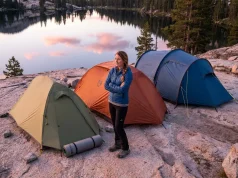
Where you pitch your tent has more impact on condensation than any other factor. Trees are your best friend. The canopy effect works like a thermal blanket—trees radiate heat downward and block the -70°C sky sink. Air under trees can be 2-5°C warmer than open fields, the same physics behind the urban heat island effect. I’ve seen campers 15 feet apart—one under trees, one in the open—experience drastically different condensation levels. The tree-sheltered tent stayed dry while the exposed tent soaked.
Valley floors and meadows are condensation traps. Cold air is denser than warm air and flows downhill like water, pooling in low-lying areas. These zones experience the lowest temperatures and often sit near water sources, creating a perfect storm of cold temps and high humidity. Add wet grass, which actively transpires moisture into the air overnight, and you’ve got a localized humidity pump beneath your tent floor.
The physics dictate camping on dry, barren surfaces under trees. But this creates tension with Leave No Trace site selection principles. LNT Principle #2 mandates camping on durable surfaces and avoiding vegetation damage. The ideal compromise? Established sites on durable surfaces like pine duff or rock slabs under conifer canopies. This satisfies both condensation physics and wilderness ethics.
Seek elevated, dry sites with tree cover. Avoid camping within 200 feet of water sources—this guideline protects riparian zones while simultaneously moving you away from the zone of highest humidity. The 15-foot difference between a good site and a bad one can mean the difference between waking up dry or soaked.
Understanding Leave No Trace site selection principles helps you balance condensation management with environmental stewardship.
Ventilation Architecture: Engineering Airflow
Passive ventilation relies on the chimney effect—warm, moist air rises and escapes through high vents while cool, dry air enters low vents. For this to work, you need intake vents low to the ground and exhaust vents at the highest possible point. Sea to Summit’s Tension Ridge architecture uses an inverted brow pole to create the highest possible vent placement, leveraging the vertical pressure differential for up to 70% better airflow than traditional designs.
Cross-flow ventilation is your most powerful tool. Orient your tent door to prevailing wind. Open opposing vents—vestibule doors and apex vents—to create a pressure differential that flushes humid air out. Even a gentle breeze of 2-5 mph can dramatically reduce interior humidity by continuously replacing moist air with dry air. I’ve camped in light rain and still cracked my vents slightly. The moisture from my breath was often worse than the rain I was trying to keep out.
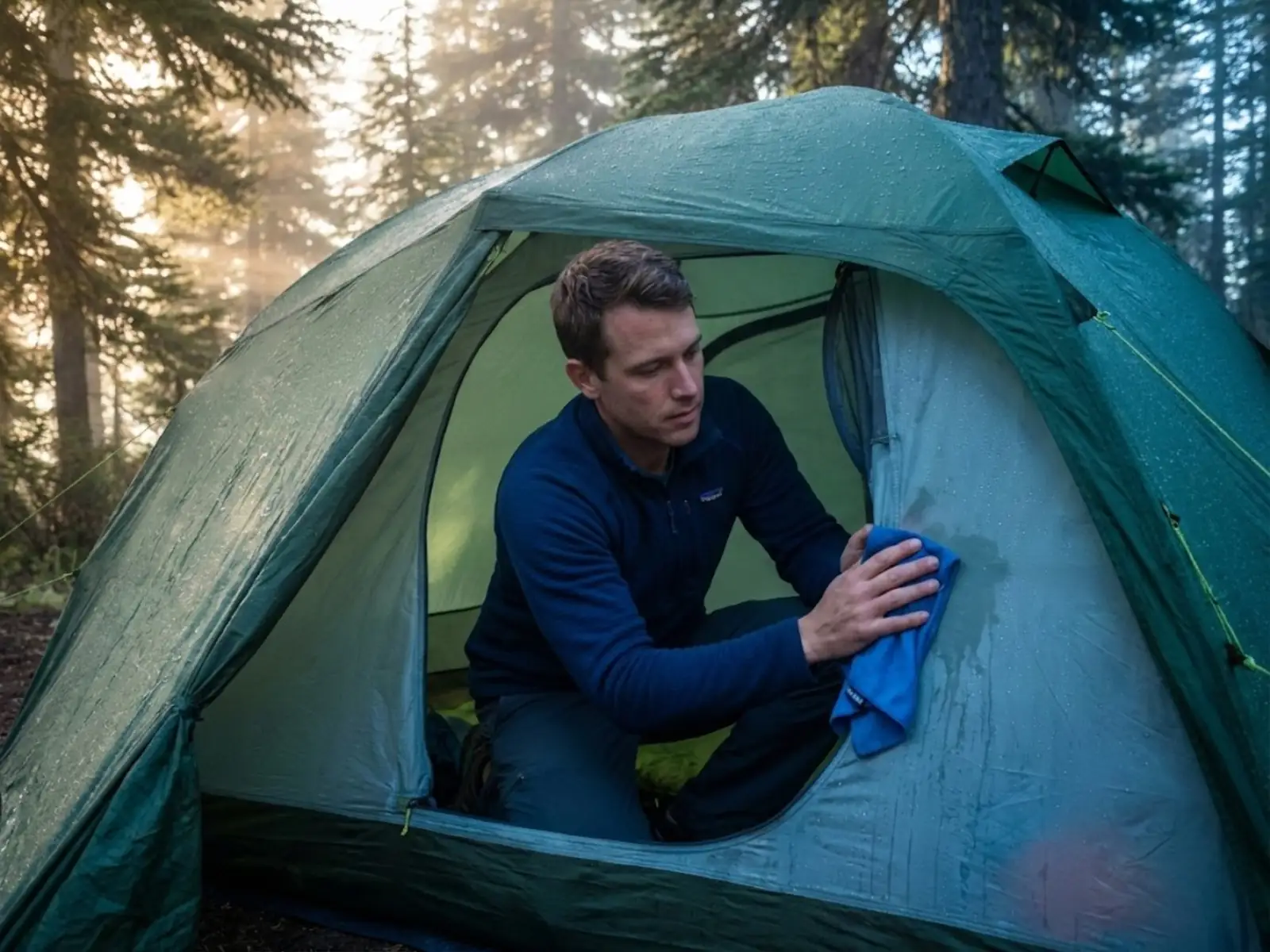
Single-wall tents like the Gossamer Gear The One or Zpacks Duplex place you in direct contact with the cold condensing surface. Expect to wipe down walls with a microfiber towel every morning—this becomes a daily ritual for ultralight hikers. Double-wall tents provide a mesh inner barrier between you and the wet fly. Condensation still forms on the rainfly, but it doesn’t contact your sleeping bag. The buffer zone of air between the two walls helps insulate the inner from the cold fly, keeping the inner surface temperature closer to interior air and above the dew point.
A taut pitch is engineering, not aesthetics. Tight fabric channels condensation droplets down the rainfly to the ground instead of dripping on you. Slack fabric creates drip points where water pools and falls. When you’re pitching in the field, pull those guylines tight—it’s the difference between waking up to a wet face or staying dry.
Pro tip: Even in rain, crack your vents slightly. The moisture from your breath is often worse than the rain you’re trying to keep out. Your body produces about 1 liter of water vapor per night—that’s more than most light drizzles will bring in through a partially open vent.
Understanding the differences between 3-season vs 4-season tent ventilation helps you choose the right shelter for your conditions.
Moisture Source Management: Control What You Can
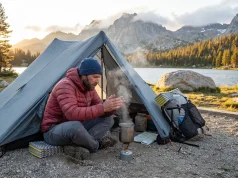
Your breath is the primary moisture source—1 liter of water vapor per night. You can’t stop breathing, but you can manage everything else. Boiling water inside your tent releases massive amounts of steam. Boiling 1 liter of water releases 1 liter of water vapor into the air, doubling your moisture load. Always cook in the vestibule or outside, even in rain. Cooking inside also creates a carbon monoxide hazard in enclosed spaces.
Wet clothing, rain gear, and boots should never enter your sleeping area. Hang wet items from vestibule loops or lay them on the vestibule floor. If your tent lacks a vestibule, use a stuff sack hung from a tree branch as external storage. Every wet item inside is a humidity source actively working against you.
A groundsheet (Polycryo, Tyvek) under your tent floor blocks moisture wicking up from damp soil. Some experienced hikers place a second groundsheet inside the tent to protect gear from floor condensation. If your tent floor’s PU coating is failing (sticky, delaminating), an interior groundsheet prevents moisture ingress through the compromised fabric. This is an advanced technique, but it works when you’re dealing with older gear or extreme conditions.
In extreme cold, some winter campers exhale outside their sleeping bag or toward the tent door to reduce frost buildup on interior walls. It’s uncomfortable, but it keeps your immediate sleeping area drier. If you must dry gear inside, do it during the day with vents fully open, not overnight when condensation risk peaks.
Pro tip: Turn wet socks inside-out and tuck them inside your sleeping bag near your core overnight—body heat will dry them by morning without adding humidity to the tent air. This works for gloves and thin base layers too.
Understanding why wet gear loses insulating properties is critical for backcountry safety. Wet insulation doesn’t just feel uncomfortable—it can lead to hypothermia in the wrong conditions. Proper gear storage to prevent mold from condensation extends the life of your equipment.
Condition-Specific Playbooks
Summer humidity is the muggy problem. Air is warm and near saturation. Even slight cooling of the fly causes wetness. Your strategy: maximize cross-flow, orient the door to the wind, open all vents fully to break the boundary layer, remove all moisture sources, and camp on higher ground to catch breezes. Avoid water sources, which add local humidity. Double-wall tents are preferred because they keep the inevitable wet fly away from your sleeping bag.
Clear cold shoulder season nights are the radiative problem. Air is dry, but the sky is clear. Radiative cooling is extreme. The fly temperature plummets below air temperature, creating the cold wall effect. This is when condensation is thermodynamically inevitable regardless of ventilation. Your strategy: camp under dense tree cover (conifers are best) to intercept IR loss, expect condensation and plan time to dry, carry a towel for wipe-downs. Partially closing lower vents to retain heat might help if you can keep interior temp above the dew point, but that’s difficult.
Deep winter is the frost problem. Moisture from breath hits sub-freezing walls and deposits as frost (deposition, not condensation). Your strategy: use vapor barrier liners to stop breath moisture at the source, keep top vents open to let buoyant warm breath escape before freezing, and brush frost off walls before warming up the tent (or lighting a stove) to avoid melting it into puddles on the floor. The morning protocol matters—gently shake or brush frost off the interior before the sun hits the tent.
Multi-day expeditions create the wet gear accumulation problem. On 7+ day trips in wet climates, you can’t dry gear daily. Moisture accumulates. Accept baseline condensation, prioritize keeping your sleeping bag dry above all else, use vapor barriers to prevent insulation wetting, and rotate wet layers during the day to dry with body heat. PCT thru-hikers stop at lunch to loosely pitch their tent and air it out, drying the previous night’s condensation in the sun.
If you wake at 2 AM to dripping walls, don’t wait until morning. Wipe them down immediately with your towel to remove liquid water before it drips on your sleeping bag. Open vents wider, even if it means letting in cold air—the moisture from condensation is worse than the temperature drop. Move any wet items to the vestibule immediately. Protect your sleeping bag at all costs. Condensation accelerates overnight as temperatures drop, so address it immediately.
Understanding winter camping gear and safety protocols prepares you for the unique challenges of sub-freezing conditions where condensation management becomes critical for survival.
Advanced Interventions: When Passive Strategies Fail
Titanium wood stoves in floorless hot tents (Seek Outside, Pomoly) are the only method that truly defeats condensation physics. They introduce dry heat, raising interior temperature above the dew point and lowering relative humidity. Hot air can hold exponentially more moisture than cold air. Heating cold air creates “room” for moisture, pulling it out of your gear and body. This requires a floorless shelter with a stove jack (reinforced opening for the chimney pipe) and fuel gathering skills.
Vapor barrier liners (VBL) are non-breathable layers worn close to the skin. They trap insensible perspiration against your body, preventing it from migrating into your sleeping bag or tent air. Recommended when temperatures drop significantly below freezing for multi-day trips. The key: wear a VBL when you’re sleeping cool, not warm. If you’re overheating, you’ll wake up soaked in sweat. VBLs work best when you’re at the edge of comfort, not generating excess heat.
Floorless shelters can be elevated 1-3 inches off the ground using rocks or logs. This creates an air gap underneath, improving ventilation and reducing condensation by up to 50%. The gap allows ground moisture to escape instead of being trapped under the shelter. Use trekking poles to adjust shelter height dynamically based on conditions—raise it in humid weather, lower it in wind.
Tarps offer maximum ventilation (no walls to trap moisture) but sacrifice protection from wind and insects. Experienced ultralight hikers accept this tradeoff. If you’re considering alternative shelter systems, understanding the bivy sacks and tarp systems for ultralight condensation management helps you make informed decisions about weight versus protection.
Conclusion
Tent condensation is thermodynamics in action—warm, moist air meeting cold surfaces. You can’t eliminate it entirely, but you can manage it through three core strategies: site selection physics (camp under trees, avoid cold air sinks), ventilation architecture (maximize cross-flow, leverage the chimney effect), and moisture source control (cook outside, dry gear externally). Condition-specific playbooks—from summer humidity to winter frost—give you the tactical flexibility to adapt to any environment.
On your next trip, test the 15-foot difference: pitch under trees instead of in the open, orient your door to the wind, and keep one vent fully open overnight. You’ll wake up drier, warmer, and with a deeper understanding of the physics keeping you comfortable in the backcountry.
FAQ
Can I completely prevent tent condensation?
No. Unless you can defeat thermodynamics (you can’t), condensation will occur when warm, moist air contacts a cold surface. The only exception is using a wood stove to heat the tent interior above the dew point. Your goal is management, not elimination—choose sites wisely, maximize ventilation, and control moisture sources.
Why does my tent get wet inside even on dry nights?
Radiative cooling. On clear nights, your tent fabric radiates heat to the -70°C sky, dropping the rainfly temperature below the dew point of the surrounding air. This happens even when ambient air is dry. The solution: camp under trees to block radiative heat loss.
Do double-wall tents prevent condensation?
No. Double-wall tents still experience condensation on the rainfly. The advantage is the mesh inner tent creates a physical barrier between you and the wet fly, keeping your sleeping bag dry. Condensation still forms—you just don’t contact it directly.
How do I dry a wet tent on the trail?
During breaks, loosely pitch your tent in the sun with all vents and doors open. Wipe down interior walls with a microfiber towel to remove liquid water, then let airflow and sun evaporate remaining moisture. PCT thru-hikers make this a daily lunch ritual.
What causes condensation under my sleeping pad on snow?
Cold ground conduction. The snow beneath your tent floor is well below freezing. Your body heat warms the tent floor from above, but the underside stays frozen. Moisture from your breath condenses on the warm floor, then freezes on the cold underside, creating ice between your pad and the floor. This is basic physics and nearly impossible to prevent. A groundsheet inside the tent can protect your pad from this moisture.
Risk Disclaimer: Hiking, trekking, backpacking, and all related outdoor activities involve inherent
risks which may result in serious injury, illness, or death. The information provided on The Hiking Tribe is for
educational and informational purposes only. While we strive for accuracy, information on trails, gear, techniques,
and safety is not a substitute for your own best judgment and thorough preparation. Trail conditions, weather, and
other environmental factors change rapidly and may differ from what is described on this site. Always check with
official sources like park services for the most current alerts and conditions. Never undertake a hike beyond your
abilities and always be prepared for the unexpected. By using this website, you agree that you are solely
responsible for your own safety. Any reliance you place on our content is strictly at your own risk, and you assume
all liability for your actions and decisions in the outdoors. The Hiking Tribe and its authors will not be held
liable for any injury, damage, or loss sustained in connection with the use of the information herein.
Affiliate Disclosure: We are a participant in the Amazon Services LLC Associates Program, an
affiliate advertising program designed to provide a means for us to earn advertising fees by advertising and linking
to Amazon.com. As an Amazon Associate, we earn from qualifying purchases. We are also an official affiliate partner
of Black Diamond Equipment via the AvantLink network. If you click on a Black Diamond affiliate link and make a
purchase, we may earn a commission at no additional cost to you. We also participate in other affiliate programs and
may receive a commission on products purchased through our links. Additional terms are found in the terms of
service.