In this article
The first drop of rain woke me at 3 AM. By 3:15, I was lying in a puddle inside my “waterproof” bivy—condensation from my own breath mixing with mist creeping through the zipper. Somewhere above me on the ridge, a group of thru-hikers slept dry in their DCF tent that weighed less than my bivy. The weight savings I’d chased for months had become a cruel joke on a ridgeline in the Presidentials.
After fifteen years of sleeping in everything from bivouac sacks on alpine ledges to palace-sized base camp tents, I’ve learned one truth: the bivy-vs-tent decision is no longer about weight. It’s about how you want to sleep. This guide dismantles the debate with hard data, material science, and field-tested wisdom—so you’ll know exactly when a bivy sack outperforms a tent, and when it becomes an expensive trash bag.
⚡ Quick Answer: Modern ultralight tents often weigh less than waterproof bivies—the Zpacks PlexSolo (13.9 oz) beats the OR Helium Bivy (15.8 oz). Choose a bivy for packability, site flexibility, and stealth. Choose a tent for livability, condensation control, and storm comfort. A modular tarp + bivy system offers the best of both worlds at ~16 oz total.
The Weight-Protection Paradox: Why “Lighter” No Longer Means “Smaller”
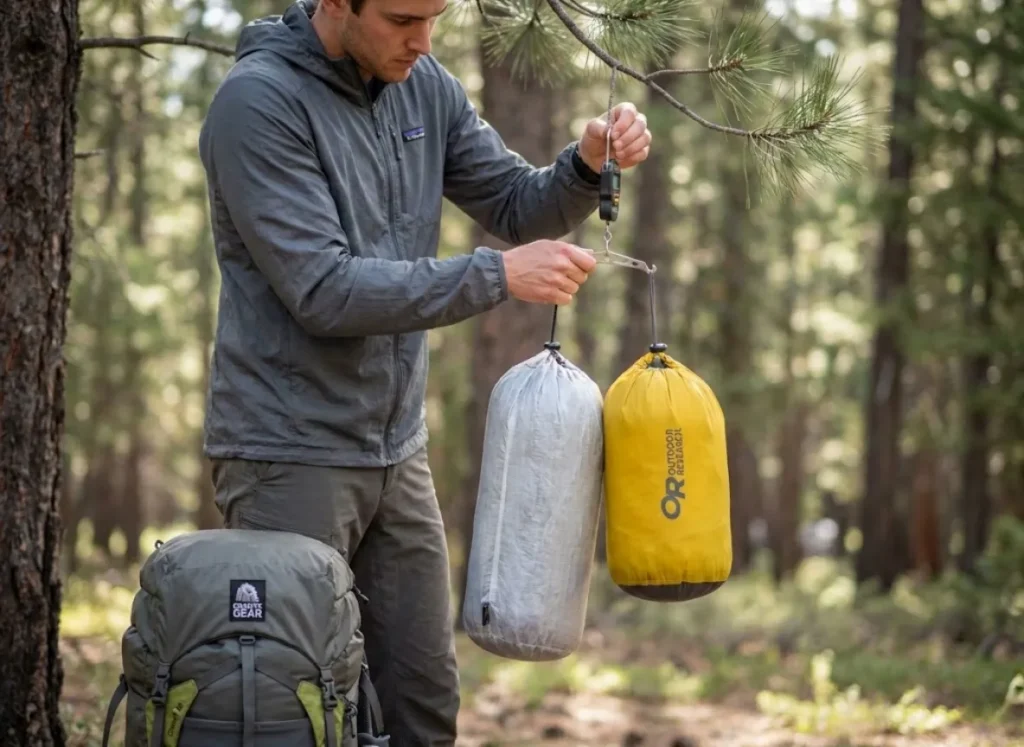
The math that drove bivy popularity for decades has inverted. Thanks to Dyneema Composite Fabric, the physically larger shelter now weighs less than the coffin-like sack.
The DCF Revolution That Changed Everything
The Zpacks PlexSolo weighs 13.9 oz and delivers full storm protection with sit-up headroom. The Outdoor Research Helium Bivy—the gold standard of waterproof bivies—weighs 15.8 oz and you can barely roll over inside. That’s not a typo. The tent is lighter.
DCF (also called Cuben fiber) achieves hydrostatic head ratings of 15,000-20,000mm while staying featherweight. The material doesn’t absorb water or stretch when wet. This revolution has fundamentally disrupted the ultralight shelter market, forcing the bivy question away from grams and onto functionality.
Pro tip: When comparing shelter weights, use “trail weight” (everything you carry) rather than “minimum weight” (marketing numbers without stakes and guylines).
When Weight Isn’t the Real Variable
Here’s what the weight charts don’t show: packed size. DCF doesn’t compress—it folds into bulky rectangles. The MSR Pro Bivy packs to 8″ x 4″, roughly the size of a soda can. A PlexSolo? Nearly three times that volume.
For bikepackers shoving gear into frame bags, or FKT athletes running with vests, volume matters more than grams. The bivy fits where tent poles won’t. And setup speed—a bivy requires zero setup. Unfurl and sleep. That efficiency is vital when you’re sleeping four hours a night in roadside ditches or bus stops chasing a fastest-known-time.
If you’re exploring ultralight shelter philosophy, understand that the bivy’s advantage has shifted from weight savings to packability savings.
The Condensation Equation: Physics Every Bivy User Must Understand
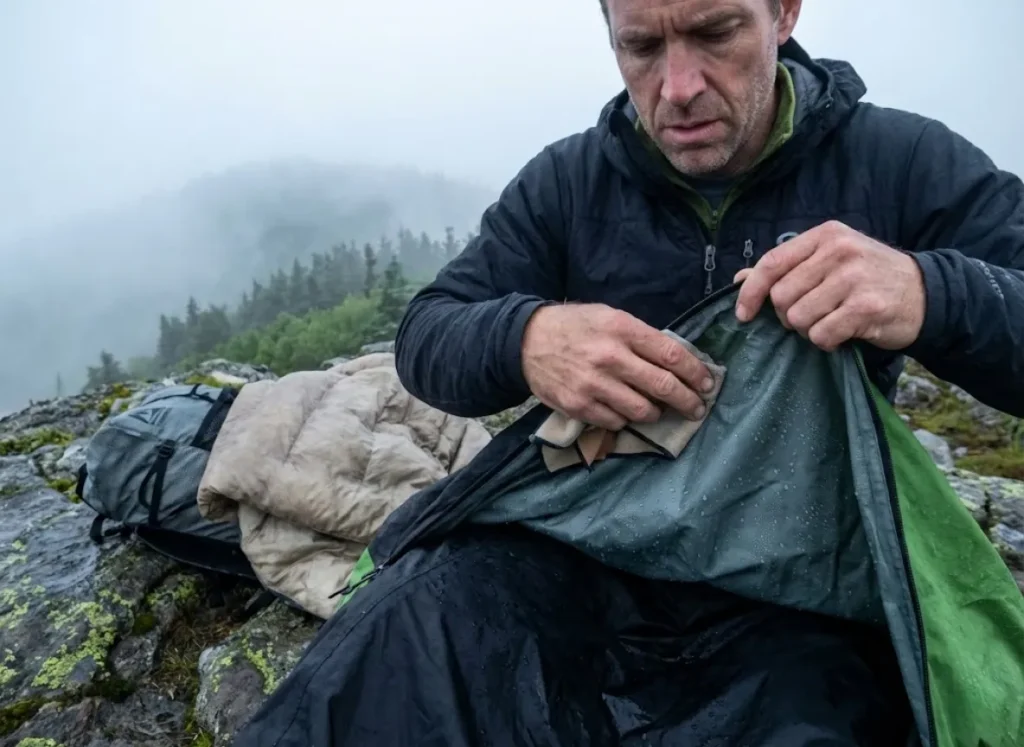
Condensation is the primary failure mode of bivy systems. It’s not a design flaw—it’s thermodynamics. Understanding why your sleeping bag gets wet is the difference between a tolerable night and hypothermia risk.
Why Your Sleeping Bag Gets Wet (It’s Not the Rain)
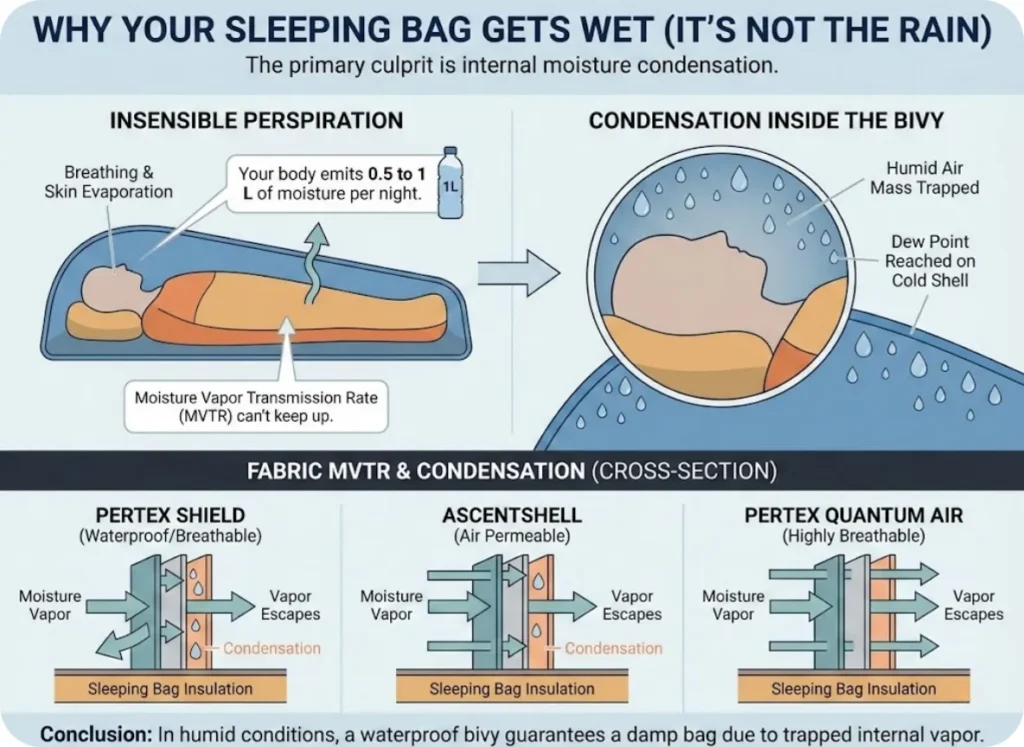
Your body emits 0.5 to 1 liter of moisture per night through insensible perspiration—breathing and skin evaporation you can’t feel. In a tent, this moisture disperses into a large air volume, buffered by space, and vents through mesh and vestibules. In a bivy, that moisture has nowhere to go except against the shell fabric inches from your face.
When the MVTR (Moisture Vapor Transmission Rate) of the fabric can’t pass moisture faster than your body produces it, vapor condenses back to liquid water on the inside of the shell. Andrew Skurka, one of the most respected long-distance hikers in the world, notes that dampness is often a function of air conditions rather than equipment failure—moisture accumulates when the temperature drops below the dew point.
The bivy’s low volume makes this worse. The humid air mass stays trapped against the cold shell. In humid environments like the Appalachians or Pacific Northwest, a waterproof bivy guarantees a damp bag by morning.
The Breathability Spectrum: Three Fabric Classes Explained
Not all bivy sacks handle moisture equally. The market breaks into three distinct classes:
Pertex Shield 2.5L (used in the OR Helium Bivy) relies on a hydrophilic polyurethane membrane. Moisture vapor is absorbed into the layer and pushed out via pressure differential. The catch? It needs high humidity inside and lower humidity outside to work. In wet conditions, the fabric feels “clammy” because moisture must saturate the inner surface before moving through. It struggles in the Pacific Northwest and UK winters.
AscentShell 3L (used in the OR Alpine AscentShell Bivy) represents a major leap. Instead of solid PU sheets, electrospinning creates a microscopic fiber web that’s actually air-permeable. A tiny amount of air carries moisture vapor out via convection—not just diffusion—which starts working immediately. The result is a drier internal microclimate and significantly less condensation management stress.
Pertex Quantum Air (used in the Katabatic Piñon Bivy) is fundamentally different—it’s not waterproof. It’s a high-CFM windshell fabric with DWR treatment. The strategy? In a bivy under a tarp, condensation is a greater threat than rain spray. By maximizing breathability, it keeps insulation drier than any waterproof membrane could.
Understanding moisture management layering for your clothing helps you recognize the same principles at work in your shelter system.
Bivy Architectures: Three Design Philosophies Compared
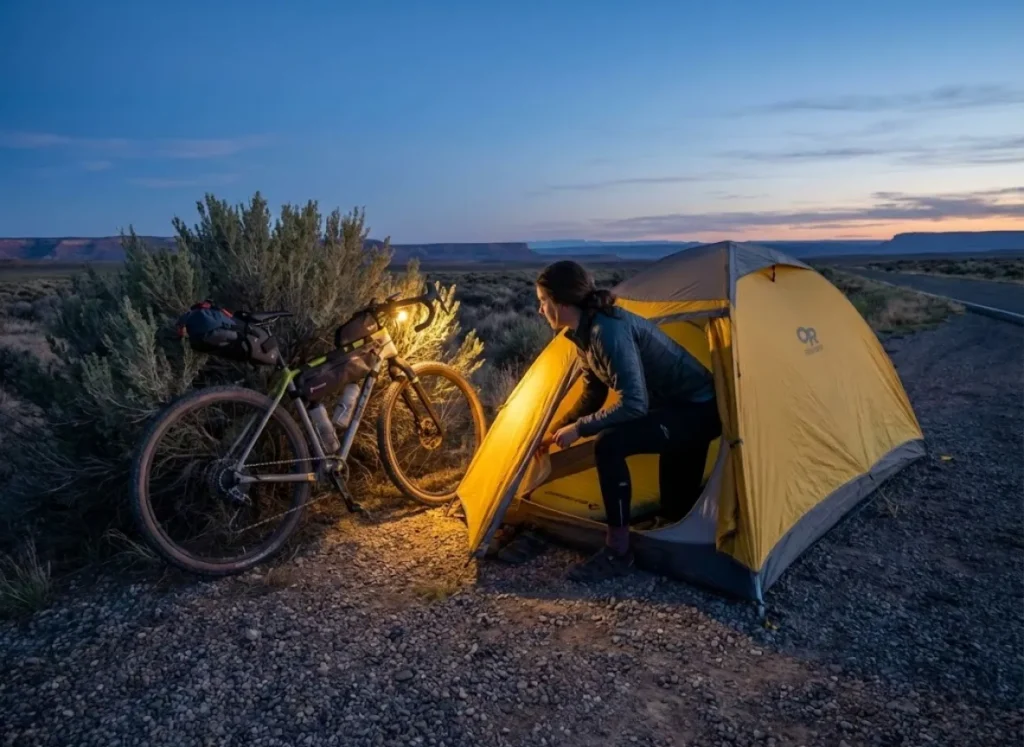
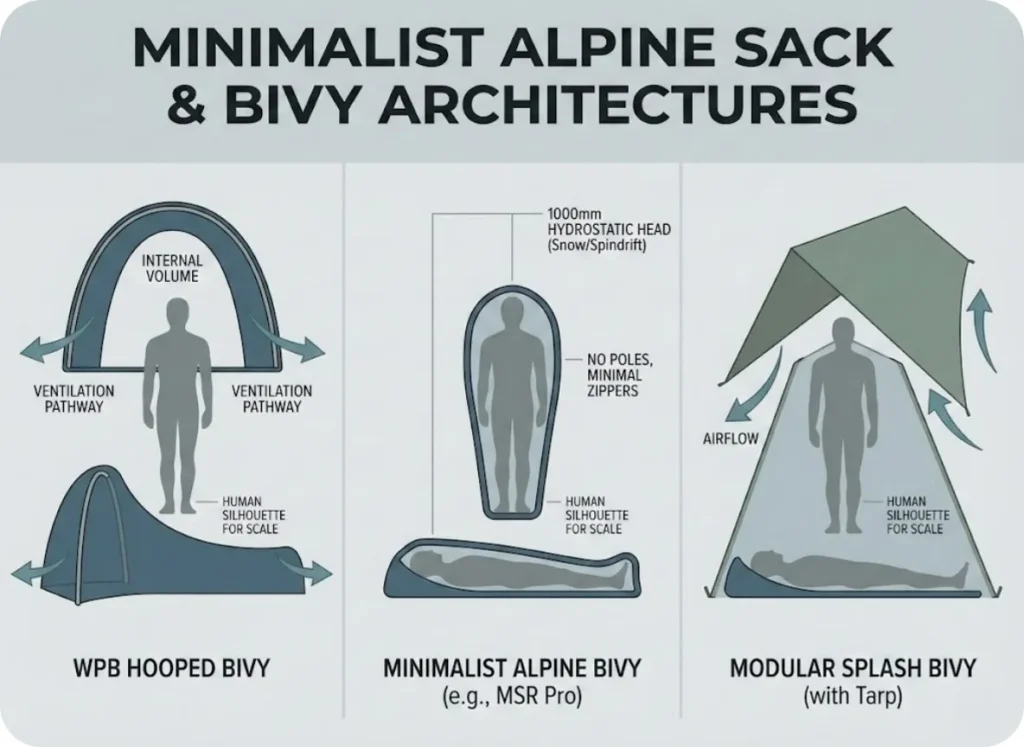
Bivy design isn’t one-size-fits-all. Three distinct philosophies serve different hikers.
The Waterproof-Breathable Standalone
The OR Helium Bivy and OR Alpine AscentShell Bivy represent this category—fully enclosed shells designed as your sole barrier against storms. A single hoop pole keeps fabric off your face, creating a micro-tent environment.
The selling point is full weather immunity without a tarp. The failure mode is what Reddit users call “The Coffin Effect.” In heavy rain, you must zip the bivy completely shut. If ventilation is poor, CO2 buildup and condensation become intense. Users describe panic, the inability to change clothes, read, or perform any camp chores while sealed inside. Many abandon standalone bivies for tarp+bivy combos after a single miserable storm.
The Minimalist Alpine Sack
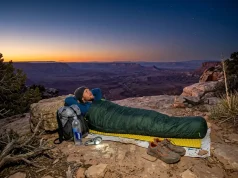
The MSR Pro Bivy (10 oz) is strictly utilitarian—no poles, minimal zippers, no bug mesh. The fabric rests directly on your face or is held up by tension. These are designed for alpinists who dig snow caves or sleep on narrow rock ledges where a tent cannot fit.
The MSR Pro uses a 1000mm hydrostatic head—water-resistant rather than fully waterproof. It’s designed for spindrift and snow, not torrential rain. For technical terrain and unplanned overnights, this is the tool.
The Modular Splash/Bug Bivy
The Katabatic Piñon (7.6-8 oz) represents the modular philosophy—waterproof bathtub floor, breathable upper, large mesh face. It’s designed for use under a tarp.
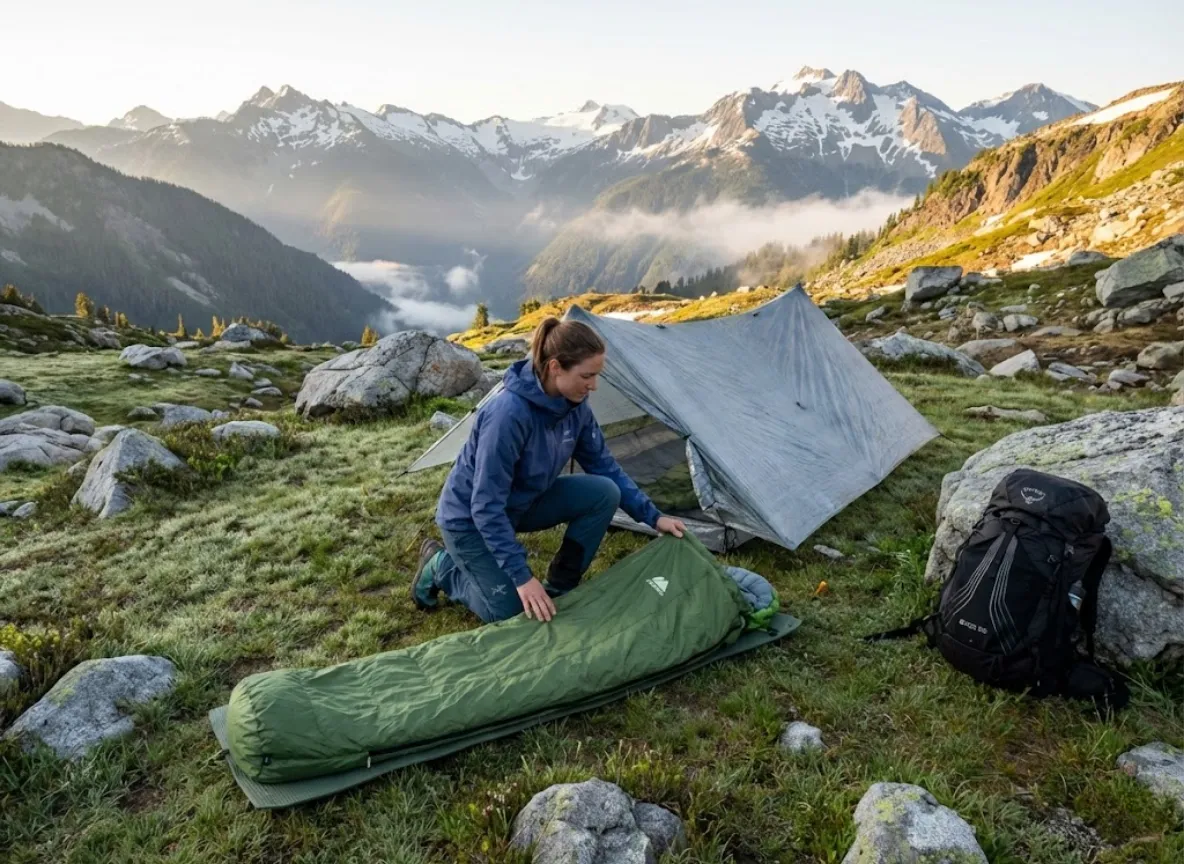
The tarp handles rain. The bivy handles ground moisture, wind spray, and bug protection. Total system weight for tarp + bivy runs around 16 oz—competitive with tents—but with vastly better breathability because the tarp provides airflow a zipped bivy never can.
Understanding tent selection fundamentals helps contextualize how modular systems function as tent alternatives.
The Decision Lab: Matching Shelter to Scenario
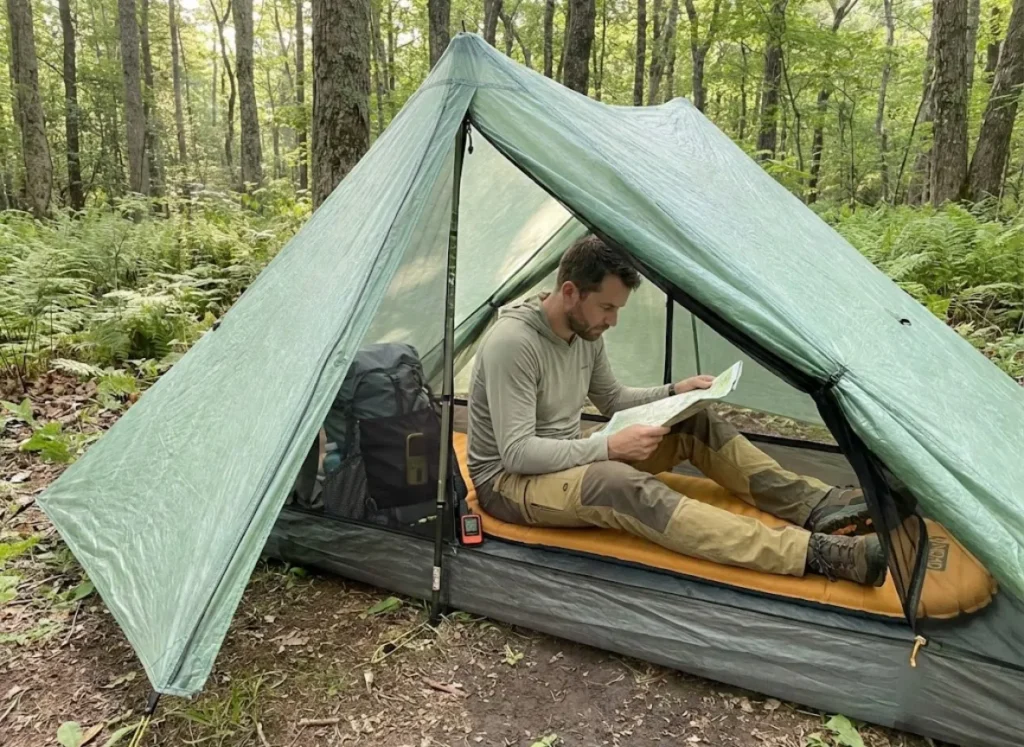
Stop asking “which is better?” Start asking “better for what?” Here are the use cases.
Scenario A: Long-Distance Thru-Hiker (AT/PCT/CDT)
Recommendation: Ultralight tent (Zpacks PlexSolo or similar).
The weight penalty versus a waterproof bivy is negligible or non-existent. The livability advantage is massive. You can sit up, read, change clothes in privacy, dry out gear, and wait out storms without losing your mind.
Over 2,000+ miles, mental health matters. The bivy’s condensation issues make it a liability in the humid Appalachians. The tent is the logical default for thru-hikers.
Scenario B: Bikepacker / FKT Athlete
Recommendation: Hooped bivy (OR Helium) or minimalist bivy (MSR Pro).
Volume is your constraint, not weight. The bivy fits in a handlebar bag where tent poles don’t. Setup time approaches zero—you’re maximizing moving time. Stealth camping in roadside ditches or field edges becomes practical because you’re invisible from 20 meters away.
Pro tip: When bikepacking with a bivy, carry an ultralight groundsheet (1-2 oz of Tyvek or Polycryo) to protect your floor fabric on rough surfaces.
Scenario C: Technical Alpinist
Recommendation: Minimalist bivy (MSR Pro).
On snow ledges, inside snow caves, or for emergency bivouacs on technical routes, the MSR Pro excels. Waterproofing handles spindrift and snow—not liquid rain. Weight (10 oz) and fail-safe simplicity trump all other variables. The above-treeline environment negates most condensation concerns since cold air holds less moisture.
Scenario D: Modular Ultralighter
Recommendation: Splash bivy (Katabatic Piñon) + flat tarp.
This is the “gold standard” for versatility. The tarp (8 oz) handles rain and sun. The bivy (8 oz) handles bugs, drafts, and splash. Total weight around 16 oz delivers tent-level protection with superior breathability and the option to cowboy camp under the stars on clear nights.
Ryan Jordan calls this “intimacy with the open sky”—sleeping without walls separating you from the environment. But it requires skill: tarp pitching, site selection, storm awareness. This isn’t gear for beginners.
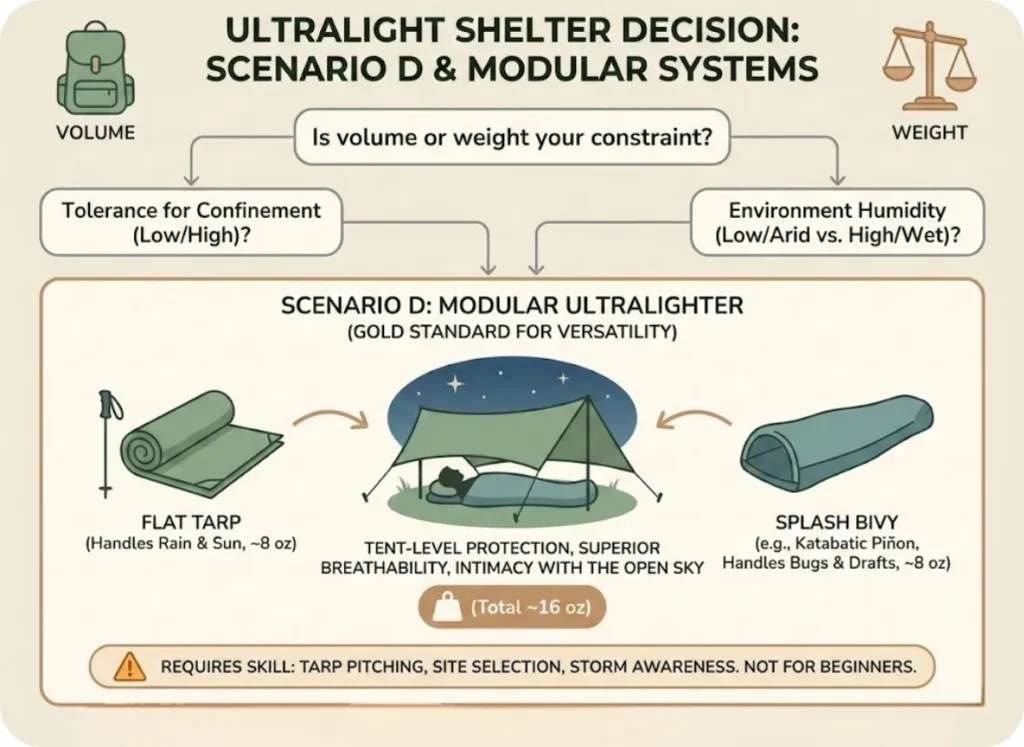
Mastering ultralight skills over gear is essential before committing to modular shelter systems.
Advanced Techniques: Mastering the Bivy Experience
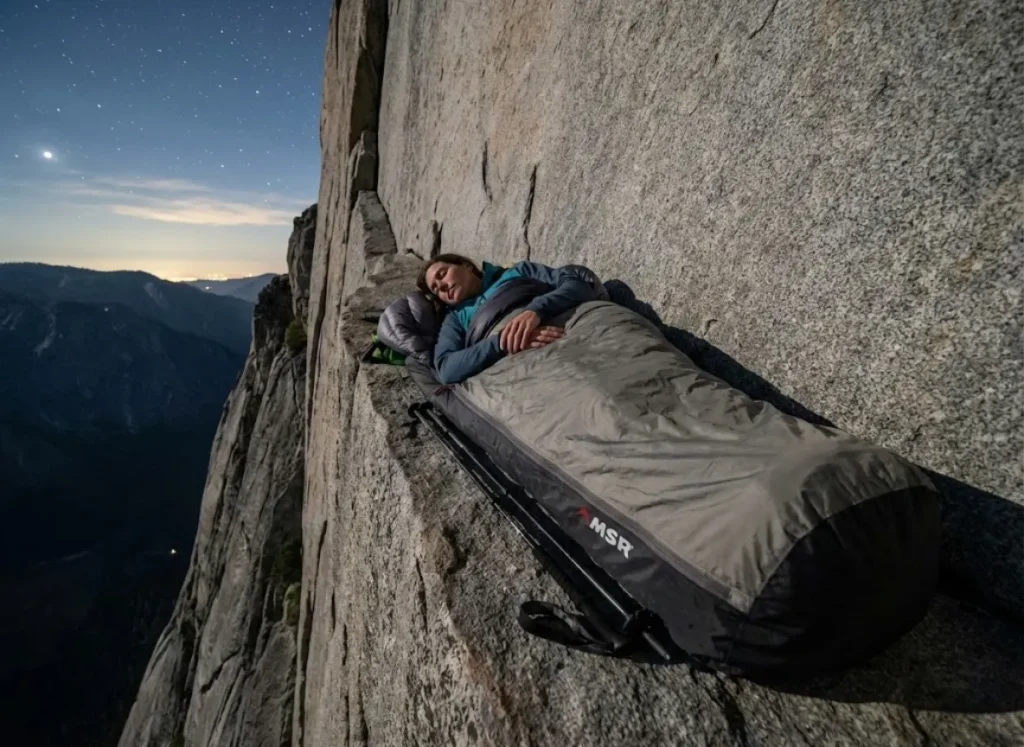
Bivy success depends more on skill than gear. Here’s how experts do it.
The Vapor Barrier Strategy (Andrew Skurka Method)
In sub-freezing or prolonged wet conditions, traditional breathability strategies fail. Andrew Skurka advocates using Vapor Barrier Liner (VBL) clothing or liners inside the sleeping bag.
The concept: a VBL stops your body’s moisture from entering your sleeping bag insulation. Moisture never reaches the cold bivy shell to condense. You feel “warm clammy” inside the VBL layer—but your insulation stays bone dry. This preserves sleeping bag loft over multi-day trips where condensation normally destroys warmth.
VBL is an advanced technique—psychologically uncomfortable for beginners—but essential for pushed bivy systems in conditions where even AscentShell can’t keep up.
Site Selection: The Bivy’s Secret Weapon
The bivy’s greatest advantage is versatility of placement. You need only 15-20 square feet—a 2′ x 7′ rectangle. That means sleeping on ridges, between boulders, in dense brush, or on snow ledges. A tent requires 40+ square feet when you include stake-out perimeter.
Stealth camping becomes practical. A low-profile bivy in green or brown is invisible from 20 meters. This facilitates “sunset to sunrise” camping in high-traffic corridors or European wild-camping zones where visual impact must be minimized—always following Leave No Trace principles to protect the landscapes we love.
Understanding stealth camping ethics ensures your minimal footprint remains responsible.
Managing the “Coffin Effect”
Psychological preparation matters. Accept less separation from the elements in exchange for flexibility in where you sleep. Practical tips:
Crack the zipper 3-4 inches minimum to maintain airflow, even in light rain. Position your bivy opening downwind to prevent direct spray entry. Use a wide-brimmed hat or balaclava to create micro-airspace around your face. And practice getting out quickly in the dark—panic is the enemy.
Pro tip: On clear nights, sleep with the bivy completely unzipped to maximize comfort and minimize condensation. Only zip when precipitation actually starts.
Conclusion
The bivy-vs-tent debate is no longer about weight. Modern DCF tents have neutralized that advantage completely.
The real decision comes down to three variables. First, packability—if volume matters more than grams, the bivy wins. Second, site flexibility—if you camp on ledges, in brush, or need stealth, the bivy wins. Third, livability—if you value sit-up space, storm comfort, and mental health over thousands of miles, the tent wins.
Before your next shelter purchase, run the decision through your actual use case. Ask yourself: “Where will I sleep, for how long, and what’s my condensation tolerance?” The answer writes itself.
FAQ
How much lighter is a bivy than a tent?
Modern ultralight tents are often lighter than waterproof bivies. The Zpacks PlexSolo weighs 13.9 oz compared to the OR Helium Bivy at 15.8 oz. The bivy’s advantage is packability—not weight.
Can you sleep comfortably in a bivy sack?
Comfort is limited. You cannot sit up, change clothes easily, or wait out storms without claustrophobia. Most users describe the experience as tolerable for short nights but miserable during prolonged rain. Modular tarp+bivy setups offer significantly better livability.
Do bivy sacks cause condensation?
Yes. Your body emits 0.5-1 liter of moisture per night. In bivies, this moisture has nowhere to go except against the cold shell fabric. Waterproof-breathable fabrics help, but condensation is an inherent trade-off, especially in humid conditions. Air-permeable bivies under tarps minimize this issue.
Can you use a bivy sack in winter?
Yes, with caveats. Alpine bivies like the MSR Pro excel in snow conditions where the threat is spindrift, not liquid rain. In freezing temperatures, moisture often sublimates rather than condensing. Vapor Barrier Liners help keep insulation dry during extended cold trips.
What’s the best bivy for beginners?
Beginners should consider a modular system—Katabatic Piñon bivy plus flat tarp. This provides forgiveness for skill gaps while teaching bivy fundamentals without the misery of a fully enclosed waterproof sack in rain.
Risk Disclaimer: Hiking, trekking, backpacking, and all related outdoor activities involve inherent
risks which may result in serious injury, illness, or death. The information provided on The Hiking Tribe is for
educational and informational purposes only. While we strive for accuracy, information on trails, gear, techniques,
and safety is not a substitute for your own best judgment and thorough preparation. Trail conditions, weather, and
other environmental factors change rapidly and may differ from what is described on this site. Always check with
official sources like park services for the most current alerts and conditions. Never undertake a hike beyond your
abilities and always be prepared for the unexpected. By using this website, you agree that you are solely
responsible for your own safety. Any reliance you place on our content is strictly at your own risk, and you assume
all liability for your actions and decisions in the outdoors. The Hiking Tribe and its authors will not be held
liable for any injury, damage, or loss sustained in connection with the use of the information herein.
Affiliate Disclosure: We are a participant in the Amazon Services LLC Associates Program, an
affiliate advertising program designed to provide a means for us to earn advertising fees by advertising and linking
to Amazon.com. As an Amazon Associate, we earn from qualifying purchases. We are also an official affiliate partner
of Black Diamond Equipment via the AvantLink network. If you click on a Black Diamond affiliate link and make a
purchase, we may earn a commission at no additional cost to you. We also participate in other affiliate programs and
may receive a commission on products purchased through our links. Additional terms are found in the terms of
service.