
In this article
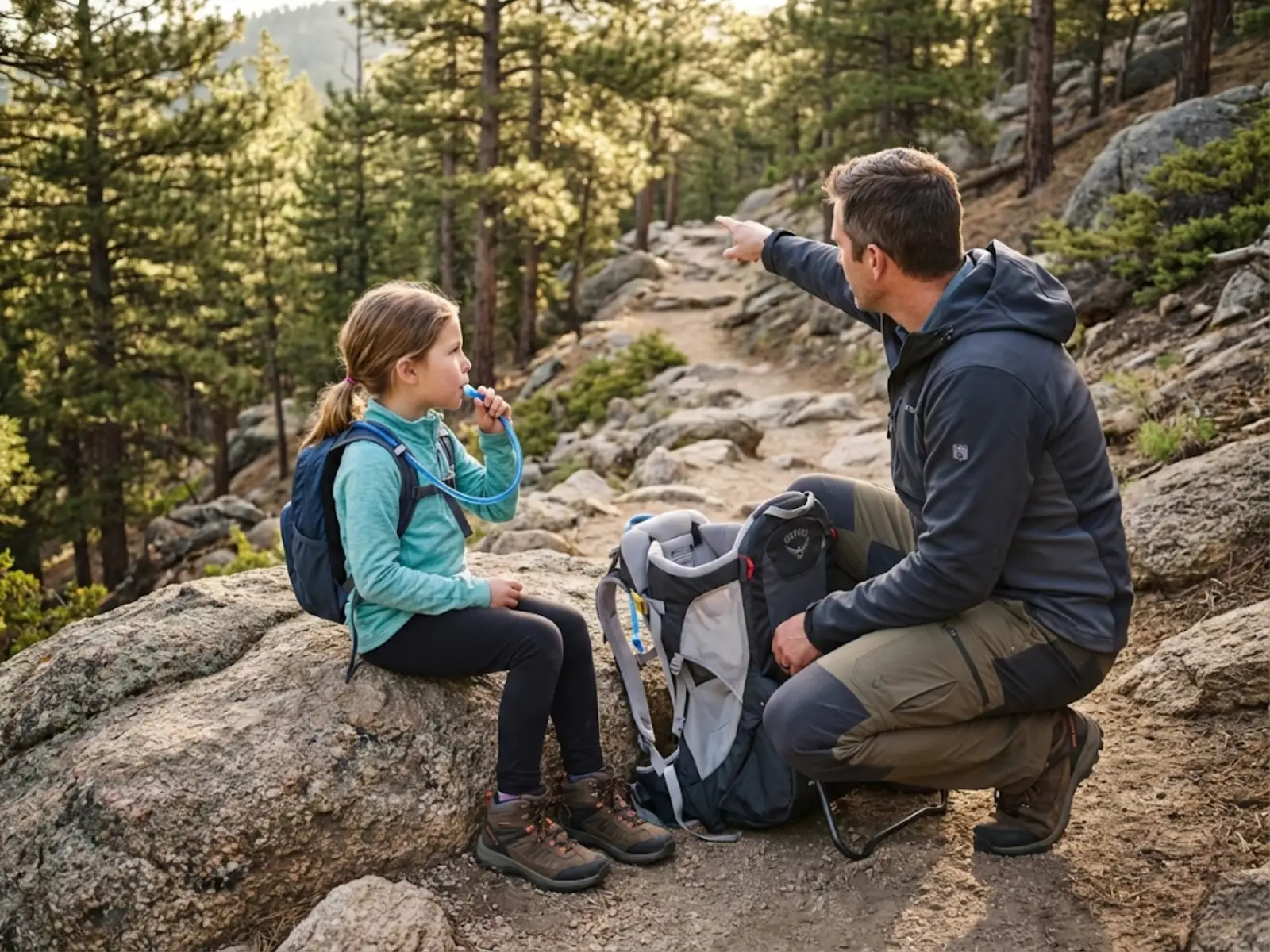
The trailhead looked perfect. Blue skies, moderate temps, a well-reviewed 4-mile loop. By mile two, my 5-year-old was crumpled on a boulder, arms crossed, lower lip out. “My legs are broken,” she announced. The sun was dropping, and we had three miles back.
That 43-pound “wriggling human” rode on my shoulders for the next hour while I white-knuckled through loose rock, trying not to think about my screaming quads. I’ve since learned the hard way: kids aren’t small adults. They run on different metabolic engines, and the generic “one mile per year of age” rule doesn’t account for elevation, terrain, or the psychological chaos of a bored 6-year-old.
Here’s how to actually predict your child’s hiking capacity—with terrain modifiers, age-adjusted benchmarks, and the physiological science most parents never see.
⚡ Quick Answer: Children can hike roughly 0.5–1 mile per year of age on flat terrain, but elevation and trail difficulty reduce this significantly. Use the “Effective Effort Formula”: add 1 mile for every 500 feet of elevation gain. A 5-year-old’s max is typically 2–4 miles on flat ground, but drops to 1–2 miles with moderate climbing.
The Science Behind Pediatric Hiking Capacity
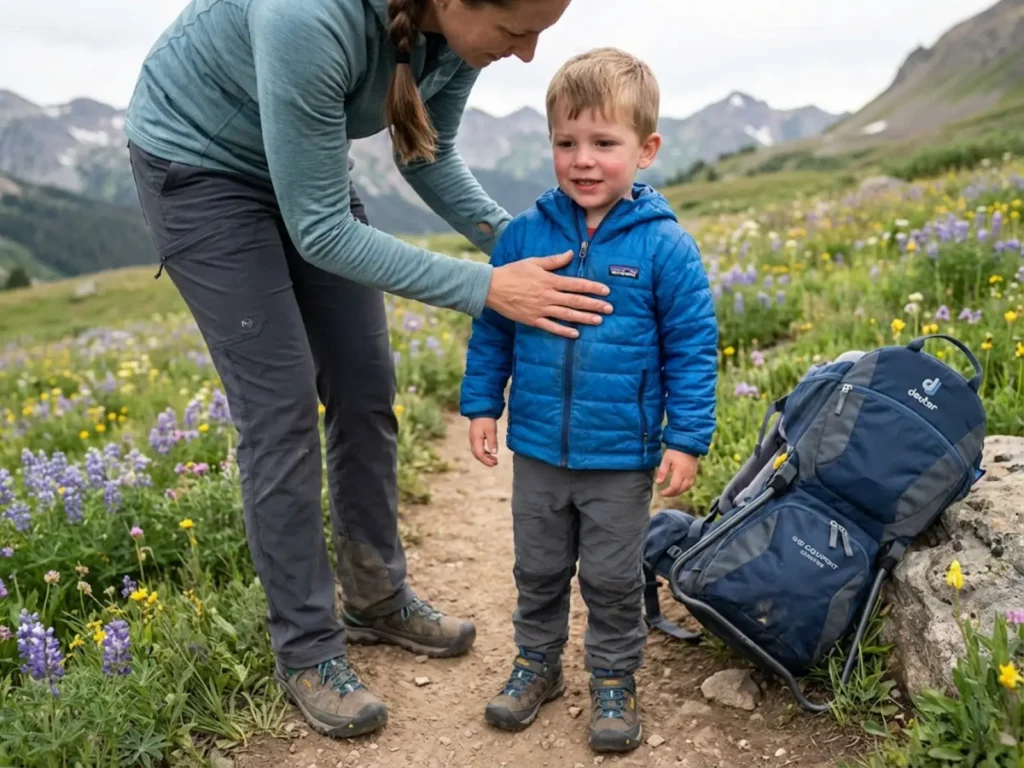
A central misunderstanding in family hiking is treating children as “small adults.” Research from Southern Methodist University clarifies why this fails. The metabolic cost of transport—the energy required to move a body over distance—is heavily dependent on stature, not just age or weight.
Because each stride carries a relatively fixed metabolic “price,” shorter limbs require significantly higher stride frequency to maintain pace. According to peer-reviewed research on the energy cost of walking in children, a 5-year-old expends roughly 40% more energy per kilometer than an adult covering the same ground. This “economy gap” only closes once a child reaches approximately 1.4–1.5 meters in height, typically around age 11 or 12.
Pro tip: When a young child says “I’m tired” at mile two while you barely feel warmed up, they’re experiencing genuine metabolic deficit—trust the complaint.
Thermoregulation compounds the problem. Children have higher surface-area-to-body-mass ratios than adults, meaning they lose heat faster in cold conditions and overheat faster when it’s warm. The CDC guidelines on physical activity for children classify hiking as “moderate activity” where the heart rate sits between 50–70% of maximum. At this intensity, a child should be able to talk. If they can’t, they’re overexerting.
The bottom line: when you’re calculating how far your kid can hike, you’re not just scaling down adult numbers. You’re working with an entirely different physiological system. If conditions turn cold, know how to recognize and treat hypothermia on the trail.
The Age-Distance Matrix: Realistic Mileage by Developmental Stage
Most guides give you flat mileage numbers. Here’s what those numbers actually look like when you account for terrain difficulty and developmental stage.
Ages 2–3: The Exploration Zone. Realistic distance: 0.25–1.5 miles on flat terrain. At this stage, puddles, sticks, and bugs ARE the destination. Expect your child carrier to do 50–75% of the work. Pack weight: zero—this is the carrier-only phase. Max outing time: 2 hours. The goal is movement and sensory engagement, not mileage.
Ages 4–5: Building the Base. Flat terrain capacity: 2–4 miles. Add 500 feet of elevation gain? Drop that to 1–2 miles. Never trust a verbal agreement to “walk the whole way”—it typically expires after mile two. Pack weight: hydration only, such as a CamelBak Mini M.U.L.E. or similar. Frame the hike as “scouting for a castle site” to tap into construction play, where the child uses the environment for imaginative purpose.
Ages 6–7: The Transition Years. Flat terrain: 4–6 miles. Moderate trail with steady climbing: 2–3.5 miles. Children now understand goals—reaching a waterfall, tagging a summit marker—and can engage in collaborative games like “I Spy” to distract from physical effort. Pack weight climbs to 5–10% of body weight. Max trail time: 5 hours. For managing energy across longer distances, review our pacing strategies that prevent burnout.
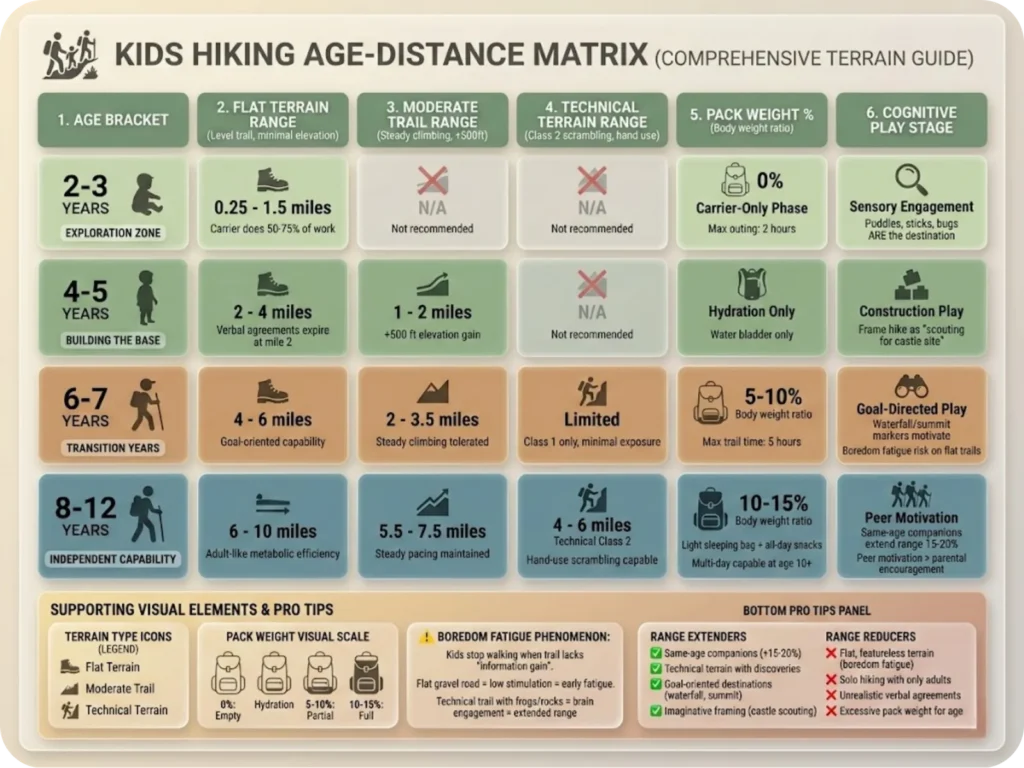
There’s a phenomenon I call boredom fatigue: kids stop walking not because their legs failed, but because the trail lacks “information gain.” A flat gravel road offers no stimulation. A technical trail with frogs and “cool rocks” extends range by keeping the brain engaged.
Ages 8–12: Independent Capability. Flat terrain: 6–10 miles. Moderate elevation: 5.5–7.5 miles. Technical Class 2 scrambling: 4–6 miles. Metabolic efficiency approaches adult levels. Pack capacity reaches 10–15% of body weight—enough for a light sleeping bag and all-day snacks. Multi-day capability begins around age 10 with proper transitioning from day hikes to overnight backpacking.
Pro tip: Hiking with same-age companions can extend a child’s range 15–20%. Peer motivation outweighs fatigue in ways parental encouragement can’t replicate.
The Terrain Multiplier Formula: Calculating Effective Effort
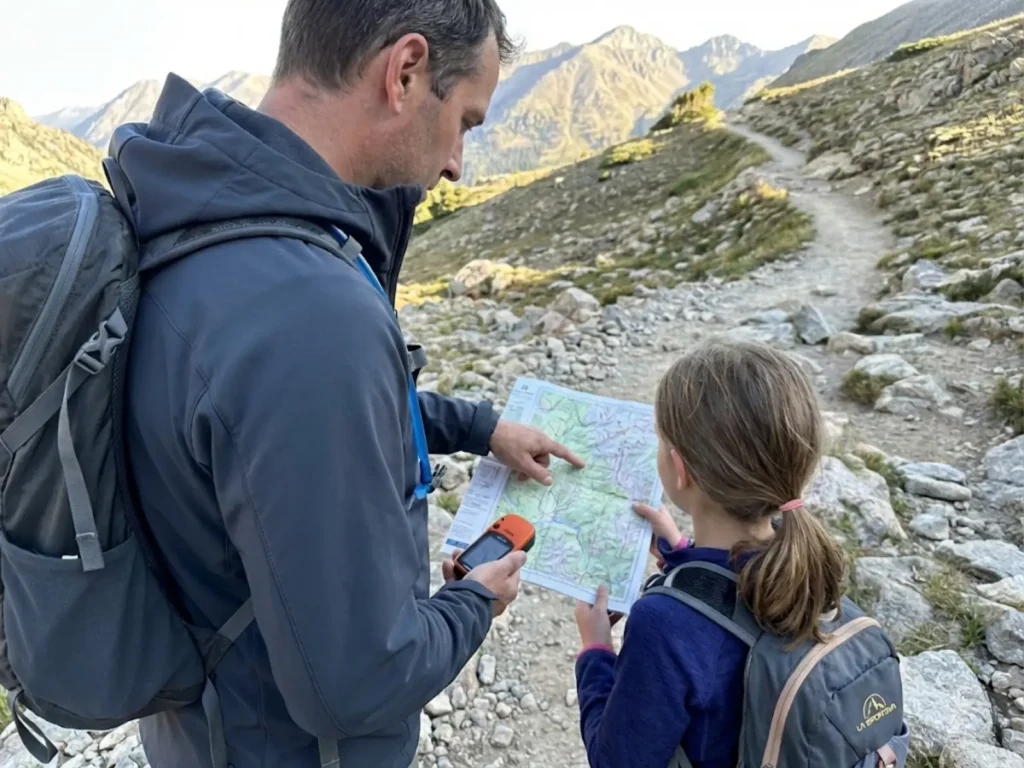
Most guides give flat mileage. But a 4-mile hike with 1,000 feet of climbing isn’t a 4-mile hike—it’s much harder. The German Hiking Association developed a formula that converts elevation into distance equivalents, and adapting it for children changes everything about trip planning.
The Effective Effort Formula: Effective Effort (km) = Trail Distance (km) + [Elevation Gain (m) ÷ 100]. Under this model, a 4km hike with 300 meters of elevation gain equals 7km of effective effort. If your 5-year-old’s maximum is 7.5km on flat ground, this hike sits at their absolute limit—not “easy,” as the trail app might suggest.
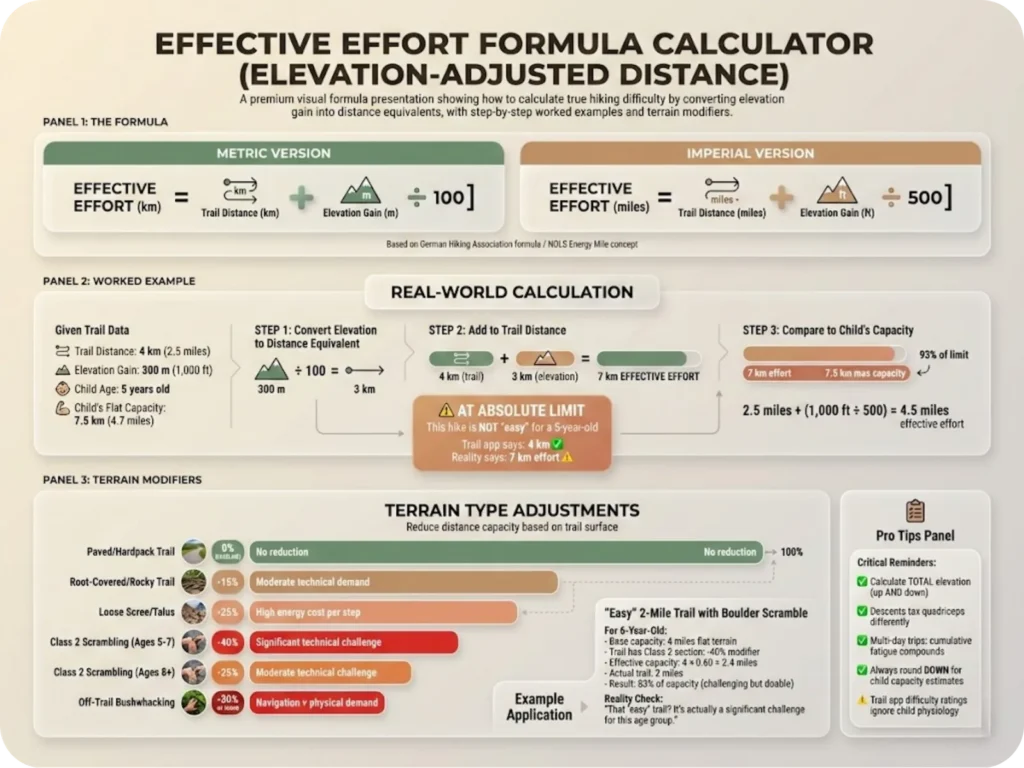
For American readers using miles and feet, the NOLS Energy Mile formula works similarly: add 1 mile equivalent for every 500 feet of elevation gain. A 3-mile trail with 1,000 feet of climbing becomes a 5-mile effort equivalent. Always calculate total elevation—up AND down—since descents tax quadriceps differently and add to multi-day cumulative fatigue. For more on time estimation using elevation adjustments, see our guide on calculating hiking time using Naismith’s Rule.
Beyond elevation, terrain type modifiers further reduce child capacity:
- Paved/hardpack trail: 0% adjustment (baseline)
- Root-covered or rocky trail: -15% distance capacity
- Loose scree or talus: -25% distance capacity
- Class 2 scrambling: -40% for ages 5–7; -25% for ages 8+
- Off-trail bushwhacking: -30% or more
That “easy” 2-mile trail with a boulder scramble section? For a 6-year-old, you’ve now got roughly 1.2 miles of effective capacity. Plan accordingly.
Gear That Extends Range: Child Carriers and Youth Packs
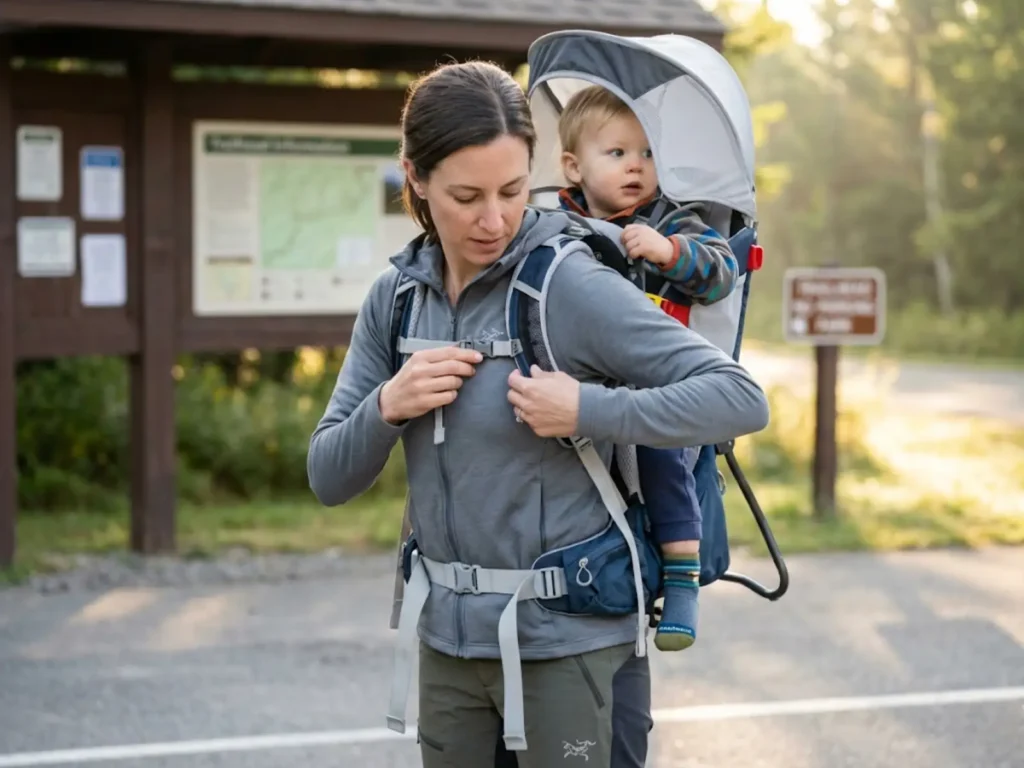
The right gear doesn’t just increase comfort—it directly extends how far your family can travel.
Child carriers are essential for ages 0–4 and useful as backup through age 5. The Osprey Poco Plus features 36L of storage and a UPF 50+ sunshade, making it ideal for all-day hikes where conditions shift. The Deuter Kid Comfort uses excellent ergonomic design for child leg support, preventing the “numb leg syndrome” that causes tears and delayed departures.
Critical distinction: carrying a moving child is not the same as carrying a pack. A 40-pound child is a dynamic load—they shift, squirm, and throw off your center of gravity. Expect 20–30% higher metabolic cost compared to a static 40-pound backpack. This is the wriggling human factor, and it’s why parent capacity drops faster than you’d expect.
Youth backpacks should follow strict pack weight-to-body-weight ratios to protect developing spines:
- Ages 4–7: 5–10% of body weight maximum. This means water and a fleece—nothing else.
- Ages 8–12: 15% of body weight. Can now carry 12–15 pounds in a frame pack.
- Ages 13+: 20% of body weight. Approaching adult capacity with proper torso harness adjustability.
The Osprey Ace 50 and Deuter Fox 40 are gold standards for 2025—both feature adjustable torso harnesses that grow with the child, ensuring the hip belt always carries the weight. For guidance on ensuring proper load transfer, see our backpack fit guide.
Safety Protocols Every Hiking Parent Must Know
Wilderness risks affect children differently than adults. Recognizing pediatric-specific symptoms can mean the difference between a tired kid and a medical emergency.
Altitude sickness typically begins at 8,000 feet but can affect children as low as 5,000 feet depending on ascent rate. The problem: children may not report “headache.” Instead, watch for AMS-equivalent behaviors—refusal to eat favorite snacks, unusual lethargy, or nausea described as a “tummy ache.” The protocol for suspected AMS is immediate descent. Using Ibuprofen to mask symptoms and continue climbing invites disaster. For comprehensive coverage, see our guide on altitude sickness and acclimatization.
Water danger remains the leading cause of wilderness fatalities in both toddlers and adolescents. According to Seattle Children’s Hospital wilderness safety guidelines, toddlers can drown silently in ankle-deep water while parents stand nearby. Fast-flowing rivers cause initial shock that prevents response. Life jackets are mandatory for any hike involving significant water crossings.
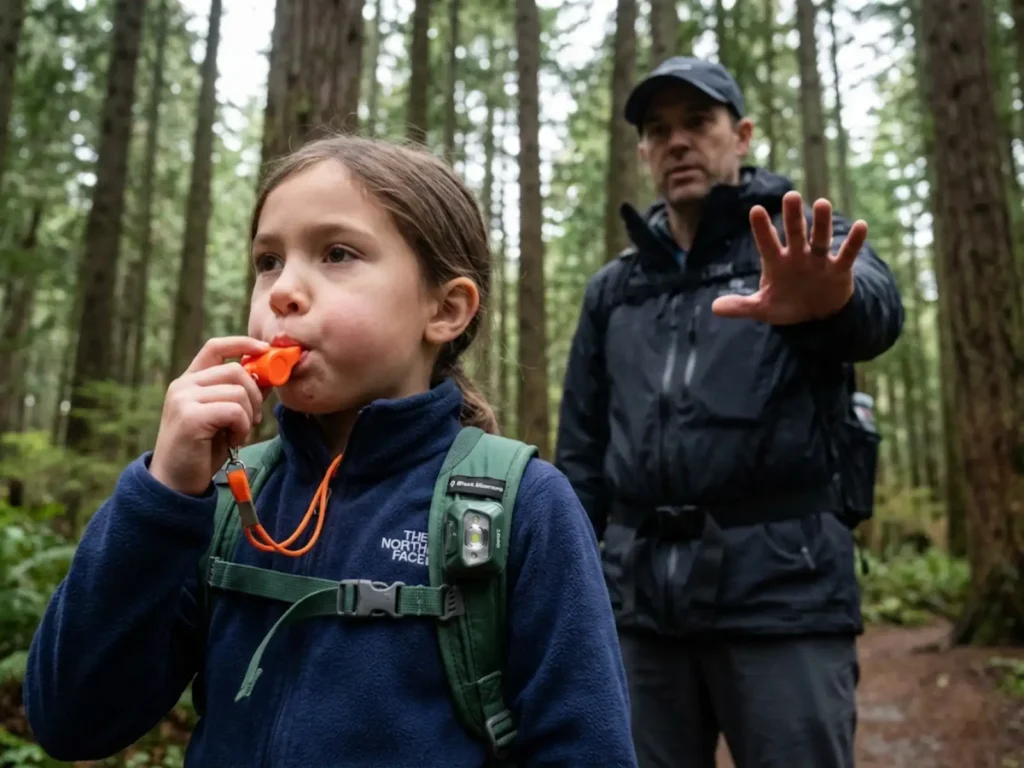
The Hug a Tree safety protocol is essential pre-hike education for any child old enough to understand. If lost, they must STOP, find a landmark tree, sit at its base, and stay visible. Every child should carry an emergency whistle on their person—not buried in a pack. A whistle can be heard up to a mile away, far exceeding voice range. The signal: three sharp bursts, pause, repeat.
Common Mistakes That End Hikes Early
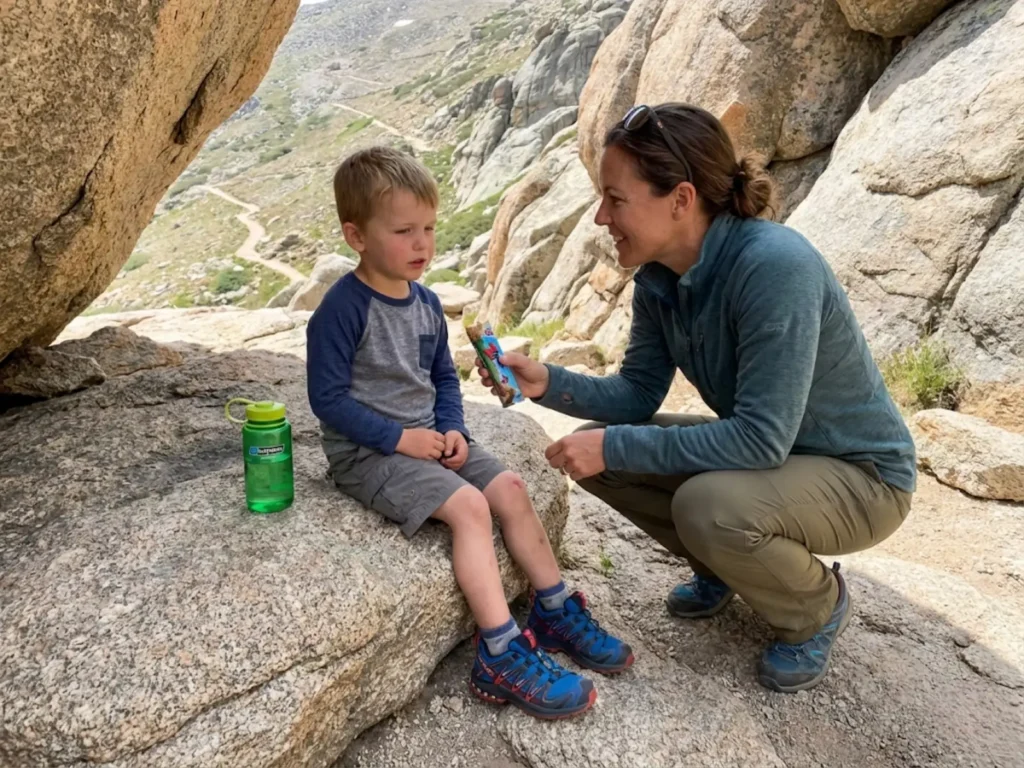
I’ve made all of these. Maybe you can skip a few.
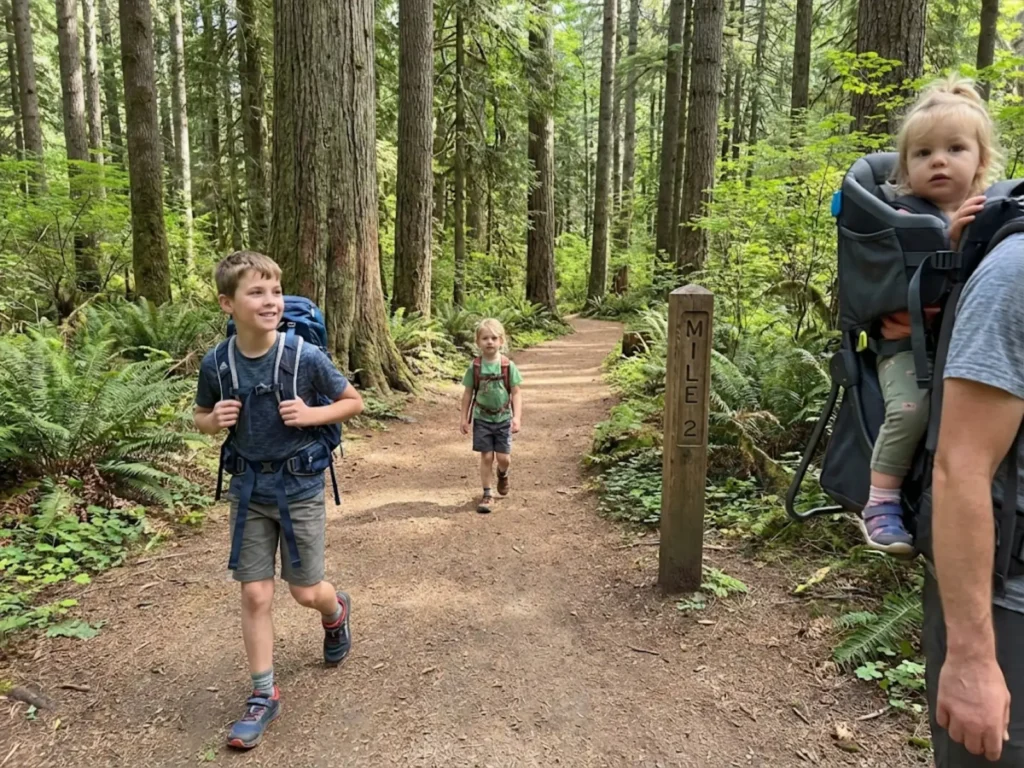
The Verbal Agreement Trap. A 4-year-old’s promise to walk the whole way expires at mile two. Plan for 50% carrier time until age 6, even if they swear otherwise. Always bring the carrier on hikes over 2 miles.
The Cotton Disaster. “Cotton kills” hits harder with children. Their higher surface-area-to-mass ratio amplifies wet cotton’s heat-wicking effect. Wet jeans or t-shirts can trigger hypothermia in conditions that barely bother adults. Set a family rule: no cotton on trail. Merino wool or synthetics only. Keep a backup layer in your pack for summer evening temperature drops. For a deeper understanding of fabric physics, see our layering systems guide.
Under-hydrating and under-snacking. Children have higher fluid needs per body weight per hour than adults. Blood glucose drops trigger irritability before physical collapse—what looks like attitude is often physiology. The solution: high-frequency, small-volume snacks every 30–45 minutes. “Trail treats” aren’t bribery. They’re fueling a metabolic engine that burns hotter than yours.
Pro tip: If your child hasn’t peed in 3+ hours on a warm day, stop everything and hydrate. Dehydration in kids escalates fast.
Conclusion
Three things determine whether your kid asks to hike again tomorrow.
First, calculate effective effort, not trail distance. Apply terrain modifiers—scree reduces capacity by 25%; Class 2 scrambling cuts it 40% for young kids.
Second, trust the complaints. When your child says they’re tired, they’re experiencing 40–70% higher metabolic cost than you for the same ground.
Third, the meltdown point is a physiological signal. Trail treats aren’t indulgence—they’re medical necessity for a body that burns fuel faster than yours.
Print the Effective Effort formula and tape it to your pack. Run the numbers before your next trip. The goal isn’t miles reached. It’s whether your kid wants to go again.
FAQ
How far can a 5-year-old hike?
On flat terrain, 2–4 miles is typical for an active 5-year-old. With 500 feet of elevation gain, reduce to 1–2 miles. Always calculate effective effort rather than trusting raw trail distance.
Can a 3-year-old walk 5 miles?
Almost never. Realistic range for a 3-year-old is 0.5–1.5 miles on flat ground. Plan for carrier time, and expect the hike to take 3x longer than your adult pace.
How much weight can a child carry hiking?
Ages 4–7: 5–10% of body weight (hydration and small items only). Ages 8–12: up to 15%. Never exceed 20% until skeletal maturity—overloading developing spines causes lasting issues.
What happens if my child gets altitude sickness?
Descend immediately. Children’s AMS often presents as irritability, food refusal, and stomach complaints rather than headache. Don’t mask symptoms and continue upward.
How do I motivate a child who wants to quit mid-hike?
High-frequency snacks, counting games, and child-led pacing all help. If true fatigue sets in, don’t force it. The goal is a kid who asks to hike again tomorrow.
Risk Disclaimer: Hiking, trekking, backpacking, and all related outdoor activities involve inherent
risks which may result in serious injury, illness, or death. The information provided on The Hiking Tribe is for
educational and informational purposes only. While we strive for accuracy, information on trails, gear, techniques,
and safety is not a substitute for your own best judgment and thorough preparation. Trail conditions, weather, and
other environmental factors change rapidly and may differ from what is described on this site. Always check with
official sources like park services for the most current alerts and conditions. Never undertake a hike beyond your
abilities and always be prepared for the unexpected. By using this website, you agree that you are solely
responsible for your own safety. Any reliance you place on our content is strictly at your own risk, and you assume
all liability for your actions and decisions in the outdoors. The Hiking Tribe and its authors will not be held
liable for any injury, damage, or loss sustained in connection with the use of the information herein.
Affiliate Disclosure: We are a participant in the Amazon Services LLC Associates Program, an
affiliate advertising program designed to provide a means for us to earn advertising fees by advertising and linking
to Amazon.com. As an Amazon Associate, we earn from qualifying purchases. We are also an official affiliate partner
of Black Diamond Equipment via the AvantLink network. If you click on a Black Diamond affiliate link and make a
purchase, we may earn a commission at no additional cost to you. We also participate in other affiliate programs and
may receive a commission on products purchased through our links. Additional terms are found in the terms of
service.