In this article
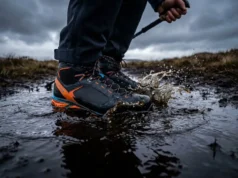
The bog on the West Highland Way is relentless. You step in. You feel the suction against your boot. You wait for the icy seep of peat water. But with waterproof socks, that cold rush never comes. Instead, a slow, creeping warmth builds from the inside out.
After decades of leading groups through the Scottish Highlands and the rainy Lake District, I can tell you that waterproof socks—whether you wear Sealskinz, Bridgedale, or Showers Pass—aren’t magic. They don’t make moisture disappear.
They are specialized tools with a specific trade-off. You are trading the immediate danger of “cold wetness”—which causes trench foot—for the management of excessive internal moisture, or trapped sweat.
If you don’t understand this trade-off, you will think your expensive Sealskinz Dunton or Randy Sun gear has failed. Mastering this system is the only way to keep your feet functional when the trail turns to soup. Here is the reality of why your feet get wet, the physics of why waterproof boots stop breathing, and the exact sweat management protocol I use to keep my feet safe.
Why Do My Feet Feel Wet Even in Waterproof Socks?

The short answer: It is likely biology, not a leak. Your sweat glands produce moisture faster than the sock can let it out, especially when trapped inside a boot.
How much sweat do feet actually produce while hiking?
The soles of your feet have about 250,000 sweat glands. That is more than any other part of your body. Under the stress of hiking with a heavy pack, this sweat gland activity can pump out roughly a pint of fluid every single day. That is a pint of water generated directly inside your footwear.
Standard wool socks or synthetic socks are open knits that let this moisture escape. But waterproof socks are different. They wrap your foot in a waterproof membrane. By design, they keep a lot of that sweat production inside.
We often praise standard moisture-wicking hiking socks for moving sweat away. However, a waterproof sock creates a zone of high humidity within minutes of hiking.
This leads to swamp foot even if there are no holes in the sock. Your goal isn’t to be “bone dry.” Your goal is to manage internal moisture. If you suffer from hyperhidrosis (super sweaty feet), putting antiperspirant on your feet before hiking helps reduce the moisture load.
Pro-Tip: Do not rely on “feeling” wetness to judge your sock. Check the temperature. If your feet are wet but warm, the system is working.
What is the difference between a leak and sweat?
Hikers often blame the sock for water ingress when they are actually feeling their own sweat vapor. To know the difference, I teach my students the “Warm vs. Cold” Test.
If the moisture feels warm and clammy, it is internal sweat trapped by the membrane. If it feels distinctively cold and in one specific spot, it is likely a leak or a deep puddle coming over the top of the elastic cuffs.
A working waterproof sock warms the trapped moisture. This creates a wet suit effect. It keeps you warm despite the dampness. Even a high-end Bridgedale Stormsock or Sealskinz Bircham relies on this principle to protect you from dry cold performance issues.
A real leak introduces cold water from the outside. This saps your body heat instantly. It can lead to rapid cooling and dangerous foot injuries. Understanding how waterproof ratings apply (like Hydrostatic Head) can help you figure out if the water pressure just overwhelmed the fabric or if the sock is actually broken.
The Engineering Paradox: Can a Sock Be Truly Waterproof and Breathable?
The short answer: In a lab measuring MVTR (Moisture Vapor Transmission Rate), yes. In a soaked hiking shoe, no. When the outside of the sock is wet, the airflow stops. The sock becomes a barrier that traps everything.
Why does breathability stop working?
Internal breathability relies on a difference in pressure. Moisture moves from high pressure (warm/humid inside) to low pressure (cool/dry outside). When you hike in dry weather, this works well.
But then comes the “Wet Boot Blockade.” When your waterproof boots or trail runners are soaked with rain or mud, the external humidity hits 100%.
If it is 100% humid inside the sock and 100% humid outside, the airflow stops. The moisture has nowhere to go.
In these conditions, even expensive materials act like a plastic bag. They trap all new sweat. This is similar to the trade-offs in waterproof hiking shoes. Once the outer leather or fabric gets soaked (known as “wetting out”), the membrane underneath can’t breathe.
You have to accept the reality: the sock keeps the river out, but it cannot force sweat out against the laws of physics.
What is the difference between membrane types?
Not all waterproof socks are built the same. They generally use a 3-layer sandwich construction: a durable outer, a membrane, and a moisture-wicking inner.
Some, like Showers Pass Crosspoint or socks using Gore-Tex tech in footwear, rely on Microporous membranes. These have billions of tiny holes. The holes are small enough to block water drops but big enough to let vapor out.
Others, like Sealskinz (using Aquasealz technology) or Drymile Active, often use Hydrophilic membranes (or PU-based hydrophilic membranes like Porelle). These are solid sheets without holes. They move moisture chemically through the material itself.
The “tiny hole” membranes breathe better in dry air. The “solid sheet” membranes are tougher against dirt and oil.
If you are trail running in mesh shoes, the microporous type helps vent sweat early on. If you are wading through a mud puddle all day, the solid type is safer because grit won’t clog the pores. When selecting specific waterproof hiking socks, knowing if you are running or wading will help you choose the right one.
The 24-Hour Moisture Management Protocol
The short answer: You cannot stop the sweat. You have to manage it. Use a thin liner sock to absorb moisture and swap it out at lunch.
Why do I need a “Sacrificial Liner”?
Never wear a waterproof sock directly against your skin for a multi-day trip. The Coolmax lining or Merino wool inner layer often isn’t enough to handle all that sweat.
The strategy I use is the Sacrificial Liner.
Wear a thin, high-wicking Merino wool liner (like Smartwool or REI Co-op) underneath the waterproof sock. This liner acts like a sponge. It pulls sweat off your skin and holds it in the fabric. This prevents “maceration.” That is the medical term for when your skin turns white, pruney, and weak.
Pro-Tip: Use Injinji toe socks as your liner layer. They wick moisture from between the toes, preventing friction blisters in the exact spots where waterproof socks tend to feel clammest.
Soft, pruney skin rips easily. Choosing the best hiking liner socks gives the sweat somewhere to go. It manages the humidity spike when you are climbing hills and keeps your skin intact.
How does the “Mid-Day Swap” work?
The liner buys you time, but it eventually gets soaked. At your lunch break, you must execute The Swap.
Take off the Sealskinz or ArcticDry sock and the wet liner. Dry your feet thoroughly with a camp towel or bandana.
Put on a fresh, dry liner sock. Then put the waterproof sock back on.
This resets your feet. It keeps the moisture level safe for the second half of the day.
Hang the wet liners on your pack to air dry. Thin liners dry fast in the wind; thick socks do not. This simple trick doubles the time you can hike safely. It is a vital part of using techniques to stop blisters before they start.
How can I dry waterproof socks in a tent?
Thick socks can trap heat and moisture, making them hard to dry. The membrane blocks airflow. If you take them off and leave them in the corner of the tent, they will still be wet in the morning.
Step 1: The Wring. Gently squeeze the water out of the outer nylon layer. Do not twist them like a dishrag. That can rip the membrane or damage the Hydrostop seal on some models.
Step 2: Inside-Out. Turn the socks inside out. The inner layer touches your skin, so that is the part that must be dry by morning.
If it is freezing outside, use the Body Heat Method. Place the damp (wrung-out) socks inside your sleeping bag. Or, lay them flat against your torso over a base layer.
Your body heat acts like a furnace. It drives moisture out of the inner bamboo or wool layer. This takes effort, but it beats waking up to frozen socks. This attention to detail is how you properly store hiking gear to prevent mold and damage.
Final Thoughts
Waterproof socks are a compromise. Biology says your feet will sweat. Physics says a wet boot will trap that sweat.
But if you accept “warm dampness” instead of “cold wetness,” you keep your feet functional.
Remember the protocol: always use a liner, swap that liner at lunch, and actively dry the inner layer of your socks at night. If you are ready to upgrade your wet-weather kit, read our Waterproof Hiking Socks: The Realist’s Buying Guide to find the right pair for your climate.
FAQ – Frequently Asked Questions about Waterproof Socks
Do waterproof socks make your feet sweat more than normal socks?
Yes. The membrane restricts airflow compared to normal Darn Tough hiker micro crew socks. However, in wet weather, they keep feet warmer than normal socks would. Normal socks would let cold rain soak your skin completely.
Can I wear normal socks underneath waterproof socks?
Yes, and you should. Wear a thin liner sock underneath. A thin Merino wool or Injinji liner pulls sweat away from the skin. It stops the clammy plastic feeling of the membrane against your foot.
How do you wash waterproof socks?
Wash-ability is key. Wash them inside out on a cool cycle (below 40°C). Use a gentle laundry detergent or technical gear wash to protect the DWR (Durable Water Repellent) coating. Never use fabric softeners or bleach. Air dry them away from heat sources like radiators. High heat can peel the membrane away from the fabric layers.
Why are my feet wet inside my waterproof socks after a hike?
It is usually sweat, not a leak. If the wetness feels warm and spread out, it is sweat evaporation trapped by the sock. If it feels cold and is only in one spot, the sock might have a hole from wear and tear.
Risk Disclaimer: Hiking, trekking, backpacking, and all related outdoor activities involve inherent risks which may result in serious injury, illness, or death. The information provided on The Hiking Tribe is for educational and informational purposes only. While we strive for accuracy, information on trails, gear, techniques, and safety is not a substitute for your own best judgment and thorough preparation. Trail conditions, weather, and other environmental factors change rapidly and may differ from what is described on this site. Always check with official sources like park services for the most current alerts and conditions. Never undertake a hike beyond your abilities and always be prepared for the unexpected. By using this website, you agree that you are solely responsible for your own safety. Any reliance you place on our content is strictly at your own risk, and you assume all liability for your actions and decisions in the outdoors. The Hiking Tribe and its authors will not be held liable for any injury, damage, or loss sustained in connection with the use of the information herein.
Affiliate Disclosure: We are a participant in the Amazon Services LLC Associates Program, an affiliate advertising program designed to provide a means for us to earn advertising fees by advertising and linking to Amazon.com. As an Amazon Associate, we earn from qualifying purchases. We also participate in other affiliate programs and may receive a commission on products purchased through our links, at no extra cost to you. Additional terms are found in the terms of service.