In this article
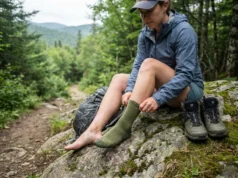
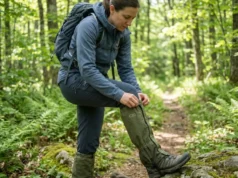
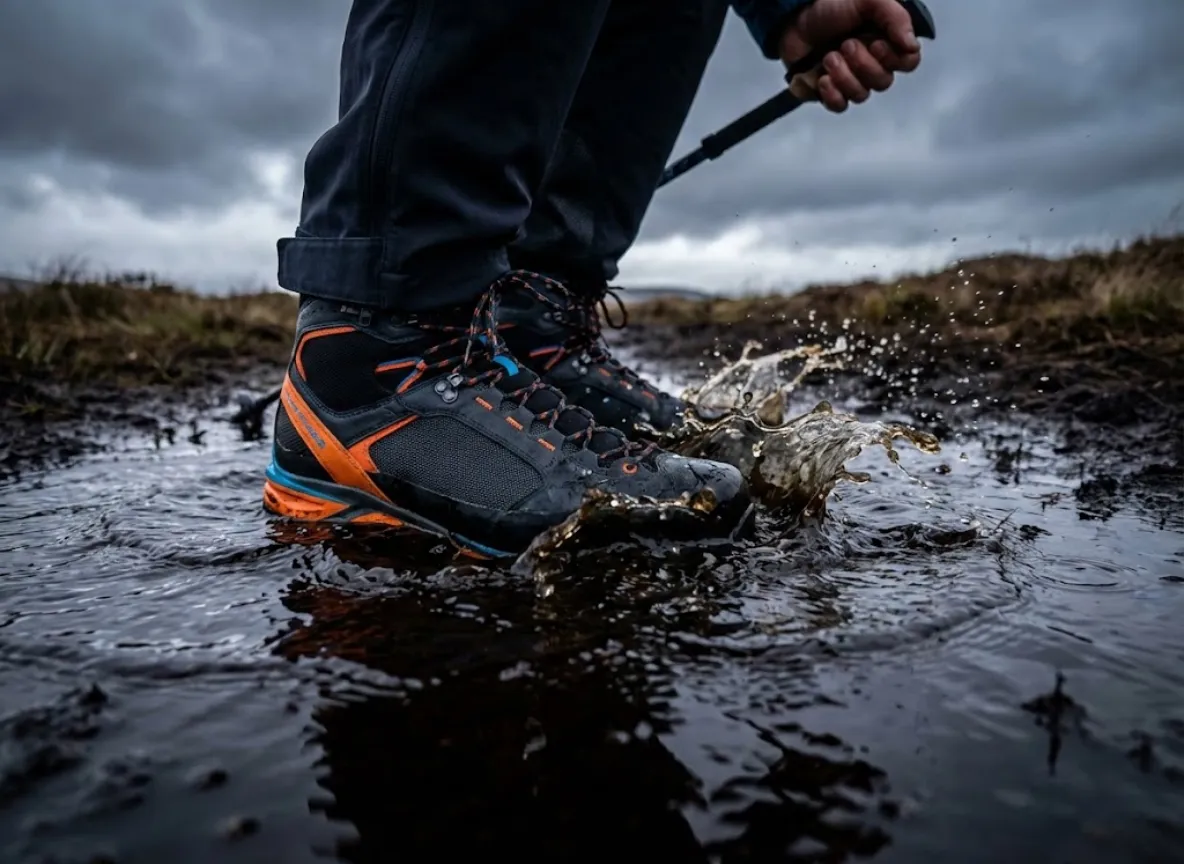
Cold water does not care about marketing claims or price tags. When you step into a Scottish bog or ford an Alaskan stream during a cold-weather hike, the freezing temperature penetrates standard boots in seconds, turning feet into blocks of ice. Waterproof hiking socks are not magic barriers that keep you indefinitely dry. They are specialized thermal survival tools designed to manage the environment next to your skin when your hiking boots inevitably fail.
Buying these socks requires a shift in mindset. You aren’t looking for perfect dryness; you are looking for thermal management to prevent trench foot and keep happy feet on the trail. This buying guide moves beyond the binary “do they leak?” question to help you understand membrane mechanics. We will help you select the right tool for specific conditions—whether you are slogging through deep snow or trail running on soggy spring paths—and how to maintain that tool to prevent premature failure.
How to Choose the Right Waterproof Hiking Sock

To make a smart choice, you need to strip away the jargon and look at the physics of the product. These aren’t just wool socks; they are engineering composites designed to prevent maceration and fungal infections.
The Three-Layer Laminate: Why Construction Dictates Performance
Most hikers mistakenly treat these like standard natural fibers, but they are built more like a waterproof layer for your foot. Understanding that these socks are engineering composites rather than simple knits allows you to better evaluate their performance against gore-tex socks or neoprene alternatives.
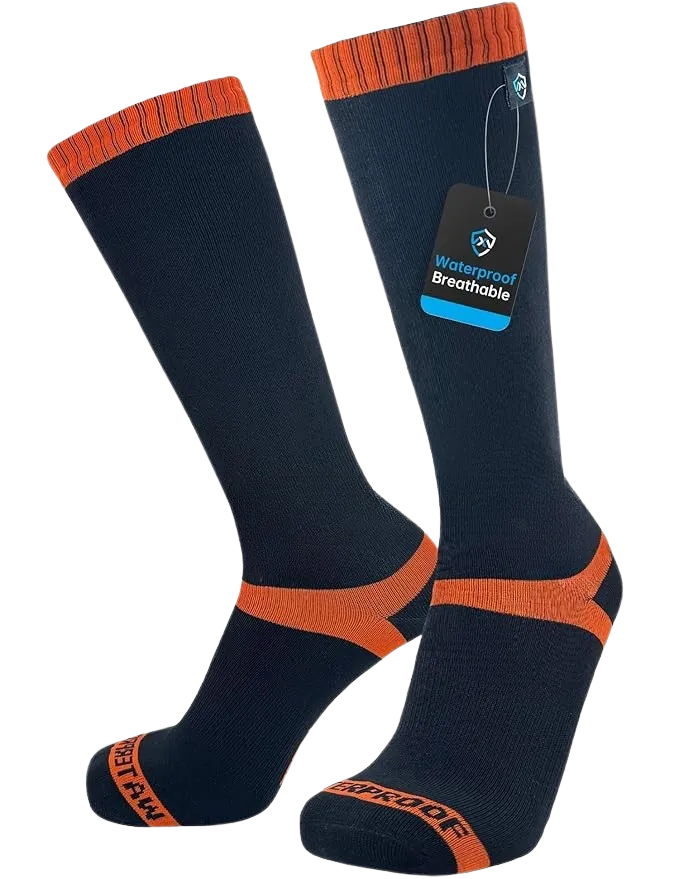
The architecture consists of a 3-layer system fused together. The outer layer acts as a mechanical shield, typically a nylon, elastane, or polypropylene blend designed to provide abrasion resistance against the friction of your hiking shoe. Deep inside lies the functional core: the membrane. High-end options use a hydrophilic membrane like Porelle membrane or Aquasealz, while budget options often rely on microporous Polyurethane.
Finally, there is the thermal interface—the inner layer touching your skin. This is where understanding the role of merino wool and synthetic fibers becomes critical. A Merino wool liner manages the moisture that inevitably accumulates inside, whereas Coolmax or bamboo fibers prioritize wicking speed. Without this inner climate control, the waterproof membrane is useless. Technical standards like those found in ASTM E96 govern how these materials transmit vapor, confirming that material choice dictates breathability.
Hydrostatic Head vs. Vapor Transmission (The Realist’s Trade-Off)
There is a delicate balance between keeping water out and letting sweat out, similar to the decisions made during the debates surrounding waterproof hiking shoes. This is the sweat trap paradox.
First, consider the Hydrostatic Head (HH). A 10,000mm rating sounds impressive, and it will keep you dry while standing in a creek. However, the immense pressure of a heel strike can eventually force water through weaker membranes, especially in low-cut hiking shoes.
The second factor is the Moisture Vapor Transmission rate (MVTR). This is where the plastic bag effect occurs. If your exertion level produces sweat faster than the membrane can diffuse it, you will get wet from the inside out. This isn’t a leak; it’s physics.
Pro-Tip: If your feet feel wet after a high-output hike, taste the liquid (yes, really). Salt means sweat; fresh means a leak.
Even if the membrane holds, you face the “Wet-Out” phenomenon. Once the outer nylon layer saturates, it sucks heat away from the foot through thermal conductivity. You will feel the clamminess factor—a “phantom leak”—even if your skin is technically dry. Standards like ISO 11092 measure this thermal rating and water-vapour resistance, proving that managing internal moisture is just as vital as blocking external water.
Our Selection Process: How We Built This Guide
We approach this category with skepticism, acknowledging that “waterproof” is often a misnomer during high-output activities like thru-hikes. Having tested gear from the Pacific Northwest to the Scottish Highlands, we know that failure is a matter of when, not if.
Our commercial investigation framework analyzes products based on Hydrostatic Integrity (leak resistance), Vapor Efflux (breathability), and Thermal Efficiency (warmth when wet). We categorized socks by user “Persona” rather than price, filtering for membrane technology (Porelle/Aquasealz vs. Generic) and user field data regarding failure modes like delamination.
We validated popular waterproof socks ranging from Sealskinz Runton and Sealskinz Bircham to niche options like Hemy X-Water and Fullsheild. While we examined strictly religious options like Abdeez (wudhu compliant socks used for religious ablution), our focus remained on rugged nature performance for the backpacker.
A Note on Affiliate Links: We may earn a commission if you purchase through our links, but our “Anti-Sell” warnings ensure you only buy what actually works for your specific needs.
The Best Waterproof Hiking Socks of 2026: Our Top Recommendations for Every Need
Our Top Picks for The Deep Winter Trekker (“The Slogger”)
For low-output, high-risk environments, thermal mass and reliability are more important than summer breathability. These are your wetsuits for the trail, superior to Dexshell Wading Pro for pure warmth.

Our Top Picks for The High-Output Agile User (“The Trail Runner”)
For those moving fast, “swamp foot” from sweat is a bigger enemy than the rain. These picks prioritize breathability and fit precision over insulation, beating out heavier thick socks.
Our Top Picks for The Budget Realist (“The Just-In-Case Hiker”)
If you need an insurance policy rather than daily gear, these options balance cost and performance. We considered alternatives like Drymile and Layeba, but the availability and Randy Sun mid-calf options took the lead.
Conclusion
Waterproof socks are specialized tools, not daily drivers. They shine in “wet and cold” conditions where typical wool socks fail to retain heat, but they suffer in “wet and mild” climates where your own sweat becomes the enemy.
Your choice should come down to waterproofness, membrane quality, and activity level. Hydrophilic membranes like Porelle offer superior longevity and durability expectation, while budget PU options like Meikan are fine for emergencies. Remember that maintenance is non-negotiable: never use fabric softener, and never tumble dry, or you will destroy the waterproof protection in a single wash cycle. Assess your typical hiking environment—if it involves freezing water and boggy terrain, invest in a premium Merino-lined pair today as a safety essential.
FAQ – Frequently Asked Questions
Can I machine wash waterproof socks?
Yes, but only on a cool cycle (max 40°C) with mild detergent—think of it as a technical gear wash. Crucially, never use fabric softener as it clogs the membrane, and always air dry only to prevent delamination. Hand wash is even better for longevity.
Do waterproof socks prevent blisters?
Not inherently. In fact, the thicker 3-layer construction can cause bunching if the fit isn’t perfect. However, keeping feet dry from external water reduces skin softening (maceration), which is a primary cause of friction blisters. For a complete guide, see our article on how to stop blisters in their tracks.
Why do my feet feel wet inside my waterproof socks?
This is likely sweat accumulation, not a leak. If your exertion level produces sweat faster than the membrane can breathe (Vapor Transmission Rate), moisture gets trapped inside. Wearing a thin liner sock underneath can help manage this sensation.
How long do waterproof socks last?
With regular hiking, expect 2-3 years from premium brands like Sealskinz or Dexshell before the membrane fatigues. Budget brands may fail sooner, often within a season of heavy use.
Are these socks Wudhu compliant?
While primarily for hiking, some waterproof socks like the Sealskinz Dunton or specifically branded options like Abdeez or Hemy meet the requirements for religious ablution (Wudhu) due to their durability and coverage, doubling as wudhu compliant socks.
Risk Disclaimer: Hiking, trekking, backpacking, and all related outdoor activities involve inherent risks which may result in serious injury, illness, or death. The information provided on The Hiking Tribe is for educational and informational purposes only. While we strive for accuracy, information on trails, gear, techniques, and safety is not a substitute for your own best judgment and thorough preparation. Trail conditions, weather, and other environmental factors change rapidly and may differ from what is described on this site. Always check with official sources like park services for the most current alerts and conditions. Never undertake a hike beyond your abilities and always be prepared for the unexpected. By using this website, you agree that you are solely responsible for your own safety. Any reliance you place on our content is strictly at your own risk, and you assume all liability for your actions and decisions in the outdoors. The Hiking Tribe and its authors will not be held liable for any injury, damage, or loss sustained in connection with the use of the information herein.
Affiliate Disclosure: We are a participant in the Amazon Services LLC Associates Program, an affiliate advertising program designed to provide a means for us to earn advertising fees by advertising and linking to Amazon.com. As an Amazon Associate, we earn from qualifying purchases. We also participate in other affiliate programs and may receive a commission on products purchased through our links, at no extra cost to you. Additional terms are found in the terms of service.