In this article
The rain stops beading. The bright fabric on your shoulders turns a dark, saturated color. Moments later, a cold, clammy sensation grips your skin, mimicking a leak that isn’t actually there. I have seen this panic set in on countless ridges during my decades of guiding. This is “wetting out,” and it is the inevitable failure point of every piece of high-performance Gore-Tex outerwear that has been neglected.
Washing your technical gear is not a cosmetic chore; it is a critical outdoor gear maintenance protocol required to restore the physics of breathability and thermal protection. By mastering the cycle of cleaning and thermal reactivation, you transform a degrading asset back into a fortress against the elements.
This step-by-step care guide covers the specific chemistry required to strip contaminants, the mechanical safety steps to protect your zippers, and why heat is the secret ingredient to making water start beading up again.
Why Is My Waterproof Jacket Soaking Up Water? (The Science of Failure)

A waterproof jacket soaks up water—or “wets out”—when the Durable Water Repellent (DWR) coating on the outer face fabric is compromised by dirt, body oils, or abrasion, reducing the surface tension required to repel liquid.
Most users assume their gear is broken when they get wet, but true membrane failure is statistically rare. A “leak” is a physical breach in the membrane or seam tape allowing outside water to enter. What you are likely experiencing is “wetting out.” This occurs when the nylon outer layer becomes saturated because the contact angle of water droplets drops below 90 degrees.
When the face fabric saturates, it creates a continuous wall of water that blocks your sweat vapor from escaping through the membrane pores. The moisture you feel inside is your own trapped perspiration condensing against the cold shell. This leads to “conductive heat loss,” or the flash-off effect, where water conducts heat away from your body approximately 23 times faster than air.
Regular maintenance restores the “Lotus Effect,” ensuring the microscopic DWR polymer chains stand upright. This is crucial regardless of the specific technology you are wearing, whether you are analyzing the scientific principles of contact angle dynamics or comparing Gore-Tex to eVent membranes to understand their different breathability thresholds.
How Do I Prepare My Jacket for the Washing Machine? (Mechanical Safety)
To prevent mechanical damage, close the main front zipper and pit zips completely, loosen all elastic drawcords, and secure Velcro cuffs, while leaving specific pockets half-open depending on their liner type.
The washing machine agitator in older units creates a violent environment for technical gear. The universal rule for the main front zipper and pit zips is to close them completely. Exposed metal or plastic teeth act like abrasive saws against the face fabric during the spin cycle. Loose hook-and-loop (Velcro) poses another threat, capable of shredding mesh linings and causing piling on technical fabrics within minutes.
Loosen all elastic drawcords at the hem and hood. If these are cinched tight, they create bunches of fabric that trap detergent and prevent an even wash.
The Pocket Conflict: High-end shells, such as Gore-Tex Pro pieces from Arc’teryx, often use the waterproof membrane itself as the pocket liner. If you zip these shut, they become water balloons during the spin cycle, which can blow out the welded seams. Empty all pockets of trash, then leave pockets with solid liners half-open to allow drainage. Conversely, fully close pockets with mesh liners—common in Patagonia or The North Face gear—to prevent them from snagging on other items. This attention to detail is part of the broader hiking gear recycling and lifecycle philosophy—maintaining gear prevents premature disposal.
Is it safe to use a top-loading washing machine with an agitator?
Front-loading washers are ideal for technical gear; if you must use a top-loader with a central agitator, you should place the jacket inside a mesh laundry bag to prevent the straps from wrapping around the post and tearing.
Top-loading washers with a central agitator pose a severe risk to expensive shells. The agitator can catch a sleeve or hood drawcord, stretching seams or tearing the laminate. If a top-loader is your only option, use a large mesh laundry bag (or a Guppy Friend bag to capture microplastics) to create a physical barrier.
Select the “Delicate” or “Hand Wash” cycle. This minimizes the spin speed, reducing the centrifugal force that can force water through the membrane at high pressure. Avoid overloading the machine. Your essential hiking gear must-haves require free movement and ample water volume to flush out contaminants effectively.
What is the Correct Washing Protocol for Gore-Tex? (The Chemistry)
The correct protocol involves using a specialized non-detergent soap (Tech Wash) or a gentle, additive-free liquid cleaner on a warm wash (105°F/40°C), followed by a double rinse rule to remove all surfactant residues.
Why can’t I use regular laundry detergent for technical gear?
Standard household detergents contain hydrophilic (water-loving) surfactants designed to wet fabrics for deep cleaning. Hydrophilic residues of these surfactants remain on your jacket after rinsing, attracting water to the surface and neutralizing the DWR.
Pro-Tip: Never use fabric softener. It coats fibers in a wax-like silicone that is nearly impossible to remove, destroying both breathability and water repellency permanently.
You should use a technical cleaner like Nikwax Tech Wash, Grangers Performance Wash, Revivex, or Nu Detergent. If those are unavailable, a clear, fragrance-free, eco-friendly liquid detergent (like clear “Free & Gentle”) is a passable backup. These align with the principles of mastering outdoor ethics by using biodegradable formulas that minimize chemical runoff. Avoid “Optical Brighteners,” enzymes, bleach, or stain removers, and never use powder detergent, as undissolved crystals can abrade the membrane.
What are the optimal machine settings and temperature?
Wash on a warm wash, specifically 105°F (40°C). Cold water is insufficient to solubilize waxy body oils and sebum, while hot water (>60°C) risks delaminating seam tapes. Use a “Permanent Press” or “Synthetic” cycle for a medium spin speed.
The most critical step is the double rinse rule. Modern High-Efficiency (HE) washers use very little water. Programming an extra rinse cycle (or running a second cycle without detergent) ensures every trace of surfactant is stripped from the fiber. This protocol applies to all Gore-Tex fabrics, including Gore-Tex pants, Gore-Tex gloves, and high-performance men’s waterproof rain jackets designed for extreme conditions.
How Do I Reactivate the Waterproofing After Washing? (Thermal Dynamics)
Heat is the catalyst that reactivates DWR performance; you must tumble dry the garment on medium heat for 20 minutes, or iron it on a low setting, to realign the microscopic polymer chains.
Why is the dryer critical for DWR performance?
DWR polymers function like microscopic hairs standing on end. Wear and washing cause them to crush and flatten, reducing their ability to support water droplets. Heat provides the “activation energy” required for these polymer chains to relax, reorient, and stand perpendicular to the fabric surface again.
According to industry research on durable water repellent chemistry, this thermal step is non-negotiable. Tumble dry the garment on medium heat (warm) for roughly 20 minutes after it is dry to the touch, adhering to the 20-minute reactivation rule. Be careful not to use “High” heat, which can melt seam tape glues. This is especially vital for modern PFC-free or ePE membrane jackets, which require consistent thermal maintenance.
How can I reactivate DWR without a dryer?
If you are on the road or lack a dryer, using a steam iron is an effective substitute. Set the iron to a low/warm setting (synthetic) and ensure the steam function is turned off.
Place a thin, clean towel or cloth between the iron and the jacket to prevent the hot metal plate from melting the nylon face fabric. Pass the iron firmly over the garment, focusing on the shoulders and cuffs, until the fabric feels warm. This manual method allows you to learn how to restore DWR effectively even in a hotel room or basecamp.
Pro-Tip: Pay special attention to the shoulders and the hood brim when ironing. These are high-compression areas that wet out first and benefit most from direct thermal pressure.
When and How Should I Re-Apply DWR Treatment? (Restoration)
You should re-apply DWR when water fails to bead up after washing and drying (the spray test); use wash-in treatments for 3-layer shells and spray-on treatments for insulated or lined jackets.
How do I know if cleaning and heat were not enough?
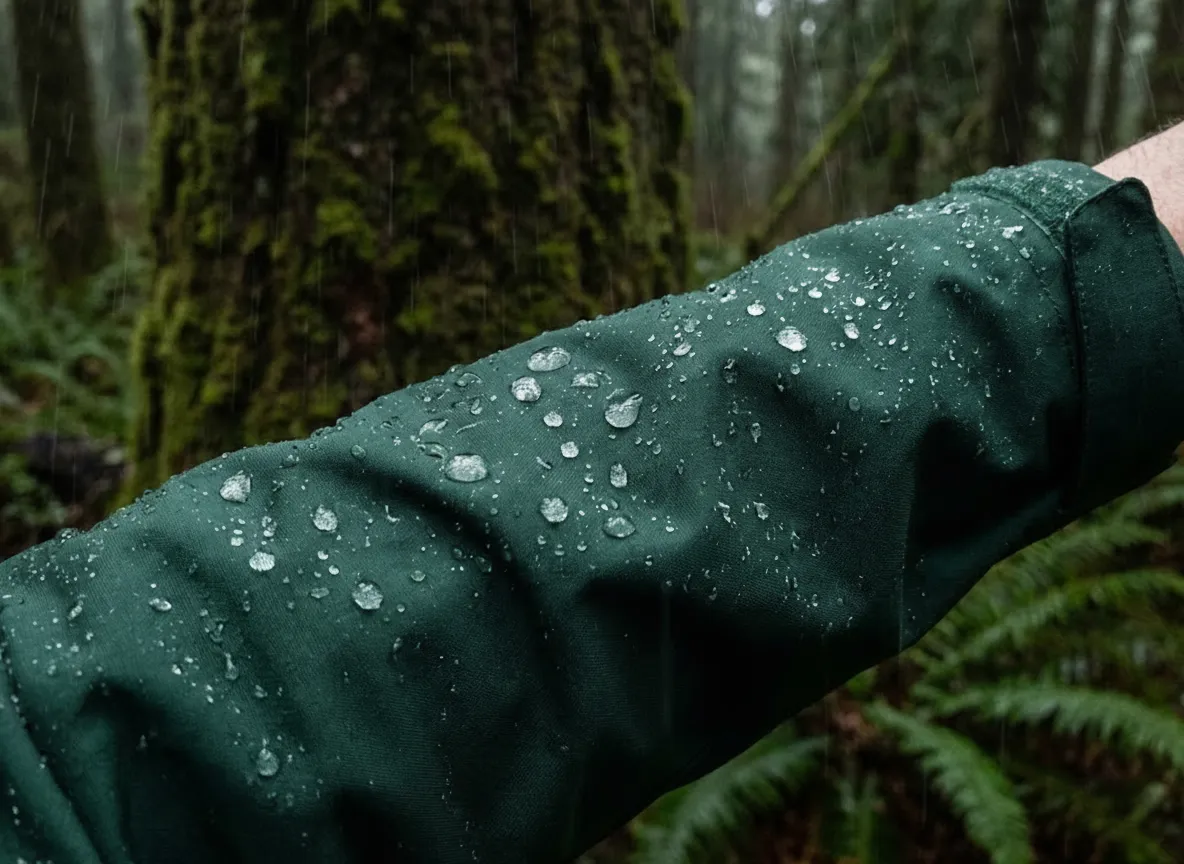
Perform the “Spray Test.” After washing and drying, hang the jacket and spray water on it. If the water beads and rolls off, the DWR is active. If the water soaks in and creates dark patches within seconds, the polymer has degraded beyond reactivation and requires waterproofing restoration.
In my experience, you should expect to perform re-waterproofing roughly once per season of heavy use. This is particularly relevant for those managing a comprehensive thru-hiking gear list, where equipment undergoes months of daily abuse.
Should I use wash-in or spray-on waterproofer?
Spray-On DWR (Best for 2-Layer/Insulated): Use spray-on products like Nikwax TX.Direct Spray-On or Grangers Performance Repel for jackets with wicking liners, mesh interiors, or insulation. You want to coat the exterior without inhibiting the inner liner’s ability to wick sweat. This is crucial for keeping rain jackets for women hikers comfortable and dry against the skin.
Wash-In DWR (Best for 3-Layer Shells): Use wash-in DWR products (like Nikwax TX.Direct Wash-In) only for unlined 3-layer hardshells where the inner layer is a thin backer that won’t be compromised by a hydrophobic coating. When deciding what is the best rain jacket for hiking, understanding the construction helps you choose the right maintenance product.
Apply spray-on treatments while the jacket is wet, then immediately cure it with heat in the clothes dryer.
Conclusion
A “wetting out” jacket is rarely broken; it is usually just dirty. By understanding that body oils mask the DWR in a clogged pores analogy, you can see why washing is not optional—it is a performance requirement. Always use specialized technical fabric cleaners or residue-free detergents, and never skip the dryer, as heat is the tool that realigns the molecular structure of the waterproofing.
Don’t let the fear of ruining your gear keep you cold and wet. Check your closet for a “failed” jacket today, run this Gore-Tex care protocol, and ensure investment protection for your next adventure.
FAQ – Frequently Asked Questions about Gore-Tex Maintenance
How often should I wash my Gore-Tex jacket?
Wash your jacket after every 10-12 days of heavy activity, or immediately if it shows visible dirt, smells of smoke or sweat, or begins to wet out. Regular washing extends gear longevity and the life of the membrane by preventing oil contamination.
Can I use vinegar to remove smells from my technical gear?
No. Vinegar is acidic and can damage the adhesives used in seam tape or the DWR coating. Use a specialized enzymatic odor eliminator designed for technical gear or perform an extra rinse cycle.
Is it safe to wash a Gore-Tex Down jacket in the machine?
Yes, but you must use a specific Down Wash detergent that preserves the natural oils of the feathers. Tumble dry low with clean tennis balls to break up clumps and restore loft, which may take several hours.
What if I accidentally used fabric softener on my jacket?
It is not necessarily ruined, but the DWR is compromised. Wash the jacket 2-3 times with a strong Tech Wash to strip the silicone wax coating from the fibers, then re-apply a new DWR treatment and heat activate it.
Risk Disclaimer: Hiking, trekking, backpacking, and all related outdoor activities involve inherent risks which may result in serious injury, illness, or death. The information provided on The Hiking Tribe is for educational and informational purposes only. While we strive for accuracy, information on trails, gear, techniques, and safety is not a substitute for your own best judgment and thorough preparation. Trail conditions, weather, and other environmental factors change rapidly and may differ from what is described on this site. Always check with official sources like park services for the most current alerts and conditions. Never undertake a hike beyond your abilities and always be prepared for the unexpected. By using this website, you agree that you are solely responsible for your own safety. Any reliance you place on our content is strictly at your own risk, and you assume all liability for your actions and decisions in the outdoors. The Hiking Tribe and its authors will not be held liable for any injury, damage, or loss sustained in connection with the use of the information herein.
Affiliate Disclosure: We are a participant in the Amazon Services LLC Associates Program, an affiliate advertising program designed to provide a means for us to earn advertising fees by advertising and linking to Amazon.com. As an Amazon Associate, we earn from qualifying purchases. We also participate in other affiliate programs and may receive a commission on products purchased through our links, at no extra cost to you. Additional terms are found in the terms of service.