In this article
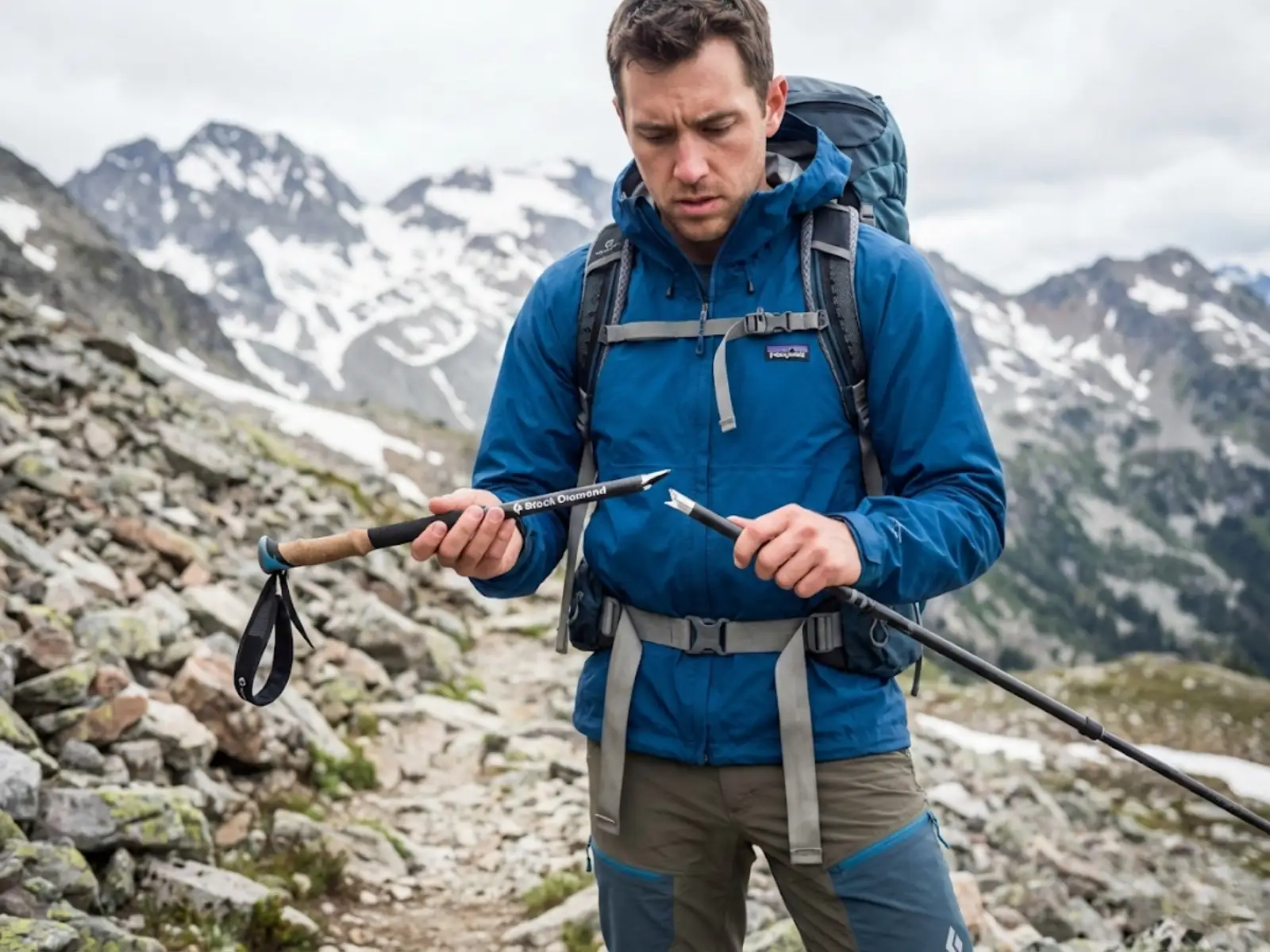
The snap came without warning. One moment I was planting my Black Diamond Distance FLZ between two granite slabs on a steep descent; the next, the carbon shaft had sheared clean through, and I was tumbling sideways into the talus. The pole tip remained wedged in the rock trap, mocking me. That’s when I understood what hundreds of trail miles had only hinted at: these tools can fail—and understanding how they fail is the difference between a gear inconvenience and a backcountry emergency.
After fifteen years of guiding in technical terrain, I’ve seen dozens of pole failures. Carbon snapping without warning. Aluminum bending into useless shapes. Locking mechanisms seizing mid-descent. What follows is everything I’ve learned about trekking pole failure modes—the materials science, the physics, and the field-tested maintenance protocols that keep your poles working when you need them most.
⚡ Quick Answer: Telescoping poles fail primarily at locking mechanisms due to corrosion and grit buildup, but their overlapping shaft construction provides superior strength and rigidity under load. Folding Z-poles fail at joint connections and internal cords—especially in cold conditions—but offer ultra-compact packability for travel. Your best choice depends on whether you prioritize adjustability and durability (telescoping) or packability and speed (folding).
The Materials Science Behind Pole Durability

Every pole’s destiny is written in its materials. The shaft composition determines not just how light your poles feel on a 15-mile day, but exactly how they’ll fail when pushed past their limits.
Aluminum Alloys: Why 7075-T6 Bends Before It Breaks
Most quality aluminum trekking poles are made from 7075 aluminum—the same alloy used in aircraft construction. This aerospace-grade material achieves around 572 MPa tensile strength, putting it on par with many steels while weighing a fraction as much.
The magic of aluminum isn’t just its strength; it’s how it fails. When you overload an aluminum shaft, it bends. That ductile failure mode gives you warning and buys you time. A bent pole still supports partial loads. I’ve watched hikers finish 10-mile descents on creased aluminum poles that would have been impossible with snapped carbon.
Pro tip: If you bend an aluminum pole mid-trip, resist the urge to bend it back straight. This creates microscopic cracks in the grain structure, reducing the pole’s lifespan. A 10-degree bend is safer than a “repaired” pole that might snap next week.
Where aluminum fails is weight. A pair of telescoping poles in 7075-T6 typically weighs 20-30% more than comparable carbon models. For thru-hikers counting every gram, that matters. For weekend warriors prioritizing reliability on rough terrain, it’s a worthwhile trade.
Carbon Fiber Composites: The Stiffness-Brittleness Tradeoff
Carbon fiber poles offer an intoxicating combination of light weight and high stiffness. The 3K weave patterns used in premium poles achieve exceptional strength-to-weight ratios—several times better than aluminum.
But carbon fiber is anisotropic: ridiculously strong along the fiber direction, vulnerable to forces that hit it sideways. When a carbon pole tip wedges between rocks and your momentum keeps you moving, you’re applying lateral shear across those fibers. The result is sudden, jagged failure with zero warning.
Cold weather makes things worse. The resin binding carbon fibers becomes more brittle as temperatures drop. What works fine in September can shatter in November.
The invisible killer is micro-delamination—internal separation between fiber layers caused by accumulated impacts. You can’t see it. You can’t feel it. But it dramatically reduces impact resistance, and one day your pole simply snaps during a routine plant.
The Physics of Structural Failure
Understanding why poles break helps you prevent it. Two forces dominate: the downward compression when you lean on your grips, and the sideways shear when tips get stuck.
Axial Compression and the Extension Problem
When you plant a pole and lean on it, you’re applying axial compression straight down the shaft. This is what poles are designed to handle—up to a point.
Here’s what matters: a pole’s resistance to buckling drops dramatically with length. The same pole extended to 140cm is significantly weaker than when set at 110cm. Every centimeter of extension reduces your safety margin.
Shaft diameter compounds this effect exponentially. According to TÜV SÜD certification standards, quality telescopic poles must withstand a minimum holding force of 1400 Newtons (about 140kg)—but ultralight models with 14mm shafts flex dangerously under heavy loads, while poles with 18mm upper shafts like the Black Diamond Alpine Carbon Cork provide significantly more rigidity.
Any pre-existing damage—a minor dent in aluminum, a surface chip in carbon—becomes a trigger point for failure. That small ding you ignored last season? It’s where your pole will buckle next time you stumble with a heavy pack.
Pro tip: Shorten your poles 5-10cm when carrying a 40-pound pack downhill. You’re trading leverage for safety margin. The slight extra effort is cheap insurance.
Lateral Shearing: The Rock Trap Effect
The most common catastrophic failure happens when pole tips wedge into gaps between rocks—what experienced hikers call a “rock trap.” As your momentum continues forward, the rock contact point becomes a fulcrum, multiplying force on the shaft.
Carbon fiber shears across its fibers for a clean, sudden break. Aluminum creases and loses its circular cross-section, collapsing like a bent straw. Either way, you’re suddenly down a pole on technical terrain.
Talus fields and scree slopes are the worst offenders. The angular gaps between rocks are perfectly sized to catch pole tips. Running or fast hiking makes it worse—your momentum has more time to build before you can react.
Vibration Fatigue: The Invisible Degradation
Every strike against hard rock sends a shockwave through your pole. Carbon fiber’s excellent vibration damping absorbs much of this energy, but the cumulative effect still weakens bonds between fiber layers.
This explains the “random” failures that confuse hikers. Your pole didn’t randomly snap during a normal plant—it reached the end of its fatigue life after thousands of micro-impacts. Thru-hikers report unexplained mid-trip failures after 400-500 miles on the same pair of carbon poles.
Telescoping vs. Folding: Where Each Design Fails
Beyond materials, the mechanical architecture of your poles creates design-specific failure modes. Knowing these helps you choose the right pole for your terrain—and spot problems before they become emergencies.
Telescoping Poles: The Overlap Advantage
Retractable trekking poles feature nested sections that slide into each other. When properly extended, several inches of the inner tube remain inside the outer tube, creating inherent rigidity at the joints. This overlapping shaft construction distributes stress across a larger surface area, making telescoping designs stronger than their collapsed length might suggest.
The vulnerability is in the locking mechanisms. Moisture works its way into adjustment barrels, causing internal corrosion or ice buildup that prevents locks from engaging. A lock that slips under load causes a sudden collapse—and if you’re mid-descent when it happens, the secondary fall can apply enough force to snap the shaft entirely.
Regular trekking pole maintenance prevents most lock failures. Disassemble sections after wet hikes. Wipe down internal surfaces. A 60-second routine after each trip compounds into years of reliable performance.
Folding Z-Poles: Cord Tension as the Achilles’ Heel
Lightweight Z-poles like the Leki Black Series FX Carbon or Distance FLZ use a brilliant tent-pole mechanism: sections connected by internal Kevlar or elastic cord that snaps together for fast deployment. The trade-off is minimal overlap at joints—ferrules and cord tension alone maintain alignment under load.
The primary failure mode is joint separation. This happens most often in deep mud or wet snow, where suction on the basket exceeds cord tension. When you yank the pole up, sections separate, allowing grit or debris into the joint. The contaminated connection can’t reseat properly, leading to misalignment failure on the next load cycle.
Pro tip: In muddy conditions, never yank Z-poles straight up. Twist slightly while lifting to break suction, then pull. This simple technique prevents 90% of joint separation issues.
Cold weather presents another risk. Internal cords can become brittle in extreme conditions, snapping without warning and rendering the entire pole unusable. Unlike a bent aluminum shaft, a broken Z-pole cord can’t be field-repaired.
For understanding the carbon vs aluminum trekking pole decision more broadly, material choice matters more in folding designs where joints already represent weak points.
Lock Mechanism Reliability Engineering
The locking system is the most frequent failure point on any adjustable pole. Two designs dominate the market, each with distinct failure modes.
Twist Locks: The Grit and Slip Problem
Twist locks work by rotating the shaft to expand a plastic component—the collet or expander—against the inner wall. They’re simple, lightweight, and prone to failure in three ways:
First, dirt inside the mechanism reduces friction, causing gradual slippage that becomes dangerous under load. Second, aluminum oxidation creates a slick powder that prevents the expander from gripping. Third, over-tightening strips the internal threads, permanently reducing holding power.
Field maintenance is essential. Disassemble twist locks every few trips. Clean internal surfaces with a damp cloth. Apply a tiny amount of silicone lubricant to threads. The alternative is the pole collapsing mid-descent when you’re committed to a steep slope.
Lever Locks: The Fatigue Factor
Lever locks—marketed as FlickLock or SpeedLock depending on brand—use an external cam to clamp the outer shaft around the inner section. They’re widely considered more reliable than twist systems.
Failure here is fatigue-based rather than sudden. The clamping bolt gradually loosens over time in a way you might not notice until the lock slips. The plastic lever housing can crack from UV exposure or hard impacts.
The fix is simple: carry a small screwdriver or hex key and check lever tension quarterly. If the lever closes with less resistance than when new, tighten the adjustment bolt. This 60-second check prevents the slow degradation that leads to field failures.
For beginners still learning pole selection, the trekking pole fundamentals guide covers how lock mechanisms factor into overall pole choice.
Real-World Breakage Patterns: What the Data Shows
Theory only gets you so far. Here’s what actual pole failures look like, drawn from hundreds of user reports and my own experience guiding on technical terrain.
The “Log and Rock” Trap Forensics
The most common carbon failure involves jamming the pole while moving fast—running, stumbling, or falling toward a rock or log. The pole wedges, momentum continues, and shear force exceeds design limits.
User reports consistently note that carbon poles “randomly snap” in these moments, while aluminum poles “bend into a U-shape” but often prevent falls. The aluminum pole is destroyed, but it fails gracefully—giving you that split second to recover balance rather than dropping you onto the talus.
Most breaks occur at existing micro-damage sites. That small surface scratch from last month brushing against granite? It becomes the breaking point under stress.
Shelter Support Failures
Ultralight hikers using trekking pole tents face a different risk: wind-induced buckling from lateral tent loads. Wind doesn’t push straight down on your pole—it transfers through fabric as a bending force the shaft wasn’t designed to resist.
When a carbon pole snaps under tent load, the jagged edges can slice through tent fabric. An aluminum pole bends and collapses the shelter, but usually without puncturing your expensive shelter. If you depend on poles for camping, consider models with aluminum lower sections.
The Weight Effect on Fatigue
Research from the U.S. Army found that weight on the extremities costs far more energy than weight on the back—roughly a 6:1 ratio. Heavy poles create cumulative fatigue that leads to sloppy placement toward the end of long days.
Tired hikers miss-plant poles, catching tips in rock traps and log tangles that fresh legs would easily avoid. The poles didn’t fail—the system failed, with human error as the trigger.
Maintenance Protocols That Extend Structural Life
Prevention beats repair every time. These protocols come from a combination of manufacturer recommendations and hard-won field experience.
Cleaning and Corrosion Prevention
Water infiltration is the silent killer of telescoping poles. After any wet hike, separate all sections and let them air dry completely before storage. Moisture trapped inside creates the corrosion that makes twist locks seize and lever locks slip.
For stubborn oxidation on aluminum threads, fine steel wool removes the buildup without damaging the surface. Use dish soap and warm water for general cleaning—never vinegar or bleach, which accelerate corrosion.
The Appalachian Mountain Club recommends using rubber tips on hard surfaces to reduce impact damage—a simple way to extend both tip life and shaft longevity.
For long-term care, understanding proper gear storage to prevent delamination applies to poles as much as tents and sleeping bags.
Field Repair Kit Essentials
When poles break mid-trip, a few simple items can get you home:
Two tent stakes and duct tape create an effective splint around a shattered shaft. The splint won’t restore full strength, but it provides enough support to limp back to the trailhead.
For FlickLock mechanisms, an M5 nut fits most replacement slots. A small hex key lets you adjust lever tension when the clamping bolt loosens.
If a carbide tip detaches from a carbon shaft, wrap the bond point with Leukotape or duct tape for temporary security. Many modern tips—like the CNOC Easy Tip system—are self-threading and can be replaced with any standard tip from an outfitter.
Conclusion
The wrong pole doesn’t just inconvenience you—it fails at the worst possible moment. What I learned the hard way, you can learn now:
Material choice dictates failure mode. Aluminum bends and gives you warning; carbon snaps without notice. Choose based on terrain risk, not marketing brochures.
Pole length is a strength variable. Every centimeter of extension reduces buckling resistance. Adjust shorter for heavy loads and steep descents—the physics are unforgiving.
Maintenance is durability. A clean, dry, lubricated lock mechanism outlasts a neglected one by years. Sixty seconds of care after each trip compounds into thousands of reliable miles.
Next time you’re 15 miles from the trailhead on rough terrain, trust will matter more than grams. Pick the pole that fails in a way you can survive—and maintain it like your safety depends on it. Because it does.
FAQ
Are folding trekking poles durable enough for thru-hiking?
Yes, with caveats. Modern Z-poles from Black Diamond and Leki handle thousands of miles, but their fixed pole length and cord vulnerability to cold make them best for three-season use on established trails rather than winter mountaineering.
How long do trekking poles actually last?
Quality poles last 2,000-4,000 miles with proper care. Carbide tips wear fastest (500-700 miles), followed by locking mechanisms. Carbon shafts can outlast aluminum if protected from impacts; aluminum shafts survive abuse but accumulate fatigue faster.
Can you repair a broken carbon fiber pole in the field?
Emergency splinting with tent stakes and tape can get you to the trailhead, but the jagged break edges are sharp and the repair is temporary. Unlike aluminum, carbon can’t be bent back—once shattered, the pole is done.
What causes twist locks to slip?
Three factors: grit inside the mechanism reducing friction, aluminum oxidation creating slick powder, or stripped expander threads from over-tightening. Regular disassembly and cleaning prevents the first two; finger-tight-plus-quarter-turn prevents the third.
Should I choose telescoping or folding poles for backpacking?
Telescoping for versatility and durability on varied technical terrain. Folding for packability when poles need to fit inside your pack—travel, climbing approaches, or ultrarunning. If you use trekking pole tents, consider hybrid models with aluminum lower sections.
Risk Disclaimer: Hiking, trekking, backpacking, and all related outdoor activities involve inherent risks which may result in serious injury, illness, or death. The information provided on The Hiking Tribe is for educational and informational purposes only. While we strive for accuracy, information on trails, gear, techniques, and safety is not a substitute for your own best judgment and thorough preparation. Trail conditions, weather, and other environmental factors change rapidly and may differ from what is described on this site. Always check with official sources like park services for the most current alerts and conditions. Never undertake a hike beyond your abilities and always be prepared for the unexpected. By using this website, you agree that you are solely responsible for your own safety. Any reliance you place on our content is strictly at your own risk, and you assume all liability for your actions and decisions in the outdoors. The Hiking Tribe and its authors will not be held liable for any injury, damage, or loss sustained in connection with the use of the information herein.
Affiliate Disclosure: We are a participant in the Amazon Services LLC Associates Program, an affiliate advertising program designed to provide a means for us to earn advertising fees by advertising and linking to Amazon.com. As an Amazon Associate, we earn from qualifying purchases. We also participate in other affiliate programs and may receive a commission on products purchased through our links, at no extra cost to you. Additional terms are found in the terms of service.