In this article
The Grand Canyon’s Bright Angel Trail shimmers in 119°F heat. A 14-year-old hiker stops, confused about which direction leads back. His stepfather watches him stumble—unable to walk a straight line, speaking in fragments. Within hours, both are dead.
The difference between recognizing heat exhaustion and heat stroke isn’t academic. It’s the line between a difficult hike and a body bag. After two decades guiding hikers through desert canyons and alpine passes, I’ve watched too many people misread the signs until it’s almost too late. Here’s exactly what you need to know to diagnose heat illness in the field, understand the physics that turn your body into a heat engine, and execute the cooling protocols that prevent organ failure when minutes matter.
⚡ Quick Answer: Heat exhaustion and heat stroke exist on a spectrum of heat-related illness, but one critical factor separates them: mental status. If a hiker is alert and oriented despite feeling awful, it’s heat exhaustion—treat with rest, shade, and electrolyte fluids. If they’re confused, stumbling, or can’t answer basic questions, it’s heat stroke—a medical emergency requiring immediate aggressive cooling and evacuation. The “mental status test” (asking person, place, time, and event) is your most reliable field diagnostic tool.
The Physics of Wilderness Thermoregulation
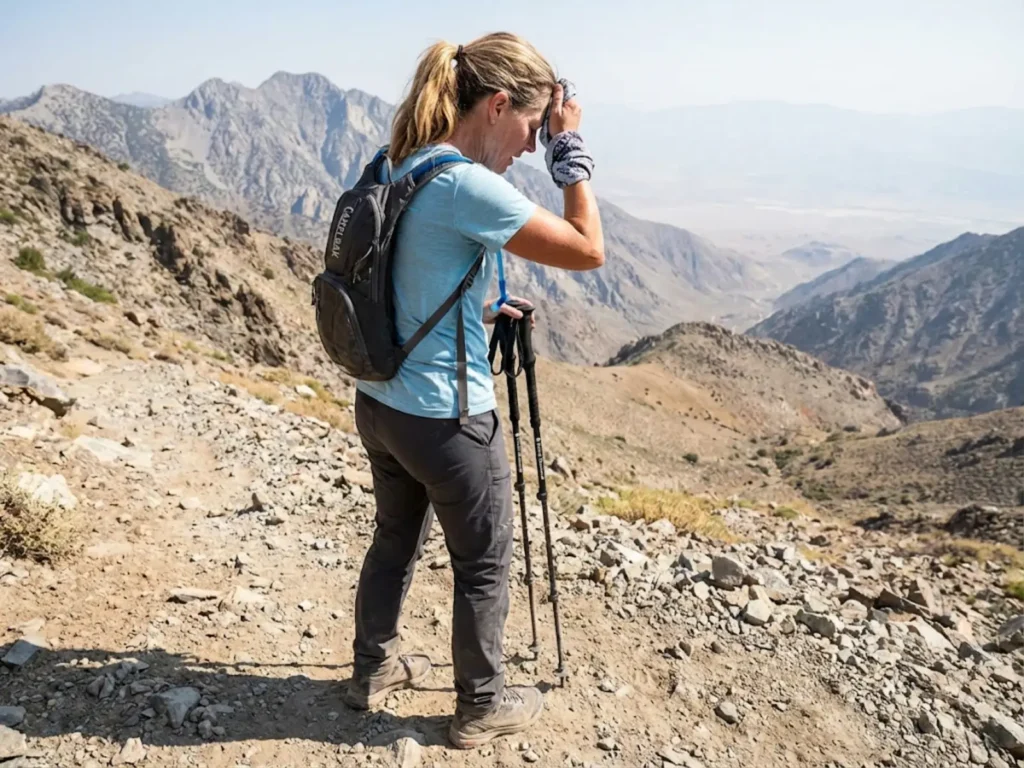
Your body operates within a narrow core body temperature range of 98.6°F to 99.5°F. Step outside that window during a summer hike, and consequences escalate fast. During strenuous hiking, your metabolic heat production skyrockets—over 1,000 watts of thermal energy that has to go somewhere. This is why “just slow down” isn’t always enough when you’re already deep into uncompensable heat stress.
Your body has four mechanisms to shed heat: radiation, convection, conduction, and evaporation. Here’s the problem: in hot desert climates or during extreme heat events, three of those four can reverse and actually add heat to your body.
When air temperature exceeds your skin temperature (around 95°F), convection flips. Hot wind stops cooling you and starts heating you instead, turning the environment into a convection oven. At that point, evaporative cooling becomes your last line of defense.
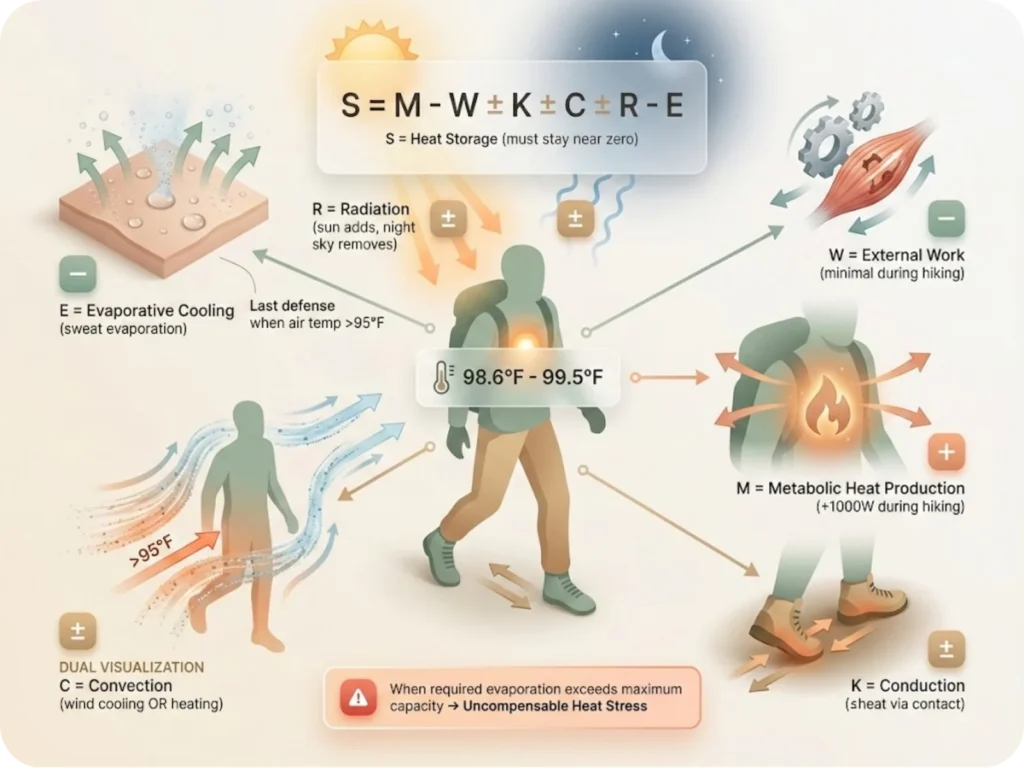
But humidity sabotages evaporation. Sweat that drips off represents wasted water—fluid loss with zero cooling benefit. This creates the deadly combination of rapid dehydration and uncontrolled hyperthermia. When required evaporation exceeds your body’s maximum capacity, you’ve crossed into uncompensable heat stress. No amount of electrolytes for hiking will save you—you must stop hiking or actively cool.
Pro tip: When the breeze feels like a hair dryer, your sweat strategy just failed. Find shade immediately and wet your skin to restart evaporative cooling.
Cardiovascular Drift and the Perfusion Competition
Thermoregulation failure is a cardiovascular crisis. To dissipate heat, your hypothalamus triggers cutaneous vasodilation, shunting blood to your skin surface. Simultaneously, working muscles demand oxygenated blood. This creates competition for limited cardiac output.
As dehydration reduces plasma volume from excessive sweating, your heart rate climbs even at constant pace—cardiovascular drift. If your HR climbs 10-15 beats per minute over 30 minutes without increasing effort, you’re entering the danger zone.
Eventually, the system cannot meet both demands. If it prioritizes muscles, core body temperature spikes toward heat stroke. If it prioritizes skin or fails to maintain venous return, the hiker collapses from heat exhaustion. According to Maricopa County in Phoenix, 645 heat-associated deaths occurred in 2023, with 75% outdoors and 19% specifically on hiking trails.
Heat Exhaustion vs Heat Stroke: The Critical Distinction
Heat illness is a spectrum disorder. The progression flows from heat cramps to heat exhaustion to heat stroke. One physiological threshold separates a manageable crisis from catastrophic emergency: the integrity of your central nervous system.
Heat exhaustion represents volume depletion. Core temp typically ranges from 98.6°F to 104°F—elevated but below critical threshold. The defining feature: mental status is intact. The hiker is alert and oriented. They may be tired, weak, or anxious, but not confused.
Symptoms include profuse sweating, pale cool clammy skin, tachycardia with weak pulse, nausea, vomiting, headache, and extreme fatigue. Treatment focuses on refilling volume through hydration and reducing workload through rest in shade.
Heat stroke is thermoregulatory failure—a medical emergency defined by two strict criteria: body temperature exceeding 104°F and CNS dysfunction. Altered mental status is the red flag: confusion, ataxia (stumbling), combativeness, delirium, seizures, or coma.
Here’s the mechanism that makes heat stroke fatal: when core temp breaches 104°F, intestinal tight junctions break down, allowing gut endotoxins into systemic circulation. This triggers massive inflammatory response, causing widespread tissue damage and multi-organ dysfunction. The kidneys, liver, and brain fail first.
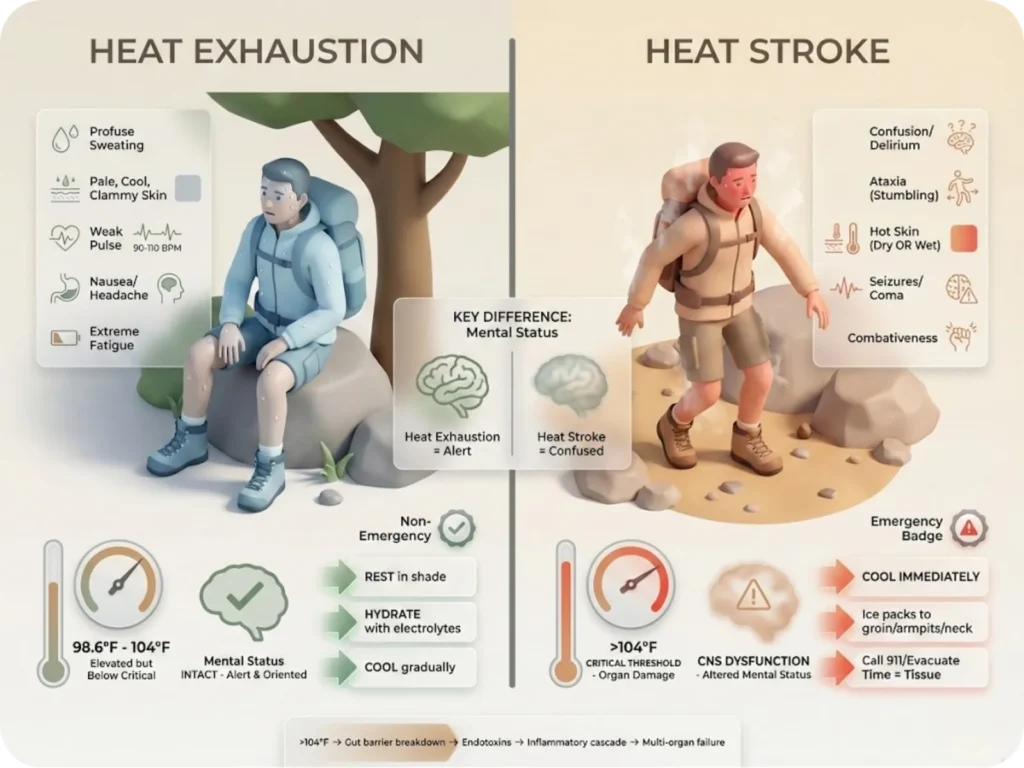
“Time is tissue” in heat stroke. Severity of organ damage is directly proportional to time spent above critical thermal threshold. Immediate cooling stops this cascade. Delayed cooling allows inflammatory fire to spread, leading to rhabdomyolysis, kidney failure, and death.
Pro tip: Ataxia is often the first sign in a hiker. If they can’t walk a straight line or touch their nose, treat as heat stroke—don’t wait for them to collapse.
A common mistake: ruling out heat stroke because the hiker is still sweating. Exertional heat stroke can present with hot dry skin OR hot, moist skin. Don’t let ongoing sweating fool you.
Minor Heat Illnesses: The Early Warning Systems
Heat edema presents as swollen hands and feet during first days of heat exposure. It’s benign—allow acclimatization to regulate fluid balance naturally.
Exercise-associated muscle cramps involve involuntary contractions of large muscle groups. Treatment: rest, passive stretching, and sodium-containing fluids—not plain water.
Heat syncope (fainting) occurs due to peripheral vasodilation and venous pooling. Key distinction from heat stroke: the patient rapidly regains consciousness once horizontal and mental status returns to baseline.
Pediatric Considerations
Children absorb environmental heat faster due to higher body surface area-to-mass ratio. They also have lower sweating rates and less developed cardiovascular mechanisms. Heat stroke in children often presents with seizures or “odd behaviors”—refusing to walk, speaking nonsensically. Threshold for evacuation should be lower because they deteriorate faster.
Field Diagnosis: The Mental Status Litmus Test
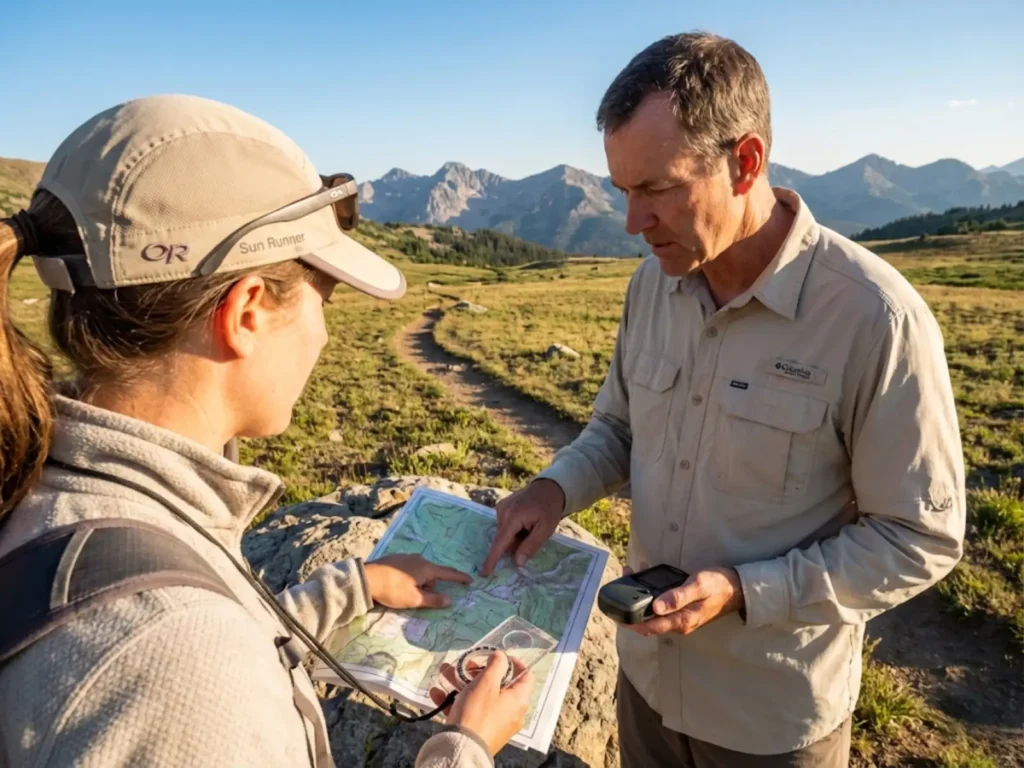
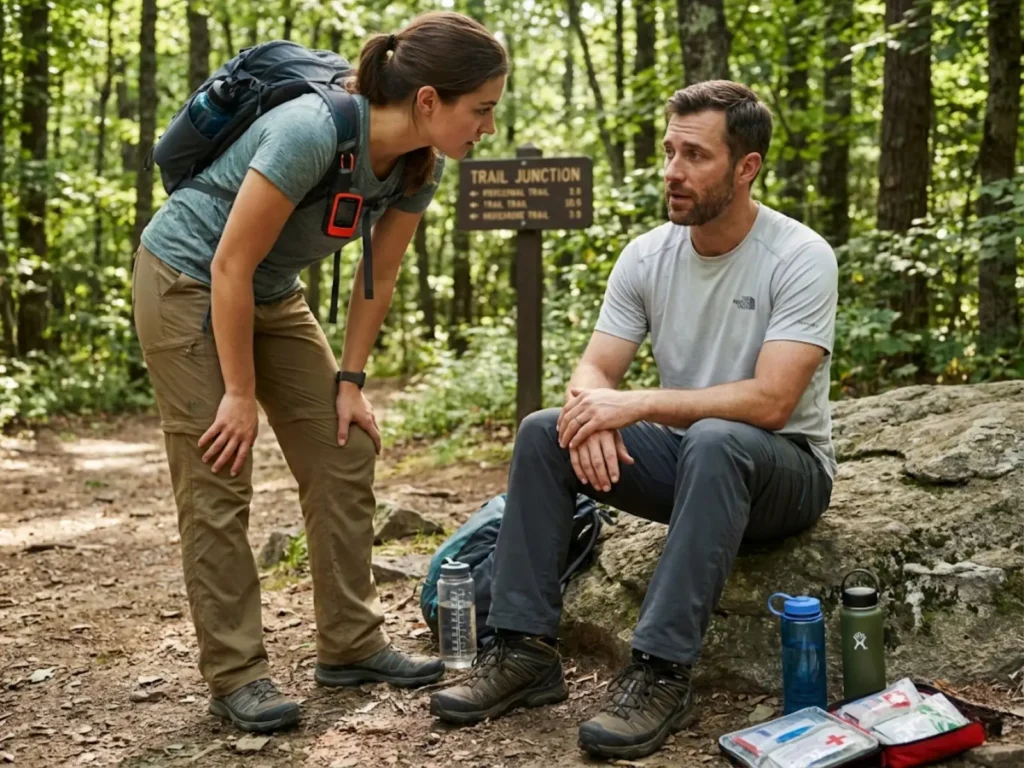
The most reliable field diagnostic tool for differentiating heat exhaustion from heat stroke is the mental status assessment—what wilderness first aid protocols call A+O x4 (Alert and Oriented to four spheres).
The protocol: engage the hiker in conversation. Ask: (1) “What is your name?” (2) “Where are we? What trail?” (3) “What day is it?” (4) “What are we doing?” Then add a motor function test: ask them to walk a straight line or touch their nose. Look for ataxia—loss of coordination.
The decision rule is binary: any failure in orientation or motor control in a hyperthermic patient equals heat stroke. This is a “Red Flag” requiring immediate cooling and evacuation.
If the hiker is alert and oriented despite feeling awful, you’re dealing with heat exhaustion—a “Code Yellow” situation. Move them to shade, remove pack, initiate active cooling (wet skin and fan), provide electrolyte fluids, and rest supine with legs elevated if dizzy. Reassess every 15 minutes.
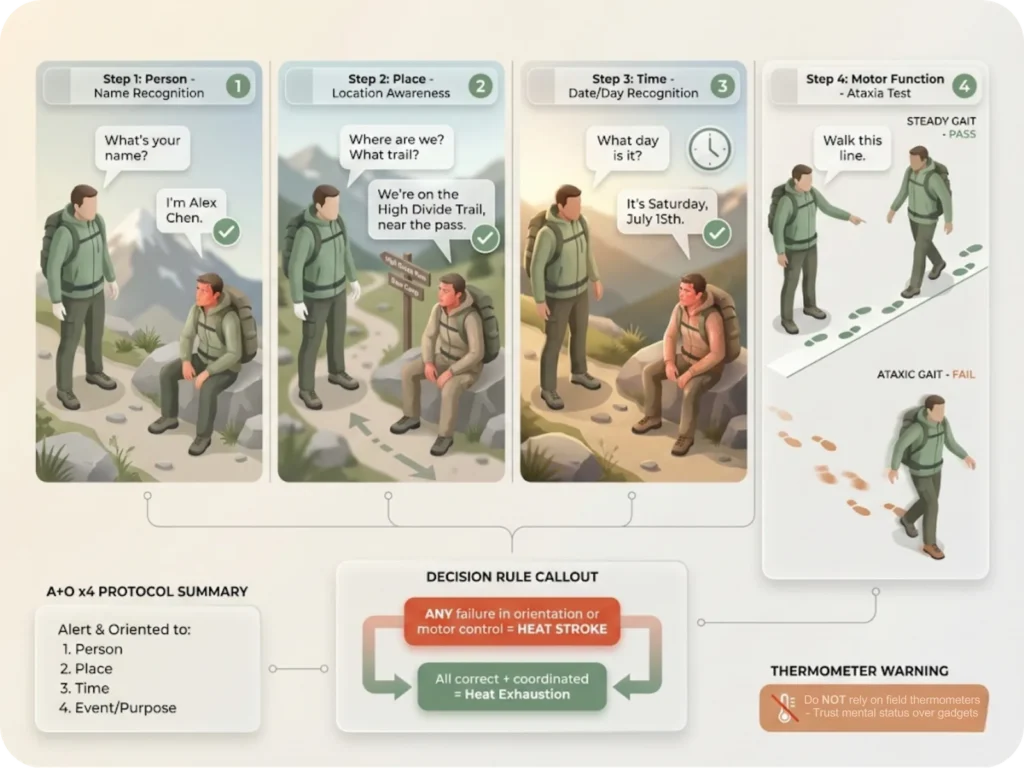
Here’s a critical trap: relying on field thermometers. Oral, axillary, tympanic, and forehead thermometers are notoriously inaccurate in outdoor settings. They can underestimate core body temperature by several degrees. The guideline from NOLS wilderness medicine protocols: if you cannot obtain rectal temperature, do not use a thermometer to rule out heat stroke. Treat empirically based on clinical triad: heat exposure + exertion + CNS dysfunction.
Pro tip: I’ve seen hikers with “normal” forehead temps who were actively seizing from heat stroke. Trust the mental status, not the gadget.
The Differential Diagnosis Matrix
One dangerous mimic of heat illness is exercise-associated hyponatremia (EAH), which also presents with altered mental status, nausea, and confusion. Key differentiator: fluid history. Hyponatremia victims have excessive intake of clear water without electrolytes. Their urine is copious and clear, whereas heat exhaustion victims have dark urine or scant output.
Another red flag: dark or bloody urine suggests rhabdomyolysis—muscle breakdown releasing myoglobin. This can cause kidney failure and requires evacuation.
The “Stop and Fix” protocol: (1) Hiker stops, complains of dizziness or nausea. (2) Check mental status. If altered → Code Red: cool immediately, call SAR. If alert → Code Yellow: shade, hydrate, active cooling. (3) Reassess every 15 minutes. Improvement within 30-60 minutes → attempt walk out without pack. No improvement or worsening → evacuate.
Treatment Protocols: The “Cool First” Doctrine
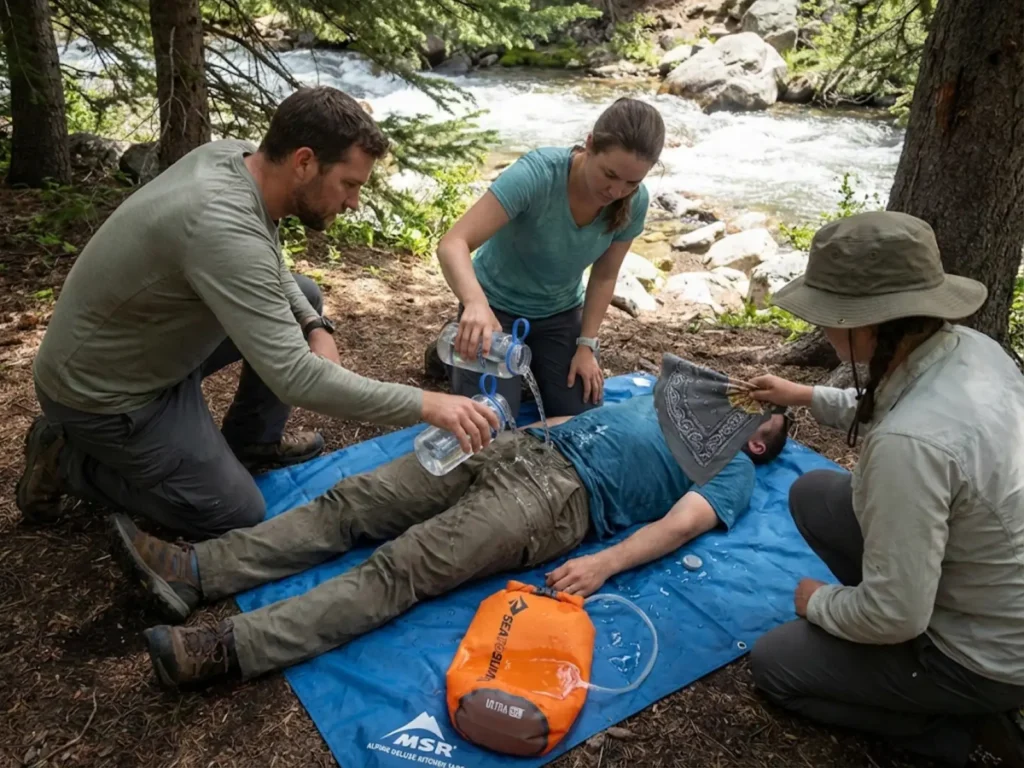
In heat stroke, the treatment priority is rapid cooling. Mortality rate of exertional heat stroke is nearly 0% if the patient is cooled within 30 minutes—the “Golden Hour.” The Wilderness Medical Society guideline is unambiguous: “Cool First, Transport Second.” Do not load a hot patient into transport until core body temperature is dropping.
Cold water immersion (CWI) is the gold standard with cooling rate of 0.15°C to 0.35°C per minute. If you’re near a stream, lake, or pond, immerse the patient. In dry environments like the Grand Canyon or San Diego County desert trails, use the body bag method: place patient in waterproof tarp or body bag, add water and ice.
If full immersion isn’t possible, use the TACO method (Tarp Assisted Cooling Oscillation). Place patient on tarp, lift sides to form trough, pour water and ice over patient, then oscillate (rock) the tarp to circulate cold water over skin.
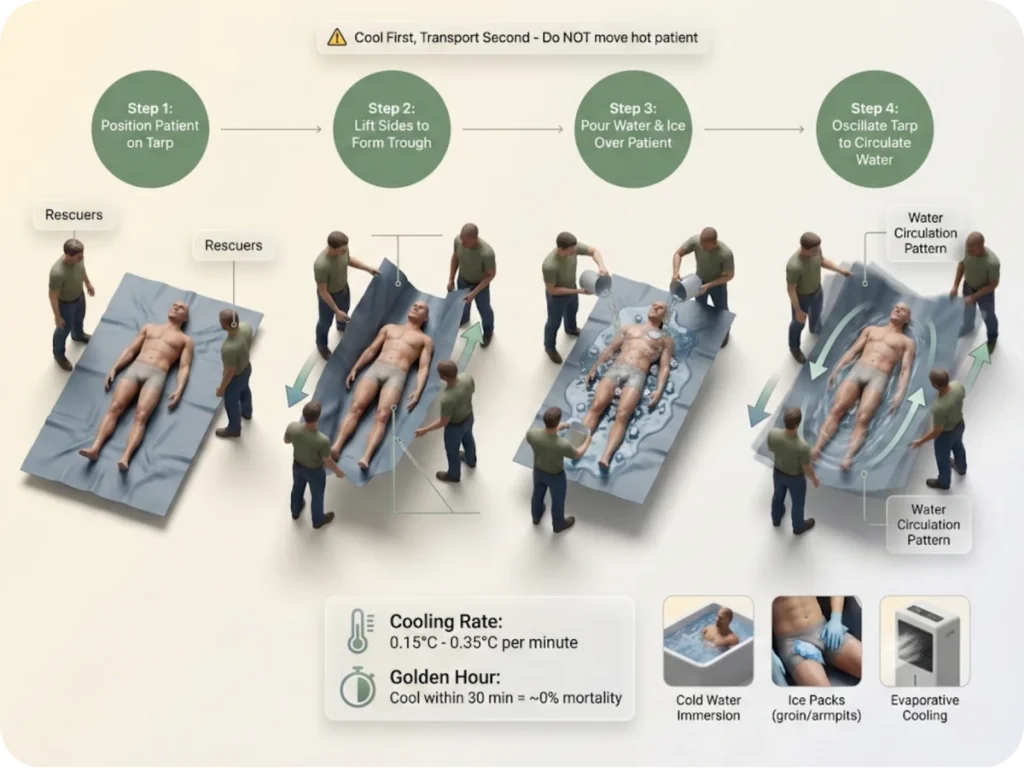
In water-scarce environments, evaporative cooling is your fallback: strip patient fully, wet skin with limited water, and fan vigorously. Ice packs applied to axillae and groin are adjunctive but insufficient alone.
Pro tip: We’ve used a space blanket as a makeshift tarp for TACO. Pour water, rock the patient side to side. It’s not pretty, but it works when you’re miles from a creek.
When to Call SAR vs. Self-Rescue
Immediate SAR activation is required for: altered mental status, seizures, loss of consciousness, inability to walk after cooling and rest, or signs of rhabdomyolysis. These are non-negotiable emergency evacuation scenarios.
Self-rescue may be appropriate if: mental status is alert, symptoms improve after rest and hydration, the hiker can walk without pack, and evacuation route is less than two hours. Do NOT attempt self-rescue if the hiker cannot maintain balance or shows cognitive impairment. When in doubt, activate wilderness first aid emergency preparedness protocols.
Prevention Strategies: Acclimatization and Hydration Science
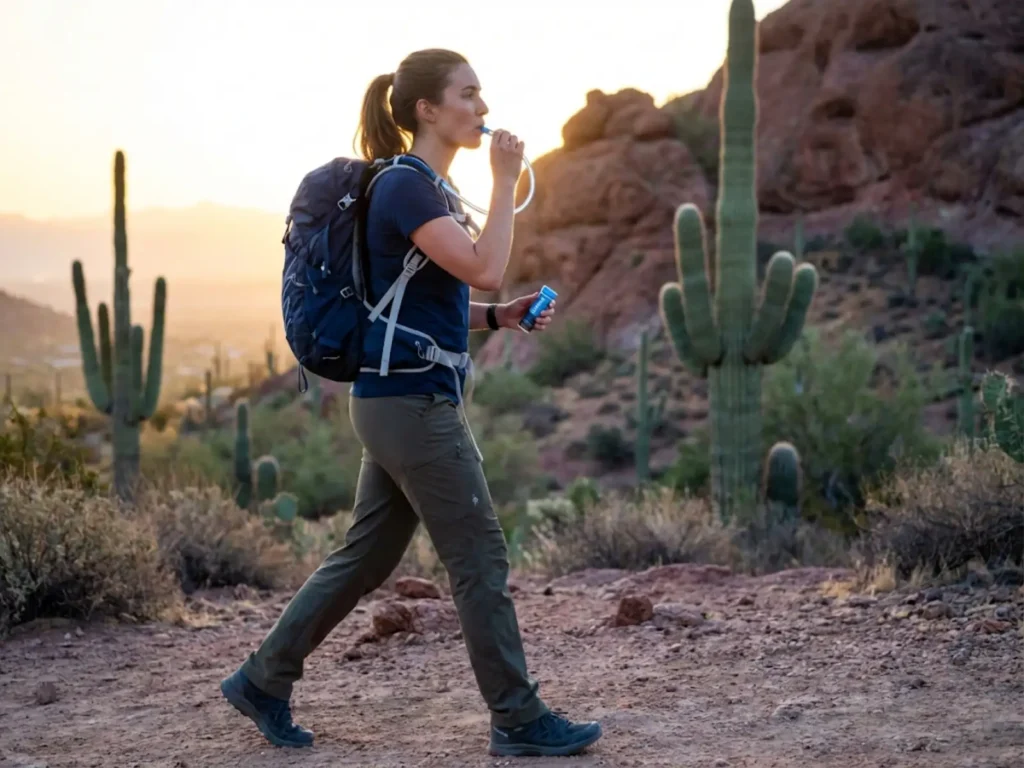
Lack of acclimatization is a primary risk factor in hiker fatalities. A “weekend warrior” flying from Seattle to Phoenix for a Grand Canyon hike is physiologically vulnerable. Your body needs 7-14 days of progressive heat exposure to undergo biological reprogramming.
The adaptation timeline: Days 1-3 trigger plasma volume expansion—blood volume increases by 10-15%. Days 4-6 lower sweating threshold so your body starts cooling earlier. Days 7-10 solidify adaptations, and heart rate for same workload drops significantly.
These adaptations are transient. Benefits decay after one week away from heat and are 75% lost after three weeks. If you can’t train in heat, use “passive heating”—sitting in a sauna at 160°F or hot bath at 104°F for 30 minutes after exercise induces similar heat shock protein responses.
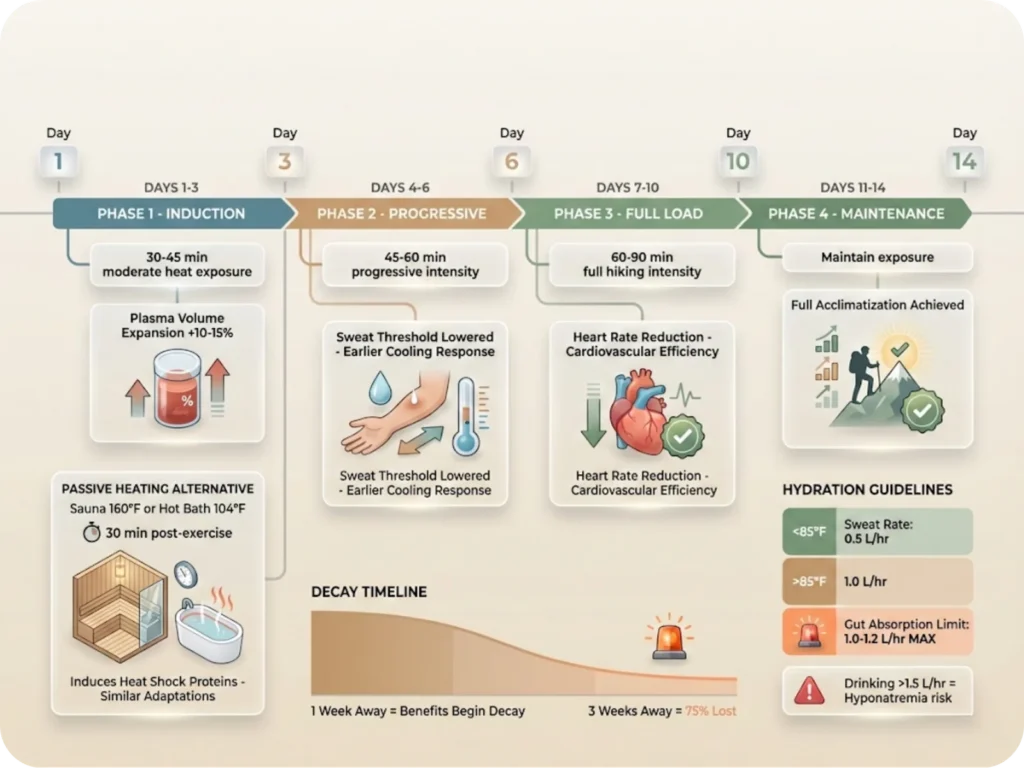
Sweat rates during hiking typically range from 0.5 to 1.5 liters per hour. Field rule: moderate heat below 85°F requires 0.5 liters per hour. High heat above 85°F requires 1.0 liters per hour. But your gut can only absorb approximately 1.0 to 1.2 liters per hour. Drinking more than 1.5 liters per hour increases stomach fluid volume (sloshing, vomiting) and risks hyponatremia.
Pro tip: I do “heat training” in my car with windows up and heater on before desert trips. Twenty minutes of sweating while parked beats showing up cold to a 110°F trailhead.
Electrolyte Dynamics and Hyponatremia Prevention
Sweat is a saline solution with sodium concentration ranging from 20 to 80 mmol/L. Losing 1.5 liters of sweat can result in deficit exceeding 1,500mg of sodium per hour. Replacing with pure water dilutes blood sodium. If serum sodium drops below 135 mEq/L, exercise-associated hyponatremia occurs with symptoms overlapping heat exhaustion: nausea, vomiting, headache, confusion, and seizures.
High-sodium options include LMNT (approximately 1,000mg Na) and SaltStick Caps. Moderate options include Liquid IV (approximately 500mg Na). Low options like Nuun (approximately 300mg Na) are excellent for maintenance but may need doubling for heavy sweaters.
The most practical field hydration metric is urine color. Target pale yellow or straw color. Dark amber or brown indicates significant dehydration. Brown or tea-colored urine suggests rhabdomyolysis—a medical emergency.
Gear and Technology for Heat Management
The standard Heat Index is insufficient for hikers because it ignores solar radiation and wind. Wet Bulb Globe Temperature (WBGT) measures all four parameters. Handheld weather stations like Kestrel 5500 provide real-time WBGT readings. If WBGT exceeds 85°F, risk of exertional heat stroke for unacclimatized hikers rises exponentially.
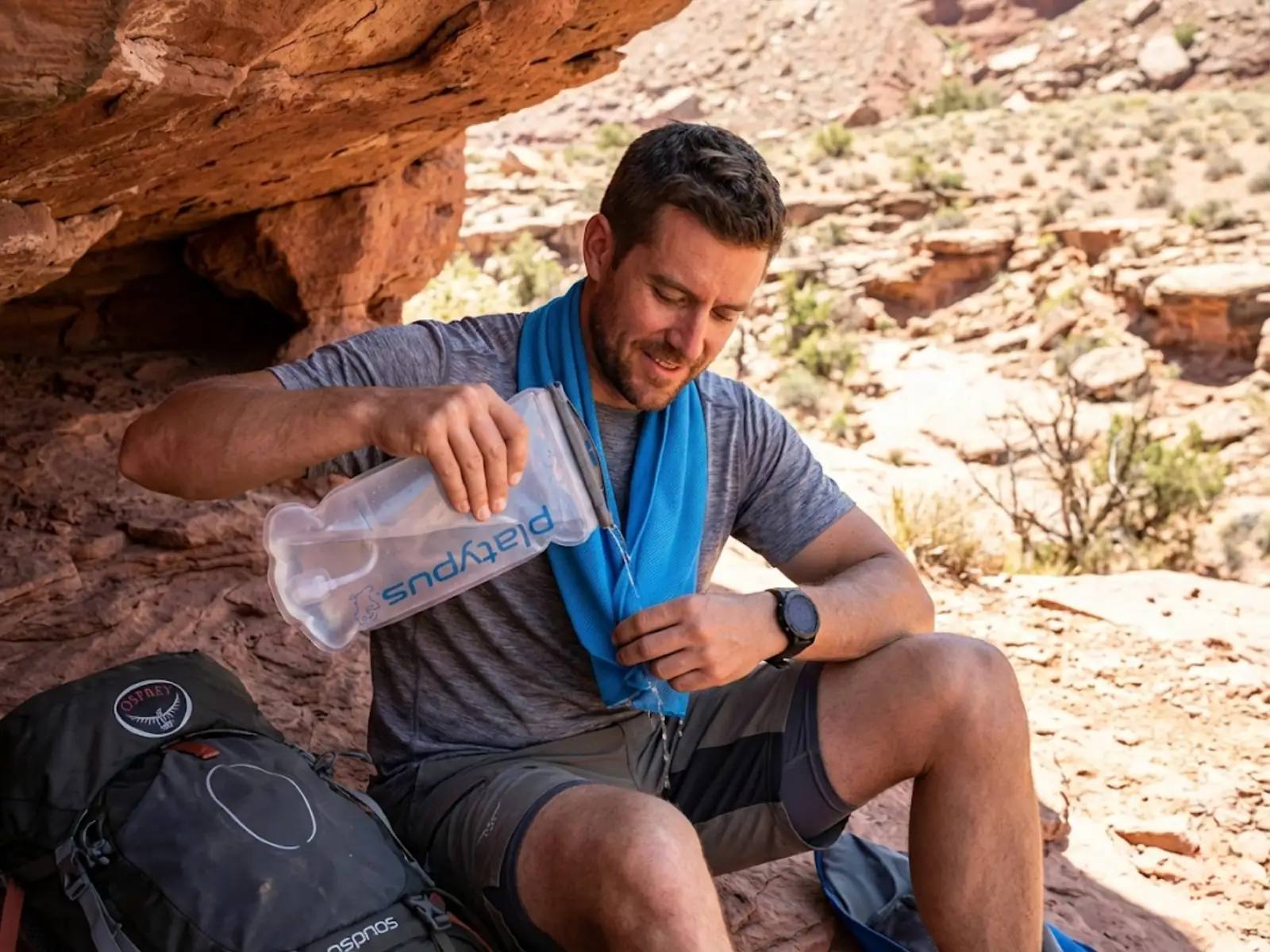
Cooling towels fall into two categories: PVA towels (like Frogg Toggs Chilly Pad) hold water like a sponge with slow evaporation providing cooling for 30-60 minutes. Microfiber towels (like Mission) are softer and dry faster.
Satellite messengers like Garmin inReach are essential for remote travel. Heat stroke incapacitates the brain—a hiker may be unable to dial a phone. The SOS button allows communication with medical control while helicopter is en route.
Pharmacological Risk Factors: The Silent Handicap
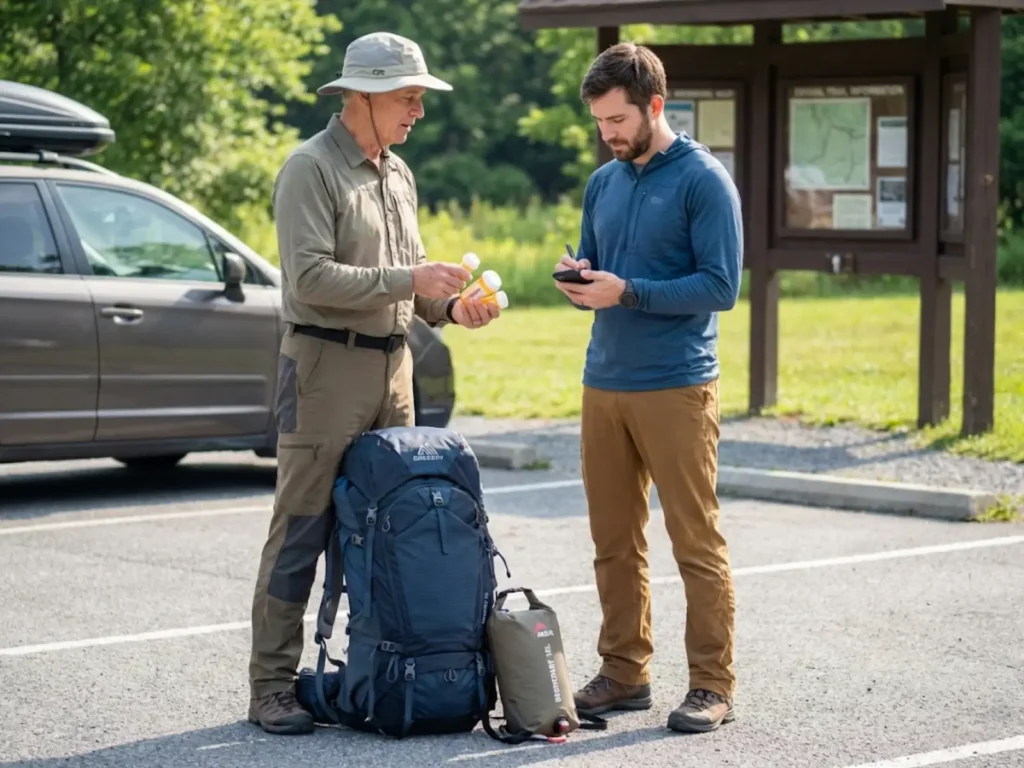
Certain drug classes act as physiological handicaps, lowering threshold for heat illness. Anticholinergics and antihistamines—including diphenhydramine (Benadryl)—block acetylcholine receptors, inhibiting sweating. Taking Benadryl before a hot weather hike chemically disables your body’s primary cooling mechanism.
Beta-blockers like metoprolol and atenolol limit heart rate’s ability to increase. Since heat dissipation requires massive increase in cardiac output to shunt blood to skin, beta-blockers impose a mechanical “governor” on your cooling system.
Diuretics like hydrochlorothiazide force renal fluid excretion, inducing pre-existing dehydration and electrolyte depletion before the hike begins.
Stimulants including amphetamines, ephedrine, heavy caffeine, and illicit drugs increase basal metabolic rate and endogenous heat production. Maricopa County data shows 89% of substance-related heat deaths involved stimulants.
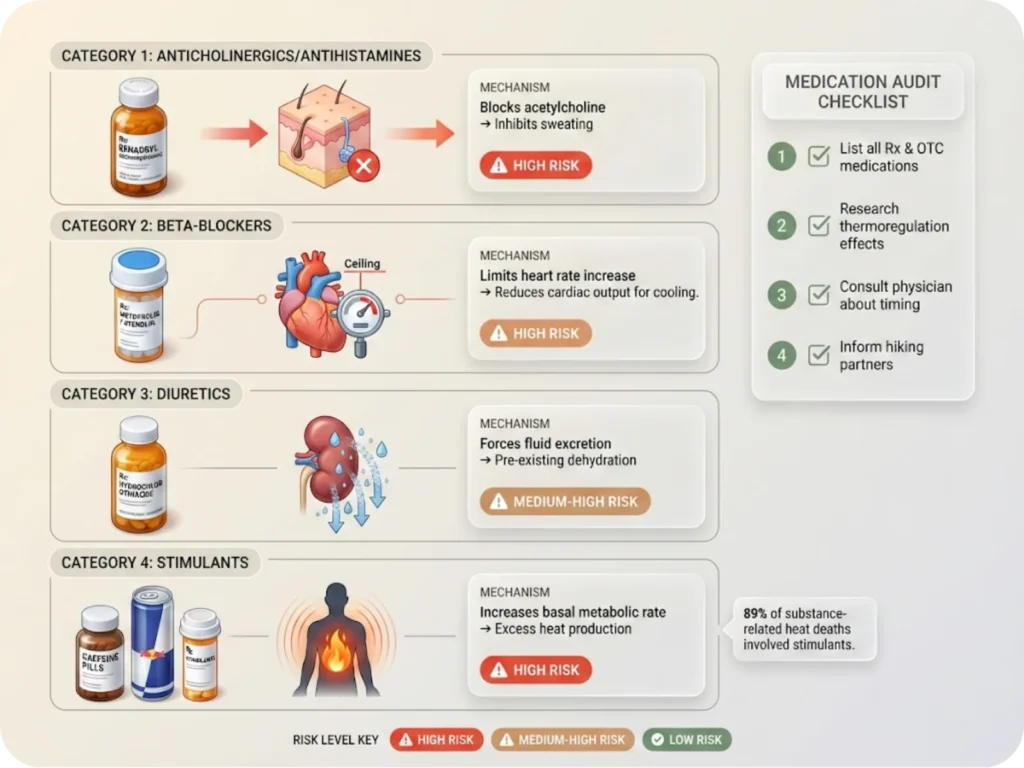
Pro tip: I keep a “heat audit” list of my medications. Before any summer hike, I check with my doctor about timing doses or temporary alternatives.
Conduct a pre-trip medication review, list all prescription and OTC medications, research each for thermoregulation effects, and consult your physician about timing adjustments. Inform hiking partners about medications that impair heat tolerance so they can monitor you more closely.
Conclusion
Mental status is your diagnostic tool. Alert and oriented equals heat exhaustion—manageable with rest, shade, and electrolyte fluids. Altered or confused equals heat stroke—a medical emergency requiring immediate aggressive cooling and evacuation. Trust the A+O x4 test, not a thermometer.
Cool first, transport second. Immediate cold water immersion or TACO method can achieve near-zero mortality if executed within 30 minutes. Delaying cooling to load a patient into transport is a fatal mistake.
Acclimatization is non-negotiable. A 7-14 day progressive heat exposure protocol transforms your physiology from vulnerable to resilient. Flying from a cool climate to a hot one for a weekend hike without acclimatization is physiologically reckless.
Master the mental status assessment on your next training hike. Practice the A+O x4 questions with your hiking partners until it becomes automatic. When the heat hits and someone stumbles, you won’t hesitate—you’ll know exactly what to ask and what to do.
FAQ
Can you still be sweating and have heat stroke?
Yes, absolutely. Exertional heat stroke often presents with hot, moist skin—not the classic hot and dry presentation. The defining feature of heat stroke is altered mental status (confusion, ataxia, delirium), not absence of sweat. If they’re confused or stumbling, treat it as heat stroke regardless of skin moisture.
What’s the difference between heat exhaustion and heat stroke in terms of core temperature?
Heat exhaustion typically involves core body temperature elevated but below 104°F. Heat stroke is defined by core body temperature exceeding 104°F combined with CNS dysfunction. However, field thermometers are unreliable in outdoor settings. Treat based on mental status and clinical presentation, not temperature readings.
How much water should I drink per hour when hiking in extreme heat?
Sweat rates vary from 0.5 to 1.5 liters per hour. Field rule: moderate heat below 85°F requires 0.5 liters per hour; high heat above 85°F requires 1.0 liters per hour. Critical limitation: your gut can only absorb approximately 1.0 to 1.2 liters per hour. Drinking more than 1.5 liters per hour risks hyponatremia and provides no additional cooling benefit.
When should I call Search and Rescue vs. attempt self-rescue for heat illness?
Immediate SAR activation is required for altered mental status, seizures, loss of consciousness, inability to walk after cooling and rest, or signs of rhabdomyolysis. Self-rescue is appropriate only if mental status is alert, symptoms improve after rest and hydration, the hiker can walk without pack, and evacuation route is less than two hours.
Do medications like Benadryl or blood pressure pills increase heat stroke risk?
Yes, significantly. Anticholinergics like Benadryl inhibit sweating—your primary cooling mechanism. Beta-blockers prevent heart rate from increasing enough to circulate blood for cooling. Diuretics induce pre-existing dehydration. Conduct a heat audit of all medications before hot weather hikes and consult your physician about timing doses or alternatives.
Risk Disclaimer: Hiking, trekking, backpacking, and all related outdoor activities involve inherent
risks which may result in serious injury, illness, or death. The information provided on The Hiking Tribe is for
educational and informational purposes only. While we strive for accuracy, information on trails, gear, techniques,
and safety is not a substitute for your own best judgment and thorough preparation. Trail conditions, weather, and
other environmental factors change rapidly and may differ from what is described on this site. Always check with
official sources like park services for the most current alerts and conditions. Never undertake a hike beyond your
abilities and always be prepared for the unexpected. By using this website, you agree that you are solely
responsible for your own safety. Any reliance you place on our content is strictly at your own risk, and you assume
all liability for your actions and decisions in the outdoors. The Hiking Tribe and its authors will not be held
liable for any injury, damage, or loss sustained in connection with the use of the information herein.
Affiliate Disclosure: We are a participant in the Amazon Services LLC Associates Program, an
affiliate advertising program designed to provide a means for us to earn advertising fees by advertising and linking
to Amazon.com. As an Amazon Associate, we earn from qualifying purchases. We are also an official affiliate partner
of Black Diamond Equipment via the AvantLink network. If you click on a Black Diamond affiliate link and make a
purchase, we may earn a commission at no additional cost to you. We also participate in other affiliate programs and
may receive a commission on products purchased through our links. Additional terms are found in the terms of
service.