In this article
Ten years ago, the only sound in a remote southern Utah slot canyon like The Narrows was the friction of wind against sandstone. Today, that silence is frequently shattered by the whine of drone rotors and the chaotic echo of shutter clicks. We have exited the era of unrestricted discovery and entered the era of digital stewardship.
As a mountaineering instructor who has spent decades teaching on public lands, I have witnessed the Instagram Effect transform from a digital metric into a physical force. I have seen alpine meadows trampled into mud pits in a single weekend because of a viral geotag. I have watched search & rescue teams mobilize for hikers who were led into technical terrain by a misleadingly cropped photo.
Viral fame creates real-world erosion. For the modern hiker and social media influencers alike, responsible recreation now requires a new set of skills. We must move beyond traditional camp craft and master metadata scrubbing, risk assessment, and the ethical management of our digital footprint. This field guide outlines how to protect the places we love from the very attention we give them.
What Is the “Instagram Effect” and Why Does It Matter?

The “Instagram Effect” is the mechanism by which algorithm mechanics drive industrial tourism to fragile ecosystems. It creates a feedback loop where high-contrast visual content accelerates visitation beyond a site’s carrying capacity.
How does a viral post physically alter the terrain?
A viral post does not just attract people; it attracts a specific density of footprints that infrastructure cannot support. When a location like Horseshoe Bend, Hocking Hills, or Max Patch trends, the influx overwhelms the physical trail. As crowds disperse to find a view or pass one another, they create social trails. This tramples vegetation and destabilizes soil layers that took centuries to form.
According to research analyzing the correlation between social media and park visitation, this rapid spike in density is the primary driver of degradation. The recovery time for these environments is disproportionate to the speed of damage. A single viral summer can strip soil horizons that require decades to regenerate, leaving irreparable damage.
This ecological erosion is invariably followed by administrative erosion. Land managers from the NPS, BLM, and USFS are forced to restrict access to save the resource. What was once open public land becomes subject to fences, fee stations, and lottery systems. Understanding park permits and crowd strategy is now a mandatory skill for navigating these administrative closures.
Is there a link between social media and hiker safety?
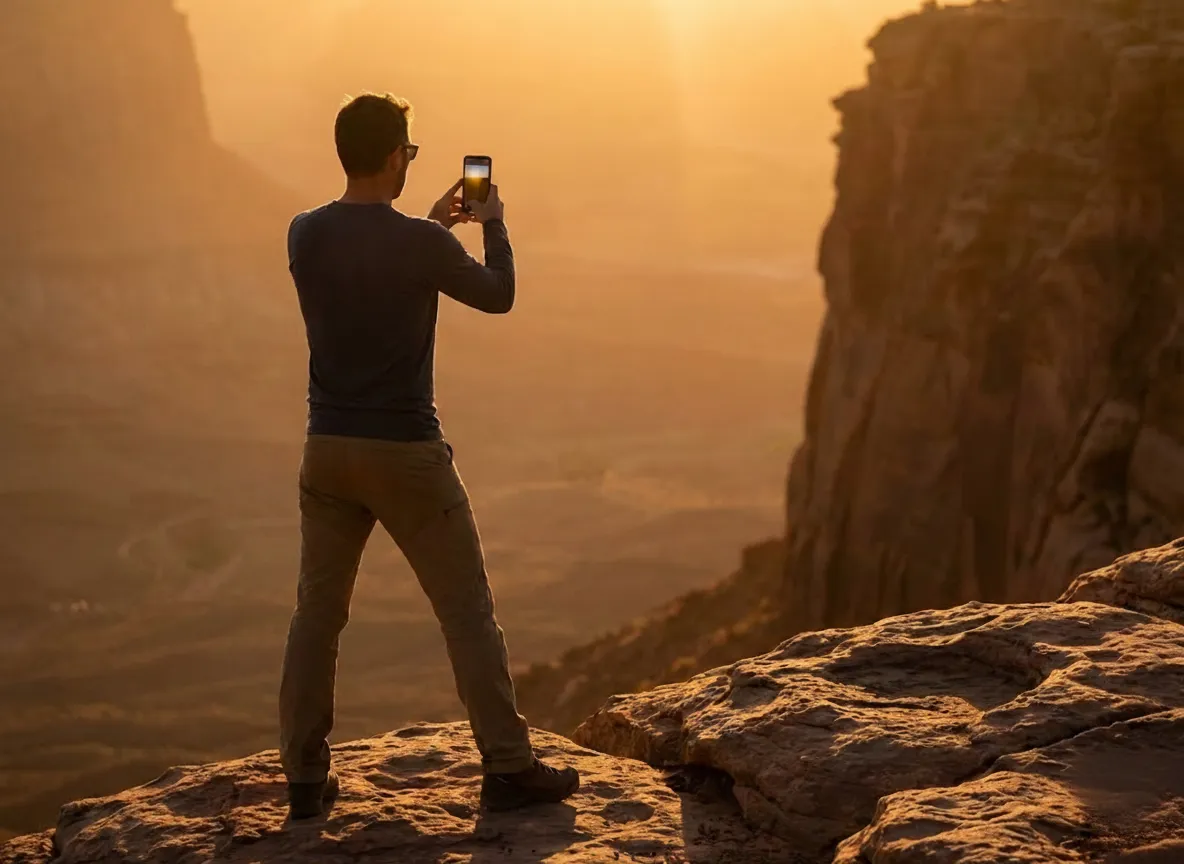
Social media posts frequently sanitize risk, offering a false sense of virtual safety. A vertical photo of a hiker standing on a precipice removes the context of loose rock, fatal exposure, or approaching weather. This creates a “perception of invulnerability” for the viewer.
This leads to risk displacement. Inexperienced outdoor enthusiasts attempt technical routes solely to replicate an image, often lacking the navigation skills or physical conditioning required. They succumb to “destination fixation” or manic inspiration, ignoring their own fatigue to secure the trophy shot.
Pro-Tip: If a photo looks dangerous, assume the reality was worse. Wide-angle lenses often flatten steep terrain, masking the true exposure of a route.
The consequences are measurable. National Park Service data on rising SAR incidents indicates a direct tracking between “Instagrammable” locations and the frequency of emergency medical interventions. When we post without context or trail conditions, we contribute to a cycle where unprepared visitors end up lost, injured, or stuck.
What Is the “8th Principle” of Leave No Trace?
The seven principles of Leave No Trace are the bedrock of outdoor ethics, but the content creator economy demands an update. The “8th Principle” is the informal adoption of “Digital Mindfulness.” It asserts that the digital record of a hike is as impactful as the physical one.
How do we define “Digital Stewardship”?
Digital Stewardship is the practice of conducting a “Digital Impact Assessment” before hitting publish. It asks a simple but critical question: If 1,000 people replicate this photo next weekend, will the ecosystem survive?
This principle mandates that we evaluate the context of our posts. We must ensure we do not present a difficult objective as an “easy” walk. We must also assess legality. Content depicting illegal camping, drone usage in restoration zones, or off-trail travel validates illegal behavior for thousands of social media users. We must also consider the cultural layer, respecting land acknowledgments and Indigenous history.
Adhering to guidelines from the Recreate Responsibly Coalition, true stewardship involves “calling in” rather than “calling out.” We educate peers privately about their impact rather than engaging in online shaming. This connects directly to mastering outdoor ethics, expanding our responsibility from the campfire to the cloud.
How Should We Manage Location Data and Geotagging?
The most tactical step in digital stewardship is managing the precise location data attached to your images. A geotag is a map, and not every map should be public.
When is it safe to share a specific geotag?
Hikers should utilize a “Content Risk Assessment Matrix” to determine the specificity of their tag.
Low Risk (Green): Hardened infrastructure. Paved overlooks, visitor centers, and front-country boardwalks are designed for high capacity. You can geotag these specifically (e.g., “Mather Point” or “Visit California” visitor centers) to help disperse crowds away from wilder areas.
Medium Risk (Yellow): Established dirt trails. These should carry a regional tag (e.g., “Grand Teton National Park“) accompanied by a caption explicitly mentioning LNT principles and stewardship messaging.
High Risk (Red): Off-trail areas, wilderness zones, or sites with fragile features like cryptobiotic soil. These should never receive a specific coordinate or tag. Use generic tags like “Utah Desert” or “Western US” or simply no tag at all.
We must practice “Educational Gatekeeping.” Provide the resources to find a place—such as noting that a route requires advanced map reading—rather than the coordinates. The Teton Climbers Coalition review of Delta Lake degradation illustrates exactly what happens when specific geotags are applied to unmaintained social trails like Delta Lake. Instead of feeding the algorithm, learn the skills to go beyond AllTrails and find routes through research and analog navigation.
How do I scrub metadata from my photos before posting?
Even if you don’t type the location name, your camera roll shares it. Exchangeable Image File Format (EXIF data) embeds precise GPS location data into every smartphone photo by default.
This creates a treasure map for data scrapers. To prevent this on iOS, tap the “Options” button in the share sheet and toggle off “Location” before sending. On Android, use native gallery settings to “Remove location data” or employ third-party apps to strip metadata.
For a detailed walkthrough, refer to the Apple Support guide on managing location metadata. Failing to scrub this data allows bots to aggregate locations of endangered species or sensitive archaeological sites. This negligence directly leads to areas being damaged and eventually having the trail closed to the public.
What Are the Protocols for Ecological Content Creation?
A photo can be “secure” regarding metadata but still ethically bankrupt if it depicts harassment of the wild or destruction of the terrain.
How can I photograph wildlife without harassment?
The standard for safe distancing is the “Thumb Rule.” Extend your arm fully, close one eye, and give a thumbs-up. If you cannot completely cover the animal with your thumb, you are too close.
This usually equates to 100 yards for bears and wolves, and 25 yards for elk or deer. Responsible content creation mandates the use of a zoom lens (400mm-600mm). Attempting to fill the frame using a smartphone’s wide angle lens forces you to breach the animal’s safety zones.
Pro-Tip: Always caption your wildlife photos with the focal length used (e.g., “Shot at 500mm”). This educates your audience that the intimate perspective was achieved via optics, not proximity.
Approaching wildlife triggers stress responses that burn critical calorie reserves. Following WTA guidelines on ethical wildlife photography, we must prioritize observation over documentation. If you are serious about this, invest in the right glass and read up on backpacking with camera gear to carry it safely.
Which terrain types are most vulnerable to “influencer” behavior?
Certain environments cannot withstand even a single misplaced footstep.
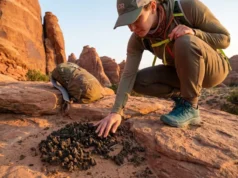
Cryptobiotic Soil: In the arid West, the ground is covered by living biological crusts. These prevent erosion and retain moisture. US Forest Service research on soil crust vulnerability confirms that a single boot print can destroy decades of growth. Hikers must identify “mature crust” (dark, knobby surface) and strictly avoid off-trail travel, staying on durable surfaces.
Alpine Tundra: High-elevation plants have a growing season of only 40-60 days. Trampling them for a “meadow shot” among the wildflowers can kill plants that are decades old.
We must avoid creating social trails. When established trails are muddy, walk through the mud single file rather than widening the path. Never cut switchbacks or engage in moving rocks to build cairns for aesthetics. These behaviors scar the land permanently and complicate the future of hiking by forcing land managers to install aggressive barriers.
Which Digital Tools Align with Stewardship?
Not all maps are created equal. The apps we use influence where we go and how we impact the land.
How do navigation apps differ in their environmental impact?
Gaia GPS (Stewardship Score: High): This tool functions primarily for navigation. It prioritizes official USGS and USFS maps and layers like Wilderness boundaries. It reduces the risk of following illegal social trails because it focuses on official data rather than user-generated heatmaps.
AllTrails (Stewardship Score: Mixed): While accessible, its algorithm mechanics can create “honeypots” by concentrating traffic on top-rated trails. Users must actively filter for “Verified Routes” to avoid inadvertently following unmaintained shortcuts that degrade the environment.
Strava (Stewardship Score: Caution Required): The “Global Heatmap” aggregates billions of data points. As noted in an analysis of the Strava heatmap risks, this can reveal secret paths and sensitive off-trail areas. Responsible hikers should set visibility to “Private” or “Followers Only” to prevent their data from “burning” a location.
For a deeper dive into the features of these tools, review our comparison on Gaia vs. AllTrails. The 2026 hiker chooses tools that prioritize privacy and accurate land-use data over social validation and shareability scores.
Final Thoughts
Digital exhaust is now a physical force. A viral post can degrade a wild place faster than geological time can repair it. We must shift our mindset from “Unrestricted Discovery” to “Digital Stewardship,” where the protection of the land takes precedence over the shareability of the moment.
True stewardship is actionable. It means scrubbing metadata, using the Thumb Rule, and strictly respecting boundaries. By adopting these protocols, we ensure that the wild places we love remain wild, rather than becoming consumed by the very love we broadcast.
This is the modern hiker’s digital operational manual. Before you post your next adventure, check our Content Risk Assessment Matrix and ask yourself: “Does this post invite people in responsibly, or does it merely show off?”
FAQ – Frequently Asked Questions
What is the Thumb Rule for wildlife photography?
Extend your arm fully, close one eye, and give a thumbs-up. If you cannot completely cover the animal with your thumb, you are too close. You need to back away immediately. This generally aligns with the requirement to stay 100 yards from bears and wolves, and 25 yards from other wildlife.
Is geotagging always bad for the environment?
No. Tagging hardened infrastructure, like visitor centers or paved overlooks, can actually help disperse crowds away from fragile areas. However, specific geotags should never be used for off-trail locations, wilderness areas, or fragile ecosystems like cryptobiotic soil or Hanging Lake.
How do I remove location data from my photos?
On iPhone, tap Options in the share sheet and toggle off Location. On Android, use the native gallery settings to Remove location data or use a third-party metadata remover app. This ensures your photo doesn’t provide a precise GPS location data map to a sensitive location.
What is cryptobiotic soil and why is it important?
Cryptobiotic soil is a living biological crust found in deserts that prevents erosion and retains moisture. It is incredibly fragile. One footstep can destroy decades of growth. Hikers must strictly stay on established trails or walk on durable surfaces like rock or sand to protect it.
Risk Disclaimer: Hiking, trekking, backpacking, and all related outdoor activities involve inherent risks which may result in serious injury, illness, or death. The information provided on The Hiking Tribe is for educational and informational purposes only. While we strive for accuracy, information on trails, gear, techniques, and safety is not a substitute for your own best judgment and thorough preparation. Trail conditions, weather, and other environmental factors change rapidly and may differ from what is described on this site. Always check with official sources like park services for the most current alerts and conditions. Never undertake a hike beyond your abilities and always be prepared for the unexpected. By using this website, you agree that you are solely responsible for your own safety. Any reliance you place on our content is strictly at your own risk, and you assume all liability for your actions and decisions in the outdoors. The Hiking Tribe and its authors will not be held liable for any injury, damage, or loss sustained in connection with the use of the information herein.
Affiliate Disclosure: We are a participant in the Amazon Services LLC Associates Program, an affiliate advertising program designed to provide a means for us to earn advertising fees by advertising and linking to Amazon.com. As an Amazon Associate, we earn from qualifying purchases. We also participate in other affiliate programs and may receive a commission on products purchased through our links, at no extra cost to you. Additional terms are found in the terms of service.