In this article
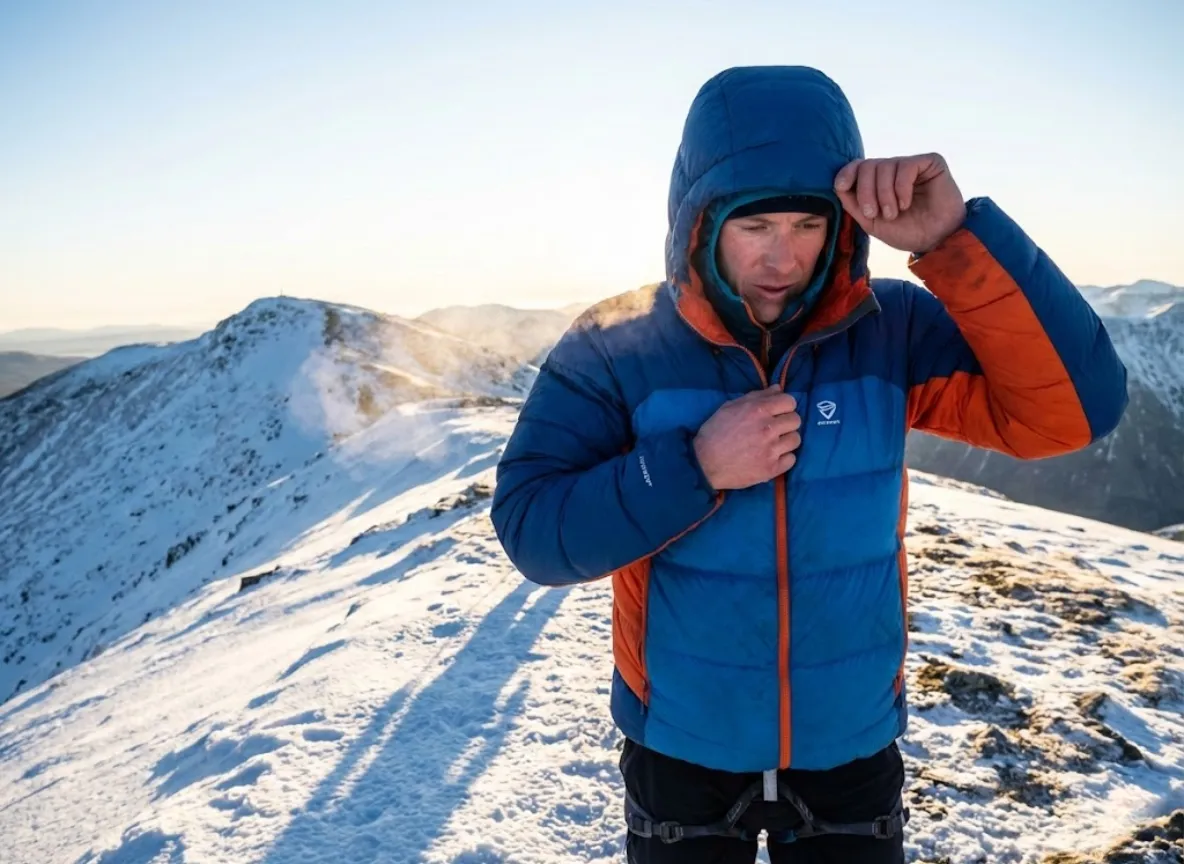
The wind on an exposed ridgeline strips heat from the body with predatory efficiency. In my years leading winter ascents, I’ve learned that when the mercury drops to twenty below, down insulation ceases to be a luxury item; it becomes a survival tool engineered by millions of years of evolution. Nothing matches its warmth-to-weight ratio.
However, for the conscientious hiker, the warmth provided by an 800-fill parka is compromised if the sourcing history involves the torture of the sentinel beings that grew it. The Responsible Down Standard (RDS) serves as the necessary firewall between your survival and the industry’s darker historical practices.
This guide moves beyond the hangtag. We will dissect what “ethical down” actually means, how to verify it using certification verification methods, and how to audit your down jacket or sleeping bag to ensure your warmth doesn’t come at an unacceptable cost.
What necessitates the existence of the Responsible Down Standard?

The RDS exists to eradicate specific, historical cruelties—namely live-plucking and force-feeding—by replacing an opaque down supply chain with a transparent, third-party audited system.
Why did the outdoor industry face a moral reckoning regarding down insulation?
Prior to 2010, the global down industry operated as a “black box.” Brands purchased raw materials in bulk with zero visibility back to the farm level. This lack of oversight hid industrial nightmares. The most egregious was live-plucking (and the associated molt-harvesting), a practice where feathers are ripped from conscious birds to allow for multiple harvests before slaughter. Equally disturbing was the presence of down sourced as a byproduct of food industry excesses, specifically the foie gras industry, where birds are subjected to force-feeding tubes.
The tipping point arrived when an investigation by animal welfare organizations, notably Four Paws and Humane Society International, exposed major outdoor brands for unknowingly sourcing from these unethical systems. The exposure shattered consumer trust. In response, The North Face partnered with Textile Exchange and Control Union Certifications in 2014. Their objective was to shift the industry from a passive “don’t ask, don’t tell” model to a forensic, audit-based chain of custody.
This transition acknowledged that high-altitude performance could no longer be decoupled from the biological reality of the waterfowl providing the insulation. To validate these claims, independent experts from bodies like Control Union and IDFL Laboratories now conduct the assessments.
With the moral imperative established, the industry had to codify these values into a unified standard. The Audubon Society outlines the consumer impact of ethical sourcing, emphasizing that purchasing decisions ripple back to ecosystem health and animal welfare. This aligns perfectly with the principles of mastering outdoor ethics, extending our “Leave No Trace” philosophy beyond the trail and into the supply chain.
What specific animal welfare criteria constitute the “Five Freedoms” mandate?
The RDS is founded on the Five Freedoms of animal welfare, a globally accepted framework for the humane rearing of livestock. Auditors strictly verify freedom from pain, injury, and disease, preventing suffering through rapid diagnosis and mandatory veterinary treatment. The standard also enforces freedom from hunger and thirst and freedom from discomfort, mandating appropriate shelter, resting areas, and climate control for all waterfowl.
Critically, the 2019 revision (RDS 3.0) tightened these rules by mandating stunning before slaughter to ensure birds are insensible to pain during processing. The standard also protects the freedom to express normal behavior and freedom from fear and distress, requiring sufficient space and the company of the animal’s own kind. Any evidence of live-plucking or force-feeding results in immediate decertification.
Textile Exchange details the specific welfare criteria in their RDS User Manual, providing the definitive standards documents auditors use in the field. If these strict ethical standards feel insufficient for your personal ethics, you might consider evaluating the down vs. synthetic insulation performance matrix to see if modern synthetic alternatives better align with your values.
How does the certification process ensure traceability in the supply chain?
True farm-to-final product traceability relies on a strict custodial model. This ensures that certified material is identified, tracked, and kept separate from non-certified material from the moment it leaves the farm until it reaches the final down products.
How does the Content Claim Standard (CCS) track feathers from farm to factory?
Verification relies on the Content Claim Standard (CCS), which tracks the flow of raw materials through every transfer of legal ownership. Each entity in the supply chain—from the hatcheries and breeding farms to the slaughterhouses, down processors, and garment factories—must hold a valid Scope Certificate proving they passed their annual audit. When material moves between these certified entities, a Transaction Certificate (TC) is issued to validate that specific volume of down.
Auditors utilize volume reconciliation (mass balance) to compare inputs against outputs. This ensures non-certified down isn’t fraudulently mixed in to bulk up the numbers. For a final product to carry the consumer-facing RDS logo, 100% certified material must be used in the down component. This prevents “greenwashing” where a brand might mix 10% ethical down with 90% unverified material.
ICEA explains the certification procedures and chain of custody requirements in depth, validating the rigorous documentation required behind the scenes. Understanding this verification process is just as critical as selecting essential backpacking gear for beginners, ensuring your first kit is built on a foundation of integrity.
What distinguishes the RDS from the Global Traceable Down Standard (Global TDS)?
The primary distinction lies in the treatment of Parent Farms—the facilities where birds are kept for years to breed and produce eggs. Because parent birds live longer, they are at higher risk for illegal live-plucking compared to meat birds (Raising Farms) which are slaughtered young. The Global Traceable Down Standard (Global TDS), championed by Patagonia and NSF, mandates parent farm audits, securing the highest-risk portion of the chain.
The RDS 3.0 requires observation of parent farms in industrial goose supply chains but does not universally mandate full certification for all parent farms. This was a strategic decision to ensure broader industry adoption of this voluntary sustainability standard. For the hiker demanding the absolute highest welfare guarantee, Global TDS is the superior choice (“Platinum Standard”), though RDS remains the industry standard driving systemic volume change.
Textile Exchange’s 2024 Market Report analyzes the volume of certified materials, showing how RDS dominates the market share while TDS remains a niche, high-integrity option. Once you understand the source, mastering the science of layering becomes easier, as you can select the right down weight for your specific activity level.
How can hikers audit their gear using modern transparency tools?
Passive consumption is over. Today’s consumers have the tools to act as their own auditors, verifying product claims with smartphone technology.
How do I use “Track My Down” to verify the contents of my jacket?
Leading suppliers like Allied Feather & Down and Downlite have democratized transparency through portals like Track My Down. Hikers can locate a hangtag with a specific Lot Number on their garment and enter it into the website to access a specific lab report. This report reveals the exact source region (e.g., Pyrenees vs. Anhui) and verifies the species (goose vs. duck), moving beyond generic marketing claims.
Pro-Tip: Always check the “Turbidity” and “Oxygen Number” on the Track My Down report. These metrics indicate cleanliness. High turbidity means dust and organic residue were left behind, which can cause allergies and reduce the lifespan of the gear.
Beyond ethics, this gear-vetting tool validates quality by displaying the verified Fill Power. It is not uncommon for a jacket labeled “800-fill” to actually contain 850+ fill down based on the specific lot analysis. The NSF International case study on Traceable Down implementation details how these tracking systems function. Using this data is vital for gear selection for winter hiking safety, where insulation failure is not an option.
Which brands are currently leading the industry in ethical sourcing?
Patagonia remains the benchmark, utilizing the Advanced Global TDS and incorporating sustainable textiles like NetPlus nylon to align shell ethics with insulation ethics. The North Face and Mountain Hardwear utilize the RDS extensively, leveraging their massive market scale to drive compliance across global supply chains. REI Co-op democratizes ethical gear by offering RDS-certified products like the Magma 850 at accessible price points, proving ethical consumerism isn’t exclusive to luxury budgets.
Pro-Tip: When buying from brands claiming “ethical sourcing” without a clear RDS or TDS logo, look for the “BlueSign” certification on the textile. While primarily chemical, BlueSign system partners often adhere to stricter general sourcing policies.
Heritage brands like Woolrich and specialized producers like Canadian Down & Feather Company (often displaying the Downmark label) have also had to navigate this shifting terrain. NEMO is pushing the boundary with “Endless Promise” products that use RDS down in fully recyclable mono-polymer sleep systems. Rab focuses on the intersection of ethics and performance by treating RDS down with fluorocarbon-free (PFC-free) hydrophobic coatings.
Many of these brands also adopt the Responsible Wool Standard (RWS), creating a cohesive approach to animal materials. Market Research Future projects the growth of the ethical down market, confirming that consumer money is forcing these changes. For those interested in the full circle of gear, check our lifecycle guide for hiking gear recycling to see how products like NEMO’s fit into a circular economy.
Conclusion
The Responsible Down Standard guarantees the Five Freedoms, strictly prohibiting live-plucking and force-feeding through third-party audits. A valid Chain of Custody is the only way to prove a jacket’s down is truly ethical; marketing claims alone are insufficient. While RDS is the industry standard, Global TDS offers superior protection for parent farms, and transparency tools like Track My Down allow for individual product auditing.
Before your next expedition, audit your cold-weather kit using the “Track My Down” portal or by verifying the RDS logo. Make a sound ethical purchasing decision ensuring your warmth is as clean as the trails you hike.
FAQ – Frequently Asked Questions about Responsible Down Standard
Is RDS down considered cruelty-free?
Technically, no animal product is universally defined as cruelty-free by all vegan standards, as the birds are eventually slaughtered for food. However, RDS guarantees the birds are free from unnecessary harm like live-plucking and force-feeding during their lives.
What is the difference between RDS and generic down?
Generic down has no traceability, meaning it could come from farms that practice live-plucking or force-feeding. RDS down is third-party audited at every stage of the supply chain to ensure specific animal welfare requirements are met.
Does the Responsible Down Standard cover parent farms?
RDS 3.0 requires observation of parent farms in industrial goose supply chains but does not mandate full certification for all breeding stock. For guaranteed parent farm certification, hikers should look for the Global Traceable Down Standard (Global TDS).
Is high fill power down (800+) more ethical than lower fill power?
Not necessarily; fill power indicates quality (loft), not ethics. However, high fill power down often comes from mature geese. This makes the risk of live-plucking (to keep the bird alive longer) higher if the farm is not certified, making the RDS trust signal even more critical for premium gear.
Risk Disclaimer: Hiking, trekking, backpacking, and all related outdoor activities involve inherent risks which may result in serious injury, illness, or death. The information provided on The Hiking Tribe is for educational and informational purposes only. While we strive for accuracy, information on trails, gear, techniques, and safety is not a substitute for your own best judgment and thorough preparation. Trail conditions, weather, and other environmental factors change rapidly and may differ from what is described on this site. Always check with official sources like park services for the most current alerts and conditions. Never undertake a hike beyond your abilities and always be prepared for the unexpected. By using this website, you agree that you are solely responsible for your own safety. Any reliance you place on our content is strictly at your own risk, and you assume all liability for your actions and decisions in the outdoors. The Hiking Tribe and its authors will not be held liable for any injury, damage, or loss sustained in connection with the use of the information herein.
Affiliate Disclosure: We are a participant in the Amazon Services LLC Associates Program, an affiliate advertising program designed to provide a means for us to earn advertising fees by advertising and linking to Amazon.com. As an Amazon Associate, we earn from qualifying purchases. We also participate in other affiliate programs and may receive a commission on products purchased through our links, at no extra cost to you. Additional terms are found in the terms of service.