In this article
The knee buckled three miles from the trailhead—just a small dip in the trail my 68-year-old body used to handle without thinking. That moment of lost balance, the lurch forward, the frantic grab for a tree root, became the wake-up call that changed everything about how I prepare for the backcountry.
After two decades of guiding hikers across terrain from the Appalachian Trail to the Colorado Rockies, I’ve watched too many experienced senior hikers assume their bodies would perform the same at 65 as they did at 45. They’re wrong. But here’s what I’ve also learned: aging hikers who prepare properly don’t just survive on the trail—they thrive. Here’s the fitness plan that makes the difference.
⚡ Quick Answer: Seniors can hike safely with proper preparation. Focus on a 12-week conditioning program targeting stability, strength, and endurance. Keep pack weight under 20 lbs, use trekking poles on every hike, and select age appropriate trails that match your current fitness level—not your memories of what you used to handle.
The Physiology of Aging on the Trail
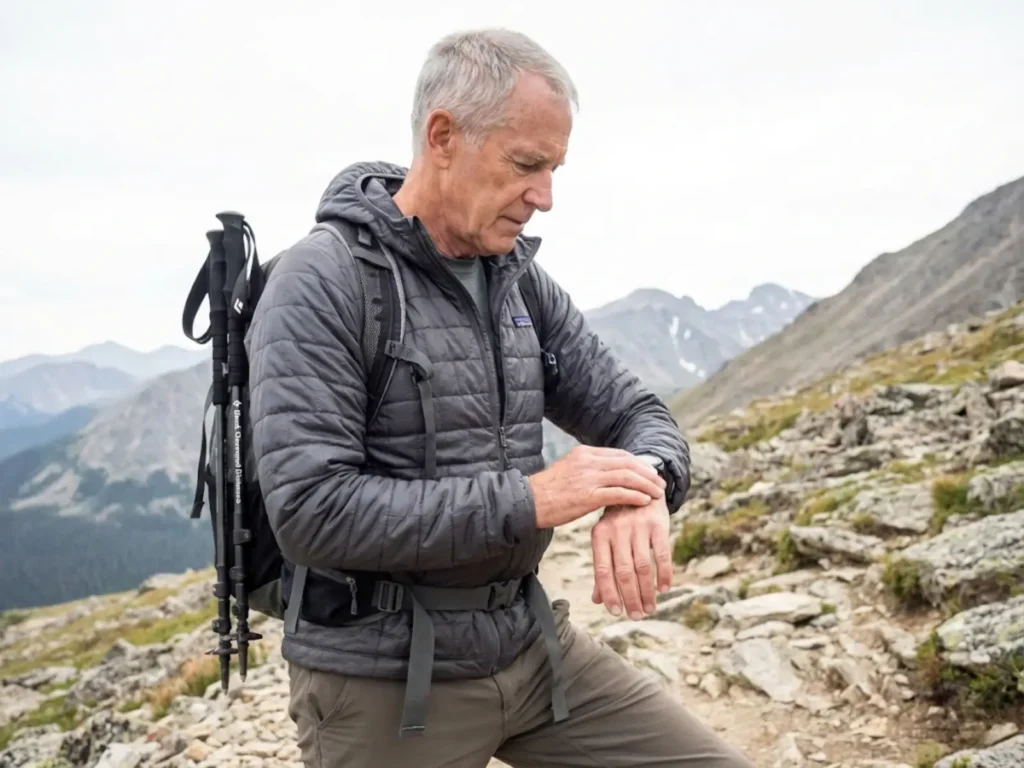
Your body doesn’t care about your resume of past summits. After 55, it operates by different rules, and understanding those rules is the difference between a successful hike and a rescue call.
Why Your Body Handles Trails Differently After 55
Sarcopenia—the gradual loss of skeletal muscle mass—is the invisible enemy of every aging hiker. After 50, you lose 1-2% of muscle mass per year, with strength training becoming essential to fight back. The real problem? You’re losing your fast-twitch fibers first—the ones that fire when you stumble on a root and need to catch yourself.
Your cardiovascular fitness takes hits too. VO2max drops 5-10% per decade, which means the window of sustainable endurance narrows. Push past your threshold, and lactate builds faster than your body can clear it. That’s when legs turn to rubber on the descent.
Pro tip: Monitor your heart rate during hikes. If you’re consistently hitting above 75% of your max (roughly 220 minus your age), you’re running on borrowed time. Slow your pace before your body decides for you.
The proprioceptive decline is what worries me most. Those milliseconds of reaction time that used to save you from a twisted ankle? They’re slower now. Your balance isn’t what it was, and the trail doesn’t forgive hesitation.
The Bone Density Factor: Why Falls Hit Harder
According to CDC data on fall-related hospitalizations, nearly 319,000 older adults are hospitalized for hip fractures annually in the US—and 88% of those are caused by falls. The same tumble that would have given a 35-year-old a bruise can put a senior in surgery.
Bone density loss means every fall carries higher stakes. Uneven terrain shows up in 62.3% of hiking accident sites. If you haven’t had a DEXA scan in the last few years, consider getting one before committing to ambitious trails.
This doesn’t mean you stop hiking. It means you take wilderness first aid preparedness seriously, and you build the strength to reduce fall risk in the first place.
The 12-Week Senior-Adaptive Fitness Protocol
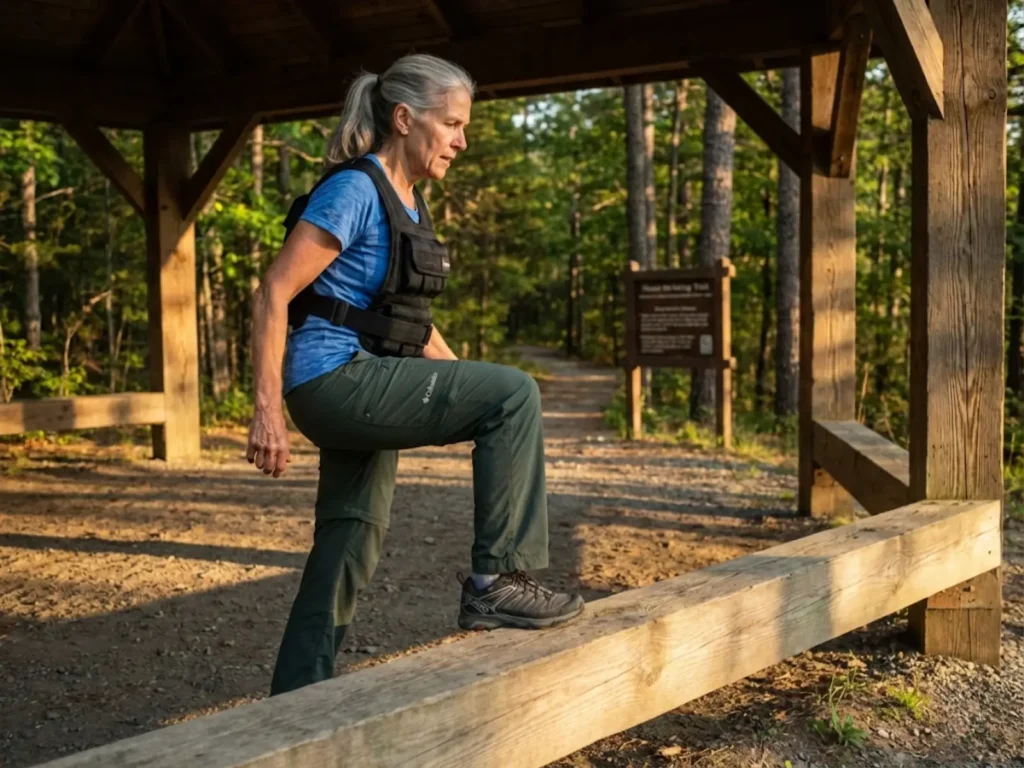
The conditioning work you do before the trailhead matters more than any gear purchase. A structured pre-hike conditioning program can reverse much of the fitness decline that makes hiking risky.
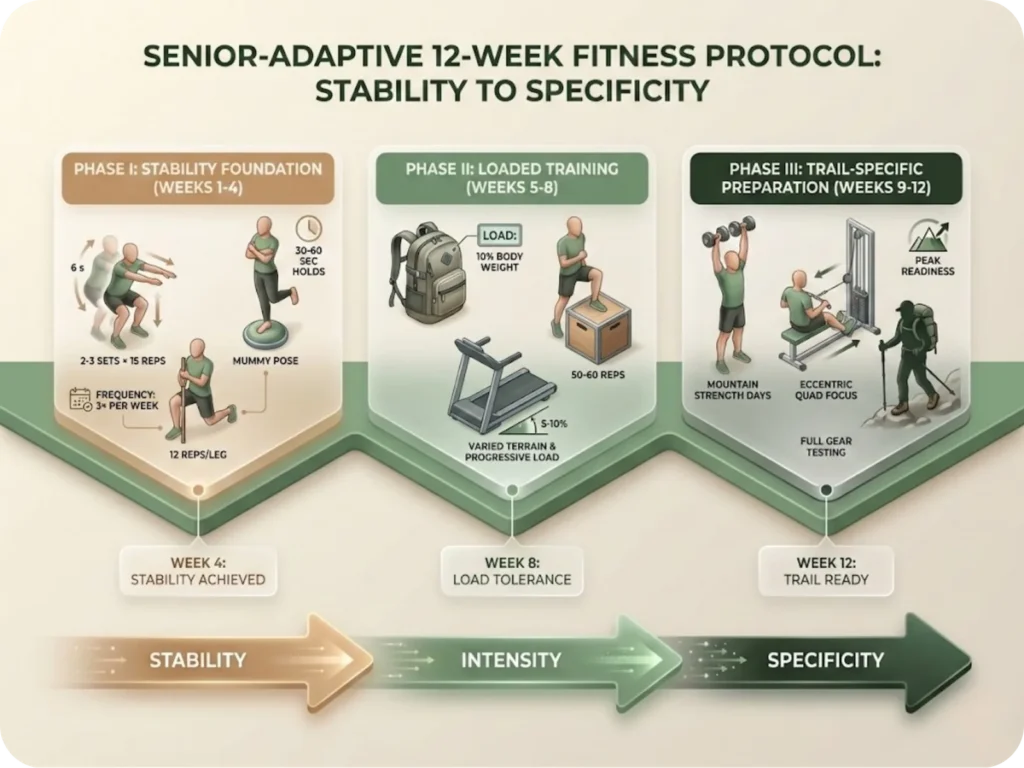
Phase I: Building the Stability Foundation (Weeks 1-4)
Forget jumping straight to cardio. The first month is about building the stabilizing muscles that keep your joints in alignment and prevent the ankle rolls that end trips early.
Start with bodyweight squats—2-3 sets of 15 reps, but slow them down. Count six seconds going up, three seconds lowering. This tempo builds the muscle fiber density that protects your knees. Add single-leg balance work (the “Mummy Pose”) for 30-60 seconds per side to train hip strengthening.
Modified reverse lunges matter here too. Twelve reps per leg builds the unilateral strength you’ll need when the trail only gives you one good foothold.
Phase II: Ramp Intensity with Loaded Training (Weeks 5-8)
Now we add load. “Rucking”—walking with a weighted backpack—delivers high-intensity cardiovascular benefits without the joint-pounding impact of running. Start at 10% of your body weight and progress toward your target pack weights.
Step-ups become your best friend. Find a stable box or sturdy park bench and aim for 50-60 reps. This builds the leg power that descents devour. Add treadmill incline work to simulate the elevation gain you’ll face on real trails.
Pro tip: Your rucking walks should happen on varied terrain, not flat sidewalks. Train on the same surfaces you’ll encounter—grass, gravel, uneven ground. Your ankles need the practice.
Phase III: Trail-Specific Preparation (Weeks 9-12)
The final month replicates trail stress. “Mountain Strength” days add overhead press, rows, and Farmer’s Carries to prevent the pack sway that throws you off balance. Most importantly, you’re building eccentric quad strength—the braking power that controls your descent.
Long simulated day hikes with your full gear test both body and equipment. If something hurts at mile 8 on flat ground, it’ll hurt far worse at mile 8 with 2,000 feet of elevation behind you.
For a deeper look at building trail-ready endurance, check out our comprehensive hiking training system.
The A-G Anatomical Checkpoint System
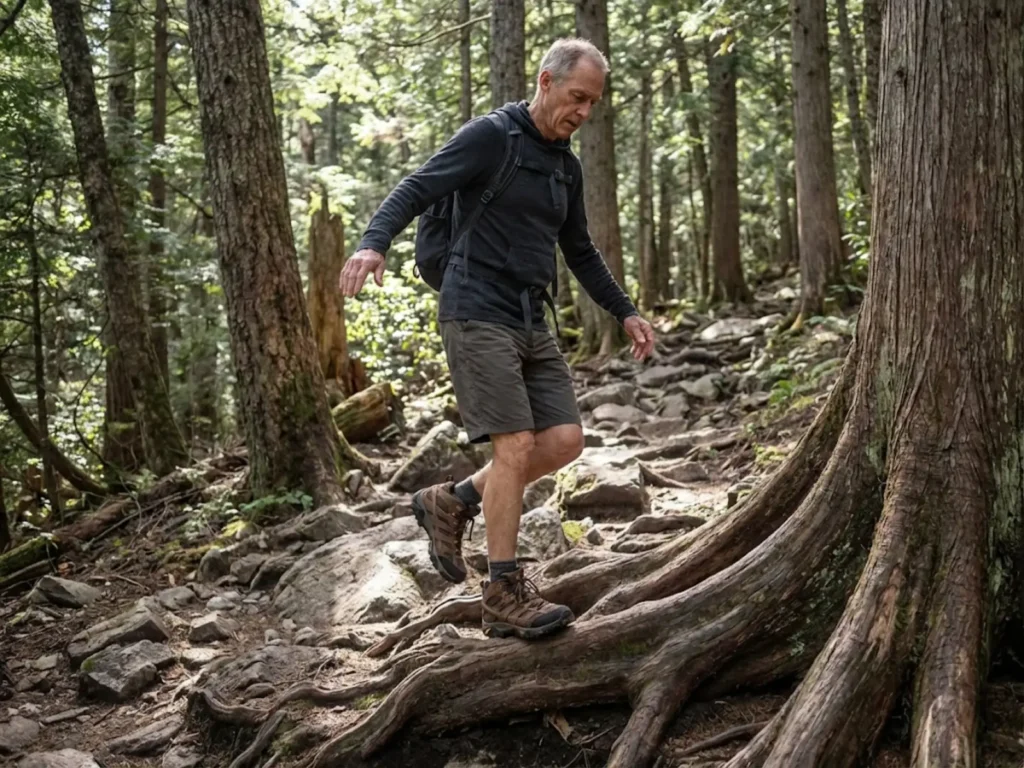
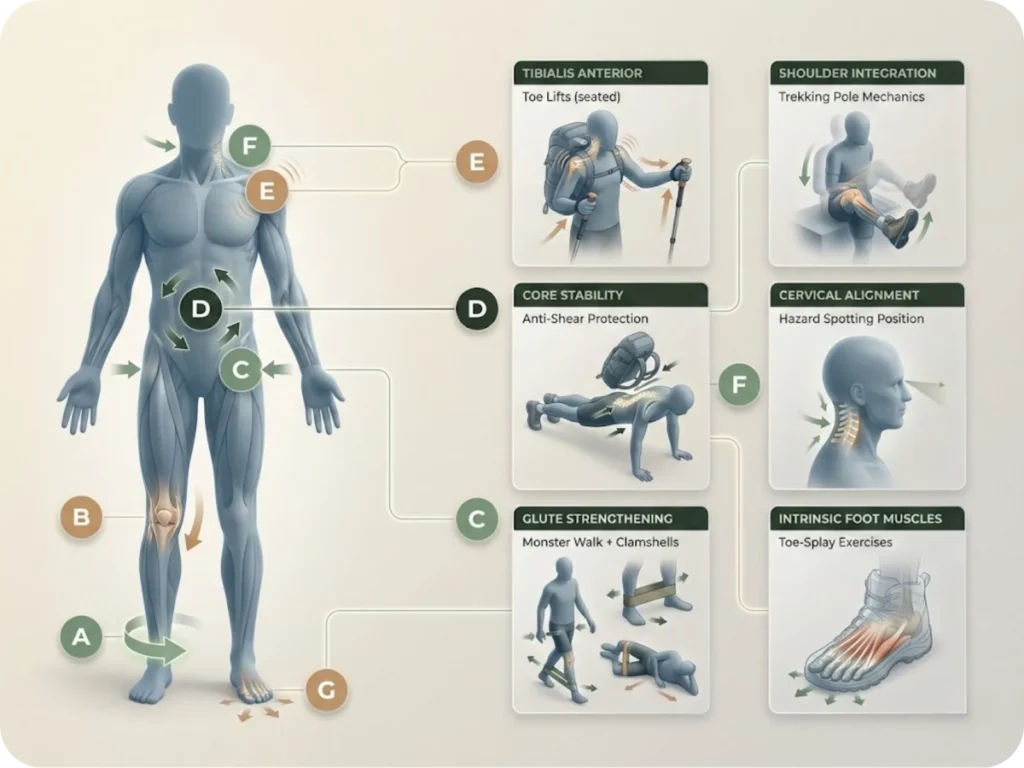
Your body is a kinetic chain, and every weak link becomes a failure point on the trail. This anatomical mapping system—adapted from the approach used by Backpacker Magazine—identifies the seven critical points senior hikers must strengthen.
Lower Extremity Stability Points (A-C)
Point A is your ankle and subtalar joint—your primary sensory input for reading terrain. Strengthen the tibialis anterior to prevent the “toe catch” trips that drop you on your face. Simple toe lifts while seated build this protection.
Point B involves patellofemoral tracking. Your eccentric quad strength determines how well you control the “step-down” phase of hiking—the moment of highest stress on your knees. Every step down tests this strength.
Point C is glute strengthening. Weak glutes cause hip pain and destabilize your lower back. The Monster Walk (band around ankles, walking sideways) and Clamshell exercises are non-negotiable for senior hikers.
Pro tip: Hip strengthening feels irrelevant until your first big descent without knee pain. The glutes do the braking work; the quads just think they do.
Core and Upper Body Integration (D-G)
Point D (lumbar-thoracic core) prevents the shearing forces from a heavy pack. A strong core means your spine stays protected.
Point E (shoulder girdle) lets you use trekking poles as an effective lever system instead of just balance aids. Understanding the bio-mechanical benefits of trekking poles changes how you train.
Point F (cervical spine) keeps your head in neutral position for hazard spotting. Point G (plantar surface and toes) builds intrinsic foot muscles through toe-splay exercises that boost stability inside your hiking boots.
Gear Ergonomics for Aging Bodies
For senior hikers, hiking gear isn’t a luxury—it’s an external support system that compensates for biological changes. The right equipment reduces joint stress and buys you margin for error.
The Non-Negotiable: Trekking Poles
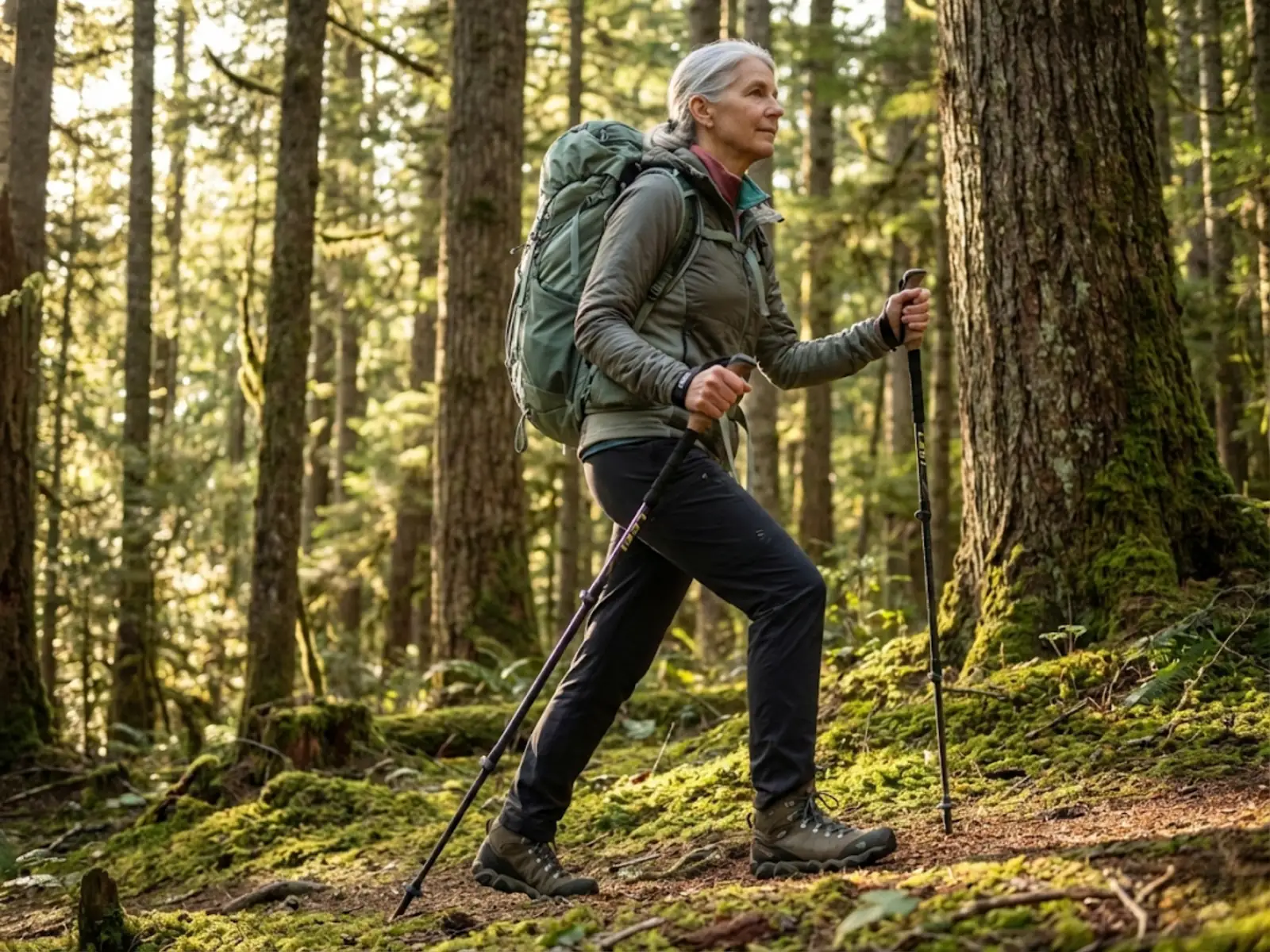
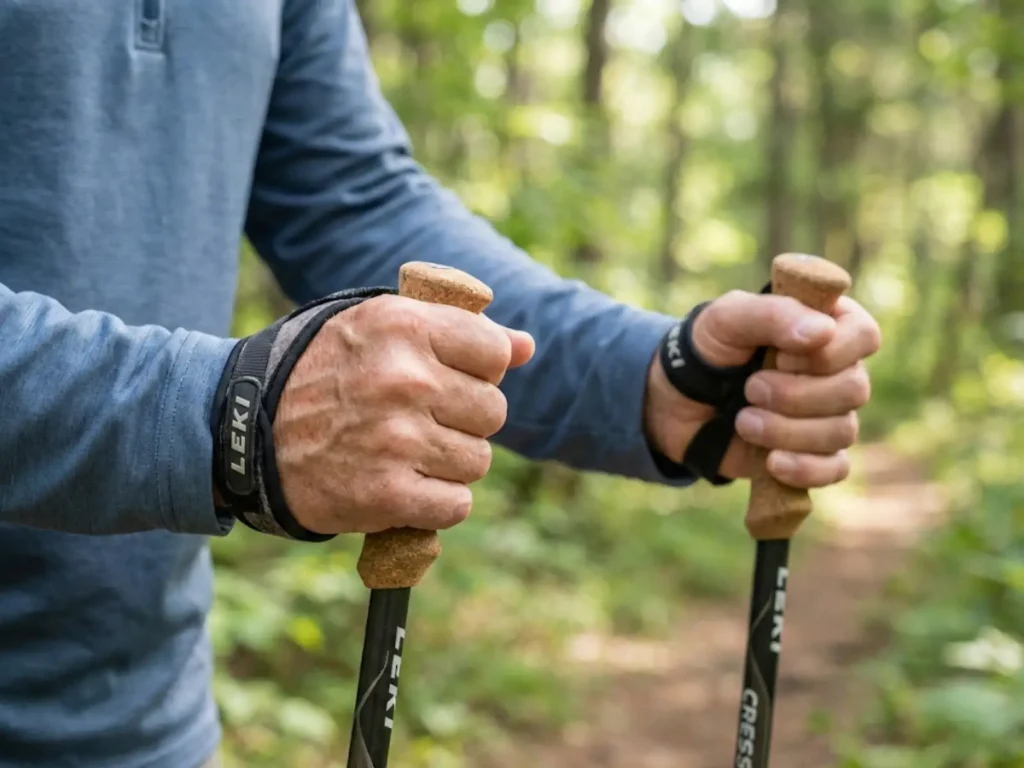
Trekking poles aren’t optional after 55. They reduce knee and ankle load by up to 25% on descents and give you two extra contact points when balance fails. Carbon fiber models like the Leki Cressida offer vibration-dampening that protects arthritic wrists.
I resisted poles for years—felt like admitting defeat. Now they’re as essential as my hiking boots. The data doesn’t lie: 25% less knee stress adds up over miles.
Footwear: Traction Meets Cushioning
Here’s what nobody tells you: the fat pads on the bottom of your feet thin with age. Footwear must provide superior cushioning without sacrificing ground feel.
Mid-height boots like the Oboz Sawtooth II or Merrell Moab 3 offer torsional rigidity and ankle support. Trail runners save weight but sacrifice the stability that aging proprioception may require. A Vibram outsole with aggressive lugs is mandatory—rocky terrain hosts 62.3% of hiking accidents.
Understanding hiking boot anatomy helps you match construction to your needs.
The “Sub-20” Pack Weight Rule
Average thru-hiker pack weight runs around 33.9 lbs. That’s far too heavy for most seniors. Target a base weight under 20 lbs to minimize joint compression.
Every pound matters more after 60. Audit the “Big Three”—your backpack, shelter, and sleep system—ruthlessly. Osprey Exos, Gregory Focal, and similar ultralight-capable packs deliver suspension that handles reduced loads efficiently without sacrificing comfort.
Hydration and Trail Nutrition for Aging Metabolisms
Your nutritional needs on the trail change as you age. The systems that kept you hydrated and fueled at 40 require more attention at 65.
The Precision Hydration Formula
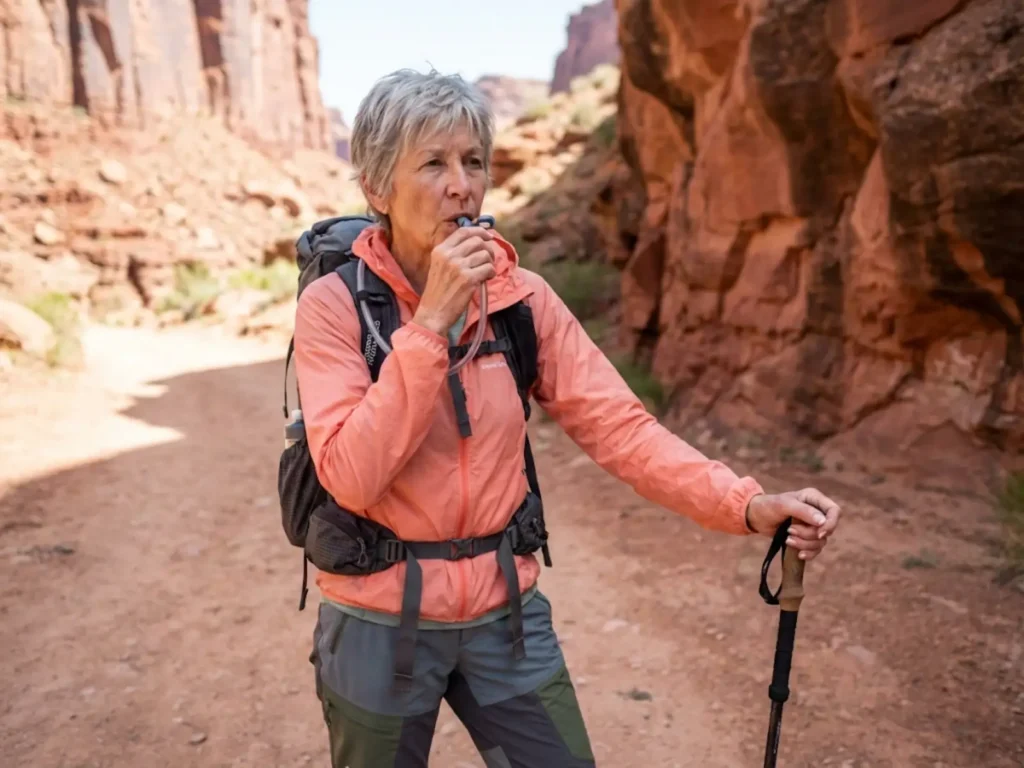
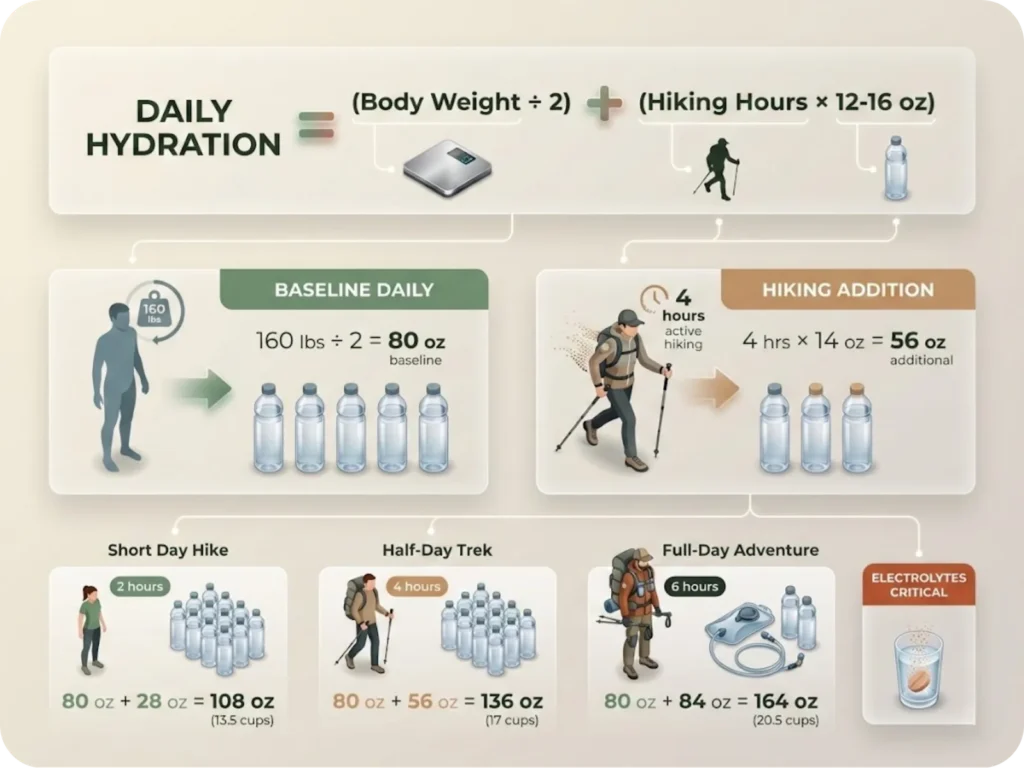
Here’s the problem: your thirst response blunts with age. You’re often dehydrated before you feel thirsty. The hydration formula for senior hikers is simple—drink half your body weight (in pounds) in ounces daily. A 160 lb hiker needs 80 oz as baseline, plus 12-16 oz for every hour of active day hiking.
Electrolyte balance isn’t optional. Sodium and potassium loss leads to hyponatremia risk or severe cramping that incapacitates you on steep terrain. Pack electrolyte tabs and use them consistently.
Following CDC guidelines for older adult activity, the emphasis on hydration becomes critical in hot conditions.
Micronutrition for Trail Recovery
Strenuous physical activity in active adults over 60 triggers higher oxidative stress. CoQ10 and antioxidant supplementation support mitochondrial function and energy production in aging muscles. These help combat the free radicals generated during high-altitude exertion.
Protein needs increase too. Aim for 1.2-1.5 grams per kilogram of body weight to facilitate muscle repair and counter sarcopenia. For detailed guidance, explore our breakdown of electrolyte balance for hiking performance.
Recovery Protocols: The Senior Advantage
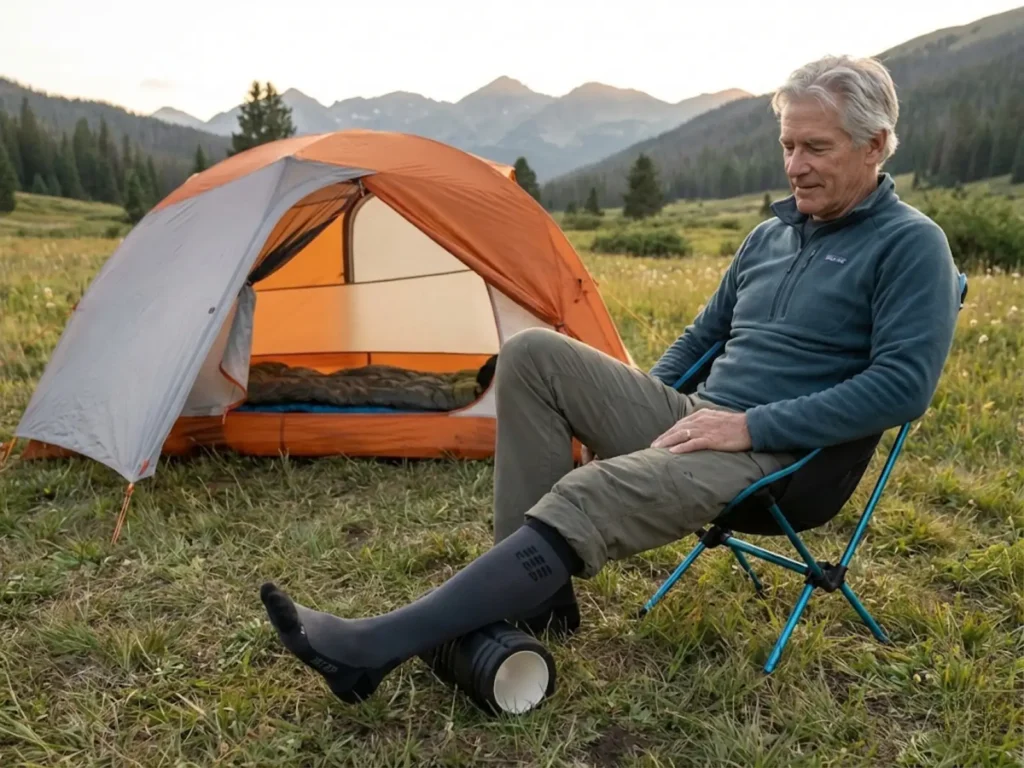
Recovery after 60 isn’t passive. Your body clears inflammatory markers more slowly, which means active recovery protocols become as important as the hike itself.
Compression Therapy and the “Skin Raking” Technique
Compression socks are a massive gap in most senior hiking guides. They assist the “calf pump” in returning blood to the heart, preventing edema and reducing DVT risk during the post-hike sedentary phase.
Here’s a technique from advanced backpacking circles: after removing your pack, use your nails to lightly stroke (“rake”) the skin over your traps and pectorals. This skin raking stimulates cutaneous nerves and facilitates lymphatic drainage in areas compressed by shoulder straps. Looks odd. Works brilliantly.
For specific product recommendations, our hiking compression socks performance review covers the best options for trail use.
Foam Rolling and Self-Myofascial Release
Adopt a recovery day protocol targeting the IT band, quadriceps, and hamstrings. Foam rolling breaks up fascial adhesions that cause “referred pain”—where a tight glute manifests as knee pain.
A tennis ball on the plantar fascia prevents the onset of plantar fasciitis. These aren’t optional treatments. For senior hikers, recovery requires the same intentionality as the hike itself. Build in zero days during multiday hiking trips to let your body catch up.
Conclusion
Three things separate seniors who hike safely from those who end up in rescue statistics:
- Respect the biology. Sarcopenia, bone density loss, and proprioceptive decline are real—but all are addressable with targeted conditioning.
- Invest 12 weeks before the trailhead. The fitness protocol isn’t optional; it’s the difference between completing the hike and becoming a statistic.
- Treat gear as biomechanical support. Sub-20 lb packs, trekking poles, and proper footwear aren’t luxuries—they’re compensations for aging systems.
Start the Phase I exercises this week. In 12 weeks, you’ll stand at a trailhead knowing your body is ready—not just hoping it is. The trails don’t care about your age. They care about your preparation.
FAQ
Is hiking good for 70-year-olds?
Yes—hiking improves cardiovascular health, bone density, and cognitive function in older adults. Harvard Medical School research shows hiking increases blood flow to the brain, improving memory by up to 20%. The key is matching trail difficulty to current fitness level and using proper gear.
How far should a 70-year-old hike?
Start with 3-5 miles on flat terrain and limit elevation gain to under 500 feet. The Appalachian Trail Conservancy recommends 8-10 mile daily distances for seniors initially, with zero days (rest days) built into multi-day plans.
What are the best hiking boots for seniors?
Look for mid-height boots with torsional rigidity, high-traction Vibram outsoles, and cushioned midsoles. The Oboz Sawtooth II and Merrell Moab 3 consistently perform well for seniors who need ankle support without excessive weight.
Is hiking safe for seniors with heart conditions?
Only with physician clearance. Cardiac seniors should get a stress test before ambitious trails, use a heart rate monitor, and stay within 50-70% of maximum heart rate. Carry emergency communication like a Garmin InReach and hike with companions who know your medical history.
How do I get in shape for hiking at 60?
Follow a 12-week protocol: Weeks 1-4 focus on stability (bodyweight squats, single-leg balance). Weeks 5-8 add loaded training (rucking, step-ups). Weeks 9-12 simulate actual trail conditions. Include hip strengthening and glute strengthening exercises (clamshells, monster walks) to protect knees on descents.
Risk Disclaimer: Hiking, trekking, backpacking, and all related outdoor activities involve inherent
risks which may result in serious injury, illness, or death. The information provided on The Hiking Tribe is for
educational and informational purposes only. While we strive for accuracy, information on trails, gear, techniques,
and safety is not a substitute for your own best judgment and thorough preparation. Trail conditions, weather, and
other environmental factors change rapidly and may differ from what is described on this site. Always check with
official sources like park services for the most current alerts and conditions. Never undertake a hike beyond your
abilities and always be prepared for the unexpected. By using this website, you agree that you are solely
responsible for your own safety. Any reliance you place on our content is strictly at your own risk, and you assume
all liability for your actions and decisions in the outdoors. The Hiking Tribe and its authors will not be held
liable for any injury, damage, or loss sustained in connection with the use of the information herein.
Affiliate Disclosure: We are a participant in the Amazon Services LLC Associates Program, an
affiliate advertising program designed to provide a means for us to earn advertising fees by advertising and linking
to Amazon.com. As an Amazon Associate, we earn from qualifying purchases. We are also an official affiliate partner
of Black Diamond Equipment via the AvantLink network. If you click on a Black Diamond affiliate link and make a
purchase, we may earn a commission at no additional cost to you. We also participate in other affiliate programs and
may receive a commission on products purchased through our links. Additional terms are found in the terms of
service.