

In this article
The nymph was smaller than a poppy seed, barely visible against my sun-faded cargo pants. I’d been bushwhacking through Vermont’s Long Trail for three hours, shin-deep in the kind of dense understory that deer ticks call the buffet line. When I spotted it crawling upward—legs flailing in that unmistakable dance before tumbling off my treated fabric—I understood what twenty years of backcountry hiking had been trying to teach me.
After decades spent in Lyme-endemic territory from the Catskills to the Driftless, I’ve watched permethrin-treated clothing evolve from military curiosity to mainstream trail essential. I’ve also watched hikers walk into the backcountry believing their “bug-repellent pants” made them invincible. They’re not. This guide cuts through the marketing to reveal what the EPA, CDC, and peer-reviewed research actually tell us—including the uncomfortable truth that your “70-wash guaranteed” protection decays to 65% effectiveness by year one.
⚡ Quick Answer: Permethrin-treated pants kill ticks on contact through a neurotoxin that causes the “hot-foot effect”—ticks experience intense leg irritation, flip over, and fall off within one minute. Factory-treated clothing starts at 93% protection but drops to 65% effectiveness by year one and 50% by year two. DIY spray treatments last 6 washes or 6 weeks. Always pair treated clothing with daily tick checks; no treatment offers 100% protection.
How Permethrin Actually Kills Ticks (The Science Your Pants Won’t Tell You)
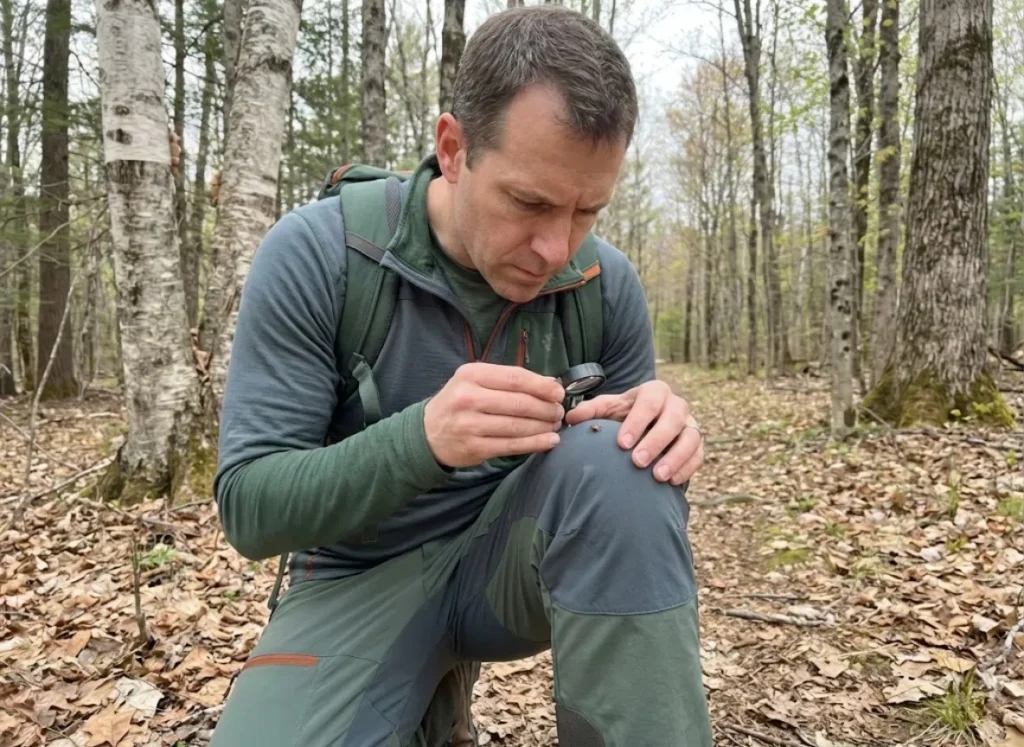
Here’s what the label won’t tell you: permethrin isn’t a repellent at all. It’s a contact neurotoxin. Unlike DEET or picaridin, which act on olfactory receptors to discourage ticks from landing, permethrin attacks them the moment they touch your fabric.
The molecule works by binding to voltage-gated sodium channels in tick nerve cells. This prevents the channels from closing after a nerve impulse, causing uncontrollable firing, spasms, and paralysis. The result is what researchers call the hot-foot effect—ticks experience such intense irritation in their legs that they reflexively withdraw, often tumbling off before they can find a feeding site.
The Hot-Foot Effect: Why Ticks Flip and Fall
Dr. Thomas Mather from the University of Rhode Island’s TickEncounter Resource Center describes it in visceral terms: “The chemicals literally burn the ticks’ feet, so they want to get off.” CDC researcher Lars Eisen documented it more clinically—nymph deer ticks that came into contact with treated clothing “essentially start flipping backward and start rolling off… they died within a minute.”
That one-minute knockdown time matters. Ixodes scapularis nymphs—the life stage responsible for most Lyme disease transmission—are smaller than a poppy seed. Without the treated fabric forcing visible distress, you might never spot them.
Why Pants Matter More Than Shirts
Biology dictates strategy here. Ixodes scapularis nymphs quest at ground to ankle level, typically within the questing height of 0-15 centimeters above the forest floor. Adult ticks in the Dermacentor genus quest higher, at knee to waist height. This means treated pants and socks are your highest-value intervention points for preventing tick-borne disease.
If you’re looking to pair treated pants with gaiters for complete lower-leg protection, you’re thinking correctly. The questing zone is where the war is won or lost.
Pro tip: Treat your socks too. Nymphs start at ground level and climb. A permethrin barrier on your footwear creates the first contact point—often the only one you need.
The 65% Truth: What “70 Washes” Really Means
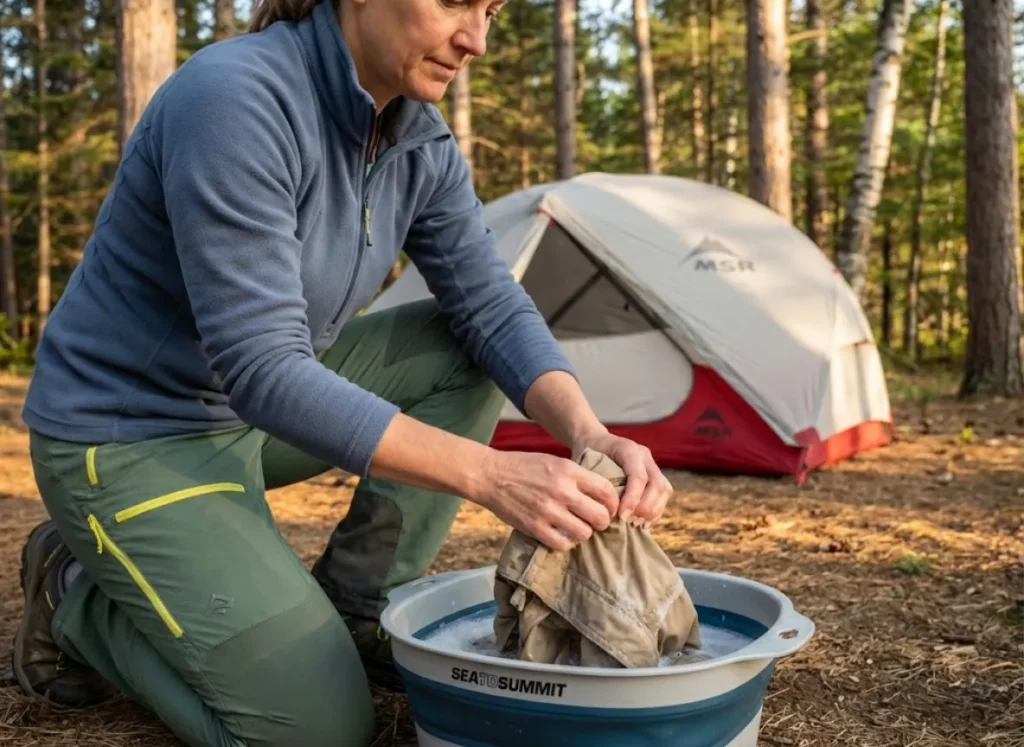
Marketing claims and field reality diverge sharply with permethrin-treated clothing. The numbers tell the real story.
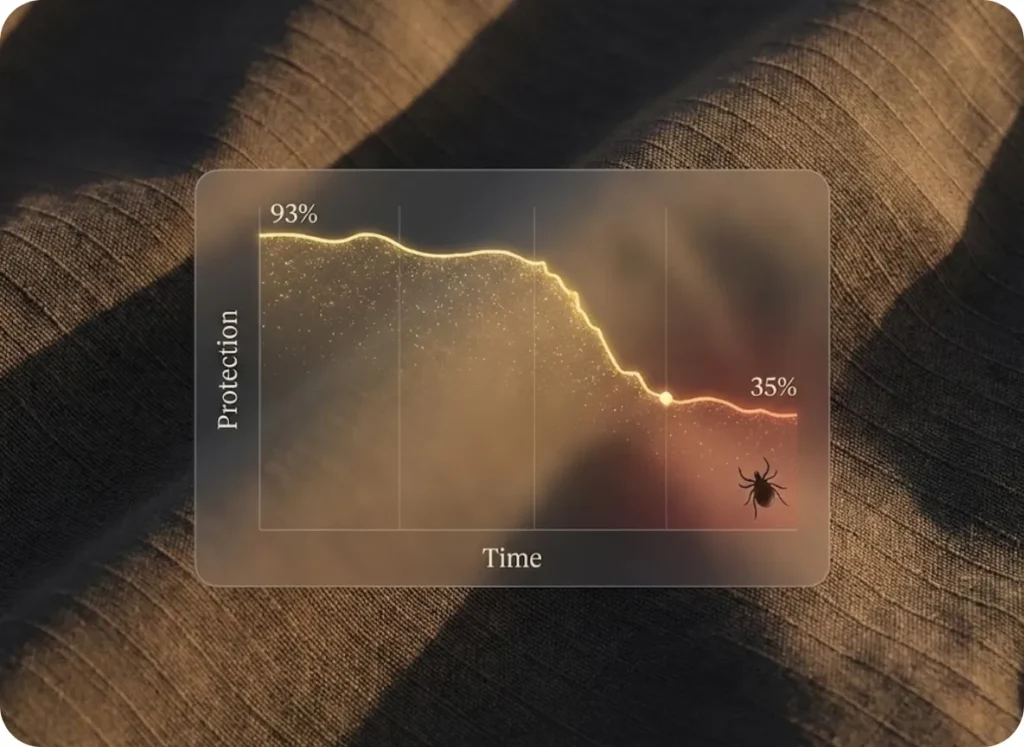
New factory-treated clothing starts strong. A University of North Carolina study sponsored by Insect Shield documented a 93% reduction in total tick bite incidence for subjects wearing fresh treatment. That’s impressive protection—nearly complete.
But here’s what the warranty doesn’t emphasize: by Year 1 of actual field use, that number drops to 65%. A Department of Labor-funded longitudinal study on outdoor workers measured exactly this decay. By Year 2, effectiveness falls to 50%—statistically a coin flip.
Factory Claims vs. Field Reality
The “70 washes” claim measures chemical presence, not biological effectiveness. There’s an important distinction: a fabric can retain permethrin molecules while the concentration drops below the threshold needed to reliably incapacitate resistant wild ticks.
Consumer Reports testing drove this point home. After washing, mosquitoes bit 3 of 4 testers wearing treated shirts. The treatment was still “present.” It just wasn’t doing the job.
The Hidden Degradation Factors
Washing isn’t even your biggest enemy. UV light and sun exposure are.
Research documented that simulated sunlight reduces permethrin concentration by approximately 30% in unwashed fabrics over just one month. For long-term hikers and thru-hikers spending full days exposed to sunlight, UV degrades protection faster than the washing machine does.
Heat compounds the problem. Ironing significantly destabilizes the permethrin bond—”Do not iron” on treated clothing isn’t fabric care advice. It’s a safety warning.
The practical protocol shift: wash your treated pants as infrequently as possible. Trail dirt doesn’t reduce efficacy nearly as much as detergent action. If you must wash, use gentle cycles and avoid fabric softeners, which coat fibers and mask the treatment.
Pro tip: Store treated clothing in black trash bags or opaque bins between trips. Dark storage prevents UV degradation when you’re not on trail—it’s the cheapest way to extend effective lifespan.
Factory-Treated vs. DIY Spray: The Cost-Per-Hike Analysis
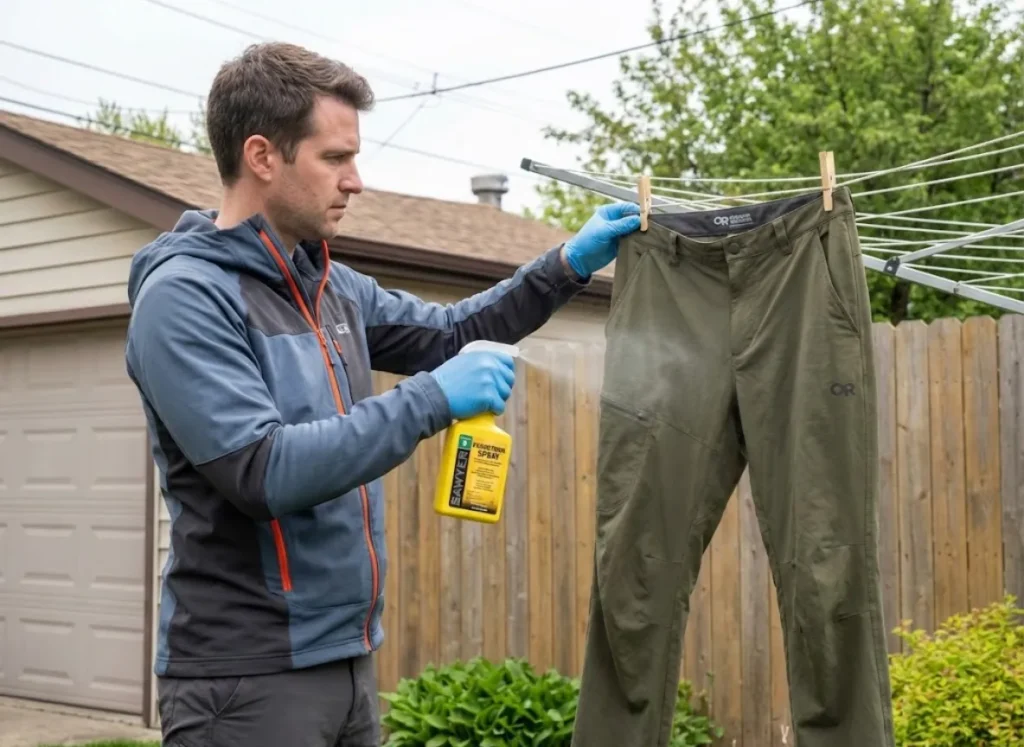
The choice between factory-treated clothing and DIY spray application comes down to math, hiking frequency, and what gear you already own.
Understanding Your Options
Factory treatment (brands like Insect Shield, ExOfficio BugsAway, and L.L. Bean No Fly Zone) uses polymer bonding that adheres permethrin into fabric fibers. The concentration runs around 0.5% permethrin concentration, and warranties claim 70 washes of protection.
DIY spray (primarily Sawyer Products) applies permethrin to fiber surfaces rather than bonding it within. It lasts 6 weeks or 6 washes before needing retreat. The concentration is the same 0.5%, but the bonding mechanism differs.
A third option exists: Insect Shield’s mail-in service treats your own clothing at their state-of-the-art facilities for $8-10 per item, giving factory-quality bonding on gear you already trust.
The Math That Matters
If you want to choose hiking pants with DWR finishes and factor protection into your selection, think about usage patterns first.
Factory-treated pants at $80-120 divided by 70 effective washes equals roughly $1.14-1.71 per protected outing. DIY Sawyer spray at $15 per bottle treating 4 outfits, divided by 6 washes per treatment, comes to approximately $0.63 per outing—but with the time cost of spray application.
The cost-per-wash analysis: if you hike more than 50 days per year, factory treatment becomes more cost-effective over time. Below 20 days per year, DIY makes financial sense. Between those numbers, personal preference and convenience drive the choice.
DWR-Coated Pants: The Compatibility Gap
Here’s information no competitor provides clearly: Insect Shield explicitly refuses water-resistant fabrics and “dry clean only” items. The DWR-coated pants can interfere with permethrin bonding.
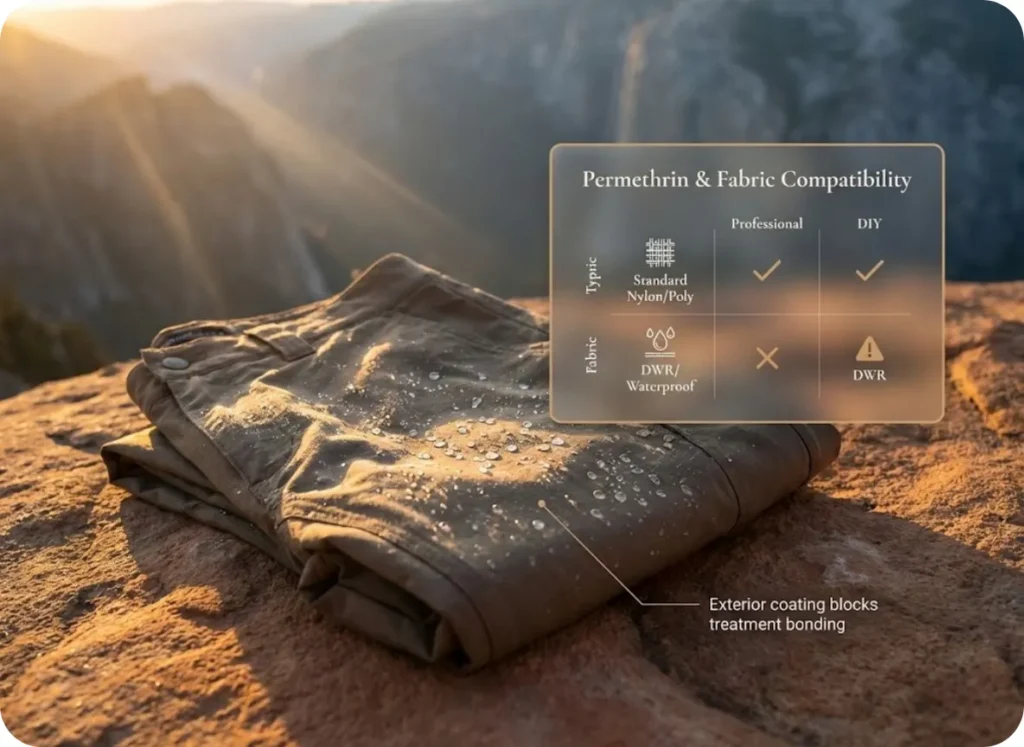
For DWR-coated hiking pants, DIY spray applied to the inside surface may work better than exterior application. The coating on the outside repels the treatment solution; the interior fabric takes it normally.
How to Apply Permethrin Like a Pro (And Avoid the Kerosene Smell)
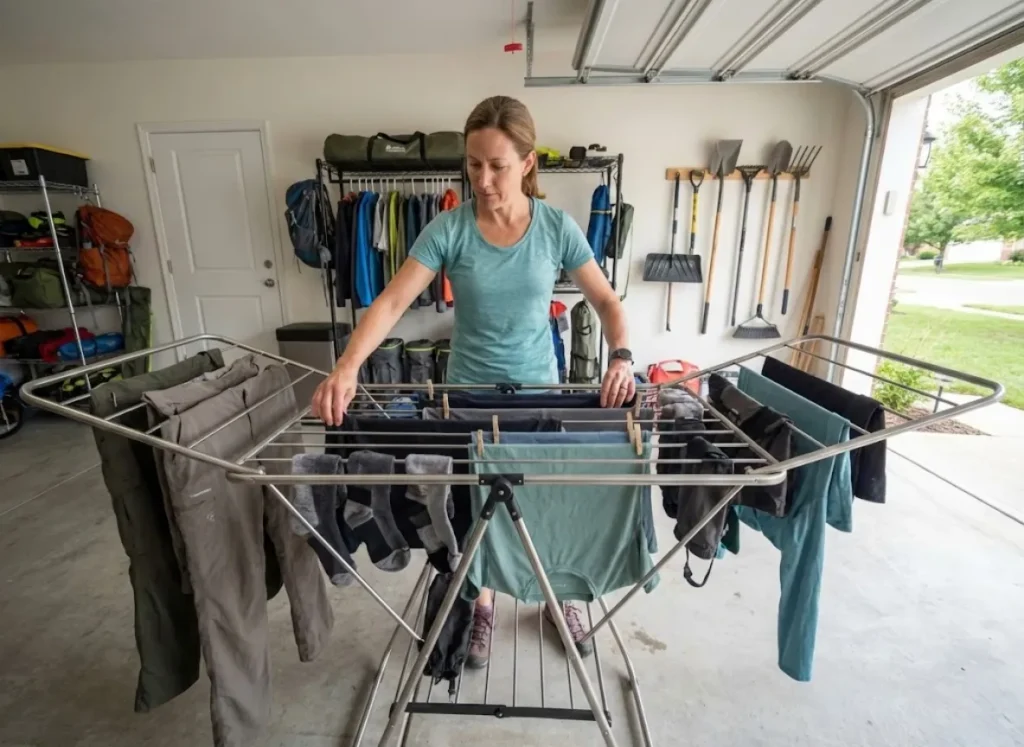
Application technique determines whether you get the full protection you paid for or waste product on ineffective coverage. The difference between “quick spritz” and proper application is the difference between protection and false confidence.
The Spray Method: Getting It Right
Use 0.5% permethrin specifically formulated for clothing treatment—brands like Sawyer or Ranger Ready. Never use farm-grade concentrates (36.8%) on technical fabrics. The petroleum distillates in agricultural products can ruin synthetic materials and leave a kerosene smell that won’t wash out.
The technique matters: hold the spray bottle 6-8 inches from fabric and use a slow sweeping motion—30 seconds per side of each garment. The fabric should darken slightly but not drip. “Damp but not dripping” is your visual indicator.
Critical safety rule: Never apply permethrin while wearing the clothing. Follow the drying time protocol: allow 12-24 hours minimum before wearing or storing near cats.
Pro tip: Most application failures come from the “quick spritz” approach. Dr. Mather observes that insufficient coverage is the #1 application error. Treat it like spray-painting—full, even strokes—not like air freshener.
What to Treat: Building Your Protection System
Prioritize in this order: pants, socks, shoes (primary tick contact zone), then gaiters, camp chair, and tent mesh, and finally backpack hip belt and sleeping bag foot box. This layering strategy creates multiple barriers.
If you’re ready to add permethrin to your Ten Essentials system, treat before tick season starts. Check your regional tick calendar: that means March 15 in Vermont and New Hampshire, April 1 in Virginia, and early May in the Upper Midwest. Regional timing matters—ticks don’t follow calendar dates uniformly.
Is Permethrin Safe? The Risk-Benefit Reality for Hikers
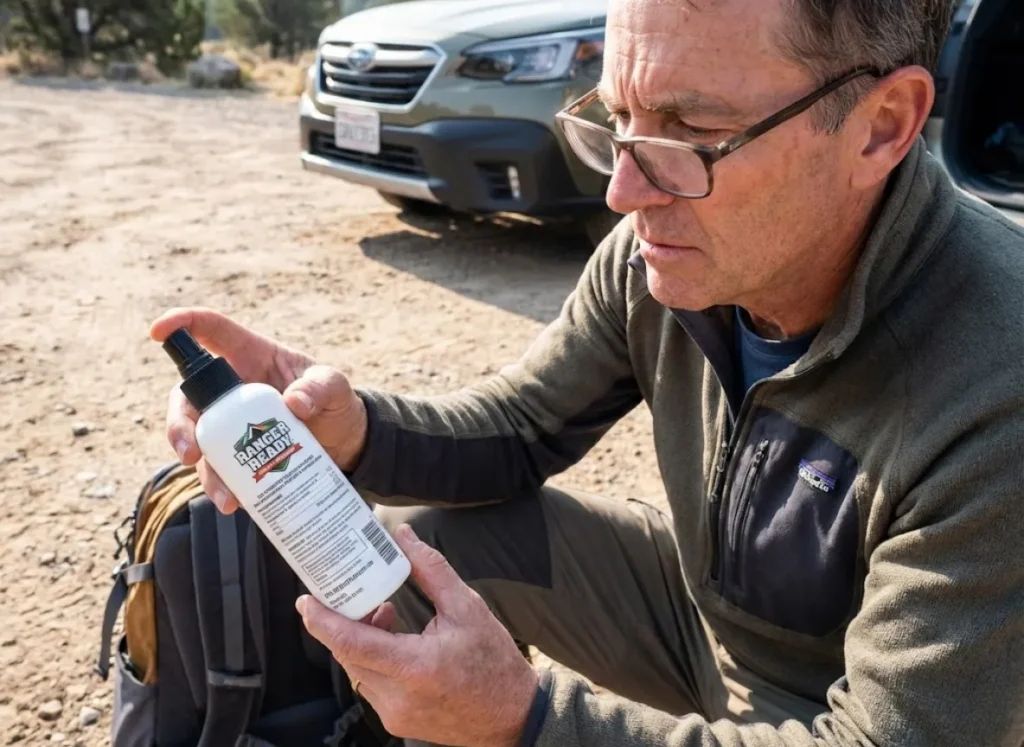
The safety assessment question ranks second only to “does it work?”—and deserves an evidence-based answer rather than marketing reassurance or fear-based avoidance.
What the EPA Actually Says
The EPA registers permethrin for treated clothing at EPA Category IV rating—the lowest toxicity category on their scale. The molecule is poorly absorbed through skin; its chemical structure binds to fabric fibers rather than epidermis.
Transdermal absorption under normal wearing conditions is minimal. The agency found no reproductive or developmental effects at exposure levels from treated clothing and conducts periodic re-evaluations (the 2009 assessment affirmed the safety profile).
For context, EPA’s safety assessment of permethrin-treated clothing provides the regulatory foundation that manufacturers build on.
The Cat Warning Is Non-Negotiable
Here’s where safety becomes absolute rather than statistical: permethrin is lethal to cats. This cat safety warning cannot be overstated.
Cats lack the specific glucuronyl transferase enzymes (the glucuronide conjugation pathway) required to metabolize pyrethroids. What passes safely through human and canine systems causes fatal neurotoxicity in felines—wet permethrin exposure is the primary risk.
Drying protocol: allow 12-24 hours minimum in a closed room, garage, or outdoor clothesline—fully dry before any cat contact. Store dried treated clothing in sealed containers or closets inaccessible to curious cats.
Dogs and humans metabolize permethrin safely. Cats cannot. This is non-negotiable.
The Sunscreen Interaction
One interaction competitors rarely mention: sunscreen ingredients can increase transdermal absorption of permethrin. Research shows this effect exists, though exposure levels remain low.
The practical protocol: apply sunscreen first, allow it to fully dry, then dress in treated clothing. If you want maximum caution, integrate treated layers into your hiking clothing system with a thin base layer between treated fabric and sunscreen-coated skin.
The Resistance Problem: When 65% Becomes Zero
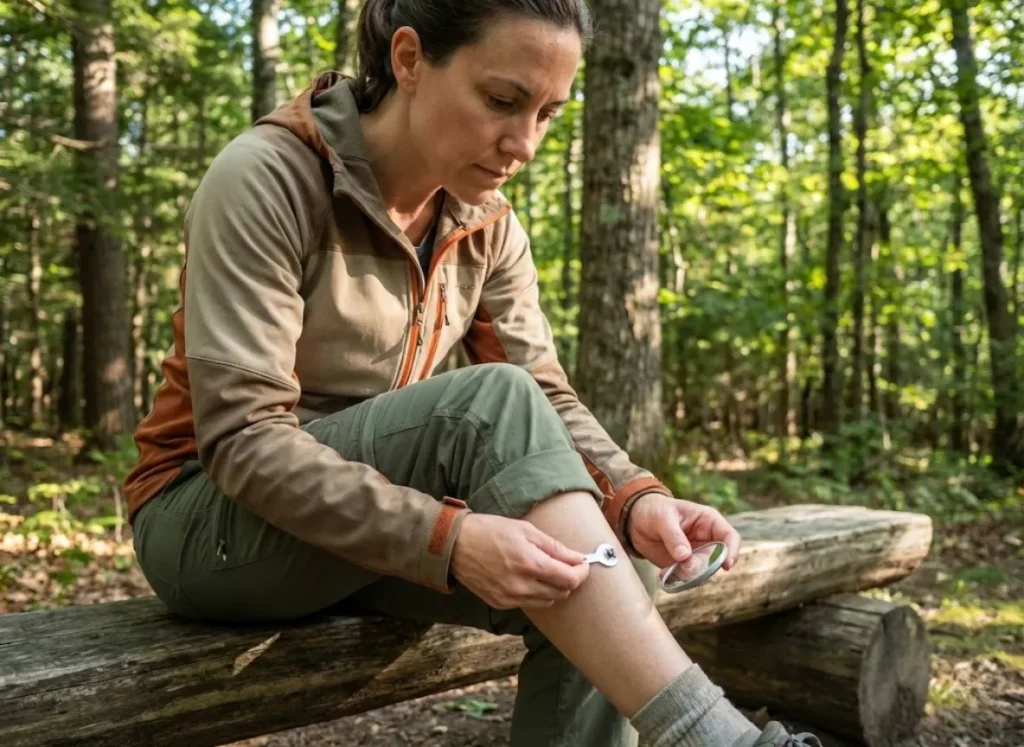
The efficacy story gets darker when you factor in what’s happening to tick populations themselves.
Wild Ticks vs. Lab Ticks
Field-collected Ixodes scapularis from Shelter Island, New York—ground zero for Lyme research—show a resistance ratio of 1.87. That means wild ticks require nearly double the permethrin dose to achieve mortality compared to susceptible laboratory colonies.
These wild ticks display weaker hot-foot responses than their lab-reared counterparts. Standard laboratory testing, which forms the basis of most efficacy claims, may systematically overestimate field protection.
According to NIH research on Ixodes scapularis permethrin susceptibility, this resistance pattern is emerging in areas with long-term permethrin use, including the Northeast US and regions with high tick density.
The Uncomfortable Math
Combine Year 1 treated pants (65% efficacy) with resistant tick populations (RR 1.87), and effective protection may drop below 35%. Older clothing with degraded permethrin concentration becomes progressively less effective against these hardier populations.
The implication: the “lifetime” factory treatment guarantee may be functionally worthless by years two to three in resistance-prone geographic areas. Responsible protocol means retreatment or replacing treated clothing annually—not waiting until warranty expiration.
Conclusion
Permethrin-treated pants aren’t a magic force field. They’re a decaying asset that starts strong—93% protection—and slides toward a statistical coin flip by year two. The 70-wash marketing claim measures chemical presence, not biological effectiveness. UV exposure degrades your protection faster than your washing machine.
Three takeaways that matter: First, treat pants and socks before anything else. Nymphal deer ticks quest at ankle height, making lower-leg protection your highest-value investment. Second, budget for annual re-treatment or replacement. Factory warranties reflect laboratory chemistry, not field reality. Third, layer your defense. Treated clothing is one tool in a system that includes tick checks, proper coverage, and regional awareness.
The 65% truth isn’t meant to discourage permethrin use. It’s meant to ensure you use it correctly. A hiker who understands the efficacy decay curve, cat safety protocols, and the hot-foot effect extracts far more value from treated gear than someone who assumes “bug-repellent pants” make them invincible.
Your Lyme-endemic multi-day trek deserves better than marketing claims. Now you have the science to match.
FAQ
Can I spray permethrin on my skin like DEET?
No—permethrin is for fabric only and should never contact skin directly. Unlike DEET (a skin-safe repellent), permethrin is a contact insecticide designed to bond with textile fibers. Apply 0.5% permethrin to clothing and use a separate repellent like picaridin or oil of lemon eucalyptus on exposed skin.
How do I dry permethrin-treated clothing if I have cats?
Dry all treated items in a closed room, garage, or outdoor clothesline for 12-24 hours minimum—until completely dry to touch. Store dried clothing in sealed containers or inaccessible closets. Wet permethrin is lethal to cats because they lack the liver enzymes (glucuronide conjugation pathway) to metabolize pyrethroids.
Does permethrin wash out in rivers or affect aquatic life?
Yes—permethrin is highly toxic to aquatic ecosystems. Never wash treated clothing directly in streams or lakes; this violates Leave No Trace principles. Use a washing machine connected to municipal sewage treatment, which removes approximately 90% of permethrin during wash water transfer processing.
Is factory-treated clothing better than DIY spray?
It depends on usage volume. Factory treatment lasts longer (70 washes) with more even distribution, but costs more upfront. DIY spray offers flexibility and lower initial cost but requires retreat every 6 washes or 6 weeks. If you hike more than 50 days per year, factory treatment becomes more cost-effective.
Why did ticks still bite me through my treated pants?
Several factors reduce protection: UV degradation (sun exposure reduces efficacy 30% per month), permethrin resistance in local tick populations, insufficient initial application (the quick spritz error), or clothing past its effective lifespan. The 65% Year-1 efficacy means even properly treated clothing doesn’t kill ticks on contact 100% of the time—continue performing daily tick checks.
Risk Disclaimer: Hiking, trekking, backpacking, and all related outdoor activities involve inherent
risks which may result in serious injury, illness, or death. The information provided on The Hiking Tribe is for
educational and informational purposes only. While we strive for accuracy, information on trails, gear, techniques,
and safety is not a substitute for your own best judgment and thorough preparation. Trail conditions, weather, and
other environmental factors change rapidly and may differ from what is described on this site. Always check with
official sources like park services for the most current alerts and conditions. Never undertake a hike beyond your
abilities and always be prepared for the unexpected. By using this website, you agree that you are solely
responsible for your own safety. Any reliance you place on our content is strictly at your own risk, and you assume
all liability for your actions and decisions in the outdoors. The Hiking Tribe and its authors will not be held
liable for any injury, damage, or loss sustained in connection with the use of the information herein.
Affiliate Disclosure: We are a participant in the Amazon Services LLC Associates Program, an
affiliate advertising program designed to provide a means for us to earn advertising fees by advertising and linking
to Amazon.com. As an Amazon Associate, we earn from qualifying purchases. We are also an official affiliate partner
of Black Diamond Equipment via the AvantLink network. If you click on a Black Diamond affiliate link and make a
purchase, we may earn a commission at no additional cost to you. We also participate in other affiliate programs and
may receive a commission on products purchased through our links. Additional terms are found in the terms of
service.